Characterization of linguistic behaviors of premature four-year old children
Purpose: to describe the performance in linguistic behaviors in four-year old premature children, and to identify which are of major and minor occurrence.
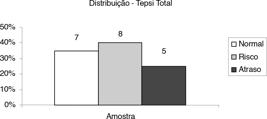
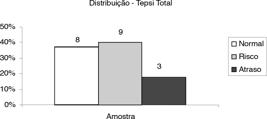
Methods: premature children’s protocols were selected, accompanied since birth, with language evaluation and without neurological alteration. The linguistic behaviors were reorganized in Emission, Reception and Emission / Reception, and the sample was divided in three groups: Normal, Risk and Delay.
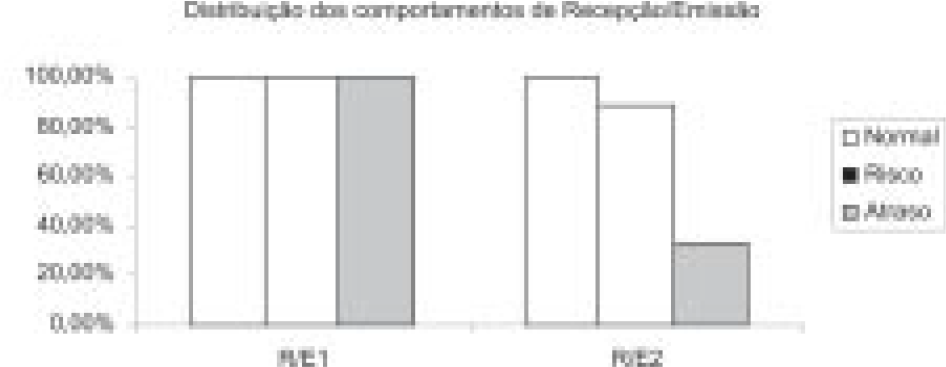
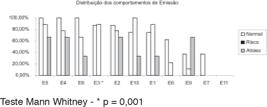
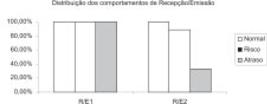
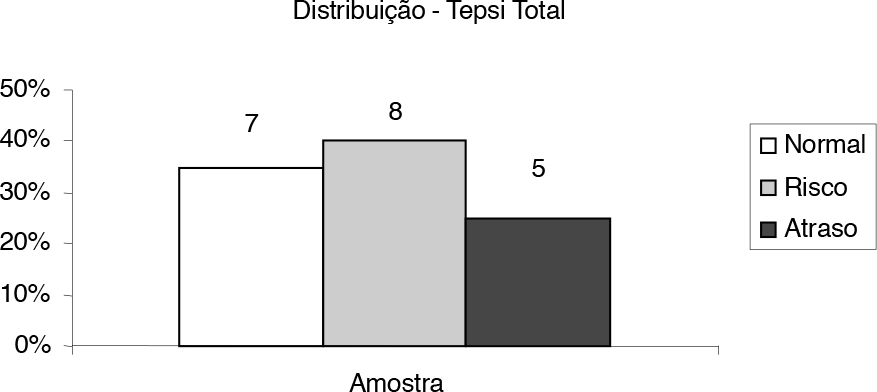
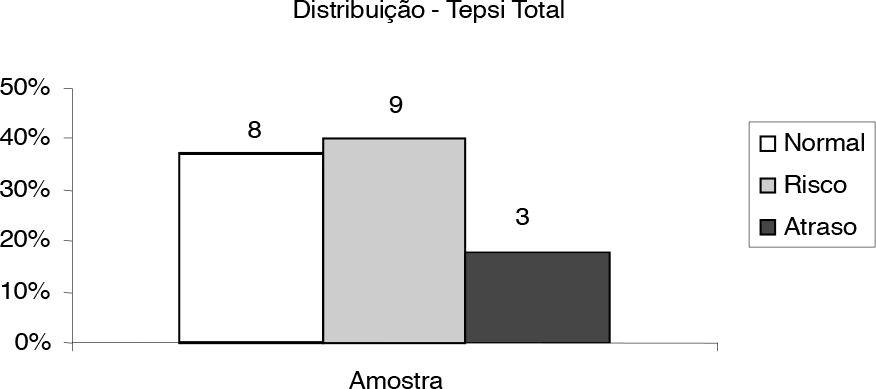
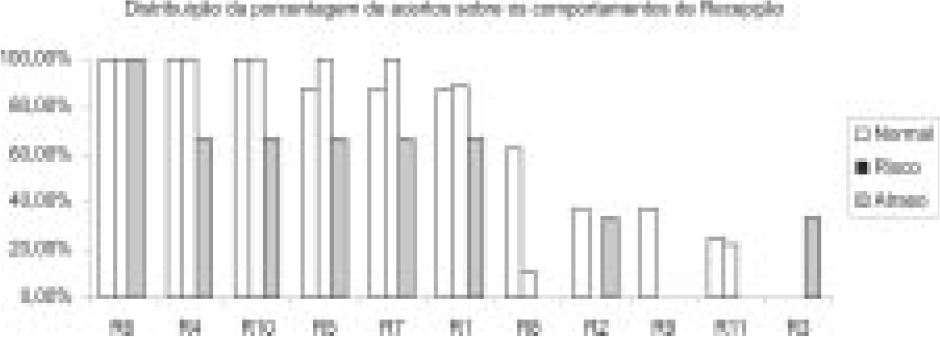
Results: the Normal group reached better performance than the Risk group, and the Delay group reached the worse performance. The receptive behaviors obtained larger success percentage than the emissive behaviors. The occurrence of actions (E3) was the only behavior between Reception, Emission or Reception / Emission, with statistically significant difference among the groups.
Conclusion: premature children have alterations in the development of the language when they are four-year old.
KEYWORDS:
Infant; Premature; Child Development; Child; Preschool; Language Disorders; Child Language
 Thumbnail
 Thumbnail
 Thumbnail
 Thumbnail
 Thumbnail
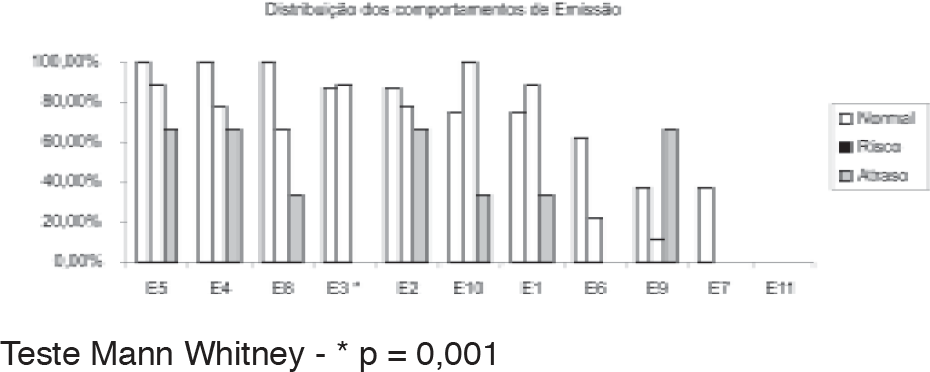 Teste Mann Whitney - * p = 0,001