 Editorial mediation and its relationship with the popularization of science
ABSTRACT
Introduction: This article presents the main results of a study on editorial mediation as an empirical category in promoting the popularization of science. Mediation is considered to be embedded in different informational environments and comprises a process that favors the conscious appropriation and use of information. We understand that it is an essential factor in enabling access to scientific information through actions aimed at popularizing science. That said the research starts from the following question: How is editorial mediation characterized to contribute to the effective promotion of science popularization?
Objective: Analyze editorial mediation as a conceptual and empirical category in promoting the popularization of science. Methodology: Exploratory research was conducted using a qualitative approach, with database searches using the descriptors science popularization, editorial mediation, science, and technology, in the LISA, BRAPCI, SCIELO, and Capes Periodicals databases. To develop the conceptual map, the conceptual, procedural, and socio-communicational dimensions of mediation were observed, and the CMAP TOOLS (version 6.03) tool was used.
Results: The results indicate that editorial mediation is a complex process that is part of scientific communication and whose application favors not only access to scientific information but also scientific dissemination through the popularization of science.
Conclusion: Editorial mediation is an extension of the concept of mediation observed at the confluence between the process of scientific information communication and editorial processes, favoring both the dissemination and diffusion of knowledge.
KEYWORDS
Scientific publishing; Information mediators; Scientific journals; Popularization of science; Editorial mediation.
RESUMO
Introdução: este artigo apresenta os principais resultados do estudo sobre a mediação editorial como categoria empírica na promoção da popularização da ciência. Considera-se que a mediação está inserida em diferentes ambientes informacionais e compreende um processo que favorece a apropriação e o uso da informação de modo consciente. Entende-se que ela se configura em fator imprescindível para efetivar o acesso à informação científica por meio de ações de popularização da ciência. Dito isso, a pesquisa parte do seguinte questionamento: como a mediação editorial se caracteriza de modo a contribuir para a promoção efetiva da popularização da ciência?
Objetivo: analisar a mediação editorial como categoria conceitual e empírica na promoção da popularização da ciência. Metodologia: foi realizada pesquisa exploratória de abordagem qualitativa, com pesquisa em bases de dados utilizando-se os descritores popularização da ciência, mediação editorial, ciência e tecnologia, nas bases LISA, BRAPCI, SCIELO e Periódicos Capes. Para elaborar o mapa conceitual, foram observadas as dimensões conceitual, processual e socicomunicacional da mediação, e utilizada a ferramenta CMAP TOOLS (versão 6.03).
Resultados: os resultados apontam que a mediação editorial é um processo complexo, que está inserido na comunicação científica, e cuja aplicação favorece não apenas o acesso à informação científica, mas também a divulgação científica por meio da popularização da ciência.
Conclusão: a mediação editorial é uma extensão do conceito de mediação que se observa na confluência entre o processo de comunicação da informação científica e os processos editoriais; favorecendo tanto a disseminação como a difusão do conhecimento.
PALAVRAS-CHAVE
Editoração científica; Mediadores da informação; Periódicos científicos; Popularização da ciência; Mediação editorial.
1 INTRODUCTION
Editorial mediation in information science is becoming increasingly important in scientific communication, playing a key role in making knowledge more accessible to everyone. Since science is crucial for social and economic development, it's important to consider the processes and tools that disseminate science and make it accessible to different segments of society. Science communication makes science socially relevant and accessible while fostering the construction of new knowledge and strengthening democracy.
In the context of information science, information mediation has been widely studied to understand the interactions, dialogues, and practices that facilitate the exchange of information. According to Almeida Júnior (2015), information mediation occurs in formal and informal spaces based on the work of professionals in the field and promotes continuous processes of information appropriation through face-to-face and remote actions. Nunes and Farias (2019), in turn, highlight that scientific information mediation refers to the communication, dissemination, and appropriation of results from methodologically rigorous research that drives national development.
The production of scientific information primarily occurs in universities, research centers, and innovation-dedicated organizations. In this context, editorial mediation is a process that occurs within scientific communication. It is also a crucial factor in organizing, disseminating, and using scientific knowledge. Information professionals play an essential role in this process because they are responsible for curating and validating content, as well as developing communication strategies to increase accessibility. Recognizing the potential of editorial mediation for social transformation and the democratization of knowledge is key to understanding its impact.
Research shows that although the population widely recognizes the benefits of science and technology, as evidenced by a 2019 Ministry of Science, Technology, Innovation, and Communications (Ministério da Ciência, Tecnologia, Inovações e Comunicações - MCTIC) and Center for Management and Strategic Studies (Centro de Gestão e Estudos Estratégicos - CGEE) survey in which 73% of respondents emphasized their positive impacts, the dissemination of this knowledge to society still faces challenges. Universities and scientific institutions are seeking strategies to increase social inclusion, particularly through science popularization. However, studies indicate that academic training often neglects communication aspects, making it difficult to translate scientific knowledge for non-specialized audiences (Nunes et al., 2019).
Popularization of science, as part of scientific communication, uses various resources and strategies to increase the reach of academic work. Albagli (1996) defines it as the use of processes and technologies to make scientific information accessible to the public. Zaganelli and Gantos (2012) add that its relevance lies in the need for scientific discoveries and advances to reach the general population to foster a scientific culture and strengthen the interaction between science and society.
However, scientific journals, which are aimed at an academic audience of researchers, teachers, and students, are still the main channel used to communicate scientific knowledge. Thus, the question arises: How can editorial mediation effectively contribute to the popularization of science?
The overall objective of this research is to analyze editorial mediation as a conceptual and empirical category for promoting the popularization of science. To achieve this objective, the following specific objectives have been established:
a. To understand the theoretical and conceptual foundations of editorial mediation in the field of information science, with an emphasis on its relationship with the popularization of science.
b. To identify empirical practices of editorial mediation aimed at disseminating and appropriating scientific knowledge socially.
c. To construct a conceptual map of the editorial mediation process, highlighting its theoretical and operational dimensions in the context of popularizing science.
This study is based on the premise that democratizing access to scientific knowledge is fundamental to involving society in developing solutions to contemporary challenges. Additionally, this research aims to contribute to debates on new approaches to information mediation and the visibility of the humanities and social sciences in academic and social arenas. Approaching editorial mediation in the context of scientific communication allows us to reframe the processes of disseminating science and establish more effective connections with society. This extends the impact of scientific production beyond academia.
This study discusses informational devices as catalysts of knowledge and mechanisms that bring science and society closer together. Editorial mediation acts as a link between scientific information and the public's critical appropriation of it.
2 LITERATURE REVIEW
Mediation is a concept found in various disciplines that has entered the field of information science based on phenomena observed by different researchers. Based on the perception that mediation is part of the communicative and relational nature of human existence, we identify ways of mediating specific to Information Science. These ways refer to the condition of individuals who mediate and are mediated by others, a phenomenon often observed in the professional practice of librarians.
By examining the rudimentary forms of communication throughout human history, we can trace them back to cave paintings and speeches in ancient Greece until we arrive at printed text in the 15^(th) century. This demonstrates that the desire to connect with others was at the core of various human expressions.
A search of the Dictionary of Library Science and Archival Science yields no entry for "mediation," but rather entries such as "intermediation" and "communication between the librarian and the user of a library or information system" (Cunha; Cavalcanti, 2008, p. 211). (Cunha; Cavalcanti, 2008, p. 211). The entry "cultural mediator" also appears as "one who performs activities that bring individuals closer to works of culture[...]" [...]" (Cunha ; Cavalcanti, 2008, p. 242). This entry mentions that librarians, archivists, and museologists are classified in this category. Despite their traditional training, they have observed changes in training due to changes in curricula.
In his work, Santos Neto (2019) investigated the epistemological origins and current state of the concept of mediation. He aimed to present the origins of the term in both a broad context and the field of information science. According to Santos Neto (2019), the first scientific manifestations focused on mediation include a publication by Mercadante (1995) and the studies by Almeida Júnior, which were initially published in the proceedings of the VII Encuentro de Educadores e Investigadores en Bibliotecología, Archivología, Ciencias de la Información y de la Documentación de Iberoamérica y el Caribe (EDIBCIC) in Marília (p. 116).
The author then provides examples of other areas for further mediation studies, such as the creation and inclusion of the discipline in graduate and postgraduate curricula at the State University of Londrina since 1997. This was stimulated by Almeida Júnior's studies, as well as the renaming of GT3 at the National Meeting on Research and Postgraduate Studies in Information Science (Encontro Nacional de Pesquisa e Pós-Graduação em Ciência da Informação - ENANCIB). GT3 was created in 2005, but its name was changed to "Mediation, Circulation, and Appropriation of Information" in 2010.
Another important aspect to mention is the evolution of research and interest in mediation studies from the perspective of information science in Brazil. Relevant data shows that the topic has gained greater interest in the field based on GT3 publications since its creation in 1995, reflecting a less objective perception of the concept of "information" in the field, as well as the emergence of new paradigms with user studies and more subjective concerns related to the cognitive aspects of information appropriation1.
Nunes and Vilan Filho (2022) reported that from 2005 to 2019, a total of 445 papers were presented and published in GT3. This reveals quantitative aspects of GT evolution in relation to scientific collaboration and GT consolidation over the years (Nunes; Vilan Filho, 2022). The authors who published the most in GT3 were highlighted, including Oswaldo Francisco de Almeida Júnior and Henriette Ferreira Gomes, among others.
To summarize these studies that initiated the debate on mediation in information science (IS) and librarianship, we developed an evolutionary chart based on Santos Neto (2019) that demonstrates the presentation of the concept since 1935 (Chart 1).
Based on his study of various authors, Santos Neto (2019) presents an understanding of the concept of mediation and its extensions, considering the theoretical, cognitive, and social interrelationships that are central to grasping its meaning and applicability.
Almeida Júnior (2015), developing his original concept from 2006, believes mediation is an action that occurs through the involvement of an information professional. This leads to the appropriation of information to satisfy or stimulate the informational needs of the interactant, whether consciously or unconsciously, physically or remotely. The purpose is to stimulate the interactant's critical, creative, and cognitive senses. Considering aspects of the evolution of mediation practice and new reflections on information and librarianship, Almeida Júnior reformulated the concept in 2014 at the First Meeting on Information and Mediation Research (Encontro de Pesquisa em Informação e Mediação - EPIM2) after a series of studies resulting from research, guidelines, lectures, and other scientific activities. The reformulated concept, published in 2015, states that information mediation is:
[...] any act of interference-carried out in a process, by an information professional, and in the environment of information equipment-whether direct or indirect; conscious or unconscious; singular or plural, individual or collective; aimed at appropriating information that satisfies, partially and momentarily, an informational need, generating conflicts and new informational needs (Almeida Júnior, 2015, p. 25, emphasis added).
The term "information equipment environment," added by the author in 2006, refers to library spaces where professionals can streamline and achieve the proposed objectives of information mediation. It refers to the partial or temporary achievement of information satisfaction and the impossibility of fully meeting the interactant's needs, which consequently creates new needs based on other interests and information conflicts.
The importance and scope of information mediation in IS led us to observe several terms associated with mediation that can be used in different areas of knowledge with various possibilities and directions. Santos Neto (2019, p. 352) exemplifies this when presenting the extensions and relationships of the concept of mediation through a conceptual map.
The interdisciplinary nature of the mediation concept enables new connections between knowledge and actors. This allows for the development of actions that can be carried out through various methodologies and theoretical foundations depending on the knowledge area, whether physical or virtual. The concept of mediation is evident in its functions for recipients, such as stimulating critical and active development within society and promoting personal growth (Santos Neto, 2019, p. 377).
From this perspective, Silva (2009, p. 70) argues that mediation and communication stimulate the social development of individuals and promote their well-being, as well as the evolution of society. Mediation manifests in the emergence of language, a system of representations common to a community or culture. This system of representation simultaneously generates a collective social system of thought, relationships, and life. In other words, it creates a sociability that corresponds to a form of social identification. In the logic of belonging, this identification is equivalent to symbolic identification with the other in the logic of filiation and subjectivity (Silva, 2009, p. 70).
Silva addresses social identification as a benefit of information mediation given its influence on personal construction, subjectivity, desires, values, and ideals. It also influences society as a critical and active participant in social, cultural, and political movements (Silva, 2009).
In 2020, Gomes presented a text in which she added a political dimension to the dialogical, aesthetic, formative, and ethical dimensions of mediation she had previously proposed in an article published in 2014. This new dimension is based on the notion of conscious information mediation that leads to social protagonism.
In this sense, Gomes (2020) highlights the dialogical dimension as a central aspect of promoting conscious information mediation. In this process, the mediator must be prepared to interact with others, respecting their unique characteristics based on a dialectical approach.
Regarding the formative dimension, Gomes (2020) emphasizes that it manifests when the subject, motivated by reflections and reframing of old information in confrontation with new information, establishes cognitive connections that create ideal conditions for the appropriation of information through information mediation. Thus, the formative dimension enables the construction of new knowledge and the perception of belonging to the environment. It also provides opportunities for the formation of social protagonism.
Regarding the aesthetic dimension, Gomes (2020) emphasizes the material and symbolic aspects that permeate the mediation process through the devices used, creating welcoming environments in which subjects can recognize themselves, leading to critical reflection on information. The capacity of the aesthetic dimension to provide emotional comfort and a sense of belonging to the environment is emphasized as a form of free expression of individuality and subjectivity in constructing one's own vision of existence.
For these dimensions to be realized, the ethical dimension is fundamental. It is up to the mediator to act in their professional practice based on ethical precepts that regulate community life. Additionally, the ethical dimension must ensure respect for others and their individuality and differences in the mediation process. This allows the other dimensions to be fully realized (Gomes, 2020).
According to Gomes (2020), when the other dimensions of information-dialogical, aesthetic, formative, and ethical-are articulated, the political dimension is expressed through awakened collective consciousness. This consciousness strengthens social protagonism and is capable of leading to the construction of a more democratic and participatory society.
Aware of the scope and relationships inherent to the concept of mediation, we identified definitions of mediation developed or cited by authors in their works. The concept of mediation developed by Almeida Júnior (2009, 2015) was the most cited, given its application in subsequent IS studies.
The research also revealed adaptations and extensions of the term "mediation," stipulating its relationship to the environment of application, as occurs with the terms "institutional" and "editorial" mediation. According to Santos Neto (2019, p. 377), "The concept of mediation is universal [...] The concept, or rather its extension, information mediation, is composed of two more primitive, broader, and more generic concepts: mediation and information." Thus, the term "mediation" gives rise to the creation of new terms that depend on their function, place of action, time, and culture. The main objective is to understand and critically stimulate access to information.
2.2 The popularization of science in the Information and Knowledge Society
Society has evolved over time regarding cultural construction and communication processes, as evidenced by the creation of increasingly sophisticated information dissemination methods.
This evolution relates to how cultural goods are produced and distributed and brings significant changes that shift from producing tangible goods to creating, managing, and using knowledge and information based on Information and Communication Technology (ICT) development.
According to Castells (1999), this process began with significant changes at the end of the 20th century, driven primarily by a technological revolution based on information and knowledge. This revolution altered the dynamics of human relations in the social, economic, cultural, educational, and historical fields.
Based on this phenomenon of globalization, Castells (1999) claims that "[...] a dynamic global economy has been created on the planet, connecting people and important activities around the world [...]" and promoting hyperconnection from an "[...] increasingly interactive audiovisual universe, [which] has permeated mental representation and communication everywhere, integrating the diversity of cultures into an electronic hypertext" (p. 19). (Castells, 1999, p. 19).
According to Valentim (2002), the information and knowledge society emphasizes the importance of information and knowledge as assets that generate competitive advantage, necessitating a greater awareness of how they are managed and used.
However, Albagli (2007) reflects on the information and knowledge society, emphasizing that widespread access to technology and greater emphasis on digital inclusion policies do not lead to the effective and equitable use of information in society. According to the author, the observed changes are related to the shift in the information regime, as Gonzalez de Gomes points out, where knowledge transitions from a public to a corporate character.
The author also points out that there are differences that should be considered regarding the distinctions between access to information, technologies, and knowledge. According to Albagli (2007), limits to connectivity still exist, which do not contribute to overcoming social difficulties. This creates new rules where information and knowledge are not yet fully accessible to all and do not contribute to overcoming the differences arising from the hierarchy of social relations and interactions.
According to Araújo (2018, p. 47), information has left the personal sphere and is now considered a social construct: "[...] something not only of the objective or subjective order, but also of the collective[...]" In these descriptions, information is linked to terms such as document, knowledge, action, context, culture, memory, collective, society, and history" (Araújo, 2018, p. 47).
In the words of Nunes (2019, p. 4), "One of the greatest difficulties lies in the transfer of highly specialized knowledge and technical language," since not everyone knows where to look for scientific knowledge or how to understand it. To understand the process of knowledge construction, we start from the assumption that individuals add information from their environment to their existing knowledge, transforming it into new knowledge.
The information and knowledge society understands that "the creation of an analytical worldview contributes to the development of critical thinking and fosters protagonism" (Farias ; Maia, 2020, p. 3). Every citizen should know that they can bring about improvements and perceive the link between economic, social, civic, and cultural development and science. This link points to solutions to people's everyday problems.
The knowledge society addresses the use of knowledge and its value in improving people's lives and developing society. In this regard, popularization is an effective tool for disseminating science produced in public institutions, providing scientific knowledge to the public. According to Zaganelli and Gantos (2010), public institutions are obligated to share information with society to demonstrate their efforts to improve the population.
To this end, the authors emphasize using television for accountability purposes and to transmit science. This aims to inform the application of investments in science and technology, make this knowledge available, and generate value in different social segments (Zaganelli ; Gantos, 2010).
Several authors discuss the definition of science popularization. This subject motivates researchers to understand its practical application to share their experiences in research groups. One author who discusses this concept is Caribé (2015). According to Caribé, popularization occurs when scientific content is shared in an easier-to-understand, less formal language, making a given subject easier to understand.
Farias and Maia (2020) point out that Scientific Outreach, Diffusion, and Dissemination are similar to Science Popularization in that they all relate to disseminating information to the public. However, they differ in several aspects, such as the medium of communication, the purpose, and the audience.
Caribé (2015, p. 90) defines scientific communication as a generic term corresponding to the production and development of science, as it relates to activities carried out by different people and institutions with the aim of disseminating scientific information to specific social groups. The author states that scientific communication aims to share the results of knowledge production and research with not only the scientific community but also the general public.
From this perspective, scientific communication is viewed from two angles: internally, relating to communication within the scientific community, and externally, relating to communication outside the scientific community, referred to as scientific education and popularization of science (Caribé, 2015, p. 90).
Thus, Caribé (2015) discusses the origins of the term "popularization of science" in the field of scientific communication. He places the first reports of this term in France between the 18th and 19th centuries. Initially called "vulgarization of science," the term gradually changed to other names based on the perception of the audience and their ability to understand the language used in the communication process.
The author also identified that scientific popularization is part of the scientific outreach process, which focuses on the general public. According to Caribé (2015), this outreach is usually motivated by researchers' goals of disseminating scientific knowledge through vertical communication (Figure 1).

According to Caribé (2015), scientific popularization resulting from outreach aims to raise public awareness of science. This process is aimed at the target audience and cannot do without scientific education. Scientific education enables individuals to develop the skills necessary to appropriately and effectively use information, allowing them to understand and apply it in their daily lives.
In short, popularizing science in the information and knowledge society is essential to democratizing access to scientific knowledge and promoting a culture of information. Various strategies, including the use of digital technologies, blogs, magazines, and observatories, are essential to making science more accessible and understandable to the public. These initiatives strengthen the connection between science and society, contributing to social and economic development.
3 METHODOLOGY
This exploratory study with a qualitative approach (Gil, 2019) was developed in the Postgraduate Program in Information Science at the Universidade Federal de Sergipe from March 2021 to February 2023.
During the initial stage, the literature review focused on selecting and analyzing publications relevant to the research foundation. Descriptors such as popularization of science, editorial mediation, science, and technology were used with the Boolean operator "AND" in the LISA, BRAPCI, SciELO, and Periódicos Capes databases. These combinations allowed for precise filtering of existing academic documents and articles on the topic, favoring construction of the research's conceptual and empirical apparatus.
To construct the conceptual map, we observed the conceptual, procedural, and socio-communicational dimensions of mediation. The CMAP TOOLS (version 6.03) tool was used to synthesize the concept of editorial mediation and identify the main elements that characterize this process and its applicability in scientific outreach actions.
Thus, the adopted methodology enabled a thorough analysis of the studied phenomenon, contributing to an understanding of the processes and strategies that facilitate the dissemination and appropriation of scientific information by society. The results obtained from this approach are discussed in the following sections, aiming to consolidate the relationship between editorial mediation and the popularization of science.
4 RESULTS
4.1 Editorial Mediation
The publishing world encompasses the producers and consumers of editorial content, specifically concerning the creation of products and related processes. This practice originated with the evolution of writing itself. According to Araújo (2008, p. 37), the Latin terms editor and editoris correspond to the subject "who generates, who produces [...]". This author defines an editor as "the person responsible for producing a work intended for commercial dissemination within certain literary and graphic-aesthetic standards" (Araújo, 2008, p. 38).
Editorial activity dates back to the third century BCE, when editors were responsible for preparing materials to be transcribed by copyists. Since then, this role has evolved, as have the notions of publishing, publishing houses, materials, and types of products. Despite this evolution, Araújo (2008, p. 49) asserts that the publishing world cannot do without text or professionals. They are responsible for adjusting text to ensure objectivity in communication and standardizing the graphic format for presentation to the public.
However, evolving forms of communication have created a need for adaptation among content producers due to factors such as the commercial expansion of book production and distribution, the expansion of mass communication through newspapers, radio, and television, and the advent of the Internet (Araújo, 2008). These aspects have led to new products and professionals, expanding the role of editors, who have taken on additional responsibilities.
In this sense, book and magazine publishing has developed and expanded, and in the bibliographic field, it is now considered follows:
the editor's set of tasks, which basically consist of supervising the publication of originals throughout their pre-industrial (selection, standardization) and industrial (design, graphics, composition, revision, printing, and finishing) workflow. (Araújo, 2008, p. 54)
According to Meadows (1999, p. 7), scientific journals have also evolved based on initial reasons such as publishers' interest in profit, promoting collective debate to encourage new discoveries, and communicating new achievements to interested audiences. Meadows (1999) defines a journal as "a shortened way of referring to a collection of scientific articles written by different authors." Meadows (1999, pp. 6-7) discusses the first periodical publications, noting that Philosophical Transactions was a precursor to scientific journals due to its focus on disseminating experimental studies and that Journal des Sçavans was a "precursor to the modern humanities journal." (Meadows, 1999, pp. 6-7).
The diversity of names then came to define the types of publications, which were classified according to their focus, intended audience, and frequency.
The term "journal" has come to refer increasingly to a serious publication containing original ideas, while "magazine" now conjures up the image of a popular publication sold at newsstands. Previously, the term "periodical" was used. It became common in the second half of the eighteenth century and refers to any publication that appears at regular intervals and contains several articles by different authors. (Meadows, 1999, p. 8, emphasis added).
In this sense, periodicals were created to communicate scientific research, which was initially presented to readers in print format. According to Fachin and Hillesheim (2006, p. 20), periodicals are "information disseminated at regular intervals in issues and editions [...]". They must comply with international norms and standards to allow for visibility and recognition."
In the field of Information Science (IS), scientific communication is studied from the perspective of social structures, including the forms of scientific dissemination, the actors involved, and the media used in this process. This field accounts for the modalities, types, theoretical currents, and artifacts used to communicate scientific research. This framework includes written and nonwritten means of communication, such as scientific journals, journal portals, scientific events, invisible colleges, and other modes of information circulation.
According to Fachin and Hillesheim (2006), the proliferation of journals in various fields of study, high production costs of printed journals, lack of funding, cost of subscriptions, and explosion of the Internet in the 1990s were key factors in the migration of scientific periodicals from print to online formats. Based on a study by Harter and Kim (1996), Fachin and Hillesheim reinforce the idea that the development of computers and information and communication technologies has disrupted the publishing market by providing technological alternatives that have driven the emergence of online publications.
In research published in 2019, Nunes examined the relationship between the aesthetic dimension and the mediation process developed by scientific journal editors to understand how editorial mediation occurs in this context. The aesthetic dimension was understood as capable of revealing feelings of belonging among the actors involved in the mediation process and of providing an environment conducive to the full expression of the subject seeking to appropriate information, as explained by Gomes (2014). The aesthetic dimension is understood to be "linked to the generation of experiences in encounters with information, with the individuals who produced, promoted, and made it available, and with other individuals who sought to access and interpret it" (Gomes, 2020, p. 14).
Thus, Nunes (2019) studied a group of scientific journal editors in the field of information science. He found that not all of them were trained in this field or in working with scientific journals. They came from various professional backgrounds, which sometimes made them feel unqualified to serve as mediators at the helm of a scientific journal.
Nunes also investigated the forms of communication used by this audience, revealing diversity with a prevalence of email and social networks. To persuade the public to access the content, the participating editors mentioned adopting strategies such as working with article design templates, choosing magazine covers, and other elements that denote the magazine's identity. These elements will be reflected in the public's perception of the magazine (Nunes, 2019).
In conclusion, Nunes (2019) presented evidence indicating the existence of editorial mediation in scientific journals. This process occurs in the environment of communication devices and the use of communication and information technologies. It also involves dialogue between editors and the public, including authors and readers, as well as other individuals involved in preparing a new journal issue.
In another study, Nunes, Lopes, and Veloso (2021) discuss editorial mediation in the context of scientific communication on journal portals linked to higher education institutions. They demonstrate that communication spaces favor the circulation of scientific information and converge correlated research interests in a single space, reflecting trends in a specific area.
The authors presented this correlation by situating editorial mediation within the context of scientific communication through journal portals, as shown in Figure 2.

Editorial mediation in the convergence between scientific communication and the editorial process
Interpreted this way, editorial mediation in scientific communication spaces fosters dialogue among participants based on the editorial team's work. In scientific journals, this team consists of professionals and individuals who perform editorial functions without specific training, as Nunes (2019) noted.
Ultimately, Nunes, Lopes, and Veloso (2021) concluded that scientific journal portals promote scientific communication, and their characteristics suit the requirements of accessibility and dynamism. These portals preserve the possibilities of mediation through instruments appropriate to scientific journals, which also favors the mediation process in these communication spaces.
One of the first experiences of scientific communication in this field in Brazil was the creation of the journal Ciência da Informação (Information Science), which was edited by the Brazilian Institute of Information, Science, and Technology (IBICT). It was first published in print in 1972 and has been published online since 1996 (Fachin; Hillesheim, 2006).
According to Andretta (2021, p. 95), editorial mediation is in the context of cultural mediations. It encompasses a set of meanings arising from the text and work that will be accessed by the reader, contributing to their visibility. According to Pizarro (2012), editorial mediation is a form of cultural intervention because it occurs in a consumer environment where products are imbued with discourses and meanings through the intervention of agents such as publishers.
In this sense, Andretta defines editorial mediation as follows:
a special form of mediation in which the editorial apparatus acts as a privileged cultural mediator, working on the co-creation of a cultural product. In this movement, mediation functions within a social fabric, in which the editor, together with a whole series of professionals working with text and paratext, produces meanings and significances that are added to the work of an author, which will then be put out there to interact with the public (Andretta, 2021, p. 120).
In his research, Andretta (2021) highlights the role of the third party in the mediation process, which permeates the production of discourse and meanings from editorial objects. He understands that this third party "stands between the parties, and may or may not be recognized at first, but is always present" (p. 50).
For the purposes of this study, editorial mediation is understood as the potential of editorial production to act as a mediator, which can be applied to the relationship between the subject and the works, as seen in the analyzed articles. These understandings help build an understanding of editorial mediation as an extension of the mediation concept in editorial environments and informational devices, such as magazines and books, within communication and meaning production contexts. Identifying these relationships establishes the necessary connection between editorial mediation and the popularization of science to optimize the dissemination of scientific knowledge in non-academic spaces.
The central theme of this research is the need to conceptualize editorial mediation from the perspective of IS and analyze how it promotes the popularization of science. This is important because the themes of access, understanding, interpretation, and availability of scientific knowledge are related to the population's effective participation in social, political, cultural, and economic movements and debates that are part of their reality.
Editorial mediation is an extension of the concept of mediation and is directly linked to texts and practices carried out in informational spaces, such as libraries and university publishers. According to Andretta (2021, p. 95),
Editorial mediation acts as an instrument of information, knowledge, and power. It selects, cuts, brings together, and organizes trans-textuality for the discursive construction of a bibliographic work. The goal is to give visibility to the message one wants to convey to the reader.
In the context of publishing, mediation occurs through interaction between the author and the editor (or mediator) as well as between the work and the reader. While reading, one's senses and memories of linguistic or social experiences can be awakened. These experiences may be triggered by an illustration, the voice, or expression of the editor, or even the recorded words in the text (Andretta; Perrotti, 2018, p. 1410).
Readers, the academic community, and all users of information units (whether physical or virtual) are important to the editorial mediation process. As a proposal for this research, a visual representation was created to depict the concept of editorial mediation and facilitate understanding, as shown in Figure 3.
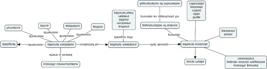
As shown in Figure 3, editorial mediation occurs in the context of scientific communication. This process involves the production of meanings and editorial products developed by information professionals or editors. Using the concept of science popularization, editorial mediation provides the public with easier access to the information and scientific content in these products. Science popularization fosters the creation of accessible products and languages for the general public to provide opportunities for access to and appropriation of scientific information.
Regarding the aesthetic dimension, editorial mediation fosters feelings of belonging and identity based on the products developed, in addition to providing a sense of beauty. Regarding the formative dimension, editorial mediation provides opportunities for learning and favors the construction of new knowledge through the appropriation of information by favoring access to scientific knowledge.
From the perspective of editorial mediation, the ethical and political dimensions can be interpreted as the responsibility of the editorial mediator to adopt ethical attitudes that permeate their entire professional practice and are reflected in the processes and products developed and presented to the public. Respect for others and the social issues that permeate information environments fosters an ethical vision among those involved, making it a consistent practice throughout editorial mediation.
These dimensions, when applied to editorial mediation, favor access to information and the construction of useful knowledge for individuals to develop a critical view of society, consolidate democracy, and reduce differences. This reflects the political dimension of editorial mediation.
Furthermore, the dimensions of mediation expressed by Gomes (2020) can be observed at different stages of the editorial mediation process because professionals must establish dialogue with their team and the subjects involved to promote conditions that favor access to information and knowledge. This, in turn, favors the construction of meaning.
The production of meaning expressed in the conceptual map (Figure 4) represents how information reaches the user through the dialogic process that takes place between the participants in the action. Through the user's identification with the story/plot/illustrations or even with a representation of something relevant to the listener, such as a cultural, political, or social fact, it facilitates the understanding of the message conveyed in the action.
The communication of information through editorial mediation takes place in various ways, involving professionals and processes, whether from the reader, the evaluators of the work, and/or the technical team, which seeks to “present volumes that are accessed not only for their content, but also for the feelings they arouse, such as identity, belonging, prestige, credibility, and trust, among others” (Nunes, 2019, p. 17). With the same purpose, the author lists some important aspects that can lead to a characterization of editorial mediation in scientific journals:
it develops in the publishing field, whether in physical or digital publications; it is operated using information and communication systems and technologies; it requires constant dialogue between the actors involved in the process; it is carried out from an aesthetic perspective, aiming to develop a sense of beauty and belonging among its participants; it presupposes not only access to scientific information , but also a change in the subjective internal states of those involved in the publishing process (Nunes, 2019, p. 17).
Editorial mediation is an activity that requires planning and diverse professionals to work at all stages of the process, from the production of the work to user feedback, as well as studies of users who have access to the scientific knowledge produced and disseminated by editorial products, with a view to gaining an in-depth understanding of their audience.
4.2 Experiences of popularizing science in literature
Popularizing science is an essential practice for bringing scientific knowledge closer to society. Several studies demonstrate the importance of this activity for the effectiveness of science and the public's understanding of the relevance of scientific research. Farias and Maia (2020) emphasize that society's appropriation of scientific knowledge fosters critical thinking and social activism.
In Latin America and the Caribbean, the terms "scientific outreach" and "popularization of science" are often used synonymously. According to Santos-D'Amorim, Cruz, and Correia (2020), scientific outreach is the process of disseminating scientific information to the general public, while scientific diffusion is directed toward specialists.This distinction is important for understanding the different approaches to scientific communication.
The Oswaldo Cruz Foundation (Fiocruz) is a notable example of an institution that promotes the popularization of science in Brazil. Beviláqua, Santos, and Oliveira (2021) report that Fiocruz uses mass media, educational materials, and in-person activities to make scientific knowledge more accessible. One of Fiocruz's initiatives is the Museum of Life, which receives visits from schools and professors, facilitating the exchange of knowledge and dialogue between science communicators and the public.
In addition to its in-person activities, Fiocruz produces educational materials, including books, handouts, atlases, pamphlets, booklets, and digital games. Founded in 1993, Editora Fiocruz publishes works that contribute significantly to public health and other scientific fields. These publications are distributed free of charge, thereby expanding access to scientific knowledge.
Another notable program is Minas Faz Ciência (Minas Does Science), run by the Minas Gerais State Research Support Foundation (FAPEMIG). Silva (2019) describes how the program, which began in 1998, promotes scientific outreach through videos, magazines, and events. Examples of publications that bring science closer to the public using accessible language and topics of general interest include the magazine Minas Faz Ciência and its children's version.
Scientific blogs also play an important role in popularizing science. Santos-D'Amorim, Cruz, and Correia (2020) emphasize that blogs broaden the ways scientific knowledge is communicated, fostering integration between academia and society. These outlets use simple, direct language to facilitate understanding of scientific content among the general public.
The Plurissaberes Channel, from the Human Sciences Library of the Federal University of Ceará (UFC), is a scientific outreach initiative that uses digital platforms. According to Santos, Fernandes, and Lima (2022), the channel promotes socio-informational inclusion through audio descriptions and other strategies. During the pandemic, the channel expanded its activities and reached a wider, more diverse audience.
These experiences demonstrate that popularizing science is a multifaceted practice that can be carried out using various strategies and tools. Using digital technologies, social networks, blogs, magazines, and observatories broadens the reach of popularization initiatives, making scientific knowledge more accessible and understandable to society.
In short, the literature on science popularization highlights the importance of making scientific knowledge accessible to the general population. These initiatives promote understanding and interest in science and strengthen the connection between academia and society. This contributes to social and economic development. Therefore, the popularization of science is a fundamental strategy for building a more informed and participatory society.
4.3 Proposals for strategies to popularize science
Popularizing science is essential to democratizing access to scientific knowledge and promoting a more informed, participatory society. To this end, strategies must be developed to ensure broad access to knowledge. These strategies should use language appropriate to the target audience and rely on the work of qualified mediators. These strategies can be adapted to different devices and informational objectives, as described below.
4.3.1 Strategy 1: Creation of Scientific Outreach Magazines
The creation of scientific outreach magazines is an effective strategy for circulating knowledge and providing public access to scientific information. These magazines should be structured around thematic sections, news, experience reports, interviews, and sections dedicated to readers and editors. Successful examples include Fiocruz Amazônia Revista and FAPEMIG publications, which use QR codes, hyperlinks, interactive games, and quizzes to make content more accessible and interesting.
4.3.2 Strategy 2: Use of Social Networks and the Internet
Social media and the internet are powerful tools for popularizing science. Creating accounts on platforms such as YouTube, Instagram, Facebook, Twitter, and LinkedIn allows you to reach a wide and diverse audience. Posts should address everyday topics in accessible language, promoting interaction and audience engagement.
4.3.3 Strategy 3: Training Courses for Editorial Mediators
Training editorial mediators is crucial for popularizing science. We propose offering mini-courses totaling 8 hours, divided into three modules covering the fundamentals of editorial mediation, science popularization, and practical skill development. These courses will prepare professionals to work in editorial mediation and promote scientific communication effectively and accessibly.
When implemented, these strategies have the potential to transform the relationship between science and society by making scientific knowledge more accessible and understandable to everyone. Popularizing science promotes scientific literacy and strengthens citizenship and democratic participation, contributing to social development.
6 CONCLUSION
By the end of the presentation of the research results, it is clear that the study has achieved its objectives and made significant contributions to promoting science based on editorial mediation. In this sense, mediation in information science is a recent concept that has been consolidating from various angles, including those addressed in this study. These angles include the expansion of research on the topic among research groups in the field and the works published in GT3 of ENANCIB, which is dedicated to the debate on the circulation and appropriation of information. This debate is also reflected in bibliographic productions in books and scientific articles.
It is also understood that mediation comprises a dialogical process that allows for the exchange of knowledge and experiences within an informational environment. This process provides opportunities for the appropriation of information, provoking changes in subjects' states of knowledge and enhancing their capacity to act in their world. This perspective emphasizes the active role of individuals, enabling them to position themselves politically and act in favor of the community.
Regarding editorial mediation, it can be recognized as an extension of the concept of mediation at the intersection of scientific information communication and editorial processes. This promotes the dissemination and diffusion of knowledge. It occurs in various informational environments and is carried out by a mediator who is involved in activities aimed at producing and publishing editorial products that bring scientific information to a specific audience.
Editorial mediation is thus characteristic of editorial environments. Five dimensions of mediation stand out: dialogic, aesthetic, formative, ethical, and political. While our studies in 2019 focused only on the aesthetic dimension, we can now affirm the presence of all five dimensions in the editorial mediation process.
This process is established by the person who mediates an editorial product, whether they are an editor or not. Bringing this dialogue to the construction of materials and debating with the public-whether they are authors, evaluators, readers, or other professionals involved in the process-is of paramount importance in ensuring the construction of meaning and the dissemination of knowledge.
Popularizing science is an indispensable practice for bringing scientific knowledge closer to society. Popularization strategies, such as creating scientific outreach magazines and observatories, using social networks, and offering training courses for editorial mediators, have proven effective in expanding the reach and impact of scientific communication. These initiatives promote scientific literacy, encourage social engagement, and strengthen citizenship.
A mini-course proposal to train editorial mediators focused on popularizing science is a promising strategy for training professionals in the field. Training qualified mediators is essential to ensuring that scientific knowledge is communicated in an accessible and understandable way, thereby promoting the critical appropriation of information by the public at large.
In conclusion, editorial mediation is essential to scientific communication and the popularization of science. Implementing popularization strategies and training editorial mediators are essential for strengthening the connection between science and society and contributing to social and economic development. Therefore, the popularization of science is an indispensable strategy for building a more informed, critical, and participatory society.
Future research should further explore the concept of scientific literacy, considering that the effectiveness of editorial mediation is contingent on constant dialogue with society, which is essential for the development of citizenship and the establishment of a democratic environment at the national level.
Acknowledgments:
Include the grant process
-
1
Available at: https://ancib.org/coordenacoes-e-ementas-de-gt/ Accessed on: April 22, 2024.
-
2
Available at: http://www.uel.br/eventos/cinf/index.php/epim2014/epim2014. Accessed on: July 25, 2022.
-
Funding:
Not applicable.
-
Ethical approval:
Not applicable.
-
Image:
Author's private collection.
-
Translation:
S. Iacovacci Translation Service
-
JITA:
EI. Scientific publishing
-
ODS:
4. Quality education
Availability of data and material:
Not applicable.
References
- ALBAGLI, S. Informação e desenvolvimento: uma perspectiva crítica. Brasília: IBICT, 1996.
- ALBAGLI, S. Sociedade da informação no Brasil: livro verde. Brasília: Ministério da Ciência e Tecnologia, 2007.
-
ALMEIDA JÚNIOR, O. F. Mediação da informação e múltiplas linguagens. Pesq. bras. Ci. Inf, Brasília, v. 2, n. 1, p. 89-103, 2009. Disponível em: https://revistas.ancib.org/index.php/tpbci/article/view/170/170 Acesso em: 27 jul. 2024.
» https://revistas.ancib.org/index.php/tpbci/article/view/170/170 - ALMEIDA JÚNIOR, O. F. Mediação da informação: um conceito atualizado. In: BORTOLIN, S.; SANTOS NETO, J. A.; SILVA, R. J. (org.). Mediação oral da informação e da leitura Londrina: Abecin, 2015. p. 9-32.
- ANDRETTA, P. I. S. As formas da mediação cultural: a mediação editorial em “Memórias Póstumas de Brás Cubas”, de Machado de Assis. 2021. 367f. Tese (Doutorado em Ciência da Informação) - Escola de Comunicações e Artes, Universidade de São Paulo, São Paulo, 2021.
-
ANDRETTA, P. I, S.; PERROTTI, E. A mediação editorial, dispositivos e materialidade: algumas impressões. In: ENCONTRO NACIONAL DE PESQUISA EM CIÊNCIA DA INFORMAÇÃO, 19., 2018. Londrina, PR. Anais [...]. Londrina, PR, ENANCIB, 2018. Disponível em: https://brapci.inf.br/index.php/res/v/102930 Acesso em: 28 jul. 2024.
» https://brapci.inf.br/index.php/res/v/102930 - ARAÚJO, C. A. Á. O que é Ciência da Informação Belo Horizonte: KMA, 2018.
- ARAÚJO, E. A construção do livro: princípios da técnica de editoração. 2. ed. Rio de Janeiro: Lexikon Editora Digital; São Paulo: Fundação Editora UNESP, 2008.
- BEVILÁQUA, A. L.; SANTOS, R. D.; OLIVEIRA, C. M. Ações de popularização da ciência na Fundação Oswaldo Cruz: uma análise das estratégias de divulgação científica. Revista Brasileira de Divulgação Científica, [S.l], v. 7, n. 2, p. 45-60, 2021.
- CARIBÉ, M. Comunicação científica e popularização da ciência: uma análise das práticas de divulgação científica no Brasil. São Paulo: Editora Unesp, 2015.
- CASTELLS, M. A galáxia da internet: reflexões sobre a internet, os negócios e a sociedade. Rio de Janeiro: Zahar, 2006.
- CASTELLS, M. A sociedade em rede São Paulo: Paz e Terra, 1999.
- CUNHA, M. B.; CAVALCANTI, C. R. O. Dicionário de Biblioteconomia e Arquivologia Brasília: Briquet de Lemos, 2008. xvi, 451 p.
- FACHIN, G. R. B.; HILLESSHEIM, A. I. A. Periódico científico: padronização e organização. Florianópolis, SC: Ed. UFSC, 2006.
- FARIAS, M.; MAIA, M. Observatório de Popularização da Ciência: uma proposta para instituições de ensino e pesquisa. Revista Brasileira de Educação, Rio de Janeiro, v. 25, n. 1, p. 3-19, 2020.
- GOMES, H. F. A dimensão dialógica, estética, formativa e ética da mediação da informação. Informação & Informação, Londrina, v. 19, n. 2, p. 46-59, maio/ago. 2014.
- GOMES, H. F. Mediação da informação e suas dimensões dialógica, estética, formativa, ética e política: um fundamento da Ciência da Informação em favor do protagonismo social. Inf. & Soc: Est., João Pessoa, v.30, n.4, p. 1-23, out./dez. 2020.
- MEADOWS, A. J. A comunicação científica Tradução de Antonio Agenor Briquet de Lemos. Brasília/DF: Briquet de Lemos, 1999.
- NUNES, M. S. C.; LOPES, R. F.; VELOSO, R. M. P. Mediação Editorial e a Comunicação Científica na Ciência da Informação In: ENCONTRO DE PESQUISA EM INFORMAÇÃO E MEDIAÇÃO, 3., 2021, Marília-SP. Anais [...]. Marília-SP: EDITORA UNESP, 2021. v.1, p.1-8.
-
NUNES, M. S. C. et al A popularização da ciência e a disseminação da informação científica. ConCI: Convergências em Ciência da Informação, Aracajú, v. 2, n. 3, p. 171-198, 23 maio 2019. Disponível em: https://seer.ufs.br/index.php/conci/article/view/13718 Acesso em: 27 jul. 2024.
» https://seer.ufs.br/index.php/conci/article/view/13718 - NUNES, M. S. C. Mediação Editorial e Dimensão Estética em Revistas Científicas da Ciência da Informação. In: ENCONTRO NACIONAL DE PESQUISA EM CIÊNCIA DA INFORMAÇÃO, 20., 2019 Florianópolis, SC. Anais [...]. Florianópolis, SC: ED. UFSC, 2019. v.1. p.1 - 15
- NUNES, M. S. C.; FARIAS, M. G. G. Mediação e popularização da ciência e da informação científica. In: JORNADA CIENTÍFICA INTERNACIONAL DA REDE MUSSI, 4., 2019, Belo Horizonte. Anais [...]. Belo Horizonte/MG: Editora da UFMG, 2019. p.475-486.
- NUNES, M. S. C.; VILAN FILHO, J. L. Evolução da comunidade de pesquisadores do Grupo de Trabalho 3 do Encontro Nacional de Pesquisa em Ciência da Informação a partir da perspectiva da colaboração científica In: ENCONTRO NACIONAL DE PESQUISA EM CIÊNCIA DA INFORMAÇÃO, 22., 2022, Porto Alegre. Anais [...]. Porto Alegre: Ed. Ufrgs, 2022. v.1. p.1-15.
- SANTOS, R. D.; FERNANDES, P. R.; LIMA, A. C. Canal Plurissaberes: uma experiência de divulgação científica na Universidade Federal do Ceará. Revista Brasileira de Divulgação Científica, [S.l], v. 9, n. 2, p. 187-202, 2022
- SANTOS-D'AMORIM, K.; CRUZ, L.; CORREIA, M. A importância da divulgação científica na pandemia de COVID-19: um estudo sobre a comunicação de recomendações de saúde. Revista Brasileira de Comunicação Científica, [S.l], v. 8, n. 1, p. 2-15, 2020.
-
SANTOS NETO, J. A. O estado da arte da mediação da informação: uma análise histórica da constituição e desenvolvimento dos conceitos. 2019. 462f. Tese (Doutorado em Ciência da Informação) - Faculdade de Filosofia e Ciências (FFC), Universidade Estadual Paulista, Marília, 2019. Disponível em: https://repositorio.unesp.br/handle/11449/181525 Acesso em: 25 abr. 2022.
» https://repositorio.unesp.br/handle/11449/181525 -
SILVA, A. M. Mediações e mediadores em Ciência da Informação. Prisma. com, Porto, n. 9, p. 68-104, 2009. Disponível em: http://aleph.letras.up.pt/index.php/prismacom/article/view/2057 Acesso em: 02 jun. 2025.
» http://aleph.letras.up.pt/index.php/prismacom/article/view/2057 - SILVA, J. Popularização da ciência na sociedade da informação: um estudo de caso do programa Minas Faz Ciência. Revista Brasileira de Divulgação Científica, [S.l], v. 7, n. 1, p. 45-72, 2019.
- VALENTIM, M. L. P. Gestão da informação e do conhecimento: um estudo sobre a sociedade da informação. São Paulo: Saraiva, 2002.
- ZAGANELLI, M.; GANTOS, S. A popularização da ciência nas instituições públicas: um estudo sobre a utilização da televisão como meio de divulgação científica. Revista Brasileira de Comunicação Científica, [S.l], v. 6, n. 2, p. 91-108, 2010.
Edited by
-
Editor-in-chief:
Gildenir Carolino Santos https://orcid.org/0000-0002-4375-6815

 Source: Caribé (2011).
 Source:
  Source: own elaboration, 2024 (CMap Tools)