
 Information Retrieval in Information Science: conceptual diversity and theoretical evolution
ABSTRACT
Introduction: Information retrieval is a fundamental element of information science, encompassing technical, cognitive, and social processes aimed at identifying and making relevant information available. The diversity of concepts present in the literature reflects the historical evolution of the field and the incorporation of new technologies and approaches.
Objective: This study sought to understand the evolution and conceptual diversity of information retrieval in the field of information science, based on the theoretical contributions of different authors. Methodology: This is an exploratory-descriptive research study with a mixed approach, based on a bibliographic survey. In addition to classic authors in this field of knowledge, the Term Frequency-Inverse Document Frequency technique was used to identify relevant works that address or expand on the concept of information retrieval.
Results: A conceptual evolution can be seen that starts from technical approaches focused on system efficiency, incorporates cognitive and interactive aspects, and, more recently, social and contextual dimensions. Among the authors, there is consensus on the centrality of the user, the relevance of information mediation, and the need for adaptable technologies. Models with interoperability, multimodal retrieval, and the use of iterative feedback are valued.
Conclusion: Information retrieval, in the field of information science, is a multifaceted process whose effectiveness depends on the articulation between theoretical foundations, technological resources, and contextual understanding. This integration reinforces its strategic role in consolidating the field and responding to the complex demands of the information society.
KEYWORDS
Information retrieval; Information science; Information society.
RESUMO
Introdução: A recuperação da informação constitui-se como um elemento fundamental da ciência da informação, englobando processos técnicos, cognitivos e sociais voltados à identificação e disponibilização de informação relevante. A diversidade de concepções presentes na literatura reflete a evolução histórica do campo e a incorporação de novas tecnologias e abordagens.
Objetivo: Este estudo buscou compreender a evolução e diversidade conceitual da recuperação da informação no âmbito da ciência da informação, a partir das contribuições teóricas de diferentes autores. Metodologia: Trata-se de uma pesquisa exploratória-descritiva, de abordagem mista, baseada em levantamento bibliográfico. Além de autores clássicos deste campo do conhecimento, utilizou-se a técnica Term Frequency-Inverse Document Frequency para identificar trabalhos relevantes que abordam ou expandem o conceito de recuperação da informação.
Resultados: Percebe-se uma evolução conceitual que parte de enfoques técnicos voltados à eficiência dos sistemas, incorpora aspectos cognitivos e interativos e, mais recentemente, dimensões sociais e contextuais. Entre os autores, há consenso sobre a centralidade do usuário, a relevância da mediação informacional e a necessidade de tecnologias adaptáveis. Modelos com interoperabilidade, recuperação multimodal e uso de feedback iterativo são valorizados.
Conclusão: A recuperação da informação, no âmbito da ciência da informação, configura-se como processo multifacetado, cuja efetividade depende da articulação entre fundamentos teóricos, recursos tecnológicos e compreensão contextual. Essa integração reforça seu papel estratégico na consolidação da área e na resposta às demandas complexas da sociedade da informação.
PALAVRAS-CHAVE
Recuperação da informação; Ciência da informação; Sociedade da informação.
1 INTRODUCTION
This research discusses the conceptualization of information retrieval (IR) in the field of information science (IS) based on various definitions found in the literature. The study aims to expand the understanding of IR by analyzing studies that address or expand upon this concept, considering its technical, cognitive, and social dimensions.
IS is a relatively new discipline that continues to evolve, drawing theoretical and conceptual influences from other fields to address issues in the field (Oliveira, 2008). Three characteristics are attributed to the existence and evolution of IS: interdisciplinarity, connection with information technology, and active participation in the evolution of the information society alongside other disciplines. Disciplines such as library science, engineering, computer science, psychology, and philosophy introduced this interdisciplinary profile (Saracevic, 1996).
However, it is important to note that interdisciplinarity has been recognized in this field since its inception, though it was not discussed in depth in the initial phase (Pinheiro, 2005). It is also important to note that some of these disciplines have contributed more than others. According to Saracevic (1996), the most influential disciplines were library science, computer science, cognitive science, and communication. Saracevic also highlights the collaboration of engineers and entrepreneurs in addressing the information explosion problem indicated by Vannevar Bush in 1945. This problem triggered debates and definitions about information retrieval (IR) in the 1950s and 1960s. IS uses the term IR to solve the information problem. Since then, information science has developed studies on the term to improve information management.
In light of this scenario, the objective of this research is to understand how various studies contribute to the conceptualization of IR in IC. The general objective is to identify and analyze the IR definitions present in the literature, as well as its relationship with interdisciplinary aspects, technological development, and the demands of the information society. More specifically, it aims to map the various definitions of IR and highlight their primary conceptual elements, analyze studies that address or expand the concept, and identify the convergences and divergences among the different perspectives. Through these efforts, we aim to provide a comprehensive overview of the conceptual diversity and theoretical evolution of IR, as well as its role in reinforcing IC.
The study is exploratory-descriptive with a mixed approach and uses bibliographic research in its operationalization. The sample used for this analysis was generated from texts addressed in the syllabus of the course "Advanced Studies in Information and Knowledge (EAIC)," which is taught in the Graduate Program in Management and Knowledge Organization (PPGGOC) at the Federal University of Minas Gerais (UFMG). This course includes classic authors in the field of IR and bibliographic research in three databases using the Term Frequency-Inverse Document Frequency (TF-IDF) technique to select works.The study used the Term Frequency-Inverse Document Frequency (TF-IDF) technique to select works from classic authors in the field of IR, as well as bibliographic research in three databases.
In this context, to highlight the conceptual diversity and theoretical evolution of information retrieval (IR), as well as its contributions to information communication (IC), this research was structured in two stages. First, we sought to conceptualize and characterize the term "information retrieval," adopting an approach based on renowned authors' contributions to the topic in different contexts and historical periods. The theoretical perspectives of Mooers (1951), Kochen (1974), Saracevic (1996, 1999), Capurro (2000, 2007), and Hjørland (2002, 2018) were examined; these scholars have made significant contributions to the conceptual development of the field. Next, the research presents and analyzes studies that directly address this theme, integrating them with previously discussed literature and highlighting intersections between different theoretical and methodological approaches.
2 INFORMATION RETRIEVAL AND ITS DEFINITIONS
Information retrieval (IR) involves storing, organizing, and searching collections. It has been a significant part of human technological development since the advent of writing, if not before. The first legitimate IR systems were file and library organization schemes, such as the Sumerian archives and those developed by Callimachus1 for the Library of Alexandria2. Since then, there have been several transformations, with a greater impetus for developing automated IR systems in the 20th century due to the need to manage ever-increasing amounts of information in business institutions and scientific development (Ferneda, 2012).
IR is considered primarily responsible for the development of IC. This is due to its numerous applications in the "information industry," which is defined as the set of activities focused on the production, organization, distribution, and use of information. However, it is important to note that IR was not alone in this process. The information industry had its roots in the 1950s and 1960s and reached online services in the 1970s, triggering a global configuration in the 1980s (Saracevic, 1996, 1999).
In this context, IR has become directly associated with the human need for information over the years. The need to retrieve information has promoted exploratory research on the subject, as well as studies on the structure, behavior, and nature of information. Starting in the 1970s, a new understanding of IR emerged that focused on interaction with users. This reflected the need to discuss the principles and theoretical aspects of the term (Saracevic, 1996).
The following chronological list details different approaches to the term "information retrieval," beginning with Calvin Northrup Mooers. Mooers was one of the pioneers in the field of IR and contributed significantly to its theoretical and practical development. According to Mooers (1951), IR encompasses the intellectual aspects of describing information and its specifics for searching, as well as the systems, techniques, and machines used for the process.
Another important researcher in this field, Kochen (1974), conceptualizes the IR knowledge system in three parts: first, people as information processors; second, documents as support; and third, topics as representations. The focus here is on the dynamic processes and interactions within the life cycle of these three elements, considering time as a common variable among them. According to the author, information retrieval cannot be effectively addressed within the limits of a single discipline.
As previously mentioned, Saracevic (1996) views information retrieval as the primary driver of IC development, offering a multifaceted concept that incorporates the technical, cognitive, and interactive elements of the retrieval process. Saracevic defines information retrieval as the process of matching users' information needs with documents available in an information system.
Rafael Capurro's concept of information retrieval takes a more philosophical and ethical approach to information management and access. Capurro (2000) argues that IR is a process of interpreting and attributing meaning. In this process, relevance does not exist inherently in data; rather, it emerges from the context and needs of the user. Capurro emphasizes the importance of considering human and social aspects in information retrieval, such as how information is used and its impact on social practices and individuals' lives.
The author also emphasizes the ethical responsibility of information professionals to ensure that information retrieval systems respect the rights and dignity of users, promoting equitable and fair access to information. In this regard, he reports that,
[...] Information does not simply communicate between two cognitive capsules based on a technological system. Rather, every information system is designed to support the production, collection, organization, interpretation, storage, retrieval, dissemination, transformation, and use of knowledge. Thus, it should be conceived within the framework of a specific social group for specific areas (Capurro, 2007, p. 10).
In turn, Birger Hjørland (2002) takes a contextual and sociocultural approach to IR. He criticizes traditional approaches that treat IR as a purely technical, algorithm-centered process. Instead, he advocates for a more holistic, interdisciplinary approach that considers users' information practices and the epistemological structures of the relevant disciplines. According to Hjørland (2018), the purpose of an IR system is to provide information in response to a request, which represents the informational need that IR attempts to satisfy.
3 INFORMATION RETRIEVAL SYSTEMS
Information retrieval requires artifacts for operationalization, generally referred to as information retrieval systems. Cendón (2005) explains that, broadly speaking, these systems involve locating desired information in a database. In the field of library and information science, however, the term has been used to represent scientific literature searches (Lancaster, 1979; Warner, 1993, as cited in Cendón, 2005). This type of information retrieval system can be represented by three stages: description and indexing, vocabulary, and search (Figure 1).
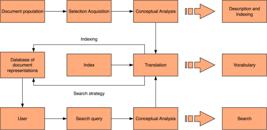
In this context, Cendón (2005) suggests classifying the main types of information systems according to the type of data they provide:
-
a) Reference databases, which include references or secondary information, such as bibliographies or directories;
-
b) Source text databases, which include complete information or primary data and can be full-text, dictionary, numerical, or image databases, among others.
However, it is impossible to discuss contemporary retrieval systems without mentioning search engines. Unlike old directories with hierarchical organization, search engines use robots to collect as many resources as possible. Because their databases are so large, search engines allow users to locate desired items by searching for keywords or sentences that resemble natural language (Cendón, 2001).
Regardless of the system, objective, or type of data to be retrieved, the notion of an "information retrieval system" continues to encompass a set of theories, practices, and technologies that guarantee its prominent place in information science research.
4 METHODOLOGY
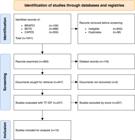
As previously mentioned, this is an exploratory-descriptive study with a mixed approach. According to Creswell (2016), this is a research approach that combines qualitative and quantitative methods to better understand a problem. Thus, data collection was organized into two stages: first, a preliminary review of literature on IR in the context of IC was conducted. This review explored studies presented and discussed within the EAIC discipline of the PPGGOC at UFMG, as well as the work of other recognized authors in the field. Second, complementary data collection was performed using text analysis techniques to identify additional relevant works related to the theme (Figure 2).

First, we conducted a qualitative analysis of the available studies to select the main references within the investigated field. This process enabled us to identify the most relevant works for the discussion on the topic.
In the second stage, we collected data from three relevant scientific databases: the Information Science Database (BRAPCI), which compiles articles from specialized journals; the Brazilian Digital Library of Theses and Dissertations (BDTD), which contains strictly academic publications; and the CAPES Journal Portal, which offers a wide range of national and international scientific publications. The search expression used to retrieve the records was “information retrieval” AND “information science.” Publications from 1962 onwards were considered, except for the CAPES database, for which the time frame was set from 1969 onwards due to record availability.
Initially, 1,041 works were retrieved from searches in the three databases. Next, we applied the inclusion criteria, which included publications written in Portuguese that were open access and peer-reviewed. Specifically, for BDTD, we restricted the search to theses. Inaccessible works (or those without abstracts) were discarded as an exclusion criterion, as their analysis would be impossible. Subsequently, duplicate records were eliminated to ensure the integrity of the final set.
After this refinement stage, a corpus of 363 works was obtained for abstract analysis. Of these, 247 were accepted because they addressed or expanded the concept of IR and constituted relevant contributions to the scope of the research.
For this validated set, the most frequent terms present in the abstracts were identified (Figure 3). The purpose of this survey was to compare them to the search expression used toverify thematic consistency and reinforce the validity of the analyzed corpus.

The TF-IDF technique was applied for the final selection of works. Widely used in text mining and information retrieval, it assesses the importance of a word in a specific document relative to a set of documents. In this case, it highlights words that are important to the semantics of a document, yet rare in others.
Manning, Raghavan, and Schütze (2008) explain that TF-IDF combines two metrics: term frequency (TF), which measures how often a word appears in a document, and inverse document frequency (IDF), which quantifies the rarity of a word across an entire document corpus. It is expressed according to Equation 1:
Where,
-
a) TF(t,d) is the frequency of term t in document d;
-
b) IDF(t) is calculated as where N is the total number of documents and df(t) is the number of documents containing term t.
For the set of works previously selected from three databases, TF-IDF was applied using the terms "interdisciplinarity," "technology," and "society" to identify those most closely aligned with Saracevic's (1996) three essential characteristics of IC. The results were combined by summing the values assigned to each term, which allowed for the creation of a ranking of the most significant works. Thus, 39 works had a TF-IDF score greater than zero, and the ten with the highest scores were selected for full-text analysis. Figure 4 shows the PRISMA flow diagram with the results obtained in each phase of the search process until the final selection.
5 RESULTS
The preliminary review identified contributions to the conceptualization of information retrieval (IR) by classic authors, including Calvin Mooers, Manfred Kochen, Tefko Saracevic, Rafael Capurro, and Birger Hjørland. Despite their differing approaches, they share common elements in their understanding of the phenomenon. These observations are summarized in Chart 1, which categorizes the aspects identified in relation to the conceptual diversity of IR into main theoretical lines and contributions to the concept of IR.
A comparative analysis of the selected authors reveals different perspectives that, despite their distinct theoretical foundations, converge in recognizing information retrieval (IR) as a dynamic, multifaceted field sensitive to the context of use. In this sense, Mooers (1951) pioneered the formal conceptualization of IR by establishing functional and operational bases that clearly differentiate storage from retrieval, while also placing relevance as a central criterion. This pioneering view, centered on system efficiency, formed the basis for subsequent approaches.
Kochen (1974) expanded this vision to incorporate cognitive aspects, recognizing that the effectiveness of IR is not limited to technical architecture but also involves mental processes and interaction between users and systems. This perspective anticipates the need to consider information behavior as a structuring element of retrieval systems.
Saracevic (1996, 1999) further articulates the relationship between the technical, cognitive, and social dimensions. He formalizes relevance as a multifaceted phenomenon and proposes typologies that consider the relationship between informational needs, available resources, and situational context. The author's work signifies a shift from a technology-centered paradigm to a user-centered one.
In turn, Capurro (2000, 2007) shifts the discussion to a hermeneutic field in which information is conceived as an interpretive and situated phenomenon. This approach emphasizes that retrieval is an act mediated by interpretations, meanings, and cultural contexts, not just a technical process of matching terms and documents. This expands the semantic scope of IR.
Finally, Hjørland (2002, 2018) proposes a sociocognitive and domain-oriented approach that builds on previous work by emphasizing the impact of conceptual structures and community values on the organization and retrieval of information. This perspective reiterates the impossibility of neutrality in IR, positioning relevance as dependent on the social and epistemological framework.
The dialogue between these approaches demonstrates that the evolution of the concept of IR progresses from an operational and technical focus (Mooers, 1951) to an integration of cognitive and interactive elements (Kochen, 1974; Saracevic, 1996, 1999) and finally to the incorporation of interpretive, cultural, and social dimensions (Capurro, 2000, 2007; Hjørland, 2002, 2018), as illustrated in Figure 5. This evolution demonstrates that IR is more than a set of search techniques; it is a complex process of information mediation whose effectiveness depends on technological adequacy and harmony with users' epistemological and cultural contexts.
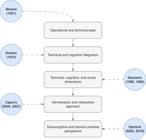
Chart 2 shows the ten complementary works selected from the BRAPCI, BDTD, and CAPES databases in the second stage of data collection. The works are listed in descending order by the score obtained using the TF-IDF technique, which considers the relevance of the terms "interdisciplinarity," "technology," and "society" in each work compared to the other retrieved works.
An analysis of ten studies reveals that contributions to the concept of information retrieval (IR) are intrinsically aligned with the three fundamental characteristics that underpin the existence and development of information communication (IC), as outlined by Saracevic (1996).
Although interdisciplinarity is not the central focus of all studies, the incorporation of fundamentals from computer science, linguistics, cognitive science, and data science is evident. This integration manifests in the application of representation and indexing models that explore semantics and knowledge organization and in the adoption of data mining and machine learning techniques. These techniques demonstrate a continuous dialogue between different fields aimed at improving retrieval processes.
Information technology emerges as a structuring element in the analyzed proposals. The works explore the development of efficient algorithms, semantic indexing mechanisms, and the unification of models for multimodal retrieval, including text, images, and audio. Technological approaches aim to optimize system performance and adapt to changes in information demands by incorporating iterative feedback, interoperability, and ontology integration to promote semantic interoperability between different platforms.
Active participation in the evolution of the information society is demonstrated by recognizing IR as a strategic tool for accessing, filtering, and critically using information in increasingly broad and complex contexts. Several studies emphasize the importance of the user and their informational behavior, highlighting the need for adaptable interfaces, informational mediation, and the assessment of contextual relevance. This perspective positions IR as an integral component of an informational ecosystem that supports knowledge management, scientific research, and decision-making processes across various social and organizational domains.
The synthesis of these studies shows that, when conceived as a technical, cognitive, and social process, IR advances in line with the evolution of IC. It does so by simultaneously incorporating technological sophistication, integrating multiple areas of knowledge, and performing the social function of expanding and qualifying access to information. This alignment reinforces the relevance of IR in IC and points to its central role in strengthening the contemporary information society.
6 CONCLUSION
This study examined the evolution and conceptual diversity of international relations (IR) in the context of international communication (IC), drawing on theoretical contributions from various authors. The results demonstrate that IR has evolved conceptually, expanding its scope and incorporating multiple theoretical and methodological perspectives. While there are variations in emphasis and contexts of application, there is a consensus on the importance of the user, information mediation, and technologically adaptable systems and models.
The development of the IR concept can be seen to accompany technological and social transformations, shifting from a predominantly technical and efficiency-centered view to one that includes cognitive, interactive, and contextual dimensions. This expansion contributes to a more comprehensive understanding of the phenomenon and reinforces its strategic relevance to the consolidation and strengthening of IC.
Thus, IR asserts itself as a multifaceted process whose effectiveness depends on the interplay of solid theoretical foundations, adequate technological resources, and sensitivity to the demands and specificities of informational contexts. This balance is essential for information science to consistently and innovatively respond to the challenges posed by the information society.
Acknowledgments:
Not applicable.
-
1
Callimachus (310 BC-240 BC), Greek poet, librarian, grammarian, and mythographer.
-
2
One of the greatest centers of knowledge production in Antiquity, established during the third century BC in the palace complex of the city of Alexandria, in the Ptolemaic Kingdom of Ancient Egypt.
-
Funding:
This study was conducted with the support of the Coordination for the Improvement of Higher Education Personnel - Brazil (CAPES) - Funding Code 001.
-
Ethical approval:
Not applicable.
-
Image:
Extracted from the Lattes platform
-
Translation:
S.Iacovacci Translation Service
-
JITA:
BD. Information society
-
SDG:
4. Quality education
Availability of data and material:
Not applicable.
References
-
ALMEIDA, L. da S.; DIAS, T. M. R. Análise dos mecanismos de busca de repositórios institucionais de acesso aberto. RDBCI: Revista Digital de Biblioteconomia e Ciência da Informação, Campinas, SP, v. 21, e023008, 2023. DOI: https://doi.org/10.20396/rdbci.v21i00.8672274
» https://doi.org/10.20396/rdbci.v21i00.8672274 -
BOCCATO, V. R. C. O contexto sociocognitivo do indexador no processo de representação temática da informação. Encontros Bibli: Revista Eletrônica de Biblioteconomia e Ciência da Informação, Florianópolis, v. 17, n. esp., p. 67-86, 2012. DOI: https://doi.org/10.5007/1518-2924.2012v17nesp1p67
» https://doi.org/10.5007/1518-2924.2012v17nesp1p67 -
BRAGA, G. M. Informação, ciência da informação: breves reflexões em três tempos. Ciência da Informação, Brasília, v. 24, n. 1, 1995. Disponível em: https://revista.ibict.br/ciinf/article/view/612 Acesso em: 20 ago. 2025.
» https://revista.ibict.br/ciinf/article/view/612 -
CAPURRO, R. Ethical challenges of the information society in the 21st century. The International Information & Library Review, London, v. 32, n. 3-4, p. 257-276, 2000. DOI: https://doi.org/10.1080/10572317.2000.10762513
» https://doi.org/10.1080/10572317.2000.10762513 -
CAPURRO, R. Epistemología y ciencia de la información. Enlace, Maracaibo, v. 4, n. 1, p. 11-29, 2007. Disponível em: https://encurtador.com.br/Dwj5e Acesso em: 20 ago. 2025.
» https://encurtador.com.br/Dwj5e -
CENDÓN, B. V. Ferramentas de busca na web. Ciência da Informação, Brasília, v. 30, n. 1, p. 39-49, 2001. Disponível em: https://revista.ibict.br/ciinf/article/view/937 Acesso em: 20 ago. 2025.
» https://revista.ibict.br/ciinf/article/view/937 - CENDÓN, B. V. Sistemas e redes de informação. In: OLIVEIRA, M. de (org.). Ciência da informação e biblioteconomia: novos conteúdos e espaços de atuação. 2. ed. Belo Horizonte: UFMG, 2005. p. 45-75.
- CRESWELL, J. W. Projeto de pesquisa: métodos qualitativo, quantitativo e misto. 3. ed. Porto Alegre: Artmed, 2016.
-
DZIEKANIAK, G. V. Participação do bibliotecário na criação e planejamento de projetos de softwares: o envolvimento com a tecnologia da informação. RDBCI: Revista Digital de Biblioteconomia e Ciência da Informação, Campinas, SP, v. 2, n. 1, p. 37-56, 2004. DOI: https://doi.org/10.20396/rdbci.v2i1.2072
» https://doi.org/10.20396/rdbci.v2i1.2072 - FERNEDA, E. Introdução aos modelos computacionais de recuperação da informação Rio de Janeiro: Ciência Moderna, 2012.
-
HJØRLAND, B. Epistemology and the socio-cognitive perspective in information science. Journal of the American Society for Information Science and Technology, New York, v. 53, n. 4, p. 257-270, 2002. DOI: https://doi.org/10.1002/asi.10042
» https://doi.org/10.1002/asi.10042 -
HJØRLAND, B. Library and information science (LIS), part 1. Knowledge Organization, Baden-Baden, v. 45, n. 3, p. 232-254, 2018. DOI: https://doi.org/10.5771/0943-7444-2018-3-232
» https://doi.org/10.5771/0943-7444-2018-3-232 -
JESUS, M. S. de. Os analistas de informação e a sua relação com a ciência da informação: histórico da integração desses profissionais. Revista Ibero-Americana de Ciência da Informação (RICI), Brasília, v. 4, n. 1, p. 115-133, 2011. DOI: https://doi.org/10.26512/rici.v4.n1.2011.1665
» https://doi.org/10.26512/rici.v4.n1.2011.1665 - KOCHEN, M. Principles of information retrieval New York: Melville Publishing Company, 1974.
- LANCASTER, F. W. Information retrieval systems: characteristics, testing and evaluation. 2. ed. New York: Wiley Interscience, 1979.
- MANNING, C.; RAGHAVAN, P.; SCHÜTZE, H. Introduction to information retrieval Cambridge: Cambridge University Press, 2008.
-
MOOERS, C. N. Zatocoding applied to mechanical organization of knowledge. American Documentation, [S.l.], v. 2, p. 20-32, 1951. DOI: https://doi.org/10.1002/asi.5090020107
» https://doi.org/10.1002/asi.5090020107 -
NHACUONGUE, J. A.; FERNEDA, E. O campo da ciência da informação: contribuições, desafios e perspectivas. Perspectivas em Ciência da Informação, Belo Horizonte, v. 20, n. 2, p. 126-143, 2015. DOI: http://dx.doi.org/10.1590/1981-5344/1932
» http://dx.doi.org/10.1590/1981-5344/1932 -
NUNES, F. R. E.; MACULAN, B. C. M. S.; ALMEIDA, M. B. Os fundamentos da web semântica como ferramentas de auxílio para as demandas da sociedade da informação. Em Questão, Porto Alegre, v. 26, n. 3, p. 224-249, 2020. Disponível em: https://seer.ufrgs.br/index.php/EmQuestao/article/view/92336 Acesso em: 20 ago. 2025.
» https://seer.ufrgs.br/index.php/EmQuestao/article/view/92336 -
OLIVEIRA, L. S.; CASTRO, F. F. de; ROCHA, E. S. S. Recuperação da informação jurídica: um mapeamento sistemático. In: ENCONTRO NACIONAL DE PESQUISA E PÓS-GRADUAÇÃO EM CIÊNCIA DA INFORMAÇÃO, 24., 2024, Vitória, ES. Anais [...]. Vitória, ES: ANCIB, 2024. Disponível em: https://encurtador.com.br/aelXF Acesso em: 20 ago. 2025.
» https://encurtador.com.br/aelXF - OLIVEIRA, M. de. Origens e evolução da ciência da informação. In: OLIVEIRA, M. de (coord.). Ciência da informação e biblioteconomia: novos conteúdos e espaços de atuação. Belo Horizonte: UFMG, 2008. p. 9-28.
-
PINHEIRO, L. V. R. Processo evolutivo e tendências contemporâneas da ciência da informação. Informação & Sociedade: Estudos, João Pessoa, v. 15, n. 1, p. 13-48, 2005. Disponível em: http://ridi.ibict.br/handle/123456789/23 Acesso em: 20 ago. 2025.
» http://ridi.ibict.br/handle/123456789/23 -
RODRIGUES, A. L. C.; SILVA, A. R. S. R. Base de dados de informações jornalísticas sobre a Amazônia: ciência, tecnologia e meio ambiente - BDIJAm: em busca da qualidade. Ciência da Informação, Brasília, v. 36, n. 1, p. 189-196, 2007. Disponível em: https://revista.ibict.br/ciinf/article/view/1197 Acesso em: 20 ago. 2025.
» https://revista.ibict.br/ciinf/article/view/1197 -
SARACEVIC, T. Ciência da informação: origem, evolução e relações. Perspectivas em Ciência da Informação, Belo Horizonte, v. 1, n. 1, p. 41-62, 1996. Disponível em: https://periodicos.ufmg.br/index.php/pci/article/view/22308 Acesso em: 31 jul. 2025.
» https://periodicos.ufmg.br/index.php/pci/article/view/22308 -
SARACEVIC, T. Information science. Journal of the American Society for Information Science, Syracuse, v. 50, n. 12, p. 1051-1063, 1999. Disponível em: https://encurtador.com.br/k3K9t Acesso em: 19 ago. 2025.
» https://encurtador.com.br/k3K9t -
SILVA, L. E. F.; OLIVEIRA, B. M. J. F. Mnemosyne infor-comunicativa: a possibilidade axiomática de construção de um conceito de memória para a ciência da informação. Informação & Sociedade: Estudos, João Pessoa, v. 24, n. 1, p. 135-143, 2014. Disponível em: https://periodicos.ufpb.br/index.php/ies/article/view/17658 Acesso em: 20 ago. 2025.
» https://periodicos.ufpb.br/index.php/ies/article/view/17658
Edited by
-
Editor:
Gildenir Carolino Santos https://orcid.org/0000-0002-4375-6815

 Source: Adapted from
  Source: Prepared by the authors (2025)
 Source: Prepared by the authors (2025)
 Source: Prepared by the authors (2025)
 Source: Prepared by the authors (2025)