
 The Effect of Judges’ Profiles on Sentencing Drug Trafficking
Abstract
This article investigates the effect of the decision maker’s profile on sentencing drug-trafficking cases. Based on habeas corpus from defendants under pretrial custody for drug trafficking sentenced by a subnational criminal court in Brazil, favorable and non-favorable decisions were examined in light of the biographical classifiers of the judges. Variance among votes was analyzed with the aid of decision categories, concerning the application of the legal text, and decision makers’ typologies, concerning background and organizational status. Results show that judges recruited in the state, who attended traditional law schools in the state capital city, with homogeneous careers, are more inclined to repeat the collective orientation of the court: denying the petition. However, decision makers from diverse regional backgrounds, with a non-traditional college education and hybrid professional trajectories have a greater likelihood of exhibiting pro-defendant behavior. Women and substitute judges, whose performance is subject to greater group pressure, are highly unlikely to release custody of an individual facing a drug-related accusation. While focusing on the votes issued by women as opposed to their male counterparts, more attachment to formal requirements of the law was observed; thus, further research on the impact of gender in criminal decision-making is recommended.
Keywords
Trial-judging; decision-maker profile; drug trafficking; Brazilian criminal justice; habeas corpus
Resumen
Este artículo investiga el efecto del perfil del juez en la decisión de casos de tráfico de drogas. A partir de habeas corpus de acusados en prisión preventiva por tráfico de drogas en un tribunal subnacional brasileño, se examinaron las decisiones favorables y desfavorables a la luz de la biografía de los jueces. La variación en los votos se analizó con la ayuda de categorías de decisión, referidas a la aplicación de la ley, y tipologías de decisores, referidas a la trayectoria y al estatus organizativo. Los resultados muestran que los jueces contratados en el Estado, que asistieron a facultades de Derecho tradicionales en la capital, con carreras homogéneas, son más propensos a repetir la orientación colectiva del tribunal: denegar la solicitud. En cambio, los responsables de la toma de decisiones con backgrounds diversos, formación universitaria no tradicional y trayectorias profesionales híbridas son más propensos a acceder a la petición del demandado. Las mujeres y los jueces sustitutos, cuya actuación está sujeta a una mayor presión de grupo, tienen muy pocas probabilidades de libertar de la prisión preventiva una persona acusada de estar implicada en delitos de drogas. Si nos centramos en los votos emitidos por las mujeres en comparación con sus colegas masculinos, se observa un mayor apego a los requisitos formales de la ley; así, se recomienda seguir investigando el impacto del género en la toma de decisiones penales.
Palabras clave
Comportamiento decisorio; perfil del decisor; narcotráfico; justicia penal brasileña; habeas corpus
Resumo
Este artigo investiga o efeito do perfil do julgador na decisão de casos de tráfico de drogas. Com base em habeas corpus de réus sob prisão preventiva por tráfico de drogas em uma corte subnacional brasileira, as decisões favoráveis e não favoráveis foram examinadas à luz da biografia dos juízes. A variação nos votos foi analisada com o auxílio de categorias de decisão, referentes à aplicação da lei, e tipologias de tomadores de decisão, referentes a trajetória e status organizacional. Os resultados demonstram que os juízes recrutados no estado, que frequentaram faculdades de Direito tradicionais na capital, com carreiras homogêneas, são mais propensos a repetir a orientação coletiva do tribunal: negar o pedido. Em contrapartida, os tomadores de decisão com backgrounds diversos, formação universitária não tradicional e trajetórias profissionais híbridas têm maior probabilidade de acatarem o pedido do réu. É altamente improvável que as mulheres e os juízes substitutos, cujo desempenho está sujeito a maior pressão do grupo, liberem a prisão preventiva de um indivíduo acusado de envolvimento com drogas. Ao focar nos votos proferidos pelas mulheres em comparação com os de seus colegas homens, observa-se maior apego aos requisitos formais da lei; assim, recomendam-se novas pesquisas sobre o impacto do gênero na tomada de decisões criminais.
Palavras-chave
Comportamento decisório; perfil do decisor; tráfico de drogas; justiça criminal brasileira; habeas corpus
Introduction
Brazil has a draconian policy of remanding to custody individuals arrested for common drug offenses.1 Using a dataset of habeas corpus cases on drug trafficking judged by decision makers sitting on multijudge panels of a subnational court, I will examine how justices’ profiles and judicial behaviors relate. This paper is meant to analyze the extralegal factors that affect an appeal judge when deciding whether to keep or release an alleged drug dealer from remand. Given that the circumstances of the crime, such as amount, type and variety of drug seized, and the record of the defendant, such as being a first-time offender, do not undergo much variation, judicial discretion is the alternative explanation mobilized for understanding sentencing behavior. This framing emphasizes the effect of both biographical variables of the decision maker and the organizational setting. First, I expect a more diverse background to positively affect the likelihood of a justice disregarding the normative orientation and authorizing the alleged drug trafficker be released pending trial. Second, in a collegial appellate court, I assume personal experiences of trial judging to be socially structured. On the basis of quantitative analysis of the judges’ background, panel effects are found to be greater among individuals who comprise the collegiate minority. Non-conformist votes are concentrated among male justices, with the probability to dissent2 increasing for holders of a more heterogeneous profile.
The next section (2) is a review of the relevant scholarship on trial judging, followed by section 3, an outline of the legal framework applicable to drug-related offenses in Brazil and a presentation of the formal model to be tested. In section 4, decisions and decision makers are associated using statistical tests in the search for patterns related to biographical variables of the judges. Findings are then discussed in light of previous research and a predictive model is presented. Then, section 5 aggregates strategic variables of the court’s internal dynamics relative to judges who are women and designated judges who exhibit a strong anti-defendant bias. I conclude with a discussion on limitations and suggestions for future research in this area of court studies.
1. Literature Review
Extralegal factors affect sentencing decisions, as a large number of empirical findings by the “pioneers of judicial behavior” have indicated (Pritchett, 1941; Ulmer, 1970; Nagel, 1961; Schubert, 1965). Despite no consensus in previous studies as to the degree that personal factors influence how judges vote, biographical classifiers do have an impact on decision making (for a review, see Keren; Wu, 2015; Epstein, 2017 [2016]; on Brazil, see Da Ros; Ingram, 2018). Because judges must make a number of decisions under uncertainty, it is impossible to avoid preconceptions (Epstein; Landes; Posner, 2013, p. 45). Like ordinary people, they sometimes rely on readily available information to make decisions (Guthrie, Rachlinski; Wistrich, 2007), and expertise does not always reduce the effect of irrelevant anchors on judicial decision making (Englich, Mussweiler; Strack, 2006). Some have found that leniency towards defendants in criminal cases grows at the beginning of the day and after a food break (Danziger; Levav; Avnaim-Pesso, 2011). Others have associated the context of yielding judicial decisions with the possibility of being impacted by information extraneous to the case (Bordalo; Gennaioli; Shleifer, 2015). Nevertheless, although heuristics may press behavior far from anticipated directions, human decision making is not “unpredictable, systematically irrational, random, rule-free, or elusive to social scientists” (Sunstein, 1997, p. 1175).
According to the attitudinal model, which was popular in the scholarship on judicial decision making in the Supreme Court of the United States, justices pursue ideological, partisan, or policy preferences, those being the individual attributes of judges that matter the most (Gillman, 2001; Segal; Spaeth, 1995). This model was criticized for treating decisions as the aggregate result of the preferences of individual judges, as if the institution had become an empty framework (Wahlbeck; Spriggs; Maltzman, 1999; Epstein; Knight, 1998). The empirical study of stare decisis offers insights into the limits of rational choice models in explaining a substantial part of trial judging (Segal; Spaeth, 1995) and the influence that membership in larger decision-making groups has on the choices of their members (Kritzer; Uhlmann, 1977).
According to the strategic approach to judicial decision making, a judge considers the preferences of other relevant actors when deciding, rather than always following his/her sincere preferences (Epstein; Knight, 1998). Observing the multiple preferences that operate at the individual level, Harnay and Marciano (2003) suggested that most judges follow the jurisprudence rather than assuming the cost of a solitary dissent. Precedent operates as a time-saving device (Klein; Hume, 2003) and always has some weight, whether because judges believe that upholding ingrained normative orientations improves the fairness of the legal system and boosts their public image, or because it is just how they have been taught to think (Micelli; Cosgel, 1994). Organizational context matters, as courts are inhabited institutions. Individual activities also matter, as actors definitions, interpretations and acts are embedded in court community culture (Ulmer, 2012). Most of the scholarship on panel effects has focused on the United States, where judges usually do follow the court’s majority opinion as a collective good, yet the relationship between judicial careers and judicial decisions has also been empirically investigated elsewhere (Epstein; Knight, 2013). Looking at Japanese courts, Ramseyer and Rasmusen (2001) found that judges whose decisions are overturned are given less prestigious duties. Bar-Niv and Lachman (2010) posit that Israeli judges act in conformity with their self-interest and purposefully spend more time writing opinions when aiming to increase their chances of being promoted.
Socio-legal research is a relatively recent phenomenon in many continental legal systems, and critical studies are infrequent (Hodgson; Roberts, 2010). Thanks to the civil law conception of the judge as a technical public official applying the law in a non-creative manner, empirically oriented research into the judiciaries did not develop at the same pace as it did in common law systems (Russell, 2010). The standard attitude in the civil law legal tradition is one where dissent is stifled, with the exception of a few inroads in the constitutional courts of Italy and Germany (Merryman, 2007). Even so, in a study of the Spanish Supreme Court, evidence indicates that judges behave more in accordance with the strategic model than with strict formalism or pure attitudinal approaches in this particular civil law court (Garoupa; Gili; Gómez-Pomar, 2012). Individual powers of Supreme Court justices, to veto or set agendas, have also been surveyed in Brazil (Arguelhes; Ribeiro, 2018; Ribeiro; Arguelhes, 2019, Arguelhes; Hartmann, 2017).
To what extent institutional constraints are altered as heterogeneity is incorporated has puzzled scholars, too. Early studies of the impact of gender on sentencing found no differences between male and female judges as decision makers (Kritzer; Uhlman, 1977; Gruhl; Spohn; Welch, 1981; Spohn, 1995). Others found that women are harsher than their male counterparts when sentencing criminal offenders (Steffensmeier; Hebert, 1999). Looking at the interplay between gender and criminal trial judging, Bogoch (1999) argues that when women judges sit alone on the bench, they are more lenient than men; nonetheless, in panels with at least one female judge, the decision is more severe in comparison with all-male panels. Also, from an institutionally grounded approach, Farhang and Wawro (2004), in their study of appellate decision making, showed that the presence of a woman on a panel increases the probability of an outcome for the plaintiff.
Contemporary studies argue that judges tend to decide cases that present issues salient to their demographic characteristic in ways that favor their demographic profile (Rachlinski; Wistrich, 2017); thus, non-male, non-White judges on the bench decide differently (Boyd, 2016). White judges make sentencing decisions about Black defendants charged with drug trafficking based on focal concerns (Alves, 2017; Reis; Ribeiro, 2023). Kastellec (2013, p. 168) found that assigning a Black judge to sit on a three-judge panel with two non-Black judges “nearly ensures that the panel will vote in favor of an affirmative action program”.
Regarding the Brazilian judiciary, there are a few studies on trial judging. Brazil was once known as the “República dos Bacharéis”, where members of the political elite were drawn from the ranks of lawyers (Adorno, 1988; Carvalho, 2003). Due to the power vested in the judiciary, becoming a judge continues to be considered by both men and women as the “apex of the profession” (Botelho, 2003, p. 440). Paladino (2007) stressed the shared characteristics among judges sitting on the Court of Appeals of Paraná, noting a proximity to the local elite, and Wowk (2009), looking at the same court, found evidence of a strong relationship between sentencing and higher education.
Castro (2018) studied judicial behavior in the state court of São Paulo, taking the rapporteur as his unit of analysis. Non-tenured judges issue more anti-defendant decisions than their counterparts, with a particularly strong bias in cases of drug-related crimes. Relative to tenured judges, those who are not yet tenured would decide criminal appeals by following the jurisprudence: either because of diminished judicial independence or to enhance productivity. Da Ros (2014) found that collegiality, judges sitting en banc, exerts meaningful effects on judges’ behavior in the state of Rio Grande do Sul. The current research thus focuses on aggregate and individual voting patterns relevant to analyzing how a subnational court in Brazil decides drug-related cases.
2. Legal Framework and Drug-Related Offenses
Brazil’s legal tradition provides a wide margin of discretion to decision makers, who are expected to mold the law to fit a particular case. Why do courts interpret drug-related cases as they do, and what enables them to decide that the plaintiffs should await trial under detention? This section presents what judges should observe when adjudicating cases of provisional incarceration of alleged drug traffickers.
2.1. Statutory Law: Restraints and Discretion
Because of the presumption of innocence principle, defendants are to be considered innocent until proven guilty. For drug offenders, such burden of proof should fall on the prosecution, and the courts are supposed to assess the quality of evidence and observe due process.3
Regarding drug offenses, the majority of alleged dealers find themselves in custody before the case reaches a court. As a rule, the Military Police, or another police authority, arrests individuals in possession of narcotics in flagrante delicto (‘in the act’), and only then is the detention presented before a competent judge.4 The judge can then either release, remand or declare pretrial custody based on the above criteria.5 If the defendant remains under custody, the legal remedy is to question the legality of the arrest. Habeas corpus petitions are filed on behalf of the detainee, addressed to the authority immediately above the one allegedly responsible for the unlawful detention. The Constitution provides the circumstances under which a constraint will be considered illegal, and freedom should be reestablished by granting the writ.6
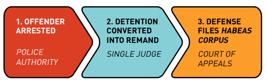
Due to this arrangement, the decision to classify someone in possession of drugs as a user or a trafficker impacts on the remainder of the criminal procedure (represented in Figure 1), since, if there is no intent to sell, the declassification of trafficking to possession should apply.7 In drug-related offenses, separating lower tier drug dealers from users is no minor task. Upon it hinges the guilt or innocence of the defendant. According to the Anti-Drug Act, the distinction between the drug user and the trafficker should be drawn based on the following criteria: (a) nature of the substance, (b) quantity of the substance, (c) place and conditions under which the action took place, (d) social and personal circumstances of the offender, and (e) prior record of the offender. While sentencing alleged dealers, such elements, the first two objective criteria and the other three subjective ones, should be considered by the judges both to determine whether the drug was intended for personal consumption and also as a basis to decide the petitioner’s writ to be released to await trial. But case law analysis shows that the testimonies of police officers are “the filter and the gavel” for judges, who have discretionary powers to distinguish drug users from drug dealers (Dias Fonseca; van Wingerden, 2020).
As conviction rates confirm, judicial practices follow a pattern: defendants charged with drug trafficking crimes are convicted in 91% of cases.8 The sharp rise in the incarceration of detainees for drug offenses has been attributed to the enactment of Law No. 11,343/2006 (The Anti-Drug Act [Brazil, 2006]), which is very much in line with the “war on drugs” (Miraglia, 2016; Teixeira, 2012; Boiteux, 2009; Raupp, 2005; for a historical analysis, see Boiteux, 2011). At first, the original wording of the law expressly prohibited substituting imprisonment by non-custodial punishments for those accused of drug trafficking. In 2010, the Supreme Court (HC 97,256/RS [Brazil, 2010]) ruled unconstitutional such prohibition, on account of its incompatibility with the principle of the individualization of the sentence, which is enshrined in the Constitution. So that no doubts would remain, the Federal Senate, by means of Resolution No. 5/2012 (Brazil, 2012), altered the Anti-Drug Act accordingly (Chart 1).
Despite the Supreme Court’s adoption of a new statutory law authorizing provisional freedom in cases of drug offenses, the legal concept of small-time drug trafficking - first-time offenders with no criminal record at the time of the arrest, no involvement in criminal activities and no connection to organized crime - remained disputed in lower courts.9 As of the writing of this article, the decriminalization of drug possession for personal use is under review by the constitutional court, an important decision that has the potential to change the decision-making patterns of lower courts.
Working with inherently vague concepts, judges rely on informal working rules and engage in a construction of their own outlaw stereotype (McConville; Sanders; Leng, 1991; on Brazil, see Jesus, 2016; Schlittler, 2016). Most people arrested on a drug trafficking offense are 18- to 29-year-old Blacks who completed elementary school and have no criminal record, following under the concept of similarly situated offenders for the purposes of sentences imposed by different judges (Jesus, 2020). For critics, Brazilian judges use discretionary powers in pretrial detention, provided for by the law, in response to societal prejudices (Barreto, 2007; Cruz, 2006; Paes; Ribeiro, 2016), rarely applying punishments other than imprisonment due to an abstract view of drug trafficking and drug traffickers (Machado et al., 2019). This assertion, as appealing as it may be, remains to be tested in a systematic way using evidence from one of the lower courts. To answer the question of the extent to which decisions to release alleged drug traffickers from custody are affected by who the judges are, this article correlates the outcomes of habeas corpus petitions and the profile of the judge rapporteur. With the support of the literature reviewed and the legal constraints applicable to the ruling of habeas corpus, we expect that:
H1: Judges whose background is more heterogeneous in relation to the court’s majority are more likely to vote pro-defendant, releasing them from pretrial detention.
H2: Organizational constraints operate more strongly on the minorities of the court, who are more likely to vote to maintain the pretrial detention.
To rule out rival hypotheses, we will first describe the dataset of habeas corpus petitions and its suitability for assessing extralegal factors; then, we will discuss biographical variables in isolation or in combination with organizational ones. When possible, concrete examples of the correlation between decision maker profile and the vote will be given, as this is not an econometric investigation of judicial behavior, but rather a typological approach to decision making, supported by statistical analysis.
Data from habeas corpus petitions enables an examination of the votes of desembargadores in criminal cases, and the variation in judicial behavior on the bench at the state level, which might be in disagreement with the Supreme Court jurisprudence on small-time drug trafficking.
2.2. Data and Methods: A Model for Testing Precedential Effects on Pretrial Sentencing
To investigate what explains pretrial sentencing of drug offenders, the appellate level is the best environment. Within the contours of the court, judges are embedded in an organizational culture that has been denounced as anti-defendant. Even if the motives for following precedent cannot be fully investigated, those departing from the court’s normative orientation are not utility-maximizing players from an economic perspective. So, under what circumstances can pro-defendant behavior, a rare event, be expected and what generality would such a finding have? Like other countries of Romano-Germanic legal tradition, two features of Brazil allow panel effects to be tested among decision makers. First, Brazil lacks a general principle of stare decisis where a culture of dissent avoidance is present (Garoupa; Gili; Gómez-Pomar, 2012; Lopes, 2019). Second, the Brazilian Judiciary is comprised of career judges, in contrast to the Supreme Court, where selection is based on political appointment. As such, judicial ideology can be assumed to be orthogonal to trial judging at state tribunals, allowing other biographical variables to be examined.
As individuals, Brazilian judges may behave according to rational theory. Following precedent helps cope with the criminal case backlog, just as resorting to standardized decision templates does (Haber, 2018). Another incentive for the decision maker who rules on a habeas corpus petition to adhere to the jurisprudence is that he/she merely reviews a decision from the lower court, without investigating new evidence. In contrast to a first instance jurisdiction, judges deciding on petitions of habeas corpus sit on a collegiate and are therefore expected to undergo panel effects. Under what circumstances would decisions that release individuals from pretrial detention be issued? This output may be a result of a particular case. Or, perhaps, pro-defendant votes may be an effect of a judge’s biographical characteristics. If decisions to grant habeas relief are not randomly distributed across the collegiate, other factors explain trial judging in the Court of Appeals. This type of petition, which combines continental tradition with common law influence (Rosenn, 2011), offers a unique possibility to test the role of institutional factors in pretrial judging in Brazil.
When a habeas corpus petition is filed at the appellate level, for the sake of impartiality, a lottery system refers it to a judge who will take a leading role as rapporteur. The trial is then carried out by a three-judge panel of the criminal chamber to which the rapporteur belongs. A few implications of the arrangements of habeas corpus adjudication should be noted. First, there is no endogeneity between the rapporteur and the political interests at risk in any given decision, due to the form of assignment of rapporteurs by electronic raffle. Second, although formally collegiate, the ordering imposed by statute allows us to restrict the analysis to the profile of the judge who pronounces the vote. Third, given that all decisions were unanimously decided, with a single exception, the disposition of preferences is governed not only by individual factors, but also by organizational ones from a working environment marked by dissent avoidance.10
Another advantage of this design is the collection of data. Every habeas corpus on the offense of Section 33 of the Anti-Drug Act decided by the court between June 2013 and June 2016 (and published on the court’s website) was considered for the composition of the sample.11 The samples started in the year that followed the enactment of the above mentioned Senate Resolution 5/2012, expecting that lower courts would be applying the new interpretation, and ended three years later. This particular subnational court, in the State of Paraná, was selected because of proximity and access to the context as well as previous studies on judicial elites conducted on that court. The collection procedure of the decisions comprising the dataset took place using the Jurisprudence tool,12 where “drug trafficking” was the research criterion, restricted to the procedural class “habeas corpus”. From the output of the search, all entries were manually read and: (a) petitions dealing with the crime in combination with other offenses, such as carrying a weapon or association for drug trafficking, and (b) writs from defendants who were not under pretrial custody when filing the writ were dropped. After reading all 552 decisions yielded using the search engine and applying the above filters, the dataset was finalized at 299 decisions in which the principal offense was ordinary drug trafficking.
The second set of variables relates to the rapporteurs, the judges in whose name the votes are indexed within the search engine. The habeas corpus writs were signed by a total of 31 decision makers distributed among the three criminal chambers of the Court competent to rule on drug trafficking: the Third, the Fourth and the Fifth.13 Basic demographic characteristics of the decision makers were collected from the institutional website under the judges’ biographies.14 Names and pictures were used as proxies for sex and race/ethnic origin.15 Further information concerning academic life was retrieved using the Lattes platform, an open-access tool used by scholars to publicize their profiles and access others. An additional check on the biographical data collected was made in conversation with court legal advisors, via personal contacts. The trajectories of justices, which are contingent on personal decisions and organizational setups, are mobilized as a potential explanatory variable, rather than being the scope of this investigation in itself (Heinz, 2011). The biographical data collected and recorded for each decision maker in an Excel sheet involves: social origin, academic and professional background, and organizational variables.
3. Findings
Of the total sample, 94% of the orders were denied, maintaining the accused imprisoned, and only 6% were granted. In all denial decisions, custody was justified “to uphold the public order”. Data from habeas corpus cases only partially covers the defendant’s profile, but it establishes the homogeneity in the profile of the detained plaintiffs filing for provisional release, and the criminal cases against them, which can be made by looking at the variables in Table 1. Among the petitioners who were denied freedom, the majority had no prior criminal record. Pursuant to law, social and personal circumstances, and the person’s conduct and prior behavior, should be considered by the judge when determining whether the drug was intended for personal use. It is also an important criterion when assessing the illegality of the pretrial detention alleged in the writ of habeas corpus. Thus, the claim of drug possession for personal use, and declassification to the offense that does not carry a penalty of imprisonment, is relevant to this study of the factors associated with a greater likelihood of a pro-defendant decision. The possession for use argument was present in one in every four petitions denied.
Another indicator that the logic of remand is more recurrent than allowing drug trafficking offenders to await trial outside custody is disregarding the opinion of the accusation. Despite the Public Prosecutor’s position in favor of releasing the accused, in 26 cases, the judges decided to uphold the pretrial detention. Less than half of the sample of denials considered the possibility of substituting prison with alternative injunctions, signaling that, in the lower courts, the legal interpretation continues to be that drug offenders cannot be granted non-custodial punishments.
As Table 1 shows, part of the decisions from the dataset do not mention the quantity or the variety of drugs found on the arrested defendant.16 A distinction must be drawn among decisions denying relief to account for legal explanations of judicial behavior, specifically, those that consider the objective and subjective criteria when assessing the lawfulness of a person’s detention. As previously outlined, ordinary trafficking and small-time trafficking are treated differently, and the legislation recommends that individuals who fall under the latter should not be treated with the same severity as the former. If (1) the quantity of drug seized is above 50g; (2) more than one variety of drug is apprehended and (3) the defendant has a criminal record, the decision maker would have grounds to discard small-time trafficking. This was the case in 67,9% of the decisions denying freedom. For the remaining ones, despite concrete factual and legal elements conducive to allowing non-custodial measures, the decision makers chose to maintain the petitioner’s remand. This finding is compatible with the literature about court resistance toward applying penalties other than imprisonment, dismissing substitution by alternative punishments (Machado et al., 2019; Semer, 2019).
How do we explain the disparity in the treatment of otherwise similarly-situated offenders awaiting trial when charged with drug trafficking? Unlike the corollary of legal formalism, the law appears to be not a restriction, but rather a resource available to judges as a smoke screen of sorts. Answering whether defiance of the court’s tendency is randomly distributed or concentrated at a specific location, among a group of its members, is the first step towards testing our model. Associating judges’ profiles and pro-defendant votes, three characteristics were highlighted: (1) all but one were pronounced by men; (2) the majority, except two, were given by tenured justices; and (3) most are from the 3rd Criminal Chamber. As a petitioner or legal counselor, one would hope his/her habeas corpus case would be assigned to a male appellate justice, sitting on the 3rd Chamber, for the likelihood of seeing the release granted by a female circuit judge from the 4th or 5th Chambers is close to zero.
Because Courts of Appeal divide work into chambers, the TJ is not a single decision-making body, but rather represents multiple decision-making bodies (Da Ros; Ingram, 2018). Nevertheless, courts are not the unit of analysis of this study, for a judge does not remain in the same chamber throughout their career, moving among criminal and civil chambers and, within these, among chambers with different competencies. During the period under study, for example, a judge moved between two chambers - she began as a member of the 3rd and then joined the 4th - and a substitute judge handed down decisions in all 3 chambers. The longer a judge stays in the same chamber, the likelier he or she might be to reproduce the majority position among his or her colleagues, which will be discussed with examples in the next sections. The effects of biographical and organizational variables in the output decision suggest that intrajurisdictional disparity in sentencing at the appellate court level does follow some patterns, which allows for this investigation to proceed.
In the following subsection (3.1), the substantive rationalities of individuals within the courtroom will be outlined, narrowing the analysis to where pro-defendant bias is concentrated: among male appeal justices. Then, the court community perspective will follow (3.2), advancing from the situational interpretation of its members to the organizational culture in which they are embedded. For that, the importance of the contours of the court and participants’ shared workplace will be discussed in light of the behavior of circuit judges and female judges.
3.1. Individuals in the Courtroom
Our hypothesis on biographical variables, that pro-defendant votes would be concentrated among individuals with a more heterogeneous profile, in terms of biographical classifiers, was supported. Regional background is positively related with departing from the jurisprudence: pro-defendant decisions are concentrated among decision makers born outside Curitiba, the state’s capital.17 Although it cannot be an accurate predictor of social origin, it is possible to assume that those born in Curitiba come from middle or upper-middle class families.18 The birthplace variable, among those accessible to us, can be interpreted in view of the sociability of urban elites in Brazil in the 1980s, in conjunction with previous research (Freyre, 1981; Kaminski, 2013).
A second relevant socio-demographic variable of decision makers who released appellants from remand is college education. We found that within this particular judicial elite, most dissident votes, favorable to the alleged drug offender, were given by a sub group of judges who attended non-traditional law universities. Our evidence endorses that universities contribute to the affirmation of a deontology that starts in the school room and continues onto court benches (Petrarca, 2015). Top-tier colleges as a strategic locus of recruitment and socialization were emphasized in previous studies of the judicial elite in Paraná (Paladino, 2007; Perissinotto, 2007; Perissinotto; Medeiros; Wowk, 2008; Wowk, 2009). This sheds light on an old concern that a homogeneous educational background might hinder other normative orientations from emerging within the court (Vianna, 1997).
A third variable associated with pro-defendant votes was professional background, having a hybrid profile, before and during the career in the Judiciary. Most of the pro-defendant decisions, or 84.2% of them, were given by subjects with an academic profile.19 Those who had professional occupations other than being a judge exhibited a greater likelihood of issuing a pro-defendant vote, as opposed to their counterparts with a career concentrated on the Judiciary. In terms of a hybrid professional background prior joining the Court of Appeals, the analysis also considers whether the individual joined through a non-traditional route, specifically, the Constitutional Fifth. Two out of a total of twenty sitting judges in the database were politically nominated, one by the Bar Association and the other by the Public Prosecution. They gave 11 decisions in total, each of the decision markers issuing a pro-defendant vote, releasing the alleged drug trafficker from prison. Our findings of significant association between extra corporis life of the decision maker and granting or denying of habeas corpus was consistent with the literature.
To test whether, and how much, a judge’s biographical variables function as a predictor of decision making, typologies were constructed for the male appellate justices, those responsible for all votes in the sample, except for two pro-defendant ones. Like other studies testing similar hypotheses on the influence of different backgrounds on variance in votes have done, using male justices as the baseline comparison allows us to sidestep confounding issues (Harris; Sen, 2019). Relevant variables considered in the combinations between decision output and decision maker were: place of birth, university and professional career. After crossing out gender (women) and organizational status (circuit judges), the three biographical classifiers were the strongest predictors of a pro-defendant vote. From the three dichotomous variables, eight types of decision makers working in the criminal chambers were identified:
Type 1 = Born in the state capital, traditional university, purely judiciary career
Type 2 = Born in the state capital, traditional university, hybrid career
Type 3 = Born in the state capital, non-traditional university, purely judiciary career
Type 4 = Born in the state capital, non-traditional university, hybrid career
Type 5 = Born outside the state capital, traditional university, purely judiciary career
Type 6 = Born outside the state capital, traditional university, hybrid career
Type 7 = Born outside the state capital, non-traditional university, purely judiciary career
Type 8 = Born outside the state capital, non-traditional university, hybrid career
The sample did not feature individuals of Types 3, 4 and 7; therefore, we dropped them, leaving only five profiles to frame the subjects under examination. With these, a binary logistic regression was performed to answer if frequently and infrenquently dissenting judges differ according to characteristics of social origin, college education and professional career. The outcome variable was the reversal of the decision, denial coded 0 and granting coded 1, so results were negative and should be interpreted as a decrease in the likelihood of granting the appeal. The model containing the five typologies created for judges and taking decision makers of Type 8 as the baseline for comparison was significant [x2 (1) = 31.473; p < 0.001; R2 Nagelkerke = 0.441] and capable of predicting 87.6% of cases.20
The typological approach, confirmed in the regression, was based on the literature’s expectation that frequently and infrequently dissenting judges differ according to their social origin, academic career and professional career. Among Type 1 decision makers, no favorable vote was given, thus removing them from the model would not have a significant effect on its predictive ability. Judges born in the city of the tribunal’s headquarters, educated at top-tier colleges and with purely judiciary careers are infrequent dissenters.21 Just as women and substitute judges have virtually no opposition to the court’s tendency to deny habeas corpus orders to those accused of drug trafficking, judges of this profile (Type 1), regardless of which chamber they are serving, are very unlikely to grant the order. From the odds ratios obtained, the probability of a Type 1 judge releasing the defendant is 21.8% lower than the probability of a Type 8 judge granting the petitioner’s request. Type 2 individuals are 13.2 times less likely to grant the order than Type 8 judges. Whereas Type 6 subjects, born outside a state capital, graduated from a traditional university and with a hybrid career, are 10.2 times less likely to grant the petition than their Type 8 colleagues, who differ only in the trait of having obtained a law degree at a non-traditional university.
When narrowing the analysis to votes of male tenured justices, the likelihood of issuing pro-defendant votes increases if judges exhibit a more diverse set of biographical variables as opposed to the majority of the court. While the non-frequent dissenter type is closer to, and apparently less immune to, local power, studied at one of the traditional colleges and holds purely judiciary career, the frequent dissenter type is associated with individuals of a more heterogeneous profile. One way to interpret this is that prior to sitting on the court, recruitment incentives would have encouraged law students to build up local network ties that then persist throughout their professional career. For this particular group of male judges, the largest group in the sample, knowledge of the social background factor has served as an indicator of the category under which the decision maker will fall with regard to the normative orientation.
It is necessary to recognize the limits of the typology created, and to admit that variance in judicial behavior can be attributed to multiple variables. Models arising from quantitative analysis are underspecified, and statistical methods do not fully match analytic tasks as complex as this, but that does not detract from the robustness of such findings and their consistency with the literature. To the extent of the possibilities of access to data, an attempt was made to cross-reference relevant variables from the profile of the judge to provide alternative explanations to the criminal decision-making pattern followed by the court and the reluctance to release from remand those accused of drug trafficking. Identifying the personal motives is outside this article’s purview, but leisure seeking might explain male justices’ denial of the petitioner’s request. Instead of adhering to precedent as a time-saving device, Type 8 judges, those with greater likelihood of defying the orientation to incarcerate the drug offender, could be following their sincere preferences (Epstein; Knight, 2013; Klein; Hume, 2003).
Is the possibility to release the plaintiff only available for male justices whose tenure is secured? Theorizing courts as communities or social worlds recognizes that their members are embedded in an organizational culture. Given the interdependent working relations in the courtroom, female justices’ adjudication could be associated with suffering more pressure on their performance than their male counterparts. Unsurprisingly, female judges were the numerical minority in the sample. Regarding the proportional number of votes issued, female decision makers decided more than their male counterparts. Investigating the judicial behavior of female judges using quantitative methods demands accounting for the complexity of the dependent variable beyond the outcome (grant/deny). While the average number of granted decisions among male judges is 14.8%, that of female judges does not reach 0.01%, with only one case of pro-defendant behavior ruled by a female decision maker within the sample. This finding warrants general statements about the “different voice” theory to be based on a single trait of decisions (Gilligan, 1993), and recommends other aspects of women’s trial judging to be assessed. Two steps were carried out to explore women as adjudicators indirectly. First, a new decision category was created, oriented by feminist literature. Then, as a way to disentangle the effects of organizational restraints, evidence of the ascendacy of male over female judges is discussed using qualitative data.
Concerning the technique of the decision, substantive and procedural criminal law recommend that several aspects related to the circumstances of the fact and of the accused be considered by the judge when examining a petitioner’s request for provisional freedom. A composite variable of technical decisions was set up considering the following variables: quantity of drug, variety of drug apprehended, defendant’s history of misdemeanor - provided to the judges as means to differentiate between ordinary, small trafficking and possession for use - and non-custodial measures. If at least two of these four circumstances of the case were absent in the vote, the decision was reputed to be non-technical.22 The literature on legal professions in Brazil refers to a social division of labor in which women are considered more careful and detail oriented than their male counterparts (Barbalho, 2008) and more likely to follow precedent (Sadek; Beneti, 2006). For Botelho (2003), meticulous argumentation represents a conscious female strategy in the judicial field, an effort to guarantee that gender stays outside the decision-making process. Following feminist theorists of decision making, this is considered a consequence of “the myth of judicial impartiality”, which views the judge “as equidistant from both parties and, therefore, necessarily asexual” (Botelho, 2003, p. 446). We expect, therefore, female judges to be more technical than male ones (see Table 3).
Indeed, findings confirm that detail-orientation is an attribute found among female decision makers. Taking the number of decisions issued by men and women in the dataset as a denominator, female decision makers have an average of 90.4% technical decisions, while male decision makers have 81.1%. Despite women consistently reproducing the anti-defendant bias, findings on technicality do not support a leisure preference to the extent that, for drug offenders, female decision markers more frequently weigh the merits of issues than their male counterparts (Posner, 1993). Going as far as stating that women’s judicial practice is more technical than that of men was suggested by qualitative data from the state tribunal with the largest number of female judges in Brazil (Kahwage, 2017).
And what role do male colleagues who vote favorably for the defendant play for female decision makers? Either they challenge their female counterparts who follow the court’s precedent, or they are used by women as anchors for giving a pro-defendant decision. Both represent exceptions in the sample. The only non-unanimously decided habeas corpus in the dataset had a female judge as rapporteur. One of her colleagues disagreed with the decision not to release pretrial custody. He, a judge of Type 8, gave a concurring opinion arguing that the apprehension of 275 grams of marijuana with a defendant who had no prior criminal record would be insufficient to justify remand of the alleged dealer. Despite not having the potential of reversing the final decision, he outvoted the rapporteur to sustain that the petitioner should be released.
The only woman who granted a writ of habeas corpus in the sample was a substitute judge, born in the state capital, with a law degree from a top-tier university, but a hybrid career (she graduated in chemical engineering and worked as a public servant before studying law). Her decision granted freedom to a petitioner seized with 20 grams of marijuana, which she argued was too small an amount to justify the pretrial custody. In support of her position, she quoted a precedent from a fellow member of the 3rd Chamber, a Type 8 appellate court judge, therefore a frequent dissenter, who was also present on the three-judge panel. This points out that a combination of biographical and organizational factors may have been conducive to her vote defying the court’s normative orientation.23
Despite institutional arrangements to temper government control of court staffing, at the second instance level, the tribunals continue to be rather homogeneous: mostly comprised of White men (CNJ, 2018). Equidistant thinking in courts has been associated with reproducing the dominant decision-making model, which is predominantly masculine (Botelho, 2003; Bogoch, 1999). It is paramount that observation and measurement are tailored to gauge the nuances, and potentially provide an alternative hypothesis challenging the masculine paradigm. Our results support that access to legal careers alone is insufficient to surmount the effect of organizational variables, but it falls short of disentangling the impact of existing institutional frameworks from subjective barriers. A similar pattern of “glass ceilings” hindering the performance of other minorities in courts might explain our results as non-supportive of the expectations that variability in votes follows after incorporating diversity (Gómez-Bahillo; Elboj-Saso; Marcén-Muñío, 2016).
In regard to the gender-race intersectionality, because numeric evidence of pro-defendant bias among non-male and non-White decision makers is wanting, we resort to a profile extracted from the sample. She is a Black woman, born outside of Paraná, educated at a non-traditional law school. Unlike most of her colleagues, she holds a second degree in the field of Humanities. All these characteristics, except for race and sex, mirror those of Type 8 judges (born outside the capital, graduated from non-traditional colleges, with a hybrid career) and would suggest a potential to exhibit pro-defendant bias. However, none of the seven decisions she signed granted provisional liberty to the defendant. This finding is instructive for its support of how salient the court’s internal dynamics can be on the adjudication style of members who are numerically underrepresented, such as female and Black judges. Developing a “raceless persona” (Neallani, 1992) and assimilating with the dominant group has been reported in a study of discrimination on the basis of race and sex in the legal professions. Findings on minorities’ conformity with the normative orientation invite scholars to reflect on the extent of White male privilege and locations where this advantage is most concentrated (Tomlinson et al., 2013).
3.1.1. The Biased Incentives Narrative
Prevailing institutional structures, such as the ones operating in the workplace, serve as normative templates upon which agents rely and which they reproduce, be it intentionally or unintentionally (Moen; Orrange, 2002, p. 235). What incentives, if any, do different categories of members of the appellate court have when maintaining or releasing pretrial of drug offenders? After being admitted to the judicial career,24 when based in a capital of one of the 27 federated units, the judge might be offered a position as a substitute judge, followed by a promotion to Justice of Appeals, known as a desembargador. The substitutes, or circuit judges, have the same responsibilities within the Court of Appeals as tenured judges, but their prerogatives and working conditions differ.25
To be promoted as an appellate justice, once there is a vacancy, the President of the Court of Appeals will convene the Full Bench to fill the respective position. Criteria for selecting the substitutes are seniority and merit, alternated, following a similar logic as the ascension in the first instance career.26 The possibility to compete for access to tribunals on merit-based grounds is provided in the Constitution, but its conditions are set out in the Rules of Procedure of each Court of Appeals.27 Among them are performance (qualitative aspect of jurisdictional provision) and productivity (quantitative aspect of the judicial service).28 On the other hand, promotion by seniority is done in a more objective way, pursuant to the number of years the magistrate has been in the career. Career advancement through merit is associated with political consideration, and there has been criticism on its lack of due process and transparency (Bezerra, 2016; Clementino, 2007; Cardoso, 2017).
Almost no variation from the majority opinion of the court to maintain remand of alleged drug traffickers was found among non-appellate justices. Being a sitting judge or a circuit judge is highly predictive of inclination to issue anti-defendant votes for alleged drug-traffickers under pretrial detention. Only 2 decisions of the 19 orders in favor of the defendant’s provisional release were given by circuit. Such alignment of the court’s most junior members with the court’s “ideological center of gravity” (Epstein; Knight, 1998, p. 128) deserves more careful attention. In both votes, the petitioner had favorable personal circumstances, and the quantity and variety of drug seized were small: 20 grams of marijuana in one case and 1 gram of crack in the other. Combined with these favorable elements not to dismiss the claim, exogenous to the decision makers, the context of sentencing might have also been persuasive enough to merit release. Both decisions in favor of the defendants were issued by the 3rd Criminal Chamber, the one with the majority of pro-release decisions. The proportion of orders granted in relation to the number of habeas corpus petitions assessed by the 3rd Chamber is 13%, while in the 4th and 5th chambers it is around 1%. For circuit judges, these results confirm the hypothesis on panel effects influencing the output of the decision.
This finding is consistent with the literature that decisions written by designated judges are “inferior” (Castro, 2018; Alexander, 1965; Solimine, 1988). The reputational utility of second-degree circuit judges is not identical to that of judges, as they depend on promotion. Designated judges’ adherence to the court’s anti-plaintiff inclination coincides with the literature that awards a significant role to the judicial community and conformity with the profession, emphasizing the interdependence between judges in their decision-making process (Harnay; Marciano, 2003; Micelli; Cosgel, 1994).
Further evidence of the strength of organizational constraints on the court’s minorities can be seen in the reversal of decisions. Preliminary injunctions requested by the petitioners and decided prior to the final vote on the habeas corpus petitions can be a proxy of reversal. Overall, the preliminary injunction was granted in ten files within the dataset, and in eight of those the final vote was to confirm the release of the defendants. For the remaining two occurrences, a preliminary injunction was initially granted by the decision maker on duty and then overruled by the rapporteurs. Both cases to reestablish custody were issued by the court’s minorities: a woman and a non-tenured judge. This emphasizes that members of these categories might experience greater pressure to follow or restore, if necessary, the normative orientation to maintain the alleged drug offender in pretrial detention.
Conclusion
This study attempted to explain extralegal factors associated with judicial behavior on drug trafficking by looking at a dataset of habeas corpus petitions. It followed a typological approach to decision making, explaining variance in decisions to release or maintain remand with biographical variables from the judges, and establishing patterns that are supported by statistical analysis. In Brazil, maintaining alleged drug dealers in custody in the course of criminal procedures, despite statutory law provision that it should be exceptional, has a precedent-like effect. Such pattern, by which judges overlook relevant contextual elements and adhere to an anti-defendant orientation, is not exclusive to the Brazilian Judiciary. Across the Americas, more than 40 percent of those in jail are waiting for their cases, frequently small-scale drug dealing, to be resolved (IACHR, 2013). I hope to have contributed by offering insight into the complexity of the dependent variable and sentence outcome, beyond acquittals and convictions. By putting forward a perspective that accounts for both individual and organizational factors operating in the courtroom, this paper supported the idea that judicial behavior can be scrutinized beyond legal variables in continental legal systems, at least when some precedential effects are identified.
When deciding habeas corpus, judges attribute different weights to their preferences and those of other relevant actors, depending on their situated context. Decision makers sitting on the Court of Appeals as circuit judges cannot resort to the same utility function when adjudicating as can their counterparts, who are tenured. For the former, anti-defendant bias might be due to avoidance of the costs of defying the court’s precedent. For the latter, two adjudication patterns have surfaced: one for male justices, another for female ones. Whereas diversity in social origin, education and career increased the likelihood of male appellate justices granting freedom to drug offenders, women and circuit judges are unlikely to release the defendants from custody.
The 16 male decision makers siting as appellate justices were the only group for which the biographical circumstances correlated to a predisposition toward departing from the court’s jurisprudence. Relieved from the organizational constraints, they appear to be free to select from a wider range of possible courses of action and, eventually, follow their sincere policy preferences. Among them, an archetype that is goal-oriented and far more likely to grant freedom to the defendant than the remaining colleagues on the benches was identified: the Type 8 judge. Most pro-defendant votes were given by one of the criminal chambers, signaling that smaller communities may emerge within the court. Members of this group are more exposed to variance and more likely to challenge the majority opinions, as seen with the only release decision issued by a female circuit judge. While the strengths of the inferences, associated with the limitations of the research design, do not undermine the findings, they recommend that other studies use data from sub-national courts to understand the impact of the profile of judges on decision making. The ambition was not to suggest that the patterns found in the Court of Appeals of Paraná are generalizable, since the small number of decisions granting the order would hinder this conclusion, but to point out that biographical variables do have an effect, and that there are subgroups in the courts that are unlikely to diverge from the majority opinion. Analyzing individual behavior has advantages, but building explanations of collective choices without accounting for the organizational dimension in which judges are inserted, including the ideas they share, is likely to offer an incomplete explanation of trial judging. To understand women’s judicial behavior, a strategic rationality approach alone has proven insufficient. Even when denying freedom to alleged drug traffickers, female judges follow the legal text more closely than their male peers. As argued elsewhere, gendered experiences of judicial work appear to result from the ways in which the occupation and workplace are constituted, rather than the nature of judging itself. Along with dealing with the constraints of a work geared towards precedent-reproduction, this investigation supported an orientation to details as a noteworthy trait on female trial judging. If women, or circuit judges, wished to decide in favor of the petitioner, but their hands were tied due to organizational constraints, further research on trial judging would benefit from disentangling the effects of age and time on the bench. Longitudinal research designs tracking decision making as diversity in tribunals increases, also offer a potential for comparison from which studies on minorities would profit.
This study shows that a promising line of research on judicial behavior at the subnational level is to create and analyze databases of habeas corpus, and to examine them from different angles. Further studies can expand on this methodology for assessing lower courts and dig deeper into criminal cases, and the extralegal factors behind them. A more comprehensive study on certain aspects of decision makers’ backgrounds, such as how they were recruited, could focus on the sentencing behavior of appellate judges appointed under the Constitutional Fifth and compare it with that of career judges. Comparisons between different courts and crimes would also shed light on unresolved questions, which this paper on a particular crime allegation and court of appeals only laterally explored. By the same token, other characteristics of the defendant, such as ones that would allow focal concern theory to be examined or the role played by the police in the process, have not been covered, given the limitations of working with habeas corpus publicly available.
REFERENCES
- ADORNO, Sérgio. Os aprendizes do poder Rio de Janeiro: Paz e Terra, 1988.
- ALEXANDER, Lamar. En Banc Hearings in the Federal Courts of Appeals: Accommodating Institutional Responsibilities (Part 1). New York University Law Review, New York, v. 40, n. 563, p. 595-597, 1965.
- ALVES, Dina. Rés negras, juízes brancos: uma análise da interseccionalidade de gênero, raça e classe na produção da punição em uma prisão paulistana. Revista CS, Cali, v. 21, p. 97-120, 2017.
-
ARGUELHES, Diego Werneck; HARTMANN, Ivar A. Timing Control without Docket Control: How Individual Justices Shape the Brazilian Supreme Court’s Agenda. Journal of Law and Courts, v. 5, n. 1, p. 105-140, 2017. https://doi.org/10.1086/690195
» https://doi.org/https://doi.org/10.1086/690195 -
ARGUELHES, Diego Werneck; RIBEIRO, Leandro Molhano. “The Court, It Is I”? Individual Judicial Powers in the Brazilian Supreme Court and Their Implications for Constitutional Theory. Global Constitutionalism, v. 7, n. 2, p. 236-262, Jul. 2018. https://doi.org/10.1017/S2045381718000072
» https://doi.org/https://doi.org/10.1017/S2045381718000072 - AZEVEDO, Rodrigo Ghiringhelli de; HYPOLITO, Laura Girardi. A política criminal de drogas no Brasil. Um estudo contemporâneo sobre a legislação e seus impactos. Revista de Ciencias Sociales, Montevideo, v. 36, n. 53, p. 63-88, 2023.
- BARBALHO, Rennê. A feminização das carreiras jurídicas e seus reflexos no profissionalismo 2008. Thesis (PhD in Sociology) - Federal University of São Carlos, São Carlos, 2008.
- BARRETO, Fabiana. Flagrante e prisão provisória em casos de furto: da presunção de inocência à antecipação de pena. São Paulo: Instituto Brasileiro de Ciências Criminais, 2007.
-
BAR-NIV, Moshe; LACHMAN, Ran. 2010. Self-Interest in Judges’ Time Allocation to Writing Judgments Available at: Available at: https://papers.ssrn.com/sol3/papers.cfm?abstract_id=1641376 Accessed on: June 10th, 2020.
» https://papers.ssrn.com/sol3/papers.cfm?abstract_id=1641376 - BASABE-SERRANO, Santiago. Judges without Robes and Judicial Voting in Contexts of Institutional Instability: The Case of Ecuador’s Constitutional Court, 1999-2007. Journal of Latin American Studies, Cambridge, v. 44, n. 1, p. 127-161, 2012.
- BEZERRA, André. 2016. Independência e transparência do Judiciário: o caso das designações. In: ARTIGO 19 BRASIL (ed.). Caminhos da transparência: a Lei de Acesso à Informação e os Tribunais de Justiça. São Paulo: Artigo 19. p. 38-40.
- BOGOCH, Bryna. Judging in a Different Voice: Gender and the Sentencing of Violent Offences in Israel. International Journal of the Sociology of Law, London, v. 27, n. 1, p. 51-78, Mar. 1999.
- BOITEUX, Luciana. Drugs and Prisons: The Repression of Drugs and the Increase of the Brazilian Penitentiary Population”. In: METAAL, Pien; YOUNGERS, Coletta (eds.). Systems Overload: Drug Laws and Prisons in Latin America. Washington Office on Latin America, 2011. p. 30-38.
- BOITEUX, Luciana. Tráfico de drogas e constituição: um estudo jurídico-social do tipo do art. 33 da Lei de Drogas diante dos princípios constitucionais-penais Relatório de Pesquisa, Projeto Pensado o Direito, Ministério da Justiça, Brasília, 2009.
- BORDALO, Pedro; GENNAIOLI, Nicola; SHLEIFER, Andrei. Salience Theory of Judicial Decisions. Journal of Legal Studies, Chicago, v. 44, n. 1, p. 7-33, 2015.
- BOTELHO, Eliana. Women in the Judiciary: A Perspective from Brazil. In: SCHULTZ, Ulrike; SHAW, Gisela (eds.). Women in the World’s Legal Professions Oxford: Hart Publishing, 2003. p. 437-450.
- BOYD, Christina. Representation on the Courts? The Effects of Trial Judges’ Sex and Race. Political Research Quarterly, Salt Lake City, v. 69, n. 49, p. 788-799, 2016.
-
BRAZIL. Superior Tribunal de Justiça. HC No. 596,603/SP. Penal. Processo penal. Habeas corpus individual e coletivo. Admissibilidade. Diretrizes registradas pela Suprema Corte no julgamento do HC No. 143.641 (pleno) [...]. Rel. Min. Rogerio Schietti Cruz. Data do julgamento: 08/09/2020. Dje, Sept. 22, 2020. Available at: Available at: https://processo.stj.jus.br/SCON/jurisprudencia/toc.jsp?livre=%28HC.clas.+e+%40num%3D%22596603%22%29+ou+%28HC+adj+%22596603%22%29.suce Accessed on: Mar. 19th, 2025.
» https://processo.stj.jus.br/SCON/jurisprudencia/toc.jsp?livre=%28HC.clas.+e+%40num%3D%22596603%22%29+ou+%28HC+adj+%22596603%22%29.suce -
BRAZIL. Ministério da Justiça e Segurança Pública. Há 726.712 pessoas presas no Brasil. Gov.br, Dec. 8th, 2017. Available at: Available at: https://www.gov.br/mj/pt-br/assuntos/noticias/ha-726-712-pessoas-presas-no-brasil Accessed on: Apr. 11th, 2025.
» https://www.gov.br/mj/pt-br/assuntos/noticias/ha-726-712-pessoas-presas-no-brasil - BRAZIL. Resolução No. 5/2012. Senado Federal. Diário do Senado Federal, Brasília, Feb.15th, 2012.
- BRAZIL. Supremo Tribunal Federal. Habeas Corpus No. 97.256 Rel. Min. Ayres Britto. Rio Grande do Sul, julgado em 1 set. 2010.
- BRAZIL. Lei No. 11.343, de 23 de agosto de 2006. Institui o Sistema Nacional de Políticas Públicas sobre Drogas - Sisnad; prescreve medidas para prevenção do uso indevido, atenção e reinserção social de usuários e dependentes de drogas; estabelece normas para repressão à produção não autorizada e ao tráfico ilícito de drogas; define crimes e dá outras providências. Diário Oficial da União, Brasília, 2006.
- BRAZIL. Constituição (1988). Constituição da República Federativa do Brasil de 1988 Brasília, DF: Senado Federal, 1988.
- BRAZIL. Decreto-Lei No. 3.689, de 3 de outubro de 1941. Código de Processo Penal. Diário Oficial da União, seção 1, p. 23.509, Oct.13th, 1941.
- CARDOSO, Luciana. Uma espiral elitista de afirmação corporativa: blindagens e criminalizações a partir do imbricamento das disputas do Sistema de Justiça paulista com as disputas da política convencional. 2017. Thesis (PhD in Public Administration and Government) - Fundação Getulio Vargas, São Paulo, 2017.
- CARVALHO, José Murilo. A construção da ordem: a elite política imperial. Teatro de sombras: a política imperial. Rio de Janeiro: Civilização Brasileira, 2003.
-
CASTRO, Alexandre Samy de. Professional Backgrounds and Judicial Behavior in Brazil: Evidence from Criminal Appeals. Unpublished work submitted to Elsevier. 2018. Available at: Available at: https://papers.ssrn.com/sol3/papers.cfm?abstract_id=3131860 Accessed on: July 1st, 2020.
» https://papers.ssrn.com/sol3/papers.cfm?abstract_id=3131860 - CLEMENTINO, Edilberto. Critérios objetivos para aferição de merecimento de magistrados candidatos a promoção ou remoção em face da Emenda Constitucional 45/2005. Revista de Doutrina da 4a Região, Porto Alegre, v. 1, 2007.
-
CONSELHO NACIONAL DE JUSTIÇA (CNJ). Perfil sociodemográfico dos magistrados brasileiros - 2018 2018. Available at: Available at: https://bibliotecadigital.cnj.jus.br/xmlui/handle/123456789/113 Accessed on: Mar. 19th, 2025.
» https://bibliotecadigital.cnj.jus.br/xmlui/handle/123456789/113 - CRUZ, Rogério. Prisão cautelar: dramas, princípios e alternativas. Rio de Janeiro: Lumen Juris, 2006.
- DANZIGER, Shai; LEVAV, Jonathan; AVNAIM-PESSO, Liora. Extraneous Factors in Judicial Decisions. Proceedings of the National Academy of Sciences of the United States of America, Washington, DC, v. 108, p. 6889-6892, 2011.
- DA ROS, Luciano. Mayors in the Dock: Judicial Responses to Local Corruption in Brazil. 2014. 395 f. PhD (Doctor of Philosophy in Social Sciences) - University of Illinois at Chicago, Chicago, 2014.
- DA ROS, Luciano; INGRAM, Matthew. Law, Courts, and Judicial Politics. In: AMES, Barry (ed.). Routledge Handbook of Brazilian Politics New York: Routledge, 2018.
- DIAS FONSECA, Manuela; VAN WINGERDEN, Sigrid. From Prohibition to Harm Reduction? An Analysis of the Adoption of the Dutch Harm Reduction Approach in Brazilian Drug Laws and Practice. International Journal of Drug Policy, [s.l.], v. 83, p. 1-7, Sept. 2020.
- ENGLICH, Birte; MUSSWEILER, Thomas; STRACK, Fritz. Playing Dice with Criminal Sentences: The Influence of Irrelevant Anchors on Experts’ Judicial Decision Making. Personality and Social Psychology Bulletin, [s.l.], v. 32, n. 2, p. 188-200, 2006.
- EPSTEIN, Lee. Some Thoughts on the Study of Judicial Behavior. William & Mary Law Review, Williamsburg, v. 57, n. 6, p. 2017-2073, 2017 (2016).
-
EPSTEIN, Lee; KNIGHT, Jack. Reconsidering Judicial Preferences. Annual Review of Political Science, San Mateo, v. 16, p. 11-31, 2013. doi: https://doi.org/10.1146/annurev-polisci-032211-214229
» https://doi.org/https://doi.org/10.1146/annurev-polisci-032211-214229 - EPSTEIN, Lee; KNIGHT, Jack. The Choices Justices Make Washington: Congressional Quarterly, 1998.
- EPSTEIN, Lee; LANDES, William; POSNER, Richard. The Behavior of Federal Judges: A Theoretical and Empirical Study of Rational Choice. Cambridge: Harvard University Press, 2013.
- FARHANG, Sean; WAWRO, Gregory. Institutional Dynamics on the U.S. Court of Appeals: Minority Representation Under Panel Decision Making. The Journal of Law, Economics and Organization, Oxford, v. 20, n. 2, p. 299-330, 2004.
- FREYRE, Gilberto. Sobrados e mucambos: decadência do patriarcado rural e desenvolvimento do urbano. 6th ed. Rio de Janeiro: José Olympio, 1981.
- GAROUPA, Nuno; GILI, Marian; GÓMEZ‐POMAR, Fernando. Political Influence and Career Judges. Journal of Empirical Legal Studies, [s.l], v. 9, p. 795-826, 2012.
- GILLIGAN, Carol. In a Different Voice: Psychological Theory and Women’s Development. Cambridge: Harvard University Press, 1993.
- GILLMAN, Howard. What’s Law Got to Do with It? Judicial Behavioralists Test the “Legal Model” of Judicial Decision Making. Law & Social Inquiry, Cambridge, v. 26, n. 2, p. 465-504, 2001.
- GÓMEZ-BAHILLO, Carlos; ELBOJ-SASO, Carmen; MARCÉN-MUÑÍO, Celia. Feminización de la judicatura española. Convergencia, Toluca, v. 23, n. 70, p. 199-226, Jan.-Apr. 2016.
- GRUHL, John; SPOHN, Cassia; WELCH, Susan. Women as Policymakers: The Case of Trial Judges. American Journal of Political Science, [s.l.], v. 25, p. 308-322, 1981.
- GUTHRIE, Chris; RACHLINSKI, Jeffrey; WISTRICH, Andrew. Blinking on the Bench: How Judges Decide Cases. Cornell Law Review, Ithaca, v. 93, p. 1-43, 2007.
- HABER, Carolina. Tráfico e sentenças judiciais: uma análise das justificativas na aplicação da Lei de Drogas no RJ. Research report. Rio de Janeiro: Defensoria Pública do Rio de Janeiro (DPRJ), 2018.
- HARNAY, Sophie; MARCIANO, Alain. Judicial Conformity Versus Dissidence: An Economic Analysis of Judicial Precedent. International Review of Law and Economics, [s.l.], v. 23, n. 4, p. 405-420, 2003.
- HARRIS, Allison; SEN, Maya. Bias and Judging. Annual Review of Political Science, [s.l.], v. 22, p. 241-259, 2019.
- HEINZ, Flávio. História social de elites São Leopoldo: Oikos, 2011.
- HODGSON, Jaqueline; ROBERTS, Andrew. Criminal Process and Prosecution. In: CANE, Peter; KRITZER, Herbert M. (eds.). The Oxford Handbook of Empirical Legal Research Oxford: Oxford University Press, 2010.
- INSTITUTO SOU DA PAZ (ISDP). Prisões em flagrante na cidade de São Paulo São Paulo: ISDP, 2012.
-
INTER-AMERICAN COMMISSION ON HUMAN RIGHTS (IACHR). Report on the Use of Pretrial Detention in the Americas. Sept. 30th, 2013. Available at: Available at: http://www.oas.org/en/iachr/pdl/reports/pdfs/report-pd-2013-en.pdf Accessed on: Mar. 19th, 2025.
» http://www.oas.org/en/iachr/pdl/reports/pdfs/report-pd-2013-en.pdf - JESUS, Maria Gorete. Verdade policial como verdade jurídica: narrativas do tráfico de drogas no sistema de justiça. Revista Brasileira de Ciências Sociais, São Paulo, v. 35, n. 102, e3510210, 2020.
- JESUS, Maria Gorete Marques de. “O que está no mundo não está nos autos”: a construção da verdade jurídica nos processos criminais de tráfico de drogas. 2016. Thesis (Ph.D.) - São Paulo University, São Paulo, 2016.
-
JESUS, Maria Gorete et al Prisão provisória e Lei de Drogas: um estudo sobre os flagrantes de tráfico de drogas na cidade de São Paulo. Núcleo de Estudos da Violência da Universidade de São Paulo, São Paulo: NEV-USP, 2011. Available at: Available at: https://nev.prp.usp.br/publicacao/priso-provisria-e-lei-de-drogas/ Accessed on: Jul. 5th, 2020.
» https://nev.prp.usp.br/publicacao/priso-provisria-e-lei-de-drogas/ - KAHWAGE, Tharuell. Mulheres na magistratura paraense: uma análise das percepções das desembargadoras do Tribunal de Justiça do Estado do Pará (TJPA) sobre trajetória profissional e atuação jurisdicional voltada à efetivação dos direitos humanos das mulheres. 2017. Dissertation (Master in Sociology) - University of Ribeirão Preto, Ribeirão Preto, 2017.
- KAMINSKI, Henri. Elites e parentesco no sistema judicial paranaense 2013. 199 f. Dissertation (Master in Sociology) - Federal University of Paraná, Curitiba, 2013.
- KASTELLEC, Jonathan. Racial Diversity and Judicial Influence on Appellate Courts. American Journal of Political Science, [s.l.], v. 57, n. 1, p. 167-183, Jan. 2013.
- KEREN, Gideon; WU, George. The Wiley Blackwell Handbook of Judgment and Decision Making West Sussex: John Wiley & Sons, 2015.
- KLEIN, David; HUME, Robert. Fear of Reversal as an Explanation of Lower Court Compliance. Law & Society Review, Cambridge, v. 37, n. 3, p. 579-581, Sept. 2003.
- KRITZER, Herbert; UHLMAN, Thomas. Sisterhood in the Courtroom: Sex of Judge and Defendant in Criminal Case Disposition. Social Science Journal, [s.l.], v. 14, n. 2, p. 77-88, 1977.
- MACHADO, Maíra et al Incarcerating at Any Cost: Drug Trafficking and Imprisonment in Brazilian Court Reasoning. Journal of Illicit Economies and Development, [s.l.], v. 1, n. 2, p. 226-237, 2019.
- MCCONVILLE, Michael; SANDERS, Andrew; LENG, Roger. The Case for the Prosecution: Police Suspects and the Construction of Criminality. London: Routledge, 1991.
- LOPES, Felipe Mendonça. Dissent Aversion and Sequential Voting in the Brazilian Supreme Court. Journal of Empirical Legal Studies, New Jersey, v. 16, n. 4, p. 933-954, Dec. 2019.
- MERRYMAN, John Henry. The Civil Law Tradition: An Introduction to the Legal Systems of Europe and Latin America. Redwood City: Stanford University Press, 2007.
- MICELLI, Thomas; COSGEL, Martin. Reputation and Judicial Decision-Making. Journal of Economic Behavior and Organization, [s.l.], v. 23, n. 1, p. 911-924, Jan. 1994.
-
MIRAGLIA, Paula. O debate sobre uma nova política global de drogas. Nexo Jornal, Apr. 16th, 2016. Available at: Available at: https://www.nexojornal.com.br/podcast/2016/04/19/O-debate-sobre-uma-nova-pol%C3%ADtica-global-de-drogas Accessed on: Jun. 25th, 2020.
» https://www.nexojornal.com.br/podcast/2016/04/19/O-debate-sobre-uma-nova-pol%C3%ADtica-global-de-drogas - MOEN, Phyllis; ORRANGE, Robert. Careers and Lives: Socialization, Structural Lag, and Gendered Ambivalence. Advances in Life Course Research, [s.l.], v. 7, p. 231-260, 2002.
- NAGEL, Stuart. Political Party Affiliations and Judges’ Decisions. American Political Science Review, Washington, DC, v. 55, p. 843-850, 1961.
- NEALLANI, Shelina. Women of Colour in the Legal Profession: Facing the Familiar Barriers of Race and Sex. Canadian Journal of Women and the Law, Toronto, v. 5, p. 148-165, 1992.
- ULMER, Jeffery. Recent Developments and New Directions in Sentencing Research. Justice Quarterly, [s.l.], v. 29, n. 1, p. 1-40, 2012.
- ULMER, Sidney. Dissent Behavior and the Social Background of Supreme Court Justices. The Journal of Politics, Chicago, v. 32, n. 3, p. 580-598, 1970.
- PAES, Vivian; RIBEIRO, Ludmila. Sociologia das práticas policiais e judiciais: novos atores, velhas práticas? Confluências - Revista Interdisciplinar de Sociologia e Direito, Rio de Janeiro, v. 18, n. 3, p. 5-20, 2016.
- PALADINO, Andrea. Os desembargadores do Tribunal de Justiça do Paraná: uma análise do perfil social e orientação jurídica nas carreiras de magistrado e do quinto constitucional. 2007. 103 f. Dissertation (Master in Social Sciences) - Federal University of Paraná, 2007.
- PARANÁ. Resolução n. 1 do Tribunal Pleno Regimento Interno do Tribunal de Justiça do Paraná, Jul. 5th, 2010.
- PERISSINOTTO, Renato. “Vocação inata” e recursos socioculturais: o caso dos desembargadores do Tribunal de Justiça do Paraná. Direito, Estado e Sociedade, Rio de Janeiro, v. 31, p. 175-198, 2007.
- PERISSINOTTO, Renato; MEDEIROS, Pedro; WOWK, Rafael. Valores, socialização e comportamento: sugestões para uma sociologia da elite judiciária. Política e Sociedade: Revista de Sociologia Política, Florianópolis, v. 16, n. 30, p. 151-165, 2008.
- PETRARCA, Fernanda. Pesquisando grupos profissionais: dilemas clássicos, contribuições recentes. In: PASSINOTTO, Renato; CODATO, Adriano (orgs.). Como estudar elites Curitiba: Editora UFPR, 2015.
- POSNER, Richard A. What Do Judges and Justices Maximize? (The Same Things Everyone Else Does). Coase-Sandor Institute for Law & Economics, Working Paper No. 15, 1993.
- PRITCHETT, Herman. Divisions of Opinion Among Justices of the U.S. Supreme Court, 1939-1941. American Political Science Review, Washington, DC, v. 25, p. 890-898, 1941.
- RACHLINSKI, Jeffrey; WISTRICH, Andrew. Judging the Judiciary by the Numbers: Empirical Research on Judges. Annual Review of Law and Social Science, [s.l.], v. 13, p. 203-229, 2017.
- RAMSEYER, John; RASMUSEN, Eric. Why is the Japanese Conviction Rate so High? Journal of Legal Studies, Chicago, v. 30, n. 1, p. 53-88, 2001.
- RAUPP, Mariana. O seleto mundo da Justiça: análise de processos penais de tráfico de drogas. 2005. Dissertation (Master in Sociology) - University of São Paulo, 2005.
- REIS, Daniely; RIBEIRO, Ludmilla. O perfilamento racial nos processos de tráfico de drogas. Tempo Social, São Paulo, v. 35, n. 2, p. 189-217, 2023.
- RIBEIRO, Leandro Molhano; ARGUELHES, Diego Werneck. Contextos da judicialização da política: novos elementos para um mapa teórico. Revista Direito GV, São Paulo, v. 15, n. 2, 2019.
- ROSENN, Keith. Procedural Protection of Constitutional Rights in Brazil. The American Journal of Comparative Law, Oxford, v. 59, p. 1009-1050, 2011.
- RUSSELL, Peter. Judicial Recruitment, Training and Careers. In: CANE, Peter; KRITZER, Herbert M. (eds.). The Oxford Handbook of Empirical Legal Research Oxford: Oxford University Press, 2010.
- SADEK, Maria Teresa; BENETI, Sidnei Agostinho. Magistrados: uma imagem em movimento. Rio de Janeiro: FGV Editora, 2006.
- SCHLITTLER, Maria Carolina de Camargo. Matar muito, prender mal: a produção da desigualdade racial como efeito do policiamento ostensivo militarizado em SP. 2016. Thesis (PhD in Sociology) - Federal University of São Carlos, São Carlos, 2016.
- SCHUBERT, Glendon. The Judicial Mind: The Attitudes and Ideologies of Supreme Court Justices 1946-1963. Evanston, IL: Northwestern University Press, 1965.
- SEGAL, Jeffrey; SPAETH, Harold. The Supreme Court and the Attitudinal Model Revisited Cambridge: Cambridge University Press, 2002.
- SEGAL, Jeffrey; SPAETH, Harold. Ideological Values and the Votes of U.S. Supreme Court Justices Revisited. The Journal of Politics, Chicago, v. 57, n. 3, p. 812-823, 1995.
- SEMER, Marcelo. Sentenciando o tráfico: o papel dos juízes no grande encarceramento. São Paulo: Tirant Brasil, 2019.
- SOLIMINE, Michael. Ideology and En Banc Review. North Carolina Law Review, Chapel Hill, v. 67, n. 1, p. 29-76, 1988.
- SPOHN, Cassia. Decision Making in Sexual Assault Cases: Do Black and Female Judges Make a Difference? In: PRICE, Barbara Raffel; SOKOLOFF, Natalie (eds.). The Criminal Justice System and Women New York: McGraw-Hill, 1995. p. 83-105.
- STEFFENSMEIER, Darrell; HERBERT, Chris. Women and Men Policymakers: Does the Judge’s Gender Affect the Sentencing of Criminal Defendants? Social Forces, Oxford, v. 77, n. 3, p. 1163-1196, 1999.
- SUNSTEIN, Cass. Behavioral Analysis of Law Coase-Sandor Institute for Law & Economics Working Paper No. 46, 1997.
- TEIXEIRA, Alessandra. Construir a delinquência, articular a criminalidade: um estudo sobre a gestão dos ilegalismos na cidade de São Paulo. 2012. Thesis (PhD in Sociology) - University of São Paulo, São Paulo, 2012.
- TOMLINSON, Jennifer et al Structure, Agency and Career Strategies of White Women and Black and Minority Ethnic Individuals in the Legal Profession. Human Relations, [s.l.], v. 66, n. 2, p. 245-269, 2013.
- TROMBINI, Maria Eugenia. Comportamento decisório e o perfil do julgador: uma análise dos habeas corpus em tráfico de drogas no TJPR (2013-2016). 2018. 112 f. Dissertation (Master in Political Sciences) - Federal University of Paraná, Curitiba, 2018.
- VIANNA, Luiz Werneck. Corpo e alma da magistratura brasileira Rio de Janeiro: Revan/Iuperj, 1997.
- WAHLBECK, Paul; SPRIGGS, James; MALTZMAN, Forrest. The Politics of Dissents and Concurrences on the U.S. Supreme Court. American Politics Quarterly, [s.l.], v. 27, n. 4, p. 488-514, 1999.
- WOWK, Rafael Taraszkiewicz. Como decidem os desembargadores do Tribunal de Justiça paranaense 2009. 52 f. Undergraduate Thesis (Bachelor in Social Sciences) - Federal University of Paraná, Curitiba, 2009.

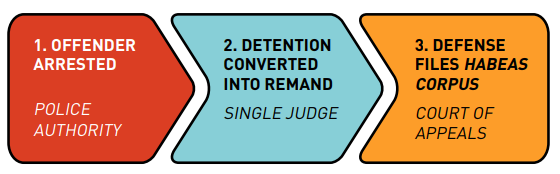 Source: Author’s own elaboration.