
 Social dimension of ESG: determinants of corporate social responsibility for the inclusion of disadvantaged populations
ABSTRACT
Purpose This study examines the Social Dimension of Environmental, Social and Governance (ESG) by identifying which Corporate Social Responsibility (CSR) actions effectively target disadvantaged individuals. It aims to determine the organizational, financial, and strategic factors that increase the likelihood of companies incorporating vulnerable groups into their social initiatives.
Design/methodology/approach The research applies an exploratory, quantitative design using a structured questionnaire administered to 48 Human Resources and ESG managers. Descriptive statistics, Cronbach’s alpha, ANOVA, and the Friedman test were used to validate the instrument. Binary logistic regression served as the core analytical technique, enabling the estimation of the probability that firms direct social actions toward disadvantaged populations.
Findings Results show that the duration of social programs is the strongest predictor of inclusion, followed by financial investment specifically allocated to disadvantaged groups. Conversely, generalist anti-hunger actions exhibit a negative association with inclusion, suggesting diluted effectiveness. Perceptual variables regarding ESG importance showed no statistical significance. Model robustness was supported by Nagelkerke R2=0.664.
Research limitations/implications The limited and region-specific sample restricts generalization. Future research should include broader sectors and mixed methods to deepen understanding of firm-level decision-making in ESG.
Practical implications Findings highlight the need for continuous, well-funded, and strategically segmented programs to enhance the effectiveness of corporate social initiatives.
Social implications Strengthening long-term investments and targeted interventions can improve corporate contributions to social equity and reduce structural vulnerability.
Originality/value The study advances ESG literature by empirically demonstrating which factors most influence firms’ inclusion of disadvantaged groups, offering quantitative evidence for improving CSR effectiveness.
Keywords
ESG; Corporate social responsibility; Social inclusion; Disadvantaged populations
RESUMO
Propósito Este estudo examina a Dimensão Social do ESG ao identificar quais ações de Responsabilidade Social Corporativa (RSC) efetivamente contemplam pessoas menos favorecidas. Busca determinar fatores organizacionais, financeiros e estratégicos que aumentam a probabilidade das empresas incorporarem grupos vulneráveis em suas iniciativas sociais.
Desenho/metodologia/abordagem A pesquisa adota abordagem exploratória e quantitativa, utilizando um questionário estruturado aplicado a 48 gestores de RH/ESG. Estatísticas descritivas, Alfa Cronbach, ANOVA e teste de Friedman foram empregados para validar o instrumento. Regressão logística binária foi a técnica analítica central, permitindo estimar a probabilidade das empresas direcionarem ações sociais às populações menos favorecidas.
Resultados Resultados mostram que a duração dos programas sociais é o preditor da inclusão, seguida pelo investimento financeiro especificamente destinado aos grupos vulneráveis. Em contraste, ações generalistas de combate à fome apresentaram associação negativa, sugerindo menor efetividade. Variáveis perceptuais sobre a importância do ESG não mostraram significância estatística. A robustez do modelo foi confirmada por R2=0.664.
Limitações/implicações da pesquisa A amostra limitada e concentrada regionalmente restringe a generalização. Pesquisas futuras devem abranger outros setores e métodos mistos para aprofundar a compreensão das decisões empresariais em ESG.
Implicações práticas Os resultados destacam necessidade de programas contínuos, bem financiados e segmentados visando a efetividade das iniciativas sociais corporativas.
Implicações sociais O fortalecimento de investimentos de longo prazo e de intervenções direcionadas pode melhorar contribuição corporativa para equidade social e reduzir vulnerabilidades estruturais.
Originalidade/valor Esta pesquisa demonstra empiricamente quais fatores influenciam a inclusão de grupos menos favorecidos, oferecendo evidências quantitativas para aprimorar a efetividade da RSC.
Palavras-chave
ESG; Responsabilidade social corporativa; Inclusão social; Pessoas menos favorecidas
INTRODUCTION
The discussion surrounding sustainability and Corporate Social Responsibility (CSR) has gained prominence in academic and organizational debates over recent decades, as firms increasingly recognize the need to align business activities with contemporary socio-environmental demands (Church et al., 2022; Porter & Kramer, 2018). Among the pillars of sustainability, the social dimension, historically less developed than the environmental and economic dimensions, has emerged as a key element for fostering inclusive, equitable, and socially sustainable practices (Church et al., 2022; Becchetti et al., 2022). This discussion becomes even more relevant in Brazil, a country marked by deep social inequalities and persistent exclusion of vulnerable groups, underscoring the need to strengthen corporate action toward disadvantaged populations.
Traditional CSR discussions have tended to privilege influential stakeholders, such as shareholders and employees, while marginalizing socially vulnerable groups from strategic decision-making (Freeman, 1984; Carroll, 1991). This pattern is reflected in the prioritization of initiatives with reputational appeal or direct economic returns, often neglecting informal workers, day laborers, street vendors, delivery workers, homeless individuals, and others whose essential societal contributions remain unrecognized in corporate strategies (Silver, 1994; Suchman, 1995). Intensifying social inequalities, exacerbated by economic and health crises, reinforce the urgency of redefining the corporate role in building a fairer and more sustainable society (Becchetti et al., 2022; Bolzani & Fachin, 2021).
Within this context, the Environmental, Social and Governance (ESG) framework has become an international benchmark for assessing organizational sustainability performance (Cressoni et al., 2024; Junges et al., 2022). However, as Lourenço and Carvalho (2013) emphasize, the social dimension remains frequently overlooked in both corporate practice and academic literature. Market-driven pressure toward environmental and economic indicators has relegated the social component to a secondary role, reinforcing the need for a strategic realignment toward disadvantaged populations (Hellvig & Nobre, 2024; Margolis & Walsh, 2003).
The objective of this study is to identify CSR actions directed toward disadvantaged populations and propose approaches that strengthen their effective inclusion in corporate strategies. The study is justified by the growing use of ESG as a performance and legitimacy metric, as well as the persistent theoretical and practical gaps regarding the integration of vulnerable populations in corporate agendas (Porter & Kramer, 2018; Becchetti et al., 2022). While CSR and ESG overlap conceptually, this research focuses specifically on the social pillar of ESG and investigates practices targeting disadvantaged individuals as a core component of an effective ESG strategy.
The originality of this study lies in centering disadvantaged populations, including informal workers, marginalized urban communities, migrants, and formerly incarcerated individuals, as key subjects of corporate inclusion. This responds to calls from authors such as Nussbaum (2007), who advocate for justice, capability, and equity-based approaches to social inclusion. Prioritizing these groups strengthens corporate legitimacy and contributes to long-term shared value creation (Elkington, 1998; Porter & Kramer, 2018).
The study adopts an exploratory and quantitative design, with a cross-sectional and theoretical-empirical orientation (Gil, 2017). Data were collected through a structured questionnaire administered to 48 Human Resources and ESG managers in the São Paulo region. The instrument included closed questions on social practices, target populations, investment levels, and program duration, as well as two open questions on motivations and highlighted actions. Descriptive statistics were followed by binary logistic regression, with the dependent variable defined as the presence of actions directed at disadvantaged populations. This approach enabled robust identification of determinants influencing corporate social practices (Hair Jr. et al., 2009; Field, 2018). The geographical focus on São Paulo, Brazil’s largest economic hub, yet marked by extreme inequality, is justified by the strategic influence of participating managers in ESG implementation. Limitations inherent to the sample size and cross-sectional design are acknowledged, and future studies may extend this research to other regions and sectors.
Despite the growing literature on ESG and corporate social responsibility, empirical studies that quantitatively examine the determinants of corporate initiatives directed specifically toward disadvantaged populations remain limited, particularly in emerging economies. Most existing studies focus either on environmental indicators or on general CSR performance, leaving the social inclusion dimension underexplored from a multivariate empirical perspective. This study seeks to address this gap by applying a binary logistic regression model to identify the organizational and strategic factors associated with the inclusion of disadvantaged populations in corporate social initiatives.
By centering disadvantaged populations, this study provides a relevant contribution to understanding social inclusion mechanisms within ESG strategies and offers guidance for strengthening corporate policies aimed at promoting equity and social development in Brazil.
2 THEORETICAL FRAMEWORK
This section presents the theoretical foundations that support the study, focusing on the social dimension of ESG and its relationship with corporate social responsibility and social inclusion. The discussion examines the role of ESG in corporate sustainability strategies and the importance of CSR initiatives aimed at disadvantaged populations, providing the conceptual basis for the empirical analysis developed in this research.
2.1 The Social Dimension - The “S” in ESG
As business practices evolve, growing attention has been directed toward ESG factors, given that companies increasingly recognize the importance of not only maximizing profits but also contributing positively to society (Cressoni et al., 2024; Lourenço & Carvalho, 2013; Mani et al., 2020). This shift toward social responsibility appears in corporate philanthropy, diversity and inclusion programs, fair labor practices, and community engagement initiatives. By prioritizing social considerations in business strategies, organizations can enhance their reputation, attract talent, strengthen customer loyalty, and support long-term sustainable growth (Church et al., 2022; Porter & Kramer, 2018). As a result, investors may view firms with strong social performance as more stable and resilient in increasingly volatile markets (Church et al., 2022).
The social dimension has thus become central to discussions on sustainability and CSR. The inclusion of disadvantaged populations is a critical element because it directly addresses equity and social justice (Cressoni et al., 2024; Porter & Kramer, 2018). This dimension highlights the need to consider social aspects, alongside environmental and economic ones, in corporate decision-making (Hellvig & Nobre, 2024; Leão et al., 2023; Mazza et al., 2016). Sustainability is commonly conceptualized through the Triple Bottom Line (TBL), proposed by Elkington (1998), which emphasizes the interconnectedness of environmental, economic, and social pillars (Elkington, 1998; Foladori & Tommasino, 2000; Junges et al., 2022).
Elkington (1998) argues that a holistic assessment of corporate impact must include social outcomes, since long-term organizational success depends on addressing social issues. Despite this, the social dimension has historically received limited attention and has at times been overshadowed by environmental concerns (Foladori, 2002). Although TBL provides a valuable structure, this study focuses specifically on ESG, with emphasis on the social dimension. Unlike TBL, ESG builds a broader assessment of social impact and promotes the inclusion of marginalized groups as central to corporate sustainability, aligning with equity and justice frameworks described by Porter and Kramer (2018).
Hovardas (2021) stresses the need to deepen understanding of the social dimension, which has traditionally been less developed relative to the environmental and economic ones. The author emphasizes that social sustainability depends on collaboration among public, private, and civil society actors within multi-stakeholder governance systems. Becchetti et al. (2022) also highlight the need for balance among profit, environment, and people, noting that sustainable development and shared value creation require the integration of these pillars. In this sense, the social dimension strengthens organizational legitimacy and reputation (Hellvig & Nobre, 2024). Nussbaum (2007) underscores social justice as a foundation for equitable societies and argues that organizations must combat disparities and expand access to education, health, and employment. Incorporating these principles into ESG reinforces a commitment to capability development and social equity.
The implementation of socially oriented ESG initiatives also depends on the development of organizational competencies associated with sustainability. Garlet et al. (2024) argue that firms capable of integrating sustainability competencies into their managerial routines are better positioned to incorporate social responsibility into strategic decision-making. Their proposed scale of sustainability competencies highlights dimensions such as stakeholder engagement, ethical leadership, and the capacity to design long-term sustainability initiatives. These competencies are particularly relevant when organizations seek to address structural social inequalities, as effective social inclusion initiatives require both strategic commitment and organizational capabilities. Consequently, the development of sustainability-oriented competencies strengthens the capacity of firms to translate ESG principles into corporate social responsibility actions that generate tangible social impacts.
2.2 ESG and Corporate Social Responsibility (CSR)
ESG, which integrates environmental, social, and governance dimensions, emerged in response to the need for a sustainability model grounded in stronger governance (Amaral et al., 2023; Becchetti et al., 2022). Introduced in a 2004 joint document from the UN Global Compact and the World Bank, the term encouraged financial sector leaders to adopt social and environmental criteria in investment decisions (Pacto Global, 2023). The social dimension highlights the role of corporate practices in fostering community well-being, social justice, and inclusion, and is fundamental for assessing organizational performance in CSR (Junges et al., 2022; Ahmed & McQuaid, 2005; Mani et al., 2020).
Mani et al. (2020) emphasize the human dimension of sustainability, encouraging organizations to evaluate the social repercussions of their decisions. Lourenço and Carvalho (2013) advocate an integrated approach that simultaneously considers social and environmental impacts. Moreover, Amaral et al. (2023) and Porter and Kramer (2018) reinforce the need for CSR practices specifically directed toward disadvantaged populations. Integrating CSR into core corporate strategies strengthens social impact and supports community development (Carter & Jennings, 2002; Hahn et al., 2024; Pereira, 2023).
Hovardas (2021) argues that multi-stakeholder governance requires active corporate engagement in promoting social sustainability. The social pillar of ESG is thus essential for advancing inclusion and equity (Bolzani & Fachin, 2021). Incorporating the social dimension into business strategies can enhance ethical conduct, improve employee and community well-being, and attract responsible investors (Church et al., 2022; Cressoni et al., 2024; Leão et al., 2023). These practices reduce social inequalities, generate opportunities in low-income regions, and promote more equitable development. Becchetti et al. (2022) emphasize the importance of stakeholder dialogue and the use of indicators to prevent social washing. Their relational approach suggests that businesses must promote equality of opportunity and improve the well-being of vulnerable populations. Upadhyay (2024) demonstrates the positive effects of CSR in emerging markets, underscoring the need for corporate policies that reduce socioeconomic disparities. This reinforces the importance of incorporating the social pillar of ESG into organizational strategies (Amaral et al., 2023).
Recent studies have emphasized the role of organizational advisory structures and governance mechanisms in strengthening ESG implementation within firms. Trentin and Marques (2024) propose an ESG consulting model that supports companies in structuring sustainability practices through strategic alignment, stakeholder engagement, and organizational learning processes. Their findings highlight that ESG initiatives become more effective when they are integrated into managerial decision-making and supported by specialized advisory capabilities. In this context, corporate social responsibility initiatives directed toward vulnerable populations depend not only on ethical commitments but also on structured managerial processes that translate ESG principles into concrete social programs. Such organizational mechanisms contribute to transforming CSR initiatives from isolated philanthropic actions into strategic initiatives capable of promoting broader social inclusion.
Empirical research has also examined how ESG practices influence financial and governance outcomes within organizations. Iglesias et al. (2025) analyze the relationship between ESG disclosure and the cost of corporate debt in Brazil, demonstrating that higher levels of ESG transparency are associated with more favorable financing conditions. These findings suggest that ESG initiatives extend beyond reputational benefits, generating tangible economic implications for firms. In this sense, the adoption of socially oriented ESG practices, including initiatives aimed at disadvantaged populations, may strengthen organizational legitimacy and stakeholder trust. By linking corporate social responsibility initiatives to broader ESG disclosure strategies, firms may enhance both their social impact and their financial sustainability.
2.3 Social Inclusion of Disadvantaged Populations
Social inclusion and the fight against extreme poverty remain pressing global challenges. CSR plays a fundamental role in promoting income generation, access to education and health, and social participation among disadvantaged populations (Alves & Silva, 2017; Junges et al., 2022). Penteado (2020) introduces the term “noholders” to describe frontline workers with limited access to basic resources, such as cleaners, domestic workers, mechanics, taxi drivers, barbers, bakers, street vendors, and informal workers whose economic contributions are often undervalued.
Communities facing poverty encounter significant barriers to access and opportunity (Bolzani & Fachin, 2021). The World Bank (2024) defines extreme poverty as living on less than USD 2.15 a day, illustrating the urgency of structural corporate interventions. For Lourenço and Carvalho (2013), social sustainability requires not only meeting basic needs but also ensuring voice and representation for marginalized groups.
Becchetti et al. (2022) and Turban and Greening (1997) argue that inclusion and equality of opportunity are indispensable for effective CSR. The literature reveals gaps regarding vulnerable groups’ participation in corporate decision-making (Lourenço & Carvalho, 2013; Hovardas, 2021). A broader analytical scope is needed to capture their needs and contributions (Margolis & Walsh, 2003). Contemporary debate highlights the integration of social, economic, and environmental dimensions in corporate strategies (Amaral et al., 2023; Junges et al., 2022; Leão et al., 2023). Strategic indicators and structured plans are essential to advance equity. Hahn et al. (2024) show that infrastructure investment, sustainable work, and training can promote inclusion at the base of the pyramid (BoP). Hellvig and Nobre (2024) advocate collaboration among companies, civil society, and social projects to combat poverty.
2.4 Corporate Neglect of Vulnerable Groups
Corporate strategies often prioritize stakeholders with greater influence, which leads to the systematic exclusion of disadvantaged populations. Stakeholder Theory, proposed by Freeman (1984), argues that firms must consider all groups affected by their activities. In practice, companies frequently prioritize stakeholders who provide economic or reputational returns. Suchman (1995) explains that legitimacy is managed by responding to the expectations of influential stakeholders. This dynamic marginalizes vulnerable groups and reinforces inequalities. Carroll’s (1991) CSR pyramid outlines economic, legal, ethical, and philanthropic responsibilities. However, competitive pressures emphasize economic responsibility and weaken ethical commitments to disadvantaged populations. Silver (1994) notes that social exclusion involves not only deprivation of economic resources but also lack of representation and voice in corporate processes.
Institutional mechanisms that prioritize efficiency and profitability often perpetuate exclusion. Murray et al., (2010) argue that overcoming these barriers requires social innovation that aligns business models with the well-being of vulnerable groups. Despite opportunities at the base of the pyramid (BOP), companies often neglect this segment (Bureau & Fendt, 2011; Nogami & Veloso, 2018; Beckett et al., 2022). Effective inclusion requires intentional strategies and long-term commitments to reduce inequalities and promote sustainable development.
Based on the literature reviewed, three dimensions emerge as particularly relevant for explaining corporate engagement with disadvantaged populations: the strategic importance attributed to ESG within organizations, the allocation of financial resources to social initiatives, and the temporal continuity of social programs. In addition, the intensity and focus of social actions may influence the effectiveness of inclusion strategies. These theoretical insights support the selection of the independent variables used in the empirical model and provide the conceptual basis for examining the determinants of corporate social responsibility initiatives targeting disadvantaged populations.
3 METHODOLOGICAL PROCEDURES
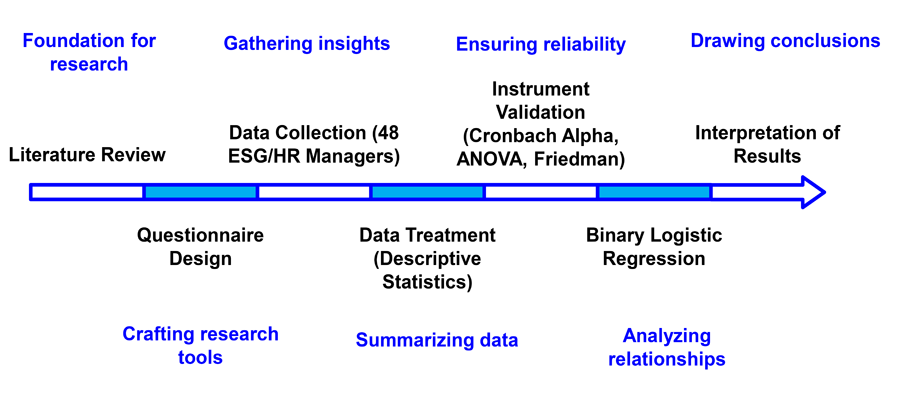
This study is exploratory in nature and adopts a cross-sectional quantitative approach that investigates corporate social practices directed toward disadvantaged populations within the social “S” dimension of ESG. The theoretical-empirical design combines a literature review with primary data, providing a deeper understanding of the phenomenon (Gil, 2017). The target population consists of specialists or managers in Human Resources or ESG, as well as professionals who accumulate responsibilities in both areas. The final sample comprises 48 respondents. Access to these professionals occurred by convenience sampling, and data collection was conducted in May 2024 through an online questionnaire created in Google Forms and distributed via e-mail and messaging applications. Figure 1 shows the schematic figure of the research stages.

The data collection instrument was a structured questionnaire organized into four sections. The first section presented the Informed Consent Form, describing the study context, procedures for confidentiality, anonymity, and data security, and the conditions for voluntary participation. The second section explained a six-point Likert scale (0 to 5) used to assess the extent to which social practices are integrated into corporate strategy. The third section contained optional sociodemographic identification items. The fourth section included questions on ESG practices, target publics of social programs, financial resources allocated, and duration of social initiatives. Two open-ended questions were added addressing ESG actions considered relevant and the main motivations for corporate engagement in social issues. The questionnaire items were developed based on the literature on ESG practices, corporate social responsibility and social inclusion, particularly studies addressing stakeholder engagement and corporate social initiatives targeting vulnerable populations (Becchetti et al., 2022; Porter & Kramer, 2018; Hahn et al., 2024). The variables included in the instrument reflect three conceptual dimensions discussed in the literature: strategic orientation toward ESG, allocation of organizational resources to social initiatives, and characteristics of the social programs implemented by firms.
The initial treatment of the data involved descriptive statistics computed in Microsoft Excel, summarizing frequencies, means and standard deviations for variables related to the importance of ESG, social practices and the targeting of programs toward disadvantaged groups. This stage provided a general overview of the companies and their social programs and supported the selection of independent variables for subsequent modeling.
The participating companies operate in sectors such as services, manufacturing and commerce, with different organizational sizes and revenue levels. The respondents represent organizations operating in a wide range of economic sectors, including technology and digital services, financial and payment services, manufacturing and industrial production, energy and sustainability solutions, healthcare services, construction and real estate development, transportation and mobility services, retail and pharmacy chains, fitness and wellness services, as well as professional services and business associations. This sectoral diversity reflects the growing diffusion of ESG practices across different industries in Brazil.
In terms of organizational size, most identified companies correspond to medium and large enterprises, several of which are publicly traded corporations or subsidiaries of multinational groups. Several firms operate at a large corporate scale, with annual revenues exceeding billions of Brazilian reais according to publicly available financial reports and B3 disclosures. Other companies in the sample represent large national business groups with significant market presence. A smaller portion of respondents are associated with medium-sized firms or specialized service providers, such as consulting companies and sectoral associations. Overall, the composition of the sample suggests that ESG-related decision-making in the social dimension is largely concentrated among professionals working in medium and large organizations with structured management systems and formalized sustainability or human resources departments.
To ensure robustness, internal consistency of the instrument was assessed using Cronbach’s alpha, and discriminant validity among items was examined by ANOVA and the Friedman test (Hair Jr. et al., 2009). This methodological design, grounded in an exploratory and quantitative perspective, enabled the analysis of corporate social responsibility practices from the standpoint of ESG and the inclusion of disadvantaged populations.
Given the objective of identifying CSR actions directed toward disadvantaged populations, binary logistic regression was adopted as the main multivariate technique. According to Hair Jr. et al. (2009), logistic regression is appropriate when the dependent variable is dichotomous and allows estimation of the probability of an event occurring as a function of multiple predictors. In this study, the dependent variable was “Publico_MenosFavorecidos”, coded as 0 = the company does not direct actions to disadvantaged populations and 1 = the company directs actions to disadvantaged populations. This operationalization is consistent with recent literature that seeks to identify objective and measurable determinants of social inclusion in corporate strategies (Becchetti et al., 2022; Field, 2018).
The independent variables included in the logistic model were: (i) perceived importance of ESG in corporate strategy; (ii) perceived importance of the social “S” dimension of ESG; (iii) intensity of social actions focused on combating hunger and promoting healthy food; (iv) amount of financial resources invested in social programs for disadvantaged populations; and (v) duration, in years, of social programs aimed at this group. The selection of these predictors was based on both the literature review and their practical relevance to the Brazilian ESG context (Hahn et al., 2024).
The general logistic equation used in the analysis can be expressed as:
where P is the probability that the company directs social actions to disadvantaged populations (binary dependent variable), β0 is the intercept and β1, β2, β3 are the regression coefficients associated with the independent variables. This equation operationalizes the probabilistic relationship between the predictors and the inclusion of disadvantaged populations in CSR strategies, in line with the statistical approach adopted in the study (Hair Jr. et al., 2009; Hosmer et al., 2013).
Statistical analyses were performed using SPSS version 26. Before estimating the model, the main assumptions for logistic regression were examined, including the binary coding of the dependent variable and the absence of multicollinearity among predictors, which was assessed using the Variance Inflation Factor (VIF). The entry method used was “Enter”, which includes all variables simultaneously in the model, as recommended by Hair Jr. et al. (2009) for explanatory models. The operationalization of the variables is summarized in Table 1, which presents the dependent variable and the independent variables used in the model.
The interpretation of logistic regression coefficients followed standard procedures. Values of Exp(B) greater than 1 indicate an increase in the probability that the company directs actions to disadvantaged populations for each unit increase in the predictor, whereas values lower than 1 indicate a reduction in this probability. The level of statistical significance was set at 5 percent (p < 0.05). Global model evaluation considered the Omnibus test for overall significance, Cox and Snell and Nagelkerke R2 for explained variance and the Hosmer-Lemeshow test for goodness of fit.
Binary logistic regression was thus not only technically appropriate to the research design, but also directly aligned with the research problem, by quantifying the influence of strategic, financial and temporal factors on the inclusion of disadvantaged populations in corporate social practices. As emphasized in the literature, the use of robust multivariate models such as logistic regression enhances the explanatory power of empirical findings and provides theoretically grounded and practically useful evidence for managers and policymakers in the fields of sustainability and social responsibility (Becchetti et al., 2022; Hair Jr. et al., 2009).
4 PRESENTATION AND ANALYSIS OF RESULTS
The analysis of the data on the social dimension of ESG reveals a diverse yet limited panorama of corporate initiatives directed toward disadvantaged individuals. Although companies report practices in areas such as food assistance, education, income generation and housing, internal stakeholders continue to receive priority, which places socially vulnerable groups in a secondary position within corporate social agendas. The statistical evaluation indicates that factors such as program continuity, targeted financial investment and action specificity are decisive for more effective social responsibility practices. Among the forty-eight HR and ESG professionals surveyed, most attributed moderate or high importance to ESG, with mean values of 3.65 for ESG importance and 3.83 for the social dimension on a Likert scale from zero to five. However, only 46 percent of companies prioritize social actions for disadvantaged individuals, highlighting a gap between sustainability discourse and the practical effectiveness of corporate actions. The low statistical means for intensity and investment indicate an early stage of organizational commitment to social inclusion.
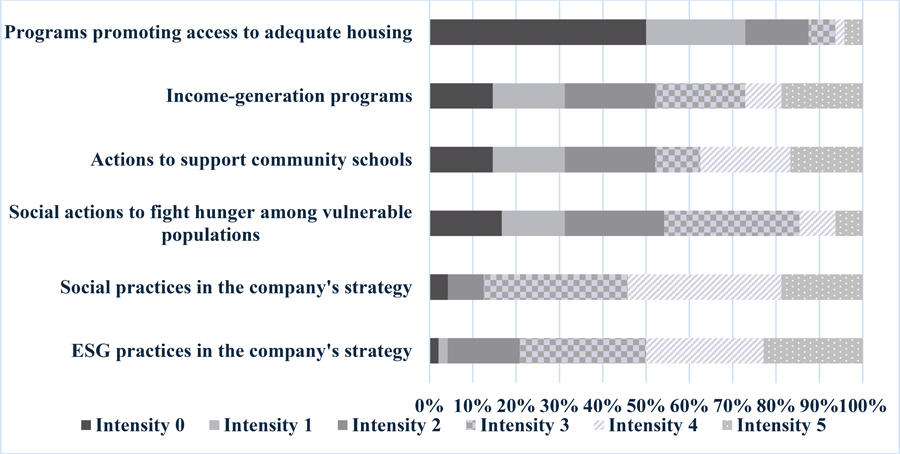
The data illustrate the distribution of social practices and actions within corporate strategies, based on a zero-to-five scale shown in Figure 2. The analysis reveals that 54 percent of companies fall within levels three, four and five of strategic integration, which indicates significant engagement with the social dimension and potential positive impacts for both corporations and society.

Corporate social initiatives primarily target employees, charitable organizations and underserved children, representing 29 percent, 28 percent and 26 percent of initiatives respectively (Figure 3). Highly vulnerable groups such as people experiencing homelessness, former inmates and refugees receive limited attention. Although 54 percent of companies maintain community-oriented social programs, only 13 percent focus directly on highly disadvantaged populations. Actions targeting these groups include training programs for informal workers and partnerships with NGOs.

The results show low levels of financial investment in social programs, with education and employees receiving the highest allocations (see Table 2). This imbalance reinforces the need for more targeted financial strategies directed toward vulnerable populations.
4.1 Multivariate Analysis – Binary Logistic Regression
The Cronbach’s Alpha calculated for the six-item instrument yielded a value of 0.620, considered acceptable for exploratory studies and indicating moderate internal consistency (Hair Jr. et al., 2009). This result supports the methodological adequacy of the instrument, suggesting reasonable homogeneity in respondents’ evaluations. ANOVA, combined with the Tukey and Friedman tests, produced a highly significant Friedman chi-square (p < 0.001), which indicates statistically significant differences across items. The non-additivity statistic (p < 0.001) suggests potential interactions or nonlinear effects, recommending caution in interpreting simple averages.
Binary logistic regression was then applied using SPSS’s forward stepwise conditional method. The dependent variable enabled estimation of the probability of directing social actions to disadvantaged groups. The iteration history in Table 3 demonstrates coefficient evolution as variables entered the model.
The results in Table 3 show progressive refinement of the logistic regression model. Program duration remained the strongest predictor across all steps, with high coefficients and odds ratios, indicating that companies with long-standing social programs are substantially more likely to direct actions toward disadvantaged groups. The intensity of anti-hunger initiatives entered the model with a negative and significant coefficient, suggesting that broad or generalist actions may dilute their impact on highly vulnerable populations. In the final stage, financial investment targeted at disadvantaged groups also became a significant positive predictor, highlighting the importance of budgetary commitment for effective social inclusion. The standard error (S.E.) indicates the variability of each estimated coefficient, and its relatively low values support the precision of significant predictors. The Wald statistic further confirmed the statistical significance of the variables retained. Overall, the model demonstrates that program longevity, targeted investment and intervention specificity best explain the likelihood of corporate actions reaching disadvantaged populations. All coefficients remained significant, reinforcing the role of program duration, financial investment and targeted action. The Omnibus test (see Table 4) showed significant chi-square values across all stages, confirming model robustness. The Hosmer-Lemeshow test indicated acceptable fit in the intermediate stage (p=0.546) and sensitivity in the final stage (p=0.009) due to smaller subgroups.
The final model estimates were applied to the logistic equation:
Based on the results obtained in SPSS, the estimated coefficients were: β0= −1.733, β1=4.622, β2=−1.320 and β3= 1.248. Thus, the final model equation is expressed as:
Considering the scenario in which one of the companies in the dataset presents maximum values for the independent variables, that is, program duration equal to 1, intensity of anti-hunger actions equal to 1 and investment in actions for disadvantaged individuals also equal to 1, substituting these values into the equation yields:
The probability that a company with continuous social programs and targeted investment will include disadvantaged individuals in its strategies is 94.36%, which demonstrates the robustness of the logistic model and confirms the relevance of these factors in the corporate social responsibility and ESG literature.
5 DISCUSSION OF RESULTS
The analysis of the results highlights the commitment of part of the companies to the social dimension of ESG, motivated by factors such as collective well-being, local development, social justice, institutional reputation, and intergenerational responsibility (Alves & Silva, 2017; Becchetti et al., 2022). The central finding is that the duration of social programs emerges as the primary determinant of the inclusion of disadvantaged groups in corporate social responsibility strategies.
The negative effect of the intensity of hunger alleviation actions on the inclusion of disadvantaged groups introduces an important nuance to the academic debate. As discussed by Nussbaum (2007) and Hovardas (2021), highly intensive but generalist programs may lack sensitivity to the specific needs of the most vulnerable groups, resulting in limited effectiveness. One possible explanation for this finding is that generalist food assistance programs may prioritize immediate relief rather than structural inclusion. In many cases, such initiatives function as philanthropic responses to urgent needs rather than as long-term strategies for social integration. Consequently, although socially valuable, they may not necessarily reflect structured corporate programs specifically designed to integrate disadvantaged populations into broader development initiatives. The findings indicate that corporate social policies depend not only on intensity but, more importantly, on the degree of segmentation and alignment with the real needs of target populations. Another relevant aspect is the gap between institutional ESG discourse and the effectiveness of inclusion practices, reflected in the lack of statistical significance of the perception-based variables. This pattern reinforces concerns raised in the literature about social washing (Becchetti et al., 2022), in which companies adopt sustainability rhetoric without implementing substantive change. The results suggest that beyond formal adherence to the ESG agenda, companies must implement practical, sustained, and budget-supported initiatives. From a theoretical perspective, the findings confirm the adequacy of multivariate models for examining determinants of social inclusion, consistent with methodological recommendations by Hair Jr. et al. (2009). Logistic regression enabled the identification of program duration, financial investment, and action intensity as key predictors of corporate engagement with disadvantaged populations. The positive effect of long-term programs supports arguments by Becchetti et al. (2022) and Hahn et al. (2024) regarding the need for consistent, monitored strategies to promote equity and reduce inequalities.
Targeted financial investment also emerged as a significant factor, demonstrating that budgetary commitment is essential for the effectiveness of social practices, as emphasized by Turban and Greening (1997). Conversely, generalist hunger-relief efforts showed a negative association, indicating that dispersed or short-term actions do not necessarily lead to meaningful inclusion of vulnerable groups, in line with critiques by Hellvig and Nobre (2024). The results underscore that successful corporate initiatives depend on budget allocation, long-term program management, and alignment with the specific needs of disadvantaged populations. The discussion reinforces the need to enhance business practices so that social inclusion moves beyond institutional discourse and materializes in effective, planned, and sustainable policies (Lourenço & Carvalho, 2013; Becchetti et al., 2022; Hahn et al., 2024).
The study demonstrates that the effectiveness of corporate practices aimed at including disadvantaged groups depends on strategic planning, resource allocation, and continuous monitoring. These elements reinforce the role of companies as agents of social transformation.
6 CONCLUSIONS
The increasing relevance of environmental, social, and governance (ESG) practices in contemporary organizations generates both challenges and opportunities for the consolidation of a corporate agenda oriented toward sustainable social development. This study contributes to this debate by examining, through a quantitative approach supported by methodological rigor, the practices and actions associated with corporate social responsibility directed specifically toward disadvantaged groups, a segment historically excluded from the strategic priorities of organizations.
The empirical results derived from the binary logistic regression analysis offer relevant contributions to both theoretical advancement and managerial practice. The main finding indicates that the longevity of social programs is the most influential determinant of the effective inclusion of disadvantaged populations in corporate social strategies. The statistical analysis revealed that program duration was the strongest and most significant predictor, indicating that companies that maintain long-term social initiatives exhibit a substantially higher probability of serving this population. This outcome is consistent with the literature that highlights the importance of sustained social policies for achieving structural transformations and building trust and legitimacy between companies and communities.
Another central finding concerns the role of financial investment specifically targeted at disadvantaged groups. Companies that allocate substantial financial resources to programs aimed at this segment significantly increase the likelihood of incorporating these groups into their social strategies. This result reinforces the argument presented by Elkington (1998) and Margolis and Walsh (2003) that the effectiveness of social responsibility initiatives depends not only on formal commitment or adherence to international frameworks, but also on genuine budgetary allocation and long-term strategic planning. These results suggest that corporate commitment to social development must transcend regulatory compliance and reputational concerns, requiring continuous investment and measurement of tangible outcomes.
The analysis additionally showed that the intensity of generalist hunger alleviation actions, although important for addressing broad basic needs, does not necessarily lead to greater inclusion of disadvantaged groups in corporate social policies. The negative coefficient associated with this variable suggests that overly broad approaches may dilute their impact on the most vulnerable segments. This finding underscores the risk of dispersed efforts and highlights the importance of rigorous audience segmentation in the design of corporate social initiatives.
Conversely, variables such as “Importance of ESG” and “Importance of the Social Pillar of ESG,” which reflect declarative or reputational stances, did not exhibit statistical significance in the final models. This outcome suggests that institutional discourse alone is insufficient to ensure the effective direction of social actions toward disadvantaged groups. It also reinforces recent critiques in the literature regarding the superficiality of certain corporate initiatives, often classified as social washing, and highlights the need for alignment between discourse and practice in corporate strategies.
The implications of these findings are substantial. From a theoretical standpoint, the study demonstrates the usefulness of binary logistic regression for analyzing the determinants of social inclusion in the corporate context, offering quantitative evidence that strengthens explanatory models of social responsibility. From a managerial standpoint, executives and decision-makers are encouraged to reconsider their ESG strategies by prioritizing long-term programs, substantial resource allocation, and targeted actions that enhance social impact for disadvantaged groups. It is also important to acknowledge the limitations of the study, particularly regarding sample size and respondent profile. These constraints do not undermine the validity of the findings, but they indicate the need for future research in diverse regional and sectoral contexts, as well as deeper inquiry through qualitative approaches to capture the motivations and challenges faced by organizations in implementing inclusive social practices. Future studies may extend this research by adopting longitudinal designs to examine how corporate social initiatives evolve over time. Comparative studies across industries or countries could also provide insights into contextual differences in ESG social practices. In addition, qualitative approaches involving interviews with managers and beneficiaries may deepen understanding of the motivations and challenges associated with corporate engagement in social inclusion initiatives.
In sum, the study reinforces that genuine corporate commitment to disadvantaged populations must not be episodic or circumstantial, but instead structured around sustained policies, appropriate resources, and systematic monitoring, thereby supporting equitable and sustainable social development.
REFERENCES
-
Ahmed, A., & McQuaid, R. W. (2005). Entrepreneurship, management, and sustainable development. World Review of Entrepreneurship, Management and Sustainable Development, 1 (1), 6-30. https://doi.org/10.1504/WREMSD.2005.007750
» https://doi.org/10.1504/WREMSD.2005.007750 -
Alves, A. P. F., & Silva, M. E. (2017). Reflexões empíricas sobre a dimensão social da sustentabilidade em cadeias de suprimento: O que precisa mudar? Revista de Gestão Ambiental e Sustentabilidade, 6 (1), 13-25. https://periodicos.uninove.br/geas/article/view/10029
» https://periodicos.uninove.br/geas/article/view/10029 -
Amaral, M., Willerding, I. A. V., & Lapolli, É. M. (2023). ESG and sustainability: the impact of the pillar social. Concilium, 23( 13). https://pdfs.semanticscholar.org/79d1/6bb499c0fe977f15b46bd3cad3628ceacbcc.pdf
» https://pdfs.semanticscholar.org/79d1/6bb499c0fe977f15b46bd3cad3628ceacbcc.pdf -
Becchetti, L., Bobbio, E., Prizia, F., & Semplici, L. (2022). Going deeper into the S of ESG: A relational approach to the definition of social responsibility. Sustainability, 14(15), 9668. https://doi.org/10.3390/su14159668
» https://doi.org/10.3390/su14159668 -
Beckett, J. R., Chmielewski, D. A., & Dembek, K. (2022). Taking the time to understand time at the bottom/base of the pyramid. Business & Society, 61 (8), 2038-2069. https://doi.org/10.1177/0007650320927332
» https://doi.org/10.1177/0007650320927332 - Bolzani, G. F., & Fachin, M. G. (2021). Direitos humanos e ESG: Para além do "S". In ESG: O cisne verde e o capitalismo de stakeholder: A tríade regenerativa do futuro global (Kindle ed.). Thomson Reuters Brasil.
-
Bureau, S., & Fendt, J. (2011). Entrepreneurship in the informal economy: Why it matters. The International Journal of Entrepreneurship and Innovation, 12 (2), 85-94. https://doi.org/10.5367/ijei.2011.0026
» https://doi.org/10.5367/ijei.2011.0026 -
Carroll, A. B. (1991). The pyramid of corporate social responsibility: Toward the moral management of organizational stakeholders. Business Horizons, 34 (4), 39-48. https://doi.org/10.1016/0007-6813 (91)90005-G
» https://doi.org/10.1016/0007-6813 (91)90005-G -
Carter, C. R., & Jennings, M. M. (2002). Logistics social responsibility: An integrative framework. Journal of Business Logistics, 23 (1), 145-181. https://doi.org/10.1002/j.2158-1592.2002.tb00020.x
» https://doi.org/10.1002/j.2158-1592.2002.tb00020.x -
Church, J. M., Tirrell, A., Moomaw, W. R., & Ragueneau, O. (2022). Sustainability: From ideas to action in international relations. Routledge Handbook of Global Environmental Politics (2nd ed.). https://doi.org/10.4324/9781003008873
» https://doi.org/10.4324/9781003008873 -
Cressoni, O. A., Benedicto, S. C., Silva, L. H. V., Bittencourt, J., & Sugahara, C. B. (2024). Relatório de sustentabilidade: perfil de grandes empresas brasileiras segundo o padrão da Global Reporting Initiative. Gestão & Regionalidade, 40. https://doi.org/10.13037/gr.vol40.e20248444
» https://doi.org/10.13037/gr.vol40.e20248444 -
Elkington, J. (1998). Accounting for the triple bottom line. Measuring Business Excellence, 2 (3), 18-22. https://doi.org/10.1108/eb025539
» https://doi.org/10.1108/eb025539 - Field, A. (2018). Discovering Statistics Using IBM SPSS statistics (5th ed.). Sage.
-
Foladori, G. (2002). Avanços e limites da sustentabilidade social. Revista Paranaense de Desenvolvimento, (102). https://ipardes.emnuvens.com.br/revistaparanaense/article/view/214
» https://ipardes.emnuvens.com.br/revistaparanaense/article/view/214 -
Foladori, G., & Tommasino, H. (2000). El concepto de desarrollo sustentable treinta años después. Cadernos de Desenvolvimento e Meio Ambiente, 1, 41-56. https://doi.org/10.5380/dma.v1i0.3056
» https://doi.org/10.5380/dma.v1i0.3056 - Freeman, R. E. (1984). Strategic management: A stakeholder approach Pitman.
-
Garlet, V., Beuron, T. A., Ávila, L. V., Balsan, L. A. G., Madruga, L. R. G., & Kraetzig, E. R. S. (2024). Scale of competencies for sustainability at the organizational scope. Revista de Administração da UFSM, 17 (1), e1. https://doi.org/10.5902/1983465971281
» https://doi.org/10.5902/1983465971281 - Gil, A. C. (2017). Como elaborar projetos de pesquisa (6th ed.). Atlas.
-
Hahn, I. S., Scherer, F. L., & Lebioda, L. (2024). Social responsibility and businesses at the base of the pyramid in Brazilian multinational companies: Intersection in a meso-level perspective. Brazilian Business Review, 21 (3). https://bbronline.com.br/index.php/bbr/article/view/765
» https://bbronline.com.br/index.php/bbr/article/view/765 - Hair Jr., J. F., Black, W. C., Babin, B. J., & Anderson, R. E. (2009). Multivariate data analysis (7th ed.). Prentice-Hall.
-
Hellvig, J., & Nobre, F. S. M. (2024). Organizando capacidades e desempenho no contexto da sustentabilidade empresarial. Revista Administração Mackenzie, 25 (3),1-28. https://doi.org/10.1590/1678-6971/eRAMC240126
» https://doi.org/10.1590/1678-6971/eRAMC240126 - Hosmer, D. W., Lemeshow, S., & Sturdivant, R. X. (2013). Applied logistic regression (3rd ed.). Wiley.
-
Hovardas, T. (2021). Social sustainability as social learning: Insights from multi-stakeholder environmental governance. Sustainability, 13 (14),7744. https://doi.org/10.3390/su13147744
» https://doi.org/10.3390/su13147744 -
Iglesias, T. M. G., Peixoto, F. M., Rogers, P., & Carvalho, L. (2025). Does ESG Disclosure impact on the cost of debt? An analysis of Brazil and its regions. Revista de Administração da UFSM, 18 (3), e4. https://doi.org/10.5902/1983465990538
» https://doi.org/10.5902/1983465990538 -
Junges, V. C., Castro, B. L. G., Kneipp, J. M., & Costa, V. M. F. (2022). Dimensão social da sustentabilidade na empresa Ecovinco. Revista Amazônia, Organizações e Sustentabilidade, 11 (2). http://dx.doi.org/10.17648/aos.v11i2.2564
» http://dx.doi.org/10.17648/aos.v11i2.2564 -
Leão, P., Gama, M. A. B., & Fleury, M. T. L. (2023). Desenvolvendo capacidade dinâmica em estratégias sociais. RAE - Revista de Administração de Empresas, 63 (5),e2022-0123. https://doi.org/10.1590/S0034-759020230502
» https://doi.org/10.1590/S0034-759020230502 -
Lourenço, M. L., & Carvalho, D. M. W. (2013). Sustentabilidade social e desenvolvimento sustentável. Race: Revista Administração, Contabilidade e Economia, 12 (1),9-38. https://periodicos.unoesc.edu.br/race/article/view/2346
» https://periodicos.unoesc.edu.br/race/article/view/2346 -
Mani, V., Jabbour, C. J. C., & Mani, K. T. (2020). Supply chain social sustainability in small and medium manufacturing enterprises and firms' performance: Empirical evidence from an emerging Asian economy. International Journal of Production Economics, 227 https://doi.org/10.1016/j.ijpe.2020.107656
» https://doi.org/10.1016/j.ijpe.2020.107656 -
Margolis, J. D., & Walsh, J. P. (2003). Misery loves companies: Rethinking social initiatives by business. Administrative Science Quarterly, 48 (2), 268-305. https://doi.org/10.2307/3556659
» https://doi.org/10.2307/3556659 -
Mazza, V. M. S., Madruga, L. R. R. G., Maculan, C. G., Ávila, L. V., & Duarte, T. L. (2016). Sustentabilidade social em um arranjo produtivo local do agronegócio no Estado do Rio Grande do Sul na percepção de seus stakeholders. In Anais do Encontro Internacional sobre Gestão Empresarial e Meio Ambiente (ENGEMA). https://engemausp.submissao.com.br/18/anais/arquivos/423.pdf
» https://engemausp.submissao.com.br/18/anais/arquivos/423.pdf - Murray, R., Caulier-Grice, J., & Mulgan, G. (2010). The open book of social innovation The Young Foundation.
-
Nogami, V. K. da C., & Veloso, A. R. (2018). Desenvolvimento de um framework de adoção da inovação no mercado de baixa renda. Revista de Administração Contemporânea, 22 (5),726. https://doi.org/10.1590/1982-7849rac2018170287
» https://doi.org/10.1590/1982-7849rac2018170287 -
Nussbaum, M. C. (2007). Frontiers of justice: Disability, nationality, species membership. Harvard University Press. https://doi.org/10.4159/9780674041578
» https://doi.org/10.4159/9780674041578 -
Pacto Global. (2023). ESG https://www.pactoglobal.org.br/esg/
» https://www.pactoglobal.org.br/esg/ -
Penteado, M. A. B. (2020, September). Shareholders, stakeholders, "noholders." Revista Relação com Investidores, 244. https://www.revistari.com.br/244/1641
» https://www.revistari.com.br/244/1641 - Pereira, R. S. (2023). Desafios ESG para as organizações. In A. Palmisano, A. M. Rosini, & R. R. Rangel (Eds.), ESG - Uma visão prática multidisciplinar. Alexa Cutural.
-
Porter, M. E., & Kramer, M. R. (2018). Creating shared value: How to reinvent capitalism and unleash a wave of innovation and growth. In Managing sustainable business: An executive education case and textbook (pp. 323-346). Springer. https://doi.org/10.1007/978-94-024-1144-7_16
» https://doi.org/10.1007/978-94-024-1144-7_16 -
Silver, H. (1994). Social exclusion and social solidarity: Three paradigms. International Labour Review, 133 (5), 531-578. https://heinonline.org/HOL/LandingPage?handle=hein.journals/intlr133÷=51&id=&page=
» https://heinonline.org/HOL/LandingPage?handle=hein.journals/intlr133÷=51&id=&page= -
Suchman, M. C. (1995). Managing Legitimacy: Strategic and Institutional Approaches. Academy of Management Review, 20 (3), 571-610. https://doi.org/10.5465/amr.1995.9508080331
» https://doi.org/10.5465/amr.1995.9508080331 -
Trentin, L., & Marques, M. (2024). Environmental, social and governance (ESG) consulting model. Revista de Administração da UFSM, 18 (1), e4. https://doi.org/10.5902/1983465989246
» https://doi.org/10.5902/1983465989246 -
Turban, D. B., & Greening, D. W. (1997). Corporate social performance and organizational attractiveness to prospective employees. Academy of Management Journal, 40 (3), 658-672. https://doi.org/10.5465/257057
» https://doi.org/10.5465/257057 -
Upadhyay, S. (2024). Impact of Environmental, Social, and Governance (ESG) factors on individual investor performance. International Journal of Scientific Research in Engineering and Management. https://doi.org/10.55041/IJSREM32745
» https://doi.org/10.55041/IJSREM32745 -
World Bank. (2024). Annual report 2024: Prosperity. Retrieved from https://www.worldbank.org/en/about/annual-report/results-by-theme?dropid=3
» https://www.worldbank.org/en/about/annual-report/results-by-theme?dropid=3
-
Plagiarism Check:
The ReA/UFSM maintains the practice of submitting all documents approved for publication to the plagiarism check, using specific tools, e.g.: Turnitin.
-
Data availability statement:
Data will be available upon request
Edited by
-
Edited by:
Jordana Marques Kneipp
Data will be available upon request

 Source: Prepared by the authors
 Source: Prepared by the authors based on research data
 Source: Prepared by the authors based on research data