 Mineral prospection in sediments of the Araguari river/MG: promising results for Pt, Ag, Cu, Bi, Ce and La
Abstract
This article presents the results of a mineral prospecting study of active stream sediment and alluvial sediment from the Araguari River, Minas Gerais, Brazil. Sediment samples were collected from the river's source to the Desemboque district, where, between the years 1743 and 1781, 1,500 kg of alluvial gold were extracted. Therefore, this study analyzed samples of alluvial sediments and active watercourses to identify potential mineralization zones in a region historically associated with gold deposits. Geochemical assays indicate Pt concentrations exceeding Clarke values, contrasting with relatively low gold (Au) levels. Correlations between Cu and Ag, as well as rare earth elements (Ce and La), suggest complex mineralization processes linked to regional lithology and hydrothermal activity. These findings expand the understanding of the Araguari basin’s metallogenic potential and highlight opportunities for future exploration targeting platinum group elements and associated metals.
Keywords:
mineral prospecting; Canastra Group; Araguari River; geochemical assay.
1. Introduction and objectives
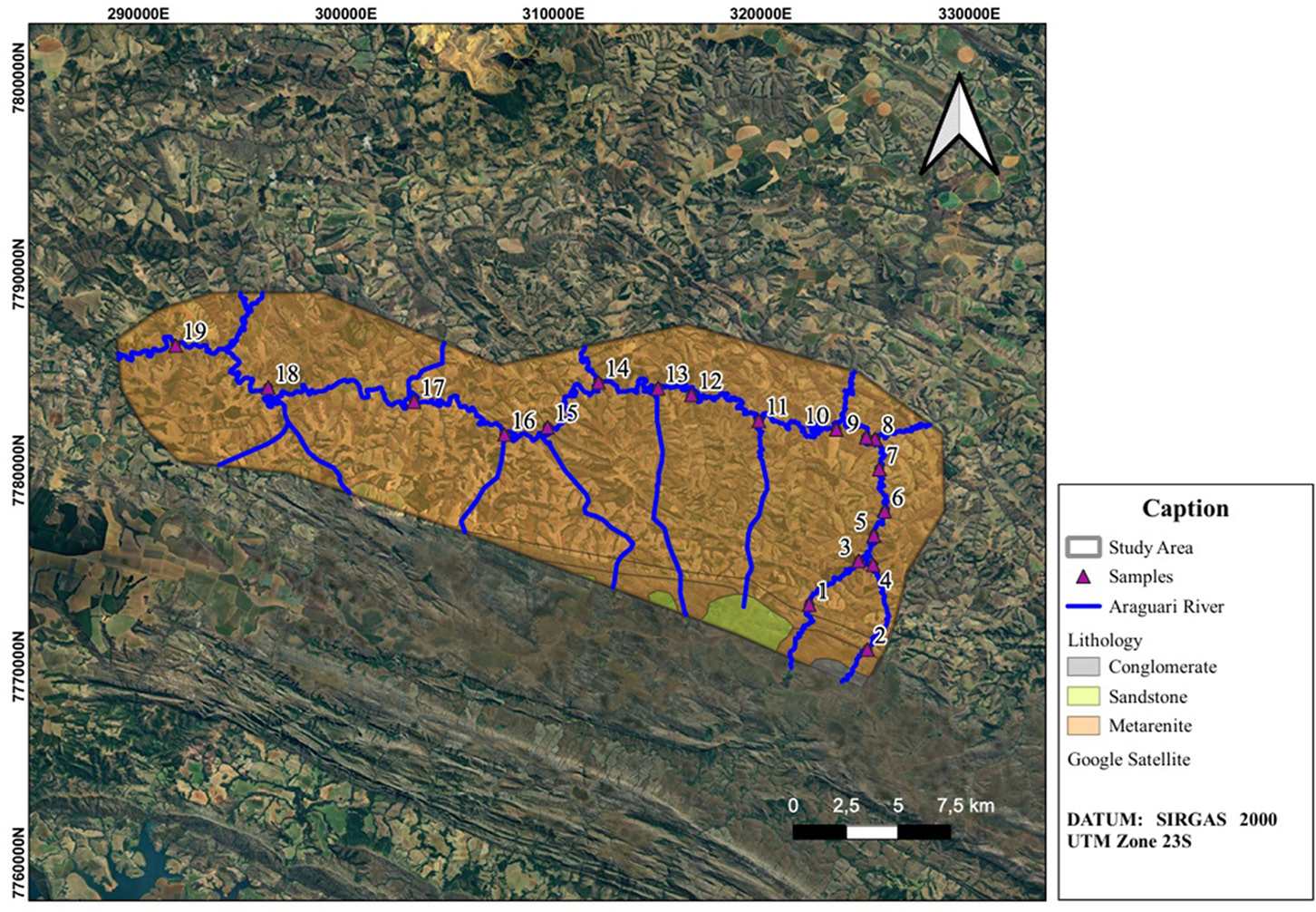
This article presents the results of applying Mineral Prospecting and Research techniques to 19 samples of active stream sediment and alluvial sediment from the Araguari River. The samples were collected from the river's source to the Desemboque district, Sacramento Municipality, Minas Gerais, at points immediately after the outflow of tributaries from the north and south banks of this river (Figure 1). The study was conducted to locate anomalous sources of precious metals, in part of the Serra da Canastra Diamond Province in the southern portion of the Brasília Belt, west and southwest of the São Francisco Craton (Chaves et al., 2008). The method used was stratified sampling, in which a location was selected in advance, and samples were taken at locations of interest, in order to distribute each one into subgroups of equal representativeness. The location of the collection points for active stream sediment and alluvial sediment samples is highlighted below.
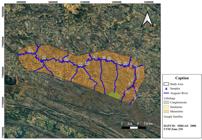
Geographic and geological context of the Araguari River basin, from its source to the Desemboque district, which drains the metasediments of the Canastra Group.
The choice of this region is justified by the fact that between 1743 and 1781, 1,500 kg of gold were extracted from the alluvial deposits of the Araguari River, near the Desemboque district (Pontes, 1978). Despite this historical significance, detailed prospecting studies remain scarce, and the primary source of this gold, as well as its precise location, is still unknown.
Therefore, to expand prospective knowledge of this region, mineralogical and geochemical investigations of sediment samples from the Araguari River (Figure 1) were used. The acquisition of these data, combined with the interpretation, compilation, and reinterpretation of the limited literature on the region, are expected to contribute to expanding prospective knowledge and, at the same time, provide a reference for future research and mineral prospecting work in the region.
2. Methodology
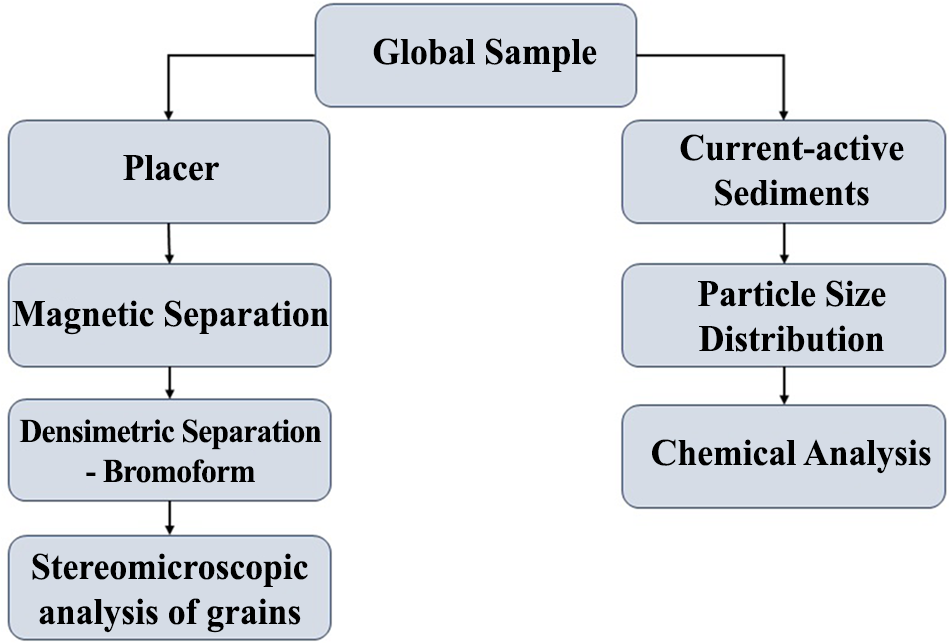
The samples of active stream sediment and alluvial sediment were subjected to a series of techniques common in mineral research and prospecting, as shown in the simplified flowchart in Figure 2.
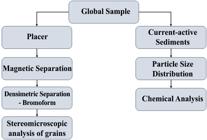
Simplified methodological flowchart relating to the processing steps of the 19 samples of active stream sediment and alluvial sediment.
Methodologically, the steps taken in preparing this work followed the following order:
-
• Field sample collection at predetermined locations immediately after the arrival of each tributary, on the north and south banks of the Araguari River (Figure 1). This approach aimed to identify potential anomalous sources of target elements within the basin. Samples were labeled and sealed in plastic bags in the field;
-
• The alluvial sediment samples were treated in the CEFET/ARAXA Mineral Treatment Laboratory, using the following equipment: oven, Jones type quartering machine, sieves, Wilfley density separation table, magnetic rod (10,000 gauss) and vibrating equipment for mica extraction;
-
• To optimize the concentration of heavy minerals (Table 1), the alluvial sediment samples were subjected to the Wilfley density separation table, which was calibrated at the following inclinations: 5°, 7°, and 9°, with mass and residence time recorded in grams and minutes, respectively;
-
• The samples were then subjected to gravimetric separation using a dense liquid (bromoform) at the CEFET/ARAXÁ Chemistry Laboratory. At this stage, the following equipment and utensils were used: volumetric flask, glass funnel, filter paper, Mohr clamp, glass rod, beaker, silicone hose, acetone, bromoform, and distilled water;
-
• Post-concentration, heavy mineral fractions were examined under a binocular microscope to identify mineral varieties;
-
• The active current sediment samples were also treated at the CEFET/ARAXÁ Mineral Treatment Laboratory, using an oven, Jones type quartering machine, and sieves. A 30-gram aliquot, with a particle size below 100 mesh, was sent to the ALS Laboratory for identification and quantification of its elemental composition (Table 2);
-
• The technical procedures for obtaining chemical results at the ALS Laboratory were as follows: The sample was registered in the tracking system, and a barcode label was attached. The sample was then finely crushed to a thickness greater than 70% of the sample, passing through 2 mm, which was then fractionated using a riffle divider. A prepared sample (0.50 g) was digested with aqua regia (hydrochloric and nitric acid) in a graphite heating block. After cooling, the resulting solution was diluted with deionized water, mixed, and analyzed by inductively coupled plasma-atomic emission spectrometry and inductively coupled plasma-mass spectrometry, with results corrected for spectral or isotopic interference. The detection limits (in ppm) of the elements of interest in this work are: Au - 0.0002-25; As - 0.01-10000; Ag - 0.001-100; Cu - 0.01-10000; Pt - 0.002-25; Bi - 0.0005-10000; Ce - 0.003-500; La - 0.001-10000.
-
• Finally, all information relating to the methodological procedures was stored in a database to assist in the interpretation of the results.
3. Results
3.1 Geochemistry
Table 2 presents the content of some elements extracted from the chemical analysis of active sediments from the Araguari River stream. For comparison, Table 2 presents Clarke's values (Mason and Moore, 1982). Results above Clarke's values are highlighted in bold. The sample was decomposed in the laboratory using the aqua regia digestion method and atomic emission spectroscopy with inductively coupled plasma (ICP-AES) and inductively coupled plasma mass spectrometry (ICP-MS) to obtain the data. Table 2 presents the content of some elements extracted from the chemical analysis of active sediments from the Araguari River stream. For comparison, Table 2 presents Clarke's values (Mason and Moore, 1982). Results above Clarke's values are highlighted in bold. The sample was decomposed in the laboratory using the aqua regia digestion method and atomic emission spectroscopy with inductively coupled plasma (ICP-AES) and inductively coupled plasma mass spectrometry (ICP-MS) to obtain the data.
Mass (in grams) and residence time (in minutes) of samples on the Wilfley densitometer, for primary concentration of heavy minerals in alluvial sediment samples.
Results of chemical analysis of 19 active sediment samples from the Araguari River stream for selected elements. Clarke values (Mason and Moore, 1982) are included in this table for comparison.
In comparison to Clarke's values (Mason e Moore, 1982), the geochemical results of the elements chosen from Table 2 presented values above the Clarke Index for some samples. This is the case of silver (samples SM03, 14), arsenic (samples SM01, 03, 05, 17, 18), bismuth (samples SM08, 09, 11, 12, 13, 14, 15), cerium (sample SM10, 15, 18, 19), copper (samples SM02, 03, 05, 06, 12, 14, 18), lanthanum (sample SM 10) and platinum (samples SM01, 02 and 06).
The relative abundance of bismuth is notable, with several samples showing levels above the Clarke Index. Exceptionally, the copper values are well above the Clarke Index for this element (e.g., 2,750 ppm), indicating a strong occurrence of sulfides in the region. The results also indicate a good correlation between silver, arsenic, copper, and platinum, reinforcing the perception of the presence of sulfides in the Canastra Group rocks that dominate the geology of the studied region (Figure 1).
Unexpected results were found for platinum in relation to gold, and conversely, higher arsenic values are not accompanied by high gold values. These results are noteworthy for sediments from active watercourses, since platinum and platinum group elements are less abundant than gold in these locations. Arsenic is an indicator of the presence of gold. However, it is important to highlight the inconsistency of these results for gold, since 1,500 kg of gold were extracted from the alluvial deposits of this river in the past. It is surprising that the chemical analyses performed today did not indicate any gold values above the Clarke value. Regarding platinum, the elements of this group in a placer sample can be studied by producing a concentrate of heavy minerals from material already sifted and concentrated by nature. The identification of these elements in bedrock samples requires careful studies of thin, polished sections, whose surfaces represent only a small fraction of the rock or ore (usually just a few cm2) (Cabri et al., 2022).
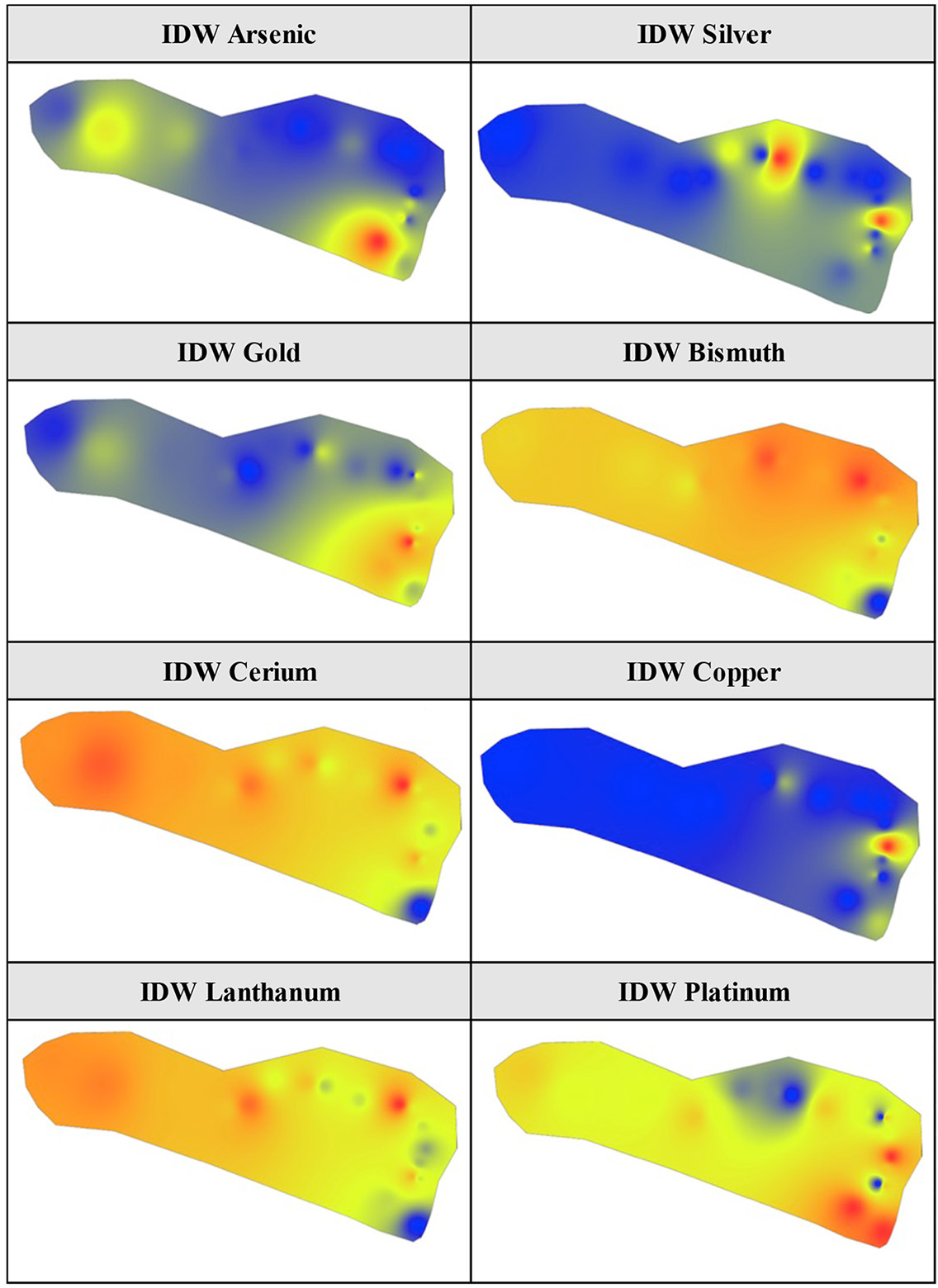
To illustrate the distribution of these elements in the studied region, we created maps using distance squared interpolation (IDW). Figure 3 presents the various maps of the elements studied here. Gradually, the ppm values decrease in the following order: red > orange > yellow > blue.
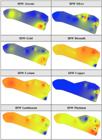
IDW maps for the chemical elements in Table 2 considering the points sampled along the course of the Araguari River.
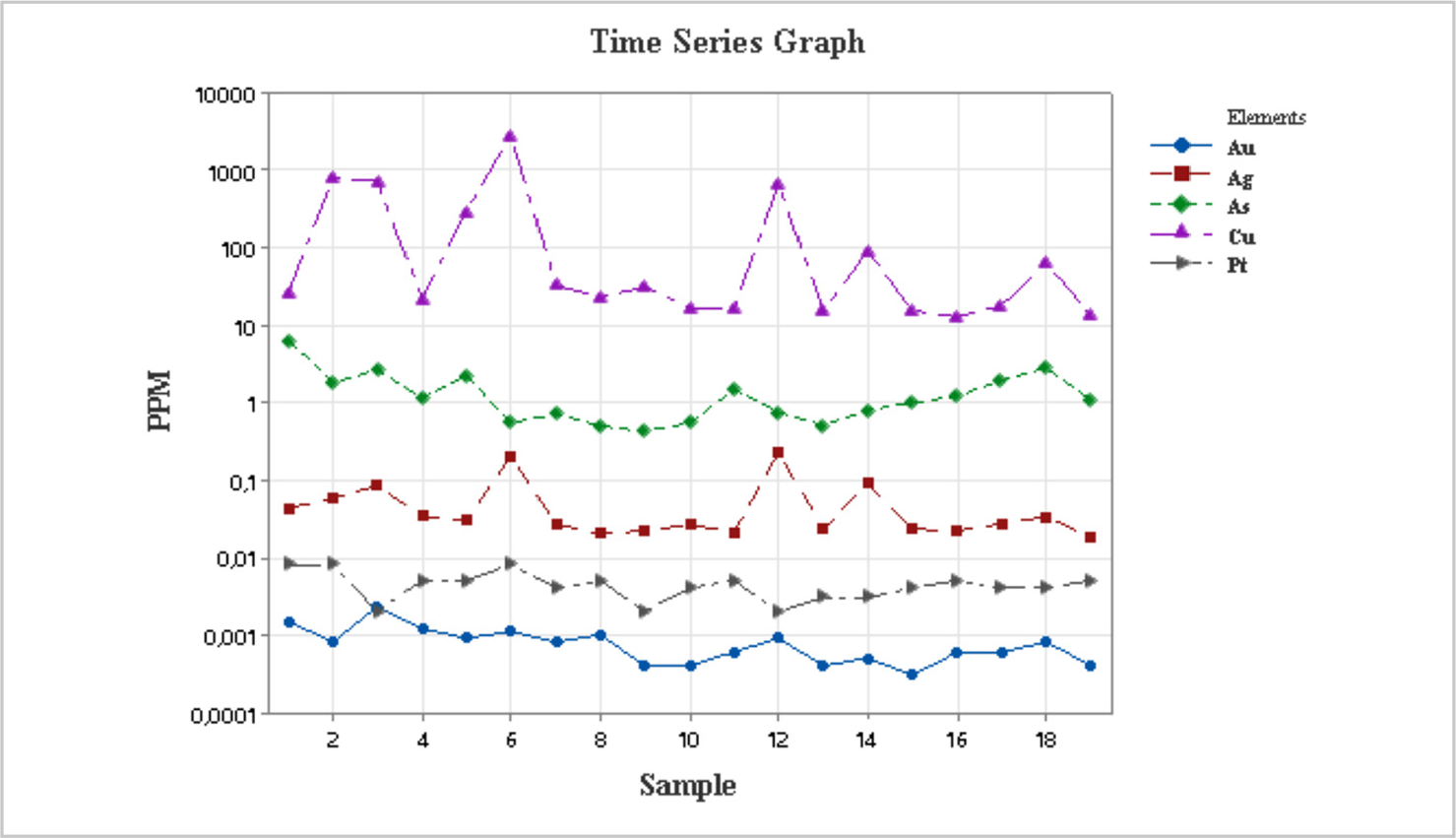
Another way to present the geochemical results from the 19 active stream sediment samples can be seen in the time series graphs (Figures 4 and 5). In Figure 4, we observe positive correlations between silver and copper for samples SM03, 06, 12, and 14. However, surprisingly, arsenic stubbornly fails to follow these correlations and does not exhibit any significant correlation with gold, as would be expected.
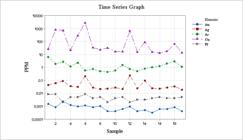
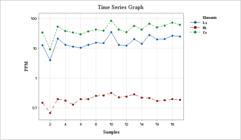
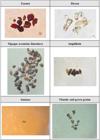
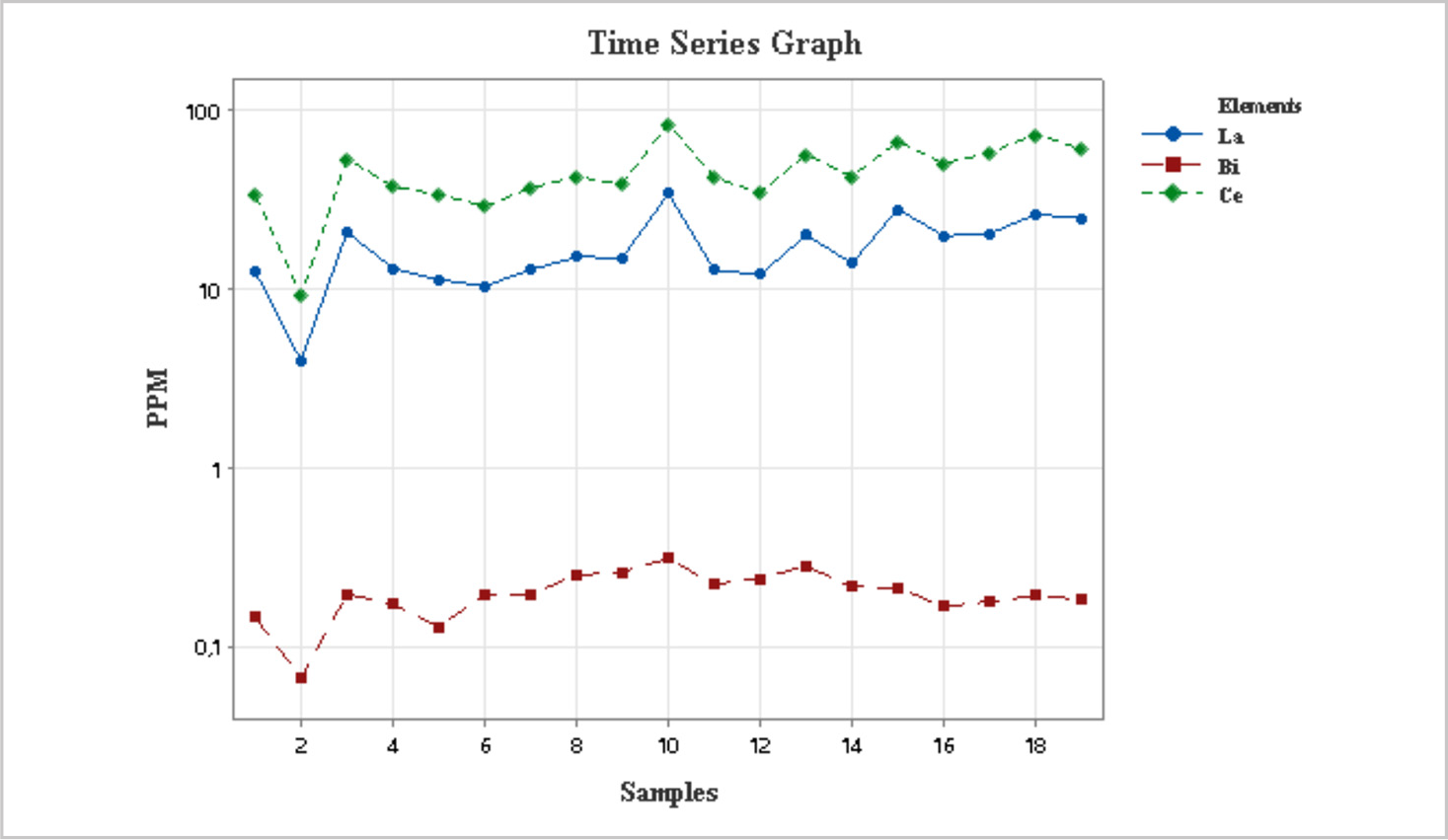
Figure 5 shows the time series for bismuth, lanthanum, and cerium. The positive correlation for these elements is notable, as is the case in sample SM10, where these elements exhibit the highest values in their time series, as well as in sample SM02, where they consistently exhibit the lowest levels, forming valleys in their time series.
4. Mineralogy of Heavy Minerals
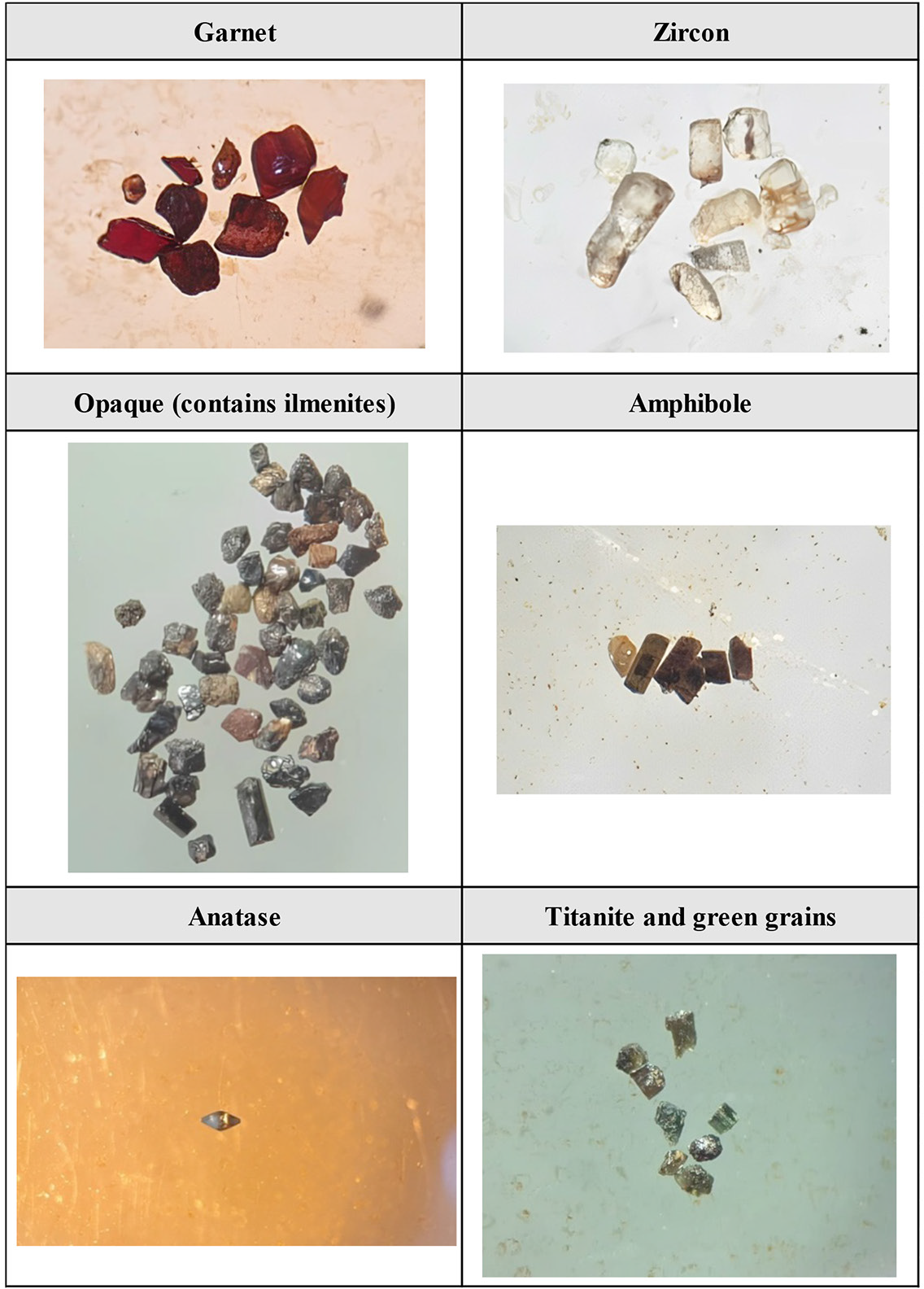
The heavy mineral concentrates, after gravimetric concentration using dense liquids, were subjected to mineralogical description using a binocular lens at the CEFET/ARAXA Mineral Processing Laboratory. Figure 6 shows the main minerals found in the alluvial sediment samples from the Araguari River: red garnets, zircon, opaque minerals (ilmenite), green amphiboles, anatase, and titanite.
5. Discussion
According to the regional background study, silver, bismuth, and copper presented higher values relative to the global Clarke Index, with bismuth and copper standing out. In the case of bismuth, in addition to values above the global Clarke Index, its constant high levels are common in the studied region. This element can be found in a variety of mineralized systems, the most common sources being skarns rich in W, Pb, and occasionally Au. Bismuth can also occur in fissure deposits of the Co-Ni-Bi-Ag-As ± U type, which historically were an important source of native Bi (Deady et al., 2022).
Another possibility to explain the presence of bismuth are the trace concentrations of Mo-W mineralization hosted in porphyries and in some reduced gold deposits related to intrusions, as well as in orogenic deposits. Volcanogenic massive sulfide deposits can also host minor bismuth mineralization, typically associated with the Au rich portions of the mineralized system (Deady et al., 2022).
Copper showed a less uniform distribution but reached the highest concentration among the analyzed elements (Table 2), peaking at 2,1750 ppm. A strong Cu-Ag correlation was observed, suggesting the presence of sulfide minerals, such as chalcopyrite.
From the IDW (Inverse Distance Square interpolation - Figure 3), it is noted that some elements have a significant presence in certain parts of the region, such as rare earths (cerium and lanthanum), platinum, and gold (samples SM01 to 06), predominantly found near the source of the Araguari River (Figure 1). The presence of rare earths in the region may be related to mineral deposits associated with extinct volcanic activity and igneous rocks, or from sediments of coastal areas, since the tectonic environment of the Canastra Group is related to a Neoproterozoic continental margin (Bhushan and Somani, 2019). Ion adsorption-type rare earth deposits are formed by the weathering and leaching of rare earth enriched rocks, such as volcanic rocks, metamorphic rocks, basaltic rocks, and carbonate rocks, among which granite is the most important ore-forming parent rock and the only parent rock type that can form heavy rare earth deposits (Fu. W. et al., 2019).
From the univariate statistics graphs, the atypical values for silver, arsenic, copper, lanthanum, cerium, and platinum indicate promising anomalies for continued mineral exploration and prospecting in the region, as it is quite unusual for platinum to occur in greater quantities than gold in these alluvial deposits. It is noteworthy, however, that there were no values above Clarke's index for gold, even though the region has produced 1,500 kg of gold in the past.
Finally, cerium and lanthanum showed a strong correlation, since both are part of the lanthanide group, usually occurring together in nature.
Univariate statistical analysis highlights anomalous values for Ag, As, Cu, La, Ce, and Pt, supporting the potential for continued mineral exploration. The occurrence of platinum in greater abundance than gold is particularly unusual for alluvial deposits. Despite historical extraction of approximately 1,500 kg of gold, current analyses have not revealed Au concentrations above Clarke values. Cerium and lanthanum exhibited a strong positive correlation, consistent with their shared affinity for lanthanides. Mineralogical examination identified garnet, zircon, ilmenite, amphibole, anatase, and titanite as dominant phases (Figure 6), typical of alluvial sediments. Further studies of the composition of these minerals will be essential in subsequent stages of the research.
6. Conclusion
The findings of this study enhance the prospective understanding of the Araguari River basin and underscore the need for additional exploration phases. Significant geochemical contrasts were identified, particularly for platinum, copper, and bismuth, which indicate promising targets for future investigations. Regarding gold, although it was not found in amounts above Clarke, geological information about the Canastra Group in the region indicates the presence of faults or contractional shear zones, normal faults, many of them filled by basic dikes, in addition to magnetic geophysical anomalies (Portal da Geologia, 2014). These contractional shear zones may be important locations for the concentration of mineral deposits, especially those related to hydrothermal fluids that circulate along these zones (McCuaig and Kerrich, 1998).
Furthermore, as mentioned earlier, gold was extracted from the alluvial deposits of the region in the past and, more recently, in studies by Queiroz (2022), focusing on heavy minerals in the alluvial deposits of the Araguari River, location where this element was found in drainage systems on the south bank of the river, near the Desemboque district. In relation to that historical extraction, further support the metallogenic potential of the region, including REE. Future research should focus on detailed mineralogical characterization and targeted prospecting to delineate primary sources and refine exploration models.
Acknowledgments
This work was made possible thanks to funding for chemical analyses at the ALS Laboratory provided by the company JOSÉ ADELMO DA SILVA ME. Mining Engineering undergraduates from CEFET/ARAXÁ participated in the sample preparation work: Victor Diniz, Maria Eduarda Souza Duarte, Juliano Rodrigo Batista Júnior, Adrian Goulart, and Iago Pereira da Silva. We are deeply grateful to all of them.
-
Funding information
The authors did not receive financial support for the research and publication of this article.
Data availability
The authors declare that this manuscript is based on the Master's Thesis of Rodrigo Germano de Andrade, entitled "Mineral prospecting in active stream and alluvial sediments of the Araguari River/MG: promising results for Pt, Ag, Cu, Bi, Ce and La", presented in 2025 at Centro de Educação Federal Tecnológica de Minas Gerais-CEFETMG, in the Master degree Program in Mining Engineering (PPGMIN-CEFETMG), with all the data available at the following link: https://www.ppgemin.cefetmg.br/dissertacoes
References
- BHUSHAN, S. K.; SOMANI, O. P. Rare earth elements and yttrium potentials of Neoproterozoic peralkaline Siwana granite of Malani igneous suite, Barmer district, Rajasthan. Journal of the Geological Society of India, 2019.
- CABRI L. J.; OBERTHÜR. T.; KEAYS. R. R. Origin and depositional history of platinum-group minerals in placers - a critical review of facts and fiction. Ore Geology Reviews, v. 144, May 2022, 104733.
- CHAVES, M. L. S. C. et al. Província Diamantífera da Serra da Canastra e o Kimberlito Canastras-1: primeira fonte primária de diamantes economicamente viável do país. Instituto de Geociências, Universidade Federal de Minas Gerais, Campus Pampulha.
- DEADY. E., MOON. C., MORRE. K., GOODENOUGH. K. M., SHAIL. R. K. Bismuth: economic geology and value chains. Ore Geology Reviews. v. 143, 2022.
- FU, W.; LI, X.T.; FENG, Y.Y.; FENG, M.; PENG, Z.; YU, H.X.; LIN, H.R. Chemical weathering of S-type granite and formation of rare earth element (REE)-rich regolith in South China: critical control of lithology. Chem. Geol. 2019, 520, p. 33-51.
- MCCUAIG, C.; KERRICH, R. P-T-t-Deformation-Fluid Characteristics of Lode Gold Deposits: Evidence from Alteration Systematics. Ore Geology Reviews, 12, p. 381-453, 1998.
- MASON, B.; MOORE, C. B. Principles of geochemistry. 4. ed. John Wiley & Sons, 1982. 344 p.
- PONTES, H. História de Uberaba e a civilização no Brasil central. Uberaba: Academia de Letras do Triângulo Mineiro, 1978.
-
PORTAL DA GEOLOGIA. Disponível em: <http://www.portalgeologia.com.br/ >. Acesso em: 20 dez. 2024.
» http://www.portalgeologia.com.br/ - QUEIROZ, D. M. R. Prospecção geoquímica na região do Desemboque, MG. Trabalho de Conclusão de Curso (Bacharelado em Engenharia de Minas) - Centro Federal de Educação Tecnológica de Minas Gerais, Araxá, 2022.
Edited by
-
Associate Editor
Paulo de Tarso Amorim Castro