 The challenge of hydrogen sulphide in mining dams: strategies for odour reduction - a case study
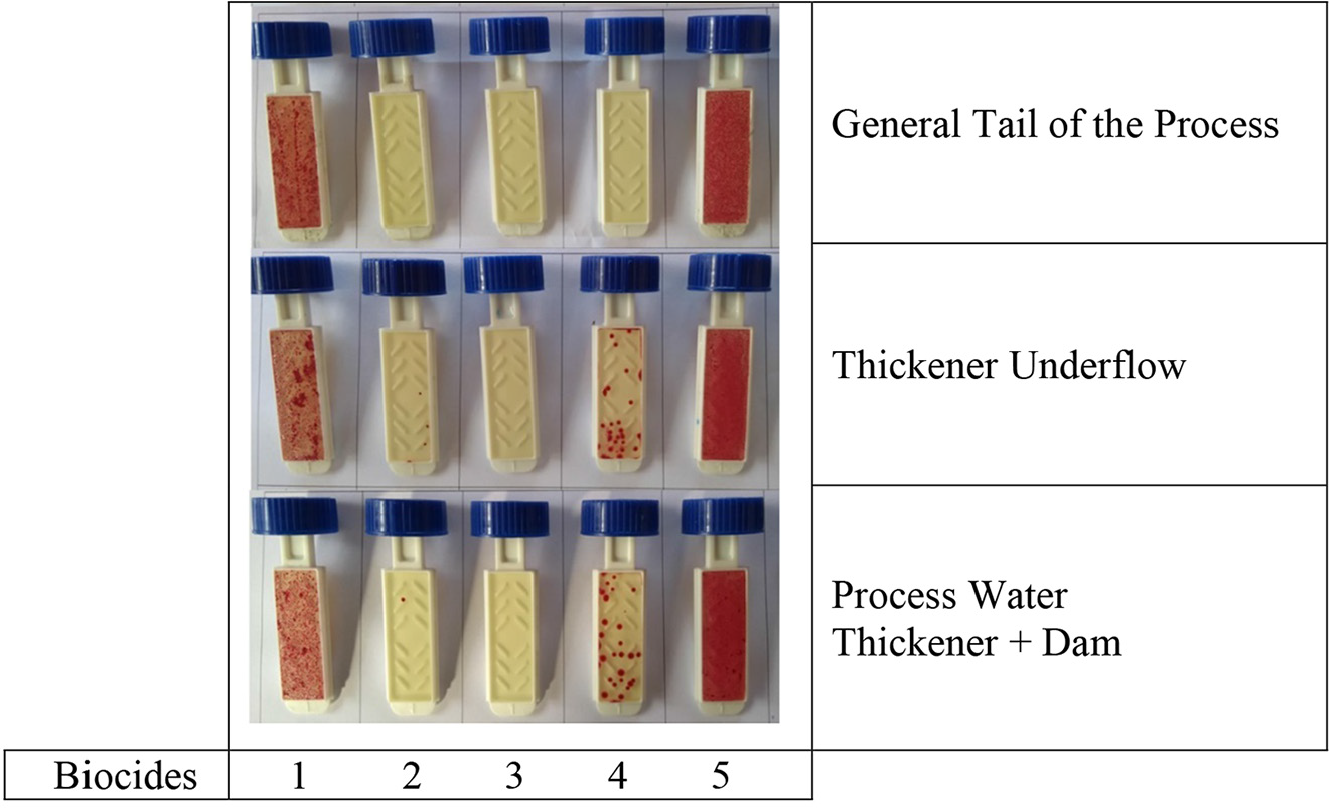
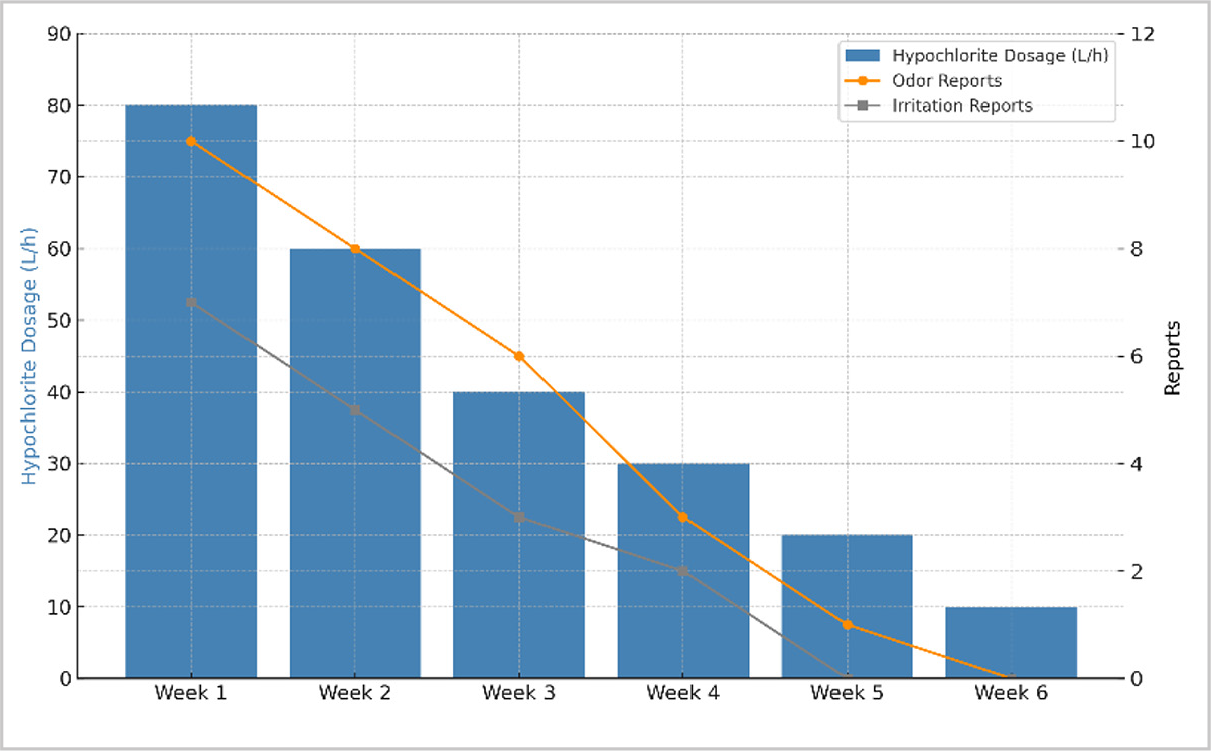
Hydrogen sulfide (H2S) emissions from mining tailings dams pose persistent environmental and operational challenges due to their corrosiveness, toxicity, and intense odor. In a Brazilian mining complex, sulfate-reducing bacteria (SRB) associated with unoxidized ore and recirculated process water were identified as the primary source of H2S. Initial mitigation using a glutaraldehyde-based biocide temporarily suppressed microbial activity but proved unsustainable due to high dosing costs and the development of microbial resistance. Subsequently, sodium hypochlorite (NaClO) was tested as an oxidizing agent to chemically neutralize H2S before degassing. Laboratory and industrial-scale trials confirmed that NaClO, at an optimized dosage of 10 L/h, effectively eliminated odors within 10-20 minutes, with no reappearance over a 48-hour observation period and reducing odor complaints to zero, without compromising the process performance. This approach also reduced operational costs by 90% compared to the biocide. This case study highlights the benefits of integrating microbiological diagnostics with adaptive chemical strategies to establish a scalable, cost-effective solution for odor control in mining environments.
Keywords:
mining tailings; sulphate-reducing bacteria; hydrogen sulphide; environmental management.
 Thumbnail
 Thumbnail
 Thumbnail
 Thumbnail
 Thumbnail
 Thumbnail
 Thumbnail
 Thumbnail
 Thumbnail
 Thumbnail