 Characterization by granulometric range of kaolin residue in the pegmatitic-Borborema region of northeast Brazil, aiming at potential uses
Abstract
This study aimed to characterize kaolin residues originating from the pegmatitic region of northeastern Brazil, an area that annually produces and disposes of thousands of tons of kaolin residue into the environment without any control. The research focused on the industrial potential of these residues through chemical composition analysis by X-ray fluorescence (XRF), mineralogical characterization by X-ray diffraction (XRD), and morphological characterization by scanning electron microscopy (SEM) across different granulometric fractions. The results, supported by the literature, revealed that both siri and sarrabulho residues exhibited chemical, mineralogical, and textural compositions dominated by silica (SiO2) and aluminum oxide (Al2O3), which varied according to particle size. The fine fractions (< 74 µm) showed higher Al2O3 contents (42%), corresponding to kaolinite and muscovite minerals, which confer favorable properties to produce ceramic coatings, cement, and paints. Conversely, the coarse fractions (> 150 µm) contained 83% SiO2, attributed to quartz mineral, contributes to improved mechanical strength and thermal stability in aggregates for the construction industry. Additionally, 8.10% potassium oxide (K2O) and 3.22% phosphorus pentoxide (P2O5) were identified, suggesting potential agricultural applications as soil conditioners. Based on the results, it is concluded that the Siri and Sarrabulho residues, according to literature, exhibit physicochemical and mineralogical characteristics that support their reuse in various industrial sectors, particularly in ceramics, civil construction, and agriculture. The valorization of these residues represents a strategic approach to mitigating environmental impacts and promotes the integration of these materials into production chains aligned with the principles of economic, environmental, and social sustainability.
Keywords:
kaolin residue; industrial use; characterization
1. Introduction
Kaolin is a rock predominantly composed of kaolinitic clay that commonly occurs associated with minerals, such as quartz, feldspar, and muscovite. Being a fine-grained clayey material, it is widely used in various industrial and commercial sectors, playing a key role in manufacturing processes, consumer goods, and as a low-cost additive (Dana, 1959; Mana et al., 2017).
The extraction and beneficiation of kaolin, although economically significant, generate large volumes of residue. In Brazil, the kaolin industry has shown significant growth, particularly in the Northern region, with processed production and exports reaching 2,2 million and 729.7 thousand tons per year, respectively (Longhi et al., 2022; Geological Survey, 2023).
In northeastern Brazil, similarly to the northern region, the kaolin industry plays a significant role in the local economy by generating thousands of direct and indirect jobs (Leandro & Rocha, 2019). However, due to technological and operational limitations, its production process results in the generation of large volumes of residue, reaching up to 70% of the total kaolin extracted (Nóbrega, 2007; Vidal et al., 2017).
In the Borborema Pegmatite Province (BPP), which covers the states of Paraíba and Rio Grande do Norte, the accumulated kaolin production from 2019 to 2023 exceeded 412,800.22 tons (ANM, 2024), representing approximately 30% of all extracted material during this period. The remaining 70%, equivalent to about 963,200.51 tons, was discarded as residue, causing significant impacts on biodiversity.
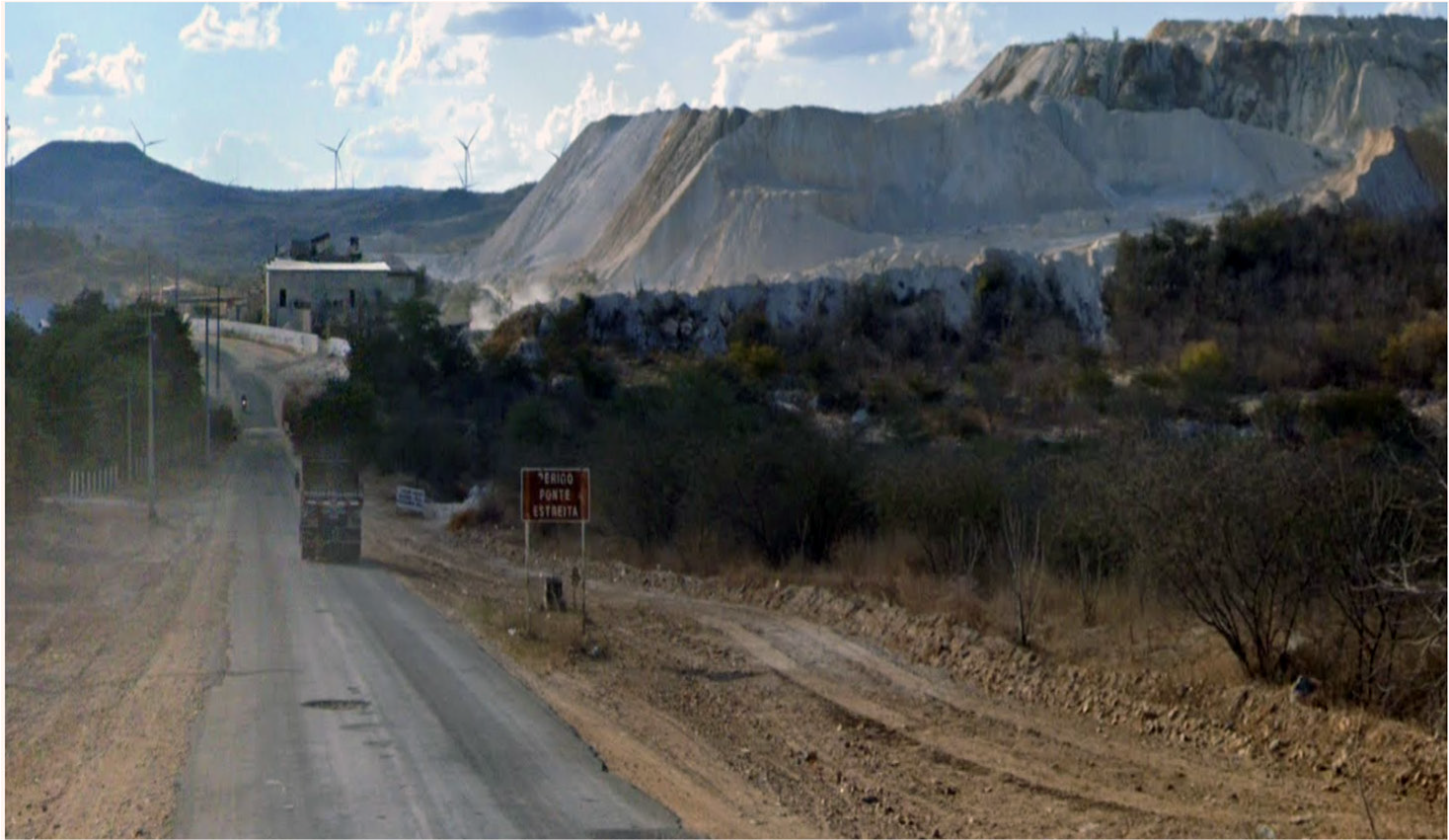
These kaolin residue piles are generally deposited in open areas, as shown in Figure 1, often located near highways and rural areas without proper control, contributing to potential environmental and social impacts.
Although the residues from the BPP region do not exhibit characteristics, such as toxicity, flammability, or corrosivity, they contain minerals like mica and quartz. It is important to highlight that prolonged exposure to quartz is associated with the development of diseases, such as silicosis and lung cancer (Rezende et al., 2008; Azevedo, 2019; Mukherjee & Ghsh, 2013). In this context, identifying alternative uses for these residues becomes a challenge not only to mitigate environmental impacts and health risks but also to add commercial value to a resource that would otherwise be discarded.
It is within this context that the concept of the Circular Economy (CE) emerges: a strategic approach that goes beyond simple recycling or material reuse, aiming to reintegrate residue into the production cycle through redesign, innovation, and value recovery. CE promotes the efficient use of resources throughout the entire product life cycle, aligning with the principles of sustainable economic growth and environmental responsibility (Korhonen et al., 2018; Whalen, 2019).
Given this scenario, according to Souza (2007) and ANM (2024), several studies have been exploring the potential use of residues generated by the mining industry as alternative sources of raw materials for new products. Specifically regarding kaolin residue, research indicates its applicability in various sectors, such as in the production of low-carbon cement to reduce CO2 emissions (Soto, 2022); in refractory materials and mullite, which is composed of aluminum silicate and obtained from kaolin residue through calcination or high-temperature thermal treatment (Silva, 2021); and in paint formulations as a sustainable and lower-cost alternative to titanium dioxide, according to Kezaiah & Ogbennaya, (2012).
In this context, the chemical and mineralogical knowledge of kaolin residue by granulometric fraction is essential to propose its utilization in different applications. The objective of this study is to identify the specific properties of siri and sarrabulho residues, classified granulometrically, evaluating their industrial potential based on literature data. This detailed characterization will enable a more efficient and strategic direction for these residues, optimizing their use in industrial processes. Consequently, it expands the potential for transforming the residue into new products, thereby contributing to environmentally responsible development and the creation of more sustainable and innovative solutions.
2. Materials and methods
2.1 Materials and sample preparation
The kaolin residues analyzed in this study were collected from piles known as siri and sarrabulho, as well as from the process streams of the kaolin beneficiation that generate them, as illustrated in the flowchart in Figure 2. The industrial process in question is carried out by a small-scale company located in the municipality of Equador, in the state of Rio Grande do Norte, within the Seridó-Pegmatitic-Borborema region in northeastern Brazil.

Figure 2 shows that the process streams represented by the green lines 4, 5, 11, and 12 are directed to the waste piles numbered ⑫ and ⑬, corresponding to coarse residue (sarrabulho) and fine residue (siri), respectively. In this process, the first and second decks of the primary screen ③ produce an oversize of 1,288.32 ton/month of material classified as sarrabulho, with particle sizes greater than 3 mm and between 3 mm and 0.5 mm. The undersize material from both decks, in slurry form, is directed to a quiescent tank ④, which subsequently pumps it for classification in a hydrocyclone ⑤. The hydrocyclone overflow (stream 9) and underflow (stream 8) are conveyed to screens ⑥ and ⑧ with apertures equivalent to 150 µm and 37 µm, respectively, which together produce approximately 373.12 ton/month of oversize material that is sent to the fine residue pile ⑬. The undersize material passing through these screens follows the process flow to the kaolin product with particle size less than 37 µm.
2.2 The tests
The sampling of residues from the piles was carried out using a backhoe loader, model 850N, equipped with a 0.30 m3 rear bucket. The material was collected through boreholes up to 3 meters deep, arranged in a pre-defined sampling grid, totaling 850 kg of material from the siri and sarrabulho residue piles (350 kg and 500 kg, respectively). In the laboratory, the residues were initially spread over plastic tarps in a well-ventilated area and left to dry naturally at room temperature for three days. After complete drying, the material was homogenized using the long piles method, as described in the technical literature (Oliveira & Aquino, 2007). Subsequently, the material was divided into two fractions: the first half was packed in 50 kg plastic bags for hydrocycloning tests; the second half was reduced by quartering, using a Jones splitter with 12 mm slots, until approximately 30 kg of each type of residue was obtained. These were then stored in 1 kg bags for the screening tests. Chemical and mineralogical analyses were conducted on representative aliquots of these reduced samples, as well as on the material classified during the screening tests.
The granulometric classification analyses of the siri and sarrabulho residue piles were performed using a Malvern Panalytical - Mastersizer 2000 laser particle size analyzer, which is recommended for particle size analysis due to its high precision, speed, and wide measurement range. This equipment allows for accurate identification of particle size distribution, including in the submicron range, which is essential for understanding the material's behavior in different industrial applications.
The laser diffraction technique used by the Mastersizer 2000 provides important parameters such as Dv (10), Dv (50), and Dv (90), which represent the particle diameters corresponding to 10%, 50%, and 90% of the cumulative particle size distribution. These parameters assist in the detailed characterization of the residue, supporting more technical and well-founded decisions regarding its potential utilization.
The screening tests were manually performed using the wet method without the use of dispersants, with cut sizes of 500 µm, 150 µm, 74 µm, 44 µm, and 37 µm, corresponding respectively to 0.5 mm, 0.15 mm, 0.075 mm, 0.044 mm, and 0.037 mm.
To obtain reliable data during the research, it was necessary to adopt a multi-technique approach, including X-ray Fluorescence Spectroscopy (XRF), X-ray Diffraction (XRD), and Scanning Electron Microscopy (SEM).
The XRF analysis was performed using an Energy Dispersive Spectrometer (EDS), Thermo Fisher Scientific, model ARL QUANT'X, operating under air atmosphere. This technique accurately determines the elemental chemical composition of the material, allowing the quantification of the main oxides present in the sample. In kaolin residue, the technique can identify oxides, such as SiO2, Al2O3, K2O, and Fe2O3, among others.
For the XRD analysis, a Bruker D2 Phaser diffractometer was used, operating at 30 kV and 10 mA. The parameters employed included a scanning range from 5 to 80° (2θ), an angular step size of 0.05°, and a scan speed of 5.12°/min. This equipment provides efficient information for the detection of major and secondary minerals, allowing semiquantitative analysis of the mineralogical composition through techniques, such as the Reference Intensity Ratio (RIR) or refinement methods (e.g., Rietveld, if applied). In kaolin residue, this technique enables the identification of phases, such as kaolinite, quartz, mica, iron-bearing minerals, among others.
Finally, SEM analysis was performed using a TESCAN VEGA 3 SBH microscope equipped with an Oxford X-act detector. This technique enables morphological and microstructural analysis of the particles through high-resolution microscopic imaging, revealing the shape, size, and organization of mineral phases, as well as identifying possible impurities or surface alterations. When coupled with an EDS (Energy Dispersive Spectroscopy) system, it allows for point or mapped chemical analysis. This information is crucial for understanding the physicochemical behavior of the material under study. The obtained images assist in observing the variation in particle size and distribution, especially in fine and ultrafine fractions, which are critical to the technological behavior of kaolin.
In summary, the combined use of these techniques provides a comprehensive and complementary characterization, which is essential for understanding the material and for proposing more efficient, sustainable, and technically feasible applications for the kaolin residue.
3. Results and discussion
3.1 Granulometric analysis of kaolin waste piles using a particle size analyzer
The granulometric characterization of the siri and sarrabulho kaolin residues, as shown respectively in graphs (a and b) in Figure 3, indicates a higher concentration of predominant particles within the size ranges of 10 µm to 112 µm. In graph a, a well-defined peak is observed between approximately 30 and 80 µm, showing a relatively narrow particle size distribution, with the highest concentration of particles between 44 µm and 50 µm, suggesting a material with a more homogeneous granulometry. This is likely due to this residue having been classified by hydrocycloning.

Graphical representation of the particle size distribution of siri and sarrabulho kaolin residues from a company in northeastern Brazil.
In the second graph (Figure 3 (b)), the peak occurs over a broader range between 40 and 100 µm, showing a more heterogeneous particle size distribution with a higher concentration of particles between 44 µm and 70 µm. This suggests the presence of larger particles, likely due to insufficient classification during primary screening. This material is composed predominantly of quartz.
The surface area mean diameter and the mean sphere diameter of the residue particles were determined using the laser analyzer, resulting in values of 10.37 µm and 38.67 µm for the siri residue, and 10.67 µm and 43.55 µm for the sarrabulho residue, respectively. These parameters provide important information about the physical characteristics of the particles. The data suggest that although both residues have similar average surface areas, the sarrabulho residue contains, proportionally, a larger fraction of particles with greater dimensions compared to the siri residue.
These results are relevant for applications that depend on surface properties, such as adsorption, dispersion in liquids, and reactivity in industrial processes. Table 1 presents the complementary characteristic values of the particle size distribution curves for the kaolin residues.
Characteristic values of the granulometric analysis of kaolin residue using Malvern mastersizer 2000 equipment.
Table 1 presents the detailed granulometry for the siri and sarrabulho residues, with Dv (50) particle sizes of less than 33 µm and 38 µm, respectively. These values demonstrate that the majority fraction of the analyzed residues has a considerably finer granulometry than that observed in commercial kaolin concentrates from the pegmatitic region of Paraíba and Rio Grande do Norte, which typically exhibit Dv (50) values ranging from 44 µm to 74 µm. These values are consistent with those reported by Leite & Souza, (2010), who investigated factors, such as the influence of rotation speed and reject granulometry in the concentration process using Falcon SB40 equipment. These physical characteristics indicate a significant potential for applying these residues in ceramic and cementitious formulations, where the presence of fine particles contributes to increased reactivity, improved grain packing, and higher density of the ceramic body or cement paste (Daminely et al., 2017; Zeng et al., 2024).
Regarding Dv (90), it is observed that 90% of the particles in the siri and sarrabulho residues are smaller than 81.7 µm and 90.9 µm, respectively. This indicates a predominance of finer particles in the siri residue, which can be attributed to the fact that this material underwent more than one classification process (screening and hydrocyclone).
Regarding the specific surface area, the siri and sarrabulho residues exhibited a surface area of approximately 0.56 m2/kg. Similar studies conducted by Barata & Angélica, (2012) and Yahaya et al., (2017) reported surface areas in kaolin residues ranging from 8.80 m2/g to 14.80 m2/g and from 10.702 m2/g to 12.090 m2/g, respectively. This discrepancy in value compared to the studied residues clearly indicates that other minerals, such as quartz, mica, and others present in the residues, can influence the specific surface area.
3.2 Wet sieving granulometric analysis of siri and sarrabulho residues in cut fractions of (500 µm, 150 µm, 74 µm, 44 µm, and 37 µm)
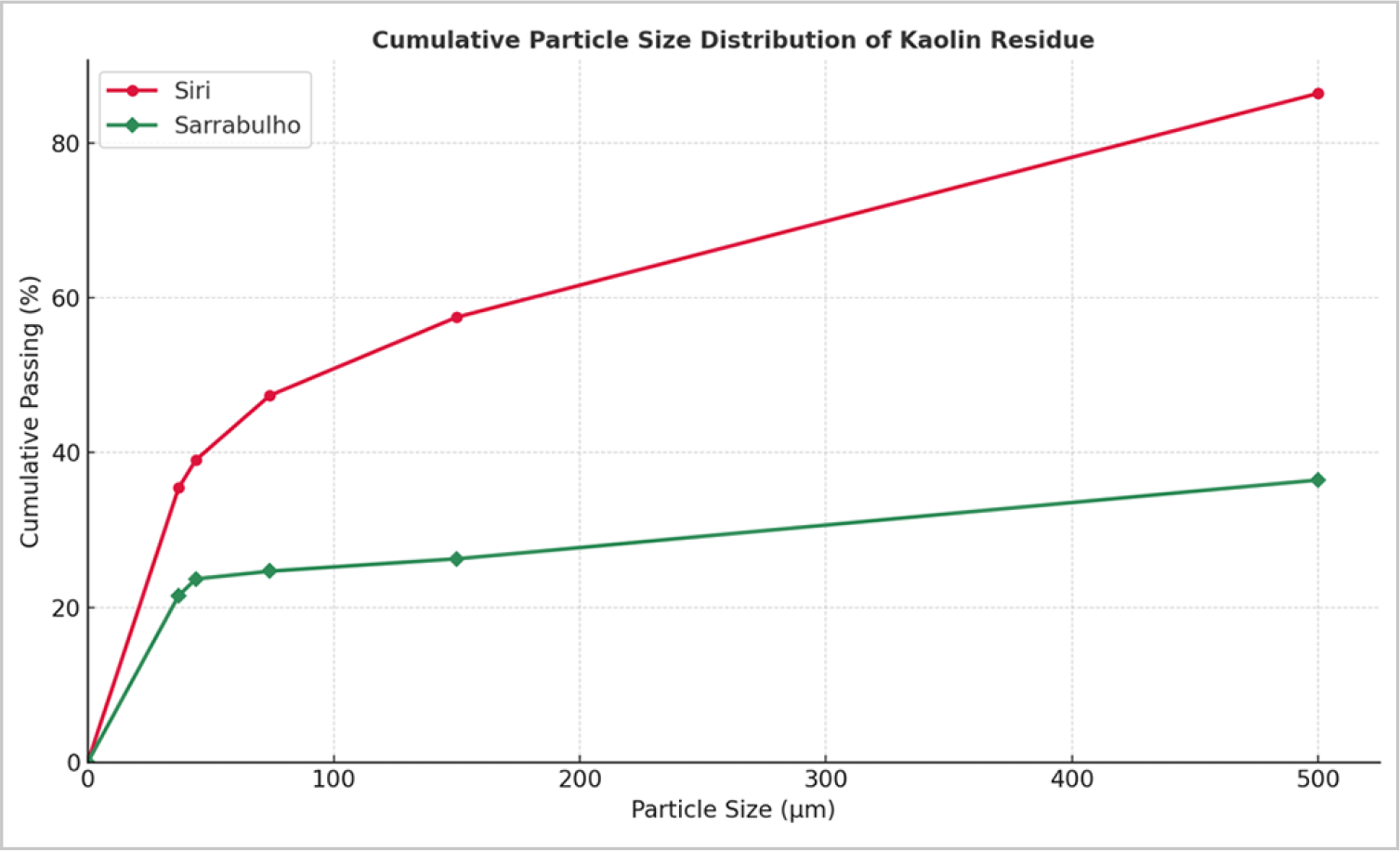
The particle size distribution of the residues shown in Figure 4 indicates that, in the siri and sarrabulho residues, 36.4% and 86.41% of the sample, respectively, contain particles smaller than 500 µm. In other words, approximately 63.6% of the sarrabulho residue consists of coarser material, composed of quartz and small mica flakes, as confirmed by SEM analysis, shown in Figure 5. In the siri residue, 13.59% of the sample was retained on the 500 µm sieve, which may be acceptable due to deficiencies in primary classification in the industrial process.

Graphical representation of the cumulative passing distribution of sarrabulho and siri residues.

Images of the siri and sarrabulho residues at cut granulometries between 500µm and 150µm (Figure (a) and (b)) and below 74µm (Figure (c) and (d)).

The results presented in Figure 4 demonstrate significant differences in the particle size distribution of the siri and sarrabulho residues. The former residue is predominantly composed of fine particles, as evidenced by the first cumulative curve in the graph showing a Dv (50) of approximately 100 µm, while the second curve indicates a higher fraction of coarse particles despite containing nearly 30% fine particles smaller than 150 µm. This distinction aligns with previous studies such as Leite & Souza, (2010), who analyzed kaolin residues from the Seridó region (PB/RN) and observed that residues subjected to hydraulic classification processes, like siri, tend to exhibit higher proportions of particles with diameters below 74 µm. Similarly, Brasileiro et al., (2012) reported that kaolin residues with coarser particles, resulting from screening processes, such as sarrabulho, exhibited behavior consistent with that found in this work, with less than 40% passing material below 500 µm, indicating their potential for use in construction materials.
Moreover, studies conducted by Soto et al., (2022) reinforce the feasibility of utilizing kaolin residue based on its granulometry. The authors found that materials with characteristics similar to the siri residue could be applied as mineral fillers in ceramic formulations and paints, while coarser residues, such as sarrabulho, proved suitable for the development of masonry mortars, partition bricks, and textured coatings. The results obtained here are consistent with those reported in the literature on the subject, evidencing data reproducibility. However, chemical and mineralogical tests are necessary to confirm the technological valorization potential of these residues, aligned with the principles of circular economy, and industrial and social sustainability.
The scanning electron microscopy (SEM) and X-ray diffraction (XRD) results are presented in Figure 5 through images and diffractograms of the siri and sarrabulho residues. Two particle size fractions were evaluated: one composed of particles passing through the 500 µm sieve and retained on the 150 µm sieve (-500 +150 µm), and another composed of particles smaller than 74 µm (-74 µm), as shown in Figures 5(a) (siri 500 + 150 µm); (b) (sarrabulho 500 + 150 µm); (c) (siri 74 µm); and (d) (sarrabulho 74 µm).
The diffractogram graphs of the siri and sarrabulho residues, presented in Figure 5, showed well-defined peaks for muscovite (M), kaolinite (K), and quartz (Q). In the case of the sarrabulho residue (Fig. 5(b)), the quartz and muscovite peaks were more intense, suggesting a higher concentration of these minerals. Conversely, the siri residue exhibited more pronounced peaks for kaolinite and muscovite Figs.5 (a),(b) and (c), indicating greater potential for ceramic applications due to the higher proportion of clay minerals in the fine particles.
Regarding the SEM images, also shown in Figure 5, observed in Figs.5 (a),(b) and (c), is the presence of lamellar-shaped particles, typical of muscovite; elongated, layered particles, characteristic of kaolinite minerals, along with more robust fragments with fractured or brittle edges, indicating the presence of quartz minerals. The particle texture indicates that the residues did not undergo any significant attrition or grinding process, thus preserving the integrity of the minerals
These SEM and XRD analyses are consistent with the findings of Medeiros et al., (2020), who analyzed kaolin residues from the Seridó region (RN) and identified the predominance of kaolinite in fine residues (< 74 µm), highlighting their promising applications in ceramic formulations and as mineral fillers.
Similarly, research has highlighted the potential of residues rich in kaolinite (clay minerals) for use in pozzolanic materials and self-compacting concrete, taking advantage of their reactive activity and large specific surface area (Azeredo & Diniz, 2013; Leandro et al., 2017; Arruda Junior et al., 2022). The high kaolinite content and the suitable morphology observed, especially in the finer residues (a and c), suggest significant industrial applicability, mainly as mineral fillers in polymers and paints, as pointed out by Kezaiah & Ogbennaya, (2012), who evaluated kaolinitic residues with similar particle sizes for use in paint formulations.
Additionally, the granulometric fraction of -500 +150 µm in residues containing muscovite and quartz has been widely studied due to its favorable characteristics for incorporation into construction materials and ceramics. Studies, such as that by Azeredo & Diniz, (2013) demonstrated that kaolin residues with medium and coarse particles were successfully used in self-compacting concrete formulations, improving mechanical strength and reducing shrinkage during firing. Furthermore, Ewis et al., (2022) highlighted that residues predominantly composed of kaolinite with particle sizes < 74 µm exhibited good performance as adsorbents, effectively removing pollutants in highly acidic environments.
In general, the residues analyzed in this study represent valuable opportunities with the potential for partial or total replacement of conventional raw materials in various industrial sectors. A comprehensive X-ray diffraction analysis of the granulometric fractions under study was carried out based on the diffractograms presented in Figure 7.

3.3 Chemical and mineralogical analyses
3.3.1 X-ray Fluorescence (XRF) chemical analysis of kaolin residues by particle size
The chemical composition of the siri and sarrabulho residues was evaluated through X-ray fluorescence (XRF) analysis, as shown in Figure 6. The results reveal the predominance of silica (SiO2) and aluminum oxide (Al2O3), which are characteristic elements of kaolinite and muscovite, minerals commonly associated with kaolin.
In the siri residue (Figure 6(a)), silica (SiO2) contents ranged from 51.07% to 52.52%, while aluminum oxide (Al2O3) values varied between 40.76% and 43.09%. In the sarrabulho residue, across different granulometric fractions (Figure 6(b)), SiO2 contents showed little variation, whereas Al2O3 fluctuated between 39.19% and 43.19%. These values are consistent with the studies by Nóbrega (2007) and Leite & Souza, (2010), who reported similar compositions in kaolinitic clays from the Brazilian Northeast.
The course granulometric fractions, passing through the 2 mm sieve and retained on the 500 µm sieve (2 mm + 500 µm), showed the highest silica contents, with 74.25% for the siri residue (Figure 6(c)) and 73.41% for the sarrabulho residue (Figure 6(d)). This suggests a higher presence of quartz, a mineral characterized by low plasticity and high melting point, which favors its application in concrete formulations, as demonstrated by Carvalho (2018), who investigated quartz residue as coarse aggregate for concrete. Conversely, finer fractions (e.g., < 44 µm) tend to exhibit higher Al2O3 contents, reflecting a greater concentration of kaolinite and muscovite, making them suitable for use in ceramic tiles and porcelain formulations.
Additionally, phosphorus oxide (P2O5) and potassium oxide (K2O) in the granulometric fractions passing through 150 µm and retained on 74 µm sieves (-150 +74 µm), as shown in Figs. 6(c) and 6(d), presented contents of 2.87% and 8.10%, respectively, indicating the presence of accessory minerals, such as muscovite. The presence of iron oxide (Fe2O3), ranging from 1% to 2%, may affect the final color of ceramic products, becoming a relevant factor for applications that require high whiteness, as noted by Dana (1959) and Velde & Meunier (2008).
According to Brito et al., (2018), clayey materials with high Al2O3 content and fine granulometry are suitable for the manufacture of technical ceramics, while the presence of phosphate and potassium minerals enables applications in agriculture, as suggested by Chen et al. (2023), who studied clay minerals as soil conditioners that retain phosphorus and enhance nutrient availability. Thus, the siri and sarrabulho residues demonstrate potential for utilization both in the ceramic industry and in sustainable agricultural systems, expanding opportunities for environmental and economic valorization.
3.3.2 Qualitative mineralogical by X-Ray Diffraction (XRD)
X-Ray Diffraction (XRD) analysis was applied to the mineralogical characterization of kaolin residue samples from the siri and sarrabulho piles in different granulometric fractions, as shown in Figure 7. The diffractograms revealed, consistent with the SEM and XRF analyses, the recurring presence of three main phases: kaolinite (K), quartz (Q), and mica (M), typical minerals of pegmatitic rocks, with the distribution of these phases varying according to particle size.
The Kaolinite (K) exhibited intense and characteristic peaks near 2θ ≈ 12.3° (d ≈ 7.2 Å) and 24.8° (d ≈ 3.57 Å). These peaks were more prominent in the finer fractions, especially in the fraction passing 37 µm (-37 µm), indicating a high concentration of kaolinite, confirmed in (Figs. 7(a),(b),(c),(d)). This is consistent with its behavior during weathering and beneficiation processes. Quartz, identified by peaks at 2θ ≈ 20.9°, 26.6°, and 50.1°, appeared with greater intensity in the course granulometric fractions, retained at 150 µm (> 150 µm). The presence of muscovite mica was observed through peaks between 8.8° and 10°, as well as around 18°, with higher intensity in the intermediate to coarse fractions, particularly in the sarrabulho Figs. 7(c) and 7(d). This is likely due to its continued association with quartz, reinforcing the deficiency in primary disaggregation and classification. Generally, according to Sandmann & Gutzmer (2013), mica is liberated between intermediate fractions (-500 +100 µm) after the grinding process.
The observed mineralogical distribution is consistent with findings in the literature regarding kaolin residues, which report the predominance of kaolinite in the fine fractions and minerals such as quartz and mica in the coarser fractions (Murray, 2006; Souza, 2007; Leandro et al., 2017; Vidal et al., 2017; Soto et al., 2022).
The fine fractions, rich in kaolinite, can be directed toward ceramic applications, such as mineral fillers or pigments, as supported by the research of Vieira (2007), who studied the substitution of kaolin by kaolin residue in the manufacture of ceramic tiles. Corroborating Vieira’s findings, Pruett (2016) emphasized the use of kaolin from deposits in northern Brazil and Georgia, USA, in the production of refractory clay and pigments with easily dispersible materials.
Whereas the coarser fractions of the residues, composed of more inert minerals such as quartz, can be used in applications, such as aggregate or in cementitious compositions, as well as in wall textures when combined with mica and in road paving. Similarly, the study by Ingunza et al., (2013) observed the use of coarse kaolin residue as aggregate in asphalt concrete.
Thus, X-ray diffraction (XRD) analysis proved to be an effective tool for evaluating mineralogical composition. When combined with other characterization techniques such as SEM and XRF, the results can contribute to defining technological pathways aimed at the valorization of kaolin residue.
These findings are corroborated in Table 2 by the semi-quantitative results obtained from XRD, conducted using the Reference Intensity Ratio (RIR) method, which quantifies mineralogical phases based on crystallographic information used for phase identification.
Semi-quantitative results of mineralogical composition obtained by X-ray diffraction (XRD) using the Reference Intensity Ratio (RIR) method for kaolin residues.
Overall, the siri residue samples exhibited higher kaolinite content compared to the sarrabulho residue samples within the same size classes. This phenomenon likely results from the mineral disaggregation process and the consequent inefficiency in particle classification by the hydrocyclone. In the fraction below 37 µm (-37 µm), the kaolinite content reaches 73.8% and 71.7% in the siri and sarrabulho residues, respectively. These percentages indicate potential for reprocessing this residue aiming at kaolin recovery.
In the siri residue (Table 2), it is noted that the coarser fraction (+500 µm) exhibits high contents of kaolinite (65.1%) and quartz (17.8%), indicating the presence of kaolinite aggregates with sandy impurities. In the finer fraction (-37 µm), there is a significant increase in kaolinite concentration (73.8%) and a drastic reduction in quartz content (1.4%), which can be observed across all fractions for both residues in Table 2. Although variable, the muscovite content is higher in the intermediate fractions, such as the -500 +150 µm (27.9%) and -150 +74 µm (27.5%) fractions, indicating that mica tends to concentrate in medium granulometric ranges, possibly due to its degree of liberation.
In the sarrabulho residue (Table 2), a distinct characteristic is observed, with a high proportion of quartz in the coarse fraction (+500 µm), reaching 53.6%, associated with a low concentration of kaolinite (3.2%). This behavior suggests that this fraction is predominantly sandy.
In the fine fractions presented in Table 2, an inversion of this behavior is observed, with a significant increase in kaolinite content, reaching nearly 72% in the -37 µm fraction, associated with low quartz (1.2%) and muscovite (6.7%) contents. This pattern was also identified in the previous analyses (XRF and SEM) and is consistent with reports by Souza et al. (2019) and Silva et al. (2021), who highlight that clay minerals tend to concentrate in the fine fractions, while minerals, such as quartz remain in the coarser fractions due to their physic mechanical properties.
The increase in kaolinite content in the fine fractions of the siri and sarrabulho residues is consistent with the typical behavior of residual kaolins, as discussed by Araújo (2016) and Queiroz (2025). These authors stated that kaolinite, due to its physical properties, tends to concentrate preferentially in smaller particles after processing. Furthermore, the significant presence of muscovite in the medium and fine granulometric ranges constitutes a relevant characteristic, since this mineral can directly impact the physical properties of the material, such as plasticity, shrinkage, and mechanical strength, aspects already addressed by Christidis (2011) e Kumari & Mohan, (2021) in their studies on clay mineralogy and industrial clays.
The analysis of the amorphous materials reveals relatively consistent contents across the different particle size fractions, although with a slight increase in the finer fractions, especially in the sarrabulho residue, where it reaches 21% in the -150 µm fraction. To determine the amorphous phase using the RIR (Reference Intensity Ratio) method, an inert crystalline standard phase is required, usually corundum (Al2O3) or silica (SiO2), added to the sample in proportions of 10 to 20% for the analysis. The method involves comparing the diffraction peaks of the sample with those of the internal standard. To calculate the amorphous material content, the Full method is used, as presented in Equation (1), according to Hammond et al. (2001), as cited by Lloret & Agudo (2023).
For the crystallinity calculation, the integration method uses higher 2θ values as a reference and compares the area under the background (amorphous hump) with the area under the crystalline peaks, using the following Equation (2):
This residual material, composed mainly of silica (SiO2) and alumina (Al2O3), is generally activated through thermal treatment, associated with kaolin beneficiation stages, such as grinding and screening. A study conducted by Bake et al. (2022) highlights that the formation of amorphous material, resulting from thermal treatment combined with mechanochemical activation, significantly enhances the pozzolanic activity of clays
Moreover, kaolin residues exhibit high purity of kaolinite, which broadens their potential for use in various industrial applications, such as in the manufacture of paints, ceramics, polymers, and even in agriculture as a soil conditioner. Literature supports this potential, particularly in studies such as Murray (2007), which demonstrates the technical feasibility of using kaolin residues in the production of ceramics and paper. Additionally, research by Mustapha et al., (2019) emphasizes the application of fine kaolin materials for the adsorption of pollutants from tannery effluents.
4. Conclusion
The physicochemical and mineralogical characterization of the siri and sarrabulho kaolin residues demonstrated that these materials have compositions dominated by silica (SiO2) and alumina (Al2O3), reflecting the predominant presence of kaolinite and muscovite, as well as significant amounts of quartz, especially in the course granulometric fractions. This behavior was corroborated by X-ray fluorescence (XRF), X-ray diffraction (XRD) analyses, and observations obtained through scanning electron microscopy (SEM).
In the fine fractions, the enrichment in aluminum highlights the predominance of kaolinite and muscovite, minerals that confer favorable technological properties to produce ceramic coatings, porcelain tiles, paints, adsorbent materials, among other applications. Meanwhile, the fractions with higher concentrations of quartz show potential for use in the structural ceramic industry, as coarse aggregate in concrete and mortar, since quartz is a mineral that directly contributes to the mechanical strength and thermal stability of the products.
Additionally, the identification of significant contents of phosphorus oxides (P2O5) and potassium oxide (K2O) broadens the prospects for the application of these residues in the agricultural sector, especially as soil conditioners and inputs that enhance nutrient retention, contributing to more sustainable agricultural practices.
Considering this, the results obtained, aligned with the literature, confirmed the high potential for valorization of siri and sarrabulho residues, both for the ceramic, cement, and paint industries, as well as for agricultural applications, promoting economic and environmental benefits. Furthermore, the utilization of these materials significantly contributes to the mitigation of environmental liabilities, aligning with the principles of the circular economy and the increasing demands of the market and environmental legislation regarding sustainability.
Acknowledgments
To the laboratories of CT-Mineral/RN; LABTAG/UFPE; LAMAB/UFPB; LABSOL LAMMEA/UFCG, LABMIN/IFPB, and to project TED No. 13/2022 MCTI/UFCG "Utilization of kaolin residues and adaptations in processing units for small companies operating within the RN/PB pegmatite production network."
-
Funding information
To the laboratories of CT-Mineral/RN; LABTAG/UFPE; LAMAB/UFPB; LABSOL LAMMEA/UFCG, LABMIN/IFPB, and to project TED No. 13/2022 MCTI/UFCG "Utilization of kaolin residues and adaptations in processing units for small companies operating within the RN/PB pegmatite production network." Universidade Federal de Campina Grande.
Data availability
Datasets related to this article will be available upon request to the corresponding author.
References
-
ARAÚJO, E. H. A. Estudo da amorfazação do caulim para aplicação como material pozolânico. Dissertação (Mestrado em Ciência e Engenharia de Materiais) - Universidade Federal do Grande do Norte. Disponível em: https://repositorio.ufrn.br/bitstream/123456789/23380/1/EstudoAmorfizacaoCaulim_Araujo_2016.pdf. Acesso em: set. 2024.
» https://repositorio.ufrn.br/bitstream/123456789/23380/1/EstudoAmorfizacaoCaulim_Araujo_2016.pdf -
ARRUDA JUNIOR, E. S. et al. The use of red mud and kaolin waste in the production of a new building material: pozzolanic pigment for colored concrete and mortar. Matéria, Rio de Janeiro, v. 27, n. 3, 2022. DOI: https://doi.org/10.1590/1517-7076- https://www.scielo.br/j/rmat/a/3xRrC6fWX44JLwbjB6grnRR. Acesso em: out. 2024.
» https://doi.org/10.1590/1517-7076» https://www.scielo.br/j/rmat/a/3xRrC6fWX44JLwbjB6grnRR -
AZEREDO, G.; DINIZ, M. Concreto autoadensável obtido a partir do aproveitamento de resíduos de caulim. Construção e Materiais de Construção, v. 38, p. 515-523, 2013. DOI: https://doi.org/10.1016/j.conbuildmat.2012.08.027. Disponível em: https://www.sciencedirect.com/science/article/abs/pii/S0950061812006150. Acesso em: out. 2024.
» https://doi.org/10.1016/j.conbuildmat.2012.08.027» https://www.sciencedirect.com/science/article/abs/pii/S0950061812006150 -
AZEVEDO, G. H. A produção mais limpa nas indústrias de remoção e beneficiamento do caulim no estado do Rio Grande do Norte . Dissertação (Mestrado em Engenharia de Produção) - Universidade Federal do Rio Grande do Norte, Natal, 2019. Disponível em: https://repositorio.ufrn.br/jspui/handle/123456789/27229. Acesso em: out. 2024.
» https://repositorio.ufrn.br/jspui/handle/123456789/27229 -
BAKI, Y. A.; KE, X.; HEATH, A.; HOLLEY J. C.; TERZI, M. S. The impact of mechanochemical activation on the physicochemical properties and pozzolanic reactivity of kaolinite, muscovite and montmorillonite. Cement and Concrete Research, v. 162, p. 1-20, 2022. Disponível em: https://doi.org/10.1016/j.cemconres.2022.106962. Acesso em: jun. 2025.
» https://doi.org/10.1016/j.cemconres.2022.106962 -
BARATA, M. S.; ANGÉLICA, R. S. Caracterização dos resíduos cauliníticos das indústrias de mineração de caulim da Amazônia como matéria-prima para produção de pozolanas de alta reatividade. Cerâmica, v. 58, p. 36-42, 2012. Disponível em: https://doi.org/10.1590/S0366-69132012000100007. Acesso em: jun. 2025.
» https://doi.org/10.1590/S0366-69132012000100007 -
BRASIL. National Mining Agency - ANM. Ore production. Disponível em: https://app.powerbi.com/view?r=eyJrljoiZml10DFjMjgtNjl2Yi00ZDU5LWE5NTMtMzJjZDBiNjJiODUyIiwidCI6ImEzMDgzZTIxLTc0OWItNDUzNC05YWZhLTU0Y2MzMTg4OTdiOCJ9 Acesso em: ago. 2024.
» https://app.powerbi.com/view?r=eyJrljoiZml10DFjMjgtNjl2Yi00ZDU5LWE5NTMtMzJjZDBiNjJiODUyIiwidCI6ImEzMDgzZTIxLTc0OWItNDUzNC05YWZhLTU0Y2MzMTg4OTdiOCJ9 -
CARVALHO, F. A.; NOBRE, J. N. P.; CAMBRAIA, R. P.; SILVA, A. C.; FABRIS, J. D.; REIS, A. B.; PRAT, B. V. Quartz mining waste for concrete production. Environment and Public Health: Sustainability, v. 14, n. 1, p.1-21 389. Disponível em: https://doi.org/10.3390/su14010389 . Acesso em: jun. 2025.
» https://doi.org/10.3390/su14010389 -
CHEN, M.; ZHANG, S.; LIU, L.; DING, X. Influence of organic fertilization on clay mineral transformation and soil phosphorous retention: Evidence from an 8-year fertilization experiment. Soil and Tillage Research, v. 230, 2023. Disponível em: https://doi.org/10.1016/j.still.2023.105702. Acesso em: jun. 2025.
» https://doi.org/10.1016/j.still.2023.105702 - CHRISTIDIS G. E. Industrial clays. EMU Notes in Mineralogy, v. 9, chapter 9, p. 341-414. 2011. Disponível em: researchgate.net/publication/311583515_Industrial_Clays. Acesso em: jun. 2025.
-
COMIN, A. B.; ZACCARON, A.; SAVIOTTO, E.; ACORDE, J.; PEREIRA, F. R.; ABRANTES, J. C.C.; RIBEIRO, M. J.; SOUZA, G. S. Characterization and processing of kaolin from southern Brazil for potential strategic application in the porcelain stoneware tiles manufacturing. Journal of South American Earth Sciences. v. 148, 2024. Disponível em: https://doi.org/10.1016/j.jsames.2024.105157. Acesso em: jun. 2025.
» https://doi.org/10.1016/j.jsames.2024.105157 -
DAMINELI, B. L.; PILEGGI R. G.; JOHN, V. M. Influence of packing and dispersion of particles on the cement content of concretes. Rev. IBRACON Estrut. Mater. 10, n. 05, Sept. 2017. Disponível em: https://doi.org/10.1590/S1983-41952017000500004. Acesso em: jun.2025.
» https://doi.org/10.1590/S1983-41952017000500004 - DANA, H., Manual de mineralogia. 2. ed. Barcelona: Reverté , 1959.
-
EWIS, D.; BA-ABBAD, M. M.; BENAMOR, A.; EL-NAAS, M. H. Adsorption of organic water pollutants by clays and clay minerals composites: a comprehensive review. Applied Clay Science, v. 22, p. 1-31, 2022. Disponível em: https://doi.org/10.1016/j.clay.2022.106686. Acesso em: jun. 2025.
» https://doi.org/10.1016/j.clay.2022.106686 - INGUNZA, M. P. D.; JÚNIOR, O. F. S.; COSTA, C. G. Recycling of Kaolin Processing Waste as Aggregate in Asphalt Concrete. Advanced Materials Research. v. 717, p. 21-26, 2013. Disponível em: researchgate.net/publication/272633329_Recycling_of_Kaolin_Processing_Waste_as_Aggregate_in_Asphalt_Concrete. Acesso em: jun. 2025.
- KATHERINE, W. Economia circular: conceito e estratégias para fazer negócios de forma mais inteligente, sustentável e lucrativa. São Paulo: Autêntica Business, 2019.
-
KEZAIAH, A. C; OGBENNAYA, I. L. Estudos sobre a utilização de argila residual industrial em formulações de tintas alquídicas. International Journal of Academic Research, v. 4, p. 306-313, 2012. Disponível em: https://www.researchgate.net/publication/377975429_studies_on_the_use_of_an_industrial_waste_clay_in_alkyd_paintformulations. Acesso em: out. 2024.
» https://www.researchgate.net/publication/377975429_studies_on_the_use_of_an_industrial_waste_clay_in_alkyd_paintformulations -
KORHONEN, J.; HONKASALO, A.; SEPPÄLÄ, J. C. Economia circular: o conceito e suas limitações. Economia Ecológica. v. 143 , p. 37-46, 2018. DOI: https://doi.org/10.1016/j.ecolecon.2017.06.041. Disponível em: https://www.sciencedirect.com/science/article/abs/pii/S0921800916300325. Acesso em: out. 2024.
» https://doi.org/10.1016/j.ecolecon.2017.06.041» https://www.sciencedirect.com/science/article/abs/pii/S0921800916300325 - KUMARI, N.; MOHAN, C. Basics of clay minerals and their characteristic properties. In: NASCIMENTIO, G. M. Clay and clay minerals. London: IntechOpen, 2021. 198 p. E-book.
-
LEANDRO, A. P.; VIEIRA, E. V.; LIMA, L. G.; ATAÍDE, T. N. Estudo do descarte de caulim pegmatítico usado como ingrediente na formulação de cimento Portland. Revista HOLOS, v. 6, n. 33, p. 224-232, 2017. Disponível em: DOI: https://www2.ifrn.edu.br/ojs/index.php/HOLOS/article/view/6601. Acesso em: out. 2024.
» https://www2.ifrn.edu.br/ojs/index.php/HOLOS/article/view/6601 -
LEANDRO, A. P.; ROCHA, R. N. R. Operação de risco: a remoção de caulim nos estados da Paraíba e Rio Grande do Norte. In : CONGRESSO INTERNACIONAL DE MEIO AMBIENTE E SOCIEDADE - CONIMAS, 1; CONGRESSO INTERNACIONAL DA DIVERSIDADE DO SEMIÁRIDO - CONIDIS, 3, 2019, Campina Grande. Anais [...]. Campina Grande: Realize, 2019. v.1. Disponível em: https://editorarealize.com.br/artigo/visualizar/63728. Acesso em: out. 2024.
» https://editorarealize.com.br/artigo/visualizar/63728 -
LEITE, J. Y. P.; SOUZA, L. L. Comportamento do rejeito de caulim em concentrador centrífugo. In: SIMPÓSIO DE MINERAIS INDUSTRIAIS DO NORDESTE, 2, 2010. Campina Grande. Anais [...]. Campina Grande: CETEM/UFPE, 2010, v.1, p. 83-90. Disponível em: http://mineralis.cetem.gov.br:8080/bitstream/cetem/1242/1/Part%202.2%20anais_segundo_simposio_minerais_industriais_do_nordeste.pdf. Acesso em: out. 2024.
» http://mineralis.cetem.gov.br:8080/bitstream/cetem/1242/1/Part%202.2%20anais_segundo_simposio_minerais_industriais_do_nordeste.pdf -
LONGHI, M. A.; RODRIGUEZ, E. D.; ZANG, T.; BARATA, M.S.; KIRCHHEIM, A. P. Resíduos de mineração de caulim para produção de geopolímeros: propriedades físico-mecânicas e suscetibilidade à formação de eflorescências. Estudos de caso em materiais de construção, v. 16 , p. 1-12, 2022. Disponível em: DOI: https://www.sciencedirect.com/science/article/pii/S2214509521003612. Acesso em: set. 2024.
» https://www.sciencedirect.com/science/article/pii/S2214509521003612 - LLORET, P. Á.; AGUDO, E. R. Amorphous/crystalline quantification methods in semicrystalline materials: Mg-carbonate minerals. Revista de la Sociedad Española de Mineralogía, n. 27. Disponível em: PdfServlet. Acesso em: jun. 2025.
-
MANA, M. M.; HANAFIAH, A. J. K; CHOWDHURY. Environmental characteristics of clay and clay-based minerals, Geology, Ecology, and Landscapes, v. 1, n. 3, p. 155-161, 2017. Disponível em: https://www.tandfonline.com/doi/full/10.1080/24749508.2017.1361128 Acesso em: out. 2024.
» https://www.tandfonline.com/doi/full/10.1080/24749508.2017.1361128 -
MEDEIROS, A. R. S.; FARIAS NETO, S. R.; FERREIRA, D. D. A.; ROMERO, M. J. A.; GONZAGA, L. M. G. Análise granulométrica e DRX para caracterização do rejeito de caulim da região do Seridó da Paraíba passa por uma nova rota de beneficiamento. Brazilian Journal of Development, v. 6, p. 33575-33588. 2020. Disponível em: https://doi.org/10.34117/bjdv6n6-058. Acesso em: jul. 2024.
» https://doi.org/10.34117/bjdv6n6-058 - MUKHERJEE, S.; GHSH, B. A ciência das argilas: aplicações na indústria, engenharia e meio ambiente. Springer, 2013. E-book.
- MURRAY, H. H. Mineralogia aplicada à argila: ocorrências , processamento e aplicação de caulins, bentonitas, paligorsquita-sepiolita e argilas comuns . Elsevier, 2006. E-book.
-
MUSTAPHA. S.; DAMITSO, M. M. N.; ABDULKAREEM, A. S.; TIJANI J. O.; MOHAMMED, A. K.; SHUAIB, D. T. Potential of using kaolin as a natural adsorbent for the removal of pollutants from tannery wastewater. Heliyon, v. 5, p. 1-17, 2019. Disponível em: https://doi.org/10.1016/j.heliyon.2019.e02923. Acesso em: jun. 2025.
» https://doi.org/10.1016/j.heliyon.2019.e02923 -
NÓBREGA, A. F. Potencial de aproveitamento de resíduos de caulim paraibano para o desenvolvimento de argamassas de uso múltiplo. 2007. Dissertação (Mestrado em Engenharia Urbana e Ambiental) - Universidade Federal da Paraíba, João Pessoa, 2007. Disponível em: https://repositorio.ufpb.br/jspui/handle/tede/5563. Acesso em: out. 2024.
» https://repositorio.ufpb.br/jspui/handle/tede/5563 - OLIVEIRA, M. L. M.; AQUINO, J. A. Amostragem. In: SAMPAIO, J. A.; FRANÇA, S. C. A.; BRAGA, P. F. A., Tratamento de minérios: práticas laborais. Rio de Janeiro: CETEM/MCT,2007. 570 p., cap. 1, p.1-34.
-
PESQUISA geológica dos EUA. Resumos de commodities minerais 2023. Reston, 2023. DOI: https://doi.org/10.3133/mcs2023. Disponível em: https://pubs.usgs.gov/publication/mcs2023. Acesso em: set. 2024.
» https://doi.org/10.3133/mcs2023» https://pubs.usgs.gov/publication/mcs2023 -
PRUETT, R. J. Depósitos de caulim e seus usos: norte do Brasil e Geórgia, EUA, Applied Clay Science, 131 p. 3-13, 2016. Disponível em: https://www.sciencedirect.com/science/article/abs/pii/S0169131716300515. Acesso em: out. 2024.
» https://www.sciencedirect.com/science/article/abs/pii/S0169131716300515 -
QUEIROZ, N. C. A.; FERNANDEZ, O. J. C.; CUNHA, R. R.; QUEIROZ, S. R. S.; PICANÇO, M. de S.; MACÊDO, A. N. Caracterização de rejeito de caulim da região amazônica para uso como pozolana em cimento composto. Caderno Pedagógico, v. 22, n. 1, 2025. Disponível em: https://doi.org/10.54033/cadpedv22n1-079. Acesso em: jun. 2025.
» https://doi.org/10.54033/cadpedv22n1-079 -
REZENDE, M. L. S. et al. Utilização da destruição de caulim em blocos de colocação. REM: Revista Escola de Minas, v. 3, p. 285-290, jul. 2008. DOI: https://doi.org/10.1590/S0370-44672008000300004. Disponível em: https://www.scielo.br/j/rem/a/Lrn5jYCxGcc6P4c9nQ4mzyN. Acesso em: out. 2024.
» https://doi.org/10.1590/S0370-44672008000300004» https://www.scielo.br/j/rem/a/Lrn5jYCxGcc6P4c9nQ4mzyN -
SANDMANN, D.; GUTZMER, J. Use of mineral liberation analysis (MLA) in the characterization of lithium-bearing micas. Journal of Minerals and Materials Characterization and Engineering, v. 1, p. 285-292, 2023. Disponível em: http://dx.doi.org/10.4236/jmmce.2013.16043. Acesso em: jun. 2025.
» http://dx.doi.org/10.4236/jmmce.2013.16043 -
SILVA, M. R. C.; MARLON, C. S. M.; LONGHI, A.; KIRCHHEIM, A. P. Valorização de rejeitos de mineração de caulim da região amazônica (Brasil) para a produção de cimento de baixo carbono. Estudos de Caso em Materiais de Construção, v. 15, 2021. DOI: https://doi.org/10.1016/j.cscm.2021.e00756. Disponível em: https://www.sciencedirect.com/science/article/pii/S2214509521002710. Acesso em: set. 2024.
» https://doi.org/10.1016/j.cscm.2021.e00756» https://www.sciencedirect.com/science/article/pii/S2214509521002710 -
SOTO, P. J. S.; QUESASA, D. E.; MARTÍNEZ, S. M.; VILAREJO, L. P.; GARZÓN, E. Estudo de um resíduo de caulim como matéria-prima para cerâmicas de mulita e refratários de mulita por sinterização por reação. Materiais, v. 15, n. 283, p. 1-22, 2022. DOI: https://doi.org/10.3390/ma15020583. Disponível em: https://www.mdpi.com/1996-1944/15/2/583. Acesso em: out. 2024.
» https://doi.org/10.3390/ma15020583» https://www.mdpi.com/1996-1944/15/2/583 -
SOUZA, L. L. Aproveitamento da eliminação de caulim em cerâmica branca. Dissertação (Mestrado em Engenharia Mecânica) - Universidade Federal do Rio Grande do Norte, Natal. 2007. Disponível em: https://repositorio.ufrn.br/bitstream/123456789/15533/1/LANALS.pdf. Acesso em: out. 2024.
» https://repositorio.ufrn.br/bitstream/123456789/15533/1/LANALS.pdf - VELDE, B., MEUNIER, A., A origem dos minerais de argila em solos e rochas intemperizadas. Berlim: Springer, 2008. 428 p. E-book.
-
VIDAL, F. W. H.; SANTOS, C. A. M.; ALMEIDA, K. M.; CASTRO, N. F. Recuperação de caulim do rejeito de beneficiamento em pequenas empresas da região do Seridó (RN-PB). In : ENCONTRO NACIONAL DE TRATAMENTO DE MINÉRIOS E METALURGIA EXTRATIVA, 27, 2017. Anais [...]. Belém: CETEM, 2017. V. 1. Disponível em: https://www.cetem.gov.br/antigo/images/congressos/2017/19.pdf. Acesso em: set. 2024.
» https://www.cetem.gov.br/antigo/images/congressos/2017/19.pdf -
VIEIRA, J. D. P. Estudo do efeito da substituição de caulim por eliminação de caulim na fabricação de cerâmica de revestimento. Dissertação (Mestrado em Engenharia Mecânica) - Universidade Federal do Rio Grande do Norte, Natal, 2007. Disponível em: https://repositorio.ufrn.br/handle/123456789/15551. Acesso em: out. 2024.
» https://repositorio.ufrn.br/handle/123456789/15551 -
WHALEN, K. A. Three circular business models that extend product value and their contribution to resource efficiency. Journal of Cleaner Production, v. 226, p. 1128-1137, 2019. Disponível em: https://researchgate.net/publication/331761880_Three_circular_business_models_that_extend_product_value_and_their_contribution_to_resource_efficiency. Acesso em: jun. 2025.
» https://researchgate.net/publication/331761880_Three_circular_business_models_that_extend_product_value_and_their_contribution_to_resource_efficiency - YAHAYA, S. et al. Chemical composition and particle size analysis of Kaolin. Path of Science, v. 3, n. 10, p. 1001-1004, 2017. Disponível em: jstage.jst.go.jp+3researchgate.net+3pathofscience.org+3. Acesso em: jun. 2025.
-
ZENG, Q.; CHEN, S.; WEN, R.; PENG, Y.; WNAG, Z.; ZHAO, Y. Effect of particle size on cement foams. Cement and Concrete Composites, v. 150, p. 1-19, Jul. 2024. Disponível em: https://doi.org/10.1016/j.cemconcomp.2024.105548. Acesso em: jun. 2025
» https://doi.org/10.1016/j.cemconcomp.2024.105548
-
Associate Editor
Jório Coelho