 Economic viability of irrigated coffee with different water regimes in the Cerrado
Abstract
Abstract Climate change significantly impacts farmers' decision-making regarding the supplementary irrigation of coffee cultivated in areas experiencing water deficits. The aim of this study was to analyze the production cost and profitability of Arabica coffee under different irrigation and rainfed regimes in the Brazilian Cerrado. Four scenarios were evaluated: I. scenario before significant climate events and the pandemic, II. scenario with the effects of pandemic and climate events, III. scenario with average national productivity and average productivity in irrigated areas, and IV. scenario of specialty coffees. In Scenario I, only the rainfed treatment did not demonstrate economic viability because it did not yield a positive net present value (NPV). Scenario II showed higher internal rate of return (IRR) than Scenario I. The national production and Cerrado scenarios proved viable under the evaluated price conditions and interest rates. The rainfed sector was highly attractive for the specialty grain scenario (IV) than for other scenarios. Productivity and the amount paid per bag of coffee were identified as the variables that had the most significant impact on the IRR of the coffee crop. Therefore, economic and technical analyses should be conducted before investing in coffee farming to ensure the success of each production system.
Keywords:
irrigated coffee farming; net present value; attractiveness rate
Resumo
Resumo As mudanças climáticas têm implicações notáveis para a tomada de decisão dos agricultores em relação à irrigação suplementar no café cultivado em áreas com déficit hídrico. O objetivo do trabalho foi analisar o custo de produção e a rentabilidade do café arábica em diferentes regimes irrigado e de sequeiro nas áreas do Cerrado brasileiro. Foram avaliados quatro cenários: I. cenário anterior a eventos climáticos significativos e à pandemia; II. com efeitos da pandemia e eventos climáticos; III. com produtividade média nacional e produtividade média em áreas irrigadas, e IV - cenários de cafés especiais. No Cenário I, apenas o tratamento de sequeiro não apresentou viabilidade econômica por não apresentar valor presente líquido (VPL) positivo. No Cenário II, a taxa interna de retorno (TIR) apresentou valores superiores ao Cenário I. Os cenários de produção nacional e Cerrado mostraram-se viáveis para as condições de preços e taxas de juros avaliadas. O cultivo do café em sequeiro foi altamente atrativo para o cenário de grãos especiais (IV) em comparação aos demais cenários. A produtividade e o valor pago por saca de café são as variáveis que mais impactam a TIR da lavoura cafeeira. Portanto, uma análise econômica e técnica é importante para cada sistema de produção antes de investir na cafeicultura.
Palavras-chave:
cafeicultura irrigada; valor presente líquido; taxa de atratividade
1. Introduction
Climate change impacts agriculture worldwide owing to increased temperatures, reduced rainfall, and more frequent extreme weather conditions such as drought and high-intensity rainfall (Zaveri et al., 2020). These changes caused by the climate change have implications for coffee crop production systems, including changes in (1) suitable cultivation areas, (3) crop productivity, (3) bean quality, and (4) product pricing. This is because of the increasing frequency of adverse weather conditions in coffee-producing regions, including hot and dry waves, affecting coffee production (Vinecky et al., 2017).
Thus, supplementary irrigation is essential for coffee cultivation in regions experiencing water deficits, such as the Brazilian Cerrado, to obtain a sustainable, efficient, and economically viable cultivation system (Silva et al., 2022). Therefore, irrigation aims to ensure productivity levels and agricultural production stability and mitigate the risks of investment caused by the lack of precipitation. In addition, selecting irrigation management practices with high water use efficiency is necessary to ensure that coffee production is economically and environmentally sustainable (Ávila et al., 2020; Ho et al., 2022). Irrigation of coffee plantations in the Cerrado serves the primary purpose of maintaining productivity levels to ensure production stability and reduce the risks of investment caused by the lack of rainfall.
However, conducting feasibility studies on the technologies used in agricultural systems is important to assess economic returns and create a more assertive scenario for the system. The increase in competitiveness in the agricultural sector also drives the demand for research on production costs and the economic benefits of novel technologies; in the case of coffee, only a few studies are available in this area (Goes & Chinelato, 2018; Cunha et al., 2016). According to Matiello et al. (2016), the analysis of costs, revenues, and coffee performance should be based on medium- and long-term evaluations, with careful selection of the location for coffee cultivation in the region.
Because coffee is a perennial crop, it is subject to several risks such as climatic adversities, diseases, pests, and market and price risks (Barbosa et al., 2012; Dias et al., 2024). The variation in the cost of coffee production largely depends on the production region, type of technology used, management employed in the crop, and the quality of the final product that is desired to be achieved (Caldarelli et al., 2019). In addition, production costs have recently increased owing to rising input prices. As the market determines prices and there is a high-risk index in the agricultural sector, producers can do little to avoid increased financial losses. However, careful measurement and evaluation of costs are important and should be carried out periodically for producers to obtain information about optimistic and pessimistic markets.
In addition to cost assessments, producers must create market strategies to improve decision-making in productive arrangements and be attentive to market trends (Chipanshi et al., 2015; Pinto et al., 2015). Therefore, the generation and adaptation of coffee production technologies under full and supplementary irrigation regimes are essential to allow high and continuous productivity, directly affecting viability and the economy without degrading the environment. Thus, for implementing economically viable production systems, it is necessary that the benefits derived from irrigation are positive and exceed the returns from non-irrigated coffee cultivation; that is, the monetary gain from increasing productivity compensates for the increase in the production cost caused by the implementation and operationalization of irrigation systems (Arêdes et al., 2007).
Thus, cultivation must present a good economic return, as profitability indicates the continuity and development of coffee cultivation in any region. However, knowledge about the production costs and economic viability of irrigation management of coffee cultivars in the Cerrado region is scarce. Thus, in this study, we analyzed the production cost of irrigated Arabica coffee and verified the economic viability of the activity in various water regimes and rainfed areas of the Brazilian Cerrado to support the decision-making of coffee farmers in the region and to support the sustainability of agricultural systems, which should also be supported by economic analysis.
2. Theoretical foundation
2.1 Indicators of economic viability
Agriculture is a risk-prone activity with many farmers operating under uncertain and risky conditions (Ahtar et al., 2018). Crops are highly exposed to various types of risks, including climatic, biological, price, and financial risks (Nóia Júnior & Sentelhas, 2019). The risks of extreme climate events to agricultural production can be mitigated by adopting innovative management strategies (Elahi et al., 2021). Currently, one of the main challenges in this sector is aligning increased agricultural productivity with the management of water and energy resources (Kühn et al., 2020; Molajou et al., 2023). This is owing to the competition for water resources, increased energy costs, and increased water scarcity (Mohammedshum et al., 2023; Van Vliet et al., 2021). This scarcity is primarily due to climate change. Considering these challenges, agents in the sector are striving to improve the efficiency of using these factors of production through irrigated agriculture (Ikhuoso et al., 2020; Souza et al., 2020).
Irrigated crops are production models that aim to produce sustainable food in irrigated areas by efficiently using water and energy (Brunini et al., 2019). Its efficiency also involves selecting the most appropriate irrigation method and establishing criteria for determining the water requirements of each culture administration (Ribeiro et al., 2024). Although the potential of Brazilian irrigated agriculture is widely accepted, several challenges still need to be overcome (Brunini et al., 2019; Mohammedshum et al., 2023; Molajou et al., 2023; Van Vliet et al., 2021; Viana et al., 2022), particularly in economic, financial, and administrative practices (Ribeiro et al., 2024).
The feasibility study of a project involves examining various aspects such as legal, administrative, commercial, technical, and financial considerations to validate justification. Maximum technical efficiency can only be achieved if it is supported by maximum economic and financial efficiency; this implies that technical efficiency must align with economic and financial efficiency to be successful (Hirschfeld, 2000).
The economic–financial feasibility analysis of a project provides valuable information for decision-making in various market scenarios. Notable stages in project preparation include quantitative and qualitative analyses that determine a project's cash flow (Goes & Chinelato, 2018 ). When preparing a project, accurately constructing a cash flow is one of the most crucial steps because profitability and risk indicators are derived from it, specifically from the inputs (effective revenues) and outputs (effective expenditures or costs) of monetary values; the difference between these inputs and outputs is commonly referred to as net flow (Noronha, 1987).
The cash flows provided the following indicators: net present value (NPV), internal rate of return (IRR), and equivalent periodic benefit (EPB) of economic viability for coffee production under full irrigation, water deficit, and rainfed conditions.
The NPV is an economic indicator of a project’s feasibility and represents the calculation of the present value of the projected cash flow of an investment in which all cash inflows and outflows are considered (Baitelle et al., 2018). NPV is a financial formula used to determine the present value of the sum of future cash flows discounted at a certain interest rate (i). The production system is economically viable if its NPV is positive (Ribeiro et al., 2024). The larger the NPV, the more economically attractive is the project. However, because the NPV is negative, the project is economically unfeasible (Ribeiro et al., 2024). The NPV involves transferring all expected cash variations to the current moment, discounting them at a certain interest rate, and adding them algebraically (Goes & Chinelato, 2018). When NPV is greater than zero, the project is economically viable. The higher its value, the more interesting the project from an economic perspective. Thus, the economic viability of the project analyzed using the NPV method is indicated by the positive difference between revenues and costs, updated according to a specific discount rate (Lee et al., 2019; Silva et al., 2021). The NPV was calculated according to Equation 1:
where NPV= is the net present value, Cj is the current cost value, i is the interest rate, j is the period in which revenue and costs occur, and n is the maximum number of periods.
The IRR of cash flow is the internal discount rate of a project, which makes the NPV equal to zero or, consequently, the present value of costs (Goes & Chinelato, 2018; Silva et al., 2021). This can be understood as the average growth rate of a project. When IRR is greater than the predetermined discount rate, the project is economically viable. These indicators have the advantage of the effect of the time dimension of monetary values and are commonly used (Baitelle et al., 2018).
EPB is the periodic and constant installment required to pay an amount equal to the NPV of the investment option under analysis throughout its useful lifespan. The EPB is the NPV divided into corrected installments, resulting in a project's annual net income (Goes & Chinelato, 2018). The EPB can be used to order projects with different planning horizons without the need to use another method and is obtained by Equation 2:
Where NPV is the net present value, i is the interest rate, and n* is the project age in years.
The minimum attractive rate (MAR) is an interest rate representing the minimum percentage an investor proposes to earn or the maximum an individual proposes to pay when taking out financing. The MAR is estimated at the main interest rates practiced by the market, such as the basic financial rate, reference rate, long-term interest rate, and special settlement and custody system (SELIC).
The MAR is compared with the IRR in order to evaluate project performance. If IRR is greater than MAR, the investment is attractive. If both rates are the same, investment is economically indifferent. If the IRR is greater than zero, the project is already viable, but may not be attractive to investors because of MAR. If the IRR is lower, investment is not attractive to investors (Goes & Chinelato, 2018).
The modified IRR (MIRR) is a derivation of the IRR designed to correct its limitations, assuming that positive cash flows are reinvested at the cost of capital, and initial investments are financed at the cost of project financing and not at the IRR itself (Abensur, 2012; Kierulff, 2008). A productive system will be economically viable if the MIRR is higher than the interest rate (i), established as an attractive minimum rate (MAR) (Ribeiro et al., 2024).
3. Methodology
3.1 Characterization of the experiment
The experimental area was at Embrapa Cerrados, Planaltina, DF, in a typical Oxisol. The climate of the region is Aw according to the Köppen classification (Alvares et al., 2013), with two well-defined seasons (dry and rainy). Precipitation occurs between October and April, and a water deficit occurs between May and September. The average annual temperature of the area is approximately 21.1 °C, and average precipitation is 1,345 mm.
The experimental area was divided into four experiments that received water regimes with different intensities and durations: FI 100 and 50 (irrigation throughout the year with 100 and 50% replacement of evapotranspiration, respectively), WD2 100 (water deficit with suspension of irrigation from June to September and 100% replacement), and Rainfed (without irrigation). For the economic viability studies, the Iapar 59 cultivar was used, which was planted at a spacing of 3.50 m between rows and 0.50 m between plants with a density of 5,600 plants per hectare. Nitrogen fertilization was an annual application of 400 kg ha-1 of N in the form of urea and K2O, along with 300 kg ha-1 of P2O5, and 100 kg ha-1 of micronutrients (FTE BR 12).
3.2 Data source
The cash flows for Arabica coffee production in the Planaltina-DF region were prepared based on the production costs and investments obtained through consultation with articles, the price of inputs supplied by the National Supply Company (Companhia Nacional de Abastecimento, 2022), and a series of daily coffee prices from January 2018 to August 2022 provided by the Center for Advanced Studies in Applied Economics (CEPEA). The flows were set up over an area of 10,000 m2, with plant spacing of 0.50 × 3.50 and a population of 5,714 plants ha-1.
The initial investment in the project includes the implementation costs in the first year, which involve planting a coffee crop of the Iapar 59 variety, installing three irrigation systems, and preparing the rainfed for production starting in the second year. Four scenarios were evaluated: a scenario before significant climate events and the pandemic (Scenario I), a scenario with the effects of the pandemic and climate events (Scenario II), a scenario with average national productivity and average productivity in irrigated areas (Scenario III), and a scenario of specialty coffee (IV). The productivity obtained for each system and year is presented in Table 1 and was used for the feasibility analysis of each system. The productivity data for Scenario IV were obtained from the percentage of cherry grains in Scenarios I and II (Table 1).
To calculate the price of a 60 kg bag-1 of coffee, we used a historical data series from the Center for Advanced Studies in Applied Economics (CEPEA) containing average monthly coffee prices in Brazil. The values were deflated for January 2020 (Scenario I) and August 2022 (Scenario II, III). For Scenarios I and II/III, bag prices of US$ 127.33 and US$ 276.78, respectively, were considered. For the specialty coffee (IV) scenario, the value of a coffee bag supplied by producers selling this product was US$ 315.47.
In Scenario I, an interest rate of 4.5% per year was used. In other scenarios, 13.75% per year represents the nominal interest rate offered by the Special Settlement and Custody System (SELIC). The MIRR was obtained through the MIRR function in Microsoft Excel (version 2013) using the financing and reinvestment rates. As with the IRR, in this function, the selected cash flow was the same as that generated by the project's NPV. In these scenarios, because this is an experimental area, the price of land and investments necessary to produce specialty coffee were not considered.
4. Results and discussion
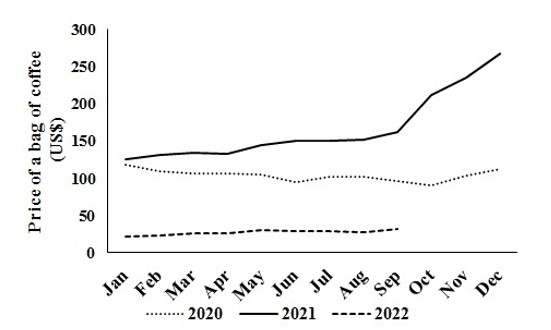
For calculating economic indicators, the yield of the experiment was extrapolated to hectares, and cost data were obtained from a secondary database (Table 2). This study evaluated the economic viability of irrigated coffee cultivation at different irrigation and rainfed depths over a 20-year cultivation horizon in the Central Cerrado region (Table 2). The results show that the largest investments and financial returns occurred in the post-pandemic scenario and under the influence of climate change (Scenario II) owing to the significant increase in the price of coffee bags (Figure 2). In Scenario I, when the price of a coffee bag was US$ 127.36, the cultivation of dry coffee presented a revenue of 41% below the amount invested over the 20 years of implementation (Table 2).
Price variation for a bag of coffee between 2020 and 2022. Source: Cepea (Centro de Estudos Avançados em Economia Aplicada, 2022).
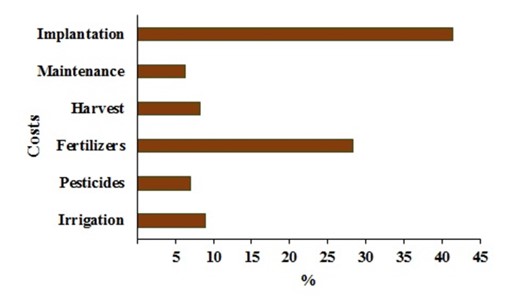
The cash flow, with the subdivision of the main cost sources of a coffee plantation implementation project, shows that the main investments in the crop are in the implementation, fertilizers, and correctives used annually (Figure 1). Silva et al. (2021) revealed that installation and irrigation equipment costs represent the highest costs in the initial implementation phase of the crop. A high investment value in implementing the crop occurred because of the cost of implementing the irrigation system included in this stage (Figure 1). Therefore, the highest costs were associated with the use of correctives and fertilizers in a rainfed system, as observed by Turco et al. (2017) in a conventional system, and fertilizers and micronutrients represented the largest share of the effective operating costs during the four study periods. The same authors evaluated the costs of coffee maintenance on four properties and found that the total costs from 2012 to 2015 increased, as did fertilizers and micronutrients. It is possible to reduce the costs of fertilizers to farmers by up to 20%, reduce the nitrogen application rate, adopt better fertilizer management practices, and apply high-efficiency fertilizers (Kanter et al., 2015).
Cash flow is summarized with the gross revenue values and the total costs of one hectare of coffee crop in 20 years of cultivation.
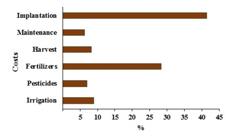
Reduced cash flow as a percentage of technical coefficients in the investment cost in 1 hectare of irrigated coffee production.
4.1 Scenario I
The results of the study highlighted that coffee had positive NPV and IRR values, which enabled the use of the FI100 and FI 50 systems and the WD2 100 in the region at a discount rate of 3.75% per year (Table 3). In this system, the NPV was US$ 26,904.99, 9,320.22 and 658.50, respectively, meaning that, with an average price of US$ 127.36, the producer will reimburse this net value at the end of 20 years of production, that is, by discounting investment costs at a discount rate of 3.75% per year (Table 3).
Indicators of the economic viability of coffee production in irrigated and rainfed systems with a period of 20 years for the useful life of the coffee plantation (Scenario I - Beginning of 2020).
In rainfed systems, investment was not viable, as it generated a negative NPV and did not present an IRR. Therefore, the average productivity of 20 bags per hectare sold for US$127.36 made the rainfed system project unfeasible. Given the economic scenario at the beginning of 2020, planting rainfed coffee is not recommended because of low plant yields, which made the project unfeasible. In the FI 50 and WD2 100 systems, the increase in productivity generated by irrigation was insufficient to pay for the investment in the irrigation system (Table 3). Thus, NPV is a financial tool for long-term project evaluation that can help the producer decide whether to invest in a project to implement a crop or another activity (Liao et al., 2023) because it is possible to distinguish between the systems that allow a high return for the producer. Thus, the NPV is typically used in agricultural decision-making, particularly when making the first investment decision (Lee et al., 2019).
In relation to the IRR, the technological alternatives present in FI 100, FI 50, and WD2 100 were economically viable, as the IRR was higher than the discount rate of 3.75% per year. From this perspective, the value of future profits is higher than the expenses incurred by the project, featuring a good remuneration rate (Cunha et al., 2015). The IRR of FI 100 was higher than that of MAR, making the production system more attractive. Therefore, coffee grown under FI 100 and FI 50 is considered attractive and economically viable in this scenario because of the low prices of coffee bags. However, the rainfed systems FI 50 and WD2 100 were not feasible, considering the interest rate of 3.75% per year and the price of a bag of coffee at that time (Table 3).
The FI 100 system presented higher EPB and IRR values than those of the other systems (Table 3). This difference was related to the greater water depth used in the system, which promoted greater productivity. Therefore, irrigation aims to ensure productivity levels and agricultural production stability and mitigate the risks of investment caused by the absence of rainfall (Martins et al., 2022). Despite this system being more expensive, the revenue generated by higher productivity was sufficient to pay for the investment. Comparing the production systems, it was observed that for the system to be economically viable, an average productivity above 45 and 35 bags ha-1 was necessary for the irrigated and rainfed systems, respectively.
The understanding of MIRR is similar to that of IRR. For Scenario I, MAR (10%) was considered the financing rate, and the reinvestment rate was 6% per year. With a reinvestment rate of 6% per year, the MIRR of FI 100 and FI 50 were 11 and 8%, respectively, indicating that it is necessary to invest all returns to maintain the coffee crop grown under FI 50. Otherwise, it would not be viable. As for WD2 100, even when investing the entire amount returned, the project was not feasible.
4.2 Scenario II
Scenario II was based on changes in input prices, interest rates, coffee prices in a pandemic environment, and climate changes that are unfavorable to coffee production. The sharp rise in Arabica and Robusta coffee prices marked the year 2021. Thus, the values for both varieties reached nominal records in their respective CEPEA historical series (Centro de Estudos Avançados em Economia Aplicada, 2021). In January 2021, the value of a bag was almost US$ 123.79, and the year ended at US$279.81 (Figure 2). Therefore, coffee had a price gain of US$ 156.17 throughout 2021, equivalent to an increase of 126.31% compared with the January price (Companhia Nacional de Abastecimento, 2022).
Some factors contributed to the significant increase in coffee prices. In the first half of 2021, prices were driven by the prospect of lower production during the 2021/22 harvest. In addition to the negative bienniality nature of Arabica coffee, drought during most coffee plantation development limits the productive potential of the season (Centro de Estudos Avançados em Economia Aplicada, 2022). In the second half of 2021, the upward movement in coffee prices (Figure 2), especially in Arabica coffee, was even more significant, reinforced by new concerns about the supply of grain, a reduction in productivity per area due to climatic adversities in the main producing regions, and competition from areas with annual crops (Centro de Estudos Avançados em Economia Aplicada, 2022; Companhia Nacional de Abastecimento, 2022). This drop in production in 2021, combined with a firm export scenario that year, resulted in reduced stocks, and consequently, shortages in the market (Companhia Nacional de Abastecimento, 2022).
Furthermore, the long periods of water restriction and frost that occurred in 2021 affected the productive potential of Arabica coffee crops for the 2022 harvest in São Paulo, Paraná, and Minas Gerais (Centro de Estudos Avançados em Economia Aplicada, 2022; Companhia Nacional de Abastecimento, 2022). In the 2022 harvest, frequent rainfall that occurred at the beginning of the year, mainly in Minas Gerais, caused a large amount of leaching of potassium, an important nutrient in the synthesis and transport of carbohydrates to fruits (Companhia Nacional de Abastecimento, 2022). These factors combined harmed the productivity of the harvest, which is 1.8% higher than that of the last harvest, a year with a negative biennial period, but 30% lower than that obtained in the 2020 harvest when an average productivity of 32.2 bags ha-1 was reached. (Companhia Nacional de Abastecimento, 2022).
Based on this information, cash flows were generated for the current Brazilian coffee farming scenarios. It was observed that if the same productivity used in Scenario I was sold at US$ 276.78 per bag, Scenario II, the project's viability will be guaranteed, even using an interest rate of 13.75% per year (Table 4). In Scenario II, all systems proved to be viable with NPV of US$ 66,082.73 (FI 100), US$ 48,065.33 (FI 50), US$ 42,516.98 (WD2 100) and US$ 1,819.67 (Rainfed). A comparison of Scenarios I and II showed that the rising value of a bag of coffee was fundamental to the project's viability in the FI 50, WD2 100, and rainfed system. According to Goes & Chinelato (2018), combining above-average productivity with a favorable price moment for selling a product is the best scenario for profitability in coffee production.
Indicators of the economic viability of coffee production in irrigated and rainfed systems over 20 years for the useful life of the coffee plantation (Scenario II).
In Scenario II, the EPB values again confirmed that the annual net value of FI 100 was greater than that of the other systems because of its greater productivity and an IRR of 70%. Furthermore, the IRR and MIRR of the other systems show that the price obtained for bags of coffee produced in the FI 50 and WD2 100 systems remunerates the invested capital when considering an interest rate of 13.75% per year, and interest rate financing and reinvestment of 18% and 8% per year, respectively. Both were superior to MAR, which made these production systems attractive. Under rainfed conditions, IRR was equal to MAR, indicating that investment in this scenario was indifferent. The MIRR showed that reinvesting only 8% was insufficient to continue the project.
Gitman (2012) points out that the IRR is probably the most sophisticated technique for capital budgeting since it provides the annual rate of return on production.
These aforementioned numbers indicate that the value of coffee bags has a significant influence on the economic viability of the coffee production system. Similarly, Silva et al. (2021) observed that the price of grapes has the most significant impact on the internal rate of profitability of production systems. A 5% reduction in the price of grapes would cause a 76.16% decrease in NPV and reduce the IRR by 3.58%. Here, a 5% drop in the value of the coffee bag would result in a decrease of 6% and 9% in the IRR and NPV, respectively.
4.3 Scenario III- National Productivity
Scenario III refers to the national average coffee productivity (22.5 bags ha-1) and the average coffee productivity with supplementary irrigation in the Cerrado (43.8 bags ha-1) (Companhia Nacional de Abastecimento, 2022). For national and Cerrado productivity , cash flow from the rainfed system and WD2 100 were used (Table 5).
Economic viability indicators of the national average and irrigated coffee production in the Cerrado (Scenario III).
The two scenarios, national and Cerrado production, proved viable, with a positive NPV and IRR of 23% and 46% for national and Cerrado production (Table 5). The EPB values show that coffee production in the Cerrado with supplementary irrigation has an annual NPV 83% higher than the national average.
The scenarios of national productivity and productivity in the Cerrado using financing and reinvestment rates of 18% and 8% per year, respectively, presented an MIRR below the MAR, therefore for both scenarios, it would be necessary to increase the reinvestment rate to 11% per year for productivity in the Cerrado and return 18% to national productivity so that both scenarios are viable. Thus, in less productive scenarios, the reinvestment rate must be higher to ensure the viability of the production system. The productivity data used in this scenario were obtained for the 2022 harvest. Despite the expectation of a greater volume to be harvested because of its positive biennial nature, the numbers were below expectations owing to the unfavorable weather conditions that occurred between June and September 2021, with droughts and frosts, in addition to excess precipitation in Minas Gerais between December 2021 and February 2022, which were decisive for a decrease in expected productivity (Companhia Nacional de Abastecimento, 2022).
Therefore, crop management affects productivity and irrigation and is essential for increasing the viability of coffee cultivation (Koh et al., 2020). The main input for agricultural productivity is water, which is more important in irrigated agriculture and plays a vital role in food security (Chauhdary et al., 2023). The cost of implementing an irrigation system is relatively high; however, maintaining and using this system does not represent a major cost for coffee production (Turco et al., 2017). In the Cerrado areas, with more uniform and technological management, including supplementary irrigation, the effects of drought during the cycle were mitigated. This resulted in an average productivity of 43.5 bags ha-1, an increase of 6.2% when compared to the 2021 harvest (Companhia Nacional de Abastecimento, 2022).
4.4 Scenario IV
Specialty coffees are coffee categories with at least 80 points on a scale of 0 to 100, as per the Specialty Coffee Association of America (SCAA) methodology (Specialty Coffee Association of America, 2015). It begins with planting and cultural treatments, choosing the right variety, and producing a region with the appropriate soil and climatic conditions (Rokhmah et al., 2023). In addition to the postharvest quality and roasting, the quality of a coffee drink is mainly determined by its flavor and aroma (Rokhmah et al., 2023). Coffee cannot be considered special if it does not have an intense, strong, or striking fragrance (Specialty Coffee Association of America, 2015).
Scenario IV is based on a special grain market with cash flow and interest rates equal to those of Scenarios II and III; however, it has a bag value of US$ 315.47. The value of a bag of coffee represents an average value obtained through research with specialty coffee producers. Unlike in previous scenarios, in this one, the viability rates were higher in the WD2 100 system, which presented a NPV and IRR of US$ 42,905.79 and 58%, respectively (Table 6). This Scenario is more attractive than the others and this is related to the greater production of cherry grains owing to the use of water deficit to standardize flowering and harvest. The suspension of irrigation promotes the synchronization of fruit maturity and does not compromise grain quality or plant growth (Miranda et al., 2020). Higher quality production adds value to the product in areas with a more uniform harvest and a higher percentage of grains (Table 6). Although the WD2 100 system had lower productivity, it is an irrigation management technique that employs a controlled water deficit and generates several benefits, including the rational use of water, stress relief on plants caused by the dry period, greater uniformity of grain maturation, saving labor and energy, and increasing the economic value of production.
Indicators of the economic viability of coffee production in irrigated and rainfed systems over 20 years for the useful life of the coffee plantation (Scenario IV).
Full irrigation systems are irrigated year-round and have more than one flowering per harvest, which generates an uneven harvest with a lower percentage of cherry grains. Consequently, there is a lower production of quality grains, which contributes to a lower economic return. In these systems, the NPV was US$ 32,399.20 and 18,352.82 for the FI 100 and FI 50 systems, respectively (Table 6). These data show that although the production of special grains is lower than that of conventional grains, the product's price compensates for the lower productivity due to greater rigor in selection. Furthermore, beans that are not classified as special can be sold in traditional coffee markets.
Despite being less productive, the rainfed system presented a uniformity greater than 90%, which contributed to a greater production of cherry fruits and enabled an IRR of 23%. Therefore, for all the scenarios evaluated, the specialty coffee scenario made the rainfed production system more attractive. It is worth highlighting that in addition to the uniformity of the fruits, the physical and chemical quality of the grains are fundamental in determining the quality of the drink (Córdoba et al., 2021).
The MIRR in this scenario followed the same trend as the IRR, with higher percentages for FI 100 and WD 100. In the FI 50 and rainfed areas, it would be necessary to reinvest at least 12 and 16% per year of the return on the project to achieve economic viability.
A comparison of systems and scenarios showed that productivity and the amount paid per bag of coffee are the variables with the greatest impact on the IRR of a coffee crop. When dealing with perennial crops such as coffee, the capital invested remains immobilized for a long period; therefore, planning is very careful and investing in management and cultivars that favor productivity (Goes & Chinelato, 2018). According to Matiello et al. (2015), current coffee farming cannot be static, as in the past, with the producer evaluated by the area of coffee trees owned. It must be dynamic and business-like, assessed annually, adjusted according to productivity, profitability, and grain quality, and can be reduced or expanded according to these analyses. Currently, farmers use precision agriculture to improve the yield and grain quality of coffee trees (Santana et al., 2021).
4.5 Sensitivity analysis
A sensitivity analysis was performed to show the viability of the project, given the different productivities of the genotypes. The analysis results show that with an increase in genotype productivity, there is greater IRR and MIRR owing to greater cash flow inputs (Table 7). E237 had the lowest NPV (US$ 26,253.74), owing to its lower productivity. Silva et al. (2022) also reported lower productivity of E237. In contrast, Iapar 59, owing to its higher productivity, had higher NPV and EBP values, with an IRR of 60% and an MIRR of 20% (Table 6).
Economic viability indicators from coffee production in irrigated and rainfed systems over 20 years for the useful life of the coffee plantation (Scenario IV).
The NPV of Iapar 59 is 56% higher than that of E237. To make the E237 genotype viable, considering the MIRR data, it would be necessary to reinvest 10% of the returned capital per year. This analysis shows how fundamental the choice of the appropriate genotype is for successful coffee production, as the difference in productivity, adaptability, and susceptibility between genotypes (Table 2) influences the economic viability of the production systems (Table 7).
For all the proposed scenarios, it was not possible to compare the results of the economic feasibility analysis with those of other coffee-growing projects because the treatments of the research were not edited. Compared with other studies, it would be necessary for the proposed system to have scale production, as several variables impact the return on investment.
5. Conclusions
-
The data presented highlight that coffee cultivation is economically viable for the Brazilian Cerrado since it uses complementary irrigation to precipitation. The use of irrigation was fundamental for the project's viability in Scenario I in years of low prices.
-
The viability indices show that the price of product sales and productivity have the greatest impact on profitability. The results also show that in the horizon of coffee cultivation of 20 years, coffee producers in the Cerrado will only obtain negative NPVs in a scenario associated with low prices, absence of irrigation, and low productivity, with an attractiveness rate of 10% per year.
-
In addition to economic risks, there are risks related to climatic and phytosanitary factors. Although adopting more adapted technologies and genotypes can avoid many of these events, it is essential to know the region's specificities, culture, and genotype, so that a lack of knowledge about the culture does not generate losses in the production process, thus increasing the estimated risks.
-
How to cite:
Silva, P. C., Joaquim, M. S., Ramos, M. L. G., Ribeiro Junior, W. Q., & Veiga, A. D. (2024). Economic viability of irrigated coffee with different water regimes in the cerrado. Revista de Economia e Sociologia Rural, 62(4), e283067. https://doi.org/10.1590/1806-9479.2023.283067
-
JEL Classification:
Q26
Bibliographical references
- Abensur, E. O. (2012). Um modelo multiobjetivo de otimização aplicado ao processo de orçamento de capital. Gestão & Produção, 19(4), 747-758.
- Ahtar, S., Li, G. C., Ullah, R., Nazir, A., Amjed, M., Haseeb, M., Iqbal, N., & Faisal, M. (2018). Factors influencing risk attitudes of hybrid maize farmers and their perceptions in punjab province. Paquistan Journal of Agrucultural Sciences, 17, 1454-1462.
- Alvares, C. A., Stape, J. L., Sentelhas, P. C., Moraes, G., Leonardo, J., & Sparovek, G. (2013). Köppen’s climate classification map for Brazil. Meteorologische Zeitschrift (Berlin), 22, 711-728.
- Arêdes, A. F. D., Santos, M. L. D., Rufino, J. L. D. S., & Reis, B. D. S. (2007). Viabilidade econômica da irrigação da cultura do café na região de Viçosa-MG. Revista de Economia e Agronegócio, 592, 207-226.
- Ávila, E. A. S., Sousa, C. M., Pereira, W., Almeida, V. G., Sarti, J. K., & da Silva, D. P. (2020). Growth and productivity of irrigated coffee trees (Coffea arabica) in Ceres-Goiás. Journal of Agricultural Science, 12(2), 138-150.
- Baitelle, D. C., Jesus Freitas, S., Vieira, K. M., Meneghelli, C. M., Verdin-filho, A. C., Baroni, D. F., & Souza, P. M. (2018). Feasibility and economic risk of programmed pruning cycle in arabic coffee. Journal of Experimental Agriculture International, 21(4), 1-9.
- Barbosa, J. N., Borém, F. M., Cirillo, M. Â., Malta, M. R., Alvarenga, A. A., & Alves, H. M. R. (2012). Coffee quality and its interactions with environmental factors in Minas Gerais, Brazil. Journal of Agricultural Science, 4(5), 181-190.
- Brunini, R. G., Silva, A. B., Paula, V. R., & Oliveira, J. C. (2019). Economic analysis of photovoltaic energy in irrigating lettuce crops.Brazilian Journal of Agricultural Science, 14, 1-7.
- Caldarelli, C. E., Gilio, L., & Zilberman, D. (2019). The Coffee Market in Brazil: challenges and policy guidelines. Revista de Economia, 39(69), 1-21.
- Centro de Estudos Avançados em Economia Aplicada – CEPEA. Escola Superior de Agricultura Luiz de Queiroz – ESALQ. Universidade de São Paulo – USP. (2022, janeiro). Agromensal Café (pp. 1-3). São Paulo: USP.
- Centro de Estudos Avançados em Economia Aplicada – CEPEA. Escola Superior de Agricultura Luiz de Queiroz – ESALQ. Universidade de São Paulo – USP. (2021, dezembro). Agromensal Café (pp. 1-3). São Paulo: USP.
- Chauhdary, J. N., Li, H., Jiang, Y., Pan, X., Hussain, Z., Javaid, M., & Rizwan, M. (2023). Advances in sprinkler irrigation: a review in the context of precision irrigation for crop production. Agronomy (Basel), 14(1), 47.
- Chipanshi, A., Chipanshi, A., Zhang, Y., Kouadio, L., Newlands, N., Davidson, A., Hill, H., & Reichert, G. (2015). Evaluation of the Integrated Canadian Crop Yield Forecaster (ICCYF) model for in-season prediction of crop yield across the Canadian agricultural landscape. Agricultural and Forest Meteorology, 206, 137-150.
- Companhia Nacional de Abastecimento - CONAB. (2022, dezembro). Acompanhamento da safra brasileira de café (Vol. 9 - Safra 2022, No. 4 - Quarto Levantamento, pp. 1-52). Brasília: CONAB.
- Córdoba, N. A., Moreno, F. L., & Ruiz-Pardo, Y. (2021). Specialty and regular coffee bean quality for cold and hot brewing: Evaluation of sensory profile and physicochemical characteristics. Lebensmittel-Wissenschaft + Technologie, 145, 111363.
- Cunha, J. P. B., Silva, F. M. D., Martins, F. G. L., Conceição, F. G. D., & Camelo, L. G. (2016). Estudo técnico e econômico de diferentes operações mecanizadas na cafeicultura. Coffee Science, 11(1), 87-96.
- Cunha, J. P. B., Silva, F. M., Andrade, F., Machado, T. A., & Batista, F. A. (2015). Análise técnica e econômica de diferentes sistemas de transplantio de café (Coffea arabica L.). Coffee Science, 10(3), 289-297.
- Dias, C. G., Martins, F. B., & Martins, M. A. (2024). Climate risks and vulnerabilities of the Arabica coffee in Brazil under current and future climates considering new CMIP6 models. The Science of the Total Environment, 907, 167753.
- Elahi, E., Khalid, Z., Tauni, M. Z., Zhang, H., & Lirong, X. (2021). Extreme weather events risk agricultural production and adapting innovative management strategies to mitigate risk: a retrospective survey in rural Punjab, Paquistão. Technovation, 117, 102255.
- Gitman, L. J. (2012). Princípios de administração financeira São Paulo: Pearson Prentice Hall.
- Goes, T. B., & Chinelato, G. A. (2018). Viabilidade econômico-financeira da cultura do café arábica na região da Alta Mogiana. Revista IPecege, 4(4), 31-39.
- Hirschfeld, H. (2000). Engenharia econômica e análise de custos São Paulo: Atlas.
- Ho, T. Q., Hoang, V. N., & Wilson, C. (2022). Sustainability certification and water efficiency in coffee farming: the role of irrigation technologies. Resources, Conservation and Recycling, 180, 106175.
- Ikhuoso, O. A., Adegbeye, M. J., Elghandour, M. M. Y., Mellado, M., Al-Dobaib, S. N., & Salem, A. Z. M. (2020). Climate change and agriculture: the competition for limited resources amidst crop farmers-livestock herding conflict in Nigeria—A review. Journal of Cleaner Production, 272, 123104.
- Kanter, D. R., Zhang, X., & Mauzerall, D. L. (2015). Reducing nitrogen pollution while decreasing farmers’ costs and increasing fertilizer industry profits. Journal of Environmental Quality, 44, 325-335.
- Kierulff, H. (2008). MIRR: a better measure.Business Horizons, 51, 321-329.
- Koh, I., Garrett, R., Janetos, A., & Mueller, N. D. (2020). Climate risks to Brazilian coffee production. Environmental Research Letters, 15(10), 104015.
- Kühn, I. E., Cotrim, M. F., Gava, R., Alvarez, R. C. F., Oliveira, J. T., & Teodoro, P. E. (2020). Center pivot irrigation management in maize hybrids and the incidence of stalk rot. Revista Brasileira de Engenharia Agrícola e Ambiental, 24, 840-846.
- Lee, S. H., Lee, T. H., Jeong, S. M., & Lee, J. M. (2019). Economic analysis of a 600 mwe ultra supercritical circulating fluidized bed power plant based on coal tax and biomass co-combustion plans. Energy, 138, 121-127.
- Liao, Z., Pei, S., Bai, Z., Lai, Z., Wen, L., Zhang, F., Li, Z., & Fan, J. (2023). Economic evaluation and risk premium estimation of rainfed soybean under various planting practices in a semi-humid drought-prone region of Northwest China. Agronomy (Basel), 13(11), 2840.
- Martins, L. D., Eugenio, F. C., Rodrigues, W. N., de Jesus Júnior, W. C., Tomaz, M. A., Ramalho, J. D. C., & dos Santos, A. R. (2022). Climatic vulnerability in robusta coffee mitigation and adaptation. Journal of Agriculture and Social Research, 2(2), 1-19.
- Matiello, J. B., Garcia, A. W. R., & Santinato, R. (2015). Coffee Growingin Brazil: Manual of Recommendations = Cultura de Café no Brasil: Manual de recomendações MAPA/Procafé.
- Matiello, J. B., Santinato, R., Garcia, A. W. R., Almeida, S. D., & Fernandes, D. R. (2016). Cultura de café no Brasil: manual de recomendações Rio de Janeiro: Faturama Editora.
- Miranda, F. R., Drumond, L. C. D., & Ronchi, C. P. (2020). Synchronizing coffee blossoming and fruit ripening in irrigated crops of the Brazilian Cerrado Mineiro Region. Australian Journal of Crop Science, 14(4), 605-613.
- Mohammedshum, A. A., Mannaerts, C. M., Maathuis, B. H. P., & Teka, D. (2023). Integrating Socioeconomic Biophysical and Institutional Factors for Evaluating Small-scale Irrigation Schemes in Northern Ethiopia. Sustainability, 15, 1704.
- Molajou, A., Afshar, A., Khosravi, M., Soleimanian, E., Vahabzadeh, M., & Variani, H. A. (2023). A new paradigm of water, food, and energy nexus. Environmental Science and Pollution Research International, 30, 107487-107497.
- Nóia Júnior, R. S., & Sentelhas, P. C. (2019). Soybean-corn succession in Brazil: Impacts of sowing times on climate variability, productivity and economic profitability. European Journal of Agronomy, 103, 140-151.
- Noronha, J. F. (1987). Projetos agropecuários: administração financeira, orçamento e viabilidade econômica São Paulo: Atlas.
- Pinto, V. M., Reichardt, K., Dam, J. V., Lier, Q. J. V., Bruno, I. P., Durigon, A., Dourado-Neto, D., & Bortolotto, R. P. (2015). Deep drainage modeling for a fertigated coffee plantation in the Brazilian savanna. Agricultural Water Management, 148, 130-140.
- Ribeiro, G. B. D. D., De Loreto, M. D. D. S., Miranda, E. L., Bastos, R. C., Aleman, C. C., da Cunha, F. F., & Rodrigues, P. D. (2024). The use of financial tools in small-scale irrigated crops to assess socioeconomic sustainability: a case study in Tocantins-Araguaia Basin, Brazil. Sustainability, 16(5), 1835.
- Rokhmah, D. N., Supriadi, H., & Heryana, N. (2023). Sustainable specialty coffee production: an agronomy perspective (A review). Earth and Environmental Science, 1230(1), 012067.
- Santana, L. S., Ferraz, G. A. E. S., Teodoro, A. J. D. S., Santana, M. S., Rossi, G., & Palchetti, E. (2021). Advances in precision coffee growing research: a bibliometric review. Agronomy (Basel), 11(8), 1557.
- Silva, J. N. D., Ponciano, N. J., Souza, C. L. M., Souza, P. M. D., Viana, L. H., & Silva, M. G. D. M. (2021). Economic viability of 'Niágara Rosada’grape production in the north and northwest regions of Rio de Janeiro. Revista Brasileira de Fruticultura, 43, e-672.
- Silva, P. C. D., Ribeiro Junior, W. Q., Ramos, M. L. G., Rocha, O. C., Veiga, A. D., Silva, N. H., Brasileiro, L. O., Santana, C. C., Soares, G. F., Malaquias, J. V., & Vinson, C. C. (2022). Physiological changes of Arabica Coffee under different intensities and durations of water stress in the Brazilian Cerrado. Plants, 11(17), 2198.
- Souza, E. J., Cunha, F. F., Baio, S. P. S., Magalhães, F. F., Silva, T. R., & Santos, O. F. (2020). Análise econômica da produção de milho doce irrigado no Nordeste do Mato Grosso do Sul. Nucleu, 17, 199-210.
-
Specialty Coffee Association of America – SCAA. (2015). SCAA Protocols Cupping Specialty Coffee Spec (pp. 1-10). Specialty Coffee Association of America. Retrieved in 2024, February 9, from offeetraveler.net/wp-content/files/903-SCAACuppingMethod_RESUMO_3a.pdf
» offeetraveler.net/wp-content/files/903-SCAACuppingMethod_RESUMO_3a.pdf - Turco, P. H. N., Esperancini, M. S. T., Bueno, O. D. C., & Oliveira, M. D. M. (2017). Economic profitability in conventional and irrigated coffee production systems in three municipalities in the Marilia region of São Paulo, Brazil. Ciência Rural, 47, e20170170.
- Van Vliet, M. T. H., Jones, E. R., Flörke, M., Franssen, W. H. P., Hanasaki, N., Wada, Y., & Yearsley, J. R. (2021). Global water scarcity including surface water quality and expansions of clean water technologies. Environmental Research Letters, 16, 024020.
- Viana, F. J., Cunha, F. F., Rocha, M. O., & Oliveira, J. T. (2022). Water rationalization in brazilian irrigated agriculture. Agronomy Science and Biotechnology, 8, 154.
- Vinecky, F., Davrieux, F., Mera, A. C., Alves, G. S. C., Lavagnini, G., Leroy, T., Bonnot, F., Rocha, O. C., Bartholo, G. F., Guerra, A. F., Rodrigues, G. C., Marraccini, P., & Andrade, A. C. (2017). Controlled irrigation and nitrogen, phosphorous and potassium fertilization affect the biochemical composition and quality of Arabica coffee beans. Journal Agricola Science, 155, 902-918.
- Zaveri, E., Russ, J., & Damania, R. (2020). Rainfall anomalies are a significant driver of cropland expansion. Proceedings of the National Academy of Sciences of the United States of America, 117(19), 10225-10233.