 Use of private vaccination services by infants in Brazilian municipalities: National Vaccine Coverage Survey 2020
Objective To characterize the use of private services in infant vaccination and assess vaccination coverage according to the service used.
Methods : This was a national vaccination survey conducted in 2020 that estimated the use of private vaccination services and vaccination coverage among infants residing in state capitals and 12 inland municipalities.
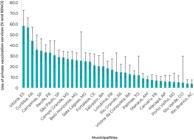
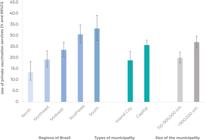
Results : Of the 37,801 participants, 25.1% (95%CI 23.2;27.2) used private services at least once, with higher proportions in capitals, larger cities and in the South and Southeast regions. Socioeconomic and demographic differences were identified among families, based on the service used. The coverage for the set of vaccines administered up to 24 months was 60.3% (95%CI 58.6;62.0) in the public service and 59.5% (95%CI 55.9;63.0) in private services, and up-to-date vaccines, 10.3% (95%CI 9.1;11.6) and 9.4% (95%CI 7.4;11.8), respectively.
Conclusion The use of private services was frequent, with low coverage for the set of vaccines, regardless of the type of service used, especially for up-to-date vaccines.
Keywords
Private Health Service Coverage; Vaccination Coverage; Vaccines; Epidemiological Survey
Main results The use of private vaccination services was observed in 25% of the municipalities studied, as well as low complete vaccination coverage in children up to 24 months old in both private and public services, especially for up-to-date vaccines.
Implications for services The increasing role of private vaccination services highlights the importance of coordination between immunization program managers at all levels and private vaccination services.
Perspectives Monitoring the vaccination status and conducting studies to understand the factors associated with incomplete and delayed vaccination are necessary. Such research can contribute to the adoption of new strategies that also include private vaccination services.
 Thumbnail
 Thumbnail

