
 Women sexual dysfunction in the postpartum period: concept analysis
ABSTRACT
Objective: To analyze the concept of sexual dysfunction in postpartum women and identify their essential attributes, antecedents, and effects.
Method: Concept analysis based on a framework by Walker and Avant, elaborated in eight stages, which were: concept selection; identification of the use of the concept; determination of essential attributes; construction of the model case; additional case; identification of antecedents and effects; and definition of empirical references. Furthermore, an integrative review was carried out simultaneously, with a view to supporting the analysis of the concept.
Results: The sample consisted of 55 studies included in the integrative review. 3 essential attributes, 38 antecedents and 6 effects were identified. The most prevalent antecedents were: perineal laceration, depression, and breastfeeding. Dyspareunia, decreased sexual desire, and altered sexual satisfaction were the main effects.
Conclusion: The concept indicates that the diagnosis involves multifactorial conditions that affect the sexual response cycle, limiting the woman's ability to perform satisfactory sexual relations in the postpartum period.
Keywords:
Physiological sexual dysfunctions; Puerperium; Nursing care; Concept formation; Risk factors
RESUMO
Objetivo: Analisar o conceito de disfunção sexual em puérperas e identificar os seus respectivos atributos essenciais, antecedentes e consequentes.
Método: Análise de conceito fundamentada no referencial de Walker e Avant, em oito etapas, a saber: seleção do conceito; identificação do uso do conceito; determinação dos atributos essenciais; construção do caso modelo; construção do caso adicional; identificação dos antecedentes; identificação dos consequentes; e definição das referências empíricas. Ademais, foi realizada uma revisão integrativa concomitantemente, com vistas a subsidiar a análise de conceito.
Resultados: A amostra foi composta por 55 estudos incluídos na revisão integrativa. Foram identificados três atributos essenciais, 38 antecedentes e seis consequentes. Os antecedentes mais prevalentes foram: laceração perineal, depressão e amamentação. Enquanto dispareunia, diminuição do desejo sexual e satisfação sexual alterada foram os principais consequentes.
Conclusão: O conceito indica que o diagnóstico envolve condições multifatoriais que afetam o ciclo de resposta sexual, limitando a capacidade da mulher em desempenhar relações sexuais satisfatórias no puerpério.
Descritores:
Disfunções sexuais fisiológicas; Puerpério; Assistência de enfermagem; Formação de Conceito; Fatores de Risco
RESUMEN
Objetivo: Analizar el concepto de disfunción sexual en la mujer en el posparto e identificar sus respectivos atributos esenciales, antecedentes y consecuencias.
Método: Análisis de conceptos basado en el marco de Walker y Avant, en ocho etapas, a saber: selección de conceptos; identificación del uso del concepto; determinación de atributos esenciales; construcción de caso modelo; construcción de caso adicional; identificación de antecedentes; identificación de consecuentes; y definición de referencias empíricas. Además, se realizó concomitantemente una revisión integradora, buscando apoyar el análisis de concepto.
Resultados: La muestra estuvo compuesta por 55 estudios incluidos en la revisión integradora. Se identificaron 3 atributos esenciales, 38 antecedentes y 6 consecuentes. Los antecedentes más prevalentes fueron: laceración perineal, depresión y lactancia materna. Mientras que la dispareunia, la disminución del deseo sexual y la alteración de la satisfacción sexual fueron los principales consecuentes.
Conclusión: El concepto indica que el diagnóstico envuelve condiciones multifactoriales que afectan el ciclo de respuesta sexual, limitando la capacidad de la mujer para realizar relaciones sexuales satisfactorias en el posparto.
Palabras Clave:
Disfunciones sexuales fisiológicas; Puerperio; Asistencia de enfermería; Formación de conceptos; Factores de riesgo
INTRODUCTION
In the postpartum period, physiological and biomechanical changes caused by pregnancy revert back to the stage prior to pregnancy. This period starts after placenta expulsion and can last for more than 45 days, in which case it is known as a remote postpartum period. In this period, the woman may deal with adaptation trouble and limitations that can affect their quality of life and wellbeing, including problems related to their sexual function1
Studies have indicated a high prevalence of sexual disorders in women in the postpartum, affecting from 41% to 83% in the first three months to 60% in the first year after delivery, potentially extending for longer than 12 months2,3. A study with women in the postpartum showed dyspareunia, decreased sexual desire, low frequency of sexual intercourse and sexual dissatisfaction as outcomes associated with sexual disorders six months after delivery4. Additionally, sexual dissatisfaction, orgasm-related issues, sexual arousal disorders, primiparity, mental health problems, breastfeeding, lack of vaginal lubrication, and dissatisfaction with body image are factors associated with this type of disorder2,4.
In this context, health workers, especially nurses, must evaluate and intervene in the needs of women in the postpartum in order to improve their sexual health. This must include an expanded understanding of the process of caring in nursing and, as opposed to being limited to recommendations about how long it takes to resume sexual activities, has to focus on quality and strategies to minimize changes caused by the postpartum1,5.
Nurses stand out as health workers responsible for promoting health in the postpartum period, using evidence-based interventions that meet the needs of women in this stage. This professional has the knowledge required to provide health care to women, in order to promote a positive experience for them to resume their sexual functions in the postpartum6. The nursing practice is guided by the nursing process (NP), which has five interconnected stages: data collection, nursing diagnosis (ND), planning, implementation, and evaluation7.
The concept analysis is the first stage of the ND validation process. In this stage, it is possible to search for evidence of the essential attributes that characterize the definition of the diagnosis of interest; the history of the concept (related factors, associated conditions, and populations at risk) and its effects (clinical indicators), according to NANDA International (NANDA-I) as elements of the diagnosis. This analysis is important to support later stages, which include the validation of the content by judges and the clinical validation8,9.
Research about the process of ND validation are essential to improve and strengthen evidence and apply nursing clinical practice8,10. Starting with a validated and adequate diagnostic structure, later stages of the NP are going to be developed in order to attend the real needs of the patient, since identifying ND clinical markers can guide better the plans of care and the implementation of interventions8.
In nursing research and practice, concept analysis is a set of processes to identify the use, application, characteristics, and implications of concepts in order to better understand them and support professional practice10. The development of research based on this methodological approach favors updating nursing phenomena11.
Considering the negative effects that sexual disorders can have on the quality of life of women, and the trouble identifying specific element that can be attributed to the sexual disorder diagnoses in nursing taxonomies, in the context of postpartum women, this study seeks to provide subsidies for the practice of nursing. Furthermore, it can contribute for the implementation of interventions that are adequate for women's sexual health, providing information to develop health education strategies and new research related to the topic. Thus, the goal of this study was to analyze the concept of sexual disorder in women in the postpartum period, identifying their respective essential attributes, antecedents and effects.
METHOD
This is a concept analysis based on the stages of the theoretical-methodological framework of Walker and Avant10, which has eight stages that interact with one another. Concepts have dynamic attributes, which is why they require periodic revisions. The analysis of the concept is carried out to develop or review a ND or investigation instruments; clarify abstract/complex concepts used in practice; improve knowledge; and ascertain a definition and its applicability10. Below, the eight stages and operationalization are described:
1) Concept selection: this stage is related to a topic of interest for the researcher or their field of expertise, which has been seldom explored and is relevant for clinical practice. The concept analyzed here was that of sexual dysfunction, from NANDA-I9;
2) Determining the goals of the analysis: relates to the final goal of the study, which is: analyzing the concept of sexual dysfunction in women in the postpartum period, finding their essential attributes, antecedents and effects.
3) Identification of the use of the concept: this is a search process in literature to find how the concept is used in nursing practice. A literature review was carried out in this stage;
4) Determining essential attributes: in this stage, we attempted to identify words and expressions that could show the essence of the concept. This stage was also carried out by an integrative literature review;
5) Building a model case: in this stage, a case must be elaborated that includes the critical attributes and works as a model to apply the concept, in order to explain it. A model case was created from the attributes, antecedents and effects found, and considering the professional experience of the authors;
6) Additional case: the additional clinical case aims to oppose the attributes and is only necessary when the concept is not clear. A fictional additional case was elaborated from the experience of the authors, in which the patient presents no elements indicative of a sexual dysfunction diagnosis;
7) Identification of antecedents and effects: these were identified through an integrative literature review of antecedents and effects from sexual dysfunction as related to the postpartum period.
8) Definition of empirical references: this stage determines how a concept will be measured. It was carried out using an integrative review.
The integrative literary review, which supported the stages mentioned above, was carried out in five stages, according to the framework by Whittemore and Knalf12. These were: identification of the research question; a search in databases; an evaluation of studies; an analysis of the results; and the presentation of the revision.
The research question was based on the PICo strategy: Population (P) - women in the postpartum period; Interest (I) - attributes, antecedents and effects; Context (Co) - sexual dysfunction. Therefore, the research question was: What are the essential attributes, antecedents, and effects of the sexual dysfunction in postpartum women?
To search the studies, we used databases and a virtual library, aided by the collection of Journals from the Coordination for the Improvement of Higher Education Personnel (CAPES), through the access of the institution CAFe: Scientific Electronic library online (SCIELO), Medical Literature Analysis and Retrieval System Online (MEDLINE) via PubMed, Scopus, Cumulative Index to Nursing and Allied Health Literature (CINAHL), Excerpta Medica Database (Embase), Virtual Health Library - (VHL), Web Of Science , the CAPES database of thesis and dissertations, and Google Scholar.
The descriptors were defined according to the Medical Subject Headings (MeSH) and the Health Sciences Descriptors (DeCS): puerpério (puerperium), período pós-parto (postpartum period), sexualidade (sexuality), disfunção sexual fisiológica (sexual disfuntion, physiological), fatores de risco (risk fators), sinais e sintomas (signs and simptomys). We also used the uncontrolled term sexual function (função sexual). The search strategy also included the Boolean operators "AND" and "OR" to cross descriptors. The search strategy is presented in Chart 1.
The following inclusion criteria was adopted: studies that addressed the topic of sexual dysfunction in women in the postpartum period, published from 2017 to May 2023 in any language. The time frame was selected considering the last revision of the sexual dysfunction diagnosed as published by NANDA-I IN 20179. We excluded duplicates, revisions, editorials, and other studies that did not answer the research question.
After selection, the studies were read carefully and thoroughly for data extraction. Information was collected using an instrument elaborated by the authors with the following variable: author, year of publication, language, country, level of evidence, attributes, antecedents, and effects of sexual dysfunction.
Data was tabulated in a Microsoft Excel 2019 spreadsheet. Data regarding the characterization of studies, attributes, antecedents, and effects were analyzed according with absolute frequency, and outcomes were presented in tables. The discussion was carried out through an analysis of results and comparison with theoretical knowledge, including implications for practice and the identification of potential gaps, in addition to presenting limitations of the study.
To evaluate the level of evidence, we used the model proposed by the Joanna Briggs Institute (JBI), which suggests classification in five levels of evidence, according to the study design: Level I: experimental studies; Level II: quasi-experimental studies; Level III: observational analytical studies; Level IV: observational descriptive studies; and Level V: expert opinion and bench research 13.
RESULTS
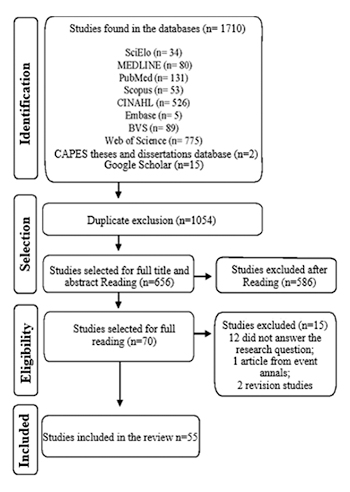
The search for studies took place in May 2023 and found an initial sample of 1710 studies. The articles were transferred to the software EndNote and 1054 duplicates were found. In the selection process two independent researchers read the titles and abstracts with the aid of the Rayyan software, which resulted in a sample of 70 studies to be read in full. After the text was read in full, 15 studies were excluded, and the final sample of the review comprised 55 papers. The description of searches and article selection are presented in the flowchart (Figure 1), according to recommendations of the Preferred Reporting Items for Systematic Review and Meta-Analynes (PRISMA) recommendations 14.
Flowchart of the process of selection of articles to form the sample for concept analysis, based on the PRISMA. Recife, Pernambuco, Brazil, 2023.
Regarding the characteristics of the studies found, they were from different countries, with different methodological aspects and levels of evidence. Most were developed in European countries (n=16), published in international journals, written in English (n=51), published in 2020 (n=14), and the most common level of evidence was 3 (n=28). Seven studies were published in journal from the field of nursing.
Three essential attributes of the diagnosis were found. Using them, a definition for sexual dysfunction in postpartum women was elaborated, as Table 1 shows.
The analysis of the study found 38 antecedents and 6 effects. The main antecedents of sexual dysfunction in women during the postpartum were: reduced vaginal lubrication, breastfeeding, depression, and episiotomy. The most common effects were: dyspareunia, decreased sexual desire, and altered sexual satisfaction. The other antecedents and effects are presented in Table 2.
To exemplify and aid comprehension of the use of the concept being studied in the context of the puerperium, we elaborated a fictitious model clinical case. This case has the main attributes, antecedents, and effects highlighted above as the ones which characterize sexual dysfunction in the postpartum. We also elaborated an additional and opposite fictitious case, which opposes the concept (Chart 2).
Empirical evidences are the observable characteristics that indicate the presence of a diagnosis. To evaluate sexual dysfunction, instruments based on these characteristics can be used, since the ND corresponds to a set of clinical manifestations. The methods to evaluate sexual dysfunction in women in the postpartum period are widely varied, and the studies found used many, from surveys elaborated by the researchers to more robust instruments, applied in isolation or combined. These include the Female Sexual Function Index (FSFI), Depression Anxiety and Stress Scale (DASS-21), Relationship Assessment Scale (Ras), Edinburgh Postnatal Depression Scale (EPDs), Pelvic Organ Prolapse/Urinary Incontinence Sexual Questionnaire (PISQ-12), Female Sexual Distress Scale (FSDS), Patient Health Questionnaire-9 (PHQ-9), and the EUROHIS-QOL.
DISCUSSION
Study data included a remarkable number of investigations about sexual dysfunction in the postpartum in the last few years. The prevalence of this ND varied from 44.5%(15) to 73%16 in postpartum women. Nonetheless, approaches to the prevention and treatment of this condition in the care provided by health workers are still incipient, which contributes for the problem to continue to be chronic6.
Studies have analyzed the prevalence of this ND in different periods, showing a greater prevalence in the first six months after delivery. However, it has also become clear that this diagnosis was prevalent after 18 months, two years, and five years after delivery. Considering the high prevalence and how chronic sexual dysfunction is in postpartum women, studies are necessary that can analyze the etiological factors and clinical indicators of the diagnosis, providing data for other studies and strategies to mitigate this condition.
When analyzing the concept of sexual dysfunction in the postpartum period, we found few essential attributes that expressed the definition of diagnosis. The lack of a clear definition can lead to sub-identification of the phenomenon, which may, in turn, have a negative effect on the process of care in the context of preventing and promoting sexual health to postpartum women. Considering the essential attributes found, we proposed a definition for the ND, as Table 1 indicates. Said definition was elaborated considering an integral perspective of the individual, highlighting the multifactorial etiology of the problem and not focusing on the biological model.
Sexuality suffers the influence of several conditions, including physical, psychological, social, cultural, religious, and spiritual factors. The way in which women experience the adaptations in their postpartum period may have an influence on their behavior and sexual response3. The conceptual analysis showed antecedents related to psychological, biological, social, interpersonal, and obstetric aspects. However, aspects related to spirituality and socio-cultural conditions were little explored in this context, showing the studies carried out did not have a multifactorial perspective.
As a result of evidence analysis, 38 antecedents were found. The most common were reduced vaginal lubrication, breastfeeding, depression, and episiotomy. In the postpartum period, there is a physiological imbalance in hormonal levels, which can lead to decreased estrogen and progesterone levels, and an increase in prolactin. This hormone transition is associated with vulvovaginal changes, such as cell atrophy, change in the microbiota, increased pH and, consequently, reduced vaginal lubrication17. Changes such as reduced sexual drive and vaginal lubrication, trouble reaching orgasm, and pain during sexual intercourse are common in women with hormonal changes, and may contribute to sexual dysfunction18.
Factors related to mental health questions, such as depression, anxiety, and stress, have the potential of affecting the sexual function of women in the postpartum. Postpartum depression affects from 10% to 20% of women. However, as is the case of sexual dysfunction, despite the high prevalence it is a condition that has not been sufficiently investigated in the postpartum19. The association between depression, mood disorders, and sexual dysfunction has not been well established. However, postpartum women are in a period of hormonal fluctuation becoming more prone to changes in mood and sexual desire20.
Regarding breastfeeding, there were differences between the type of breastfeeding and sexuality in the postpartum period. In exclusive breastfeeding, women can deal with the greatest restrictions to their sexuality, due to the frequency of breastfeeding, its duration, and its influence on sleep quality and fatigue. In association with hormone alterations, the erotic sensitivity of the breasts can be reduced due to the stimulation from breastfeeding3,21. In this regard, studies have shown that exclusive breastfeeding has been associated with lower sexual desire from 6 to 12 months after delivery, with reduced vaginal lubrication and dyspareunia4.
Pregnancy, childbirth care, and the puerperium can also be experienced as traumatic events for a woman. A study 20 developed in England found a prevalence of 16.8% of post-traumatic disorder in women during the postpartum period. In line with these findings, another study22 developed in Brazil found a prevalence of 9.4%. Post-traumatic stress disorder was associated with psychological risk factors, partner violence, trauma related to childbirth assistance, perceived social support, and advanced maternal age. Mood alterations, hypervigilance, flashbacks to the traumatic event, and anxiety are symptoms of post-traumatic stress disorder and conditions that can affect how a woman experiences their sexuality23.
Corroborating previous data, severe maternal morbidity conditions, such as postpartum hemorrhage and hypertensive syndromes, were also perceived as traumatic events that can have a negative impact in the health of women in their postpartum period. In addition to slowing postpartum recovery, postpartum hemorrhage and hypertensive syndromes showed a negative association with sexual function, delaying the return to activities and causing dyspareunia24,16.
Conditions related to the type of delivery, such as c-sections, instrumental delivery (that is, aided by forceps or vacuum extraction), and episiotomy were associated to higher sexual dysfunction scores21,16. These obstetric interventions may delay postpartum recovery due to the fact they compromise anatomical integrity, increasing the risk of postpartum infections and severe complications. An association was found between instrumental delivery and a longer delay in resuming sexual activity, dyspareunia, sexual abstinence and sexual dissatisfaction16. Instrumental delivery was also associated with vaginal laceration, urinary incontinence, pudendal nerve neuralgia, pelvic organ prolapse, and pelvic muscle hypotension, conditions that can have a short- or long-term effect on sexuality in the postpartum25.
Spontaneous lacerations of first and second degree, during childbirth, were associated with positive scores of sexual function when compared to episiotomy16,25. Episiotomy, as an invasive procedure, can have severe complications for the health of the woman, such as rectovaginal fistulas, risk of infection, and involvement of pelvic muscles. Dyspareunia, fear, and dissatisfaction with one's body self-image were associated with episiotomy, and had a negative effect on the return to sexual activities in the postpartum period(26).
Metabolic syndromes, such as diabetes mellitus, overweight, and obesity, were associated with sexual dysfunction22. Mechanisms involved in this dysfunction are complex, requiring more studies to be understood. Metabolic changes, caused by these pathologies, however, affect vascular mechanisms, such as endothelial dysfunction and neuropathy. This, consequently, can lead to sexual impotence and reduced libido27.
Communication between partners is important to establish a harmonic bond, allowing feelings of belonging and reaffirmations of affection. Trouble in this regard can cause negative feelings about the relationship, such as dissatisfaction and psychological blocks that lead to difficulties in sexual intercourse. Women in the postpartum who reported bad or impaired communication with their partners faced more marital issues and significant levels of sexual dysfunction, such as dissatisfaction and fear of pain during intercourse28.
Violence from an intimate partner and issues related to sexuality are often neglected in health services and seldom explored in studies. Women victims of partner violence showed an association with the diagnosis post-traumatic stress disorder and showed sexual difficulties in the postpartum period, including lack of pleasure and sexual desire, problems in family relationships, low self-esteem, depression, and self-destructive behaviors29.
Despite the contraceptive methods available, studies found that sexual abstinence was a practice carried out by women in their postpartum period as a contraceptive method, showing a lack of knowledge about other safe and efficient methods25,27. It is paramount to develop strategies to provide adequate information to women about contraceptive methods, since the lack of knowledge can have negative consequences in their health and sexuality.
Regarding the circumstances shared by women in the postpartum that could characterize them as a population at risk for sexual dysfunction, advanced maternal age and socioeconomic vulnerability stood out. Advanced maternal age is when the women is older than 35. In this period, the female organism goes through physiological changes and is more likely to undergo obstetric complications. This may contribute to reduce sexual desire due to physiological and structural alterations, in addition to being a risk factor for pregnancy30
Regarding clinical indicators of sexual dysfunction, six elements were found. Dyspareunia was the most common effect in these studies. It is a condition characterized by persistent pain associated with vaginal penetration. The evaluation involves a history of pain during sexual intercourse, coupled with physical exams. Observed causes of dyspareunia in the postpartum period include perineal trauma, episiotomy, and instrumental delivery4,15. When dyspareunia is persistent and not adequately treated, it can lead to sexual dissatisfaction and even to abstinence.
Sexual abstinence can be a mechanism to deal with pain during sex, fear of pregnancy, and trauma in the vulvoperineal region 25,30. Women should receive guidance about these specific conditions so they can be adequately managed, in order to promote sexual health in the postpartum period.
Mechanisms that affect sexual desire in this period are still poorly understood, but include hormonal changes and changes caused by motherhood. Factors such as reduced lubrication, fatigue, and psychological disorders are associated with fluctuations in sexual interest 27,29. Failure in arousal responses and inadequate lubrication of the vaginal canal can cause pain or difficulties reaching an orgasm. Several factors may predispose a woman to changes in this stage, including systemic diseases and psychosocial factors 31.
Even with the presence of sexual desire, with arousal and adequate stimuli, a woman may have difficulties reaching an orgasm or have a limited experience during their sexual relationship. A high percentage of these cases are psychosocial, considering the emotional state of the woman, anxiety, depression, low self-esteem, disturbances in body self-image, beliefs about sex, inefficient communication with the partner, and marital conflicts32,33.
Limitations of this study include the possibility that it did not address all attributes in literature. The subjectivity of the researchers when reading the studies and finding indicators may also have been a limitation, especially regarding the translation of terms in foreign languages.
CONCLUSION
The concept analysis allowed identifying the attributes, antecedents, and consequents of sexual dysfunction in women in the postpartum. The concept suggests that diagnosis involves multifactorial conditions that affect the sexual response cycle, limiting the ability of a woman to perform satisfactory sexual relations during the postpartum period. With this in mind, it was possible to elaborate a new conceptual definition, proposing a refining of the ND sexual dysfunction, part of NANDA-I.
The attributes found highlight that sexual dysfunctions are characterized by disturbances in one's cycle of sexual responses. The etiology is multifactorial, and the quality of life of the postpartum woman is affected. Regarding the 38 antecedents found, the most prevalent were vaginal lubrication, breastfeeding, and depression. Regarding the effects, six clinical indicators were found. The main ones were: dyspareunia, decreased sexual desire, and altered sexual satisfaction.
The results of this research bring relevant contributions for the practice of nursing. They can be used to improve the ND of sexual dysfunction from NANDA-I and its applicability on postpartum women, allowing the design of therapeutic plans that are adequate to promote a higher quality sex life. Furthermore, this study provides evidence that can be used to develop nursing theories, protocols, and policies focused on promoting the sexual and reproductive health of postpartum women.
It should be noted that concept analysis is the first stage of the process of ND validation. Later stages of this process are important to provide the best evidence possible. Thus, future studies should carry out content validation with judges and clinical validation.
Acknowledgments
This research received financial support from the National Academic Cooperation Program in the Amazon No. 21/2018 (process 88881.200531/2018-01).
REFERENCES
-
1. Ollivier RA, Aston ML, Price SL. Exploring postpartum sexual health: a feminist poststructural analysis. Health Care Women Int. 2020;41(10):1081-100. https://doi.org/10.1080/07399332.2019.1638923
» https://doi.org/10.1080/07399332.2019.1638923 -
2. Gutzeit O, Levy G, Lowenstein L. Postpartum female sexual function: risk factors for postpartum sexual dysfunction. Sex Med. 2020.8(1):8-13. https://doi.org/10.1016/j.esxm.2019.10.005
» https://doi.org/10.1016/j.esxm.2019.10.005 -
3. Khajehei M, Doherty M, Tilley PJM, Sauer K. Prevalence and risk factors of sexual dysfunction in postpartum Australian women. J Sex Med. 2015;12(6):1415-26. https://doi.org/10.1111/jsm.12901
» https://doi.org/10.1111/jsm.12901 -
4. O’Malley D, Higgins A, Begley C, Daly D, Smith. Prevalence of and risk factors associated with sexual health issues in primiparous women at 6 and 12months postpartum: a longitudinal prospective cohort study (the MAMMI study). BMC Pregnancy Childbirth. 2018;18(1):1-13. https://doi.org/10.1186/s12884-018-1838-6
» https://doi.org/10.1186/s12884-018-1838-6 -
5. Justino GBS, Salim N, Soares G, Baraldi N, Teixeira I. Saúde sexual e reprodutiva no puerpério: vivências de mulheres. Rev Enferm UFPE. 2019;28(13):1-10. https://doi.org/10.5205/1981-8963.2019.240054
» https://doi.org/10.5205/1981-8963.2019.240054 -
6. Siqueira LKR, Melo MCP, Morais RJL. Pós-parto e sexualidade: perspectivas e ajustes maternos. Rev Enferm UFSM. 2019;8(9):1-13. https://doi.org/10.5902/2179769233495
» https://doi.org/10.5902/2179769233495 -
7. Silva TG, Oliveira KML, Morais SCRV, Perrelli JGA, Sousa SMA, Linhares FMP. Disfunção sexual em mulheres com câncer do colo do útero submetidas à radioterapia: análise de conceito. Esc Anna Nery. 2021;25(4):e20200404. https://doi.org/10.1590/2177-9465-EAN-2020-0404
» https://doi.org/10.1590/2177-9465-EAN-2020-0404 - 8. McEWen M, Wills EM. Bases teóricas de enfermagem. 4. Ed. Porto Alegre. Artmed, 2016.
- 9. Herdman TH, Kamitsuru S, Lopes CT. Nursing Diagnoses: definitions and classification 2021- 2023. 12th ed. New York: Thieme; 2021
- 10. Walker LO, Avant KC. Strategies for Theory Construction in Nursing, 5th Edition, Upper Saddle River: Pearson/Prentice Hall, 2011.
-
11. Madureira VSF, Silva DMGV, Trentini M, Souza SS. Métodos de análise conceitual na enfermagem: uma reflexão teórica. Esc Anna Nery. 2021;25(2):e20200186. https://doi.org/10.1590/2177-9465-EAN-2020-0186
» https://doi.org/10.1590/2177-9465-EAN-2020-0186 -
12. Whittemore R, Knafl K. The integrative review: updated methodology. J Adv Nurs. 2005;52(5):546-53. https://doi.org/10.1111/j.1365-2648.2005.03621.x
» https://doi.org/10.1111/j.1365-2648.2005.03621.x -
13. The Joanna Briggs Institute (JBI). Joanna Briggs Institute Reviewers' Manual 2014: the systematic review of economic evaluation evidence[Internet]. Adelaide: JBI; 2014 [cited 2023 Sep 13]. Available from: https://reviewersmanual.joannabriggs.org/
» https://reviewersmanual.joannabriggs.org/ -
14. Moher D, Liberati A, Tetzlaff J, Altman DG, Altman D, Antes G, et al. Preferred reporting items for systematic reviews and meta-analyses: the PRISMA statement. Plos Medice. 2009;6(7):1000097. https://doi.org/10.1371/journal.pmed.1000097
» https://doi.org/10.1371/journal.pmed.1000097 -
15. Alves LC, Costa JR, Monteiro JCDS, Gomes-Sponholz FA. Women’s sexual health six months after a severe maternal morbidity event. Rev Latino-Am Enfermagem. 2020;28:1-7. https://doi.org/10.1590/1518-8345.3500.3293
» https://doi.org/10.1590/1518-8345.3500.3293 -
16. Anglès-Acedo S, Ros-Cerro C, Escura-Sancho S, Elías-Santo-Domingo N, Palau-Pascual MJ, Espuña-Pons M. Coital resumption after delivery among OASIS patients: differences between instrumental and spontaneous delivery. BMC Womens Health. 2019;19(1). https://doi.org/10.1186/s12905-019-0845-8
» https://doi.org/10.1186/s12905-019-0845-8 -
17. Lev-Sagie A, Amsalem H, Gutman Y, Esh-Broder E, Daum H. Prevalence and characteristics of postpartum vulvovaginal atrophy and lack of association with postpartum dyspareunia. J Low Genit Tract Dis. 2020;24(4):411-6. https://doi.org/10.1097/LGT.0000000000000548
» https://doi.org/10.1097/LGT.0000000000000548 -
18. Gabrielson AT, Sartor RA, Hellstrom WJG. The impact of thyroid disease on sexual dysfunction in men and women. Sex Med Rev. 2019;7(1):57-70. https://doi.org/10.1016/j.sxmr.2018.05.002
» https://doi.org/10.1016/j.sxmr.2018.05.002 -
19. Falana SD, Carrington JM. Postpartum depression: are you listening?. Nurs Clin North Am. 2019;54(4):561-567. https://doi.org/10.1016/j.cnur.2019.07.006
» https://doi.org/10.1016/j.cnur.2019.07.006 -
20. Çankaya S, Dikmen HA. Effects of depression, anxiety, stress, and partner relationship satisfaction on sexual dysfunction in women in the postpartum period. Sex Relatsh Ther. 2020;1(1):1-16. https://doi.org/10.1080/14681994.2020.1851026
» https://doi.org/10.1080/14681994.2020.1851026 -
21. Salamon N, Hashim SM, Ahmad N, Wahab S. Sexual dysfunction among women at four to six months postpartum: a study in a primary care setting. Malaysian J Public Heal Med. 2020;20(1):235-43. https://doi.org/10.37268/mjphm/vol.20/no.1/art.569
» https://doi.org/10.37268/mjphm/vol.20/no.1/art.569 -
22. Henriques T, Moraes CL, Reichenheim ME, Azevedo GL, Coutinho ESF, Figueira ILV. Transtorno do estresse pós-traumático no puerpério em uma maternidade de alto risco fetal no Município do Rio de Janeiro, Brasil. Cad Saúde Pública. 2015;31(12):2523-34. https://doi.org/10.1590/0102-311X00030215
» https://doi.org/10.1590/0102-311X00030215 -
23. Slade P, West H, Thomson G, Lane S, Spiby H, Edwards RT, et al. STRAWB2 (Stress and Wellbeing After Childbirth): a randomised controlled trial of targeted self-help materials to prevent post-traumatic stress disorder following childbirth. BJOG. 2020;127(7):886-96. https://doi.org/10.1111/1471-0528.16163
» https://doi.org/10.1111/1471-0528.16163 -
24. Norhayati MN, Yacob MA. Long-term postpartum effect of severe maternal morbidity on sexual function. Int J Psychiatry Med. 2017;52(4-6):328-44. https://doi.org/10.1177/0091217417738933
» https://doi.org/10.1177/0091217417738933 -
25. Nusee Z, Ainy MN, Hafizah P. Perineal Injury and Its Association with postpartum sexual dysfunction among first delivery women. Eur J Clin Med. 2021;2(3):34-9. https://doi.org/10.24018/clinicmed.2021.2.3.74
» https://doi.org/10.24018/clinicmed.2021.2.3.74 -
26. Marambaia CG, Vieira BDG, Alves VH, Rodrigues DP, Almeida VLM, Calvão TF. Sexualidade da mulher no puerpério: reflexos da episiotomia. Cogitare Enferm. 2020;25(1):e67195. https://doi.org/10.5380/ce.v25i0.67195
» https://doi.org/10.5380/ce.v25i0.67195 -
27. Szöllősi K, Komka K, Szabó L. Risk factors for sexual dysfunction during the first year postpartum: a prospective study. Int J Gynecol Obstet. 2022;157(2):303-12. https://doi.org/10.1002/ijgo.13892
» https://doi.org/10.1002/ijgo.13892 -
28. Futealba-Torres M, Cartagena-Ramos D, Fronteira I, Lara LA, Arroyo LH, Arcoverde MAM, et al. What are the prevalence and factors associated with sexual dysfunction in breastfeeding women? a Brazilian cross-sectional analytical study. BMJ Open. 2019;9(4):e025833. https://doi.org/10.1136/bmjopen-2018-025833
» https://doi.org/10.1136/bmjopen-2018-025833 -
29. Sussmann LGPR, Faisal-Cury A, Pearson R. Depression as a mediator between intimate partner violence and postpartum sexual issues: a structural analysis. Rev Bras Epidemiol. 2020;23:1-12. https://doi.org/10.1590/1980-549720200048
» https://doi.org/10.1590/1980-549720200048 -
30. Wallwiener S, Müller M, Doster A, Kuon RJ, Plewniok K, Feller S, et al. Sexual activity and sexual dysfunction of women in the perinatal period: a longitudinal study. Arch Gynecol Obstet. 2017;295(4):873-83. https://doi.org/10.1007/s00404-017-4305-0
» https://doi.org/10.1007/s00404-017-4305-0 -
31. Dağli E, Kul Uçtu A, Özerdoğan N. Sexual dysfunction in the postpartum period: Its relationship with postpartum depression and certain other factors. Perspect Psychiatr Care. 2021;57(2):604-9. https://doi.org/10.1111/ppc.12583
» https://doi.org/10.1111/ppc.12583 -
32. Rao TS, Nagaraj AKM. Female sexuality. Indian J Psychiatr. 2015;1(1):296-302. https://doi.org/10.4103/0019-5545.161496
» https://doi.org/10.4103/0019-5545.161496 -
33. Marchand E. Psychological and behavioral treatment of female orgasmic disorder. Sex Med Rev. 2021;9(2):194-211. https://doi.org/10.1016/j.sxmr.2020.07.007
» https://doi.org/10.1016/j.sxmr.2020.07.007

 Source: PRISMA, adapted