 Responsible safe discharge: social representation of primary health care nurses
ABSTRACT
Objective: To understand the social representation of Primary Health Care nurses regarding the process of Responsible Safe Discharge.
Method: Qualitative research, theoretically grounded in the assumptions of the Theory of Social Representations, conducted between June and October 2024 in a municipality in western São Paulo State, with 16 Primary Health Care nurses. Data were collected through remote semi-structured interviews and analyzed using the Collective Subject Discourse technique.
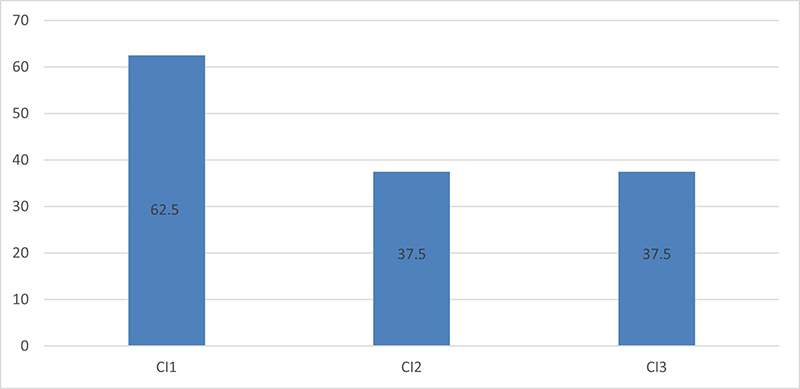
Results: Nurses understand Responsible Safe Discharge as essential to ensuring continuity of care, emphasizing the shared responsibility among hospital, family, and primary care. They highlighted weaknesses in communication between services and the need for an integrated electronic health record, standardized discharge processes, and caregiver training. These perceptions were organized into three central ideas: shared responsibility in care (62.5%); communication through email and counter-referral (37.5%); and the need for an electronic health record, discharge planning, and caregiver preparation (37.5%).
Conclusion: For nurses, Responsible Safe Discharge is crucial for care continuity but requires better communication between levels of health care and the use of integrated technologies to ensure its effectiveness.
Descriptors:
Patient discharge; Primary health care; Continuity of patient care; Integrality in health
RESUMO
Objetivo: Compreender a representação social dos enfermeiros da Atenção Primária à Saúde sobre o processo de Alta Hospitalar Responsável.
Método: Pesquisa qualitativa, fundamentada teoricamente nos pressupostos da Teoria das Representações Sociais, realizada entre junho e outubro de 2024, em município do Oeste Paulista, com 16 enfermeiros da Atenção Primária à Saúde. A coleta de dados ocorreu por entrevistas semiestruturadas remotas, e a análise, pelo Discurso do Sujeito Coletivo.
Resultados: Os enfermeiros compreendiam a Alta Hospitalar Responsável como essencial para garantir a continuidade do cuidado, destacando a corresponsabilidade entre hospital, família e atenção primária. Ademais, apontaram fragilidades na comunicação entre os serviços e a necessidade de prontuário eletrônico integrado, padronização dos processos de alta e capacitação dos cuidadores. Essas percepções foram organizadas em três ideias centrais: corresponsabilidade no cuidado (62,5%); comunicação por e-mail e contrarreferência (37,5%); e necessidade de prontuário eletrônico, planejamento da alta e preparo dos cuidadores (37,5%).
Conclusão: Para os enfermeiros, a Alta Hospitalar Responsável é crucial para continuidade do cuidado, mas exige melhor comunicação entre os níveis de atenção à saúde e o uso de tecnologias integradas para efetividade.
Descritores:
Planejamento da alta; Atenção primária à saúde; Continuidade da assistência ao paciente; Integralidade em saúde
RESUMEN
Objetivo: Comprender la representación social de los enfermeros de la Atención Primaria de Salud sobre el proceso de Alta Hospitalaria Responsable.
Método: Investigación cualitativa, fundamentada teóricamente en los presupuestos de la Teoría de las Representaciones Sociales, realizada entre junio y octubre de 2024 en un municipio del oeste del estado de São Paulo, con 16 enfermeros de la Atención Primaria de Salud. Los datos se recolectaron mediante entrevistas semiestructuradas remotas y se analizaron a través de la técnica del Discurso del Sujeto Colectivo.
Resultados: Los enfermeros comprenden la Alta Hospitalaria Responsable como esencial para garantizar la continuidad del cuidado, destacando la corresponsabilidad entre el hospital, la familia y la atención primaria. Señalaron debilidades en la comunicación entre los servicios y la necesidad de una historia clínica electrónica integrada, la estandarización de los procesos de alta y la capacitación de los cuidadores. Estas percepciones se organizaron en tres ideas centrales: corresponsabilidad en el cuidado (62,5%); comunicación por correo electrónico y contrarreferencia (37,5%); y necesidad de historia clínica electrónica, planificación del alta y preparación de los cuidadores (37,5%).
Conclusión: Para los enfermeros, la Alta Hospitalaria Responsable es fundamental para la continuidad del cuidado, pero requiere una mejor comunicación entre los niveles de atención en salud y el uso de tecnologías integradas para su efectividad.
Descriptores:
Alta del paciente; Atención primaria de salud; Continuidad de la atención al paciente; Integralidad en salud
INTRODUCTION
The Single Health System (SUS) aims to protect and recover the health of the Brazilian population by gathering the organized public services in a network, based on the principles of a decentralized system with public participation. Healthcare is organized in three levels: primary, secondary, and tertiary. Despite advances, there are still challenges associated with the fragmentation of services and the difficulties of access, which compromise the continuity of care and lead to overload, especially in high-complexity units1,2.
Among the main challenges, shortcomings in the communication between health services stand out, marked by the lack of specific training, overworked professionals, and limitations to interprofessional articulation. These factors compromise the continuity of care, making it harder for users to adhere to their treatment. In this context, interinstitutional communication between tertiary and primary health care (PHC) is one of the main obstacles to providing integral care, reflecting the fragmentation of the system. The Responsible Safe Discharge (RSD) is an essential strategy to overcome these barriers, as it promotes the qualified exchange of information and the effective coordination between different levels of care3,4.
RSD is a strategy to ensure the continuity of treatment, articulating the safe transition of patients between the several points of care of the Healthcare Network (HN)5. This modality differs from others as it is not restricted to the decision of discharging the patient from the hospital. This is a systemic, planned, and integral process, started during hospitalization, that involves a multidimensional evaluation of the patient, early planning of care, patient and family training, structured communication between services, and ensuring the first outpatient or home follow-up. RSD not only searches for a positive outcome to the hospitalization6,7, it also seeks to increase the autonomy of patients and caregivers, promoting training sessions that can improve self-care, especially for the most vulnerable patients, such as individuals with chronic diseases8,9.
In this process, the PHC has a central role as the coordinator of the HN, being part of activities to promote, prevent, treat, and rehabilitate, in articulation with all levels of care. The interactions between PHC and tertiary care, through the RSD strategy, contribute to the continuity of care, both vertically, that is, between different levels of care, and horizontally, through collaboration with community and social services10.
This is already a robust and systematized reality in other countries. Portugal has adopted the RSD, advocating that the connection of the individual depends on the transition of their care in different levels of healthcare, ensuring their quality of life and safety. In Spain, this process starts within intensive care units (ICUs), seeing as this environment shows how complex discharge can be, and the multidisciplinary team works to better the care that patients and their families will have to provide after discharge. In Brazil, initiatives in this field generate proposals, such as articulating between tertiary care and the elements of RHD, in order to ensure the provision of care with the support of PHC, given that it is necessary to manage the case of users with complex health issues. Furthermore, a wide-ranging care has been provided through a practice that expanded to include all types of care and technologies 11-13.
This discussion is an element in the discussion about the concept of de-hospitalization, which, despite being related to the RSD, broadens its scope, as it emphasizes the humanization of the process of leaving a hospital. The practice of de-hospitalization, based on the principles of humanization, goes beyond the aim of merely relieving hospital overcrowding. It is a movement that seeks to ensure the continuity of integral care, respecting the needs of each patient and articulating different points of the HN10. From this perspective, home care is an essential resource to be carried out by multiprofessional teams formed by physicians, nurses, physical therapists, nursing technicians, social assistants, and other health care professionals5.
Even though hospitals are centers with high technological density, the National Policy for Hospital Care (PNHOSP) seeks an integration between PHC and the other services in the HN, to break with fragmentation and promote the continuity of care5. The implementation of planned hospital discharges must involve several areas and be built in a timely manner, considering patients and their families as active participants in the process of care who must receive integral assistance7.
Integral care, as prescribed in the Brazilian Federal Constitution of 1988, in addition to the Principle of Integrality, from Law No. 8.080/90, is the foundation that organizes SUS, ensuring that the system continuously offers activities that integrate promotion, prevention, treatment, and rehabilitation, respecting the complexities of each individual. Thus, integral PHC reiterates the promotion of health, the respect for the uniqueness, and the autonomy of users. Nonetheless, the consolidation of integral care in SUS requires increasingly structured answers, considering the increase in chronic disease, which requires continuous, articulated follow-up 14,15.
Chronic non-communicable diseases (CNCD) are increasingly prevalent, with a significant impact on the quality of life of health systems, as they are responsible for high rates of death and prolonged hospitalizations15-17. In this context, RSD is even more essential, ensuring that the transition home is safe for patients in complex conditions.
Thus, an increase in CNCD in Brazil and the world has a direct impact on the health services and on the quality of life of the population. The continuity of care requires efficient communication between the different sectors, including integration between primary and tertiary levels. However, challenges such as the scarcity of resources and the fragmentation of the health system make it more difficult for patients to be transferred from hospital to home care16-17.
This movement is supported by literature, which defines the transition of care (TC) as a set of activities planned to coordinate and continue care, from admission to hospital discharge, between the different health services. The transition of care is a fragile period, especially for those with chronic disease, but adopting TC strategies has had a positive impact on the reduction of post-discharge complications and the continuity of care. A study with patients with chronic disease, for example, showed that the best way to prepare for self-management is related to lower levels of readmission in the first 30 days after discharge18,19.
Patients with more severe conditions are more likely to be readmitted and suffer complications after discharge, which are often made worse by the nonexistence of a structured connection between the hospital, the health care network, and family. RSD is essential to support self-care, prepare the environment at home, and ensure that post-discharge follow-up is effective. Thus, the work of professionals who take the lead in this process is essential, as they can ensure that hospital, family, and the HN are integrated20-22.
As a professional who works at all levels of the network, nurses have all the essential skills to manage RSD, including leadership, technical abilities, care management, and efficient communication23.
Considering the above, this research aimed to answer the question: What is the social representation of PHC nurses in regard to Responsible Hospital Discharge? To do so, this study was based on the Theory of Social Representation (TSR)24-26, which helps understand how groups build and share knowledge about an object, guiding the construction of said object, and the data collection and analysis instrument.
Thus, our goal was to understand the social representation of PHC nurses about the RSD process.
As a result, this study will be able to contribute to practices that ensure the continuity of care, in order to guide more effective strategies in the scope of the healthcare network.
METHOD
This is a qualitative research, whose theoretical presuppositions are based on Moscovici’s SRT24-26. They guided the construction of the project as a whole, as well as the elaboration of the data collection instrument. The SRT was adopted as a theoretical framework, supporting our understanding of how nurses build and share RSD knowledge by considering central concepts and the processes of anchoring and objectification.
The research was structured considering the recommendations of the Consolidated Criteria for Reporting Qualitative Research (COREQ), an instrument made up of 32 items, which seeks to provide transparency, completeness, and methodological rigour, in order to guide and describe qualitative research27-29).
This research was developed in a large municipality, in the Westmost region of São Paulo, in which the Regional Health Administration XI (RHA XI) is located. The PHC in this city is formed by 25 Family Health Strategy (FHS) Units, each serving around 4,500 people, with an approximate coverage of 33.6% of the population. The city has no full control over municipal health since 2004, as hospital services are managed by the State. This setting has an impact on the organization of the healthcare network (HN). The absence of the Better at Home program and fragilities in care after hospital discharge stand out, which led to the implementation of RSD30
The sample was intentional, including all participants of the PHC who experienced the studied phenomenon and could significantly contribute to RSD from many angles31,32. Participants in this research included 16 PHC nurses (of 25) who worked in Family Health Units, and were in accordance with the following inclusion criteria: being a nurse in Family Health Strategy for at least six months; and having participated in the RSD process by sending documents, through phone calls, or through messaging apps. Nurses who were on leave or vacation at the time of collection were excluded.
Data collection took place from June to October 2024, after being approved by the Research Ethics Committee. Individual, semi-structured interviews were scheduled and carried out remotely, through Google Meet®. The statements were recorded for later transcription in full and lasted a mean of 8.23 minutes. Interviews were in accordance with the guidance from Circular Letter No.01/2021 for research procedures developed in virtual environments33, and thus, were conducted by an MS nurse, trained in Health Education, who had knowledge about the context but no hierarchical professional bonds with the patients.
The data collection instrument required sociodemographic characterization, including initials, age, sex, city where they worked, academic level, and time working in the team, in addition to three open questions that sought to identify the Social Representation of the nurses about Responsible Safe Discharge: 1. Can you talk about your understanding of Responsible Safe Discharge? 2. How are the hospital and the primary care articulated in order to give continuity to home care? 3. Do you have any suggestions to improve Responsible Safe Discharge?
Before the final collection, the interview script was evaluated by specialists and used in two pilot interviews, in order to adjust its clarity and fitness. The data from the pilot interviews (with two nurses who worked in the same context where the research was carried out) were incorporated into the final analysis, seeing as they did not lead to any changes in the instrument. It is worth noting that the researcher was trained to conduct the interviews.
Data analysis was guided by the technique known as Collective Subject Discourse (CSD)34, which was developed in the light of the theoretical assumptions of SRT. It seeks to rebuild, from individual statements, collective representation, using the synthesis of discourses and writing them in the first person, considering how important it is to understand the social representation of the nurses in the PHC about the RSD process.
The CSD synthesizes individual statements into collective narratives, articulated in the first person, thus giving a voice to a collective subject that shares a type of thought. Its operationalization is divided into five sequential and independent stages.
Stage 1 - Acquiring the statements: This is the stage in which empirical data is collected; it is mainly carried out through semistructured interviews or open questions in research instruments. Its goal is to generate, from the selected sample, a broad and diverse discursive corpus about the object of study, ensuring that the source materials are reliable for analysis34.
Stage 2 - reduction of the discursive materials: each statement is analyzed vertically, in order to deconstruct its nuclei of meaning and identify them. In this stage, key expressions (KE), defined as literal segments of the discourse that concentrate the essence of the content emitted by the subject, without redundancies or digressions34.
Stage 3 - Identification of Central Ideas (CI): a horizontal, hermeneutic analysis of the KE is conducted. The researcher, by exercising abstraction, translates the content of each KE into a CI. This is a concise, descriptive way of speaking, often nominative. It brings forth the hidden or evident meaning of one or more KE34.
Stage 4 - Categorization: the CI identified are then grouped according to semantic equivalence and thematic convergence. This categorization process allows organizing the corpus in coherent analytical axes, showing agreements, disagreements, and the prevalence of certain representations within the collective being investigated34.
Stage 5 - Construction of the Collective Subject Discourse: final stage of the synthesis. For each homogeneous CI category, a CSD is constructed. They are constructed through the juxtaposition and logical articulation of KE from that category, all written in the first person. The result is a cohesive and fluid synthesis-discourse, which personifies, in a tangible manner, the collective voice of the social group being considered34.
To ensure the reliability of the analysis, the process of identification of KE, CI, and CA was conducted by three different researchers, followed by a discussion to reach consensus.
Data obtained was discussed according to the main RSD directives, the SRT assumptions, and current legislation on the topic24-26.
The study followed the requirements of Resolution No. 466, from December 12, 201235, from the National Council of Health, regarding research with human beings. It was approved by the Research Ethics Committee of the Faculdade de Medicina de Marília, under opinion No. 6.735.809 and CAAE 77251624.5.0000.5413. Data collection took place after the committee gave its approval.
RESULTS
From the 25 nurses invited, all associated with the Municipal Health Secretariat, 16 participated in the research. All of them worked in Family Health Strategy, and were described as ENF1 to ENF16. The sociodemographic profile of these nurses showed a mean age of 46. Most were female. Regarding their academic formation, most had MS degrees, specializations in obstetric nursing, and graduations in Law. Their mean time working in the PHC was 13 years.
The messages produced by the 16 participants gave support to structure the CSD, as Chart 1 shows. The analysis of the statements made clear that nurses anchored RSD, in most cases, to consolidated representations about the continuity of care and co-responsibility. The lack of anchoring in new or disruptive concepts suggests that RSD was mostly seen as an extension of good nursing practices as opposed to a change in paradigm, a relevant finding for this discussion.
The CIs of nurses are presented quantitatively in Table 1 and Figure 1, according to the responses from the interviews. The analysis showed a strong consensus around the importance of co-responsibility, but nuances and contradictions were observed: while the collective discourse led to effective communication, individual KE often showed frustration with the lack of standardization and the dependence on informal means, which shows a gap between the ideal representation of RSD, and the practical reality being experienced.
Quantitative results of the CIs obtained with the three questions. Marília, São Paulo, Brazil, 2025
The analysis of the discourses showed that most nurses highlighted the relevance of continued care after discharge, emphasizing that the RSD should involve joint work between hospital PHC, and family. The continuity of care should not end as the patient leaves the hospital. It should extend to their homes, especially when the patient has complex needs.
The communication between health services, albeit essential, was found to be a critical factor, as 37.5% of the interviewees mentioned the need to improve information flow, which is often fragmented or delayed.
The implementation of integrated electronic records was suggested as a solution to improve information exchange, while the training of caregivers and the formal identification of a responsible party by the family have stood out as essential aspects to ensure the efficiency of home care.
Suggestions of improvement included standardizing discharge processes, improving communication between services, and conducting training sessions for caregivers, in order to ensure that patients receive appropriate care after discharge.
The nurses interviewed believe that the RSD is an essential process to ensure the continuity of care, as it extends hospital responsibilities into the home environment. The co-responsibility between hospital, family, and PHC professionals was broadly highlighted. According to interviewees, communication between the hospital and PHC was mostly conducted via e-mail or referral letters delivered by the patients. However, it was found that these methods would often lead to inconsistencies, with reports of incomplete or delayed information hindering the planning and execution of post-discharge care. Furthermore, participants highlighted the relevance of systematic approaches to discharge, with detailed reports, proactive communication, and the previous training of caregivers. Cases involving patients with complex needs, such as enteral nutrition, wounds that need to be cared for, and oxygen therapy, were mentioned as particularly challenging, as the family is not sufficiently prepared and the quality of communication at discharge is variable.
Another issue was the lack of uniformity between hospitals in the process of discharge: while some institutions provided detailed reports via electronic means, others depended on informal methods, such as phone calls or reports delivered by the family, leading to shortcomings in care. Suggestions included the education of caregivers and the formal identification of a responsible member of the family, in order to avoid misunderstandings or negligence in home care.
To improve the process and its coordination, nurses suggested implementing an integrated electronic record system, the standardization of discharge processes among institutions, and the scheduling of discharges on business days. Furthermore, they highlighted how important multidisciplinary collaboration and caregiver training are to ensure that care continues to have quality after discharge.
DISCUSSION
The RSD is known as an important element for the continuity of care that requires articulating between hospital, PHC, and family37. From the perspective of SRT, we can understand that this process is built on meanings that are shared between the actors involved, influencing practices with a direct impact on the effectiveness of the transition of care24. The collective discourses showed that the social representation of RSD by nurses was anchored in fundamental nursing values, such as continuity of care and teamwork, while also showing tensions inherent to the fragmentation of health systems.
In this study, it was found that the continuity of care, as a co-responsible activity involving hospital, family, and PHC was the most common central idea among the nurses who participated. In this context, the term co-responsibility refers to the sharing of duties, decisions, and actions toward a safe and integral post-discharge care, and understanding that patient follow-up is a collective process, requiring effective communication and cooperation between the different levels of care and family caregivers38.
This perception shows that professionals are aware that integration between different levels of assistance is necessary, but its practice is still far from the ideal, given that communication between services is fragmented and articulation between hospitals and PHC is insufficient. This reality is in dialogue with other findings in literature, according to which the lack of integration compromises the continuity of assistance, especially for patients with complex demands39,40.
Literature confirms that fragmentation of care affects the ability to provide integral care to patients with chronic diseases, who often need continuous, specialized follow-up after discharge. However, access is difficult and the articulation of HN services is often problematic (41-43.
In this regard, the SRT allows understanding that nurses see the RSD as a "process of co-responsibility", transforming an abstract concept into concrete practices of information exchange and sharing of responsibilities. Simultaneously, this representation was found to be anchored in traditional nursing practices, such as a bond with the family and the appreciation of the value of communication, all of which work as consolidated references to their interpretation of RSD.
In the city investigated, the program Better at Home43 does not exist, nor does the Mobile Urgent Care Service (SAMU)44, which means that the lack of post-discharge care is even more serious. This shortcoming compromises the effectiveness of the HN, and shows the gap between hospital discharge and follow-up at home. The history of the institution - founded as a teaching hospital and, later, converted into a regional hospital - also contributes to this disarticulation, considering that the management is no longer by a single entity, and the profile of care increased the number of cities being attended, but the flows were not adapted in line 45. Through the SRT, this gap is expressed in the discourse of nurses as the center that values the continuity of care, but coexists with other, peripheral elements, marked by improvisation and dependence on informal solutions, such as the use of e-mails and messaging apps. This historical-political context is important to anchor the social representation identified, showing why communication has become a critical obstacle to the representation of the nurses.
E-mail communication and physical counter-referrals, described by participating nurses as the main form of articulation, showed that there is no standardization, and information flows are improvised. This finding suggests that, while the objectification of RSD as a "co-responsible process" is consolidated, communication is a peripheral element that can be transformed by introducing new technologies and protocols. This practice reflects social representations that recognize the hospital discharge as an isolated process, not integrated into the other levels of care. Similarly, studies from Spain point out that social representations targeted at the continuity of care favor the creation of clear protocols and the use of technologies to qualify communication in hospital discharge46). The suggestion of using digital communication platforms, present in the CSD, seeks fast communication with the family, but also shows the lack of formal and institutionalized tools, as it is an informal solution, anchored in daily life.
Although participants suggested the use of digital tools, such as e-mails and instant messaging apps, as alternatives to improve communication38,39,47, this study highlights an issue: these technologies, when used in isolation, may reinforce superficial communication practices, while not ensuring an effective exchange of relevant clinical information. These limitations are made worse by the lack of co-responsibility between federative entities, that is, it is not clear who is responsible for the continuity of care, considering State, city, and family, and the perception about who is responsible for care is unclear, hindering the continuity of care48,49. The analysis of the representations shows the contradiction: the collective discourse values co-responsibility, but its practice involves diffuse responsibility and lack of clarity when it comes to how State and municipality share these responsibilities. This reflects an unresolved tension in social representation.
Despite structural limitations, the role of multiprofessional residencies in senior health stood out in the implementation of the RSD protocol, suggesting that innovative formative practices can contribute to changes in social representations and institutional practices. The main role attributed to training indicatess a possibility of advancement, even in contexts where structured public policies are scarce.
The lack of an electronic record, integrated between the hospital and the PHC, as well as appropriate discharge planning were indicated as critical barriers. These findings are in accordance with studies that highlighted that fragmented communication compromises the safety of the patient and the continuity of care. It also indicated that the adoption of integrated information systems could reconfigure these practices7,46. From the perspective of SRT, the lack of shared records can be understood as a symbolic gap: nurses recognize the need, but are still not integrating this tool as a consolidated practice, in such a way that it remains in the field of peripheral representations. In the context analyzed, the implementation of shared electronic records has to deal with additional challenges, which are both organizational, due to the dual management situation where the State manages hospitals and the city, the primary care, and in regard to the demands of the General Data Protection Law (GDPL)50.
The insufficient training of caregivers and relatives was also shown as an important weakness. Families are often considered responsible for home care, often without proper training. This can compromise the quality of care and increase the emotional and physical overload of caregivers. International literature suggests that including family members in discharge planning, providing specific guidance and training sessions, increases the quality of care and reduces avoidable hospitalizations7,46,51-54. In the setting of this study, the number of professionals involved in RSD (one nurse for every 500 beds) and the trouble scheduling the families aggravated this situation45,47,51. This challenge becomes especially clear in the care transfer of patients with complex health conditions and sequelae, as they require rigorous planning and a structured support network after discharge, in order to ensure their safety and health self-management40,41).
Finally, it was found that, in the service analyzed, shortcomings in the hospital discharge process were strongly associated with historical and political factors, such as the loss of the full municipal management in 200431,45, and the lack of robust policies of continued care. Literature suggests that strategies such as the implementation of Transition Clinics, the adoption of integrated electronic records, and the standardization of protocols are important for safe transition, especially for high-complexity patients, such as cancer patients. These can represent a positive transformation to the social representations and practices related to hospital discharge7,39,41,46,47,51.
This study has limitations that must be taken into account. The time frame considered, four months, may not have been able to capture fluctuations in social representations, which are dynamic. The sample was restricted to a single municipality with a specific division of management, which can help consider similar realities, but limits our ability to transfer these results into other contexts where there is a single management of health, or other regional configurations. Nonetheless, our findings can contribute to significant practices, indicating how urgent it is to rethink interinstitutional communication flows, invest in the qualification of the work of the nurse as a manager of care during transition, and formulate protocols and intersectoral public policies that can strengthen co-responsibility concretely, as opposed to merely in the discourse.
FINAL CONSIDERATIONS
From the SRT assumptions, this research reached its goal, by understanding that the social representation of PHC nurses about RSD was anchored in three main pilars: 1) the co-responsibility between hospital, primary care, and family as essential for the continuity of care; 2) communication as a critical axis, albeit still frail and dependent on non-standardized mechanisms; and 3) the need for infrastructure and planning, such as an integrated record, protocols, and the training of caregivers.
Our results showed that, although the RSD is represented as an essential process, its operationalization has to overcome issues such as the fragmentation of the health system. The dependence on informal communication channels, such as e-mails, physical counter-referrals, and the lack of shared electronic records compromise patient safety and the effectiveness of care transitions.
Thus, to improve RSD, interventions are required that go beyond the willingness of individual professionals, as they require integrated public policies capable of normalizing flow, investing in interoperable information technology, and promoting permanent education for teams and family members. Future studies should investigate models of governance that overcome federative fragmentation and evaluate the effectiveness of specific interventions to improve the quality of interinstitutional communication, ensuring that co-responsibility exists not only in discourse but also in health care practice.
In the light of SRT, this means transforming peripheral representations in consolidated practices, in such a way that co-responsibility is not only discursive, but becomes institutionalized, shared action.
Acknowledgments
This work was carried out with the support of the Coordination for the Improvement of Higher Education Personnel - Brazil (CAPES) - Funding Code 001, for which we are thankful.
REFERENCES
-
1. Belga SMMF, Jorge AO, Silva KL. Continuidade do cuidado a partir do hospital: interdisciplinaridade e dispositivos para integralidade na rede de atenção à saúde. Saúde Debate. 2022;46(133):551-70. https://doi.org/10.1590/0103-1104202213321
» https://doi.org/10.1590/0103-1104202213321 -
2. Oliveira CCRB, Silva EAL, Souza MKB. Referral and counter-referral for the integrality of care in the Health Care Network. Physis. 2021;31(1):e310105. https://doi.org/10.1590/S0103-73312021310105
» https://doi.org/10.1590/S0103-73312021310105 -
3. Melo RC, Oliveira EC, Mucelin MER, Carlotto FD, Riquinho DL. Transição e continuidade de cuidados após a alta hospitalar na perspectiva de profissionais da Atenção Primária. Trab Educ Saúde. 2025;23, e03405298. https://doi.org/10.1590/1981-7746-ojs3405
» https://doi.org/10.1590/1981-7746-ojs3405 -
4. Silva ACB, Pedrosa JIS, Tajra FS, Mouta AAN, Beltrão RPL, Nogueira FJS, et al. Os desafios de comunicação entre os níveis de atenção primária e terciária no município de Parnaíba-PI. Ensaios Ciên [Internet]. 2024 [cited 2025 Sep 9];28(1):126-31. Available from: https://ensaioseciencia.pgsscogna.com.br/ensaioeciencia/article/view/10718
» https://ensaioseciencia.pgsscogna.com.br/ensaioeciencia/article/view/10718 -
5. Ministério da Saúde (BR). Portaria nº 3390, de 30 de dezembro de 2013. Institui a Política Nacional de Atenção Hospitalar (PNHOSP) [Internet]. Diário Oficial União. 2013[cited 2025 Sep 9];(Seção 1):16. Available from: https://bvsms.saude.gov.br/bvs/saudelegis/gm/2013/prt3390_30_12_2013.html
» https://bvsms.saude.gov.br/bvs/saudelegis/gm/2013/prt3390_30_12_2013.html -
6. Melo RC, Carlotto FD, Figueiredo NM, Riquinho DL. Transição e continuidade do cuidado do pós-alta hospitalar à atenção primária: uma revisão de escopo. Physis. 2025;35(2):e350216. https://doi.org/10.1590/S0103-73312025350216pt
» https://doi.org/10.1590/S0103-73312025350216pt -
7. Zanetoni TC, Cucolo DF, Perroca MG. Responsible hospital discharge: content validation of nurse’s activities. Rev Gaúcha Enferm. 2022;43:e20210044. https://doi.org/10.1590/1983-1447.2022.20210044.pt
» https://doi.org/10.1590/1983-1447.2022.20210044.pt -
8. Aued GK, Santos EK, Backes MT, Santos DG, Kalivala KD, Oliveira DR. Transição do cuidado à mulher no período puerperal na alta hospitalar. Esc Anna Nery. 2023;27:e20220396. https://doi.org/10.1590/2177-9465-ean-2022-0396pt
» https://doi.org/10.1590/2177-9465-ean-2022-0396pt -
9. Oliveira LMS, Pedreira LC, Jesus APS, Pinto IS, Santos JM, Correia LS, et al. Hospital-to-home transitional care as support for older adult’s caregivers: a scoping review. Rev Gaúcha Enferm . 2025;46:e20240106. https://doi.org/10.1590/1983-1447.2025.20240106.en
» https://doi.org/10.1590/1983-1447.2025.20240106.en -
10. Oliveira LR, Dal Ben LW, Cunha ICKO. Desospitalização nas Instituições Hospitalares: revisão integrativa. Rev Tec Cient CEJAM. 2025;4:e202540037. https://doi.org/10.59229/2764-9806.RTCC.e202540037
» https://doi.org/10.59229/2764-9806.RTCC.e202540037 -
11. Castro CMCSP, Marques MCMP, Vaz CROT. Comunicação na transição de cuidados de enfermagem em um serviço de emergência de Portugal. Cogitare Enferm. 2022;27:e81767. https://doi.org/10.5380/ce.v27i0.81767
» https://doi.org/10.5380/ce.v27i0.81767 -
12. Costa MFBNA, Perez EIB, Ciosak SI. Práticas da enfermeira hospitalar para a continuidade do cuidado na atenção primária: um estudo exploratório. Texto Contexto Enferm. 2021;30:e20200401. https://doi.org/10.1590/1980-265X-TCE-2020-0401
» https://doi.org/10.1590/1980-265X-TCE-2020-0401 -
13. Gallo VCL, Hammerschmidt KSA, Khalaf D, Lourenço RG, Bernardino E. Transição e continuidade do cuidado na percepção dos enfermeiros da atenção primária à saúde. Rev Recien. 2022;12(38):173-82. https://doi.org/10.24276/rrecien2022.12.38.173-182
» https://doi.org/10.24276/rrecien2022.12.38.173-182 -
14. Rodrigues MR, Sousa MF. The integrality of health practices in primary care: comparative analysis between Brazil and Portugal. Saúde Debate . 2023;47(136):242-52. https://doi.org/10.1590/0103-11042022313616
» https://doi.org/10.1590/0103-11042022313616 -
15. Pedrosa ARC, Ferreira OR, Baixinho CRSL. Transitional rehabilitation care and patient care continuity as an advanced nursing practice. Rev Bras Enferm. 2022;75(5):e20210399. https://doi.org/10.1590/0034-7167-2021-0399
» https://doi.org/10.1590/0034-7167-2021-0399 -
16. Feliciano SCC, Villela PB, Oliveira GMM. Associação entre a Mortalidade por Doenças Crônicas Não Transmissíveis e o Índice de Desenvolvimento Humano no Brasil entre 1980 e 2019. Arq Bras Cardiol. 2023;120(4):e20211009. https://doi.org/10.36660/abc.20211009
» https://doi.org/10.36660/abc.20211009 -
17. Gama LMP, Ribeiro KRC, Oliveira JLC, Costa MAR, Acosta AM, Souza VS. Transition from hospital to home care: a mixed methods study in light of Meleis’s Theory. Rev Bras Enferm. 2025;78(1):e20230357. https://doi.org/10.1590/0034-7167-2023-0357pt
» https://doi.org/10.1590/0034-7167-2023-0357pt -
18. Cechinel-Peiter C, Lanzoni GM, Wachholz LF, Mello AL, Costa DG, Costa MF, et al. Transição do cuidado de crianças e satisfação com os cuidados de enfermagem. Acta Paul Enferm. 2023;36:eAPE03241. https://doi.org/10.37689/acta-ape/2023AO03241
» https://doi.org/10.37689/acta-ape/2023AO03241 -
19. Berghetti L, Danielle MBA, Winter VDB, Petersen AGP, Lorenzini E, Kolankiewicz ACB. Transição do cuidado de pacientes com doenças crônicas e sua relação com as características clínicas e sociodemográficas. Rev Latino-Am Enfermagem[Internet]. 2023 [cited 2025 Sep 9];31:e4015. Available from: https://revistas.usp.br/rlae/article/view/216935
» https://revistas.usp.br/rlae/article/view/216935 -
20. Marques FRDM, Pires GAR, Santos JLGD, Baldissera VDA, Salci MA. The Chronic Care Model and its implications for Specialized Outpatient Care. Rev Bras Enferm . 2023;76(1):e20210315. https://doi.org/10.1590/0034-7167-2021-0315
» https://doi.org/10.1590/0034-7167-2021-0315 -
21. Meneguetti C, Aquino Pereira J, Silva EM. Transição do cuidado e qualidade de vida entre pessoas com estomias. Rev Gaúcha Enferm. 2025;46:e20240095. https://doi.org/10.1590/1983-1447.2025.20240095.pt
» https://doi.org/10.1590/1983-1447.2025.20240095.pt -
22. Kvael LAH, Olsen CF. Assuring patient participation and care continuity in intermediate care: getting the most out of family meetings using the four habits model. J Clin Nurs. 2022;25:2582-92. https://doi.org/10.1111/hex.13591
» https://doi.org/10.1111/hex.13591 -
23. Aued GK, Bernardino E, Silva OBM, Martins MM, Peres AM, Lima LS. Liaison nurse competences at hospital discharge. Rev Gaucha Enferm. 2021;42(Esp):e20200211. https://doi.org/10.1590/1983-1447.2021.20200211
» https://doi.org/10.1590/1983-1447.2021.20200211 - 24. Moscovici S. Representações sociais: investigações em psicologia social. 11ª ed. Petrópolis (RJ): Vozes; 2017.
- 25. Moscovici S. A psicanálise, sua imagem, seu público. Petrópolis (RJ): Vozes; 2012.
-
26. Triani FS. A teoria das representações sociais no campo científico da educação física brasileira. Hum Inov [Internet]. 2022[cited 2025 Sep 9];9(12):343-62. Available from: https://revista.unitins.br/index.php/humanidadeseinovacao/article/view/6524/4252
» https://revista.unitins.br/index.php/humanidadeseinovacao/article/view/6524/4252 -
27. Tong A, Sainsbury P, Craig J. Critérios consolidados para relatar pesquisas qualitativas (COREQ): uma lista de verificação de 32 itens para entrevistas e grupos de foco. Int J Qual Health Care. 2007;19(6):349-57. https://doi.org/10.1093/intqhc/mzm042
» https://doi.org/10.1093/intqhc/mzm042 - 28. Souza VR, Marziale MHP, Silva GT, Nascimento PL. Tradução e validação para a língua portuguesa e avaliação do guia COREQ. Acta Paul Enferm. 2021;34:eAPE02631. https://doi.org/10.37689/acta-ape/2021AO02631
-
29. Gomes AAP, Gomes RM, Lira MOSC, Suto CSS, Machado JC, Rodrigues VP. Representações sociais de estudantes de enfermagem sobre violência obstétrica: estudo com abordagem estrutural. Rev Gaúcha Enferm . 2024;45:e20230184. https://doi.org/10.1590/1983-1447.2024.20230184.pt
» https://doi.org/10.1590/1983-1447.2024.20230184.pt -
30. Ribeiro EW. As disputas políticas na gestão da saúde em Presidente Prudente. Cad Prudentino [Internet]. 2020[cited 2025 Sep 9];1(28):103-20. Available from: https://revista.fct.unesp.br/index.php/cpg/article/view/7394
» https://revista.fct.unesp.br/index.php/cpg/article/view/7394 - 31. Marin MJS, Lazarini CA, Higa EFR, Moraes MAA, Braccialli LAD, Santos MAS, et al. Amostragem e coleta de dados em pesquisa qualitativa. In: Kolankiewicz ACB, Lopes SMB, Sangoi KCM, Gasparin VA, Zuge SS, organizadores. Métodos de pesquisa em saúde e o desafio interdisciplinar. Ijuí: Editora Unijuí; 2024. p. 125-38.
- 32. Turato ER. Tratado da metodologia da pesquisa clínico-qualitativa: construção teórico-epistemológica, discussão comparada e aplicação nas áreas da saúde e humanas. Petrópolis (RJ): Vozes; 2003. 685 p.
-
33. Ministério da Saúde (BR). Conselho Nacional de Saúde. Comissão Nacional de Ética em Pesquisa. Carta Circular nº 1/2021-CONEP/SECNS/MS, de 3 de março de 2021: orientações para procedimentos em pesquisas com qualquer etapa em ambiente virtual [Internet]. Brasília: Ministério da Saúde; 2021 [cited 2025 Sep 9]. Available from: https://www.gov.br/conselho-nacional-de-saude/pt-br/camaras-tecnicas-e-comissoes/conep/legislacao/cartas-circulares/carta-circular-no-1-de-3-de-marco-de-2021.pdf/view
» https://www.gov.br/conselho-nacional-de-saude/pt-br/camaras-tecnicas-e-comissoes/conep/legislacao/cartas-circulares/carta-circular-no-1-de-3-de-marco-de-2021.pdf/view - 34. Lefèvre F. Discurso do sujeito coletivo: nossos modos de pensar, nosso eu coletivo. São Paulo (SP): Andreoli; 2017.
-
35. Conselho Nacional de Saúde (CNS). Resolução nº 466, de 12 de dezembro de 2012. Aprova diretrizes e normas regulamentadoras de pesquisa envolvendo seres humanos [Internet]. Diário Oficial União. 2013[cited 2024 Apr 12];(Seção 1):59. Available from: https://www.gov.br/conselho-nacional-de-saude/pt-br/atos-normativos/resolucoes/2012/resolucao-no-466.pdf/view
» https://www.gov.br/conselho-nacional-de-saude/pt-br/atos-normativos/resolucoes/2012/resolucao-no-466.pdf/view - 36. Microsoft Corporation. Microsoft Excel [Software]. Office Professional Plus 2019. Redmond (WA): Microsoft Corporation; 2019.
-
37. Magagnin AB, Heidemann ITSB, Brum CN. Transition of care for stroke patients: an integrative review. Rev Rene [Internet]. 2022 [cited 2025 Apr 12];23:e80560. Available from: https://www.researchgate.net/publication/362750325_Transition_of_care_for_stroke_patients_an_integrative_review
» https://www.researchgate.net/publication/362750325_Transition_of_care_for_stroke_patients_an_integrative_review -
38. Mauro AD, Cucolo DF, Perroca MG. Hospital-primary care articulation in care transition: both sides of the process. Rev Esc Enferm USP. 2021;55:e20210145. https://doi.org/10.1590/1980-220X-REEUSP-2021-0145
» https://doi.org/10.1590/1980-220X-REEUSP-2021-0145 -
39. Rotenstein L, Melia C, Samal L, Pollack S, Yu N, Cunningham R, et al. Desenvolvimento de uma clínica de transições de atenção primária em um centro médico acadêmico. J Gen Intern Med. 2022;37(3):582-9. https://doi.org/10.1007/s11606-021-07019-6
» https://doi.org/10.1007/s11606-021-07019-6 -
40. Auger KA, Sucharew HJ, Simmons JM, Shah SS, Kahn RS, Beck AF. Differential impact of home nurse contact after discharge by financial strain, primary care access, and medical complexity. Hosp Pediatr. 2021;11(8):791-800. https://doi.org/10.1542/hpeds.2020-004267
» https://doi.org/10.1542/hpeds.2020-004267 -
41. Rodrigues CD, Lorenzini E, Romero MP, Oelke ND, Winter VDB, Kolankiewicz ACB. Care transitions among oncological patients: from hospital to community. Rev Esc Enferm USP. 2022;56:e20220308. https://doi.org/10.1590/1980-220X-REEUSP-2022-0308en
» https://doi.org/10.1590/1980-220X-REEUSP-2022-0308en -
42. Winter VDB, Berghetti L, Dezordi CCM, Câmera FD, Kolankiewicz ACB. Transição assistencial para pacientes internados em decorrência da COVID-19 e sua relação com as características clínicas. Acta Paul Enferm. 2024;37:eAPE00012. https://doi.org/10.37689/acta-ape/2024AO0000012
» https://doi.org/10.37689/acta-ape/2024AO0000012 -
43. Ministério da Saúde (BR). Portaria GM/MS nº 3.005, de 5 de janeiro de 2024. Institui incentivo financeiro federal de custeio para polos da Academia da Saúde que não integram mais o Programa Nacional de Promoção da Saúde (PROEPS) e dá outras providências [Internet]. Brasília (DF): Ministério da Saúde; 2024 [cited 2025 Apr 12]. Available from: https://bvsms.saude.gov.br/bvs/saudelegis/gm/2024/prt3005_05_01_2024.html
» https://bvsms.saude.gov.br/bvs/saudelegis/gm/2024/prt3005_05_01_2024.html -
44. Ministério da Saúde (BR). Portaria nº 2.026, de 24 de agosto de 2011. Redefine a Atenção Domiciliar no âmbito do Sistema Único de Saúde (SUS) [Internet]. Diário Oficial União. 2011 [cited 2025 Apr 12];(Seção 1):55. Available from: https://bvsms.saude.gov.br/bvs/saudelegis/gm/2011/prt2026_24_08_2011_comp.html
» https://bvsms.saude.gov.br/bvs/saudelegis/gm/2011/prt2026_24_08_2011_comp.html -
45. Hospital Regional de Presidente Prudente. Hospital Regional de Presidente Prudente Dr. Domingos Leonardo Cerávolo [Internet]. Presidente Prudente: HRPP; 2025[citado 2025 abr 18]. Available from: https://www.hrpresidenteprudente.org.br/
» https://www.hrpresidenteprudente.org.br/ -
46. Oliveira LS, Costa MFBNA, Hermida PMV, Andrade SR, Debetio JO, Lima LMN. Práticas de enfermeiros de um hospital universitário na continuidade do cuidado para a atenção primária. Esc Anna Nery. 2021;25(5):e20200530. https://doi.org/10.1590/2177-9465-EAN-2020-0530
» https://doi.org/10.1590/2177-9465-EAN-2020-0530 -
47. Gledhill K, Bucknall TK, Lannin NA, Hanna L. O papel da tomada de decisão colaborativa no planejamento da alta: perspectivas de pacientes, familiares e profissionais de saúde. J Clin Nurs. 2023;32(19-20):7519-29. https://doi.org/10.1111/jocn.16820
» https://doi.org/10.1111/jocn.16820 -
48. Almeida PF, Medina MG, Fausto MCR, Giovanella L, Bousquat A, Mendonça MHM. Coordenação do cuidado e Atenção Primária à Saúde no Sistema Único de Saúde. Saúde Debate [Internet]. 2023 [cited 2025 Apr 18];42(Esp Set):244-60. Available from: https://revista.saudeemdebate.org.br/sed/article/view/585
» https://revista.saudeemdebate.org.br/sed/article/view/585 -
49. Bender JD, Facchini LA, Lapão LMV, Tomasi E, Thumé E. O uso de tecnologias de informação e comunicação em saúde na atenção primária à saúde no Brasil, de 2014 a 2018. Cien Saude Colet. 2024;29(1):e19882022. https://doi.org/10.1590/1413-81232024291.19882022
» https://doi.org/10.1590/1413-81232024291.19882022 -
50. Presidência da República (BR). Lei nº 13.709, de 14 de agosto de 2018. Dispõe sobre a proteção de dados pessoais e altera a Lei nº 12.965, de 23 de abril de 2014 (Marco Civil da Internet) [Internet]. Diário Oficial União. 2018 [cited 2025 Apr 12];(Seção 1):1. Available from: https://www.planalto.gov.br/ccivil_03/_ato2015-2018/2018/lei/l13709.htm
» https://www.planalto.gov.br/ccivil_03/_ato2015-2018/2018/lei/l13709.htm -
51. Bernardino E, Selleti JDN, Silva OBM, Gallo VCL, Vilarinho JOV, Silva OLS, et al. Modelo complexo Hospital de Clínicas de Gestão de Alta: concepção e implantação. Cogitare Enferm. 2022;27:e84227. https://doi.org/10.5380/ce.v27i0.84227
» https://doi.org/10.5380/ce.v27i0.84227 -
52. Magagnin AB, Heidemann ITSB, Rumor PCF, Souza JM, Manfrini GC, Alvarez AM. Desenvolvimento de habilidades pessoais do cuidador familiar na hospitalização de pessoas com acidente vascular cerebral. REME Rev Min Enferm. 2021;25:e1375. https://doi.org/10.5935/1415-2762-20210023
» https://doi.org/10.5935/1415-2762-20210023 -
53. Gheno J, Lombardini AA, Araújo KC, Weis AH. Alta hospitalar de pacientes adultos e idosos: elaboração e validação de checklist. Acta Paul Enferm. 2024;37:eAPE02291. https://doi.org/10.37689/acta-ape/2024AO0002291
» https://doi.org/10.37689/acta-ape/2024AO0002291 -
54. Ramalho ELR, Nóbrega VM, Mororó DDS, Pinto JTJM, Cabral CHK, Collet N. Atuação da enfermeira no processo de alta hospitalar de criança com doença crônica. Rev Gaúcha Enferm. 2022;43:e20210182. https://doi.org/10.1590/1983-1447.2022.20210182.pt
» https://doi.org/10.1590/1983-1447.2022.20210182.pt
Access to the set of data can be made via request to the corresponding author.

 Source: The authors, using Excel®