 Contemporary competencies of public health professionals: a conceptual analysis and scoping review
ABSTRACT
Objective: To map the contemporary competencies of public health professionals and synthesize how the concept has been described in recent literature.
Method: A conceptual analysis study based on Rodgers’ evolutionary method, integrated with a scoping review according to the Joanna Briggs Institute. The review constituted the empirical corpus of the conceptual analysis, enabling the identification of uses, attributes, and transformations of the concept. Empirical and theoretical studies published between 2020 and 2025 were included, identified across eight databases selected for their scope, relevance, and multidisciplinary nature.
Results: Five sets of competencies emerged: analytical and decision-making; communicational and sociocultural; interpersonal and managerial; technological and digital; and those related to prevention, comprehensive care, and emergency response. Structural stability of the construct “public health competence” was observed, sustained by the integration of knowledge, skills, and attitudes, along with the incorporation of emerging elements such as systems thinking, use of technologies, and collaborative practices.
Conclusion: The study contributes to the conceptual refinement of public health competencies by clarifying essential attributes, antecedents, and consequences in the contemporary context. The findings provide support for competency-based education, professional evaluation, and health workforce planning.
Descriptors:
Concept Formation; Health Professional; Health Planning; Public Health; Professional Competence
RESUMO
Objetivo: Mapear as competências contemporâneas dos profissionais de saúde pública e sintetizar como o conceito vem sendo descrito na literatura recente.
Método: Estudo de análise conceitual segundo o método evolucionário de Rodgers, integrado a uma revisão de escopo conforme o Instituto Joanna Briggs. A revisão constituiu o corpus empírico da análise conceitual, possibilitando a identificação de usos, atributos e transformações do conceito. Foram incluídos estudos empíricos e teóricos publicados entre 2020 e 2025, identificados em oito fontes de dados selecionadas por sua abrangência, relevância e caráter multidisciplinar.
Resultados: Emergiram cinco conjuntos de competências, sendo: analíticas e de tomada de decisão; comunicacionais e socioculturais; interpessoais e gerenciais; tecnológicas e digitais; e aquelas voltadas à prevenção, ao cuidado integral e à resposta a emergências. Observou-se estabilidade estrutural do construto “competência em saúde pública”, sustentada pela integração entre conhecimentos, habilidades e atitudes, associada à incorporação de elementos emergentes, como pensamento sistêmico, uso de tecnologias e práticas colaborativas.
Conclusão: O estudo contribui para o refinamento conceitual das competências em saúde pública ao explicitar atributos essenciais, antecedentes e consequentes no contexto contemporâneo. Os achados oferecem subsídios para a formação baseada em competências, a avaliação profissional e o planejamento da força de trabalho em saúde.
Descritores:
Competência Profissional; Formação de Conceito; Planejamento em Saúde; Profissional de Saúde; Saúde Pública
RESUMEN
Objetivo: Mapear las competencias contemporáneas de los profesionales de la salud pública y sintetizar cómo el concepto ha sido descrito en la literatura reciente.
Método: Estudio de análisis conceptual basado en el método evolutivo de Rodgers, integrado a una revisión de alcance conforme al Instituto Joanna Briggs. La revisión constituyó el corpus empírico del análisis conceptual, lo que permitió identificar los usos, atributos y transformaciones del concepto. Se incluyeron estudios empíricos y teóricos publicados entre 2020 y 2025, identificados en ocho bases de datos seleccionadas por su alcance, relevancia y carácter multidisciplinario.
Resultados: Surgieron cinco conjuntos de competencias: analíticas y de toma de decisiones; comunicacionales y socioculturales; interpersonales y de gestión; tecnológicas y digitales; y aquellas orientadas a la prevención, al cuidado integral y a la respuesta ante emergencias. Se observó estabilidad estructural del constructo “competencia en salud pública”, sustentada en la integración de conocimientos, habilidades y actitudes, asociada a la incorporación de elementos emergentes como el pensamiento sistémico, el uso de tecnologías y las prácticas colaborativas.
Conclusión: El estudio contribuye al refinamiento conceptual de las competencias en salud pública al explicitar atributos esenciales, antecedentes y consecuentes en el contexto contemporáneo. Los hallazgos aportan insumos para la formación basada en competencias, la evaluación profesional y la planificación de la fuerza laboral en salud.
Descriptores:
Competencia Profesional; Formación de Concepto; Planificación y Administración en Salud; Habilitación Profesional; Administración Pública
INTRODUCTION
The rapid transformations in global health scenarios, driven by health emergencies, climate change, advances in digital technologies, the intensification of social inequalities, and priorities established by the Sustainable Development Goals (SDGs), have significantly expanded the demands placed on public health professionals1. In this context, discussing competencies has become essential to guide practices, strengthen health systems, and ensure articulated, ethical, and adaptive responses to contemporary demands1-2.
The term public health competence has historically been understood as the integrated set of knowledge, skills, and attitudes necessary for professional performance3. However, in the post-2020 context, authors and international organizations have increasingly emphasized the notion of contemporary public health competencies, understood as expanded capacities that incorporate emerging dimensions such as systems thinking, intersectoral action, risk communication, digital intelligence, and equity-oriented practice4-6. According to the Pan American Health Organization (PAHO) and the World Health Organization (WHO), these contemporary competencies correspond to “complex abilities that enable professionals to interpret dynamic scenarios, respond to crises, use digital technologies, understand structural social determinants, and collaborate within transforming health systems”4,6. Thus, they differ from traditional conceptions by emphasizing adaptability, collaboration, social justice, and the strategic use of information, central elements of professional practice in environments of increasing uncertainty. Despite these institutional advances, it is observed that such competencies are still described heterogeneously in the literature, with conceptual variations, analytical fragmentation, and limited operationalization in the field of training and professional practice1,3.
Given this scenario of institutional advances and persistent conceptual inconsistencies, it becomes necessary to revisit the concept of public health competencies in light of the epidemiological, technological, and sociopolitical changes that have occurred since 2020. Although international initiatives exist, such as the Galway Consensus, the PAHO Regional Framework of Competencies, and recent global WHO documents, there remains a gap in the conceptual updating of which competencies are considered essential today. Recent literature highlights fragmented definitions, uncertainty regarding emerging competencies (such as digital, climate-related, and risk communication competencies), and challenges in articulating professional education and practice1,3,7 and when these dimensions appear, they are described in a dispersed manner, are difficult to operationalize, and are often disconnected from professional practice. Added to this are persistent challenges in aligning education, practice, and health policies, resulting in competency models that do not fully reflect the contemporary demands of health systems.
Given this conceptual gap, this study adopts the evolutionary method of concept analysis proposed by Rodgers, based on the understanding that concepts are dynamic, contextual and historically influenced and should be analyzed in terms of their essential, antecedent and consequent attributes, as well as their uses and expressions in different contexts8. As highlighted by Rodgers, conceptual development occurs within an evolutionary cycle supported by three central dimensions: (a) significance, which indicates its current relevance; (b) use, which encompasses its contextual foundations and defining characteristics; and (c) application, which reveals how the concept manifests across multiple scenarios over time. These dimensions make it possible to clarify the evolutionary nature of the phenomenon and to identify the elements required for its conceptual updating, particularly in fields marked by rapid transformations, such as public health9.
This lack of conceptual and operational convergence compromises the alignment between expected professional profiles and the real needs of the population, which hinders workforce planning, curriculum updates, and the formulation of more responsive and evidence-based public health policies8-9.
Therefore, a scoping review is necessary to comprehensively map how competencies have been described in recent literature, identifying trends, gaps, and convergences. Combined with Rodgers’ concept analysis, this approach makes it possible not only to identify “what” is described as contemporary competence, but also to understand “how” the concept has evolved, what attributes define it, and what antecedents and consequences guide its current application. The integration between the two methods strengthens the analytical robustness of the study and offers an updated and theoretically grounded perspective of the competencies required by public health professionals.
Thus, this study seeks to answer the following central research questions: “What contemporary competencies are described for professionals in the field of public health?” “How has the concept of competencies in public health been understood and updated in recent studies?” The primary objective of this study is to map the contemporary competencies of public health professionals and synthesize how the concept has been described, operationalized, and updated in recent literature.
METHOD
The evolutionary method of concept analysis proposed by Rodgers was used, combined with a scoping review. The author conceives concepts as dynamic and constantly transforming constructions. This approach is suitable for investigating topics such as competencies in public health, which evolve according to epidemiological, technological, and institutional changes. The methodological process followed five main stages: identification of the concept and the objective of the analysis; selection of sources; organization of data; identification of essential, antecedent, and consequent attributes; and construction of a model case10. Unlike a traditional literature review, Rodgers’ method seeks to understand the conceptual evolution of the term over time and within the context in which it develops. Thus, this analysis considered recent changes in the competencies required in the field of public health, in dialogue with the contemporary challenges of professional practice9,11.
Identification of the concept of interest and objective of the analysis
The central concept of this analysis is public health competence, considering its importance for professional qualification and the strengthening of health systems. The objective is to identify and analyze how this concept has been described in recent literature, as well as its essential attributes, antecedents, and consequences10-11. The analysis seeks to understand the transformations of the concept in the last five years, considering emerging challenges such as health crises, technological advances, and changes in international guidelines for training and practice in public health. Thus, this study aimed to map trends in the definition and application of public health competencies, potentially contributing to theoretical and practical frameworks more aligned with contemporary demands10.
Selection of sources for data collection
For this review, the scoping review method was adopted, following the recommendations of the Joanna Briggs Institute (JBI) method, as described in the JBI Manual for Evidence Synthesis12. The review was reported according to the Preferred Reporting Items for Systematic Reviews and Meta-Analyses extension for Scoping Reviews (PRISMA-ScR10. The complete extracted data, as well as the entire review protocol, were registered in the Open Science Framework (OSF) and are available at6: https://osf.io/35jvr/.
Eligibility criteria for selection and organization of information
Studies published between March 2020, and March 2025 were included, a period that encompasses both the emergence of the COVID-19 pandemic and the subsequent phase of health system reorganization. Eligible studies included empirical studies, theoretical studies, reviews, and institutional documents that described competencies of professionals in the field of public health.
The following were excluded: opinion articles, editorials, letters, abstracts without full text, and studies addressing competencies restricted to isolated professional categories without relation to the broader field of public health. The inclusion and exclusion of gray literature were documented, prioritizing guidelines with explicit definitions of competencies.
In addition to the time frame, the most relevant document types for the proposed analysis were considered, including original articles, systematic reviews, scoping reviews, guidelines, and reports from relevant organizations, encompassing both empirical and theoretical studies that discussed or proposed changes to the concept of competencies for public health11. The selection of studies followed a structured process, beginning with pairwise screening of titles and abstracts. In the full-text reading stage, opinion articles, editorials, letters to the editor, and conference abstracts without full text available were excluded, as well as research that dealt exclusively with specific competencies for professional categories without considering the field of public health10.
The eligibility criteria followed the JBI methodology and were organized according to the PCC model (Population, Concept, and Context). The Population corresponds to health professionals working in public health; the Concept refers to the competencies required of these professionals; The context encompasses public health in a broad sense, considering contemporary challenges. The guiding questions, presented in the introduction, were formulated based on this structure, guiding the selection of studies and the integration between the scoping review and the conceptual analysis10.
Information sources
Searches were conducted in eight data sources considered central to public health and health sciences: PubMed/MEDLINE, Web of Science, Scopus, LILACS, Embase, CINAHL, SciELO, and Redalyc. All were accessed through the CAPES Journal Portal via the CAFe network. The results were exported in RIS and CIW formats to the Rayyan (QCRI) platform, which enabled the automatic removal of duplicates and the organization of the screening process. The last search was conducted on March 18, 2025.
Search for studies
The search strategy was developed in February 2025 by the first author, with support from two librarians from the Universidade Federal do Paraná. Health Sciences Descriptors (DeCS), Medical Subject Headings (MeSH), and, in the case of Embase, Emtree descriptors were used, combined with the Boolean operators AND and OR.
To include gray literature, institutional documents, guidelines, and official reports from PAHO and WHO were incorporated through manual searches in institutional repositories. The identified documents were evaluated for adherence to the PCC model; only those explicitly describing competencies were included in the sample.
The main search strategy was structured as follows: (“Health Professionals” OR related terms) AND (“Professional Competence”) AND (“Public Health” OR “Health Policy” OR “Health Planning” OR “Global Challenges”), with equivalent versions in Portuguese and Spanish. This strategy was also adapted into English and Spanish, as demonstrated in the PRISMA-ScR protocol attached to the review registration on the Open Science Framework (OSF) platform).
Article selection and data extraction
Before data extraction, a calibration process was conducted among reviewers, involving blind and independent reading of 50 titles and abstracts. In cases of disagreement, a third reviewer made the final decision. The process followed two stages: (1) screening by title and abstract; and (2) full-text reading.
Data extraction was performed using a table developed by the authors and adapted from the JBI model, including the following fields: author, year, country, type of study, definition of competence, conceptual foundations, and, when present, attributes, antecedents, and consequences. The data were organized descriptively.
Identification of attributes, antecedents, and consequences of the concept and development of the model case
In the conceptual analysis of public health competencies, a systematic strategy was used to identify their attributes, antecedents, and consequences, according to Rodgers’ framework. The attributes represent the central characteristics of the concept, the antecedents are the conditions that enable its manifestation, and the consequences reflect its expected effects. Not all definitions included all three elements, but when present, they were organized and described according to the studies analyzed. The initial extraction was done by one researcher, with review by a second reviewer and consensus, ensuring greater methodological rigor10,11.
After extraction, the excerpts were freely translated into Portuguese and reviewed by the authors. Based on the identified elements, a fictional model case was developed, integrating antecedents, attributes, and consequences, as guided by Rodgers’ method, and refined with the collaboration of the research team10,11.
Integration between scoping review and Rodgers’ method
The scoping review gathered empirical and theoretical evidence on public health competencies, constituting the analytical corpus used in the conceptual analysis stage. Based on the full texts, excerpts describing competencies, purposes, uses, impacts, and transformations of the concept were identified.
These excerpts, obtained directly from the scoping review, were submitted to Rodgers’ evolutionary method, which allowed the identification of: essential attributes; antecedents of the concept; associated consequences; and contemporary uses of the term. This methodological integration contributes to ensuring that the conceptual analysis is not based solely on isolated theoretical interpretations, but rather on a broad synthesis of recent literature derived from the scoping review. Based on these elements, an illustrative model case was developed following Rodgers’ guidelines.
RESULTS
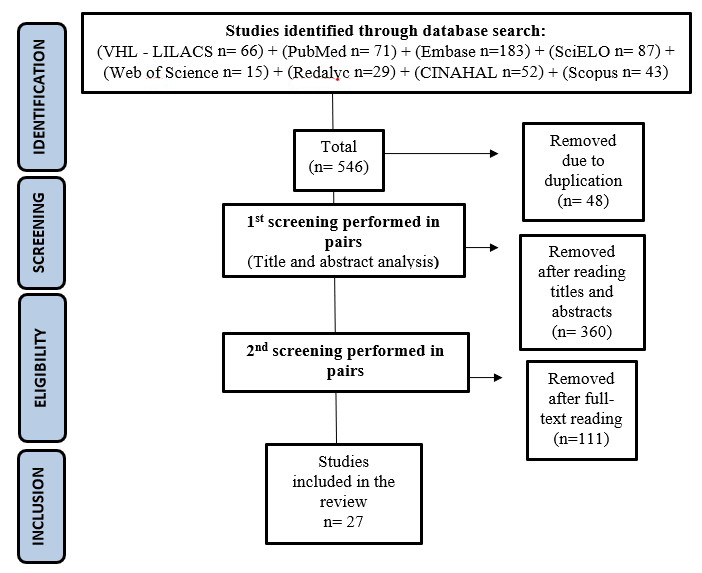
The process of identifying, selecting, and including articles was documented using the PRISMA-ScR flowchart12, as illustrated in Figure 1 below. Initially, the search in the data sources resulted in 546 records. After removing duplicates (48), the screening stages by title and abstract (498), and subsequently, the full-text reading of eligible articles (138). At the end of the process, 27 articles were included in the review.
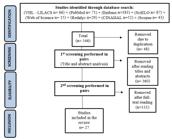
Flowchart of the study selection process for the scoping review based on the Preferred Reporting Items Systematic Review and Meta-Analyses Extension for Scoping Reviews (PRISMA-ScR) - Curitiba, PR, Brazil, 2025
Next, Chart 1 presents the description of the 27 studies that comprise the final sample, considering the country, year, objectives, methodological approach, and public health competencies. The articles explore various competencies related to public health practice over the last five years.
The studies listed in Chart 1 present a wide geographical diversity, covering different continents. Research from Europe15-16,26,31,34,39, the United States13,17,24-25 and Canada19,33,38, predominates, suggesting a significant interest in the topic in countries of the Global North, although there are relevant contributions from regions of the Global South, such as Brazil20,22, India23,27, Ethiopia28 and South Africa30, which highlights the growing appreciation of the study of competencies in public health from diverse contexts. The presence of studies from Fiji18 (a country located in the South Pacific) and North Africa36, is also noteworthy, highlighting the importance of professional training for strengthening health systems. Regarding methodological approaches, a combination of quantitative and qualitative studies, and scoping reviews, is observed, reflecting the complexity of the topic.
Synthesis of the concept of public health competence
As explained above, this study employs Rodgers’ evolutionary concept analysis to explore the conceptual understandings of public health competencies described in recent literature. Chart 2 below synthesizes these characteristics through an approach that makes it possible to identify the nuances and essential components of competencies in this field, revealing both consensus and significant divergences among the analyzed authors.
Chart 2 shows that although there is a common understanding that public health competencies involve an integrated set of knowledge, skills, and attitudes, the specifications and orientations vary considerably across different contexts and public health needs. Ten studies20-21,25,28-30,33,38-39 only listed contemporary public health competencies without presenting a conceptual basis for the term; therefore, they were not considered in this conceptual analysis.
Model case
The model case presented below was developed by two doctoral students in the field of public health management, who also participated in the data collection stage of this study. Subsequently, the model was evaluated by the other authors, all of whom hold doctoral degrees in public health. This ensured alignment with the conceptual definition adopted throughout the research stages, as well as with the attributes, antecedents, and consequences described in Chart 2.
Silvana is a public health nurse who works as the coordinator of health surveillance in her municipality. After a landslide caused by intense rainfall, several vulnerable communities were affected, resulting in the displacement of families and the partial disruption of health services. Faced with this situation, Silvana mobilizes competencies based on the integration of knowledge, skills, and attitudes aimed at crisis management and the promotion of equity. Based on her technical-scientific expertise and contextual analytical capacity, she leads her team in mapping the main needs of the affected population, using digital platforms for epidemiological and environmental monitoring. She demonstrates systemic and strategic thinking by coordinating the emergency response with various institutional actors, such as rapid response teams, municipal managers, non-governmental organizations (NGOs), and Civil Defense. Furthermore, Silvana activates surveillance protocols for outbreak prevention and coordinates the supply of essential resources, while simultaneously using digital technologies to disseminate information in real time, guiding the population on health risks and service points. Her interprofessional communication and leadership skills strengthen local governance, while her social sensitivity ensures priority attention to more vulnerable groups, such as older adults, children, and people with disabilities. As a result, her actions lead to greater effectiveness of the health response, optimized care, and strengthened equity in access to health services.
Silvana’s case exemplifies the exercise of public health competencies in highly complex contexts, highlighting attributes listed in Chart 2, such as leadership, strategic thinking, decision-making, intersectoral coordination, and ethical use of technologies, according to the conceptual frameworks analyzed in this study.
DISCUSSION
The scoping review identified 27 relevant publications, from which 24 competencies emerged that were considered essential by the studies for professional practice in contemporary public health. As presented in Chart 1, some of the listed competencies are already widely recognized in professional practice, such as leadership, effective communication, critical thinking, and budget management. However, the study also highlighted relatively new competencies that are still little discussed in the scientific field of health, such as media competence, which involves digital literacy and the ability to act critically in the face of misinformation, and climate competence, which concerns preparedness, response, and recovery in the face of extreme environmental events. The presence of these competencies indicates a broadening of the scope of action of public health professionals, requiring educational processes that are more up-to-date and responsive to global transformations.
To facilitate understanding and organize the discussion of the data from this study in a didactic way, the competencies were grouped into five central axes, which reflect strategic areas for professional development in public health: cognitive and analytical competencies; communicational and sociocultural competencies; relational and managerial competencies; technological and digital competencies; and competencies focused on comprehensive health and crisis response. The conceptual analysis of this research is discussed below.
Cognitive and analytical competencies
This axis brings together competencies related to the capacity for critical analysis, logical reasoning, and the systematic use of scientific evidence in public health decision-making. These competencies are essential for the formulation, implementation, and evaluation of policies, programs, and interventions capable of responding effectively to the complex challenges of the sector. Among them are data-based decision-making13,34, systems and critical thinking18,24, problem-solving, research competence19,24 and knowledge of genomics31, which reflect the need for professionals capable of interpreting technical information and transforming knowledge into qualified action.
Critical data analysis has been highlighted as an emerging and essential competency for public health workers. This skill goes beyond the technical dimension, requiring professionals to be able to interpret information considering their social, political, and cultural contexts. One of the initiatives that highlights this demand is the InformACTION Project (Projeto InformAÇÃO), developed to promote critical data literacy among health and management professionals. The project reinforces that, in an increasingly data-driven reality, it is essential to know how to question sources, identify biases, and communicate findings in an ethical and accessible way40. This finding broadens the understanding of analytical competence as an essential attribute of the concept, by showing that the critical use of data constitutes a structuring dimension, and not just an instrumental one of public health practice.
By incorporating this competence, workers strengthen their technical and political roles, contributing to more evidence-based decisions that are sensitive to inequalities and oriented toward social justice. In this way, critical data literacy expands cognitive and analytical competencies, qualifying professional practice in addressing contemporary public health challenges13,18,34. Thus, this axis contributes to the understanding of public health competence by highlighting analytical capacity and evidence-based decision-making as essential attributes of the concept in the contemporary context.
Communicational and sociocultural competencies
Communicational and sociocultural competencies emerge as central components of professional practice in contemporary public health, especially in contexts marked by informational complexity, the circulation of misinformation, and the need for qualified dialogue with different social groups. In this axis, communication is no longer understood merely as an instrumental skill and is instead recognized as a structuring dimension of professional practice, linked to the mediation of meanings, the negotiation of risks, and the construction of relationships between health services, managers, and communities13,14.
This set includes effective communication13,24, media competence14 and cultural competence for respectful and sensitive care that acknowledges differences, such as in services for the LGBTQIAPN+ population20,24. Also emerging are the promotion of diversity and competence in health legal literacy25,37, indicating that communication in the health field involves understanding rights, regulations, and the impact of language on the production of citizenship. These competencies constitute essential attributes of the concept, as they structure the capacity for symbolic mediation, risk communication, and the production of social trust.
The growing recognition of these competencies aligns with an international movement toward more inclusive and person-centered practices. While these elements were often previously secondary in professional education, there is now clear recognition of the need to prepare workers for interactions that acknowledge social vulnerabilities and act with cultural responsibility23. Furthermore, the active engagement of professionals in the territory is essential for building trust relationships and developing care strategies that respect sociocultural particularities.
Despite the advances, a significant gap persists between guidelines and daily practice. The incorporation of these competencies into curricula and institutional routines still faces resistance, pedagogical gaps, and structural weaknesses, reinforcing the urgency of robust policies for continuing education, institutionalization of diversity, and accountability mechanisms capable of sustaining long-term changes18,20. Thus, this axis expands the understanding of public health competence by highlighting communicational and sociocultural competencies as essential attributes of the concept, fundamental for risk mediation, the production of trust, and equity-oriented practice.
Relational and managerial competencies
Relational and managerial competencies occupy a strategic place in the work of public health professionals, particularly in contexts that require team coordination, intersectoral collaboration, and decision-making in complex organizational environments. Unlike approaches focused exclusively on technical skills, this axis emphasizes dimensions manifested in the management of collective processes, the mediation of institutional interests, and the organization of health work. Within this set, notable competencies include team leadership17, collaboration and professional self-awareness19,24, budget management13,24, public health program management27, political competence24 and pedagogical competence for teaching and training in public health35. More than instrumental functions, these competencies position professionals as active agents in institutional mediation, collaborative governance, and the promotion of environments for learning and participation.
The literature analyzed shows that competencies such as leadership, teamwork, negotiation, and resource management are not merely operational requirements, but observable expressions of public health competence in action. In this sense, leadership emerges as associated with the ability to mobilize people, coordinate collective responses, and sustain shared decision-making processes, while interprofessional and intersectoral collaboration proves central to the governance of health systems characterized by multiple actors and levels of decision-making19,27.
Furthermore, although the incorporation of adaptive governance models represents promising pathways, their implementation faces persistent obstacles, such as institutional resistance, policy fragmentation, structural insufficiencies, and historical deficiencies in managerial training. These challenges reveal that the development of relational and managerial competencies goes beyond the individual level and requires organizational transformations, curricular revisions, and continuous investment in continuing education processes capable of integrating theory, practice, and the sociopolitical contexts in which workers operate1,5. In this way, this axis highlights leadership, interprofessional coordination, and collaborative management as central consequences of the concept of public health competence, especially in complex organizational contexts.
Technological and digital competencies
Technological and digital competencies are assuming an increasingly important role in the performance of public health professionals, accompanying the intensification of the digitization processes of health systems, the expansion of the use of information platforms, and the incorporation of advanced technologies in surveillance, management, and decision-making processes16,28,29,38. Recent literature highlights the need for mastery of digital tools for epidemiological monitoring, data analysis, and health communication, as well as for the organization and integration of information systems28,38.
This expansion of digital competence implies recognizing that technologies are not neutral: they can either reduce or expand inequalities, depending on how they are implemented. In this sense, the incorporation of Artificial Intelligence (AI) into epidemiological monitoring and public policy formulation requires professionals capable of interpreting algorithms, questioning biases, assessing ethical impacts, and communicating risks and benefits transparently. The integration of these capacities into the professional repertoire strengthens public health practice by supporting evidence-based decision-making and promoting equitable access to services16.
In this context, the study conducted in South Korea adds a relevant dimension by highlighting media literacy as a complementary component to digital competencies14. The authors define it as the ability to interact critically with the media to promote health, combat misinformation, and increase the impact of public actions. Recent studies reinforce this understanding, linking media competence to digital literacy and highlighting that such capabilities are essential to address the mass circulation of false information, discursive polarization, and the need for ethical and inclusive public communication.
From this perspective, digital competence emerges as an attribute of the concept, demanding the articulation between technical judgment, ethical evaluation, and decision-making in complex and digital contexts41-42. Additionally, the literature points to media competence as a complementary dimension to digital competencies, particularly in the context of the massive circulation of information and health misinformation. The ability to communicate risks, translate technical information, and interact critically with digital media strengthens the relationship between public health professionals, managers, and society, increasing the effectiveness of actions and institutional trust.
Thus, this axis contributes to the refinement of the concept by characterizing technological and digital competencies as emerging attributes of public health competence, integrating technical, ethical, and decision-making dimensions.
Comprehensive health competencies and crisis response
Competencies in comprehensive health and crisis response have become central in the work of public health professionals in the face of the increasing frequency and intensity of health emergencies, environmental disasters, and extreme climate events. In this area, the focus shifts to the ability to act in unstable scenarios, in which rapid decisions, intersectoral coordination, and adaptation to unpredictable contexts become central elements of professional practice. These include: competence in mental health21,39, autism intervention23, screening and management of chronic diseases31, infectious disease control32,36, disaster and mass casualty incident management26,33, addressing violence against women15,22 and sustainability competence18. Together, these competencies reinforce the urgency of training that is both technically qualified and sensitive to the structural inequalities that shape the distribution of health risks and needs.
The analyzed literature shows that competencies related to preparedness, response, and recovery in the face of health and environmental crises go beyond the clinical domain and require expanded capacities in surveillance, risk management, anticipatory planning, and resource mobilization. This set includes disaster response, management of mass casualty incidents, response to outbreaks and pandemics, and the incorporation of the climate dimension as a structural determinant of contemporary public health21-22.
However, it is observed that competencies related to comprehensive health care, particularly in autism management and in the response to violence against women, still require deeper conceptual and programmatic development. Both areas require continuous, interdisciplinary, and context-based interventions that go beyond the traditional model of immediate crisis response. In the case of autism, professional competence involves not only intervention techniques but also the ability to promote inclusive environments, address social stigma, and coordinate care across the life course. Addressing violence against women requires ethical sensitivity, critical training, and network-based action, which implies recognizing the structural dimensions of gender, race, and class that shape experiences of violence and the search for support15,22-23.
Additionally, the analysis of competencies shows that contemporary challenges transcend the clinical field and encompass emerging issues such as climate change, environmental injustices, and extreme climate events. Climate emergency reshapes the field of public health by introducing multifactorial and unevenly distributed risks, requiring professionals capable of interpreting the socio-environmental crisis as a determinant of health. In this context, digital technologies, predictive tools, and social innovations become part of the repertoire of competencies needed to anticipate scenarios, strengthen surveillance, and support rapid and coordinated responses to health and environmental crises.
Competencies in disaster management, mass casualty incident management, and preparedness, response, and recovery in relation to climate events reinforce the importance of professionals capable of operating in highly complex contexts. These competencies are not limited to the use of technologies but also include the capacity to coordinate intersectoral actions, mobilize communities, mitigate risks, and integrate environmental justice into health responses26-33. The incorporation of this component shows that public health training must recognize the climate crisis as a structuring axis of contemporary practice.
When analyzed from a conceptual perspective, competencies related to crisis response and the management of climate events are associated with the ability to anticipate scenarios, coordinate intersectoral responses, and integrate actions across health, social protection, and civil defense. This dimension demonstrates that contemporary public health competence increasingly incorporates emergency preparedness and institutional resilience as structuring components of practice. Thus, this axis highlights crisis response capacity, action in contexts of vulnerability, and sustainability as emerging attributes of the concept of public health competence.
Conceptual analysis
The conceptual analysis revealed that most studies still adopt a traditional understanding of public health competence, centered on the articulation between knowledge, skills, and attitudes. However, some more recent formulations incorporate elements such as contextualized practice, equity, the use of technologies, and crisis response. Notably, some studies introduce dimensions such as cultural sensitivity, leadership in health emergencies, and health self-management, thereby expanding the conceptual scope of public health competencies23,32,37. The COVID-19 pandemic represented a milestone in highlighting new attributes such as resilience, systems thinking, innovation, and intersectoral coordination. There was also greater emphasis on the integration of digital technologies and on evidence-based decision-making. This evolution points to a broader approach to public health competence, which is exemplified, for instance, in the model case analyzed, where the work of the public health nurse in response to a climate-related disaster demonstrates the application of technical, managerial, and collaborative competencies in a highly complex scenario.
Studies out of the sample43,44 reinforce the need to broaden the concept of competence in public health beyond technical-instrumental aspects, incorporating dimensions such as cultural humility, structural competence, and complex thinking. These contributions show that the development of competencies must include critical skills to deal with multicultural contexts, structural inequalities, and emerging health scenarios. Furthermore, they emphasize the importance of professional education aligned with the Sustainable Development Goals (SDGs) and with the principles of social justice and public health governance. Thus, it is reinforced that the concept of public health competence has been expanding toward a more critical and contextualized approach, sensitive to sociotechnical transformations and persistent inequities in health systems.
CONCLUSION
This study proposes a conceptual update of the term “public health competencies,” suggesting that although the construct maintains its traditional structure based on the integration of knowledge, skills, and attitudes, its meaning has undergone relevant transformations in the recent period. The contemporary competencies described in the literature point to a progressive shift towards previously less emphasized dimensions, such as systems thinking, intercultural communication, collaborative governance, digital and climate competencies, which are now assuming a more central role in professional practice in complex and interdependent scenarios.
The main contribution of this work is to problematize the limitations of current frameworks, which may not fully encompass the current demands of public health. The analysis indicates that training and work management systems still tend to operate from predominantly technical-operational models, while the contemporary context requires professionals capable of interpreting structural inequalities, using technologies critically, responding to multifactorial risks, and acting in an integrated manner in health, environmental, and social crises.
From the perspective of implications, the findings may support educational institutions, managers, and international organizations in reviewing and updating competency frameworks, favoring the alignment of curricula, continuing education processes, workforce planning, and public policies oriented towards equity, sustainability, and emergency preparedness. By synthesizing the attributes, antecedents, and consequences of the concept in recent literature, this study offers theoretical and applied elements that may contribute to future revisions of regional and global frameworks, supporting the strengthening of public health and the development of more resilient and responsive systems.
Acknowledgments
The present work was conducted with the support of the Coordination for the Improvement of Higher Education Personnel - Brazil (Coordenação de Aperfeiçoamento de Pessoal de Nível Superior - CAPES) - Funding Code 001.
REFERENCES
-
1. Lima MAS, Sá FSSN, Santos TS. O impacto da pandemia covid-19 no cenário de trabalho da equipe de enfermagem: uma revisão integrativa da literatura. Rev Multidiscip Nordeste Min. 2025;3(1), 1-28. https://doi.org/10.61164/rmnm.v1i3.3552
» https://doi.org/10.61164/rmnm.v1i3.3552 -
2. Dias FA, Pereira ER, Silva RMCRA, Medeiros AYBBV, Flores IP. Impactos da espiritualidade na saúde mental de universitários na pandemia de COVID-19: revisão de escopo. RCI. 2025;8(1):e202509. https://doi.org/10.59464/2359-4632.2025.3607
» https://doi.org/10.59464/2359-4632.2025.3607 -
3. Araujo IG, Coelho Junior FA, Faiad C. Mapeamento de competências individuais de servidores técnico-administrativos de uma Universidade Pública brasileira. Prát Cont Gestão. 2024;12 (4). https://doi.org/10.5935/2319-0485/praticas.v12n4e17460
» https://doi.org/10.5935/2319-0485/praticas.v12n4e17460 -
4. Organização Pan-Americana de Saúde (OPAS). As funções essenciais de saúde pública nas Américas uma renovação para o século 21: marco conceitual e descrição. Washington, D.C.; 2021. https://doi.org/10.37774/9789275722657
» https://doi.org/10.37774/9789275722657 -
5. Oda R, Rosa MP, Billig SM, Vieira VE. A competência em informação em portais governamentais de países com alto Índice de Desenvolvimento Humano (IDH). RBBD. 2025; 21:1-26. https://doi.org/10.58876/rbbd.2025.2112003
» https://doi.org/10.58876/rbbd.2025.2112003 -
6. Vianna PHF, Conceição CJ, Portela IMC, et al. Desenvolvimento de competências globais: o papel da educação na conscientização sobre os ODS. In: Ciência, Desenvolvimento e Humanidades, desafios para a transformação no conhecimento. 2025. p. 61-71. https://doi.org/10.37885/241118273
» https://doi.org/10.37885/241118273 -
7. Freitas CM, Barcellos C. Desastre no Rio Grande do Sul, Brasil: crise climática, resposta do Sistema Único de Saúde e desafios dos novos tempos. Cad Saúde Pública. 2024;40(11):e00114424. https://doi.org/10.1590/0102-311XPT114424
» https://doi.org/10.1590/0102-311XPT114424 -
8. Cavalcante ACP, Peres AMR, Costa ACM, Brito AH-TM, Aguiar AA, Welter A. Impacto da pandemia nas arbovírus no período de 2017 a 2024, no estado do Tocantins. Rev Aracê. 2025;7(2):8283-9. https://doi.org/10.56238/arev7n2-217
» https://doi.org/10.56238/arev7n2-217 - 9. Rodgers BL. Concept analysis: an evolutionary view. In: Rodgers BL, Knafl KA, organizadores. Concept development in nursing: foundations, techniques, and applications. 2nd ed. Philadelphia: W. B. Saunders; 2000. p. 77-102.
-
10. Aromataris E, Lockwood C, Porritt K, Pilla B, Jordan Z, editores. Manual JBI para Síntese de Evidências. JBI; 2024. https://doi.org/10.46658/JBIMES-24-01
» https://doi.org/10.46658/JBIMES-24-01 -
11. Camargo SCV, Makuch DMV, Ogradowski KRP, Osternack KT. Marcos de competência para a formação de enfermeiros no Brasil: revisão de escopo. Rev Espac Saúde. 2024;25:e1000. https://doi.org/10.22421/1517-7130/es.2024v25.e1000
» https://doi.org/10.22421/1517-7130/es.2024v25.e1000 -
12. Page MJ, McKenzie JE, Bossuyt PM, Boutron I, Hoffmann TC, Mulrow CD, et al. A declaração PRISMA 2024: uma diretriz atualizada para relatar revisões sistemáticas. 2021;372. https://doi.org/10.1136/bmj.n71
» https://doi.org/10.1136/bmj.n71 -
13. Karnik H, Zemmel DJ, Kulik PKG, Power LE, Leider JP. Strategic workforce analysis: identifying skills and gaps among frontline public health workers amidst transformation. J Public Health Manag Pract. 2024;30(6): E297-E305. https://doi.org/10.1097/PHH.0000000000002006
» https://doi.org/10.1097/PHH.0000000000002006 -
14. Kim E, Baek G, Jo H, Kim J, Cho A, Byun M. Nurses’ media competency: a concept analysis. Nurse Educ Today. 2024;139:106232. https://doi.org/10.1016/j.nedt.2024.106232
» https://doi.org/10.1016/j.nedt.2024.106232 -
15. Öhman A, Vives-Cases C, Edin K. ‘Important, but difficult’: Swedish primary care professionals’ perceptions and experiences of dealing with violence against women: an interview study. BMC Prim Care. 2024;25:258. https://doi.org/10.1186/s12875-024-02489-z
» https://doi.org/10.1186/s12875-024-02489-z -
16. Lewerenz S, Moen A, Martins H. Public value and digital health: the example of guiding values in the national digital health strategy of France. Int J Med Inform. 2025:196:105794. https://doi.org/10.1016/j.ijmedinf.2025.105794
» https://doi.org/10.1016/j.ijmedinf.2025.105794 -
17. Ellison H, Chandler C, Laux J, Noble CC, Corbie G, Fernandez CSP, et al. Evaluating leadership development competencies of clinicians to build health equity in America. J Contin Educ Health Prof. 2024;44(2):90-96. https://doi.org/10.1097/CEH.0000000000000526
» https://doi.org/10.1097/CEH.0000000000000526 -
18. Nair M, Meirmanov S. Assessing the role of sustainability competencies in enhancing psychological first aid effectiveness for disaster responders in Fiji. Front Public Health. 2024;12:1349342. https://doi.org/10.3389/fpubh.2024.1349342
» https://doi.org/10.3389/fpubh.2024.1349342 -
19. Chalmers KE, Spence KL. Identifying skills required of new epidemiologists: a content analysis of Canadian job postings and master’s programs. Front Public Health . 2024;12:1418494. https://doi.org/10.3389/fpubh.2024.1418494
» https://doi.org/10.3389/fpubh.2024.1418494 -
20. Dullius WR, O’Keefe-McCarthy S, McCleary L, Scortegagna SA. Continuing education with a comprehensive approach to the Brazilian LGBT+ population through use of the m-health App. Nurse Educ. Pract. 2023;71:103693. https://doi.org/10.1016/j.nepr.2023.103693
» https://doi.org/10.1016/j.nepr.2023.103693 -
21. Braam MWG, Rasing SPA, Heijs DAM, Lokkerbol J, van Bergen DD, Creemers DHM, et al. Closing the gap between screening and depression prevention: a qualitative study on barriers and facilitators from the perspective of public health professionals in a school-based prevention approach. BMC Public Health. 2023;23:884. https://doi.org/10.1186/s12889-023-15705-9
» https://doi.org/10.1186/s12889-023-15705-9 -
22. Terra MF, Lima DB. Competências na formação em saúde a partir da assistência às mulheres em situação de violência na extensão universitária. Physis. 2023;33:e33068. https://doi.org/10.1590/S0103-7331202333068
» https://doi.org/10.1590/S0103-7331202333068 -
23. Naithani L, Sangwan P, Roy SG, Menon S, Azar Z, Lakhera S, et al. From engagement to competency: the pathway to making disability naïve frontline workers competent in the delivery of an evidence-based autism intervention in New Delhi, India. Front Psychiatry. 2022;13:903341. https://doi.org/10.3389/fpsyt.2022.903341
» https://doi.org/10.3389/fpsyt.2022.903341 -
24. Cunningham JK. Competency status and desire for training in core public health domains: an analysis by job level. J Public Health Manag Pract. 2022;28(4):406-17. https://doi.org/10.1097/PHH.0000000000001497
» https://doi.org/10.1097/PHH.0000000000001497 -
25. Yassine BB, Menon AN, Holiday TR, Penn M. Legal Literacy for Public Health Practitioners. Public Health Reports. 2022;137(2):370-4. https://doi.org/10.1177/0033354921994198
» https://doi.org/10.1177/0033354921994198 -
26. Goniewicz K, Goniewicz M, Włoszczak-Szubzda A, Burkle FM, Hertelendy AJ, Al-Wathinani A, et al. The importance of pre-training gap analyses and the identification of competencies and skill requirements of medical personnel for mass casualty incidents and disaster training. BMC Public Health . 2021;21:114. https://doi.org/10.1186/s12889-021-10165-5
» https://doi.org/10.1186/s12889-021-10165-5 -
27. Bhandari S, Wahl B, Bennett S, Engineer CY, Pandey P, Peters DH. Identifying core competencies for practicing public health professionals: results from a Delphi exercise in Uttar Pradesh, India. BMC Public Health . 2020;20:1737. https://doi:10.1186/s12889-020-09711-4
» https://doi:10.1186/s12889-020-09711-4 -
28. Shiferaw KB, Tilahun BC, Endehabtu BF. Healthcare providers’ digital competency: a cross-sectional survey in a low-income country setting. BMC Health Serv Res. 2020;20:1021. https://doi.org/10.1186/s12913-020-05848-5
» https://doi.org/10.1186/s12913-020-05848-5 -
29. Brommeyer M, Liang Z, Whittaker M, Mackay M. Developing health management competency for digital health transformation: protocol for a qualitative study. JMIR Res Protoc. 2023;12:e51884. https://doi.org/10.2196/51884
» https://doi.org/10.2196/51884 -
30. Abdool Z, Naidoo K, Visser L. Competency level assessment of healthcare practitioners in managing diabetes and diabetic eye disease in the district health system of Limpopo province, South Africa. Afr Vis Eye Health. 2020;79(1):a569. https://doi.org/10.4102/aveh.v79i1.569
» https://doi.org/10.4102/aveh.v79i1.569 -
31. Rosso A, Pitini E, D’Andrea E, Di Marco M, Unim B, Baccolini V, et al. Genomics knowledge and attitudes among European public health professionals: results of a cross-sectional survey. PLOS ONE 2020;15(4):e0230749. https://doi.org/10.1371/journal.pone.0230749
» https://doi.org/10.1371/journal.pone.0230749 -
32. Zhou Y, Zhang W, Zhang S, Huang N, Zeng J, Yang H, et al. Development and validation of an infectious disease control competency scale for public health professionals. Glob Health Res Policy. 2024;9:39. https://doi.org/10.1186/s41256-024-00381-y
» https://doi.org/10.1186/s41256-024-00381-y -
33. Perreault-Carranza T, Ni V, Savoie J, Saucier J, Frenette J, Jbilou J. Core competencies of the public health workforce in climate change and extreme weather events preparedness, response, and recovery: a scoping review. Int J Environ Res Public Health. 2024;21(9):1233. https://doi.org/10.3390/ijerph21091233
» https://doi.org/10.3390/ijerph21091233 -
34. Hrzic R, Cade MV, Wong BLH, McCreesh N, Simon J, Czabanowska K. A competency framework on simulation modelling-supported decision-making for Master of Public Health graduates. J Public Health. 2023;46(1):127-35. https://doi.org/10.1093/pubmed/fdad248
» https://doi.org/10.1093/pubmed/fdad248 -
35. Suárez Conejero JE, Listovsky G, Magaña Valladares L, Duré MI, García Gutiérrez JF, van Olphen M. Competencias esenciales para la docencia en salud pública: marco regional para las Américas. Rev Panam Salud Publica. 2023;47:e137. https://doi.org/10.26633/RPSP.2023.137
» https://doi.org/10.26633/RPSP.2023.137 -
36. Alshamrani MM, Tannous E, Othman F, Al Zunitan M, Abalkhail M, El-Saed A. Competency level and determinants among infection prevention and control staff in the Middle East and North Africa region. BMC Public Health . 2024;24:2224. https://doi.org/10.1186/s12889-024-19717-x
» https://doi.org/10.1186/s12889-024-19717-x -
37. Tsai HY, Lee SYD, Coleman C, Sørensen K, Tsai TI. Health literacy competency requirements for health professionals: a Delphi consensus study in Taiwan. BMC Med Educ. 2024;24:209. https://doi.org/10.1186/s12909-024-05198-4
» https://doi.org/10.1186/s12909-024-05198-4 -
38. Iyamu I, Ramachandran S, Chang HJ, Kushniruk A, Ibáñez-Carrasco F, Worthington C, et al. Considerations for adapting digital competencies and training approaches to the public health workforce: an interpretive description of practitioners’ perspectives in Canada. BMC Public Health . 2025;25:122. https://doi.org/10.1186/s12889-024-21089-1
» https://doi.org/10.1186/s12889-024-21089-1 -
39. Solin P, Tamminen N, Partonen T. Suicide prevention training: self-perceived competence among primary healthcare professionals. Scand J Prim Health Care. 2021;39(3):332-8. https://doi.org/10.1080/02813432.2021.1958462
» https://doi.org/10.1080/02813432.2021.1958462 -
40. Pimentel CS, Campos MLM, Lopes GR. Projeto InformAÇÃO: Letramento Crítico de Dados para uma Educação Emancipadora. Rev Bras Educ Camp. 2023;8:e14684. https://doi.org/10.5753/sbceb.2024.1702
» https://doi.org/10.5753/sbceb.2024.1702 -
41. Mendonça AVM, de Sousa MF. Desafios contemporâneos para a Saúde Digital: letramento, educação midiática e prevenção à desinformação. Rev Panam Salud Publica . 2025;49:e14. https://doi.org/10.26633/RPSP.2025.14
» https://doi.org/10.26633/RPSP.2025.14 -
42. Jose A, Tortorella GL, Vassolo R, Kumar M, Mac Cawley AF. Professional competence and its effect on the implementation of Healthcare 4.0 technologies: scoping review and future research directions. Int J Environ Res Public Health . 2023;20:478. https://doi.org/10.3390/ijerph20010478
» https://doi.org/10.3390/ijerph20010478 -
43. Silva VT, Nicoes CR, Knuth AG. Saúde coletiva e saúde pública no currículo dos cursos de educação física: uma revisão sistemática. RPP. 2021;24:e61062. https://doi.org/10.5216/rpp.v24.61062
» https://doi.org/10.5216/rpp.v24.61062 -
44. Müller MIB, Machado WCA, Menegon VMS. Competência cultural, competência estrutural e humildade cultural na formação em saúde: avanços e desafios. Rev Interface. 2023;27:e220752. https://doi.org/10.1590/S0104-12902023210731pt
» https://doi.org/10.1590/S0104-12902023210731pt
Access to the dataset is available upon request from the corresponding author.

 Source: Research data, 2025.