 5% Hop extract as disinfectant agent of orthodontic pliers
ABSTRACT
Objective To characterize and develop a hop extract disinfectant solution and to evaluate the effectiveness of a 5% hop extract solution in the disinfection of distal cut orthodontic pliers.
Methods Distal cutting pliers (n=15) previously contaminated by S. mutans, randomized into 5 experimental groups (n=3): G1/AUT – autoclaved (negative control); G2/CNT – contaminated by S. mutans (positive control); G3/CLX – 2% Chlorhexidine; G4/HOP – 5% Hop Extract; G5/ALC − 70% Alcohol. The chemical parameters of the Hop extract solution was analyzed by Gas Chromatography coupled with Mass Spectrometry. After contamination, the pliers were immersed for 3 minutes in the respective disinfectant protocol. The microbiological analysis and the quantification of Colony Forming Unit (CFU/ml) were performed in pure and 1:10, 1:100 and 1:1000 serial dilutions. The result of the chemical analyzes were descriptive, and the microbiological analysis were submitted to analysis of variance and Tukey’s test with a significance level of 5%.
Results The major chemical compounds were α- and β-acids. In microbiological tests, it was shown that all experimental groups differed significantly from G1/AUT (p<0.05). In the pure and 1:100 serial dilution, G2/CNT showed a significantly higher value than the other groups evaluated (p<0.05). In the 1:1000 dilution, G5/ALC showed a significantly higher average (p<0.05) than the others and did not differ only from G2/CNT (p<0.05). There was no significant difference in the CFU/mL of G4/HOP compared to G1/AUT and G3/CLX (p<0.05).
Conclusion The 5% hop extract solution demonstrated antimicrobial effectiveness in the disinfection of orthodontic pliers contaminated with S. mutans.
Indexing Terms
Aromatic extracts; Chlorhexidine; Disinfection; Humulus Lupulus; Orthodontics
RESUMO
Objetivo Caracterizar e desenvolver uma solução desinfetante de extrato de lúpulo e avaliar a eficácia de uma solução de extrato de lúpulo a 5% na desinfecção de alicates ortodônticos de corte distal.
Métodos Alicates de corte distal (n=15) previamente contaminados por S. mutans, randomizados em 5 grupos experimentais (n=3): G1/AUT − autoclavados (controle negativo); G2/CNT – contaminados por S. mutans (controle positivo); G3/CLX – Clorexidina 2%; G4/HOP – Extrato de Lúpulo 5%; G5/ALC − Álcool 70%. Os parâmetros químicos da solução de extrato de Lúpulo foram analisados por Cromatografia Gasosa acoplada à Espectrometria de Massas. Após a contaminação, os alicates foram imersos por 3 minutos no respectivo protocolo desinfetante. A análise microbiológica e a quantificação da Unidade Formadora de Colônias (UFC/ml) foram realizadas nas diluições pura e seriada 1:10, 1:100 e 1:1000. Os resultados das análises químicas foram descritivos e as análises microbiológicas foram submetidas à análise de variância e teste de Tukey com nível de significância de 5%.
Resultados Os principais compostos químicos foram os ácidos α e β. Nos testes microbiológicos foi demonstrado que todos os grupos experimentais diferiram significativamente do G1/AUT (p<0,05). Na diluição pura e seriada 1:100, o G2/CNT apresentou valor significativamente maior que os demais grupos avaliados (p<0,05). Na diluição 1:1000, o G5/ALC apresentou média significativamente maior (p<0,05) que os demais e não diferiu apenas do G2/CNT (p<0,05). Não houve diferença significativa nas UFC/ml do G4/HOP em relação ao G1/AUT e G3/CLX (p<0,05).
Conclusão A solução de extrato de lúpulo a 5% demonstrou eficácia antimicrobiana na desinfecção de alicates ortodônticos contaminados com S. mutans.
Termos de indexação
Extratos aromáticos; Clorexidina; Desinfecção; Humulus Lúpulus; Ortodontia
INTRODUCTION
In orthodontics, the classification of materials and instruments in terms of the levels of contamination legitimized by biosafety varies between critical and semi-critical [1]. Therefore, most pliers used in orthodontics, which come into direct contact with intact oral fluids and tissues, can be considered semi-critical, and require disinfection of high biocidal activity or sterilization [2,3]. In clinical practice, the sterilization of this material is not always acceptable by the orthodontist, who justifies that this procedure, performed by means of moist heat obtained from the autoclave, permanently damages the instrument and implying greater time and financial demands [4,5]. In this sense, chemical disinfection has been widely adopted among orthodontists [4,6] to ensure microbiological control and prevent infection between the dental team and patients [2,7,8].
This chemical control has been carried out by means of some chemical decontaminating agents. Among them we can mention 70% alcohol, which is effective against bacteria, non-enveloped viruses and fungi, but not sporicidal. Its bactericidal action occurs through the denaturation of proteins [9]. In general, this agent is widely used by orthodontists in the decontamination of pliers [8-10]. The ease of use, cost, and low toxicity make dental surgeons use this agent in the disinfection of instruments; however, there are reservations regarding its use, since 70% alcohol cannot eliminate the most resistant microorganisms [8].
Chlorhexidine digluconate solution is another solution widely used in disinfection. This is a cationic agent that has a broad spectrum against Gram-positive and negative bacteria [11]. Its action against bacteria promotes the loss of components such as nucleotides and proteins, through the disruption of the integrity of cytoplasmic membranes, and can exert bactericidal and bacteriostatic effects, which is why it is the antimicrobial with the greatest indication in studies related to disinfection in dentistry with regard to surfaces and instruments [12]. The efficacy of 2% chlorhexidine solution for disinfecting dental office surfaces was significant in a study, disinfecting orthodontic appliances made of acrylic resin in 91.3% of cases [12].
However, the search for new substances from natural sources with decontaminating properties and lower adverse effects and toxicity has been stimulated [13]. Among them, hop extract and its recognized bacteriostatic antimicrobial activity [14]. Hop extract has compounds that inhibit most gram-positive bacteria, including some species of Bacillus, Micrococcus, and Staphylococcus [15]. Several constituents of this extract also contribute to the antimicrobial action against oral Streptococcus, an action found both in pure compounds and in compound hop fractions, such as humulone, lupulone and xanthohumol [15-17].
Considering the need for new natural products for the decontamination of orthodontic materials, the hypothesis tested was that the disinfectant agent based on hydroalcoholic extract of hops would have the same disinfection capacity as the others against S. mutans found in distal cutting pliers. Thus, the present study aimed to characterize and develop a hop extract disinfectant solution and to evaluate the efficacy of a solution based on Humulus lupulus extract (hops) in the disinfection of orthodontic distal cutting pliers contaminated with S. mutans.
METHODS
Sample sizing
The sample size was calculated using the G*Power software. Considering the power of the test of 0.80, a significance level of 5% and a large effect size, a minimum number of three pliers per group was reached (5 groups, n=3).
The sample consisted of 15 distal cutting pliers (Leontool, Miami, Fl, USA), from the same batch of manufacture, without grooves, wear or fractures, and were divided into 5 groups: G1/AUT − autoclaved (negative control); G2/CNT − contaminated by S. mutans (positive control); G3/CLX − Chlorhexidine 2%; G4/HOP – 5% Hops Extract; G5/ALC – 70% alcohol.
Obtaining and characterizing the plant extract of Hops (Humulus lupulus)
The hop extract used in this research was commercially acquired under the name Hopsteiner (Hopsteiner, New York, NY), and has the following specifications: amber aqueous solution, Tetrahydroiso-Alpha-Acids − 9.5 to 10.5% p.p., pH 9.0 to 11.0, density at 20ºC from 1.012 to 1.022 g/ml, stored in a closed package in a cold place (5 to 15ºC), stable at elevated temperatures during transport without significant impact on product quality, as long as the outer and inner packaging is preserved.
The extract was extracted from the pelleted hops through the supercritical extraction process, a technique that uses Carbon Dioxide (CO2) for an extraction developed for essential oils and volatile materials, thus maintaining the properties of the extracted substances, without causing decomposition [15].
Analysis of Hops (Humulus lupulus) plant extract by Gas Chromatography coupled to Mass Spectrometry (GC/MS)
Gas chromatography analysis coupled to mass spectrometry (GC/MS) of the extract was performed according to the modified method previously described [18,19]. Aliquots of 400 μL of the sample were placed and added to 1 ml of a trimethylsil solution for silanization. The samples were analyzed in a gas chromatograph (HP-6890, Agilent Technologies, Avondale, PA, USA) coupled to the mass spectrometer (HP-5975, Agilent Technologies, Avondale, PA, USA). The analysis was performed under the following chromatographic conditions: DB-5MS capillary column (J&W Scientific, Palo Alto, CA; 60 m X 0.25 mm X 0.25 μm). Detector operating at 70eV in “scan” mode (m/z 40-400). The temperature was programmed from 50ºC (0.3 min) to 285ºC (15 minutes), with an increment of 6°C/min. The samples (0.5 μL) were injected by an auto-injector, using the “spitless” injection technique. Retention times were compared [20], and under these conditions the resulting peaks were analysed [21]. The integration was done through the equipment’s specific software [20].
Preparation of disinfectant solutions
The 5% v/v hop solution was manipulated from the commercially obtained extract of the plant [15-22]. The plant extract was added to the formulation followed by homogenization and supplemented with purified water qsp until the final volume. The alcoholic solution of Chlorhexidine 2% was composed of 2g/100 ml of Chlorhexidine Digluconate, with purified water qsp. The 70% alcohol solution used was the commercial brand Farmax (Divinópolis, MG, Brazil) with 70% Ethyl Alcohol (w/w) as its composition, and purified water qsp as an excipient.
Microbiological analysis
The pliers (n=3), previously sterilized by autoclaving, were submitted to a contamination protocol by immersion in a microbiological suspension [22]. Briefly, for the preparation of the inoculum, the microorganism S. mutans ATCC UA159 was seeded in Petri dishes containing Mitis Salivarium Agar (MSA). After the incubation period of 24 hours at 37º C in microaerophilia, the microorganisms were inoculated in BHI liquid culture medium and the absorbance adjusted in a spectrophotometer between 0.08 and 0.10 with a wavelength of 625 nm, resulting in a concentration equivalent to 1.5X10⁸ cells/ml. After this period, the liquid culture was distributed in 15 sterile Becker beakers, 30 ml being used in each. Then, the active part of the pliers was immersed in the respective beckers for 2 min so that their contamination could occur and a wash was performed in Phosphate-Buffered Saline solution (PBS) to remove culture medium and non-adhered cells.
After contamination, the active part of each pliers was immersed for 3 minutes in Becker containing 30 ml of the respective disinfectant experimental solutions. Then, washing was performed again in PBS solution so that there would be no loading of the decontaminating agent for the next phase. A sterile swab moistened in saline solution was rubbed for 15 seconds on the surface of the active tip of each pliers of all experimental groups and introduced into a test tube containing 2 mL of sterile saline solution (suspension) stirred for 1 min to be later diluted and inoculated in MSA, and then placed in an oven at 37°C for 24 h in microaerophilia [22].
For all experimental groups based on this suspension, 3 dilutions were prepared in sterile 0.9% saline solution (1:10, 1:100, 1:1000). Seeding was performed from the pure suspension (undiluted) and its dilutions, and 0.1 ml of each solution was individually transferred to the surface of Petri dishes containing MSA to count CFU/ml of S. mutans. This material was spread on the surface of the media prepared by a glass Drigalski handle. After sowing, the plates were incubated at 37°C for 48 hours in microaerophilia [22].
After the incubation period, CFU/ml of the seeded Petri dishes were counted after disinfection treatments for all experimental groups. According to standard microbiotic techniques, plates containing between 30 and 300 bacterial colonies were selected for reading [22].
Methodology of statistical analysis
For the chemical analyses, a descriptive analysis of the chemical compounds constituting the Hops extract was used. For the results of the microbiological analysis (CFU/ml), the exploratory analysis indicated the logarithmic transformation so that the data would meet the assumptions of a parametric analysis. After transformation, the data were submitted to analysis of variance (ANOVA) in a 5 x 4 + 1 factorial scheme (5 treatments x 4 dilutions + control group) and Tukey’s test considered a significance level of 5%. The analyses were performed at SAS and R (R Foundation for Statistical Computing, Vienna, Austria).
Ethical approval statement
The study was submitted and approved as a simplified project to the Animal Research Ethics Committee – CEUA – under opinion No. 026/2018.
RESULTS
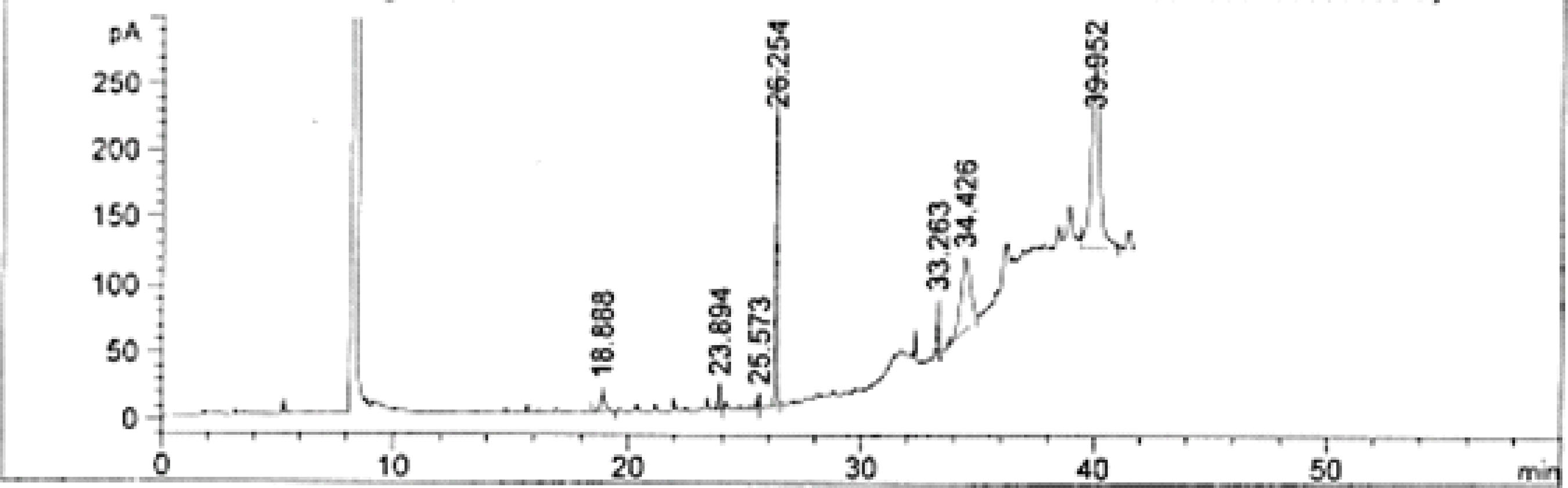
The identification of the chemical composition of the hop extract was performed by GC/MS, and its chromatogram was represented in Figure 1, and the compounds that were possible to identify are described in Table 1. According to the results obtained from the analysis of the retention rates of the hops extract, it was possible to identify two major components, being the α-acids (humulones) and β-acids (hopones) identified by comparison with the data obtained from the GC-EM and from authentic methylated and eluted patterns under the same conditions [20].

In relation to the microbiological analyses, the pliers of the G1/AUT group did not present CFU formation in any of the dilutions analyzed, as shown in Table 2. All experimental groups did not differ significantly from the G1/AUT group (p>0.05), except for G5/ALC at the 1:1000 dilution, which has only 48,23% of decontamination percentage. In the pure suspension, 1:10 and 1:100, G2/CNT had a significantly higher mean CFU than the other groups evaluated (p<0.05), except for the 1:1000 dilution, which did not differ from the G5/ALC group. There was no significant difference in the mean amount of CFU/mL in relation to the dilutions for the G1/AUT, G3/CLX and G4/HOP groups (p>0.05). G4/HOP had a decontamination percentage between 93,18% for 1:1000 dilution up to 99,10% for pure solution.
Mean (standard deviation) of colony-forming units (CFU/ml) and percentage of decontamination (%) as a function of treatment and dilution (pure, 1:10, 1:100, 1:1000).
DISCUSSION
The monitoring of the disinfection of distal cutting pliers must be carried out effectively because it is a semicritical material that comes into contact with the patient’s intact skin and mucosa [1]. In this sense, S. mutans has been the microorganism used in research aimed at monitoring and controlling the action of disinfectants for dental use [23,24]. It can also be inferred that the search for natural disinfectant solutions has taken place [25,26].
The hypothesis of the present study that the disinfectant agent based on 5% hops extract would be able to control the microbiological control of S. mutans was accepted. It can be evidenced that among the various disinfectant solutions tested in the present study, the solution based on Hops Extract (G4) showed the same antimicrobial efficacy when compared to the autoclave and the Chlorhexidine 2% solution. There was no significant difference in the mean amount of CFU/ml of S. mutans after the use of each of the solutions.
A similarity of results between chlorhexidine and hops has also been evidenced in the literature, exposing a decrease in the growth of S. mutans, corroborating the results presented in the present study. The group submitted to autoclaving did not differ significantly from the other experimental groups evaluated, evidencing the absence of bacterial growth due to exposure to the high temperature and pressure characteristic of this sterilization method, and that interferes with the viability of the microorganism [9,27].
It should be noted that the autoclave has been considered by the literature to be the gold standard in the sterilization and disinfection of instruments [23,28] and that chlorhexidine has been identified as the reference agent in the control of infections caused by Gram-positive bacteria, mainly against Streptococcus [11,28,29].
Another substance to be considered was 70% alcohol, which has been the most used method in disinfection in dental clinics [30]. However, a lower efficiency of this solution as a disinfectant for instruments has been demonstrated in the literature [4,9,31], which corroborates the results obtained in this study. We revealed a low antimicrobial potential of the 70° Alcohol-based disinfectant (G5).
The compounds humulone and lupulone from hops extract were identified as the majority in this study by means of GC/MS. They are widely cited in several studies regarding their effective antimicrobial action against gram-positive bacteria, in particular the Streptococcus [14,15,32], corroborating the data presented in this work. These same active compounds were also identified in another study as present in the total resins of bitter hops and caused changes in the pH of the bacterial membrane of S. mutans. which is responsible for causing a change in its permeability, and an extravasation of intracellular substances [14].
Recent studies have also demonstrated other components of hops such as xanthohumol (not found in this research) as an antimicrobial agent on anaerobic bacteria, such as Bacteroides fragilis and Clostridium perfringens, and an anti-fungal action in the inhibition of Trichophyton spp [33]. These controversies regarding the findings of the present study can be attributed to the fact that the chemical composition of hop compounds can be altered by several factors, such as: hop variety, extractive method, growing conditions, ripeness point at the time of harvest, drying conditions, contact with oxygen from the air and storage conditions [34].
Despite hop extract demonstrating the same efficacy as chlorhexidine as a disinfectant agent, we propose a new use of this substance as an alternative for orthodontic plier disinfection. This alternative could be a new substance from natural sources, lower adverse effects, less toxicity and maybe environmental or economic advantages.
The absence of pre-washing of the instruments, although recommended by the literature to removal part of the organic matter before the use of disinfectant solutions [35], did not result in lower efficiency of the various solutions studied. But additional studies are suggested analyzing the effectiveness of the hop extract solution against other microorganisms, and evaluation of other times and forms of application. Maybe a multi species biofilm may result in different outcomes.
CONCLUSION
It can be concluded that the 5% hops extract solution was a disinfectant agent with efficacy superior to 70% alcohol in the microbiological control of S. mutans and with the same antimicrobial efficacy as chlorhexidine 2%.
-
How to cite this article
Passos PRM, Costa AR, Franzini CM, Neves JG, Marangoni-Lopes L, Goes VFF. 5% Hop extract as disinfectant agent of orthodontic pliers. RGO, Rev Gaúch Odontol. 2025;73:e20250020. http://dx.doi.org/10.1590/1981-86372025002020240056
REFERENCES
- 1 Spaulding EH. Chemical disinfection of medical and surgical materials. In: Block SS. editor. Disinfection sterilization and preservation. Philadelphia: Lea & Febiger; 1968. p. 517-31.
-
2 Venturelli AC, Torres FC, Almeida-Pedrin RR de, Almeida RR de, Almeida MR de, Ferreira FPC. Avaliação microbiológica da contaminação residual em diferentes tipos de alicates ortodônticos após desinfecção com álcool 70%. Rev Dent Press Ortodon Ortop Facial. 2009;14(4):43-52. https://doi.org/10.1590/S1415-54192009000400005
» https://doi.org/10.1590/S1415-54192009000400005 -
3 Campos CAS, Neto GSCG, Silva Pereira R, Costa MO, Santos WB, Rocha WG. et al. Biosafity in dentistry: literature review. Braz J Health Rev. 2020;3(2):1656-62. https://doi.org/10.34119/bjhrv3n2-027
» https://doi.org/10.34119/bjhrv3n2-027 -
4 Almeida CMF, Carvalho AS, Duarte DA. Evaluation of disinfection methods of orthodontic pliers. Dental Press J Orthod. 2012;17(4):105-9. https://doi.org/10.1590/S2176-94512012000400020
» https://doi.org/10.1590/S2176-94512012000400020 -
5 Wichelhaus A, Brauchle G, Mertmann M, Sander FG. Corrosion of orthodontic pliers using different sterilization procedures. J Orofac Orthop. 2004;65(6):501-11. https://doi.org/10.1007/s00056-004-0417-9
» https://doi.org/10.1007/s00056-004-0417-9 -
6 Reddy RV, Tanveer K, Sharma KD, Kokkula N, Suresh PL, Sudhakar M. Evaluation of effectiveness of chemical disinfectants in reducing bacterial growth on orthodontic instruments. Contemp Dent Pract. 2013;14(6):1039. https://doi.org/10.5005/jp-journals-10024-1447
» https://doi.org/10.5005/jp-journals-10024-1447 -
7 Wichelhaus A, Bader F, Sander FG, Krieger D, Mertens T. Effective disinfection of orthodontic pliers. J Orofac Orthop. 2006;67(5):316-336. https://doi.org/10.1007/s00056-006-0622-9
» https://doi.org/10.1007/s00056-006-0622-9 - 8 Paiva RMC, Freitas Soares SM, Melgaço CA, Magalhães SR. Emprego de métodos físicos e químicos para esterilização do instrumental ortodôntico. Rev Iniciação Cient Univ Vale Rio Verde. 2014;4(1):114-31.
-
9 Ganavadiya R, Shekar BC, Saxena V, Tomar P, Gupta R, Khandelwal G. Disinfecting efficacy of three chemical disinfectants on contaminated diagnostic instruments: a randomized trial. J Basic Clin Pharm. 2014;5(4):98-104. https://doi.org/10.4103/0976-0105.141946
» https://doi.org/10.4103/0976-0105.141946 -
10 Carvalho MRA, dos Santos da Silva MA, Sousa Brito CAR, Campelo V, Kuga MC, Tonetto MR, et al. Comparison of antimicrobial activity between chemical disinfectants on contaminated orthodontic pliers. J Contemp Dent Pract. 2015;16(8):619-23. https://doi.org/10.5005/jp-journals-10024 -1731
» https://doi.org/10.5005/jp-journals-10024 -1731 -
11 Fiorentino FAM, Côrrea MA, Salgado HRN. Development and validation of a microbiological assay for determination of chlorhexidine digluconate in aqueous solution. Braz J Pharm Sci. 2013;49(2):351-8. https://doi.org/10.1590/S1984-82502013000200017
» https://doi.org/10.1590/S1984-82502013000200017 -
12 Rolim VCLB. Estudo comparativo dos efeitos da desinfecção de aparelhos ortodônticos removíveis utilizando clorexidina ou ozônio [dissertação]. São José dos Campos: Unicastelo; 2014 [citado 2 abr. 2024]. Disponível em: https://repositorio.ufsc.br/handle/123456789/213073
» https://repositorio.ufsc.br/handle/123456789/213073 -
13 Schoenknecht E. Efeito da imersão em solução de óleo de Melaleuca na rugosidade e cor de uma resina acrílica para base de prótese [Trabalho de Conclusão de Curso]. Rio Grande do Sul: Universidade Federal do Rio Grande do Sul; 2013 [citado 2 abr. 2024]. Disponível em: http://hdl.handle.net/10183/114682
» http://hdl.handle.net/10183/114682 -
14 Wasilewski T, Czerwonka D, Piotrowska U. Effect of the concentration of hop cone extract on the antibacterial, physico-chemical and functional properties of adhesive toilet cleaners. Tenside, Surfactants, Deterg. 2016;53(4):368-74. https://doi.org/10.3139/113.110450
» https://doi.org/10.3139/113.110450 -
15 Pilna J, Vlkova E, Krofta K, Nesvadba V, Rada V, Kokoska L. In vitro growth-inhibitory effect of ethanol GRAS plant and supercritical CO2 hop extracts on planktonic cultures of oral pathogenic microorganisms. Fitoterapia. 2015;105:260-8. https://doi.org/10.10 16/j.fitote.2015.07.016
» https://doi.org/10.10 16/j.fitote.2015.07.016 -
16 Bhattacharya S, Virani S, Zavro M, Haas GJ. Inhibition of Streptococcus mutans and Other Oral streptococci by hop (Humulus lupulus L.) constituents. Econ Bot. 2003;57(1):118-25. https://doi.org/10.1663/0013-0001(2003)057[0118:IOSMAO] 2.0.CO;2
» https://doi.org/10.1663/0013-0001(2003)057[0118:IOSMAO] 2.0.CO;2 -
17 Vieira DRP, Amaral FMM, Maciel MCG, Nascimento FF, Libério AS. Plantas e constituintes químicos empregados em Odontologia: revisão de estudos etnofarmacológicos e de avaliação da atividade antimicrobiana in vitro em patógenos orais. Rev Bras Plantas Medicinais. 2014;16(1):135-67. https://doi.org/10.1590/S1516-05722014000100020
» https://doi.org/10.1590/S1516-05722014000100020 -
18 Markham RK, Mitchell KA, Wilkins AL, Daldy JA. HPLC and GC-MS identification of the major organic constituints in New Zeland propolis. Phytochem. 1996;42(1):205-11. https://doi.org/10.1016/0031-9422(96)83286-9
» https://doi.org/10.1016/0031-9422(96)83286-9 -
19 Proestos C, Sereli D, Komaitis M. Determination of phenolic compounds in aromatic plants by RP-HPLC and GC-MS. Food Chemistry. 2006;95(1):44-52. https://doi.org/10.1016/j.foodchem.2004.12.016
» https://doi.org/10.1016/j.foodchem.2004.12.016 - 20 Adams RP. Identification of essencial oil components by gas chromatography/ mass spectrometry. 4th ed. Illinois: Allured Publishing Corporation; 2007.
-
21 Shellie RA, Poynter SD, Li J, Gathercole JL, Whittock SP, Koutoulis A. Varietal characterization of hop (Humulus Lupulus L.) by GC-MS analysis of hop cone extracts. J Sep Sci. 2009;32(21):3720-25. https://doi.org/10.1002/jssc.200900422.
» https://doi.org/10.1002/jssc.200900422 - 22 National Committee for Clinical Laboratory Standards. Norma M7-A6. Metodologia dos testes de sensibilidade a agentes antimicrobianos por diluição para bactéria de crescimento aeróbico. 6a. ed. Pennsylvania: NCCLS; 2005.
-
23 Orsi IA, Villabona CA, Kameoka E, Ferreira MCC, Ito IY, Saravia ME. Antimicrobial efficacy of chemical disinfectants on contaminated full metal crowns. Braz Dent J. 2010;21(3):241-6. https://doi.org/10.1590/s0103-64402010000300012
» https://doi.org/10.1590/s0103-64402010000300012 -
24 Azeredo F, Menezes LM, Silva RM, Rizzatto SM, Garcia GG, Revers K. Análise microbiológica de alicates ortodônticos. Dental Press J Orthod. 2011;16:103-12. https://doi.org/10.1590/S2176-94512011000300013
» https://doi.org/10.1590/S2176-94512011000300013 -
25 Höfling JF, Mardegan RC, Anibal PC, Furletti VF, Foglio MA. Evaluation of antifungal activity of medicinal plant extracts against oral Candida albicans and proteinases. Mycopathologia. 2011;172(2):117-24. https://doi.org/10.1007/s11046-011-9404-z
» https://doi.org/10.1007/s11046-011-9404-z -
26 Smanski MJ, Zhou H, Claesen J, Shen B, Fischbach MA, Voigt CA. Synthetic biology to access and expand nature’s chemical diversity. Nat Rev Microbiol. 2016;14(3):135. https://doi.org/10.1038/nrmicro.2015.24
» https://doi.org/10.1038/nrmicro.2015.24 -
27 Aksoy A, Kılıç G, Hussein E, Aboukhalil D. Sterilization and disinfection in orthodontics. In: Naretto S, editor. Principles in contemporary orthodontics. Croatia: InTech; 2011. https://doi.org/10.5772/20901
» https://doi.org/10.5772/20901 -
28 Freire PLL, Campos PH, Carvalho FG, Rodrigues JA, Diniz MB. Is pomegranate peels infusion effective for disinfection of toothbrushes? Rev Odontol Unesp. 2016;45(5):253-7. https://doi.org/10.1590/1807-2577.01416
» https://doi.org/10.1590/1807-2577.01416 -
29 Cardoso CS, Bonan PR, Albuquerque AR. Avaliação da eficácia antimicrobiana da própolis e clorexidina para Streptococcus mutans na incorporação de modelos de gesso tipo IV. Rev Odontol Bras Central. 2017;26(76):26-31. https://doi.org/10.36065/robrac.v26i76.946
» https://doi.org/10.36065/robrac.v26i76.946 - 30 de Almondes AI, de Araújo JO, Amaral LMS, Reis RC, Porto JC, Teles JB, et al. Fungal contamination and disinfection of dental chairs. Acta Odontol Latinoam. 2013;29(3):225-9.
- 31 Teixeira CA, Becker AP. Avaliação da viabilidade de bactérias patogênicas sobre superfícies e eficácia de saneantes. Discip Sci Sér Ciênc Saúde. 2017;18(2):207-13.
-
32 Durello RS, Silva LM, Bogusz Jr S. Hop chemistry. Química Nova. 2019;42(8):900-19. https://doi.org/10.21577/0100-4042. 20170412
» https://doi.org/10.21577/0100-4042. 20170412 -
33 Cermak P, Olsovska J, Mikyska A, Dusek M, Kadleckova Z, Vanicek J, et al. Strong antimicrobial activity of xanthohumol and other derivatives from hops (Humulus lupulus L.) on gut anaerobic bacteria. Apmis. 2017;125(11):1033-8. https://doi.org/10.1111/apm.12747
» https://doi.org/10.1111/apm.12747 -
34 McAdam EL, Vaillancourt RE, Koutoulis A, Whittock SP.Quantitative genetic parameters for yield, plant growth and cone chemical traits in hop (Humulus lupulus L.). BMC Genet. 2014;15:22. ht tps://doi.org/10.1186/1471-2156-15-22
» https://doi.org/10.1186/1471-2156-15-22 -
35 Reis LMD, Rabello BR, Ross C, Santos LMRD. Evaluación de la actividad antimicrobiana de los antisépticos y desinfectantes utilizados en un servicio de salud pública. Rev Bras Enferm. 2011;64(5):870-5. https://doi.org/10.1590/S0034-71672011000500011
» https://doi.org/10.1590/S0034-71672011000500011
Edited by
-
Assistant editor:
Luciana Butini Oliveira