 Anterior esthetic rehabilitation with composite resin: case report of a 6-year follow-up in a patient with hypoplasia and diastemas
ABSTRACT
Given the growing popularity of invasive techniques in Esthetic Dentistry, it is essential to emphasize conservative approaches capable of achieving effective esthetic and functional outcomes while preserving healthy dental tissues. The objective of this study is to report a clinical case with a six-year follow-up in which esthetic smile remodeling was performed using direct composite resin restorations in a patient presenting enamel hypoplasia associated with anterior diastemas. A 18-year-old female patient sought care complaining about tooth discoloration and interdental spacing. Clinical examination revealed enamel hypoplasia on the anterior teeth of both arches, diastemas between the central incisors and between the lateral incisors and canines, as well as a deficient Class IV restoration on tooth 22. The treatment plan included combined dental bleaching (in-office and at-home) followed by esthetic remodeling using nanoparticulate composite resin (Z350XT, Solventum). To ensure predictability and control of dental contour, a silicone guide was fabricated based on a diagnostic wax-up. After six years of clinical follow-up, the restorations remained esthetically stable, with preserved marginal integrity, and no signs of fractures or staining. It is concluded that the combination of bleaching and direct composite resin restorations proved to be a conservative, efficient, and predictable approach for the simultaneous treatment of enamel hypoplasia and diastemas.
Indexing terms
Composite resins; Dental enamel hypoplasia; Diastema
RESUMO
Diante da crescente popularização de técnicas invasivas na Odontologia Estética, torna-se essencial valorizar abordagens conservadoras, capazes de promover resultados estéticos e funcionais eficazes com máxima preservação do tecido dentário saudável. O objetivo deste estudo é relatar um caso clínico com acompanhamento de seis anos, no qual a remodelação estética do sorriso foi realizada por meio de restaurações diretas em resina composta em paciente com hipoplasias de esmalte associadas à presença de diastemas. Paciente do sexo feminino, 18 anos, procurou atendimento queixando-se de manchas nos dentes e espaçamentos interdentários. Ao exame clínico, observou-se a presença de hipoplasias de esmalte nos dentes anteriores superiores e inferiores, diastemas entre os incisivos centrais e entre incisivos laterais e caninos superiores, além de restauração insatisfatória de Classe IV no dente 22. O plano de tratamento incluiu clareamento dental combinado (consultório e caseiro) seguido de remodelação estética com resina composta nanoparticulada Z350XT (Solventum). Para maior previsibilidade e controle do contorno dentário, utilizou-se a técnica com guia de silicone confeccionada a partir de enceramento diagnóstico. Após seis anos de acompanhamento clínico, observou-se manutenção da integridade marginal e estética satisfatória das restaurações, com ausência de fraturas ou manchas. Conclui-se, portanto, que a associação entre clareamento e resinas compostas diretas mostrou-se uma alternativa conservadora, eficiente e previsível para o tratamento simultâneo de hipoplasias e diastemas.
Termos de indexação
Resinas compostas; Hipoplasia do esmalte dentário; Diastema
INTRODUCTION
The growing emphasis on facial aesthetics ─ particularly the smile ─ has driven increased demand for dental treatments focused on orofacial harmony [1]. The smile is a central element of communication and personal expression, being closely linked to self-esteem, well-being, and social acceptance. In this context, social media plays a significant role in shaping aesthetic standards and influencing individual perception of dental appearance, directly affecting the demand for cosmetic procedures, especially among adolescents and young adults [2]. This trend reflects not only the advancement of restorative materials and techniques but also a paradigm shift in the social role of Esthetic Dentistry.
Alterations in dental surface, tooth shape, and tooth color are among the most common complaints in dental practices [1,3]. In this scenario, enamel developmental anomalies such as hypoplasia ─ characterized by incomplete formation of the enamel matrix ─ result in significant aesthetic impairments, including stains, surface depressions, or reduced enamel thickness. These alterations can compromise smile harmony and may cause functional or emotional discomfort [4]. Diastemas are also a frequent source of dissatisfaction, often perceived by patients as a facial esthetic concern [5,6]. In light of these conditions, it is the clinician’s responsibility to develop an individualized treatment plan that aligns the patient’s esthetic expectations with the best available scientific evidence, focusing on tissue preservation and long-term restorative success [7,8].
Composite resins represent one of the main restorative materials in contemporary dentistry, particularly for direct esthetic treatments. Their ability to bond to dental tissues allows for conservative procedures, requiring minimal or no removal of sound tooth structure, in line with the principles of minimally invasive dentistry [8]. Technological advancements have led to the development of nanoparticle-based composite resins, which demonstrate superior clinical performance in terms of mechanical resistance, polishability, gloss, and long-term color stability [9,10]. These features contribute to the esthetic and functional success of restorations, especially in anterior regions where the demand for natural appearance is high. Additionally, the wide range of available shades, values, and translucencies enables clinicians to accurately replicate the anatomy and esthetics of natural teeth [11], which is essential for achieving satisfactory outcomes in esthetic rehabilitations.
This case report aims to demonstrate the clinical feasibility and six-year stability of direct composite resin restorations in the esthetic and functional rehabilitation of a patient with enamel hypoplasia and diastemas. The objective is to highlight that, in contrast to traditional approaches often involving extensive tooth preparation and the fabrication of multiple veneers, it is possible to achieve satisfactory results through conservative, minimally invasive techniques.
CASE REPORT
A female patient, 18 years old, normosystemic, presented to the dental clinic of the Federal University of Ceará, Sobral campus, reporting dissatisfaction with her smile due to the presence of interdental spaces and whitish stains on her teeth. This condition negatively affected her self-esteem, causing embarrassment when smiling and emotional distress related to derogatory comments. Clinical examination revealed white and yellowish stains on the buccal surfaces of upper and lower anterior teeth, consistent with enamel hypoplasia. An unsatisfactory Class IV composite restoration was also identified on tooth 22, as well as diastemas between the maxillary central incisors and between the lateral incisors and canines (figure 1).

(A, B) Initial appearance showing the presence of diastemas between the central incisors, hypoplastic enamel stains, and an unsatisfactory aesthetic restoration on tooth 22. (C) Right lateral view, (D) Left lateral view.
Dentofacial analysis was conducted through clinical examination, study models, and a standardized photographic protocol. The assessment confirmed enamel hypoplasia, diastemas between central and lateral incisors and canines, and the previously noted restoration defect on tooth 22. Given the clinical findings and the patient’s esthetic expectations, a conservative treatment plan was proposed and executed with informed consent. A direct restorative approach was chosen, using composite resin to reestablish dental form, close interdental spaces, and replace the unsatisfactory restoration ─ aiming for smile harmonization with maximal preservation of tooth structure.
This clinical case is part of a longitudinal prospective clinical case report Macroproject, integrated into the care program of the Federal University of Ceará (UFC), Sobral campus, and approved by the Ethics Committee (approval number 4.750.328). The patient signed an Informed Consent Form and agreed to the proposed treatment plan, as well as the use of clinical data, outcomes, and images for scientific purposes.
The treatment plan initially included three in-office bleaching sessions with seven-day intervals using 35% hydrogen peroxide (Whiteness HP Maxx, FGM, Santa Catarina, Brazil). At each session, tooth color was evaluated, with an initial shade of A2 recorded using the VITA Classical shade guide (VITA Zahnfabrik, Waldshut, Germany). Photographic records and impressions of the upper and lower arches were obtained using alginate (Dencrigel Type II, Dencril, São Paulo, Brazil) for the fabrication of the diagnostic wax-up and custom trays for supervised at-home bleaching with 16% carbamide peroxide (Whiteness Simple, FGM, Santa Catarina, Brazil).
The patient was instructed to use the trays with the bleaching agent for one hour in the morning and one hour at night for two consecutive weeks. At the end of the combined in-office and at-home protocol, a final tooth shade of B1 was achieved. Based on the models and photographic documentation, a detailed analysis of tooth size, shape, position, and color was performed. After discussing all therapeutic alternatives with the patient, a direct composite resin esthetic remodeling was selected. The plan included selective removal of the deeper hypoplastic areas followed by restoration, closure of the anterior diastemas, and replacement of the restoration on tooth 22.
The guides for the mock-up and palatal matrix were fabricated using addition silicone (Silagum; DMG, São Paulo, SP, Brazil) from the diagnostic wax-up (figure 2). The mock-up was performed with bisacrylic resin (Protemp™ 4, Solventum, Campinas, SP, Brazil) to simulate the final esthetic outcome, allowing for evaluation of esthetic integration, patient satisfaction, and any necessary adjustments prior to definitive restoration (figure 2).

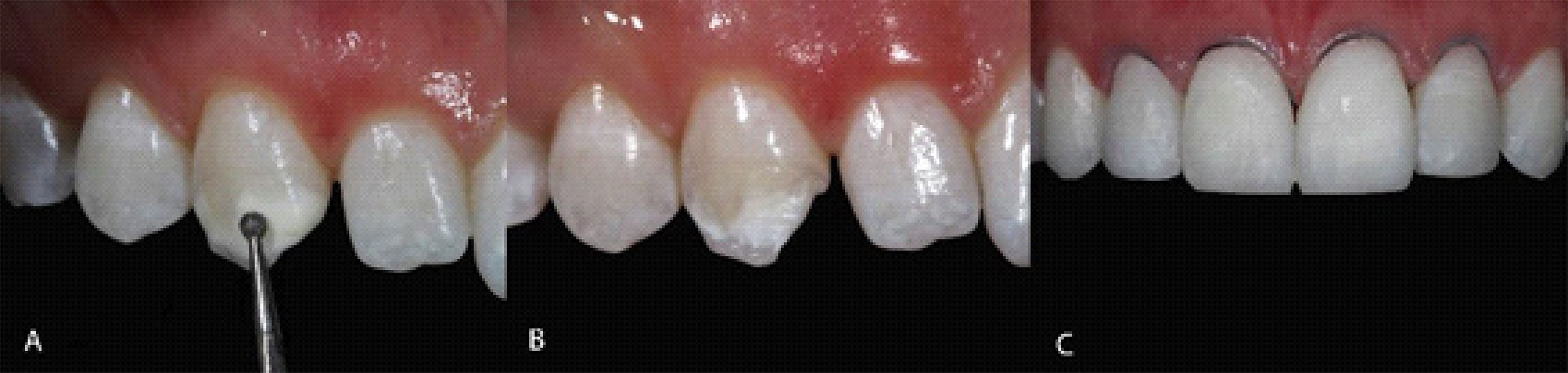
Tooth preparation was limited to areas with deeper hypoplastic stains (figure 3), using a 1016 diamond bur (KG Sorensen, São Paulo, SP, Brazil) in a high-speed handpiece under copious water irrigation. Where needed, beveling of the preparation margins was performed to enhance esthetic masking and ensure a more natural transition between tooth structure and restorative material.

(A) Diamond bur 1016 used for the selective removal of deep hypoplastic stains on tooth 13. (B) Aspect after localized preparation. (C) Final appearance after stratification with composite resins.
Selective roughening of surfaces receiving composite was done with a 2135 diamond bur (KG Sorensen, São Paulo, SP, Brazil) in a low-speed handpiece. Adjacent teeth not being restored were protected using transparent adhesive tape (Durex; 3M, Brazil) to avoid unintentional contact with restorative materials. The esthetic remodeling was conducted under relative isolation to ensure proper placement and adaptation of the palatal guide. For gingival fluid control and improved resin application, a retraction cord size 000 (Ultrapak; Ultradent, South Jordan, USA) was placed in the gingival sulcus of the teeth to be restored.
The adhesive protocol included etching with 37% phosphoric acid gel (Condac 37; FGM, Joinville, Santa Catarina, Brazil) for 30 seconds, followed by thorough rinsing for the same duration. A two-coat application of Adper Single Bond adhesive system (Solventum, Campinas, SP, Brazil) was performed with disposable microbrushes and gentle air drying between coats to evaporate the solvent. Light curing was conducted for 10 seconds using an LED unit.
With the silicone guide in position, the layering procedure began by building the palatal wall and incisal edge using Filtek Z350 XT enamel composite in shade WE (Solventum, Campinas, SP, Brazil). Intermediate layers were formed with Filtek Z350 XT body composite in shade B1B (Solventum) and Palfique LX5 dentin composite in shade WD (Tokuyama, Chiyoda, Tokyo, Japan), following natural tooth morphology and opacity transitions.
For diastema closure between central, lateral, and canine teeth, the same composite was applied using polyester strips to ensure proper proximal contour and contact point individualization. The final buccal layer was completed using Palfique LX5 enamel composite in shade WE (Tokuyama), replicating the anatomical design proposed in the diagnostic wax-up. Each increment was light-cured for 10 seconds, and an additional 60-second cure was applied after completion.
Excess resin was removed immediately after the procedure. Initial contouring and finishing were achieved with flexible abrasive discs (Sof-Lex Pop-on, Solventum, Campinas, SP, Brazil) and/or multi-bladed burs FG 7714F and FG 9714FF (KG Sorensen, SP, Brazil). Interproximal excesses were removed with a #12 scalpel blade mounted on a #3 handle, while palatal surfaces were refined with diamond points 3118 and 3118F (KG Sorensen, SP, Brazil).
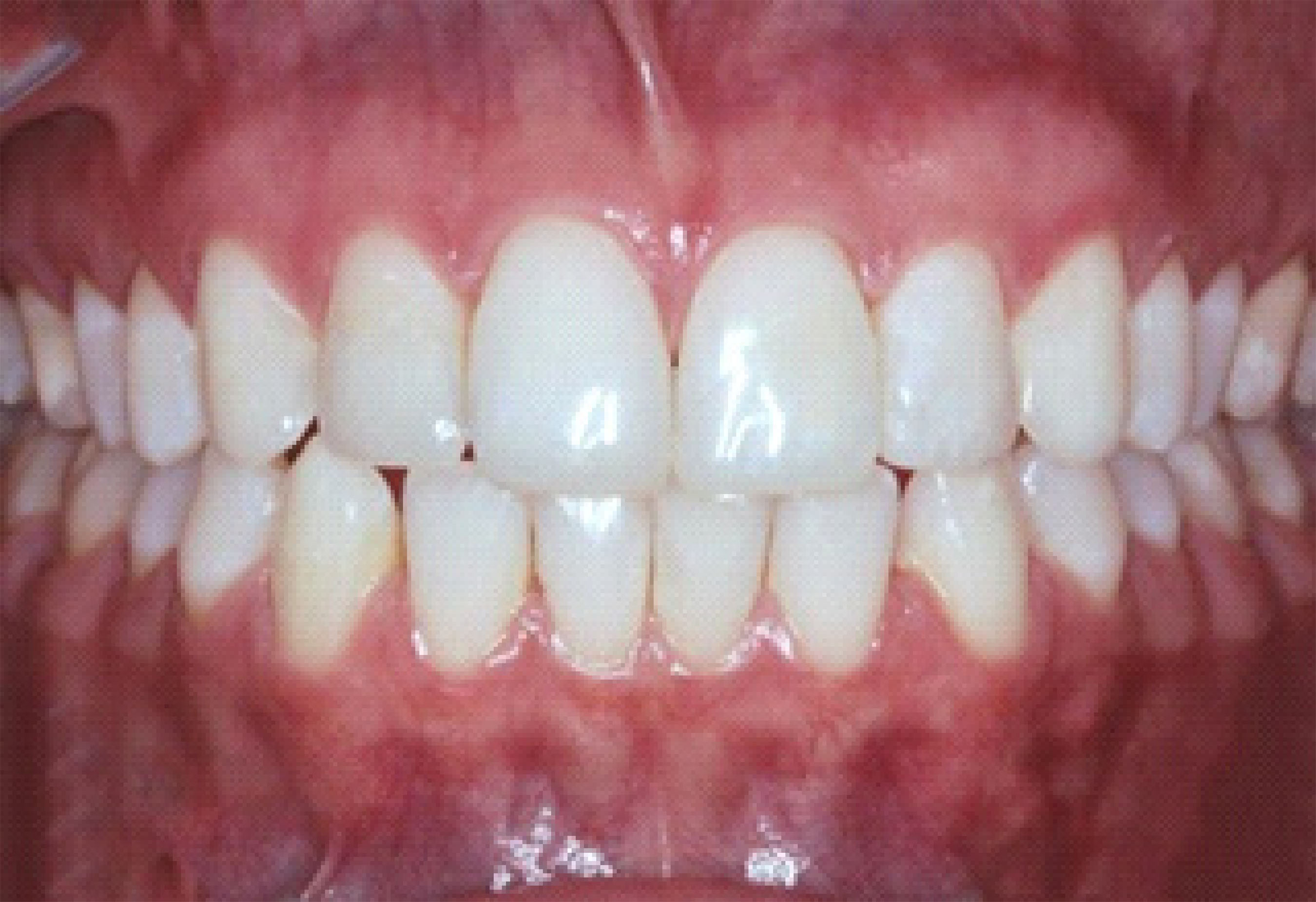
Final polishing was performed in multiple steps using flexible abrasive discs (Sof-Lex Pop-On), polishing rubbers (Dhpro, Paraná, Brazil), and brushes impregnated with silicon carbide particles (Astrobrush; Ivoclar Vivadent, Schaan, Liechtenstein). The final gloss and surface smoothness were obtained with an aluminum oxide-based polishing paste (Enamelize; Cosmedent, Chicago, USA). Figure 4 shows the esthetic remodeling outcome, with a harmonious integration into the smile and a natural tooth appearance.

The patient was followed up over the six years following the restorative treatment. At each recall visit, composite resin surfaces were polished as previously described to maintain surface gloss and restoration integrity. Minor surface stains that developed over time were smoothed or removed by mechanical polishing without the need for further restorative intervention. Throughout the follow-up period, no fractures, marginal discolorations, or repairs were necessary, and esthetic and functional stability was preserved (figure 5).

DISCUSSION
Smile esthetics has a direct impact on social perception, self-esteem, and individuals’ quality of life [12]. The present clinical case demonstrated the effectiveness of direct composite resin esthetic rehabilitation in a young patient with enamel hypoplasia, diastemas, and an unsatisfactory restoration, providing a stable functional and esthetic outcome over six years of follow-up. The adopted technique follows the principles of minimally invasive dentistry and considered factors such as patient age, preservation of tooth structure, chair time, and cost-benefit of treatment.
Enamel hypoplasia is a developmental defect of systemic or local origin, characterized by incomplete enamel matrix formation, resulting in reduced thickness and surface irregularities [4]. Its clinical presentation can negatively affect esthetics, favor biofilm accumulation, and cause hypersensitivity. In such cases, selective removal and subsequent re-anatomization with composite resin are indicated only when the alterations are deep and compromise the integrity or appearance of the tooth. In more superficial cases, enamel microabrasion is a conservative and effective alternative for removing localized stains while preserving sound dental structure [13].
The diagnosis of enamel hypoplasia is primarily clinical, based on the direct observation of morphological and qualitative enamel changes. These include reduced enamel thickness, opaque spots, whitish or brownish discoloration, and the presence of grooves or depressions. Differentiation from other enamel anomalies, such as fluorosis or hypomineralization, is essential and can be supported by photographic analysis, study models, and prenatal and perinatal history [4]. Diastemas are diagnosed through visual inspection and measurement of interdental spaces and may be associated with genetic factors, deleterious oral habits, labial frenum abnormalities, tooth-size discrepancies, or absence of proximal contact due to microdontia [14]. Accurate diagnosis of both conditions is fundamental for restorative planning to avoid overtreatment or inappropriate approaches.
The indication of tooth whitening in patients with enamel hypoplasia must be carefully assessed, since the depth and extent of the lesions directly influence the clinical approach. In cases of superficial defects, the combination of whitening and microabrasion may be sufficient to reduce discoloration. However, in cases such as the one presented here, where the hypoplastic stains were deep and required prior selective removal before restoration, bleaching was performed before composite resin remodeling. This decision aimed to facilitate accurate shade selection of the resin, contributing to esthetic predictability and avoiding color mismatch in the event of future bleaching [15].
Diagnostic wax-up is an essential tool in restorative planning, as it enables three-dimensional visualization of the ideal anatomy, evaluation of dental proportions, and effective communication with the patient. Based on the wax-up, the mock-up provides an intraoral simulation of the esthetic outcome, allowing assessment of shape, volume, and contour before final restoration, in addition to enhancing patient acceptance of the proposed plan [16]. Complementing these steps, the silicone guide derived from the wax-up supports anatomical control during stratification, ensuring precision in the construction of the palatal shell, cervical limits, and individualization of contact points. Although more labor-intensive than free-hand techniques, this approach offers greater predictability and esthetic refinement in anterior remodeling cases [17,18].
In this clinical case, the choice of composite resin was based on the need to combine high esthetics with mechanical strength ─ key factors in anterior tooth rehabilitation involving incisal areas. Nanoparticulate composites feature filler particles ranging from 1 to 80 nm, forming clusters that enable excellent polishability, long-lasting gloss, and color stability, with a filler volume comparable to microhybrid composites [19,20]. Nanohybrid composites, in turn, combine ground glass particles with nanometric fillers, providing wear resistance and good surface gloss retention [21]. Both categories allow for optical mimicry, efficient marginal adaptation, and clinical longevity, making them ideal for direct rehabilitations in young patients while avoiding unnecessary tooth reduction and laboratory stages. The choice between them may be guided by restoration location, esthetic demand, cost, and clinician experience.
Among the therapeutic options for esthetic rehabilitation of teeth with hypoplasia and diastemas, ceramic veneers stand out for their high color stability, wear resistance, and clinical longevity. Additionally, the esthetic outcome with ceramics is not solely dependent on the clinician’s manual skill but also on the laboratory’s technical quality and material characterization [22]. However, this approach requires more extensive tooth reduction, additional laboratory procedures, and entails higher costs ─ particularly for highly personalized solutions. In contrast, direct composite restorations, as used in this case, offer satisfactory esthetic and functional outcomes with preservation of tooth structure and shorter clinical time, although they have an average survival of approximately 10 years and require more frequent maintenance over time [23].
The immediate result was satisfactory, and over six years of follow-up, the restorations showed good esthetic and functional stability. During semiannual or annual recall appointments, minor fractures and localized staining were observed and promptly resolved through aluminum oxide roughening, adhesive protocol, and repolishing. These conservative interventions demonstrate that even with minimal changes over time, it is possible to maintain the longevity of composite restorations without complete replacement. Surface gloss and marginal integrity were maintained by a periodic polishing protocol, an essential practice to optimize clinical durability in areas of high esthetic demand [24].
When applied using the stratification technique, composite resins allow for excellent optical mimicry and anatomical reproduction of natural teeth, with a high degree of esthetic and functional predictability [21]. In this case, the restorations enabled diastema closure, reanatomization of teeth affected by hypoplasia, and replacement of an unsatisfactory restoration, resulting in a harmonious smile that met the patient’s expectations. Among the limitations of this approach are lower color stability and mechanical resistance compared to ceramic veneers [25]. Additionally, the clinical strategy included prior tooth whitening to standardize the substrate color and improve resin selection predictability. This procedure is safe, non-invasive, and widely recommended as a preparatory step in esthetic rehabilitations [5,19].
CONCLUSION
The combination of tooth whitening and direct composite resin restorations proved to be a viable, conservative, and effective approach for the esthetic rehabilitation of patients with enamel hypoplasia associated with diastemas. The careful application of tools such as diagnostic wax-up, mock-up, and palatal guide enabled individualized planning, precise execution, and esthetic refinement of the case. The longevity of the restorations, with functional and esthetic stability over a six-year follow-up period, reinforces the predictability of this technique when properly indicated and executed. Nonetheless, periodic clinical follow-up and patient adherence to maintenance guidelines are essential factors for the long-term success and durability of direct restorative treatment.
-
How to cite this article
Campos GMT, Sousa JR, Vasconcelos FBR, Souza NO, Campos SEM, Tapety CMC. Anterior esthetic rehabilitation with composite resin: case report of a 6-year follow-up in a patient with hypoplasia and diastemas. RGO, Rev Gaúch Odontol. 2025;73:e20250030. http://dx.doi.org/10.1590/1981-86372025003020250032
Data availability
The research data are available in the body of the document.
REFERENCES
-
1 Rocha CKF, Teixeira PR, Breda PLCL. Importance of smile aesthetics in self-esteem. Braz J Hea Rev. 2021;4(6):25867-76. https://doi.org/10.34119/bjhrv4n6-182
» https://doi.org/10.34119/bjhrv4n6-182 -
2 Ferreira PDF, Cavalcante VA, Pereira RMS, Verde GMFL. Self-perception of aesthetic dental treatment: an integrative review. RGO, Rev Gaúch Odontol. 2023;71:e20230018. https://doi.org/10.1590/1981-86372023001820210120
» https://doi.org/10.1590/1981-86372023001820210120 -
3 Cruz AC, Bezerra RB, Pereira TMS. Esthetic harmonization of front upper teeth using composite resin: a clinical case report. RGO, Rev Gaúch Odontol. 2021;69:e2021011. https://doi.org/10.1590/1981-86372021001120190093
» https://doi.org/10.1590/1981-86372021001120190093 -
4 Souza JB, Rodrigues PCF, Lopes LG, Guilherme AS, Freitas GC, Moreira FCL. Hipoplasia do esmalte: tratamento restaurador estético. Rev Odontol Brasil Central. 2009;18(47):14-9. https://doi.org/10.36065/robrac.v18i47.15
» https://doi.org/10.36065/robrac.v18i47.15 -
5 Sabbah A. Smile analysis: diagnosis and treatment planning. Dent Clin North Am. 2022;66(3):307-41. https://doi.org/10.1016/j.cden.2022.03.001
» https://doi.org/10.1016/j.cden.2022.03.001 -
6 Sonar PR, Panchbhai AS, Vaidya S. Anterior aesthetic rehabilitation for midline diastema closure with veneers: a case report. Cureus. 2023;15(11):e49704. https://doi.org/10.7759/cureus.49704
» https://doi.org/10.7759/cureus.49704 -
7 Aminoroaya A, Neisiany RE, Khorasani SN, Panahi P, Das O, Madry H, et al. A review of dental composites: Challenges, chemistry aspects, filler influences, and future insights. Compos B Eng. 2021;216:108852. https://doi.org/10.1016/j.compositesb.2021.108852
» https://doi.org/10.1016/j.compositesb.2021.108852 -
8 Araujo E, Perdigão J. Anterior Veneer Restorations: an evidence-based minimal-intervention perspective. J Adhes Dent. 2021;23(2):91-110. https://doi.org/10.3290/j.jad.b107 9529
» https://doi.org/10.3290/j.jad.b107 -
9 Ramírez-Vargas GG, Ladera-Castañeda MI, López-Gurreonero C, Cornejo-Pinto A, Cachay-Criado H, Cervantes-Ganoza L, et al. Surface roughness in nanoparticle resin composites subjected to two polishing systems: an in vitro comparative study. J Int Soc Prev Community Dent. 2022;13(2):114-23. https ://doi.org/10.4103/jispcd.JISPCD_279_21
» https://doi.org/10.4103/jispcd.JISPCD_279_21 -
10 Elfakhri F, Alkahtani R, Li C, Khaliq J. Influence of filler characteristics on the performance of dental composites: a comprehensive review. Ceram Int. 2022;48:27280-94. https://doi.org/10.1016/j.ceramint.2022.06.314
» https://doi.org/10.1016/j.ceramint.2022.06.314 -
11 Islam MS, Nassar M, Elsayed MA, Jameel DB, Ahmad TT, Rahman MM. In vitro optical and physical stability of resin composite materials with different filler characteristics. Polymers (Basel). 2023;15(9):2121.2121. https:/ /doi.org/10.3390/polym15092121
» https://doi.org/10.3390/polym15092121 -
12 Isiekwe GI, Sofola OO, Onigbogi OO, Utomi IL, Sanu OO, Costa OO. Dental esthetics and oral health-related quality of life in young adults. Am J Orthod Dentofacial Orthop. 2016;150(4):627-36. https://d oi.org/10.1016/j.ajodo.2016.03.025
» https://doi.org/10.1016/j.ajodo.2016.03.025 -
13 Croll TP. Enamel microabrasion for removal of superficial dysmineralization and decalcification defects. J Am Dent Assoc. 1990;120(4):411-5. https://doi.org/10.14219/jada.archive.1990.0127
» https://doi.org/10.14219/jada.archive.1990.0127 - 14 Kaimenyi JT. Occurrence of midline diastema and frenum attachments amongst school children in Nairobi, Kenya. Indian J Dent Res. 1998;9(2):67-71.
-
15 Sundfeld D, Pavani CC, Pini NI, Machado LS, Schott TC, Sundfeld RH. Enamel microabrasion and dental bleaching on teeth presenting severe pitted enamel fluorosis: a case report. Oper Dent. 2019;44(6):566-73. https://doi.org/10.2341/18-116-T
» https://doi.org/10.2341/18-116-T - 16 Coachman C, Calamita MA. Digital smile design: a tool for treatment planning and communication in esthetic dentistry. Quintessence Dent Technol. 2012;35:103-11.
-
17 Emídio AG, Ishikiriama SK. Esthetic resolution of smile through dental reanatomization: case report. Res Soc Dev. 2021;10(1):e7810111428. http://dx.doi. org/10.33448/rsd-v10i1.11428
» https://doi.org/10.33448/rsd-v10i1.11428 - 18 Garcia PP, da Silva NR, Júnior OB. Enceramento diagnóstico no planejamento estético e funcional em odontologia restauradora: relato de caso. Rev Odontol UNESP. 2018;47(2):123-8.
- 19 Reis A. Materiais dentários diretos: dos fundamentos à aplicação clínica. 2. ed. Rio de Janeiro: Santos; 2021.
-
20 Barutcigil Ç, Barutcigil K, Özarslan MM, Dündar A, Yilmaz B. Color of bulk-fill composite resin restorative materials. J Esthet Restor Dent. 2018;30(2):E3-E8. https://doi.org/10.1111/jerd.1234 0
» https://doi.org/10.1111/jerd.1234 -
21 Almulhim KS, Alsheikh R, Abdalla M, Haridy R, Bugshan A, Smith S, et al. Toward esthetically and biomechanically reliable anterior resin composite restorations: current clinical experiences among dental practitioners in Saudi Arabia. F1000Res. 2023;12:359. https://doi.org/10.12688/f1000research.130981.2
» https://doi.org/10.12688/f1000research.130981.2 -
22 Sonar PR, Panchbhai AS, Vaidya S. Anterior aesthetic rehabilitation for midline diastema closure with veneers: a case report. Cureus. 2023;15(11):e49704. https://doi.org/10.7759/cureus.49704
» https://doi.org/10.7759/cureus.49704 -
23 Beck F, Lettner S, Graf A, Bitriol B, Dumitrescu N, Bauer P, et al. Survival of direct resin restorations in posterior teeth within a 19-year period (1996-2015): a meta-analysis of prospective studies. Dent Mater. 2015;31(8):958-85. https://doi.org/10.1016/j.dental.2015.05.004
» https://doi.org/10.1016/j.dental.2015.05.004 -
24 Velo MMAC, Coelho LVBF, Basting RT, Amaral FLB, França MGF. Longevity of restorations in direct composite resin: literature review. RGO, Rev Gaúch Odontol. 2016;64(3):320-6. https://doi.org/10.1590/1981-8637201600030000123109
» https://doi.org/10.1590/1981-8637201600030000123109 -
25 Campos KMG, Rodrigues RA, Figueiredo CHMC, Guenes GMT, Alves MASG, Rosendo RA, et al. Direct veneers anteriors: a literature review. Res Soc Dev. 2021;10(6):e7810111428. http://dx.doi.org/10.33448/rsd-v10i6.1572 9
» https://doi.org/10.33448/rsd-v10i6.1572
Edited by
-
Assistant editor:
Luciana Butini Oliveira