 Treatment of brucellosis in pregnant women: a systematic review and analysis of current gaps and future perspectives
ABSTRACT
Human brucellosis is a globally prevalent bacterial disease with significant implications during pregnancy due to obstetric complications. Despite the importance of early diagnosis and treatment, the lack of therapeutic consensus and robust evidence underscores the need for systematic evaluation to guide clinical practice. This study systematically reviewed the literature to identify and summarize available drug therapy options for brucellosis in pregnant women, focusing on efficacy, safety, and obstetric outcomes. The review followed PRISMA and Cochrane Handbook guidelines. Searches were conducted in MEDLINE, Embase, Cochrane Library, LILACS, and gray literature for references indexed up to September 15, 2025. Eligible studies reported therapeutic interventions in pregnant women with brucellosis. Risk of bias was assessed using the JBI Critical Appraisal tool, and data on participants, interventions, and outcomes were extracted. Of 737 records screened, six studies met the inclusion criteria, comprising retrospective and prospective reports published between 1991 and 2020, totaling 403 pregnant women. Therapeutic regimens varied, with sulfamethoxazole–trimethoprim (SMX–TMP) plus rifampicin being the most frequently used combination. Adverse obstetric outcomes associated with this regimen occurred in 16% (95%CI: 8%–30%) of cases. Overall, abortion occurred in 94 (23.3%) women, 20 preterm births were reported, and 10 newborns had low birth weight. Recurrence was observed in only 3% of cases. Heterogeneity in outcomes and definitions limited comparability. In conclusion, there is no standardized treatment for brucellosis during pregnancy. Adverse obstetric outcomes remain frequent, highlighting the need for controlled studies to establish safe and effective therapeutic protocols.
KEYWORDS
Brucellosis; Pregnancy; Systematic review; Therapeutics
INTRODUCTION
Human brucellosis is a highly prevalent bacterial disease that represents a major public health issue worldwide, particularly in countries of Latin America and Sub-Saharan Africa1. The main clinical manifestations in adults include fever, fatigue, arthralgia, and muscle pain2. More severe complications, such as endocarditis and neurological, psychological, osteoarticular, and respiratory involvement, have also been reported, albeit less frequently3. As there are no typical clinical characteristics, diagnosis is often confused with other infections.
The presence of these nonspecific flu-like symptoms increases the risk of misdiagnosis or late diagnosis in pregnant women with brucellosis, potentially leading to irreversible consequences4. Brucella infection can result in adverse obstetric complications such as miscarriage (spontaneous or therapeutic), preterm delivery, intrauterine infection, or intrauterine fetal death (IUFD)5. Thus, the most relevant aspects of managing brucellosis during pregnancy are early recognition and immediate initiation of antimicrobial therapy, which may reduce the risk of adverse obstetric, neonatal, and maternal outcomes6.
Although the relevance of brucellosis treatment during pregnancy is well established, determining the best therapy remains a challenge. Tetracyclines are contraindicated for pregnant women, especially during the second and third trimesters, due to their potential to cause fetal tooth discoloration7. Administration of aminoglycosides during pregnancy increases the risk of ototoxicity or nephrotoxicity in the fetus8. The literature remains inconclusive regarding the safety of quinolones during pregnancy, and they are not recommended as first-line therapy, especially during the first trimester9.
Despite significant advances in understanding brucellosis, the lack of robust scientific evidence on the efficacy and safety of available therapeutic regimens during pregnancy represents an important gap in current medical knowledge, which remains insufficiently explored even in recent research10. This gap not only compromises the quality of maternal healthcare but also jeopardizes fetal well-being, highlighting the urgency of a thorough and critical analysis of the available evidence.
To our knowledge, no clinical trials have evaluated the treatment of brucellosis during pregnancy, and current therapeutic recommendations for this population are based on expert opinion, observational studies, case series, as well as clinical experience, and tradition4. Thus, this study aims to systematically review the scientific literature to provide an updated overview of drug therapeutic options for the primary manifestation of human brucellosis in pregnant women.
MATERIALS AND METHODS
This systematic review was conducted in accordance with the Preferred Reporting Items for Systematic Reviews and Meta-analyses (PRISMA)11 and the recommendations of the Cochrane Handbook12. The protocol was registered in PROSPERO (CRD42023439862). The clinical question guiding the review was: “What is the efficacy and safety of antimicrobial regimens to treat human brucellosis in pregnant women?” The PICO framework (population, intervention, comparison, and outcomes) was defined as: Population – pregnant women with a confirmed diagnosis of human brucellosis; Intervention – antimicrobial monotherapy or combination therapy for the treatment of brucellosis; Comparison – antimicrobial monotherapy or combination therapy, placebo, or no treatment; Outcomes – treatment failure (represented by therapeutic failure and/or relapse), time of defervescence, treatment-related adverse events, and adverse obstetric outcomes.
Eligibility criteria
We included original studies with any design that evaluated pharmacological interventions in pregnant women with human brucellosis and reported at least one of the outcomes of interest previously described. Only studies published in English, Spanish, or Portuguese were considered. Studies focusing on patients with secondary manifestations of human brucellosis or coinfections, as well as studies with less than five participants, were excluded. In cases of duplicate publications reporting results for the same sample, only the first publication was considered.
Search strategy
Electronic searches were conducted in MEDLINE (via PubMed), Embase, Cochrane Library, and LILACS (via Virtual Health Library [VHL]), including records indexed up to September 15, 2025. Search strategies for each database included Mesh, Emtree, and DECS terms, as well as keywords; these are detailed in Supplementary Table S1.
Searches for gray literature were also conducted on two platforms: Google Scholar, with the main keywords defined in the search strategy, and OpenGrey (currently archived within the DANS EASY system), an European database for gray literature. Additionally, ClinicalTrials.gov, provided by the U.S. National Library of Medicine, was searched to identify registered and ongoing studies. The first 10 pages of Google Scholar were screened. For the other databases, all retrieved titles were reviewed to assess eligibility within the scope of this review.
Study selection
Records retrieved from the databases were initially imported into the Mendeley Reference Management Software (version 1.19.8, Elsevier, Amsterdam, Netherlands) to detect and eliminate duplicates and then imported into the Rayyan platform (Rayyan Systems Inc., Cambridge, MA, USA) for reference management and study selection13. Two reviewers independently screened the records (titles and abstracts) and assessed full texts for eligibility. Disagreements were discussed until a consensus was reached or, when necessary, were resolved by a third reviewer.
Data extraction and analysis
Two independent reviewers extracted and systematically recorded relevant information from each included study. This included participant characteristics (age, clinical manifestations, clinical form, duration of symptoms, Brucella species), methodological characteristics (year of publication, country, study design and period, inclusion criteria, diagnostic criteria, length of follow-up), intervention characteristics (treatment regimen, dosage, and duration), and outcomes. If relevant information was missing from the primary studies, the authors planned to contact study investigators via email; however, this was not necessary, as all required data were available in the published articles.
A narrative summary of the findings was conducted, structured around key themes to deepen the understanding of the results and to identify underlying concepts and patterns. The pooled prevalence was estimated using a random-effects meta-analysis of single proportions with inverse-variance weighting after logit transformation of proportions (sm = ‘PLOGIT’ in meta::metaprop), with pooled estimates back-transformed to the proportion scale for presentation. In this analysis, only therapeutic regimens used in five or more patients were included, and subgroup analyses by treatment were performed to facilitate interpretation of the results. All data were organized and analyzed using R statistical software (version 4.4.0, R Foundation for Statistical Computing, Vienna, Austria), employing the meta package for conducting and visualizing meta-analyses.
Assessment of risk of bias
Risk of bias was assessed using the Joanna Briggs Institute (JBI) Critical Appraisal Checklist for Case Series, considering the descriptive nature of the studies14. Each item on the checklist was rated as “yes,” “no,” or “unclear” based on the information reported in the studies to determine their methodological quality.
RESULTS
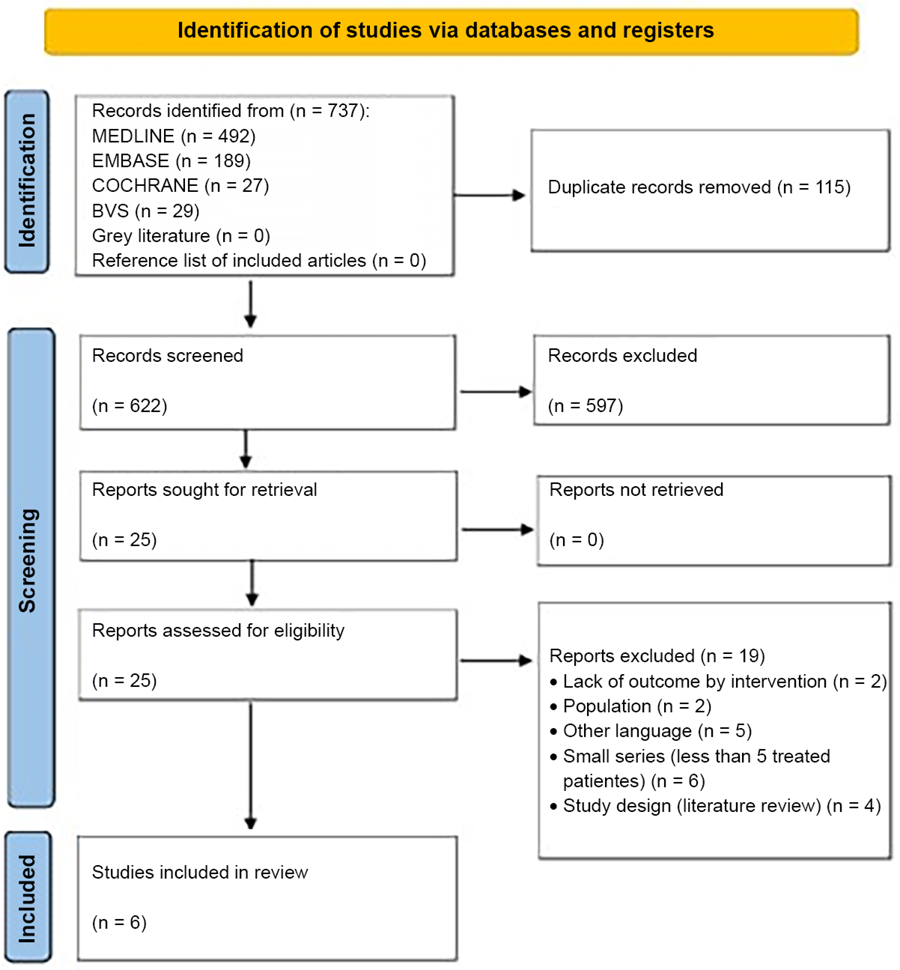
The search identified 737 records across the databases. After screening and selection based on eligibility criteria, six studies were included in the descriptive analysis15-20. The study selection process and reasons for exclusion are summarized in Figure 1. More detailed information about excluded studies is presented in Supplementary Table S2.
Of the included studies, four were retrospective reports on the treatment of human brucellosis in pregnant women15-17,20 and two were prospective studies18,19, published between 1991 and 2020. The studies were conducted in the Republic of Macedonia15, Saudi Arabia20, Turkey17,18, Iran19, and Lebanon16. A total of 403 pregnant women were included, ranging from five to 242 participants. The characteristics of the eligible studies, including methodology, participants, and intervention details, are summarized in Tables ,2 and 3. Table 4 details dosages and posology of each antimicrobial used in the treatments of pregnant women with brucellosis. These tables enable a qualitative comparison across studies, considering differences in study design, clinical presentation, diagnostic criteria, antimicrobial regimens, and obstetric outcomes. This structured qualitative synthesis highlights the clinical and methodological heterogeneity of the available evidence and supports the interpretation of the quantitative findings.
Although a total of 403 pregnant women with brucellosis were included across the studies, obstetric outcomes were explicitly reported and extractable for only 179 women. This limitation arose because several studies, particularly those with larger samples, presented outcome data in an aggregated manner or did not provide sufficient detail for individual outcome extraction.
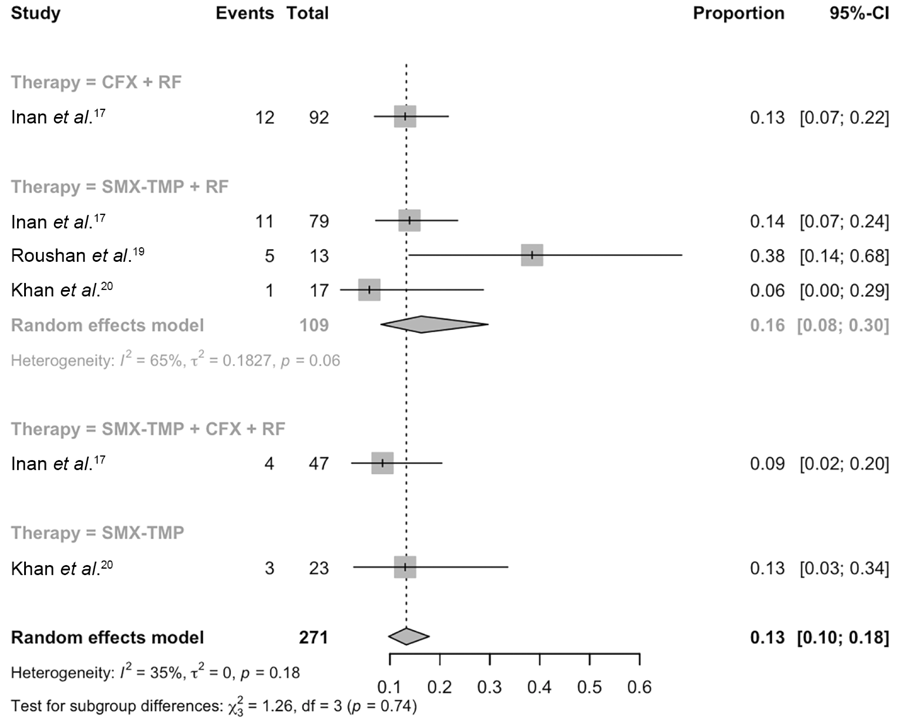
The studies reported the use of different therapeutic regimens, ranging from monotherapy to dual and triple therapy. The most commonly used regimen was the combination of sulfamethoxazole–trimethoprim (SMX–TMP) + rifampicin, prescribed for 114 pregnant women15-17,19,20. This was followed by ceftriaxone + rifampicin, prescribed for 92 pregnant women, although this regimen was evaluated in only one study17. Bosilkovski et al.15 reported the addition of doxycycline to the SMX–TMP + rifampicin regimen after abortion or delivery—this approach was not mentioned in the other studies. The triple regimen of SMX–TMP + ceftriaxone + rifampicin was prescribed for 47 pregnant women17. Disease recurrence was reported in four studies, occurring in 10 participants (3%) after treatment and resolution of clinical signs and symptoms15-18. However, not all studies linked recurrence to the specific therapeutic regimen used. Time to defervescence was reported in only one study15, ranging from two to four days after treatment with SMX–TMP + rifampicin. No studies reported detailed safety profiles of the therapeutic regimens in the pregnant women evaluated. Inan et al.17 found no significant difference in the rates of adverse obstetric outcomes among pregnant women treated with SMX–TMP + rifampicin and those treated with ceftriaxone + rifampicin (13.9% versus 13.0%, p = 0.849).
It was not possible to compare the performance of different therapeutic regimens in the same study, since results were described in an aggregated manner17, detailed for only a few participant groups18, or limited to a single participant per regimen15,16.
Pregnancy-related outcomes were reported in all studies. Abortion (spontaneous or therapeutic) was observed in all studies, affecting 94 pregnant women (23.3%). A total of 20 preterm births were reported17,18, and 10 newborns presented low birth weight18. Full-term births were reported in 65 newborns18-20.
In the study by Khan et al.20, 92 pregnant women were included, of whom 41 received antimicrobial treatment for brucellosis. Prenatal treatment had a significant protective effect against abortion when compared with inadequate or no treatment (RR: 0.14; 95%CI: 0.06–0.37; p > 0.001). However, the incidence of miscarriage among the 23 patients treated with SMX-TMP monotherapy did not differ significantly from that observed in the 17 patients treated with SMX–TMP + rifampicin (p = 0.6).
Although heterogeneity in outcomes, definitions, and study designs precluded groupings and comparisons for most outcomes of interest, it was possible to estimate the rate of adverse obstetric outcomes, especially for SMX-TMP + rifampicin, which was 16% (95%CI: 0.08–0.30, I2 = 36%, τ2 = 0.1827, p = 0.06, Figure 2). For the other regimens, the estimates are based on a single study.
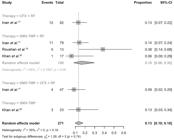
Pooled rate of adverse obstetric events associated with therapeutic approaches for brucellosis in pregnant woman.
As the studies included in this review were observational, did not aim to compare interventions, and evaluated prevalent cases in convenience samples of patients with similar characteristics, we considered it appropriate to classify all of them as case series14. Thus, scores on the JBI Critical Appraisal Checklist for Case Series (maximum of 10 points) ranged from 6 to 10 points (Supplementary Figure S1). Gulsun et al.18 showed low risk of bias across all domains evaluated by the tool, whereas Seoud et al.16 had a high risk of bias in the reporting of outcomes, which was unclear. Roushan et al.19 and Khan et al.20 did not clearly report whether participants were consecutively included. Additionally, Khan et al.20 did not report clinical signs and symptoms, limiting the evaluation of the domain related to clarity of clinical and demographic information. Overall, several domains were rated as unclear due to insufficient reporting, particularly those related to standardized and reliable measurements, consecutive inclusion of participants, and presentation of demographic information of the study population.
DISCUSSION
This systematic review of the literature on the treatment of brucellosis in pregnant women revealed several challenges and complexities associated with this clinical condition. The descriptive analysis of the six included studies provided an updated overview of current therapeutic practices, observed results, and pregnancy-related outcomes. In this discussion, we highlight the key findings and their clinical and research implications.
First, the diversity of therapeutic regimens across studies highlights the lack of consensus in the management of brucellosis in pregnant women. The variation between mono, dual, and triple therapy, with different antibiotic combinations, highlights the urgent need for standardized therapeutic protocols. The predominance of combined therapy—especially SMX–TMP + rifampicin in the studies that evaluated the largest numbers of pregnant women18,21—along with the absence of reported recurrence associated with these regimens, suggests a possible therapeutic benefit, as observed in adult populations22. However, data regarding pregnant women remain insufficient to draw firm conclusions. Moreover, inconsistent and imprecise reporting of pregnancy-related adverse outcomes further limits the ability to draw definitive conclusions regarding this combination.
The relapse rate of the disease raises concerns about the long-term effectiveness of the therapeutic regimens adopted. Although some included studies reported relapse in pregnant women16-19, this outcome has not been consistently described in relation to specific interventions within standardized protocols. The lack of uniformity in the definition and evaluation of outcomes across studies limits direct comparison and generalizability, emphasizing the need for standardized criteria to assess recurrence.
The analysis of pregnancy-related outcomes indicates the occurrence of adverse obstetric events, although the available evidence is heterogeneous and limited. Abortion was a frequent outcome across studies, affecting 8% of pregnant women, while the threat of abortion was reported in 2%. Intrauterine fetal death was also observed, along with preterm birth and low birth weight. Only one study was adequately designed to assess whether adverse obstetric events were associated with the natural history of the disease or with treatment21. This study compared the occurrence of abortion between patients who received and did not receive prenatal antimicrobial therapy, suggesting a lower incidence of abortion in the treated group21. However, no differences were found in abortion rates between therapeutic regimens. Another study included a control group of pregnant women without brucellosis19 and reported a significantly higher rate of preterm birth among women with brucellosis compared to controls (17.9% versus 2.5%, p = 0.01). Similarly, the risk of low birth weight was higher in the brucellosis group. However, this study did not assess associations with specific treatments or control for confounding variables. Overall, these findings emphasize the vulnerability of pregnant women with brucellosis and underscore the need for safer and more effective therapeutic strategies to preserve maternal and fetal health.
In addition to transmission via contact with infected animals23, consumption of unpasteurized dairy products24, and accidental exposure25, brucellosis is also a health condition that can be transmitted between humans via the placental barrier and lactation4,26. Although some literature reviews on brucellosis during pregnancy have been published4,26-28, none have systematically investigated the use of antibiotic therapy in pregnant women with brucellosis. A recently published scoping review addressing treatments in the context of maternal and child health did not provide detailed descriptions of the included studies and regimens, particularly regarding effectiveness and safety outcomes10. In general, while some studies have discussed treatment approaches, such as the use of rifampicin as an alternative to tetracyclines4,6,26,27, important gaps remain regarding the choice of drugs, dosing, and treatment duration, which motivated this review. However, the lack of robust clinical studies evaluating the efficacy and safety of different treatment regimens in pregnant women continues to limit the broader understanding of this condition during pregnancy.
Despite the lack of robust evidence, establishing treatment recommendations for this population remains essential in clinical practice. We observed that the World Health Organization (WHO)28 recommends treatment with rifampicin for six weeks, which may be combined with SMX–TMP, since tetracyclines are contraindicated. These drugs are categorized as C according to the U.S. Food and Drug Administration (FDA) pregnancy risk classification, indicating that their use requires caution and monitoring during pregnancy29,30. Furthermore, SMX–TMP should be avoided after 36 weeks of gestation due to the risk of kernicterus caused by elevated bilirubin levels31.
In addition to drug treatment, health education aimed at pregnant women and women of reproductive age is a crucial factor for disease management. Knowledge of the disease, forms of acquisition, clinical manifestations, and potential consequences if untreated contribute to prevention, timely diagnosis, and early treatment. Despite its importance, none of the included studies addressed this issue. Such actions should be incorporated into public health policies, especially in endemic areas6. A multidisciplinary approach and collaboration among healthcare professionals are also fundamental for developing solid guidelines aimed at ensuring the safety of both mother and fetus during the treatment of brucellosis during pregnancy.
High-quality evidence to guide the treatment of human brucellosis remains limited, largely because the disease is neglected and because randomized clinical trials in this population pose ethical and practical challenges. Consequently, observational designs—such as cohort studies and large case series—are essential to elucidate therapeutic effectiveness. Although several such studies were identified in this review, many were excluded because they did not report outcomes stratified by treatment regimen32,33 or consisted of very small case reports/series (<5 patients)34-38. The latter was an a priori exclusion criterion to mitigate the high risk of bias associated with extremely small samples. Reports focusing on secondary manifestations of human brucellosis, while clinically informative, were also outside the scope of this review, which centered on standard therapeutic regimens for the general patient population.
The small number of eligible studies and their inherent risk of bias represent the main limitations of this review. Substantial methodological heterogeneity, including differences in study design, diagnostic criteria, therapeutic regimens, follow-up duration, and outcome definitions, limits comparability across studies. The predominance of retrospective designs and case series increases the risk of selection bias, while inconsistencies in outcome definitions further constrain the robustness of pooled estimates. Consequently, findings from the meta-analysis of proportions should be interpreted with caution.
The findings of this systematic review underscore the urgent need for further research, particularly well-designed prospective observational studies and controlled clinical trials, to establish specific and effective therapeutic protocols for pregnant women with brucellosis. Standardization of diagnostic criteria, outcome definitions, and therapeutic regimens are essential to improve comparability across studies and enhance the generalizability of findings, ultimately supporting a more evidence-based and safer clinical approach to this challenging condition.
CONCLUSIONS
The review highlights the lack of consensus on therapeutic regimens for brucellosis in pregnant women, indicating the need for standardized protocols. Adverse obstetric outcomes were frequent, emphasizing the vulnerability of this population. The scarcity of controlled studies and the risk of bias in the included studies emphasize the importance of further clinical research and more consistent case reports to guide an effective and safe approach to this challenging condition during pregnancy.
Supplementary Materials
SUPPLEMENTARY MATERIAL
ACKNOWLEDGMENTS
The authors would like to thank the Instituto Rene Rachou, Fundacao Oswaldo Cruz (Fiocruz), and the Universidade Federal dos Vales do Jequitinhonha e Mucuri for their valuable support in the development of this research.
REFERENCES
- 1 Dean AS, Crump L, Greter H, Schelling E, Zinsstag J. Global burden of human brucellosis: a systematic review of disease frequency. PLoS Negl Trop Dis. 2012;6:e1865.
- 2 Zheng R, Xie S, Lu X, Sun L, Zhou H, Zhang Y, et al. A systematic review and meta-analysis of epidemiology and clinical manifestations of human brucellosis in China. Biomed Res Int. 2018;2018:5712920.
- 3 Dean AS, Crump L, Greter H, Hattendorf J, Schelling E, Zinsstag J. Clinical manifestations of human brucellosis: a systematic review and meta-analysis. PLoS Negl Trop Dis. 2012;6:e1929.
- 4 Bosilkovski M, Arapovic J, Keramat F. Human brucellosis in pregnancy: an overview. Bosn J Basic Med Sci. 2020;20:415-22.
- 5 Liu Z, Wei D, Li Y, Zhou H, Huang D, Guan P. Different clinical manifestations of human brucellosis in pregnant women: a systematic scoping review of 521 cases from 10 countries. Infect Drug Resist. 2020;13:1067-79.
- 6 Garriguet J, el Azzi J, Sancho V, Barrios F. Brucelosis y gestación. Clin Invest Ginecol Obstet. 2000;27:75-106.
- 7 Sánchez AR, Rogers RS 3rd, Sheridan PJ. Tetracycline and other tetracycline-derivative staining of the teeth and oral cavity. Int J Dermatol. 2004;43:709-15.
- 8 Niebyl JR. Antibiotics and other anti-infective agents in pregnancy and lactation. Am J Perinatol. 2003;20:405-14.
- 9 Yefet E, Schwartz N, Chazan B, Salim R, Romano S, Nachum Z. The safety of quinolones and fluoroquinolones in pregnancy: a meta-analysis. BJOG. 2018;125:1069-76.
- 10 Huy TX. Exploring the impact of brucellosis on maternal and child health: transmission mechanisms, patient effects, and current trends in drug use and resistance: a scoping review. Beni-Suef Univ J Basic Appl Sci. 2024;13:108.
- 11 Page MJ, McKenzie JE, Bossuyt PM, Boutron I, Hoffmann T, Moulrow C, et al. The PRISMA 2020 statement: an updated guideline for reporting systematic reviews. BMJ. 2021;372:n71.
-
12 Higgins JP, Thomas J, Chandler J, Cumpston M, Li T, Page MJ, et al., editors. Cochrane handbook for systematic reviews of interventions. [cited 2026 Mar 12]. Available from: https://www.cochrane.org/authors/handbooks-and-manuals/handbook
» https://www.cochrane.org/authors/handbooks-and-manuals/handbook - 13 Ouzzani M, Hammady H, Fedorowicz Z, Elmagarmid A. Rayyan: a web and mobile app for systematic reviews. Syst Rev. 2016;5:210.
- 14 Munn Z, Barker TH, Moola S, Tafanaru C, Stern C, McArthur A, et al. Methodological quality of case series studies: an introduction to the JBI critical appraisal tool. JBI Evid Synth. 2020;18:2127-33.
- 15 Bosilkovski M, Stojovski M, Siskova D, Ridov A, Kostoska E, Krstevski K. Brucellosis in pregnancy: case reports with different outcomes in an endemic region. Acta Clin Croat. 2020;59:338-43.
- 16 Seoud M, Saade G, Awar G, Uwaydah M. Brucellosis in pregnancy. J Reprod Med. 1991;36:441-5.
- 17 Inan A, Erdem H, Elaldi N, Gulsun S, Karahocagil MK, Pekok AU, et al. Brucellosis in pregnancy: results of multicenter ID-IRI study. Eur J Clin Microbiol Infect Dis. 2019;38:1261-8.
- 18 Gulsun S, Aslan S, Satici O, Gul T. Brucellosis in pregnancy. Trop Doct. 2011;41:82-4.
- 19 Roushan MR, Baiani M, Asnafi N, Saedi F. Outcomes of 19 pregnant women with brucellosis in Babol, northern Iran. Trans R Soc Trop Med Hyg. 2011;105:540-2.
- 20 Khan MY, Mah MW, Memish ZA. Brucellosis in pregnant women. Clin Infect Dis. 2001;32:1172-7.
- 21 García del Pozo JS, Solera J. Systematic review and meta-analysis of randomized clinical trials in the treatment of human brucellosis. PLoS One. 2012;7:e32090.
- 22 Dahl MO. Brucellosis in food-producing animals in Mosul, Iraq: a systematic review and meta-analysis. PLoS One. 2020;15:e0235862.
- 23 Figueiredo P, Ficht TA, Rice-Ficht A, Rossetti CA, Adams LG. Pathogenesis and immunobiology of brucellosis: review of Brucella-host interactions. Am J Pathol. 2015;185: 1505-17.
- 24 Tuon FF, Cequinel JC, Nogueira KS, Becker GN. Brucella laboratory exposures in Brazil: rare or unnoticed? Am J Trop Med Hyg. 2020;103:2528-9.
- 25 Tuon FF, Gondolfo RB, Cerchiari N. Human-to-human transmission of Brucella: a systematic review. Trop Med Int Health. 2017;22:539-46.
- 26 Al-Tawfiq JA, Memish ZA. Antibiotic susceptibility and treatment of brucellosis. Recent Pat Antiinfect Drug Discov. 2013;8:51-4.
- 27 Alsaif M, Dabelah K, Featherstone R, Robinson JL. Consequences of brucellosis infection during pregnancy: a systematic review of the literature. Int J Infect Dis. 2018;73:18-26.
-
28 Food and Agriculture Organization of the United Nations, World Health Organization, World Organisation for Animal Health. Brucellosis in humans and animals. Geneva: WHO; 2006. [cited 2026 Mar 12]. Available from: https://iris.who.int/server/api/core/bitstreams/eb47fd2c-6626-4dd6-bdaf-314b158335fb/content
» https://iris.who.int/server/api/core/bitstreams/eb47fd2c-6626-4dd6-bdaf-314b158335fb/content -
29 United States of America. Department of Health and Human Services. Chemical Hazards Emergency Medical Management. FDA pregnancy categories. [cited 2026 Mar 12]. Available from: https://chemm.hhs.gov/pregnancycategories.htm
» https://chemm.hhs.gov/pregnancycategories.htm - 30 Al-Tawfiq JA. Therapeutic options for human brucellosis. Expert Rev Anti Infect Ther. 2008;6:109-20.
- 31 Vilchez G, Espinoza M, D'Onadio G, Saona P, Gotuzzo E. Brucellosis in pregnancy: clinical aspects and obstetric outcomes. Int J Infect Dis. 2015;38:95-100.
- 32 Mohammad KI, El Ghazaly MM, Zaalouk TKH, Morsy AT. Maternal brucellosis and human pregnancy. J Egypt Soc Parasitol. 2011;41:485-96.
- 33 Schubert L, Koelz M, Kussmann M, Metz-Schimmerl S, Tobudic S, Ludwig T, et al. Successful treatment of glandular tularemia with azithromycin in a pregnant woman in Austria. Infection. 2024;52:1181-4.
- 34 Liu M, Zhou L, Liang J, Li L, Huang L, Zhang H. Intrauterine fetal death due to Brucella melitensis infection: a case report and literature review. Rev Inst Med Trop Sao Paulo. 2025;67:e56.
- 35 Rastegar M, Karimi FZ, Dadgar S. Brucellosis (Malta fever) in pregnancy and childbirth: a case report. Curr Womens Health Rev. 2025;21:e070624230849.
- 36 Oscherwitz SL. Brucellar bacteremia in pregnancy. Clin Infect Dis. 1995;21:714-5.
- 37 Kelly RT, Bibbins B. Pregnancy and brucellosis. Tex Med. 1987;83:39-41.
- 38 Porreco RP, Haverkamp AD. Brucellosis in pregnancy. Obstet Gynecol. 1974;44:597-602.
-
DATA AVAILABILITY:
The complete anonymized dataset supporting the findings of this study is available from https://doi.org/10.48331/SCIELODATA.FOLHYO
-
FUNDING:
This study was supported by the Brazilian Ministry of Health (TED 20/2022); GC is currently supported by a research grant from the National Council for Scientific and Technological Development – CNPq, grant Nº 302069/2022-4. This study was also partly financed by the Coordenacao de Aperfeicoamento de Pessoal de Nivel Superior – Brasil (CAPES), Finance Code 001.
Edited by
-
Editor:
Thelma Suely Okayhttps://orcid.org/0000-0001-9316-7288
The complete anonymized dataset supporting the findings of this study is available from https://doi.org/10.48331/SCIELODATA.FOLHYO