 The potential of molecular testing and mutation analysis for detecting isoniazid and rifampicin-resistant Mycobacterium tuberculosis in Thailand
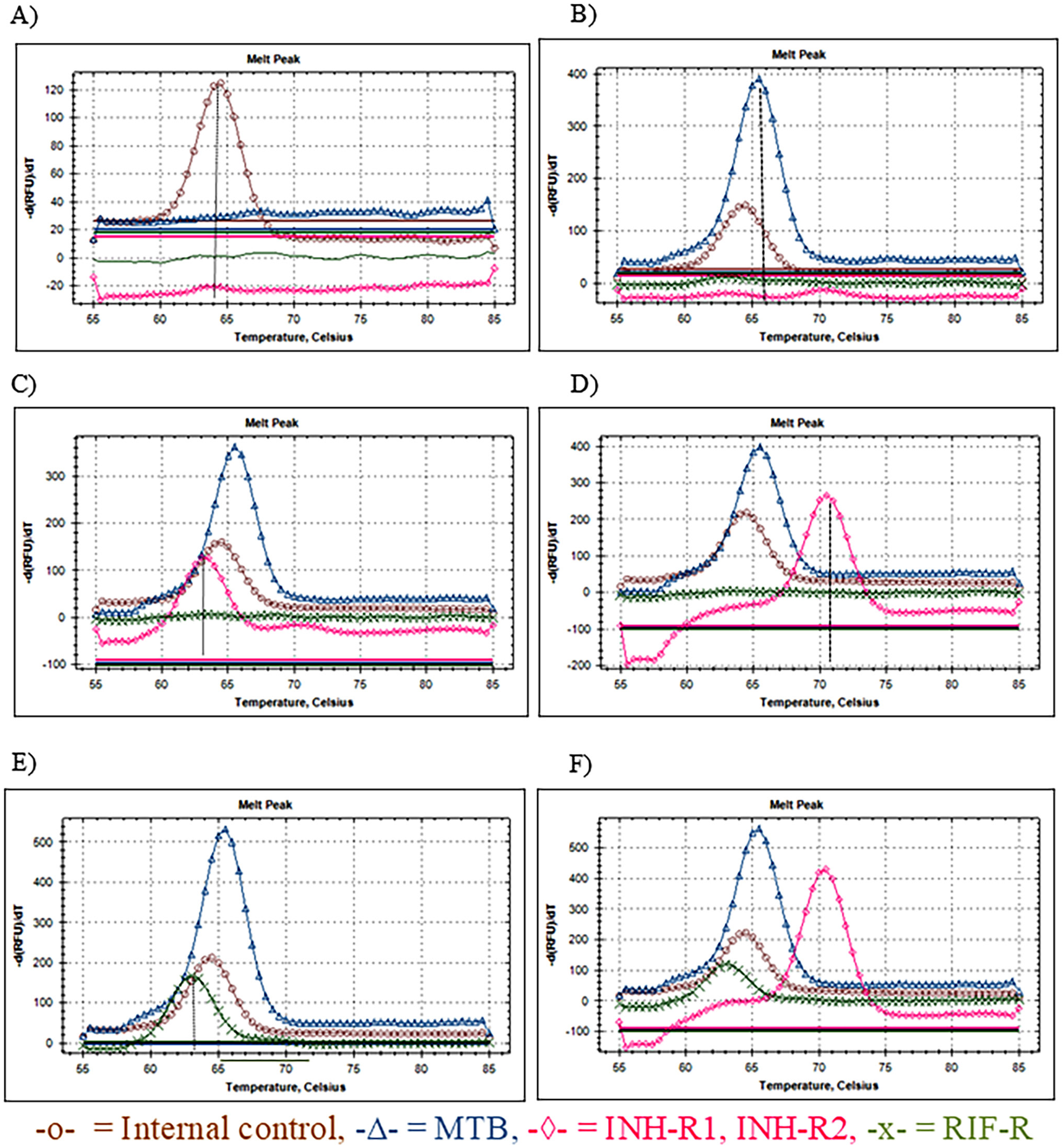
Drug-resistant tuberculosis (TB) poses a significant threat, and drug-susceptibility testing (DST) is essential for effective TB treatment and control. Genotypic DST has been used for the early detection of drug-resistant TB, and the detection of isoniazid (INH) resistance is increasingly important. This study aims to determine the potential of genotypic DST using the AnyplexTM II MTB/MDR real-time polymerase chain reaction (PCR) kit and analyze the mutations associated with INH and rifampicin (RIF) resistance in Mycobacterium tuberculosis (MTB). DST and DNA sequencing of the katG, inhA, and rpoB genes were performed in 146 MTB isolates. Compared with phenotypic DST, the Anyplex real-time PCR assay showed the sensitivity of 84.0%, 83.3%, 85.7%, and 94.6%; and the specificity of 96.9%, 96.4%, 98.2%, and 92.3% for the detection of INH resistance, RIF resistance, multidrug-resistant TB (MDR-TB), and drug-susceptible MTB, respectively. Substantial agreement with DNA sequencing was observed. For INH resistance, 91.8% had mutations in the katG or inhA; the katG gene accounted for 71.8%, and the inhA promoter region accounted for 20.0%. S315T was predominant in the katG mutation, and only C(-15)T was present in the inhA mutation. For RIF resistance, 95.1% harbored the rpoB mutation, with S531L and D516V being the two most common. The association of mutations with INH and RIF resistance was high. The study highlighted the significance of data on the genetic determinants of INH and RIF resistance, and suggested the potential of using genotypic DST, such as the Anyplex II MTB/MDR assay, in the country and similar settings.
KEYWORDS:
Mycobacterium tuberculosis; Mutations; Isoniazid; Rifampicin; Anyplex
 Thumbnail