 A fatal case report of sepsis caused by Robinsoniella sp.
ABSTRACT
Robinsoniella species are anaerobic, spore-forming, Gram-positive bacilli that are rarely associated with human infections because of their slow growth and the limitations of conventional identification methods. We describe a fatal case of sepsis in an 84-year-old woman with hypertension, diabetes, and chronic renal insufficiency. During hospitalization, she developed impaired consciousness, polymicrobial infections, and multiple organ failure. Despite aggressive antimicrobial and supportive treatment, her condition deteriorated, leading to death. This study identified a Robinsoniella isolate (designated Rp5645) by 16S rRNA gene sequencing, showing 98.35% similarity to R. peoriensis PPC31. As this value falls below the accepted species-level threshold, Rp5645 may represent a novel Robinsoniella species. Unfortunately, the isolate lost viability before further genomic or phenotypic studies could be performed. This outcome illustrates the technical challenges in recovering and preserving fastidious anaerobes and underscores the crucial role of rapid molecular identification in confirming rare pathogens. This case broadens the clinical spectrum of Robinsoniella infections and highlights its potential pathogenic capacity, particularly in older or immunocompromised patients. It also emphasizes the need for timely molecular characterization to prevent the loss of valuable data from uncommon clinical isolates.
KEYWORDS:
Robinsoniella species; Sepsis; Anaerobic bacteria; 16S rRNA
INTRODUCTION
Robinsoniella species belongs to the phylum Firmicutes, class Clostridia, order Clostridiales, and family Lachnospiraceae. It is a strictly anaerobic gram-positive spore-forming bacillus 1. Cotta et al.2 first isolated and described the type species Robinsoniella peoriensis in 2009 from a swine manure storage pit and a human blood specimen, classifying it within the Clostridium cluster XIVa. Although R. peoriensis has been detected in environmental and animal intestinal samples, including soil3, wood turtle4, and Neophocaena asiaeorientalis asiaeorientalis5, infections in humans remain extremely rare. Sporadic case reports have indicated that it can cause diverse infections such as osteoarticular infections6,7, bacteremia8–16, infective endocarditis17, and peritonitis11. Because of its slow growth and limited representation in commonly used identification systems (e.g., VITEK and MALDI-TOF), clinical laboratories often misidentify or overlook this organism18. Most reported cases involve patients with an underlying disease or immune compromise, characterized by rapid disease progression and poor prognosis. To date, the clinical features, pathogenic mechanisms, and optimal therapeutic strategies for R. peoriensis infections remain unclear. This study describes a fatal case of sepsis caused by a Robinsoniella species isolate closely related to R. peoriensis. This case contributes to our understanding of the potential pathogenic role of Robinsoniella species and highlights the diagnostic importance of molecular identification in rare anaerobic infections.
Ethics
This study was approved by the Medical Ethics Committee of the First Affiliated Hospital of Kunming Medical University (approval N° 257). Informed consent was obtained from the patient.
CASE REPORT
An 84-year-old woman presented with altered consciousness lasting for one day. According to her family, she developed progressive unresponsiveness without an apparent trigger—characterized by drowsiness, sluggish reactions, and productive cough with yellow purulent sputum. She showed no chest pain, dyspnea, or fever with chills. After symptom onset, the patient was brought to the emergency department of our hospital via 120 emergency medical services for evaluation and treatment. On admission, non-contrast chest computed tomography revealed patchy low-density shadows within the bronchi of both lower lobes and consolidation and partial atelectasis in the lower lungs. The upper and right middle lobes showed mild inflammatory exudates had occurred. Her medical history included >20 years of hypertension, a long-standing horseshoe kidney, and previous surgeries for renal calculi and bilateral cataract extraction. Specific medications and surgical details were unavailable. Upon physical examination, the patient appeared frail and drowsy, with a Glasgow Coma Scale score of E4VTM6. Her vital signs, including blood pressure, pulse rate, and respiratory rate, were temporarily stable.
After admission, laboratory investigations found a white blood cell count of 14.61 × 10⁹/L with 94.40% neutrophils. High-sensitivity C-reactive protein totaled 29.80 mg/L; procalcitonin, 0.21 ng/L; and interleukin-6, 12.24 pg/mL. Serum albumin decreased to 28.2 g/L. Electrolyte analysis showed 3.48 mmol/L of potassium, 150.30 mmol/L of sodium, 115.10 mmol/L of chloride, 2.10 mmol/L of calcium, 0.73 mmol/L of magnesium, and 0.61 mmol/L of inorganic phosphate. Coagulation studies showed 5.2 mg/L of fibrinogen degradation products, 1.51 mg/L of D-dimer, 4.20 g/L of fibrinogen, 13.6 s prothrombin time, and 33.3 s activated partial thromboplastin time. Immunological testing found an absolute lymphocyte count of 449/μL, with T lymphocytes accounting for 48.35%, Th cells for 17.41%, and NK cells for 42.06%.
Cultures of lower respiratory tract specimens yielded carbapenem-resistant Pseudomonas aeruginosa, with imipenem and meropenem MIC values ≥16 μg/mL. Enterococcus faecium was isolated from the urine samples. A combined antimicrobial therapy with amikacin and vancomycin was initiated according to these findings. Subsequently, an anaerobic blood culture was positive. Despite intensive antimicrobial treatment and comprehensive supportive care, the patient's condition progressively deteriorated, leading to multiple organ failure and severe complications including gastrointestinal bleeding. Ultimately, the patient succumbed to the illness despite resuscitation.
Positive blood culture specimens were subcultured on Columbia blood agar plates and incubated anaerobically for 48 h. This yielded grayish-white non-hemolytic colonies of varying sizes with smooth edges. Gram staining found gram-positive, oval-shaped short rods with a few spores under microscopy (Figure 1). Identification using the MALDI-TOF mass spectrometry system failed to yield a reliable result. Therefore, the isolate was further submitted to Shanghai Sangon Biotech Co., Ltd. for partial 16S rRNA gene sequencing. EZBioCloud 16S-based identification indicated that the isolate from this case, designated strain Rp5645 (GenBank accession N° PX462034), showed the highest similarity to Robinsoniella peoriensis PPC31 (GenBank accession N° NR_041882.1), with a 16S rRNA gene sequence similarity of 98.35%. This value is below the 98.65% similarity threshold for species distinction suggested by Kim et al.19, indicating that strain Rp5645 may represent a putative novel species within the genus Robinsoniella. Therefore, we refer to the organism as "Robinsoniella sp." pending further taxonomic validation. Unfortunately, the isolate lost viability during preservation, precluding additional genomic, phenotypic, or antimicrobial susceptibility studies.
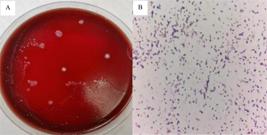
Colony and microscopic morphology of Robinsoniella peoriensis: (A) Flat white colonies with mixed sizes and smooth edges grown on anaerobic blood agar; (B) Gram-positive rod-shaped bacteria observed under a microscope (×1000).
DISCUSSION
Robinsoniella species are rarely associated with human infections. Most documented cases have involved R. peoriensis. Clinical documents include bloodstream8–16, endocarditis17, osteoarticular6,7, and intra-abdominal manifestations11. Most reported patients present with polymicrobial infections and underlying immunocompromised conditions.
The patient in this report was an older female adult with multiple predisposing conditions, including long-standing hypertension, horseshoe kidney, and chronic renal insufficiency. She was immunocompromised and developed polymicrobial infection. This comorbidity weakens the host's defense integrity, enabling opportunistic pathogens to gain access to the bloodstream. As the disease progressed, the patient experienced multiple organ failure and gastrointestinal bleeding, which led to death. Consistent with previously reported cases (Table 1), this case showed a rapidly progressive clinical course and poor prognosis.
Identifying Robinsoniella species remains a diagnostic challenge. This organism grows slowly, requires strictly anaerobic conditions, and produces colonies lacking distinctive morphological characteristics. Most conventional automated identification systems, such as VITEK 2 and MALDI-TOF MS, often result in "unidentified" outcomes or misidentification as a member of the Clostridium genus.
In recent years, advances in sequencing technologies have played pivotal roles in the identification and characterization of uncommon or fastidious pathogens. Based on 16S rRNA gene analysis, strain Rp5645 shared 98.55% sequence similarity with R. peoriensis PPC31, slightly below the accepted cutoff for species delineation. This finding suggests that the isolate may represent a previously unrecognized member of the genus Robinsoniella. Although the strain unfortunately lost viability and was unable to undergo further phenotypic or genomic characterization, this case still provides valuable insights into the potential pathogenic spectrum of Robinsoniella species. To our knowledge, reports of human infections caused by this genus remain exceedingly rare, making this observation a meaningful addition to the limited literature. Moreover, the loss of the viable strain underscores the practical challenges in preserving fastidious anaerobes and highlights the necessity of prompt molecular identification and cryopreservation of rare clinical isolates. Strengthening such practices will facilitate future genomic, taxonomic, and therapeutic investigations, improving our understanding of these uncommon pathogens and their clinical significance.
Regarding antimicrobial susceptibility and treatment, the available data remain limited, and no standardized therapeutic regimen has been established for Robinsoniella bloodstream infections. Moreover, official antimicrobial susceptibility breakpoints for this species are yet to be defined. Reference can be made to the antimicrobial susceptibility breakpoints guidelines of the Clinical and Laboratory Standards Institute20 for guidance. Previous reports have suggested that R. peoriensis infections may respond to agents such as piperacillin–tazobactam, metronidazole, or carbapenems15. In this case, the patient's critical condition prohibited antimicrobial susceptibility testing. Despite empirical combination therapy with amikacin and vancomycin, infection control is unsatisfactory, emphasizing that early pathogen identification and targeted antimicrobial treatment are crucial determinants of clinical outcomes.
Overall, Robinsoniella infections are rarely recognized in clinical practice, are difficult to diagnose, and lack standardized therapeutic experience. Although Robinsoniella is an uncommon pathogen, it can cause severe or even fatal infections in high-risk patients. Therefore, strengthened collaboration between clinical and laboratory teams is essential along with the application of molecular identification or gene sequencing techniques for anaerobic isolates that are difficult to apply using conventional methods. Accumulating additional case data and antimicrobial susceptibility information will help inform future diagnostic and therapeutic strategies against this emerging pathogen.
CONCLUSION
Robinsoniella, although rarely encountered, can cause severe infections, particularly in immunocompromised individuals. This fatal case of septicemia highlights their possible pathogenic role in high-risk patients and the diagnostic limitations of conventional methods for uncommon anaerobes. Sequencing-based identification provided crucial taxonomic insight, evincing a strain likely representing a novel Robinsoniella species. The experience emphasizes the importance of preserving rare clinical isolates to enable future genomic and phenotypic studies, which are essential for accurate classification and improved understanding of their clinical significance.
-
FUNDING
The Central Guidance for Local Science and Technology Development Fund Project (grant N° 202507AB040006), the Yunnan Province Science and Technology Talent and Platform Program - Clinical Medicine Research Center Special Project (grant N° 202505AJ310006), and the Kunming Medical University Graduate Innovation Fund (grant N° 2025S040).
DATA AVAILABILITY
The complete anonymized dataset supporting the findings of this study is included within the article itself.
REFERENCES
- 1 Whitehead TR, Anoma C, McLaughlin RW. Rapid identification of Robinsoniella peoriensis using specific 16S rRNA gene PCR primers. Anaerobe. 2017;43:39-42.
- 2 Cotta MA, Whitehead TR, Falsen E, Moore E, Lawson PA. Robinsoniella peoriensis gen. nov., sp. nov., isolated from a swine-manure storage pit and a human clinical source. Int J Syst Evol Microbiol. 2009;59:150-5.
- 3 Jiang YB, Zhong WH, Han C, Deng H. Characterization of electricity generated by soil in microbial fuel cells and the isolation of soil source exoelectrogenic bacteria. Front Microbiol. 2016;7:1776.
- 4 Braasch JL, Lapin CN, Dowd SE, McLaughlin RW. Draft genome sequence of Robinsoniella peoriensis strain WTD, isolated from the fecal material of a wood turtle. Genome Announc. 2015;3:e01444-14.
- 5 McLaughlin RW, Zheng J, Ruan R, Wang C, Zhao Q, Wang D. Isolation of robinsoniella peoriensis from the fecal material of the endangered yangtze finless porpoise, neophocaena asiaeorientalis asiaeorientalis. Anaerobe. 2013;20:79-81.
- 6 Rieber H, Frontzek A, Bell A, Frommelt L. Robinsoniella peoriensis, originally isolated from swine manure, and early periprosthetic hip infection: case report and review of the literature. Anaerobe. 2016;42:33-6.
- 7 Cassir N, Laget L, Renvoisé A, Gennari JM, Drancourt M. Robinsoniella peoriensis infection following surgery for scoliosis: a case report. J Med Case Rep. 2012;6:174.
- 8 Yang X, Fan QR, Hu RJ. Biological characterization and literature review of Robinsoniella peoriensis from bloodstream infection. China Trop Med. 2022;22:997-1002.
- 9 López P, Belda S, García M, Royo G. Infección de hematoma muscular espontáneo por Robinsoniella peoriensis, en un paciente con cirrosis hepática alcohólica. Enferm Infecc Microbiol Clin. 2010;28:565-7.
- 10 Shen D, Chen R, Ye L, Luo Y, Tang YW. Robinsoniella peoriensis bacteremia in a patient with pancreatic cancer. J Clin Microbiol. 2010;48:3448-50.
- 11 Gomez E, Gustafson DR, Colgrove R, Ly T, Santana R, Rosenblatt JE, et al. Isolation of Robinsoniella peoriensis from four human specimens. J Clin Microbiol. 2011;49:458-60.
- 12 Jeon Y, Kim TS, Kim HB, Park KU, Song J, Kim EC. First Korean case of Robinsoniella peoriensis bacteremia in a patient with aspiration pneumonia. Ann Lab Med. 2012;32:370-4.
- 13 Lim S, Huh HJ, Lee NY, Joo EJ, Yeom JS, Lee S, et al. Robinsoniella peoriensis bacteremia: a second case in Korea. Ann Lab Med. 2017;37:349-51.
- 14 Ursenbach A, Ruch Y, Von Hunolstein JJ, Lefebvre N, Argemi X, Hansmann Y, et al. First case of Robinsoniella peoriensis endocarditis. Med Mal Infect. 2020;50:533-5.
- 15 Mejia-Gomez J, Zigras T, Patel Y, Wolfman W, Philippopoulos E, Shaltout N, et al. First reported case of Robinsoniella peoriensis pyometra and bloodstream infection: a case report and review of the literature. Anaerobe. 2022;75:102581.
- 16 Furuya K, Ito K, Sugiyama K, Makio S, Shimada T. A case of Robinsoniella peoriensis bacteremia during using piperacillin-tazobactam. J Infect Chemother. 2023;29:913-5.
- 17 Mertes H, Defourny L, Tré-Hardy M, Lhommel R, El Khoury G, Rodriguez-Villalobos H, et al. First Robinsoniella peoriensis aortic cross homograft mycotic pseudoaneurysm: a case report and review of the literature. Anaerobe. 2017;44:23-6.
- 18 Krueger C, Ann Azad M, Ramotar K, Deslandes V, Jessamine P. Robinsoniella peoriensis: an emerging pathogen and rare cause of wound infection in children. J Assoc Med Microbiol Infect Dis Can. 2022;7:279-82.
- 19 Kim M, Oh HS, Park SC, Chun J. Towards a taxonomic coherence between average nucleotide identity and 16S rRNA gene sequence similarity for species demarcation of prokaryotes. Int J Syst Evol Microbiol. 2014;64:346-51.
- 20 Clinical and Laboratory Standards Institute. Methods for antimicrobial susceptibility testing of anaerobic bacteria. 9th ed. Wayne: CLSI; 2012.
Edited by
-
Editor:
Thelma Suely Okay https://orcid.org/0000-0001-9316-7288