 Association between atmospheric SO2 exposure and severity of respiratory infections in infants: a systematic review
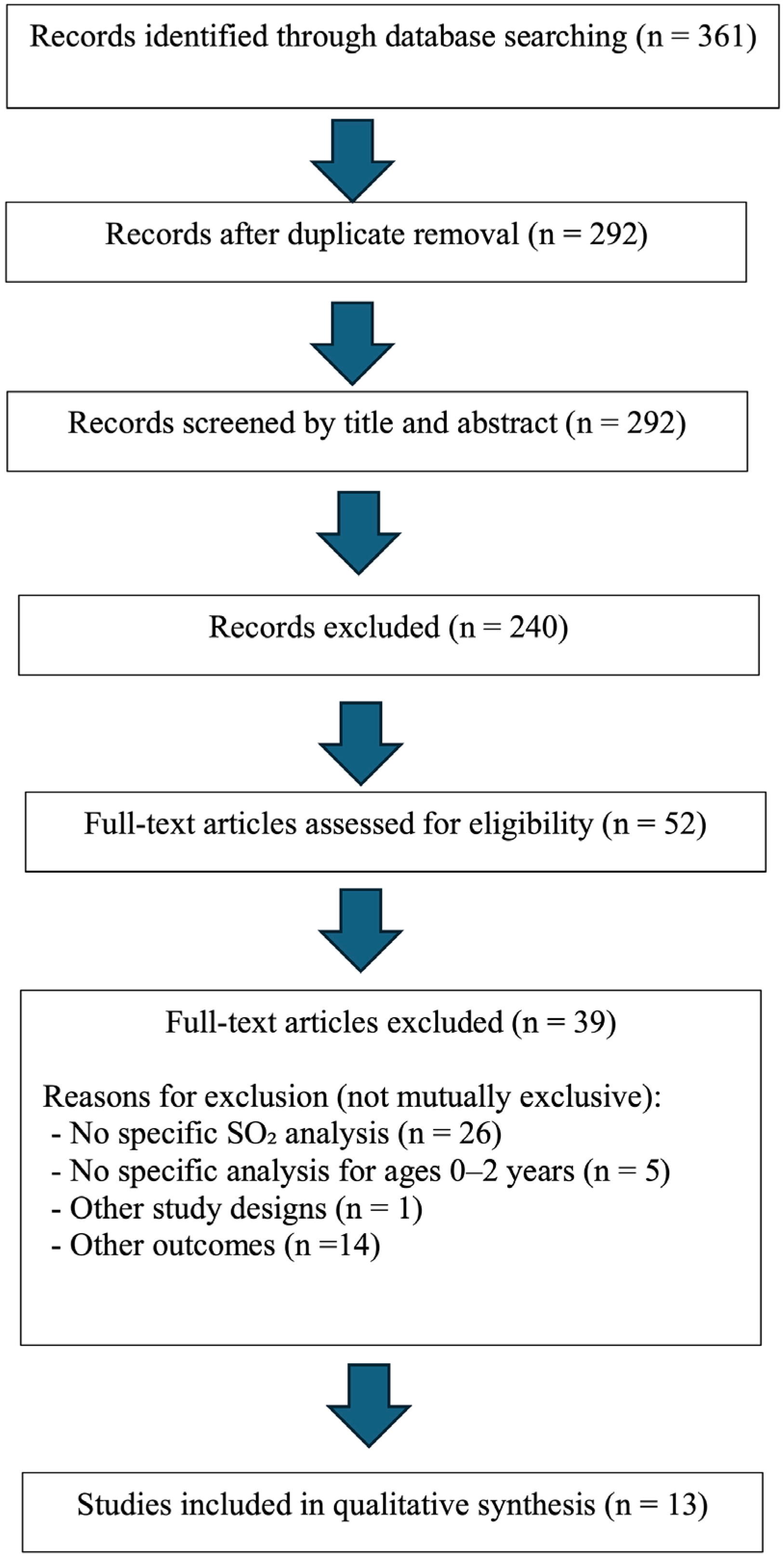
Environmental factors may influence the severity of lower respiratory infections, a major cause of morbidity and mortality in infants. Sulfur dioxide (SO2) has biologically plausible pro-inflammatory and epithelial effects. This PRISMA 2020–compliant systematic review synthesized observational studies published between 2015 and 2025, selected to ensure methodological comparability and contemporary relevance, examining the association between atmospheric SO2 exposure and severity-related respiratory outcomes in infants. Thirteen studies met eligibility criteria. Most evaluated short-term exposure using daily lag structures (lag01 to lag03) or 1–2 week averages, whereas one birth cohort assessed annual exposure during the first year of life. All studies adjusted for meteorological variables, and most incorporated multipollutant regression models. Owing to substantial heterogeneity in exposure metrics, increments, lag structures, and effect scales, a meta-analysis was not performed. Across studies, short-term SO2 exposure was most consistently associated with increased hospitalization for ALRIs, longer length of stay, and progression to severe disease. Effect estimates per 10 µg/m3 were modest but statistically significant in specific lag windows. In one cohort, higher annual exposure was associated with severe ALRI (IRR 2.81; 95% CI 1.35–5.83), and one hospital-based study reported increased mortality (OR 2.04; 95% CI 1.33–3.13). Associations were less consistent in low-exposure settings or in models with strong multipollutant collinearity. Overall, the evidence suggests context-dependent associations between short-term SO2 exposure and increased severity of respiratory infections in infants, particularly hospitalization, longer length of stay, and progression to severe disease. Given the observational and heterogeneous nature of the data, findings should be interpreted cautiously.
KEYWORDS:
SO2; Air pollution; Infants; Respiratory infections; Bronchiolitis; Pneumonia
 Thumbnail