 Smart concrete mixes: unlocking strength and sustainability with copper and cupola slag
ABSTRACT
In the modern days, sustainable and resilient infrastructure turns into a global concern, especially because conventional concrete is sensitive to brittleness, degradation, and excessive maintenance requirements. This work tries to improve the mechanical, durability, and environmental properties of concrete through the use of mineral admixtures and industrial by products. Metakaolin, CS, and cupola slag are used as partial cement and fine aggregate replacements in the research. Metakaolin, which is a very reactive pozzolanic product, enhances strength, durability, and decreases permeability, thus cutting down on cement usage and related CO2 emissions. CS, which is high in silica and alumina, and cupola slag, which is high in calcium and iron, offer extra cementing and hydraulic characteristics. Experimental studies were carried out with CS and cupola slag as substitutes for sand at 0%, 5%, and 10% and metakaolin as a substitute for cement at 0%, 5%, 10%, 15%, and 20%. Test for strength were compressive strength, durability test comprises water absorption, sorptivity, acid resistance and microstructural analysis with XRD and SEM. Results showed that the admixtures greatly improve toughness, microstructure, and long term performance of the concrete.
Keywords:
CS; Cuppa Slag; Metakaolin; Durability Properties; Micro Analysis
1. INTRODUCTION
Since the quantity of industrial waste produced is on the rise, waste management has drawn worldwide concern. Waste management technologies affect public health as well as the environment considerably. Incorrect disposal processes of wastes like landfilling and incineration are destructive to the ground and water bodies, are polluters in the atmosphere, and contribute to the production of greenhouse gases. CS, cupola slag, and metakaolin have emerged as promising materials due to their beneficial properties and availability as industrial by products. Sustainable development is becoming more and more important since there must be an improvement of resource efficiency and reductions in waste generation [1,2,3].
One of the byproducts of the in manufacturing copper is CS (CS). Because CS has greater mechanical and physical qualities than natural fine particles, researchers are very interested in utilizing it to make concrete. The usage of CS in the concrete industry proves to be ecologically sustainable due to the growing volume of this waste material in industries. Numerous studies on the use of CS in concrete have found that it significantly improves the qualities of both fresh and hardened concrete [4, 5]. CS offers superior particle packing density, reduced porosity, and bonding qualities in the concrete matrix because of its greater specific weight, angular form, and glassy nature [6]. Concrete’s strength improves when CS is used to the fullest extent possible in place of natural fine particles [7].
Metakaolin, a highly reactive pozzolanic substance made by carefully heating kaolin clays, is frequently added to concrete as an additional cementitious element to enhance its mechanical and physical qualities. Because metakaolin is a pozzolanic substance with high silica and alumina content, it reacts chemically with free lime that is created during cement hydration to generate C-S-H (calcium silicate hydrate) gel. The mentioned reaction helps to improve pore structure of the concrete and increase its densification and mechanical performance [8]. Numerous studies have shown that metakaolin can serve as effective additive in order to create stronger and more chemically resistant concrete. In addition, metakaolin can be added to alkali activated slag cements and decrease their autogenous shrinkage [9].
Because of the synergy produced while mixing concrete, the combined usage of CS and metakaolin has grown in favor over time. The combination of metakaolin as the cement component and CS as the aggregate component creates a synergy that improves durability and mechanical properties [10]. While metakaolin offers pozzolanic reaction and microstructure enhancement, CS improves mechanical and durability qualities by causing aggregates to interlock and densify the matrix [11]. Past studies have revealed that concrete mixes containing the two materials have better fresh-state properties as well as better workability than the conventional concrete mixes. Studies indicate that incorporation of metakaolin in the concrete matrix made from CS reduces surface absorption and sorptivity [12].
In addition to enhancing performance, there is an abundance of environmental gains that can be achieved due to the application of CS and metakaolin. The substitution of CS for the naturally available river sand ensures no exploitation of natural resources, whereas the application of metakaolin ensures minimal use of cement along with a reduction in CO2 emissions. Waste material utilization not only reduces landfill disposals but also promotes the circular economy model [13]. The environmental impact of the me-takaolin-slag composites used in wastewater treatment has gained significant research attention lately [14].
The utilization of metakaolin and CS in concrete has been extensively studied, however there are still a number of important gaps. Despite cupola slag’s abundance as an industrial byproduct, most research focus on their solo or binary impacts, with little investigation of ternary or quaternary systems. Long-term durability evaluations under harsh environmental circumstances, such as acid resistance, porosity, and water absorption, are comparatively rare, despite well-documented advances in mechanical strength.
This study is the first to use CS, cupola slag, and metakaolin as partial substitutes in concrete—a strategy that is seldom used in tandem. This approach employs industrial byproducts to limit landfill trash, reduce carbon emissions, and lessen dependency on natural resources, in contrast to earlier research that focused on single or binary components. By using plentiful waste materials in building, it provides an affordable, ecological option.
2. MATERIALS
2.1. Cement
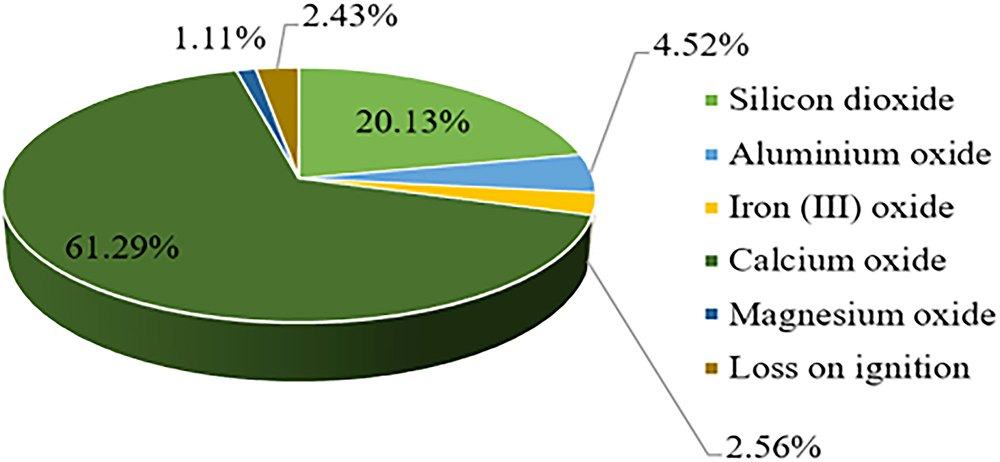
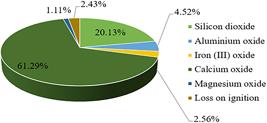
OPC Grade 53 was chosen for this investigation owing to its exceptional binding qualities, strong early strength, and durability. OPC 53, which complies with IS 12269 (1987) [15], assures concrete mix uniformity and quality. It has a relative density of 3.14, a surface area of 2750 cm2/gm, and particles smaller than 90 microns, which improves reactivity and strength increase. Its volume expansion of 3 mm demonstrates stability when hydrated [16]. These physical properties have a substantial impact on concrete behavior, making OPC 53 excellent for structural applications that need strength, endurance, and consistent performance under varied environmental circumstances [17]. Figure 1 depicts the chemical makeup of cement. Table 1 shows the physical properties of materials.
2.2. Metakaolin
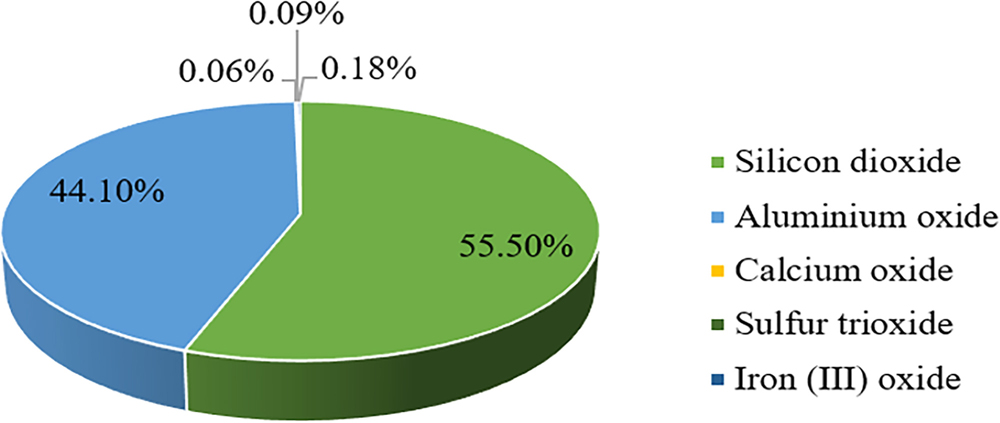
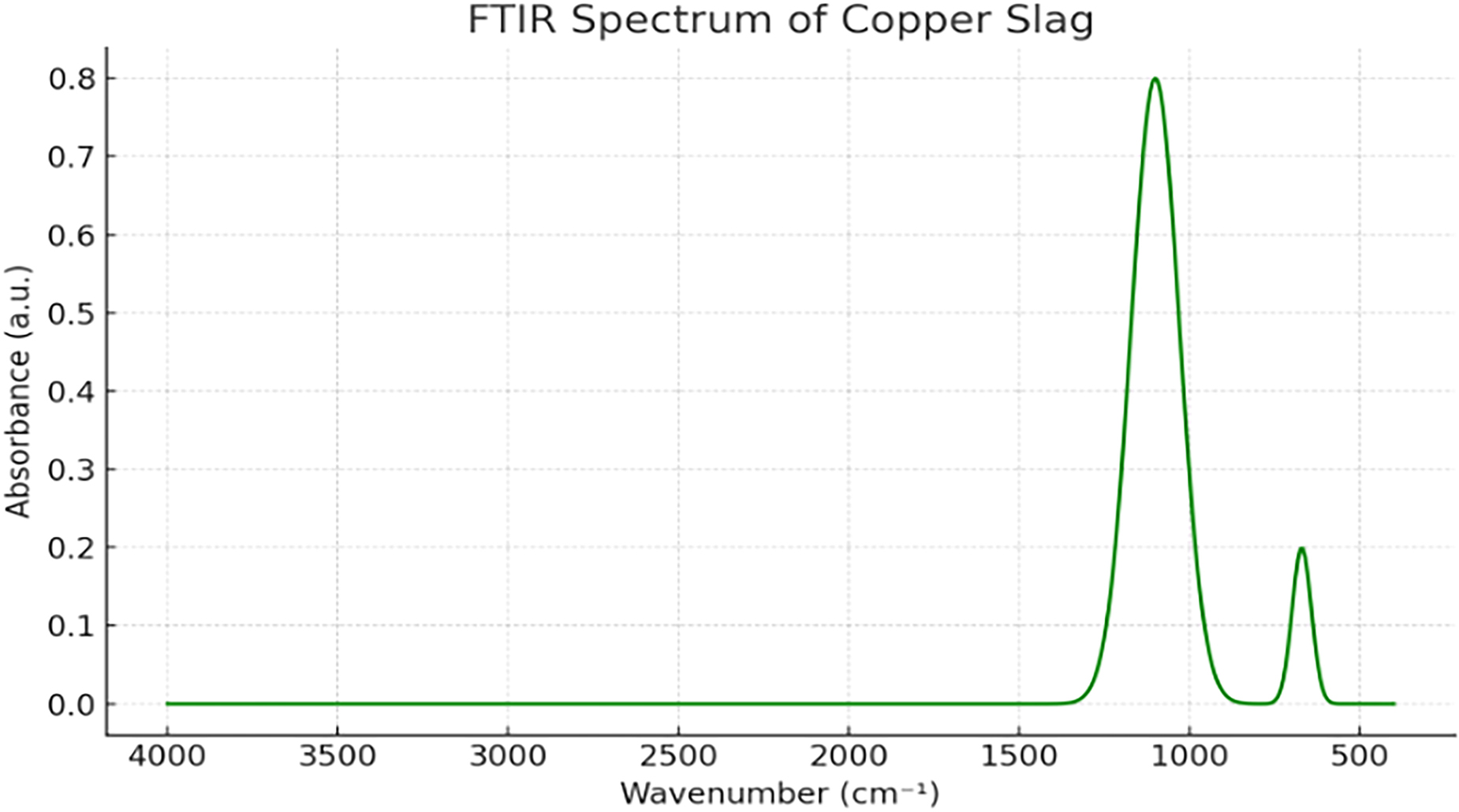
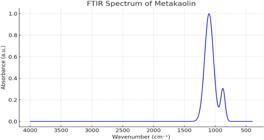
Metakaolin is a highly reactive, white mineral with distinct physical and chemical properties suited for industrial and construction applications. It has a large surface area of 11,100 m2/kg and a low relative density of 2.52, making it lightweight and ideal for enhancing material performance [18, 19]. With exceptional purity and fine particle size, it improves strength and durability in cementitious mixes. Chemically, it consists mainly of silica (55.5%) and alumina (44.1%), with minimal impurities like CaO (0.06%) and Fe2O3 (0.18%). This composition contributes to its high pozzolanic activity, making it valuable for producing high performance, durable concrete. Figures 2 and 3 shows the chemical composition and FTIR of metakaolin.

2.3. Copper steel (CS)
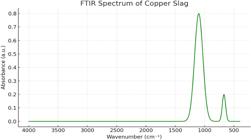
Because of its unique physical and chemical properties, copper steel (CS) may be used in a wide range of industrial applications. Its compactness is demonstrated by its irregular, glassy black particles, which have a bulk density of 2.08 g/cc and a relative density of 3.91 [20]. Its fineness (125 m2/kg) boosts usage, while its low moisture content (0.1%) and water absorption (0.16%) improve durability. Iron oxide (68.30%) and silica (25.10%) make up the majority of CS’s chemical composition, with smaller amounts of alumina, calcium oxide, magnesium oxide, and copper oxide. Thermal stability is demonstrated by its 2.85% Loss on Ignition, which validates CS’s appropriateness for high-performance and structural applications. The chemical makeup of CS is displayed in Figures 4 and 5.

2.4. Cupola slag (CUS)
Cupola slag is useful for industrial applications because of its unique physical and chemical characteristics. With a relative density of 3.08 and a bulk density of 1475 kg/m3, it looks gray and old [21]. Its regulated moisture content (1.29%) and minimal water absorption (0.5%) provide stability in a variety of settings. Its adaptability is increased by a maximum grain size of 1.19 mm and a fineness modulus of 5.01. Chemically, it has large concentrations of iron oxide, sulfur trioxide, calcium oxide (50.85%), silica (29.43%), and alumina (8.92%). Its usage in thermal, refractory, and structural applications is supported by its composition. The FTIR and chemical makeup of cupola slag are displayed in Figures 6 and 7.


2.5. Fine and coarse aggregates
The choice of good quality aggregates is vital for determining the behavior of concrete mixes. In the current research, manufactured sand (M-sand), which satisfies Bureau of Indian Standards IS 383:1970 Zone II grading requirement [22] was used as fine aggregate because of its availability and sustainable use. The manufactured sand was washed and sieved properly in order to get rid of any impurities and achieve proper grading. The fine aggregate proved to have favorable physical properties in producing concrete with a fineness modulus of 2.71 for Zone II.
Coarse aggregates of crushed angular stones containing granite particles with a nominal maximum size of 20 mm were utilized in their natural state for this study. Relative density, 2.74; water absorption, 1.75%; aggregate crushing value, 17.56%; aggregate impact value, 14.71%; bulk density, 1625 kg/m³; moisture content, 0.8%; and fineness modulus, 6.9 were the values found for the coarse aggregate’s physical characteristics [23, 24]. These findings suggest that the coarse aggregate was suitable for creating long-lasting concrete mixtures. Table 2 displays the physical characteristics of both fine and coarse aggregates.
3. METHODOLOGY
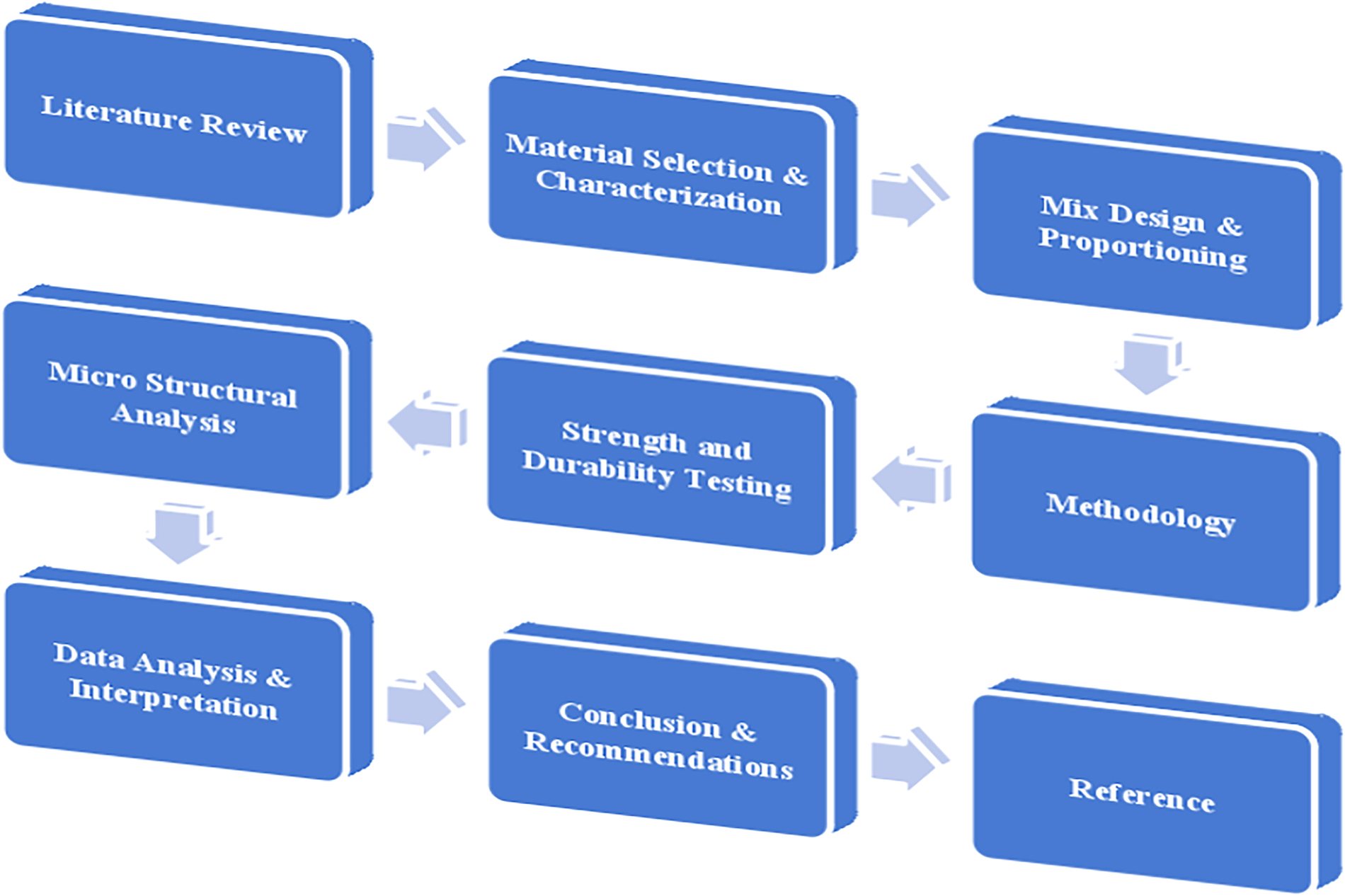
The method used in conducting this research is through an experiment that systematically tests the performance of concrete containing CS, cupola slag, and metakaolin. Firstly, literature review was conducted as part of the study in order to identify gaps in the research area concerning the use of industrial waste in sustainable concrete manufacturing.
Secondly, there was characterization of materials through relative density, particle size distribution, and water absorption. This helped in identifying the properties of the materials needed for producing concrete such as cement, fine aggregate, coarse aggregate, CS, cupola slag, and metakaolin.
Concrete mix designs were done based on the corresponding Bureau of Indian Standard specifications to meet the target compressive strength. In this research, CS and cupola slag were added to concrete mixes as partial substitutes for fine aggregates by weight, and metakaolin was used as the partial substitute for cement by weight. All the mixes were designed such that the water to cement ratio remained constant at 0.36. Various concretes were prepared by changing the levels of substitution of CS, cupola slag and metakaolin and the mix proportions are shown in Table 3 in kg/m3. Concrete preparation, casting, and curing were done in the lab following standard practice. Workability properties were determined using the standard slump cone test.
Three specimens were cast and tested per concrete mixture and at every curing age to assure repeatability and reproducibility of results. Specimens of hardened concrete were tested according to established testing methods. Mechanical properties tested included compressive strength and durability parameters included water absorption, acid resistance, sulfate resistance and scanning electron microscopy (SEM).
These test results are the averages of those acquired during testing of the samples used. These findings have been interpreted to establish the effect of using CS, cupola slag, and metakaolin in terms of the strength and durability properties of the concrete. Figure 8 shows the methodology employed in this study.

4. RESULTS AND DISCUSSION
4.1. Compressive strength test
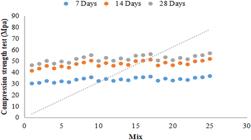
From the result of the compressive strength test, the effect of the application of CS, cupola slag, and metakaolin on the mechanical properties of the concrete is clearly seen. For example, in control sample M1, the compressive strength attained by 28 days was 46.28 MPa, but for all the others (the modified ones), they had compressive strength above that value. For the binary combinations, the effect was also clear, since M3 and M5 samples recorded more than 50 MPa of compressive strength. Ternary combinations were even more effective in the attainment of the required mechanical strength, as can be seen from the samples M7–M9, which attained more than 55 MPa.
Maximum strength was recorded for M25, an improvement of 23% compared to normal concrete. The improvement is due to CS induced densification, secondary C S H gel development from cupola slag, and nucleation and filler actions of metakaolin, resulting in decreased porosity and enhanced interfacial transition zones. The uniform strength development at 7, 14, and 28 days suggests enhanced hydration kinetics and long term pozzolanic activity, establishing the technological potential of these blends for high performance and sustainable concrete applications. Figure 9 is the compressive strength result.
4.2. Saturated water absorption test (SWA)
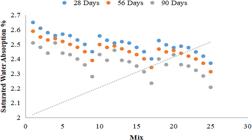
SWA results show a consistent decrease in water absorption with the addition of CS, cupola slag, and metakaolin in contrast to standard concrete (M1). M1 had 2.65% at 28 days, which decreased slowly to 2.51% at 90 days, while optimized mixes showed notably lower values. M2–M6 binary replacements had already decreased absorption to 2.43% to 2.44% by 90 days, reflecting matrix densification as a result of better packing and secondary hydration. Ternary combinations, especially M7–M9, had even greater reductions, with M9 reaching 2.28% at 90 days. Adding metakaolin boosted this trend, which can be seen in M15–M17 and M23–M25, with M25 registering the lowest absorption of 2.21% to 12% lower compared to M1.
This enhancement is credited to the metakaolin’s pozzolanic reactivity to improve pore structure along with the filler and latent hydraulic contributions of the slags. The steady reduction from 28 to 90 days validates ongoing pozzolanic activity and enhanced durability of the amended concrete mixes. Figure 10 illustrates the saturated water absorption outcome.
4.3. Sorptivity test
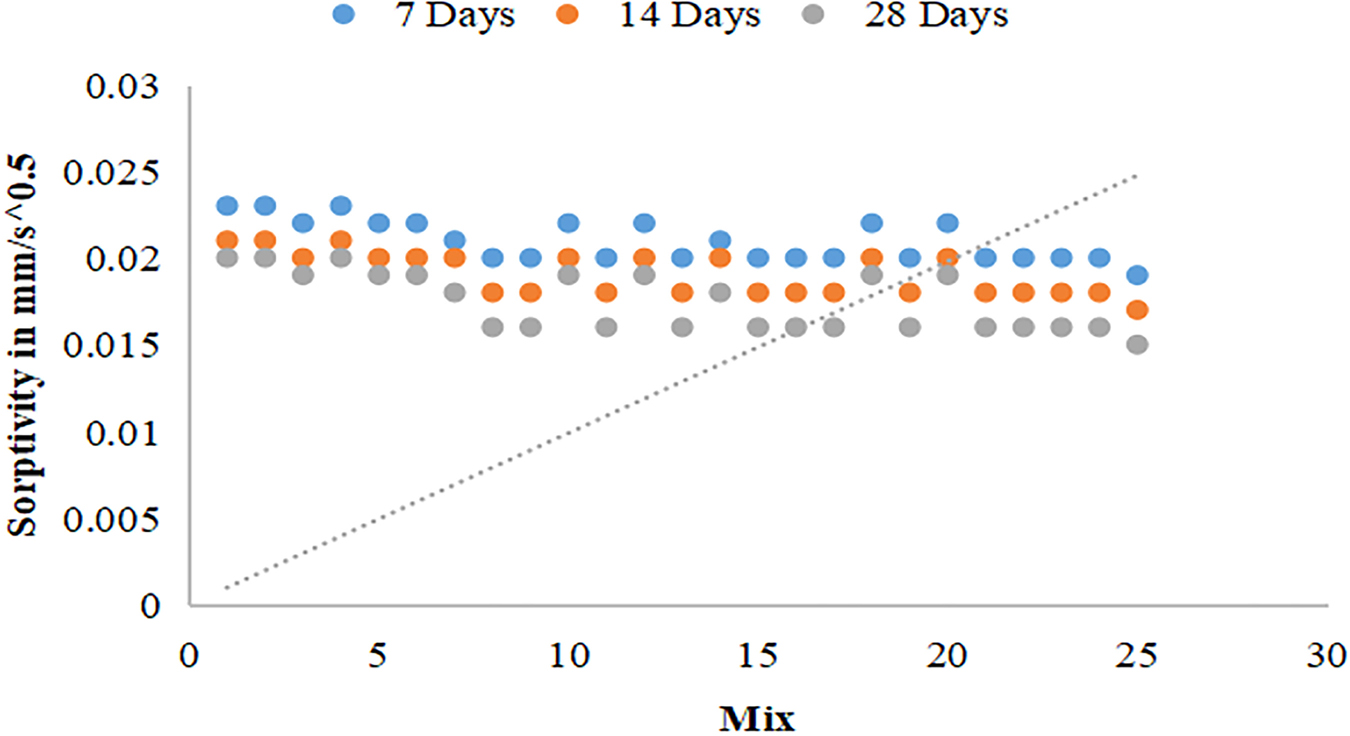
The sorptivity values show significant improvement in capillary suction resistance with the addition of CS, cupola slag, and metakaolin. In the control mix (M1), sorptivity values decreased slightly from 0.023 mm/s0.5 at 28 days to 0.020 mm/s0.5 at 90 days. The binary slag blends (M2–M6) attained similar values, reflecting that either CS or cupola slag alone contributes marginal pore refinement. A steeper decline was noted in the ternary slag blends (M7–M9), where sorptivity declined to 0.016 mm/s0.5 at 90 days, indicating enhanced densification of the microstructure.
The incorporation of metakaolin hastened this trend even further. 5–10% metakaolin mixes (M10–M25) exhibited consistently lower sorptivity with final values of 0.016–0.015 mm/s0.5 at 90 days. The lowest value was realized in M25 (10% CS, 10% cupola slag, and 10% metakaolin) with 0.015 mm/s0.5 a 25% decrease relative to M1. This is a result of the combined effect of slag induced pore refinement and metakaolin’s pozzolanic reactivity that minimizes connectivity of capillary pores. In general, these results verify that ternary blends containing both slags and metakaolin extensively improve the durability performance of concrete. Figure 11 presents the sorptivity results.

4.4. UPV
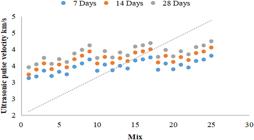
Ultrasonic pulse velocity test results proved the gradual densification of the mixes. Control concrete (M1) resulted in 3.125 km/s at 28 days, increasing to 3.456 km/s at 90 days, falling under “Good Quality Concrete” according to IS 13311. Binary mixes (M2–M6) had minor improvements, reaching a value of 3.616 km/s (Good–Excellent range), indicating better pore refinement. Ternary slag combinations (M7–M9) had high gains of over 4.1 km/s at 90 days, thereby placing them in the “Excellent Quality” range. The synergistic action of CS’s filler role and cupola slag’s pozzolanic activity greatly enhanced compactness.
Metakaolin modified mixtures (M10–M25) had the maximum improvement. Mix M25 (10% CS + 10% cupola slag + 10% metakaolin) reached 4.244 km/s at 90 days, close to 23% greater than CC, well into the “Excellent” category. Ternary mixtures with slag and metakaolin therefore always improve density, microstructural integrity, and long term durability. Figure 12 indicates the UPV results.
4.5. Acid resistance test
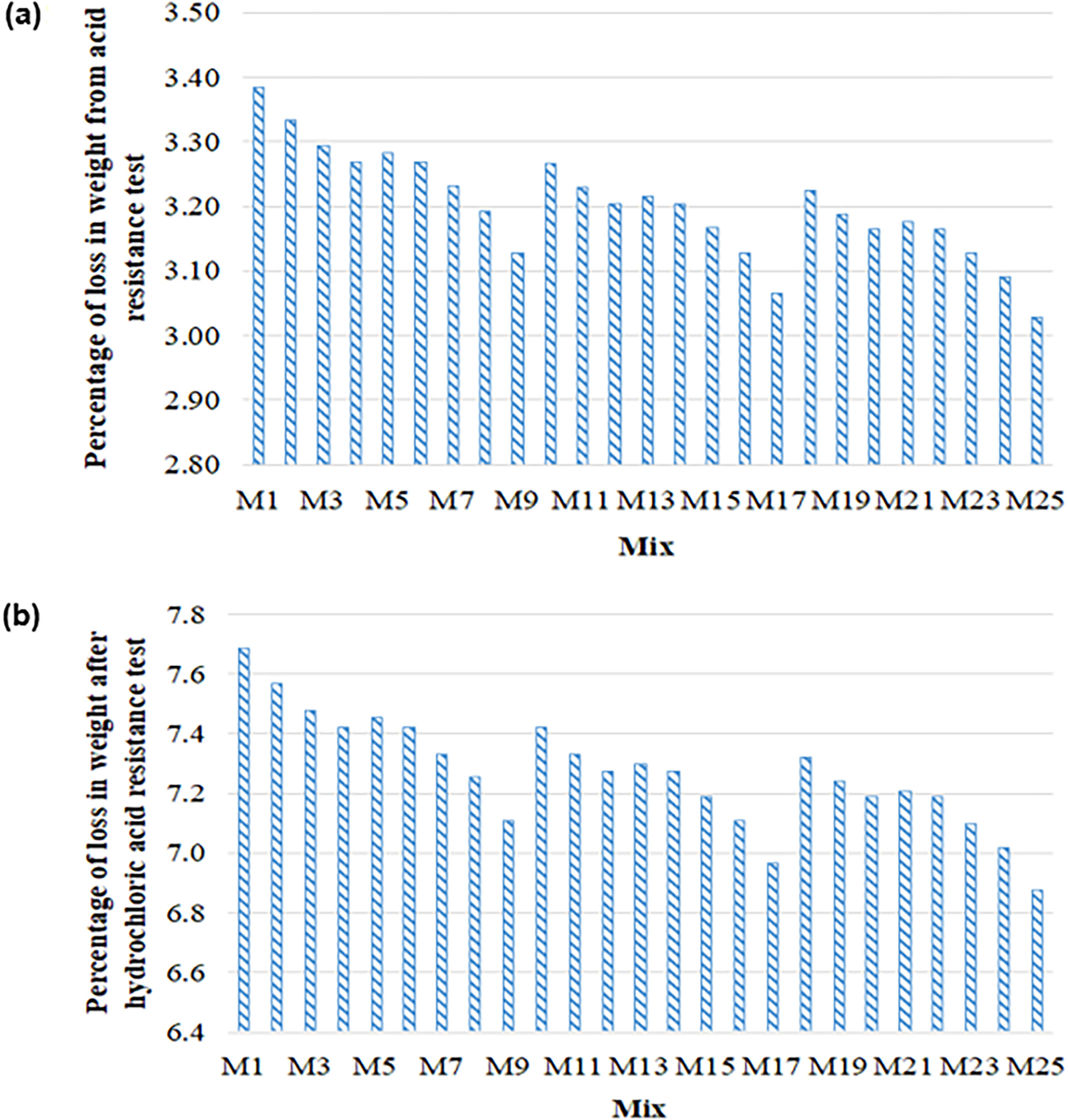
Weight loss and strength loss across various combinations were assessed in the sulfuric acid resistance tests. After 28 days of treatment, the control mix (M1) demonstrated 3.38% weight loss and 7.69% strength loss, indicating significant deterioration. Degradation was reduced by partial substitution with CS and cupola slag (M2–M9). Weight loss decreased to 3.13% (M9) and strength loss to 7.11%, indicating the beneficial impact that secondary hydration products and mineral fillers played in fine-tuning the pore structure.
Blends treated with metakaolin showed greater enhancement (M10–M25). Metakaolin’s high pozzolanic activity increased the production of C–S–H and Al–S–H gels, which improved acid resistance. The blend that performed the best, M25 (10% CS + 10% CPS + 10% MK), showed the least amount of weight loss (3.03%) and strength loss (6.88%), a drop of 10.36% in weight loss and 11% in strength loss compared to control. The results confirm that the ternary integration of CS, cupola slag, and metakaolin strengthens durability in a synergistic manner to reduce vulnerability to acid attack and extend the service life of concrete in harsh environments. The % weight loss and strength loss of the sulfuric acid resistance test are shown in Figures 13(a) and (b).
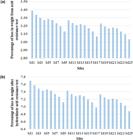
(a) Percentage of weight loss in sulphuric acid resistance test. (b) Percentage of strength loss in sulphuric acid resistance test.
4.6. SEM analysis
The SEM examination of Mix M1 (the control) shows an open matrix with poor compaction of hydration products. Microcracks and capillary pores suggest a relatively high porosity and lower densification of the matrix. The presence of unreacted clinker phases, especially C3S and C2S, with low density calcium silicate hydrate (C–S–H) being the prevailing hydration product, together with portlandite (Ca(OH)2) occupying the pores. This open matrix structure is in line with the observed lower mechanical strength and higher porosity in physical tests. SEM micrographs of Mix with slag and metakaolin show a dense, uniform microstructure, with a dense interlocking network of secondary C–S–H and C–A–S–H (Calcium Alumino-Silicate Hydrate) gels. The addition of metakaolin increases pozzolanic activity, reducing free portlandite significantly and forming additional gel phases. Slag components are micro fillers and nucleation sites, thus improving the pore structure and preventing microcracking. Absence of large voids, and the presence of continuous gel phases, emphasizes durability and mechanical performance improvements. Figure 14 (a to f) shows the SEM images of M1, M15, M16, M17, M24 and M25 mix.

SEM analysis. (a) SEM images of M1 mix, (b) SEM images of M15 mix, (c) SEM images of M16 mix, (d) SEM images of M17 mix, (e) SEM images of M24 mix, (f) SEM images of M25 mix.
4.7. XRD analysis
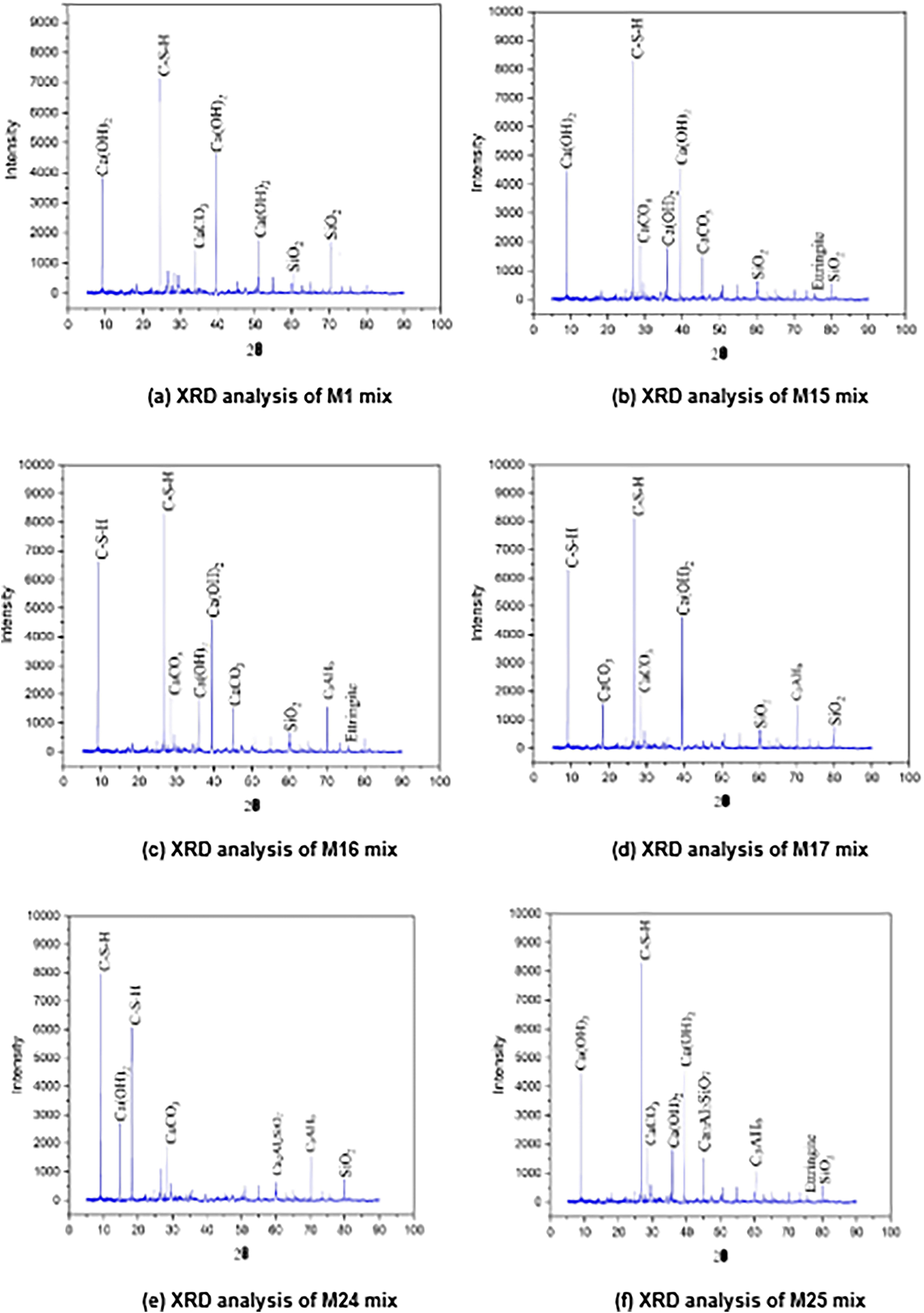
XRD pattern of Mix M1 indicates sharp peaks of crystalline portlandite (Ca(OH)2) at around 2θ at 18°, unhydrated silicate phases (C3S/C2S), and a moderate amorphous hump indicating limited C–S–H formation. The Ca(OH)2 peak is strong, indicating minimal consumption of calcium hydroxide in secondary pozzolanic reactions. This indicates low pozzolanic activity and less developed microstructure of the conventional mix. XRD pattern of Mix from M15, M16, M17, M24 and M25 indicates remarkable reduction in intensity of Ca(OH)2 peaks, evidencing a great deal of pozzolanic consumption of portlandite. A broad amorphous hump between 20°–35° 2θ indicates the formation of poorly crystalline or amorphous hydration products, and more C–S–H and C–A–S–H phases. Small peaks corresponding to gehlenite (Ca2Al2SiO7) and hydrogarnet (C3AH6) indicate that metakaolin and cupola slag aluminosilicates are actively involved. The diffraction pattern indicates enhanced reaction rates and more dense binder phases, which is consistent with enhanced strength and durability characteristics. Figure 15 (a to f) shows the XRD analysis of M1, M15, M16, M17, M24 and M25 mix.

XRD analysis. (a) XRD analysis of M1 mix, (b) XRD analysis of M15 mix, (c) XRD analysis of M16 mix, (d) XRD analysis of M17 mix, (e) XRD analysis of M24 mix, (f) XRD analysis of M25 mix.
5. CONCLUSION
The current research proves that partial replacement of M sand with CS and cupola slag, along with metakaolin, improves the mechanical, durability, and microstructural performance of concrete considerably. Compressive strength results reveal an increasing improvement with all ages, and mixes with 10% CS, 10% cupola slag, and 10% metakaolin (M25) producing the maximum 28 day strength of 56.85 MPa compared to 46.28 MPa for normal concrete (M1). Saturated water absorption and sorptivity tests showed lower porosity and better impermeability for slag and metakaolin including mixes, giving evidence of greater resistance to water penetration. Ultrasonic pulse velocity values support the evidence, reflecting denser and more uniform matrices with increasing metakaolin and slag content. Acid resistance tests also showed greater durability, with M25 showing the least percentage loss in weight (3.03%) and strength (6.88%) upon exposure to sulfuric acid, indicating greater chemical resistance.
SEM examination of control mix (M1) presented an open matrix with microcracks, capillary pores, unreacted clinker, and portlandite accumulation, which was associated with lower strength and greater porosity. On the other hand, SEM micrographs from optimized mixes (M15, M16, M17, M24, and M25) presented a compact, homogeneous microstructure, interlocking C–S–H and C–A–S–H gels, and few voids. XRD analysis validated extensive portlandite consumption and the generation of other C–S–H, C–A–S–H, gehlenite, and hydrogarnet phases, consistent with increased pozzolanic activity. The synergistic use of CS, cupola slag, and metakaolin in the mixes, overall, enhances mechanical strength and durability in addition to improving microstructure refinement, making them ideal for sustainable and high performance concrete purposes. Future research may address the utilization of larger proportions of industrial waste materials, including CS, cupola slag, and other pozzolans. Field performance over extended periods, life cycle analysis, and large scale construction optimization can be studied to drive eco friendly, high performance concrete to practical applications.
6. DATA AVAILABILITY
The full dataset supporting the findings of this study is available upon request to the corresponding author (Vijayabaskaran Selvarajan).
7. BIBLIOGRAPHY
-
[1] CHAKRAVARTY, S., HALDAR, P., NANDI, T., SUTRADHAR, G. “Cupola slag reutilization for sustainable waste management: review and economic analysis” International Journal of Environmental Science and Technology, 1–16, 2021. https://doi.org/10.1007/s1376202103574x.
» https://doi.org/10.1007/s1376202103574x -
[2] GABASIANE, T.S., DANHA, G., MAMVURA, T., MASHIFANA, T., DZINOMWA, G.“Environmental and Socioeconomic Impact of Copper Slag—A Review” Crystals, 2021. https://doi.org/10.3390/cryst11121504.
» https://doi.org/10.3390/cryst11121504 - [3] GAGG, C.R. Cement and concrete as an engineering material: An historic appraisal and case study analysis, Eng Fail Anal, 40, 114–140, 2014.
-
[4] AKÇAÖZOĞLU, S., ÇIFLIKLI, M., BOZKAYA, Ö., ATIŞ, C.D., ULU, C. “Examination of mechanical properties and microstructure of alkali activated slag and slag‐metakaolin blends exposed to high temperatures” Structural Concrete, 23, 1273–1289, 2021. https://doi.org/10.1002/suco.202000080.
» https://doi.org/10.1002/suco.202000080 -
[5] SIKDER, R., CHAKRAVARTY, S., SAU, D., HALDAR, P., MANDAL, S., NANDI, T., SUTRADHAR, G. “Study of durability and mechanical properties for utilization of cupola slag as a coarse aggregate in M20 grade green concrete” Journal of Building Engineering, 2024. https://doi.org/10.1016/j.jobe.2024.109101.
» https://doi.org/10.1016/j.jobe.2024.109101 -
[6] ZHAN, J., LI, H., LI, H., CHENG, Z., FU, B. “Composition design and characterization of alkali activated Slag–Metakaolin materials”, 8, 2022. https://doi.org/10.3389/fbuil.2022.1020217.
» https://doi.org/10.3389/fbuil.2022.1020217 -
[7] SINGH, J., SINGH, S.P. “Development of Alkali activated Cementitious Material using Copper Slag” Construction and Building Materials, 2019. https://doi.org/10.1016/J.CONBUILDMAT.2019.03.233.
» https://doi.org/10.1016/J.CONBUILDMAT.2019.03.233 -
[8] ANBARASU, N.A., KESHAV, L., RAJA, K.C.P., SIVAKUMAR, V. “Unraveling the flexural behavior of concrete and compare with innovative fea investigations” Matéria (Rio de Janeiro) 29, no. 4 (2024): e20240656.https://doi.org/10.1590/1517-7076-RMAT-2024-0656.
» https://doi.org/10.1590/1517-7076-RMAT-2024-0656 -
[9] WANG, L., CHEN, L., TSANG, D.C., ZHOU, Y., RINKLEBE, J., SONG, H., KWON, E.E., BAEK, K., OK, Y.S., “Mechanistic insights into red mud, blast furnace slag, or metakaolin assisted stabilization/solidification of arsenic contaminated sediment” Environment international, 133 Pt B (2019): 105247. https://doi.org/10.1016/j.envint.2019.105247.
» https://doi.org/10.1016/j.envint.2019.105247 -
[10] SUN, Y.J., MA, J., CHEN, Y.G., TAN, B.H., CHENG, W.J. “Mechanical behavior of copper contaminated soil solidified/stabilized with carbide slag and metakaolin.” Environmental Earth Sciences, 79, 2020. https://doi.org/10.1007/s12665-020-09172-3.
» https://doi.org/10.1007/s12665-020-09172-3 -
[11] DIVYA, S., PRAVEENKUMAR, S. “An integrated evaluation of graphene based concrete mixture with copper slag and quarry dust using response surface methodology” Journal of Building Engineering, 2024. https://doi.org/10.1016/j.jobe.2024.108876.
» https://doi.org/10.1016/j.jobe.2024.108876 -
[12] LEI, H., MUHAMMAD, Y., WANG, K., YI, M., HE, C., WEI, Y., FUJITA, T. “Facile fabrication of metakaolin/slag based zeolite microspheres (M/SZMs) geopolymer for the efficient remediation of Cs+ and Sr2+ from aqueous media” Journal of hazardous materials, 124292, 2020. https://doi.org/10.1016/j.jhazmat.2020.124292.
» https://doi.org/10.1016/j.jhazmat.2020.124292 -
[13] ANNAMALAI, K., SAMPATHKUMAR, S., KACHANCHEERI, M.S., PADMANABAN, M., AYYANAR, O., ANBARASU, N.A. “Exploring the role of recycled aggregates in modern concrete technology” Matéria (Rio de Janeiro) 30, e20250033, 2025. https://doi.org/10.1590/15177076RMAT20250033.
» https://doi.org/10.1590/15177076RMAT20250033 -
[14] ELKERANY, A.M., KESHTA, M.M., ELSHIKH, M.M.Y., ELSHAMI, A.A., YOUSSF, O. “Characteristics of Sustainable Concrete Containing Metakaolin and Magnetized Water” Buildings, 13, 1430, 2023. https://doi.org/10.3390/buildings13061430.
» https://doi.org/10.3390/buildings13061430 -
[15] ABIRAAMI, R., ANURADHA, R., JOHNPAUL, V., GURUPRASAD, M., GOBINATH, R., SIVAKRISHNA, A., SHRIHARI, S. Mechanical and flexural behaviour study on fibrillated concrete as partial replacement of M Sand and metakaolin, Materials Today: Proceedings, v. 39, Part 1, 2021, pp. 776–780. https://doi.org/10.1016/j.matpr.2020.09.507.
» https://doi.org/10.1016/j.matpr.2020.09.507 - [16] MISHRA, S., TIWARI, A. Effect on compressive strength of concrete by partial replacement of cement with nano titanium dioxide and nano calcium carbonate. J. Civil Eng. Environ. Technol, 5, 426–429, 2016.
- [17] STANDARD IS, Indian. IS 12269–1987: specifications for 53 grade ordinary Portland cement. IS, New Delhi, 1987.
- [18] DHIR, R.K., DE BRITO, J., MANGABHAI, R. LYE, C.Q. Sustainable construction materials: copper slag Woodhead Publishing, 2016.
-
[19] AL MENHOSH, A., WANG, Y., WANG, Y. The mechanical properties of the concrete using metakaolin additive and polymer admixture. Journal of Engineering, vol. 2016, Article ID 1670615, 6 pages, 2016. https://doi.org/10.1155/2016/1670615.
» https://doi.org/10.1155/2016/1670615 -
[20] WU, W., ZHANG, W., MA, G. “Mechanical properties of copper slag reinforced concrete under dynamic compression”, Construction and Building Materials, 2010, Vol. 24, No. 6, 910–917. DOI: 10.1016/j.conbuildmat.2009.12.001.
» https://doi.org/10.1016/j.conbuildmat.2009.12.001 -
[21] ANNAMALAI, K., ANBARASU, N.A., GOVINDARAJAN, B.P., SIVARETHINAMOHAN, S. “Sustainable concrete: integrating environmentally friendly materials for environmentally friendly construction” Matéria (Rio de Janeiro) 30, 2025: e20250239. https://doi.org/10.1590/15177076RMAT20250239.
» https://doi.org/10.1590/15177076RMAT20250239 -
[22] SAJEEV, P.S., RAJAGOPAL, V.S.G., ARASU, N. “Investigation of concrete durability enhancement using supplementary cementitious materials” MethodsX, 2025: 103527. https://doi.org/10.1016/j.mex.2025.103527.
» https://doi.org/10.1016/j.mex.2025.103527 - [23] STANDARD I. Coarse and fine aggregate for concrete–Specification. Bureau of Indian Standards, New Delhi. 2016.
- [24] Bureau of Indian Standards (BIS). IS: 2386 (Part V) 1963: methods of test for aggregates for concrete, Part V. Soundness, Indian Stand, pp. 1–14, 2002.
-
[25] ASTM, C. 128-01. Standard test method for density, relative density (specific gravity), and absorption of fine aggregate. United States: ASTM International. 2001. www.astm.org
» www.astm.org