
 Pervious concrete using construction and demolition waste (CDW) and recycled EPS
ABSTRACT
This study developed pervious interlocking paving blocks using construction and demolition waste (CDW) and recycled expanded polystyrene (EPS). The reference mix (1:3, w/c ratio of 0.4) used river sand (1.2–2.4 mm) and gravel (4.8–6.3 mm). In the other mixes, the coarse aggregate was replaced by 30% and 100% of CDW and EPS was incorporated at 10% and 20%. Blocks (20 cm × 10 cm × 6 cm) and cylindrical specimens (10 cm × 20 cm) were produced. After wet curing, they were oven-heated at 100°C for 24 hours to reduce EPS volume and create voids. All mixes met the minimum permeability coefficient (10−3 m/s) according to ABNT NBR 16416 (2015). The reference mix and the mix with 30% CDW (with or without EPS) achieved compressive strength near or above the 20 MPa required by ABNT NBR 16416 (2015). However, EPS did not generate voids as expected, likely due to insufficient heating conditions. In conclusion, CDW can replace up to 30% of coarse aggregate, with or without EPS, for pervious block production while meeting ABNT NBR 16416 (2015) standards.
Keywords:
Pervious concrete; Pervious interlocking paving blocks; Construction and demolition waste; Recycled aggregates; Recycled expanded polystyrene
1. INTRODUCTION
According to NBR standard 16416 [1], pervious pavement is one that simultaneously meets mechanical load demands, supports vehicle and pedestrian traffic, and has a structure that allows water percolation, reducing surface runoff without causing damage to its integrity. In addition to allowing the recharging of underground aquifers, reducing the speed and quantity of surface runoff of rainwater, the pervious pavement produced with pervious concrete favors a more efficient use of the soil, as it minimizes, or even eliminates, other micro local drainage works as points of water accumulation [2]. It is widely used in paving projects such as walkways, parking areas, slope stabilization systems, alleys, light traffic roads and shoulders [3].
As an industrial byproduct, construction and demolition waste (CDW) can be used as aggregate to produce pervious concrete. In Brazil, it is estimated that more than 100 million tons of CDW are generated annually, but just over 20% are redirected for use [4]. The use of alternative sources of materials to replace virgin natural inputs is a way to reduce the environmental impact linked to civil industrial production. The use of recycled aggregate in the production of concrete is an already established practice. In some cities in Brazil, such as São Paulo and Curitiba, it is mandatory to use recycled aggregates in public road paving works and services [5, 6]. In Brazil, there are technical standards for the use of these aggregates, such as NBR 15115 [7], which addresses the execution of pavement layers, and NBR 15116 [8], which covers the use of these aggregates in mortars and concretes. In Hong Kong, the Hong Kong Wetland Park ecological park consumed approximately 14,300 m3 of concrete prepared with recycled concrete aggregate (RCA) [9].
Several factors influence the properties of pervious concrete, such as particle size and type of aggregate, amount of cement, water/cement ratio and void index. The coarse aggregate grading directly influences its strength and permeability, important factors for the performance of pervious concrete [10, 11, 12]. YU et al. [13] reported that pervious concrete with an aggregate size of 4.75–9.5 mm provided 52% greater compressive strength than that with an aggregate size of 2.36–4.76 mm. CASTRO and CARASEK [14] evaluated the impact of aggregate sizes on pervious concrete properties, comparing aggregates of 12.5 mm and 19 mm. The concrete with larger aggregates (19 mm) exhibited a higher permeability coefficient.
In the literature, studies can be found that mention the use of different types of waste in pervious concrete. YAP et al. [15] replaced virgin coarse aggregate with recycled coarse aggregate from construction waste (RCA), which reduced compressive strength as the replacement percentage increased (20%, 40%, 60%, 80% and 100%). However, CO2 emissions were reduced by up to 24% and the permeability coefficient increased. Despite the drop in strength, all mixtures with RCA met the minimum requirements of BS EN 1338 [16] in terms of skid and abrasion resistance. MARATHE et al. [17] developed alkali-activated pervious concrete composites using slag and bagasse ash as substitutes for the binder, two types of coarse aggregates, naturally crushed granite coarse aggregates (NCA) and recycled coarse aggregates (RCA), and an industrial by-product from the metal casting industry (WFS), as fine aggregate. Optimal mechanical properties were observed in the mixes with 10% bagasse ash and 50% RCA, making them suitable for practical pervious pavement applications. ZAETANG et al. [18] incorporated recycled concrete aggregate into pervious concrete mix. The results showed an increase in compressive strength and abrasion resistance with the replacement of up to 20%, due to better adhesion between the recycled aggregate and the cement mortar. The recycled aggregates used were rougher and had more sharp edges and corners compared to the natural aggregate, therefore, they made the mixture more cohesive and less workable. CANDIAN FILHO [19] investigated the use of waste foundry sand (WFS) as a replacement for quartz sand in pervious concrete paving blocks, addressing waste management in the metallurgical industry. Experimental results indicated that WFS did not significantly alter the compressive strength or hydraulic properties (water absorption, permeability coefficient) of pervious concrete compared to reference mix. The findings suggest that WFS could be effectively used in civil construction without compromising the performance of pervious concrete.
The incorporation of polymers into concrete mixtures has been investigated as a strategy to enhance both performance and sustainability. However, this practice raises environmental concerns, particularly regarding the potential contamination of ecosystems by microplastics. These particles can enter aquatic environments through surface runoff, wastewater discharge, or the direct release from construction materials, including polymer-modified concretes [20, 21]. Polymers commonly used in concrete, such as polyvinyl chloride (PVC), can leach plasticisers like bisphenol A (BPA) and diethylhexyl phthalate (DEHP). The leaching process is influenced by factors such as temperature and the size of microplastic particles, thereby posing potential ecological risks [22]. Despite these concerns, the use of polymers in concrete offers notable advantages, including enhanced durability, reduced weight, and a lower carbon footprint mitigating the environmental impacts typically associated with conventional concrete production. Advantages and risks must be considered when seeking sustainable construction practices [23, 24]. Regarding the use of EPS in concrete, applications have already been well established for decades, in the so-called lightweight concrete [25, 26, 27]. The function of EPS, in general, is to reduce structural weight and improve thermal and acoustic insulation with the advantage of being able to use, in some cases, recycled EPS. The use of EPS in pervious concrete is not so common, some references were found in the literature citing the use of EPS as a partial replacement for natural aggregate [28, 29].
Pervious concrete is a relevant topic within both civil engineering and sustainability domains due to its capacity for efficient stormwater management. Despite this advantage, its relatively low mechanical strength, compared to conventional concrete, restricts its structural applications. To address this limitation, this study investigates an alternative technique aimed at enhancing the permeability of pervious concrete. Specifically, this research examines the effects of partially replacing natural coarse aggregates with construction and demolition waste (CDW) and incorporating recycled expanded polystyrene (EPS) on the performance of pervious interlocking concrete blocks. The inclusion of EPS was intended to facilitate void formation, thereby contributing to the permeability of the system. These voids are generated during a heating process that induces the thermal degradation of EPS, leaving empty cavities within the concrete structure. The central hypothesis is that the use of EPS to promote void formation would enable adjustments in the aggregate grading, allowing for enhanced permeability without significantly compromising the mechanical strength. Beyond proposing a novel technique, this study also seeks to advance sustainable construction practices through the incorporation of recycled materials.
2. MATERIALS AND METHODS
2.1. Materials
The cement used was Mizu’s Portland CPIII. The physical properties of the cement were provided by the manufacturer and are presented in Table 1 [30]. This cement is one of the most commonly manufactured in the plants located in the state of Espírito Santo in Brazil due to the presence of steel industries in the region. According to ABNT NBR 16697 [31], this type of cement can contain up to 70% granulated blast furnace slag in its composition.
As coarse aggregate was used gravel of granite origin with particle size range of 4.8–6.3 mm. The fine aggregate was quartz river sand with particle size range of 1.2–2.4 mm. These ranges were established based on the literature and previous studies conducted by the authors [32, 33].
The EPS used is recycled and comes from a Collectors’ Cooperative in the city of Vitória/ES, Brazil. The EPS was obtained from the crushing of electronic packaging plates and sieved to select the particle size range to be used in the mixture. The CDW used to replace coarse aggregate (gravel) comes from demolition of concrete structures and was donated by a recycling plant in the city of Serra/ES, Brazil. Figure 1 shows photos of the EPS and CDW used in this work.

Recycled expanded polystyrene (EPS) and construction and demolition waste (CDW) used in the pervious concrete.
The characterization of CDW was carried out by RUPP [34]. The composition for the particle size range 4.8–6.3 mm is presented in Table 2. According to Table 2, the predominant materials in the CDW composition are concrete mortar and natural rocks which together represent more than 94% of the composition; these materials are the most desirable in the CDW composition. No additives were used in this study to reduce the cost.
2.2. Methods
2.2.1. Preparation of aggregates
The sand, gravel, CDW and EPS were sieving to select the desired particle size range. For sand and EPS, the particle size range of 1.2–2.4 mm (fine aggregate) was selected. For the gravel and CDW, the range of 4.8–6.3 mm (coarse aggregate) was selected. After the separation process, the aggregates were mixed to form a particle size composition of 70% coarse aggregate and 30% fine aggregate.
In order to compose the mixes, it is necessary to know the bulk density of the aggregates. The determination of the bulk density of sand, gravel and CDW was made according to NBR 16972 [35] and the EPS according to NBR 16916 [36]. The results are presented in Table 3.
The aim of incorporating EPS into concrete was to increase the generation of voids, contributing to concrete permeability. To achieve this, it is necessary to heat the concrete after curing, so that EPS degradation occurs. To define the heating temperature an empirical test was carried out on the EPS and the temperature was set at 100ºC for 24 hours.
2.2.2. Mixes composition and molding
To define the reference mix, two mixes were tested with a w/c ratio of 0.4 and a cement/aggregate ratio of 1:3 (1–0.6–2.4–cement–sand–gravel) and 1:4 (1–0.8–3.2–cement–sand–gravel). For each mix, four cylindrical specimens measuring 10 x 20 cm (diameter x height) were molded to determine the compressive strength, according to NBR 13279 [37], and the permeability coefficient, according to MELLO [38]. These test specimens were heated in an oven (100ºC for 24 h), in order to maintain the same procedure to be adopted for the mixes with CDW and EPS. All mixtures exhibited a near-zero slump in the slump test, which is common for pervious concrete.
After defining the reference mix, two mixes were made with replacement of 30% and 100% of coarse aggregate mass with CDW, called CDW30 and CDW100, respectively. Based on the mixes containing CDW, mixes incorporating EPS at percentages of 10% and 20% were created. Table 4 summarizes the mixes. Due to the difference in the specific mass of the fine aggregate and the EPS, volume equivalence was made. For each mix, a certain percentage by mass of virgin input (fine aggregate) was selected and its volume was checked to add the equivalent volume of recycled input (EPS).
Six interlocking blocks (20 cm × 10 cm × 6 cm) and one cylindrical specimen measuring 10 × 20 cm (diameter × height) were molded for each of the mixes. Blocks and specimens remained cured in water saturated with lime for 55 days. It was expected to carry out the tests after 28 days of curing however, for operational reasons (problem with the testing machine), the tests were carried out after 64 days of curing.
2.2.3. Water absorption, void index, compressive strength and permeability tests
Specimens and blocks were heated in an oven at 100ºC for 24 h before carrying out water absorption, void ratio, specific mass and compressive strength tests.
The water absorption, void index and specific mass tests were carried out on cylindrical specimens measuring 10 × 20 cm (diameter × height), in accordance with the recommendations of NBR Standard 9778 [39]. These tests were performed on a single test specimen.
The compressive strength test was carried out on the blocks (20 cm × 10 cm × 6 cm), after 64 days of curing. Six blocks were tested. This test was carried out at a speed of 550 kPa/s (± 220 kPa/s), until the blocks completely broke, following the standard NBR 9781 [40]. After testing, fragments of the blocks were prepared for analysis of the fracture surface using a stereomicroscope.
For the permeability test, the procedure described by MELO [38] was used. This procedure was chosen because it requires minimal material. A cylindrical specimen measuring 10 × 20 cm (diameter × height) was used, measuring the time taken by water to percolate through the material. The measurements were carried out using 1 kg and 2 kg of water, with two measurements being made for each mass of water, on the same specimen.
The water permeability coefficient (k) was determined by equation 1.
where, k is the infiltration rate, c the constant with a value equal to 4,583,666,000 used for unit conversion in the SI system, m the mass of percolated water (kg), d the diameter of the specimen (mm) and t the time required for infiltration of the water mass(s).
3. RESULTS AND DISCUSSION
3.1. Definition of reference mix
The results of the compressive strength and water permeability tests to define the reference mix are presented in Table 5. From the analysis of the results, mix 1:3 showed greater compressive strength, and both mixes met the requirements of NBR 16416 [1], which requires a minimum value of 0.1 cm/s to be classified as permeable. Therefore, the mix 1:3 with a w/c ratio of 0.4 was defined as the reference mix and all blocks were molded in this condition. Figure 2 shows a set of reference blocks, blocks with CDW and blocks with CDW and EPS.
Results of the compressive strength and water permeability tests of cylindrical specimens to define the reference mix.

Pervious concrete blocks. a) reference blocks, b) blocks with CDW (CDW30), c) blocks with CDW and EPS (CDW30EPS20).
3.2. Test results
The results of the compressive strength, water absorption, void index and water permeability tests of the pervious concrete are presented in Table 6.
Compressive strength, water absorption, void index and water permeability of pervious concrete after 64 days of curing. Tests of compressive strength were done on interlocking blocks and tests of water absorption, void index and water permeability were done on cylindrical test specimens. Obs: Values between parentheses correspond to standard deviation.
The reference mix presented the highest compressive strength, higher than the minimum of 20 MPa required by NBR 16416 [1]. Considering deviations in results it is noted that the mixes with 30% CDW (CDW30, CDW30EPS10 and CDW30EPS20) presented compressive strength lower than the reference mix, but close to or higher than the minimum value required by the NBR 16416 [1] standard, corroborating the literature data [18].
The mixes with 100% CDW exhibited significantly lower strength compared to the reference mixture and the Brazilian standard [1], around 10 MPa, and consequently lower than the mixtures with 30% CDW. There is a consensus in the literature that the total replacement of natural aggregates with CDW significantly reduces the mechanical properties of concrete, whether permeable or not [15, 18, 41]. When comparing the reference mix with the mixes with 100% CDW (CDW100 and CDW100EPS10), it is observed that the reduction in compressive strength is directly related to the higher percentage of voids and water absorption. This may be due to the concrete mortar component of the CDW (48.22%, as shown in Table 2), which absorbs more water than natural rocks [42].
Regarding the effect of EPS addition, considering the deviations, the change was minimal. For mixtures with 30% CDW, there was a slight reduction in compressive strength with the addition of 10% EPS and virtually no change with the addition of 20% EPS. A similar behavior was observed for the mixture with 100% CDW. Some studies show a slight increase in the compressive strength of concrete with the addition of EPS; however, this does not involve the heating procedure applied in this study. In the study by ALVES [43], mortars and porous concrete produced with up to 15% EPS showed compressive strength values higher than or equivalent to the minimum required by standards NBR 15498 [44] and NBR 16055 [45]. In the study conducted by SILVA and CORDEIRO [46], the incorporation of EPS into cementitious mortars led to a reduction in compressive strength. Given that EPS is an inert and flexible material with extremely low mechanical resistance, its use is not expected to contribute to strength gains. Instead, its primary benefit lies in reducing the overall weight of the material [46].
It was also observed that the addition of EPS had no influence on water absorption and void index. The objective of incorporating EPS into the blocks was to assist in the generation of voids. It was expected that, after heating at 100°C, the EPS would undergo a significant volume reduction, leaving voids inside the blocks that would contribute to the material’s permeability, with a corresponding expected reduction in the compressive strength of the mixes. However, heating the blocks at 100°C for 24 hours was not sufficient to eliminate the EPS, as observed in Figures 3 and 4. Since most of the EPS remained intact and given its hydrophobic and impermeable nature, it is reasonable that no significant changes were observed in water absorption and void index. The EPS acted solely as a substitute for the fine aggregate.
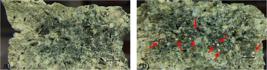
Images of block fragments after rupture obtained using a stereomicroscope: a) REF, b) CDW30EPS20.

Images of the CDW30EPS20 block fragments after rupture obtained using a stereomicroscope: a) undegraded EPS grain, b) void left by EPS degradation.
Figure 3a shows photos of fragments of the reference concrete blocks where some voids are observed. The white points indicated by arrows in Figure 3b, concrete with 20% EPS (CDW30EPS20), are EPS granules not degraded during oven heating, concentrated in the central area of the block. Figure 4a shows in detail an EPS grain present inside a block and Figure 4b shows a void left by the degradation of an EPS grain. When heated, the volume of EPS granules is significantly reduced, sometimes leaving only a small amount of residue in the material, characterizing the degradation process.
Considering that the addition of EPS did not result in gains in permeability or compressive strength, offering only the environmental benefit of reusing discarded material, and taking into account the energy costs associated with heating the blocks, it is concluded that the use of EPS under these conditions is not viable. Furthermore, environmental concerns should be taken into account, particularly the potential contamination of ecosystems by microplastics. Given that the primary application of this type of concrete is in water drainage systems, the residue from degradation of EPS could contribute to microplastic pollution [20–23].
Regarding the water permeability coefficient, presented in Table 6, all mixes can be classified as permeable in accordance with NBR 16416 [1], which requires a minimum value of 0.1 cm/s. It is observed that the mix with 100% CDW presented a higher coefficient compared to the other mixes, a predicted result, considering that CDW has greater porosity [42, 47], thus absorbing greater amounts of water, which leads to greater adhesion of the cement paste around its grains, generating a greater number of voids. The permeability coefficient of the mix with 10% EPS and 100% CDW (CDW100EPS10) was much lower than the mix with 100% CDW (CDW100), which corroborates the observation that the EPS was not properly degraded in the heating stage, obstructing the pores inside the block, as seen in Figures 3 and 4. The permeability coefficient of the mixes with 30% CDW showed values closer to those of the reference mix.
The permeability coefficients obtained for all mixes are within the range of results reported in the literature, with values ranging between 0.01 cm/s and 2.0 cm/s [12, 47]. Considering that the minimum coefficient required by NBR 16416 [1] is 0.1 cm/s, the pervious concrete developed in this study is expected to maintain its infiltration capacity even after clogging early, which is common in the use of pervious concretes [48].
4. CONCLUSIONS
The results of this research show that CDW has the potential to be used as a partial replacement for coarse aggregate in the production of interlocking blocks of pervious pavement. Based on the results of this study, the following conclusions can be drawn.
The mix 1:3 with particle size ranges #1.2–2.4 mm (fine aggregate) and #4.8–6.3 mm (coarse aggregate) met the objective of producing a pervious concrete complying with the ABNT NBR 16416 [1] standard in terms of compressive strength and water permeability.
The use of CDW as a substitute for coarse aggregate at a 30% replacement level, with or without EPS, was suitable for making pervious interlocking blocks, both in terms of compressive strength and permeability, yielding results comparable to the reference mix and meeting the minimum requirements set by ABNT NBR 16416 [1].
EPS did not function as a void-generating agent, as expected, because the temperature and/or heating time of the blocks were insufficient to significantly reduce the volume of EPS within them. Considering that there was no significant gain in permeability or compressive strength with the addition of EPS, only the environmental benefit of reusing a discarded material, and taking into account the energy cost of heating the blocks and issues related to microplastic pollution, it is concluded that the use of EPS in this study was not suitable.
5. ACKNOWLEDGMENTS
The authors acknowledge the scholarships provided by FAPES (Espírito Santo Research Support Foundation – Proc: 14/2019 PROCAP 2020), and Ifes (Federal Institute of Espírito Santo), and the financial support for English language revision and publication provided by Ifes (Federal Institute of Espírito Santo).
6. BIBLIOGRAPHY
- [1] ASSOCIAÇÃO BRASILEIRA DE NORMAS TÉCNICAS, ABNT NBR 16416 Pavimentos Permeáveis de Concreto: Requisitos e Procedimentos, Rio de Janeiro, ABNT, 2015.
- [2] BOTTEON, L.M., “Desenvolvimento e Caracterização de Concreto Permeável para Utilização em Blocos Intertravados para Estacionamentos”, Monografia, Universidade Federal Fluminense, Rio de Janeiro, RJ, Brasil, 2017.
-
[3] STRIEDER, H.L., DUTRA, V.F.P., GRAEFF, Â.G., et al, “Performance evaluation of pervious concrete pavements with recycled concrete aggregate”, Construction & Building Materials, v. 315, pp. 125384, 2022. doi: http://doi.org/10.1016/j.conbuildmat.2021.125384.
» https://doi.org/10.1016/j.conbuildmat.2021.125384 -
[4] TORRES, L., A gestão dos resíduos da construção e demolição e o papel do engenheiro São Paulo: ABRECON, 2022. https://abrecon.org.br/noticias/a-gestao-dos-residuos-da-construcao-e-demolicao-e-o-papel-do-engenheiro, accessed in May, 2025.
» https://abrecon.org.br/noticias/a-gestao-dos-residuos-da-construcao-e-demolicao-e-o-papel-do-engenheiro - [5] NAGALLI, A. Resíduos de construção civil: quantificação e gerenciamento, 2. ed., São Paulo, Oficina de Textos, 2022.
-
[6] SÃO PAULO, “Decreto Municipal nº 48.075, de 28 de Dezembro de 2006. Dispõe sobre a obrigatoriedade da utilização de agregados reciclados, oriundos de resíduos sólidos da construção civil, em obras e serviços de pavimentação das vias públicas do Município de São Paulo”, Diário Oficial da Cidade de São Paulo, 2006. https://legislacao.prefeitura.sp.gov.br/leis/decreto-48075-de-28-de-dezembro-de-2006, accessed in May, 2025.
» https://legislacao.prefeitura.sp.gov.br/leis/decreto-48075-de-28-de-dezembro-de-2006 - [7] ASSOCIAÇÃO BRASILEIRA DE NORMAS TÉCNICAS, ABNT NBR 15115 Agregados Reciclados de Resíduos Sólidos da Construção Civil - Execução de Camadas de Pavimentação - Procedimentos, Rio de Janeiro, ABNT, 2004.
- [8] ASSOCIAÇÃO BRASILEIRA DE NORMAS TÉCNICAS, ABNT NBR 15116 Agregados Reciclados para Uso em Argamassas e Concretos de Cimento Portland - Requisitos e Métodos de Ensaios, Rio de Janeiro, ABNT, 2021.
-
[9] POON, C.-S., CHAN, D., “The use of recycled aggregate in concrete in Hong Kong”, Resources, Conservation and Recycling, v. 50, n. 3, pp. 293–305, May. 2007. doi: http://doi.org/10.1016/j.resconrec.2006.06.005.
» https://doi.org/10.1016/j.resconrec.2006.06.005 -
[10] COMINATO, V., CANTERAS, F.B., GACHET, L.A., et al, “The effect of granulometry of natural and recycled coarse aggregate on permeable concrete properties”, Materials Today: Proceedings, v. 65, pp. 1711–1718, 2022. doi: http://doi.org/10.1016/j.matpr.2022.04.717.
» https://doi.org/10.1016/j.matpr.2022.04.717 -
[11] LUO, Y., LV, Y., WANG, D., et al, “The influence of coarse aggregate gradation on the mechanical properties, durability, and plantability of geopolymer pervious concrete”, Construction & Building Materials, v. 382, pp. 131246, Jun. 2023. doi: http://doi.org/10.1016/j.conbuildmat.2023.131246.
» https://doi.org/10.1016/j.conbuildmat.2023.131246 -
[12] RIEG, A.F., PINHEIRO, I.G., PINHEIRO, A., “Analysis of the porous system structure, permeability coefficient and mechanical resistance of pervious concrete”, Matéria (Rio J.), v. 30, pp. e20240570, 2025. doi: https://doi.org/10.1590/1517-7076-RMAT-2024-0570.
» https://doi.org/10.1590/1517-7076-RMAT-2024-0570 -
[13] YU, F., DAQUAN, S., WANG, J., “Influence of aggregate size on compressive strength of pervious concrete”, Construction & Building Materials, v. 209, pp. 463–475, Jun. 2019. doi: http://doi.org/10.1016/j.conbuildmat.2019.03.140.
» https://doi.org/10.1016/j.conbuildmat.2019.03.140 -
[14] CASTRO, S.B., CARASEK, H., “Influence of aggregate size on pervious concrete properties with and without construction and demolition waste”, European Journal of Environmental and Civil Engineering, v. 29, n. 3, pp. 421–437, Feb. 2025. doi: http://doi.org/10.1080/19648189.2024.2404067.
» https://doi.org/10.1080/19648189.2024.2404067 -
[15] YAP, S.P., CHEN, P.Z.C., GOH, Y., et al, “Characterization of pervious concrete with blended natural aggregate and recycled concrete aggregates”, Journal of Cleaner Production, v. 181, pp. 155–165, Apr. 2018. doi: http://doi.org/10.1016/j.jclepro.2018.01.205.
» https://doi.org/10.1016/j.jclepro.2018.01.205 - [16] BRITISH STANDARDS, BS EN 1338: Concrete Paving Blocks - Requirements and Test Methods, London, UK, British Standards, 2003.
-
[17] MARATHE, S., PRASHANTH L., D., SADOWSKI, Ł., “Engineering of alkali-activated permeable pavement composites with agro-industrial wastes”, The International Journal of Pavement Engineering, v. 25, n. 1, pp. 2431600, Dec. 2024. doi: http://doi.org/10.1080/10298436.2024.2431600.
» https://doi.org/10.1080/10298436.2024.2431600 -
[18] ZAETANG, Y., SATA, V., WONGSA, A., et al, “Properties of pervious concrete containing recycled concrete block aggregate and recycled concrete aggregate”, Construction & Building Materials, v. 111, pp. 15–21, May. 2016. doi: http://doi.org/10.1016/j.conbuildmat.2016.02.060.
» https://doi.org/10.1016/j.conbuildmat.2016.02.060 -
[19] CANDIAN FILHO, E.L., FERREIRA, G.C.S., NOGAROTTO, D.C., et al, “Pervious concrete with waste foundry sand: mechanical and hydraulic properties”, Matéria (Rio de Janeiro), v. 27, n. 1, pp. e13154, 2022. doi: http://doi.org/10.1590/s1517-707620220001.1354.
» https://doi.org/10.1590/s1517-707620220001.1354 -
[20] ALI, N., KHAN, M.H., ALI, M., et al, “Insight into microplastics in the aquatic ecosystem: Properties, sources, threats and mitigation strategies”, The Science of the Total Environment, v. 913, pp. 169489, 2024. doi: http://doi.org/10.1016/j.scitotenv.2023.169489. PubMed PMID: 38159747.
» https://doi.org/10.1016/j.scitotenv.2023.169489. -
[21] PRASITTISOPIN, L., “Unveiling the duality of cement and concrete addressing microplastic pollution: a review”, Environmental Science and Pollution Research International, v. 32, n. 14, pp. 8717–8742, Mar. 2025. doi: http://doi.org/10.1007/s11356-025-36267-w. PubMed PMID: 40100502.
» https://doi.org/10.1007/s11356-025-36267-w. -
[22] GULIZIA, A.M., PHILIPPA, B., ZACHARUK, J., et al, “Plasticiser leaching from polyvinyl chloride microplastics and the implications for environmental risk assessment”, Marine Pollution Bulletin, v. 195, pp. 115392, Sep. 2023. doi: http://doi.org/10.1016/j.marpolbul.2023.115392. PubMed PMID: 37690404.
» https://doi.org/10.1016/j.marpolbul.2023.115392. -
[23] SALAMI, B. A., BAHRAQ, A. A., HAQ, M. M. U., et al, “Polymer-enhanced concrete: A comprehensive review of innovations and pathways for resilient and sustainable materials”, Next Materials, v. 4, pp. 100225, Jul. 2024. doi: https://doi.org/10.1016/j.nxmate.2024.100225.
» https://doi.org/10.1016/j.nxmate.2024.100225 -
[24] RAHULL, R., KUMAR, M.S.R., “Influence of nano-silica and shredded plastics in pervious concrete”, Matéria (Rio de Janeiro), v. 29, n. 3, pp. e20240127, 2024. doi: http://doi.org/10.1590/1517-7076-rmat-2024-0127.
» https://doi.org/10.1590/1517-7076-rmat-2024-0127 -
[25] CHEN, B., LIU, J., “Mechanical properties of polymer-modified concrete containing expanded polystyrene beads”, Construction & Building Materials, v. 21, n. 1, pp. 7–11, Jan. 2007. doi: http://doi.org/10.1016/j.conbuildmat.2005.08.001.
» https://doi.org/10.1016/j.conbuildmat.2005.08.001 - [26] COOK, D.J., “Expanded polystyrene concrete”, In: Swamy, R.N. (ed), Concrete Technology and Design, Vol. 1, chapter 2, London, Surrey University Press, pp. 41-68.
-
[27] PRASITTISOPIN, L., TERMKHAJORNKIT, P., KIM, Y.H., “Review of concrete with expanded polystyrene (EPS): Performance and environmental aspects”, Journal of Cleaner Production, v. 366, pp. 132919, Sep. 2022. doi: http://doi.org/10.1016/j.jclepro.2022.132919.
» https://doi.org/10.1016/j.jclepro.2022.132919 -
[28] MONROSE, J.J., “Permeable pavement systems with low carbon and recycled materials for Caribbean Small Island Developing States”, D.Sc. Thesis, University of the West of England, UK, 2020. https://uwe-repository.worktribe.com/output/1490693, accessed in May, 2025.
» https://uwe-repository.worktribe.com/output/1490693 -
[29] ALI, T.K.M., HILAL, N., FARAJ, R.H., et al, “Properties of eco-friendly pervious concrete containing polystyrene aggregates reinforced with waste PET fibers”, Innovative Infrastructure Solutions, v. 5, n. 3, pp. 77, Dec. 2020. doi: http://doi.org/10.1007/s41062-020-00323-w.
» https://doi.org/10.1007/s41062-020-00323-w - [30] POLIMIX AGLOMERANTE, Certificado da qualidade: ensaios químicos e físicos do cimento CPIII 40 RS ensacado, Vitória, Polimix Aglomerante, 2024. Responsável técnico: Kênia Gomes Aires.
- [31] ASSOCIAÇÃO BRASILEIRA DE NORMAS TÉCNICAS, ABNT NBR 16697: Cimento Portland – Requisitos, Rio de Janeiro, ABNT, 2018.
- [32] RONES, J.N., “Uso de Parafina e EPS em Argamassa para Pavimentos Permeáveis”, Monografia, IFES - Instituto Federal do Espírito Santo, Vitória, ES, Brasil, 2020.
-
[33] IBRAHIM, H.A., GOH, Y., NG, Z.A., et al, “Hydraulic and strength characteristics of pervious concrete containing a high volume of construction and demolition waste as aggregates”, Construction and Building Materials, v. 253, pp. 119251, 2020. doi:https://doi.org/10.1016/j.conbuildmat.2020.119251.
» https://doi.org/10.1016/j.conbuildmat.2020.119251 - [34] RUPP, N.H.S., “Desenvolvimento e Caracterização de Compósito de Polipropileno e Resíduos de Construção e Demolição”, Monografia, Instituto Federal do Espírito Santo, Vitória, ES, Brasil, 2018.
- [35] ASSOCIAÇÃO BRASILEIRA DE NORMAS TÉCNICAS, ABNT NBR 16972 Agregados: Determinação da Massa Unitária e do Volume de Vazios, Rio de Janeiro, ABNT, 2021.
- [36] ASSOCIAÇÃO BRASILEIRA DE NORMAS TÉCNICAS, ABNT NBR 16916 Agregado Miúdo: Determinação da Densidade e da Absorção de Água, Rio de Janeiro, ABNT, 2021.
- [37] ASSOCIAÇÃO BRASILEIRA DE NORMAS TÉCNICAS, ABNT NBR 13279 Argamassa para Assentamento e Revestimento de Paredes e Tetos: Determinação da Resistência à Tração na Flexão e à Compressão, Rio de Janeiro, ABNT, 2005.
- [38] MELO, W.W., “Análise de diferentes ensaios de permeabilidade em concretos porosos”, Monografia, UFSM - Universidade Federal de Santa Maria, Santa Maria, RS, Brasil, 2017.
- [39] ASSOCIAÇÃO BRASILEIRA DE NORMAS TÉCNICAS, ABNT NBR 9778 Argamassa e Concreto Endurecidos: Determinação da Absorção de Água, Índice de Vazios e Massa Específica, Rio de Janeiro, ABNT, 2009.
- [40] ASSOCIAÇÃO BRASILEIRA DE NORMAS TÉCNICAS, ABNT NBR 9781 Peças de Concreto para Pavimentação: Especificação e Métodos de Ensaio, Rio de Janeiro, ABNT, 2013.
-
[41] EL-HASSAN, H., KIANMEHR, P., ZOUAOUI, S., “Properties of pervious concrete incorporating recycled concrete aggregates and slag”, Construction & Building Materials, v. 212, pp. 164–175, Jul. 2019. doi: http://doi.org/10.1016/j.conbuildmat.2019.03.325.
» https://doi.org/10.1016/j.conbuildmat.2019.03.325 -
[42] PRASITTISOPIN, L., TUVAYANOND, W., KANG, T.H.K., et al, “Concrete Mix Design of Recycled Concrete Aggregate (RCA): analysis of review papers, characteristics, research trends, and underexplored topics”, Resources, v. 14, n. 21, pp. 21, 2025. doi: http://doi.org/10.3390/resources14020021.
» https://doi.org/10.3390/resources14020021 - [43] ALVES, C.R., “Avaliação do comportamento higrotérmico de concretos produzidos com resíduos de borracha de pneu e poliestireno expandido para aplicação em paredes de concreto”, Dissertação, Universidade Federal de Uberlândia, Uberlândia, MG, Brasil, 2020.
- [44] ASSOCIAÇÃO BRASILEIRA DE NORMAS TÉCNICAS, ABNT NBR 15498 Chapas Cimentícias Reforçadas com Fios, Fibras, Filamentos ou Telas: Requisitos e Métodos de Ensaio, Rio de Janeiro, ABNT, 2021.
- [45] ASSOCIAÇÃO BRASILEIRA DE NORMAS TÉCNICAS, ABNT NBR 16055 Parede de Concreto Moldada no Local para a Construção de Edificações: Requisitos e Procedimentos, Rio de Janeiro, ABNT, 2012.
-
[46] SILVA, M.W.M., CORDEIRO, L.N.P., “Potencial uso de pérolas de EPS em argamassas para a produção de placas cimentícias”, Matéria (Rio de Janeiro), v. 27, n. 2, pp. e13194, 2022. doi: http://doi.org/10.1590/s1517-707620220002.1394.
» https://doi.org/10.1590/s1517-707620220002.1394 -
[47] TAN, K., ZHANG, T., ZHU, W., et al, “Innovative high-strength, high-permeability concrete for large-scale applications in permeable subgrade of highway tunnel”, Case Studies in Construction Materials, v. 20, pp. e02977, 2024. doi: http://doi.org/10.1016/j.cscm.2024.e02977.
» https://doi.org/10.1016/j.cscm.2024.e02977 -
[48] BATEZINI, R., BALBO, J.T., HASELBACH, L., et al, “Experimental appraisal for characterizing laboratorial and field performance parameters of pervious concrete pavement”, Ambiente Construído, v. 21, n. 2, pp. 177–194, Apr. 2021. doi: http://doi.org/10.1590/s1678-86212021000200520.
» https://doi.org/10.1590/s1678-86212021000200520


