 Study on the effect of laser cleaning on the surface quality of composite tooling molds
ABSTRACT
Composite materials, renowned for their superior mechanical properties and lightweight characteristics, are widely used in high-precision industries such as aerospace, automotive, and chemical manufacturing. The production of composite components heavily relies on high-quality molds, where contaminants like mold release agents and resins accumulate over time, compromising the surface quality and durability of both the mold and the composite products. This study investigates laser cleaning as a non-contact, sustainable method to remove these contaminants while preserving material integrity. Surface characteristics were analyzed using scanning electron microscopy (SEM) and energy-dispersive spectroscopy (EDS). The optimal laser parameters—200 W power, 2500 mm/s scanning speed, 2000 kHz repetition rate, 40 ns pulse duration, and a 0.01 mm scanning interval—effectively removed contaminants and improved surface quality, reducing roughness from 1.840 μm to 0.474 μm. Additionally, mechanical properties were assessed using a micro hardness tester and a multi-function tribometer, showing a 13% increase in surface hardness and an 8% improvement in wear resistance, indicating enhanced surface tribological properties. These findings underscore the potential of laser cleaning to maintain composite mold quality, extend service life, and provide an efficient, environmentally friendly alternative to conventional methods.
Keywords:
Laser cleaning; Composite tooling molds; Q235B steel; Surface quality; Mold release agent
1. INTRODUCTION
Composite materials are extensively utilized in high-precision fields, including aerospace [1], automotive manufacturing [2], and the textile industry [3], due to their excellent mechanical properties and lightweight nature [4]. The molding process of composite components heavily relies on the quality of the mold surface. Mold surface cleanliness and integrity directly affect the quality of the final product [5]. Over time, contaminants such as mold release agents and resins accumulate on the mold surface [6]. Exposed to harsh conditions, such as high temperatures and pressures, these contaminants form tightly bonded layers that are difficult to remove. These bonded contaminant layers are more resistant to cleaning than common substances such as grease, rust, or paint. Such accumulation not only shortens mold lifespan but also deteriorates the surface quality of composite components. Thorough cleaning of tooling molds is thus essential prior to manufacturing new parts.
Traditional mold cleaning methods, such as abrasion jet [7], chemical cleaning [8], dry ice blasting [9], and ultrasonic cleaning [10], have been used to remove surface contaminants. However, these methods face limitations, including inadequate cleaning effectiveness, prolonged cleaning times, the risk of mold surface damage, and a considerable environmental impact [11]. These challenges are exacerbated by complex mold geometries, resulting in inefficiencies that do not align with modern industrial demands for efficient and eco-friendly cleaning processes.
Laser cleaning is an innovative, non-contact technology that is gaining attention in industrial applications for its advantages, such as high energy density, precise control, and no chemical pollution [12,13,14]. Laser cleaning works by the interaction between the laser beam and surface contaminants. High temperatures and thermal decomposition induced by the laser lead to rapid vaporization, ablation, or detachment of contaminants [15]. LI et al. [16] used finite element modeling (FEM) to guide experiments and determine the cleaning and damage thresholds for titanium alloy oxidation films with nanosecond lasers, thereby identifying the optimal cleaning parameters. ZHU et al. [17] studied the effect of nanosecond laser cleaning on Boeing aircraft skin coatings, evaluating cleaning performance at different energy densities and analyzing its effects on friction and wear, surface hardness, residual stress, and corrosion resistance. They concluded that the optimal cleaning effect occurred at a laser fluence of 5 J/cm2. FANG et al. [18] examined the effects of laser power, scanning speed, and moisture content on removing dirt from porcelain insulators. They found that efficient, damage-free cleaning was achieved at a power of 25–28 W, a scanning speed of 2000 mm/s, and a moisture content of 0.115 g. Additionally, TIAN et al. [19] cleaning marine biofouling on aluminum alloy surfaces, showing that a laser fluence of 5.52 J/cm2 produced a superhydrophobic surface. ROTONDI et al. [20] developed an underwater laser cleaning tool modified with a water-brush pen to remove mineralized layers from Roman-era bronze statues without damaging the underlying gold leaf.
Despite these advancements, research on laser cleaning specifically for composite tooling molds remains limited. The absorption characteristics of different contaminants vary with laser parameters, making the selection of appropriate cleaning settings crucial for both cleaning efficiency and surface quality preservation. Therefore, optimizing laser cleaning parameters to enhance cleaning performance and assessing the impact of laser cleaning on the surface quality of composite tooling molds hold significant academic and industrial relevance.
2. MATERIALS AND METHODS
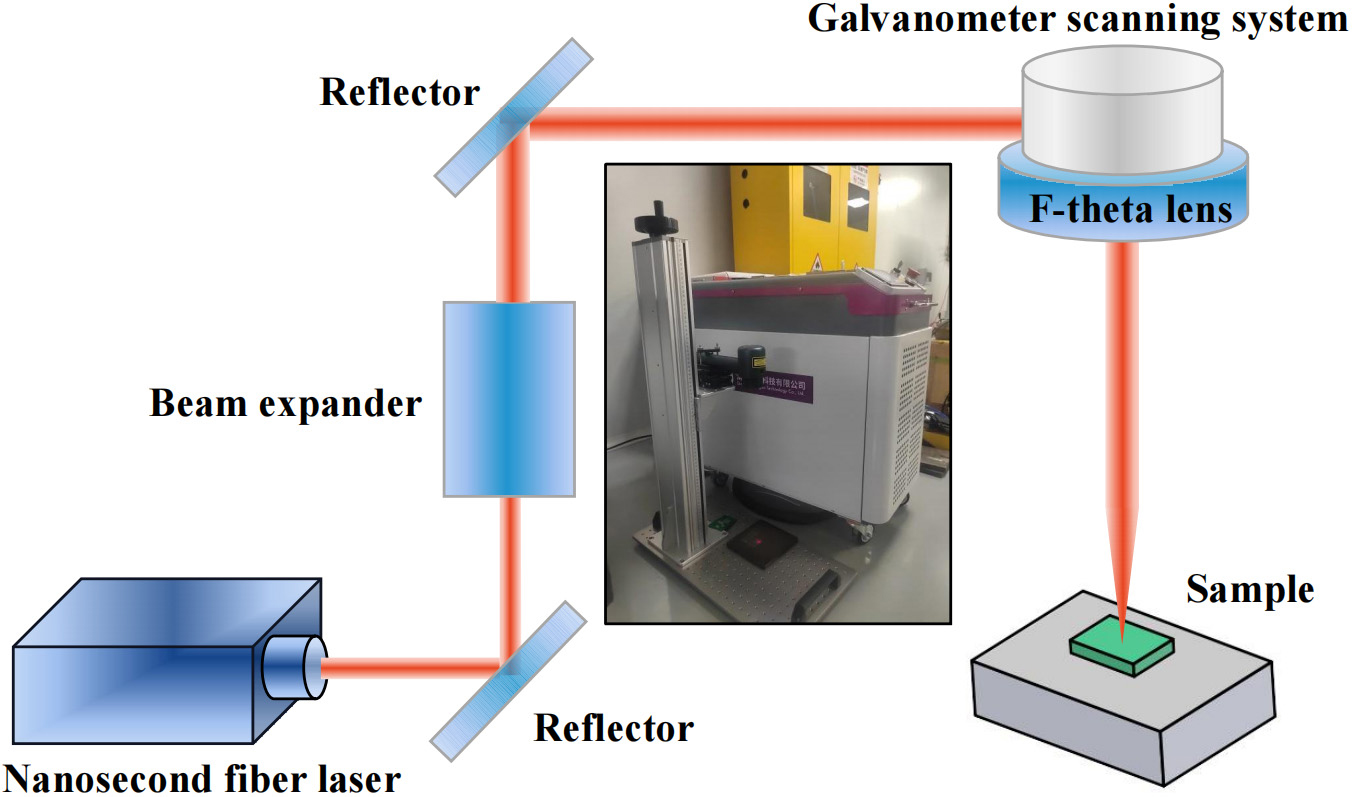
To simulate actual working conditions, polished Q235B steel substrates were uniformly coated with a composite mold release agent (FREKOTE 770NC, Henkel, Germany) and then cured in an oven at 180°C for 2 hours. This process was repeated 30 times to achieve a final release agent layer on the Q235B steel with a thickness of 8.57 ± 4.38 μm, which served as the experimental substrate. Table 1 shows the chemical composition of Q235B steel. Prior to laser treatment, the substrates were ultrasonically cleaned in anhydrous ethanol for 5 minutes. The substrates were processed using a custom-built laser cleaning system (QY-LC200, Qingyan Hangao Technology Co. Ltd, China) developed by the authors’ research group (Figure 1). The system used a nanosecond fiber laser with a central wavelength of 1064 nm, an average power of 200 W, a repetition rate adjustable from 1 to 3000 kHz, and a pulse duration of 10 to 500 ns. The laser beam was guided by a galvanometer scanning system and focused through an F-theta lens (focal length: 255 mm) to produce a 30 μm spot size on the substrate surface. Key laser parameters, including power, scanning speed, repetition rate, pulse duration, and scan spacing, were evaluated at four levels to optimize the process. Surface roughness was selected as the primary metric for evaluating cleaning quality.

The surface morphology of samples before and after laser cleaning was examined using a scanning electron microscope (SEM, Prisma E, Thermo Fisher Scientific, USA). The white-light interferometer (Contour GT-X, Bruker, USA) was used to capture point cloud data representing the micro-topography of the surface, from which the surface roughness (Sa) was calculated as the root mean square of height variations; the final roughness value for each sample was obtained by averaging three measurements. Chemical composition was analyzed with an energy-dispersive spectrometer (EDS, Octane Elect Super, EDAX, USA). Wettability was evaluated by measuring the water contact angle (WCA) with a contact angle goniometer (OCA25, Dataphysics, Germany). A 3 μL droplet of distilled water was placed on the sample surface, and its contour captured. The Laplace-Young equation was used to determine the WCA [21], with the average of five measurements from different positions used to assess surface wettability. Microhardness testing was performed using a microhardness tester (VH1102, Wilson, USA) under a 0.3 kgf load and a dwell time of 15 seconds, with the average of three measurements recorded. For microstructure analysis, polished sample cross-sections were etched with an 8 wt.% nitric acid solution for 20–30 seconds at room temperature and then observed under a confocal laser microscope (LEXTTM OLS5100, Olympus, Japan). Tribological properties were assessed by recording the friction coefficient before and after laser cleaning with a multi-function tribometer (MFT-5000, Rtec Instruments, USA). Tests were performed under dry friction conditions with a ball-on-disk configuration in linear reciprocating mode. A Si3N4 ball (10 mm diameter) served as the counterface, while the sample remained fixed. The ball slid under a normal load F of 20 N, with a stroke length S of 6 mm, a sliding frequency f of 1 Hz, and a total duration t of 30 minutes. The multi-function tribometer recorded the real-time friction coefficient throughout the test. After testing, the wear volume V was calculated using a white-light interferometer based on wear track dimensions. The wear rate W was then determined using the equation:
3. RESULTS AND DISCUSSION
3.1. Surface morphology
The effective application of laser technology requires precise energy control through meticulous parameter adjustment. For example, selective laser melting achieves material fusion layer by layer and point by point by fine-tuning specific parameters [22]. Similarly, laser-induced surface periodic structures (LISSP) are formed by adjusting energy levels to induce periodic surface patterns [23], while laser cleaning utilizes parameter optimization to remove contaminants without compromising the integrity of the substrate. In this study, optimizing laser parameters was essential for efficiently removing the mold release agent while preserving the Q235B steel substrate. To identify the critical factors influencing this process, an orthogonal analysis was performed, with the results summarized in Table 2.
To simplify identification, the samples are labeled from S0 to S16, with S0 representing the untreated substrate. Due to the significant interaction between experimental factors, isolating the primary factors affecting surface roughness was challenging. Therefore, we performed a comparative analysis of representative samples: S1 (lowest laser power of 80 W and highest scanning speed of 2500 mm/s) and S16 (highest laser power of 200 W and lowest scanning speed of 1000 mm/s) alongside the S0. Figure 2 shows SEM images and 3D surface profiles of S0, S1, and S16.
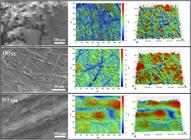
The S0 surface was covered with the mold release agent, with many micron-sized spiked structures visible in the 3D surface profile, resulting in a surface roughness of 1.840 μm. After laser cleaning, the surface roughness of S1 significantly decreased to 0.666 μm, with a noticeable reduction in the height of the spiked structures. However, the overall morphology still retained some spiked features, indicating partial removal of the mold release agent. The exposed underlying steel was visible in the form of streak-like patterns along the surface. In contrast, S16 exhibited complete removal of the spiked structures, replaced by line-shaped convex structures tens of microns in size. The surface roughness of S16 increased to 1.187 μm, suggesting that excessive heat accumulation caused local melting, followed by the formation of re-solidified molten material. These line-shaped structures increased the surface roughness, potentially affecting the mold’s performance in subsequent applications.
Higher surface smoothness in molds facilitates easier demolding and reduces stress concentrations, thereby extending mold life by minimizing fatigue cracking. Therefore, we further analyzed samples with a surface roughness below 0.6 μm: S8, S10, S13, and S14. Figure 3 shows SEM images and 3D surface profiles of these samples.

At low magnification, SEM images revealed streak-like patterns on all sample surfaces, aligned along the laser scanning paths, making it difficult to distinguish the specific cleaning effects macroscopically. Therefore, high-magnification SEM imaging was performed to obtain a more detailed characterization of the cleaned surfaces. According to the 3D surface profiles, the S8 surface retained small amounts of spiked mold release agent residues. Under high magnification, these residues appeared lighter in color than the Q235B steel substrate and were distributed in flake-like clusters across the surface. In contrast, the surfaces of S10, S13, and S14 showed almost complete removal of the mold release agent. However, all three surfaces exhibited line-shaped convex structures similar to those observed on the S16 surface, albeit with less pronounced protrusions. This suggests that localized re-solidification of molten material also occurred on these surfaces, albeit to a lesser degree. Among these samples, S13 had the lowest surface roughness, measured at 0.474 μm. Additionally, high-magnification SEM revealed small granular impurities on the surfaces of S10 and S14, which were identified as residual mold release agent. The surface morphology of S13 most closely resembled that of polished Q235B steel, indicating that the laser processing parameters used for S13 were optimal.
3.2. Surface chemical composition
Figure 4 shows the EDS analysis of the chemical composition on the surfaces of S0 and S13. The surface of S0 contained approximately 34.4% Fe, 41% Si, 14% C, 10.5% O, and 0.1% F. According to Table 1, the Fe content of Q235B steel should be over 90%, suggesting that the elevated Si, C, O, and F concentrations mainly originated from the mold release agent, confirming the presence of significant residue on the surface. In contrast, the surface of S13 contained 91.3% Fe, 3.3% Si, 2.4% F, and 2.9% O, with no detectable C. The significant reduction in Si and O, along with the absence of C, indicates that the mold release agent was almost completely removed, leaving minimal residue. The surface showed no signs of severe oxidation. The increased F content suggests that the remaining mold release agent mainly consisted of an F-rich layer, which likely bonded to the Q235B steel surface immediately after application.

3.3. Surface chemical composition
Figure 5 presents the macroscopic surface morphology and WCAs of S0 and S13. The WCAs of the surface of S0 and S13 were 102.6 ± 4.8° and 42.5 ± 6.1°, respectively. The laser cleaning process effectively removed the hydrophobic mold release agent and promoted partial oxidation, which increased the surface free energy and enhanced the adsorption capacity for hydroxyl groups [24]. As a result, the surface wettability improved, transitioning from hydrophobic to hydrophilic.

3.4. Microstructure
Figure 6 shows the cross-sectional microstructure images of S0 and S13. The microstructure of S0 consists of alternating regions of light-colored ferrite and dark-colored granular pearlite, with no clear orientation, forming a lamellar axial grain structure. In S13, the deeper layers retained a similar microstructure to that of S0. However, near the surface, a heat-affected zone (HAZ) approximately 15–20 μm thick was observed. Within this zone, the dark-colored pearlite phase was largely replaced by strip-like martensite and lamellar ferrite, indicating localized re-solidification due to the laser process.

3.5. Hardness and tribological property
Given the harsh operating conditions of composite tooling molds, with temperatures ranging from 130°C to 200°C, the molds experience various complex stresses, such as friction, impact, and compression [25]. The primary failure mechanisms include surface collapse and wear. Therefore, surface hardness and tribological properties are critical factors affecting the service life of these molds. We conducted a detailed evaluation of the mechanical properties of S13 to understand the effects of laser cleaning on its surface. Figure 7 presents the Vickers hardness results for the surfaces of S0 and S13. The Vickers hardness of the surface of S0 was 209.7 HV, whereas the hardness of S13 increased to 237.3 HV, indicating an improvement of about 13% after laser cleaning. This enhancement is attributed to the rapid re-melting and solidification induced by laser treatment, as shown in Figure 6. During laser cleaning, the molten surface layer rapidly re-solidified, forming a layer with refined grain structures. The reduction in grain size increased the number of grain boundaries, which act as barriers to dislocation movement, thus enhancing surface hardness [26].

Figure 8 shows the variation in the friction coefficient for the surfaces of S0 and S13 during the tribological test, as well as the three-dimensional morphology of the wear tracks after testing. Due to the higher surface roughness, intense micro-asperity interlocking occurred at the initial stages of the tribological test, resulting in a rapid increase in the friction coefficient for S0, which reached over 0.7 within the first 20 seconds. In contrast, the friction coefficient for S13 remained below 0.55 for the first 80 seconds. After approximately 5 minutes of running-in, the friction coefficients of both surfaces stabilized at approximately 0.67. Notably, the instability in the friction coefficient of S13 was more pronounced, likely due to the grain refinement and non-uniform martensitic transformation induced by laser treatment [27]. Even during the stabilized phase, the friction coefficient exhibited minor fluctuations, with slight decreases followed by recoveries. The wear track morphology further allowed the calculation of the wear rate, revealing a value of 1.76 × 10⁻⁵ mm3/(N·m) for S13, representing an 8% reduction compared to S0’s 1.91 × 10⁻⁵ mm3/(N·m). The surface hardening induced by the laser’s thermal effect reduced the tendency for adhesive wear and made the hardened surface less susceptible to abrasive cutting, thereby mitigating abrasive wear [28].

Friction coefficient evolution during tribological testing of (a) S0 and (b) S13, with corresponding 3D wear track morphology.
4. Conclusions
Laser cleaning effectively removed mold release agent residues from Q235B steel surfaces. Optimized cleaning parameters minimized residual contamination and improved surface quality, making the process suitable for restoring mold surfaces without compromising the base material.
The removal of hydrophobic mold release agents and partial surface oxidation during laser cleaning significantly altered surface characteristics, transforming it from hydrophobic (WCA of 102.6°) to hydrophilic (WCA of 42.5°). This change indicates an increase in surface free energy, which benefits subsequent processes involving the cleaned molds.
The Vickers hardness of laser-cleaned surfaces increased by about 13% compared to untreated samples, attributed to rapid re-melting and solidification induced by the laser. The grain refinement effect from this process increased resistance to deformation, enhancing the mold surface’s mechanical strength.
Laser-cleaned surfaces showed significantly improved wear resistance, with an 8% reduction in wear rate and, occasionally, a slight decrease in the friction coefficient compared to untreated surfaces.
These results indicate that laser cleaning restores surface cleanliness and improves tribological performance, making it an effective treatment for extending the operational lifespan of tooling molds in demanding industrial applications.
5. ACKNOWLEDGMENTS
This research was funded by Henan Key Laboratory of Intelligent Manufacturing Equipment Integration for Superhard Materials Fund Project (JDKJ2024-05), which was provided by Jialiang Guo.
6. BIBLIOGRAPHY
-
[1] OZTURK, F., COBANOGLU, M., ECE, R.E., “Recent advancements in thermoplastic composite materials in aerospace industry”, Journal of Thermoplastic Composite Materials, v. 37, n. 9, pp. 3084–3116, 2024. doi: http://doi.org/10.1177/08927057231222820.
» https://doi.org/10.1177/08927057231222820 -
[2] SAJAN, S., SELVARAJ, D.P., “A review on polymer matrix composite materials and their applications”, Materials Today: Proceedings, v. 47, pp. 5493–5498, 2021. doi: http://doi.org/10.1016/j.matpr.2021.08.034.
» https://doi.org/10.1016/j.matpr.2021.08.034 -
[3] KOMOLAFE, A., ZAGHARI, B., TORAH, R., et al, “E-textile technology review – from materials to application”, IEEE Access : Practical Innovations, Open Solutions, v. 9, pp. 97152–97179, 2021. doi: http://doi.org/10.1109/ACCESS.2021.3094303.
» https://doi.org/10.1109/ACCESS.2021.3094303 -
[4] AGARWAL, J., SAHOO, S., MOHANTY, S., et al, “Progress of novel techniques for lightweight automobile applications through innovative eco-friendly composite materials: a review”, Journal of Thermoplastic Composite Materials, v. 33, n. 7, pp. 978–1013, 2020. doi: http://doi.org/10.1177/0892705718815530.
» https://doi.org/10.1177/0892705718815530 -
[5] JOHN, R., LIN, R., JAYARAMAN, K., et al, “Effects of machining parameters on surface quality of composites reinforced with natural fibers”, Materials and Manufacturing Processes, v. 36, n. 1, pp. 73–83, 2021. doi: http://doi.org/10.1080/10426914.2020.1813896.
» https://doi.org/10.1080/10426914.2020.1813896 -
[6] YEETSORN, R., PRISSANAROON-OUAJAI, W., BOONPANAID, C., et al, “Rotomoulding release agent preparation for auto part fabrications”, Materials Today: Proceedings, v. 52, pp. 2365–2371, 2022. doi: http://doi.org/10.1016/j.matpr.2021.10.100.
» https://doi.org/10.1016/j.matpr.2021.10.100 -
[7] HALDAR, B., GHARA, T., ANSARI, R., et al, “Abrasive jet system and its various applications in abrasive jet machining, erosion testing, shot-peening, and fast cleaning”, Materials Today: Proceedings, v. 5, n. 5, pp. 13061–13068, 2018. doi: http://doi.org/10.1016/j.matpr.2018.02.293.
» https://doi.org/10.1016/j.matpr.2018.02.293 -
[8] VICARIA, Y., HERRERA-MÁRQUEZ, J.M., FERNÁNDEZ-CASILLAS, C., et al, “Cleaning protocols using surfactants and electrocleaning to remove food deposits on stainless steel surfaces”, Journal of Applied Electrochemistry, v. 48, n. 12, pp. 1363–1372, 2018. doi: http://doi.org/10.1007/s10800-018-1209-z.
» https://doi.org/10.1007/s10800-018-1209-z -
[9] MÁSHA, V., HORNÁK, D., PETRILÁK, D., “Industrial use of dry ice blasting in surface cleaning”, Journal of Cleaner Production, v. 329, pp. 129630, 2021. doi: http://doi.org/10.1016/j.jclepro.2021.129630.
» https://doi.org/10.1016/j.jclepro.2021.129630 -
[10] Aslan, A., Salur, E., GÜNEŞ, A., et al, “The effect of ultrasonic cleaning upon mechanical properties of metal matrix composites”, Transactions of the Indian Institute of Metals, v. 74, n. 1, pp. 107–118, 2021. doi: http://doi.org/10.1007/s12666-020-02104-6.
» https://doi.org/10.1007/s12666-020-02104-6 -
[11] OTTO, C., ZAHN, S., ROST, F., et al, “Physical methods for cleaning and disinfection of surfaces”, Food Engineering Reviews, v. 3, n. 3-4, pp. 171–188, 2011. doi: http://doi.org/10.1007/s12393-011-9038-4.
» https://doi.org/10.1007/s12393-011-9038-4 -
[12] ZHOU, Z., SUN, W., WU, J., et al, “The fundamental mechanisms of laser cleaning technology and its typical applications in industry”, Processes (Basel, Switzerland), v. 11, n. 5, pp. 1445, 2023. doi: http://doi.org/10.3390/pr11051445.
» https://doi.org/10.3390/pr11051445 -
[13] GUO, J., WANG, F., LIOU, J.J., et al, “Parallel groove-textured TB6 titanium alloy surfaces for improving wettability, tribological properties and corrosion resistance”, Rare Metal Materials and Engineering, v. 53, n. 3, pp. 617–624, 2024. doi: http://doi.org/10.12442/j.issn.1002-185X.20230268.
» https://doi.org/10.12442/j.issn.1002-185X.20230268 -
[14] GUO, J., CHEN, R., LI, Q., et al, “Superhydrophobic surface preparation and tribological properties of Ti-1023 alloy with parallel groove”, Optics & Laser Technology, v. 179, pp. 111361, 2024. doi: http://doi.org/10.1016/j.optlastec.2024.111361.
» https://doi.org/10.1016/j.optlastec.2024.111361 -
[15] LU, Y., YANG, L., WANG, M., et al, “Simulation of nanosecond laser cleaning the paint based on the thermal stress”, Optik (Stuttgart), v. 227, pp. 165589, 2021. doi: http://doi.org/10.1016/j.ijleo.2020.165589.
» https://doi.org/10.1016/j.ijleo.2020.165589 -
[16] LI, Z., YUN, Q., MAO, Y., et al, “Numerical simulation and experiments of nano-second pulsed laser cleaning titanium alloy oxide film”, Applied Optics, v. 63, n. 25, pp. 6650-6658, 2024. doi: http://doi.org/10.1364/AO.532481.
» https://doi.org/10.1364/AO.532481 -
[17] ZHU, G., WANG, S., CHENG, W., et al, “Corrosion and wear performance of aircraft skin after laser cleaning”, Optics & Laser Technology, v. 132, pp. 106475, 2020. doi: http://doi.org/10.1016/j.optlastec.2020.106475.
» https://doi.org/10.1016/j.optlastec.2020.106475 -
[18] FANG, C., HU, T., PU, Z., et al, “Effect of laser cleaning parameters on surface filth removal of porcelain insulator”, Photonics, v. 10, n. 3, pp. 269, 2023. doi: http://doi.org/10.3390/photonics10030269.
» https://doi.org/10.3390/photonics10030269 -
[19] TIAN, Z., LEI, Z., CHEN, X., et al, “Nanosecond pulsed fiber laser cleaning of natural marine micro-biofoulings from the surface of aluminum alloy”, Journal of Cleaner Production, v. 244, pp. 118724, 2020. doi: http://doi.org/10.1016/j.jclepro.2019.118724.
» https://doi.org/10.1016/j.jclepro.2019.118724 -
[20] ROTONDI, G., BRINI, A., CANTINI, F., “A new underwater laser cleaning tool for large bronze artefacts”, Journal of Cultural Heritage, v. 61, pp. 188–193, 2023. doi: http://doi.org/10.1016/j.culher.2023.03.012.
» https://doi.org/10.1016/j.culher.2023.03.012 -
[21] XUE, K., FU, H., CHEN, H., et al, “Investigation of membrane wetting for CO2 capture by gas–liquid contactor based on ceramic membrane”, Separation and Purification Technology, v. 304, pp. 122309, 2023. doi: http://doi.org/10.1016/j.seppur.2022.122309.
» https://doi.org/10.1016/j.seppur.2022.122309 -
[22] OLIVEIRA, F.S., PAULA, A.S., ELIAS, C.N., “Caracterização microestrutural da liga Ti6Al4V processada por manufatura aditiva via Fusão Seletiva a Laser e submetida a tratamento térmico”, Matéria (Rio de Janeiro), v. 29, n. 4, pp. e20240307, 2024. doi: http://doi.org/10.1590/1517-7076-rmat-2024-0307.
» https://doi.org/10.1590/1517-7076-rmat-2024-0307 -
[23] CAPELLA, A.G., SILVA, M.M., SIMÕES, J.G.A.B., et al, “Biofilm growth on laser-induced periodic surface structures (LIPSS) of AISI 316L stainless steel”, Matéria (Rio de Janeiro), v. 29, n. 3, pp. e20240288, 2024. doi: http://doi.org/10.1590/1517-7076-rmat-2024-0288.
» https://doi.org/10.1590/1517-7076-rmat-2024-0288 -
[24] TONG, W., XIONG, D., “Direct laser texturing technique for metal surfaces to achieve superhydrophobicity”, Materials Today Physics, v. 23, pp. 100651, 2022. doi: http://doi.org/10.1016/j.mtphys.2022.100651.
» https://doi.org/10.1016/j.mtphys.2022.100651 -
[25] FALLBÖHMER, P., RODRÍGUEZ, C.A., Özel, T., et al, “High-speed machining of cast iron and alloy steels for die and mold manufacturing”, Journal of Materials Processing Technology, v. 98, n. 1, pp. 104–115, 2000. doi: http://doi.org/10.1016/S0924-0136(99)00311-8.
» https://doi.org/10.1016/S0924-0136(99)00311-8 -
[26] GUO, J., HU, T., LI, Q., et al, “Nanosecond laser-induced dimple texturing of TB6 alloy surfaces: tribological behavior under dry and starved-oil lubrication”, Tribology International, v. 197, pp. 109842, 2024. doi: http://doi.org/10.1016/j.triboint.2024.109842.
» https://doi.org/10.1016/j.triboint.2024.109842 -
[27] ANUSHA, E., KUMAR, A., SHARIFF, S.M., “A novel method of laser surface hardening treatment inducing different thermal processing conditions for thin-sectioned 100Cr6 steel”, Optics & Laser Technology, v. 125, pp. 106061, 2020. doi: http://doi.org/10.1016/j.optlastec.2020.106061.
» https://doi.org/10.1016/j.optlastec.2020.106061 -
[28] ZHOU, K., XU, J., XIAO, G., et al, “Enhancing ductile removal of Cf/SiC composites during abrasive belt grinding using low-hardness rubber contact wheels”, Ceramics International, v. 48, n. 18, pp. 26042–26054, 2022. doi: http://doi.org/10.1016/j.ceramint.2022.05.286.
» https://doi.org/10.1016/j.ceramint.2022.05.286