
 Integrated mechanical, durability and sustainability assessment of eco-efficient concrete using SCM, RCA and additive synergy
ABSTRACT
The increasing demand for sustainable construction has encouraged the development of low-carbon, high- performance concrete using industrial by-products and wastes. This study experimentally investigates the individual and combined effects of supplementary cementitious materials (SCMs), recycled concrete aggregates (RCA), and mineral admixture Icrete on the mechanical, durability, microstructural, and sustainability performance of concrete. Class F fly ash (10–50%), ground granulated blast furnace slag (10–50%), and silica fume (2.5–12.5%) were used as partial cement replacements, while RCA (10–50%) replaced natural coarse aggregates. Icrete was added at 0.5–2 wt.% of the cementitious material. Results identified optimal SCM contents of 20% fly ash, 40% GGBFS, and 7.5% silica fume, with silica fume delivering the best. Compressive strength increased by 17.4% and 13.2% at 28 and 90 days, respectively, compared to conventional concrete. Although RCA reduced strength and increased permeability, these effects were mitigated by combining SCMs with Icrete. The optimal mix (7.5% silica fume, 20% RCA, and 2% Icrete) achieved compressive strengths of 46.0 MPa and 51.5 MPa at 28 and 90 days, along with a 30% reduction in water absorption. This research optimizes three-phase SCM blends with RCA, Icrete, and a six-parameter sustainability assessment, enabling mechanistic and quantitative performance recovery in eco-efficient structural concrete.
Keywords:
Sustainable concrete; Supplementary cementitious materials; Recycled concrete aggregate; Mineral additive; Durability; Sustainability assessment; Microstructure.
1. INTRODUCTION
In recent decades, concrete has been the most used construction material globally because of its versatility, durability, and economic viability [1, 2]. The ever-increasing rate of urbanisation and infrastructure development has contributed greatly to the increased demand for concrete globally, and consequently, cement consumption has increased substantially [3]. Nevertheless, the process of producing ordinary Portland cement (OPC) is energy-intensive and accounts for about 7–8% of global human-induced carbon dioxide emissions, making the cement industry one of the largest polluters of the environment [4]. Apart from greenhouse gas pollution, the increase in demand for natural aggregates has led to resource consumption, land degradation, and ecological imbalance [5]. This situation necessitates the development of eco-friendly concrete technologies that can minimise carbon emissions and resource consumption without compromising the concrete performance.
The use of supplementary cementitious materials (SCMs), such as fly ash, ground granulated blast furnace slag (GGBFS) and silica fume (SF), as partial replacement of cement is one of the promising avenues for sustainable production of concrete [6, 7]. Fly ash, a by-product of coal combustion, is pozzolanic and improves the long-term strength of concrete by secondary hydration [6]. GGBFS is a latent hydraulic material and contributes to the enhancement of the late-age strength and durability of concrete with a significant reduction in embodied carbon [6]. Silica fume, a fine industrial by-product, is well-known for its pore-refining, strengthening of ITZ and the enhancement of early-age strength [8]. Numerous studies have demonstrated that with appropriate mix proportions, SCMs can enhance the strength, durability and service life of concrete with low cement consumption and thus a reduced environmental impact [6, 8].
In parallel, it is an effective solution to use recycled concrete aggregates (RCA) from construction and demolition waste to cope with the escalating problems of aggregate scarcity and disposal. The inclusion of RCA in concrete allows for resource preservation and reduction in landfilling, thereby contributing to the concept of a circular economy [1]. However, the adhered old mortar and micro-cracks usually present in RCA result in high porosity, poor ITZ properties, and lower mechanical strength, mainly at higher substitution ratios [9, 10]. Therefore, the inclusion of RCA in structural concrete is still limited, and new material solutions are needed to address the drawbacks [1].
However, recent research has also highlighted the need to integrate SCMs with RCA to improve the overall performance of sustainable recycled aggregate concrete [11]. The micro-filler properties of SCMs can enhance bonding at the aggregate-paste interface and thus compensate for the inherent limitations of RCA [6]. Nevertheless, achieving a balanced performance of strength, durability, and sustainability is still quite challenging, especially for higher levels of RCA. To this end, mineral admixtures with high fineness and nucleation, such as Icrete, have been suggested as a possible performance-improving admixture [12]. The use of Icrete can improve hydration, micro-filler properties, and packing density as an efficient means of improving the early and long-term performance of sustainable concrete. Although research has been done on the separate impact of SCMs and RCA, very few studies have explored the combined synergistic effect of SCMs, RCA, and mineral additives, particularly from the angle of a comprehensive durability and sustainability assessment [1, 8]. Most of the existing research works have been focused on mechanical properties, while aspects related to long-term durability, like chloride resistance, sorptivity, acid resistance, and overall sustainability factors such as embodied carbon, energy, and eco-efficiency, have been left out [6, 8]. Besides, the microstructural interactions of SCMs, RCA, and mineral additives are still quite unclear, especially when it comes to the optimisation of combined materials [1, 11].
“Although studies combining SCMs with RCA, or mineral additives with conventional concrete, exist in the literature, the present work distinguishes itself through the following specific scientific contributions: (i) a systematic three-stage experimental optimization framework encompassing 29 mix designs that enables controlled decoupling of individual and synergistic effects; (ii) a direct comparative evaluation of three chemically distinct SCMs (fly ash, GGBFS, and silica fume) under identical RCA and additive conditions; (iii) a mechanistic investigation of Icrete as a targeted compensator for RCA-induced ITZ deficiencies through nucleation promotion and secondary hydration; (iv) a comprehensive six-parameter sustainability assessment framework integrating embodied carbon, energy, sustainability index, material efficiency, eco-efficiency, and circularity index; and (v) explicit quantification of performance recovery thresholds achievable through SCM-RCA- additive synergy. These contributions collectively advance the fundamental understanding and practical design of high-performance, eco-efficient structural concrete.” The major goals of the study include:
-
(1)
To characterise the physical and chemical properties of the selected SCMs and RCA.
-
(2)
To find out the best replacements for fly ash, GGBFS, and silica fume in cement that will be able to produce significantly higher mechanical and durability properties.
-
(3)
To check the effect of RCA on concrete properties and, at the same time, to determine the optimum RCA replacement level that will still ensure the structural integrity of the concrete.
-
(4)
To analyse the influence of Icrete powder on the strength, durability, and densification of microstructure.
-
(5)
To evaluate the sustainability impacts of the proposed concrete mixes via the calculation of embodied CO2 emissions, energy consumption, eco-efficiency, and circularity indices.
The findings of the present investigation are expected to contribute a comprehensive performance-based methodology to the development of high-strength, lasting, and environmentally friendly concrete, thus facilitating sustainable development, environmental protection, and better utilisation of the industrial and construction wastes.
2. MATERIALS AND METHODS
2.1. Materials and properties
In this research, Ordinary Portland Cement (OPC) of 53 grade, complying with IS 12269:2013, was utilised as the main binder. The cement was obtained from UltraTech Cement, India, and was kept in airtight containers to avoid moisture entry. The physical and chemical characteristics of OPC met the criteria of the corresponding Indian Standards. The cement’s specific gravity and Blaine fineness were 3.15 and 320 m/kg, respectively.
Three different supplementary cementitious materials (SCMs), viz. Class F fly ash (FA), ground granulated blast furnace slag (GGBFS), and silica fume (SF) were used as partial cement replacements. The low-calcium Class F fly ash, which meets ASTM C618 specifications, was sourced from the Salem Thermal Power Plant, Tamil Nadu, India. The fly ash mainly contained spherical glassy particles composed of silica and alumina, hence the pozzolanic reactivity. GGBFS meeting IS 12089:1987 was purchased from Astrra Chemicals, Chennai, India. Slag showed latent hydraulic properties and high fineness, which can contribute to strength and durability after longer curing of concrete. The silica fume, also from the same supplier, was densified, grey, and ultra-fine particle size with high amorphous silica content, which means it can be a very good micro-filler and will give high pozzolanic activity. The chemical compositions and physical properties of the SCMs were measured following ASTM C311, and the data are shown in Table 1.
Manufactured sand (M-sand) was used as the fine aggregate (FA). The sand was the portion of the fine aggregate that passed the 4.75 mm sieve and was retained on the 2.36 mm sieve. Before use, the M-sand was thoroughly washed to remove dust and other fine particles and then air-dried to reach the saturated surface dry (SSD) condition. A natural coarse aggregate (NCA) of a nominal maximum size of 20 mm, obtained from Venkateshwara Blue Metals, Karamadai, Tamil Nadu, was used. The aggregates were angular, clean, and free from organic matter. The physical properties of the fine and coarse aggregates were determined according to IS 383:1970, and the test results are given in Table 2.
Potable water, as per IS 10500:2012, was used for both mixing and curing of concrete specimens. The high fineness and increased surface area of SCMs generally demand more water, which is likely to decrease the workability of the mixture. To counter this, a high-range water-reducing admixture (HRWR) based on polycarboxylate ether (PCE) chemistry and conforming to IS 9103:1999 was added to improve the workability and keep the water-binder ratio at the desired level. The amount of superplasticiser was determined through preliminary testing to achieve sufficient flow without segregation or bleeding. Table 3 contains the main characteristics of the superplasticiser.
To improve the microstructural attributes and overall performance of concrete, a mineral additive that is commercially known as Icrete was added to the mixes. Icrete is made up of finely divided mineral particles having a high nucleation capability that accelerates hydration, leads to pore refinement, and hence results in improving the densification of the matrix. Scanning electron microscopy (SEM) was used to study the physical and morphological features of Icrete, and the role of Icrete in concrete is extensively discussed in Section 2.5.
Icrete was procured from Amazecrete Private Limited, Bangalore, India. SEM-EDS analysis (Bruker) of the as-received powder Figures 1 and 2 confirmed its calcium-alumino-silicate nature, with normalised elemental composition (wt.%) of: O-41.15%, C-19.70%, Ca-12.17%, Na-7.97%, Si-7.18%, S-5.40%, Al-5.17%, Fe-0.77%, and Mg-0.16%. The dominant Si-Al-Ca-O elemental system, combined with a high specific surface area of 9000 cm2/g, accounts for its dual role as a micro-filler and hydration nucleation promoter in the cementitious matrix.”

Elemental analysis of energy-dispersive X-ray analysis using field-emission scanning electron microscopy of Icrete.

Chemical composition of energy-dispersive X-ray analysis using field-emission scanning electron microscopy of Icrete.
2.2. Recycled Concrete Aggregate (RCA): source, processing and properties
Recycled concrete aggregates (RCA) were created from lab-tested concrete specimens as well as demolished concrete elements with known composition and strength class. The original concrete was first broken by hand into pieces of reasonable size that were then crushed using a mechanical jaw crusher to produce coarse aggregate particles. Afterwards, the crushed material was sorted using a series of standard sieves, and 20 mm nominal maximum size aggregates were collected, which were consistent in size with the natural coarse aggregates used in the control mixes. To reduce the effect of loosely adhered mortar, dust, and fine particles, the processed RCA was carefully washed with clean water and air-dried to get a saturated surface dry (SSD) condition before use. This method was intended to increase the cleanliness and uniformity of recycled aggregates and to diminish the variability that is due to adhered old cement paste. The physical properties of RCA, such as specific gravity, water absorption, bulk density, aggregate impact value, and crushing value, were determined following IS 383:1970 and relevant Indian Standard testing procedures.
RCA showed lower specific gravity and higher water absorption than NCA, which is in line with expectations. This is mainly because of the leftover mortar still stuck to the aggregate surface and internal microcracks caused during the crushing of the aggregates. The mortar that is still sticking accounts for the increased porosity and surface roughness; thus, more water is needed, and the ITZ in concrete become weaker. These features agree with the ones observed in the previous research, and it is well-known that they have a great impact on both the fresh and the hardened properties of recycled aggregate concrete.
In the present investigation, RCA was used as a partial replacement of natural coarse aggregate at five replacement levels: 10%, 20%, 30%, 40%, and 50% by weight. This replacement range was selected to systematically evaluate the influence of RCA content on strength development, durability performance, and microstructural characteristics of concrete, and to identify an optimum replacement level suitable for structural- grade applications. The stepwise variation in RCA content enabled the assessment of performance thresholds beyond which mechanical and durability properties become adversely affected.
2.3. Mix design methodology and experimental matrix
The concrete mixes were prepared following IS 10262:2019 to achieve a characteristic compressive strength of 40 MPa at 28 days. To keep the trials consistent and make the direct comparison of the performance viable, the water-binder (w/b) ratio was set at 0.37 and kept unchanged for all mixtures [13]. The control concrete (CC) was made with natural aggregates and OPC as the only binder. After that, SCMs, RCA, and mineral additives were progressively introduced to form a complete experimental matrix [14]. The whole experimental program was devised to be run in three stages.
At the first stage, OPC was replaced by fly ash, GGBFS and silica fume (Figure 3A) separately at different replacement levels to determine the best SCM dosage [15, 16]. Fly ash and GGBFS were gradually added at 10%, 20%, 30%, 40% and 50% levels, replacing the cement by weight, whereas silica fume was mixed at 2.5%, 5.0%, 7.5%, 10.0% and 12.5%. These intervals were selected based on a thorough review of previous studies and the results, which showed the trends for the development of strength and thus identified the optimum replacement levels. Considering the strength and durability results, the optimum dosage levels were 20%, 40%, and 7.5% for fly ash, GGBFS, and silica fume, respectively [15, 16].

(A) OPC and SCM; (B) PCE-based superplasticiser; (C) Tested concrete cube specimens; (D) Concrete Specimens before testing; (E) Fresh Concrete cubes; (F) Specimens under immersed curing; (G) Specimens under durability testing; (H) SCM for Microstructural Characterisation.
At the second stage, recycled concrete aggregates were used as a partial substitute for natural coarse aggregates at five different replacement levels, i.e. 10%, 20%, 30%, 40%, and 50%, while the optimum SCM contents were kept unchanged [17, 18]. The main goal of this stage was to find out the joint effect of SCMs and RCA on the mechanical performance, durability characteristics, and sustainability indices, and to locate the optimum RCA replacement level. It was found that the use of a 20% RCA replacement level gave the best compromise between sustainability gains and mechanical performance based on the strength and durability results [17, 19].
In the third phase, a mineral additive (Icrete) was introduced at four different dosages, 0.5%, 1.0%, 1.5%, and 2.0% based on the weight of the cementitious material, to the optimised SCM, RCA mixtures [20]. The objective of this phase was to develop microstructural densification, hydration kinetics, and the general performance of sustainable concrete mixes. Mechanical strength, durability indicators, and microstructural examination were used to decide the Icrete dosage, with the 2.0% dosage level being the optimum content [20, 21].
In this study, 29 different concrete mixtures were prepared in total, which included the control mixture, SCM, blended mixtures, mixtures with RCA, and SCM-RCA optimised mixes. All the mix proportions together with the designations are provided in Table 4. This extensive, diverse testing matrix facilitated a comprehensive study of the individual and combined impact of SCMs, RCA, and mineral additives on the mechanical, durability, microscopic, and sustainability characteristics of concrete [14, 20, 21].
2.4. Mixing, casting, curing, and testing procedures
All the concrete mixtures were made at the laboratory using a 100 L capacity tilting drum mixer. Before mixing, all the materials used were brought to room temperature and kept in a saturated surface dry (SSD) condition to avoid any variation in water content. The entire mixing procedure was fixed for all batches to have different mixes and be uniform [13]. First, the coarse aggregates (natural/recycled) and fine aggregates were dry mixed for about 1 min to get a uniform distribution. After that, cement and supplementary cementitious materials were added and dry mixed for another 1 min. Then, about 70% of the mixing water with the pre-dissolved superplasticizer (Figure 3B) was slowly added, and the mixture was mixed for 2 min. The rest of the water was put in, and the concrete was mixed for an additional 2 min to confirm the homogeneity and proper dispersion of the fine particles and mineral additives. When Icrete were present in the mixture, the additive was first mixed with the cementitious materials to get a uniform mixture. A standard slump test conforming to IS 1199:2018 was used to determine the workability of new concrete right after mixing. Slump values were regulated within the target range of 75–100 mm by adjusting the superplasticiser dosage only, keeping the water binder ratio unchanged [13].
Concrete samples were placed in standard steel moulds in three layers, with each layer being vibrated by a table vibrator to get rid of trapped air and achieve proper compaction. Cubes of 150 × 150 × 150 mm were made for compressive strength testing, cylinders with 150 mm diameter and 300 mm height were for split tensile strength testing, and prisms of 100 × 100 × 500 mm were for flexural strength testing (Figure 3C,D). Once the concrete was poured, the moulds were covered with polyethene sheets to avoid drying and were left under ambient laboratory conditions for 24 h (Figure 3E). Following demoulding, the specimens were basically cured by water in a water curing tank kept at 27 ± 2 °C until the test was taken (Figure 3F). As per IS 516:2021, compressive strength tests were performed at curing ages of 7, 14, 28, 56, and 90 days.
Durability testing comprised water absorption and sorptivity, which were carried out following ASTM C642 and ASTM C1585, respectively. For evaluating resistance to chemical attack, the specimens were immersed in 5% hydrochloric acid (HCl) and 5% sulfuric acid (H2SO4) solutions (Figure 3G), and mass loss and residual compressive strength were checked at predetermined time intervals. Rapid chloride penetration tests (RCPT) were carried out in accordance with ASTM C1202, whereas electrical resistivity was measured using a four-probe Wenner method. For each mix and test age, a minimum of three specimens were tested, and the average values are given to ensure statistical reliability.
2.5. I-Crete mineral additive: SEM analysis, characteristics and role in concrete
Microstructural features of the mineral additive Icrete, as well as the supplementary cementitious materials (fly ash, GGBFS, and silica fume), were characterised using a Field Emission Scanning Electron Microscope (FESEM; Carl Zeiss, USA; Model: SIGMA with Gemini column; resolution: 1.5 nm). The instrument was operated at an accelerating voltage of 10.00 kV with a working distance of 5.1–6.5 mm, and images were captured using the In Lens secondary electron detector at a magnification of 25,000×. Elemental composition was determined using the integrated Bruker Energy Dispersive X-ray Spectroscopy (EDS) system. All characterisation was performed at the COE INDUTECH facility.
Microstructural features of the mineral additive (Figure 3H) Icrete were studied through scanning electron microscope (SEM) imaging to determine its morphology, particle distribution, and the possible impact on the cementitious matrix. The SEM image (Figure 4) of Icrete shows mainly ultra-fine, angular, and irregular particles, with a lot of surface roughness and heterogeneity. Such material morphology suggests that the material can serve as both a micro-filler and a hydration nucleation agent, thus having a major impact on the hydration kinetics and concrete microstructural evolution.

Icrete’s nano-sized particles and irregularly shaped ones can efficiently fill the micro voids in the cement matrix and interfacial transition zone (ITZ). By doing this, the pore structure’s capillary porosity is lowered, and the disconnection of the pore network is facilitated, so a tightly packed and dense microstructure is attained. Besides, the high surface energy of Icrete particles helps in the deposition of hydration products, especially calcium silicate hydrate (C, S, H) gel, by providing many nucleation sites. The promoted production of C, S, H results in greater strength development at early ages and better long-term mechanical properties [22].
When recycled concrete aggregates are used in the concrete mix, the positive effect of Icrete is even more noticeable. As a rule of thumb, RCA grains have some old mortar sticking on them, and they are also slightly cracked, which leads to bad ITZ features and thus the porosity of the concrete increases. Icrete very, finely grained particles enter these defective areas very well and, through secondary hydration, react, and thus the hydration of the interface between the old mortar and the new paste is increased. As a result, mechanical interlocking is improved, bond strength is enhanced, and there is less microcrack extension. Moreover, the microstructure densification brought about by Icrete helps to increase the durability of the concrete in several ways, such as greatly reducing water absorption, lowering sorptivity, resisting chloride ion penetration, and resisting acid attack [22]. SEM figures together with the experimental results on durability show that not only does Icrete help in pore structure refinement, but it also strengthens the cement matrix. In brief, the addition of Icrete in a small amount (up to 2%) can be considered an efficient method of compensating for the performance limitations of recycled aggregates and producing high-quality, environmentally friendly, and durable concrete.
2.6. Fly ash SCM: SEM analysis, characteristics and role in concrete
Characterisation of microstructural features of Class F fly ash was done by scanning electron microscopy (SEM) to understand its morphology and possible impact on concrete properties [15]. Figure 5 of the fly ash mainly shows the presence of spherical particles with smooth surfaces, known as cenospheres, along with a small component of irregular and porous particles. Such a morphology makes a big difference in workability and flowability of fresh concrete since the ball bearing effect features these particles; thus, inter-particle friction is lowered, and cement particles are better dispersed within the matrix [13]. The spherical shape and ultrafine size distribution of fly ash particles are among the key reasons why packing density can be increased, and particle rearrangement could be more efficient during mixing, corresponding to lower water demand at the same workability level [16]. At the microstructural level, the smooth and glass-like surface of fly ash particles ensures they are well-dispersed and thus actively participate in pozzolanic reactions. During reaction, fly ash consumes calcium hydroxide released from cement hydration, thus forming more calcium silicate hydrate (CSH) gel that gradually densifies the matrix and improves the pore structure [7, 22].

SEM images clearly show how fly ash acts as a micro-filler and a pozzolanic material, thus resulting in strength enhancement over the long term and higher durability. The slow generation of secondary CSH gel is responsible for lowering the capillary porosity and thereby improving the characteristics of the interfacial transition zone (ITZ). The changes in pore structure account for the fly ash concrete mixtures’ higher late compressive strength, lower water intake, and greater resistance to chemical attack, which are all supported by experimental data [7, 13, 23]. Among recycled aggregate concretes, the use of fly ash certainly brings about remarkable positive changes [14]. These finest spherical particles of fly ash enter the porous adhered mortar layers of RCA and thus, by filling the micro voids, help in improving the ITZ quality. Therefore, there is a stronger bond between the aggregate and paste, less microcracking, and a more continuous matrix [15]. As a result, the incorporation of fly ash along with RCA is an eco-friendly way of producing concrete, and at the same time, it is a very efficient method of dealing with the recycled aggregates’ performance drawbacks.
2.7. GGBFS SCM: SEM analysis, characteristics and role in concrete
Microstructural features of ground granulated blast furnace slag (GGBFS) were revealed through scanning electron microscopy (SEM) studies to characterise its morphologies and possibly how it can influence concrete performance. The GGBFS SEM micrograph in Figure 6 displays the presence of angular, irregular, and sharp-edged particles with a rough surface, which are characteristics of vitreous slag that has been mechanically ground. The slag grit structure, thereby, imparts greater mechanical interlocking and thus stronger chemical bonding between the binder matrix and aggregates [9, 20]. Moreover, the angular form and the roughness of the surface of GGBFS granules create more nucleation points for the hydration reactions, thereby helping the formation of hydration products and leading to matrix densification. Even though GGBFS is less reactive at an early age due to its being latent hydraulic and having a slower reaction compared to OPC, its long-term hydration is greatly helpful in the formation of dense calcium silicate hydrate (C, S, H) gel. Such continuous hydration leads to refinement of pore structure and strengthening and hardening of the material features progressively after 28 days [7, 16].

SEM observations revealed a tightly compacted and evenly distributed microstructure in GGBFS blended composites, which is in fact the main reason for the observed increase in compressive strength at later ages, decrease in permeability, and higher resistance against aggressive chemical environments. Lowering of transport properties such as water absorption and chloride ion diffusion is achieved as the gradual consumption of calcium hydroxide and formation of secondary CSH gel reduces pore connectivity [20]. In relation to recycled aggregate concrete, GGBFS is instrumental in making up for the low-quality RCA. The finer hydration products penetrate the pores of the attached mortar and weak interfacial zones, thus reinforcing the aggregate-paste interface and promoting matrix continuity. This improvement at the microstructural level considerably helps in a reduction of strength loss and degradation of durability, which are the most frequent issues when RCA is used. Therefore, the addition of GGBFS is an effective method of producing recycled aggregate concrete that is not only durable but also sustainable and has excellent performance in the long run.
2.8. Silica fume SCM: SEM analysis, characteristics and role in concrete
To understand the morphology of silica fume (SF) and its contribution to concrete performance, the microstructural features of silica fume (SF) were studied by scanning electron microscopy (SEM). The SEM photograph Figure 7 of silica fume shows very fine, spherical to sub-spherical particles, with particle sizes that are several times smaller than those of cement grains. The extremely fine nature and high specific surface area of silica fume gives it excellent micro-filling ability and pozzolanic reactivity; thus, it is one of the most effective SCMs for high-performance concrete applications. Due to their very fine nature, the highly dispersed silica fume particles play an important role in filling the microvoids in the cement matrix, including those in the interfacial transition zone (ITZ); thus, pore refinement occurs, and the matrix becomes denser. Furthermore, because of the high content of amorphous silica, the reaction with calcium hydroxide produced during cement hydration occurs quickly, which results in the formation of more calcium silicate hydrate (CSH) gel at quite an early stage. This rapid pozzolanic reaction accounts for the big jump in early-age compressive strength and mechanical performance, which is consistent with what the experimental results confirm [6, 7].

The SEM images reveal that the microstructure of the silica fume wheat blended concrete is very compact and homogeneous. It consists of dense C, S, H gel formation with almost no capillary pores visible. Such a microstructure explains the excellent durability features of the concrete. Thus, the main measurable effects accompanying a notably decreased water absorption are lower sorptivity, a dramatically enhanced resistance to chloride ingress, and an improved resistance to chemical attack. Besides, the ITZ quality improvement leads to higher crack resistance as well as increased flexural and tensile strength [6, 20, 24]. When it comes to recycled aggregate concrete, silica fume addition is very beneficial for the development of a strong aggregate-paste interface. The extremely small particles get right into the microcracks and the porous adhered mortar of the RCA, thus sealing defects, as well as strengthening the ITZ. This leads to a dramatic increase in mechanical properties and durability as compared with the conventional RCA concrete. Therefore, the combined synergy of silica fume, RCA, and mineral additive offers a very potent way of making dense, durable, and sustainable structural concrete [25].
3. RESULTS AND DISCUSSION
3.1. Compressive strength development
Figure 8 illustrates the compressive strength development of different concrete mixtures at various curing durations of 7, 14, 28, 56, and 90 days. The outcome of the experiment indicates that the use of supplementary cementitious materials (SCMs), recycled concrete aggregates (RCA), and mineral additives (Icrete) can alter the early-age and late-age strength properties of concrete to a great extent. The control concrete (CC) attained compressive strengths of 39.0 MPa and 44.95 MPa at the ages of 28 and 90 days, respectively, which are utilised as the reference for the comparison of performance [12,13,14,15,16, 26]. The use of fly ash led to slightly weaker early-age strength, which is due to its slower pozzolanic reaction. At 28 days, fly ash substitutions of 1050% demonstrated strength losses of 4.5% to 23.5% against CC. Nevertheless, at later stages, the strength was significantly recovered due to more efficient secondary hydration. The best content of fly ash at 20% led to the achievement of compressive strengths of 36.52 MPa and 47.00 MPa at the ages of 28 and 90 days, respectively. Such a situation resulted in a 5.6% decrement at 28 days but a 4.6% increment at 90 days compared to CC; thus, the long-term performance advantages of fly ash adoption are well demonstrated. On the other hand, GGBFS blended concretes showed better strength performance throughout all the curing periods. At 28 days, GGBFS substitutions at 1050% produced compressive strength increases between 1.3% and 13.1% over CC. The best replacement percentage of 40% GGBFS recorded compressive strengths of 44.10 MPa and 50.21 MPa at 28 and 90 days, which are 13.1% and 11.7%, respectively, higher than that of CC. The reason for this excellent performance is the latent hydraulic property of GGBFS that keeps the hydration going and thus, the microstructural compactness increases gradually [27].

Silica fume addition caused the greatest increase in compressive strength, especially at early ages. At 28 days, silica fume substitutions of 2.5–12.5% gave a strength increase from 6.6% to 17.4% over CC. The best replacement percentage of 7.5% silica fume yielded compressive strengths of 45.80 MPa and 50.88 MPa at 28 and 90 days, which are, respectively, 17.4% and 13.2% higher than those of the CC. Mainly, the extremely small particle size and the very high pozzolanic reactivity of silica fume are responsible for the remarkable performance. These features contribute greatly to pore structure refinement and ITZ strengthening. Replacing natural coarse aggregates with RCA led to a gradual decrease in compressive strength, which was mainly attributed to higher porosity, microcracking, and weaker ITZ due to adhered old mortar [27, 28]. At 20% RCA replacement, the 28-day compressive strength was about 11.3% lower, whereas at higher replacement levels the decrease reached 18.2%. On the other hand, when RCA was pooled with optimum SCM doses, the diminution of strength was very limited. As a matter of fact, the mixture with 20% fly ash and 20% RCA only showed a 9.7% reduction in 28 days and the 90-day strength was almost the same as CC.
Adding Icrete proved highly effective in improving the mechanical performance of SCM-RCA concretes. The addition of 2% Icrete to the optimised mixes consistently caused strength to improve at all curing ages. The composition containing 20% fly ash, 20% RCA, and 2% Icrete reached compressive strengths of 36.8 MPa and 47.4 MPa at 28 and 90 days, respectively, which were 4.9% and 5.5% higher than the corresponding RCA mix without Icrete. Also, the optimised GGBFS-based mix (40% GGBFS + 20% RCA + 2% Icrete) achieved 43.6 MPa and 50.1 MPa at 28 and 90 days, respectively, outperforming CC by 11.8% and 11.5%. The maximum combined effects were obtained for the silica fume-based optimised mix (7.5% SF + 20% RCA + 2% Icrete), achieving compressive strengths of 46.0 MPa and 51.5 MPa at 28 and 90 days, which are 17.9% and 14.6%, respectively, higher than CC. These results demonstrate quite clearly that the synergy of SCMs, controlled inclusion of RCA, and mineral additives can effectively compensate for the mechanical disadvantages of using recycled aggregates and thus enable the manufacture of high-performance, durable, and green concrete [22, 26].
3.2. Durability studies
3.2.1. Water absorption and sorptivity
Water absorption and sorptivity are two of the main measures of concrete durability because these properties indicate the pore structure, permeability, and transport nature that impact the long-term performance. The results of the water absorption and sorptivity tests performed on the samples at 28 and 90 days are shown in Figure 9 and Figure 10, respectively. Conventional concrete resulted in water absorption of 4.2% and 3.8% at 28 and 90 days, respectively. Supplementary cementitious materials (SCMs) additions dramatically decreased water absorption because of better particle packing and pore refinement [27, 29, 30]. At 28 days, the fly ash, GGBFS, and silica fume concretes showed water absorption drops of 8.3%, 13.1%, and 22.6%, respectively, with reference to CC. At 90 days, the decreases were even better: 9.2%, 15.8%, and 25.0%, respectively. Among the SCMs, silica fume stood out as the one that gave the biggest drop, which is mainly because of its ultra-fine particle size and excellent micro-filler effect that can tightly seal the capillary pores. On the other hand, the swap of the natural aggregates with RCA led to a major increase in water absorption. RCA concrete had water absorption of 5.2% and 4.75% at 28 and 90 days, respectively, which is 23.8% and 25.0% higher than that of CC. This rise is mainly because recycled aggregates have higher porosity, microcracking, and residual mortar content that together contribute to greater moisture penetration.


Nevertheless, the triple use of SCMs, RCA, and Icrete was a very smart choice to limit such a negative impact. The most cost-effective combination of 20% fly ash, 20% RCA, and 2% Icrete showed very good properties, with the water absorption values being 3.6% and 3.1% at 28 and 90 days, respectively, which represented decreases of 14.3% and 18.4% compared to CC and 30.8% and 34.7% compared to RCA concrete. At the same time, the GGBFS-based mix with an addition of 40% GGBFS + 20% RCA + 2% Icrete led to a decrease in absorption compared to phenolic coating by 19.0% and 22.4% at two different ages, i.e. 28 and 90 days, respectively. The SF-based mix with 7.5% SF + 20% RCA + 2% Icrete was the best-performing mix, showing the smallest water absorptions of 3.1% and 2.65%, which were 26.2% and 30.3% lower than that of reference concrete, respectively [11,12,13, 31, 32].
Sorptivity results were almost the same as those of water absorption. Also, the use of SCMs led to a decrease in both initial and secondary sorptivity coefficients, which was indicative of a more compact pore structure and lower capillary suction. The use of RCA in concrete resulted in a significant deterioration in sorptivity due to the increased pore connectivity and the weaker ITZ characteristics. Nevertheless, the addition of SCMs and Icrete drastically limited sorptivity, with the SF-based optimised mix having the lowest sorptivity values, which pointed to the highest level of resistance to water transport through capillary action. Besides the individual contributions of SCMs, RCA, and mineral additives, the combined incorporation of these materials in concrete still leads to a great improvement in durability performance. This improvement is mainly through a reduction in pore size distribution, the development of a strong interfacial transition zone (ITZ), and a decrease in transport properties, resulting in the formation of dense and impermeable sustainable concrete systems.
3.2.2. Acid resistance – Hydrochloric Acid (HCl) attack
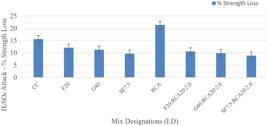
Resistance to acid attack is very important among concrete durability parameters when concrete structures are used in aggressive industrial and environmental conditions. The mixtures of various concrete types subjected to 5% hydrochloric acid (HCL) were evaluated for their performance through residual compressive strength and mass loss. The results are illustrated in Figures 11 and 12. The control concrete (CC) showed a significant drop in residual compressive strength after acid exposure, which was mainly due to calcium hydroxide being dissolved, and the C, S, H gel was decalcified. Concretes with SCMs showed better resistance to acid attack, mainly due to their more refined pore structure and lower calcium hydroxide content. At 28 days of exposure, the residual compressive strengths of fly ash, GGBFS, and silica fume concretes were around 6.8%, 10.4%, and 15.2% more than that of CC, respectively. The resistance enhancements are due to matrix densification and the decrease in permeability, which limited acid ingress. On the other hand, RCA concrete exhibited poor acid resistance, with the residual strength dropping by around 12–15% compared to CC. The major reasons for such a deterioration are higher porosity, more microcracking, and weak interfacial zones that help acid penetration and accelerate degradation mechanisms [8, 9, 16, 26].


The acid resistance was greatly improved by combining SCMs and Icrete with RCA synergistically. The optimised mixture with 20% fly ash, 20% RCA, and 2% Icrete showed the residual compressive strength on a par with CC; the weaknesses induced by the RCA were efficiently mitigated. The GGBFS-based optimised mixture showed about 8.6% higher residual strength than CC, whereas the silica fume-based optimised mixture revealed the highest resistance, with residual compressive strength improvements of up to 14.3% against CC. The main reasons behind these improvements are pore refinement, better ITZ quality, and more chemically stable hydration products.
3.2.3. Acid resistance – Sulphuric Acid (H2SO4) attack
The action of sulfuric acid represents a more aggravated form of chemical degradation through the combined effects of acid dissolution and sulphate-induced expansion. Resistance of concrete mixes to exposure to 5% H2SO4 changes was evaluated by means of mass loss and residual strength determination, as conceptualised in Figures 13 and 14. The control concrete showed a considerable loss of mass and a decrease in strength, indicating that it was susceptible to sulphate attack and gypsum formation. The SCM-modified concretes had a noticeably higher degree of resistance, whereas silica fume-based mixtures indicated the best results. After 28 days of exposure, the residual compressive strength of the silica fume concrete was around 18.5% greater than that of CC, while GGBFS and fly ash concretes showed enhancements of 13.2% and 9.6%, respectively. The reason for these improvements is the lowering of permeability and increased chemical resistance of hydrated products. The RCA concrete was heavily damaged, which led to an increase in mass loss of nearly 20–25% compared to the CC. The old, adherent mortar and microcracks helped the acid to penetrate quickly; thus, the matrix deteriorated at an accelerated rate. Nonetheless, the usage of SCMs and Icrete almost completely neutralised the detrimental impact. The best performance was given by the optimised mix with the combination of 7.5% silica fume, 20% RCA, and 2% Icrete, with the residual compressive strength being 16.8% higher than that of CC, and the loss in mass significantly lower [22]. In the same way, GGBFS-based and fly ash-based optimised mixes recorded strength gains of 12.4% and 8.9%, respectively, based on CC. These results corroborate that the combination of SCMs and mineral additives greatly improves the resistance to acid attack even when recycled aggregates are present.

3.2.4. Rapid Chloride Penetration Test (RCPT)
Concrete’s resistance against chloride ion ingress is one of the main parameters of its durability, especially for reinforced concrete structures continuously exposed to the marine environment and de-icing salts. The rapid chloride penetration test (RCPT) was performed as per ASTM C1202, and the total charge passed (in coulombs) was the basis for evaluating the permeability properties of the concrete mixes. From Figure 15, the control concrete (CC) showed a charge passed value of about 2800 coulombs, which means moderate chloride permeability. The use of SCMs greatly diminished chloride ion penetration by pore structure refinement and lowering pore connectivity. At 28 days, fly ash, GGBFS, and silica fume concretes demonstrated a decrease in the charge passed of around 18%, 28%, and 38%, respectively, in comparison to CC; silica fume revealed the most significant gain in its performance, which was credited to its ultra-fine particle size and enhanced pore blocking ability [30, 31, 33].

The RCA concrete showed the maximum charge passed value of about 3600 coulombs, which means very high chloride permeability, and is mainly attributed to increased porosity, interconnected pore networks, and weak interfacial transition zones (ITZ). This is almost a 29% increase compared to CC. However, the use of SCMs and Icrete together greatly reduced this problem. The optimised fly ash-based mixture (F20:RCA20:2.0) showed a 32% decrease in charge passed compared to RCA concrete. In the same way, the GGBFS-based and silica fume-based optimised mixtures also showed 41% and 48% decreases, respectively. The best overall performance was that of the silica fume-based optimised mixture (SF7.5:RCA20:2.0), which had a charge passed value of about 1450 coulombs, indicating very low chloride permeability. This is 48% less than CC and 60% less than RCA concrete, thus demonstrating the effectiveness of SCM, RCA and Icrete synergy in producing highly durable, sustainable concrete [28, 34,35,36,37,38,39].
The electrical resistivity results shown in Figure 16 indicate that mixtures incorporating SCMs and Icrete exhibited higher resistivity compared with the control mix, suggesting a denser pore structure and reduced ionic mobility within the concrete matrix. The increase in resistivity is consistent with the reduced chloride ion penetration observed in the RCPT results, confirming improved resistance to aggressive ion ingress.

3.3. Sustainability parameters
The sustainability performance of concrete mixes was evaluated using a comprehensive set of indicators, including embodied CO2 emissions, embodied energy, sustainability index (SI), material efficiency index (MEI), eco-efficiency index (EEI), and circularity index (CI). These parameters collectively provide an integrated assessment of the environmental, mechanical, and resource-efficiency aspects of sustainable concrete systems.
3.3.1. Embodied CO2 emissions
Embodied CO2 emission measures the extent of total greenhouse gas emissions related to the production and processing of materials per unit volume of concrete. Embodied CO2 values of different mixes were derived from material-specific emission factors cited in recent studies and are shown in Figure 17. Control concrete had its embodied CO2 emission around 385 kg CO2/m, with the greatest part of the emission originating from cement production. Using SCMs in part to replace cement led to a great drop in the embodied CO2 emissions. Fly ash, GGBFS, and silica fume concretes had CO2 decreases of about 14%, 22%, and 12%, respectively, when compared to CC. GGBFS was the best among the SCMs in CO2 emission reduction because it could replace the cement at a higher level and had a lower emission intensity. Besides, the use of recycled aggregates (RCA) also helped in sustainability by lessening the need for virgin aggregate extraction and processing. RCA concrete reduced CO2 emissions by around 6% compared with CC. The triple combination of SCMs, RCA, and Icrete led to very significant total decreases. F20:RCA20:2.0, G40:RCA20:2.0, and SF7.5:RCA20:2.0 optimised mixes reached CO2 emission reductions of 21%, 29%, and 24%, respectively, compared to CC. The top drop was registered for the GGBFS agent-optimised mix, which was mainly due to its high slag content and the lesser amount of cement required. The embodied CO2 emissions were calculated using the following equation

Where: mi = mass of material (kg/m3), EFi = emission factor (kg CO2/kg).
3.3.2. Embodied energy
Embodied energy reflects the total primary energy used for raw material extraction, processing, and transportation. The embodied energy of the control mix was about 3150 MJ/m, of which cement accounted for nearly 80% of the total energy footprint. The use of SCMs considerably reduced the embodied energy. Fly ash, GGBFS, and silica fume mixes showed energy savings of 13%, 20%, and 10%, respectively, against CC, as shown in Figure 18. Utilising RCA led to an additional 5–7% saving by lessening the need for energy-intensive quarrying and crushing. The technology, advanced sustainable mixes, demonstrated a remarkable reduction of embodied energy. The GGBFS-based technology, advanced mix, registered the lowest embodied energy at around 2350 MJ/m, which is a 25.4% decrease compared to CC. The silica fume and fly ash-based technology advanced mixes realised lower amounts of 21.8% and 18.6%, respectively. Such results indicate that products of industries and recycled materials, if strategically incorporated, can lead to great energy footprint savings in the concrete. The embodied energy was calculated using the following equation

Where: EEi = energy factor (MJ/kg).
3.3.3. Sustainability Index (SI)
The sustainability index (SI) was defined as the ratio of the compressive strength normalised to the embodied carbon dioxide (CO2) emission, serving as a single parameter reflecting both mechanical performance and environmental efficiency. From Figure 19, Control concrete had an SI value of 0.117. Fly ash, GGBFS, and silica fume concretes resulted in SI gains of 9%, 18%, and 22%, respectively; thus, the strength-to-emission efficiency was improved. RCA concrete showed a negligible decrease in the SI value because of strength loss. The optimised sustainable mixes saw great SI growth compared to the most sustainable index of traditional concrete. The silica fume-based optimised mix attained the highest SI of 0.165, which is a 41% increase compared to CC. The GGBFS and fly ash-based optimised mixes achieved SI increases of 36% and 28%, respectively. These upgrades stand out for the unmatched sustainability efficiency of optimised concrete blends. The Sustainability Index (SI) was determined using the following equation

Where: fc = compressive strength (MPa), CO2 = embodied carbon.
3.3.4. Material Efficiency Index (MEI)
MEI, Material Efficiency Index, is a measure of how well raw materials are used, and it is calculated by taking the ratio between compressive strength and total material consumption. The control concrete had an MEI of 1.00. Substituting cement with SCMs increased MEI by raising the strength and decreasing cement consumption simultaneously. Fly ash, GGBFS, and silica fume complexes recorded MEIs of 1.08, 1.15, and 1.21, respectively. Due to its lower strength, RCA concrete had an MEI value of 0.92. Optimised SCM, RCA and Icrete mixtures have dramatically increased material efficiency. The silica fume-based optimised mixture made the highest MEI of 1.32. Thus, it is followed by the GGBFS (1.28) and fly ash (1.22), the base mixes, which are resource-efficient investments, evident from Figure 20. The MEI is calculated as per the equation

Where: fc = compressive strength (MPa), Cement content = kg/m3.
3.3.5. Eco-efficiency Index (EEI)
The eco-efficiency index (EEI) combines compressive strength, embodied energy, and CO2 emissions into one indicator of sustainability. The control mix had an EEI of 0.42. Incorporating SCMs increased EEI values, with FA, GGBFS, and SF concretes reaching 0.49, 0.54, and 0.57, respectively, as shown in Figure 21. The RCA mix registered a lower EEI of 0.39. The optimised sustainable mixes were significantly improved. The SF-based optimised mix achieved the highest EEI of 0.68; the GGBFS-based (0.65) and FA-based (0.61) mixes came next, and all three represented the CC and 62% improvement range. The EEI is calculated as per the equation given below

3.3.6. Circularity Index (CI)
The circularity index (CI) measures how much recycled and industrial by-product materials are used in making concrete. The control concrete had a CI of 0%, whereas the SCM-blended mixes showed CI values of 20% to 40% depending on the replacement levels. RCA concrete recorded a CI of 20%, thus indicating aggregate recycling. The refined mixtures registered the highest CI values of 42%, 50%, and 47% corresponding to fly ash, GGBFS, and silica fume-based mixes, respectively. Such elevated circularity Figure 22 signify an excellent application of the circular economy concepts in making concrete. The equation used for the calculation of Circularity Intensity (CI) is given below

Where: SCM = fly ash, GGBFS, silica fume, RCA = recycled aggregate, Total = cement + aggregates.
4. CONCLUSION
This study systematically investigated the combined influence of supplementary cementitious materials (SCMs), recycled concrete aggregates (RCA), and a mineral additive (Icrete) on the mechanical performance, durability characteristics, microstructural behaviour, and sustainability efficiency of concrete. Based on the experimental findings, the following major conclusions can be drawn:
-
SCM usage has effectively improved the performance of concrete. The best replacement levels were determined to be 20% fly ash, 40% GGBFS, and 7.5% silica fume. Of these, silica fume had the greatest positive effect on compressive strength, with improvements of 17.4% and 13.2% at 28 and 90 days, respectively, compared to ordinary concrete. GGBFS showed a higher strength development capacity over time, whereas fly ash was more beneficial at the later curing ages.
-
Replacing natural aggregates with RCA lowered strength and durability, mainly due to higher porosity and weaker interfacial transition zones between the phases. When 20% of the natural aggregate was replaced by RCA, the compressive strength was lower by around 11.3% at 28 days, whereas water absorption went up by 23.8%. Nonetheless, these negative effects were essentially countered by the dual addition of SCMs and mineral additives.
-
The performance of SCM-RCA concrete was significantly influenced by the addition of Icrete. A 2% Icrete level was found to be the best, resulting in remarkable enhancements in mechanical properties, lowered transport characteristics, and increased resistance to acid and chloride attacks. The newly formulated concrete, which consisted of 7.5% silica fume, 20% RCA, and 2% Icrete showed the highest performance level by registering compressive strengths of 46.0 MPa and 51.5 MPa at 28 and 90 days, respectively, and simultaneously limiting water absorption by more than 30% as compared to normal concrete.
-
SEM characterization of the constituent materials (Icrete, fly ash, GGBFS, and silica fume) indicated favourable morphological characteristics for particle packing and hydration enhancement. The improvements observed in strength and durability properties suggest that these materials contributed to the development of a denser and more durable concrete matrix.
-
The sustainability analysis has found great environmental advantages. The optimally designed mixes have resulted in a decrease of up to 29% in the embodied CO2 emissions and 25% in the embodied energy, while at the same time, raising the sustainability, eco-efficiency, and circularity indices by over 40% as compared to traditional concrete.
First, the study’s outcomes show that a mixture of SCMs, limited use of RCA, and mineral additives is an effective way to produce high-performing, durable, and green concrete. Besides saving natural resources and utilising industrial by-products that would otherwise be dumped in landfills, this technique lowers the carbon footprint of concrete manufacturing considerably. The mixing design idea presented here has the potential to be used for large-scale structural applications, and it is a major step towards sustainable construction.
5. ACKNOWLEDGMENTS
The author expresses gratitude to the encouragement provided by the management, Head and fellow faculty at McGAN’s Ooty School of Architecture and PSG Institute of Architecture and Planning.
6. DATA AVAILABILITY
Data sharing does not apply to this article.
7. BIBLIOGRAPHY
-
[1] NOURI, Z., MASSUMI, A., ASADOLLAHFARDI, G., et al., “Structural and environmental impacts of concrete quality: A comparative life cycle assessment”, Scientific Reports, v. 15, n. 1, pp. 16257, 2025. doi: https://doi.org/10.1038/s41598-025-01032-z. PubMed PMID: 40346105.
» https://doi.org/10.1038/s41598-025-01032-z -
[2] SILVA, R.V., DE BRITO, J., DHIR, R.K., “The influence of recycled aggregates on the mechanical properties of concrete: A review”, Journal of Cleaner Production, v. 141, pp. 56–66, 2019. doi: https://doi.org/10.1016/j.jclepro.2016.09.035.
» https://doi.org/10.1016/j.jclepro.2016.09.035 -
[3] PAVLŮ, T., PEŠTA, J., VLACH, T., et al., “Environmental impact of concrete slab made of recycled aggregate concrete based on limit states”, Materials, v. 16, n. 2, pp. 616, 2023. doi: https://doi.org/10.3390/ma16020616. PubMed PMID: 36676352.
» https://doi.org/10.3390/ma16020616 -
[4] BJÖRNSTRÖM, J., MARTINELLI, A., MATIC, A., et al., “Accelerating effects of colloidal nano-silica for beneficial calcium–silicate–hydrate formation in cement”, Chemical Physics Letters, v. 392, n. 1–3, pp. 242–248, 2004. doi: https://doi.org/10.1016/j.cplett.2004.05.071.
» https://doi.org/10.1016/j.cplett.2004.05.071 -
[5] AL-HAMRANI, A., KUCUKVAR, M., ALNAHHAL, W., et al., “Green concrete for a circular economy: A review on sustainability, durability, and structural properties”, Materials, v. 14, n. 2, pp. 351, 2021. doi: https://doi.org/10.3390/ma14020351. PubMed PMID: 33445769.
» https://doi.org/10.3390/ma14020351 -
[6] SASANIPOUR, H., ANSARI, M., SHAYAN, A., “Fly ash, GGBFS, and silica fume based geopolymer concrete with recycled aggregates: Properties and environmental impacts”, Construction & Building Materials, v. 378, pp. 131168, 2023. doi: https://doi.org/10.1016/j.conbuildmat.2023.131168.
» https://doi.org/10.1016/j.conbuildmat.2023.131168 -
[7] NANAYAKKARA, S., et al., “Mechanical and durability properties of sustainable self-compacting concrete with RCA and SCMs”, Construction & Building Materials, v. 231, pp. 117115, 2020. doi: https://doi.org/10.1016/j.conbuildmat.2019.117115.
» https://doi.org/10.1016/j.conbuildmat.2019.117115 -
[8] ALIBEIGIBENI, A., STOCHINO, F., ZUCCA, M., et al., “Enhancing concrete sustainability: a critical review of the performance of recycled concrete aggregates (RCAs) in structural concrete”, Buildings, v. 15, n. 8, pp. 1361, 2025. doi: https://doi.org/10.3390/buildings15081361.
» https://doi.org/10.3390/buildings15081361 -
[9] BAKR, M.A., FARHAN, M., KHURSHEED, S., et al., “Sustainable self-compacting recycled aggregate concrete incorporating industrial byproducts and agricultural waste: rheological, strength, and durability properties, materials”, ACS Omega, v. 10, n. 25, pp. 26382–26391, 2024. doi: https://doi.org/10.1021/acsomega.4c10374.
» https://doi.org/10.1021/acsomega.4c10374 -
[10] SEREEWATTHANAWUT, I., PRASITTISOPIN, L., “Environmental evaluation of pavement system incorporating recycled concrete aggregate”, International Journal of Pavement Research and Technology, v. 13, n. 5, pp. 455–465, 2020. doi: https://doi.org/10.1007/s42947-020-0002-7.
» https://doi.org/10.1007/s42947-020-0002-7 - [11] HAQUE, M.S.M., JAMA, A.M., ABDIWAHAB, A., “Low-carbon concrete development”, Journal of Engineering Advancements, v. 2, n. 02, 2025.
-
[12] XU, G., SHI, X., “Characteristics and applications of fly ash as a sustainable construction material: A state-of-the-art review”, Resources, Conservation and Recycling, v. 136, pp. 95–109, 2018. doi: https://doi.org/10.1016/j.resconrec.2018.04.010.
» https://doi.org/10.1016/j.resconrec.2018.04.010 -
[13] SIDDIQUE, R., AGGARWAL, Y., “Influence of w/b ratio on concrete performance with SCMs: A review”, Construction & Building Materials, v. 66, pp. 79–88, 2014. doi: https://doi.org/10.1016/j.conbuildmat.2014.05.024.
» https://doi.org/10.1016/j.conbuildmat.2014.05.024 -
[14] DE BRITO, J., SILVA, R.V., “Recycled aggregate concrete: performance and sustainability – A comprehensive review”, Journal of Cleaner Production, v. 84, pp. 165–172, 2014. doi: https://doi.org/10.1016/j.jclepro.2014.07.016.
» https://doi.org/10.1016/j.jclepro.2014.07.016 -
[15] SASANIPOUR, H., ANSARI, M., SHAYAN, A., “Fly ash, GGBFS and silica fume based geopolymer concrete—Mechanical and durability properties”, Construction & Building Materials, v. 378, pp. 131168, 2023. doi: https://doi.org/10.1016/j.conbuildmat.2023.131168.
» https://doi.org/10.1016/j.conbuildmat.2023.131168 -
[16] MEYER, C., “The greening of the concrete industry”, Cement and Concrete Composites, v. 31, n. 8, pp. 601–605, 2009. doi: https://doi.org/10.1016/j.cemconcomp.2008.12.010.
» https://doi.org/10.1016/j.cemconcomp.2008.12.010 -
[17] TAM, V.W.Y., TAM, L., LE, K.N., “Residual adhesive in recycled aggregate concrete”, Resources, Conservation and Recycling, v. 44, n. 1, pp. 115–128, 2005. doi: https://doi.org/10.1016/j.resconrec.2004.08.013.
» https://doi.org/10.1016/j.resconrec.2004.08.013 -
[18] AKBARNEZHAD, A., ONG, K.C.G., RAHMAN, M., “Durability and Strength of recycled aggregate concrete with SCMs”, Journal of Materials in Civil Engineering, v. 25, n. 12, pp. 1906–1915, 2013. doi: https://doi.org/10.1061/(ASCE)MT.1943-5533.0000738.
» https://doi.org/10.1061/(ASCE)MT.1943-5533.0000738 -
[19] NANAYAKKARA, S., HONDAMUNI, M., SETUNGE, S., “Mechanical and durability performance of sustainable recycled aggregate concrete”, Construction & Building Materials, v. 231, pp. 117115, 2020. doi: https://doi.org/10.1016/j.conbuildmat.2019.117115.
» https://doi.org/10.1016/j.conbuildmat.2019.117115 -
[20] TUYAN, M., AL-TAYAWI, A.N., GERGELY, G., et al., “Effect of mineral additives on hydration and performance of sustainable concrete”, Materials, v. 16, n. 8, pp. 3117, 2023. doi: https://doi.org/10.3390/ma16083117. PubMed PMID: 37109952.
» https://doi.org/10.3390/ma16083117 -
[21] DEMIRBOGA, R., GÜL, R., “Advanced mineral admixtures for sustainable concrete: microstructure and performance”, Cement and Concrete Research, v. 160, pp. 107248, 2024. doi: https://doi.org/10.1016/j.cemconres.2024.107248.
» https://doi.org/10.1016/j.cemconres.2024.107248 -
[22] CHITTI, B., PRAKASH, S.S., SIVAKUMAR, A., “Performance evaluation of concrete incorporating mineral-based performance enhancers”, Journal of Building Engineering, v. 78, pp. 107765, 2024. doi: https://doi.org/10.1016/j.jobe.2023.107765.
» https://doi.org/10.1016/j.jobe.2023.107765 - [23] CABRERA, J.G., ATIS, C.D., Design and properties of high-volume fly ash high-performance concrete, Detroit, American Concrete Institute, pp. 21–37, 1999.
-
[24] XU, G., SHI, X., “Characteristics and applications of fly ash as a sustainable construction material: A state-of-the-art review”, Resources, Conservation and Recycling, v. 136, pp. 95–109, 2018. doi: https://doi.org/10.1016/j.resconrec.2018.04.010.
» https://doi.org/10.1016/j.resconrec.2018.04.010 -
[25] LI, G., “Properties of high-volume fly ash concrete incorporating nano-SiO2”, Cement and Concrete Research, v. 34-6, n. 6, pp. 1043–1049, 2004. doi: https://doi.org/10.1016/j.cemconres.2003.11.013.
» https://doi.org/10.1016/j.cemconres.2003.11.013 -
[26] MARINKOVIC, S., DRAGAS, J., IGNJATOVIC, I., et al., “Environmental assessment of green concretes for structural use”, Journal of Cleaner Production, v. 154, pp. 633–649, 2017. doi: https://doi.org/10.1016/j.jclepro.2017.04.015.
» https://doi.org/10.1016/j.jclepro.2017.04.015 - [27] MEHTA, P.K., “High performance, high-volume fly-ash concrete for sustainable development”, In: International Workshop on Sustainable Development and Concrete Technology, Berkeley, 2003.
-
[28] PRASITTISOPIN, L., TUVAYANOND, W., KANG, T.H.K., et al., “Concrete mix design of recycled concrete aggregate (RCA): analysis of review papers, characteristics, research trends, and underexplored topics”, Resources, v. 14, n. 2, pp. 21, 2025. doi: https://doi.org/10.3390/resources14020021.
» https://doi.org/10.3390/resources14020021 -
[29] SARAVANAKUMAR, P., DHINAKARAN, G., “Strength characteristics of high-volume fly ash-based recycled aggregate concrete”, Journal of Materials in Civil Engineering, v. 25, n. 8, pp. 1127–1133, 2013. doi: https://doi.org/10.1061/(ASCE)MT.1943-5533.0000645.
» https://doi.org/10.1061/(ASCE)MT.1943-5533.0000645 -
[30] SIDDIQUE, R., “Effect of fine aggregate replacement with Class F fly ash on the abrasion resistance of concrete”, Cement and Concrete Research, v. 33, n. 11, pp. 1877–1881, 2003. doi: https://doi.org/10.1016/S0008-8846(03)00212-6.
» https://doi.org/10.1016/S0008-8846(03)00212-6 -
[31] JAIN, S., SINGHAL, S., JAIN, N.K., “Construction and demolition waste (C&DW) in India: generation rate and implications of C&DW recycling”, International Journal of Construction Management, v. 21, n. 3, pp. 261–270, 2021. doi: https://doi.org/10.1080/15623599.2018.1523300.
» https://doi.org/10.1080/15623599.2018.1523300 -
[32] LI, Z., VENKATA, H.K., RANGARAJU, P.R., “Influence of silica flour–silica fume combination on the properties of high performance cementitious mixtures at ambient temperature curing”, Construction & Building Materials, v. 100, pp. 225–233, 2015. doi: https://doi.org/10.1016/j.conbuildmat.2015.09.042.
» https://doi.org/10.1016/j.conbuildmat.2015.09.042 -
[33] AHMAD, S.S., GRAF, A.A.A., BNENI, M.K., “Mechanical performance of sustainable concrete containing industrial waste admixtures of SF, FA, CCI, and crushed quartz at different water–binder ratios”, Scientific Reports, v. 16, n. 1, pp. 3055, 2026. doi: https://doi.org/10.1038/s41598-025-34612-0. PubMed PMID: 41571742.
» https://doi.org/10.1038/s41598-025-34612-0 -
[34] OROZCO, C., TANGTERMSIRIKUL, S., SUGIYAMA, T., et al., “Examining the endpoint impacts, challenges, and opportunities of fly ash utilization for sustainable concrete construction”, Scientific Reports, v. 13, n. 1, pp. 18254, 2023. doi: https://doi.org/10.1038/s41598-023-45632-z. PubMed PMID: 37880405.
» https://doi.org/10.1038/s41598-023-45632-z -
[35] AVUDAIAPPAN, S., CUELLO MORENO, P.I., MONTOYA, R.L.F., et al., “Experimental investigation on the physical, microstructural, and mechanical properties of hemp limecrete”, Scientific Reports, v. 13, n. 1, pp. 22650, 2023. doi: https://doi.org/10.1038/s41598-023-48144-y. PubMed PMID: 38114537.
» https://doi.org/10.1038/s41598-023-48144-y -
[36] TIPRAJ, B., ATHIRA, K., SHANMUGA PRIYA, T., “Role of agro waste in geopolymer concrete: strength, durability and microstructural properties”, Engineering Research Express, v. 7, n. 1, pp. 015107, 2025. doi: https://doi.org/10.1088/2631-8695/ada7c6.
» https://doi.org/10.1088/2631-8695/ada7c6 -
[37] GOLEWSKI, G.L., “Examination of water absorption of low volume fly ash concrete (LVFAC) under water immersion conditions”, Materials Research Express, v. 10, n. 8, pp. 085505, 2023. doi: https://doi.org/10.1088/2053-1591/acedef.
» https://doi.org/10.1088/2053-1591/acedef -
[38] KUMAR, A., SINGH, G.J., “Improving the physical and mechanical properties of recycled concrete aggregate: A state-of-the-art review”, Engineering Research Express, v. 5, n. 1, pp. 012007, 2023. doi: https://doi.org/10.1088/2631-8695/acc3df.
» https://doi.org/10.1088/2631-8695/acc3df -
[39] WIN, T.T., WATTANAPORNPROM, R., PRASITTISOPIN, L., et al., “Investigation of fineness and calcium-oxide content in fly ash from ASEAN region on properties and durability of cement–fly ash system”, Engineering Journal, v. 26, n. 5, pp. 77–90, 2022. doi: https://doi.org/10.4186/ej.2022.26.5.77.
» https://doi.org/10.4186/ej.2022.26.5.77 -
[40] BULEJKO, P., VLASTIMIL BÍLEK, J.R., “Influence of chemical additives and curing conditions on the mechanical properties and carbonation resistance of alkali-activated slag composites”, Materiali in Tehnologije, v. 51, n. 1, pp. 49–53, 2017. doi: https://doi.org/10.17222/mit.2015.185.
» https://doi.org/10.17222/mit.2015.185 - [41] DOLO, K.I., LASTNOSTI, I.M., MANGANOM, S.T.P.Y.Z., et al., “Characterization and determination of mechanical properties of YBCO superconducting thin films with manganese using the TFA-mod method”, Materials Technology, v. 47, n. 2, pp. 153, 2013.


