 Evaluation of hoop stress in thick walled non-reinforced geopolymer concrete pipes composed with eco-friendly sustainable materials under revised curing
ABSTRACT
Concrete pipes have traditionally been conventional choice for fluid conveyance, but often face durability issues due to variety of internal and external factors. This leads to the search of alternate materials and methods to enhance pipe durability, material modification. In this study, we aimed to improve stress-bearing capacity of concrete-pipes by modifying both construction materials and curing pattern. Geopolymer concrete was used as sustainable concrete with Na-S-H gel formation and substitute for conventional cement concrete. Heat curing was carried out as key process to enhance polymerization with silicate and aluminate (Si-O-Al) bond links. Pipes cast with CC and GPC are subjected to different curing methods such as normal curing, ambient curing, and heat curing. Additionally, polypropylene fibers were incorporated into the mix in various concentration ranging from 0% to 2% with intervals of 0.25%. The cast pipes were evaluated for hydrostatic pressure, and hoop stress. Results revealed that GPC pipes, particularly those subjected to heat curing, exhibited highest resistance to ultimate hoop stress. Specifically, GPC mix manifest 62.16% greater resistance in the hydrostatic pressure test and 50% higher resistance in fluid pressure test. Thus, GPC pipes subjected to heat curing possess ultimate stress resistance capacity with good durability properties.
Keywords:
Conventional Concrete (CC); Geopolymer Concrete (GPC); Fly ash; Polypropylene fibre; Revised Curing; Heat curing; Hydrostatic pressure test
1. INTRODUCTION
The construction industry relies heavily on concrete, a key component in building projects ranging from small-scale structures to massive infrastructure. As the need for concrete grows, so does the environmental concern regarding the escalating release of greenhouse gases [1]. Researches and industry professionals are actively seeking eco-friendly alternatives to cement that can mitigate these emissions [1]. The ideal replacement material must not only be sustainable but also environmentally benign, with the capacity to significantly reduce greenhouse gas emissions. This research aims to explore the potential of substituting traditional concrete with geopolymer concrete in non-structural applications, offering a promising avenue for more sustainable construction practices [2, 3].
Carbon footprint, amount of carbon dioxide (CO2) emissions associated with all the activities of a person or Geopolymer concrete is an innovative type of concrete that utilizes industrial byproducts as its primary materials, combined with an activator solution. The primary components of geopolymer concrete are alumino-silica materials such as fly ash or slag, which are rich in silica and alumina [4]. The manufacturing process involves blending these materials with an activator solution, initiating a chemical reaction known as geopolymerization. This reaction results in a three-dimensional network of bonds that contribute to the concrete’s strength and durability. Geopolymer concrete boasts superior mechanical properties, including high compressive strength, low shrinkage, and excellent resistance to chemical corrosion and fire [5, 6]. For the current study, fly ash was selected as the primary source material [7, 8]. The use of geopolymer binders also supports effective waste utilization by converting industrial residues into valuable construction materials [9]. This contributes to sustainable waste management and reduces environmental pollution caused by landfill disposal. Additionally, incorporating recycled aggregates in geopolymer concrete further enhances sustainability by conserving natural aggregate resources and promoting circular economy principles in the construction sector [10]. Geopolymer binders generally generates less greenhouse gas emissions than cement-based binders. Partial or complete replacement of cement with geopolymer materials significantly reduces the carbon footprint of concrete [11]. Advanced geopolymer concrete can be utilized in various infrastructure projects such as pavements, pipes, marine components, bridges, retaining walls etc [12]. Si/Al ratio is the key factor controlling geopolymer properties since it influences gel formation, strength and durability properties, setting property, degree of polymerization, microstructure properties along with Na-S-H gel formation [13].
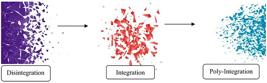
Major steps in the production of geopolymer concrete are,
-
Disintegration of mineral bonds.
-
Integration of new bonds.
-
Poly-integration.
1.1. Disintegration of mineral bonds
The initial and critical step in the geopolymerization process involves the disintegration of minerals from their existing form. This process requires separation of oxygen atoms from their sodium hydroxide form [14]. To achieve this, sodium hydroxide flakes are mixed with water, initiating a reaction that breaks down the structure and releases oxygen atoms. Similarly, in the sodium silicate solution, both silicon (Si) and oxygen (O) atoms need to be liberated. This is accomplished by mixing sodium silicate with an aqueous sodium hydroxide solution, facilitating the release of these atoms from their current form [15].
1.2. Integration of new bonds
The culmination of geopolymerizatoin process is the formation of the Si-O-Al bond. The disintegration of atoms is completed within the stimulator solution [4, 5]. In the case of fly ash, alumnia (Al) bonds are readily and abundantly available in their free form, making fly ash an ideal source material. When the stimulator solution is mixed with the source material, the free bonds in the aqueous solution form new bonds with the freely available Al and Si atoms. This formation of new Si-O-Al bond is known as the precursor of geopolymerization [16].
1.3. Poly-integration
Si-O-Al bonds as shown in Figure 1 are the fundamental building blocks in the geopolymer concrete. Multiple Si-O-Al bonds are formed, creating what are known as first-order polymers [7]. These first-order polymers then react with each other to form higher-order polymers through a process called poly-integration. Upon completion, the resulting structure closely resembles zeolite rock, exhibiting superior mechanical strength and durability [17].
During each stage of geopolymerization, water is expelled, including during the formation of the poly- integrated material [18]. This expelled water remains within the concrete, causing it to take more than three to four days to set initially. However, if the concrete is treated with a specialized curing method that can manage the expelled water, the final setting time can be reduced [19]. For this type of concrete, traditional water curing is typically avoided due to adverse effects of water on the setting process [6]. Instead, thermal-based curing methods are recommended [7, 8]. For geopolymer concrete, heat curing or steam curing is preferred to ensure proper setting and the attainment of the required strength. Previous literatures suggest that minimum temperature required for achieving optimal strength in geopolymer concrete is 60ºC. Therefore, for this study, a temperature of 60ºC was adopted [11].
Concrete is utilized in various construction applications, broadly categorized into structural and non-structural uses [12, 20]. Structural applications involve elements that are designed to supports loads, such as beams, columns and slabs. Non-structural applications [10]. on the other hand, include elements that serve purpose other than load bearing, such as ready-made walls, paver blocks and concrete pipes [13]. Despite of being classified as non-structural, concrete pipes are subjected to surcharge loads, fluid pressure, and other forces [7], necessitating special considerations in terms of material, geometry, and reinforcement [9].
Pipes are highly effective for transporting fluids, gases, and powders from one location to another. They are hollow, cylindrical structures designed to carry materials within them [21]. Concrete pipes are used both above and below ground, depending on the pipeline’s alignment. Pipes located above ground primarily experience internal fluid pressures, whereas those buried below ground are subjected to a combination of internal fluid pressure, surcharge, pore-water pressure and soil pressure [22]. Considering these factors, concrete pipes must be designed to withstand all the forces [8, 9]. In this study, the aim is to replace the conventional concrete used in producing concrete pipes with geopolymer concrete [22, 23]. The influence of vertical load height, initial out-of-straightness, and lateral load eccentricity was explored [24]. Sand-bamboo fiber MKGP (GSB) for high flexural strength and WA resistance. Sodium-based NaGSB was 32% stronger than its potassium-based counterpart KGSB [25]. Addition of nano TiO2 increased compressive strength at all NaOH concentrations. Geopolymer grout was injected to damaged BCJ to confirm application [26].
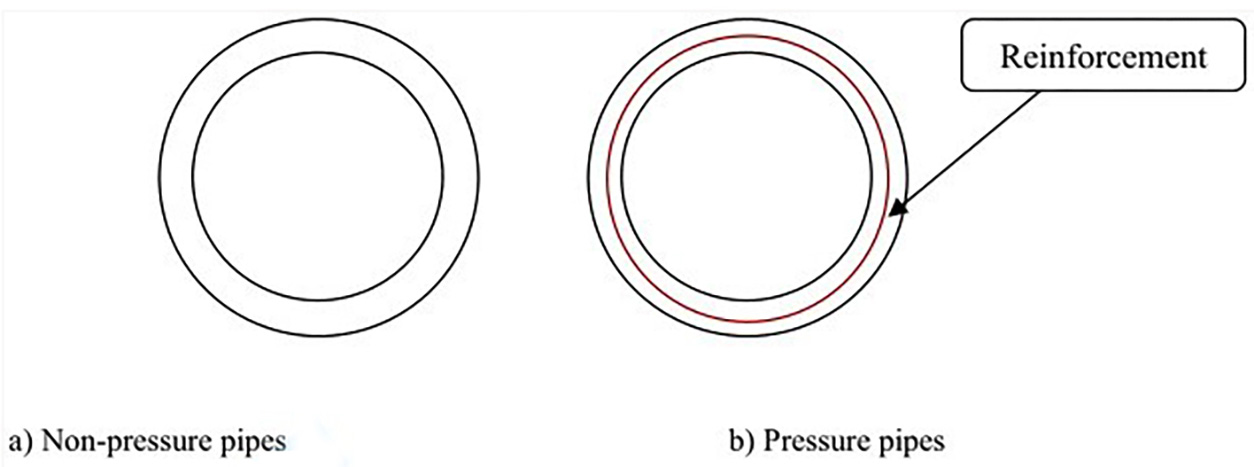
In India, concrete pipes are classified based on the thickness of their walls, the presence of pressure, and the type of reinforcement [27, 28]. Thick walled and thin-walled concrete pipes are distinguished by thickness of walls. Pressured and non-pressured pipes are categorized based on their intended use. According to Indian standards, concrete pipes are classified as NP (non-pressured) and P (pressured pipes). for the study, non-pressured pipes were selected for consideration as shown in Figure 2.

Research gap found in literature review and reasons to choose this work,
Reason 1: Conventional concrete pipes struggle to withstand high loads and fail to resist both fluid pressure and mechanical stress effectively [20]. In contrast, geopolymer concrete pipes have been cast to verify mechanical resistance.
Reason 2: Concrete pipes exposed to fluid pressure, soil pressure, pore-water pressure, and surcharges exhibit low durability [29, 30]. In contrast, geopolymer concrete pipes are cast to analyze chemical and environmental attacks.
Reason 3: Concrete pipes are produced using precast technology and cannot be cast on-site. Since geopolymer concrete is also suited for precast methods, it can be prioritized as superior alternative to conventional concrete in such applications [31].
Reason 4: Structural concrete elements have traditionally received more attention, while applications like concrete pipes have been overlooked. Research on measuring internal stresses in concrete pipes has been limited [32]. This study aims to address these gaps by focusing the internal stress behavior of concrete pipes, providing valuable insights that have been lacking [33].
Reason 5: The use of cement-based products contributes significantly to carbon emissions [30]. In contrast, GPC is made from industrial byproducts, which lowers carbon foot prints and supports effective waste management, making it a more sustainable engineering choice [34, 35].
2. MATERIALS
The major materials used for the study were cement, fly ash, M-sand, coarse aggregate, water, sodium silicate and sodium hydroxide.
2.1. Cement
Cement is used for casting the conventional concrete pipe. For the present study Portland Pozzolana cement of 53 grade with specific gravity of 3.14, fineness of 8%, initial setting time of 35 minutes was used for the study.
2.2. Fly ash
Fly ash was considered as the basic source material for geopolymer concrete, which sufficiently provides the aluminium and silicon atoms to form the basic structure of the polymer. Fly ash of F category with fineness of 8%, initial setting time of 130 minutes and specific gravity 2.66 was used for the study.
2.3. M-sand
Crusher m-sand was used for the study with the following specifications, specific gravity – 2.68, fineness – 6%, fineness modulus – 2.33, water absorption 1.5% and Indian zone classification – II.
2.4. Coarse aggregate
For the present study 20 mm coarse aggregate was used with the specifications, Specific gravity – 2.44, fineness modulus – 4.5%, water absorption – 0.4%, Crushing strength – 2.7 MPa.
2.5. Water
Clean and potable water of pH value from a range of 6 to 8 was used for the study.
2.6. Sodium silicate
Sodium silicate with the mentioned specifications was used for the study. Specific gravity – 1.55, state – aqueous, colour – pale yellow, boiling point – 103ºC, pH – 10.
2.7. Sodium hydroxide
Sodium hydroxide in the form of pellets was used for the study. Specifications were, specific gravity – 1.46, purity – 98%, Colour – White, pH – 11.
3. METHODOLOGY
3.1. Mixing and curing
Preparation of activator solution: The activator solution is prepared one day prior to the casting process. The disintegration of minerals begins when sodium hydroxide pellets are mixed with water [10, 18]. This reaction forms an aqueous solution which the minerals are dispersed. Sodium silicate is then added to this mixture to create the activator solution [33]. The process of mixing sodium hydroxide flakes with water releases a significant amount of heat, raising the temperature of the aqueous solution [14, 35]. Consequently, the mixture requires a 24-hour period to cool down to room temperature, which is optimal for further mixing [14]. Mixing of ingredients: For the current study, the mix design was formulated for M30 grade as per IS 10262 – 2019 for CC and special method was used to for arriving GPC [16]. For GPC ratio of Sodium hydroxide to sodium silicate was kept as 1:2.5, that of fly ash to stimulator solution was kept as 0.47. A systematic optimization approach was not implemented in selecting the ratio of NaOH: Na2SiO3. The chosen ratio was taken from previous literature studies. Lowering the ratio (0.3–0.5) leads to an increase in silicate availability, with higher strength. Higher ratio > 1.0 increases setting reducing long term strength due to insufficient silicate. Thus, the ratio of 0.4–0.8 was chosen. All dry ingredients were initially mixed together [15]. In the case of cement concrete pipes, cement was included in the dry mix, and water was gradually added while mixing to achieve a uniform consistency [11]. For geopolymer concrete, fly ash and other ingredients were thoroughly mixed. The activator solution was then slowly added to the dry mix and thoroughly blended to ensure a uniform consistency [17].
3.1.1. Curing
Water curing was applied to the concrete pipes, while heat curing at 60ºC was used for the geopolymer concrete pipes [12]. Literature indicates that geopolymer concrete specimens treated at 60ºC exhibit superior strength and durability compared to conventional concrete specimens [13, 20]. Almost all literature studies prefer a temperature of 60°C for 12–48 hours. Excessive temperatures (> 80–100°C) cause micro cracking with loss in moisture content, decreasing long-term strength. The difference in fibre content between heat and ambient curing clearly provides distinct mechanisms with fibre–matrix interaction interfacial bonding and achievement of strength.
3.2. Hoop stress test on concrete pipe
Geopolymer pipe after necessary curing was tested for hoop stress. This test was performed in reference with IS 3597:1998 [19].
-
The concrete specimen was supported in the frame such that the longitudinal axis was placed horizontally. It should be placed so that the exterior surface can be examined at any time.
-
The testing equipment is then filled with water, and necessary care should be taken to expel the air from the pumped water.
-
Water inside the concrete pipe was filled along with the pressure. Further, pressure was increased at a gradual rate until the specimen failed. Pressure was maintained for 1 minute and 30 seconds for each 10 mm thickness of the wall.
-
For the current study, the wall thickness was 25 mm; hence, the withstand time was estimated at 2 minutes and 15 seconds.
-
Failure was observed as the leaks from the cracks developed. After the failure, the pressure was released to avoid the collapse of the specimen.
The pressure carried by the pipe without failure was considered the ultimate hoop stress. The present study is restricted to non-reinforced pipe systems to analyze intrinsic material characteristics and pressure inheritance of geopolymer matrix. Although investigation with reinforced pipe systems requires advancement of geopolymer-based pipe technologies.
Conventional concrete and geopolymer-based concrete pipes were tested for hydrostatic pressure resistance. The ultimate load for each combination was observed, and the results were analysed. The test was executed with three specimens, and the results were carried out as mean values with standard deviation and to evaluate repeatability and variability in calculation. The study focuses on performance analysis under controlled conditions. Statistical robustness of the results under repeated experiments were beyond the scope.
4. RESULTS AND DISCUSSION
4.1. Test results for hydrostatic pressure test
Following figures represents the hydrostatic test results of cement concrete pipe and geopolymer concrete pipe with different fibre fraction.
The data presented in Figure 3 indicates that cement concrete pipes containing 1% polypropylene fibre exhibited the highest ultimate pressure resistance across various curing durations. After 1 day, 2 days, and 3 days of water curing, the pipes showed significant strength improvements. Specifically, the strength increased by 9.83% after 2 days and 50.82% after 3 days when compared to the strength achieved after 1 day of curing. On average, there was an 11.66% strength increase after 2 days and a 54.66% increase after 3 days of curing. The ultimate strength values were 0.061 MPa, 0.067 MPa, and 0.092 MPa for 1 day, 2 days and 3 days of curing, respectively. The addition of 1% fibre resulted in a substantial increase in ultimate strength, with increase of 79.4% after 1 day, 76.32% after 2 days, and 76.92% after 3 days when compared to fibre-free concrete. Overall, the fibre-reinforced specimens showed an average improvement of 77.55% over the fibre-less cement concrete pipes. The findings suggest that a 1% concentration of polypropylene fibre optimizes the stress-bearing capacity of cement concrete pipes, and water curing is an effective method for enhancing this property.
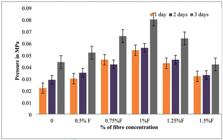
Figures 4 and 5 illustrates the hoop stress of geopolymer concrete pipes cured under ambient and heat conditions. For the ambient-cured specimens, Figure 4 shows that maximum strength was achieved with a 1% fibre concentration after 1, 2, and 3 days of curing. The strength increased by 3.73% after 2 days and 48.14% after 3 days compared to the strength at 1 day. On average, there was a 13.33% strength increase after 2 days and a 69% increase after 3 days the ultimate strength values were 0.054 MPa, 0.056 MPa, and 0.08 MPa for 1, 2, and 3 days of curing, respectively. The addition of 1% fibre resulted in significant strength gains of 93% after 1 day, 98% after 2 days and 81.82% after 3 days compared to the fibre-free concrete. Overall, the fibre-reinforced specimens showed an average improvement of 90.94% over the fibre-less geopolymer concrete pipes. The research concluded that while 1% polypropylene fibre in geopolymer concrete pipes demonstrated average strength, this specialized concrete requires a specific curing methodology for optimal results.

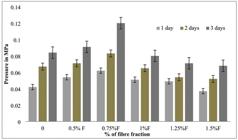
For the heat-cured geopolymer specimens, Figure 5 shows that the optimal strength was achieved with a 0.75% fibre concentration after 1, 2, and 3 days of curing. The strength increased by 48.1% after 2 days and 130.76% after 3 days compared to the strength at 1 day. On average, there was a 62.99% strength increase after 2 days and an 88.6% increase after 3 days. The ultimate strength values were 0.052 MPa, 0.077 MPa and 0.12 MPa for 1, 2 and 3 days of curing, respectively. The addition of 0.75% fibre resulted in strength gains of 73.33% after 1 day, 37.5% after 2 days, and 62.16% after 3 days compared to the fibre-free concrete. Overall, the fibre-reinforced specimens showed an average improvement of 57.66% over the fibre-less geopolymer concrete pipes. The research concluded that while 0.75% polypropylene fibre in geopolymer concrete pipes demonstrated average strength, this special concrete requires a specific curing methodology for optimal results.
4.2. Estimation of fluid pressure and inner hoop stress
Tests inferred the results of hoop stress. The fluid pressure inside the thick cylinder shall be calculated using the Lame’s theorem. Lame’s theory provides effective analytical baseline for calculation, geopolymer concrete with heterogeneous property results with more realistic stress prediction. Wall thickness was constrained with the effects of fibre percentage, curing regime, and composition of materials. This high geometric variation effects with stress distribution.
Where,
σr – Circumferential stress in MPa, p – Pressure in MPa.
r – Radius of the pipe, a & b – constants.
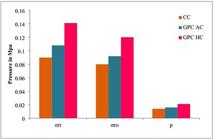
Figure 6 clearly illustrates the hoop stresses, fluid pressure, and the distribution of wall thickness. The cement concrete specimens exhibited a minimum hoop stress of 0.080 MPa and a maximum hoop stress of 0.090 MPa. In contrast, GPC specimens cured under ambient conditions achieved a minimum hoop stress of 0.092 MPa and a maximum hoop stress of 0.108 MPa. When subjected to heat curing, the GPC specimens produced a minimum hoop stress of 0.12 MPa and a maximum hoop stress of 0.141 MPa. This demonstrates that GPC specimens under heat curing exhibited the highest hoop stress values, indicating superior performance in this aspect.

The fluid pressure resistance of the cement concrete (CC) specimen was calculated to be 0.014 MPa. For geopolymer concrete (GPC) subjected to ambient curing, the fluid pressure resistance was found to be 0.016 MPa. GPC specimens with heat curing exhibited a higher fluid pressure resistance of 0.021 MPa. This indicates that GPC specimens with heat curing were able to withstand the maximum stress among the tested materials. Comparatively, GPC specimens under ambient resisted 14.3% more fluid pressure than CC specimens. GPC specimens under heat curing demonstrated a 50% higher fluid pressure resistance than CC specimens and a 31.25% higher resistance than GPC specimens with ambient curing. The present study focuses on macroscopic mechanical and pressure performance, with detailed evaluation of fibre–matrix bonding and interfacial chemistry. The microscopic analysis, was beyond the objective of this study which require specialized characterization analysis techniques.
Figure 7 presents a comparison of the hoop stress at the inner and outer radii of the specimens. It is evident that the hoop stress at the inner radii was consistently higher than that at the outer radii across all specimens. Among the different materials tested, GPC specimens subjected to heat curing exhibited the highest hoop stress values. Additionally, in terms of fluid pressure resistance, GPC specimens with heat curing demonstrated the maximum resistance. Based on these findings, it can be concluded that GPC specimens treated with heat curing are more efficient and effective than other materials in resisting hoop stress and fluid pressure. Geopolymer concrete (GC) always provides sustainability benefits, and the present study does not focus on quantitative environmental assessment, which may be considered in future studies.
The test results indicate that heat curing significantly improved the bond strength between Si-O-Al compared to other curing methods. Additionally, polypropylene fibers played a crucial role in further enhancing the strength of the specimens. It is evident that GPC specimens outperformed CC specimens, largely due to the distinct methodology used in producing GPC. Special curing conditions further improved the strength and durability of the GPC specimens. Concrete pipes made of geopolymer concrete (GPC) have demonstrated higher fluid resistance capacity, which can be attributed to the effective bond strength between the atoms formed during the geopolymerization process. The high strength observed in heat-cured geopolymer concrete (GPC) specimens can be attributed to several factors, – rapid strength gain, enhanced chemical reactions, improved micro-structure, and increased reactivity of materials and reduced water content. Less diameter bars and moderate anchor lengths generally produce superior bond matrix behavior in Alkali Activated Recycled Concrete (AARC). This alkali-activated matrix enhances interaction of steel and concrete through developed microstructure and interfacial bonding, which offers improved sustainability and durability compared to Conventional concrete based recycled concrete. However, geometric variations, utilization of recycled aggregate, and limited IS code provisions restrict wide spread structural applications.
5. CONCLUSION
Following are the conclusions arrived from the study,
-
Geopolymer concrete (GPC) treated with heat curing yielded superior results compared to cement concrete (CC) specimens and GPC specimens cured under ambient conditions.
-
GPC specimens cured under ambient conditions showed average strength performance relative to CC specimens, while heat-treated GPC specimens exhibited significantly higher performance compared to CC specimens. The fluid pressure resistance of the cement concrete (CC) specimen was calculated to be 0.014 MPa. For geopolymer concrete (GPC) subjected to ambient curing, the fluid pressure resistance was found to be 0.016 MPa. GPC specimens with heat curing exhibited a higher fluid pressure resistance of 0.021 MPa. In contrast, GPC specimens cured under ambient conditions achieved a minimum hoop stress of 0.092 MPa and a maximum hoop stress of 0.108 MPa. When subjected to heat curing, the GPC specimens produced a minimum hoop stress of 0.12 MPa and a maximum hoop stress of 0.141 MPa.
-
The optimal fiber concentration for CC specimens and ambient-cured GPC specimens was found to be 1%, whereas for heat-cured GPC specimens, it was 0.75%. The addition of 1% fibre resulted in a substantial increase in ultimate strength, with increase of 79.4% after 1 day, 76.32% after 2 days, and 76.92% after 3 days when compared to fibre-free concrete.
-
Ambient-cured GPC specimens demonstrated a 15% increase in hoop stress compared to CC specimens, and heat-cured GPC specimens showed a 50% increase in hoop stress. The strength increased by 3.73% after 2 days and 48.14% after 3 days compared to the strength at 1 day. On average, there was a 13.33% strength increase after 2 days and a 69% increase after 3 days the ultimate strength values were 0.054 MPa, 0.056 MPa, and 0.08 MPa for 1, 2, and 3 days of curing, respectively. The addition of 1% fibre resulted in significant strength gains of 93% after 1 day, 98% after 2 days and 81.82% after 3 days compared to the fibre-free concrete.
-
Ambient-cured GPC specimens resisted 31.25% more fluid pressure than CC specimens, while heat-cured GPC specimens resisted 50% more fluid pressure than CC specimens. For geopolymer concrete (GPC) subjected to ambient curing, the fluid pressure resistance was found to be 0.016 MPa. GPC specimens with heat curing exhibited a higher fluid pressure resistance of 0.021 MPa.
From the study, it can be concluded that geopolymer concrete (GPC) pipes with a 0.75% polypropylene fiber fraction, when subjected to heat curing, produced the most efficient pipes in terms of withstanding the ultimate hoop stress caused by internal fluid pressure.
6. FUTURE RESEARCH
The future scope of the study includes the following area
-
Long-term study of concrete pipes: The current studies were limited to 1, 2, and 3 days as per codal references. It is recommended to conduct long-term studies to assess the performance of GPC pipes over an extended period.
-
Durability and structural performance in real-world conditions: Evaluating the durability and structural integrity of geopolymer concrete pipes when subjected to real-world field conditions, will provide valuable insights in to their long-term performance and reliability.
-
Material cost, energy consumption, and life cycle assessment: Conducting studies on material cost, energy consumption, and life cycle analysis will help in understanding the economic and environmental viability of geopolymer concrete pipes compared to traditional concrete pipes.
The microscopic performance of pore structure effect under curing was not evaluated since the study focused only on macroscopic analysis. Microstructure fracture energy measurements crack– Future work monitoring technology.
7. DATA AVAILABILITY
The full dataset supporting the findings of this study is available upon request to the corresponding author.
8. BIBLIOGRAPHY
-
[1] KUMAR SURESH, A., MUTHUKANNAN, M., KANNIGA DEVI, R., “Improving the performance of structural members by incorporating incinerated bio-medical waste ash in reinforced geopolymer concrete”, Materials Science, v. 1048, pp. 321–332, 2019. doi: https://doi.org/10.4028/www.sciencitic.net/msf.1048.321.
» https://doi.org/10.4028/www.sciencitic.net/msf.1048.321 -
[2] MAZEN, A., “Synthesis,characterization and recyclability of a functional jute-based geopolymer composite”, Frontiers in Built Environment, v. 7, pp. 1–6, 2021. doi: https://doi.org/10.3389/fbuil.2020.631307.
» https://doi.org/10.3389/fbuil.2020.631307 - [3] ASHITA, S., SINGH, B.S., SINGH, S.K., “Effect of alkali activator dosage on compressive and tensile strength of ground granulated blast furnace slag-based geopolymer concrete”, Canadian Journal of Civil Engineering, v. 48, n. 1, pp. 23–36, 2021.
-
[4] ANUKARTHUIKA, B., PRIYANKA, S., PREETHIKA, K., “Utilization of quarry dust as a partial replacement of fine aggregate in glass fibre reinforced concrete introduction”, International Research Journal of Multidisciplinary Technovation, v. 1, n. 6, pp. 537–542, 2019. doi: https://doi.org/10.34256/irjmtcon78.
» https://doi.org/10.34256/irjmtcon78 -
[5] VINOTHKUMAR, A., KALAIVANI, M., EASWARAN, P., “Development of fly ash-GGBS based self compacting geopolymer concrete: a review”, International Research Journal of Multidisciplinary Technovation, v. 1, n. 6, pp. 373–377, 2019. doi: https://doi.org/10.34256/irjmtcon49.
» https://doi.org/10.34256/irjmtcon49 -
[6] JEYANTH, B., KAVIPRIYA, S., DEEPANRAJ, C.G., “Geopolymer concrete paver block: A review”, Sustainable Materials & Smart Practices, v. 23, pp. 284–289, 2022. doi: https://doi.org/10.21741/9781644901953-32.
» https://doi.org/10.21741/9781644901953-32 -
[7] JOSH, B., STEVEN, D.J., MARGARTIA, T., “Indirect and direct methods for design of reinforced concrete pipe”, Transportation Research Record: Journal of the Transportation Research Board, v. 2674, n. 9, pp. 575–585, 2020. doi: https://doi.org/10.1177/0361198120930231.
» https://doi.org/10.1177/0361198120930231 -
[8] DEEPANRAJ, C.G., RAJKUMAR, V., “Behaviour of fibre-based polymer concrete subjected to ambient and heat curing”, Materiali in Tehnologije, v. 54, n. 4, pp. 465–472, 2019. doi: https://doi.org/10.17222/mit.2019.143.
» https://doi.org/10.17222/mit.2019.143 -
[9] EDOWINSYAH, E., FIRDAUS, F., “Lightweight mortar geopolimer based on fly ash and palm ash”, Jurnal Teknologi, v. 18, n. 2, pp. 21–29, 2021. doi: https://doi.org/10.3357/jtekno.v18i2.1267.
» https://doi.org/10.3357/jtekno.v18i2.1267 -
[10] KAVITHA, E., VINODHINI, C., ELAVARASAN, R., et al., “Stress strain behavior of solid block masonry prism under axial compression”, International Research Journal of Multidisciplinary Technovation, v. 6, n. 4, pp. 8–19, 2024. doi: https://doi.org/10.54392/irjmt2442.
» https://doi.org/10.54392/irjmt2442 -
[11] VELMURUGAN, G., CHOHAN, J.S., RUPA, B., et al., “A brief analysis of the production of building materials utilizing waste-based reinforcements and recycled textiles”, Int Res J Multidiscip Technovation, v. 6, n. 2, pp. 116–132, 2024. doi: https://doi.org/10.54392/irjmt24210.
» https://doi.org/10.54392/irjmt24210 -
[12] JING, J., WEN, Z., RUILI, W., et al., “Bearing capacity of Hollow GFRP pipe-concrete-high strength steel tube composite long columns under eccentrical compression load”, Frontiers in Materials, v. 8, pp. 1–8, 2021. doi: https://doi.org/10.3389/fmats.2021.768877.
» https://doi.org/10.3389/fmats.2021.768877 -
[13] THATHASARANI, K., MAURICE, G., SAM, F., “A study of the residual strength of reactive powder based geopolymer concrete under elevated temperatures”, Applied Sciences, v. 11, n. 24, pp. 11834–11840, 2021. doi: https://doi.org/10.3390/app112411834.
» https://doi.org/10.3390/app112411834 -
[14] NAGAJOTHI, S., ELAVENIL, S., ANGALAESWARI, S., et al., “Flexural behaviour of geopolymer concrete beams reinforced with BFRP and GFRP polymer composites”, Advances in Structural Engineering, v. 25, n. 5, pp. 1–12, 2022. doi: https://doi.org/10.1177/13694332211054229.
» https://doi.org/10.1177/13694332211054229 - [15] SACHIN, V.M., CAMERAN, C., PHILIP, R., “Four-point bend test of 5LPP – concrete coated pipe”, Mapping Intimacies, v. 1, pp. 1–6, 2021.
-
[16] WANG, S., SU, J., WU, Z., et al., “Silty clay stabilization using metakaolin-based geopolymer binder”, Frontiers in Physics, v. 9, pp. 769786, 2021. doi: https://doi.org/10.3389/fphy.2021.769786.
» https://doi.org/10.3389/fphy.2021.769786 -
[17] DAMING, Z., FANGJIN, S., TIANTIAN, L., “Prediction of compressive strength of geopolymer concrete based on support vector machine and modified cuckoo algorithm”, Advances in Materials Science and Engineering, v. 1, n. 1, pp. 1–14, 2021. doi: https://doi.org/10.1155/2021/4286810.
» https://doi.org/10.1155/2021/4286810 -
[18] FANG, H., YANG, K., LI, B., et al., “Experimental and numerical study on mechanical analysis of buried corroded concrete pipes under static traffic loads”, Applied Sciences, v. 9, n. 23, pp. 5002, 2019. doi: https://doi.org/10.3390/app9235002.
» https://doi.org/10.3390/app9235002 -
[19] LEMO, Z., FANYOUNG, Z., HANBIN, G., “Improving heat exchange performance of massive concrete using annular finned cooling pipes”, Advances in Materials Science and Engineering, v. 1, n. 1, pp. 1–14, 2021. doi: https://doi.org/10.1155/2021/5520949.
» https://doi.org/10.1155/2021/5520949 -
[20] JI, H.W., KANG, J.H., KOO, D.D., et al., “Hydraulic and structural analysis of complex cross-section reinforced concrete pipes to improve sewage flow in a combined sewer system”, Water, v. 13, n. 22, pp. 3304, 2021. doi: https://doi.org/10.3390/w13223304.
» https://doi.org/10.3390/w13223304 -
[21] KUMAR, S., SURESH, M., KANNIGA DEVI, R., “Improving the performance of structural members by incorporating incinerated bio-medical waste ash in reinforced geopolymer concrete”, Materials Science Forum, v. 1048, pp. 321–332, 2022. doi: https://doi.org/10.4028/www.scientific.net/MSF.1048.321.
» https://doi.org/10.4028/www.scientific.net/MSF.1048.321 -
[22] ZHAN-GUO, M.L., YE, L., PENG, G., “A study on axial compression performance of large diameter-thickness ratio concrete - filled gas drainage steel pipe”, Advances in Civil Engineering, v. 1, n. 1, pp. 1–10, 2021. doi: https://doi.org/10.1155/2021/1479196.
» https://doi.org/10.1155/2021/1479196 -
[23] SENGUTTUVAN, K., NATARAJAN, S., GOVINDAN, D.C., et al., “Impact of inclusion of lignocellulosic fibre, metal swarf and industrial waste by products to develop sustainable environment”, Matéria, v. 29, n. 3, pp. e20240030, 2024. doi: https://doi.org/10.1590/1517-7076-RMAT-2024-0030.
» https://doi.org/10.1590/1517-7076-RMAT-2024-0030 -
[24] NGUYEN, T.T., SELVARAJ, S., CHAN, T.M., et al., “Influence of combined imperfections on lateral- torsional buckling behaviour of pultruded FRP beams”, Composite Structures, v. 304, pp. 116385, 2023. doi: https://doi.org/10.1016/j.compstruct.2022.116385.
» https://doi.org/10.1016/j.compstruct.2022.116385 -
[25] RIBEIRO, M.G.S., MIRANDA, I.P., KRIVEN, W.M., et al., “High strength and low water absorption of bamboo fiber-reinforced geopolymer composites”, Construction & Building Materials, v. 411, pp. 134179, 2024. doi: https://doi.org/10.1016/j.conbuildmat.2023.134179.
» https://doi.org/10.1016/j.conbuildmat.2023.134179 -
[26] KANTARCI, F., MARAŞ, M.M., “Formulation of a novel nano TiO2-modified geopolymer grout for application in damaged beam-column joints”, Construction & Building Materials, v. 317, pp. 125929, 2022. doi: https://doi.org/10.1016/j.conbuildmat.2021.125929.
» https://doi.org/10.1016/j.conbuildmat.2021.125929 -
[27] LIANG, X., JI, Y., “Mechanical properties and permeability of red mud-blast furnace slag-based geopolymer concrete”, SN Applied Sciences, v. 3, n. 1, pp. 23, 2021. doi: https://doi.org/10.1007/s42452-020-03985-4.
» https://doi.org/10.1007/s42452-020-03985-4 -
[28] ZONGYUAN, Z., HONGYUAN, F., BIN, L., et al., “Mechanical properties of concrete pipes with pre-existing cracks”, Applied Sciences, v. 10, n. 4, pp. 1545–1550, 2020. doi: https://doi.org/10.3390/app10041545.
» https://doi.org/10.3390/app10041545 -
[29] GUORU, M., CHENGYING, B., MEIRONG, W., “Effects of Si/Al ratios on the bulk-type zeolite formation using synthetic metakaolin based geopolymer with designated composition”, Crystals, v. 11, n. 11, pp. 1310–13187, 2021. doi: https://doi.org/10.3390/cryst11111310.
» https://doi.org/10.3390/cryst11111310 -
[30] ILIYAS, M., SAYEED, M., VIKRAM PATIL, A., et al, “An experimental study on short term durability and hardened properties of buggasse ash and fly ash based geopolymer concrete”, International Journal of Engineering and Management Research, v. 11, n. 1, pp. 222–227, 2021. doi: https://doi.org/10.31033/ijemr.11.1.30.
» https://doi.org/10.31033/ijemr.11.1.30 -
[31] OSAMAH, M., AL-KERTTANI, A., AMMAR, M., “Studying the behaviour of geopolymer concrete under repeated loadings”, Journal of Engineering and Applied Sciences, v. 68, n. 1, pp. 1–7, 2021. doi: https://doi.org/10.1186/s44147-021-00013-z.
» https://doi.org/10.1186/s44147-021-00013-z -
[32] ASHITA, S., SINGH, K., “Effect of alkali activator dosage on compressive and tensile strength of ground granulated blast furnace slag based geopolymer concrete”, Canadian Journal of Civil Engineering, v. 1, pp. 1–10, 2021. doi: https://doi.org/10.1139/cjce-2020-0058.
» https://doi.org/10.1139/cjce-2020-0058 -
[33] SENGUTTUVAN, K., SELVARAJ, S., PERIASAMY, I.M.G., “Reduction of carbon footprint by development of green concrete with incorporation of quarry rock dust, activated slag and sisal fibers”, Matéria, v. 29, n. 3, pp. e20240306, 2024. doi: https://doi.org/10.1590/1517-7076-rmat-2024-0306.
» https://doi.org/10.1590/1517-7076-rmat-2024-0306 - [34] KAVIPRIYA, S., DEEPANRAJ, C.G., “Feasibility of using organic and inorganic wastes in geopolymer bricks”, Gorteria, v. 34, n. 4, pp. 1–15, 2021.
-
[35] KAVIPRIYA, S., DEEPANRAJ, C.G., DHAVASHANKARAN, D., et al., “Flexural strength characteristics of high performance geopolymer concrete using ceramic waste aggregates and silica fume”, Materials Today: Proceedings, v. 1, pp. 1–5, 2022. doi: https://doi.org/10.1016/j.matpr.2022.05.170.
» https://doi.org/10.1016/j.matpr.2022.05.170