 Evaluation of corrosion of 5052 aluminum alloy using superhydrophobic coatings based on stearic acid
ABSTRACT
The hydrophobicity of a surface gives it peculiar properties, making it non-sticky and more resistant to corrosion. Stearic acid (SA) is saturated carboxylic acid that has C18 in molecular structure. The longer the carbon chains of fatty acids in a coating, the lower its solubility in water and consequently the greater its superhydrophobic characteristic. This study is of fundamental importance because it presents the potential for technology transfer since the methods used in this study, both for manufacturing and deposition of coatings, are simple and can be applied industrially, and also use low-cost products such as SA. In this sense, the objective of this study is to evaluate the corrosion resistance of the 5052 aluminum alloy when coated with superhydrophobic films based on stearic acid. Stearic acid (SA) in a 1% ethanolic solution was deposited using dip-coating. Aluminum substrate coated with SA was tested with three variations of surface morphology: as received (L), sanded (#) and sandblasted (J). The morphology of the substrates was analyzed by scanning electron microscopy (SEM), and the chemical composition of the coating/substrates, by energy dispersive spectroscopy (EDS). Contact angle (CA) analysis was performed to verify the hydrophobicity provided by the coating. Corrosion resistance was assessed using electrochemical impedance spectroscopy (EIS) and salt spray testing. The blasted surface yielded the best contact angles, with a mean angle of 158.9°. The superhydrophobic sample showed better corrosion resistance than the other substrates, which had contact angles below 150°.
Keywords:
Hydrophobicity; Stearic acid; Corrosion; 5052 Aluminum alloy
1. INTRODUCTION
Superhydrophobic surfaces, which form contact angles greater than 150° between their substrate and liquid drops when these come into contact, have received the attention of researchers and industries due to their potential applications and properties. The most notable characteristics of these materials are: self-cleaning, anti-fouling and anti-icing properties; resistance to corrosion; and impermeability [1,2,3]. Generally, the fabrication of these surfaces involves two crucial processes based on the construction of rough microstructures on the surface and the reduction of surface free energy. The first process aims to trap layers of air in the depressions created due to the roughness of the material, in order to reduce the contact area between the surface (roughness) and the liquid. In this method, several techniques can be used, such as: the sol-gel process, electrochemical deposition, laser abrasion, chemical etching, chemical and physical vapor deposition, and mechanical processes such as sandblasting. To obtain low surface free energy, coatings based on silanes, fluorosilanes and long-chain fatty acids are generally used [1,4,5,6,7,8,9,10,11,12,13,14].
Fatty acids have become interesting components for coatings due to their high degree of hydrophobicity and low cost of production/acquisition. The insolubility of saturated acids increases as their carbon chain increases, making them more nonpolar – that is, decreasing interaction with water. Consequently, the increase of carbons in their molecular chain raises their boiling point, making them less volatile and decreasing the odor they emit. Stearic acid (SA) is an example of these characteristics, as it has a long carbon chain (C18), high boiling temperature, greater molecular stability and better anticorrosive properties. In this context, the objective of this study is to evaluate the corrosion resistance of the 5052 aluminum alloy when coated with superhydrophobic films based on stearic acid.
2. EXPERIMENTAL PROCEDURES
2.1. Preliminary procedures and roughness
The initial stage of surface preparation is based on the process of obtaining roughness. In order to avoid the contamination of the particles used in the blasting process and of the metal surface itself, first, the samples were washed using commercial detergent and water. Roughness was developed by applying two methods: sandblasting and sanding. Sandblasting: for this process, a Renfert sandblasting machine with 50 µm alumina microparticles was used. This method was carried out manually: i.e., the controlling of the distance and angle of emission of the microparticles on the substrate was performed manually, since the emitting tip of these comes from a mobile and malleable polymeric tube. This process was chosen because it is a simple, cheap and scalable method that can be applied to parts with more complex structures. Sanding: the samples were sanded manually, using silicon carbide (SiC) sandpaper with a grain size of 400#. The sanding angles were 0° in the longitudinal direction of the sample and 90° from the 0° angle. These processes for obtaining roughness were developed in order to compare the wettability of the surface, after applying the coatings, with substrates without roughness modification, that is, as received from the supplier company.
2.2. Degreasing and surface activation
The degreasing of the samples was carried out using a Saloclean commercial alkaline solution. This step aimed to remove organic contaminants as well as oils and dirt from the metallic surface and, simultaneously, it was also used for surface activation due to the adhesion of hydroxyl groups (−OH) to this surface. The degreasing process, simultaneously with the activation process, consists of immersing the substrate for 5 minutes in a preheated solution at 65°–70°C. Afterward, the samples were washed in running water to remove excess degreaser and then washed in deionized water. Lastly, their substrates were dried using a jet of hot air. The time of 5 minutes was chosen for the immersion of the aluminum alloy due to its high reactivity (amphoteric character) in alkaline solution, despite the use of a specific degreaser for aluminum. The degreasing efficiency was verified by the water break test. The depositions of the coating based on stearic acid (SA) were carried out in the subsequent step.
2.3. Preparation of solutions, deposition and curing of stearic acid
The SA solution was prepared using 1% stearic acid (95% – Aldrich Chemistry) in ethanol (99.5% P.A. – Synth) [15], remaining under electromagnetic stirring for 30 min to solubilize its granules. The aluminum samples were immersed separately using dip-coating, remaining in contact with the solution for the deposition of the coating during 3 minutes at a speed, in terms of both entry and exit, of 21 cm/min, using the MA 765 Marconi dip-coating equipment. Sample drying, or ethanol evaporation, took place in an oven at a controlled temperature of 80°C for 60 minutes. The samples were produced in triplicate in order to verify the reproducibility of the results. For each sample, a “new” solution of their respective coating was used. After drying/curing, the samples were stored in a desiccator.
2.4. Nomenclature of samples
Table 1 shows the list of acronyms for the samples used in this study, where they are divided in relation to their substrate, roughness and coating.
2.5. Characterization of samples
2.5.1. Scanning electron microscopy/energy dispersive spectroscopy
The morphology and chemical composition of the coatings were analyzed by scanning electron microscopy (SEM). For these characterizations, the following equipment was used: SEM JSM 6060 and SEM JSM 5800 with energy dispersive X-ray analysis equipment (EDS).
2.5.2. Contact angle
The wettability of the metallic surface of the samples against different liquids was evaluated based on their static CA value. In this analysis, drops of 3 µL of distilled water were deposited using the Krűss as 30 drop shape analyzer and the Phoenix Mini P10001 equipment. The results of this process were obtained using the calculated mean of the CA of 5 drops applied on each specimen of the triplicate, using the Surftens 4.5 software.
2.5.3. Electrochemical impedance spectroscopy (EIS)
In this test, an Autolab PGSTAT 302 potentiostat from Ecochemie and a conventional three-electrode cell were used, with a saturated Ag/AgCl reference electrode and a platinum counter electrode. Assays were performed in triplicate. The electrolyte used for the test was a 0.1 Mol/L NaCl solution (pH 6.0), with the exposure of an area of 1.0 cm2 of the working electrode. The potentials shown in the results are expressed in relation to the potential of the reference electrode used. A Faraday cage was used to avoid external interference in the signal. EIS analyses were performed under open circuit potential (OCP) after 30 minutes of immersion in the 0.1 Mol/L NaCl solution for system stabilization. The sinusoidal signal used was 10 mV and the frequency range of the testing varied from 104 to 10−2 Hz, at room temperature. The samples were monitored from 0 to 96 hours (being analyzed with a frequency of 24 hours until completing the 96 hour cycle) of immersion in the NaCl electrolyte using the FRA software.
2.5.4. Accelerated corrosion test: salt spray
The salt spray test was carried out according to the ASTM B117 and NBR 8094 standards, using a 50g/L sodium chloride solution at 35°C in a 100% humid environment. The evaluation criteria used to verify the degree of corrosion were: B = White corrosion, where: B0 – Perfect; B1 – Points in localized areas; B2 – Points in general; B3 – Localized areas; B4 – Partial; B5 – Total.
3. RESULTS AND DISCUSSIONS
3.1. Scanning electron microscopy and energy dispersive spectroscopy
Figure 1 shows the images obtained by SEM of the aluminum substrate coated with SA. Regarding the L/SA sample, grooves and small white dots superimposed on its surface can be seen, as shown in the image to the left with a 20 µm scale. To the right, 200 µm, cavities scattered over the surface area of the substrate can be noted. However, the presence of the deposited coating cannot be detected by visual verification. Some studies also carried out using aluminum alloys [16] – AA5052 and AA6061 [17] – were able to identify, in images obtained by SEM, smooth surfaces with sandpaper texture and whitish spots scattered over the surface of their samples (which were not treated for roughness and coating, remaining as received). However, these studies held no discussions to justify the presence of these points. TAMBORIN et al. [18] also observed a surface with some irregularities in a AA2024-T3 aluminum sample, associating them with the instability of the aluminum oxide as well as the dissolution of intermetallics caused by the treatment during the cleaning/degreasing of the sample, which promotes a selective dissolution of the alloying elements (copper, manganese, magnesium) and, consequently, a decrease in these and an enrichment of aluminum on the surface. It should be noted that TAMBORIN et al. [18] observed whitish spots in the SEM analyses performed in their study using the AA2024-T3 aluminum alloy, and they verified that these spots are due to the intermetallics of copper and manganese in the alloy. Comparatively, scattered white dots were also identified on the surface of the samples used in the present study (Figure 1), and they may be associated with magnesium and other intermetallics in smaller proportions, due to the composition of the AA 5052 alloy. Aluminum is slightly sensitive to attack by SA; however, copper and magnesium (i.e., alloying elements) are very sensitive to this acid [19, 20] and thus, intermetallics are more likely to be more severely attacked than the matrix during deposition stages. Therefore, a more active region can be formed above these particles, which would favor the attack and adsorption of the coating. SUSAC et al. [21] verified that the adsorption of a coating with an acid character on the aluminum alloy depends on the thickness of the oxide layer. These authors reported that, in recently polished samples, adsorption occurs preferentially on the surface of the aluminum alloy and on the intermetallics, being weaker in the vicinity of the latter.

Scanning electron microscopy image of smooth and sandblasted substrates with coating application, at 20 and 200 µm magnification, respectively.
Additionally, in the study by SUSAC et al. [21], the adsorption on intermetallics was intensified when thicker oxides were present. Regarding the J/SA sample shown in the image with 20 µm magnification, an increase in roughness obtained by sandblasting can be seen. It is observed that the developed structure does not have defined peaks and valleys, which may lead to the petal effect, also known as the impregnating state of liquid drops, as it does not have a defined structure, and air can be trapped in the valleys. Reducing this increase, using 200 µm magnification, a more homogeneous morphology of the sandblasted substrate is seen, which contributes to the development of surfaces with a superhydrophobic character [22].
Analyzing the EDS graph shown in Figure 2, it can be seen that the samples with smooth substrates (Al-L and Al-L-SA) have a higher percentage of aluminum. However, the samples with blasted substrates (Al-J and Al-J-SA) have oxygen in their composition, which comes from the blasting process carried out using aluminum oxide. Moreover, the sample blasted with SA has a lower concentration of oxygen due to the presence of the SA layer. The coated samples (L-SA and J-SA) have, respectively, 9.1% and 6.5% carbon in their composition, confirming the presence of the SA film. Additionally, carbon is found in a higher concentration in the smooth substrate, demonstrating that the thickness of the film deposited on substrate L is greater than that of the film on substrate J. Gold was verified in all samples due to the metallization step.

Energy dispersive spectroscopy comparing substrates with smooth and sandblasted surfaces (L-B and J-B) to SA-coated samples (L-SA and J-SA).
3.2. Contact angle
Figure 3 shows the CA obtained by applying SA, using substrates with smooth (L), sanded (#), sandblasted (J) and sandblasted + sanded (J+#) surfaces. Comparing the uncoated samples, it appears that the L/B sample has a higher CA (39.1°) than the J/B sample (26.7°). This difference in wettability is due to the increase in the surface area (and also simultaneously in the surface free energy) of the J/B sample: that is, when a liquid drop comes into contact with the material, its volume is retained between the roughness of the surface, thus causing a decrease in the volume of the drop and an increase in liquid spreading. In addition, this more hydrophobic characteristic of the smooth sample compared to the sandblasted sample is, according to authors, a consequence of the presence of aluminum oxide on its surface, which promotes a decrease in surface free energy [23]. Authors show that during the growth process of Al2O3 single crystals, faces with lower formation energy are preferably exposed in order to decrease the total free surface energy of their particles, making the crystals more stable. However, these materials are not able to make their surface hydrophobic with angles greater than or equal to 90°. Samples with SA have angles greater than 150° when combined with surfaces that have more pronounced roughness; i.e., smooth or sanded surfaces, with large grain sizes, are unable to generate enough roughness to make them superhydrophobic when combined with the coating. Checking the contact angles of the samples, it is observed that the sample #/SA increased 12° in relation to L/SA due to the increase of roughness in the substrate, changing from 124.5° to 136.7°. When carrying out the sandblasting of J/SA, its angle increased to 158.9°. In some points of the triplicate samples, the drop applied remained adhered to the syringe of the equipment due to the high super-repellency of the coating, as seen in Figure 3b, which shows a photo of the J-SA sample with drops of methylene blue deposited on its surface, making it super repellent. In this case, the drops formed angles of up to 169.8°. Regarding the J + #/SA sample, its angle decreased to 155.7°, and in this case the sanding process aimed to level the height of the roughness peaks in order to make them more homogeneous. Studies demonstrate the importance of mechanical pre-treatment of substrates to remove oxides and dirt that may be on their surface, which results in a leveling of the surface and consequently a hydrophilic behavior. The roughness provided by the blasting process favored the adhesion of the film and reduced the permeation of the electrolyte, as well as the leaching of chloride ions into the metal, increasing its anticorrosive performance [24]. The influence of the roughness and heterogeneity of solid surfaces on wettability has been the subject of several studies [16, 25]. Surfaces of solids with greater roughness can promote local changes in surface energies, thus providing, when obtaining CAs, values different from an equilibrium condition. In this context, the roughness promoted by blasting favored the adhesion of the coating and reduced the surface energy of the alloy, an effect that was confirmed by the results obtained in the contact angle analysis.

(a) CA of the 5052 aluminum substrate without L-B and J-B coating and using SA coating with smooth (L), sanded (#), sandblasted (J) and sandblasted + sanded (J+#) substrates. (b) Photo of the J-SA sample with drops of methylene blue deposited on the surface.
3.3. Electrochemical impedance spectroscopy (EIS)
In order to verify the durability and corrosion protection provided by the superhydrophobic coating, the samples coated with SA were exposed to the NaCl solution for up to 264 hours, corresponding to 11 days. To assess the reproducibility of the samples used for each combination of substrate roughness and the coating, Figure 4 shows the smooth, coated substrate, where L1, L2 and L3 represent the triplicates of the smooth samples. These samples produced similar results: i.e., all samples showed a medium frequency phenomenon associated with the permeability of the electrolyte through the oxide, demonstrating that the applied methodology is reproducible. When analyzing the samples in detail, it is verified that L1 and L2 obtained a very similar curve profile, as well as the same contact angle of around 80°. L3, on the other hand, has the same curve profile as L1 and L2, albeit with a small decrease in the phase angle, which was around 75°. When comparing samples L1, L2 and L3 with sample L/B, the same phenomenon is verified at medium frequency, but with a shift to phenomena at low frequencies; therefore, the phenomenon became “wider,” denoting a decrease in frequency. Corrosion resistance, which can be seen in the Bode plot with the impedance module. This small variation may be associated with the instability of the oxide. FENG et al. [22] found in their study the same instability shown by aluminum oxide. When exposed to aggressive environments, this film is not enough for the complete protection of the metal, and Al and its alloys react with species in the environment, mainly chloride, to form complex interfaces and, consequently, originate these instabilities.

Bode plots of triplicates of smooth samples with SA compared to the blank substrate immersed in 0.1 mol/L NaCl solution.
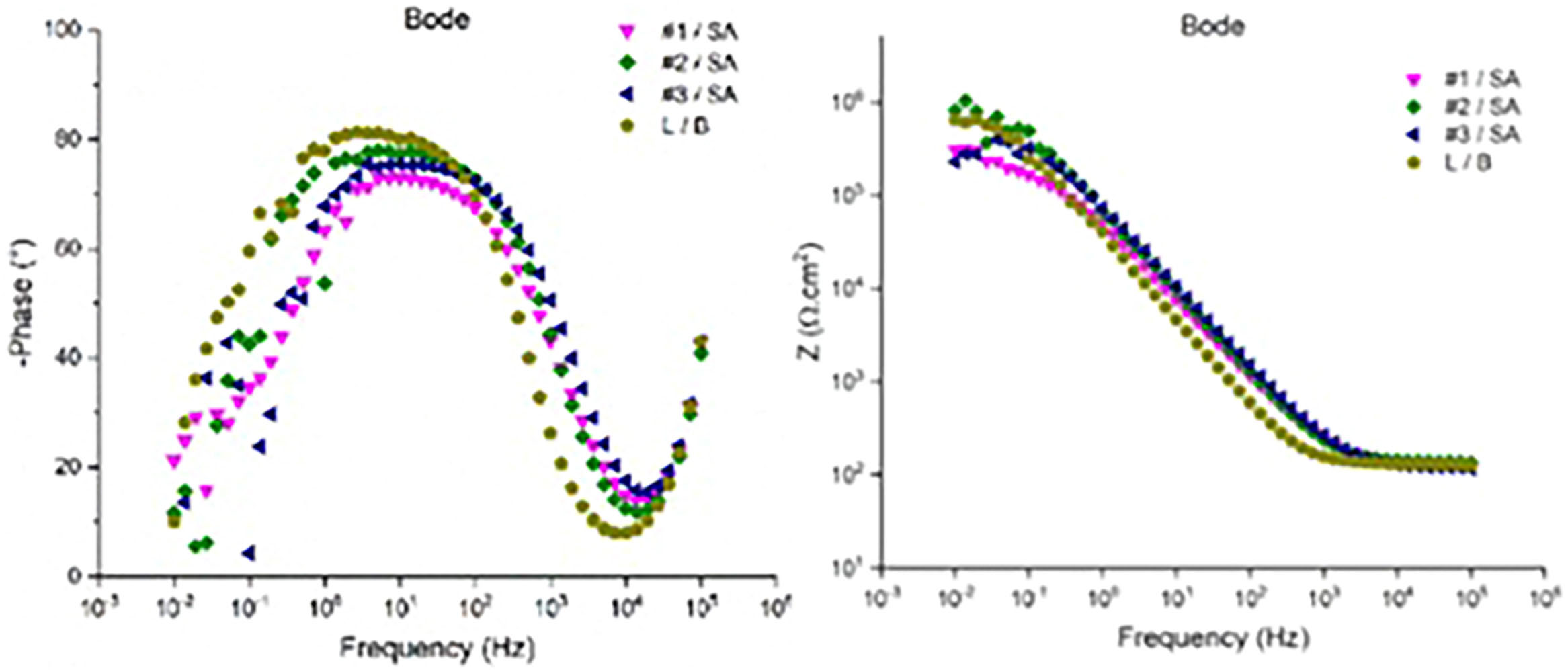
Figure 5 shows the triplicates of sanded substrates with the deposition of SA.

Bode plots of triplicate samples sanded with SA compared to the white substrate immersed in 0.1 mol/L NaCl solution.
It can be observed (Figure 5) that despite the samples showing a phenomenon at medium frequency, the sanded samples demonstrated instability in the NaCl solution at lower frequencies, which can be seen in the plot with several random points. This fact may be associated with manual pre-treatment, which possibly creates different irregularities between the samples that contribute to this instability, as well as the activation of samples with grooves that may have become preferential paths for the electrolyte. In the graph of Figure 5, it is observed that sample #1/SA had a time constant at average frequency, with the smallest phase angle (of around 72°) when compared with the other samples. Sample #3/SA showed the same curve profile as #1/SA, albeit with a small increase in its phase angle (which was around 74°). Sample #2/SA, on the other hand, had a curve profile more similar to the L/B sample, in which a “wider” phenomenon is observed at medium frequency, displaced to low frequencies.
Figure 6 shows the triplicates of the samples sandblasted with SA, comparing them with the uncoated substrate (smooth) immersed in a 0.1 mol/L NaCl solution. The triplicate of the sandblasted substrate has less instability and greater reproducibility than the sanded sample (Figure 5). There is a lot of similarity in the curve profile of samples J1/SA, J2/SA and J3/SA, which show a phenomenon of high to medium frequency associated with the barrier protection of the coating with a superhydrophobic characteristic (Figure 3). However, it is observed that J1/SA shows instability, with random points at low frequencies, and that J2/SA has a small increase in its phase angle (of around 2°) in relation to J1/SA and J3/SA. When comparing J1/SA, J2/SA and J3/SA with the L/B sample (without coating), it is observed that the coated samples have a high to medium frequency phenomenon associated with the barrier of the superhydrophobic coating, while L/B has a medium to low frequency phenomenon associated with the permeability of the electrolyte through aluminum oxide. HUANG et al. [10] applied SA on the aluminum alloy during a 24 min treatment, and this sample was compared with the aluminum as received. Using Bode plots, HUANG et al. [10] reported that at high frequency the resistance found is attributed to the superhydrophobic film, and at medium to low frequency it represents the charge transfer resistance of the double layer. They also mention a large impedance value obtained from the Nyquist plot, with two semicircles – the first being 29 kΩ.cm2 in diameter at high frequency, followed by the second semicircle, with 95 kΩ.cm2, while the sample as received (without coating) showed a value of 1.46 kΩ.cm2. These values confirm the efficiency that the SA film provides by increasing the durability and resistance of the metal in aggressive environments.
Bode plots of triplicate samples blasted with SA compared to the white substrate immersed in 0.1 mol/L NaCl solution.
With regard to the test using the sandblasted sample followed by sanding, J+#/SA was excluded from the testing, as it showed lower hydrophobicity (155.7°) in relation to the sandblasted sample. The latter had a superior superhydrophobic character (158.9°), considering even the addition of the sanding process after blasting, as well as the fact that the addition of processes increases the cost of large-scale production of the material. Figure 7 shows that only the L/SA sample has a stable electrochemical system, while the other samples have overlapping points at low frequencies. This behavior may be related to the more hydrophobic character of the samples that have a rough surface morphology, as the high repellency of the coating makes it difficult for the solution to come into contact with the entire area, especially in its valleys. Analyzing the Bode plots, it is observed that the J/SA sample shows a high to medium frequency phenomenon associated with the superhydrophobic coating; that is, the substrate with a CA above 150° has better electrochemical performance compared to the other hydrophobic surfaces, which indicates greater corrosion protection due to the film property combined with the surface roughness. In their study of the mechanism of formation of the SA superhydrophobic coating over the layer of metal oxide on a magnesium substrate, CUI et al. [26] verified a symmetrical and asymmetrical combination of the SA molecule due to the double bond and the hydroxyl in its chain, resulting in a bent molecular geometry being formed between the coating and the substrate. In addition, the authors also noted the formation of precipitates due to the reaction of Mg2 with CH3(CH2)16COOH, which were retained in the pores of the Mg oxide and contributed to its sealing, resulting in better corrosion resistance properties. The L/SA sample, on the other hand, showed a well-defined phenomenon at medium frequency, with a phase angle of around 80°, in module around 10−6 associated with the permeability of the electrolyte through the film. This lower performance compared to J/SA is associated with the roughness promoted by blasting, which favored low surface wettability and, consequently, less contact with the electrolyte solution, which is in line with the results obtained in the CA analysis (Figure 3) and thus provide greater resistance to corrosion. The sanded sample (#/SA) showed a behavior similar to that of the uncoated sample (L/B): i.e., a medium to low frequency phenomenon associated with the permeability of the electrolyte through the film and the formation of corrosion products. RIBEIRO et al. [27] also observed this behavior at medium to low frequency and reported that it reflects the change in the electrical conductivity of the passive oxide formed on the surface during exposure to corrosive media, which is possibly related to the effect of charge transfer.

Bode and Nyquist plots of the samples with smooth (L), sanded (#) and sandblasted (J) substrates with SA coating compared with the white substrate (L/B) in 30 min of immersion in a NaCl 0 solution, 1 mol/L.
Figure 8 shows a compilation of the resistance of the coatings during the analyses carried out at 1, 24, 48, 72 and 96 hours of immersion in 0.1 mol/L NaCl, regarding the substrate with different surface states.

Bode plots of samples with smooth, sanded and blasted substrates with SA coating compared to the white substrate at 1, 24, 48, 72 and 96 hours of immersion in a 0.1 mol/L NaCl solution.
With respect to the J/SA coating that showed the best performance at 30 minutes of immersion, it is observed that it maintained this behavior for up to 96 hours of immersion, denoting the protective character of this sample compared to the other substrates, as well as the uncoated sample. However, when analyzing the Bode plots, it can be noted that, with the increase of the immersion time, the time constant of medium to low frequency phenomena becomes “wider” and there is a decrease in the phase angle after 24 hours of analysis. It can be concluded, thus, that there is a decrease in corrosion resistance with immersion time. Considering the use of acid-based coatings (in this case, silane), SALVADOR et al. [23] reported that the formation of pits on their surfaces can also occur depending on the application time, concentration, volume and temperature of the acid, which determine the depth of these. In addition, to carry out acid attacks on aluminum, embrittlement can also happen, due to the incorporation of hydrogen to the material arising from the reactions of the acid with the oxide. This results in the possible formation of microcracks on the surface, which may reduce the fatigue strength of the material, leading to the occurrence of fractures and, consequently, impairing its corrosion resistance [23]. Therefore, it is important to evaluate the alloy to be used, the type of pretreatment (basic or acidic solution) and the coating to be applied in terms of concentration, time and temperature. The L/SA coating remained more stable than the other samples at all immersion times (1, 24, 48, 72 and 96 hours) with a phenomenon at medium frequency, which is associated with the permeability of the electrolyte through the film and its phase angle of around 70°. This denotes the stability of the covalent bonds (Me–O–CO–CH2–) that aid in protecting the material during longer periods of immersion. TEO et al. [28] and KIM et al. [29] studied the effect of different treatments before applying coatings on Al. The purpose of their research was to identify pretreatment conditions to help maximize covalent bonds (Me–O–CO–CH2–) with pure Al and anodized 7075 Al. The techniques used in their studies were TOF-SIMS (time-of-flight/secondary ion mass spectroscopy) to identify the bonds in question (Me–O–CO–CH2–), XPS and SEM to analyze the chemical and topographic changes of the surfaces of the metal, as well as EIS to assess corrosion resistance. To produce samples for testing, the authors used the reality of the industrial process, cleaning the material with only an industrial solution, but with varying cleaning times, maintaining the integrity of the aluminum oxide formed before applying the coating. The studies showed that a minimum treatment of 15 minutes in the industrial solution, applied to the native oxide of the high purity Al sample, is effective in providing a compact oxide layer before coating application. The sample of the anodized 7075 Al alloy requires 5 minutes of treatment with the industrial solution in order to optimize the adsorption on the coating. The authors showed that the interfacial bond in the 7075 Al alloy was improved, thus optimizing its industrial time, but also that in both cases, the covalent bonds (Me–O–CO–CH2–) contributed to the corrosion resistance of the material during long immersion times, as they made the system more stable, with good adhesion of the coating.
The polished sample #/SA showed the worst performance among all the coated samples, always having a time constant on average for a “wider” low frequency, with instability and a decrease in the phase angle value from 48 hours onward. These results indicated a decrease in its corrosion resistance, as well as the fragility of its system. In their study of different titanium pre-treatments for the application of a coating with acidic characteristics, CASAGRANDE et al. [30] found that the sanded and polished samples showed the worst performance, as they were damaged and displaced, which demonstrated lower cohesion forces between the film and the substrate. Furthermore, the authors justified that the weak adhesions are due to surface irregularities of the substrate that received manual mechanical treatment. They also reported that the poor adhesion of a coating may be associated with the instability of the covalent bonds and the substrate, showing fragile regions at the interface where the weak bonds of hydrogen decrease adherence and, consequently, reduce its protective power. Therefore, based on the results analyzed in Figure 8, although the curves of the coated samples show a loss of the protection provided by the superhydrophobic film barrier, it is concluded that the corrosion resistance increased and remained stable throughout the entire test. The resistance becomes even greater as the hydrophobicity increases, as samples with contact angles greater than 150° offer better protection in relation to samples with angles lower than 150°. Until the end of the test at 264 hours, the J/SA sample still had better corrosion resistance compared to the other samples.
Figure 9 shows a graph of the CA ratio versus actual resistance, which was plotted using data from 1h of immersion in NaCl. Analyzing the graph, it is clear that the sample with a CA above 150°, J/SA, has greater resistance to corrosion. The hydrophobicity of the surface is entirely linked with the surface energy of the solid and can be evaluated by the CA formed by a drop of liquid with the surface. In this phenomenon, the greater the surface free energy, the greater the wettability and, consequently, the greater the adhesion of liquids. A lower adhesion of liquids results in a higher contact angle, which indicates a more hydrophobic character of the surface [23]. Given this behavior, the degree of hydrophobicity that a coating promotes is directly related to its anticorrosive protection capacity, which is proportional to the CA of the liquid with the surface of the coating [31]. However, when roughness is modified, so that the surface CA does not reach superhydrophobicity, as in the case of sample #/SA, the corrosion resistance shown is lower than that of the smooth substrate sample, L/SA. This effect may be directly related to the stability of the aluminum oxide layer, whose unmodified surface has greater integrity, as well as the bond (Me–O–CO–CH2–) contributing to corrosion resistance, which causes the system of the sample to be more stable and have good coating adhesion. However, in the sanding process – as well as in the activation of the samples, – due to different irregularities between the samples, there is an increase in this instability or even some failure in the deposition of the coating, or the creation of more hydrophilic points due to roughness.

Relation of CA with actual resistance, at 1h of immersion in NaCl, of samples with smooth (L/SA), sanded (#/SA) and sandblasted (J/SA) substrates coated with SA and the white substrate (L/B) of 5052 aluminum.
3.4. Salt spray
The samples were placed in a saline mist chamber to simulate their exposure to a maritime environment, but with constant temperature and without adverse environmental conditions that can further accelerate the degradation of the coating, such as ultraviolet rays, rain, dust and the presence of waste. The samples remained in the chamber for 1632h, showing B4 as their maximum degree of corrosion. Figure 10 shows the triplicates of the samples coated with SA versus the aluminum substrate (L-B). Among all samples, only the sample with the coated blasted surface stands out in relation to L-B. The others show a behavior similar to that of the uncoated sample. At 48h of analysis, the samples with smooth (L) and sanded (#) surfaces went from grade B0 to B1, while the sandblasted sample (J) resisted corrosion in grade B0 for up to 96h. In the B1 degree of corrosion, samples L and # remained up to 72h and the blasted surface with SA coating, up to 120h. In B2, the resistance of the L and # samples was 96h, and the J sample, 192h. In B3, the L and # samples remained for 216h, and the J triplicate, 384h, and from these times until 1632h of analysis all samples remained in grade B4.

Graph of the triplicate samples with SA coating compared to the bare substrate, during 1632h in a salt mist chamber.
Analyzing the L-SA and #-SA samples individually and comparing them with the uncoated sample, it can be seen that both show similar behavior in terms of the degree of corrosion as a function of time, as shown in Figure 9. The performance of the L-B sample indicates that the barrier of the SA film combined with the smooth or sanded substrate has limited resistance to salt spray. Two hypotheses can be proposed to explain this behavior: the presence of surface defects. Considering this hypothesis, the adhesion of water particles to these regions causes the loss of hydrophobicity and the increase of wettability of the substrate with NaCl, thus providing corrosive attack. As indicated by the study carried out by Kumar and collaborators [32], the desorption of SA molecules occurs after the exposure of the coating layer to aqueous droplets containing Na+ ions. Alternatively, desorption of the molecules may result from structural rearrangements within the coating layer that expose the hydrophilic (carboxylic acid) group to the electrolytic aqueous liquid. After ellipsometry and AFM analysis, it was verified that the thickness of the SA coating, when exposed to the Na+ solution, was zero, which demonstrates that the substrate was completely exposed in the region where the drop was deposited, thus generating a hole in the coating layer [32]. However, it is noted that the triplicate of the sandblasted substrate sample performed well compared to the other samples studied, showing that superhydrophobicity provides better corrosion resistance properties to the aluminum substrate, corroborating the results of EIS, where there was a symmetrical and asymmetrical combination of the SA molecule due to the double bond and the hydroxyl present in its chain. This resulted in a molecular inclination being formed between the coating and the substrate, as well as the contribution to the sealing of the pores of the Mg oxide (a constituent of the alloy) and consequently better corrosion resistance properties.
4. CONCLUSIONS
SA provided a high degree of superhydrophobicity to the blasted substrate, reaching angles of up to 169.8°. Regarding the smooth (L) and sanded (#) samples, their angles were, respectively, 124.5° and 136.7°. In the EIS test, it was verified that the superhydrophobic sample with the sandblasted surface has greater total resistance to corrosion, as it showed a high frequency phenomenon associated with the superhydrophobic coating (CA above 150°). Additionally, it had better electrochemical performance compared to the other hydrophobic surfaces studied, which also denotes greater corrosion protection due to the film property combined with the surface roughness. Samples with smooth and sanded surfaces (CA between 90°–150°) showed intermediate total resistance to white and coated sandblasted substrates. The salt spray test showed that the J/SA substrate has greater resistance to corrosion, proving that superhydrophobic angles provide better properties for protecting the as received substrate. Finally, the development of superhydrophobic surfaces was completed by the blasted surface, providing greater resistance to corrosion for the aluminum substrate. However, when this surface has angles below 150°C, the as received (smooth) surface with coating yields better results due to the integrity of the aluminum oxide in this substrate. The methods used in this study, both for the manufacturing and deposition of coatings, are simple and can be applied industrially, and also use low-cost products such as SA.
5. ACKNOWLEDGMENTS
This work was carried out with the support of CNPq, a Brazilian government entity focused on training human resources as well as encouraging science, technology and innovations. The authors also thank the financial support of Brazilian agencies: FAPERGS and CAPES.
6. BIBLIOGRAPHY
-
[1] HUANG, X., TEPYLO, N., POMMIER-BUDINGER, V., et al, “A survey of icephobic coatings and their potential use in a hybrid coating/active ice protection system for aerospace applications”, Progress in Aerospace Sciences, v. 105, pp. 74–97, 2019. doi: http://doi.org/10.1016/j.paerosci.2019.01.002.
» https://doi.org/10.1016/j.paerosci.2019.01.002 -
[2] WU, Y., SHEN, Y., TAO, J., et al, “Facile spraying fabrication of highly flexible and mechanically robust superhydrophobic F-SiO2 PDMS coatings for self-cleaning and drag-reduction applications”, New Journal of Chemistry, v. 42, n. 22, pp. 18208–18216, 2018. doi: http://doi.org/10.1039/C8NJ04275F.
» https://doi.org/10.1039/C8NJ04275F -
[3] QING, Y., LONG, C., AN, K., et al, “Sandpaper as template for a robust superhydrophobic surface with self-cleaning and anti-snow/icing performances”, Journal of Colloid and Interface Science, v. 548, pp. 224–232, 2019. doi: http://doi.org/10.1016/j.jcis.2019.04.040.
» https://doi.org/10.1016/j.jcis.2019.04.040 -
[4] HU, C., CHEN, W., LI, T., et al, “Constructing non-fluorinated porous superhydrophobic SiO2-based films with robust mechanical properties”, Colloids and Surfaces. A, Physicochemical and Engineering Aspects, v. 551, pp. 65–73, 2018. doi: http://doi.org/10.1016/j.colsurfa.2018.04.059.
» https://doi.org/10.1016/j.colsurfa.2018.04.059 -
[5] CHEN, C., WENG, D., CHEN, S., et al, “Development of durable, fluorine-free, and transparent superhydrophobic surfaces for oil/water separation”, ACS Omega, v. 4, n. 4, pp. 6947–6954, 2019. doi: http://doi.org/10.1021/acsomega.9b00518.
» https://doi.org/10.1021/acsomega.9b00518 -
[6] ZHANG, C., KALULU, M., SUN, S., et al, “Environmentally safe, durable and transparent superhydrophobic coating prepared by one-step spraying”, Colloids and Surfaces. A, Physicochemical and Engineering Aspects, v. 570, pp. 147–155, 2019. doi: http://doi.org/10.1016/j.colsurfa.2019.03.015.
» https://doi.org/10.1016/j.colsurfa.2019.03.015 -
[7] YANG, Z., LIU, X., TIAN, Y., “Fabrication of super-hydrophobic nickel film on copper substrate with improved corrosion inhibition by electrodeposition process”, Colloids and Surfaces. A, Physicochemical and Engineering Aspects, v. 560, pp. 205–212, 2019. doi: http://doi.org/10.1016/j.colsurfa.2018.10.024.
» https://doi.org/10.1016/j.colsurfa.2018.10.024 -
[8] SALEHI, M., MOZAMMEL, M., EMARATI, S., “Superhydrophobic and corrosion resistant properties of electrodeposited Ni-TiO2/TMPSi nanocomposite coating”, Colloids and Surfaces. A, Physicochemical and Engineering Aspects, v. 573, pp. 196–204, 2019. doi: http://doi.org/10.1016/j.colsurfa.2019.04.024.
» https://doi.org/10.1016/j.colsurfa.2019.04.024 -
[9] ZHANG, Q., ZHANG, H., “Corrosion resistance and mechanism of micro-nano structure super-hydrophobic surface prepared by laser etching combined with coating process”, Anti-Corrosion Methods and Materials, v. 66, n. 3, pp. 264–273, 2019. doi: http://doi.org/10.1108/ACMM-07-2018-1964.
» https://doi.org/10.1108/ACMM-07-2018-1964 -
[10] HUANG, Y., SARKAR, D., GRANT CHEN, X., “Superhydrophobic aluminum alloy surfaces prepared by chemical etching process and their corrosion resistance properties”, Applied Surface Science, v. 356, pp. 1012–1024, 2015. doi: http://doi.org/10.1016/j.apsusc.2015.08.166.
» https://doi.org/10.1016/j.apsusc.2015.08.166 -
[11] GHOSH, K., BERTELS, E., GODERIS, B., et al, “Optimisation of wet chemical silane deposition to improve the interfacial strength of stainless steel/epoxy”, Applied Surface Science, v. 324, pp. 34–142, 2015. doi: http://doi.org/10.1016/j.apsusc.2014.10.075.
» https://doi.org/10.1016/j.apsusc.2014.10.075 -
[12] KUNST, S.R., GRAEF, T.F., MUELLER, L.T., et al, “Superficial treatment by anodization in order to obtain titanium oxide nanotubes applicable in implantology”, Matéria (Rio de Janeiro), v. 25, n. 4, pp. e–12873, 2020. doi: http://doi.org/10.1590/s1517-707620200004.1173.
» https://doi.org/10.1590/s1517-707620200004.1173 -
[13] BAKHSHESHI-RADA, H.R., HAMZAHB, E., ISMAILC, A.F., et al, “In vitro degradation behavior, antibacterial activity and cytotoxicity of TiO2-MAO/ZnHA composite coating on Mg alloy for orthopedic implants”, Surface and Coatings Technology, v. 334, pp. 450–460, 2018. doi: http://doi.org/10.1016/j.surfcoat.2017.11.027.
» https://doi.org/10.1016/j.surfcoat.2017.11.027 -
[14] DAROONPARVAR, M., FAROOQ KHAN, M.U., SAADEH, Y., et al, “Modification of surface hardness, wear resistance and corrosion resistance of cold spray Al coated AZ31B Mg alloy using cold spray double layered Ta/Ti coating in 3.5wt % NaCl solution”, Corrosion Science, v. 176, pp. 109029, 2020. doi: http://doi.org/10.1016/j.corsci.2020.109029.
» https://doi.org/10.1016/j.corsci.2020.109029 -
[15] CUI, X., LIN, X., LIU, C., et al, “Fabrication and corrosion resistance of a hydrophobic micro-arc oxidation coating on AZ31 Mg alloy”, Corrosion Science, v. 90, pp. 402–412, 2015. doi: http://doi.org/10.1016/j.corsci.2014.10.041.
» https://doi.org/10.1016/j.corsci.2014.10.041 -
[16] FOROOSHANI, H.M., ALIOFKHAZRAEI, M., ROUHAGHDAM, A.S., “Superhydrophobic aluminum surfaces by mechanical/chemical combined method and its corrosion behavior”, Journal of the Taiwan Institute of Chemical Engineers, v. 72, pp. 220–235, 2017. doi: http://doi.org/10.1016/j.jtice.2017.01.014.
» https://doi.org/10.1016/j.jtice.2017.01.014 -
[17] DA SILVA, R.G.C., VIEIRA, M.R.S., MALTA, M.I.C., et al, “Effect of initial surface treatment on obtaining a superhydrophobic surface on 5052 aluminum alloy with enhanced anticorrosion properties”, Surface and Coatings Technology, v. 369, pp. 311–322, 2019. doi: http://doi.org/10.1016/j.surfcoat.2019.04.040.
» https://doi.org/10.1016/j.surfcoat.2019.04.040 -
[18] TAMBORIM, S.M., MAISONNAVE, A.P.Z., AZAMBUJA, D.S., et al. “An electrochemical and superficial assessment of the corrosion behavior of AA 2024-T3 treated with metacryloxypropylmethoxysilane and cerium nitrate”. Surface and Coatings Technology, v. 202, pp. 5991–6001, 2008. doi: http://doi.org/10.1016/j.surfcoat.2008.06.173.
» https://doi.org/10.1016/j.surfcoat.2008.06.173 -
[19] FALAVIGNA, G.S., KUNST, S.R., FERREIRA, J.Z., et al., “Influência do Nb contido em eletrólito a base de oxalato na anodização de alumínio em ácido oxálico”, Research Society and Development, v. 10, n. 12, pp. e226101220369, 2021. doi: http://doi.org/10.33448/rsd-v10i12.20369.
» https://doi.org/10.33448/rsd-v10i12.20369 -
[20] CABRAL, R.G., DUARTE, M.F., MONTEMOR, M.G., et al, “A comparative study on the corrosion resistance of AA2024-T3 substrates pre-treated with different silane solutions”, Progress in Organic Coatings, v. 54, n. 4, pp. 322–331, 2005. doi: http://doi.org/10.1016/j.porgcoat.2005.08.001.
» https://doi.org/10.1016/j.porgcoat.2005.08.001 -
[21] SUSAC, D., SUN, X., MITCHELL, K.A.R., “Adsorption of BTSE and γ-APS organosilanes on different microstructural regions of 2024-T3 aluminum alloy”, Applied Surface Science, v. 207, n. 1-4, pp. 40–50, 2003. doi: http://doi.org/10.1016/S0169-4332(02)01237-0.
» https://doi.org/10.1016/S0169-4332(02)01237-0 -
[22] FENG, L., ZHANG, Y., JINMING, X.I., et al, “Petal Effect: a superhydrophobic state with high adhesive force”, Langmuir, v. 24, n. 8, pp. 4114–4119, 2008. doi: http://doi.org/10.1021/la703821h.
» https://doi.org/10.1021/la703821h -
[23] SALVADOR, D.G., MARCOLIN, P., BELTRAMI, L.V.R., et al, “Influence of the pretreatment and curing of alkoxysilanes on the protection of the titanium-aluminum-vanadium alloy”, Journal of Applied Polymer Science, v. 134, n. 46, pp. 45470, 2017. doi: http://doi.org/10.1002/app.45470.
» https://doi.org/10.1002/app.45470 -
[24] ZHANG, W., CHEN, Y., CHEN, M., et al, “Strengthened corrosion control of poly (lactic acid) (PLA) and poly (ε-caprolactone) (PCL) polymer-coated magnesium by imbedded hydrophobic stearic acid (SA) thin layer”, Corrosion Science, v. 112, pp. 327–337, 2016. doi: http://doi.org/10.1016/j.corsci.2016.07.027.
» https://doi.org/10.1016/j.corsci.2016.07.027 -
[25] PALOMINO, L.E.M., SUEGAMA, P.H., AOKI, I.V., et al, “Investigation of the corrosion behaviour of a bilayer cerium-silane pre-treatment on Al 2024-T3 in 0.1 M NaCl”, Electrochimica Acta, v. 52, n. 27, pp. 7496–7505, 2007. doi: http://doi.org/10.1016/j.electacta.2007.03.002.
» https://doi.org/10.1016/j.electacta.2007.03.002 -
[26] CUI, X., LIN, X., LIU, C., et al, “Fabrication and corrosion resistance of a hydrophobic micro-arc oxidation coating on AZ31 Mg alloy”, Corrosion Science, v. 90, pp. 402–412, 2015. doi: http://doi.org/10.1016/j.corsci.2014.10.041.
» https://doi.org/10.1016/j.corsci.2014.10.041 -
[27] RIBEIRO, D.V., SOUZA, C.A.C., ABRANTES, J.C.C., “Use of Electrochemical Impedance Spectroscopy (EIS) to monitoring the corrosion of reinforced concrete”, Revista IBRACON de Estruturas e Materiais, v. 8, n. 4, pp. 529–546, 2015. doi: http://doi.org/10.1590/S1983-41952015000400007.
» https://doi.org/10.1590/S1983-41952015000400007 -
[28] TEO, M., KIM, J., WONG, P.C., et al, “Investigations of interfaces formed between bis-1,2-(triethoxysilyl)ethane (BTSE) and aluminum after different Forest Product Laboratory pre-treatment times”, Applied Surface Science, v. 221, n. 1–4, pp. 340–348, 2004. doi: http://doi.org/10.1016/S01694332(03)00933-4.
» https://doi.org/10.1016/S01694332(03)00933-4 -
[29] KIM, J., TEO, M., WONG, P.C., et al, “Pre-treatments applied to oxidized aluminum surfaces to modify the interfacial bonding with bis-1,2-(triethoxysilyl)ethane (BTSE)”, Applied Surface Science, v. 252, n. 5, pp. 1305–1312, 2005. doi: http://doi.org/10.1016/j.apsusc.2005.02.129.
» https://doi.org/10.1016/j.apsusc.2005.02.129 -
[30] CASAGRANDE, R.B., KUNST, S.R., BELTRAMI, L.V.R., et al, “Pretreatment effect of the pure titanium surface on hybrid coating adhesion based on tetraethoxysilane and methyltriethoxysilane”, Journal of Coatings Technology and Research, v. 15, n. 5, pp. 1089–1106, 2018. doi: http://doi.org/10.1007/s11998-017-0035-2.
» https://doi.org/10.1007/s11998-017-0035-2 -
[31] GAMA, R.O., ORÉFICE, R.L., “Controle do comportamento hidrofílico/hidrofóbico de polímeros naturais biodegradáveis através da decoração de superfícies com nano e microcomponentes”, D.Sc. Thesis, Universidade Federal de Minas Gerais, Belho Horizonte, 2014. http://hdl.handle.net/1843/BUOS- 9LFMQ8, accessed in March, 2025.
» http://hdl.handle.net/1843/BUOS- 9LFMQ8 -
[32] KUMAR, N., WANG, L., SIRETANU, I., et al, “Salt dependent stability of stearic acid langmuir-blodgett films exposed to aqueous electrolytes”, Langmuir, v. 29, n. 17, pp. 5150–5159, 2013. doi: http://doi.org/10.1021/la400615j.
» https://doi.org/10.1021/la400615j