 Investigation on the thermal, mechanical, and morphological characterization of peepal fiber-reinforced epoxy composites enhanced with micro-particulate ziziphus mauritiana seed powder
ABSTRACT
Natural fibers are gaining significant research attention due to their ecological, renewable, and environmentally friendly nature, making them attractive alternatives to synthetic reinforcements. This experimental study investigates the thermo-mechanical behavior of Peepal fiber (PF) reinforced epoxy composites modified with Ziziphus mauritiana seed powder (ZMSP). Hybrid composites were fabricated by maintaining a fixed fiber weight fraction of 40% PF, while varying the particle content at 3, 6, 9, and 12 wt%. Prior to incorporation, the particles were chemically treated with 5% NaOH and characterized using FTIR, XRD, and TGA analyses. The treatment increased crystallinity index, enhanced thermal stability, and promoted better interfacial adhesion with the matrix. Mechanical tests revealed that composites with 3 wt% filler displayed the highest impact strength, whereas 9 wt% filler exhibited optimum tensile, compressive, flexural, hardness, and fracture toughness properties. Thermogravimetric analysis confirmed enhanced thermal resistance, while water absorption and biodegradability increased with particle loading. SEM micrographs illustrated improved fiber–matrix interaction and reduced void formation at optimal filler content. The combined improvements in strength, toughness, and stability demonstrate that PF–ZMSP hybrid composites can serve as sustainable, cost-effective, and lightweight materials suitable for moderate load-bearing applications in automotive, structural, and industrial sectors.
Keywords:
Peepal fiber; Ziziphus mauritiana seed powder; Thermal analysis; Mechanical characteristics; Biodegradability; Microstructural analysis
1. INTRODUCTION
Natural fibers are currently gaining the interest of academic and industrial researchers owing to their accessibility, ecological sustainability, and biodegradability. A hybridized polyester composite was made using jack tree and jute fibers for reinforcement, combined with an eggshell filler. Significant improvements were made to tensile strength, impact resistance, and hardness. Additionally, investigations using SEM and FTIR demonstrated that mechanical characteristics and structural interactions were improved [1]. A hybrid jute/glass/epoxy composite bumper reinforced with carbon nanotubes enhanced bending stiffness and crash energy absorption. The study supports its application in improving safety in Indian passenger vehicles [2]. Using hot press molding, sugarcane fiber and tamarind seed powder were combined to create hybrid bio-composites. The tensile behaviour of the composites was greatly improved by the addition of tamarind seed powder, rendering them ideal for use in Engineering [3]. Hybrid bio-composites reinforced with tamarind shell powder and fine granite exhibited improved compressive properties. Mechanical strength was increased by the hybrid reinforcements, as demonstrated by compression testing [4].
Composites reinforced with vinyl silane-treated areca fibers and bronze nanoparticles showed improved tensile strength, thermal conductivity, and wear resistance. SEM revealed better bonding, and composites are suitable for automotive and structural applications [5]. Hybrid epoxy composites reinforced with graphene nanoplatelets and wood particles showed 35.55% improved tensile strength and better thermal properties. Excessive wood particles caused agglomeration and reduced the mechanical properties [6]. The mechanical characteristics of peepal fibre with polyester composites, including their TS, FS, and IS were investigated. Results suggest peepal fiber’s potential as a sustainable reinforcement for green Engineering applications [7]. Peepal fiber composites fortified with silicon carbide and silica were created. Epoxy + peepal + 2 wt% SiO2 composites demonstrated enhanced performance with the greatest tensile strength (88 MPa) and the least amount of water absorption [8].
Hybrid composites incorporating peepal (P) and Indian almond (IA) fibers, along with jujube seed fillers, were produced. P/IA/P/7.5 wt% jujube composites exhibited exceptional tensile strength (82 MPa) and flexural strength (98 MPa) with negligible water absorption [9]. Compression and tension parallel to the grain were tested for six wood species from Pakistan. Vachellia nilotica had the highest compressive and tensile strength, while Eucalyptus camaldulensis exhibited superior hardness [10]. Edible films were developed using Indian jujube puree and pectin, enhancing tensile strength (54.55 to 472.32 kPa). Increased pectin concentration negatively affected water tolerance but introduced novel potential for fruit coatings [11]. Postharvest technologies for fresh jujube fruits, including physical, chemical, and biological treatments, were reviewed. These strategies address water loss, browning, and decay, extending shelf life and improving quality [12]. The maximal TS of 58 MPa was demonstrated by composites that used IA fiber with a fiber length of 10 mm. Improved mechanical properties and reduced water absorption were achieved by adding 10 wt% jujube seed particles [13].
Hierarchical composites were constructed using bio-silica particles derived from fox millet husk ash and fibers from Amaranthus dubius stems. Composites with 1 vol.% biosilica exhibited excellent shear strength (154 MPa) while those with 2 vol.% showed superior wear properties (COF 0.26) and thermal insulation [14]. Jute/Kenaf hybrid polyester composites exhibited a 106.2% improvement in TS and a 115.4% increase in hardness. The hybrid design outperformed single-fiber composites, making it ideal for electrical and non-structural applications [15]. Polypropylene/Bamboo/nAl2O3 composites demonstrated improved tensile strength (43.1 MPa) and fire resistance. Adding 9% nAl2O3 reduced water absorption to 9.1% and enhanced the char barrier’s thermal endurance [16]. Alkali treatment improved bamboo fiber properties, reducing cross-sectional area by up to 22.63%. Probabilistic tensile strength analysis confirmed 1 wt% NaOH as optimal for mechanical enhancement [17]. Hybrid composites of Enset ventricosum (EVF) and Terminalia arjuna fibers with 6 wt% SiO2 showed improved mechanical and tribological performance. CoCoSo optimization highlighted their potential in wear-intensive applications [18]. Epoxy resin, coconut fibers, and waste marble dust (4–16 wt%) were combined to form hybrid composites. Under ASTM G99-05 testing, composites containing 16% coconut fiber and 12 wt% marble dust demonstrated lower wear rates and higher FS of 37.23 MPa and 34.27 MPa, respectively [19].
This research provides a significant advancement in the field of natural fiber-reinforced composites by focusing on the hybridization of Peepal fiber (PF) and Ziziphus Mauritiana seed powder (ZMSP), a combination that has not been extensively studied. Unlike prior works that primarily investigate individual fibers or fillers, this study examines the synergistic effects of both PF and ZMSP, exploring their combined thermal, mechanical, and biodegradation properties. A key contribution of this work is the comprehensive characterization of both raw and alkali-treated ZMSP particles, highlighting how chemical treatment enhances their crystallinity, thermal stability, and interfacial bonding with the epoxy matrix. The alkali treatment significantly improves the performance of the PF-ZMSP hybrid composite, making it more suitable for moderate load-bearing applications. Additionally, the study investigates the impact of ZMSP particle size distribution, offering new insights into how optimal particle loading enhances composite performance without compromising structural integrity. By systematically exploring the combined effects of PF and ZMSP, this research advances the understanding of hybrid bio-composites and their potential for eco-friendly, cost-effective applications, contributing to the development of sustainable materials for industries such as automotive and construction.
2. EXPERIMENTAL METHODOLOGY
2.1. Materials
The epoxy resin LY556 (density: 1.3 g/cm3) was combined with the hardener HY951 (density: 1.2 g/cm3) to form the matrix and it was procured from Kovai Cheenu enterprises, Coimbatore, Tamilnadu, India. The matrix was selected for its commendable mechanical qualities, dimensional stability, and suitable viscosity in addition to its simplicity of production.
The composite was constructed using peepal fiber and ZMSP particulates as reinforcing materials. The peepal fibers and Ziziphus Mauritiana fruits were collected from various regions of Anthiyur, Erode, Tamil Nadu, India. The physical and mechanical properties of Peepal fiber and ZMSP particles are tabulated in Table 1.
2.2. Fiber processing
Peepal fibers are obtained from the harvested bark of the peepal tree (Ficus religiosa) and immersed in water for three weeks, a process known as water retting. At this stage, the pectin that binds the fibers degrades, the softened outer layer is removed with a comb, and the fibers are separated.
Prior to alkalization, the isolated fibers were meticulously cleaned with distilled water and subsequently dehydrated at 50°C for 24 hours. Thereafter, the dehydrated fibers were soaked in a sodium hydroxide solution at varying concentrations. A period of 3 hours is designated for the submerged fibers to remain in the solution at 70°C, maintained using a hot plate with a magnetic stirrer, with intermittent stirring of 45 min to ensure uniform treatment. The treated fibers are then de-alkalinized with a 6% acetic acid solution to remove excess NaOH, prevent fiber degradation, improve adhesion, and ensure composite performance. Subsequent to de-alkalization, the fibers are thoroughly rinsed in a considerable volume of pure water and then dried for 12 hours at 50°C in an oven. Figure 1 shows the extraction process of Peepal fiber.

2.3. Preparation of ZMSP particles
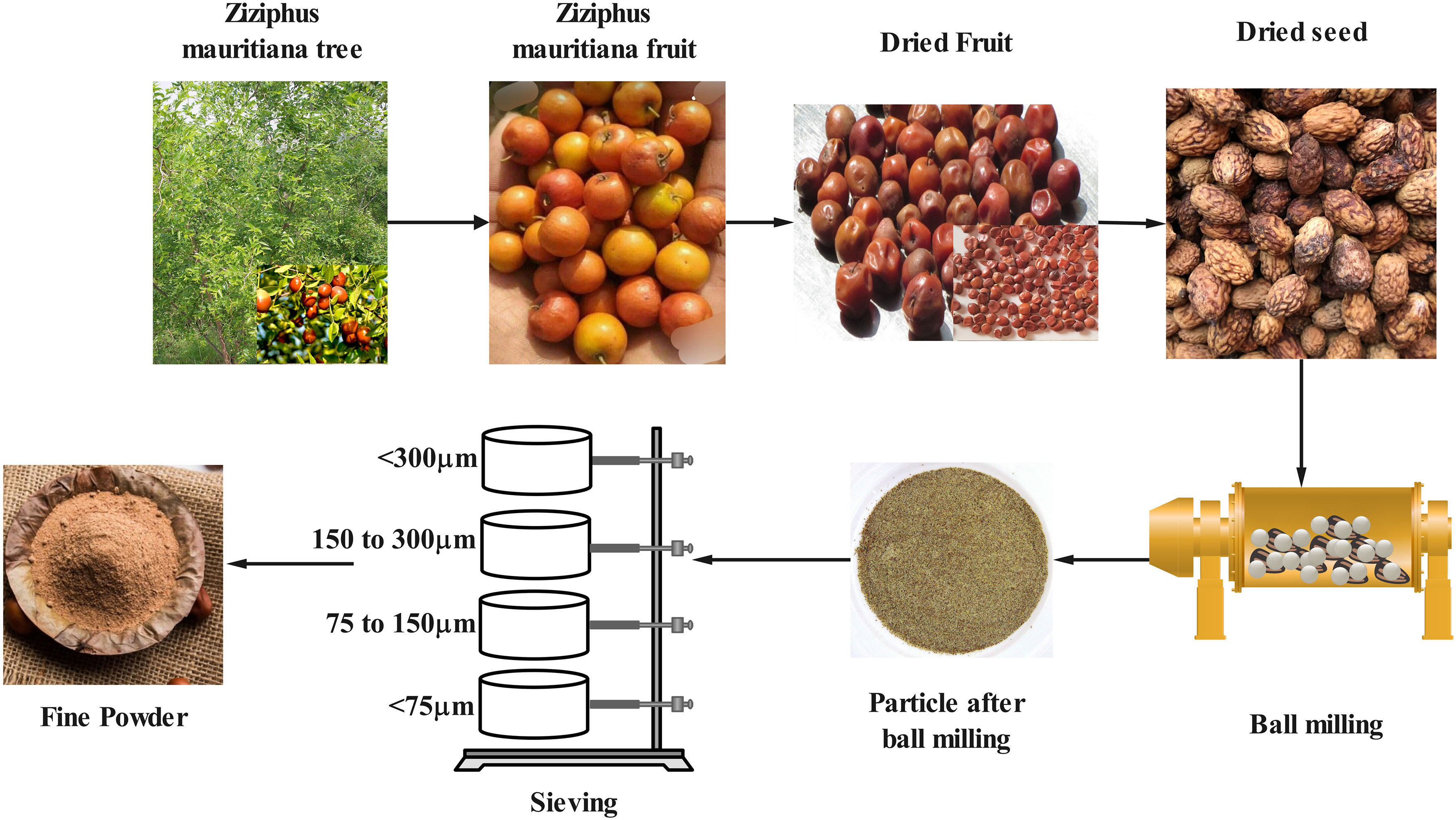
The extraction procedure of Ziziphus mauritiana seed powder include gathering mature fruits, meticulously washing them, and extracting the seeds by eliminating the pulp. The seeds are subsequently dried at 50–60°C for 24 hours to eliminate moisture. Subsequent to drying, the seeds are pulverized to detach the inner core (endosperm) from the rigid outer shell, and the outer core is next ground into a fine powder utilizing a ball mill operated at 400 rpm for 4 hours. The powder is sifted through a fine mesh (e.g., 80–100 mesh) to guarantee uniform particle size (Figure 2). These are termed as untreated particles.

2.4. Treated ZMSP particulate
Chemical treatment has been conducted for surface modification and property enhancement of ZMSP particulates. A 5% NaOH solution was used for the chemical treatment. In a beaker, 5% NaOH solution dissolves in 100 ml of desalination water. In a magnetic stirrer set to 750 rpm, agitate the liquid vigorously for 20 minutes to make an aqueous solution of sodium hydroxide. The solution was subsequently agitated at 870 rpm for 8 hours at 48°C after the addition of 15 grams of ZMSP particulate. Subsequent to that technique, the particle was purified with distillation water and acetone to reduce the pH of the treated particles and attain a neutral pH of 7. The treated particles are air-dried for 24 hours and then oven-dried at 65°C for overnight. This particle is categorized as chemically processed and is utilized in the fabrication of composite specimens. Alkali-treated Ziziphus mauritiana fibers improved crystallinity, thermal stability, and tensile strength by 2.12 times. The composites showed enhanced bonding, making them suitable for lightweight structural applications [21].
2.5. Fabrication of composites
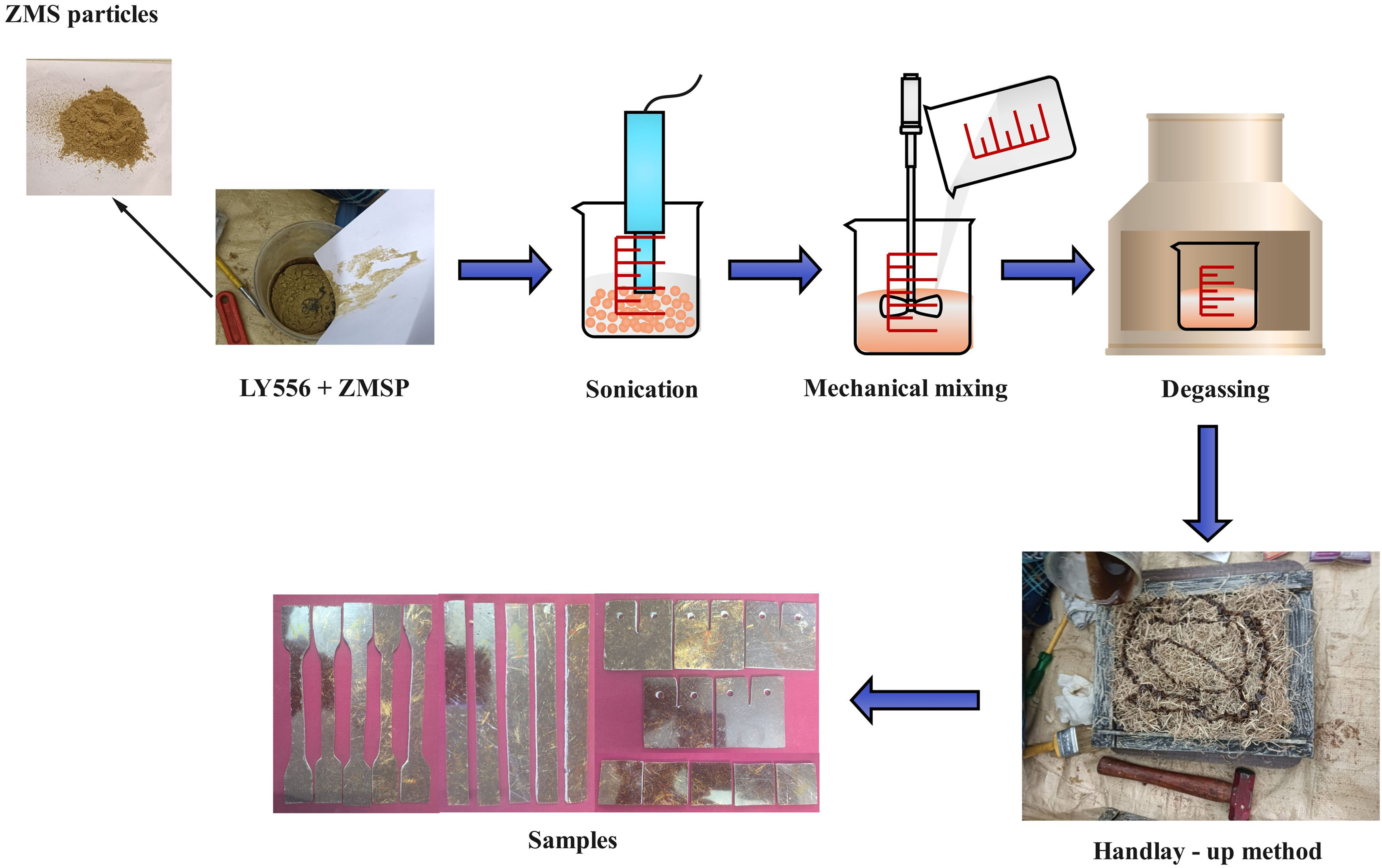
The composite specimen is produced using the hand layup technique. The composite specimens are produced using a 300 mm × 300 mm cast iron die that is flat and polished. The ZMSP particle and epoxy resin are thoroughly combined for 20 minutes at 50 rpm using ultrasonic dual mixing to achieve a homogeneous slurry. A hardener is subsequently introduced in a 10:1 ratio and blended for an additional 15 minutes using mechanical stirring. Degassing is essential for the removal of air bubbles and voids from the final combination. To facilitate the eradication of the composite that was generated, a layer of polyvinyl alcohol (PVA) and wax polish was applied. Use a brush to apply a layer of resin hardener containing a ZMSP particle mixture to the die, and then position unidirectional PF fibers on top. The process is repeated until the specimens reach the required thickness of 3 mm. To remove air bubbles, the moulds are allowed to cure for 24 hours and then subjected to an external weight of 30 kg to ensure that the resin and hardener are distributed evenly throughout the specimens. The weight percentage of PF fibres is set at 40%, and composite specimens A, B, C, and D are made using four particular weight fractions of ZMSP particles: 3%, 6%, 9%, and 12%, respectively. A hybrid composite material was developed for use in automobiles, using peepal and Indian almond fibers. Industrial applications are a good fit for epoxy/40 wt% peepal composites because of their improved tensile strength and wear resistance [22]. Figure 3 depicts the composite fabrication process in a flow diagram. The fabricated composite specimens are subsequently shaped and sized in compliance with the relevant ASTM specifications.

Peepal fiber reinforced composites were individually produced during trial testing with weight fractions ranging from 10% to 40%, in 10% increments. In order to create composite specimens, the fibers are oriented in a single direction. Then, their mechanical properties, including tensile and flexural strengths, are assessed. According to the testing results, mechanical qualities were best at a 40% fiber weight fraction, but they started to degrade at a 50% fiber loading. The primary reason for this reduction is the aggregation of fibers and the improved quantity of fiber-less bonding strengths. Table 2 illustrates the amalgamation of composites.
2.6. Characterization of particles
The characterization revealed the impact of chemical treatment on the thermal stability, phase transition, molecular bonding, and surface modification of untreated particles. A Bruker D8 Focus XRD instrument was used to conduct X-ray diffraction (XRD) at 30 kV and 15 mA. The treated and untreated particles underwent a phase transition within a 2θ range of 10 to 80°, with a stepping size of 0.05° and a rate of 2°/min. The crystallinity index (CI) was obtained by using Equation 1.
The alterations in functional groups that resulted from surface modification were evaluated using Fourier-transform infrared spectroscopy. Within the 400–4000 cm−1 range, this procedure is performed with a resolution of 2 cm−1. A weight ratio of 1:200 was used to amalgamate the ZMSP particle with Potassium Bromide (KBr). The amalgamation was compacted in a die to produce a slender pellet for evaluative purposes. The EXSTAR TG/DTA 6300 thermo-gravimetric analyzer was utilized to conduct an empirical examination of the thermal properties of both treated and raw particles in a nitrogen atmosphere. The specimen was heat at 10°C/min while nitrogen was pumped through it at 200 ml/min.
2.7. Evaluation of fabricated composites
2.7.1. Density and void
The assessment of composite materials was performed to evaluate various properties using established criteria and appropriate equipment. Theoretical and experimental density, along with void content, were evaluated for density and void content tests in accordance with ASTM D-2734-70. Digital vernier calipers and a weighing scale were used with numerical density determined through the rule of mixtures and experimental density assessed by Archimedes’ principle. The theoretical density (ρtheo) of the composites was calculated using the rule of mixtures as follows:
Where:
• Wf, Wm, Wb: Weight fractions of the fiber, matrix (resin), and biofiller (ZMSP), respectively
• ρf, ρm, ρb: Densities of the fiber, matrix, and biofiller, respectively
The experimental density (ρexp) was determined using Archimedes’ principle, where specimens were weighed in air and water.
The void content (V%) was calculated using:
A decrease in theoretical density with increasing ZMSP filler content was observed due to the lower inherent density of the ZMSP particles compared to the polymer matrix. As the proportion of low-density filler increases, the overall composite theoretical density reduces, as predicted by the rule of mixtures.
2.7.2. Hardness test
The hardness test involved measuring surface hardness with a Shore-D hardness tester, following ASTM D2240-15 standards. The hardness was assessed at 10 separate locations on the sample, and the average result was recorded.
2.7.3. Mechanical properties
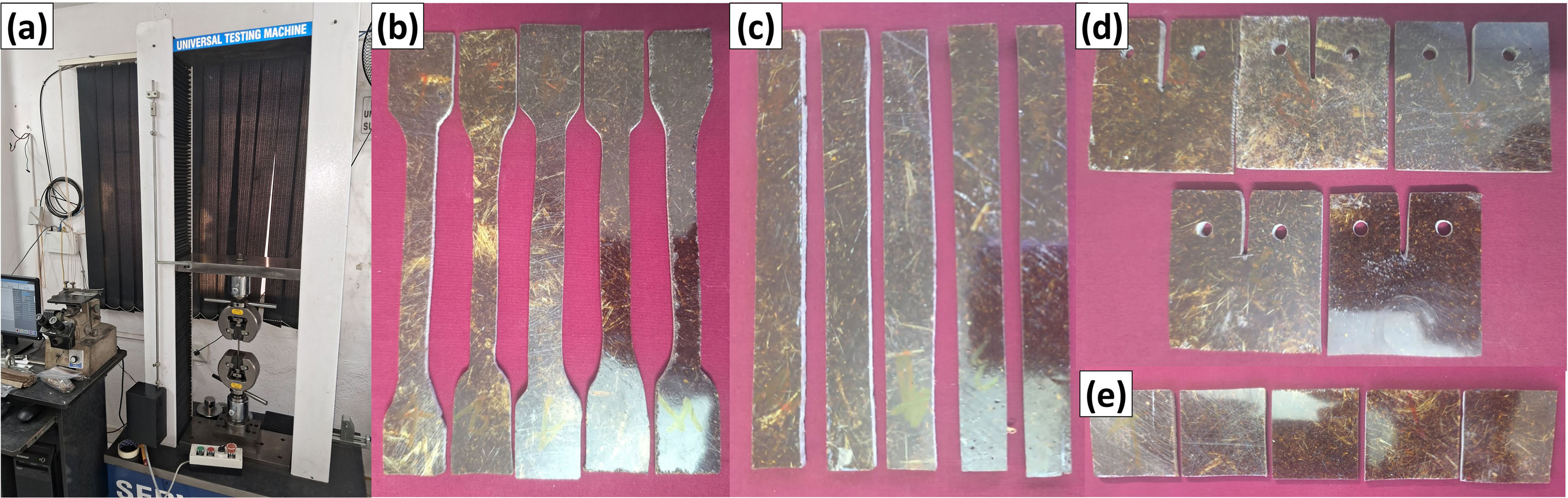
Following ASTM D-638-3, the tensile characteristics were assessed using a 50 kN Universal Testing Machine (UTM). The tests were performed under a quasi-static loading environment with a strain rate of 1 mm/min and at ambient temperature. Five samples were averaged to obtain the weight fraction data. The flexural strength, modulus, and deflection were evaluated using a UTM in accordance with ASTM D790-3 using the 3-point bending test. The compression test was conducted as per ASTM D-695-10, assessed compressive strength, modulus, and strain. The impact test assessed the impact strength using a Tinius Olsen-IT504 machine, following ASTM D256-10 standards. Five samples were examined, and average results were recorded. The Mode-II fracture test was performed following ASTM D5045-99b using an Instron 3360 with a 50 kN load capacity. The fracture energy was assessed at a crosshead velocity of 10 mm/min. Figure 4 shows Universal Testing Machine with various testing specimens.

(a) Universal Testing Machine and test specimens of (b) Tensile, (c) Flexural and (d) Fracture toughness (e) Hardness.
2.7.4. Thermal properties
TGA was conducted to evaluate fracture toughness and energy using the EXSTAR TG/DTA 6300. The analysis of each 5 mg sample was carried out in a nitrogen gas environment with a 5°C/min heat rate and a 200 ml/min flow rate.
2.7.5. Water absorption
Water absorption tests were conducted according to ASTM D570-96. For this study, distilled water was used as the immersion medium to maintain experimental accuracy and eliminate external ion interference. Specimens were immersed in distilled water at ambient temperature (23 ± 2 °C). Weights were recorded using an analytical balance with 0.1 mg precision at intervals of 1 day until saturation was achieved and no further mass gain was observed. The water absorption percentage was calculated using the weight difference before and after immersion.
2.7.6. Biodegradability
The biodegradability test followed a modified ASTM D570-96 procedure. Composite specimens were immersed in a nutrient broth solution inoculated with Pseudomonas aeruginosa, a commonly used soil bacterium known for polymer degradation studies. The bacterial concentration was maintained at approximately 1.0 × 10⁷ CFU/mL, and the samples were incubated at 37 ± 1 °C for a total of 50 days. The mass of each sample was recorded every 8 days to monitor degradation progress. The percentage of mass loss was calculated to quantify the extent of biodegradation.
2.7.7. Microstructural analysis
Scanning Electron Microscopy (SEM) was conducted at a voltage of 20 kV using apparatus from the German optical systems and optoelectronics manufacturer Carl Zeiss, at BIT, Sathya Mangalam, Erode, Tamil Nadu, India. Researchers investigated fiber/matrix interactions and composite failure mechanisms through tensile analysis using cracked surfaces.
3. RESULT AND DISCUSSION
3.1. Particle size distribution
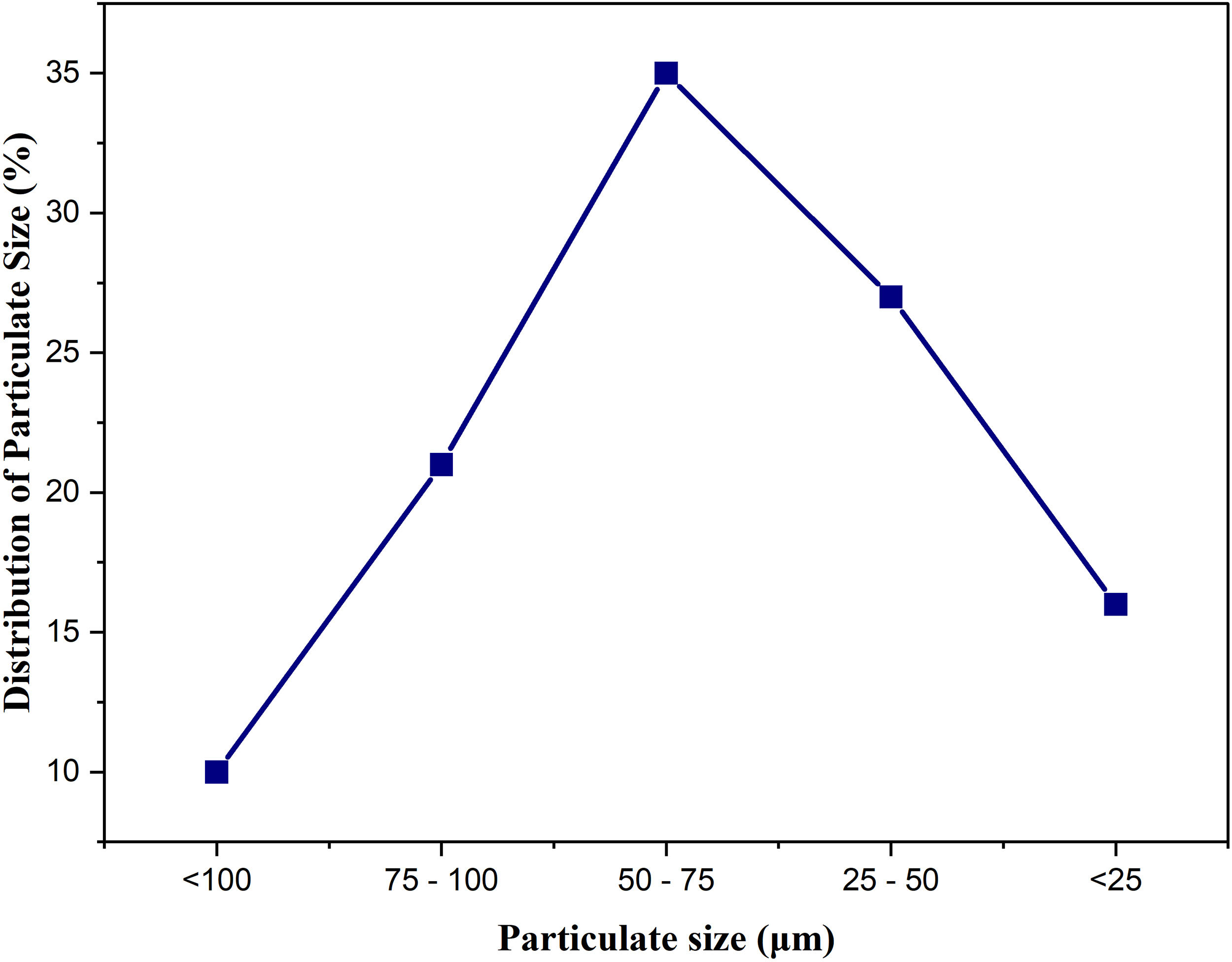
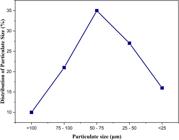
Sieve analysis was used to obtain the distribution of particle sizes. It is necessary to evaluate the distribution of particulate size, as the composite’s strength has been influenced by the particulate size. Figure 5 indicates that around 34% of particles measure between 50 and 75 µm, 30% between 25 and 50 µm, 17% are smaller than 25 µm, 11% vary from 75 to 100 µm, and 8% exceed 100 µm in size.
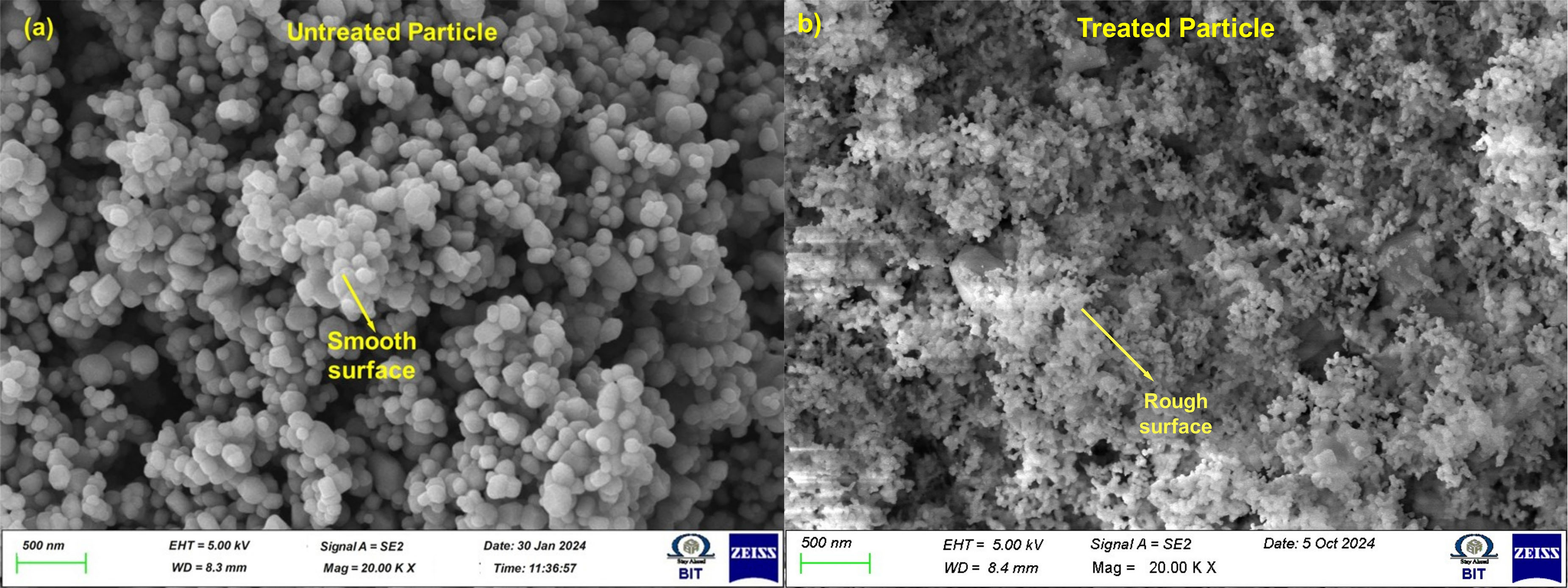
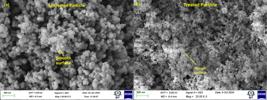
The morphological analysis of particles was conducted utilizing SEM, as illustrated in Figure 6. The morphological study of untreated and treated particulates revealed that untreated particulates display aggregation, whereas treated particulates show a homogeneous arrangement of spherical particles. The SEM analysis of untreated particles reveals a smooth surface with non-cellulosic impurities, leading to weak adhesion. In contrast, chemically treated particles exhibit a rougher surface, enhancing mechanical interlocking with the epoxy matrix. These morphological changes justify the improvement in the mechanical properties of the composite, confirming the effectiveness of the alkali treatment.
3.2. Characterization results of ZMSP particulates
3.2.1. Results on FTIR analysis
The FTIR data clearly demonstrates the impact of chemical treatment on the surface modification of ZMSP particles. Figure 7 denotes the diversity of functional groups in raw and treated ZMSP particles.
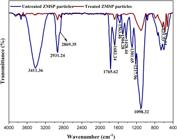
This also demonstrates the surface modification of treated particles in comparison to untreated particles. Peaks at 571.34 and 621.33 cm−1 are detected in the FTIR spectrum of untreated ZMSP particles. Each peak represents a different property of the O-H molecule, such as its out-of-plane bending or the less amount of propane with p-hydroxyphenyl group in lignin. The elongation of the C-O/C-C bond in the polysaccharides found in cellulose is responsible for the peak at 1098.32 cm−1 in the spectra. The vibration of the C-H group in hemicelluloses is suggested by the spectrum lines at 1217.96 cm−1 and in cellulose by the lines at 1301.65 cm−1. On the other hand, lignin and extraction methods show the C-O group’s stretching vibration. There is a noticeable peak at 1428.44 cm−1 due to the oscillations caused by of the CH2 group in cellulose. Between 1504.28 and 1563.46 cm−1, in the aromatic ring area at the lignin spectrum peaks. Absorption of water is indicated by the existence of a spectral peak at 1682.24 cm−1. A peak at 1765.62 cm−1 is indicative of C=O stretching vibrations in hemicellulose and a cellulose peak at 2869.35 cm−1 of C-H2 stretching vibrations. Cellulose and lignin molecules’ stretching vibrations cause the spectra to peak at 2931.24 cm−1 respectively. The stretching of the O-H bond in the cellulose structure is indicated by a peak at 3411.36 cm−1. In another study, FTIR spectra of the bamboo fiber-derived Cellulose nanocrystal (CNC) and PLA-PBS (poly (butylene succinate)) composite films showed significant peaks at 3400 cm−1 (O-H stretching) and 2900 cm−1 (C-H stretching). The presence of a broad peak at 1045 cm−1 indicated C-O stretching vibrations, typical of cellulose, confirming the incorporation of CNCs in the composite [23].
Chemical treatment has resulted in a substantial decrease in the transmittance and vibrational energy of ZMSP particles. There has been a noticeable reduction in intensity at around 621.33 cm−1. This reduction is due to the fact that the treated particles no longer contain the O-H group. Furthermore, it has been noted that the intensity at 1217.96 cm−1 has decreased. The absence of C-O bonding vibrations is the result of the removal of lignin, which is the cause of this decrease. The chemical treatment was designed to eliminate hemicelluloses; however, the stretching vibration of C=O in hemicellulose removed between 1765.62 to 1682.24 cm−1. The chemical treatment results in a decrease in the characteristic prominence in the “1800 to 1600” cm−1 region. The peak shifted from 3200 to 3300 cm−1 and the intensity peak between 2931.24 cm−1 are both considerably reduced after lignin removal. The alkali-treated particle loses its O-H group, which causes the reduction.
3.2.2. Results on XRD analysis
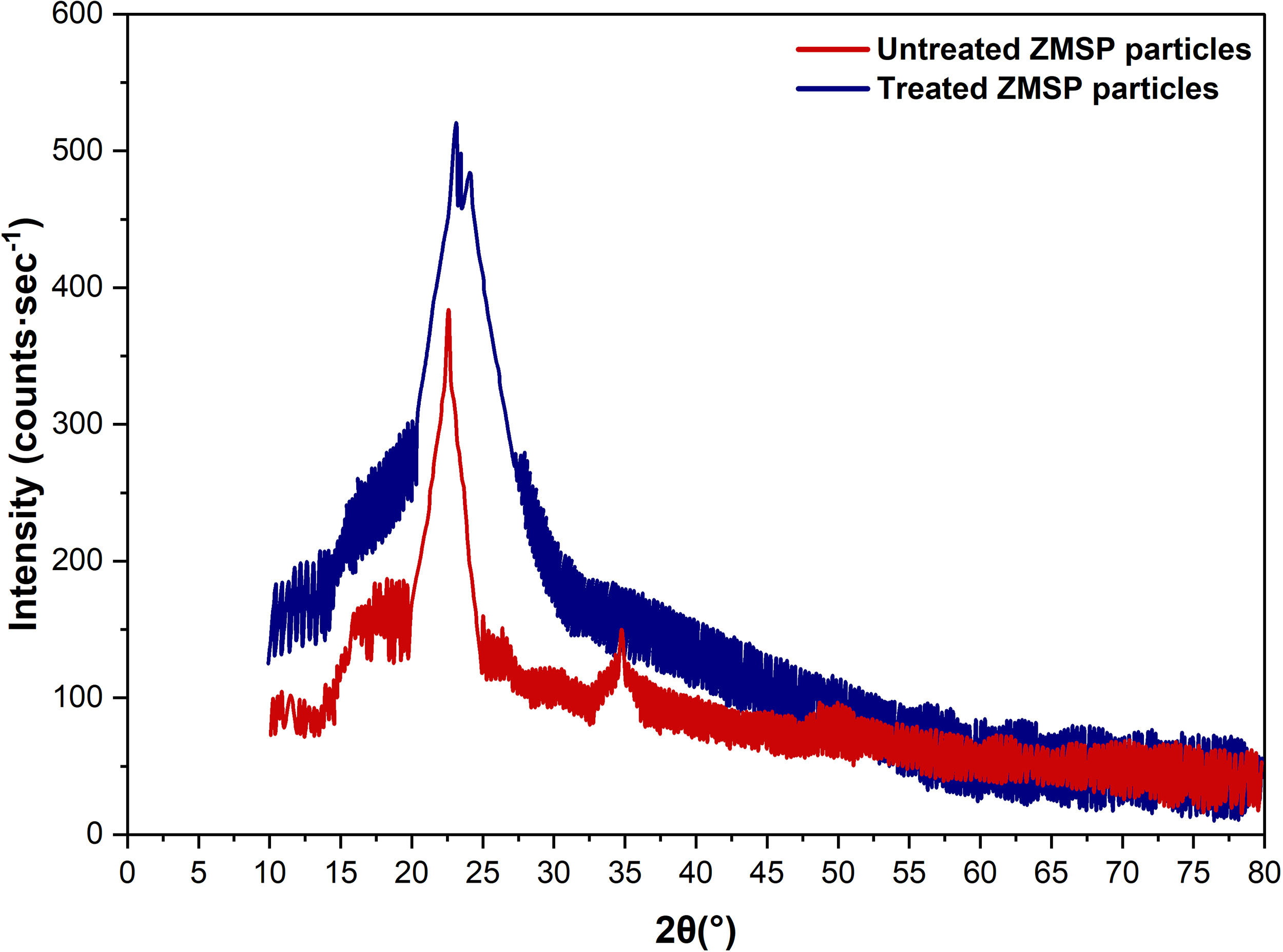
The crystalline structure of ZMSP particles was influenced by the chemical treatment of NaOH solution, as shown by the XRD analysis results in Figure 8. The chemical treatment of ZMSP particles resulted in dewaxing and delignification. In parallel, the cellulose component of the PF fiber was theoretically interacting with the alkaline treatment of Na+ through a nucleophilic mechanism.
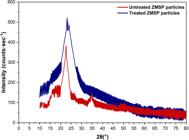
A modified form of cellulose can be made by rinsing ZMSP particles with water to eliminate sodium ions and reduce the mass of polymers like lignin and hemicelluloses. However, when untreated ZMSP particles undergo chemical treatment, their atomic structure changes, leading to a rise in the crystalline index of the modified cellulose. As demonstrated in Table 3, the disparity between the initial and final weights of ZMSP particles before and after treatment was indicated by the reduction of non-cellulosic component particulates. The amorphous content of the processed particles is reduced, as evidenced by a higher crystalline index, an increased intensity count, and an improved peak value. The peak at 2θ = 22.51° was the peak for the untreated particles; however, it was improved to 23.06° following chemical treatment. Although there are two smaller peaks, one at about 15.35° for the (1 0 1) plane and one at 35.98° for the (0 4 0) plane, the main peak is in line with the (0 0 2) plane. According to the XRD data, crystallinity index of untreated and treated particles is 20.04% and 21.94% respectively. In previous study, XRD analysis of Dioscorea hispida starch particles and fibers revealed crystalline peaks at 2θ = 17.2° and 24.2°, indicating that the particles exhibit crystalline behavior, which would contribute to the strength and structural integrity of the bio-composite [24].
3.3. Results on thermal analysis
The reduction of non-cellulose component particles, as illustrated in Table 3, served as evidence of the disparity between the initial and final weights of ZMSP particles before and after treatment.
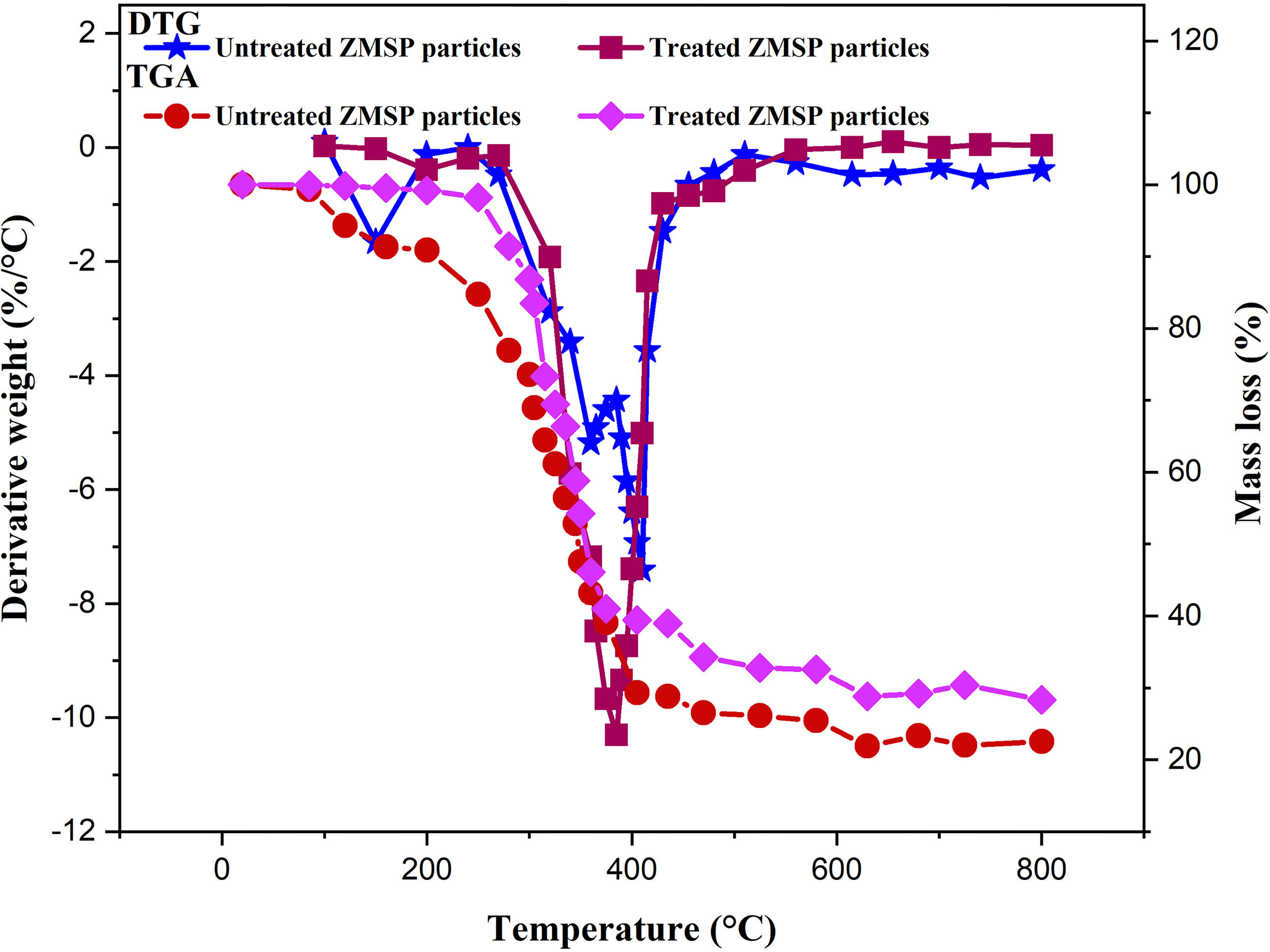
A TGA was used to calculate the chemical treatment affected the thermal decomposition of particles. Thermogravimetric Analysis and Derivative Thermogravimetry (DTG) are shown in Figure 9 for both raw and treated ZMSP particles, at 20 to 800°C. Table 4 presents the residual mass percentage and the initial degradation temperature for both treated and untreated particles.
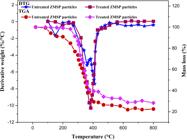
Chemical treatment has a substantial impact on the particle’s initial degradation temperature and the residual mass that is left after degradation. Conversely, the residual mass increased by 6.38%, and the initial degradation temperature increased by 39°C. Within the temperature range of 20 to 380°C, the repercussions of surface modification are not immediately apparent. Because of this, the percentage weight loss of both untreated and treated particles is negligible. Nevertheless, the thermogram illustrates that the mass loss for raw and treated particulates attains 24.57% and 43.68%, correspondingly, as the temperature increases from 400 to 750°C. In another study, Thermal degradation of LASPs occurs in three stages: initial moisture loss (10–13%) between 70–220°C, lignin and hemicellulose breakdown (56.37% for untreated, 61.31% for alkali-treated) from 200–370°C, and final lignin degradation between 350–600°C [25]. The specified value illustrates that particles are positively impacted by alkaline treatment at elevated temperatures. The moisture content of untreated particles was higher than that of treated particles. As temperatures rise, moisture evaporates, resulting in a decrease in weight. This suggests that treatment of particulates with an alkaline solution can decrease the presence of polar groups in particle molecules, resulting in a treated surface that is more hydrophobic and has enhanced thermal stability. In order to obtain weight difference, DTG isolates the original weight signal. It is anticipated that deterioration will manifest as a sequence of peak forms within the specified temperature range. Peaks at 340 and 350 are observed in the DTG curve for untreated and treated particles, respectively, which correspond to −10.3%/min and 7.41%/min.
3.4. Experimental results of the fabricated composites
The effect of ZMSP particle addition on the physical, mechanical, and thermal characterization of PF reinforced composites has been evaluated. The results are delineated below.
3.4.1. Physical properties
The physical evaluation of the fabricated composite sample involves the measurement and documentation of void content, as well as actual and theoretical densities is shown in Table 5. The theoretical density values of composites were calculated based on internal void pressure and do not align with the experimentally obtained values.
The presence of lumens in the cellular structure of natural fiber causes the composite to develop cavities. Due to the cellulose composition of the natural fiber, which is intrinsically void, the results showed that adding the fiber to the matrix enhanced the void content of the fabricated composites. The addition of ZMSP particles increases the void content in the composites, which illustrates the fraction of void content in the produced specimens. The hydrophilic nature of both Peepal fibers and ZMSP particles is attributed to their hydroxyl-rich composition, which facilitates moisture absorption. The presence of cellulose in fibers and organic compounds in ZMSP enhances water retention, leading to increased biodegradability while potentially affecting composite stability. The moisture evaporated, resulting in a void within the composite. An increase in particle loading is correlated with an increase in void content. This transpired because of the elevated particulate loading, which enhanced the contact area between the particulates and epoxy, leading to the creation of voids. In contrast, the void percentage reduces as the particle concentration increases, owing to the good scattering of nanoparticles inside the epoxy coating [26]. The maximum void content for composite E is approximately 5.37%.
3.4.2. Mechanical properties
The fabricated composites have been subjected to mechanical testing, which includes tensile, flexural, compressive, and hardness evaluations. Each test was conducted on five specimens, and the average results were recorded. The results demonstrated that the integration of ZMSP particles with Peepal fiber improved the strength and modulus relative to the PF reinforced epoxy composite (A). The addition of particles up to 9 wt% has enhanced their individual properties; however, a deterioration in quality is noted at 12 wt%.
In comparison to specimen A, the break is observed in the stress-strain curve depicted in Figure 10. However, it is noted that a 3% addition of particulates (B) results in an increase in particulate weight percentage, when combined with fiber, enhances elongation. Prior to this, elongation at break decreased due to the addition of ZMSP particulates with PF at low percentages, which improved the toughness of the materials. Conversely, the strain at disruption range for the created hybrid composites reduced with an increase in particle percentage, resulting in greater brittleness of the material.

The composite specimen A has a TS of 73.85 MPa and a modulus of 3.56 GPa, as indicated by the tensile test results. After the addition of 3wt% ZMSP, the hybrid composites’ rigidity and TS increased by 11.97% and 16.29% respectively. The composite D demonstrated the highest tensile parameters, as demonstrated in Figure 11, with a tensile modulus of 4.93 GPa and a TS of 98.54 MPa. Multiple layers of epoxy composites reinforced with Terminalia arjuna and Moringa oleifera fibers resulted in an improvement of the tensile strength (62.35 MPa) [27]. Comparatively, PF–ZMSP showed higher tensile (98.54 MPa) strengths than Prosopis Juliflora (PJ) (84.22 MPa). The addition of ZMSP filler improved bonding and stress transfer, whereas PJ relied only on fiber reinforcement [28].
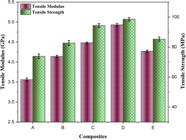
By combining matrix material with particles, strong interfacial bonding between PF and particulate- loaded epoxy was established, leads to an enhancement in the tensile properties of the composites. When compared to composite D, the composite E showed a decline in stiffness and strength. A reduction in tensile characteristics was caused by an increment in particulate matter in the epoxy resin, which reduced the bonding strength between the fiber and epoxy. The increase and decrease of mechanical properties in PF–ZMSP composites are primarily influenced by filler dispersion and fiber–matrix bonding. At lower to moderate loadings (up to 9 wt% ZMSP), the particles effectively fill voids, improve stress transfer, and strengthen interfacial adhesion, leading to higher tensile, flexural, compressive, and hardness values. Beyond this optimum, excessive filler (12 wt% ZMSP) causes particle agglomeration, void formation, and weak bonding, which create stress concentration zones. This results in reduced strength, stiffness, and impact resistance, while also increasing brittleness.
The Shore-D hardness instrument was employed to evaluate the hardness of the composites that were generated. The findings suggest that the hardness value of pure epoxy is 45, with a subsequent increase to 68 when fiber is incorporated. Following the addition of ZMSP particle with fiber, an increase in hardness value is noted, with the highest hardness value recorded for composite D (101.98). The indentation resistance and Shore-D hardness value of the PF-epoxy composite are improved by the addition of minute ZMSP particles. Nonetheless, because to the excessive addition of particles, the bonding between the epoxy and the reinforcing material may reduce, leading to a reduction in the hardness (85.62) of composite E due to 12wt % particle addition is shown in Figure 12.

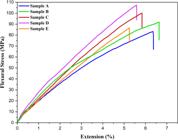
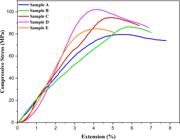
For the composite specimen A, the flexural strength was recorded at 83.07 MPa and the modulus at 7.21 GPa, while the compressive strength and modulus were 80.95 MPa and 6.77 GPa, correspondingly. At 9 wt%, the following properties show the most improvement: flexural strength (28.75%), compressive strength (26.87%), and modulus of compression (18.41%). Bio-composites with polyester, banana fiber, and cassava cellulose exhibited high TS (130 MPa) and flexural strength (FS) (155 MPa). Improved particle dispersion and hydrophobicity make them suitable for automotive and defense applications [29].
Figure 13 illustrates the flexural stress vs strain curve of the composites. Combining Peepal fiber with ZMSP particles, which fill the gaps between the fibers, improves the matrix-to-fiber stress transfer capabilities and the interfacial bonding between the fiber and epoxy. Consequently, the resistance to fiber breakage was increased. As a consequence, this leads to an increase in compressive and flexural properties. Composites may develop clusters in the epoxy resin due to inadequate matrix-reinforced component bonding caused by the addition of too many particles. The compressive strength increases up to 9wt% ZMSP due to enhanced load transfer and fiber-matrix interaction. However, at 12wt%, excessive filler leads to particle agglomeration, increased porosity, and weak interfacial bonding, reducing strength. The compressive modulus is influenced by matrix stiffness and particle dispersion. Failure modes include fiber buckling, matrix cracking, or debonding, depending on filler content. The bonding strength between the matrix material and the reinforcing material is reduced as a result of an increase in the stress concentration factor, which subsequently reduces the characteristics of the composites. Clustering and agglomeration resulted in a decrease in the characteristics of the composites E. Compressive stress vs strain curves for the fabricated composites are displayed in Figure 14. In comparison, The PF–ZMSP composites outperformed Date Palm Petiole (DPP) fibre composites in all key properties. Although acrylic acid treatment improved adhesion in DPP composites, their performance was limited by weaker fiber properties, while ZMSP filler in PF–ZMSP improved load transfer and thermal stability [30].
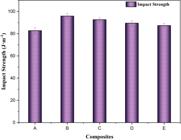
A material’s tenacity is determined by the energy it absorbs prior to failure, which is assessed through impact tests on the composites. The relationship between the percentage of weight and the increase in impact strength of several composite specimens is shown in Figure 15. The maximal impact strength of composite B, which is 95.88 J/m, is ascribed to the addition of ZMSP particles at a low proportion of 3 wt%. This results in an approximate 19% increase compared to composite A. The matrix is improved, and the fiber and particulate-loaded matrix are able to adhere optimally. In previous study, the PVP hybrid composite (peepal/veli karuvelam/peepal) reinforced with 2 wt% nanosilica achieved the highest impact strength of 4.5 kJ/m2 [31]. A reduction in impact intensity is the result of an additional increase in particle percentage. This may be a potential correlation with tensile elongation prior to fracture. The tensile results suggest that a decrease in the elongation at break value is correlated with an increase in ZMSP particle loading. The evidence suggests that the composite became brittle as a result of the high weight percentages of ZMSP particulates, which decreased the durability and impact strength values. In comparison, PF–ZMSP composites outperformed Eleusine Indica (EI) fibre with impact strength 95.88 J/m vs. 32.24 kJ/m2. The dual reinforcement (fiber + filler) gave PF–ZMSP superior strength and thermal stability compared to EI [32].
3.4.3. Fracture toughness
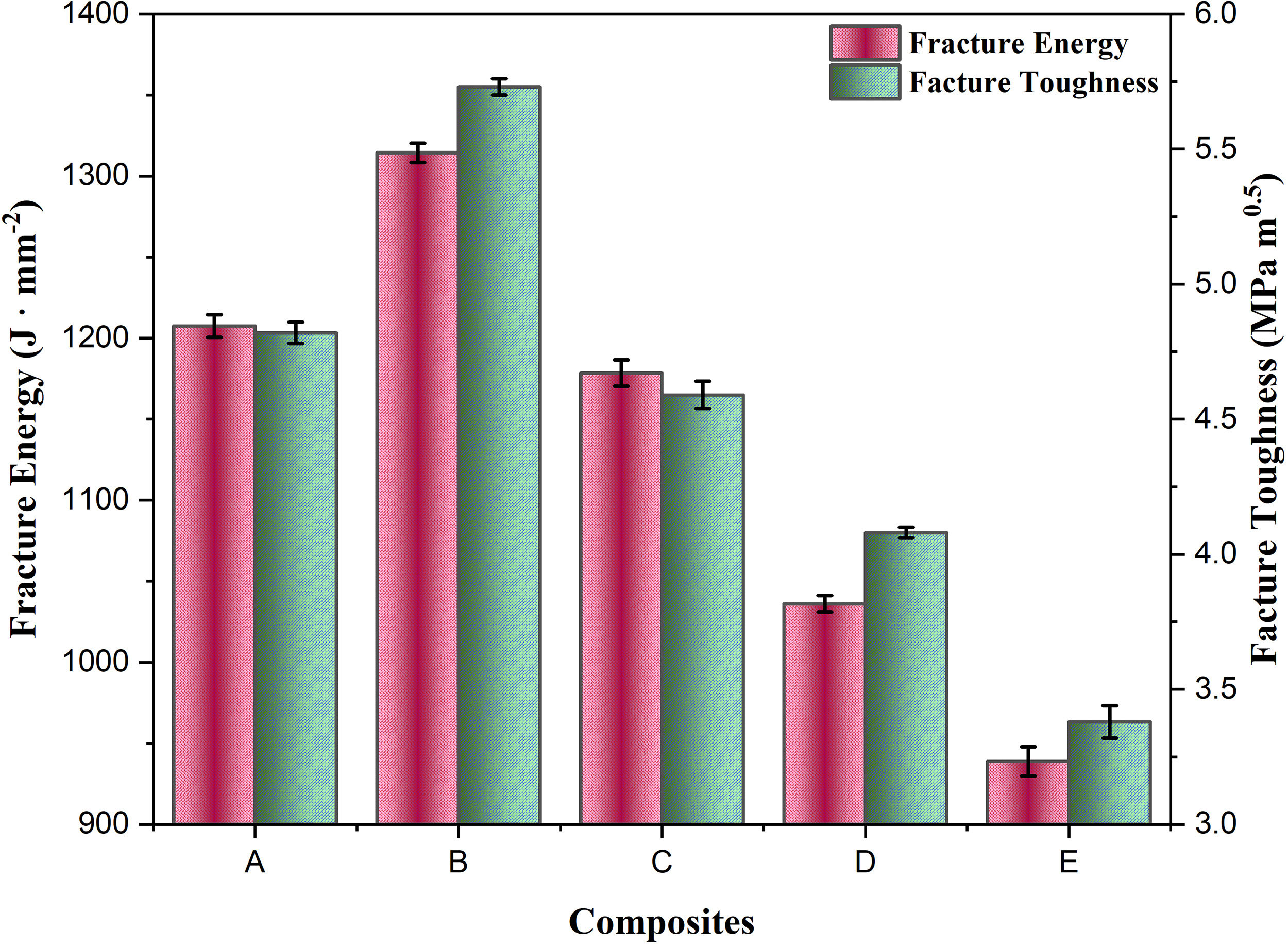
All of the composite categories have their fracture toughness (KIc) and fracture energy (GIc) measured. The fracture toughness and energy values of the produced composites are shown in Figure 16. The fracture toughness (KIc) of the pure epoxy was determined to be 0.62 MPa·m1/2. The increased cross-link density of the thermoset epoxy resin causes the samples to become brittle, resulting in a reduced K Ic value. Following the addition of fiber into the epoxy, the KIc increased to 4.82 MPa·m1/2, reflecting a 6.82% enhancement.

In comparison to the PF reinforced composite (A), the fracture toughness of the PF reinforced composite (B) is increased by 19.6% by the addition of ZMSP particles up to 3%. Kevlar/sisal fiber composites showed improved mechanical properties and hydrophobicity with cellulose addition exhibited 24.74 MPa√m fracture toughness and maintained hydrophobicity above 70° [33]. The disruption of crack propagation linked to the increase in fracture energy and fracture toughness observed with minimal ZMSP particle loading (B). The fracture front may be obstructed by the micro-particulates of ZMSP in the composite, resulting in drooping at the leaf particle’s center. This leads to the formation of secondary fissures, which in turn increases the value of KIc. This theory is relevant solely to hybrid composites with low particulate loading, such as B composite; conversely, composites with higher particulate loading (C, D, and E) exhibit reduced crack propagation due to particulate debonding, resulting in increased fracture tip blunting. The analysis suggests that a consistent and substantial decrease in KIc and GIc values is a consequence of an increase in particle content within the composites that are produced. The development of the 12 wt% particulate-loaded Peepal fiber-reinforced composite (E) has led to an abrupt increase in stress concentration at various locations, resulting in the minimal KIc value of 3.38 MPam1/2. This exceeded the matrix’s interfacial strength and reduced the interaction area between the epoxy and the reinforcing particles. Composites treated with corn fibers with epoxy and biosilica showed improved fatigue life and interfacial bonding. The composite exhibited a storage modulus of 5.69 GPa and a fracture toughness (FT) of 26.5 MPa√m [34].
3.4.4. Thermal properties
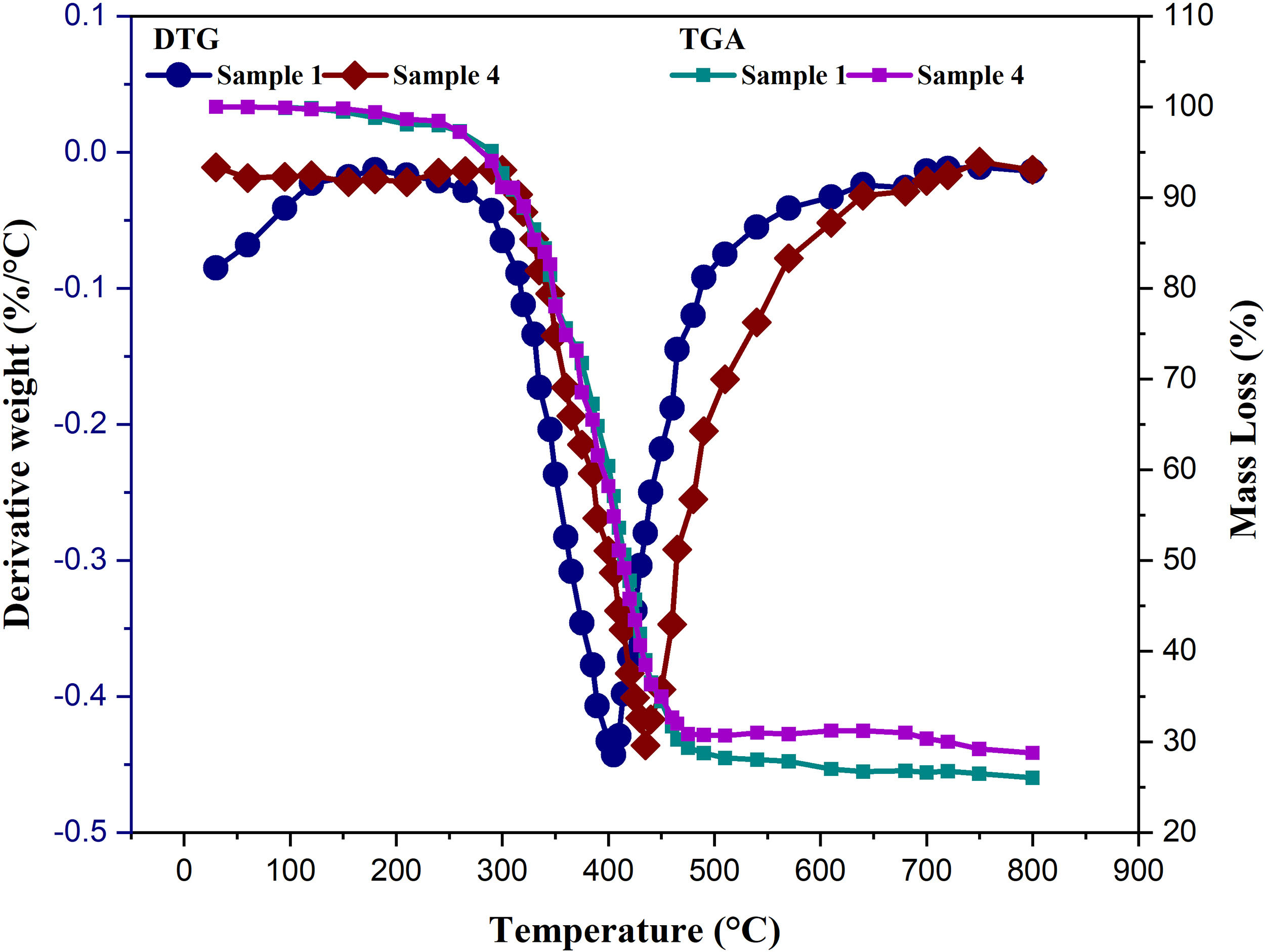
The TGA was used to evaluate the thermal stability of the composites. TGA has been conducted on composite A (non-particle loaded PF reinforced composite) and D (9% particulate loaded PF reinforced composite). The composite sample D was chosen due to its exceptional mechanical characteristics. The TGA and DTG graphs of the synthesized composites are depicted in Figure 17, and the diverse thermal properties and ultimate residual values of the composites.
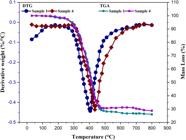
The addition of ZMSP particulates results in an 7.98% increase in the early degradation temperature, a 5.71% increase in the MRDT range, and an approximately 8.16% increase in the concluding residual mass range (Table 6). This suggests that the thermal stability of the hybrid composites generated was improved by the addition of particles with fiber. This is due to the obstruction of heat transmission, which results in a delay in weight reduction. According to the DTG plot, the addition of ZMSP particulates led to an increase in pick temperature and a modification of the pick value. The DTG peak values for composites A and D are −0.443% at 405°C and −0.347% at 460°C, respectively. In previous study, DTG analysis revealed a Tmax of ~366°C, with jute/cotton composites reinforced spent tea leaf particles contributing to improved thermal stability [35].
3.4.5. Water absorption and biodegradability behavior
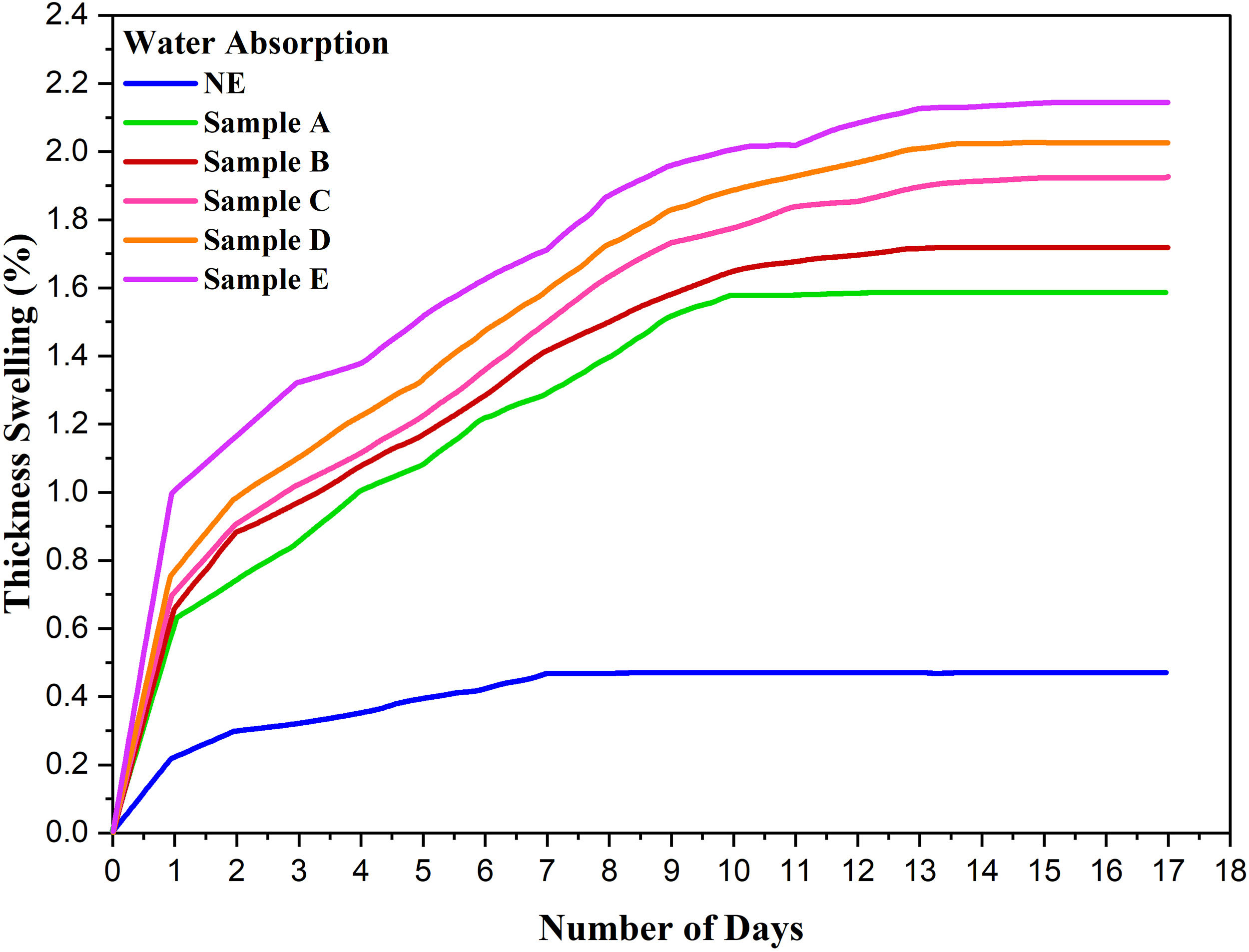
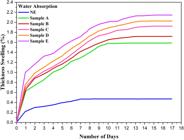
For water absorption, distilled water is the most suitable medium as it eliminates external contaminants and provides a controlled environment to assess the intrinsic moisture uptake of the composite. However, for applications in coastal environments, a 3.5% NaCl solution can be used to evaluate salt-induced degradation. The testing should be conducted at room temperature (23°C), with weight measurements recorded periodically until equilibrium. Figure 18 illustrates the water absorption characteristics of all the composites. As the number of days increases, the proportion of water absorption ultimately reaches saturation after 16 days. Compared to hybrid composites B, C, D, and E, composite A exhibits a lower water absorption rate. The augmentation in water absorption is ascribed to the hydrophilic characteristics of ZMSP particles, which introduce supplementary polar functional groups, resulting in enhanced moisture uptake. Moreover, the porous nature of the particles facilitates increased water infiltration into the composite. The improvement in biodegradability is likely attributable to the inherent composition of ZMSP and PF fibers, which stimulate microbial activity and aid in material disintegration over time. Lignocellulose is present in fibers and particles are primarily responsible for water absorption due to its hydrophilic properties. By combining fiber with particles, the water absorption properties are consistently enhanced. Therefore, the composite E demonstrates the highest water absorption. Composites made of polyester and pineapple fibers or chitin treated with silane had better results. A 24-hour water absorption rate of 1.2% and a TS of 151.8 MPa were observed [36].
For biodegradability, using the bacterial solution, it simulates natural degradation through microbial activity, moisture exposure, and temperature fluctuations. The weight loss should be recorded at regular intervals (10 days for up to 50 days) to track degradation progress. These conditions are optimal for evaluating both moisture resistance and eco-friendly decomposition, ensuring scientific accuracy of the composite material. Figure 19 shows that the weight percentage of all the composites gradually increases until the sixteenth day. Following the sixteenth day, this increase reached a halt until the twenty seventh day, at which point the composite specimens began to lose weight. Deterioration of the composites produced is the cause of this decrease. Microorganisms that are already present in the environment at ambient temperature may facilitate the decomposition of matter, which may result in mass degradation. The biodegradability value of composite E was the highest, while composite A had the lowest. The addition of ZMSP particles with PF fiber increases water absorption values and enhances the biodegradability qualities.

3.4.6. Microstructural analysis
SEM was used to examine the fracture behavior and surface morphology of a particle addition reinforced with peepal fiber in a polymer hybrid composite. It was the primary objective of the investigation to determine the scattering and distribution of ZMSP particles within the hybrid composites.
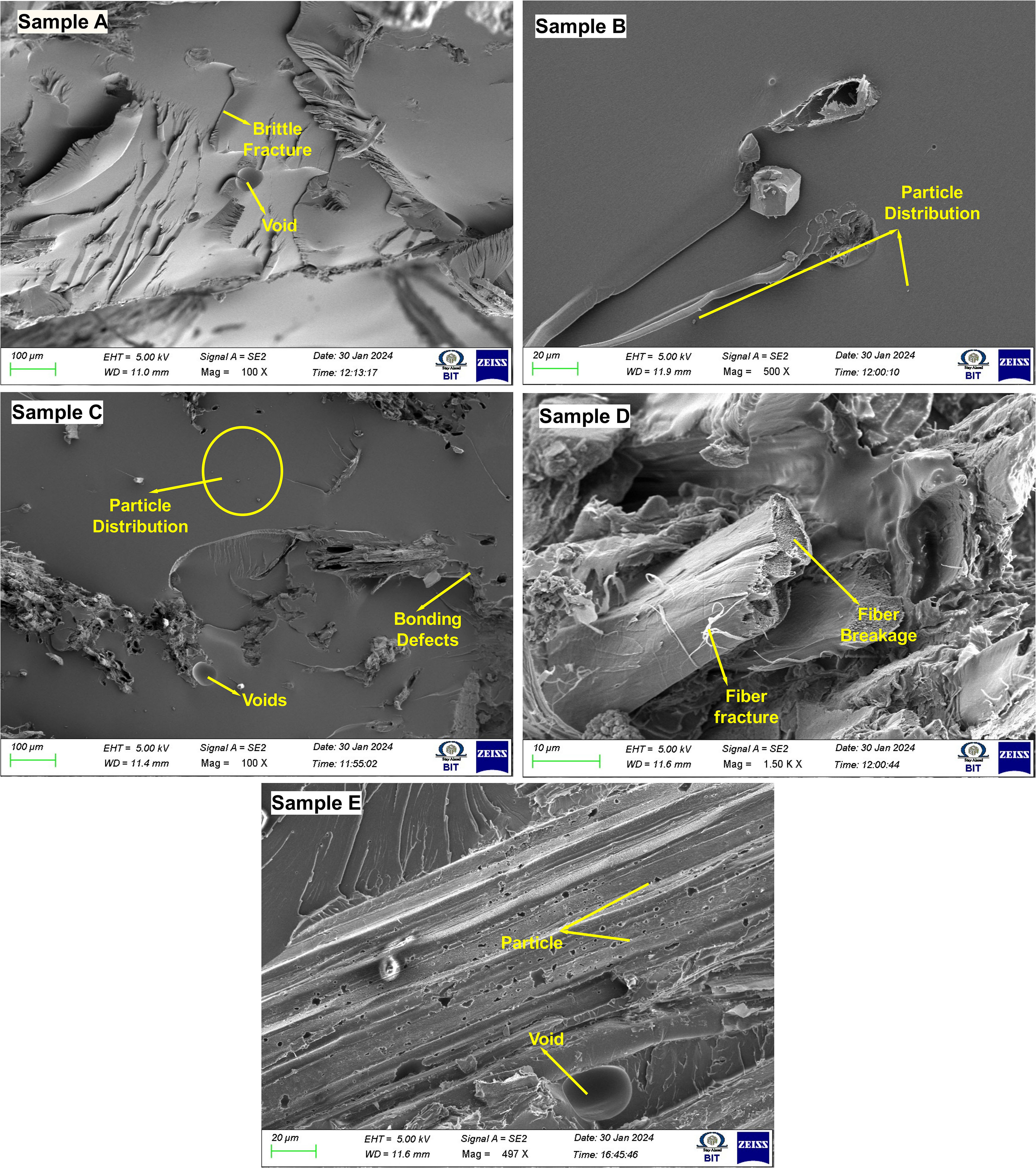
The effect of varying particle weight percentages in PF fiber-reinforced epoxy composites is depicted in Figure 20. The mechanical properties of sample A is impacted by the reduced interfacial bonding between the fiber and epoxy as a result of an increased number of voids and brittle fracture in PF reinforced composites that are devoid of particulates. Sample B has a particle distribution of 3 wt% in the bio-composites.The particulates are less dispersed as a result of the lower weight percentage, which has a less significant impact on their respective qualities. Effective dispersion of particles within the epoxy resin is demonstrated in the C and D composites, resulting in improved interaction and interfacial bonding between the particles and the fiber, as well as between the particulates and the epoxy resin. The effective distribution of particulates (9 wt%) in the sample D has achieved the highest mechanical property values due to enhanced cross-linking behavior of the particulate particles inside the matrix composites. Subsequently, continual addition of particles leads to agglomeration and clustering effects within the composites. This is owing to the presence of an excess number of particles, which has a detrimental impact on particle position and reduces interfacial bonding with the epoxy phase leads to fiber breakage. Consequently, the composites experience increased voids and cavitation, thereby reducing their mechanical properties (sample E). In similar studies, where excessive filler content led to agglomeration, void formation, and reduced interfacial bonding, ultimately decreasing the mechanical strength of the composites [9]. The produced composites primarily fail owing to brittle fracture, exhibiting linear stress behavior due to the absence of plastic deformation. Local buckling, fiber debonding, fiber pullout, fiber crushing, fiber breakage, and the construction of a weak yielding zone were the primary causes of the failures. For example, the fiber pullout observed in samples with higher filler content (e.g., 12 wt% ZMSP) is directly correlated with reduced tensile strength and increased void content, as evidenced by the tensile test results. This explicit connection between failure modes and mechanical data enhances the understanding of the composite’s performance under stress. This type of failure may occur as a result of the optimal dispersion of impurities within the thermoset polymer, brittle epoxy resin. SEM observations indicated stronger interfacial bonding between the fibers and chitin fillers, which facilitated more effective load transfer and minimized fiber pull-out [37]. Additionally, the presence of brittle fracture in the microstructure should be linked to the impact strength and failure mechanisms.

SEM image of (a) tensile test (sample A), (b) flexural test (sample B), (c) impact test (sample C), (d) compressive test (sample D) and (e) fracture toughness test (sample E).
4. CONCLUSION
The research investigated the effects of Ziziphus mauritiana seed powder (ZMSP) particulates characterization and the mechanical, thermal, and biodegradation characteristics of peepal fiber (PF) reinforced with ZMSP epoxy composites. The composites were fabricated with a constant 40 wt% PF weight fraction and varying particulate fractions of 3 wt%, 6 wt%, 9 wt%, and 12 wt%, using chemical treatment with 5% NaOH for surface modification. The results revealed that 9 wt% particle addition yielded the highest mechanical properties, with a TS of 98.54 MPa and a modulus of 4.93 GPa. FS and modulus also peaked at 105.88 MPa and 9.12 GPa, respectively, while compressive strength reached 107.24 MPa, shore-D hardness was highest for this composition at 101.98. Thermal properties improved with the initial degradation temperature increasing from 320°C for the composite A to 345°C for the 9% particulate composite, while the final residual mass increased from 21.47% to 29.63%. Impact strength was highest for the composite with 3% particulates, recording 95.88 J/m, a 16.87% increase over composite A. Fracture toughness peaked at 4.82 MPa·m½ for 3 wt% particulates, with higher particulate contents reducing this property due to brittleness. Water absorption andbiodegradability increased with particulate content, with the 12 wt% particulate composite showing the highest values. The study determined that the composites are environmentally benign, biodegradable, cost-effective, and lightweight. The 9 wt% particulate composite exhibited optimal mechanical and thermal properties, while the 3 wt% particulate composites excelled in impact and fracture toughness. While the study evaluates water absorption and biodegradability in distilled water, we recognize that saltwater exposure could significantly impact the material’s performance in coastal environments. Future studies will incorporate saltwater immersion tests to simulate real-world conditions for coastal applications. The composites are well-suited for moderate load-bearing applications due to these attributes.
5. ETHICAL CONSIDERATIONS
Hereby, I S.Mayakannan consciously assure that for the manuscript “Thermo-Mechanical, Water Absorption, and Biodegradability Analysis of Peepal Fiber-Reinforced Epoxy Composites with Micro-Particulate Ziziphus mauritiana Seed Powder” the following is fulfilled:
-
1)
This material is the authors’ own original work, which has not been previously published elsewhere.
-
2)
The paper is not currently being considered for publication elsewhere.
-
3)
The paper reflects the authors’ own research and analysis in a truthful and complete manner.
-
4)
The paper properly credits the meaningful contributions of co-authors and co-researchers.
-
5)
The results are appropriately placed in the context of prior and existing research.
-
6)
All sources used are properly disclosed (correct citation). Literally copying of text must be indicated as such by using quotation marks and giving proper reference.
-
7)
All authors have been personally and actively involved in substantial work leading to the paper, and will take public responsibility for its content.
DATA AVAILABILITY
All data that support the findings of this study are included within the article.
9. BIBLIOGRAPHY
-
[1] ISLAM, T., HOSSAIN, S., JALIL, M.A., et al., “Development of reinforced polyester hybrid composites using varied ratios of jack tree and jute fibers with eggshell filler”, Mechanics of Composite Materials, v. 60, n. 4, pp. 817–830, 2024. doi: https://doi.org/10.1007/s11029-024-10228-9.
» https://doi.org/10.1007/s11029-024-10228-9 -
[2] SANKARARAO, V., RAO, P.N., BABU, S.S., et al., “Enactment of Fiber Reinforced Hybrid Epoxy Composite for Passenger Car Bumper Beam,” In: 4th International Conference on Design and Manufacturing Aspects for Sustainable Energy (ICMED-ICMPC 2023), pp. 01171, Hyderabad, India, May 2023. doi: https://doi.org/10.1051/e3sconf/202339101171.
» https://doi.org/10.1051/e3sconf/202339101171 -
[3] JAYARAMAN, R., GIRIMURUGAN, R., SURESH, V., et al., “Improvement on tensile properties of epoxy resin matrix sugarcane fiber and tamarind seed powder reinforced hybrid bio-composites”, ECS Transactions, v. 107, n. 1, pp. 7265–7272, 2022. doi: https://doi.org/10.1149/10701.7265ecst.
» https://doi.org/10.1149/10701.7265ecst -
[4] MURUGAN, G., LOGANATHAN, G.B., SIVARAMAN, G., et al., “Compressive behavior of tamarind shell powder and fine granite particles reinforced epoxy matrix based hybrid bio-composites”, ECS Transactions, v. 107, n. 1, pp. 7111–7118, 2022. doi: https://doi.org/10.1149/10701.7111ecst.
» https://doi.org/10.1149/10701.7111ecst -
[5] BALGURI, P.K., KUMAR, R., SHARMA, A., et al., “Characterization of vinyl silane–treated areca nut woven fiber and bronze filler toughened polyester composite”, Biomass Conversion and Biorefinery, v. 15, n. 9, pp. 14429–14439, 2024. doi: https://doi.org/10.1007/s13399-024-06088-x.
» https://doi.org/10.1007/s13399-024-06088-x -
[6] KUMAR, S., SAHA, A., “Graphene nanoplatelets/organic wood dust hybrid composites: physical, mechanical and thermal characterization”, Iranian Polymer Journal, v. 30, n. 9, pp. 935–951, 2021. doi: https://doi.org/10.1007/s13726-021-00946-5.
» https://doi.org/10.1007/s13726-021-00946-5 -
[7] TAPELA, O., DILLI BABU, G., RANGA JANARDHANA, G. “An analysis of the behavior of peepal fiber reinforced polyester composites for tensile, flexural and impact strengths,” In: Recent Trends in Product Design and Intelligent Manufacturing Systems: Select Proceedings of IPDIMS 2021, pp. 417–428, Rourkela, Dec. 2023. doi: https://doi.org/10.1007/978-981-19-4606-6_39.
» https://doi.org/10.1007/978-981-19-4606-6_39 -
[8] VIGNESH, S., BENSAM RAJ, J., VISWANATH, K., et al., “Experimental investigation on the behavior of epoxy/peepal composites fortified with silica and silicon carbide nanoparticles for industrial applications”, Wood Material Science & Engineering, v. 19, n. 3, pp. 718–724, 2024. doi: https://doi.org/10.1080/17480272.2023.2289033.
» https://doi.org/10.1080/17480272.2023.2289033 -
[9] SRINIVASAN, R., JAYARAMAN, M., “Effect of layering sequence and jujube fruit seed addition on the mechanical, water absorption and bio-degradation properties of Indian almond/peepal hybrid composites”, Materials Research Express, v. 11, n. 9, pp. 095301, 2024. doi: https://doi.org/10.1088/2053-1591/ad6ff6.
» https://doi.org/10.1088/2053-1591/ad6ff6 -
[10] TARIQ, K.A., HAROON, M., MUGHAL, A.H., et al., “Physical and mechanical characterization of structural wood used in Pakistan”, Wood Research, v. 67, n. 1, pp. 134–146, 2022. doi: https://doi.org/10.37763/wr.1336-4561/67.1.134146.
» https://doi.org/10.37763/wr.1336-4561/67.1.134146 -
[11] NEOG, B., DAS, J.K., VIJAYAKUMAR, A., et al., “Development and characterization of edible films made with Indian jujube fruit puree and pectin”, Journal of Food Process Engineering, v. 45, n. 3, pp. e13977, 2022. doi: https://doi.org/10.1111/jfpe.13977.
» https://doi.org/10.1111/jfpe.13977 -
[12] DOU, J.-F., KOU, X.-H., WU, C.-E., et al., “Recent advances and development of postharvest management research for fresh jujube fruit: A review”, Scientia Horticulturae, v. 310, pp. 111769, 2023. doi: https://doi.org/10.1016/j.scienta.2022.111769.
» https://doi.org/10.1016/j.scienta.2022.111769 -
[13] SENTHILKUMAR, S., XAVIER, X.R., BENSAM RAJ, J., et al., “Investigation on mechanical, moisture uptake and bio-degradation behaviors of Indian jujube fruit seed particles reinforced epoxy-Indian almond composites”, Proceedings of the Institution of Mechanical Engineers. Part C, Journal of Mechanical Engineering Science, v. 238, n. 10, pp. 4536–4546, 2024. doi: https://doi.org/10.1177/09544062231203548.
» https://doi.org/10.1177/09544062231203548 -
[14] LAKSHMIPATHI, A.R., SUNDAR, S., RAJESH, R., et al., “Shear strength, wear, thermal conductivity, and hydrophobicity behavior of fox millet husk biosilica and Amaranthus dubius stem fiber–reinforced epoxy composite: a concept of biomass conversion”, Biomass Conversion and Biorefinery, v. 15, n. 2, pp. 2893–2901, 2023. doi: https://doi.org/10.1007/s13399-023-04854-x.
» https://doi.org/10.1007/s13399-023-04854-x -
[15] SAHARE, S.B., JADHAV, V.D., SATISHKUMAR, P., et al., “Performance analysis of Jute/Kenaf fiber polyester hybrid composites for non-structural applications”, Interactions, v. 245, n. 1, pp. 164, 2024. doi: https://doi.org/10.1007/s10751-024-02009-6.
» https://doi.org/10.1007/s10751-024-02009-6 -
[16] SAHARE, S.B., SEENIVASAN, S., SATISHKUMAR, P., et al., “Enhancing mechanical durability and flame retardancy in Bamboo-Polypropylene composites with nAl2O3”, Interactions, v. 245, n. 1, pp. 345, 2024. doi: https://doi.org/10.1007/s10751-024-02153-z.
» https://doi.org/10.1007/s10751-024-02153-z -
[17] BHAGAT, M.S., JADHAV, V.D., KULKARNI, S.K., et al., “Comparative analysis of alkali-treated natural fibres for improved interfacial adhesion in composite materials”, Interactions, v. 245, n. 1, pp. 206, 2024. doi: https://doi.org/10.1007/s10751-024-02041-6.
» https://doi.org/10.1007/s10751-024-02041-6 -
[18] SATISHKUMA, P., KUMAR, K.S.R., CHEBOLU, R., et al., “Impact of different parameters in tribological properties of enset ventricosum/terminalia arjuna fibers/SiO2 filler incorporation”, Journal of Materials Research and Technology, v. 33, pp. 3826–3836, 2024. doi: https://doi.org/10.1016/j.jmrt. 2024.09.250.
» https://doi.org/10.1016/j.jmrt.2024.09.250 -
[19] BOTHIRAJ, T., BOOPATHI, K., KALAISELVAN, K., et al., “Experimental investigations on mechanical and wear behavior of waste marble dust and coconut fiber reinforced hybrid bio composites”, Materials Today: Proceedings, v. 68, n. 6, pp. 2239–2242, 2022. doi: https://doi.org/10.1016/j.matpr.2022.08.441.
» https://doi.org/10.1016/j.matpr.2022.08.441 -
[20] ADESANYA, S.A., IBRAHIM, J.S., KUHE, A., et al., “Assessment of mechanical, physical, and thermal characterization of jujube seed shell briquettes”, Bioresource Technology Reports, v. 26, pp. 101868, 2024. doi: https://doi.org/10.1016/j.biteb.2024.101868.
» https://doi.org/10.1016/j.biteb.2024.101868 -
[21] VINOD, A., VIJAY, R., SINGARAVELU, D.L., et al., “Effect of alkali treatment on performance characterization of Ziziphus mauritiana fiber and its epoxy composites”, Journal of Industrial Textiles, v. 51, n. 2, pp. 2444S–2466S, 2022. doi: https://doi.org/10.1177/1528083720942614.
» https://doi.org/10.1177/1528083720942614 -
[22] XAVIER, X.R., SUDERSON, K., VISWANATH, K., et al., “Experimental investigation on the mechanical and wear behavior of epoxy/Indian almond/peepal hybrid composites”, International Polymer Processing, v. 39, n. 2, pp. 273–283, 2024. doi: https://doi.org/10.1515/ipp-2023-4440.
» https://doi.org/10.1515/ipp-2023-4440 -
[23] RASHEED, M., JAWAID, M., PARVEEZ, B., “Bamboo fiber based cellulose nanocrystals/poly(lactic acid)/poly(butylene succinate) nanocomposites: morphological, mechanical and thermal properties”, Polymers, v. 13, n. 7, pp. 1076, 2021. doi: https://doi.org/10.3390/polym13071076. PubMed PMID:33805433.
» https://doi.org/10.3390/polym13071076 -
[24] HAZRATI, K.Z., SAPUAN, S.M., ZUHRI, M.Y.M., et al., “Extraction and characterization of potential biodegradable materials based on Dioscorea hispida tubers”, Polymers, v. 13, n. 4, pp. 584, 2021. doi: https://doi.org/10.3390/polym13040584.PubMed PMID:33672030.
» https://doi.org/10.3390/polym13040584 -
[25] PONNUSWAMY, M., SATHISHKUMAR, T.P., SELVARAJU, M., et al., “Enset ventricosum fibre-based biocomposite preparation with wood apple shell particles as a filler: Effect of alkali treatment and optimization of composition for physio-mechanical properties”, Arabian Journal for Science and Engineering, v. 49, n. 11, pp. 15733–15748, 2024. doi: https://doi.org/10.1007/s13369-024-09253-6.
» https://doi.org/10.1007/s13369-024-09253-6 -
[26] MAYAKANNAN, S., BENSAM RAJ, J., RAJA, V.L., et al., “Effectiveness of silicon nanoparticles on the mechanical, wear, and physical characteristics of PALF/sisal fiber–based polymer hybrid nanocomposites”, Biomass Conversion and Biorefinery, v. 13, n. 14, pp. 13291–13305, 2023. doi: https://doi.org/10.1007/s13399-023-04654-3.
» https://doi.org/10.1007/s13399-023-04654-3 -
[27] MAHESH, G., KAMALAKANNAN, R., VIJAYAN, V., et al., “Investigation of mechanical properties of Terminalia arjuna and Moringa oleifera fiber reinforced epoxy composite”, Journal of Polymer Research, v. 31, n. 11, pp. 340, 2024. doi: https://doi.org/10.1007/s10965-024-04190-2.
» https://doi.org/10.1007/s10965-024-04190-2 -
[28] JENA, P.K., SAMAL, P., NAYAK, S., et al., “Experimental investigation on the mechanical, thermal, and morphological behaviour of Prosopis juliflora bark reinforced epoxy polymer composite”, Journal of Natural Fibers, v. 19, n. 14, pp. 8593–8603, 2022. doi: https://doi.org/10.1080/15440478.2021.1964144.
» https://doi.org/10.1080/15440478.2021.1964144 -
[29] PRABHU, P., MANOHAR, G., KARTHIKEYAN, T., et al., “Characterization of vinyl silane-treated biomass cellulose and banana fiber on reinforced unsaturated polyester composite”, Biomass Conversion and Biorefinery, v. 15, n. 8, pp. 12475–12486, 2024. doi: https://doi.org/10.1007/s13399-024-06029-8.
» https://doi.org/10.1007/s13399-024-06029-8 -
[30] DEHURY, J., MOHANTY, J.R., NAYAK, S., et al., “Comprehensive characterization of date palm petiole fiber reinforced epoxy composites: Effect of fiber treatment and loading on various properties”, Journal of Natural Fibers, v. 19, n. 14, pp. 9457–9470, 2022. doi: https://doi.org/10.1080/15440478.2021.1982834.
» https://doi.org/10.1080/15440478.2021.1982834 -
[31] KRISHNA PILLAI, S., MUTHUKRISHNAN, S., DURAISAMY, P., et al., “Influence of stacking sequence and nano-silica fortification on the physical properties of Veli Karuvelam–Peepal hybrid natural composites”, International Polymer Processing, v. 39, n. 4, pp. 441–452, 2024. doi: https://doi.org/10.1515/ipp-2024-0022.
» https://doi.org/10.1515/ipp-2024-0022 -
[32] NAYAK, S., SAMAL, P., MALLA, C., et al., “Enhancement of mechanical, thermal and morphological properties of Eleusine indica grass fiber reinforced epoxy composites”, Journal of Natural Fibers, v. 20, n. 1, pp. 2163029, 2023. doi: https://doi.org/10.1080/15440478.2022.2163029.
» https://doi.org/10.1080/15440478.2022.2163029 -
[33] PRABHUSHANKAR, N., BALAJI, N., KALIAPPAN, S., “Effect of sisal/kevlar inter-ply stacking and silane-treatment on mechanical, wear, fracture toughness, drop load impact, and hydrophobicity behavior of cellulose toughened polyester composite”, Biomass Conversion and Biorefinery, v. 14, n. 16, pp. 18721–18729, 2024. doi: https://doi.org/10.1007/s13399-023-04416-1.
» https://doi.org/10.1007/s13399-023-04416-1 -
[34] MANIGANDAN, P., VADIVU, K.S., ELANJEITSENNI, V.P., et al., “Valorisation of corn waste as fiber, biosilica, and their epoxy composites: Fatigue, fracture toughness, water absorption, and drilling properties”, Biomass Conversion and Biorefinery, v. 15, n. 11, pp. 16891–16903, 2024. doi: https://doi.org/10.1007/s13399-024-06306-6.
» https://doi.org/10.1007/s13399-024-06306-6 -
[35] RAHMAN, A., CHOWDHURY, M.A., HOSSAIN, N., et al., “Improvement of mechanical, thermal, and physical behaviors of jute/cotton biocomposites reinforced by spent tea leaf particles”, Journal of Composites Science, v. 6, n. 5, pp. 145, 2022. doi: https://doi.org/10.3390/jcs6050145.
» https://doi.org/10.3390/jcs6050145 -
[36] SIVAKUMAR, K., MANOJ KUMAR, S., SARAVANAN, G., et al., “Mechanical, wear, fatigue, water absorption and flammability of silane-treated Indian squid chitin powder-dispersed pineapple fiber-polyester composite”, Polymer Bulletin, v. 82, n. 5, pp. 1663–1683, 2024. doi: https://doi.org/10.1007/s00289-024-05589-z.
» https://doi.org/10.1007/s00289-024-05589-z -
[37] GADDALA, B., REDDY, S., KUMAR, V., et al., “Exploring the impact of hybridization on green composites: Pineapple leaf and sisal fiber reinforcement using poly(furfuryl alcohol) bioresin”, Zeitschrift für Physikalische Chemie, v. 239, n. 4, pp. 495–518, 2024. doi: https://doi.org/10.1515/zpch-2024-0772.
» https://doi.org/10.1515/zpch-2024-0772