 A digital interactive key for identification of Miconia s.s. (Melastomataceae) from Pará, northern Brazil, with new records from the state
Abstract
In Brazil, the Amazonian region lacks information on Miconia, where around 175 species are estimated to occur. Pará, the second largest northern state, is home to 87 Miconia s.s. species and one subspecies. In this study, we have developed the first digital and interactive identification key for Miconia using 36 characters with 114 states on the Xper³ platform. The key can be accessed at <https://app.xper3.fr:443/xper3GeneratedFiles/publish/identification/-8015989149121494953/> and includes original drawings and digital pictures of herbarium specimens for easier use. During the preparation of the key, we also detected eight new records of Miconia species within the state, and we indicate some uncertainties about previous occurrence records of some other species. This digital interactive key will aid in the identification of Miconia species within the Amazon and can also serve as a template for future broader keys.
Key words:
Amazon; Miconieae; new records; taxonomy
Introduction
The Amazon’s phytogeographic domain is composed of about 6 million km2 in northern South America. Its heterogeneous vegetation is composed of a matrix of different types of forests but also includes areas of open vegetation embedded within it, such as savanna, rocky outcrops, and campinarana (open vegetation on white-sand, nutrient-poor, and well-drained soils) (Pires & Prance 1985). The biodiversity of the Amazon is greatly underestimated, and the species occurrence and distribution range are widely unknown (Sosa & Dávila 1994; Villaseñor et al. 2005; Koleff et al. 2008; Krömer et al. 2010). This is particularly concerning regarding Brazil, the country containing the largest portion of the Amazon, because of its vast territory, the lack of specialists, and the sizable collections yet to be studied (Hopkins 2007; BFG 2015; Hopkins 2019). This lack of knowledge aggravates the current critical biodiversity crisis in which many species are becoming extinct without notice, as their natural habitats continue to shrink (Stropp et al. 2020).
Melastomataceae are one of the main ecological components of the Amazon (Cardoso et al. 2017). Melastomataceae species constitute a big portion of Brazil’s biodiversity due to the size of this family, reaching almost 1,500 known species within the country (Goldenberg et al. 2024). One of the major taxonomic challenge of the family is determining its actual diversity within the Amazon (Goldenberg et al. 2012).
Miconieae is the largest tribe of Melastomataceae, and several genera have recently been synonymized under the single genus Miconia (Michelangeli et al. 2019), making it the largest genus within the family, with about 1,900 species across the Neotropics (Ulloa et al. 2022). Considering this new wider circumscription, Miconia l.s. is the largest plant genus in Brazil, with about 560 species in the whole country and about 290 currently reported in the Amazon region (considering Clidemia, Leandra, Maieta, Ossaea, and Tococa species; see Goldenberg et al. 2024). However, considering the sheer size of the genus in this new circumscription (Miconia l.s.) and the large changes necessary to adapt all the databases to reflect it, the taxonomy of Miconia in Brazil is still being treated in its strict, narrower sense (Miconia s.s. = Miconia sensu Cogniaux 1891, see Michelangeli et al. 2022), as in “Flora & Funga of Brazil” (<https://floradobrasil.jbrj.gov.br/>, Goldenberg et al. 2024). In this strict sense, Miconia is still among the largest plant genera of the country (BFG 2018), holding about 175 species in the Amazon, with 84 of them reported within the state of Pará (Goldenberg et al. 2024). However, several Miconia s.s. species remain with ambiguous circumscriptions and unclear boundaries (see Goldenberg et al. 2024). This is especially true for Amazonian species, which were poorly studied in the country (Goldenberg et al. 2012). Only after a greater focus on Eastern Brazilian diversity in recent years have taxonomic studies of Amazonian species of Melastomataceae been carried out in Brazil (e.g., Cangani 2012; Corrêa et al. 2017; Rocha et al. 2017; Oliveira 2019). However, the real diversity of Miconia from the Brazilian Amazon is still widely unknown considering the small number of studies (Goldenberg et al. 2012; Meirelles et al. 2021) and the numerous recent discoveries (e.g., Goldenberg et al. 2012; Meirelles & Goldenberg 2014; Almeda et al. 2016; Meirelles & Bacci 2017; Goldenberg & Hinoshita 2017; Meirelles et al. 2021; Goldenberg et al. in press).
Digital and interactive tools have been considered great ways for addressing the taxonomic impediment, especially in challenging groups and floras (Cardoso et al. 2017), like with Miconia from the Amazon. Digital interactive identification keys are taxonomic tools that allow the user to choose the most convenient traits among a number that are offered to identify an observed specimen in no mandatory order (Murguía-Romero et al. 2021). These arose as an alternative to the standard, dichotomic keys, in which the user must follow a certain predefined sequence of steps to identify a specimen (Murguía-Romero et al. 2021). In these conventional keys, incomplete specimens pose significant obstacles, and the more steps required to identify a taxon, the greater the likelihood of users deviating from the correct identification (Goharimanesh et al. 2021). In addition, they hardly account for human error or subjective interpretations (Walter & Winterton 2007). In contrast, in the digital alternative, the computer program narrows down all the possible identifications, eliminating taxa that do not apply as the specimen’s characteristics are chosen by the user (Dallwitz et al. 2018).
Considering the great challenge of unraveling the taxonomy of Amazonian Miconia s.s., our aim in this study was to produce an interactive digital key for species from Pará. To this end, we reviewed the literature and several herbarium collections and simultaneously updated the state’s species list. We believe that the key can also aid in the identification of Miconia s.s. from other Amazonian regions and serve as a model to kickstart the production of other keys with future updates and modifications.
Material and Methods
Study area
The Brazilian state of Pará is about 125 million ha, mostly composed of Amazonian rainforest with small, scattered patches of Cerrado vegetation. It is covered by a diverse mosaic of phytoecological regions, such as savannas, floodplain forests, palm tree forests, mangroves, and dryland forests (Pires & Prance 1985). The soil from Pará is mostly clay, with quartz sand beaches found by rivers and ponds (Vieira et al. 1971).
Taxa
A list of all species of Miconia s.s. occurring in the state of Pará was built based on herbarium searches (BHCB, CEPEC, FC, FLOR, HAMAB, HBRA, HCJS, HERBAM, HIFPA, HF, HSTM, IAN, INPA, M, MAC, MBM, MFS, MG, MO, NY, RB, SP, UEC, and UPCB; acronyms following Thiers, continuously updated) and through digital platforms (<https://specieslink.net/> and <https://floradobrasil.jbrj.gov.br/>). The identifications followed species protologues and the following works: Wurdack (1973), Wurdack (1993), Berry et al. (2001), Macbride (1941), Meirelles (2015), Oliveira (2019), and Goldenberg et al. (2024). Names were checked and updated considering Goldenberg et al. (2024). A detailed taxonomic account of 84 taxa can be found in Oliveira (2019).
Software platform
The free access platform Xper3 was the chosen software for the elaboration of the present key. There are many advantages and reasons to use this platform. Firstly, it is compatible with all the major operating systems, including mobile ones (i.e., Windows, MacOS, Linux, Android, and iOS), and the interface is currently available in French and English, with the key entries available in whatever language the authors choose (<http://www.xper3.fr/>). Every tool and functionality required for the construction of a multi-entry interactive key is included within the platform, remote access is allowed via the internet, and it has both web-based and mobile interfaces. Additionally, every database created within the platform is easily shareable, and multiple contributors are allowed to be invited to access and edit the keys, and, finally, there are no requirements for external data storage. The Xper3 website can be accessed at <http://www.xper3.fr/> and in-depth user documentation can be found at <http://wiki.xper3.fr/doku.php?id=en:usermanualxper3>. The entries in this study’s key were written in Portuguese, due to its most likely audience.
Data collection
Characteristics of the species included were obtained directly from herbarium specimens or from the literature (Macbride 1941; Wurdack 1973, 1993; Berry et al. 2001; Meirelles 2015; Goldenberg et al. 2024). Vegetative and reproductive characters visible to the naked eye were chosen primarily, but a stereoscopic microscope or a magnifying glass may be required for smaller floral and trichome character analysis, such as stamen size and trichome type. Multiple similar characteristics were gathered in a single option, allowing for a greater breadth of interpretations.
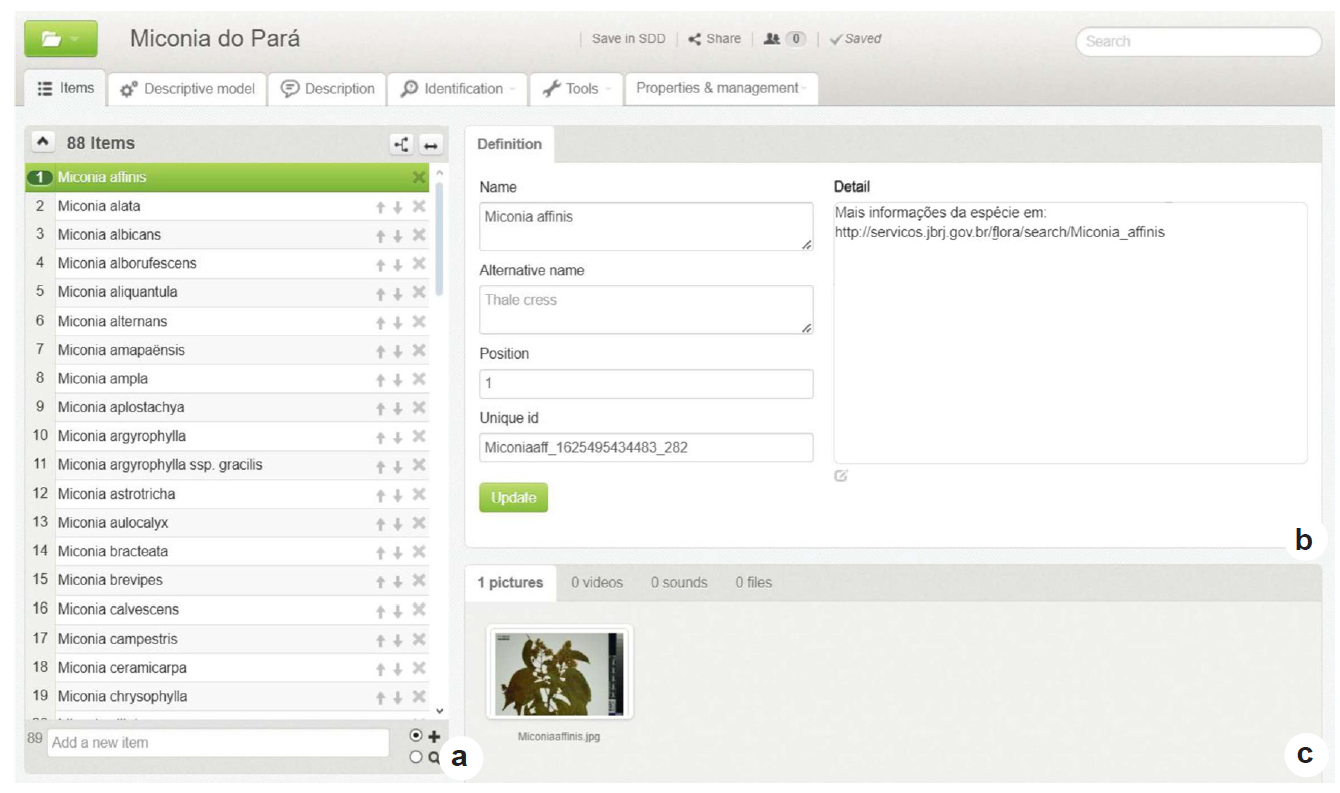
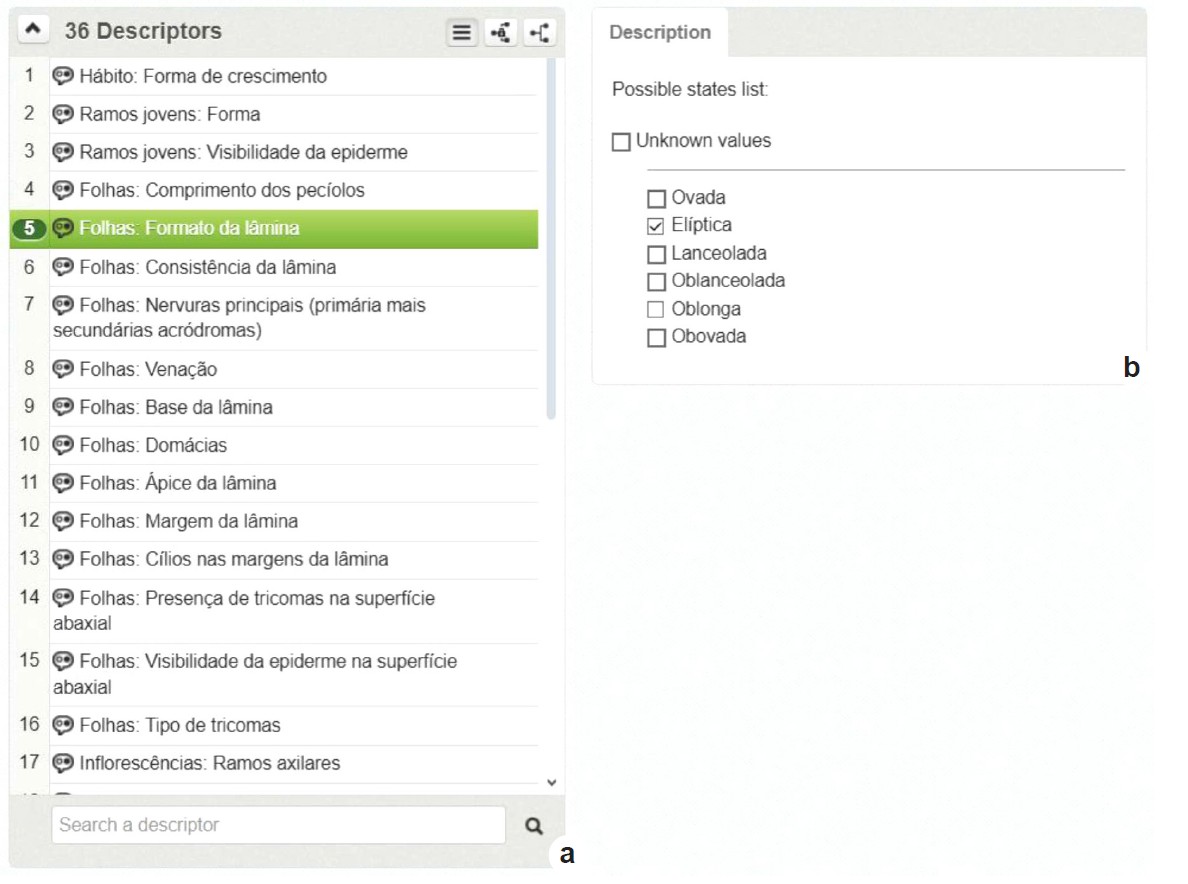
Interactive key descriptors classified each species, while the character states in the program represent the form in which each characteristic is presented. All the species were written into the Xper3 platform under the tab “items” (Fig. 1), while the characteristics were written down on the “descriptive model” tab, with each state possible on the “states” tab of each descriptor. Each characteristic and character state was manually coded for every species under the “description” tab (Fig. 2).
The descriptors and terminology used in the key were organized numerically according to their discriminating potential, from vegetative to reproductive descriptors, and include habit, young branches, leaves, inflorescences, flowers, stamens, and pistil descriptors (Fig. 2).
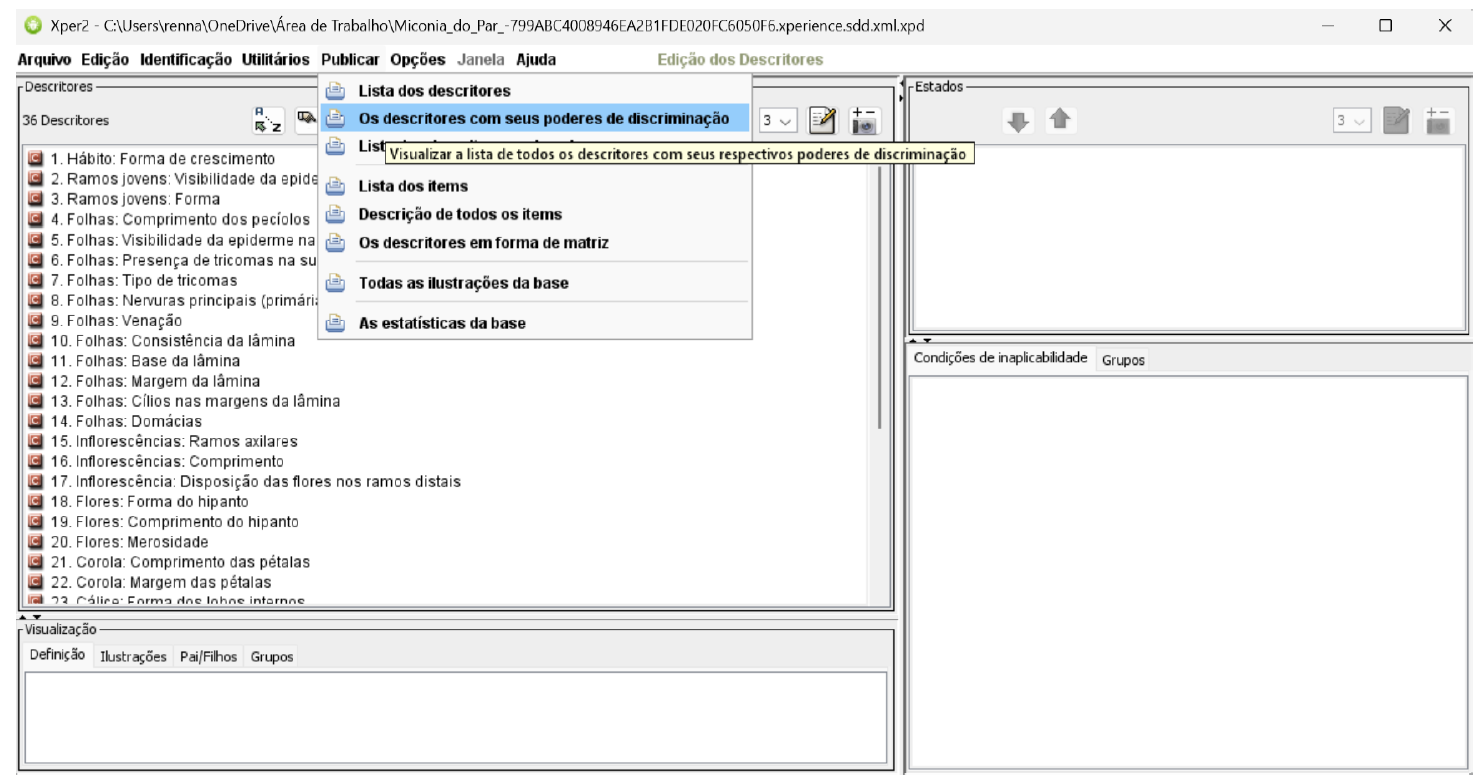
The discriminatory value was calculated by analyzing three indices via the Xper2 software: the Xper index, the Jaccard (1901) index (SJaccard = c/(a+b-c)), and the Sokal & Michener (1958) index (SSM = (a+d)/(a+b+c+d)), where a = present descriptor states, whether or not they are present in both taxa; b = present descriptor states present only in the first taxon; c = present descriptor states only in the second taxon; and d = descriptor states not applicable in any of the taxa analyzed. The Xper index is determined by the differences between descriptors, and the discriminatory value of each descriptor for each of the three indices is calculated by the sum of the dissimilarity between each and all possible pairs of taxa (Vignes-Lebbe 2017). Thus, the index evaluates the potential of a descriptor to differentiate between two distinct taxa, giving a higher value to the more exclusive descriptors of each taxon (if a = 0, then Xper = 1) (Vignes-Lebbe 2017). The Jaccard (1901) index is based on the similarity, meaning two taxa are similar when they share common descriptors, while the Sokal & Michener (1958) index is based on the shared similarities both in the occurrence and lack of characters and states, meaning two taxa are alike when they share the same presence and absence of characteristics and states in this index. Like Xper, these indices go from 0 to 1 but depend on the number of shared character states (Vignes-Lebbe 2017). By analyzing these indices, it is possible to evaluate the most efficient characteristics and which could be reformulated or deleted (Fig. 3).
Morphological concepts were set according to Gonçalves & Lorenzi (2007). Mistakes related to species without filled-in characteristics, those wrongly placed, and discernibility among species were verified using the Xper3 “checkbase” tool.
Images
All the character states were hand-drawn based on herbarium specimens or used digitized images using an ink pen on paper, then digitized with a high-resolution scan either in the web-based or mobile interface. A few drawings were edited after scanning using Photoshop, Microsoft Paint, and CorelDraw® for upscaling. In addition to these drawings, each species was also represented by a digital picture taken from SpeciesLink (<https://specieslink.net/>). Nomenclatural types were prioritized when the collection took place in the state of Pará.
Results and Discussion
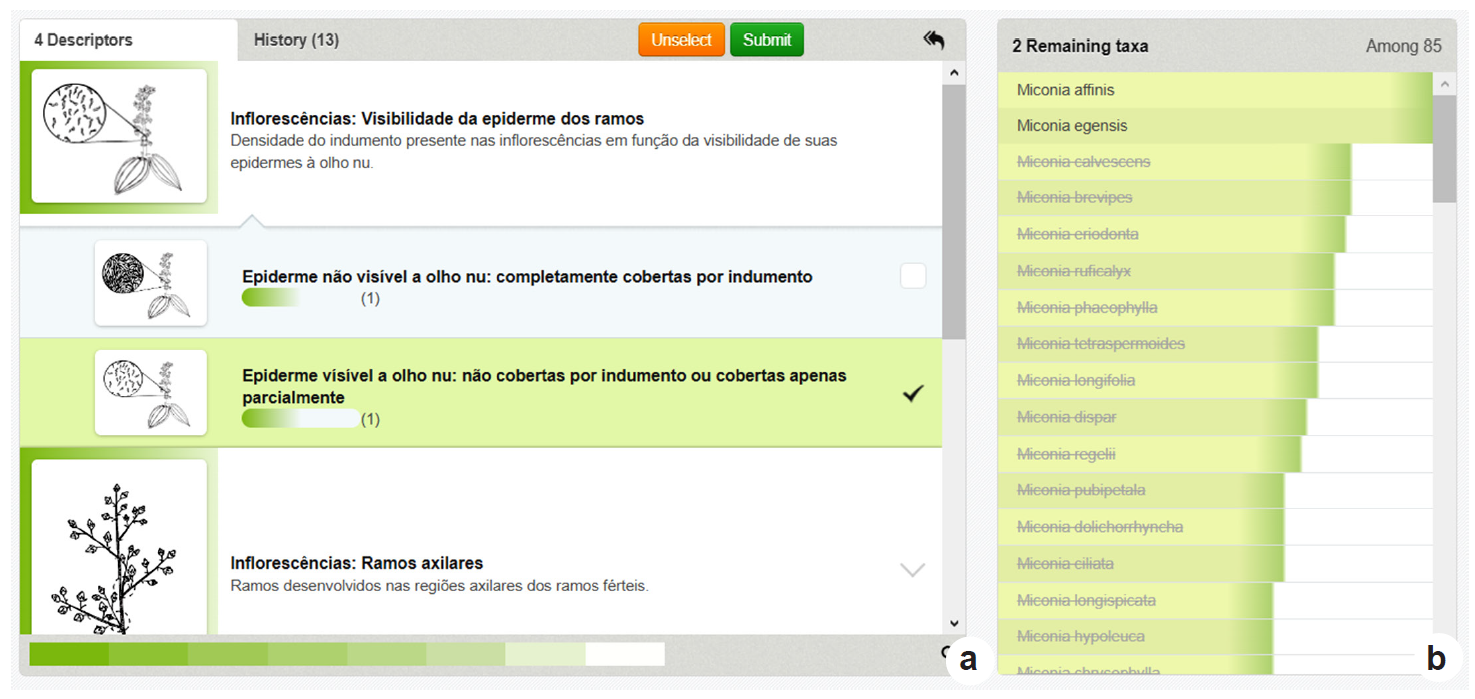
We produced an interactive key for Miconia s.s. (Melastomataceae) from the state of Pará, Brazil (Fig. 4). As far as we know, it is the first interactive key for the Melastomataceae family in the state of Pará, Brazil, and for Miconia s.s. in general. The interactive key is available in the Xper3 online app (<https://app.xper3.fr:443/xper3GeneratedFiles/publish/identification/-8015989149121494953/>). The key comprises 88 taxa (87 species and one subspecies) with 36 descriptors totaling 114 character states and 140 original drawings. All taxa can be completely discernible, with no conflicting descriptions.
Taxa
In total, 88 taxa (87 species and one subspecies; Tab. 1) of Miconia s.s. were found in the state of Pará, and all of them were included in the interactive key. After a thorough examination and re-identification of some materials, we obtained a list of species for the state of Pará that differs somewhat from the list obtained from the Flora & Funga of Brazil database (Goldenberg et al. 2024). We recorded eight additional species (M. aulocalyx, M. bracteata, M. campestris, M. cowanii, M. rhytidophylla, M. stelligera, M. traillii, and M. tschudyoides), but we found no evidence for five other species (M. biglandulosa, M. dodecandra, M. lourteigiana, M. stellulata, and M. tetrasperma). These differences are primarily the result of examining specimens housed at the Herbarium of the Museu Paraense Emílio Goeldi (MG) in Belém, Pará, one of the largest herbaria in Brazil and the second largest in the Brazilian Amazon. Unfortunately, its digital collection has limited access, which makes it difficult for specialists to consult and update the databases. In addition, detailed research into the circumscription of ambiguous species has also led to differences between the list of the Flora and Funga of Brazil (Goldenberg et al. 2024) and ours, as in the case of Miconia cowanii and the excluded species (see discussion below). As research on Amazonian species progresses, it is expected that at least some of them will be considered as synonyms (as suggested by Goldenberg et al. 2024). Complete descriptions and comments on species circumscriptions can be found in Oliveira (2019).
Key descriptors and images
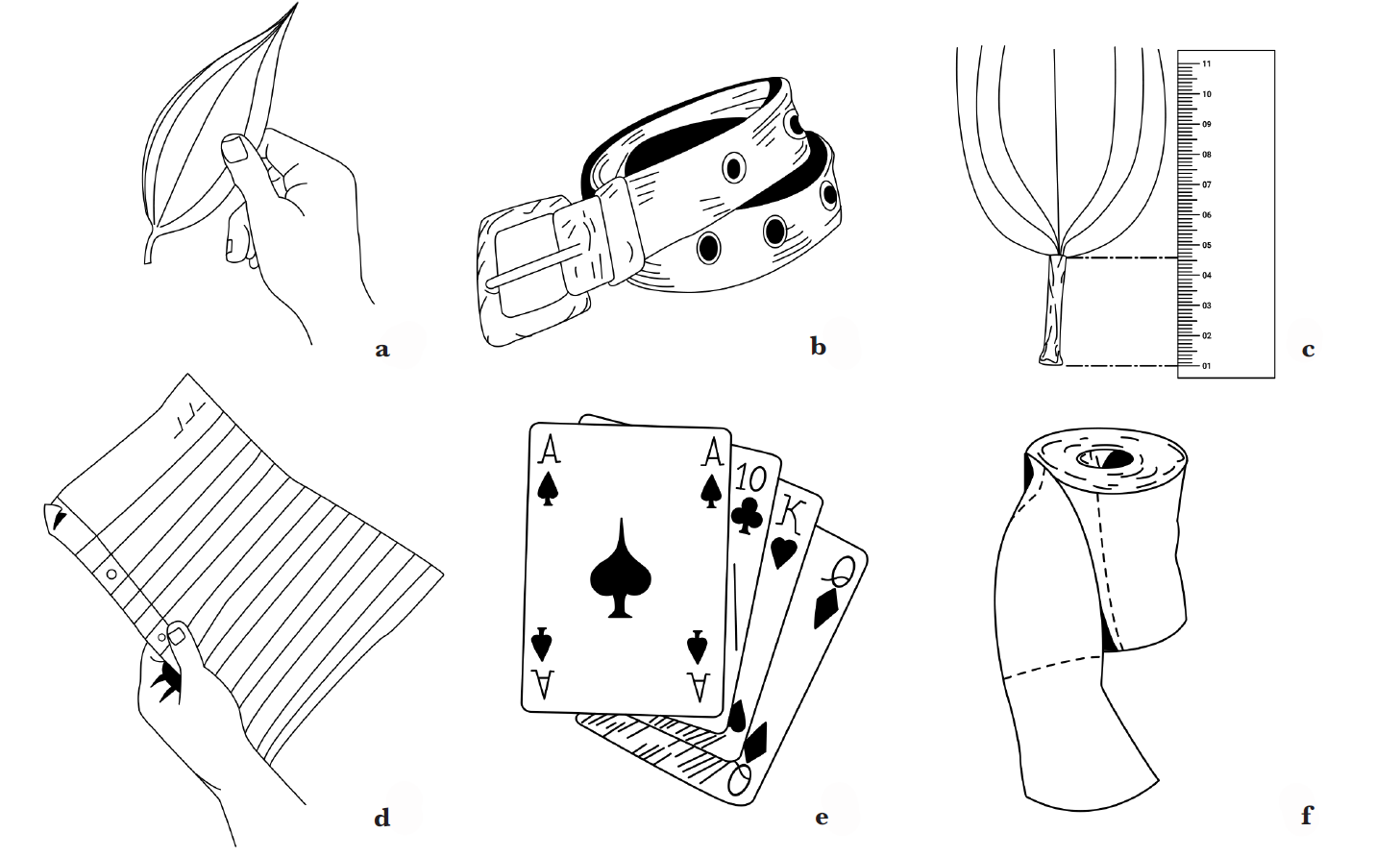
To allow species discrimination, 36 characteristics were chosen as descriptors, with 114 character states associated with them. The full character table is presented below (Tab. S1, available on supplementary material <https://doi.org/10.6084/m9.figshare.31115269>). The descriptors have two to nine states, but most of them have only two (47%), three (19%), or four states (22%). Each characteristic and character state is presented along with a brief description and an illustration. These illustrations include 140 original images (66 vegetative, 63 reproductive, and 11 measurements), along with a digital photo of a herbarium specimen for all species. In some cases, a ludic approach to the drawings was taken to illustrate tactile feeling states or size measurements (Fig. 5).
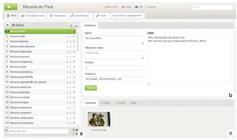
a-c. Screenshot of the “items” tab on the Xper3 platform of the digital interactive key of Miconia s.s. of the state of Pará, which compiles the taxa studied, herbarium sheet photos of the species, and a reference to the species page in Flora & Funga of Brazil [Flora & Funga of Brazil 2024 (continuously updated), <http://reflora.jbrj.gov.br>] - a. taxa list present in the current database; b. reference to the species page in the Flora & Funga of Brazil platform; c. media upload tab with the herbarium sheet picture of Miconia alata.
Taxa included in the interactive key of Miconia s.s. (Melastomataceae) from the state of Pará, Brazil, with the voucher used to illustrate each taxon.
Among the descriptors, 16 were vegetative and 20 were reproductive: habit (1 character state), young branches (2), leaves (13), inflorescences (4), flowers (3), calyx (2), corolla (2), androecium (5), and gynoecium (5). All the characteristics had information gathered for at least 85 taxa (97%), except for the ovary position and presence of connective glands, with only 61 (69%) and 78 (89%) taxa assessed, respectively. Twenty-nine characteristics were polymorphic for at least one taxon, taxa that could present two or more states. Across the 114 character states, 16 can be considered rare (occurrence up to 5% of the taxa) among Miconia from Pará: (1) obovate blades; (2) papyraceous leaves; (3) leaves with only three main veins (without a marginal pair); (4) attenuated leaf base; (4) auriculate leaf base; (5) cordate or cordulate base; (6) cuneate leaf base; (7) truncated base; (8) leaf domatia; (9) rounded leaf apex; (10) obtuse leaf apex; (11) absence of trichomes on leaf surface; (12) glandular trichomes on leaf surface; (13) inflorescences shorter than 1.8 cm; (14) umbelliform placement of flowers; (15) tetramerous flowers; and (16) punctiform stigma. Anther dehiscence and domatia were the most homogenous characteristics among the studied taxa, with over 90% of them presenting with just one of the character states (poricidal anthers: 90%; absent domatia: 98%). The three most efficient (with greater discriminatory value) characteristics were (1) leaf trichome types (X = 0.7; MS = 0.22; J = 0.78); (2) flower organization in inflorescence distal branches (X = 0.64; MS = 0.36; J = 0.68); and (3) blade consistency (X = 0.61; MS = 0.35; J = 0.67).
Character variation among Miconia s.s. species from Pará, Brazil
The compilation of the database allowed us to draw an archetypical Miconia s.s. from the studied area, considering the most common character states (occurrence in at least 50% of the taxa). Therefore, Miconia s.s. in Pará are, in general, as follows: shrubs (84%) or trees (64%) with quadrangular young branches (62%), with an invisible epidermis through the indument (63%); leaves without domatia (98%); petiole 4.5-37 mm long (69%: 4.5-14 mm long; 62%: 15-37 mm long); chartaceous leaf blade (50%), elliptic (77%), with acute base (47%) and acuminated apex (67%), basally veined (72%), 3-nerved with two faint marginal veins (78%); entire blade margin (71%) and eciliated (78%); stellate trichomes (44%) covering the abaxial surface of the leaf blades (71%), but keeping the epidermis visible (62%); inflorescences 1.8-15.3 cm long (85%), without axillary branches (81%); inflorescence with scorpioid distal branches (63%) or glomerulate (61%), and inflorescence branch epidermis not visible through indument (64%); pentamerous flowers (92%), hypanthium up to 1.8 mm long (52%), campanulate to semi-elliptic (62%); calyx with triangular internal lobes (61%), persistent sepals in fruit (61%); eciliated petals (92%), 2.6-3.5 mm long (50%); dimorphic stamens (94%) with poricidal anthers (92%); prolonged connectives (70%), with two ventral (72%) and one dorsal (61%) projections, without connective glands (89%); straight styles (51%) with capitate or discoid stigma (52%), inferior ovaries (58%) with apical indument (61%).

a-b. Screenshot of the description tab of the Xper3 platform of the digital interactive key of Miconia s.s. of the state of Pará, where the descriptors and states coded in the “description model” are assigned to each taxon individually - a. descriptors tab with every characteristic in the respective category; b. possible known character states of the study’s taxa.
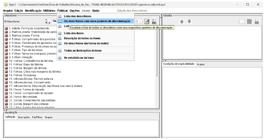
Screenshot of the Xper2 database of the digital interactive key of Miconia s.s. of the state of Pará, Brazil. The discrimination index calculating tool of the Xper2 software is highlighted in blue in the window tab (“janela” in Portuguese).
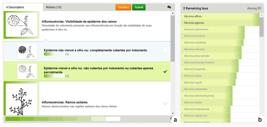
a-b. Screenshot of the digital interactive key of Miconia s.s. of the state of Pará, Brazil - a. illustrated descriptors with a brief definition and all the possible states underneath. The green indicators stand for the corresponding taxa represented by each state; b. the list containing the remaining and excluded taxa (black and grey font, respectively) for the identification in progress.
Considering the best discerning characteristics for Miconia s.s. in the state of Pará (see above), it is possible to group morphologically similar species. The diversity of trichome types on the abaxial leaf surface allows for the recognition of eight distinct groups: 39 taxa (44% of the evaluated taxa for this character) present stellate trichomes on the abaxial surface of leaves, while 20 (22%) present dendritic, 16 (18%) arachnoid, 11 (12%) lepidote, 11 (12%) simple, 6 (6%) scaly, and 1 (1%) glandular trichomes. Only three species (3%) have glabrous leaves. Considering leaf consistency, 44 taxa share chartaceous leaves (50%), while 30 (34%) present membranaceous, 16 (18% of taxa) coriaceous, and 5 papiraceous leaves (5%). Finally, the flower organization at the inflorescence distal branches groups species in four different ways: dichasial flowers occur in 38 taxa (43%), scorpioid to subscorpioid in 28 taxa (31%), glomerulate to subglomerulate in 27 taxa (30%), while umbeliform distal branches occur in only 3 taxa (3%). Eleven species share the three most common character states: chartaceous leaves with the abaxial leaf surface covered by stellate trichomes and dichasial inflorescences: M. affinis, M. alata, M. alternans, M. dolichorrhyncha, M. egensis, M. elegans, M. prasina, M. pyrifolia, M. regelii, M. serrulata, and M. staminea.
New records of Miconia species for the state of Pará:
Miconia aulocalyx Mart. ex Triana.
Material examined: Abaetetuba, Balneário do Zico, 16.VI.2018, Oliveira 4655 (MG, HIFPA).
Miconia bracteata (DC.) Triana.
Material examined: Santa Bárbara, 15.I.2011, Rocha 31 (MG), Rocha 41 (MG).
Miconia campestris Benth. & Triana.
Material examined: Tomé-Açu, down Rio Acará 1/2 km, overflow bank, 24.VII.1931, Mexia 5964-a (NY).
Miconia cowanii Wurdack.
Material examined: Almeirim, Monte Dourado, estrada do Munguba, 8.XII.1978, Santos 508 (HF, MAC, MG, NY). Altamira, cachoeira de Curuá, 4.XI.1977, Prance 24843 (UEC). Belém, Parque Estadual do Utinga, 26.I.2017, Freitas 49 (IAN, MG). Jacundá, comunidade Nossa Senhora de Fátima, 5.II.2000, Miranda 564 (INPA). Oriximiná, Rio Trombetas, 8.VII.1980, Cid Ferreira 1356 (MO, NY); 31.VII.1980, Cid Ferreira 1948 (MO, NY); 1997, Barbosa 145 (INPA); 8.V.2017, Soares 20 (INPA); parte de baixo da Serra Sacazinho, 13.XI.1987, Cid Ferreira 9613 (MO, NY); mineração Rio do Norte, 2.XI.1985, Menandro 52 (CEPEC); 6.XI.1985, Menandro 56 (CEPEC). Novo Progresso, Serra do Cachimbo, 20.VIII.2003, Silva 3963 (IAN); 21.VIII.2003, Nascimento 3991 (MG, USP). Portel, arredores do seringal, 16.XI.1963, Oliveira 3061 (IAN).
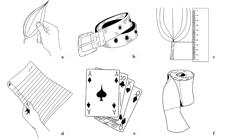
a-f. Tactile and size characters illustrated by ludic drawings, exemplifying harder to illustrate Miconia s.s. characters and states - a. hand feeling the leaf consistency; b. leather representing a coriaceous leaf consistency; c. ruler measuring the petiole length; d. paper sheet illustrating a membranaceous leaf; e. deck of cards representing a chartaceous leaf consistency; f. toilet paper to represent a papyraceous leaf consistency.
Miconia rhytidophylla Naud.
Material examined: Castanhal da Boa Vista, 1.II.1910, Ducke (MG 10628).
Miconia stelligera Cogn.
Material examined: Óbidos, Rio Branco de Óbidos, 17.XII.1913, Ducke 15186 (RB, MG).
Miconia traillii Cogn.
Material examined: Gurupá, mata de terra firme, 14.X.1918, Ducke (MG 17207). Parauapebas, Floresta Nacional de Carajás, 4.XII.2015, Goldenberg 2252 (MG); 6.XII.2018, Oliveira 4517 (MG); Oliveira 4538 (MG).
Miconia tschudyoides Cogn.
Material examined: Tomé-açu, 7.XII.1999, Oliveira 70 (IAN).
Excluded species of Miconia for the state of Pará
Miconia biglandulosa Gleason.
The distinction between this species and M. tomentosa (Rich.) D.Don is obscure (Goldenberg et al. 2024), and M. biglandulosa has long been recognized as a variation of M. tomentosa (Wurdack 1980). Miconia tomentosa is widespread in the state of Pará, and the only two herbarium specimens identified as M. biglandulosa (Sobral 10564 and Silva 1015) were redetermined as M. tomentosa (Oliveira 2019).
Miconia dodecandra Cogn.
Miconia dodecandra has been mainly differentiated from M. mirabilis (Aubl.) L.O.Williams by its externally pubescent hypanthium. However, specimens with a gradation between the typical forms have been found (Wurdack 1973), and this has raised a hypothesis of conspecificity (Goldenberg et al. 2024). The only two herbarium specimens identified as M. dodecandra (Silva 1269 and Labiak 8462) were redetermined as Tococa subciliata (DC.), Triana, and Miconia mirabilis (hypanthium with only scattered pubescence).
Miconia lourteigiana Wurdack.
The only two herbarium specimens from the state of Pará identified as M. lourteigiana (Ribeiro s.n. [US 2789894] and Santos 566) actually represent M. navioensis Wurdack (Oliveira 2019). Both species can be set apart by the stamens with smaller, apical anther pores and connectives with two ventral projections in M. lourteigiana vs. stamens with larger, ventral anther pores and connectives with only a dorsal projection in M. navioensis (Meirelles 2015).
Miconia stellulata Gleason.
The only two herbarium specimens from the state of Pará identified as M. aff. stellulata (Sobral 9708 and Sobral 9928) were redetermined as M. aff. rimachii (Oliveira 2019). Although these herbarium specimens present additional axillary inflorescences, which are common in M. stellulata and absent in M. rimachii Wurdack, leaf indument and venation diverge largely, raising doubts about their identification. Additional analysis should be done on these specimens to securely define their identity.
Miconia tetrasperma Gleason.
The only herbarium specimen from the state of Pará identified as M. tetrasperma (Prance 25822) was redetermined as M. tetraspermoides Wurdack (Oliveira 2019). According to Wurdack, both species are morphologically very similar, differing by their leaf margins (undulate and denticulate in M. tetraspermoides vs. flat and entire in M. tetrasperma) and trichome size (0.15-0.2 mm diam. in M. tetraspermoides vs. 0.07-0.1 mm diam. in M. tetrasperma).
The Amazon is one of the most challenging biomes in the world when it comes to biodiversity knowledge, as it has a high degree of species richness and large undersampled areas (Hopkins 2007; Cardoso et al. 2017). As is common for undersampled but rich vegetation, taxonomic tools developed for biodiversity identification are quickly considered outdated because of continuous discoveries (Bittrich et al. 2012). Interactive keys in Brazil are still relatively uncommon and could represent an alternative tool to increase knowledge of biodiversity.
In this study, we produced an interactive, multiple-access, digital key for the identification of Miconia species in the state of Pará, northern Brazil. It encompasses a large portion of the genus diversity in the Amazon. Xper3 analytical tools allowed us to infer the three most useful characters for recognizing Miconia species, two from vegetative organs and one from reproductive organs. This objective result will have a significant impact on the rapid recognition of species of this megadiverse genus, both for specialists and general botanists, in the field or in herbaria. As we carried out a broad review of herbarium records, mainly in the MG herbarium, to produce a comprehensive key, we also detected eight new records for the state as a side result of this study.
As an online tool, the key can also be continuously enhanced by adding new character states when a species polymorphism is observed or by filling in missing information. The more complete the key, the more trustworthy the identification will be. In addition to species identification of Miconia s.s. in Pará, it can also be used as a template for producing new Miconia s.s. keys or simply be updated to contemplate more inclusive and/or natural regions. Producing digital interactive keys for Miconia s.s. for each state in the Brazilian Amazon domain could represent an efficient strategy for tackling the enormous taxonomic challenge facing the genus in this region. Since species develop unique morphological variations across geographical areas, the character states selected for this study should be reassessed when used as a template for other interactive keys. Since the species described within the key possess many characteristics specific to the genus, its usefulness as a template for other taxa is limited. However, some of the images developed here may still be useful for other genera within Melastomataceae, or even for other families. Since the tool produced in this study is open access, it also contributes to the reassessment of data, building a cohesive collaborative effort in taxonomy studies.
Acknowledgements
We would like to express gratitude to CAPES, for personal financial support to RL, AAO and JM during the preparation of this study; and to CNPq, for research fund (#408365/2023-4). We also thank all the herbaria that received us or that loaned specimens for our study.
Data availability statement
In accordance with Open Science communication practices, the authors inform that there is no data sharing of this manuscript.
Data availability statement
See supplementary material at https://doi.org/10.6084/m9.figshare.31115269
References
-
Almeda F, Michelangeli FA & Viana PL (2016) Brasilianthus (Melastomataceae), a new monotypic genus endemic to ironstone outcrops in the Brazilian Amazon. Phytotaxa 273: 269-282. DOI: 10.11646/phytotaxa.273.4.3
» https://doi.org/10.11646/phytotaxa.273.4.3 - Berry PE (2001) Miconia In: Berry PE, Yatskievych K & Holst BK (eds.) Flora of the Venezuelan Guayana. Vol. 6. Missouri Botanical Garden Press, St. Louis. Pp. 387-468.
-
BFG - The Brazil Flora Group (2015) Growing knowledge: an overview of seed plant diversity in Brazil. Rodriguésia66: 1085-1113. DOI: https://doi.org/10.1590/2175-7860201566411
» https://doi.org/10.1590/2175-7860201566411 - BFG - The Brazil Flora Group (2018) Brazilian Flora 2020: innovation and collaboration to meet Target 1 of the Global Strategy for Plant Conservation (GSPC). Rodriguésia 69: 1513-1527.
-
Bittrich V, Souza CSD, Coelho RLG, Martins MV, Hopkins MJG & Amaral MCE (2012) An interactive key (Lucid) for the identifying of the genera of seed plants from the Ducke Reserve, Manaus, AM, Brazil. Rodriguésia 63: 55-64. DOI: 10.1590/S2175-78602012000100005
» https://doi.org/10.1590/S2175-78602012000100005 - Cangani KG (2012) A família “Melastomataceae s.s.” Juss. no Parque Nacional do Viruá (Roraima). Dissertação de Mestrado. Instituto Nacional de Pesquisas da Amazônia, Manaus . 101p.
-
Cardoso D, Särkinen T, Alexander S, Amorim SM, Bittrich V, Celis M, Daly D, Fiaschi P, Funk V, Giacomin L, Goldenberg R, Heiden G, Iganci J, Kelloff C, Knapp S, Lima H, Machado A, Santos R, Mello-Silva R, Michelangeli F, Mitchell J, Moonlight P, Moraes L, Mori S, Nunes T, Pennington T, Pirani J, Prance G, Queiroz L, Rapini A, Riina R, Rincon C, Roque N, Shimizu G, Sobral M, Stehmann J, Stevens W, Taylor C, Trovó M, Van den Berg C, Van der Werff H, Viana P, Zartman C & Forzza R (2017) Amazon plant diversity revealed by a taxonomically verified species list. Proceedings of the National Academy of Sciences 114: 10695-10700. DOI: 10.1073/pnas.1706756114
» https://doi.org/10.1073/pnas.1706756114 - Cogniaux CA (1891) Mélastomacées. In: Candolle ALPP & Candolle C (eds.) Monographieae phanerogamarum. Vol. 7. G. Masson, Paris. Pp. 1-1256.
-
Corrêa AL, Scudeller VV & Goldenberg R (2017) Melastomataceae in the reserva de desenvolvimento sustentável do Tupé, Amazonas, Brazil. Phytotaxa 323: 101-127. DOI: 10.11646/phytotaxa.323.2.1
» https://doi.org/10.11646/phytotaxa.323.2.1 -
Dallwitz MJ, Paine TA & Zurcher EJ (2018) Interactive identification using the Internet. In: Saarenmaa H & Nielsen ES (eds.) Towards a global biological information infrastructure - challenges, opportunities, synergies, and the role of entomology. European Environment Agency, Copenhagen. Pp. 23-33. Available at <Available at https://www.eea.europa.eu/publications/technical_report_2001_70/Technical-Report-70-web.pdf >. Access on 5 April 2024.
» https://www.eea.europa.eu/publications/technical_report_2001_70/Technical-Report-70-web.pdf -
Goharimanesh M, Stöhr S, Mirshamsi O, Ghassemzadeh F & Adriaens D (2021) Interactive identification key to all brittle star families (Echinodermata; Ophiuroidea) leads to revised morphological descriptions. European Journal of Taxonomy 766: 1-63. DOI: 10.5852/ejt.2021.766.1483
» https://doi.org/10.5852/ejt.2021.766.1483 - Goldenberg R, Bacci LF, Forzza RC, Labiak PH, Medeiros H, Michelangeli FA, Obermüller FA, Ruokolainen K, Sobral MG & Caddah MK (in press) “Flora & Funga do Brasil” makes the unknown clear: first record of Alloneuron and other distributional updates for 26 species of Melastomataceae in the Brazilian Amazon. Systematic Botany.
-
Goldenberg R, Baumgratz JFA & Souza MLD (2012) Taxonomia de Melastomataceae no Brasil: retrospectiva, perspectivas e chave de identificação para os gêneros. Rodriguésia 63: 145-161. DOI: 10.1590/S2175-78602012000100011
» https://doi.org/10.1590/S2175-78602012000100011 -
Goldenberg R, Baumgratz JFA, Michelangeli FA, Guimarães PJF, Romero R, Versiane AFA, Fidanza K, Völtz RR, Silva DN, Lima LFG, Silva-Gonçalves KC, Bacci LF, Fontelas JC, Pacífico R, Brito ES, Rocha MJR, Caddah MK, Meirelles J, Rosa P, Ferreira-Alves R, Santos AKA, Moreira KVC, Reginato M, Oliveira LFA, Freire-Fierro A, Amorim AMA, Martins AB, Almeda F, Hinoshita LKR, Kriebel R & Meyer FS (2024) Melastomataceae in Flora & Funga do Brasil (continuously updated). Jardim Botânico do Rio de Janeiro. Available at <Available at https://floradobrasil.jbrj.gov.br/FB161 >. Access on 7 September 2024.
» https://floradobrasil.jbrj.gov.br/FB161 -
Goldenberg R & Hinoshita LKR (2017) Two new species of Miconia (Melastomataceae, Miconieae) from the Brazilian northern border and adjacent French Guiana. Brittonia 69: 535-543. DOI: 10.1007/s12228-017-9488-y
» https://doi.org/10.1007/s12228-017-9488-y -
Hopkins MJG (2007) Modelling the known and unknown plant biodiversity of the Amazon Basin. Journal of Biogeography 34: 1400-1411. DOI: 10.1111/j.1365-2699.2007.01737.x
» https://doi.org/10.1111/j.1365-2699.2007.01737.x -
Hopkins MJG (2019) Are we close to knowing the plant diversity of the Amazon? Anais da Academia Brasileira de Ciências 91: e20190396. DOI: 10.1590/0001-3765201920190396
» https://doi.org/10.1590/0001-3765201920190396 - Jaccard P (1901) Étude comparative de la distribution florale dans une portion des Alpes et des Jura. Bulletin de la Société Vaudoise des Sciences Naturelles 7: 547-579.
- Koleff P, Soberón J, Arita HT, Dávila P, Flores-Villela O, Golubov J, Halffter G, Lira-Noriega A, Moreno CE, Moreno E, Munguía M, Navarro-Sigüenza A, Téllez O, Ochoa-Ochoa L, Peterson AT & Rodríguez P (2008) Patrones de diversidad espacial en grupos selectos de especies. In: CONABIO (ed.) Capital natural de México. Vol. 1. CONABIO, México. Pp. 323-364.
- Krömer T, Acebey A & Gómez-Pompa A (2010) Introducción. In: Gómez-Pompa A, Krömer T, Castro-Cortés R (eds.) Atlas de la flora de Veracruz: un patrimonio natural en peligro. Gobierno del Estado de Veracruz. Ed. Gobierno del Estado, Universidad Veracruzana. Pp. 25-42.
- Macbride JF (1941) Flora of Peru: Melastomataceae. Publications of the Field Museum of Natural History, Botanical Series 13: 249-523.
- Meirelles J (2015) Filogenia de Miconia seção Miconia subseção Seriatiflorae e revisão taxonômica do clado albicans (Melastomataceae, Miconieae). Tese de Doutorado. Universidade Estadual de Campinas, Campinas. 204p.
-
Meirelles J & Bacci LF (2017) Miconia renatogoldenbergii (Miconieae, Melastomataceae), a new species from savanna enclaves in southern Amazonia, Brazil. Phytotaxa 298: 187-193. DOI: 10.11646/phytotaxa.298.2.9
» https://doi.org/10.11646/phytotaxa.298.2.9 -
Meirelles J & Goldenberg R (2014) A new species of Miconia (Miconieae, Melastomataceae) from the Brazilian Amazon. Phytotaxa 173: 278-284. DOI: 10.11646/phytotaxa.173.4.2
» https://doi.org/10.11646/phytotaxa.173.4.2 -
Meirelles J, Sartor MF, Chagas RL & Caddah MK (2021) Miconia waimiri-atroari (Miconieae, Melastomataceae): a new species from the Brazilian Amazon Forest. Phytotaxa 521: 203-211. DOI: 10.11646/phytotaxa.521.3.5
» https://doi.org/10.11646/phytotaxa.521.3.5 -
Michelangeli FA, Goldenberg R, Almeda F, Judd WS, Bécquer ER, Ocampo G, Ionta GM, Skean JD, Majure LC & Penneys DS (2019) Nomenclatural novelties in Miconia (Melastomataceae: Miconieae). Brittonia 71: 82-121. DOI: 10.1007/s12228-018-9546-0
» https://doi.org/10.1007/s12228-018-9546-0 - Michelangeli FA, Nicolas AN, Ocampo G, Goldenberg R, Almeda F, Judd WS, Bécquer ER, Skean JD, Caddah MK, Ionta GM, Penneys DS, Alvear M & Majure LC (2022) Why recognize Miconia as the only genus in Tribe Miconieae (Melastomataceae)? In: Goldenberg R, Michelangeli FA & Almeda F (eds.) Systematics, evolution, and ecology of Melastomataceae. Springer, Cham. Pp. 235-254.
-
Murguía-Romero M, Serrano-Estrada B, Ortiz E & Villaseñor JL (2021) Taxonomic identification keys on the web: tools for better knowledge of biodiversity. Revista Mexicana de Biodiversidad 92: e923592. DOI: 10.22201/ib.20078706e.2021.92.3592
» https://doi.org/10.22201/ib.20078706e.2021.92.3592 - Oliveira AA (2019) Sinopse de Miconia Ruiz & Pav. stricto sensu no estado do Pará, Brasil. Dissertação de Mestrado. Universidade Federal Rural da Amazônia / Museu Paraense Emílio Goeldi, Belém. 174p.
- Pires J & Prance GT (1985) The vegetation types of the Brazilian Amazon. In: Prance GT & Lovejoy TE (eds.) Amazonia. Pergamon Press, Oxford. Pp. 109-145.
-
Rocha KCJ, Goldenberg R, Meirelles J & Viana PL (2017) Flora das cangas da Serra dos Carajás, Pará, Brasil: Melastomataceae. Rodriguésia 68: 997-1034. DOI: 10.1590/2175-7860201768336
» https://doi.org/10.1590/2175-7860201768336 - Sokal RR & Michener CD (1958) A statistical method for evaluating relationships. University of Kansas Science Bulletin 38: 1409-1448.
-
Sosa V & Dávila P (1994) Una evaluación del conocimiento florístico de México. Annals of the Missouri Botanical Garden 81: 749-757. DOI: 10.2307/2399919
» https://doi.org/10.2307/2399919 -
Stropp J, Umbelino B, Correia RA, Campos-Silva JV, Ladle RJ & Malhado ACM (2020) The ghosts of forests past and future: deforestation and botanical sampling in the Brazilian Amazon. Ecography 43: 979-989. DOI: 10.1111/ecog.05026
» https://doi.org/10.1111/ecog.05026 -
Thiers B (continuously updated) Index Herbariorum: a global directory of public herbaria and associated staff. New York Botanical Garden’s Virtual Herbarium. Available at <Available at http://sweetgum.nybg.org/science/ih/ >. Access on 4 February 2023.
» http://sweetgum.nybg.org/science/ih/ - Ulloa CU, Almeda F, Goldenberg R, Kadereit G, Michelangeli FA, Penneys DS, Stone RD & Veranso-Libalah MC (2022) Melastomataceae: global diversity, distribution, and endemism. In: Goldenberg R, Michelangeli FA & Almeda F (eds.) Systematics, evolution, and ecology of Melastomataceae. Springer, Cham. Pp. 3-28.
- Vieira LS, Oliveira NVC & Bastos TX (1971) Os solos do estado do Pará. Ed. Instituto do Desenvolvimento Econômico Social do Pará, Belém. 175p.
-
Vignes-Lebbe R, Bouquin S, Kerner A & Bourdon E (2017) Desktop or remote knowledge base management systems for taxonomic data and identification keys: Xper2 and Xper3. Biodiversity Information Science and Standards 1: e19911. DOI: 10.3897/tdwgproceedings.1.19911
» https://doi.org/10.3897/tdwgproceedings.1.19911 -
Villaseñor JL, Maeda P, López JJC & Ortiz E (2005) Estimación de la riqueza de especies de Asteraceae mediante extrapolación a partir de datos de presencia-ausencia. Boletín de la Sociedad Botánica de México 76: 5-18. DOI: 10.17129/botsci.1700
» https://doi.org/10.17129/botsci.1700 -
Walter DE & Winterton S (2007) Keys and the crisis in taxonomy: extinction or reinvention? Annual Review of Entomology 52: 193-208. DOI: 10.1146/annurev.ento.51.110104.151054
» https://doi.org/10.1146/annurev.ento.51.110104.151054 - Wurdack JJ (1973) Melastomataceae. In: Lasser T (ed.) Flora de Venezuela. Vol. 8. Instituto Botánico, Caracas. 819p.
- Wurdack JJ (1993) Melastomatoideae. In: Görts-van Rijn ARA & Jansen-Jacobs MJ (eds.) Flora of the Guianas. Vol. 99. Koeltz Scientific Books, Koenigstein. 301p.