 Tropaeolum: research trends, gaps, and future perspectives
Resumo
Tropaeolum (Tropaeolaceae) compreende cerca de 95 espécies com distribuição neotropical, algumas das quais possuem importância econômica, gastronômica, medicinal e paisagística. Este estudo apresenta uma análise cientométrica do gênero, utilizando dados da Web of Science (1945-2024) para avaliar tendências, lacunas e temas emergentes na pesquisa. Após triagem, 490 documentos foram analisados usando CiteSpace e Microsoft Excel. Os resultados mostraram pouca colaboração e influência das instituições brasileiras na pesquisa, em contraste com as dos Estados Unidos e países europeus. Estudos sobre a química, bioquímica e biologia molecular das espécies do gênero despertaram o interesse da comunidade científica devido às suas características específicas, como a presença de compostos como glucosinolatos, isotiocianato de benzila, isotiocianato, antocianinas e antioxidantes; nesse contexto, Tropaeolum majus e Tropaeolum tuberosum são as espécies mais investigadas, enquanto muitas outras do grupo (como T. pentaphyllum e T. azureum) ainda precisam ser exploradas, indicando a necessidade de mais pesquisas para preencher lacunas de conhecimento nas espécies existentes e expandir o potencial das espécies relacionadas. Os achados reforçam a importância de explorar todo o potencial de Tropaeolum, contribuindo para o avanço o conhecimento científico e para a descoberta de novas aplicações para este gênero promissor.
Palavras-chave:
compostos bioativos; CiteSpace; banco de dados; análise cientométrica; Tropaeolaceae
Abstract
Tropaeolum (Tropaeolaceae) comprises nearly 95 species with a neotropical distribution, a few of which are of economic, gastronomic, medicinal, and landscape importance. In this study, we present a scientometric analysis of this genus using data from the Web of Science (1945-2024) to evaluate the research trends, gaps, and emerging topics. After screening, 490 documents were analyzed using CiteSpace and Microsoft Excel. The results revealed limited collaboration between Brazilian institutions and its impact on research, in contrast to those in the USA and European countries. Studies on the chemistry, biochemistry, and molecular biology of species in this genus have aroused the interest of the scientific community because of their specific characteristics, such as the presence of compounds such as glucosinolate, benzyl isothiocyanate, isothiocyanate, anthocyanin, and antioxidants. In this context, Tropaeolum majus and Tropaeolum tuberosum are the most extensively studied species; however, many others in this group, such as Tropaeolum pentaphyllum and Tropaeolum azureum, remain underexplored, highlighting the need for further research to address the knowledge gaps and unlock the potential of lesser-known species. These findings reinforce the importance of exploring the full potential of Tropaeolum, contributing to advancing scientific knowledge and discovering new applications of this promising genus.
Key words:
bioactive compounds; CiteSpace; database; scientometric analysis; Tropaeolaceae
Introduction
Tropaeolum (Tropaeolaceae) comprises approximately 95 species (Pacheco et al. 2020) with a Neotropical distribution from Mexico to Patagonia, mainly along the Andes Mountains (Fabbri & Valla 1998; Bayer & Appel 2003). Based on phylogenetic analyses (Andersson & Andersson 2000), Tropaeolum is the only genus in this family and is divided into two sections: Tropaeolum sect. Tropaeolum and Tropaeolum sect. Chilensia. The species are annual, perennial, scaly, or prostrate herbs that form rhizomes and tubers with the characteristic smell of mustard oil (Andersson & Andersson 2000; Bayer & Appel 2003). Some of these plants, such as nasturtium (Tropaeolum majus L.), mashua (Tropaeolum tuberosum Ruiz & Pav.), and crem (Tropaeolum pentaphyllum Lam.), are of economic, gastronomic, medicinal, and landscape importance and have attracted attention, particularly for their nutritional and pharmacological properties (Rogalski et al. 2021).
Nasturtium, also known as capuchin or capuchinha in Brazil, is the most widespread and well-known representative of the genus. It is cultivated throughout the world and has become naturalized in certain areas. Its leaves and flowers are incorporated into salads or used in infusions to enrich the diet and to extract bioactive compounds of high medicinal value with antibacterial, antifungal, antioxidant, and anticancer properties (Pintão et al. 1995; Garzón & Wrolstad 2009; Butnariu & Bostan 2011; Bazylko et al. 2013; Valsalam et al. 2019), in addition to antihypertensive, natriuretic, and diuretic effects (Gasparotto Junior et al. 2009, 2011, 2012). Prominent among these phytochemicals are polyphenolic compounds, such as anthocyanins and the flavonoids quercetin and kaempferol (Bazylko et al. 2014; Garzón et al. 2015), the glycosides glucosinolate, benzyl glucosinolate, isothiocyanates, and benzyl isothiocyanate (Ludwig-Muller et al. 2002; Schreiner et al. 2009; Platz et al. 2016), and the carotenoid lutein (Niizu & Rodriguez-Amaya 2005; Butnariu et al. 2016).
Mashua, characterized by colorful tuber varieties, possesses antibacterial, antioxidant, and anti-inflammatory activities against venereal, respiratory, urinary, and liver diseases (Ticona et al. 2020). Pharmacological studies have highlighted the significant phytochemical richness of mashua, with notable concentrations of phenolic compounds, anthocyanins, and carotenoids (Campos et al. 2006; Chirinos et al. 2006, 2007a, 2007b, 2008a, 2008b). Phytochemicals include hydroxybenzoic acids, tannins, flavonoids, glucosinolates, isothiocyanates, phytosterols, fatty acids, and alkamides (Ticona et al. 2020). Its anti-aphrodisiac action is due to isothiocyanates, which reduce testosterone/dihydrotestosterone levels in the blood of rats after consumption of mashua tubers (Johns et al. 1982).
Except for the aforementioned species, other species remain neglected and poorly studied regarding their potential food, economic, industrial, and medicinal uses. Scientometrics is a quantitative approach to scientific research (Nalimov & Mulchenko 1969) that seeks to assess the growth and trends of scientific production through the analysis of parameters such as authors, research topics, institutions, countries, and journals, allowing the verification of relationships and collaboration within these categories. Studies on this genus and its species are scarce, and no systematic review has yet been conducted.
Thus, in this study, we aimed to conduct a scientometric review of the genus Tropaeolum, to investigate the state-of-the-art scientific knowledge available on one of the largest global scientific platforms on this subject and thus identify research connections, emerging trends, and gaps in this field. Therefore, we sought to answer the following questions: How is research on the genus taking place? Which species has attracted the most interest over time? Which areas and research topics provide information about the genus?
Material and Methods
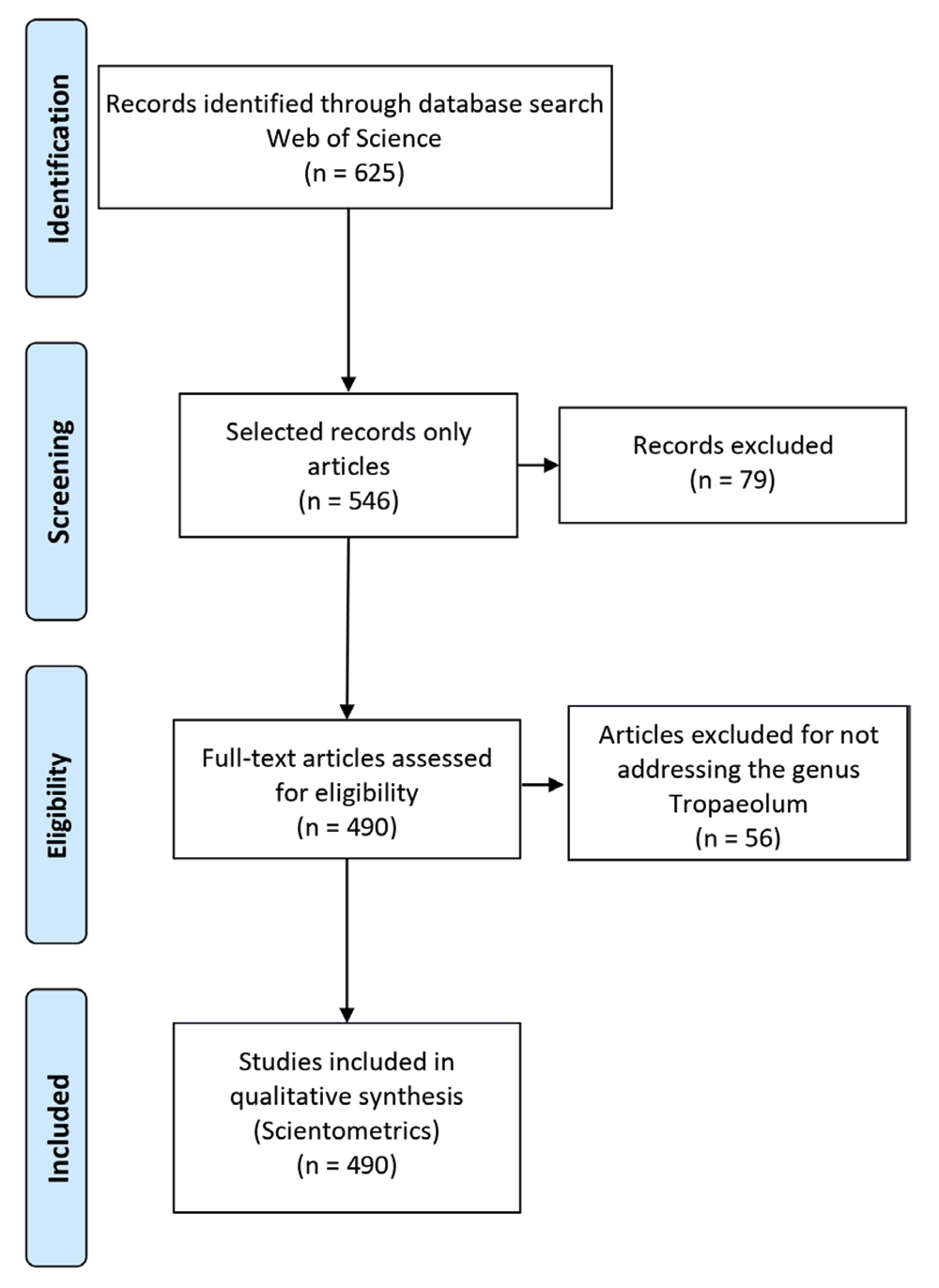
Data was collected from the Web of Science (WoS) from Clarivate Analytics, using the Core Collection as a base for literature search and indexing (Fig. 1), because of its reputation for providing consistent and standardized data and being recognized for its superior citation-based criteria compared with that of other databases (Wang & Waltman 2016). WoS provides multiple databases covering interdisciplinary research, exploring areas of expertise in many disciplines. WoS was chosen as it is the most complete and influential data source, including the main journals in scientific literature and comprehensive metadata comprising author lists, abstracts, references, number of citations, institutions, journal impact factor, and countries, which are all required for entry in CiteSpace. Moreover, this is the default database used by CiteSpace. Institutional access was provided by the Brazilian Coordination of Superior Level Staff Improvement (CAPES), allowing the inclusion of various sub-datasets in the Core Collection, such as Emerging Sources Citation Index (ESCI, 2019 to present), Science Citation Index Expanded (1945 to present), Social Science Citation Index (1956 to present), Arts and Humanities Citation Index (1975 to present), Conference Proceedings Citation Index - Science (1990 to present), and Conference Proceedings Citation Index - Social Science & Humanities (1990 to present).
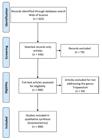
‒ Flowchart of literature search and indexing, showing the search methodology and refinement adopted for selecting results. Based on the PRISMA (preferred reporting items for systematic reviews and meta-analyses) 2009 flow diagram.
The search term “Topic: (Tropaeolum)” was used, which led to the generation of 625 records between 1945 and December 2024, the total period available for consultation. Subsequently, the database was refined by selecting articles, resulting in 546 documents. Manual refinement was then conducted to select only studies that addressed the genus Tropaeolum, reading the title and abstract to include only articles related to the genus, which resulted in 490 documents in the database. The PRISMA (preferred reporting items for systematic reviews and meta-analyses) declaration guidelines were followed as closely as possible and adapted to our sample universe (Moher et al. 2009; Page et al. 2021). The adapted guidelines refer to the non-fulfillment of items specific to meta-analyses and those relatively more related to studies with epidemiological bias or studies on human beings, which cannot be achieved in research with the currently selected items. Such items include those in the checklists, e.g., participant and intervention characteristics, effect size, methods used to explore possible causes of heterogeneity among study results, missing results, and summary statistics for each group.
As the objective was to perform a complete scientometric review to obtain all information regarding the genus Tropaeolum, as an inclusion criterion, any research that effectively considered the genus as an object of research was selected, regardless of the research area. The exclusion criteria were defined by removing articles that only vaguely cited the genus and did not study it directly, such as those cited superficially or within non-specific sections of the study (e.g., in the discussion). Thus, 490 valid documents were obtained. All data were downloaded in plain text from the WoS-marked list. The documents were analyzed based on the categories available in the WoS Results Analyzer tool, i.e., the predominant language of the publications, the number of publications and citations per year, countries, keywords, and the analysis of research areas. The data were processed using Microsoft Office Excel (version 365 Personal) and CiteSpace 6.3. R1 software. The former was used to build graphs and tables from the compiled WoS data.
CiteSpace facilitates the understanding and interpretation of network patterns, including the identification of thematic areas, detection of specific points, and labeling of selected terms. The software enables the mapping and detection of networks of authors, countries, and journals, helping verify the main factors contributing to knowledge development in the research area under study (Chen 2014). The CiteSpace program was used to build citation network graphs to present possible interactions among institutions, countries, research areas, and keywords visually and dynamically in the studies selected and exported for analysis.
Co-citation graphs created using CiteSpace are based on the frequency with which an article is cited in other studies, making it possible to establish networks between the studies included in the dataset. Cluster graphs were obtained by grouping terms in the articles that constituted the datasets. These groupings were performed based on the terms found in the titles, abstracts, and keywords. They are classified by the significance of the terms and are titled with “#” followed by a number, such as “# 0”, where relevance is decreasing, so cluster “# 0” is the most relevant, followed by “# 1” and others in that order. For the journal analysis, the impact factor used to ensure the quality and prominence of journals was obtained from WoS Journal Citation Reports.
For an appropriate interpretation of the graphs obtained through the program, explaining the items that compose them is necessary. Each point (node) represents a term connected by a line (or link). These lines connect the nodes, and their thickness represents the strength of the interaction between the terms addressed, such as the relationship of scientific contributions between countries or institutions. The coloring of the links expresses time, with cold colors representing older interactions and warmer colors representing more recent interactions. The font size refers to the publication frequency of the nodes. The red halos around the nodes represent bursts, also called citation bursts, which are periods in which a specific parameter shows sharp growth in publications or citations. The more internal the red halo within the node, the older the citation burst, and the more external the halo, the more recent it is. The strength of a burst can be described by its duration relative to the number of citations during that period.
Results and Discussion
A total of 490 valid articles on the genus Tropaeolum were obtained between 1945 and 2024. The predominant language was English with 456 (93.06%) records, followed by Spanish with 10 (2.04%), German with eight (1.63%), French and Portuguese with seven each (1.43%), and Polish and Russian with only one each (0.20%). The articles selected from the marked list had 11,849 citations, with an average of 24.18 citations per item and an h-index of 57.
Quantitative analysis of the literature
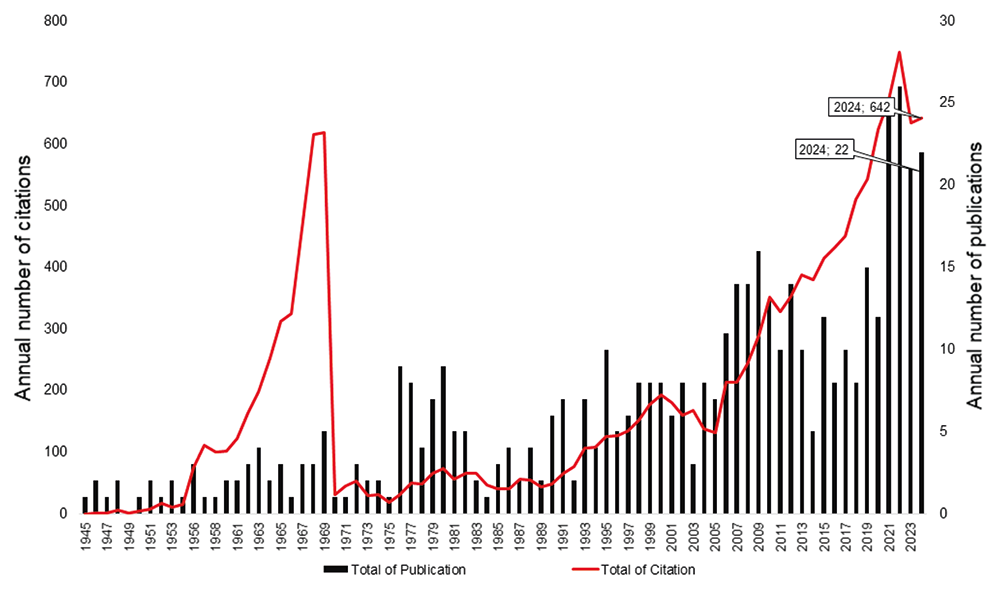
The number of annual publications remained low between 1945 and 2005, with values generally not exceeding 10 records, except for a few scattered peaks where the count reached between four and nine publications (Fig. 2). Since 2006, the growth of the topic became exponential, with a sharp and noticeable growth curve that recorded 266 publications up to 2024, peaking in 2021 and 2022 (25 and 26 publications, respectively). In general, the annual growth rate in the number of publications was 5.8%, which highlights the development of research and expansion of interest in Tropaeolum over time.
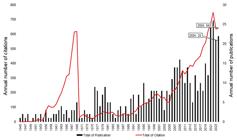
‒ Publication history of the genus Tropaeolum, showing the relationship between the annual number of publications and the annual number of citations from 1945 to late 2024.
The number of citations increased steadily from 100 to 619 during 1958 to 1969 (Fig. 2). In the following year, in 1970, the number dropped to 31 and did not exceed 80 citations until 1993, after which a new trend emerged, with a steady increase in the number of citations of works until reaching the highest mark in 2022 with 750 citations. The increase in the number of citations in the last decade highlights the significant growth in scientific interest in the genus Tropaeolum, where even with a low number of publications, there was a steady increase in citations. The data also show that recently published works are among the most cited new publications, demonstrating the increasing impact of research on this subject.
The observed increase in the number of publications on Tropaeolum reflects a growing global interest in plants with bioactive compounds and medicinal properties. This pattern is similar to that observed in other botanical genera, such as Solanum, which has also experienced a significant increase in the number of studies in recent decades (Kaunda & Zhang 2019). However, although families such as Asteraceae already have a solid research base (Bessada et al. 2015), the genus Tropaeolum is still in the expansion phase, with many species still poorly explored. This suggests that this genus has significant potential for future research, especially in areas such as chemistry and molecular biology, which are key to advancing knowledge of other genera and families.
Analysis of authors and institutions
The author Emerson Luis Botelho Lourenço from the Universidade Paranaense (Brazil) is the leader in publications, with nine records (Tab. 1), followed by Arquimedes Gasparotto Junior with eight publications. Fourth were Rosana Chirinos and David Campos, each with six records (Tab. 1). The Brazilian institutions Universidade Paranaense and Universidade Federal do Paraná with eight and seven publications, respectively, were the most representative, and Université catholique de Louvain (Belgium) occupied the third place with 10 records. The Federal University of Viçosa (Brazil), along with the Spanish Universidad Complutense de Madrid and Universidad Autónoma de Madrid, stood out as the only institutions with publications within the last decade, which may suggest increasing institutional engagement in this area of research in the coming years (Tab. 1).
‒ Top 10 authors and institutions with the highest publication numbers and the respective highlighted years.
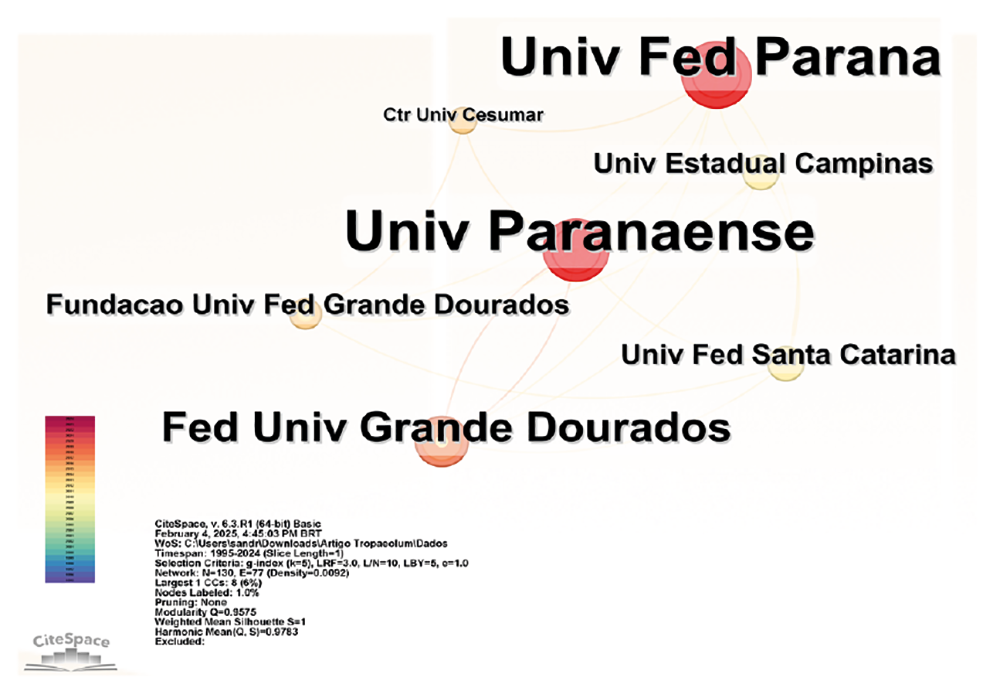
The CiteSpace network analysis revealed a significant gap, as Brazilian institutions, despite leading in publications, exhibited limited collaboration with international researchers (Fig. 3). This isolation limits the potential impact of Brazilian research on Tropaeolum, demonstrating the need for stronger collaborative networks to expand its scope and reach its findings. In contrast, families such as Brassicaceae have seen accelerated advancements in knowledge owing to extensive international collaborations (Shankar et al. 2019). Establishing similar partnerships for Tropaeolum could drive progress in key areas, such as biotechnology and pharmacology, where collaboration is essential for developing new applications.
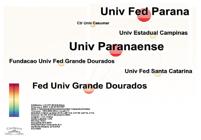
‒ Network of institutions created in CiteSpace, showing the academic centers with the most publications on the genus Tropaeolum and their link relationships. Legend: Co-occurrence network generated in CiteSpace (v.6.3.R1), representing 130 nodes and 17 connections (Density = 0.0092). The analysis covers the 1995 to 2024 period, with selection criteria based on the g-index (k = 5). The metrics of modularity (Q = 0.9575) and silhouette (S = 1) indicate robust structuring in well-defined communities. Parameters: link retaining factor (LRF) = 3.0, L/N = 10, lookback year (LBY) = 5, and e = 1.0.
Country-based analyses
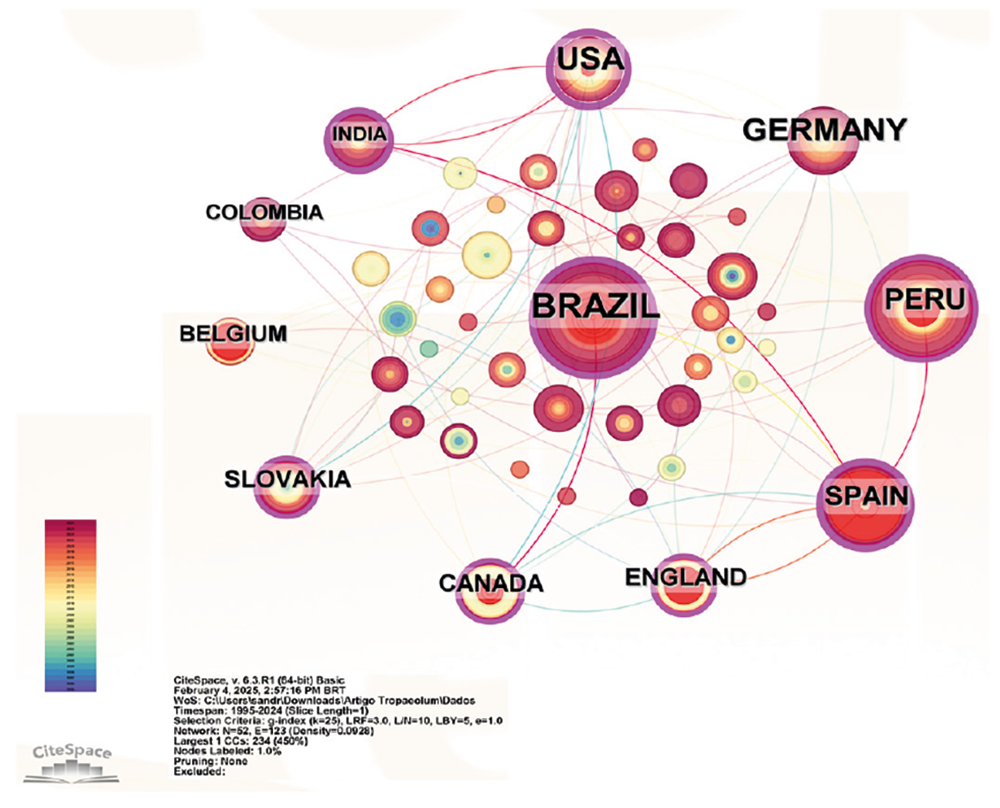
Although Brazil and Germany had a higher frequency, as observed by the sizes of their nodes, they presented low centrality and weak connectivity with other countries, as observed in the thin links. By contrast, the United States shows both high frequency and centrality, as demonstrated by the presence of a thick purple halo around its node, indicating the importance of this country in the research field. In addition, the USA, Canada, and England presented the coolest-colored links, indicating that they possessed foundational documents of the field, that is, the earliest records of the genus.
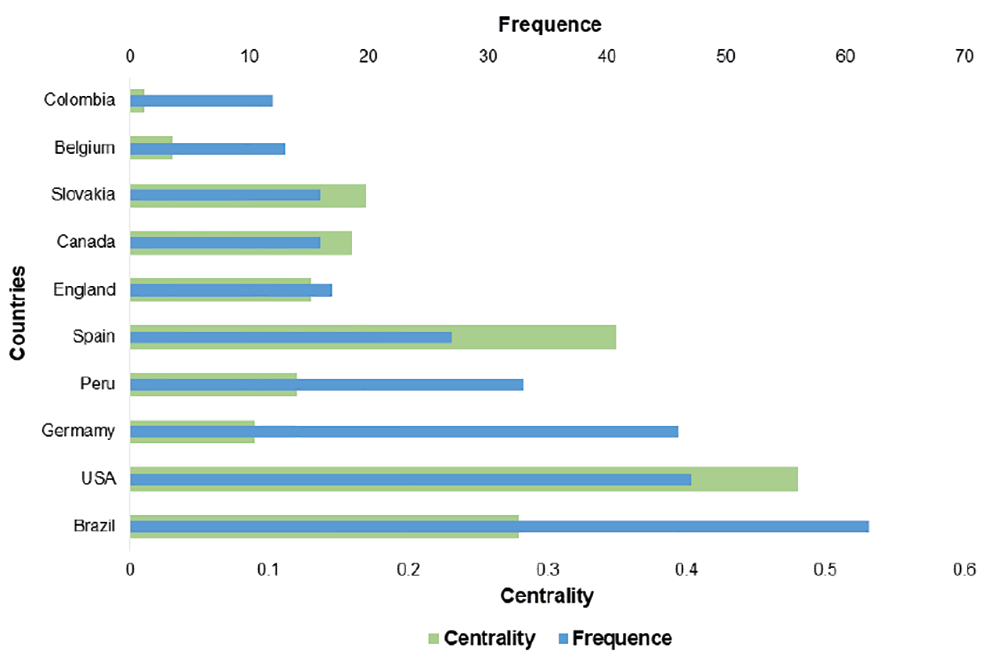
In Figure 4, the country network can be observed, showing the frequency and centrality of nodes. Brazil stood out, with a burst strength of 11.58 between 2011 and 2018; England, with a burst strength of 7.69 between 1985 and 2004; and the United States, which reached 6.63 between 1995 and 2007. The USA, Spain, and Brazil had the highest centralities, which considerably exceeded their frequency values (Fig. 5). Brazil exhibited the highest frequency of publications but lower centrality than that in the case of the USA and Spain (Fig. 5). Despite being a country where the genus naturally occurs (Rogalski et al. 2022) and having many species, Brazil could achieve greater international prominence. Brazil stood out in terms of the frequency of publications because three Brazilian universities led the research on the Tropaeolum genus, as shown in Table 1 and Figure 3.
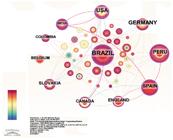
‒ Country collaboration network generated in CiteSpace, showing frequency (node size), centrality (purple rings), and temporal activity (link color) in publications related to Tropaeolum. Legend: Bibliometric analysis network generated in CiteSpace (v.6.3.R1), configured with the following parameters: the period from 1995 to 2024 (annual interval), selection criteria based on the g-index (k = 25), link retaining factor (LRF) = 3.0, L/N = 10, lookback year (LBY) = 5, and e = 1.0. The network consists of 52 nodes and 123 connections (Density = 0.0928), with the largest connected component containing 234 nodes (450% of the total).
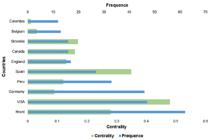
‒ Frequency and centrality values from the country network in CiteSpace, demonstrating the relationship between country-based publication volume and visibility.
Analysis of research areas
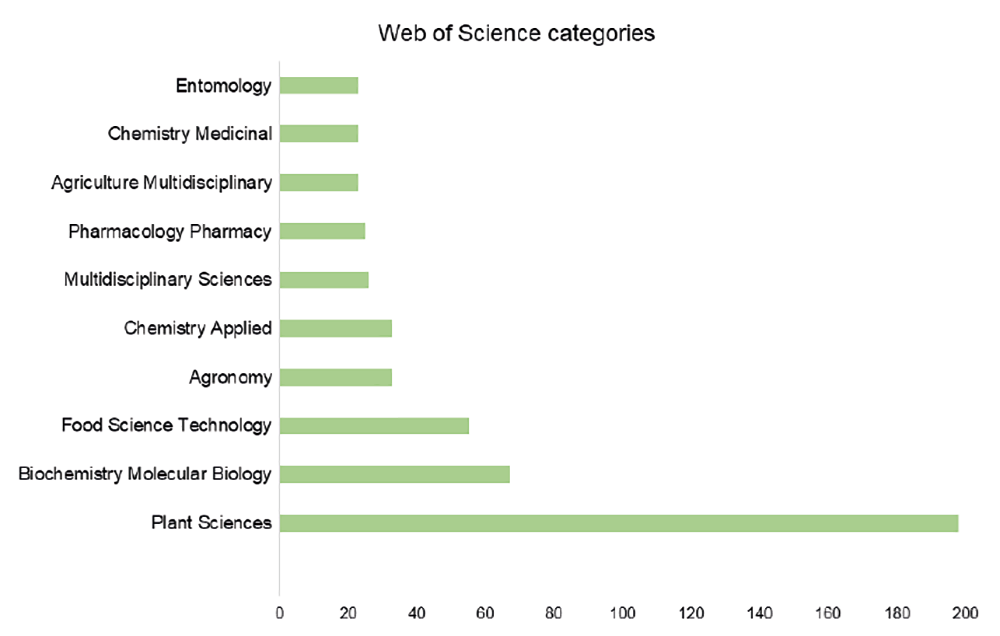
According to the WoS categories, Tropaeolum is most frequently addressed in Plant Sciences, with approximately twice as many publications as other categories. Next, we had Biochemistry and Molecular Biology, Food Science and Technology, followed by Agronomy, Applied Chemistry, Multidisciplinary Sciences, Medical Area of Pharmacy and Pharmacology, Multidisciplinary Agriculture, Medicinal Chemistry, and Entomology, with a decreasing number of publications in that order (Fig. 6).
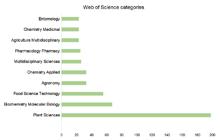
‒ Distribution of research topics related to Tropaeolum based on the Web of Science categories.
These dominant research areas on Tropaeolum reflect a trend similar to that observed in other botanical genera, such as Cotoneaster and Rosa (Rosaceae) (Kicel 2020; Fayaz et al. 2024). However, the growing interest in Chemistry, Biochemistry, and Molecular Biology suggests that Tropaeolum is following a path similar to that of other genera rich in bioactive compounds, such as Mentha (Lamiaceae), Artemisia (Asteraceae), Aloe (Asphodelaceae), and Copaifera (Fabaceae) (Bora & Sharma 2011a; Anwar et al. 2019; Adetunji et al. 2022; Frazão et al. 2023), and could play a similar role in future studies, particularly regarding the exploration of compounds such as glucosinolates and anthocyanins.
Analysis of journals
Table 2 presents the 10 most-cited journals and their impact factors, citation counts, burst strengths, and years. The journal Plant Physiology led the ranking with 81 publications, followed by Planta and Physiologia Plantarum with 42, Proceedings of the National Academy of Sciences USA with 38, Journal of Biological Chemistry with 38, Annals of Botany with 31 publications, Scientific Reports with 27, and New Phytologist, Journal of Experimental Botany, and Biochemical Journal with 26 publications each (Tab. 2). The high number of publications in journals such as Plant Physiology, Planta, and Physiologia Plantarum can be attributed to their specialized focus on plant science and bioactive compounds, which closely align with the research on Tropaeolum. In contrast, broad-scope journals, such as the Proceedings of the National Academy of Sciences of the United States of America cover a wide range of scientific disciplines, resulting in fewer publications on specific topics, such as this genus (Wang & Waltman 2016; Larivière et al. 2016). This difference demonstrates the importance of journal scope and specialization in determining the number of publications on a given topic, rather than simply the impact factor.
‒ Top 10 journals based on citation frequency and impact factor assessed by Journal Citation Reports 2023 (JCR), ranking the most prominent journals for the genus Tropaeolum.
We also observed that the Journal of Biological Chemistry, Scientific Reports, and Biochemical Journal have shown strong growth in the topic recently, with citation bursts of 8.26, 8.19, and 6.31, respectively, since 1994 (Tab. 2). This may be due to the high content of bioactive compounds reported in certain species of the genus compared to other vegetables used as human food (Aguilar-Galvez et al. 2023; Česlová et al. 2023).
This pattern is similar to that observed for the family Brassicaceae, where journals specializing in plant physiology and biology have been fundamental to the advancement of knowledge (Halkier & Gershenzon 2006; Shankar et al. 2019). The recent increase in the number of publications in chemistry journals suggests a growing interest in the pharmacological and nutritional applications of Tropaeolum, following a trend observed for other families, such as Lamiaceae and Asteraceae (Bessada et al. 2015; Carović-Stanko et al. 2016).
Keyword-based analyses
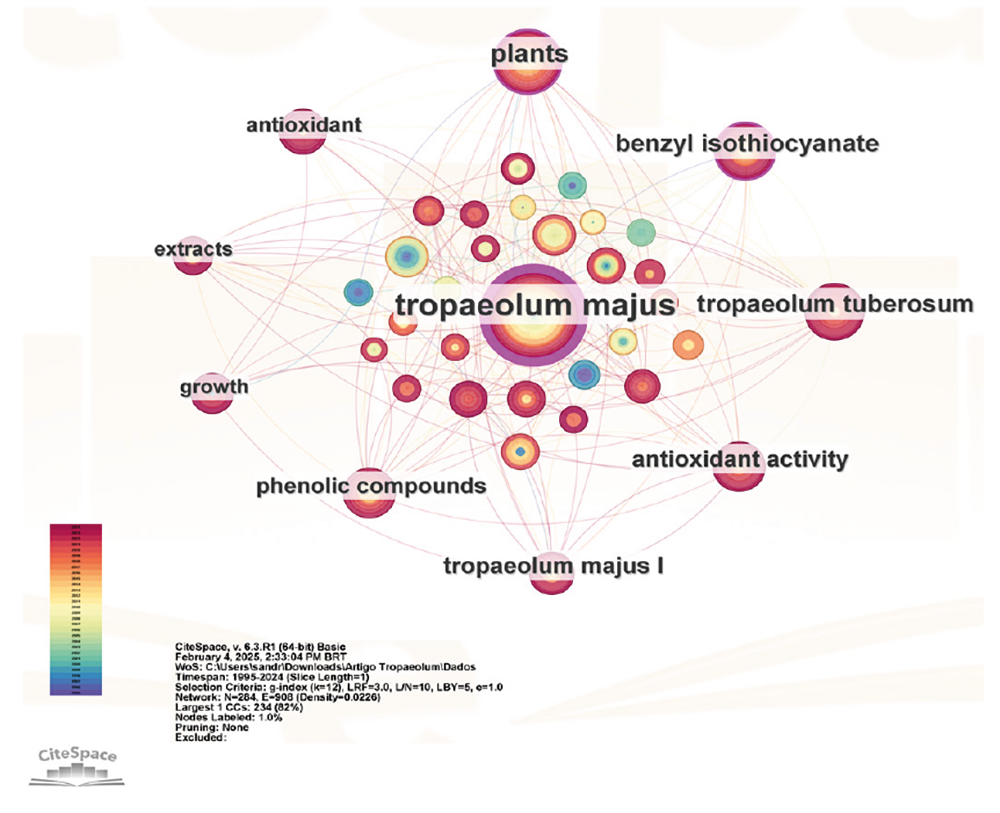
In the network of keywords shown in Figure 7, the species that have been highlighted in this research, including Tropaeolum majus and T. tuberosum with their respective most common names nasturtium and mashua, as well as their family name (Tropaeolaceae), can be identified. In addition, some of the main compounds already reported for the species, such as glucosinolate, benzyl isothiocyanate, isothiocyanate, anthocyanin, and antioxidants, which are more recent terms, present links with warmer colors in the network.
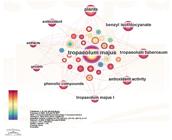
‒ Keyword co-occurrence network for Tropaeolum, showing thematic concentrations and temporal trends of relevant keywords based on link colors. Legend: Bibliometric analysis network generated in CiteSpace (v.8.3.R1), covering the period from 1995 to 2024 (annual interval). Settings: Selection criteria based on g-index (k = 12), link retaining factor (LRF) = 3.0, L/N = 10, lookback year (LBY) = 5, and e = 1.0. The network contained 284 nodes and 96 connections (density = 0.0226), with the largest connected component consisting of 234 nodes (82% of the total).
Table 3 complements this perspective by highlighting the 10 most-cited studies within the WoS, with their respective authors and year of publication, for the genus Tropaeolum.
‒ Top 10 most cited articles on Tropaeolum in the Web of Science (WoS), with their authors and year of publication.
Analysis of cited authors and clusters
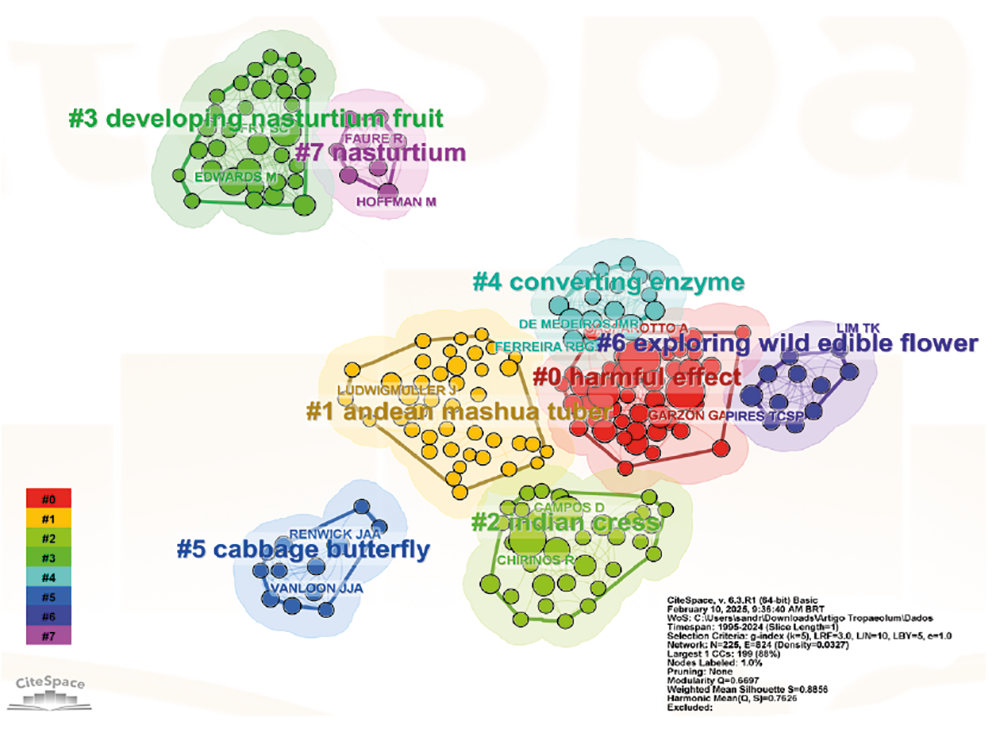
The clusters shown in Figure 8 were extracted based on titles in CiteSpace via the “Cited Author” node. The clusters reveal the publication groupings based on the terms in the document titles and indicate the featured authors. The clusters were delineated and colored chronologically, with warmer colors representing the most recent clusters and cooler colors the oldest. The level of closeness between clusters is proportional to the cooperation and co-citation between authors and the affinity between topics. Table 4 lists the sizes, silhouettes, and years of the top seven clusters in the network. Clusters are labeled by the symbol #, followed by a favorable and variable number; the closer they are to zero (0), the larger the cluster. However, the silhouette score accurately shows the homogeneity and degree of reliability of the cluster; the closer it is to one (1), the more delimited the cluster. As shown in Figure 8 and Table 4, the clusters were well-divided and homogeneous, with high silhouette values, mostly above 0.8.
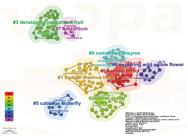
‒ Cluster network of cited authors in CiteSpace, indicating groupings based on co-citation and topical similarity with chronological coloring and cluster labels. Legend: Co-occurrence network generated in CiteSpace (v.6.3.R1), containing 225 nodes and 324 connections (Density = 0.0327). Period analyzed: 1995-2024 (annual interval); selection criteria: q-index (k = 5), link retaining factor (LRF) = 3.0, L/N = 10, lookback year (LBY) = 5, and e = 1.0. The largest connected component has 199 nodes (88% of the network). Quality metrics: Modularity (Q = 0.6697), weighted average silhouette (S = 0.8858), and harmonic mean (Q,S) = 0.7826, indicating structuring in communities with adequate internal cohesion.
‒ Summary of the top 10 clusters, showing their size, silhouette, representative terms used to characterize each cluster, as well as the year each cluster was formed.
The systematic evaluation conducted in this study revealed the key research dynamics related to the genus Tropaeolum. Although Brazil has contributed substantially to publication volume, collaboration and communication between Brazilian institutions and international researchers remain limited. This lack of engagement hampers the global exchange of knowledge and constrains the development of integrative and impactful studies on the genus. Low centrality can also be observed in the case of other South American countries, such as Peru and Argentina, whereas European countries, mainly the USA, are the most influential. Among the research categories, the biological areas of Chemistry, Biochemistry, and Molecular Biology have been standing out and growing sharply in the debate, indicating a promising perspective for the study of this genus.
The species that caught the most attention of the scientific community were T. majus and T. tuberosum, which, through phytochemical, pharmacological, and nutraceutical studies, revealed a few prominent compounds, such as glucosinolate, benzyl isothiocyanate, isothiocyanate, anthocyanins, and antioxidants. However, the chemical composition of T. majus is not fully understood (Cobus et al. 2023).
Experiences with other genera, such as Piper (Piperaceae), Rosa, and Cotoneaster (Rosaceae), have shown that exploring relatively less-studied species can reveal new bioactive compounds with medicinal and nutritional applications (Sen et al. 2022; Kicel 2020; Fayaz et al. 2024). This pattern suggests that the genus Tropaeolum, which includes species not yet investigated such as T. pentaphyllum and T. azureum Bertero ex Colla (Watson & Flores 2010; Rogalski et al. 2021), may also harbor promising compounds deserving scientific attention.
Practical applications of the bioactive compounds of Tropaeolum
Bioactive compounds found in Tropaeolum species, such as glucosinolates, anthocyanins, and flavonoids, have significant potential for practical applications in several areas, including nutrition, pharmacology, and agriculture. For example, glucosinolates, which have been widely studied in Brassicaceae (Halkier & Gershenzon 2006), have demonstrated anticancer and antimicrobial properties, suggesting that similar compounds in Tropaeolum can be exploited for the development of nutraceutical drugs and supplements. In addition, anthocyanins present in species such as T. majus and T. tuberosum have been used as natural colorants in foods and cosmetics and possess antioxidant properties that can benefit human health (Garzón & Wrolstad 2009; Ticona et al. 2020). In agriculture, the bioactive compounds of Tropaeolum can be exploited for the development of bioinsecticides or biofertilizers, following the example of other botanical genera such as Allium (Alliaceae) and Medicago (Fabaceae), where essential oils and phenolic compounds have been used for pest control and plant growth promotion (Tepe et al. 2005; Bora & Sharma 2011b).
These initial studies on bioactive compounds represent the first step toward a holistic understanding of Tropaeolum’s potential for various applications, including food, ornamental, medicinal, and agricultural. Despite its scientific and economic relevance, this genus remains underexplored, and many species are yet to be thoroughly investigated. Advancing research in this field is essential to bridge existing knowledge gaps and to expand the potential of relatively less-known species. To realize this potential fully, coordinated efforts are required to overcome current limitations. By prioritizing neglected species, expanding research databases, and fostering international collaboration, future studies can unlock the significant applications of Tropaeolum, contributing to sustainable solutions in health, agriculture, and beyond.
Acknowledgements
We thank Universidade Tecnológica Federal do Paraná - Dois Vizinhos, for funding the research [2021 - Advisor: Marciele Filippi]. The authors also thank “Coordenação de Aperfeiçoamento de Pessoal de Nível Superior”, the Multiuser Core Laboratory of Biological Analysis and Molecular Biology (BioMol) at Universidade Tecnológica Federal do Paraná, Campus Dois Vizinhos, and the editor and anonymous reviewers.
References
-
Adetunji TL, Olisah C, Adegbaju OD, Olawale F, Adetunji AE, Siebert F & Siebert S (2022) The genus Aloe: A bibliometric analysis of global research outputs (2001-2020) and summary of recent research reports on its biological activities. South African Journal of Botany 147: 953-975. DOI: 10.1016/j.sajb.2022.01.030
» https://doi.org/10.1016/j.sajb.2022.01.030 -
Aguilar-Galvez A, García-Ríos D, Ramírez-Guzmán D, Lindo J, Chirinos R, Pedreschi R & Campos D (2023) In vitro and in vivo biotransformation of glucosinolates from mashua (Tropaeolum tuberosum) by lactic acid bacteria. Food Chemistry 404: 134631. DOI: 10.1016/j.foodchem.2022.134631
» https://doi.org/10.1016/j.foodchem.2022.134631 -
Andersson L & Andersson S (2000) A molecular phylogeny of Tropaeolaceae and its systematic implications. Taxon 49: 721-736. DOI: 10.2307/1223973
» https://doi.org/10.2307/1223973 -
Anwar F, Abbas A, Mehmood T, Gilani AH & Rehman NU (2019) Mentha: a genus rich in vital nutra-pharmaceuticals - a review. Phytotherapy Research 33: 2548-2570. DOI: 10.1002/ptr.6423
» https://doi.org/10.1002/ptr.6423 -
Bayer C & Appel O (2003) Tropaeolaceae. In: Kubitzki K & Bayer C (eds.) Flowering plants. Dicotyledons. The families and genera of vascular plants. Vol. 5. Springer, Berlin. Pp. 400-404. DOI: 10.1007/978-3-662-07255-4_47
» https://doi.org/10.1007/978-3-662-07255-4_47 -
Bazylko A, Granica S, Filipek A, Piwowarski J, Stefańska J, Osińska E & Kiss AK (2013) Comparison of antioxidant, anti-inflammatory, antimicrobial activity and chemical composition of aqueous and hydroethanolic extracts of the herb of Tropaeolum majus L. Industrial Crops and Products 50: 88-94. DOI: 10.1016/j.indcrop.2013.07.003
» https://doi.org/10.1016/j.indcrop.2013.07.003 -
Bazylko A, Parzonko A, Jeż W, Osińska E & Kiss AK (2014) Inhibition of ROS production, photoprotection, and total phenolic, flavonoids and ascorbic acid content of fresh herb juice and extracts from the leaves and flowers of Tropaeolum majus Industrial Crops and Products 55: 19-24. DOI: 10.1016/j.indcrop.2014.01.056
» https://doi.org/10.1016/j.indcrop.2014.01.056 -
Bessada SM, Barreira JC & Oliveira MBP (2015) Asteraceae species with most prominent bioactivity and their potential applications: a review. Industrial Crops and Products 76: 604-615. DOI: 10.1016/j.indcrop.2015.07.073
» https://doi.org/10.1016/j.indcrop.2015.07.073 - Bora KS & Sharma A (2011) The genus Artemisia: a comprehensive review. Pharmaceutical Biology 49: 101-109.
- Bora KS & Sharma A (2011b) Phytochemical and pharmacological potential of Medicago sativa: a review. Pharmaceutical Biology 49: 211-220.
-
Butnariu M & Bostan C (2011) Antimicrobial and anti-inflammatory activities of the volatile oil compounds from Tropaeolum majus L. (Nasturtium). African Journal of Biotechnology 10: 5900-5909. DOI: 10.5897/AJB11.264
» https://doi.org/10.5897/AJB11.264 - Butnariu M, Sarac I, Pentea M, Samfira I, Negrea A, Motoc M, Butazu AL & Ciopec M (2016) Approach for analysing stability of lutein from Tropaeolum majus Revista de chimie 67: 503-506.
-
Campos D, Noratto G, Chirinos R, Arbizu C, Roca W & Cisneros-Zevallos L (2006) Antioxidant capacity and secondary metabolites in four species of Andean tuber crops: native potato (Solanum sp.), mashua (Tropaeolum tuberosum Ruiz & Pavón), oca (Oxalis tuberosa Molina) and ulluco (Ullucus tuberosus Caldas). Journal of the Science of Food and Agriculture 86: 1481-1488. DOI: 10.1002/jsfa.2529
» https://doi.org/10.1002/jsfa.2529 -
Carović-Stanko K, Petek M, Grdiša M, Pintar J, Bedeković DALIBOR, Herak Ćustić M & Satovic Z (2016) Medicinal plants of the family Lamiaceae as functional foods-a review. Czech Journal of Food Sciences 34: 377-390. DOI: 10.17221/504/2015-CJFS
» https://doi.org/10.17221/504/2015-CJFS -
Česlová L, Klikarová J & Šalomounová T (2023) The content and profile of biologically active compounds present in individual parts of nasturtium (Tropaeolum majus L.): comprehensive study. European Food Research and Technology 249: 413-428. DOI: 10.1007/s00217-022-04126-4
» https://doi.org/10.1007/s00217-022-04126-4 - Chen C (2014) The citespace manual. College of Computing and Informatics 1: 1-84.
- Chirinos R, Campos D, Betalleluz I, Giusti MM, Schwartz SJ, Tian Q, Pedreschi R & Larondelle Y (2006) High-performance liquid chromatography with photodiode array detection (HPLC-DAD)/HPLC-mass spectrometry (MS) profiling of anthocyanins from Andean mashua tubers (Tropaeolum tuberosum Ruíz and Pavón) and their contribution to the overall antioxidant activity. Journal of Agricultural and Food Chemistry 54: 7089-7097.
-
Chirinos R, Campos D, Costa N, Arbizu C, Pedreschi R & Larondelle Y (2008a) Phenolic profiles of andean mashua (Tropaeolum tuberosum Ruíz & Pavón) tubers: Identification by HPLC-DAD and evaluation of their antioxidant activity. Food Chemistry 106: 1285-1298. DOI: 10.1016/j.foodchem.2007.07.024
» https://doi.org/10.1016/j.foodchem.2007.07.024 -
Chirinos R, Campos D, Warnier M, Pedreschi R, Rees JF & Larondelle Y (2008b) Antioxidant properties of mashua (Tropaeolum tuberosum) phenolic extracts against oxidative damage using biological in vitro assays. Food Chemistry 111: 98-105. DOI: 10.1016/j.foodchem.2008.03.038
» https://doi.org/10.1016/j.foodchem.2008.03.038 -
Chirinos R, Campos D, Arbizu C, Rogez H, Rees JF, Larondelle Y, Noratto G & Cisneros-Zevallos L (2007a) Effect of genotype, maturity stage and post-harvest storage on phenolic compounds, carotenoid content, and antioxidant capacity of Andean mashua tubers (Tropaeolum tuberosum Ruiz & Pavón). Journal of the Science of Food and Agriculture 87: 437-446. DOI: 10.1002/jsfa.2719
» https://doi.org/10.1002/jsfa.2719 -
Chirinos R, Rogez H, Campos D, Pedreschi R & Larondelle Y (2007b) Optimization of extraction conditions of antioxidant phenolic compounds from mashua (Tropaeolum tuberosum Ruíz & Pavón) tubers. Separation and Purification Technology 55: 217-225. DOI: 10.1016/j.seppur.2006.12.005
» https://doi.org/10.1016/j.seppur.2006.12.005 -
Cobus D, Nunes G, Oliveira Maior L, Lacerda LG & Ito VC (2023) Unconventional Food Plants (UFPs): an approach to the nutritional and functional properties of nasturtium (Tropaeolum majus L.). Food Science Today 1. DOI: 10.58951/fstoday.v1i1.4
» https://doi.org/10.58951/fstoday.v1i1.4 - Fabbri LT & Valla JJ (1998) Aspectos de la biología reproductiva de Tropaeolum pentaphyllum (Tropaeolaceae). Darwiniana 36: 51-58.
-
Fayaz F, Singh K, Gairola S, Ahmed Z & Shah BA (2024) A comprehensive review on phytochemistry and pharmacology of Rosa species (Rosaceae). Current Topics in Medicinal Chemistry 24: 364-378. DOI: 10.2174/0115680266274385231023075011
» https://doi.org/10.2174/0115680266274385231023075011 -
Frazão DR, Cruz JN, Oliveira MS, Baia-da-Silva DC, Nazário RMF, Lima Rodrigues MF, Saito MT, Souza-Rodrigues RD & Lima RR (2023) Evaluation of the biological activities of copaiba (Copaifera spp.): a comprehensive review based on scientometric analysis. Frontiers in Pharmacology 14. DOI: 10.3389/fphar.2023.1215437
» https://doi.org/10.3389/fphar.2023.1215437 -
Garzón GA & Wrolstad RE (2009) Major anthocyanins and antioxidant activity of Nasturtium flowers (Tropaeolum majus). Food Chemistry 114: 44-49. DOI: 10.1016/j.foodchem.2008.09.013
» https://doi.org/10.1016/j.foodchem.2008.09.013 -
Garzón GA, Manns DC, Riedl K, Schwartz SJ & Padilla-Zakour O (2015) Identification of phenolic compounds in petals of nasturtium flowers (Tropaeolum majus) by high-performance liquid chromatography coupled to mass spectrometry and determination of oxygen radical absorbance capacity (ORAC). Journal of Agricultural and Food Chemistry 63: 1803-1811. DOI: 10.1021/jf503366c
» https://doi.org/10.1021/jf503366c -
Gasparotto JuniorA, Boffo MA, Lourenço ELB, Stefanello MEA, Kassuya CAL & Marques MCA (2009) Natriuretic and diuretic effects of Tropaeolum majus (Tropaeolaceae) in rats. Journal of Ethnopharmacology 122: 517-522. DOI: 10.1016/j.jep.2009.01.021
» https://doi.org/10.1016/j.jep.2009.01.021 -
Gasparotto Junior A, Gasparotto FM, Lourenço ELB, Crestani S, Stefanello MEA, Salvador MJ, Silva-Santos JE, Marques MCA & Kassuya CAL (2011) Antihypertensive effects of isoquercitrin and extracts from Tropaeolum majus L.: evidence for the inhibition of angiotensin converting enzyme. Journal of Ethnopharmacology 134: 363-372. DOI: 10.1016/j.jep.2010.12.026
» https://doi.org/10.1016/j.jep.2010.12.026 -
Gasparotto Junior A, Prando TBL, Leme TDSV, Gasparotto FM, Lourenço ELB, Rattmann YD, Silva-Santos JE, Kassuya CA & Marques MCA (2012) Mechanisms underlying the diuretic effects of Tropaeolum majus L. extracts and its main component isoquercitrin. Journal of Ethnopharmacology 141: 501-509. DOI: 10.1016/j.jep.2012.03.018
» https://doi.org/10.1016/j.jep.2012.03.018 -
Halkier BA & Gershenzon J (2006) Biology and biochemistry of glucosinolates. Annual Review of Plant Biology 57: 303-333. DOI: 10.1146/annurev.arplant.57.032905.105228
» https://doi.org/10.1146/annurev.arplant.57.032905.105228 -
Johns T, Kitts WD, Newsome F & Towers GN (1982) Anti-reproductive and other medicinal effects of Tropaeolum tuberos um. Journal of Ethnopharmacology 5: 149-161. DOI: 10.1016/0378-8741(82)90040-X
» https://doi.org/10.1016/0378-8741(82)90040-X -
Kaunda JS & Zhang YJ (2019) The genus Solanum: an ethnopharmacological, phytochemical and biological properties review. Natural Products and Bioprospecting 9: 77-137. DOI: 10.1007/s13659-019-0201-6
» https://doi.org/10.1007/s13659-019-0201-6 -
Kicel A (2020) An overview of the genus Cotoneaster (Rosaceae): Phytochemistry, biological activity, and toxicology. Antioxidants 9: 1002. DOI: 10.3390/antiox9101002
» https://doi.org/10.3390/antiox9101002 - Larivière V, Sugimoto CR & Cronin B (2016) A bibliometric chronicle of the Journal of the Association for Information Science and Technology. Journal of the Association for Information Science and Technology 67: 1782-1793.
-
Ludwig-Müller J, Bennett RN, García-Garrido JM, Piché Y & Vierheilig H (2002) Reduced arbuscular mycorrhizal root colonization in Tropaeolum majus and Carica papaya after jasmonic acid application can not be attributed to increased glucosinolate levels. Journal of Plant Physiology 159: 517-523. DOI: 10.1078/0176-1617-00731
» https://doi.org/10.1078/0176-1617-00731 -
Moher D, Liberati A, Tetzlaff J & Altman DG (2009) Preferred reporting items for systematic reviews and meta-analyses: the PRISMA statement. PLoS Medicine 6: e1000097. DOI: 10.1371/journal.pmed.1000097
» https://doi.org/10.1371/journal.pmed.1000097 - Nalimov VV & Mulchenko BM (1969) Scientometrics. Studies of science as a process of information. Science: Moscow. 192p.
-
Niizu PY & Rodriguez-Amaya DB (2005) Flowers and leaves of Tropaeolum majus L. as rich sources of lutein. Journal of Food Science 70: S605-S609. DOI: 10.1111/j.1365-2621.2005.tb08336.x
» https://doi.org/10.1111/j.1365-2621.2005.tb08336.x -
Page MJ, McKenzie JE, Bossuyt PM, Boutron I, Hoffmann TC, Mulrow CD, Shamseer L, Tetzlaff JM, Akl EA, Brennan SE, Chou R & Moher D (2021) The PRISMA 2020 statement: an updated guideline for reporting systematic reviews. BMJ 372: n71. DOI: 10.1136/bmj.n71
» https://doi.org/10.1136/bmj.n71 -
Pacheco TG, Morais da Silva G, Santana Lopes A, Oliveira JD, Rogalski JM, Balsanelli E, Souza EM, Pedrosa FO & Rogalski M (2020) Phylogenetic and evolutionary features of the plastome of Tropaeolum pentaphyllum Lam. (Tropaeolaceae). Planta 252: 1-19. DOI: 10.1007/s00425-020-03427-w
» https://doi.org/10.1007/s00425-020-03427-w -
Pintão AM, Pais MS, Coley H, Kelland LR & Judson IR (1995) In vitro and in vivo antitumor activity of benzyl isothiocyanate: a natural product from Tropaeolum majus Planta Medica 61: 233-236. DOI: 10.1055/s-2006-958062
» https://doi.org/10.1055/s-2006-958062 -
Platz S, Kühn C, Schiess S, Schreiner M, Kemper M, Pivovarova O & Rohn S (2016) Bioavailability and metabolism of benzyl glucosinolate in humans consuming Indian cress (Tropaeolum majus L.). Molecular Nutrition & Food Research 60: 652-660. DOI: 10.1002/mnfr.201500633
» https://doi.org/10.1002/mnfr.201500633 -
Rogalski JM, Balestrin JT, Silva D, Mattei KS & Argenta J (2022) The environment role in the incomplete reproductive cycle of Tropaeolum pentaphyllum Lam. (crem) in Brazilian Mixed Ombrophilous Forest: implications for conservation and cultivation. Folia Geobotanica 57: 127-138. DOI: 10.1007/s12224-022-09412-3
» https://doi.org/10.1007/s12224-022-09412-3 -
Rogalski JM, Silva D, Balestrin JT, Mattei KS, Dorn AJ & Lodi-Souza T (2021) Seed germination of the herbaceous vine Tropaeolum pentaphyllum Lam. (Tropaeolaceae): a neglected geophyte with high agricultural potential. Journal of Experimental Agriculture International 43: 94-105. DOI: 10.9734/jeai/2021/v43i1130761
» https://doi.org/10.9734/jeai/2021/v43i1130761 -
Schreiner M, Krumbein A, Mewis I, Ulrichs C & Huyskens-Keil S (2009) Short-term and moderate UV-B radiation effects on secondary plant metabolism in different organs of nasturtium (Tropaeolum majus L.). Innovative Food Science & Emerging Technologies 10: 93-96. DOI: 10.1016/j.ifset.2008.10.001
» https://doi.org/10.1016/j.ifset.2008.10.001 -
Sen S & Rengaian G (2022) A review on the ecology, evolution and conservation of Piper (Piperaceae) in India: future directions and opportunities. The Botanical Review 88: 333-358. DOI: 10.1007/s12229-021-09269-9
» https://doi.org/10.1007/s12229-021-09269-9 - Shankar S, Segaran G, Sundar RDV, Settu S & Sathiavelu M (2019) Brassicaceae - a classical review on its pharmacological activities. International Journal of Pharmaceutical Sciences Review and Research 55: 107-113.
-
Tepe B, Sokmen M, Akpulat HA & Sokmen A (2005) In vitro antioxidant activities of the methanol extracts of five Allium species from Turkey. Food Chemistry 92: 89-92. DOI: 10.1016/j.foodchem.2004.07.016
» https://doi.org/10.1016/j.foodchem.2004.07.016 -
Ticona LNA, Pérez VT & Benito PB (2020) Local/traditional uses, secondary metabolites and biological activities of Mashua (Tropaeolum tuberosum Ruíz & Pavón). Journal of Ethnopharmacology 247: 112152. DOI: 10.1016/j.jep.2019.112152
» https://doi.org/10.1016/j.jep.2019.112152 -
Valsalam S, Agastian P, Arasu MV, Al-Dhabi NA, Ghilan AKM, Kaviyarasu K, Ravindran B, Chang SW & Arokiyaraj S (2019) Rapid biosynthesis and characterization of silver nanoparticles from the leaf extract of Tropaeolum majus L. and its enhanced in-vitro antibacterial, antifungal, antioxidant and anticancer properties. Journal of Photochemistry and Photobiology B: Biology 191: 65-74. DOI: 10.1016/j.jphotobiol.2018.12.010
» https://doi.org/10.1016/j.jphotobiol.2018.12.010 -
Wang Q & Waltman L (2016) Large-scale analysis of the accuracy of the journal classification systems of Web of Science and Scopus. Journal of Informetrics 10: 347-364. DOI: 10.1016/j.joi.2016.02.003
» https://doi.org/10.1016/j.joi.2016.02.003 -
Watson J & Flores A (2010) Tropaeolum section Chilensia: an overview. Curtis’s Botanical Magazine 27: 197-234. DOI: 10.1111/j.1467-8748.2010.01709.x
» https://doi.org/10.1111/j.1467-8748.2010.01709.x
Data availability statement
In accordance with Open Science communication practices, the authors inform that all data are available within the manuscript.