 Reduction of prefrontal thickness in military police officers with post-traumatic stress disorder
Background Brain-imaging studies in post-traumatic stress disorder (PTSD) have consistently revealed alterations in brain structure and function and this is correlated to symptomatology. However, few studies have investigated the role of biomarkers in PTSD some specific groups, as police officers.
Objective To evaluate prefrontal and limbic volumes, and cortical thickness of police officers exposed to trauma during work who developed post-traumatic stress disorder, resilient matched controls (without PTSD), and compared to healthy civilians.
Methods Prefrontal and limbic volumes, and cortical thickness of 12 police officers with PTSD, 12 resilient police officers, and 12 healthy civilians who underwent brain MRI were analyzed.
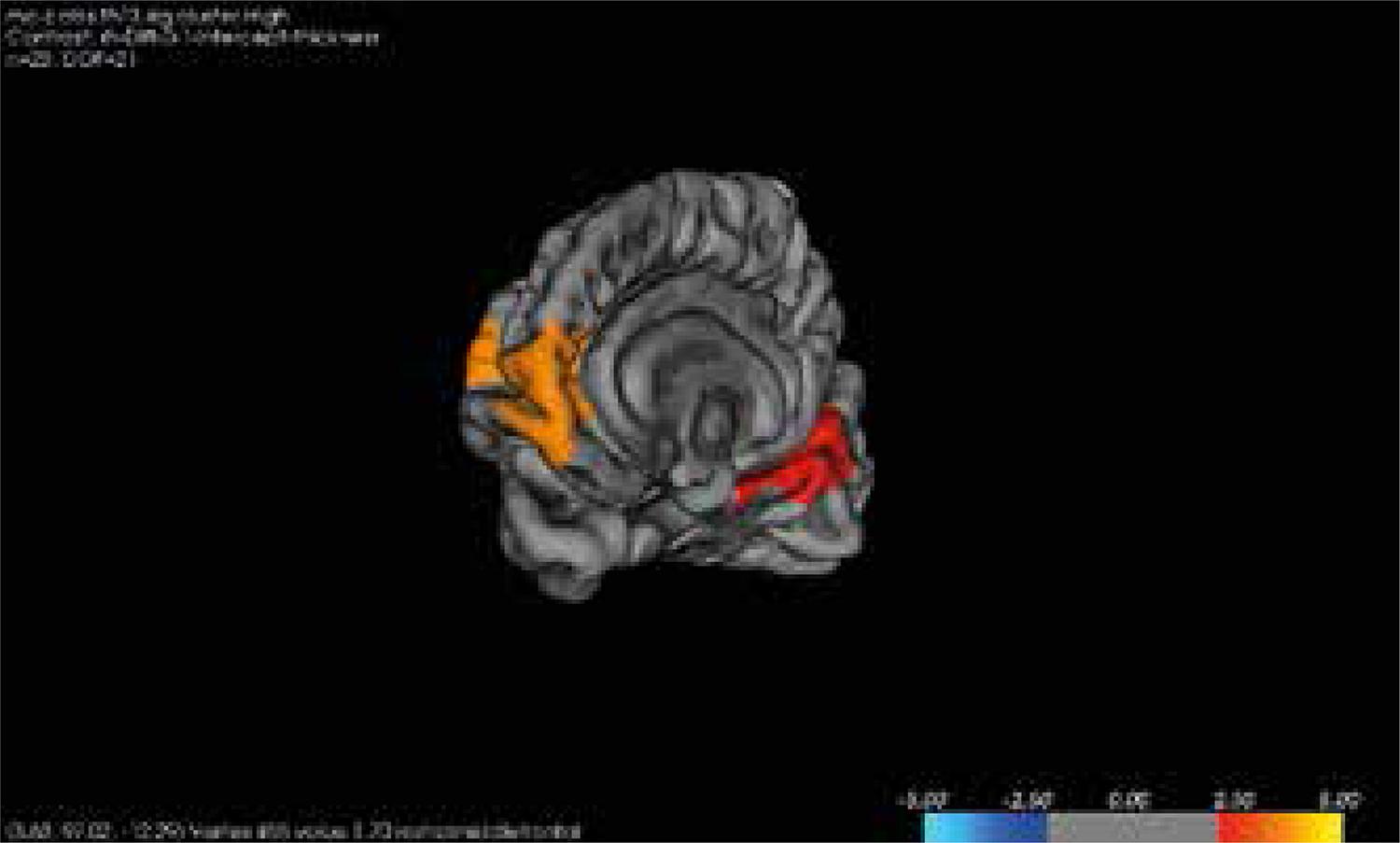
Results Differences in limbic structures volume were not significative after Bonferroni correction. A significant reduction in cortical thickness on right rostral cingulate, right and left middle frontal gyrus, left superior frontal, left lingual, calcarine and cuneus were observed in PTSD group in comparison to controls was observed.
Discussion Although preliminary, our results suggested not only the association between cortical thickness and PTSD, but also indicated that patients and controls have anatomical differences.
Post-traumatic stress disorder; cortical thickness; limbic system; police officers; trauma