 Inulin and plant-derived fibers improve rheology, texture, melting resistance, and sensory acceptability of reduced-fat buffalo milk ice cream
ABSTRACT:
Dietary fibers are recognized for their functional properties, including water retention, viscosity enhancement, fat replacement, and prebiotic effects. These qualities make them promising ingredients for improving the quality and nutritional value of dairy products, such as ice creams. In response to growing consumer demand for healthier frozen desserts, this study investigated the effects of incorporating different 2 % dietary fibers (inulin, lemon fiber, apple fiber, and pea fiber) into reduced-fat buffalo milk ice cream. The ice cream samples were analyzed for chemical composition, physical properties, color attributes, rheological behavior, and sensory characteristics. The addition of fiber significantly influenced titratable acidity (0.23-0.34 %), pH (6.67-6.85), and protein content (4.55-5.89 %) (p < 0.05). The overrun decreased by 19 % for lemon, 20 % for pea, and 35 % for apple, while hardness increased by 227 %, 210 %, and 110 %, respectively, indicating improved structural integrity. Notably, lemon fiber extended the first drip time to 116.91 min, compared to 39.10 min in the control. Apple fiber induced a pronounced darkening, with the L* value — representing the lightness parameter of the CIELAB color space — decreasing from 88.37 to 77.27, whereas inulin preserved a brightness level comparable to that of the control. All fiber-enriched samples exhibited non-Newtonian, shear-thinning flow behavior. The consistency coefficient (k) increased from 54.61 Pa sn (pascal-seconds to the power n) in the control to 2038 Pa sn with pea fiber. Sensory evaluations revealed that samples containing inulin achieved acceptability scores comparable to the control, whereas apple fiber reduced consumer preference. Overall, the incorporation of dietary fiber improved the melting resistance, textural characteristics, and nutritional profile of reduced-fat buffalo milk ice cream, with inulin emerging as the most favorable option in terms of sensory acceptance and product quality.
Keywords:
buffalo milk; dietary fibers; functional food; ice cream; inulin
Introduction
Buffalo milk, the second most widely consumed milk globally after cow's milk, accounts for over 12 % of global milk production, with India contributing approximately 70 % of that total (Siddiqui et al., 2024). Distinguished for its rich flavor and unique chemical composition, buffalo milk is nutrient-dense, offering higher calcium and protein levels while containing lower cholesterol compared to cow's milk. Its characteristic whiteness is attributed to the opacity of its casein micelles, and the fat composition exhibits distinct characteristics (Vargas-Ramella et al., 2021).
Despite its nutritional benefits, the high fat content of buffalo milk is associated with long-term health risks, including obesity and cardiovascular disease. This concern has driven consumer demand for low-fat dairy alternatives (Akhtar et al., 2023). However, reducing fat in dairy products poses challenges, as fat is essential for determining texture and sensory qualities. To address these issues, dietary fibers and fat substitutes are increasingly being incorporated into low-fat formulations to maintain product quality (Tang et al., 2025).
Dietary fiber is recognized for its numerous health benefits, including support for gut health, blood sugar regulation, and weight management (Sahan et al., 2008; Correa et al., 2024). Inulin, a well-established prebiotic, is widely applied in food products to enhance texture, flavor, and nutritional value (Karaca et al., 2009; Du et al., 2023). Fibers derived from lemon, apple, and pea are notable for their unique water-binding and viscosity-enhancing properties, which significantly contribute to the quality and nutritional benefits of low-fat dairy products (Magalhães et al., 2023). These fibers were specifically selected for their ability to enhance water retention, viscosity, and structural integrity, which are crucial for ice cream formulation.
The growing interest in health-oriented dietary patterns has driven significant demand for fiber-enriched products (Guven et al., 2005; Mansour et al., 2021). Despite the rich nutritional profile of buffalo milk, its use in ice cream, particularly with dietary fiber enrichment, remains underexplored. Utilizing inulin, lemon, apple, and pea fibers offers promising strategies to improve texture, melting resistance, and nutritional quality in reduced-fat buffalo milk ice cream (Tolve et al., 2024; Yang et al., 2024; Ozmen et al., 2025).
This study addresses this gap by assessing the physicochemical, rheological, and sensory properties of reduced-fat buffalo milk ice cream enriched with 2 % inulin, lemon, apple, and pea fibers, compared to a control sample containing 2 % milk powder. The results are expected to provide valuable insights for optimizing fiber-enriched formulations, ultimately contributing to the development of healthier frozen dairy products with enhanced textural and nutritional properties.
Materials and methods
The research was conducted in Osmaniye, Türkiye, located at 37°09’30" N, 38°47’30" E, at an altitude of 178 m.
Source of buffalo milk
The buffalo milk used to produce ice cream was sourced from Osmaniye, Türkiye. Other ingredients included milk powder (Enka Milk Inc.), sugar (Elbistan), inulin (Fibrella), lemon fiber (Arosel Food), pea and apple fibers (Alfasol), and containers.
Salep, used as the stabilizer (Bucak), is a traditional hydrocolloid obtained from the dried and ground tubers of Orchidaceae species naturally distributed in the Eastern Mediterranean region of Türkiye. As reported by Tekinşen and Güler (2010), salep production involves harvesting, drying, and milling tubers from several orchid species, including Dactylorhiza osmanica var. osmanica, Orchis anatolica, O. coriophora, O. italica, O. mammosa, O. morio, O. palustris, O. simia, O. tridentata and Serapias vomeracea ssp. orientalis. Salep powder is characterized by a high glucomannan content, typically ranging from 17.1% to 56.6%, which is responsible for its strong water-binding and thickening properties. These orchids are tuberous plants native to Western Asia, with elongated leaves and flowers that range in color from white to purple. Overall, approximately 24 genera and nearly 90 Orchidaceae species are traditionally utilized in salep production (Bozdoğan & Yaşar, 2016; Yaşar & Bozdoğan, 2018).
The quantities of raw materials per 10 kg of buffalo milk for five sample types — control (M1), inulin (M2), lemon fiber (M3), apple fiber (M4), and pea fiber (M5) — are outlined in Table 1.
Ice cream production
The buffalo milk ice creams were produced at a private production facility in Osmaniye, Türkiye. In this process, 15 kg of raw buffalo milk was divided into five portions, each weighing 3 kg each. The raw materials were weighed separately and gradually incorporated into the buffalo milk to ensure a uniform mixture, which was then stirred. The mixtures were heated to 60 °C, then homogenized and pasteurized at 90 °C for 20 min. After this, the mixtures were cooled to 25 °C and allowed to ripen for 12 h at 4 °C. Once ripened, the mixtures were churned into ice cream by freezing at –10 °C in an ice cream machine (UDM 30 L5D, Uğur Ice Cream Machines). The final product was then portioned into 75 g plastic containers and shock-frozen at –30 °C for 12 h until hardened. The hardened ice cream was stored at –25 °C until analysis. All ice cream preparation steps included duplicates to ensure accuracy. Although a formal power analysis was not performed, two independent production replicates were prepared for each formulation, and each sample was analyzed in triplicate to ensure data reliability and statistical robustness. To minimize variability during ice cream production, all equipment (pasteurizer, homogenizer, freezer) was calibrated before use. Sensory evaluations were conducted in isolated booths under standardized lighting and temperature conditions to enhance consistency further.
Composition analyses
The acid content of the ice cream samples was evaluated using the titrimetric method (AOAC, 2000). The pH levels of the samples were measured with a digital pH meter (Orion Star™ A211, Thermo Scientific). The dry matter, fat, and protein contents were analyzed according to AOAC (2000).
Overrun
To assess the overrun (air incorporation rate) of the frozen ice cream, a fixed volume of the mix was weighed (in grams), followed by the weighing of the same volume of the frozen ice cream sample. The overrun percentage was then calculated based on the mass difference at constant volume using the formula described by Liu et al. (2023):
Melting pattern of ice cream samples
A ring stand was employed to hold the mesh screen above a beaker, onto which ice cream samples were placed on a 1 mm stainless steel wire mesh (10 holes per 2.75 cm, wire thickness 1 mm) at room temperature (25 ± 1 °C). The experiment proceeded until the ice cream had fully melted and dripped through the mesh. The times recorded for the initial drop and for the complete melting were documented as the first drop time and the total melting time, respectively (Tolve et al., 2024).
Hardness
The hardness levels of the buffalo milk ice creams were assessed using the methodology established by Liao et al. (2025) with a texturing device (CT3, Brookfield). A force of 4500 g was applied using a load cell during testing. The samples were positioned in the texturing device under the following conditions: a cylindrical probe with 2.54 cm diameter, a penetration distance of 7 mm, test and rotation speeds of 3 mm s–1, and a trigger load of 5 g. Compression testing was conducted on the ice cream samples, and data were collected using the Structure Pro CT V1.4 Build 17 software. To ensure accuracy and consistency of results, all analyses were performed in triplicate.
Colors of ice cream samples
The surface colors of buffalo milk ice cream were analyzed using a digital Chroma Meter (Konica-Minolta CR-400), which measured lightness (L*), red-green intensity (a*), and yellow-blue intensity (b*). Prior to measurements, the instrument was calibrated using a white standard plate. Each sample was assessed four times, and the hue angle (Hº), chroma (C*), and total color difference (ΔE) values were calculated using the following equations (Simsek and Süfer, 2021; Karakuş and Yaşar, 2025):
where , , and are the color parameters of the control sample.
Rheological analysis of ice cream samples
The rheological behavior of buffalo milk ice cream mixes was analyzed using a HAAKE™ IQ Rheometer (Thermo Scientific™) equipped with a temperature control module. Measurements were performed using a coaxial cylinder geometry (CC25 DIN/Ti) at a constant temperature of 4 °C. Shear stress and apparent viscosity were recorded across a shear rate range of 0 to 100 s–1. Each sample was tested in triplicate to ensure data accuracy and repeatability (Lučan Čolić et al., 2024). The Ostwald de Waele (power law) model was applied to describe the flow behavior of the samples, as it provides a practical and straightforward characterization of the non-Newtonian, shear-thinning properties commonly observed in ice cream systems.
Sensory analysis
The sensory evaluation of buffalo milk ice cream samples was conducted by 13 semi-trained panelists, comprising seven females and six males aged between 20 and 50 years, from the Department of Food Engineering, Osmaniye Korkut Ata University. The panelists underwent a two-week training program focused on assessing texture, flavor, color, and melting behavior, using reference samples for calibration purposes. Sensory evaluations were performed individually in isolated booths under standardized lighting and temperature conditions. The samples were assigned random three-digit codes and presented in a randomized order to ensure objectivity. A nine-point hedonic scale (1 = very poor, 9 = excellent) was used, as described by Meilgaard et al. (1999) to assess five attributes: color, structure, taste, odor, and overall acceptability. Ethical approval for the sensory evaluation was obtained from the Osmaniye Korkut Ata University Research Ethics Committee (Approval No: 2024/8/2, Date: Nov 26, 2024).
Statistical analysis
A two-replication experimental design was utilized for buffalo milk ice cream production, with all laboratory analyses performed in triplicate. The data were analyzed using one-way Analysis of Variance (ANOVA) via SPSS software (version 18.0). Prior to ANOVA, the assumptions of normality (assessed via the Shapiro-Wilk test) and homogeneity of variance (evaluated using Levene's test) were met. Differences among treatment means were determined using Duncan's multiple range test at a significant level of p < 0.05. In addition to p-values, confidence intervals were calculated to aid the interpretation of the practical significance of the results.
Results
The physicochemical and compositional properties of buffalo milk ice creams, including titratable acidity, pH, dry matter, fat, and protein content, are presented in Table 2. The titratable acidity ranged from 0.23 to 0.34 %, while pH values ranged from 6.67 to 6.85. The contents of dry matter, fat, and protein showed minor variations among the samples. Notably, the incorporation of dietary fibers had a significant impact on the titratable acidity, pH, and protein content of the ice cream samples (p < 0.05) (Table 2). These effects are likely attributable to the fibers’ capacity to modify the microenvironment within the dairy matrix, thereby influencing buffering activity and water retention, affecting the ionization of acidic groups, and facilitating interactions with milk proteins. Previous studies have demonstrated that lemon fiber can effectively lower the pH and enhance the textural and rheological properties in fat-reduced systems, such as filling creams (Ozmen et al., 2025), highlighting its functional potential in dairy applications.
The overrun values (Table 3) indicated that M1 achieved the highest overrun, followed by M2 and M3, while M4 showed the lowest. Fiber incorporation, except inulin, significantly reduced overrun compared to the control (p < 0.05). This reduction can be attributed to the increased viscosity of the mixture resulting from the addition of apple, lemon, and pea fibers, which hinder air incorporation during freezing.
Regarding the melting behavior (Table 3), M3 exhibited the longest first-drip and complete-melting times, followed by M4 and M5. These samples demonstrated significantly higher melting resistance compared to the control (p < 0.05).
Hardness values varied significantly (p < 0.05), ranging from 11.81 to 45.17 N. M3 exhibited the highest hardness values, while M2 had the lowest. The significant increase in hardness observed with lemon, apple, and pea fibers is likely due to the formation of stronger networks via fiber-water interactions, resulting in a denser matrix structure. Conversely, inulin did not significantly affect hardness, suggesting that its structural contribution at 2 % concentration is limited.
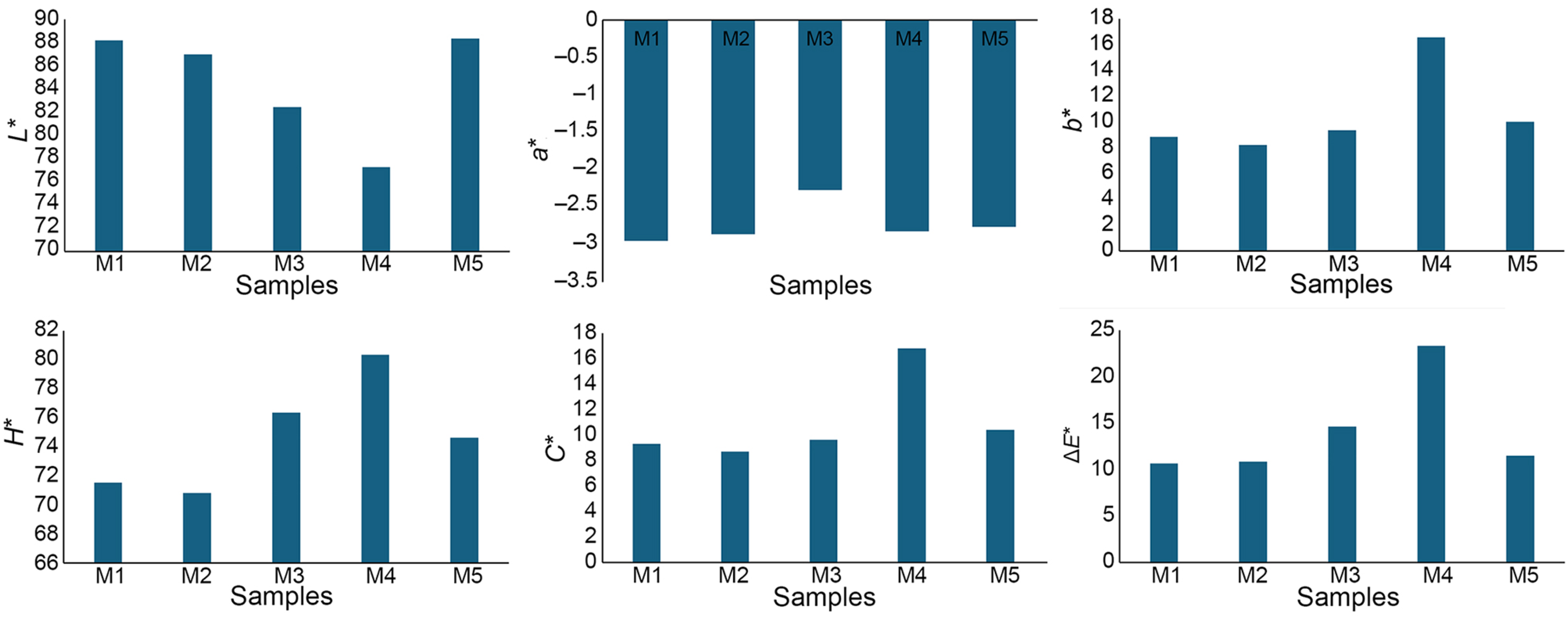
The color parameters are illustrated in Figure 1. L* values ranged between 77.27 and 88.37, with M5 exhibiting the highest lightness. The addition of M4 significantly decreased L* (p < 0.05), resulting in a darker appearance due to its natural brownish pigments. Notable differences were also observed in a* and b* values (p < 0.05). M3 caused a slight increase in redness (higher a*), whereas M4 notably increased yellowness (b*), consistent with its inherent color compounds. Hº, C*, and ΔE values (Table 3) confirmed that apple fiber caused the most pronounced color changes among all the samples tested.
Color parameters of reduced-fat buffalo milk ice creams enriched with dietary fibers. L* (lightness), a* (redness/greenness), b* (yellowness/blueness), H° (hue angle), C* (chroma), and DE (total color difference). M1 = control; M2 = inulin; M3 = lemon fiber; M4 = apple fiber; M5 = pea fiber.
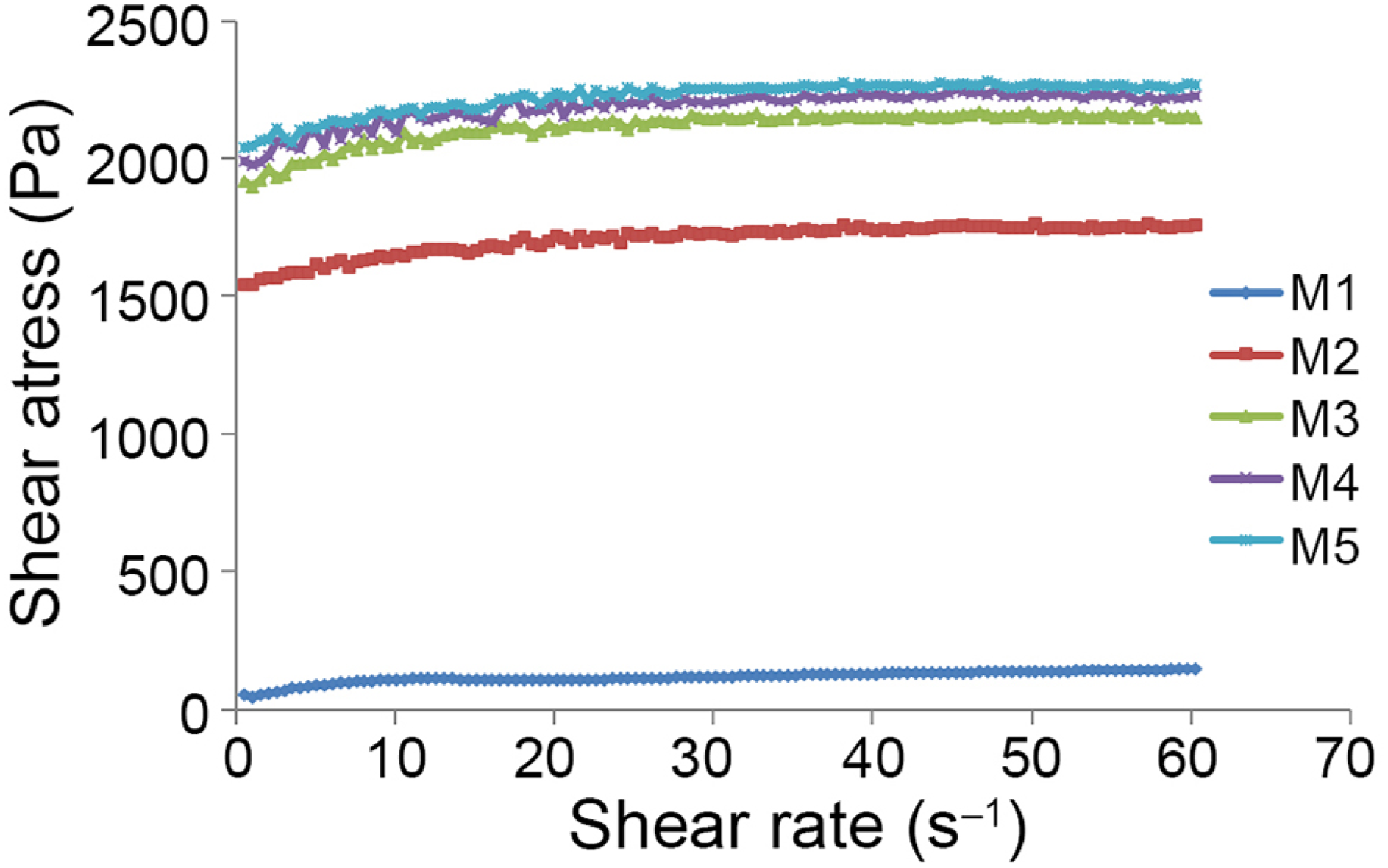
The shear rate-shear stress data (Figure 2) indicated that all samples exhibited non-Newtonian, shear-thinning flow behavior. The viscosity ranking followed the order: M5 > M4 > M3 > M2 > M1. Viscosity decreased progressively with increasing shear rate, thereby confirming the shear-thinning nature (Figure 3). Notably, the substitution of fat with fibers significantly increased viscosity (p < 0.05), which can be attributed to enhanced water-binding capacity and network formation, particularly in formulations containing pea and apple fibers. The rheological behavior of the samples was modeled using the Ostwald de Waele (power law) equation , with high goodness-of-fit (R2 = 0.9519-0.9833). Where: τ = shear stress (Pa); γ = shear rate (s−1); k = consistency coefficient (Pa sn); n = flow behavior index (dimensionless).
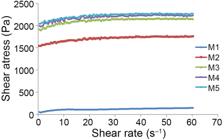
Flow curves of ice cream samples (shear stress vs shear rate). M1 = control; M2 = inulin; M3 = lemon fiber; M4 = apple fiber; M5 = pea fiber.
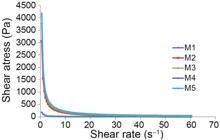
Viscosity function of ice cream samples (viscosity vs shear rate). M1 = control; M2 = inulin; M3 = lemon fiber; M4 = apple fiber; M5 = pea fiber.
In this model, a value of n < 1 indicates pseudo-plastic behavior (Miri, 2011). The model parameters are presented in Table 4. The consistency coefficients (k) increased from M1 to M5, which suggests a stronger structural integrity. At the same time, the flow behavior indices (n) decreased, confirming the increased shear-thinning characteristic associated with the addition of fiber. The incorporation of dietary fiber significantly increased the apparent viscosity (Pa s) of reduced-fat buffalo milk ice cream samples (Table 4).
The M1 sample showed the lowest viscosity value (9.24 Pa s). In contrast, the fiber-enriched formulations, particularly those with pea fiber (M5 = 190.73 Pa s), apple fiber (M4 = 186.08 Pa s), and lemon fiber (M3 = 178.48 Pa s), exhibited substantially higher viscosity values. This significant increase can be attributed to the water-binding capacity and gel-forming properties of the fibers, which improved the density of the product matrix and limited flow behavior under shear conditions (Table 4).
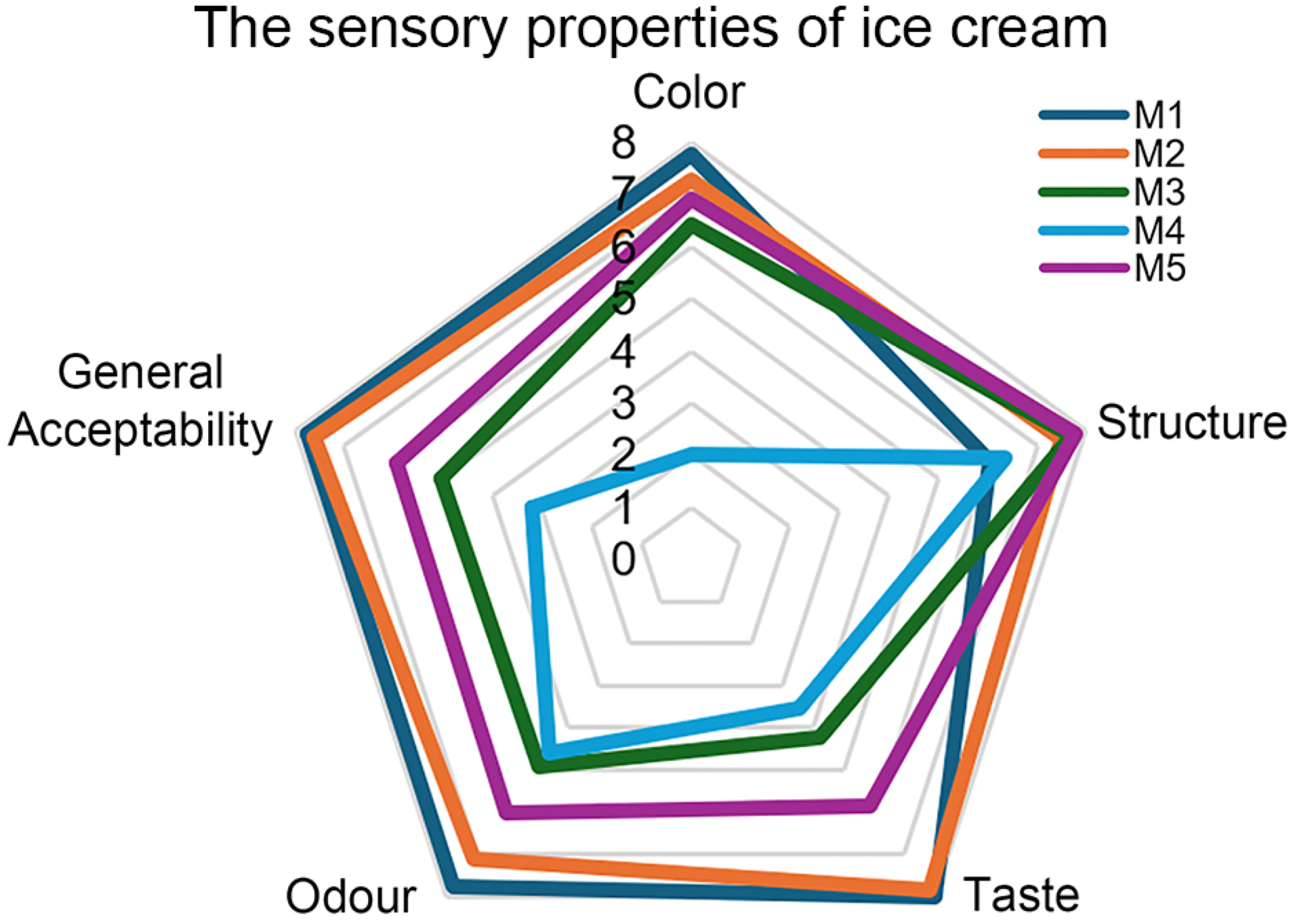
The results of the sensory evaluation are presented in Figure 4. The M1 sample achieved the highest color scores, whereas M4 exhibited a significant reduction in color acceptability (p < 0.05), reflecting the visual impact of fiber pigmentation. Texture scores were highest for M5, which aligns with the instrumental hardness findings and confirms the beneficial effect of pea fiber on structural stability. Taste scores revealed significant variation (p < 0.05); the M2-enriched samples preserved taste quality similar to the control, while M4 adversely affected taste and odor scores, likely due to its inherent aromatic compounds. Overall acceptability scores ranged from 7.74 for M1 to 3.22 for M4, demonstrating that while some fibers enhanced functional properties, they may compromise sensory attributes if not carefully optimized.
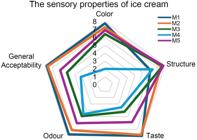
Sensory analysis results of ice creams. M1 = control; M2 = inulin; M3 = lemon fiber; M4 = apple fiber; M5 = pea fiber.
Discussion
Previous research supports these findings. For instance, an increase in titratable acidity was observed in ice cream samples containing bamboo, apple, and orange fibers compared to the control, as reported by Akalın et al. (2018). Similarly, it has been reported that the pH values of probiotic sheep milk ice creams supplemented with apple and inulin fibers range from 6.14 to 6.47, with apple fiber leading to a lower pH than inulin (Kowalczyk et al., 2022). This suggests that the type of fiber has a significant influence on acidification and pH stability in dairy formulations. Additionally, the incorporation of lemon fiber significantly reduces the pH in filling cream formulations, reinforcing the acidifying potential of citrus fibers and their impact on protein network formation, as reported by Ozmen et al. (2025).
The dry matter content of buffalo milk yogurt ice creams ranges between 36.76 and 37.40 %, according to Yeydem and Yasar (2023), which is higher than the values obtained in this study. The protein content of ice cream produced from Bambara (Vigna subterranea (L.) Verdc.) groundnut extract ranges from 4.35 to 4.61 %, as reported by Eze et al. (2023), which is lower than the values found in the present study. Similarly, it has been demonstrated that ice cream samples made with whey protein isolate have higher protein levels than those containing inulin (Akalın et al., 2008). This difference can be attributed to the higher protein content of skim milk powder used in specific formulations compared to dietary fibers, emphasizing the importance of selecting the appropriate protein source in ice cream production. Comparable findings have been documented, showing that faba bean protein significantly influences the technological properties of plant-based ice creams, particularly their melting resistance and structural stability (Teixeira et al., 2025).
During freezing and aeration, several physical changes occur, including the stabilization of foam by proteins and surfactants, partial coalescence of the fat emulsion, and the concentration of solutes as water freezes (Milliatti and Lannes, 2018). These factors collectively influence the texture and air retention in ice cream. The interaction between protein, fiber, and fat phases plays a vital role in maintaining foam stability and preventing premature collapse, as observed by Balivo et al. (2024) in their discussion on chickpea aquafaba-based frozen desserts.
The overrun, or the capacity of mixtures to retain air bubbles, plays a crucial role in determining the structure of ice cream. It has been reported that incorporating date fiber powder reduces air retention, resulting in a lower overrun (Mansour et al., 2021). Conversely, it has been documented that inulin does not significantly affect the overrun of probiotic sheep milk ice cream (Kowalczyk et al., 2022). This discrepancy highlights the varying effects of different fiber types on the aeration capacity of ice cream mixtures. Similar findings have demonstrated that insoluble fibers, such as those found in apples and oats, decrease overrun more significantly than soluble fibers, such as inulin, due to their stronger water-binding capacities and ability to form a network (Soukoulis et al., 2009).
Several factors influence the melting rate of ice cream, including the type of fiber, fat content, emulsifiers, stabilizers, and processing conditions such as whipping temperature and freezing capacity. These elements impact air cell formation and volume expansion (Crizel et al., 2014). Thermal diffusivity, which determines how heat penetrates ice cream, is also crucial to its melting behavior. A higher volume expansion can reduce thermal diffusivity, thus extending the melting time (Akbari et al., 2016). The addition of dietary fibers generally contributes to a firmer texture, thereby reducing volume expansion (Gürpınar et al., 2022). Similar findings indicating that increasing faba bean protein concentration leads to slower melting rates due to improved water retention and structural density have been observed by Teixeira et al. (2025).
Despite the deterioration of the M3 sample's structure upon melting, the first drip occurred significantly later. This delay can be attributed to the excellent water-holding capacity of lemon fiber (Crizel et al., 2014), which effectively slows its dissolution. Similarly, it has been found that ice creams containing orange and apple fibers exhibit lower melting rates compared to those with oat, bamboo, and wheat fibers (Akalın et al., 2018). These findings suggest that both the type and concentration of fiber play crucial roles in melting resistance.
This improvement is attributed not only to water retention but also to the fibers’ ability to create a cohesive and elastic gel network within the frozen matrix. Specifically, lemon fiber may strengthen the ice cream's structure under thermal stress due to its high pectin content and structural polysaccharides, which help minimize ice recrystallization and enhance thermal stability (Tolve et al., 2024; Ozmen et al., 2025).
Several parameters, including volume expansion, ice crystal size, ice phase volume, and the degree of fat destabilization, contribute to ice cream hardness. Typically, ice creams with larger ice crystals are harder, while those with smaller crystals exhibit a smoother, creamier texture (Muse and Hartel, 2004). The observed discrepancy between high viscosity and moderate hardness, particularly in the M4 samples, can be attributed to the interference of fiber-induced water immobilization with the proper formation of ice crystals, a phenomenon similar to that reported by Soukoulis et al. (2009) and Teixeira et al. (2025).
The increase in hardness observed in fiber-enriched samples can be attributed to the water-binding capacity of dietary fibers and their ability to form a particle gel network, as reported by Akalın et al. (2018). Studies have shown that bamboo fiber (Akalın et al., 2018) and orange fiber (Crizel et al., 2014) contribute to enhanced hardness in ice cream. Hardness values between 42.98 and 45.32 N have been reported for buffalo milk ice cream by Atallah et al. (2022). In the present study, the hardness of lemon fiber-supplemented ice cream was comparable to their findings, whereas the hardness of other fiber-containing samples was relatively lower.
Color plays a vital role in determining the initial appeal and consumer acceptance of food products (Lučan Čolić et al., 2024). In this study, color measurements were taken to evaluate the visual characteristics of buffalo milk ice cream samples, with L*, a*, and b* values representing lightness, redness/greenness, and yellowness/blueness, respectively. Similar results have been reported for buffalo milk ice cream, with L* values ranging from 80.42 to 85.43, a* values between –4.52 and –3.41, and b* values between 7.35 and 9.86 (Sert et al., 2021), closely aligning with the findings of this study. It has been reported that acacia and inulin fibers do not significantly affect lightness compared to control. In contrast, apple and oat fibers significantly alter color, with apple fiber increasing redness (higher a* values) (Tolve et al., 2024). This supports previous research that fiber pigments can influence the product's final appearance.
The addition of red beet peel (RBP) powder significantly affects the ΔE values of beverages, with higher RBP concentrations leading to increased ΔE, as documented by Stoica et al. (2024). The RBP-enriched beverage showed the highest C* value and a lower tone angle, indicating a more pronounced red color compared to the control. The addition of Malus floribunda Siebold ex Van Houtte puree alters Hº values, ranging from 75.58 to 107.49, as observed by Arslaner and Salik (2022). The incorporation of kumquat (Fortunella margarita Lour. Swingle cv. ovale) increases C* values from 10.05 to 60.26, as documented by Çakmakçı et al. (2016).
Similar rheological behavior has been reported by Yaşar et al. (2009) and Aycan and Yaşar (2025), who demonstrated that milk beverages stabilized with salep, locust bean gum, and guar gum exhibited non-Newtonian, shear-thinning flow characteristics, with their flow curves successfully modeled by the Ostwald de Waele equation. In line with these findings, the fiber-enriched buffalo milk ice cream samples analyzed in the present study exhibited a marked increase in the flow consistency index (k) and a decrease in the flow behavior index (n) following the incorporation of fiber. The observed reduction in viscosity with increasing shear rate further confirms the pseudoplastic nature of the samples. The replacement of fat with dietary fibers significantly enhanced viscosity, primarily due to the high water-holding capacity and network-forming ability of the fibers. Among the tested fibers, apple fiber exhibited the highest viscosity, reaching values approximately ten times that of the control, likely due to its high pectin content (Tolve et al., 2024). This pseudoplastic behavior, characterized by a decrease in viscosity under shear, is typical of hydrocolloid-structured frozen desserts, as similarly reported by Velásquez-Cock et al. (2019), Campidelli et al. (2021), and Atik et al. (2021).
Previous studies have reported similar findings regarding the non-Newtonian flow properties of ice cream. Ice cream samples formulated with varying levels of cellulose exhibited a non-Newtonian flow behavior in a study conducted by Velásquez-Cock et al. (2019). Similarly, ice cream samples exhibit pseudoplastic behavior, as evidenced by the flow behavior index (n) values, which are lower than one, as documented by Campidelli et al. (2021). The k values were reported as 3.26, 0.55, and 0.52 for different formulations, while the n values varied from 0.28 to 0.47 These findings confirm that ice cream formulations exhibit non-Newtonian shear-thinning behavior, a common characteristic of frozen dairy desserts that contain hydrocolloids and stabilizers. The n values of ice cream samples with added cellulose at different ratios ranged from 0.86 to 0.92, in an investigation conducted by Velásquez-Cock et al. (2019). Ice cream produced with camel milk and varying concentrations of blueberry additives had its rheological properties investigated and the results showed that k values ranged from 11.35 to 18.60, while n values ranged from 0.54 to 0.58, with the coefficient of consistency decreasing as the blueberry concentration increased (Sayar et al., 2022). In another study, ice cream samples exhibited pseudoplastic fluid behavior, as indicated by n values below one, while the k values ranged from 4.01 to 26.05 Pa sn and the n values varied between 0.23 and 0.38 (Atik et al., 2021). Similarly, the n values of ice creams containing whey protein have been shown to range from 0.57 to 0.88 (Roy et al., 2022). The results obtained in the present study are consistent with those reported in the literature.
The polysaccharides found in the cell walls of lemon and apple fibers, as well as the soluble fraction in pea fiber, were effective in enhancing structural integrity and resistance to deformation. These findings demonstrate that the type and structure of dietary fibers significantly influence the rheological properties of dairy-based ice cream products, ultimately leading to improved product stability and creaminess (Tolve et al., 2024).
This study clearly demonstrated the relationships among hardness, melting resistance, and viscosity in reduced-fat buffalo milk ice creams enriched with dietary fibers. Notably, the M3 and M5 formulations exhibited the highest hardness values, which corresponded to their extended complete melting times and the highest k values. These findings suggest that increased structural hardness, likely resulting from a denser internal matrix formed through interactions between fiber water and fiber protein, enhances resistance to both deformation and thermal breakdown during melting. Additionally, the elevated viscosity values observed in these formulations further support this relationship, as more viscous matrices hinder heat transfer and reduce the mobility of ice crystals.
This structural mechanism aligns with previous research. Studies have shown that incorporating oat and apple fibers significantly enhances the hardness and melting resistance of low-fat dairy matrices by forming cohesive gel networks (Tolve et al., 2024). Similarly, apple fiber has been shown to influence pH, overrun, and the melting behavior in sheep milk ice cream, although its impact on hardness is limited or even reduced (Kowalczyk et al., 2021, 2022). In contrast, oat and apple fibers have been shown to increase firmness and melting resistance in low-fat ice cream (Tolve, 2024). Additionaly, it has been demonstrated that lemon fiber improves firmness and rheological properties in filling creams (Özmen, 2025). Collectively, these studies indicate that dietary fibers enhance textural integrity and melting resistance primarily through water-binding and network-forming mechanisms, thereby improving structural stability. The sensory attributes of fiber-enriched ice cream varied significantly. It has been reported that lemon fiber alters the color of cake crust, which is consistent with the findings of this study regarding the color of ice cream. The presence of apple fiber, characterized by its brownish-red hue, negatively impacted whiteness, as also noted by Akalın et al. (2018) and Gürpınar et al. (2022). Samples containing apple and lemon fibers received lower taste scores, likely attributed to their acidity. This observation aligns with findings from Akalın et al. (2018), Crizel et al. (2014), and Aloğlu et al. (2018). While inulin did not significantly affect sensory attributes (Akın et al., 2007), fibers such as citrus fiber lowered acceptability scores (Yangılar, 2015; Dervisoglu and Yazici, 2006). Fat replacement strategies often lead to increased perceptions of iciness and reduced creaminess, as documented by Roland et al. (1999). This trend possibly contributed to the slightly lower taste scores observed in the M3 and M4 samples.
Instrumental color measurements aligned well with sensory evaluation results. For instance, the M4 sample, which contained apple fiber and exhibited the lowest L value, also received the lowest color acceptability score. This suggests that its darker appearance was less visually appealing to the panelists. In contrast, the M1 and M2 samples, characterized by higher L values, received more favorable color ratings. These findings are consistent with the findings of Kowalczyk et al. (2021), who noted that samples containing inulin displayed lighter color tones. In contrast, those enriched with apple fiber exhibited more saturated, darker hues. According to the authors, these color differences influenced panelist preferences, with lighter-colored products achieving higher acceptability scores in sensory evaluations.
This study demonstrated that incorporating dietary fibers, such as inulin and fibers from lemon, apple, and pea, significantly influenced the physicochemical, rheological, and sensory properties of reduced-fat buffalo milk ice cream. Among the fibers tested, inulin proved particularly effective in preserving sensory quality, achieving taste and overall acceptability scores like those of the control. In contrast, lemon and pea fibers notably enhanced the structural integrity and melting resistance of the ice cream. However, while apple fiber significantly enhanced viscosity, it negatively affected specific sensory attributes, such as color and flavor.
These findings suggest that carefully selecting fiber types can effectively address the textural and melting deficiencies caused by fat reduction, thereby supporting the development of healthier frozen dairy products without compromising consumer appeal.
Future studies should focus on optimizing fiber concentrations to enhance the texture and flavor balance of dairy products. Additionally, exploring synergistic combinations of dietary fibers with other fat replacers or hydrocolloids and assessing consumer acceptance across a broader demographic will help validate market potential. Furthermore, analyses of microstructure and in vivo digestive behavior could improve understanding of the functional performance of fiber-enriched buffalo milk ice cream formulations. The findings of this study suggest that the targeted use of dietary fibers can significantly enhance the physicochemical and sensory properties of reduced-fat buffalo milk ice cream, providing a healthier alternative for the dairy industry.
Data Availability Statement
Data will be made available on request.
Acknowledgments
This publication originates from Müzeyyen Gözübenli's master's thesis.
References
-
Akalın AS, Karagözlü C, Ünal G. 2008. Rheological properties of reduced-fat and low-fat ice cream containing whey protein isolate and inulin. European Food Research and Technology 227: 889-895. https://doi.org/10.1007/s00217-007-0800-z
» https://doi.org/10.1007/s00217-007-0800-z -
Akalın AS, Kesenkas H, Dinkci N, Unal G, Ozer E, Kınık O. 2018. Enrichment of probiotic ice cream with different dietary fibers: Structural characteristics and culture viability. Journal of Dairy Science 101: 37-46. https://doi.org/10.3168/jds.2017-13468
» https://doi.org/10.3168/jds.2017-13468 -
Akbari M, Eskandari MH, Niakosari M, Bedeltavana A. 2016. The effect of inulin on the physicochemical properties and sensory attributes of low-fat ice cream. International Dairy Journal 57: 52-55. https://doi.org/10.1016/j.idairyj.2016.02.040
» https://doi.org/10.1016/j.idairyj.2016.02.040 -
Akhtar A, Nasim I, ud Din MS, Araki T, Khalid N. 2023. Effects of different fat replacers on functional and rheological properties of low-fat mozzarella cheeses: A review. Trends in Food Science & Technology 139: 104136. https://doi.org/10.1016/j.tifs.2023.104136
» https://doi.org/10.1016/j.tifs.2023.104136 -
Akın MB, Akın MS, Kırmacı Z. 2007. Effects of inulin and sugar levels on the viability of yogurt and probiotic bacteria and the physical and sensory characteristics in probiotic ice cream. Food Chemistry 104: 93-99. https://doi.org/10.1016/j.foodchem.2006.11.030
» https://doi.org/10.1016/j.foodchem.2006.11.030 -
Aloğlu HŞ, Gökgöz Y, Bayraktar M. 2018. Strawberry tree fruits (Arbutus unedo L) ice cream production, investigatıon of physical, chemical and sensorial parameters (in Turkish, with abstract in English). GIDA 43: 1030-1039. https://doi.org/10.15237/gida.GD18098
» https://doi.org/10.15237/gida.GD18098 -
Arslaner A, Salik MA. 2022. Probiotic ice cream with Malus floribunda fruit sauce: Quality properties, mineral, and volatile composition. Journal of Food Processing and Preservation 46: e16566. https://doi.org/10.1111/jfpp.16566
» https://doi.org/10.1111/jfpp.16566 - Association of Official Analytical Chemists – International [AOAC]. 2000. Official Methods of Analysis. 17 ed. AOAC, Arlington, VA, USA.
-
Atallah AA, Morsy OM, Abbas W, Khater E-SG. 2022. Microstructural, physicochemical, microbiological, and organoleptic characteristics of sugar-and fat-free ıce cream from buffalo milk. Foods 11: 490. https://doi.org/10.3390/foods11030490
» https://doi.org/10.3390/foods11030490 -
Atik I, Tekin-Cakmak ZH, Avcı E, Karasu S. 2021. The Effect of cold press chia seed oil by-products on the rheological, microstructural, thermal, and sensory properties of low-fat ice cream. Foods 10: 2302. https://doi.org/10.3390/foods10102302
» https://doi.org/10.3390/foods10102302 -
Aycan E, Yaşar K. 2025. The Effect of different stabilisers on the quality properties of tahini milk. KSU Journal of Agriculture and Nature 28: 544-554. https://doi.org/10.18016/ksutarimdoga.vi.1563485
» https://doi.org/10.18016/ksutarimdoga.vi.1563485 -
Aydogdu A, Sumnu G, Sahin S. 2018. Effects of addition of different fibers on rheological characteristics of cake batter and quality of cakes. Journal of Food Science and Technology 55: 667-677. https://doi.org/10.1007/s13197-017-2976-y
» https://doi.org/10.1007/s13197-017-2976-y -
Balivo A, d’Errico G, Genovese A. 2024. Whipped chickpea aquafaba as a fat replacer in ice cream: Effect on sensory and physicochemical properties. Journal of Food Science 89: 8730-8745. https://doi.org/10.1111/1750-3841.17605
» https://doi.org/10.1111/1750-3841.17605 - Bozdoğan A, Yaşar K. 2016. Increasing the nutritional value of sahlep. Journal of Food Physics 28: 33-39.
-
Çakmakçı S, Topdaş EF, Çakır Y, Kalın P. 2016. Functionality of kumquat (Fortunella margarita) in the production of fruity ice cream. Journal of the Science of Food and Agriculture 96: 1451-1458. https://doi.org/10.1002/jsfa.7241
» https://doi.org/10.1002/jsfa.7241 -
Campidelli MLL, Salgado JM, Carneiro JDS, Abreu LR, Giarola TMO, Carvalho EEN, et al. 2021. Rheological, physico-chemical and sensorial properties of ice cream made with powdered form with low energetic value and high content of prebiotic fibers. Journal of Culinary Science & Technology 19: 331-351. https://doi.org/10.1080/15428052.2020.1768995
» https://doi.org/10.1080/15428052.2020.1768995 -
Correa AC, Lopes MS, Perna RF, Silva EK. 2024. Fructan-type prebiotic dietary fibers: Clinical studies reporting health impacts and recent advances in their technological application in bakery, dairy, meat products and beverages. Carbohydrate Polymers 323: 121396. https://doi.org/10.1016/j.carbpol.2023.121396
» https://doi.org/10.1016/j.carbpol.2023.121396 -
Crizel TM, Araujo RR, Rios AO, Rech R, Flôres SH. 2014. Orange fiber as a novel fat replacer in lemon ice cream. Food Science and Technology 34: 332-340 https://doi.org/10.1590/fst.2014.0057
» https://doi.org/10.1590/fst.2014.0057 -
Dervisoglu M, Yazici F. 2006. Note. The Effect of citrus fibre on the physical, chemical and sensory properties of ice cream. Food Science and Technology International 12: 159-164. https://doi.org/10.1177/1082013206064005
» https://doi.org/10.1177/1082013206064005 -
Du M, Cheng X, Qian L, Huo A, Chen J, Sun Y. 2023. Extraction, physicochemical properties, functional activities and applications of ınulin polysaccharide: a review. Plant Foods for Human Nutrition 78: 243-252. https://doi.org/10.1007/s11130-023-01066-6
» https://doi.org/10.1007/s11130-023-01066-6 -
Eze CM, Okpala COR, Asogwa IS, Nduka OC, Hassani MI, Anchang MM, et al. 2023. Quality indices of ice cream produced from dairy milk partially substituted with Bambara groundnut (Vigna subterranean (L) Verdc.) beverage. Mljekarstvo 73: 196-208. https://doi.org/10.15567/mljekarstvo.2023.0306
» https://doi.org/10.15567/mljekarstvo.2023.0306 -
Gürpınar S, Dağdemir E, Topdaş EF. 2022. Functional ice cream: Enrichment with apple, pumpkin, and orange fiber (in Turkish, with abstract in English). GIDA 47: 277-295. https://doi.org/10.15237/gida.GD21152
» https://doi.org/10.15237/gida.GD21152 -
Guven M, Yasar K, Karaca OB, Hayaloglu AA. 2005. The effect of inulin as a fat replacer on the quality of set-type low-fat yogurt manufacture. International Journal of Dairy Technology 58: 180-184. https://doi.org/10.1111/j.1471-0307.2005.00210.x
» https://doi.org/10.1111/j.1471-0307.2005.00210.x -
Karaca OB, Güven M, Yasar K, Kaya S, Kahyaoglu T. 2009. The functional, rheological and sensory characteristics of ice creams with various fat replacers. International Journal of Dairy Technology 62: 93-99. https://doi.org/10.1111/j.1471-0307.2008.00456.x
» https://doi.org/10.1111/j.1471-0307.2008.00456.x -
Karakuş V, Yaşar K. 2025. Physicochemical, texture, color, fatty acid, volatile compounds, and sensory properties of peanut-based halva. Journal of Food Composition and Analysis 147: 108110. https://doi.org/10.1016/j.jfca.2025.108110
» https://doi.org/10.1016/j.jfca.2025.108110 -
Kowalczyk M, Znamirowska A, Buniowska M. 2021. Probiotic sheep milk ice cream with inulin and apple fiber. Foods 10: 678. https://doi.org/10.3390/foods10030678
» https://doi.org/10.3390/foods10030678 -
Kowalczyk M, Znamirowska A, Pawlos M, Buniowska M. 2022. The use of Olkuska sheep milk for the production of symbiotic dairy ice cream. Animals 12: 70. https://doi.org/10.3390/ani12010070
» https://doi.org/10.3390/ani12010070 -
Liao X, Xie Y, Liau KY, Lee YY, Tan CP, Wang Y, et al. 2025. Fat crystallization, partial coalescence and melting resistance of ice cream with lauric diacylglycerol oil. Journal of Food Engineering 387: 112304. https://doi.org/10.1016/j.jfoodeng.2024.112304
» https://doi.org/10.1016/j.jfoodeng.2024.112304 -
Liu X, Sala G, Scholten E. 2023. Structural and functional differences between ice crystal-dominated and fat network-dominated ice cream. Food Hydrocolloids 138: 108466. https://doi.org/10.1016/j.foodhyd.2023.108466
» https://doi.org/10.1016/j.foodhyd.2023.108466 -
Lučan Čolić M, Antunović M, Lukinac J, Babić J, Jozinović A, Matijević B, et al. 2024. Physicochemical properties of turmeric (Curcuma longa L.) and black pepper (Piper nigrum) enriched ice cream. Mljekarstvo 74: 45-63. https://doi.org/10.15567/mljekarstvo.2024.0104
» https://doi.org/10.15567/mljekarstvo.2024.0104 -
Magalhães D, Vilas-Boas AA, Teixeira P, Pintado M. 2023. Functional ingredients and additives from lemon by-products and their applications in food preservation: A review. Foods 12: 1095. https://doi.org/10.3390/foods12051095
» https://doi.org/10.3390/foods12051095 -
Mansour AIA, Ahmed MA, Elfaruk MS, Alsaleem KA, Hammam ARA, El-Derwy YMA. 2021. A novel process to improve the characteristics of low-fat ice cream using date fiber powder. Food Science & Nutrition 9: 2836-2842. https://doi.org/10.1002/fsn3.2159
» https://doi.org/10.1002/fsn3.2159 - Meilgaard MC, Carr BT, Civille GV. 1999. Sensory evaluation techniques. 3 ed. CRC Press, Boca Raton, FL, USA.
-
Milliatti MC, Lannes SCS. 2018. Impact of stabilizers on the rheological properties of ice creams. Food Science and Technology 38: 733-739. https://doi.org/10.1590/fst.31818
» https://doi.org/10.1590/fst.31818 - Miri T. 2011. Viscosity and Oscillatory Rheology. p. 7-28. In: Norton IT, Fotios S, Cox P. eds. Practical Food Rheology: An Interpretive Approach. Blackwell Publishing, Oxford, UK.
-
Muse MR, Hartel RW. 2004. Ice cream structural elements that affect melting rate and hardness. Journal of Dairy Science 87: 1-10. https://doi.org/10.3168/jds.S0022-0302(04)73135-5
» https://doi.org/10.3168/jds.S0022-0302(04)73135-5 -
Ozmen D, Toker OS, Öztürk SA. 2025. Lemon fiber as a new source of fat replacement in filling creams. Journal of Food Process Engineering 48: e70056. https://doi.org/10.1111/jfpe.70056
» https://doi.org/10.1111/jfpe.70056 -
Roland AM, Phillips LG, Boor KJ. 1999. Effects of fat content on the sensory properties, melting, color, and hardness of ice cream. Journal of Dairy Science 82: 32-38. https://doi.org/10.3168/jds.S0022-0302(99)75205-7
» https://doi.org/10.3168/jds.S0022-0302(99)75205-7 -
Roy S, Hussain SA, Prasad WG, Khetra Y. 2022. Quality attributes of high protein ice cream prepared by incorporation of whey protein isolate. Applied Food Research 2: 100029. https://doi.org/10.1016/j.afres.2021.100029
» https://doi.org/10.1016/j.afres.2021.100029 -
Sahan N, Yasar K, Hayaloglu AA. 2008. Physical, chemical and flavour quality of non-fat yogurt as affected by a β-glucan hydrocolloidal composite during storage. Food Hydrocolloids 22: 1291-1297. https://doi.org/10.1016/j.foodhyd.2007.06.010
» https://doi.org/10.1016/j.foodhyd.2007.06.010 -
Sayar E, Şengül M, Ürkek B. 2022. Antioxidant capacity and rheological, textural properties of ice cream produced from camel's milk with blueberry. Journal of Food Processing and Preservation 46: e16346. https://doi.org/10.1111/jfpp.16346
» https://doi.org/10.1111/jfpp.16346 -
Sert D, Mercan E, Kılınç M. 2021. Development of buffalo milk ice-cream by high pressure-homogenisation of mix: Physicochemical, textural and microstructural characterisation. LWT 150: 112013. https://doi.org/10.1016/j.lwt.2021.112013
» https://doi.org/10.1016/j.lwt.2021.112013 -
Siddiqui SA, Salman SHM, Redha AA, Zannou O, Chabi IB, Oussou KF, et al. 2024. Physicochemical and nutritional properties of different non-bovine milk and dairy products: A review. International Dairy Journal 148: 105790. https://doi.org/10.1016/j.idairyj.2023.105790
» https://doi.org/10.1016/j.idairyj.2023.105790 -
Simsek M, Süfer Ö. 2021. Effect of pretreatments on refractance window drying, color kinetics and bioactive properties of white sweet cherries (Prunus avium L. stark gold). Journal of Food Processing and Preservation 45: e15895. https://doi.org/10.1111/jfpp.15895
» https://doi.org/10.1111/jfpp.15895 -
Soukoulis C, Lebesi D, Tzia C. 2009. Enrichment of ice cream with dietary fibre: Effects on rheological properties, ice crystallisation and glass transition phenomena. Food Chemistry 115: 665-671. https://doi.org/10.1016/j.foodchem.2008.12.070
» https://doi.org/10.1016/j.foodchem.2008.12.070 -
Stoica F, Ratu RN, Lipsa FD, Motrescu I, Cara IG, Rapeanu G, et al. 2024. Exploitation of red beet peel powder as a natural food ingredient in whey-fruit based beverage. International Journal of Food Properties 27: 44-67. https://doi.org/10.1080/10942912.2024.2426660
» https://doi.org/10.1080/10942912.2024.2426660 -
Tang Z, Yang S, Li W, Chang J. 2025. Fat replacers in frozen desserts: functions, challenges, and strategies. Comprehensive Reviews in Food Science and Food Safety 24: e70191. https://doi.org/10.1111/1541-4337.70191
» https://doi.org/10.1111/1541-4337.70191 -
Teixeira NS, Hidalgo Chávez DW, Sampaio Doria Chaves AC, Deliza R, Rosenthal A. 2025. Characterization of the rheological and technological properties of the plant-based ice cream of the açaí and jabuticaba peel flour with faba bean protein. Food Science and Technology International: e10820132251326695. https://doi.org/10.1177/10820132251326695
» https://doi.org/10.1177/10820132251326695 -
Tekinşen KK, Güner A. 2010. Chemical composition and physicochemical properties of tubera sahlep produced from some Orchidaceae species. Food Chemistry 121: 468-471. https://doi.org/10.1016/j.foodchem.2009.12.066
» https://doi.org/10.1016/j.foodchem.2009.12.066 -
Tolve R, Zanoni M, Ferrentino G, Gonzalez-Ortega R, Sportiello L, Scampicchio M, et al. 2024. Dietary fibers effects on physical, thermal, and sensory properties of low-fat ice cream. LWT 199: 116094. https://doi.org/10.1016/j.lwt.2024.116094
» https://doi.org/10.1016/j.lwt.2024.116094 -
Vargas-Ramella M, Pateiro M, Maggiolino A, Faccia M, Franco D, De Palo P, et al. 2021. Buffalo milk as a source of probiotic functional products. microorganisms 9: 2303. https://doi.org/10.3390/microorganisms9112303
» https://doi.org/10.3390/microorganisms9112303 -
Velásquez-Cock J, Serpa A, Vélez L, Gañán P, Hoyos CG, Castro C, et al. 2019. Influence of cellulose nanofibrils on the structural elements of ice cream. Food Hydrocolloids 87: 204-213. https://doi.org/10.1016/j.foodhyd.2018.07.035
» https://doi.org/10.1016/j.foodhyd.2018.07.035 -
Yang S, Zhao X, Liu T, Cai Y, Deng X, Zhao M, et al. 2024. Effects of apple fiber on the physicochemical properties and baking quality of frozen dough during frozen storage. Food Chemistry 440: 138194. https://doi.org/10.1016/j.foodchem.2023.138194
» https://doi.org/10.1016/j.foodchem.2023.138194 -
Yangılar F. 2015. Effects of green banana flour on the physical, chemical and sensory properties of ıce cream. Food Technology and Biotechnology 53: 315-323. https://doi.org/10.17113/ftb.53.03.15.3851
» https://doi.org/10.17113/ftb.53.03.15.3851 -
Yaşar K, Kahyaoglu T, Şahan N. 2009. Dynamic rheological characterization of salep glucomannan/galactomannan-based milk beverages. Food Hydrocolloids 23: 1305-1311. https://doi.org/10.1016/j.foodhyd.2008.11.005
» https://doi.org/10.1016/j.foodhyd.2008.11.005 -
Yaşar K, Bozdoğan A. 2018. Effect of the use of different whey proteins on some properties of sahlep beverage prepared from functional sahlep powder. Turkish Journal of Agriculture - Food Science and Technology 6: 520-523. https://doi.org/10.24925/turjaf.v6i5.520-523.1590
» https://doi.org/10.24925/turjaf.v6i5.520-523.1590 -
Yeydem A, Yasar K. 2023. The effect of different culture and stabilizer use on the physicochemical and sensory properties of ice cream. Journal of Raw Materials to Processed Foods 4: 123-132. https://doi.org/10.57252/jrpfoods.2023.2
» https://doi.org/10.57252/jrpfoods.2023.2
Edited by
-
Edited by:
Erick Sigisfredo Scheuermann Salinas https://orcid.org/0000-0002-6782-662X