 Short-stabilized poultry compost replaces mineral fertilizer without yield loss in maize: a four-year field trial
ABSTRACT:
A four-year field trial (2016-2020) on a Rhodic Hapludox in Cascavel, in the state of Paraná, Brazil compared five broiler-chain organic fertilizers differing in stabilization time: compost stabilized for 30 days (C30), compost stabilized for 60 days (C60), compost stabilized until composting process reaches room temperature (CRT), approximately 100 days, commercial organic compost produced in a local composting plant (CCP) for approximately 120 days, and chicken bedding without controlled stabilization (CB), with a mineral-only control (CTL). Treatments were laid out in a randomized block design (6 × 3). Compost doses were front-loaded at 8 Mg ha−1 and tapered to 6, 5 and 4 Mg ha−1 in years 2-4, while mineral NPK (10-15-15) was simultaneously reduced by 30, 40, 50 and 60 % (231 → 100 kg ha−1 yr−1); CTL received 330 kg ha−1 every season. Relative to CTL, the organic treatments increased surface-soil pH by up to +1.2 units, Mehlich-1 P by 66 % (14.4 → 23.9 mg kg−1), and exchangeable K by 19 % after the first application. The concentrations of diethylene triamine pentaacetic acid-extractable zinc (DTPA-Zn) and copper (DTPA-Cu) rose 34 % and 28 %, respectively, after the second year. Grain yield was maintained (79.6 ± 2.9 vs 78.4 ± 2.5 Mg ha−1 in CTL), confirming that partial mineral fertiliser replacement did not compromise productivity. The strategy allowed ≈ 35 kg ha−1 P2O5 and 20 kg ha−1 K2O to be withheld each season, saving ≈ US$ 28 ha−1 and diverting poultry waste from landfills. Broiler composts stabilised for ≤ 60 days (C30, C60) delivered the most significant improvements. We conclude that short-stabilisation broiler compost can replace up to 60 % of mineral NPK in maize, enhance soil fertility, and foster regional circular-economy loops without yield loss.
Keywords:
organic compost; waste from the broiler production chain; chicken bedding material; stabilization
Introduction
Animal protein and grain production are closely intertwined, shaping global food security, environmental footprints, and agricultural sustainability. Brazil illustrates this nexus: in 2022, it produced 14.5 million tons of poultry meat, ranking second after the USA, while remaining among the five largest grain producers. However, 84 % of the 41 million tons of fertilizers applied domestically that year were imported, exposing producers to price shocks and supply risks. Meanwhile, broiler operations generate nutrient-rich residues that can be converted into compost, thereby closing nutrient loops, a pillar of the circular economy (Tomić and Schneider, 2018).
Modelling and mapping of soil-organic-carbon (SOC) stocks across Brazil reveal that the country's soils contain ≈ 71.3 Pg C in the upper 1 m, with almost half (≈ 35.9 Pg C) concentrated in the 0-30 cm layer. At the same time, the Amazon biome holds the largest absolute stock (≈ 36 Pg C), and high-altitude, subtropical landscapes in the south and southeast exhibit the highest SOC density and therefore the highest additional sequestration potential. The study also shows that deeply weathered Ferralsols and Acrisols account for ≈ 57 % of the national SOC pool, emphasizing the need to include sub-surface horizons when assessing mitigation opportunities (Gomes et al., 2019).
Composting is suitable for stabilizing organic waste. However, most of the nutrients in compost are in organic form, so mineralization must occur in the soil, requiring a different strategy for using compost to partially replace mineral fertilization. To avoid productivity impacts due to the characteristics of organic compost, one strategy is to progressively reduce the amount of mineral fertilizer and gradually add less organic compost each year. This strategy should allow nutrient mineralization to occur between one harvest and the next (residual effect) without compromising productivity. In general, the composting process can be divided into two main phases: the bio-oxidative phase (stabilization) and the maturation phase (Bernal et al., 2009), which generate stabilized and matured compost, respectively. Compost maturity is commonly assessed by the carbon-to-nitrogen ratio (C/N) < 20, a germination index > 80 % and reduced microbial respiration, which minimizes phytotoxicity and synchronises nutrient release (Bernal et al., 2009; Chiarelotto et al., 2019). Thus, a biologically stabilized but incompletely mature produced at different composting times has the potential to serve as an organic fertilizer for large crops such as Zea mays L. (maize). This study aimed to evaluate the gradual annual reduction in mineral fertilizer by 30, 40, 50 and 60 % in combination with doses of 8, 6, 5, and 4 tons of organic fertilizers on soil fertility, nutritional status and maize yield.
Materials and Methods
The experiment was carried out at the Núcleo Experimental de Engenharia Agrícola of the Universidade Estadual do Oeste do Paraná (UNIOESTE), Cascavel, in the state of Paraná, Brazil (24°57’21" S, 53°27’19" W, altitude 760 m). The experimental area was a clay-textured Rhodic Hapludox (USDA Soil Taxonomy), corresponding to a Rhodic Ferralsol (Clayic, Endoeutric) in the FAO World Reference Base (IUSS Working Group WRB, 2022).
The region's climate, according to the Köppen classification, is Cfa, a super-humid subtropical mesothermal type, with total annual rainfall between 1,550 and 1,650 mm. It has hot summers with concentrated rainfall, winter with infrequent frosts and no defined dry season. The average annual temperature ranges from 19.3 to 20.1 °C (Aparecido et al., 2016).
The experiment started in Sept 2016 and was completed in Dec 2020, with successive crops of off-season maize, winter crops and soybeans. The crop chosen to evaluate the performance of the fertilization strategy was maize. Four harvests were carried out during the experimental period. The total experimental area was 972 m2, with a slope of 13 %. The area lay fallow until the experiment was set up.
A randomized block design (RBD) was used, with six treatments and three replications, yielding 18 plots. Each plot was 4.5 m wide and had ten rows of maize, spaced 0.45 m apart, with six central rows forming the useful area of the plot and two side rows as borders. Each plot was 12 m long, with 10 m in the middle forming the functional area and 1 m on the side as a border. Each plot had a total area of 54 m2 and a functional area of 27 m2.
The experiment had a total of six treatments, characterized by the combination of mineral fertilizer and organic fertilizers.
-
Treatment C30: stabilized organic compost with 30 days of composting + mineral fertilizer;
-
Treatment C60: stabilized organic compost with 60 days of composting + mineral fertilizer;
-
Treatment CRT: organic compost stabilized until the composting process reaches room temperature + mineral fertilizer;
-
Treatment CCP: commercial organic compost produced in a local composting plant + mineral fertilizer;
-
Treatment CB: chicken bedding without controlled stabilization + mineral fertilizer;
-
Treatment CTL: mineral fertilizer only.
A reduction in the amount of mineral fertilizer and organic manure applied over the four maize harvests was also proposed. For every harvest we used the same 10-15-15 NPK formulation, progressively reducing the mineral dose and the amount of compost applied: harvest I (2017) received 231 kg ha−1 of fertilizer (30 % below the recommended 330 kg ha−1) plus 8 Mg ha−1 of organic manure (dry matter); harvest II (2018) received 198 kg ha−1 (40 % reduction) plus 6 Mg ha−1; harvest III (2019) received 125 kg ha−1 (50 % reduction) plus 5 Mg ha−1; and harvest IV (2020) received 100 kg ha−1 (60 % reduction) plus 4 Mg ha−1. In the CTL, 100 % of the recommended mineral dose was applied at each harvest.
The second harvest maize was sown using a seeding machine set to apply the specified amount of mineral fertilizer for the treatments (as described above). After sowing, the organic matrices were applied manually along the planting line, according to the specified quantity and experimental design. For the control plots, mineral fertilizer was also applied manually until the recommended amount was reached.
The organic composts used in the specified treatments (C30, C60, CRT, CCP, and CB) had different stabilization process characteristics. The organic compost from treatments C30, C60, and CRT was obtained from a composting process conducted in a covered, waterproofed patio at the Núcleo Experimental de Engenharia Agrícola. The stabilized waste was flotation plant sludge, sausage cellulose casing, hatchery waste, boiler ash, feed waste, and urban tree pruning. The waste was composted between 2016 and 2019. Each year, three composting beds with the same composition were made. Each bed was allowed to stabilize for approximately 30 days, 60 days, and until the internal temperature of the bed was similar to the environmental temperature (approximately 100 days). Details of this stabilization process can be found in Chiarelotto et al. (2019). After the stabilization process, the organic material was dried at room temperature, sieved (1 cm sieve), and stored in raffia bags until applied to the soil.
For the CCP treatment, the organic material used was collected from a commercial-scale composting plant located in the western region of the state of Paraná. This composting plant stabilizes organic waste generated during chicken slaughter, i.e. the same waste that made up the C30, C60 and CRT beds. The waste is disposed of in beds in a courtyard with no soil cover or waterproofing. The unit has an average composting time of 120 days. After the process, the organic fertilizer is sieved and stored for sale. The chicken bedding used in the CB treatment was collected from broiler breeding units in the western region of the state of Paraná. The waste consisted of wood shavings and poultry manure. After a production cycle of 8 to 12 batches, the waste was removed from the sheds and sent to uncovered areas without soil sealing.
After applying organic fertilizers to the soil, samples were collected for physicochemical characterization. The variables analyzed were: pH, electrical conductivity (EC), total organic carbon (TOC), total Kjeldahl nitrogen (NTK), C/N ratio, total phosphorus, total potassium, sodium, copper, manganese, iron, zinc, cadmium, lead, aluminum, Cation Exchange Capacity (CEC), and Cation Exchange Capacity to Carbon ratio (CEC/C). Key properties of the organic fertilizers are summarised in Table 1. Compost maturity was monitored using C/N ratio, EC and TOC (Table 1), parameters recognised as reliable indicators when humification indices or microbial activity cannot be measured (Bernal et al., 2009).
Four samples were taken to determine soil analytical parameters. The first sample was used to initially characterize the experimental area and was taken before sowing maize crop I in 2016. Samples II, III, and IV were taken before sowing maize crops II, III and IV, respectively.
For the chemical analysis, soil samples were collected at three depths at each sampling spot: 0 to 10; 10 to 20; and 20 to 30 cm. Sampling was conducted at two random spots within the useful area of each plot, totaling 36 collection spots in the experimental area. Samples were dried in an oven at 40 °C, ground in a hammer mill, and sieved through a 2-mesh sieve. The soil chemical variables analyzed during the experiment were: pH in CaCl2, available phosphorus (Pavail), potassium (K), zinc, copper, manganese, and iron, according to EMBRAPA (2009). Available phosphorus was determined using a spectrophotometer. Potassium was determined using a flame photometer. The elements zinc, copper, manganese, and iron were determined using atomic absorption spectroscopy.
To characterize the maize, four collections were made throughout the experimental period. For each harvest, one collection was made for leaf diagnosis and one to determine productivity. Leaf diagnosis of the plant's nutritional status was performed according to EMBRAPA (2009) at the R1 stage (visible stigmas) of the crop. The collected leaves were washed with distilled water, packed in paper bags, dried in a forced-air circulation oven at 60 °C and ground in a knife mill (EMBRAPA, 2009). Nitrogen was determined using Kjeldahl total distillates. Phosphorus and potassium were determined using a spectrophotometer and flame photometer, respectively. The elements calcium, manganese, iron, zinc, copper and magnesium were determined using atomic absorption spectroscopy.
To determine the maize yield, four central rows were harvested from the functional area of each plot. The ears were harvested manually. The grains were separated using a mechanical thresher. After this process, the mass of grains obtained in each plot was checked using a digital scale. Samples of maize from each plot were collected to determine the moisture content of the grain at the time of collection. The moisture content was then corrected to 13 %.
For the leaf diagnosis variables (Total Kjedahl Nitrogen (TKN), P, K, Ca, Mg, Zn, Fe, Mn, and Cu), soil chemical parameters and maize yield, analysis of variance (ANOVA) was performed after checking data normality using the Shapiro-Wilk test. The means were compared using the Tukey test with a 5 % significance level.
Results
pH values in CaCl2 can be related to soil acidity (Raij, 2017). According to the author, pH < 4.3 indicates very high acidity; 4.4-5.0 high acidity; 5.1-5.5 medium; 5.6-6.0 low; and pH > 6.0 very low acidity. The soil pH values at the initial collection were statistically the same (p < 0.05) for all the plots (Table 2). Initially, the soil had pH values between 4.70 and 5.01, showing high acidity. Two main reactions drive the increase in soil pH after compost addition. Early decomposition releases base cations (Ca2+, Mg2+, K+) that exchange with H+ on clay and oxide surfaces, neutralising acidity. In parallel, hydrolysis of amide or urea groups produces NH4+ and OH+, generating a short-lived alkaline pulse. Although later nitrification of NH4+ produces some acidity, it is lower than that produced by proton removal described above (Rayne and Aula, 2020; Dhaliwal et al., 2019).
Variations in soil pH were observed after the first application of organic composts (Table 2). In the 0-10 cm soil layer, treatments C30, C60, CRT, and CCP had higher pH values than the control (p < 0.05). In this layer, the soils had medium acidity, according to the classification by Raij (2017). In the 10-20 and 20-30 cm layers, no significant differences were observed after the first application.
After the second application of the organic composts (collection III - 2019), changes in soil pH were observed in the three layers studied (Table 2). In the 0-10 cm layer, treatments C30, C60, and CRT were not statistically different and were higher when compared to the other treatments (p < 0.05), including CTL. The pH values for the treatments using organic composts ranged from 5.6 to 5.88, indicating low acidity. In this layer, the CTL treatment showed medium acidity, according to Raij (2017). In the 10-20 cm layer, treatments C30, C60, and CRT were higher than CTL. In the 20-30 cm layer, only the C60 treatment had a higher pH than CTL.
After three applications of organic composts (collection IV), we observed the pH changes in the three layers studied. In the 0-10 cm layer, treatments C60 and CRT had the highest pH values, followed by C30, CCP, and CB. All the treatments with organic fertilizer were higher than CTL. In the 0-10 cm soil layer, treatments C60 and CRT showed very low acidity, C30, CCP, and CB low acidity and CTL medium acidity (Raij, 2017). The use of mineral fertilizers alone can reduce soil pH due to the formation of acids from their application, such as diammonium phosphate, ammonium nitrate and urea (Bedada et al., 2014). However, for the CTL treatment (only mineral fertilization) a slight increase in soil pH was observed in the 0-10 cm layer (Table 2), which may be related to good management practices with the return of crop residues.
The Pavail and exchangeable K in the initial collection showed statistically equal concentrations (p < 0.05) between all the plots (Tables 3 and 4). Variations in Pavail and K values were observed after the first collection (II) for all treatments. In the 0-10 cm layer, treatment C60 had a higher concentration of Pavail compared to CTL. In the 0-10 cm layer, after the second application of organic fertilizers (collection III), treatments C60 and CRT were statistically equal to and higher than CTL, as were C30 and CCP.
Available phosphorus of the soil in collection I (2017), II (2018), III (2019) and IV (2020).
Exchangeable potassium of the soil in collection I (2017), II (2018), III (2019) and IV (2020).
After three applications of organic composts (collection IV), the C60 and CRT treatments had statistically higher of Pavail concentration in the 0-10 cm soil layer than CTL (Table 3). In the 10-20 cm layer, the concentration of Pavail in the soil was higher for the C60 and CRT treatments. The C30 treatment was also higher than CTL.
All the treatments showed an increase in the concentration of Pavail in the soil profile over the four years of the experiment, with the exception of CTL in the deepest layer (20-30 cm). After the first application of organic compost to the soil, the changes in K concentration were more significant in relation to Pavail (Table 4). In the 0-10 cm layer, treatments C30, C60, CRT, CCP, and CB showed statistically higher values compared to CTL. In the 10-20 and 20-30 cm soil layers, only treatment C30 showed a higher concentration than CTL. After two applications of organic fertilizers (collection III), treatment C30 continued to show a higher K concentration in all layers compared to CTL. With the third application of organic compost (collection IV), all the treatments showed a higher concentration of K compared to CTL, in the 0-10 cm soil layer (Table 4). C30 had the highest soil K concentration of K among the three layers studied. This behavior may be due to the K concentrations found in compost C30 (Table 3).
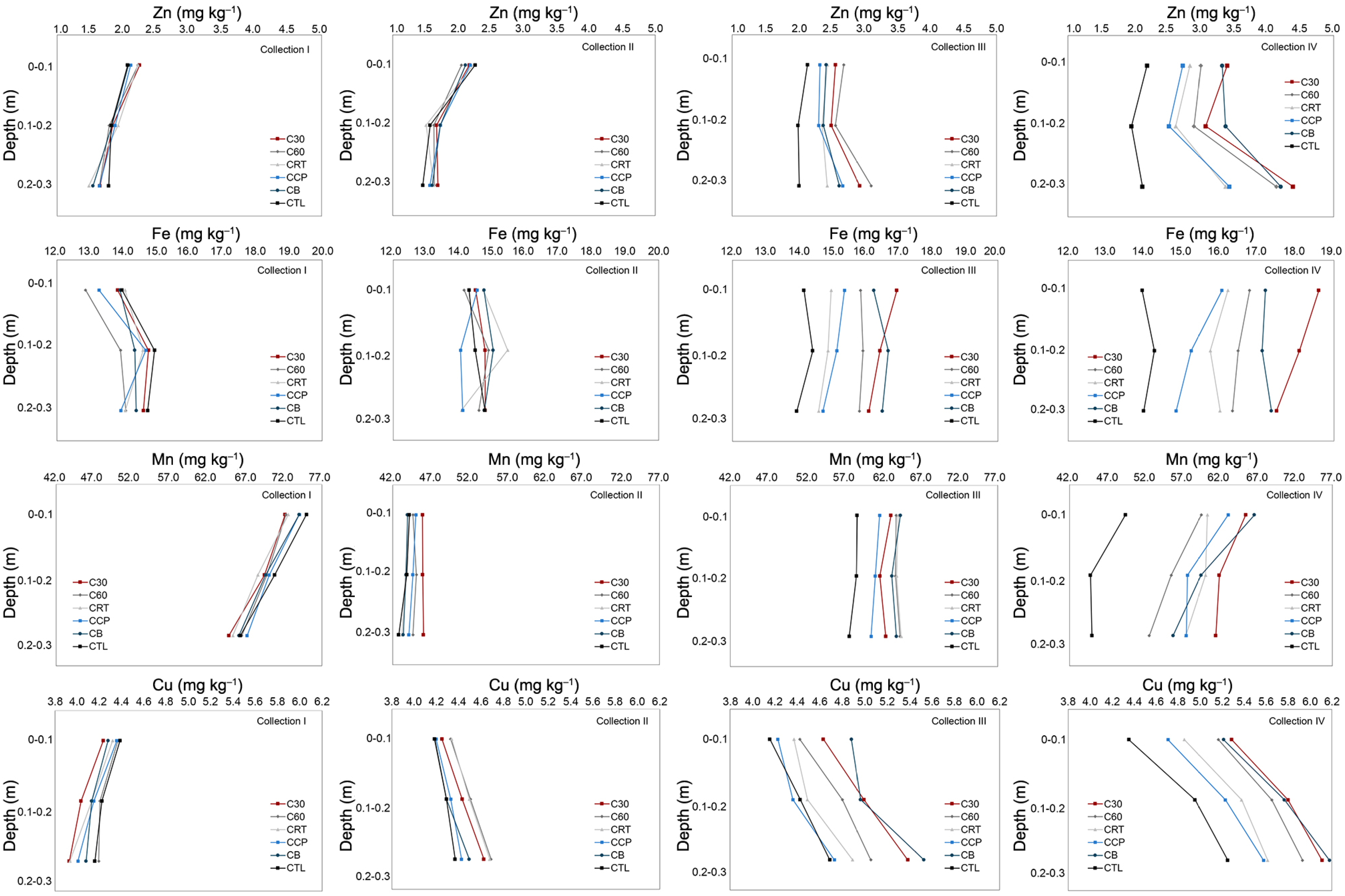
The concentrations of Zn, Fe, Mn, and Cu were not statistically different (p < 0.05) in collection I (characterization), in all plots (Figure 1). After the first application of organic fertilizers, there were no statistically significant changes between treatments in the concentrations of these micronutrients in any of the treatments. For all the micronutrients evaluated, the difference between the treatments occurred during the second application of organic fertilizers (collection III).
Concentration of micronutrients (Zn, Fe, Mn and Cu) in the different soil layers studied (0-10, 10-20 and 20-30 cm).
After the second application of the organic fertilizers, we observed that most of the organic fertilizers had statistically higher concentrations of all the micronutrients than the CTL treatment, with C30, C60 and CB having the highest concentrations. The organic fertilizer CCP (commercially produced organic compost) had a higher concentration of Zn than CTL, only in the 20-30 cm layer. After the third application (collection IV), all the organic fertilizers in all layers showed higher Zn concentrations than the CTL. For the micronutrient Fe, however, C30, C60 and CB stand out in the 0-10 layer and only C30 in the other layers. All the organic fertilizers had higher concentrations of Mn and Fe than the control in the 0-10 cm layer. In the 10-20 cm layer, treatments C30, CRT, and CB had the highest Mn concentration, and C60 had the highest Fe concentration. In the 20-30 cm layer, only C30 had more Mn than that found in CTL. For Cu, the higher concentrations were found in C30, C60, CRT, and CB.
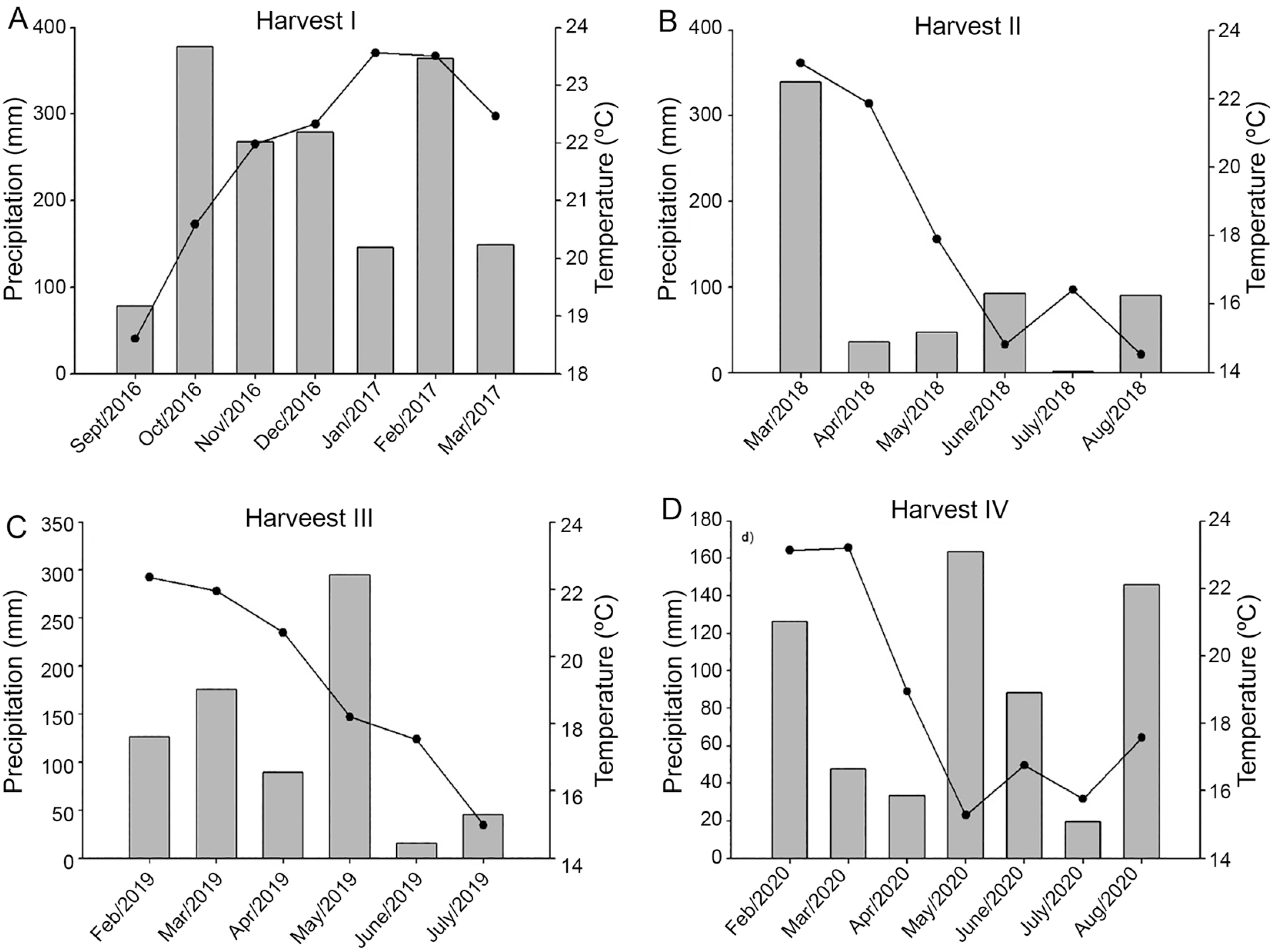
The harvests differed markedly in terms of rainfall (Figure 2A-D), yet most foliar macronutrients remained within sufficiency ranges (Table 5). Potassium was the sole exception, dipping below 17 g kg−1 in harvest II, the driest season. Limited soil moisture restricts K+ diffusion to the rhizosphere (Seiffert et al., 1995). It accelerates the mobilization of K and associated photoassimilates from vegetative tissues toward developing grains under drought stress (Cakmak and Rengel, 2024), explaining the ≈ 26 % decline recorded. Phosphorus and calcium likewise dropped in harvest II but stayed above their critical limits, consistent with reports that soil reserves buffer P during moderate drought (Zhang et al., 2020; He and Dijkstra, 2014) and with Ca's inherently low phloem mobility (Maillard et al., 2015), explaining why leaf-Ca remained above its critical limit. Foliar diagnosis of plant nutritional status is an important tool for assessing responses to fertilization strategies, complementing soil analyses (Raij, 2017). In this study, the nutritional status of maize was not significantly affected by the different treatments applied. The concentrations of N, Ca, Mg and Fe showed no statistical differences between treatments in the four crops grown (Table 5). P concentrations in harvest II were statistically higher (p < 0.05) for all the treatments in which organic fertilizers were used, compared to CTL (Table 5). In harvest IV, the CRT and CB treatments showed higher P levels (p < 0.05) than CTL. For K, C30, C60, and CB concentrations were higher (p < 0.05) than CTL. The micronutrients Zn, Mn and Cu revealed statistical differences (p < 0.05) between the treatments only in harvest IV (Table 5). Zn concentrations were higher in C30, C60, CRT and CB compared to CTL. Mn values were higher across all organic fertilizer treatments than in CTL. The C30 treatment had a higher Cu concentration than CTL.
Climatic conditions between 2016 and 2020 for the study area. Bars represent the average monthly rainfall and lines the average monthly temperature. Average monthly temperature and precipitation for the experimental period of (A) harvest I, (B) harvest II, (C) harvest III and (D) harvest IV.
Grain yield showed no moisture-related pattern, indicating that the rainfall gradient was insufficient to elicit a consistent growth response under the prevailing management. Future work should combine compost with controlled irrigation and in-situ moisture sensing to clarify moisture × nutrient dynamics. Maize grain yield did not differ significantly (p > 0.05) between treatments in harvests I, II, and III, despite the gradual reductions in mineral fertiliser and the use of organic composts with contrasting stabilisation times (Table 6). In harvest IV (2020), however, yield was affected by treatment (p < 0.05): C60 produced the highest mean yield (81.6 Mg ha−1) and was statistically similar to C30 and CRT, whereas CCP, CB, and CTL formed a lower-yield group (73.3-71.0 Mg ha−1). These results indicate that composts cured for 30-60 days (C30, C60) or CRT were able to sustain yields comparable to the best mineral-compost combination (C60), while the CB and the control lagged behind in the drier fourth season. Using the same treatment means from harvest IV (n = 6), grain yield correlated strongly with soil Mehlich-1 P (r = 0.97, p = 0.002) and moderately with pH (r = 0.85, p = 0.033), whereas the association with exchangeable K was not significant (r = 0.50, p = 0.31).
Discussion
For the treatments with the addition of organic composts (C30, C60, CRT, and CCP), the pH increased in the 0-10 cm layer after the first year of the experiment (collection II) when compared to the addition of CB and mineral fertilizer (CTL) (Table 2). There was a further increase in soil pH at depth for these treatments in subsequent collections (III and IV). In the last collection (IV), higher pH values were observed for C60 and CRT (0-10 cm); C30, C60, CRT, and CCP (10-20 cm), and C60, CRT, and CCP (20-30 cm). This increase can be attributed to the alkalinity resulting from the mineralization of organic matter from the added organic fertilizers (Bedada et al., 2014; Sukitprapanon et al., 2020). pH values between 5 and 6.2 contribute to a drop in aluminum solubility (Antonangelo et al., 2022) while aluminum toxicity can seriously limit crop development and productivity (Shetty et al., 2021). Only CTL and CB showed pH values lower than 5.0 in the 10-20 (CTL) and 20-30 (CTL and CB) layers after four years of experimentation. The higher pH values observed in C60 and CRT (0-10 cm) may be due to the greater mineralization of organic matter (OM) in these treatments. These results highlight the potential of organic composts to reduce soil acidity. The net alkalinisation observed after compost application results from a balance of several microbially-mediated and purely chemical pathways. During early mineralisation, decarboxylation of organic acids releases CO2 while base cations (Ca2+, Mg2+, K+) remain in the soil solution; their exchange with adsorbed H+ on clay/oxide surfaces consumes protons and raises pH. Hydrolysis of amide and urea-like groups generates NH4+ and OH+, producing a short-term alkalising pulse. Although subsequent nitrification of NH4+ to NO3− is acidifying (2 H+ formed per mol NH4+), this effect is outweighed by the larger proton consumption associated with base-cation release and organic-acid degradation. Microbial oxidation of low-molecular-weight organic anions further removes H+ from the soil solution. Carbonate particles naturally present in poultry litter (CaCO3) dissolve, neutralising acidity and supplying additional Ca2+. Collectively, these reactions explain the +1.2 pH-unit shift recorded in the Rhodic Hapludox, in agreement with the mechanisms described by Bernal et al. (2009) and Dhaliwal et al. (2019). Low pH values can limit nutrient availability and crop productivity in tropical and subtropical soils (Fontoura et al., 2019). In the 10-20 and 20-30 cm layers, treatments C30, C60, CRT, and CCP had a higher pH than CTL. The effects of successive applications of organic composts are evident from time-series data, as reported by Steel et al. (2012) and Willekens et al. (2014). It should be noted that the combination of organic manure and mineral fertilization may have increased soil P availability, as has been observed by Weber et al. (2007) and Bedada et al. (2016). However, the hig availability of P can cause environmental impacts, mainly through eutrophication of water bodies, driven by potential surface runoff. As a strategy to minimize this impact, the application of organic compost incorporated into the soil rather than on the surface can prevent such losses. To this end, it is necessary to develop agricultural machinery that can incorporate organic compost into the soil.
Increases in soil K concentration over the years with the application of organic fertilizers were also reported by Weber et al. (2007) who applied organic composts from municipal solid waste for three years and by Bedada et al. (2016) who reported inreases after six years of application of organic composts. The combination of organic manures and mineral fertilizers can enhance the availability of micronutrients in the soil that are essential to crop development. The exclusive use of mineral fertilizers can lead to deficiencies of Zn, Fe, Mn and Cu in the soil (Dhaliwal et al., 2019).
Our findings indicate that the organic fertilizers produced with the shortest stabilization times, C30 and CB, were more efficient at making micronutrients available. It is important to control the solubility of these elements, because at high concentrations they can make crops toxic; in this case, OM plays an essential role (Weber et al., 2007) in their adsorption and availability. The availability of micronutrients can also be affected by pH; higher pH values tend to reduce their availability (Bedada et al., 2016; Raij, 2017). In this study, the entry of more stabilized OM was observed in the C60 and CRT treatments, as along with higher soil pH. A greater degradation of OM in C30 and CB may have caused a reduction in pH compared to the C60 and CRT treatments, and consequently greater availability of micronutrients.
The maximum and minimum macro and micronutrient concentrations for maize crops in the state of Paraná (Table 5) were defined by SBCS (2017). In harvest II, all the treatments showed K concentrations in the plants below the minimum values indicated. External variables, beyond those considered in this study, may have negatively effected K concentrations in harvest II, as this effect was observed across all treatments. It should be noted that when applied with organic fertilizers, the mineral fertilizer was reduced by 30, 40, 50, and 60 % for harvests I, II, III and IV, respectively. The amount of organic fertilizer applied was also gradually reduced by 8, 6, 5 and 4 Mg ha−1 for harvests I, II, III, and IV, respectively. These results therefore demonstrate the ability of the combination of mineral and organic fertilizers to maintain the nutrition of maize plants. We found evidence of an improved concentration of micronutrients in plants in harvest IV, but without any significant impact on productivity. This behavior may indicate the long-term effects of applying organic fertilizers (Mota et al., 2019). Several medium and long-term studies have reportedpositive effects on nutrient concentration, biomass yield, and maize development from the use of organic fertilizers (Zhang et al., 2016; Asses et al., 2019; Mota et al., 2019). Organic composts can provide carbon, P, and soluble K, available in the short term (Chiarelotto et al., 2019). However, the amount supplied may be insufficient to meet crop demand in the short term (Asses et al., 2018). The effects of applying organic compost to agricultural production tend to show results in the medium and long term (Zhang et al., 2016). These effects can be longer-lasting, with nutrients becoming available gradually as the degradation of OM progresses (Adediran et al., 2005). This continuous nutrient release may favor the fertilization strategies described in this study. Mineral fertilization can be reduced gradually, as can the amount of organic fertilizers applied.
In a three-year experiment, replacing 30 % of mineral fertilizer with 3 Mg ha−1 of organic compost maintained maize yields compared to the recommended mineral fertilization (Zhang et al., 2016). In China, experiments comparing organic compost combined with mineral fertilization, mineral fertilization alone, or organic compost alone showed that the most efficient cultivation strategy for maize productivity was the combination of organic compost and mineral fertilization, resulting in a 4 % increase in productivity (Wei et al., 2016).
The decline in the C/N ratio from 26 ± 2 to values < 18 and the stabilisation of electrical conductivity below 3 dS m−1 (Table 3) confirm that all composts reached agronomically safe maturity levels. Although humic fractions and microbial activity were not assessed, future studies should include such measurements to corroborate biological stability.
Grain-yield response mirrored seasonal water supply. In the first three harvest years that received 1,661, 606, and 747 mm of rainfall, respectively, no statistical differences in yield were detected, indicating that all compost + fertiliser combinations maintained productivity despite progressive reductions in mineral NPK. In the drier harvest IV (624 mm), however, yield differed among treatments: C60, C30, and CRT outperformed CCP, CB, and the mineral-only control. This pattern agrees with the strong positive correlations observed in harvest IV between grain yield and both Mehlich-1 P (r = 0.97, p = 0.002) and soil pH (r = 0.85, p = 0.033). Under moisture-limited conditions, phosphorus uptake is mainly diffusion-controlled; therefore, larger labile-P pools and a slightly higher pH enhance P diffusion to roots and help sustain maize productivity (Fageria and Baligar, 2005). These findings highlight that composts cured for 30-60 days or aerobically matured (C30, C60, CRT) can buffer yield losses when rainfall is sub-optimal.
The five broiler productive chain (BPC)-based treatments (C30, C60, CRT, CCP and CB) received a front-loaded compost dose of 8 Mg ha−1 in the first season, tapered to 6, 5 and 4 Mg ha−1 in years 2-4 (mean 5.8 Mg ha−1 yr−1), plus progressively smaller mineral complements (231 → 198 → 125 → 100 kg ha−1 of 10-15-15). Relative to the CTL, the organic treatments lifted surface-soil pH by up to 1.2 units and raised Mehlich-1 P by ≈ 66 %. Foliar K and Ca likewise remained within sufficiency ranges, and grain yield was fully maintained. These nutrient gains allowed growers to omit ≈ 35 kg ha−1 P2O5 and 20 kg ha−1 K2O, trimming synthetic NPK inputs by 60 % and saving ≈ US$ 28 ha−1 at 2025 prices.
If only 5 % of Brazil's 22 Mha maize area adopted any of these BPC-compost strategies, annual imports would fall by ≈ 38,000 tons P2O5 and 22,000 tons K2O, shaving about 2 % off the country's potash demand. Because 5.8 Mg of compost supplied the 55 kg of withheld nutrients, the system recycles ≈ 9.5 kg of plant-available P + K per tonne of compost. Brazil's broiler sector is expected to generate ≈ 5.3 Mt of solid waste in 2025; composting just a quarter of that stream (≈ 1.3 Mt yr−1) would divert the same mass from landfills while producing enough compost to meet the 5 % adoption scenario. Together, these figures show that valuing BPC waste sustains yields, reduces fertiliser dependence and mitigates waste disposal, tangible environmental and economic gains that strengthen regional circular-economy loops.
The most workable option for farmers on clayey Ferralsols of western Paraná state is the 60-day stabilised broiler compost (C60) applied at 8, 6, 5, and 4 Mg ha−1 over four consecutive seasons. Combine these doses with a step-down mineral schedule, reducing the local 10-15-15 recommendation by 30 %, 40 %, 50 %, and 60 % in years 1-4, respectively, while maintaining complete N for the target yield. Keep crop residues on the surface to protect aggregates and SOC, and irrigate (where available) to avoid severe water stress during grain filling. Before field use, ensure each compost batch meets Brazilian stability and contaminant norms. The next step is to carry out an economic-viability analysis (partial budget or cost-benefit) to pinpoint the season in which fertiliser savings and yield response offset hauling and application costs, thereby identifying the break-even point at which the strategy becomes financially attractive to local growers.
For local adoption, we recommend the 60-day compost (C60) and the step-down mineral schedule described above, coupled with routine soil testing to fine-tune P and K inputs. Future work should include a formal cost-benefit analysis to identify the break-even season for growers and extend monitoring beyond eight years to verify sub-soil SOC gains, greenhouse gas emissions and microbial indicators.
Data availability statement
The datasets generated during and/or analyzed during the current study are available from the corresponding author on reasonable request.
Acknowledgments
The authors are grateful to the Coordenação de Aperfeiçoamento de Pessoal de Nível Superior (CAPES), the Conselho Nacional de Desenvolvimento Científico e Tecnológico (CNPq) and the Universidade Federal do Oeste da Bahia (UFOB).
References
-
Adediran JA, Taiwo LB, Akande MO, Sobulo RA, Idowu OJ. 2005. Application of organic and inorganic fertilizer for sustainable maize and cowpea yields in Nigeria. Journal of Plant Nutrition 27: 1163-1181. https://doi.org/10.1081/PLN-120038542
» https://doi.org/10.1081/PLN-120038542 -
Antonangelo JA, Ferrari Neto J, Crusciol CAC, Zhang H, Alleoni LRF, Kinrade SD. 2022. Comparative analysis of exchangeable aluminum in a tropical soil under long-term no-till cultivation. Soil & Tillage Research 216: 105242. https://doi.org/10.1016/j.still.2021.105242
» https://doi.org/10.1016/j.still.2021.105242 -
Aparecido LEO, Rolim GS, Richetti J, Souza PS, Johann JA. 2016. Köppen, Thornthwaite and Camargo climate classifications for climatic zoning in the state of Paraná, Brazil. Ciência e Agrotecnologia 40: 405-417. https://doi.org/10.1590/1413-70542016404003916
» https://doi.org/10.1590/1413-70542016404003916 -
Asses N, Farhat A, Cherif S, Hamdi M, Bouallagui H. 2018. Comparative study of sewage sludge co-composting with olive mill wastes or green residues: process monitoring and agriculture value of the resulting composts. Process Safety and Environmental Protection 114: 25-35. http://dx.doi.org/10.1016/j.psep.2017.12.006
» http://dx.doi.org/10.1016/j.psep.2017.12.006 -
Asses N, Farhat W, Hamdi M, Bouallagui H. 2019. Large scale composting of poultry slaughterhouse processing waste: microbial removal and agricultural biofertilizer application. Process Safety and Environmental Protection 124: 128-136 https://doi.org/10.1016/j.psep.2019.02.004
» https://doi.org/10.1016/j.psep.2019.02.004 -
Bedada W, Karltun E, Lemenih M, Tolera M. 2014. Long-term addition of compost and NP fertilizer increases crop yield and improves soil quality in experiments on smallholder farms. Agriculture, Ecosystems and Environment 195: 193-201. https://doi.org/10.1016/j.agee.2014.06.017
» https://doi.org/10.1016/j.agee.2014.06.017 -
Bedada W, Lemenih M, Karltun E. 2016. Soil nutrient build-up, input interaction effects and plot level N and P balances under long-term addition of compost and NP fertilizer. Agriculture, Ecosystems and Environment 218: 220-231. http://dx.doi.org/10.1016/j.agee.2015.11.024
» http://dx.doi.org/10.1016/j.agee.2015.11.024 -
Bernal MP, Alburquerque JA, Moral R. 2009. Composting of animal manures and chemical criteria for compost maturity assessment: a review. Bioresource Technology 100: 5444-5453. https://doi.org/10.1016/j.biortech.2008.11.027
» https://doi.org/10.1016/j.biortech.2008.11.027 -
Cakmak I, Rengel Z. 2024. Humboldt Review: Potassium may mitigate drought stress by increasing stem carbohydrates and their mobilization into grains. Journal of Plant Physiology 303: 154325. https://doi.org/10.1016/j.jplph.2024.154325
» https://doi.org/10.1016/j.jplph.2024.154325 -
Chiarelotto M, Damaceno FM, Lorin HEF, Tonial LMS, Costa LAM, Bustamante MA, et al. 2019. Reducing the composting time of broiler agro-industrial wastes: the effect of process monitoring parameters and agronomic quality. Waste Management 96: 25-35. https://doi.org/10.1016/j.wasman.2019.07.012
» https://doi.org/10.1016/j.wasman.2019.07.012 -
Dhaliwal SS, Naresh RK, Mandal A, Singh R, Dhaliwal MK. 2019. Dynamics and transformations of micronutrients in agricultural soils as influenced by organic matter build-up: a review. Environmental and Sustainability Indicators 1-2: 100007. https://doi.org/10.1016/j.indic.2019.100007
» https://doi.org/10.1016/j.indic.2019.100007 - Empresa Brasileira de Pesquisa Agropecuária [EMBRAPA]. 2009. Manual de Análises Químicas de Solos, Plantas e Fertilizantes. 2ed. Embrapa Solos, Brasília, DF, Brazil (in Portuguese).
-
Fageria NK, Baligar VC. 2005. Enhancing nitrogen use efficiency in crop plants. Advances in Agronomy 88: 97-185. https://doi.org/10.1016/S0065-2113(05)88004-6
» https://doi.org/10.1016/S0065-2113(05)88004-6 -
Fontoura SMV, Pias OHC, Tiecher T, Cherubin MR, Moraes RP, Bayer C. 2019. Effect of gypsum rates and lime with different reactivity on soil acidity and crop grain yields in a subtropical Oxisol under no-tillage. Soil & Tillage Research 193: 27-41. https://doi.org/10.1016/j.still.2019.05.005
» https://doi.org/10.1016/j.still.2019.05.005 -
Gomes LC, Faria RM, Souza E, Veloso GV, Schaefer CEGR, Fernandes Filho EI. 2019. Modelling and mapping soil organic carbon stocks in Brazil. Geoderma 340: 337-350. https://doi.org/10.1016/j.geoderma.2019.01.007
» https://doi.org/10.1016/j.geoderma.2019.01.007 -
He M, Dijkstra FA. 2014. Drought effect on plant nitrogen and phosphorus: a meta-analysis. New Phytologist 204: 924-931. https://doi.org/10.1111/nph.12952
» https://doi.org/10.1111/nph.12952 - IUSS Working Group WRB. 2022. World Reference Base for Soil Resources. International Soil Classification System for Naming Soils and Creating Legends for Soil Maps. 4ed. International Union of Soil Sciences, Vienna, Austria.
-
Maillard A, Diquélou S, Billard V, Laîné P, Garnica M, Prudent M, et al. 2015. Leaf mineral nutrient remobilization during leaf senescence and modulation by nutrient deficiency. Frontiers in Plant Science 6: 1-15. https://doi.org/10.3389/fpls.2015.00317
» https://doi.org/10.3389/fpls.2015.00317 -
Mota VC, Andrade ET, Pinto SM, Abreu LR, Leite DF. 2019. Utilization of bedded cattle confinement for organic manure of maize crop. Revista Brasileira de Engenharia Agrícola e Ambiental 23: 620-624. https://doi.org/10.1590/1807-1929/agriambi.v23n8p620-624
» https://doi.org/10.1590/1807-1929/agriambi.v23n8p620-624 - Raij BV. 2017. Fertilidade do Solo e Manejo de Nutrientes. Plant Nutrition Institute, Piracicaba, SP, Brazil (in Portuguese).
-
Rayne N, Aula L. 2020. Livestock manure and the impacts on soil health: a review. Soil System 4: 64. https://doi.org/10.3390/soilsystems4040064
» https://doi.org/10.3390/soilsystems4040064 -
Seiffert S, Kaselowsky J, Jungk A, Claassen N. 1995. Observed and calculated potassium uptake by maize as affected by soil water content and bulk density. Agronomy Journal 87: 1070-1077. https://doi.org/10.2134/agronj1995.00021962008700060007x
» https://doi.org/10.2134/agronj1995.00021962008700060007x -
Shetty R, Vidya CSN, Prakash NB, Lux A, Vaculík M. 2021. Aluminum toxicity in plants and its possible mitigation in acid soils by biochar: a review. Science of the Total Environment 765: 142744. https://doi.org/10.1016/j.scitotenv.2020.142744
» https://doi.org/10.1016/j.scitotenv.2020.142744 - Sociedade Brasiliera de Ciência do Solo [SBCS]. 2017. Manual de Adubação e Calagem para o Estado do Paraná. 2ed. Editora SBCS, Curitiba, PR, Brazil (in Portuguese).
-
Steel H, Vandecasteele B, Willekens K, Sabbe K, Moens T, Bert W. 2012. Nematode communities and macronutrients in composts and compost-amended soils as affected by feedstock composition. Applied Soil Ecology 61: 100-112. https://doi.org/10.1016/j.apsoil.2012.05.004
» https://doi.org/10.1016/j.apsoil.2012.05.004 -
Sukitprapanon TS, Jantamenchai M, Tulaphitak D, Vityakon P. 2020. Nutrient composition of diverse organic residues and their long-term effects on available nutrients in a tropical sandy soil. Heliyon 6: e05601. https://doi.org/10.1016/j.heliyon.2020.e05601
» https://doi.org/10.1016/j.heliyon.2020.e05601 -
Tomić T, Schneider DR. 2018. The role of energy from waste in circular economy and closing the loop concept: energy analysis approach. Renewable and Sustainable Energy Reviews 98: 268-287. https://doi.org/10.1016/j.rser.2018.09.029
» https://doi.org/10.1016/j.rser.2018.09.029 -
Weber J, Karczewska A, Drozd J, Licznar M, Licznar S, Jamroz E, et al. 2007. Agricultural and ecological aspects of a sandy soil as affected by the application of municipal solid waste composts. Soil Biology and Biochemistry 39: 1294-1302. https://doi.org/10.1016/j.soilbio.2006.12.005
» https://doi.org/10.1016/j.soilbio.2006.12.005 -
Wei W, Yan Y, Cao J, Christie P, Zhang F, Fan M. 2016. Effects of combined application of organic amendments and fertilizers on crop yield and soil organic matter: an integrated analysis of long-term experiments. Agriculture, Ecosystems and Environment, 225: 86-92. http://dx.doi.org/10.1016/j.agee.2016.04.004
» http://dx.doi.org/10.1016/j.agee.2016.04.004 -
Willekens K, Vandecasteele B, Buchan D, Neve S. 2014. Soil quality is positively affected by reduced tillage and compost in an intensive vegetable cropping system. Applied Soil Ecology 82: 61-71. https://doi.org/10.1016/j.apsoil.2014.05.009
» https://doi.org/10.1016/j.apsoil.2014.05.009 -
Zhang H, Li G, Gu J, Wang G, Li Y, Zhang D. 2016. Influence of aeration on volatile sulfur compounds (VSCs) and NH3 emissions during aerobic composting of kitchen waste. Waste Management 58: 369-375. https://doi.org/10.1016/j.wasman.2016.08.022
» https://doi.org/10.1016/j.wasman.2016.08.022 -
Zhang H, Shi L, Lu H, Shao Y, Liu S, Fu S. 2020. Drought promotes soil phosphorus transformation and reduces phosphorus bioavailability in a temperate forest. Science of the Total Environment 732: 139295. https://doi.org/10.1016/j.scitotenv.2020.139295
» https://doi.org/10.1016/j.scitotenv.2020.139295
Edited by
-
Edited by:
Gabriel Ramatis Pugliese Andrade https://orcid.org/0000-0003-2110-5357