 Soil microbial diversity and metabolic gene expression respond to long-term fertilizations in simulated field experiments
ABSTRACT:
The extended and unscientific use of chemical fertilizers has significantly diminished soil microbial activity. A long-term field trial spanning for 12 years was conducted to assess soil fertility and microbial activity under different fertilization strategies. A soil column system was established, incorporating nine types of conventional chemical fertilizers across three concentration gradients to simulate the effects of consistent and intensive application commonly seen in agricultural practices. High-throughput sequencing and Biolog technology were employed to examine the soil structure, function, and metabolic gene profiles in microbes. Throughout the period of consistent fertilization, the annual yield of tobacco leaves showed a steady decline. However, the use of organic and bio-organic fertilizers has proven to be remarkably effective, reversing this drop in productivity by between 8.88 and 13.25 percentage points. In the soil column fertilization simulation system, the consistent use of nine different chemical fertilizers led to significant variations in the diversity of Actinobacteria and Proteobacteria. After an extended period of high-frequency application with a 50 % reduction in urea dosage, the Shannon index exhibited a significant (p < 0.05) increase of 1.77 % compared to its initial level. Notably, monoammonium phosphate and compound fertilizers markedly inhibited the abundance of Proteobacteria, whereas potassium nitrate displayed a promoting effect. Additionally, the expression of amino acid and nucleotide transport and metabolism genes in the calcium-magnesium phosphate fertilizer, when applied at the standard dosage, was found to upregulated. In conclusion, the prolonged application of various chemical fertilizers negatively impacts soil microbial activity, with a more pronounced effect observed from straight chemical fertilizers compared to compound fertilizers.
Keywords:
long-term localized trial; fertilization; column fertilization simulation system; soil microbial diversity; co-correlation networks
Introduction
Flue-cured tobacco production serves as a crucial avenue for tobacco farmers to escape poverty and significantly contributes to bolstering national tax revenues in China (Liu et al., 2013). In their quest for economic gains, tobacco farmers frequently apply substantial amounts of fertilizers to the soil, which results in not only to fertilizer wastage but also plays a significant role in affecting the water environment (Florence et al., 2024). Statistics indicate that investments in fertilizers accounts for approximately 50 % of all productive expenditures by Chinese farmers. The unscientific use of chemical fertilizers, along with inadequate organic matter supplementation, has led to a decline in land productivity. This decline encompasses the deterioration of soil's physical structure, nutritional imbalance, and degradation of soil microbial composition (Xue et al., 2019).
Research has shown that both abundant and rare microbial species are significantly affected by 40 years of nitrogen (N) fertilizer application, with soil pH and nitrate levels primarily driving the complexity of microbial co-occurrence network (Liu et al., 2025). Different long-term fertilization strategies have been found to exert top-down control over bacterial and fungal communities in Mollisols (Hu et al., 2024). While numerous studies have highlighted the beneficial effects of organic fertilizers on soil microorganisms (Geisseler and Scow, 2014), there has been comparatively little systematic on the impact of chemical fertilizers on microbial populations from multiple perspectives.
This study investigates the phenomenon in which different types of fertilization led to varying outcomes in tobacco production during long-term field trials. It is hypothesized that different types of chemical fertilizers (e.g., nitrogen-based vs phosphorus-based) create unique selective pressures on soil microbial communities. This, in turn, results in variations in taxonomic composition, functional gene profiles, and metabolic activity. To expedite the collection of long-term, consistent results regarding the unsustainable application of chemical fertilizers, a long-term localized trial was replaced with indoor simulation experiments. The findings will provide a theoretical foundation for the scientific application of chemical fertilizers in tobacco production.
Materials and Methods
Long-term localized fertilizer efficiency monitoring experimentation
Experimental materials
The trial was conducted at the prestigious long-term localized experimental station focused on tobacco soil fertility and fertilizer utilization efficiency in Guizhou Province (106°07’57.6" N, 26°11’34.5" E, altitude 1100 m). The station experiences an annual average temperature of 15 °C, with an average annual rainfall of 1197 mm and a frost-free period lasting approximately 276.5 days. The soil is classified as yellow loam, primarily derived from Paleozoic and Quaternary red clay materials. The pH of the soil sampled from this experimental station is 5.45. Additionally, the soil contains organic matter at 48.6 g kg−1, total nitrogen at 2.29 g kg−1, alkali-hydrolyzed nitrogen at 158 mg kg−1, available phosphorus at 48.9 mg kg−1, and available potassium at 543 mg kg−1. In this experiment, the organic fertilizer was cattle manure, generously provided by Guizhou Jilong Technology Co. Ltd. The composition of this fertilizer included 307 g kg−1 of organic matter, 20.7 g kg−1 of nitrogen, 18.9 g kg−1 of P2O5, and 10.3 g kg−1 of K2O. A balanced formulation of organic fertilizers was created, consisting of a 1:1 mass ratio of cattle manure and hydrolyzed rapeseed cake, enriched with 338 g kg−1 of organic matter, 43.0 g kg−1 of amino acids, 42.0 g kg−1 of nitrogen, 22.6 g kg−1 of P2O5, and 10.8 g kg−1 of K2O. This customized mixture was inoculated with a soil functional microbiome sourced from a ten-year fallow field in Huali Township, Kaiyang County, Guizhou Province. Notably, the bioorganic fertilizer has been granted an international patent (EP3613843B1), and the tobacco variety utilized in its production was Yunyan87.
Experimental design
The long-term localized monitoring experiment consisted of six distinct treatment groups, designated as N (nitrogen fertilizer only), NP (nitrogen and phosphorus), NK (nitrogen and potassium), NPK (conventional fertilizer), NPK + M (conventional fertilizer plus organic fertilizer), and NPK + BIO (conventional fertilizer plus bioorganic fertilizer). A uniform application of 75 kg hm−2 of nitrogen fertilizer was administered across all treatments. The application rates for organic fertilizer and bioorganic fertilizer were set at 1500 and 750 kg hm−2 to NPK + M and NPK + BIO treatments, respectively (Table 1). To address any deficiencies in nitrogen, phosphorus, or potassium, simple chemical fertilizers were utilized as supplements. Specifically, urea (N 46 %), calcium magnesium phosphate (P2O5 14.62 %), and potassium chloride (K2O 60 %) were employed for nitrogen, phosphorus, and potassium fertilizers, respectively. Each treatment was replicated three times using a randomized block design, with each plot covering an area of 0.04 ha. There were 260 plants in each treatment, arranged in 13 ridges with 20 plants per ridge. The row spacing was maintained at 1.10 m, with a plant spacing was at 0.55 m.
Soil analysis
Soil samples were collected using the "five-point sampling method". The available N, P, K, organic matter and pH value of the soil were analyzed using the techniques outlined by Bao (2000). To measure soil respiration intensity, a soil respiration tester (HENGMEI Intelligent Manufacturing) was used. Soil respiration chambers were strategically placed at various points in the soil to capture carbon dioxide emitted from the soil into a gas collection chamber. Changes in carbon dioxide concentration were then analyzed to calculate soil respiration rates.
Tobacco plants were carefully uprooted from their trays and gently shaken to remove all but the most tightly adhered soil. The roots, retaining this tightly adhered soil, were then soaked in sterilized distilled water and shaken at 25 °C and 170 r/min to collect the rhizosphere soil. Soil DNA was extracted using a specialized Soil DNA Isolation Kit (Omega) and subsequently amplified according to the standard protocol. To evaluate the functional microorganisms, present in the rhizosphere soil, fluorescence real-time PCR was utilized. Gene cloning and plasmid extraction were performed in accordance with the established protocol outlined by Sambrook and Russel (2001). The quantities of Nitrobacter, potassium-dissolving bacteria, and others were referenced from previous studies (Pérez et al., 2015; Chen et al., 2020). The DNA amplification process was conducted using the ABI Prism SDS 7500 instrument (PE Applied Biosystems).
Tobacco Yield
Approximately 60-70 d after transplanting, the tobacco leaves were harvested in layers from the bottom up and placed into the tobacco-curing room for the curing process. The yield was then calculated after curing (SBQTS, 1992).
Effects of multi-frequency chemical fertilizer application on soil microbial community in soil column fertilization simulation system
Utilized soil
The soil was identified as yellow soil, exhibiting a pH level of 7.55. The soil concentrations of the following features were: organic matter at 20.42 g kg−1, total nitrogen at 2.29 g kg−1, alkaline nitrogen at 210 mg kg−1, available phosphorus at 15.84 mg kg−1 and available potassium at 196.54 mg kg−1. These values fall within optimal ranges for supporting crop growth and development.
Specialized chemical fertilizers in use
Nitrogen fertilizers were applied in the forms of urea [(NH2)2CO] and ammonium nitrate (NH4NO3). Phosphate fertilizers included calcium-magnesium phosphate (P2O5 = 14.62 %) and calcium superphosphate (P2O5 = 13.28 %). Potassium fertilizers were applied in the forms of potassium sulfate (K2SO4) and potassium chloride (KCl). Additionally, various chemical compound fertilizers were utilized, including monoammonium phosphate (NH4H2PO4), potassium nitrate (KNO3), and tobacco-specific compound fertilizer (N:P2O5:K2O with a ratio of 10:10:20), providing a balanced nutrient mix. All of the straight chemical reagents used were of analytical grade.
Soil column fertilization simulation system
A polyvinyl chloride pipe, measuring 30 cm in height and 7.5 cm in diameter, was employed as the container for the soil column experiment. One end of the pipe was tightly sealed with a plastic film, while the opposing end was securely covered with a sterile, breathable membrane, fastened with a rubber band to ensure optimal sealing.
The fallow soil was passed through a 6-mesh sieve to ensure a fine particle size, then thoroughly mixed to achieve uniformity. The moisture content of the soil was calibrated to 65 % of its water-holding capacity (WHC), creating optimal conditions for the experiment.
Each soil column was filled with exactly 2 kg of the prepared soil and was randomly distributed within an advanced artificial climate box (model RGL-P1000D). The internal environment of the box was calibrated to support dark culturing at a stable temperature of 25 °C.
Soil column fertilization simulation design
Based on comprehensive, localized experimental data on fertilization dosages, the required amounts of nitrogen, phosphorus, and potassium fertilizers were carefully determined to be 5, 5, and 10 g column−1, respectively, measured in terms of N, P2O5, and K2O content. The application of compound fertilizer was adjusted to meet the nitrogen requirement of 5 g column−1 (Table 2). Nine distinct types of traditional chemical fertilizers specifically designed for tobacco cultivation were incorporated into soil columns, each represented by three concentration levels: Treatment 1 (T1, 50 % reduction), Treatment 2 (T2, conventional fertilization), and Treatment 3 (T3, 50 % increase). Additionally, a control (CK) was maintained that include no fertilizer application.
Fertilization and water replenishment procedures were conducted at 20-day intervals, culminating in a total of five cycles. After completing these cycles, no further fertilization was performed. Prior to these interventions, the soil moisture content was assessed using the weighing method to ascertain the accurate amount of water required for replenishment, thereby ensuring uniform soil water levels. During each fertilization event, a predetermined quantity of fertilizer, which had been previously ground into a fine powder, was dissolved in water and thoroughly incorporated into the soil, with particular focus on achieving a uniform distribution of the fertilizer solution through careful mixing. This systematic approach allowed for the assessment of the effects of various fertilizer types and concentrations on the soil, considering the soil's buffering capacity. Soil samples were collected before the initial water replenishment (20-day sample) and at the end of the cultivation period (300-day sample), yielding a comprehensive dataset consisting of 18 batches of soil samples.
Structural diversity and functional metabolic genes of soil bacterial communities
Soil DNA from the 300-day sample was extracted using Soil DNA Isolation Kit (Omega) and then diluted to a concentration of 1 × 10⁻³ μg μL−1 with elution buffer for optimal handling. The targeted 16S V4 region gene was amplified through PCR using specific forward (515F: 5’-GTGYCAGCMGCCGCGGTAA-3’) and reverse (806R: 5’-GGACTACNVGGGTWTCTAA-3’) primers. The PCR amplification reaction system, sequencing procedures, library construction, and subsequent data analysis were performed according to the protocols established by Liu et al. (2018). To further explore the metagenomic content of the samples, the 16S rRNA sequencing data were analyzed using PICRUSt (Phylogenetic Investigation of Communities by Reconstruction of Unobserved States), which allowed for the prediction of functional potentials based on phylogenetic composition (Feng et al., 2019). All generated 16S rRNA sequencing data have been deposited in the NCBI Sequence Read Archive, ensuring public access and future reference, and can be cited and retrieved using the unique accession number PRJNA897573.
Ecological diversity of soil bacterial communities
The Biolog EcoPlate system (Biolog Inc.) was employed to analyze the utilization patterns of various carbon sources, encompassing 31 diverse carbon options organized into six functional groups: carbohydrates (7 types), amino acids (6 types), carboxylic acids (9 types), polymers (4 types), amines (2 types), and other compounds (3 types).
Fresh soil equivalent to 10 g of dried soil collected from 20 days and 300 days was measured and transferred to a triangular flask containing 90 mL of sterilized physiological saline (0.85 %). The mixture was shaken for 40 min to ensure thorough homogenization. The resulting soil solution was then diluted to create a concentration gradient of 10−3. A volume of 150 μL of the diluted soil solution was added to each well of the ECO plate, which was incubated at 28 °C in a moist, light-shielded environment for 96 h. Measurements were taken using the Biolog automatic reader at wavelengths of 590 nm (for color and turbidity) and 750 nm (for turbidity) every 24 h.
The utilization rates of various carbon source types by microorganisms present in soil samples were assessed by calculating the Average Well Color Development (AWCD) value using the Biolog microplates. This metric provides a quantitative evaluation of microbial activity toward different carbon substrates. In addition, the Shannon index was utilized to provide complementary insights into the richness of microbial communities within the soil samples (Liu et al., 2015).
where A is the absorbance value of the reaction well; n is the number of carbon sources.
where Pi = Ai / Atotal represents the ratio of the relative absorbance value of the i-th well to the sum of the relative absorbance of the entire plate. A represents the absorbance at 590 nm.
Data analysis
The data obtained were analyzed statistically using Microsoft Excel 2016 and SPSS Base Version 13.0. The data were subjected to One-way Analysis of Variance, and the means were analyzed using Duncan's multiple range tests at p < 0.05.
Bipartite networks were constructed by using fertilizations as source nodes and operational taxonomic units (OTUs) as target nodes. These networks included edges that represented positive associations, connecting specific OTUs with individual fertilizations or their combinations. To effectively visualize these complex relationships, the edge-weighted spring-embedded layout algorithm within CytoScape (version 3.10) was employed, assigning weights to edges based on the strength of their associations.
Results
Effects of long-term localized fertilization on tobacco yield
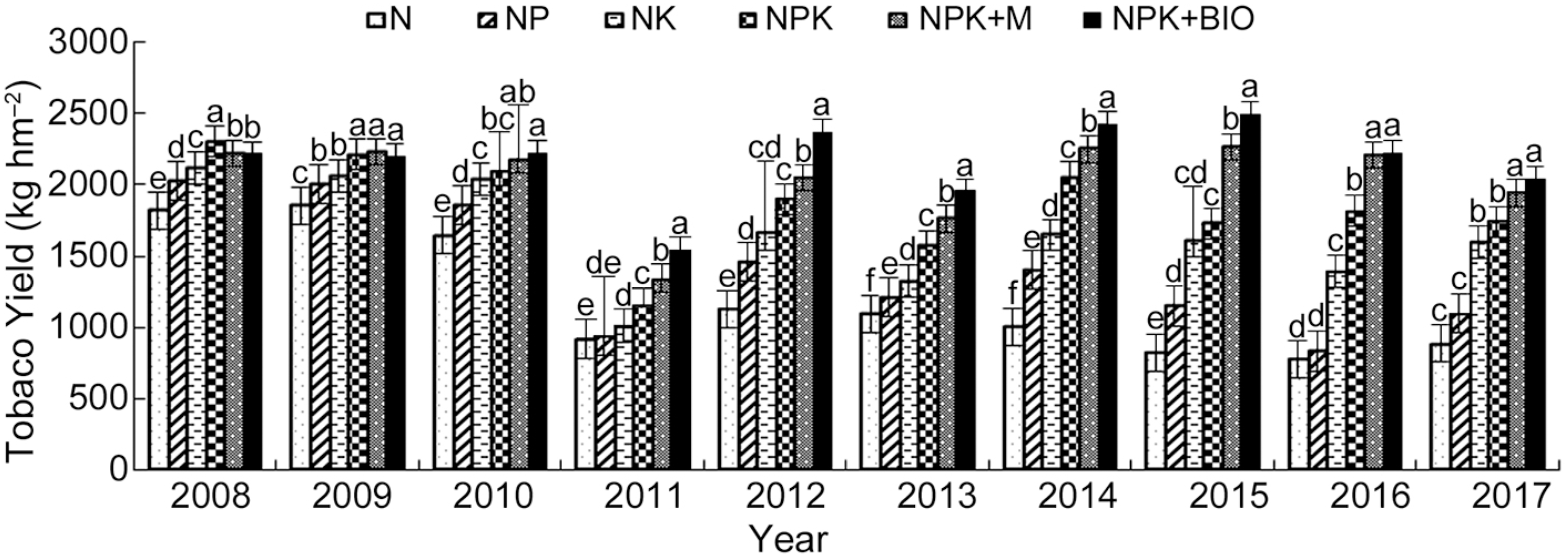
Over the long-term, localized fertilization led to a consistent annual decline in tobacco leaf yields. However, the application of organic and bio-organic fertilizers significantly mitigated this decline, helping to revitalize yield levels (Figure 1). Notably, the NPK + BIO treatment produced significantly higher results compared to all other treatments, even in the face of extreme conditions, such as the severe drought in Guizhou in 2011. While the yields from NPK + M and NPK treatments were not drastically different from each other, they significantly outperformed various unscientific fertilization practices. When comparing the years 2008 and 2017, all treatments exhibited a fluctuating yet overall downward trend in yields. The declines were particularly pronounced, with reductions of 51.3 %, 45.9 %, 24.5 %, 24.5 %, 12.4 %, and 7.8 % observed in the N, NP, NK, NPK, NPK + M, and NPK + BIO treatments, respectively.
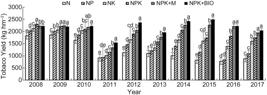
The effect on tobacco yield under different fertilization regimes. N = nitrogen; NP = nitrogen and phosphorus; NK = nitrogen and potassium; NPK = conventional fertilizer; NPK + M = conventional fertilizer and organic fertilizer; NPK + BIO = conventional fertilizer and bioorganic fertilizer.
Impacts of long-term and diverse fertilization approaches on soil's available nutrients and respiratory intensity
The organic matter content ranked as follows: NPK + M > NPK + BIO > NPK > NK > NP > N (Table 3). Notably, NPK + M and NPK + BIO exhibited comparable levels, being 16.35 and 9.51 % higher than NPK, respectively. NPK outperformed the nutrient-deficient treatments (NK/NP/N), although NP and NK showed neglectable differences. Regarding soil pH, NPK + BIO and NPK + M recorded significantly higher values, while N displayed the lowest pH among the uniformly neutral treatments (N/NP/NK/NPK). The available nitrogen content in NPK + M was significantly higher compared to other treatments, exceeding NPK + BIO by 10.20 %. No significant differences in available nitrogen were observed among the NPK + BIO, NPK, and NK treatments. Regarding available phosphorus, NPK + M was not significantly higher than the NPK treatment, although the NPK + BIO treatment showed an increase of 19.38 %. NPK + M also had the highest available potassium content among all treatments, while NPK + BIO, NPK, and NK showed no notable variation in potassium levels. Finally, significant differences were observed in respiration intensity among all treatments. The respiration intensity for the NPK + BIO treatment was notably higher, reaching 1.18 times that of the NPK + M treatment and 1.33 times that of the NPK treatment.
Effect of different fertilizations on soil chemical properties under a long-term positioning trial.
Effects of long-term different fertilization strategies on soil functional microorganisms
The application of bio-organic fertilizers significantly improved the abundance of functional microorganism compared to conventional methods (Figure 2), resulting in a 19 % increase in nitrogen-fixing bacteria and a 40.8 % rise in potassium-dissolving bacteria. However, phosphate-solubilizing bacteria remained at 88.4 % of control levels. Notably, single-nutrient treatments selectively enhanced their corresponding microbial groups: treatment maximized phosphate-solubilizing bacteria (NP), fostered potassium bacteria (NK), while nitrogen-only (N) treatment primarily amplified N-cycling microbiota. This demonstrates a nutrient-specific recruitment of microorganisms.
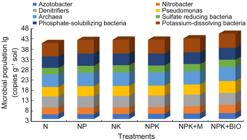
Population of functional microorganisms in the soil rhizosphere under a long-term positioning trial. N = nitrogen; NP = nitrogen and phosphorus; NK = nitrogen and potassium; NPK = conventional fertilizer; NPK + M = conventional fertilizer and organic fertilizer; NPK + BIO = conventional fertilizer and bioorganic fertilizer.
Influence of diverse chemical fertilizers on the structural diversity of soil bacterial communities in soil column fertilization simulation system
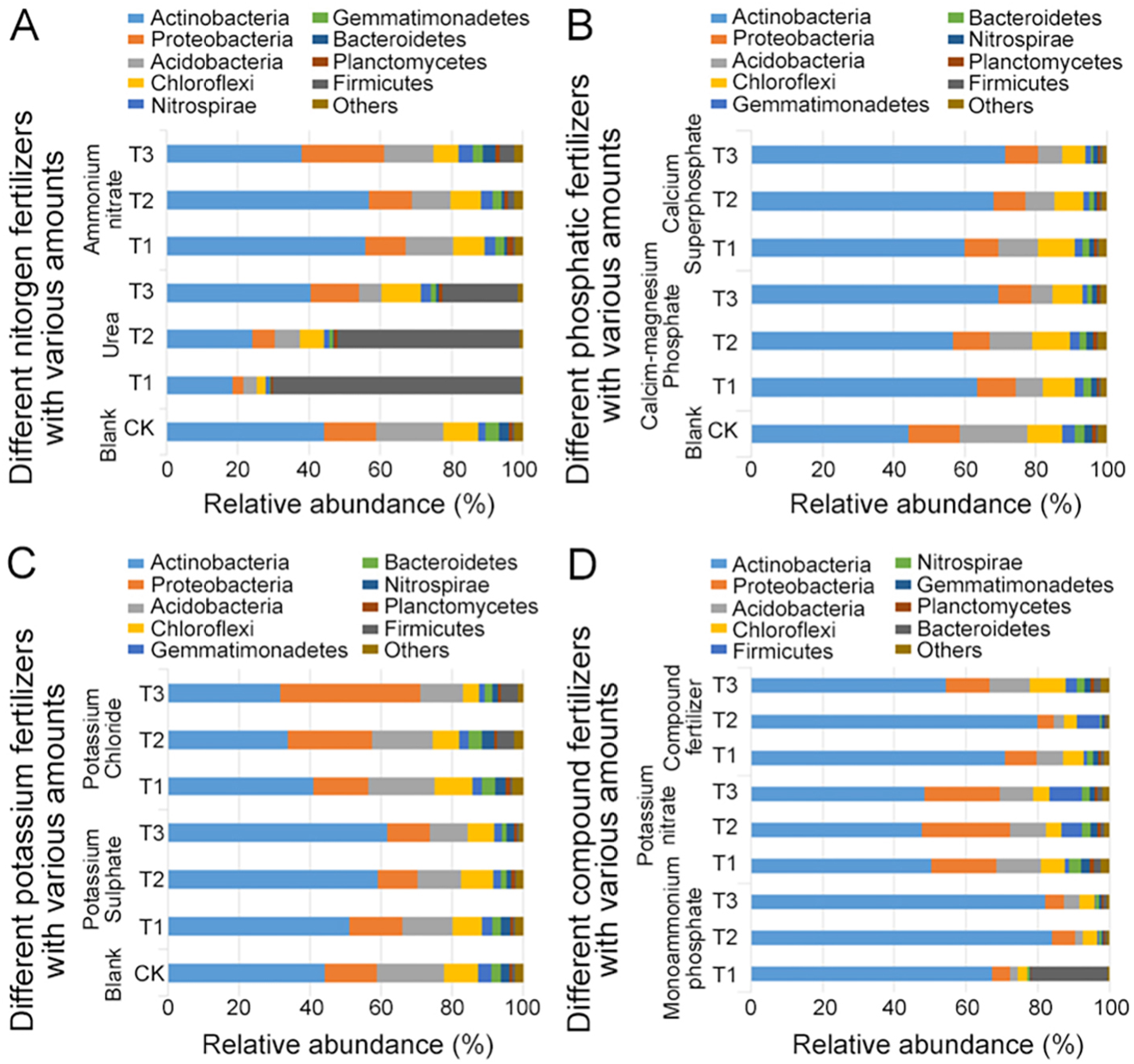
The influence of fertilizers on microbial communities varies significantly based on their chemical composition and dosage. Urea application predominantly impacted Actinobacteria, Firmicutes, Proteobacteria, and Chloroflexi, while ammonium primarily affected Actinobacteria and Proteobacteria (Figure 3A). Phosphorus fertilizers demonstrated minimal structural effects, regardless of type or concentration (Figure 3B). Potassium sources (K2SO4 and KCl) generally did not alter the original percentage composition of the community (Figure 3C). In contrast, compound fertilizers maintained relative abundance rankings similar to those of the controls, ultimately exhibiting more modest microbial effects compared to straight fertilizers (Figure 3D). The promotional effect of Actinobacteria followed a descending order: monoammonium phosphate > compound fertilizer > potassium nitrate. All three compound fertilizers significantly suppressed Acidobacteria. Furthermore, both monoammonium phosphate and potassium nitrate treatments exhibited an inhibitory influence on Chloroflexi. Notably, monoammonium phosphate and compound fertilizers reduced the abundance of Proteobacteria, whereas potassium nitrate promoted it. Overall, the impact of compound fertilizers on soil microorganisms was less pronounced than that of mono-fertilizers.
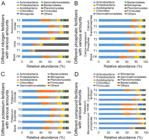
Soil microbial community with various chemical fertilizers and different amounts. T1 = treatment 1 – application of 50 % amount of conventional fertilizer; T2 = treatment 2 – application of normal dosage of conventional fertilizer; T3 = treatment 3 – application of 150% amount of conventional fertilizer; CK = control/blank.
Regarding fertilizer application dosage, the relative abundance of Actinobacteria decreased by 25.65 %, 20.06 %, and 3.73 % in treatments with 50 % urea reduction, regular amount, and 50 % increase of urea, respectively, compared to the CK treatment. Notably, this abundance showed a positive correlation with the increase in urea fertilization. In contrast, the relative abundance of Firmicutes in the soil experienced a significant rise, being 116.1, 84.8, and 34.4 times higher in the treatments with 50 % urea reduction, regular amount, and 50 % urea increase, respectively, compared to the CK treatment. Additionally, a positive correlation was observed between the relative abundance of Actinobacteria and the amounts of calcium-magnesium phosphate and calcium superphosphate applied. Importantly, the total number of OTUs was remarkably increased compared to the CK treatment, although the abundance of Chloroflexi remained comparable to that of CK, indicating a more diverse microbial population overall. As the application of ammonium nitrate intensified, the relative abundance of Nitrospirae, Proteobacteria, Gemmatimonadetes, Acidobacteria, and Bacteroidetes increased, whereas that of Chloroflexi and Planctomycetes declined. Potassium fertilizers (K2SO4 and KCl) and ammonium nitrate induced dosage-dependent shifts in microbial community structure, yet maintaining an overall composition comparable to that of the controls, suggesting competitive population dynamics without major structural disruption. In contrast, compound and phosphate fertilizers exhibited irregular, non-systematic effects across concentration gradients while preserving the fundamental community composition. Most strikingly, urea application resulted in distinctly altered communities that varied systematically with concentration, indicating a disruption of the native micro-ecological balance and a potential deterioration of nutrient cycling. This disruptive effect was dose-dependent, intensifying progressively with higher urea concentrations.
Impacts of diverse chemical fertilizers on the ecological diversity of soil bacterial communities within soil column fertilization simulation system
After 20 days of incubation, the Shannon index of the soil sample showed no significant difference between treatments of potassium chloride and potassium nitrate, both with a 50 % reduction in application. Specifically, the indices were 5.90 % and 3.39 % higher, respectively, compared to the blank control (Table 4). Conversely, all other treatments exhibited significantly lower Shannon indices than the control treatment (CK). Notably, no significant difference was observed in the Shannon index between potassium chloride and potassium nitrate applied at conventional rates. Similarly, the treatments involving potassium sulfate and potassium nitrate at 50 % increased rates did not show marked different from one another, yet they exhibited increases of 6.78 % and 5.01 %, respectively, over the CK treatment. In contrast, no significant differences were observed between urea, ammonium nitrate treatments, and the CK treatment. Following a long-term application of various fertilizers (300-day samples), the Shannon index for the treatments with a 50 % reduction in urea application was found to be lower than that of the CK treatment. However, the difference between these two treatments was not statistically significant. The Shannon index of soil treated with potassium chloride at conventional rates remained comparable to that of the CK treatment. Conversely, all treatments involving a 50 % increase in fertilizer application significantly reduced the Shannon index when compared to the CK treatment, with monoammonium phosphate and urea treatments experiencing particularly substantial decreases, measuring only 57.14 % and 59.91 % of the index from the CK treatment, respectively.
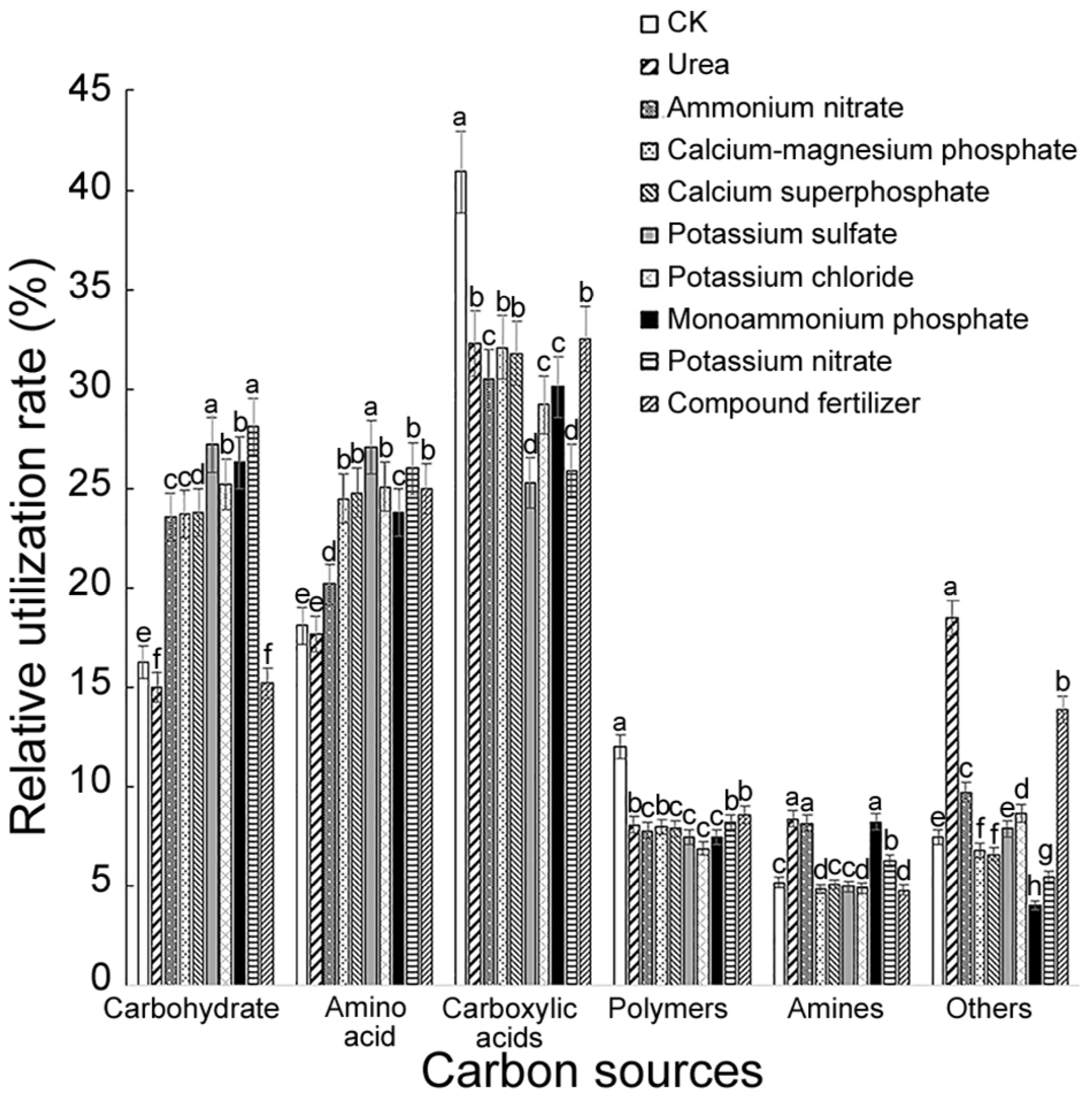
The comparative utilization rates of soil microbial communities in response to various carbon sources, influenced by different chemical fertilizer applications, are illustrated in Figure 4. Notably, the consumption of carboxylic acids and polymers by soil microorganisms was significantly higher in the untreated control (CK) soil compared to those subjected to chemical fertilizer treatments. Regarding carbohydrate utilization, the CK treatment exhibited a slightly higher rate than soils treated with urea and compound fertilizers. However, this was significantly diminished by 41.9 % to 50.0 % compared to other chemical fertilizers. Interestingly, except for urea, the utilization of carbohydrates by soil microorganisms was markedly enhanced when exposed to straight fertilizers, as opposed to compound fertilizers. The application of nitrogen-containing fertilizers resulted in a significant decrease in amino acid utilization by soil microorganisms, while the trend for carboxylic acid utilization was reversed. Specifically, compared to compound fertilizers, straight fertilizers led to a significant decrease in carboxylic acid utilization, with potassium nitrate casing a reduction of 22.2 % relative to compound fertilizers, representing the most pronounced decline. Collectively, these findings underscore the substantial impact of sustained application of various chemical fertilizers on the metabolic capabilities and functions of soil microbial communities.
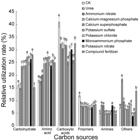
Relative utilization efficiency of six types of carbon sources in Biolog EcoPlate by the soil microbial community under the application of different chemical fertilizers. CK = control.
Impacts of diverse chemical fertilizers on the metabolic genes of soil bacterial communities within a soil column fertilization simulation system
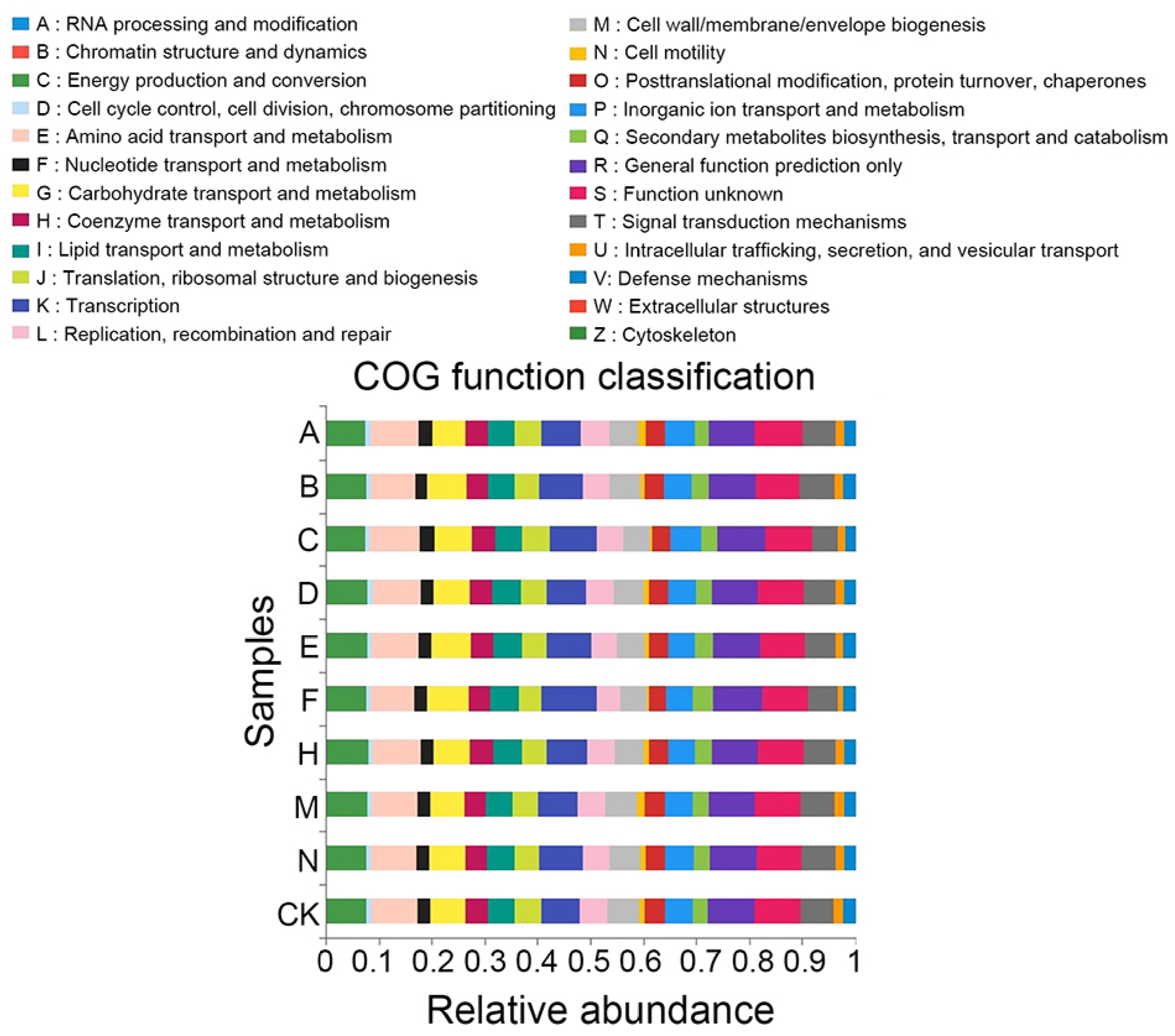
Following a comprehensive analysis of soil microbial metabolism genes subjected to prolonged exposure to various chemical fertilizers (Figure 5), we observed a significant upregulation in the expression of amino acid and nucleotide transport and metabolism genes in soils treated with calcium-magnesium phosphate, with increases of 89.5 % and 86.4 % compared to the untreated control. Additionally, the expression of carbohydrate transport and metabolism genes was significantly higher in potassium chloride treatment than in other treatments, showing an upregulation of 74.6 % compared to the CK treatment. Furthermore, potassium nitrate treatment resulted in a pronounced enhancement in lipid transport and metabolism gene expression, exhibiting a 16.5 % increase over the untreated control. However, there were no statistically significant differences in functional gene expression among any of the fertilizer treatments and the untreated control.
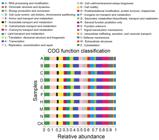
The effect of different chemical fertilizers on soil microbial metabolism genes. COG = clusters of orthologous groups; CK = control.
Different mono-fertilizers distinctly influenced the functional classification of proteins. Notably, potassium sulfate enhanced amino acid transport and metabolism, transcription, as well as lipid transport and metabolism. However, it also suppressed coenzyme metabolism and cell motility, suggesting a reduction in cellular energy demands and bacterial migration. This is attributed to the coenzyme's primary role in energy production, while cell motility is associated with the movement of microorganisms. On the other hand, compound fertilizers, particularly tobacco-specific blends, significantly upregulated amino acid transport and metabolism, nucleotide transport and metabolism, translation, ribosomal structure and biogenesis, as well as transcription and inorganic ion transport and metabolism. These changes indicate an enhanced microbial capacity for nutrient processing and molecular synthesis.
Impact of diverse chemical fertilizers on co-occurrence networks in soil microbial communities
A bipartite association network meticulously constructed to illustrate the complex relationships between operational taxonomic units (OTUs) and the various fertilizations (Figure 6). The strength of these associations, measured by degree centrality, ranges from 0.202 to 0.346 across the 9,481 OTUs, highlighting the variability in connectivity. Notably, 54.23 % of these OTUs exhibited a robust association with potassium sulfate, whereas only 34.13 % showed a connection with compound fertilizer, underscoring the fundamental differences among the microbial communities cultivated under the ten distinct fertilization treatments. To further emphasize the significance of each fertilizer, we ranked them in descending order based on their weighted degree: potassium sulfate, potassium nitrate, compound fertilizer, monoammonium phosphate, ammonium nitrate, calcium superphosphate, potassium chloride, calcium magnesium phosphate, urea, and finally, the untreated control (CK). This ranking underscored the pivotal role that potassium sulfate played in shaping the microbial community, followed closely by potassium nitrate and compound fertilizer.
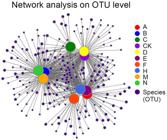
Association network showing positive associations between chemical fertilizations and operational taxonomic units (OTUs). A = urea; B = ammonium nitrate; C = compound fertilizer; CK = control/no fertilizer; D = calcium magnesium phosphate; E = calcium superphosphate; F = monoammonium phosphate; H = potassium sulfate; M = potassium chloride; N = potassium nitrate.
In the three-dimensional space of the association network, a fascinating spatial clustering emerged. Potassium chloride, potassium nitrate, and ammonium nitrate form a tight cluster, reflecting their similar effects on the microbial community. Conversely, compound fertilizer and the untreated control are situated in relatively close proximity, indicating that they may share specific microbial characteristics or responses. Additionally, in another cluster, single chemical fertilizers such as urea, potassium sulfate, and calcium superphosphate, along with monoammonium phosphate, coalesced in the same category, highlighting shared microbial associations that extend beyond their individual chemical compositions.
Discussion
This 12-year localized study provides an accurate assessment of tobacco yield variability under different fertilization regimes (Ding et al., 2022). Long-term localized trials represent an indispensable research approach for investigating the protracted impacts of various fertilization practices on soil health, and they serve as a vital means for validating emerging scientific inquiries and theories (Xu et al., 2020). Our research uses long-term positional monitoring trials to demonstrate that organic-inorganic compounds can improve tobacco yield and microbial respiration, mirroring improvement of soil quality nutrient cycling (Zhang et al., 2022). Simulation of long-term positioning experiment can save more time costs.
Extensive research has investigated the impact of chemical fertilizers on rhizosphere microbial communities (Wang et al., 2024; Cai et al., 2017). After several years of chemical fertilizer application in tobacco fields, the Shannon index, Simpson index, and McIntosh diversity index of soil bacteria exhibited an overall declining trend, along with a significant reduction in the population of soil bacteria and Actinomycetes (Gao et al., 2019). This alteration in microbial composition is typically characterized by a pronounced reduction in fungal communities and a concurrent increase in bacterial proliferations, ultimately shifting the soil microbiome from bacterial dominance to fungal dominance while promoting pathogen accumulation. Notably, significant changes in bacterial community structure were observed after three consecutive growing seasons of fertilizer application, with a reduction in the abundance of Bacteriovorax sp. and Pseudomonas sp., while Sphingomonas sp. showed an increase (Wang et al., 2020). Similarly, other researchers found that long-term monocropping combined with chemical fertilizers reduced rhizosphere bacterial diversity, resulting in a microbial imbalance dominated by Firmicutes, Proteobacteria, and Actinobacteria (Liu et al., 2013).
Our study elucidated the complex effects of long-term fertilizer application on soil microbial communities. Specifically, we found that the abundance of Actinobacteria increased with the application of urea, K2SO4, phosphate fertilizers, and mono-ammonium phosphate. Conversely, it decreased with KCl, tobacco-specific compound fertilizer, and nitrate-N fertilizers (NH4NO3, KNO3), thus confirming the inhibitory role of nitrogen (Han et al., 2017). Notably, Proteobacteria were less abundant than Actinobacteria, with soils treated with urea and phosphorus exhibiting a lower abundance of Proteobacteria compared to the control. Except for calcium-magnesium phosphate fertilizer and K2SO4, the total number of Proteobacteria OTUs positively correlated with fertilization levels. Additionally, our findings showed that the abundance of Firmicutes decreased in the following order: ammonium nitrogen fertilizers > potassium fertilizers > phosphate fertilizers. This aligns with the work of Keenan et al. (2023), which suggested that nitrogen serves as a preferential nutrient source for Firmicutes. The Shannon index analysis indicated that long-term application of most fertilizers (except potassium chloride) reduced soil microbial diversity, regardless of dosage, leading to ecosystem imbalance. Notably, a 50 % reduction in urea application initially increased diversity by 1.77 %, which contrasts with previous findings in legume and fruit systems (Niu et al., 2019). Potassium chloride treatments, whether reduced or conventional, initially enhanced microbial diversity but experienced slight temporal declines while remaining comparable to control. The co-application of urea + potassium chloride showed the highest diversity of ammonia-oxidizing microorganisms and functional gene abundance (Guo et al., 2014), suggesting that this combination is promising for improving nitrogen cycling. Chloride fertilizers selectively influenced microbial composition, reducing Gram positive bacteria while preserving fungi and actinomycetes (Gómez-Brandón et al., 2025). Notably, KCl specifically affected the fungi in the maize rhizosphere during early growth stages (Vigliaturo et al., 2020). This phenomenon is attributed to the severe redox reactions triggered by anaerobic-aerobic cycles resulting from long-term potassium application in fluvo-aquic soil, which subsequently inhibit soil ammonia oxidation and nitrification capabilities (Li et al., 2020).
Compared to straight fertilizers, compound fertilizers stimulated greater microbial demand for a variety of carbon sources. This effect likely stems from their ability to promote a balanced development of microbial communities, rather than favoring selective enrichment of specific taxa. As a result, this leads to a more equitable C/N utilization. These findings indicate that compound fertilizers improved soil pH, enhanced the activities of urease, protease, and phosphatase, increased nutrient availability, and reduced fungal dominance in contrast to straight fertilizers, aligning with the results reported by Shen et al. (2024).
Among the nine fertilizer types evaluated, calcium-magnesium phosphate, potassium chloride, and potassium nitrate treatments significantly enhanced the expression of metabolic gene compared to the control. Specifically, calcium-magnesium phosphate was found to upregulate the expression of genes associated with amino acid and nucleotide transport and metabolism, potentially enhancing nitrogen cycling among soil microbes (Xiong et al., 2020). Additionally, potassium chloride stimulated the expression of genes related to carbohydrate transport and metabolism, transcription, and the biosynthesis and transport of secondary metabolites, all of which are vital processes in microbial carbon metabolism (Wei et al., 2019). While most studies have focused on genes involved in carbon and nitrogen cycling, our findings emphasize the need to explore other critical pathways, particularly phosphorus cycling, where functional gene research remains limited (Yi et al., 2022). This gap highlights the importance of comprehensive studies into microbial ecological processes to achieve a thorough understanding of soil ecosystem functionality.
In the spatial correlation network, potassium chloride, potassium nitrate, and ammonium nitrate exhibited closer associations, reflecting their minimal impact on the distribution of soil microbial communities across varying concentrations. This suggests that the impacts of these three fertilizers on soil microbes are moderate. In contrast, compound fertilizer clustered closely with the untreated control, indicating its regulatory effect resembles the native microbial structure of the soil. Meanwhile, urea, potassium sulfate, calcium superphosphate, and monoammonium phosphate formed a distinct cluster, demonstrating more pronounced effects on microbial composition and function. This aligns with the findings of Wang et al. (2017) regarding on soil organic carbon-driven microbial dynamics. Nevertheless, the mechanisms by which different types of chemical fertilizers regulate soil microbiomes remain to be further explored.
In summary, the extended and intensive use of chemical fertilizers typically disrupts microbial communities, with potassium chloride showing milder effects. Notably, fertilizers such as urea, calcium-magnesium phosphate, and potassium chloride directly influence the expression of microbial metabolic genes. Straight chemical fertilizers tend to produce more significant ecological shifts compared to compound fertilizers, thereby offering deeper insights into how different types of fertilizers shape soil ecosystems through microbial modulation.
Data Availability Statement
The data that support the findings of this study are available from the corresponding author upon reasonable request.
Acknowledgments
This study was funded by National Natural Science Foundation of China (31860597), China National Tobacco Company (110202202015), and Guizhou Tobacco Monopoly Bureau, grant number (2021XM18, 2022XM03 and 2023XM41). This research was supported by Shen B and Yang X from Nanjing Agricultural University, China.
References
- Bao SD. 2000. Soil Agricultural Chemistry Analysis. 3 ed. China Agriculture Press, Beijing, China.
-
Cai F, Pang G, Li R-X, Li R, Gu X-L, Shen Q-R, et al. 2017. Bioorganic fertilizer maintains a more stable soil microbiome than chemical fertilizer for monocropping. Biology and Fertility of Soils 53: 861-872. http://doi.org/10.1007/s00374-017-1216-y
» http://doi.org/10.1007/s00374-017-1216-y -
Chen Y-H, YangX-Z, Li Z, An X-H, Ma R-P, Li Y-Q, et al. 2020. Efficiency of potassium-solubilizing Paenibacillus mucilaginosus for the growth of apple seedling. Journal of Integrative Agriculture 19: 2458-2469. http://doi.org/10.1016/S2095-3119(20)63303-2
» http://doi.org/10.1016/S2095-3119(20)63303-2 -
Ding W, He H, Zheng F, Liu X, Wu X, Jiang Y, et al. 2022. Assessing the Impacts of Fertilization Regimes on Soil Aggregate Dynamics in Northeast China. Agronomy 12: 2101. http://doi.org/10.3390/agronomy12092101
» http://doi.org/10.3390/agronomy12092101 -
Feng R, Xu M, Li J, Huang S, Zhao G, Tu X, et al. 2019. Structure and predictive functional profiling of microbial communities in two biotrickling filters treated with contimuous/discontinuous waste gases. AMB Express 9: 2. http://doi.org/10.1186/s13568-018-0726-9
» http://doi.org/10.1186/s13568-018-0726-9 -
Florence JJ, Devi AR, Kaleeswari RK, Gnanachitra M, Kalpana R. 2024. Fluid Nourishment: Unveiling the Secrets of Water-Soluble Fertilizers in Agriculture. Communications in Soil Science and Plant Analysis 55: 2966-2984. https://doi.org/10.1080/00103624.2024.2378978
» https://doi.org/10.1080/00103624.2024.2378978 -
Gao L, Liu X-M, Du Y-M, Zong H, Shen G-M. 2019. Effects of tobacco-peanut relay intercropping on soil bacteria community structure. Annals of Microbiology 69: 1531-1536. http://doi.org/10.1007/s13213-019-01537-9
» http://doi.org/10.1007/s13213-019-01537-9 -
Geisseler D, Scow KM. 2014. Long-term effects of mineral fertilizers on soil microorganisms – A review. Soil Biology and Biochemistry 75: 54-63. https://doi.org/10.1016/j.soilbio.2014.03.023
» https://doi.org/10.1016/j.soilbio.2014.03.023 -
Gómez-Brandón M, Beesigamukama D, Probst M, Klammsteiner T, Su J-Q, Zhu Y-G, et al. 2025. Microbial composition and bioremediation in frass fertilizers from insect-based agri-food waste valorization. Journal of Environmental Management 386: 125774. https://doi.org/10.1016/j.jenvman.2025.125774
» https://doi.org/10.1016/j.jenvman.2025.125774 -
Guo S, Xu Q, Shen Z, Li S, Qin H, Li Y. 2014. Response of soil ammonia-oxidizing organisms on fertilization and mulch in Phyllostachys violascens stands. Journal of Zhejiang A&F University 31: 343-351 (in Chinese, with abstract in English). http://doi.org/10.11833/j.issn.2095-0756.2014.03.003
» http://doi.org/10.11833/j.issn.2095-0756.2014.03.003 -
Han J, Shi J, Zeng L, Xu J, Wu L. 2017. Impacts of continuous excessive fertilization on soil potential nitrification activity and nitrifying microbial community dynamics in greenhouse system. Journal of Soils and Sediments 17: 471-480. http://doi.org/10.1007/s11368-016-1525-z
» http://doi.org/10.1007/s11368-016-1525-z -
Hu X, Gu H, Liu J, Wei D, Zhu P, Cui X, et al. 2024. Different long-term fertilization regimes affect soil protists and their top-down control on bacterial and fungal communities in Mollisols. Science of The Total Environment 908: 168049. https://doi.org/10.1016/j.scitotenv.2023.168049
» https://doi.org/10.1016/j.scitotenv.2023.168049 -
Keenan SW, Emmons AL, DeBruyn JM. 2023. Microbial community coalescence and nitrogen cycling in simulated mortality decomposition hotspots. Ecological Processes 12: 45. https://doi.org/10.1186/s13717-023-00451-y
» https://doi.org/10.1186/s13717-023-00451-y -
Li P-P, Zhang S-Q, Li F, Zhang Y-T, Han Y-L. 2020. Long term combined fertilization and soil aggregate size on the denitrification and community of denitrifiers. Applied Soil Ecology 156: 103718. https://doi.org/10.1016/j.apsoil.2020.103718
» https://doi.org/10.1016/j.apsoil.2020.103718 -
Liu Y, Shi J, Feng Y, Yang X, Li X, Shen Q. 2013. Tobacco bacterial wilt can be biologically controlled by the application of antagonistic strains in combination with organic fertilizer. Biology and Fertility of Soils 49: 447-464. http://doi.org/10.1007/s00374-012-0740-z
» http://doi.org/10.1007/s00374-012-0740-z -
Liu Y, Li X, Cai K, Cai L, Lu N, Shi J. 2015. Identification of benzoic acid and 3-phenylpropanoic acid in tobacco root exudates and their role in the growth of rhizosphere microorganisms. Applied Soil Ecology 93: 78-87. http://doi.org/10.1016/j.apsoil.2015.04.009
» http://doi.org/10.1016/j.apsoil.2015.04.009 -
Liu Y, Li X, Zou Y, Zhang H, Cai L, Meng L, et al. 2018. Investigation and analysis of microbial information in tobacco-planted soil from different ecological regions in the Guizhou Province. Acta Ecologica Sinica 38: 3145-3154 (in Chinese, with absctract in English). http://doi.org/10.5846/stxb201704120643
» http://doi.org/10.5846/stxb201704120643 -
Liu Z-K, Zhang L, Ma X, Chen W, Chang Y, Zhao Y, et al. 2025. Response of abundant and rare microbial species to 40-year long-term fertilization practices irrespective of bulk and rhizosphere soils. Environmental Research 275: 121448. http://doi.org/10.1016/j.envres.2025.121448
» http://doi.org/10.1016/j.envres.2025.121448 - Niu C-C, Geng G-M, Yu L, Xie Q-J, Liao J-J, Qi H-Y. 2019. Reducing fertilizer input combined with application of trichoderma to increase yield, quality of melon and soil microbial functional diversity. Journal of Plant Nutrition and Fertilizers 25: 620-629 (in Chinese, with abstract in English).
-
Pérez J, Buchanan A, Mellbye B, Ferrell R, Chang JH, Chaplen F, et al. 2015. Interactions of Nitrosomonas europaea and Nitrobacter winogradskyi grown in co-culture. Archives of Microbiology 197: 79-89. http://doi.org/10.1007/s00203-014-1056-1
» http://doi.org/10.1007/s00203-014-1056-1 - Sambrook J, Russell DW. 2001. Molecular Cloning: A Laboratory Manual. 3ed. CSHL Press, Harbor, NY, USA.
-
Shen J, Zheng D, Lou L, Wang J, Gu W, Li A. 2024. Effects of microbial compound fertilizer substitution of convertional chemical fertilizer and its reduced application on rice growth an soil fertility. Journal of Zhejiang Agricultural Sciences 65: 1867-1872 (in Chinese, with abstract in English). https://doi.org/10.16178/j.issn.0528-9017.20230641
» https://doi.org/10.16178/j.issn.0528-9017.20230641 - State Bureau of Technical Supervision [SBQTS]. 1992. National Standard of the People's Republic of China - GB 2635-1992, Flue-Cured Tobacco. SBQTS, Beijing, China.
-
Vigliaturo R, Marengo A, Bittarello E, Pérez-Rodríguez I, Dražić G, Gieré R. 2020. Micro- and nano-scale mineralogical characterization of Fe(II)-oxidizing bacterial stalks. Gebiology 18: 606-618. https://doi.org/10.1111/gbi.12398
» https://doi.org/10.1111/gbi.12398 -
Wang H, Nie Y, Butterly CR, Wang L, Chen Q, Tian W, et al. 2017. Fertilization alters microbial community composition and functional patterns by changing the chemical nature of soil organic carbon: A field study in a Halosol. Geoderma 292: 17-24. https://doi.org/10.1016/j.geoderma.2017.01.006
» https://doi.org/10.1016/j.geoderma.2017.01.006 -
Wang J, Qin H, Zhang L, Tang Y, Long J, Xu H, et al. 2024. Synergistic effects of rhizosphere effect and combined organic and chemical fertilizers application on soil bacterial diversity and community structure in oilseed rape cultivation. Frontiers in Microbiology 15: 1374199. http://doi.org/10.3389/fmicb.2024.1374199
» http://doi.org/10.3389/fmicb.2024.1374199 -
Wang S, Dong L, Luo L, Jia W, Qu Y. 2020. Characterization of rhizosphere microbial communities in continuous cropping maca (Lepidium meyenii red soil, Yunnan, China. Archives of Agronomy and Soil Science 66: 805-818. http://doi.org/10.1080/03650340.2019.1639155
» http://doi.org/10.1080/03650340.2019.1639155 -
Wei Z, Gu Y, Friman V-P, Kowalchuk GA, Xu Y, Shen Q, et al. 2019. Initial soil microbiome composition and functioning predetermine future plant health. Science Advances 5: eaaw0759. http://doi.org/10.1126/sciadv.aaw0759
» http://doi.org/10.1126/sciadv.aaw0759 -
Xiong W, Song Y, Yang K, Gu Y, Wei Z, Kowalchuk GA, et al. 2020. Rhizosphere protists are key determinants of plant health. Microbiome 8: 27. http://doi.org/10.1186/s40168-020-00799-9
» http://doi.org/10.1186/s40168-020-00799-9 -
Xu D, Carswell A, Zhu Q, Zhang F, De Vries W. 2020. Modelling long-term impacts of fertilization and liming on soil acidification at Rothamsted experimental station. Science of the Total Environment 713: 136249. http://doi.org/10.1016/j.scitotenv.2019.136249
» http://doi.org/10.1016/j.scitotenv.2019.136249 -
Xue C, Shen Z, Hao Y, Yu S, Li Y, Huang W, et al. 2019. Fumigation coupled with bio-organic fertilizer for the suppression of watermelon Fusarium wilt disease re-shapes the soil microbiome. Applied Soil Ecology 140: 49-56. http://doi.org/10.1016/j.apsoil.2019.04.007
» http://doi.org/10.1016/j.apsoil.2019.04.007 -
Yi M, Zhang L, Li Y, Qian Y. 2022. Structural, metabolic, and functional characteristics of soil microbial communities in response to benzo[a]pyrene stress. Journal of Hazardous Material 431: 128632. http://doi.org/10.1016/j.jhazmat.2022.128632
» http://doi.org/10.1016/j.jhazmat.2022.128632 -
Zhang S, He F, Fang X, Zhao X, Liu Y, Yu G, et al. 2022. Enhancing soil aggregation and acetamiprid adsorption by ecofriendly polysaccharides hydrogel based on Ca2+ - amphiphilic sodium alginate. Journal of Environmental Sciences 113: 55-63. http://doi.org/10.1016/j.jes.2021.02.042
» http://doi.org/10.1016/j.jes.2021.02.042
Edited by
-
Edited by:
Gabriel Ramatis Pugliese Andrade https://orcid.org/0000-0003-2110-5357