 Biochemical changes and antioxidant enzyme activity in alstroemeria flowers postharvest
ABSTRACT:
Premature leaf yellowing, which is correlated to a decline in flower quality, represents a major challenge to the postharvest handling and commercialization of alstroemeria (Alstroemeria hybrida). Preservative solutions have been used as a strategy to address this problem. However, the results reported so far remain inconclusive. While these preservative solutions may delay senescence, their relationship with biochemical processes, particularly with ethylene and antioxidant enzymes, remains unclear. Therefore, the objective was to evaluate the effectiveness of different preservative solutions in maintaining postharvest quality and assessing the biochemical responses of Alstroemeria hybrida ‘Akemi’ floral stems. Alstroemeria flowers were harvested, sanitized, standardized, and subsequently placed in preservative solutions. The treatments consisted of different solutions prepared with 200 mg L−1 6-benzyladenine (BA), 10 g L−1 FloraLife Crystal Clear® (CRY), 0.05 mL L−1 Florissant 210XC + Chlorine (FLO + Cl) combined with 0.03 g L−1 Cl, 0.1 mM gibberellic acid (GA3), and 2 mM silver thiosulfate (STS) (applied as a pulsing treatment). Out of all the treatments, GA3 and FLO + Cl with chlorine provided the longest postharvest durability of floral stems. Preservative solutions prepared with GA3 or FLO + Cl with chlorine were effective in delaying leaf yellowing in alstroemeria. The use of STS in a pulsing solution was efficient in preventing perianth abscission. The antioxidant enzymes catalase (CAT), peroxidase (POD), superoxide dismutase (SOD), and ascorbate peroxidase (APX) contributed to reducing hydrogen peroxide (H2O2) accumulation in the flowers and showed higher activity during the harvest and commercialization phases.
Keywords:
biochemical; durability; leaves; leaf yellowing; quality
Introduction
Effective postharvest practices are essential to preserving the quality and extending the vase life of cut flowers, particularly through the identification of suitable products to enhance this process and prevent premature senescence or flower damage (Salgado et al., 2025). Recognized as one of the leading cut flowers globally, alstroemeria (Alstroemeria hybrida L.) is also the second most commercially relevant flower in Brazil, according to Ibraflor (2021). However, one of the main challenges during its postharvest and commercialization stages is the rapid yellowing of leaves, which occurs before floral senescence and significantly reduces its ornamental value (Bazaz and Tehranifar, 2011; Jowkar, 2015; Pintos et al., 2023). This premature leaf yellowing can be triggered by several factors, including water stress, nutrient deficiencies, inadequate storage conditions, pest and disease pressure, herbicide exposure, low temperatures, and the species’ sensitivity to ethylene, which may accelerate senescence (Toscano et al., 2018; Ponce et al., 2025; Paiva et al., 2025).
In cut flowers, the senescence process involves a series of physiological changes, enzyme activations, and the production of reactive oxygen species (ROS), which are irreversible and ultimately lead to tissue death (Naghiloo et al., 2020). In addition to low-temperature storage, known to affect antioxidant enzyme production (Mattos et al., 2023), preservative solutions are also used to slow down the progression of senescence after harvest.
The effectiveness of different preservative solutions in extending the postharvest durability of alstroemeria has been evaluated, with important examples including the use of growth regulators such as 6-benzyladenine (BA) (Matak et al., 2017) and (GA3) (Yeat et al., 2012; Kaviya et al., 2021; Ponce et al., 2025; Gama et al., 2025). Other products have also been evaluated for their effectiveness, including thiosulfate (Chanasut et al., 2003; Monya et al., 2021; Gama et al., 2025), Cl (Paiva et al., 2025); Florissant 210XC + Chlorine (FLO + Cl), a commercial product specifically designed for alstroemerias, and FloraLife Crystal Clear® (CRY).
Preservative solutions exhibit growth-regulating effects and contribute to maintaining cut flower quality by decreasing the degradation of proteins and RNA (Chitarra and Chitarra, 2005; Pal, 2019), activation of enzymes, and delayed lipid peroxidation, thereby contributing to the preservation of cellular integrity (Kaviya et al., 2021; Amin et al., 2022). For some tropical species, however, antioxidant activity is increased with applied treatments and is not merely a consequence of senescence (Cunha Neto et al., 2023).
Thus, the objective was to evaluate the effectiveness of different preservative solutions in maintaining postharvest quality and assessing the biochemical responses after the harvest of A. hybrida ‘Akemi’ floral stems.
Materials and Methods
Alstroemeria hybrida ‘Akemi’ floral stems were harvested from a commercial area in Itapeva, in the state of Minas Gerais (MG), Brazil, and transported to the city of Lavras (MG), Brazil (21°14’43" S, 44°59’59" W, altitude 919 m).
The experiment employed a completely randomized design to evaluate five postharvest preservative solutions at six different sampling times after harvest (1, 4, 5, 10, 15, 20 days), with two replications per treatment: Autumn (Mar) and Winter (July).
In the laboratory, commercial postharvest stages and times were simulated to process the flowers similar to how they would be handled by the producer.
The floral stems were collected from the company at the commercial harvest stage, defined by the first flowers exhibiting approximately 30 % bloom or color (Girardi et al., 2015). This was considered day one. Next, the flowers were transferred to the classification area for cleaning and standardization. The stems were standardized by cutting to 50 cm at the base, placed in well water (pH 6.3), and packed in cardboard boxes. The stems were then transported to the laboratory for experiment preparation. They were placed vertically in 40 plastic containers (400 mL each), fitted with lids that had six holes for stem insertion, totaling 240 stems in the experiment. For each treatment, eight containers were used, each filled with one of the following preservative solutions:
-
200 mg L−1 BA (Matak et al., 2017);
-
10 g L−1 CRY;
-
0.05 mL L−1 FLO + Cl added by 0.03 g L−1 chlorine (Cl = 56 % active) (Grupo Reijers’ standard commercial procedure);
-
0.1 mM GA3 (Yeat et al., 2012);
-
2 mM silver thiosulfate (STS) applied in a one-hour pulsing series (Chanasut et al., 2003), followed by well water.
The preservative solutions were prepared using well water with a pH of 6.3 and an electrical conductivity of 300 μS cm−1. Except for STS, which was pulsed for 1 h and followed by well water, no changes or replacements of the preservative solutions were made during the experiment.
On the second day, simulating the storage stage, the stems in the treatment containers were transferred to a cold chamber and left there for three days at 5 °C, the same period used by the company before commercialization.
To simulate typical refrigerated transport conditions, the stems were stored in a cold chamber at 7 °C for 24 h on the fifth day after harvest.
From the sixth day onward, to simulate commercialization conditions, the stems were transferred to the laboratory and kept at room temperature (approximately 22 °C) until the end of commercial quality. The experiment was deemed concluded once all stems had begun to lose commercial quality (vase life), defined as either 50 % leaf yellowing or senescence/drop of 50 % of the flowers, characterized by the loss of turgor followed by petal wilting (Ferrante et al., 2002).
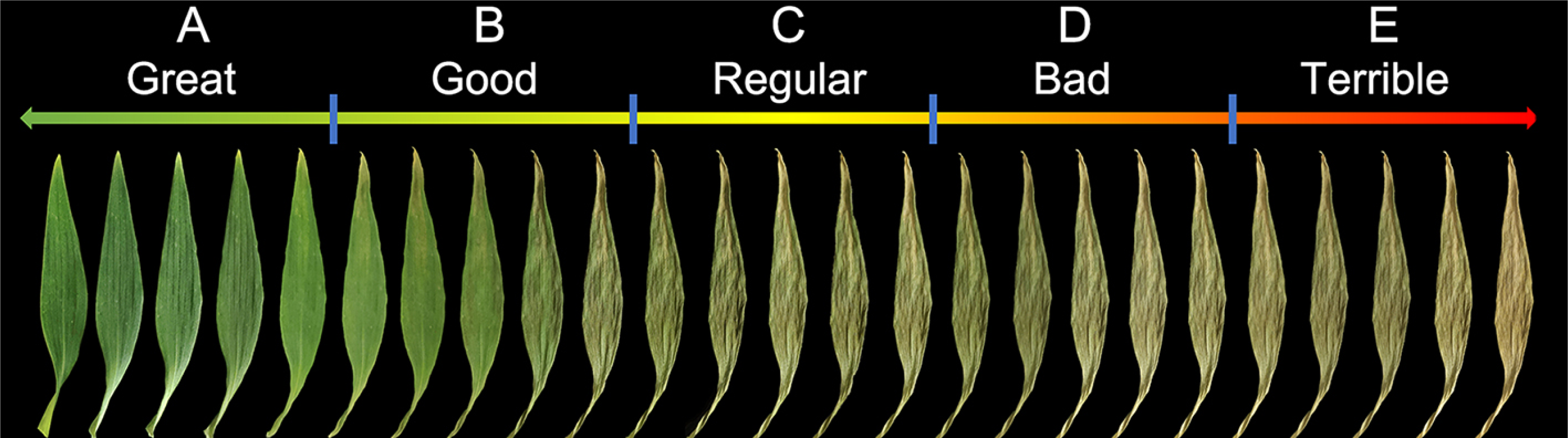
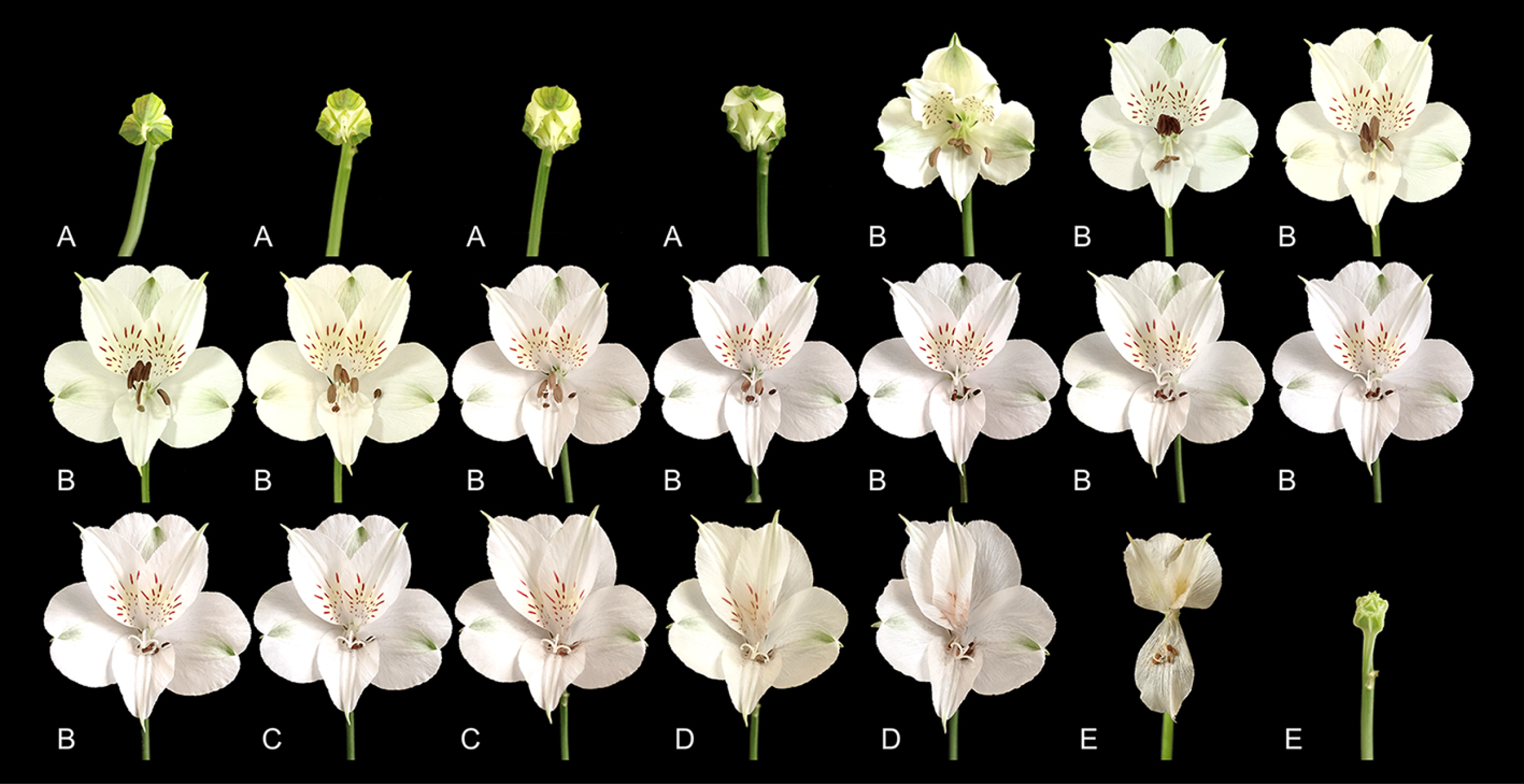
A visual scale was developed to reference leaf (Figure 1) and flower (Figure 2) senescence for A. hybrida ‘Akemi’.
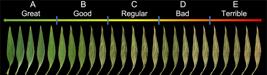
Visual reference scale for leaf senescence of Alstroemeria hybrida ‘Akemi’. A) 100 % green leaves, great quality; B) 75 % green leaves, good quality; C) 50 % green leaves, regular quality; D) 75 % yellowed leaves, bad quality; E) 100 % yellow leaves, terrible quality. Each leaf image represents a postharvest day with the floral stem immersed in well water, totaling 25 days.

Visual reference scale for flower senescence of Alstroemeria hybrida ‘Akemi’. A) 100 % closed bud, great quality; B) 25 % of the flower with loss of turgor, good quality; C) 50 % of the flower with loss of turgor, regular quality; D) 75 % of the flower with loss of turgor, bad quality; E) 100 % of the flower with loss of turgor or petal drop, terrible quality. Each flower image represents a postharvest day with the floral stem immersed in well water, totaling 21 days.
Data were gathered at the end of each stage. During stage four (commercialization), assessments and evaluations were conducted at five-day intervals until all stems completed their vase life.
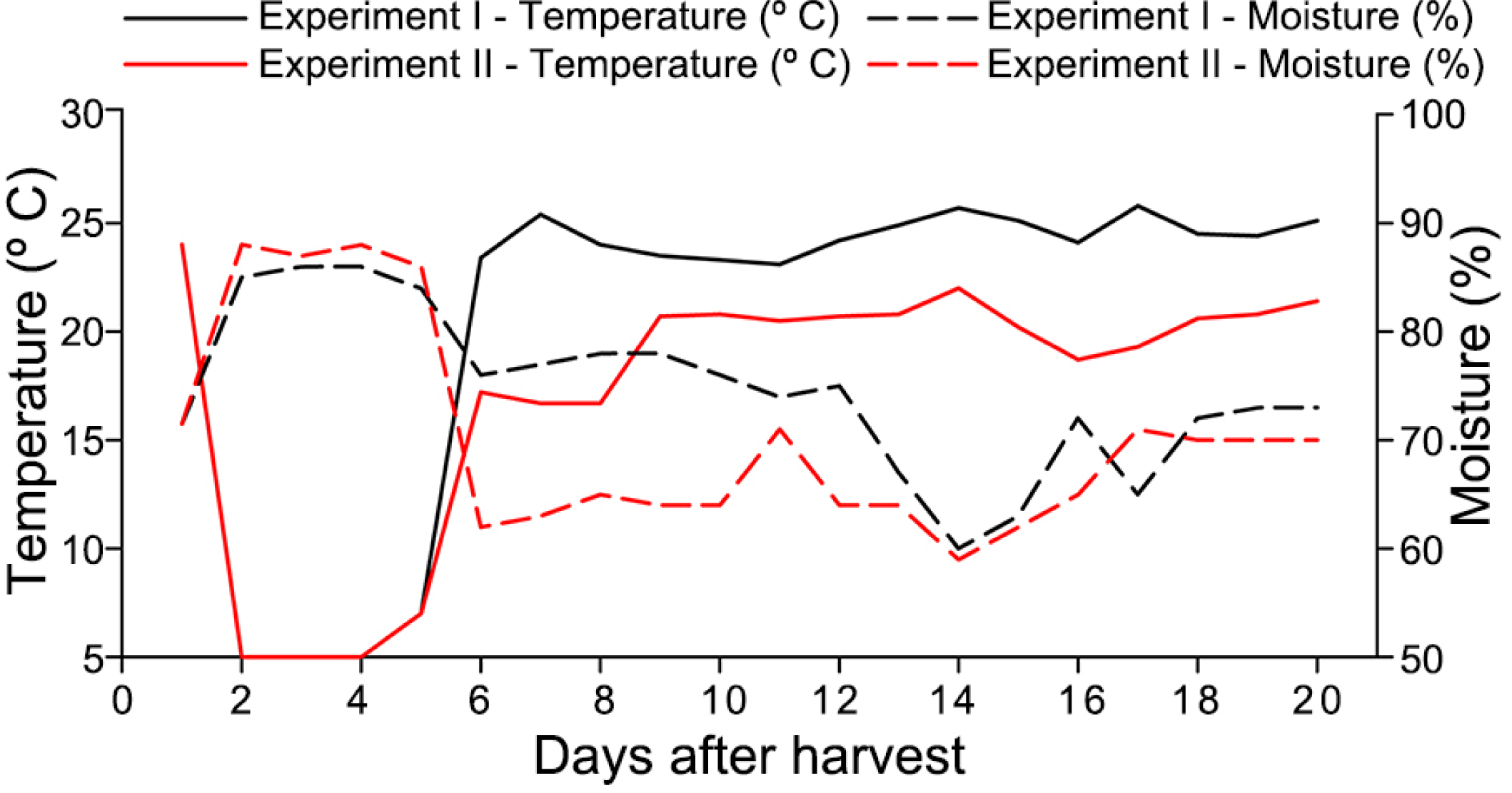
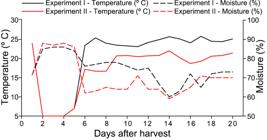
Each day, at noon, using a Kasvi K29-5070H thermo-hygrometer, the temperature (°C) and relative humidity (%) of the environment where the stems were kept and recorded (Figure 3).
Vase life and postharvest quality
Vase life was evaluated by three trained researchers in 20 stems per treatment. The assessment was based on the number of days from field harvest until the loss of commercial quality, defined as the yellowing of 50 % of the leaves or the senescence/drop of 50 % of the flowers, characterized by loss of turgor and subsequent petal wilting (Ferrante et al., 2002).
Ethylene production
Daily, three stems were analyzed, specifically selected for this analysis, to determine ethylene production from a 25 cm cut and individual storage in 2.5 L glass jars with a lid for 24 h. To measure the harvest data, the stems were placed in glass jars immediately after being transported to the laboratory; they were not treated with the preservative solution. Three repetitions were carried out for each treatment, and readings were taken in triplicate. Air from inside the jars was collected with a hermetic syringe and 6 mL were injected into a portable ethylene analyzer (Felix Instruments model F-900). Results were expressed in ppm g−1 h−1, as per Lima et al. (2021).
Enzymes CAT, SOD, POD, and APX activity
Analyses were conducted daily, using three samples of leaves and petals from separate stems for this purpose. Biochemical evaluations were made using 200 mg samples of flower petals per stem, totaling three stems per treatment. The collected samples were stored in an ultrafreezer (Sanyo model CVK-UB2) at −80 °C. Protein extraction for the enzyme superoxide dismutase (SOD), catalase (CAT), peroxidase (POD), and ascorbate peroxidase (APX) activity assays were carried out using Biemelt et al. (1998) methodology. Petals were macerated with 50 % (v v−1) liquid nitrogen until a homogeneous powder was formed. This material was used for extraction in a buffer solution prepared with 375 μL of 400 mM potassium phosphate (pH 7.8), 15 μL of 10 mM ethylenediaminetetraacetic acid (EDTA), 75 μL of 200 mM ascorbic acid (AsA), and 1,035 μL of distilled water, totaling 1,500 μL. The material was homogenized in a vortex, followed by centrifugation at 13,000 g (197 Hz) for 10 min at 4 °C. The supernatant was collected and stored at −80 °C for antioxidant enzyme activity analysis.
For the SOD activity, a methodology of Giannopolitis and Ries (1977) was used. The reaction was conducted in a reaction chamber (expanded polystyrene box), under fluorescent lamp illumination at 25 °C. The activity was measured in a buffer solution prepared with 100 μL of 100 mM potassium phosphate (pH 7.8), 3 μL of 10 μM EDTA, 40 μL of 70 mM methionine, 15 μL of 1 mM nitro blue tetrazolium chloride (NBT), 2 μL of 0.2 mM riboflavin, and 30 μL of distilled water. To this mix, 10 μL of the protein extract was added, resulting in a final volume of 200 μL. Samples were performed in triplicate. The reaction time was 7 min in the presence of light. Absorbance readings were performed at a wavelength of 560 nm. SOD activity results were expressed in unit (U) SOD min−1 mg protein−1. One U of SOD as the amount that inhibits the NBT photoreduction by 50 % and quantitated the enzyme on the basis of the percent inhibition it caused.
Catalase activity was determined using a spectrophotometer as described by Havir and McHale (1987). The buffer solution was prepared with 90 μL of 200 mM potassium phosphate (pH 7.0), 77 μL of distilled water, and 9 μL of 250 mM hydrogen peroxide (H2O2). The reaction was initiated by the addition of 4 μL of the protein extract, resulting in a final solution volume of 180 μL. Readings were taken in triplicate at 25 °C. The activity was determined by the decomposition of H2O2, based on changes in absorbance at 240 nm every 15 s for 3 min, using a molar extinction coefficient of 36 mM−1 cm−1. CAT activity results were expressed in nmol H2O2 min−1 mg protein−1.
Peroxidase activity was determined using a spectrophotometer as described by Fang and Kao (2000). The buffer solution was prepared with 100 μL of 100 mM sodium phosphate (pH 6.0), 33 μL of 0.8 % guaiacol, 14 μL of distilled water, and 20 μL of the protein extract. Next, 33 μL of 0.9 % H2O2 was added, resulting in a final volume of 200 μL. Readings in triplicate were taken at the absorbance of 470 nm for 3 min, using a molar extinction coefficient of 26.6 mM−1 cm−1. Tetraguaiacol formation was observed as an increase in absorbance. The results of POD activity were expressed in nmol tetraguaiacol min−1 mg protein−1.
Ascorbate peroxidase activity was determined by Nakano and Asada (1981) methodology. A buffer solution of 90 μL of 200 mM potassium phosphate (pH 7.0), 9 μL of 10 mM AsA, 68 μL of distilled water, and 4 μL of the protein extract was used. To this solution, 9 μL of 2 mM H2O2 was added, resulting in a final volume of 180 μL. Readings in triplicate were taken at the absorbance of 290 nm every 15 s for 3 min, using a molar extinction coefficient of 2.8 mM−1 cm−1. Results of APX activity were expressed in nmol AsA min−1 mg protein−1.
Protein quantification
For the protein quantification, the methodology according to Bradford (1976) was used with Coomassie Brilliant Blue G-250 dye. Aliquots of 6 μL of the extract were added to 294 μL of G-250 dye. At the reaction pH, the interaction between high molecular weight proteins and the dye causes a shift from the anionic (brown-red) to the cationic (blue) form. The absorption rate is proportional to the amount of protein and was determined by duplicate readings in a spectrophotometer on a wavelength of 595 nm. Compounds for H2O2 and lipid peroxidation quantification were extracted according to Velikova et al. (2000). Samples were macerated in 50 % (v v−1) liquid nitrogen until a homogeneous powder was formed. This material was used for extraction in a solution prepared with 1,500 μL of 0.1 % (v v−1) trichloroacetic acid (TCA). The material was homogenized in a vortex, followed by centrifugation at 12,000 g (189 Hz) for 15 min at 4 °C. The supernatant was collected and stored at −80 °C for analysis.
Hydrogen peroxide and lipid peroxidation quantification
Hydrogen peroxide quantification was based on Velikova et al. (2000). A buffer solution containing 45 μL of 10 mM potassium phosphate (pH 7.0), 90 μL of 1 M potassium iodide, and 45 μL of the extract was used, resulting in a final volume of 180 μL. Readings in duplicate were taken by measuring absorbance at 390 nm. For the H2O2 amount calculation, a standard curve was prepared using 250 μM H2O2. Results were expressed in μmol H2O2 mg−1 fresh weight (FW).
Lipid peroxidation determined by malondialdehyde (MDA) was quantified using the thiobarbituric acid (TBA) reactive substances method (Buege and Aust, 1978). Aliquots of 125 μL of the extract were added to 250 μL of the reaction medium with 0.5 % (v v−1, TBA) and 10 % (v v−1, TCA), and then incubated at 95 °C for 30 min. The reaction was stopped by rapid cooling on ice, and readings in duplicate were taken at the absorbance of 535 and 600 nm. Malondialdehyde is a product of lipid peroxidation and reacts with TBA, with the product detected by spectrophotometry. Calculations were performed using the equation: , where ε is the extinction coefficient of 156 mM−1 cm−1 and b is the optical path length of 1 cm. Results were expressed in nmol MDA g−1 FW.
Statistical analysis
The data obtained were subjected to analysis of variance (ANOVA) by F-test (p ≤ 0.05), based on the mean values obtained from the two experiments. When significant differences were observed, treatments were compared the same evaluation day using Tukey's test at the 5 % significance level. All statistical analyses were carried out using R software (2023).
Results
During storage and transportation, the temperatures of the solutions ranged from 7.7 to 8.6 °C, while during harvest and commercialization, they ranged from 20.4 to 22.4 °C.
Vase life
Alstroemeria floral stems’ durability varied depending on the preservative solutions used (Table 1). The longest vase life was obtained for floral stems maintained in solutions prepared with GA3 (17.2 days) and FLO + Cl (17.0 days).
Vase life of floral stems of Alstroemeria hybrida ‘Akemi’ maintained in different preservative solutions.
Ethylene production
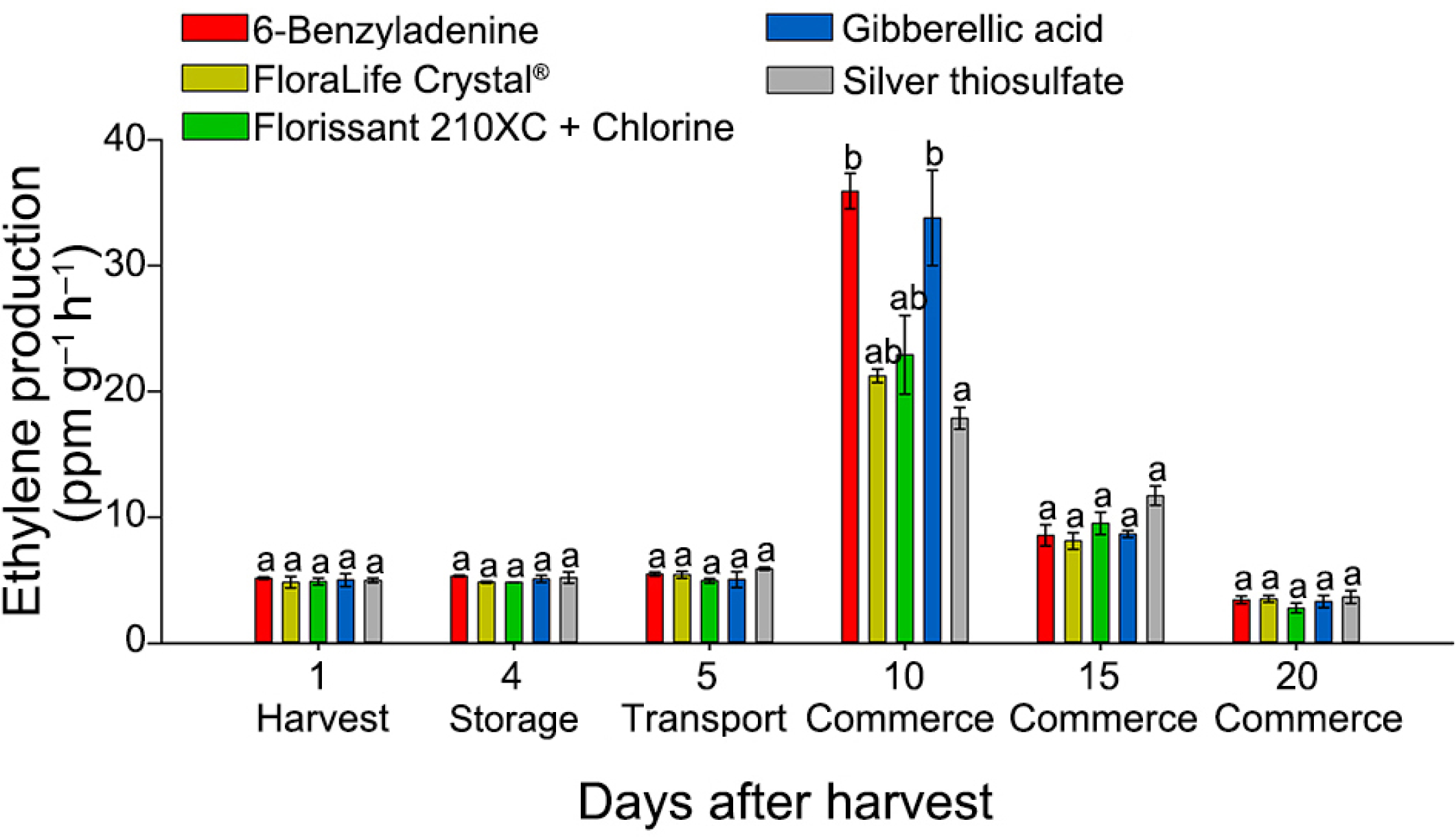
Ethylene production in alstroemeria was significantly influenced by the treatments during the postharvest stages (Figure 4). During harvest, storage, and transportation, no significant differences were observed, with ethylene production ranging between 4.8 and 5.9 ppm g−1 h−1. However, on the tenth day after harvest, with the onset of commercialization, there was a spike in ethylene levels. The solution that most suppressed ethylene production was STS (17.9 ppm g−1 h−1), followed by CRY (21.2 ppm g−1 h−1) and FLO + Cl (22.9 ppm g−1 h−1). Subsequently to these peaks, a trend of decrease was observed until the end of senescence, with very low values on the twentieth day.
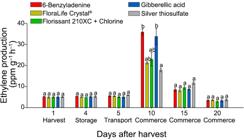
Ethylene production of floral stems of Alstroemeria hybrida ‘Akemi’ maintained in different preservative solutions Data are presented as the mean ± standard error, with n = 6. Different letters on the same day after harvest indicate statistically significant differences from each other, as determined by the Tukey test (p ≤ 0.05).
Enzymes CAT, SOD, POD, and APX activities
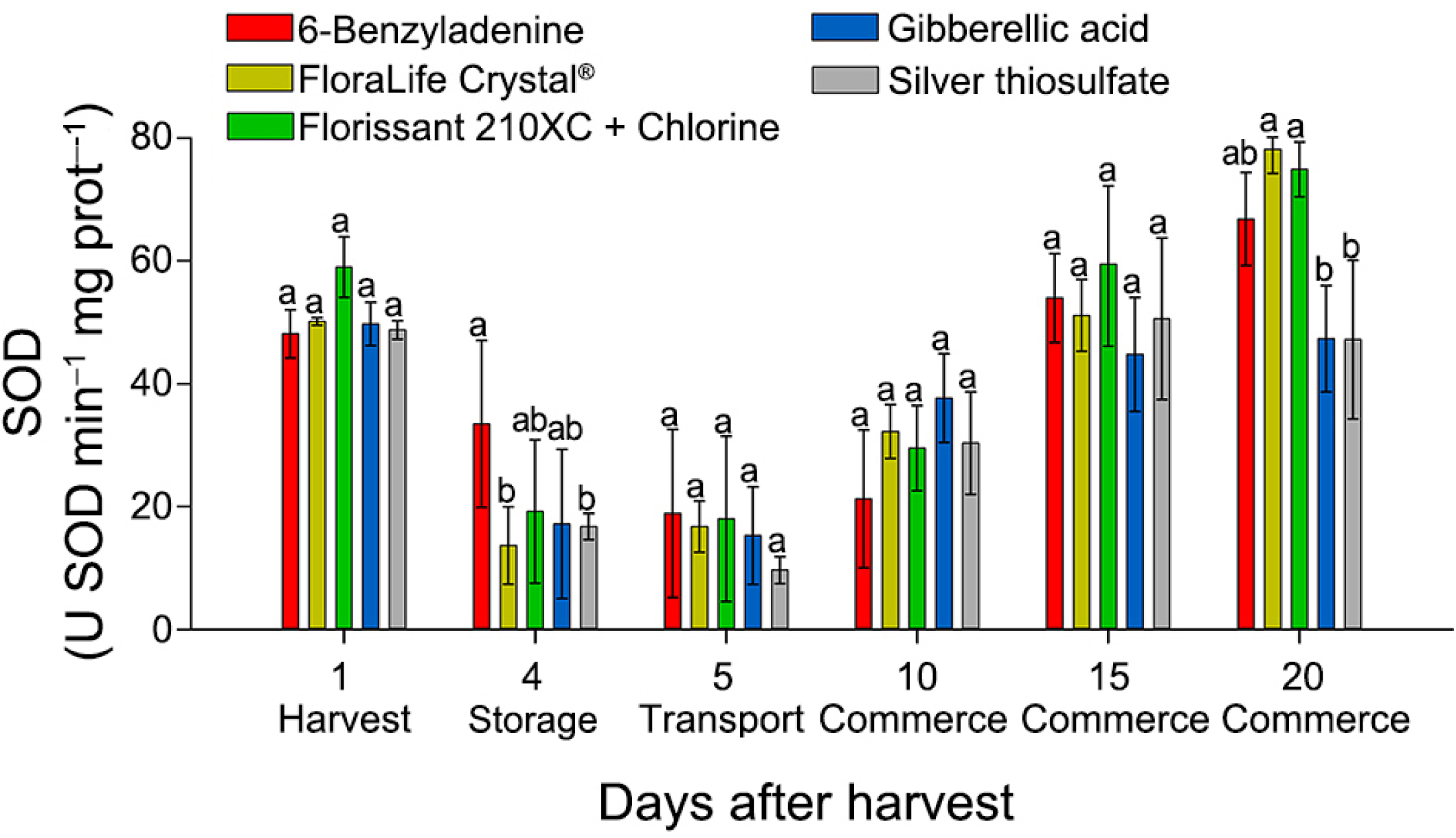
Superoxide dismutase activity was highest at both the time of harvest and the end of vase life (Figure 5). Lower values were observed during stages when the stems were kept at low temperatures. During the commercialization stage, there was a noticeable increasing trend in SOD activity until the end of vase life. Among the tested solutions, those prepared with CRY, FLO + Cl, and BA provided the highest SOD activity in alstroemeria floral stems.
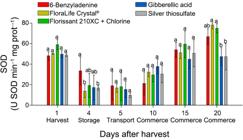
Specific activity of the enzyme superoxide dismutase (SOD) in floral petals of Alstroemeria hybrida ‘Akemi’ maintained in different preservative solutions. Data are presented as the mean ± standard error, with n = 6. Different letters on the same day after harvest indicate statistically significant differences from each other, as determined by the Tukey test (p ≤ 0.05).
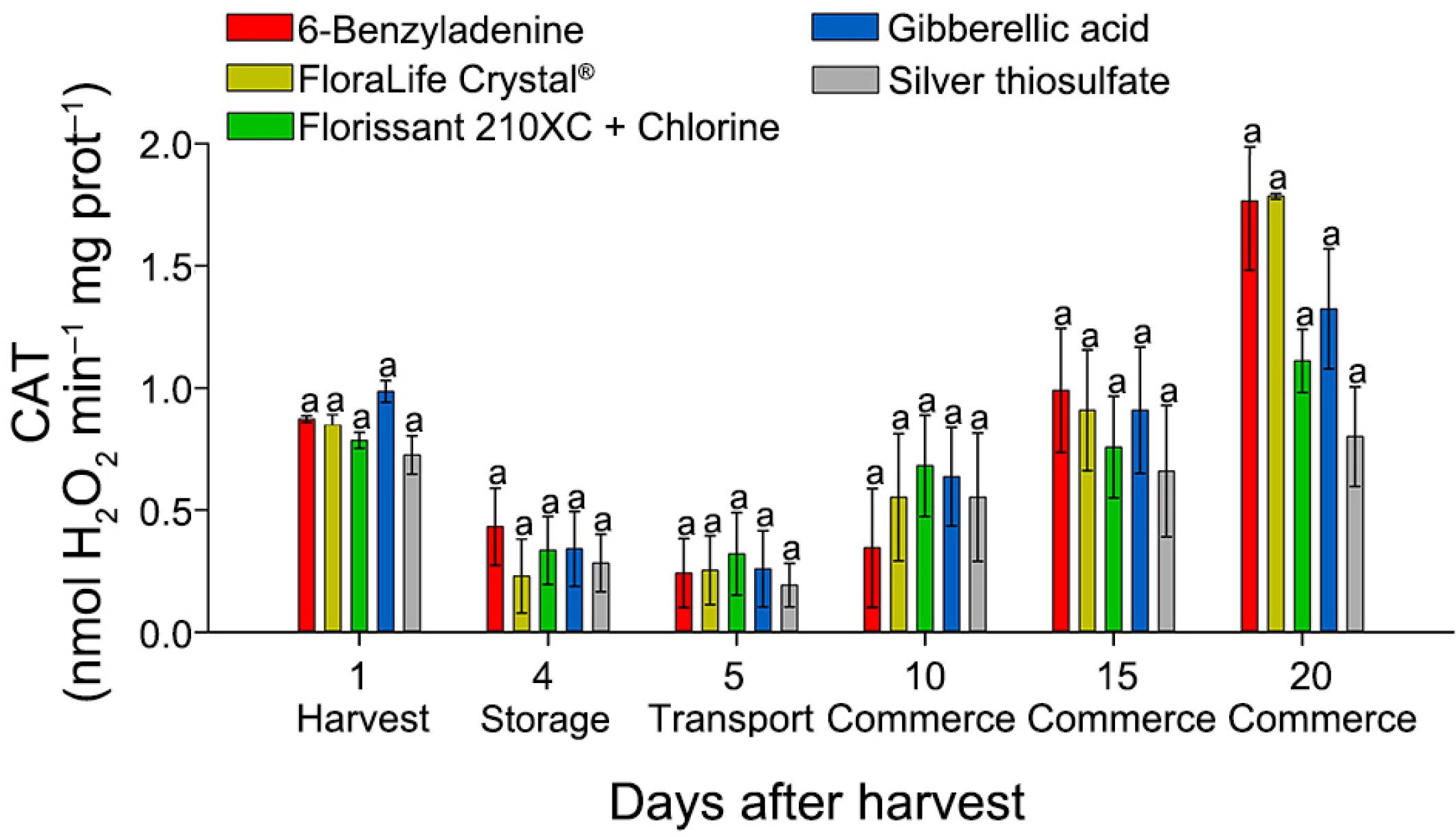
The activity of CAT did not differ between the treatments or the preservative solutions used in postharvest stages of alstroemeria (Figure 6). However, similar to SOD, CAT activity was higher immediately after harvest and also at the end of commercialization, at 20 days. Keeping the stems at low temperatures during storage and transportation was crucial in reducing the expression of this enzyme.
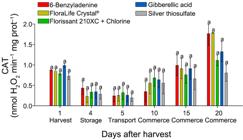
Specific activity of the enzyme catalase (CAT) in floral petals of Alstroemeria hybrida ‘Akemi’ is maintained in different preservative solutions. Data are presented as the mean ± standard error, with n = 6. Different letters on the same day after harvest indicate statistically significant differences from each other, as determined by the Tukey test (p ≤ 0.05).
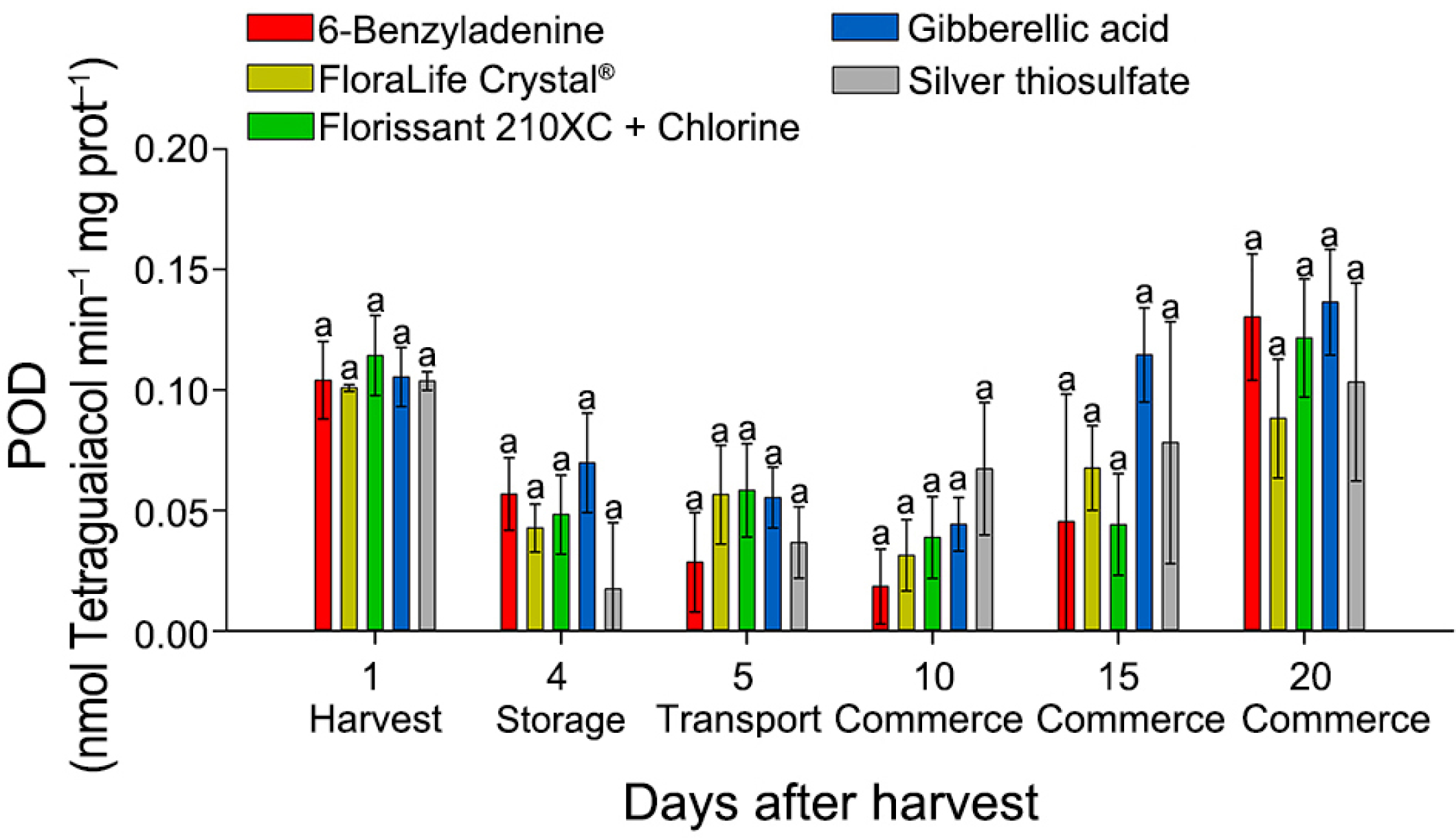
Peroxidase activity also showed no differences due to the preservative solutions used (Figure 7). POD activity was highest at harvest and also at the end of vase life, compared to storage, transportation, and the beginning of commercialization stages. As with SOD and CAT, lower activity was observed at lower temperatures.
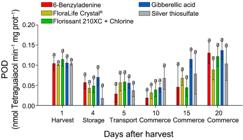
Specific activity of the enzyme peroxidase (POD) in floral petals of Alstroemeria hybrida ‘Akemi’ is maintained in different preservative solutions. Data are presented as the mean ± standard error, with n = 6. Different letters on the same day after harvest indicate statistically significant differences from each other, as determined by the Tukey test (p ≤ 0.05).
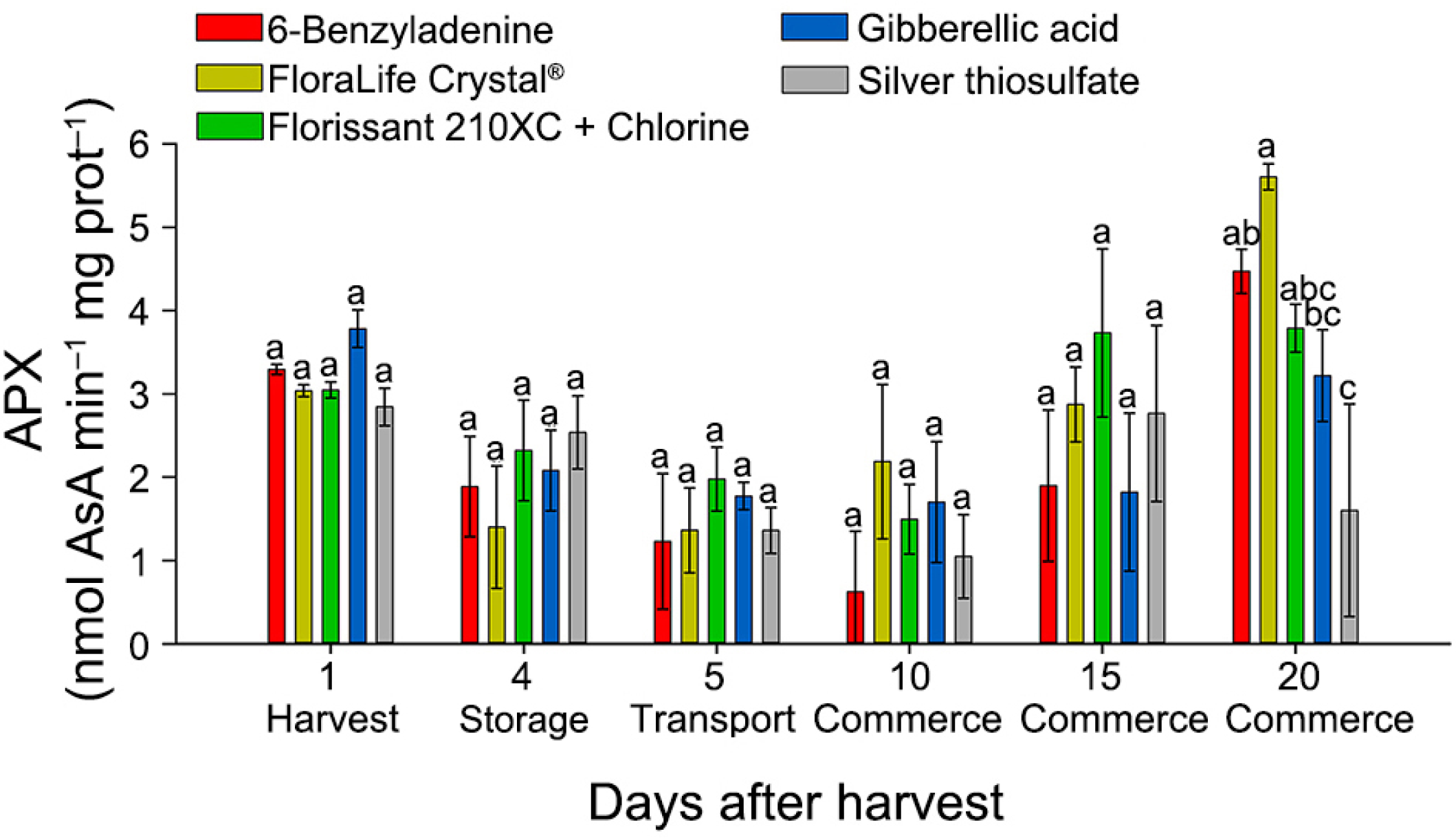
In the final stage of vase life, differences in APX specific activity were observed among treatments (Figure 8). Similar to POD, APX had higher activity at harvest, also at the end of commercialization, compared to storage, transportation, and the beginning of commercialization, which recorded the lowest activities.
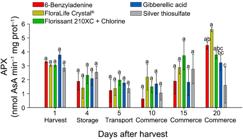
Specific activity of the enzyme ascorbate peroxidase (APX) in floral petals of Alstroemeria hybrida ‘Akemi’ maintained in different preservative solutions. Data are presented as the mean ± standard error, with n = 6. Different letters on the same day after harvest indicate statistically significant differences from each other, as determined by the Tukey test (p ≤ 0.05).
During the commercialization phase, the activity of all enzymes increased progressively until the end of senescence.
Hydrogen peroxide (H2O2) and lipid peroxidation
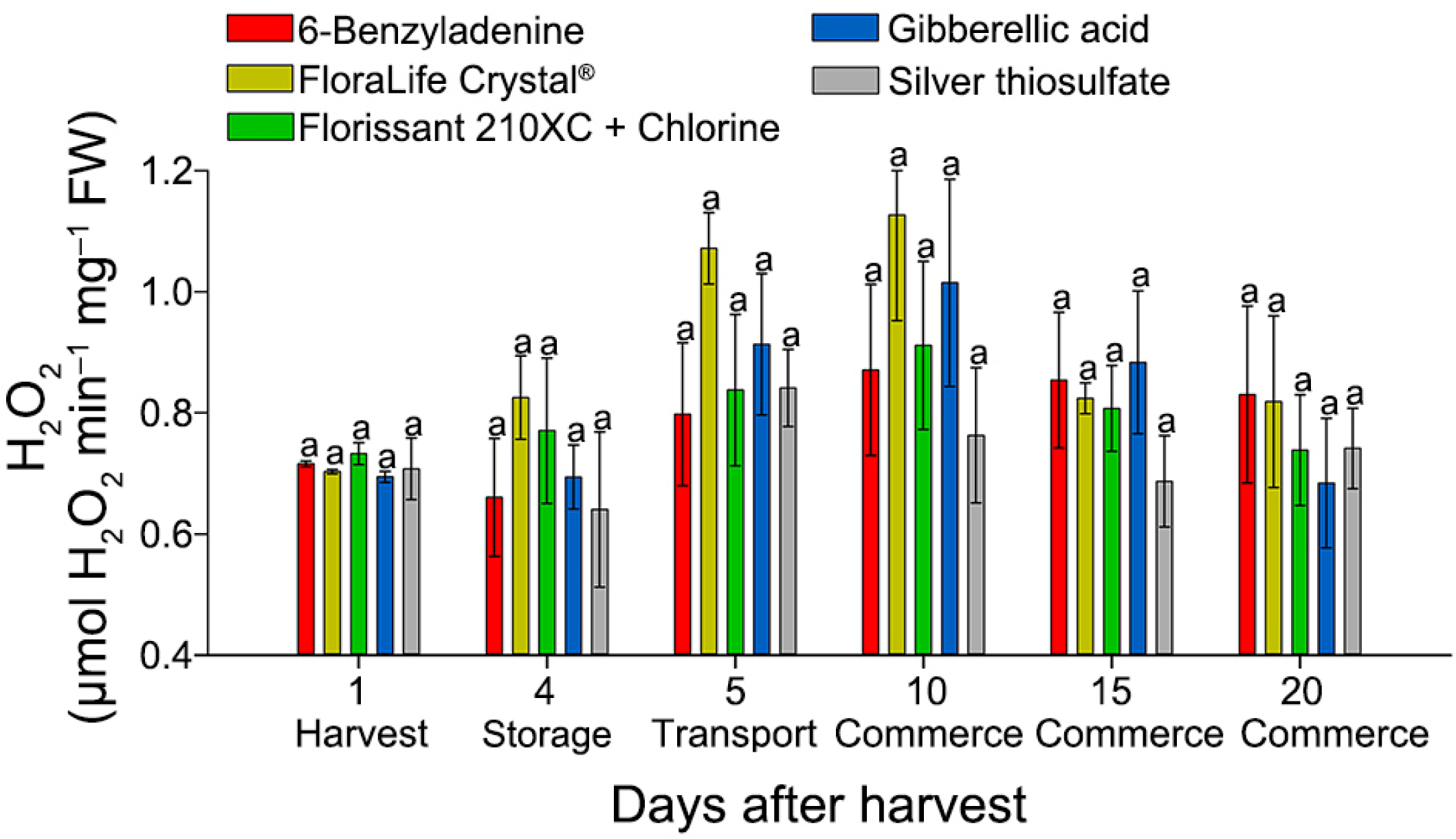
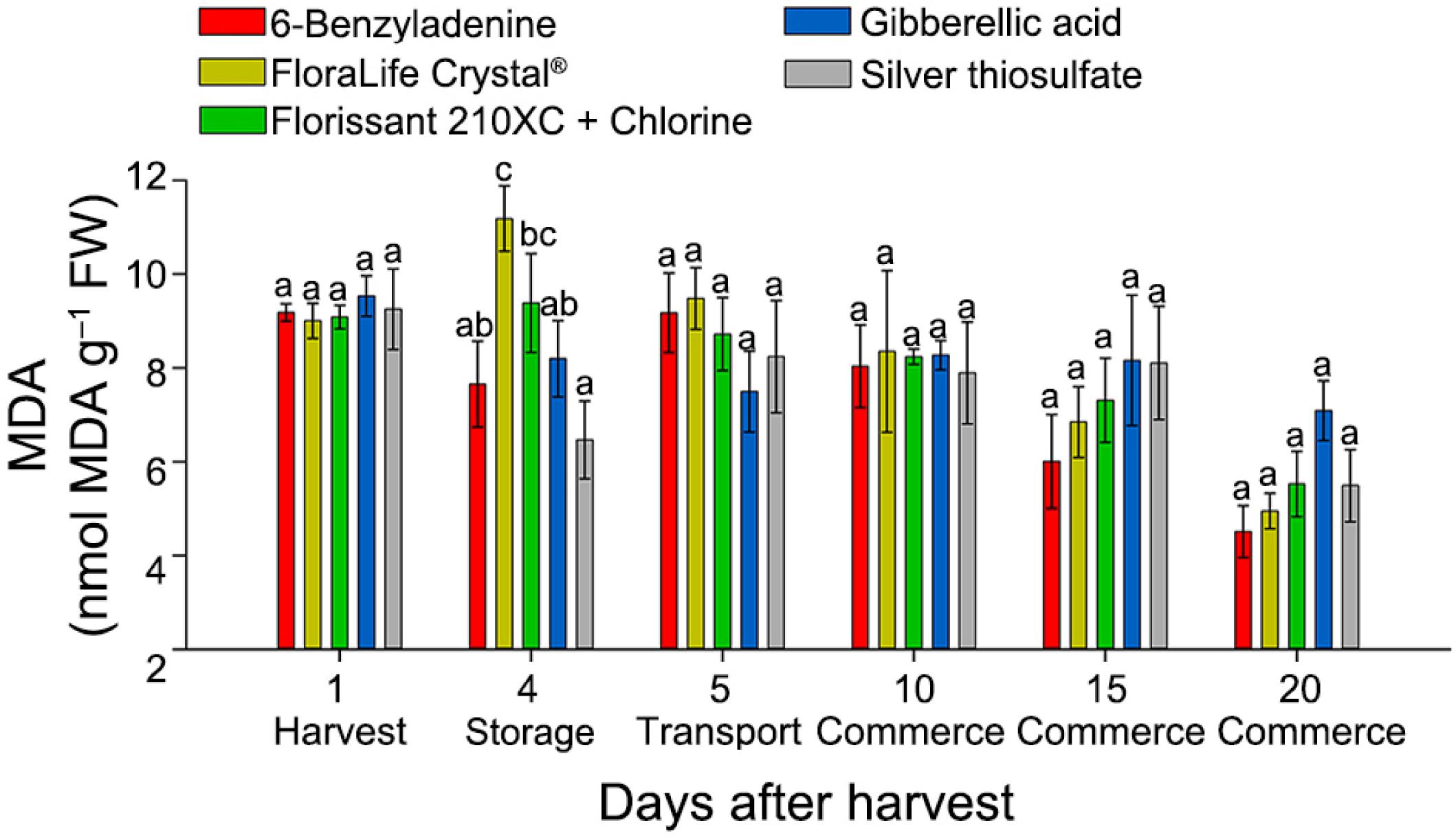
Quantification of H2O2 did not differ between the preservative treatments used for alstroemeria (Figure 9). The lipid peroxidation (determined by MDA quantification) differed between treatments, particularly during the storage phase (Figure 10). Higher lipid peroxidation was observed in stems harvested and maintained in CRY and FLO + Cl solutions. A trend of reduced lipid peroxidation was noted over time after harvest, with lower values at 20 days.
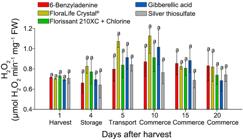
Quantification of hydrogen peroxide (H2O2) in petals of Alstroemeria hybrida ‘Akemi’ maintained in different preservative solutions. Data are presented as the mean ± standard error, with n = 6. Different letters on the same day after harvest indicate statistically significant differences from each other, as determined by the Tukey test (p ≤ 0.05). FW = fresh weight.
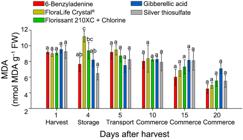
Quantification of Malondialdehyde (MDA) in floral petals of Alstroemeria hybrida ‘Akemi’ maintained in different preservative solutions. Data are presented as the mean ± standard error, with n = 6. Different letters on the same day after harvest indicate statistically significant differences from each other, as determined by the Tukey test (p ≤ 0.05). FW = fresh weight.
Discussion
Vase life is one of the most important factors for assessing the quality and marketability of cut flowers. The use of 0.1 mM GA3 in the vase solution resulted in the longest durability for alstroemeria stems, at 17.2 days, which is close to the observations of Oliveira et al. (2024) (23.0 days). Studies with other GA3 concentrations recorded vase life durations of 13.3 days (0.289 mM) (Isapareh et al., 2014), 11.7 days (0.5 mM) (Tiwari et al., 2010), and 7.3 days (0.866 mM) (Kaviya et al., 2021). These results show that less concentrated GA3 solutions had longer vase life. This growth regulator acts by delaying foliar senescence, improving the diameter of florets, preserving relative water content, maintaining chlorophyll levels, and regulating water absorption, demonstrating positive effects on postharvest flower durability (Kaviya et al., 2021).
The use of FLO combined with Cl in the postharvest procedure adopted by the company supplying the alstroemeria stems. This treatment extended vase life by 17 days, which confirmed the company's previous observation of an average duration of approximately 15 days. Oliveira et al. (2024) reported obtaining stems with a commercial standard lasting up to 22 days using this preservative. FLO is commercially formulated for alstroemeria postharvest conservation, acting as a senescence inhibitor to prevent premature yellowing, restoring hormonal balance, and maintaining better flower and leaf coloration. Additionally, the addition of Cl in the conservative solution acts as an antimicrobial agent, as well as providing an increase in stem rigidity due to Ca++ ions action (Zhao et al., 2019; Timalsina et al., 2023).
Pulsing treatment for 1-h using a solution prepared with STS (2 mM) resulted in stem durability of 16.7 days, similar to the 16.6 days reported by Chanasut et al. (2003) (2 mM pulsing for 3 h), but lower than the 24.0 days observed by Oliveira et al. (2024) and the 13.9 days by Tiwari et al. (2010). Nonetheless, the 2 mM STS pulsing for 1 h resulted in the greatest durability and notably was the only treatment where no petal drop occurred during the experimental period. For the Rebecca and Samora cultivars, STS has been shown to increase the time to petal abscission (Wagstaff et al., 2005). The reduction of abscission, senescence, and wilting of flowers was a result of the silver ion blocking the harmful effects of ethylene, as well as being effective in reducing microbial growth (Shokalu et al., 2021).
The use of BA (200 mg L−1) resulted in a vase life of 16.4 days, confirming the results of Matak et al. (2017) (15.9 days), but exceeding the records of Isapareh et al. (2014) (12.3 days at 100 mg L−1) and Kaviya et al. (2021) (7.7 days at 33.8 mg L−1). These results show that more concentrated solutions of BA had longer vase lives. BA's action is associated with a reduction in protein and RNA loss (Chitarra and Chitarra, 2005), thereby inhibiting chlorophyll degradation and delaying lipid peroxidation (Kaviya et al., 2021).
Alstroemeria stems maintained in a solution containing CRY exhibited the shortest vase life, 14.1 days, in agreement with results reported by Oliveira et al. (2024) of 16.2 days. Despite being formulated to provide nutrients, preserve stem functionality, and enhance flower hydration, this product was less effective for extending the vase life of alstroemeria.
As regards ethylene production, an important hormone that accelerates aging in plant organs, especially in climacteric crops like alstroemerias, including perianth abscission (Wagstaff et al., 2002; Chanasut et al., 2003), ethylene production was low during the harvest, storage, and transport stages, corresponding to the early developmental stage of the stems before floral bud opening, coupled with cold storage that reduces plant metabolism. A marked increase in ethylene production occurred from the tenth day, coinciding with floral bud opening and elevated temperatures which then decreased thereafter. STS was the most effective solution in inhibiting ethylene production in floral stems, and it also showed the least variation across stages. Notably, stems in this treatment were the only ones that did not exhibit petal abscission. The ability of STS to delay perianth abscission in alstroemerias suggests that ethylene is involved in regulating this process, as STS acts by blocking the ethylene receptor (Wagstaff et al., 2005).
The use of GA3 and BA as preservative solutions resulted in higher ethylene production on the tenth day, but these flowers ended their vase life due to petal drop and senescence, indicating that they were not effective in inhibiting the deleterious effects of ethylene, such as perianth abscission. CRY and FLO with Cl were the treatments with the second lowest ethylene production in the stem. Despite having demonstrated a positive effect in reducing ethylene production, CRY had its vase life ended by rapid leaf yellowing followed by petal abscission, while FLO with Cl had its vase life ended by petal abscission.
As aging progresses, ROS are continuously produced, leading to the accumulation of H2O2 and MDA in plant tissues (Xia et al., 2017). Antioxidant enzymes such as SOD, POD, CAT, and APX help delay flower aging and wilting by suppressing ROS and minimizing damage caused by stress factors (Xu et al., 2014). There was a similar behavior by CAT, POD, SOD, and APX enzymes during the postharvest stages of alstroemerias. At harvest, enzymatic activities were higher compared to the storage and transport stages, likely influenced by the stress induced by stem cutting and refrigeration conditions during storage and transport. Lower temperatures retard metabolic activities, decrease respiration rates that release energy in cells, and adversely affect enzymatic activity (Liu et al., 2024).
Superoxide dismutase converts harmful oxygen into less reactive H2O2. Its activity is related to plant antioxidant defense and has been reported in applications of growth regulators in plants, stress responses, and others (Qu et al., 2020). SOD analyses demonstrate its relation to reduced H2O2 levels and highlight the importance of this enzyme as an antioxidant defense in alstroemerias. Higher SOD activity correlates with lower H2O2 levels, and vice versa.
Catalase increases tolerance to oxidative stress and is essential for detoxifying plant cells under stress conditions. It directly dismutates H2O2 into H2O and O2 (Isapareh et al., 2014). CAT activities underscore the importance of this enzyme as an antioxidant defense in senescence processes by reducing H2O2 levels in alstroemerias. Higher enzyme activity corresponds to lower H2O2 accumulation. Additionally, prolonging the time that flowers remain in the vase solution results in a significant increase in catalase activity (Naghiloo et al., 2020), as observed during commercialization, particularly towards the end of senescence.
Peroxidase, known as the browning enzyme, neutralizes the toxic effect of free oxygen from H2O2, thereby preventing flower senescence. It acts as antioxidant protection and is moderately active after any harmful attack on the plant in the field and/or postharvest (Isapareh et al., 2014). POD activities confirm its indirect relationship with H2O2 and reveal the enzyme's importance as antioxidant protection. Higher enzyme activity correlates with lower H2O2 accumulation, and vice versa. Additionally, lower temperatures inhibit POD activities, as evidenced by the absence of browning in cut flowers during storage. Conversely, storage at room temperature increases this enzyme's activity (Galati et al., 2021). These findings are confirmed in this study, where POD activities were lower during storage and transport stages compared to commercialization.
Ascorbate peroxidase is a key enzyme in the antioxidant metabolism of photosynthetic organisms, playing a central role in mitigating oxidative damage and mediating responses to a wide range of environmental stresses. It catalyzes the decomposition of H2O2 into water using AsA as an electron donor (Caverzan et al., 2012). Extending the time alstroemeria flowers remain in the vase solution resulted in a significant increase in APX activity, as evidenced by the results observed, showing a growing trend during commercialization phase. APX activity indicates an indirect relationship with H2O2 quantification. The results highlight the importance of APX as an antioxidant defense. Higher enzyme activity correlates with lower H2O2 levels.
Hydrogen peroxide is a major ROS naturally produced in plants as a byproduct of cellular metabolism. As flowers age, they produce more H2O2 (Xia et al., 2017). However, H2O2 causes oxidative stress and toxicity in high concentrations in plants, leading to damage to cellular membranes and internal structures (Xia et al., 2017). The highest H2O2 quantifications occurred during transport and early commercialization stages, when enzymatic activities were lower. From the commercialization stage onwards and with advancing senescence, there was a reduction in H2O2 accumulation, which may be related to increased antioxidant enzyme activities.
Lipid peroxidation is a process of degradation of cellular membrane lipids due to free radical action. Increased membrane permeability is a characteristic feature of senescent plant tissues. Loss of membrane integrity is closely related to lipid modifications, primarily due to peroxidation. In cut plants, lipid peroxidation is a significant issue as it can cause damage and lead to cell death and, consequently, deterioration in stem quality (Su et al., 2019). During harvest, storage, and transport stages, high MDA quantification was observed, possibly due to harvest stress, cutting of stems, and cooling. Excessive cold causes damage to cellular membranes (Kazemi et al., 2011). From the commercialization stage through the progression of senescence, a reduction in MDA accumulation was observed, similar to the pattern seen with H2O2. This reduction may be associated with the enhanced activity of antioxidant enzymes, which help mitigate oxidative stress and delay senescence.
The enzymes studied showed an observed inverse correlation with the accumulation of H2O2 and MDA in all preservative solutions, reinforcing the role of these enzymes in the plant's antioxidant defense system. Overall, no significant differences were observed between the tested solutions in enzyme activity at each stage, except for APX and SOD enzymes, which exhibited higher activity on the twentieth day after harvest in the CRY, FLO + Cl, and BA treatments. STS inhibited petal abscission and did not exhibit significant enzymatic activity, suggesting that petal abscission may have occurred primarily due to mechanisms other than the activity of the studied enzymes.
The use of GA3, FLO with Cl, and STS extended the vase life of alstroemeria floral stems. Of these treatments, GA3 and the combination of FLO with Cl were effective in delaying leaf yellowing. STS was the most efficient in inhibiting ethylene production, and no perianth abscission was observed, although vase life was ultimately limited by leaf yellowing.
The enzymes CAT, POD, SOD, and APX were highly activated during the harvest stage, likely primarily as a response to the stress caused by stem cutting. In the storage and transport stages, under lower temperatures, their specific activities decreased. During commercialization, enzyme activity progressively increased until the end of senescence. The enzymes had a positive effect in reducing H2O2 and lipid peroxidation.
Furthermore, temperature during the commercialization phase plays a critical role in determining postharvest quality and vase life of cut flowers. In Brazil, it is common for flowers to be stored and displayed in supermarkets at room temperature, typically between 20 and 25 °C, without adequate humidity control or refrigeration (Menegaes et al., 2019). These suboptimal conditions can accelerate senescence processes, leading to a reduction in visual quality and longevity. In contrast, in European and North American countries, the floricultural supply chain typically involves continuous cold storage, with temperatures maintained between 2 and 5 °C from postharvest handling through to the point of sale (Faust and Dole, 2021). Such practices greatly improve the preservation of flower quality and extend vase life. Therefore, implementing refrigerated systems during the commercialization stage in Brazil could be an effective strategy to enhance the shelf life and overall quality of cut flowers like alstroemeria during transport and commercialization.
Acknowledgments
The authors gratefully acknowledge Grupo Reijers for supplying the floral stems. This research received financial support from the Fundação de Amparo à Pesquisa do Estado de Minas Gerais (FAPEMIG), the Conselho Nacional de Desenvolvimento Científico e Tecnológico (CNPq), the Coordenação de Aperfeiçoamento de Pessoal de Nível Superior (CAPES), through grants and scholarships.
Data Availability Statement
Data will be available upon request, provided a valid justification is given
References
-
Amin M, Naderi R, Sedaghathoor S, Kalatehjari S. 2022. Pre- and post-harvest effect of gibberellic acid and salicylic acid on cut branches of Asparagus umbellatus Ornamental Horticulture 28: 323-331. https://doi.org/10.1590/2447-536X.v28i3.2467
» https://doi.org/10.1590/2447-536X.v28i3.2467 -
Bazaz AM, Tehranifar A. 2011. Effect of ethanol, methanol and essential oils as novel agents to improve vase-life of Alstroemeria flowers. Journal of Biological Environmental Science 14: 41-46. Available at: https://dergipark.org.tr/en/pub/jbes/issue/38010/438890 [Accessed Dec 20, 2025]
» https://dergipark.org.tr/en/pub/jbes/issue/38010/438890 -
Biemelt S, Keetman U, Albrecht G. 1998. Re-Aeration following hypoxia or anoxia leads to activation of the antioxidative defense system in roots of wheat seedlings. Plant Physiology 116: 651-658. https://doi.org/10.1104/pp.116.2.651
» https://doi.org/10.1104/pp.116.2.651 -
Bradford mM. 1976. A rapid and sensitive method for the quantitation of microgram quantities of protein utilizing the principle of protein-dye binding. Analytical Biochemistry 72: 248-254. https://doi.org/10.1016/0003-2697(76)90527-3
» https://doi.org/10.1016/0003-2697(76)90527-3 -
Buege JA, Aust SD. 1978. Microsomal lipid peroxidation. p. 302-310. In: Fleischer S, Packer L. eds. Methods in Enzymology. Academic Press, Amsterdam, Netherlands. https://doi.org/10.1016/S0076-6879(78)52032-6
» https://doi.org/10.1016/S0076-6879(78)52032-6 -
Caverzan A, Passaia G, Rosa SB, Ribeiro CW, Lazzarotto F, Margis-Pinheiro M. 2012. Plant responses to stresses: role of ascorbate peroxidase in the antioxidant protection. Genetics and Molecular Biology 35: 1011-1019. https://doi.org/10.1590/S1415-47572012000600016
» https://doi.org/10.1590/S1415-47572012000600016 -
Chanasut U, Rogers HJ, Leverentz MK, Griffiths G, Thomas B, Wagstaff C, et al. 2003. Increasing flower longevity in Alstroemeria Postharvest Biology and Technology 29: 325-333. https://doi.org/10.1016/S0925-5214(03)00048-6
» https://doi.org/10.1016/S0925-5214(03)00048-6 - Chitarra MIF, Chitarra AB. 2005. Pós-colheita de frutas e hortaliças: fisiologia e manuseio. 2ed. UFLA, Lavras, mg, Brazil (in Portuguese).
-
Cunha Neto AR, Paiva PDO, Ponce mM, Calvelli JVB, Barbosa S. 2023. Meta-analysis of new technologies in post-harvest of tropical flowers. Ornamental Horticulture 29: 224-237. https://doi.org/10.1590/2447-536X.v29i2.2643
» https://doi.org/10.1590/2447-536X.v29i2.2643 -
Fang W-C, Kao CH. 2000. Enhanced peroxidase activity in rice leaves in response to excess iron, copper, and zinc. Plant Science 158: 71-76. https://doi.org/10.1016/S0168-9452(00)00307-1
» https://doi.org/10.1016/S0168-9452(00)00307-1 - Faust JE, Dole JM. 2021. Cut Flowers and Foliages. Crop Production Science in Horticulture, Wallingford, UK.
-
Ferrante A, Hunter DA, Hackett WP, Reid MS. 2002. Thidiazuron–a potent inhibitor of leaf senescence in Alstroemeria Postharvest Biology and Technology 25: 333-338. https://doi.org/10.1016/S0925-5214(01)00195-8
» https://doi.org/10.1016/S0925-5214(01)00195-8 -
Galati VC, Muniz ACC, Guimarães JER, Mattiuz CMF, Mattiuz B-H. 2021. Conservation of Alstroemeria cut flowers stored under refrigeration. Acta Scientiarum. Technology 43: e50016. https://doi.org/10.4025/actascitechnol.v43i1.50016
» https://doi.org/10.4025/actascitechnol.v43i1.50016 -
Gama ABN, Paiva PDO, Brito OG, Costa AL, Silva DPC, Paiva R. 2025. Role of preservative solutions on physiological mechanisms for delaying leaf yellowing in alstroemeria flowers. Ciência e Agrotecnologia 49: e023024. https://doi.org/10.1590/1413-7054202549023024
» https://doi.org/10.1590/1413-7054202549023024 -
Giannopolitis CN, Ries SK. 1977. Superoxide Dismutases: I. Occurrence in Higher Plants. Plant Physiology 59: 309-314. https://doi.org/10.1104/pp.59.2.309
» https://doi.org/10.1104/pp.59.2.309 -
Girardi LB, Neu J, Mazzanti ÂM, Silva LO, Rodrigues MA. 2015. Postharvested Alstroemeria x hybrids in different environments to preserve longevity. Revista de Agricultura 90: 284-292 (in Portuguese, with abstract in English). https://doi.org/10.37856/bja.v90i3.165
» https://doi.org/10.37856/bja.v90i3.165 -
Havir EA, McHale NA. 1987. Biochemical and developmental characterization of multiple forms of catalase in tobacco leaves. Plant Physiology 84: 450-455. https://doi.org/10.1104/pp.84.2.450
» https://doi.org/10.1104/pp.84.2.450 -
Instituto Brasileiro de Floricultura [Ibraflor]. 2021. O mercado de flores no Brasil. Ibaflor, Holambra, São Paulo, Brasil (in Portuguese). Available at: https://354d6537-ca5e-4df4-8c1b-3fa4f2dbe678.filesusr.com/ugd/b3d028_e002f96eeb81495ea3e08362b49881a3.pdf [Accessed Oct 09, 2024]
» https://354d6537-ca5e-4df4-8c1b-3fa4f2dbe678.filesusr.com/ugd/b3d028_e002f96eeb81495ea3e08362b49881a3.pdf - Isapareh A, Hatamzadeh A, Ghasemnezhad M. 2014. The effect of natural essential oil carvacrol and some growth regulators on vase life of cut flowers of Alstroemeria cv. Bridal. Journal of Ornamental Plants 4: 115-122.
-
Jowkar mM. 2015. Effects of chlorination and acidification on postharvest physiological properties of Alstroemeria, cv. ‘Vanilla' and on microbial contamination of vase solution. Horticulture, Environmental, and Biotechnology 56: 478-486. https://doi.org/10.1007/s13580-015-0022-4
» https://doi.org/10.1007/s13580-015-0022-4 -
Kaviya SS, Lourdusamy K, Ganga M, Vincent S. 2021. Influence of pre-harvest sprays on flower quality and vase life of Alstroemeria Journal of Pharmacognosy and Phytochemistry 10: 429-433. https://doi.org/10.22271/phyto.2021.v10.i1Sg.13597
» https://doi.org/10.22271/phyto.2021.v10.i1Sg.13597 -
Kazemi M, Aran M, Zamani S. 2011. Effect of salicylic acid treatments on quality characteristics of apple fruits during storage. American Journal of Plant Physiology 6: 113-119. https://doi.org/10.3923/ajpp.2011.113.119
» https://doi.org/10.3923/ajpp.2011.113.119 -
Lima AA, Santos IS, Torres MEL, Cardon CH, Caldeira CF, Lima RR, et al. 2021. Drought and re-watering modify ethylene production and sensitivity and are associated with coffee anthesis. Environmental and Experimental Botany 181: 104289. https://doi.org/10.1016/j.envexpbot.2020.104289
» https://doi.org/10.1016/j.envexpbot.2020.104289 -
Liu Z, Luo Y, Liao W. 2024. Postharvest physiology of fresh-cut flowers. p. 23-42. In: Ziogas V, Corpas FJ. eds. Oxygen, Nitrogen and Sulfur Species in Post-Harvest Physiology of Horticultural Crops. Academic Press, New York, NY, USA. https://doi.org/10.1016/B978-0-323-91798-8.00008-4
» https://doi.org/10.1016/B978-0-323-91798-8.00008-4 -
Matak SA, Hashemabadi D, Kaviani B. 2017. Changes in postharvest physio-biochemical characteristics and antioxidant enzymes activity of cut Alsteroemeria aurantiaca flower as affected by cycloheximide, coconut water and 6-benzyladenine. Bioscience Journal 33: 321-332. https://doi.org/10.14393/BJ-v33n2-34381
» https://doi.org/10.14393/BJ-v33n2-34381 -
Mattos DG, Paiva PDO, Silva DPC, Reis MV, Cunha Neto AR, Paiva R. 2023. Precooling and cold storage effects on antioxidant system in calla lily postharvest. Ciência e Agrotecnologia 47: e018022. https://doi.org/10.1590/1413-7054202347018022
» https://doi.org/10.1590/1413-7054202347018022 -
Menegaes JF, Nunes UR, Bellé RA, Backes FAAL. 2019. Post-harvesting of cut flowers and ornamental plants. Scientia Agraria Paranaensis 18: 313-323. https://doi.org/10.18188/sap.v18i4.21261
» https://doi.org/10.18188/sap.v18i4.21261 - Monya M, Ariina mMS, Pertin M, Anna Y, Lohe V. 2021. Enhancing vase life of alstroemeria through various treatments. Just Agriculture 2: 1-9.
- Naghiloo S, Soleimani A, Rabiei V, Khalighi A, Harkinezhad MT. 2020. Screening eight cultivars of Alstroemeria cut flower for vase life and biochemical traits. Journal of Ornamental Plants 10: 89-98.
-
Nakano Y, Asada K. 1981. Hydrogen peroxide is scavenged by ascorbate-specific peroxidase in spinach chloroplasts. Plant & Cell Physiology 22: 867-880. https://doi.org/10.1093/oxfordjournals.pcp.a076232
» https://doi.org/10.1093/oxfordjournals.pcp.a076232 -
Oliveira CP, Paiva PDO, Cunha Neto AR, Nascimento SS, Ponce mM, Silva DPC, et al. 2024. Control of leaf yellowing and postharvest longevity of Alstroemeria in different preservative solutions. Ornamental Horticulture 30: e242753. https://doi.org/10.1590/2447-536X.v30.e242753
» https://doi.org/10.1590/2447-536X.v30.e242753 -
Paiva PDO, Oliveira CP, Cunha Neto AR, Nascimento AMP, Silva DPC, Reis MV. 2025. Postharvest durability and yellowing control of alstroemeria: the role of chlorine. Acta Horticulturae 1417: 237-246. https://doi.org/10.17660/ActaHortic.2025.1417.30
» https://doi.org/10.17660/ActaHortic.2025.1417.30 - Pal SL. 2019. Role of plant growth regulators in floriculture: An overview. Journal of Pharmacognosy and Phytochemistry 8: 789-796.
-
Pintos F, Nico A, Rodoni L, Cieza R, Hasperué J. 2023. Postharvest illumination of alstroemeria: Effect of light quality on flower metabolism and shelf life. Postharvest Biology and Technology 201: 112346. https://doi.org/10.1016/j.postharvbio.2023.112346
» https://doi.org/10.1016/j.postharvbio.2023.112346 -
Ponce mM, Silva CM, Paiva PDO, Silva DPC. 2025. Leaf yellowing control and physiological responses of alstroemeria under postharvest solutions with growth regulators and silver thiosulfate. Journal of Plant Growth Regulation 44: 3126-3138. https://doi.org/10.1007/s00344-024-11603-5
» https://doi.org/10.1007/s00344-024-11603-5 -
Qu Y, Jiang L, Wuyun T, Mu S, Xie F, Chen Y, et al. 2020. Effects of exogenous putrescine on delaying senescence of cut foliage of Nephrolepis cordifolia Frontiers in Plant Science 11: 566824. https://doi.org/10.3389/fpls.2020.566824
» https://doi.org/10.3389/fpls.2020.566824 -
Salgado MCR, Paiva PDO, Silva DPC, Mattos DG, Figueiredo JRM. 2025. Eco-friendly or flower killer? Understanding the negative effects of essential oil on calla lily postharvest. Ornamental Horticulture 31: e312881. https://doi.org/10.1590/2447-536X.v31.e312881
» https://doi.org/10.1590/2447-536X.v31.e312881 -
Shokalu AO, Israel J, Mosunmola O, Eniola O, Gift E, Adebayo A, et al. 2021. Aloe vera and STS solution on microbial population and vase life of Heliconia cut flowers. Ornamental Horticulture 27: 470-475. https://doi.org/10.1590/2447-536X.v27i4.2356
» https://doi.org/10.1590/2447-536X.v27i4.2356 -
Su J, Nie Y, Zhao G, Cheng D, Wang R, Chen J, et al. 2019. Endogenous hydrogen gas delays petal senescence and extends the vase life of lisianthus cut flowers. Postharvest Biology and Technology 147: 148-155. https://doi.org/10.1016/j.postharvbio.2018.09.018
» https://doi.org/10.1016/j.postharvbio.2018.09.018 -
Timalsina S, Poudel PR, Acharya AK, Pathak R, Pun UK. 2023. Effect of calcium chloride and floral preservatives in the vase life of gerbera cut flower. Nepal Agriculture Research Journal 15: 125-135. https://doi.org/10.3126/narj.v15i1.51538
» https://doi.org/10.3126/narj.v15i1.51538 - Tiwari AK, Bisht PS, Kumar V, Yadav LB. 2010. Effect of pulsing with PGRs on leaf yellowing and other senescence indicators of Alstroemeria cut flowers. Annals of Horticulture 3: 34-38.
-
Toscano S, Trivellini A, Ferrante A, Romano D. 2018. Physiological mechanisms for delaying the leaf yellowing of potted geranium plants. Scientia Horticulturae 242: 146-154. https://doi.org/10.1016/j.scienta.2018.07.030
» https://doi.org/10.1016/j.scienta.2018.07.030 -
Velikova V, Yordanov I, Edreva A. 2000. Oxidative stress and some antioxidant systems in acid rain-treated bean plants: Protective role of exogenous polyamines. Plant Science 151: 59-66. https://doi.org/10.1016/S0168-9452(99)00197-1
» https://doi.org/10.1016/S0168-9452(99)00197-1 -
Wagstaff C, Chanasut U, Harren FJM, Laarhoven L-J, Thomas B, Rogers HJ, et al. 2005. Ethylene and flower longevity in Alstroemeria: relationship between tepal senescence, abscission and ethylene biosynthesis. Journal of Experimental Botany 56: 1007-1016. https://doi.org/10.1093/jxb/eri094
» https://doi.org/10.1093/jxb/eri094 -
Wagstaff C, Leverentz MK, Griffiths G, Thomas B, Chanasut U, Stead AD, et al. 2002. Cysteine protease gene expression and proteolytic activity during senescence of Alstroemeria petals. Journal of Experimental Botany 53: 233-240. https://doi.org/10.1093/jexbot/53.367.233
» https://doi.org/10.1093/jexbot/53.367.233 -
Xia QH, Zheng LP, Zhao PF, Wang JW. 2017. Biosynthesis of silver nanoparticles using Artemisia annua callus for inhibiting stem-end bacteria in cut carnation flowers. IET Nanobiotechnology 11: 185-192. https://doi.org/10.1049/iet-nbt.2015.0125
» https://doi.org/10.1049/iet-nbt.2015.0125 -
Xu F, Shi L, Chen W, Cao S, Su X, Yang Z. 2014. Effect of blue light treatment on fruit quality, antioxidant enzymes and radical-scavenging activity in strawberry fruit. Scientia Horticulturae 175: 181-186. https://doi.org/10.1016/j.scienta.2014.06.012
» https://doi.org/10.1016/j.scienta.2014.06.012 -
Yeat CS, Szydlik M, Łukaszewska AJ. 2012. The effect of postharvest treatments on flower quality and vase life of cut alstroemeria ‘Dancing Queen'. Journal of Fruit and Ornamental Plant Research 20: 147-160. https://doi.org/10.2478/v10290-012-0024-6
» https://doi.org/10.2478/v10290-012-0024-6 -
Zhao D, Tang Y, Xia X, Sun J, Meng J, Shang J, et al. 2022. Integration of transcriptome, proteome, and metabolome provides insights into how calcium enhances the mechanical strength of herbaceous peony inflorescence stems. Cells 11: 1994. https://doi.org/10.3390/cells8020102
» https://doi.org/10.3390/cells8020102
Edited by
-
Edited by:
Daniel Scherer de Moura https://orcid.org/0000-0003-2042-1403