 A metrological assessment of the HX711 integrated circuit for enhancing lysimeter measurement accuracy
ABSTRACT:
Weighing lysimetry is the standard method for determining evapotranspiration through direct soil water balance. An essential requirement of this method is the precise measurement of small mass variations, often below 1 %, on high-capacity platforms, which increases system costs. This study calibrated the integrated circuit HX711 under both laboratory and field conditions, comparatively evaluating its application against a datalogger (CR1000). In the laboratory, the HX711 showed excellent fits compared to the equations obtained by simple linear regression. In the field, the data obtained by the calculation of measurement errors and uncertainties showed better performance of the HX711 compared to the system used as a reference. The significant increase in accuracy promoted by the HX711 in the measuring system makes this integrated circuit a good way to improve existing measuring systems without the need for significant investments, and even to integrate a data acquisition system with other low-cost platforms.
Keywords:
AD converter; evapotranspiration; measurement uncertainty; water balance
Weighing lysimeters measure evapotranspiration (ET) through soil block mass variation (Allen et al., 2011). They allow for automation, shorter measurement intervals (Ruiz-Peñalver et al., 2015), and data storage by coupling load cell signals to a data acquisition system (Schmidt et al., 2013).
This data acquisition system is intrinsically related to the resolution and stability of the readings, which directly influence the reliability of the weighing lysimeter system (Amaral et al., 2018). In this measurement system, small mass variations are measured in high-capacity tanks, and these variations are often less than 1 % of such capacity. Thus, a data acquisition system with satisfactory resolution and accuracy is needed.
The scientific community widely uses CR800 and CR1000 dataloggers with a 13-bit resolution AD converter for data measurement and storage. Although these devices enable a wide range of applications, their high cost makes specific measuring systems extremely expensive, commonly costing approximately US$ 1600.00.
Micro-processed mass measuring systems using the dedicated integrated circuit (IC) HX711 have been developed in several areas (Anggreani et al., 2023; Caquimbo et al., 2015; Mukhammad et al., 2022; Sulayman et al., 2024; Thong-un and Wongsaroj, 2022; Ukil et al., 2019). The use of this IC for weighing lysimetry is interesting mainly because it was developed primarily for mass measuring systems, is low-cost and facilitates interoperability between the IC and the data processing/storage platform.
It is feasible to determine crop ET using weighing lysimeters equipped with S-type load cells, an HX711, and an Arduino. However, there is a need to evaluate the long-term reliability of weighing lysimeters, including comparisons with large-scale in-situ lysimeters (Dong and Hanse, 2023).
A large number of HX711 applications for weighing systems can be found in specialized internet forums. In using this module in a portable measurement system for small lysimeters, the system was evaluated over a short period, and the coefficient of determination (R2), the index of agreement (IA), and the Root Mean Squared Error (RMSE) were determined (Dong and Hansen, 2023). Many uncertainty analyses of lysimeters found in the literature (Kohfahl and Saaltink, 2020; Sagar et al., 2022; Arruda Junior et al., 2023) use these indices. However, these indices are not sufficient to adequately represent the measured quantity, such as measurement uncertainty, which allows the user to assess the performance of the instruments (Amaral et al., 2018).
The objective of this study was to evaluate the low-cost HX711 module by using and promoting an appropriate methodology for the metrological evaluation of lysimeters, including long-term validation.
Weighing lysimeters are composed of load cells that make it possible to measure the mass of a known volume of soil delimited by a tank. The load cells are composed of four extensometers connected in the form of a bridge. When the cell undergoes deformation, two extensometers extend, increasing the electrical resistance, and two contract, decreasing the resistance.
As the signal is proportional not only to this deformation, but also to the excitation voltage, it is common to establish the relationship between the differential signal emitted (voltage difference between + Signal and – Signal) and the excitation voltage (voltage difference between + Excitation and – Excitation), which is known as sensitivity (Eq. 1).
where Sy is sensitivity (mV V–1); S, the differential signal (mV); and E, the excitation voltage (V).
The analog signals output by the measuring instrument must be converted to digital signals via an AD converter. Having a 23-bit resolution for analog-to-digital conversion in 2's complement format (binary representation of signed numbers), the HX711 has two channels for differential reading with programmable gain amplifiers, which allows for the measurement of differential signals within the voltage range from –20 mV to 20 mV in channel A and from –40 mV to 40 mV in channel B. It has a simple interface for digital communication with the possibility of selecting the channel and the gain to be used in the measurement (Avia Semiconductor, 2015).
In this case, the 23-bit resolution represents a range of 8,388,608 (223bits) increments, and each integer returned by the converter represents 2.38 nV and 4.77 nV for channel A and B, respectively.
Although the use of this AD converter together with Arduino boards is widespread, other platforms have virtually the same level of ease in communication with this circuit, e.g., Raspberry Pi, Banana Pi, ESP8266, ESP32 and dataloggers such as CR800 and CR1000 (Campbell Sci.).
Aiming to obtain the calibration curve of the HX711 circuit, a test bench was set up in the Laboratório de Instrumentação Agrícola Núcleo de Engenharia de Água e Solo, at the Universidade Federal do Recôncavo da Bahia, Cruz das Almas, Bahia state, Brazil (12°40’39" S, 39°06’23" W, altitude 225 m).
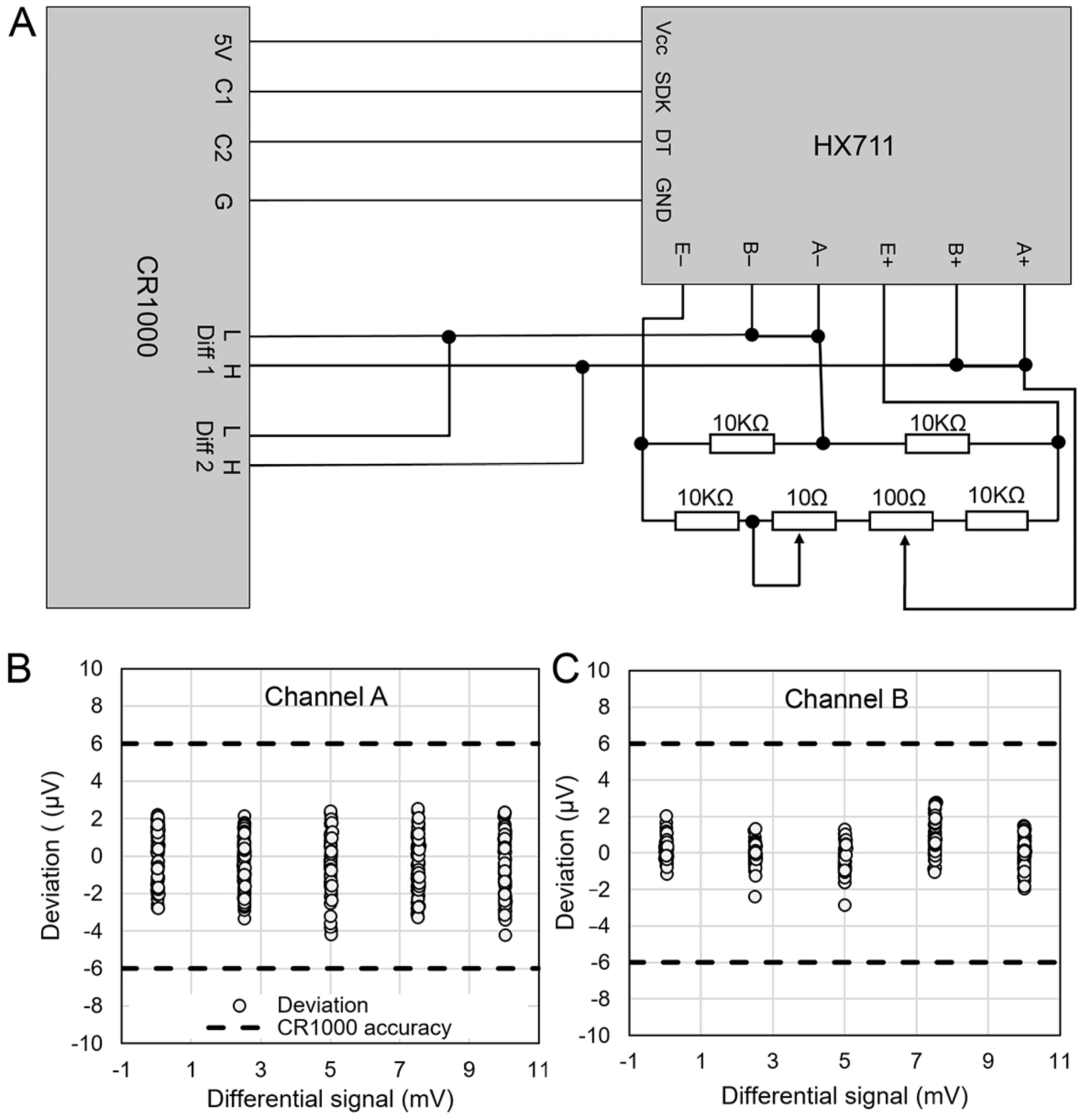
The HX711 module was supplied with a voltage of 5 V, and this provides 4.3 V of power to the load cell (terminals E+ and E–). The cell supply voltage is used as a reference to the A/D converter, providing compensation for the effects of temperature on the load cell. The test grid was composed of a CR1000 datalogger (Campbell Sci.) for measuring the input analog signals and the respective digital values obtained after conversion by the module under analysis, and a circuit (equivalent resistance of 10027 Ω) for simulating the differential voltage produced by the load cell extensors (Figure 1A). By varying the 100 Ω potentiometer to its extremes, a differential signal from –11.7 mV to +11.7 mV is obtained. The 10 Ω potentiometer is used to fine-tune the differential voltage (± 2 mV variation).
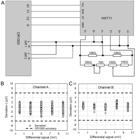
(A) Test grid for evaluation of the integrated circuit HX711 and (B) deviations between the measurements of channel A and (C) channel B of the integrated circuit HX711 in comparison to the measurements of CR1000.
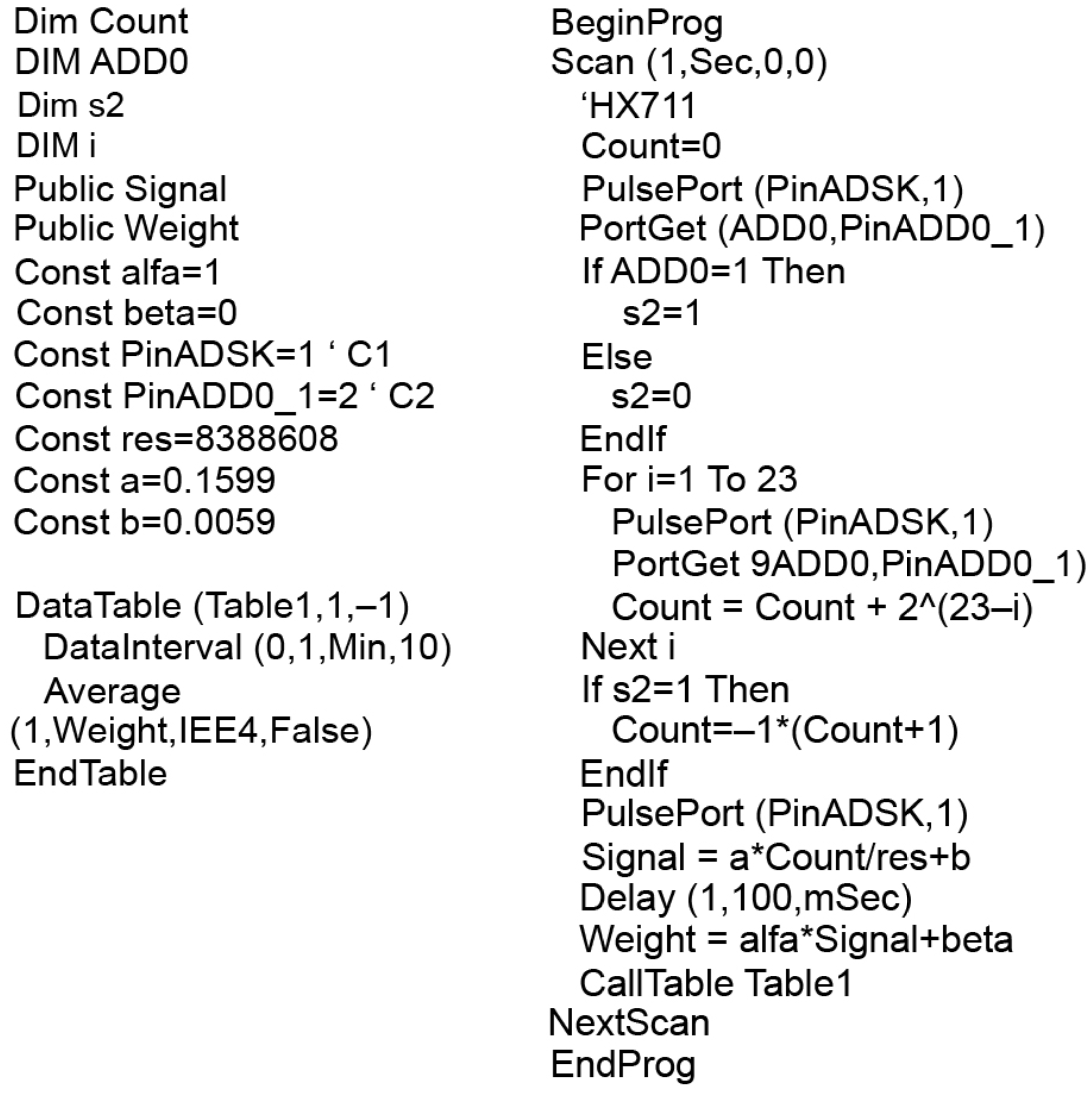
Three HX711 modules were subjected to this evaluation, and the code used is shown in Figure 2. Together with the input voltage in millivolts, the digital values derived from the conversion of the measured analog signal were stored in percentage relative to the maximum value of the AD converter resolution (%FS) by Eq. (2).
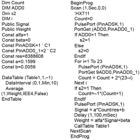
Excellent fits were observed in the regression equations between the applied voltage (S in mV) and the data sent by the IC relative to the full scale (FS), generating the characteristic curves presented in Eq. (3) for channel A and Eq. (4) for channel B, with respective coefficients of determination (R2).
Although the coefficients of determination obtained indicate an excellent linearity, Amaral et al. (2018) warn that these results do not express the performance of the device itself; thus, a more detailed analysis of uncertainty and errors in measurements is needed.
The measurement deviations were obtained from the difference between the value obtained with the calibration equation using the analog signal (SHX711) and the value of the digital signal derived from the CR1000 conversion (Eq. 5).
The deviations shown by the HX711 readings were lower than the limit of reading accuracy of the CR1000 differential inputs (± 6 µV). As this instrument was taken as standard, it can be affirmed that the uncertainty of HX711 in the measurement of differential signals is lower than or equal to that shown by the CR1000 (Figure 1B-C).
To evaluate the measurement uncertainties of the system directly applied to lysimetry, a measuring system composed of a module with the electronic circuit proposed in the HX711 datasheet was connected to a weighing platform installed in a field lysimeter and, in parallel, to a CR1000 datalogger (Campbell Sci).
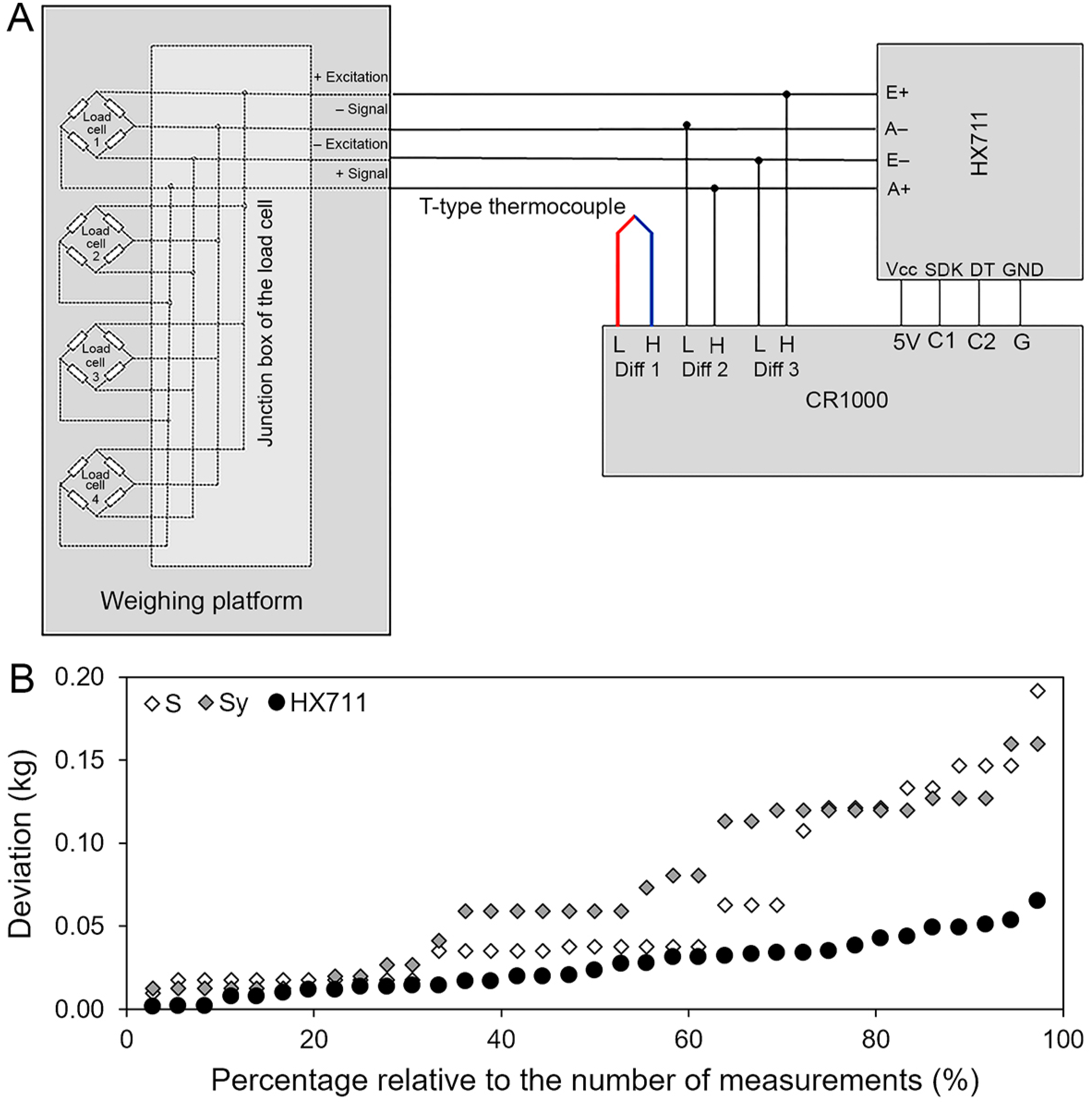
The CR1000 directly measured the lysimeter load cell signal and the excitation voltage supplied by the HX711 module (Figure 3A). In this study, the capability of both the HX711 and the CR1000 in measuring mass variations was evaluated.
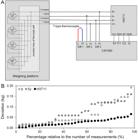
(A) Scheme of connections in the evaluation of 1000-kg lysimeter and (B) maximum deviation of the measurements of signal (S), sensitivity (Sy), and HX711 data versus the mass applied relative to the percentage of total measurements.
The weighing platform used has a capacity of 1000 kg, AZ-9090-1T model (Alfa Instruments). The tank above the platform contained a volume of 0.5 m3 of soil and a surface area of 1.169 m2. The lysimeter had a load of 717 kg, referring to the volume of soil, and had no vegetation on its surface. The soil surface was covered with a plastic tarpaulin to avoid variations in mass due to evaporation.
The evaluation consisted of the application of reference masses of 20, 40, and 45 kg in loading and unloading cycles, promoting increasing and decreasing variations in mass, as suggested by Wheeler and Ganji (1996). In order to evaluate the effect of temperature, air temperature was recorded by means of a thermocouple, as well as the data from the HX711 and the signal of the load cells, for a period of 12 h, with records made every minute.
The distribution of maximum deviations between the measurements and the reference values of mass (Figure 3B) was obtained from the field calibration data in the 1000 kg lysimeter. The use of a percentage relative to the number of measurements enables the analysis of the error distribution at different confidence levels. For these data, a total of 35 measurements were used, corresponding to 100 % of the measurements. The distribution shows potentially lower deviations at all confidence levels for HX711. Maximum errors of less than 0.0071 % (0.054 kg) for HX711 and 0.02 % (0.154 kg) for CR1000 in the signal measurement are expected in 95 % of the measurements.
For the sensitivity (measured by CR1000), the maximum expected deviation was 0.019 % (0.146 kg). Therefore, there was a reduction in measurement deviations of at least 66.17 % using the HX711 converter.
The sensitivity (Eq. 1) maintained a relationship considerably close to the signal measurements taken by the Campbell device, even when following the same trend, which shows the stability of the voltage provided by the module under analysis for the weighing platform.
There was a linear effect, despite its low magnitude, 0.0011 V °C–1 (R2 = 0.9043), of the temperature on the excitation voltage supplied to the load cells by the HX711. However, such variation was not reflected in the signal measurement, since this circuit uses the excitation voltage as the reference voltage for the AD converter, attenuating the effects of these variations.
The variations in the signal were random, resulting from fluctuations in the load cell and the uncertainties within the circuit. The compensation for excitation voltage is a key factor in achieving lower uncertainty in lysimetry measurements (Amaral et al., 2018). By dispensing with the need for such compensation, this mode of operation confers a significant increase in the reliability of the device.
With the deviations between each measurement and the standard mass obtained in the field calibration data, the uncertainties of the measurements taken by the HX711 module and by the CR1000 were calculated according to Eq. (6).
where U is the measurement uncertainty; σ, the standard deviation; t, Student's coefficient for n measurements at 95 % confidence level; n, the number of measurements (373), and X, the value of the variable.
In addition to uncertainty, the errors of repeatability, hysteresis, linearity, and the absolute maximum error (AME) of the systems were calculated (Wheeler and Ganji, 1996). The AME was considered the highest absolute deviation in the calibration process for all measurement cycles. Hysteresis was determined by the largest deviation encountered, considering the cycles separated into loading and unloading. The repeatability error was calculated by the highest deviation found in successive measurements, in the loading and unloading cycles for the same standard weight. The results were expressed in values of weight (kg) and water depth (mm).
A close approximation was observed between the uncertainty in the measurements by CR1000 for sensitivity and platform signal, attesting to the stability of the previously mentioned excitation voltage. It was also possible to observe the considerable difference between the error and uncertainty values obtained between the measurements for the two measuring systems, with HX711 performing better in all aspects evaluated.
Comparatively, when the uncertainty in measurements was analyzed at a 95 % confidence level, there was a reduction of approximately 71.10 % when using the module in analysis. For repeatability, which consists of attesting the accuracy of the measurements, there was a 65.97 % reduction in the error (Table 1).
Values of uncertainty 95 %, absolute maximum error, repeatability error, and hysteresis error in mass (kg) and water depth (mm) base on both data acquisition systems.
These results directly represent the extent to which the accuracy of the measuring system has increased and by how much scientific research can improve its calibration results at an expressively low cost (US$ 1.34 – Apr-2025). Another alternative involves the use of microcontroller systems, such as Arduino, which are capable of reading and storing both the digital and analog signals provided by the acquisition system, at a cost of less than US$ 40.
Another aspect evaluated was the continuous operation of the system in the field, since these instruments operate in long-term experiments and are commonly used to provide reference data for the entire experiment. Malfunction of such a system may lead to complete loss of data in a given study. The field data were obtained from a lysimeter installed at the Universidade do Estado da Bahia, Juazeiro, Bahia state, Brazil (09°24’50" S, 40°30’10" W, altitude 368 m) to measure the evapotranspiration of the Carica papaya L. crop.
This lysimeter was constructed using galvanized steel sheets, with a weighing system composed of four I5T load cells, with a capacity of 5 tons each, manufactured by Alfa Instruments, and had the following dimensions: 2.0 × 1.5 × 1.40 m (width × length × depth).
Measurements taken using the HX711 were recorded using the CR800 datalogger. The communication between the datalogger and the module under analysis is digital, and, therefore, the information transmitted between them exclusively reflects the result of signal conversion.
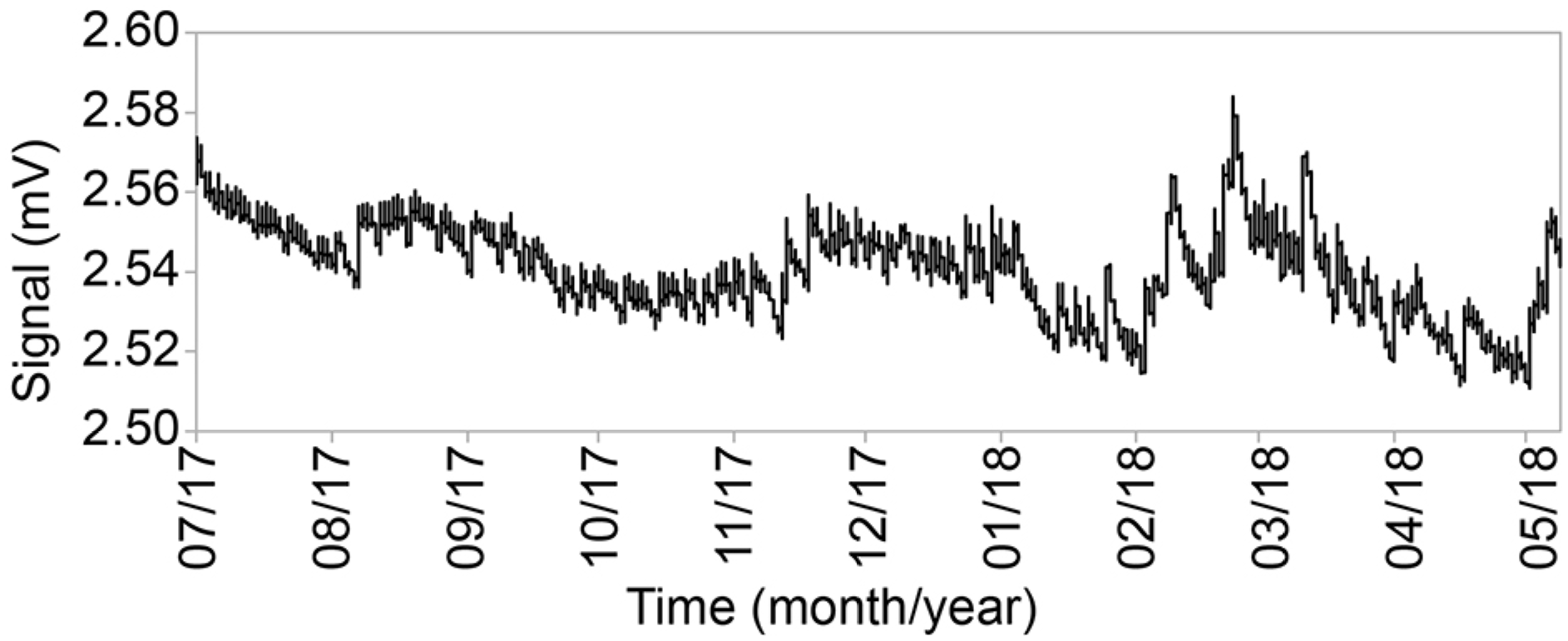
The system evaluated in this study ran continuously for 356 days (Figure 4), which, together with the site's meteorological data, allowed for the calculation of papaya evapotranspiration and crop coefficients by phenological stage for the year 2017.
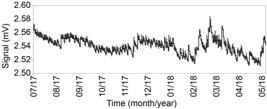
Hourly means of the lysimeter signal in a field experiment (Juazeiro, Bahia state, Brazil).
The accumulated evapotranspiration in that year was 307.47 mm, 703.47 mm, and 565.67 mm, while the crop coefficients were 0.54, 1.02, and 0.83 for the vegetative (I), flowering/fruiting (II), and flowering/fruiting/maturation (III) stages, respectively, making a total of 1,577.03 mm. The first phase (I) was considered from the time of transplanting until 90 days, the second phase (II) was from 91 to 235 days after transplanting (DAT), and the third phase (III) was from 236 to 356 DAT.
A technically feasible weighing lysimeter system was developed at a total cost of US$ 1,310 (Dong and Hansen, 2023), significantly lower than commercial options, which range from US$ 5,100 to US$ 310,000. They used S-type load cells, an HX711 load cell amplifier, and an Arduino microcontroller board. As this was a preliminary study, the authors indicated the need to evaluate the long-term reliability of weighing lysimeters, including comparisons with large-scale in situ lysimeters, as was observed in this research study on the annual cycle of papaya.
The HX711 module showed good performance in laboratory tests and field evaluations, proving to be feasible for application in weighing lysimeter systems, enabling measurements with low levels of errors and uncertainty under all evaluated conditions.
Key factors, including the use of excitation voltage as a reference voltage, higher resolution in AD conversion, and high proportional gain, contributed to the HX711's superior performance compared to the reference system. The significant increase in accuracy promoted by the HX711 circuit in the measuring system makes this integrated circuit an appropriate method for improving existing measuring systems without the need for significant investment, and even for integrating a data acquisition system with other low-cost platforms.
-
Declaration of use of AI Technologies
The authors acknowledge the use of artificial intelligence tools for language editing and writing corrections in the preparation of this manuscript. These tools were employed to improve the clarity, grammar, and overall readability of the text. The scientific content, interpretations, and conclusions of the manuscript remain the sole responsibility of the authors.
Data availability statement
The data supporting the findings of this study are not publicly available.
Acknowledgments
This work was supported by the Conselho Nacional de Desenvolvimento Científico e Tecnológico (CNPq - 409332/2018-6). The authors wish to thank the Universidade do Estado da Bahia and the Universidade Federal do Recôncavo da Bahia for their support.
References
-
Allen RG, Pereira LS, Howell TA, Jensen ME. 2011. Evapotranspiration information reporting. I. Factors governing measurement accuracy. Agricultural Water Management 98: 899-920. https://doi.org/10.1016/j.agwat.2010.12.015
» https://doi.org/10.1016/j.agwat.2010.12.015 -
Amaral AM, Cabral Filho FR, Vellame LM, Teixeira MB, Soares FAL, Santos LN. 2018. Uncertainty of weight measuring systems applied to weighing lysimeters. Computers and Electronics in Agriculture 145: 208-216. https://doi.org/10.1016/j.compag.2017.12.033
» https://doi.org/10.1016/j.compag.2017.12.033 -
Anggreani D, Nasution MI, Nasution N. 2023. Sistem penyortir otomatis kematangan tomat berdasarkan warna dan berat dengan sensor Tcs3200 dan sensor load cell Hx711 Berbasis Arduino Uno. Jurnal Fisika Unand 12: 373-379 (in Indonesian). https://doi.org/10.25077/jfu.12.3.373-379.2023
» https://doi.org/10.25077/jfu.12.3.373-379.2023 -
Arruda Junior A, Silva TJA, Andrade SP. 2023. Smart IoT lysimetry system by weighing with automatic cloud data storage. Smart Agricultural Technology 4: 100177. https://doi.org/10.1016/j.atech.2023.100177
» https://doi.org/10.1016/j.atech.2023.100177 -
Avia Semiconductor. 2015. HX711:24-Bit Analog-to-Digital Converter (ADC) for weigh scales. Available at: https://cdn.sparkfun.com/datasheets/Sensors/ForceFlex/hx711_english.pdf [Accessed June 27, 2019]
» https://cdn.sparkfun.com/datasheets/Sensors/ForceFlex/hx711_english.pdf -
Caquimbo CCP, Rojas RQ, Polanco JDQ. 2015. Design and implementation of a medical prototype for the treatment and control of Diabetes Mellitus Type 1. Ingeniería y Región 13: 191-200 (in Spanish, with abstract in English). https://doi.org/10.25054/22161325.720
» https://doi.org/10.25054/22161325.720 -
Dong Y, Hansen H. 2023. Development and design of an affordable field scale weighing lysimeter using a microcontroller system. Smart Agricultural Technology 4: 100147. https://doi.org/10.1016/j.atech.2022.100147
» https://doi.org/10.1016/j.atech.2022.100147 -
Kohfahl C, Saaltink MW. 2020. Comparing precision lysimeter rainfall measurements against rain gauges in a coastal dune belt, Spain. Journal oh Hydrology 591: 125580. https://doi.org/10.1016/j.jhydrol.2020.125580
» https://doi.org/10.1016/j.jhydrol.2020.125580 -
Mukhammad Y, Santika A, Haryuni S. 2022. Analisis akurasi modul amplifier HX711 untuk Timbangan Bayi. Medika Teknika: Journal Teknik Elektromedik Indonesia 4: 24-28 (in Indonesian). https://doi.org/10.18196/mt.v4i1.15148
» https://doi.org/10.18196/mt.v4i1.15148 -
Ruiz-Peñalver L, Vera-Repullo JA, Jiménez-Buendía M, Guzmán I, Molina-Martínez JM. 2015. Development of an innovative low cost weighing lysimeter for potted plants: application in lysimetric stations. Agricultural Water Management 151: 103-113. https://doi.org/10.1016/j.agwat.2014.09.020
» https://doi.org/10.1016/j.agwat.2014.09.020 -
Sagar A, Hasan M, Singh DK, Al-Ansari N, Chakraborty D, Singh MC, et al. 2022. Development of smart weighing lysimeter for measuring evapotranspiration and developing crop coefficient for greenhouse chrysanthemum. Sensors 22: 6239. https://doi.org/10.3390/s22166239
» https://doi.org/10.3390/s22166239 - Schmidt CDS, Pereira FAC, Oliveira AS, Gomes Júnior JF, Vellame LM. 2013. Design, installation and calibration of a weighing lysimeter for crop evapotranspiration studies. Water Resources and Irrigation Management 2: 77-85.
-
Sulayman AA, Araromi DO, Ayodele OE, Araromi HO, Osuolale FN. 2024. Arduino microcontroller based real-time monitoring of haemodialysis process for patients with kidney disease. e-Prime - Advances in Electrical Engineering, Electronics and Energy 7: 100403. https://doi.org/10.1016/j.prime.2023.100403
» https://doi.org/10.1016/j.prime.2023.100403 -
Thong-un N, Wongsaroj W. 2022. Productivity enhancement using low-cost smart wireless programmable logic controllers: a case study of an oyster mushroom farm. Computers and Electronics in Agriculture 195: 106798. https://doi.org/10.1016/j.compag.2022.106798
» https://doi.org/10.1016/j.compag.2022.106798 - Ukil M, Patil Y, Mulla A. 2019. Automatic real time weight based grading of fruits using Embedded System. Journal of Emerging Technologies and Innovative Research 6: 496-500.
- Wheeler AJ, Ganji AR. 1996. Introduction to engineering experimentation. Prentice Hall, Upper Saddle River, NJ, USA.
Edited by
-
Edited by:
Ricardo Enrique Bartosik https://orcid.org/0000-0002-0956-6081