
 Evapotranspiration Behavior of Eucalyptus Plantations Compared to Other Land Uses and Land Covers in the Semiarid Zone of Brazil - South America
Water consumption by evapotranspiration (ET) of eucalyptus plantations is a concern widely addressed worldwide. However, in the semiarid region of Brazil, a region characterized by recurring water deficit, there is a gap in the knowledge on the effects of eucalyptus plantations on ET dynamics. Therefore, this study aimed to compare the ET rates of eucalyptus to native forests, savannas (Cerrado), dry woodlands (caatingas), pastures, and croplands in the Brazilian semiarid region (BSR). The methodological structure followed the use of remote sensing techniques and statistical tests. From the Google Earth Engine (GEE) platform, monthly and annual ET images for 2022 were obtained from the MOD16A2 product. The results of this study indicated that eucalyptus had significantly higher ET rates (Kruskal-Wallis test followed by the Dunn test; p-value <0.05) compared to most classes. Exceptionally, native forests (Atlantic Forest) exhibited statistically similar (p-value >0.05) water consumption to eucalyptus. Worryingly, eucalyptus, as well as crops, maintained high ET rates during the dry season in the study region. These findings may inform water planning strategies in the Brazilian semiarid region, especially by indicating environmentally sensitive areas for high-impact eucalyptus plantations, where such activity should be restricted. Thus, this study provides substantial information for more sustainable agro-environmental development in semiarid zones.
Keywords:
Brazilian semiarid region; Remote sensing; Water consumption; Forestry
 Thumbnail
 Thumbnail
 Thumbnail
 Thumbnail
 Thumbnail
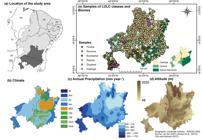
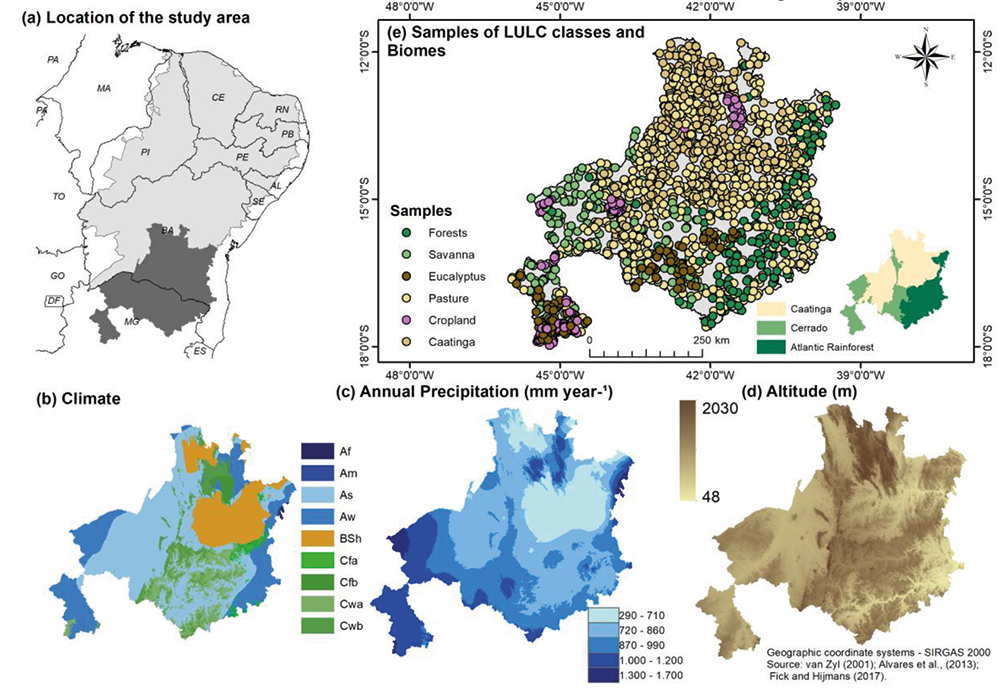 Source: The authors (2025).
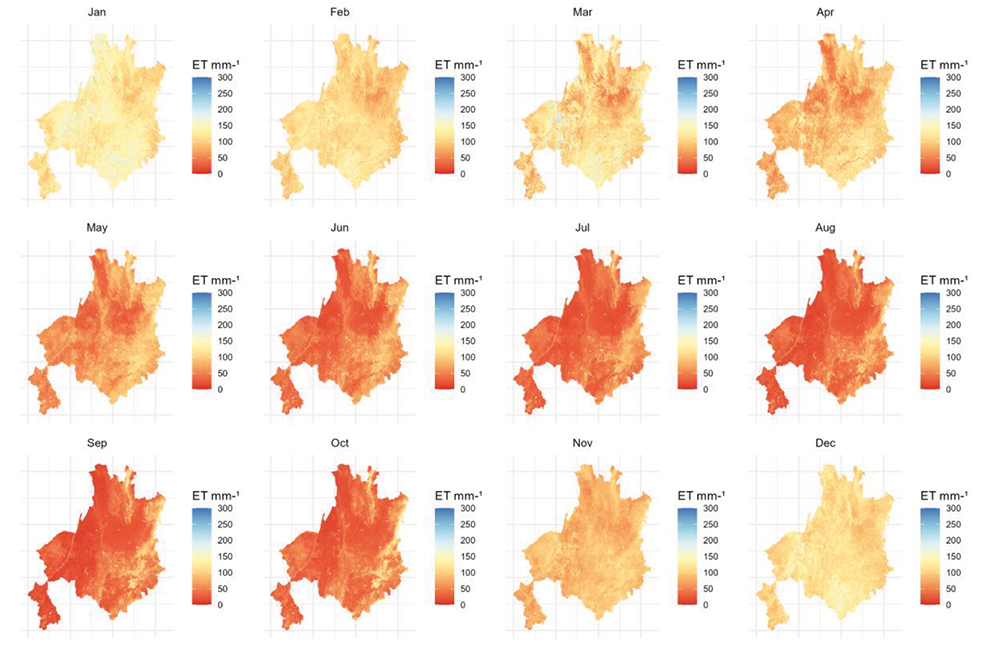 Source: The authors (2025). Cartographic convention: Geographic coordinate systems - SIRGAS 2000.
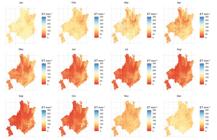
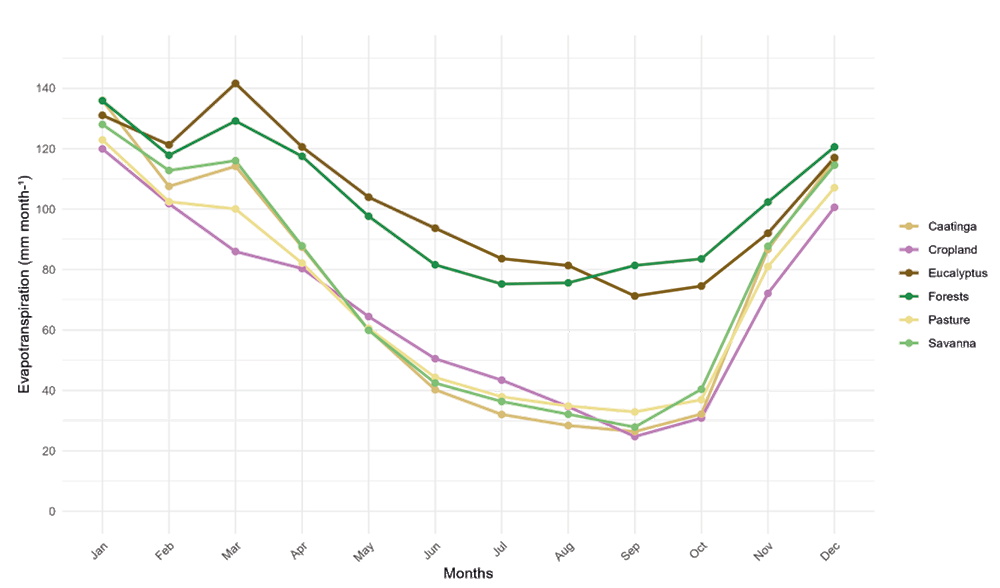 Source: The authors (2025).
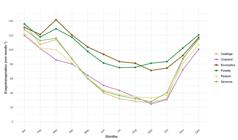
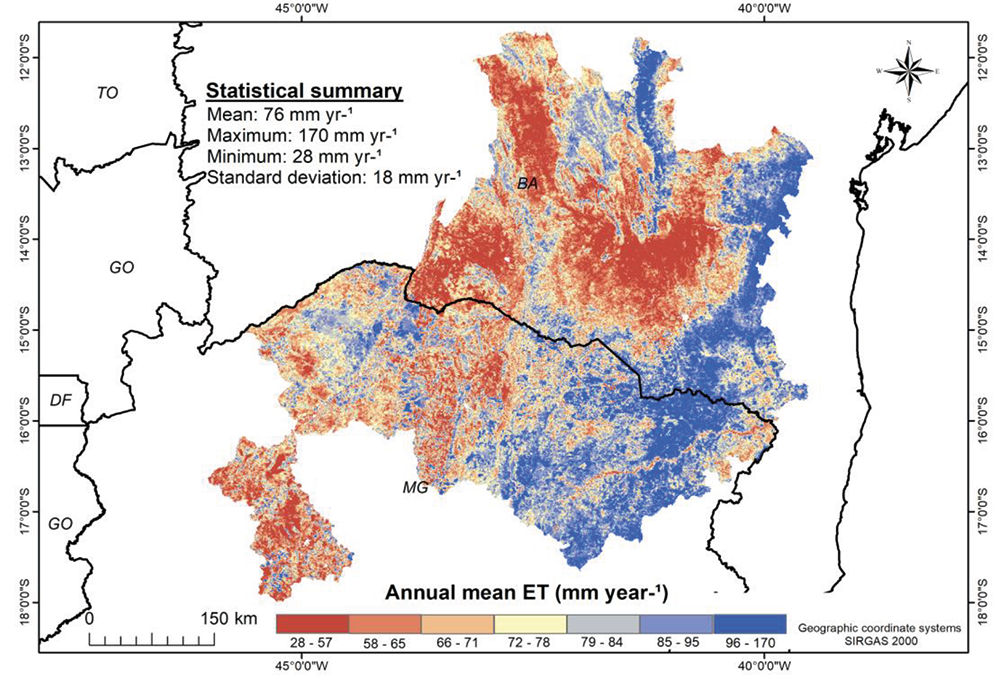 Source: The authors (2025).
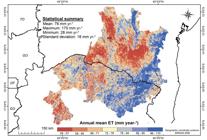
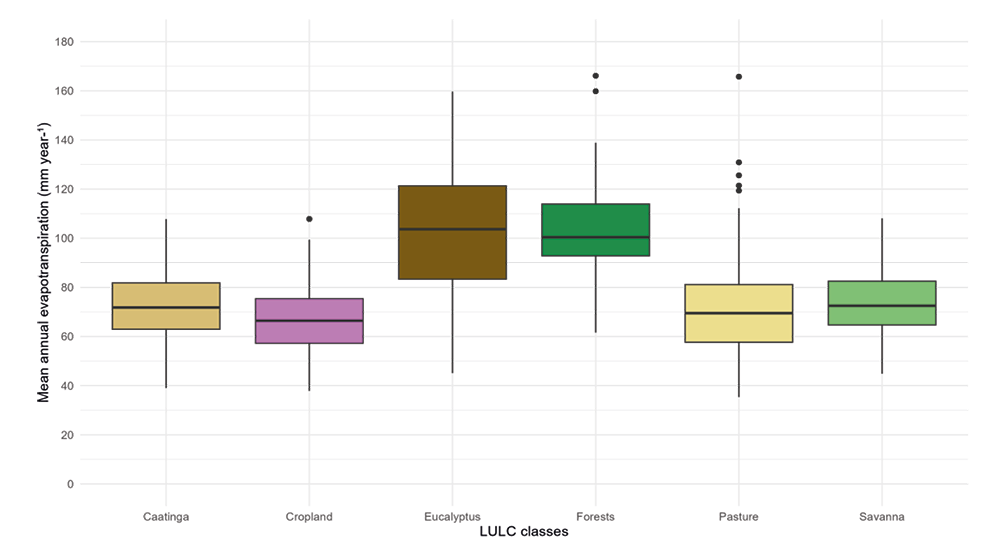 Source: The authors (2025).