 Assessment of Pressure Indicators on Protected Areas in the Amazon Coastal Zone - Pará
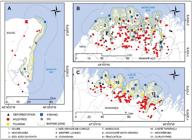
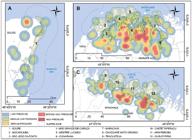
The Marine Protected Areas (MPA), also known as RESEX (Extractive Reserves) in the Coastal Zone of Pará form a conglomerate of Protected Areas (PAs) and serve as a tool to combat the improper use of natural resources. This conglomerate of Protected Areas exhibits rich biodiversity and is home to approximately 5,000 families from traditional communities. This study aims to analyze the pressures occurring in 12 MPA in Pará. For this purpose, secondary vector-format data were used to identify pressure indicators, applying Kernel estimation for spatial analysis. To assess the degree of these pressures, the Rapid Assessment and Prioritization of Protected Areas Management (RAPPAM) methodology was used, which calculates the pressure level of activities in MPAs by measuring them in terms of “extent,” “impact,” and “permanence.” The results indicate that the main pressures are fishing, wildfires, deforestation, tourism, and oil exploitation, with Araí-Peroba and Caeté-Taperaçu being the most pressured MPAs, while Soure and Mocapajuba are the least pressured. The study also revealed that the most significant pressures are related to wildfires and fishing and that enforcement and monitoring actions can minimize the identified impacts. The research indicates that pressures on PAs are directly linked to the legal status of these territories.
Keywords:
RESEX; RAPPAM; Kernel Density
 Thumbnail
 Thumbnail
 Thumbnail
 Thumbnail
 Thumbnail
 Thumbnail
 Thumbnail
 Thumbnail
 Source:
 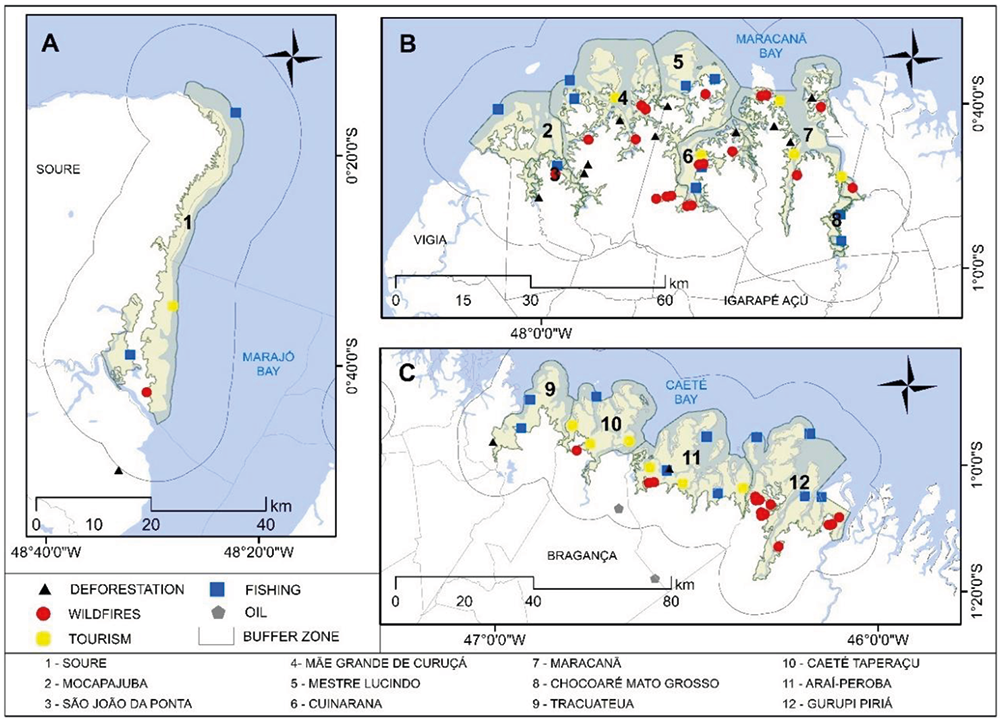 Source:
  Source:
  Source:
 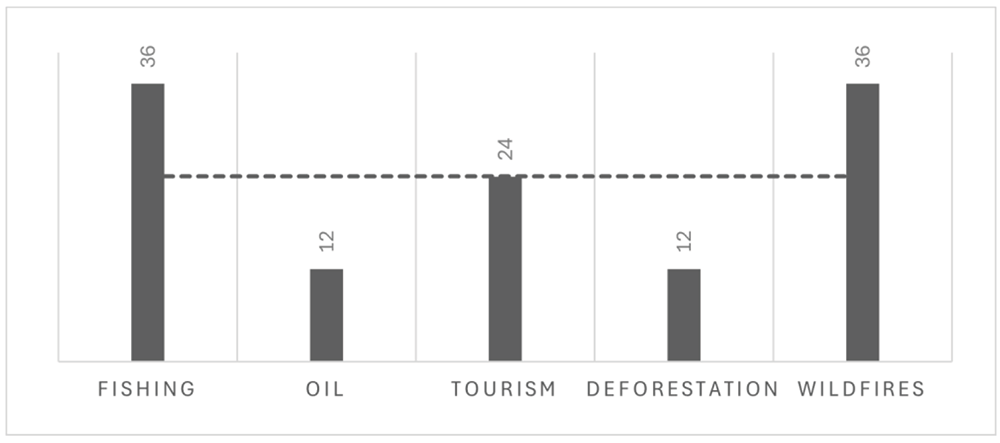 Source: The authors (2025).
 Source: The authors (2025).
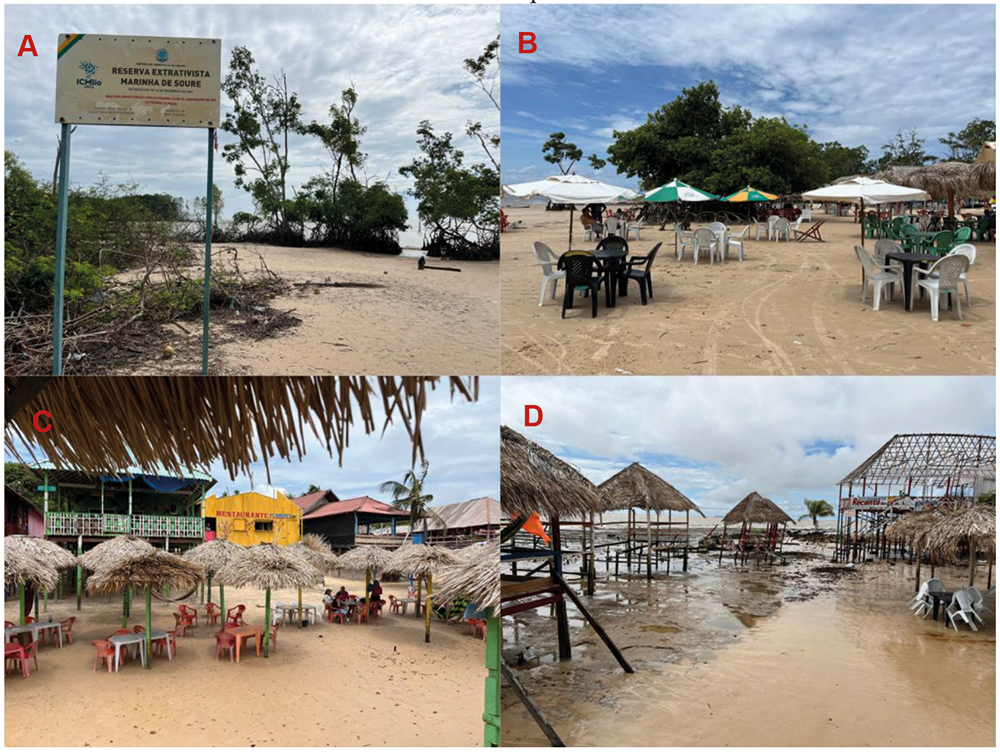 Source: The authors (2025).
 Source: The authors (2024).