 Seismic responses evaluation of asphaltic concrete core dam through fragility curves – a case study from Meijaran dam
Abstract
Seismic evaluation of rockfill dams with asphaltic concrete cores remains limited despite their growing use in high-seismicity regions like Iran. This study investigates the seismic performance of the Meijaran dam, a rockfill dam with an asphaltic core, located in Mazandaran, Iran. Fragility curves were developed using incremental dynamic analysis (IDA) in FLAC 2D software, employing the relative crest settlement ratio as the damage index and peak ground acceleration (PGA) as the intensity measure. Fragility curves for minor, moderate, and severe damage states indicate no failure at the Design Basis Earthquake (DBE, 0.3g) and an 80% probability of minor damage at the Maximum Credible Earthquake (MCE, 0.5g), with no moderate or severe failure expected. These findings highlight the dam’s resilience, attributed to its robust rockfill materials and flexible asphaltic core. The results provide critical insights for enhancing seismic design, retrofitting strategies, and safety assessments of asphaltic core rockfill dams in earthquake-prone regions, contributing to improved infrastructure resilience.
Keywords:
Asphaltic core; FLAC 2D; Incremental dynamic analysis; Meijaran dam; Rockfill dam; Seismic fragility curves
1. Introduction
Natural disasters such as heavy rains, tornadoes, and earthquakes can destroy structures and cause irreparable damages, and sometimes, the severity of these damages is very high. Earthquakes, in particular, can cause massive damage and geological changes, especially in older structures more vulnerable to such events. In recent decades, numerous dams have been constructed for agriculture, water supply, electricity, and flood control. These dams have a core that seals the dam body to prevent water penetration. Constructing this core from materials with the least permeability, such as dense clay, concrete, and asphaltic concrete is important (Hoeg, 1993). Asphaltic concrete offers advantages such as self-healing, low permeability, and high flexibility. Its good compressibility and cost-effectiveness in cold and rainy conditions make it a preferred choice for dam construction (Creegan & Monismith, 1996). Numerous dams have been constructed in areas with high seismicity and may be subjected to seismic loads with different intensities. If these facilities are damaged, they will cause irreparable human and financial losses, emphasizing the importance of understanding how these structures behave during earthquakes. In the past, structures were designed utilizing simple quasi-static methods for a single earthquake event. Usually, the allowable stress method was used when more complicated dynamic analyses were needed. In geotechnical structures, limit stability analysis methods were commonly used. However, relying only on quasi-static methods is inadequate for achieving optimal performance and functional response for structures. A novel approach to evaluating performance is based on assessing the risk of structural damage (Alembagheri & Ghaemian, 2013). Using a performance index, this method considers the optimal performance of a structure subjected to multiple earthquakes. The structure performance and level of damage are determined through different methods such as earthquake risk, vulnerability, and fragility functions (Iervolino & Cornell, 2005). The fragility function is one of the most appropriate methods to evaluate the behavior of the structure under possible seismic loads. In the fragility function, different levels of failure are defined. Then, for each level, the possibility of exceeding that level based on one of the ground motion parameters is computed. Non-linear dynamic analysis can be conducted using the incremental dynamic analysis (IDA) approach. The IDA method evaluates structure vulnerability by subjecting it to varying levels of seismic loads. The obtained incremental dynamic analysis curves are used to evaluate the structure performance and determine its range of behavior from linear to non-linear (Vamvatsikos & Cornell, 2002).
In recent years, limited research has been published about seismic evaluation of different types of rockfill dams. Pang et al. (2018) studied the seismic behavior of a 250 m high rockfill dam utilizing fragility function. They used incremental dynamic analysis to develop fragility curves, allowing them to evaluate the behavior of these types of dams subjected to different seismic loads. This research uses crest settlement ratio and concrete face damage as damage indexes (DI). The results indicate that the fragility curve is scientifically helpful in predicting possible damage to rockfill dams subjected to seismic waves. Pang et al. (2019) applied 15 different seismic loads with different intensities to a rockfill dam with 242 m height. They used peak ground acceleration (PGA), spectral acceleration (SA), peak ground velocity (PGV), and peak ground displacement (PGD) as intensity measures (IMs). The fragility function was developed using incremental dynamic analysis and multiple strip analysis (MSA) for each failure level based on the dam crest settlement ratio, sliding displacement of the dam slope, and concrete face slab damage as DI.
Jin & Chi (2019) examined the effects of different seismic load intensities on the fragility curve of the embankment dam. To this end, they estimated fragility parameters based on sufficient earthquake loads. Their study utilized DYNE3WA 3D finite difference software for dynamic analyses. The crest settlement ratio of the dam was considered as the damage index, and the fragility curves were developed based on MSA analytical method. The results demonstrate that DYNE3WA 3D software and the MSA method are suitable for determining the fragility curves in embankment dams. In a further study, Pang et al. (2020) attempted to study secondary damage to rockfill dams caused by aftershock earthquakes through fragility curves. They conducted nonlinear analyses concentrating on displacement and found that aftershocks can increase fragility in structure. Zhou et al. (2021) introduced a Support Vector Machine (SVM) to develop fragility curves to improve computational performance. The SVM model was trained according to the three criteria of vertical displacement damage, plastic shear strain, and face slab damage according to the intensity measurements. The results showed that the SVM approach efficiently analyzes the fragility of rockfill dams. In another study, Ayati Ahmadi et al. (2022) predicted the behavior of the Garmrood asphaltic core rockfill dam through fragility curves based on incremental dynamic analysis. They concluded that the behavior of rockfill dams can be predicted by choosing the appropriate damage index. Xu et al. (2022) investigated the effect of multi-component strong motion duration on the seismic performance of concrete-faced rockfill dams (CFRDs) using fragility analysis based on the IDA method. The results illustrated that the duration of the vertical component has a certain effect on the correction between the duration of the strong motion and the deformation of the dam. Also, the fragility analysis depicted that ground motions with a long duration can cause the risk of failure of CFRDs compared to short-duration motions.
Previous studies have shown that the seismic behavior of asphaltic concrete rockfill dams through fragility curves has rarely been investigated. At the same time, this method is very appropriate for evaluating the behavior of structures subjected to different seismic loads. In recent years, several rockfill dams with asphaltic concrete cores have been built in areas with high seismicity in Iran, and it seems necessary to investigate their behavior through new methods, such as fragility curves. This study aims to evaluate the seismic performance of the Meijaran rockfill dam with an asphaltic concrete core through fragility curves. Specifically, it employs incremental dynamic analysis (IDA) in FLAC 2D to assess the dam’s behavior under various seismic loads, using the crest settlement ratio as the damage index and peak ground acceleration (PGA) as the intensity measure. The results aim to provide insights into the dam’s resilience and inform seismic design and retrofitting strategies.
2. Description of Meijaran rockfill dam
The Meijaran storage dam is located in a highly seismic area in Iran, near Mazandaran provinces. It is an asphaltic concrete core dam with a height of 53.3 m, and its maximum water level can reach up to 46 m above the base. Figure 1 displays a cross-section of the Meijaran dam. The dam crest has a length of 180 m and a width of about 8 m. The slopes on the upstream and downstream sides are 1:1.75 and 1:1.6, respectively. The dams center contains a vertical asphaltic concrete core, which performs as a waterproofing element. The core is 1 m thick and is surrounded by filter and transmission zones. The Meijaran dam is constructed in a V-shaped and asymmetrical valley, where the left support has a steeper slope than the right support on the conglomerate part of the Shemshak Formation (Baziar et al., 2008; Khalaj et al., 2022).

3. Incremental dynamic analysis and fragility function
All engineering structures need monitoring and maintenance after their construction. Detection and estimation of possible damages are essential for monitoring facilities. Until now, various stochastic analyses have been performed to investigate the response of the structure in different conditions (Assis & Nogueira, 2023; Bendriss & Harichane, 2024). Different methods are used to evaluate seismic risks to structures. Generally, qualitative and quantitative methods can be operated. The qualitative approach is used to evaluate the vulnerability of strutures whose performance history is known under the effect of seismic loads. In this paper, quantitative evaluation is used. This method is based on the computer modeling of structures. In this approach, after modeling the system, its performance during earthquakes can be examined (Iervolino & Cornell, 2005).
Various quantitative evaluation functions are utilized to estimate the potential risks of earthquakes. These functions include earthquake risk, vulnerability, and fragility. Fragility functions are particularly useful in estimating the probability of exceeding structural limitations during seismic activity. Fragility curves proposed the relationship between the ground movement during an earthquake and the level of damage that may occur (Iervolino & Cornell, 2005; Mayoral et al., 2016). It is necessary to employ the appropriate earthquake accelerations and the structure model to create fragility curves for structures using analytical methods. However, predicting an earthquake's occurrence, magnitude, and amplitude is impossible. Structural responses are typically evaluated using ideal structural models, which may result in calculated responses that differ significantly from actual responses. In addition, the characteristics of materials may be uncertain. A probabilistic approach is highly appropriate to create information on seismic fragility that can consider various sources of instability caused by different modes of ground motion and structural responses. The parameters that define failure can be determined by conducting a nonlinear dynamic analysis of the structure. The fragility curve is then generated using statistical operations on the obtained data and simulation methods (Alembagheri & Ghaemian, 2013; Hariri-Ardebili & Saouma, 2016).
There are different methods available for analyzing nonlinear dynamics based on specific earthquakes, including Cloud analysis, Endurance Time Analysis (ETA), Incremental Dynamic Analysis (IDA), and multiple strip analysis (MSA). In this study, the IDA method was utilized to represent fragility curves. The IDA approach involves performing a series of nonlinear dynamic analyses using a variety of ground motion records on various scales. It is necessary to scale each earthquake in multiple steps until the structure collapses. After subjecting the structure to seismic loads, the responses are analyzed to produce the IDA curve. The incremental dynamic analysis curve requires three parameters: scale factor, intensity measure, and damage index. The scale factor (λ) is used to scale all-natural and unscaled accelerogram components of ground motion. The intensity of ground motion can be determined by various parameters derived from the natural accelerogram. These parameters include peak ground acceleration (PGA), peak ground velocity (PGV), and spectral acceleration (SA). This parameter is a positive scalar quantity representing the structure response to earthquake loads and is obtained from the output results of nonlinear analysis. The damage index (DI) can be selected from maximum base shear, nodal rotation, and displacement of the structure's highest point. Therefore, the IDA analysis process can be summarized as follows (Vamvatsikos & Cornell, 2002):
-
Choosing suitable ground motion intensity measures (IMs) and damage indexes (DI).
-
Using appropriate algorithms to select the record scaling.
-
Employing proper interpolation
-
Summarization techniques for multiple records to estimate the probability distribution of the structural demand given the seismic intensity.
-
Defining limit-states.
The results can be used to intuitively understand the structural behavior. They can also be integrated with conventional probabilistic seismic hazard analysis to estimate mean annual frequencies of limit-state exceedance.
Flowchart of the incremental dynamic analysis (IDA) process for developing fragility curves, including ground motion selection, dam modeling, nonlinear dynamic analysis, damage index calculation, and fragility curve generation can be seen in Figure 2.

Flowchart of the incremental dynamic analysis (IDA) process for developing fragility curves.
Previous studies have suggested that selecting a minimum of ten ground motions would provide reliable results (Vamvatsikos & Cornell, 2002). Parameters such as Peak Ground Velocity (PGV), Peak Ground Acceleration (PGA), and the first mode Spectral Acceleration (SA) have already been identified as Intensity Measures (IMs). It has been observed that displacement-based IMs (PGV) usually cause greater deviations in the IDA curves compared to those based on first-mode spectral acceleration (PGA and SA). Furthermore, research has shown that the vertical deformation of rockfill dams is the most accurate indicator of failure (Pang et al., 2020). Therefore, for this study, PGA is considered as the IMs, while the dam crest settlement ratio is selected as the damage index (DI). Additionally, 15 seismic records were utilized in the dynamic analyses.
The fragility function is typically described using a lognormal probability distribution function. As shown in Equation 1, the probability of exceeding a particular damage state is expressed:
where is the probability of exceeding a particular damage state for a given seismic intensity level defined by the earthquake intensity measure (IM) (e.g.; peak ground acceleration, PGA), is the standard cumulative normal distribution, is the median threshold value of the earthquake intensity measure, required to cause the ith damage state and is the total lognormal standard deviation. Therefore, the development of fragility curves requires the definition of two parameters, and (Mayoral et al., 2016).
4. Modelling for dynamic analysis
In this paper, dynamic analyses were carried out using FLAC 2D software at the end of the impounding stage. FLAC software is a finite difference software that is commonly used for engineering calculations (Itasca Consulting Group Inc., 1998). The software can investigate a structure's behavior where soil, rock, or other materials can reach a plastic state after yielding. This study assumes a plain strain model, which is reasonable considering the dam height ratio to its length. By default, the FLAC software creates rectangular meshes. However, if the mesh size is small, the rectangular element will be converted into two triangular elements, which can decrease the analysis accuracy. The least triangular element has been formed using the FLAC programming language called FISH to improve accuracy. (Ayati Ahmadi et al., 2024). Figure 3 shows the model of the dam developed in FLAC. If the model's dimensions are too large, the number of nodes in the model will increase, and the calculation time will increase. Also, if the dimensions are small, it is contrary to the simulation of the semi-infinite environment. Therefore, in each simulation, there are values for the model's dimensions, and for dimensions larger than this, there is no change in the system's response. These values are called the optimal dimensions of the model. The development of the grid networks in the horizontal direction at the heel of the dam on both sides should be such that the stress changes in the static state are negligible. This means that the distribution of stress in a cross-section at a distance of B from the heel of the dam is not affected by the load or the presence of the wall. Safarzadeh (2003) by conducting analyses with different distances of B, determined that selecting B = 3H (H is the height of the dam and B is the modeled length of the environment on the sides of the dam heel) is sufficient to neutralize the effect of load on the stress distribution.

In order to properly analyze wave propagation within soil or rock, it is important to meet the recommended requirements by Kuhlemeyer & Lysmer (1973). They suggest that the zones being analyzed in the continuum area should be no larger than ∆l ≤ λ/10. This equation uses ∆l to represent the size of the largest element and λ as the wavelength of the highest frequency present in the area. A mesh sensitivity analysis was conducted by testing various mesh sizes, confirming that the selected element size (5 m in height and 4 m in length) provides convergence with minimal impact on computational accuracy, as recommended by Kuhlemeyer & Lysmer (1973).
The dam has been constructed in 10 layers to make its behavior more realistic. After constructing each layer, static analysis was performed to determine the dam settlement under its weight. This was carried out by considering the weight of each layer and the previous layers. Once the dam was fully constructed, it was impounded with water in three stages until it reached a height of 46 m. Hydrostatic forces were applied to the impervious asphaltic core surface during the impounding stage, and the dam settlement due to water pressure was calculated. The distribution of pore water pressure in the dam body during the impounding procedure is demonstrated in Figure 4.

Free field boundaries are defined for side boundaries to minimize wave reflections. By applying free field boundaries, wave reflection will not occur during the analysis, and the model edges will be as if the soil or rock material were extended over an infinite area. Usually, a frequency-independent damping ratio is considered for materials in dynamic analysis. The damping ratio is often 2 to 5% of the critical damping for geotechnical materials. The damping ratio is usually regarded as equal to 2 to 10% of the crucial damping in structural materials. In analyses that use elastoplastic constitutive models (such as Mohr-Coulomb) for system materials, significant energy consumption occurs during the plastic flow of the material. Therefore, a minimum damping of 0.5% can be used for many dynamic analyses.
For all materials, including asphaltic concrete, filter, and shell, the Duncan-Chang constitutive model (Duncan & Chang, 1973) is used in static analyses. Duncan-Chang is a widely used nonlinear elastic model that simulates the nonlinear behavior of soil. In this model, the stress-strain behavior of the soil changes hyperbolically. Additionally, the dam foundation in static analyses has been modeled using the Mohr-Coulomb constitutive model. This model is one of the most common constitutive models for simulating soil and rock medium, demonstrating shear failure behavior in soil and rock (Itasca Consulting Group Inc., 1998).
However, the Duncan-Chang constitutive model has some shortcomings, particularly its inability to simulate stress-strain hysteresis curves, especially during loading and unloading, making it unsuitable for dynamic analyses. For this reason, the strain-hardening/softening model based on the Mohr–Coulomb model has been used in nonlinear dynamic analysis. In this model, the values of cohesion, friction, tensile strength, and dilation angles are increased or decreased as possible after the onset of plastic yielding.
To determine the shear modulus of various granular soils and rockfill at very low levels of strain (Gmax or G0), researchers have proposed a number of empirical formulas based on laboratory tests such as resonant column and cyclic triaxial tests (Ishihara, 1996). For coarse-grained soil at a shear strain of γ = 10-5, the shear modulus, G0 is given by Kokusho & Esashi (1981).
For filter material, G0 was calculated using Equation 2 as below:
For the shell material of the dam, Equation 3 was used to calculated the G0 as below:
where is the mean effective stress, G and are both in kPa and is the void ratio of the material.
The parameters used in this study are listed in Table 1. In this table, k and n are the model parameters (constants) relating to the initial modulus in a hyperbolic model. Where and is the atmospheric pressure. and m are dimensionless parameters (constants) relating to bulk modulus, B, in a hyperbolic model. Where . Also, Table 2 demonstrates the parameters of the Mohr-Coulomb model used for the dam foundation. In Table 2, γ is unit weight, E is elastic modulus, ϕ is internal friction angle, ψ is dilation angle, c is cohesion, ν is Poisson’s ratio, and K is soil permeability.
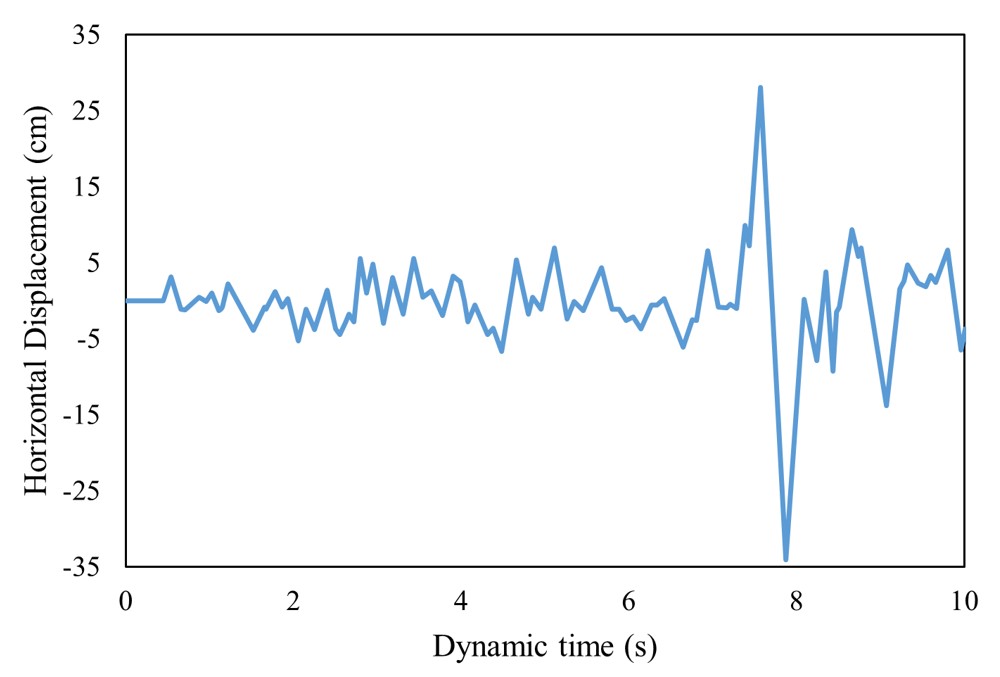
In order to verify the accuracy of numerical analyses for dam behavior, the numerical model approach was compared to a centrifuge test carried out by Baziar et al. (2008). Their study utilized a centrifuge with a maximum applied acceleration of 142 g and a rotation radius of 2.3 m. Five separate tests were conducted for different centrifuge accelerations. The Meijaran dam centrifuge setup is shown in Figure 5. In this paper, the results from the test with 80 g acceleration were used due to their low error rates and similarity to the Friuli record.

Based on the test results and model analysis, the dam has displayed no signs of sliding or failure, with only minimal deformations occurring in various parts of the structure. Data monitoring has revealed that under static and dynamic loading (scaled at 1:80), a settlement of 9 mm has occurred at the top of the asphaltic core. The lateral displacement of the core has been found to increase from the bottom to the top, with the maximum displacement at the dam crest measuring 8 mm (under static and dynamic loading). Besides, impact loading has resulted in a maximum shear strain of 1.8% in the asphaltic core. The values of lateral displacement in a dam with a vertical core due to seismic load in the FLAC software can be seen in Figure 6, while Figure 7 illustrates that the maximum shear strain in a dam with a vertical core equals 1.6%.

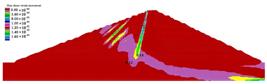
Table 3 compares the results of the numerical modeling and the centrifuge test. The difference between the results is less than 10%, which is due to testing errors. The comparison indicates that the numerical modeling corresponding the experimental results properly.
The numerical model’s limitations include simplified boundary conditions compared to the centrifuge test, where free-field boundaries in FLAC 2D minimize wave reflections but may not fully replicate the physical setup. Material properties were adapted from Baziar et al. (2008), supplemented by literature values where direct measurements were unavailable, ensuring consistency with experimental conditions.
5. Ground motion records
The dam is located in an area with very high seismicity, and the maximum possible earthquake (MDE) in this area is 0.5 g. The dam's foundation has an average shear wave velocity of 300 m/s. According to previous studies, 10 to 20 ground motion records have met the requirements needed to evaluate the seismic demand of structures (Vamvatsikos & Cornell, 2002). According to FEMA dam recommendations, 15 earthquakes have been selected as input records in the dynamic analyses (FEMA, 2001). All these earthquakes were recorded at stations with an average shear wave velocity exceeding 300 m/s, consistent with the dam’s foundation properties, and with magnitudes ranging from 6.36 to 7.4 on the Richter scale. The scaling factors for the ground motion records were selected linearly from 0.1g to 1g and applied to the dam to cover a wide range of seismic intensities, following the recommendations of Iervolino & Cornell (2005) for nonlinear seismic analysis. This approach ensures the evaluation of the dam’s behavior from elastic response to failure without restrictions on scale factor values for magnitudes between 6.4 and 7.4. So, 150 dynamic analyses have been performed on the Meijaran dam to investigate the dam behavior from an elastic to a failure state. Selected earthquake records are listed in Table 4.
6. Failure limit states and damage index
In 2003, Swaisgood analyzed 69 dams of different types, including CFRD, wall rockfill, hydraulic fill, and embankment dams (Swaisgood, 2003). He proposed the relative settlement ratio of a dam crest (RS) as a measure of failure due to earthquakes. This ratio is divided into four failure grades: RS < 0.1% indicates no damage, 0.012% < RS > 0.5% indicates minor damage, 0.1% < RS > 1.0% indicates moderate damage, and RS > 0.5% indicates severe damage. The relative settlement of the dam crest is calculated by dividing the settlement in the crest after an earthquake by the dam height. Also, Pang et al. (2019) proposed a similar DI for rockfill dams based on the damage index of permanent displacement. In the present study, the relative settlement ratio of the dam crest is used as a damage index (DI), and the failure state of the dam is divided into three limit states: 0.4% as minor damage, 0.7% as moderate damage, and 1% as severe damage due to earthquakes.
7. Results
The incremental dynamic analysis curve can be obtained from the nonlinear analysis results. Figure 8 presents the IDA curve for Meijaran dam under 15 ground motions. The curve values are well distributed, and there is a low deviation, as expected. By examining this curve, the values of dam settlement at various intensity measures (IMs) can be observed. For example, at an acceleration of 0.6 g, the Duzce earthquake causes about 0.42 relative settlement, in the moderate damage range, and for the Loma Prieta earthquake, at an acceleration of 1 g, the amount of relative settlement ratio for the dam crest is 1.2, in the severe damage range.

To determine the possibility of a specific structural limit being reached, fragility curves are plotted. This method differs from conventional methods in that it considers earthquakes with various characteristics to evaluate the behavior, safety, and limitations of the structure. Based on these evaluations, decisions can be made about retrofitting and repairing the structure. Conventional methods require applying numerous earthquake records to the structure.
As mentioned in section 2, the plotting of fragility curves requires the definition of two parameters, and . The lognormal standard deviation , which describes the total variability associated with each fragility curve, is estimated considering the uncertainty in the definition of damage states (), the response and resistance (capacity) of the element (), and in the earthquake input motion (demand) (). Due to the lack of a rigorous estimation, is set to 0.45 following the HAZUS (2003) approach for buildings, is considered 0.45 based on engineering judgment (Argyroudis & Kaynia, 2015), while is estimated based on the variability in the rockfill dam DI that has been calculated for the selected ground motions. The value of is estimated as the root of the sum of the squares of the component dispersions. The median threshold value of the earthquake parameter, is obtained for each damage state based on the evolution of damage with increasing earthquake intensity. Figure 9 presents the fragility curves for the Meijaran dam. This curve has a significant advantage because they are straightforward. By examining various intensity measures, it is possible to predict and observe the potential failure of the structure accurately. For example, the design basis earthquake acceleration for the Meijaran dam is 0.3 g, and at this PGA, there is no possibility of minor, moderate, or severe failure. These findings indicate that the Meijaran dam is safe at the given acceleration, and there is no probability of failure.

At the maximum credible earthquake level (MCE) of 0.5 g in the dam, there is a possibility of minor failure according to the relative settlement ratio of the dam crest. The possibilities of failure are 80% for minor, 0% for moderate, and 0% for severe levels. While there is a possibility of minor failure at 0.5 g acceleration, no moderate or severe failure is expected at this level. This aligns with the behavior of rockfill dams, which rarely fail in the dam body and crest, as shown in the fragility curves presented. Table 5 presents the probability of exceeding each damage state (minor, moderate, severe) at various PGA levels based on the fragility curves. For instance, at 0.6 g, the 100% probability of minor damage indicates that the dam crest settlement exceeds 0.4% (limit value mentioned in section 6), while the 0% probability of severe damage confirms that settlement remains below 1%, reflecting the dam’s resilience to severe levels.
8. Conclusion
The primary purpose of this study is to obtain fragility curves of Meijaran dam to evaluate its behavior and potential for failure during earthquakes. To achieve this, the Meijaran dam was chosen as case study and modeled and analyzed using FLAC 2D software. The results are as follows:
-
The IDA curve displayed appropriate distribution uniformity for obtained results.
-
Based on the obtained fragility curves, it has been determined that the Meijaran dam shows good performance during the design basis earthquake (DBE) of 0.3 g. As such, the possibility of minor, moderate, or severe failure is not significant.
-
The dam body is constructed using rockfill materials that have high resistance to seismic loads. This has been evident in the results obtained. The fragility curves indicate that the Meijaran dam is susceptible to minor failure during a maximum credible earthquake level (MCE) of 0.6 g. However, at moderate or severe damage levels, there is no possibility of failure. The results demonstrate that the dam can withstand a large earthquake of 0.6 g without incurring significant damage, which is also in line with experimental observations.
-
When the intensity of an earthquake reaches 1 g, the structure is at risk of total collapse and safety is no longer assured.
These findings highlight the dam’s resilience, attributed to the high resistance of its rockfill materials and asphaltic core. Retrofitting measures, such as enhanced crest reinforcement, are recommended to mitigate minor damage risks at MCE levels. Limitations include simplified boundary conditions in FLAC 2D and the exclusion of aftershock effects. Future research should explore three-dimensional modeling and the impact of aftershocks to further enhance seismic safety assessments. These insights can inform seismic design codes for asphaltic core rockfill dams.
List of symbols and abbreviations
c: Cohesion (kPa)
: Void ratio
g: Gravity
m: Meter
CFRD: Concrete-faced rockfill dams
DI: Damage index
E: Elasticity modulus (MPa)
ETA: Endurance Time Analysis
FEMA: Federal Emergency Management Agency
G0: Shear modulus
IDA: Incremental dynamic analysis
IM: Intensity measure
K: Soil permeability (m/day)
MCE: Maximum credible earthquake level
MSA: Multiple strip analysis
Mw: Magnitude
: Atmospheric pressure
: Probability of exceeding a particular damage state
PGA: Peak ground velocity
: Median threshold value of the earthquake
PGD: Peak ground displacement
PGV: Peak ground velocity
R: Richter
RS: Relative settlement ratio of a dam crest
SA: Spectral acceleration
SVM: Support vector machine
Vs_30: Average shear wave velocity
: Total lognormal standard deviation
γ: Shear strain
γ: Unit weight (kg/cm3)
λ: Wavelength of the highest frequency
ν: Poisson’s ratio
: Mean effective stress (kPa)
ψ: Dilation angle
∆l: Size of the largest element
: Standard cumulative normal distribution
: Internal friction angle
Data availability
The datasets generated analyzed in the course of the current study are available from the corresponding author upon request.
-
Discussion open until May 31, 2026.
-
Declaration of use of generative artificial intelligence
This work was prepared without the assistance of any generative artificial intelligence (GenAI) tools or services. All aspects of the manuscript were developed solely by the authors, who take full responsibility for the content of this publication.
References
-
Alembagheri, M., & Ghaemian, M. (2013). Seismic assessment of concrete gravity dams using capacity estimation and damage indexes. Earthquake Engineering & Structural Dynamics, 42(1), 123-144. http://doi.org/10.1002/eqe.2196
» http://doi.org/10.1002/eqe.2196 -
Argyroudis, S., & Kaynia, A.M. (2015). Analytical seismic fragility functions for highway and railway embankments and cuts. Earthquake Engineering & Structural Dynamics, 44(11), 1863-1879. http://doi.org/10.1002/eqe.2563
» http://doi.org/10.1002/eqe.2563 -
Assis, H.B.D., & Nogueira, C.G. (2023). Comparative study of deterministic and probabilistic critical slip surfaces applied to slope stability using limit equilibrium methods and the First-Order Reliability Method. Soils and Rocks, 46(2), e2023013522. http://doi.org/10.28927/SR.2023.013522
» http://doi.org/10.28927/SR.2023.013522 -
Ayati Ahmadi, A., Noorzad, A., Mohammad Nezhad, H., & Mirghasemi, A.A. (2022). Seismic fragility of rockfill dams with asphaltic concrete core. Iranian Journal of Science and Technology. Transaction of Civil Engineering, 47(3), 1585-1598. http://doi.org/10.1007/s40996-022-00993-9
» http://doi.org/10.1007/s40996-022-00993-9 -
Ayati Ahmadi, A., Noorzad, A., Mohammadnezhad, H., & Mirghasemi, A. (2024). Fragility curves evaluation of cemented material dam (CMD) utilizing incremental dynamic analysis. Innovative Infrastructure Solutions, 9(11), 422. http://doi.org/10.1007/s41062-024-01748-3
» http://doi.org/10.1007/s41062-024-01748-3 - Baziar, M.H., Salemi, S.H., Merrifield, C.M., & Heidari, T. (August 11-16, 2008). Investigation of dynamic behavior of asphalt core dams. In International Conference on Case Histories in Geotechnical Engineering (pp. 3.43). Rolla: Missouri University of Science and Technology.
-
Bendriss, F., & Harichane, Z. (2024). Reliability-based analysis of seismic bearing capacity of shallow strip footings resting on soils with randomly varying geotechnical and earthquake parameters. Soil and Rocks, 47(1), e2024078821. http://doi.org/10.28927/SR.2024.078821
» http://doi.org/10.28927/SR.2024.078821 - Creegan, P.J., & Monismith, L. (1996). Asphalt Concrete Water Barriers for Embankment Dams ASCE Press.
- Duncan, J.M., & Chang, C.Y. (1973). Nonlinear analysis of stress and strain in soils. Journal of the Soil Mechanics and Foundations Division, 96(SM5), 1629-1653.
- FEMA. (2001). NEHRP Recommended Provisions (National Earthquake Hazards Reduction Program) for Seismic Regulations for New Buildings and Other Structures Building Seismic Safety Council.
-
Hariri-Ardebili, M.A., & Saouma, V.E. (2016). Seismic fragility analysis of concrete dams: a state-of-the-art review. Engineering Structures, 128, 374-399. http://doi.org/10.1016/j.engstruct.2016.09.034
» http://doi.org/10.1016/j.engstruct.2016.09.034 - HAZUS. (2003). HAZUS-MH: Technical Manuals Federal Emergency Management Agency and National Institute of Building Science, Washington, D.C.
- Hoeg, K. (1993). Asphaltic concrete cores for embankment dams Norwegian Geotechnical Institute of Technology.
-
Iervolino, I., & Cornell, C.A. (2005). Record selection for nonlinear seismic analysis of structures. Earthquake Spectra, 21(3), 685-713. http://doi.org/10.1193/1.1990199
» http://doi.org/10.1193/1.1990199 -
Ishihara, K. (1996). Soil behavior in Earthquake Geotechnics Oxford University Press. http://doi.org/10.1093/oso/9780198562245.001.0001
» http://doi.org/10.1093/oso/9780198562245.001.0001 - Itasca Consulting Group Inc. (1998). Fast Lagrangian Analysis of Continua-FLAC Program Manual Itasca Consulting Group Inc.
-
Jin, C., & Chi, S. (2019). Seismic fragility of high earth-rockfill dams considering the number of ground motion records. Mathematical Problems in Engineering, 2019(1), 6958643. http://doi.org/10.1155/2019/6958643
» http://doi.org/10.1155/2019/6958643 -
Khalaj, O., Ayati Ahmadi, A., Abedin Nejad, S., Mašek, B., Štadler, C., & Skála, J. (2022). Evaluation of the effect of varying the angle of asphaltic concrete core on the behavior of the Meijaran rockfill dam. Coatings, 12(6), 720. http://doi.org/10.3390/coatings12060720
» http://doi.org/10.3390/coatings12060720 - Kokusho, T., & Esashi, Y. (June 15-19, 1981). Cyclic triaxial test on sands and coarse materials. In Publications Committee of X ICSMFE (Ed.), Proceedings of the Tenth International Conference on Soil Mechanics and Foundation Engineering (pp. 673-676). A.A. Balkema.
-
Kuhlemeyer, R.L., & Lysmer, J. (1973). Finite element method accuracy for wave propagation problems. Journal of Soil Mechanic and Foundation, ASCE, 99(SM5), 421-442. http://doi.org/10.1061/JSFEAQ.0001885
» http://doi.org/10.1061/JSFEAQ.0001885 -
Mayoral, J.M., Argyroudis, S., & Castañon, E. (2016). Vulnerability of floating tunnel shafts for increasing earthquake. Soil Dynamics and Earthquake Engineering, 80, 1-10. http://doi.org/10.1016/j.soildyn.2015.10.002
» http://doi.org/10.1016/j.soildyn.2015.10.002 -
Pang, R., Xu, B., Kong, X., & Zou, D. (2018). Seismic fragility for high CFRDs based on deformation and damage index through incremental dynamic analysis. Journal Soil Dynamic and Analysis, 104, 432-436. http://doi.org/10.1016/j.soildyn.2017.11.017
» http://doi.org/10.1016/j.soildyn.2017.11.017 -
Pang, R., Xu, B., Kong, X., & Zou, D. (2019). Seismic performance assessment of high CFRDs based on fragility analysis. Science China. Technological Sciences, 62(4), 635-648. http://doi.org/10.1007/s11431-017-9220-8
» http://doi.org/10.1007/s11431-017-9220-8 -
Pang, R., Xu, B., Zhou, Y., Zhang, X., & Wang, X. (2020). Fragility analysis of high CFRDs subjected to mainshock-aftershock sequences based on plastic failure. Engineering Structures, 206, 110152. http://doi.org/10.1016/j.engstruct.2019.110152
» http://doi.org/10.1016/j.engstruct.2019.110152 - Safarzadeh, Z. (2003). Seismic analysis of plastic concrete retaining walls in earthen dams [Master’s dissertation]. Isfahan University of Technology (in Persian).
- Swaisgood, J.R. (February 13-15, 2003). Embankment dam deformations caused by earthquakes. In New Zealand Earthquake Commission (Ed.), Proceedings of the Pacific Conference on Earthquake Engineering (pp. 111). New Zealand Society for Earthquake Engineering.
-
Vamvatsikos, D., & Cornell, C.A. (2002). Incremental dynamic analysis. Earthquake Engineering & Structural Dynamics, 31(3), 491-514. http://doi.org/10.1002/eqe.141
» http://doi.org/10.1002/eqe.141 -
Xu, B., Wang, X., Pang, R., & Zhou, Y. (2022). Effect of multi-components strong motion duration on seismic performance of high CFRDs based on fragility analysis. Journal of Earthquake Engineering, 27(9), 2587-2605. http://doi.org/10.1080/13632469.2022.2121335
» http://doi.org/10.1080/13632469.2022.2121335 -
Zhou, Y., Zhang, Y., Pang, R., & Xu, B. (2021). Seismic fragility analysis of high concrete faced rockfill dams based on plastic failure with support vector machine. Soil Dynamics and Earthquake Engineering, 144, 106587. http://doi.org/10.1016/j.soildyn.2021.106587
» http://doi.org/10.1016/j.soildyn.2021.106587
Edited by
-
Editor:
Renato P. Cunha https://orcid.org/0000-0002-2264-9711