 Biochemical and morpho-physiological mechanisms of Handroanthus chrysotrichus to chromium excess
ABSTRACT
Pollution with heavy metals (chromium (Cr), in particular) has become a major global issue, and their participation in the soils needs to be addressed. Thus, it is essential using species tolerant to toxic metals in reforestation programs to restore the environment’s ecological conditions. Therefore, the objective was to evaluate tolerance to Cr in H. chrysotrichus seedlings, based on the effects of Cr on physiological, biochemical and morphological variables. H. chrysotrichus seedlings were cultivated at five different Cr concentrations (0, 50, 100, 150 and 200 mg L-1). Shoot and root morphological variables, photosynthetic variables, photosynthetic pigments, hydrogen peroxide concentration, lipid peroxidation, guaiacol peroxidase (POD) and superoxide dismutase (SOD) enzymes were assessed. The highest Cr concentrations had negative effect on most of the assessed variables. On the other hand, there was not significant difference between treatments concerning shoot height, main root, total length and mean root diameter. SOD and POD were activated in the roots and the highest MDA values were observed at the highest Cr concentrations. Thus, the assessed species tolerated Cr concentrations up to 100 mg L-1 Cr, which may indicate its tolerance to this metal and its likely use for the phytoremediation of Cr-polluted soils.
Keywords
antioxidant enzymes; chromium tolerance; contaminated áreas; morphophysiological variables; oxidative stress
INTRODUCTION
Heavy metal (HM) pollution caused by rapid industrialization and mismanagement of industrial effluents is among the major global environmental problems, and results in increased HM pollution in agricultural soils (Wertonge et al., 2024). Thus, HM generally enter the food chain through their absorption by, and accumulation in plants. Such a route takes them to end consumers and, consequently, it leads to several health issues (Tariq et al., 2024). We can highlight chromium (Cr) as an extremely toxic element among these metals, since it enters the environment through natural sources such as chromite and volcanoes, as well as through human activities such as tannery, mining, electro-electronic waste and atmospheric deposition (Singh et al., 2020).
Thus, chromium deposition in agricultural soils is a global concern, since this element is not biodegradable and has negative effect on seed germination, root and shoot growth, in addition to affect photosynthetic pigments and plant biomass, a fact that reduces crop yield (Shiyab, 2019). Chromium is classified as non-essential metal for plants, as it has no biological function. In addition, Cr excess causes oxidative stress in different plant tissues by wilting the crowns, leading to chlorosis in young leaves, changing root morphology and increasing reactive oxygen species (ROS) production (Kumar et al., 2019). Increased ROS levels also cause protein and lipid oxidation, damage in nucleic acid and enzyme inhibition, which, eventually, leads to cell death (Singh et al., 2020).
However, plants tolerant to excess of metals may present some defense mechanisms, such as inducing the activity of antioxidant enzymes, such as superoxide dismutase (SOD) and guaiacol peroxidase (POD) in plant tissues as an attempt to reestablish homeostasis within these plants (Aguilar et al., 2023).
Given the harmful effect of heavy metals on the plant component, identifying plant species tolerant to this contamination, or the accumulators of these metals, helps revegetation processes and even the decontamination of these places (Yan et al., 2020). Thus, understanding the mechanisms developed by tolerant and resistant plants becomes necessary to help chosing suitable species to be used in sites contaminated by toxic metals (Aguilar et al., 2024).
Handroanthus chrysotrichus (Mart. Ex DC) Mattos, which belongs to Bignoniaceae Family and is commonly known as yellow ipê, stands out among several species with the potential to help recovering degraded sites (Bispo & Vieira, 2022). It is an arboreal, deciduous, heliophyte species distributed in tropical forests; it is mainly found in secondary formations and in well-drained hillside soils. In addition, this species has great ecological, economic and landscaping importance (Silva & Vieira 2019). However, its adaptive performance and response mechanisms under Cr stress have not yet been investigated, a fact that limits its further application for the phytoremediation of soils contaminated with this metal.
If one takes into consideration that individuals belonging to genus Handroanthus are widely disseminated and commonly grow in polluted environments (Gai et al., 2017), we can hypothesize that H. chrysotrichus is capable of tolerating high Cr concentrations, as well as of maintaining its growth and activating antioxidant mechanisms when they are exposed to this metal. Thus, the aim of the current study was to evaluate the tolerance of H. chrysotrichus seedlings to Cr by assessing the effects of this element on morphophysiological and biochemical variables in order to determine its potential to be used as phytoremediator species.
MATERIALS AND METHODS
Study site
The study was conducted in greenhouse of Federal University of Santa Maria (UFSM) - Santa Maria Campus – RS (29°42’56.35”S e 53°43’12.64” W), under controlled temperature of approximately 25 ºC, and mean humidity of 60%. Analyses were carried out at the Plant Physiology and Nutrition Laboratory of the Biology Department.
Experiment conduction
Treatments were arranged based on a completely randomized design, with four repetitions. Handroanthus chrysotrichus seedlings were exposed to five different Cr concentrations (Cr6+): (0, 50, 100, 150 and 200 mg L-1) in the nutrient solution. Each sampling unit consisted of a pot with five plants, and it totaled 20 experimental units.
Seeds acquired at the Forest Research Center – DDPA, in Santa Maria, RS were used to produce H. chrysotrichus seedlings. Initially, seeds were subjected to asepsis process, in flow chamber, in order to be disinfected with 70% ethanol (v/v), for 30 seconds and, subsequently, with 5% sodium hypochlorite (NaOCl) 5% (v/v), for 15 min; then, they were rinsed in distilled water three times in a row.
Seeds were placed in Petri dishes under Germitest® paper moistened with distilled water, and kept at 28 ºC under 16h/8h light/dark photoperiod for 28 days in culture chamber, in vitro. Subsequently, pre-germinated seeds were selected and placed directly on substrate, which was packed in plastic polypropylene tubes, at volume of 280 cm3. Bioplant® was used as substrate for seedling production; it is composed of peat, coconut fiber, rice husk, pine bark, vermiculite, agricultural gypsum, calcium carbonate, magnesium thermophosphate and additives.
Seedlings were subjected to fertigation with complete nutrient solutionat pH 6.0 ±0.1, on a weekly basis, from the 15th day after sowing, onwards. Nutrient solution was formed by (in μM) 6,090.5 of Nitrogen; 974.3 of Magnesium; 4,986.76 of Chlorine; 2,679.2 of Potassium; 2,436.2 of Calcium; 359.9 Sulfur; 243.592 of Phosphorus; 0.47 of Copper; 2.00 of Manganese; 1.99 of Zinc; 0.17 of Nickel; 24.97 of Boron; 0.52 of Molybdenum and 47.99 of Iron (FeSO4/Na-EDTA) (Hoagland and Arnon, 1950).
Seedlings were carefully removed from the substrate, washed in running water and transferred to the hydroponic system 100 days after sowing, when they presented homogeneous height (approximately 10 cm). Then, each seedling was placed in a pot (6 L capacity) filled with complete Hoagland and Arnon (1950) nutrient solution. Each pot was covered with styrofoam sheet, with five central holes in it, in order to allow plants to pass through them. The Styrofoam sheet enabled plants to be fixed and to reduce solution evaporation in each pot.
Seedlings were acclimatized for seven days in Hoagland and Arnon (1950) nutrient solution, at 100% original concentration. The nutrient solution contained the following concentrations in its original form: mg L-1: NO3- = 196; NH4 = 14; P = 31; K = 234; Ca = 160; Mg = 48.6; S = 70; Fe-EDTA = 5; Cu = 0.02; Zn = 0.15; Mn = 0.5; B = 0.5; Mo = 0.01.
Treatments were applied after acclimation. Seedlings were treated with a new solution, at pH 6.0; Cr was added to it in the form of potassium dichromate (K2Cr2O7). Thus, seedlings remained 10 days under different Cr (Cr6+) availability conditions. Solution aeration in each pot was done by PVC microtubes connected to an air compressor. Microtubes were inserted in the solution through the styrofoam sheet covering each pot.
Plants were collected when Cr toxicity symptoms were observed, mainly at its highest concentrations. Nutrient solution in each pot was replaced twice a week, and its pH was adjusted to 6.0 ± 0.1, with 1.0 mol L-1 HCl or 1.0 mol L-1 NaOH, on a daily basis.
Morphological variables
Seedlings’ shoot height and main root length were measured in two plants per pot, with millimeter ruler. Leaf area was measured in WinRhizo 2013 system and samples were digitized in professional scanner (EPSON Expression 11000) and images were analyzed in TIFF format. Roots’ morphological featuring resulted from digitized images, in WinRhizo Pro 2013 software, coupled to EPSON Expression 11000 scanner, equipped with additional light (TPU), at resolution of 600 DPI. Total root length (cm3 plant-1), root surface area (cm2 plant-1), root volume (cm3 plant-1) and mean root diameter (mm) were determined.
Shoots and roots were washed in running water and, subsequently, in distilled water. The parts were dried in forced air circulation oven at 65 ºC, until reaching constant weight. Shoot (SDW) and root dry weight (RDW) were calculated based on the results. The Tolerance Index (TI) was obtained according to equation 1:
Photosynthetic variables
The third fully expanded leaf of plants was used to evaluate photosynthetic variables in infrared gas analyzer [Infra red gas analyzer (IRGA), Mod. Li-COR® 6400 XT] at 1500 μmol m-2 s-1 photosynthetic radiation and CO2 concentration of 400 μmol mol-1. Measurements were carried out in the morning, between 8:00am and 10:00 am, before plants were collected for growth analysis. The following variables were determined at that time: net CO2 assimilation rate (A), transpiratory rate (E), stomatal conductance (Gs), intercellular CO2 concentration (Ci), Rubisco’s instant carboxylation efficiency (A/Ci – based on the ratio between photosynthetic rate and intercellular CO2 concentration), and water use efficiency (WUE – based on the ratio between photosynthetic and transpiratory rates).
Biochemical variables
Part of the seedlings were collected, sectioned and had their leaves and roots washed in distilled water, added to aluminum foil envelopes and frozen in liquid nitrogen (N) right away in order to avoid sample degradation. These samples were kept in ultrafreezer at -80 °C, until analysis time, when they were macerated in liquid N, homogenized in specific buffer and analyzed, later on.
Chlorophyll a, chlorophyll b and carotenoid concentrations in the shoot were extracted based on the method by Hiscox & Israelstan (1979) and estimated based on the equation by Lichtenthaler (1987). Hydrogen peroxide (H2O2) concentration was determined based on Loreto & Velikova (2001) and results were expressed as µmol g-1 fresh weight. Superoxide dismutase (SOD) activity was determined based on the spectrophotometric method described by Giannopolitis & Ries (1977), whereas guaiacol peroxidase activity was determined based on Zeraik et al. (2008). Membrane lipid peroxidation degree was estimated based on the method by El-Moshaty et al. (1993). Lipid peroxidation results were expressed as nmol MDA mg-1 of protein.
Statistical data analysis
Error distribution normality was investigated through Shapiro-Wilk test, whereas error variance homogeneity was investigated through Bartlett test (Storck and Lopes 2011); both tests were applied to all experimental variables. Analysis of variance and Tukey test were applied to all treatments, at 5% probability of error, in the Sisvar statistical software, whenever these assumptions were met (Ferreira, 2019).
RESULTS
Morphological variables
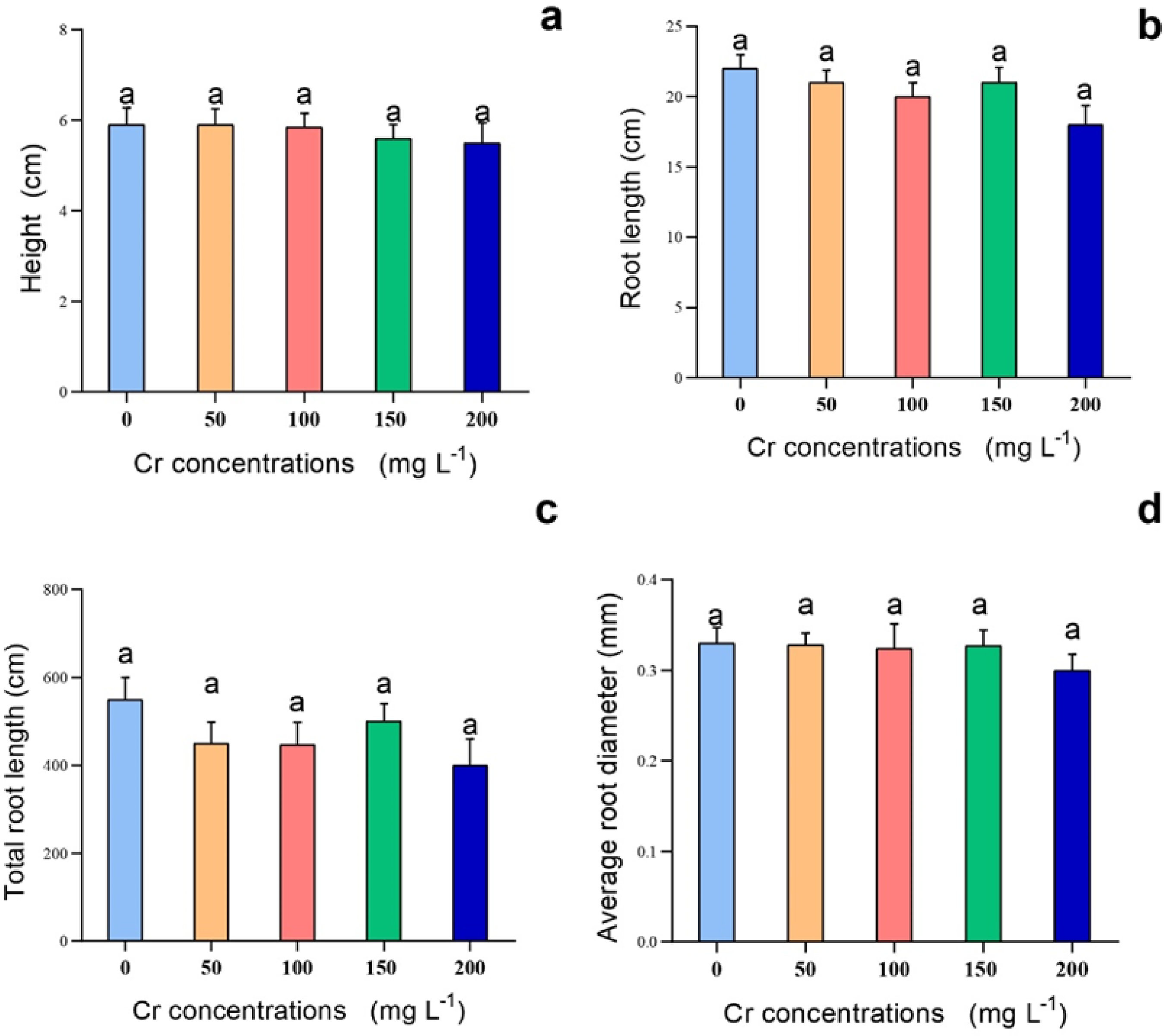
According to results of variance analysis, factor “different Cr concentrations’ had significant effect (p ≤ 0.05) on most morphological growth variables. However, the variables of height, root length, total root length and mean root diameter did not show significant difference between treatments (Figure 1).

Mean values recorded for height (a), root length (b), total root length (c) and mean root diameter (d) in Handroanthus chrysotrichus seedlings grown under different Cr concentrations. Different letters between treatments represent statistically significant difference in the Tukey test. Bars represent the mean ± standard deviation.
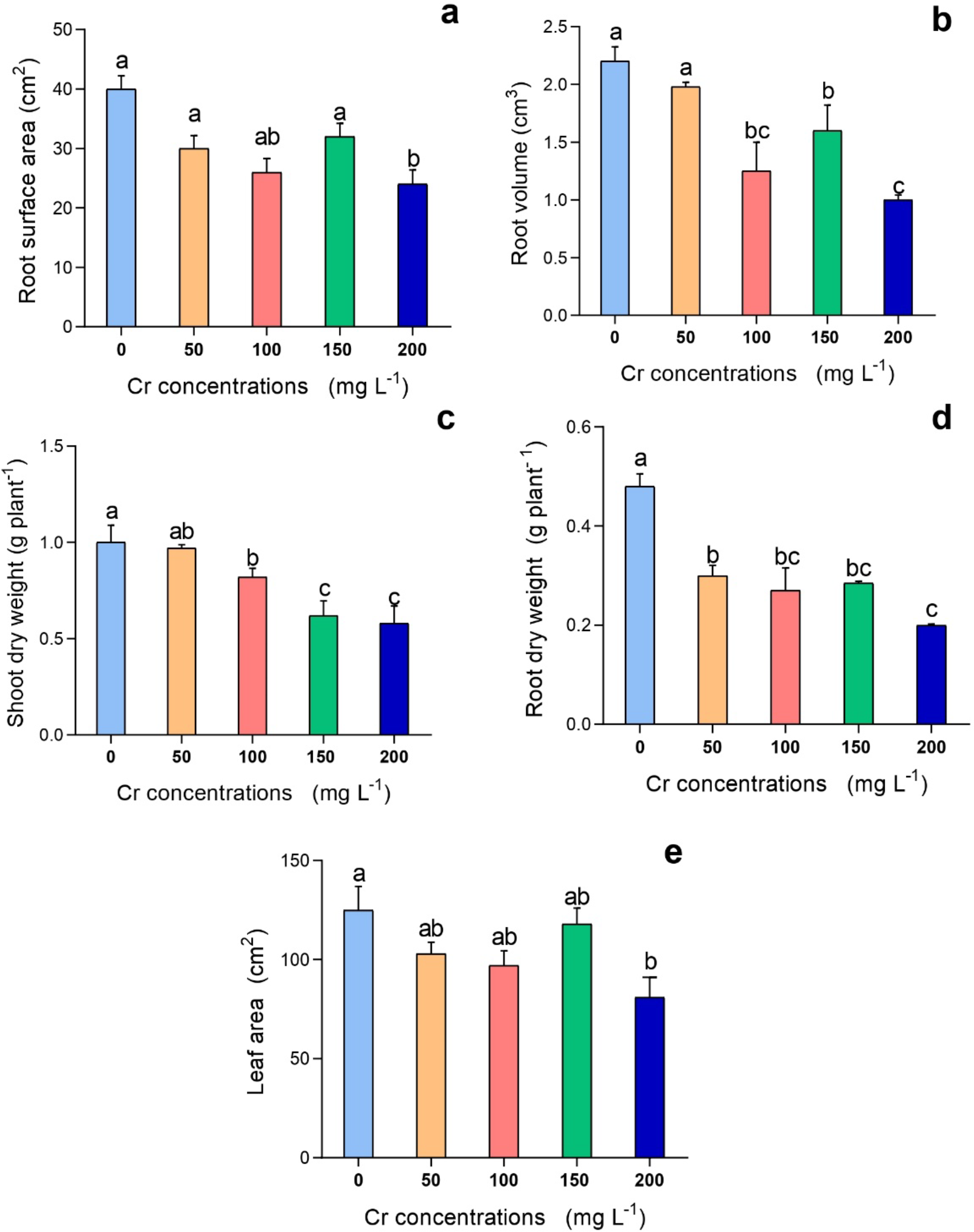
Root surface area reduced by 38.19% at Cr concentration of 200 mg L-1, whereas the other parameters did not statistically differ from the control, and mean root system volume decreased at 100 mg L-1 (Figures 2a. and 2b). Chromium present in the shoot also accounted for negative effects on leaf area (Figure 2e). However, leaf area restrictions were moderate, since Cr concentrations of 50, 100 and 150 mg L-1 did not statistically differ from the control. Thus, reduction in leaf area was only observed at the highest Cr concentration (200 mg L-) (Figure 2e). Root dry weight was lower in all Cr treatments, whereas shoot dry weight reductions were observed from Cr concentration of 100 mg L-1, onwards (Figures 2c and 2d).

Mean values recorded for root surface area (a), root volume (b), shoot dry weight (c), root dry weight (d) and leaf area (e) in Handroanthus chrysotrichus seedlings grown under different Cr concentrations. Different letters between treatments represent statistically significant difference in the Tukey test. Bars represent the mean ± standard deviation.
Physiological variables
Different Cr concentrations had significant effect (p ≤ 0.05) on most of the herein observed physiological variables.
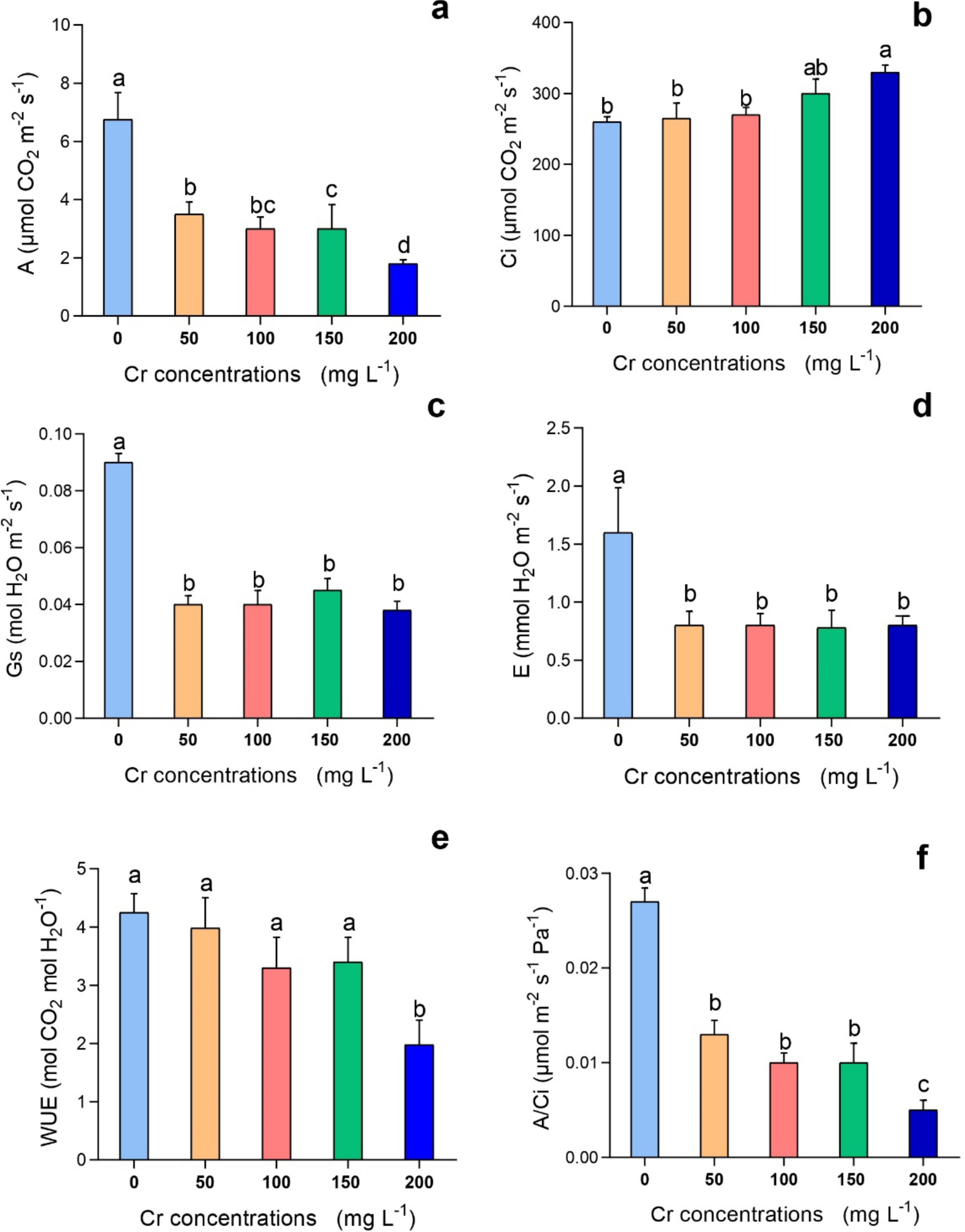
Stress caused by Cr had negative influence on photosynthetic variables (Figure 3). Net CO2 assimilation rate (A) recorded drastic decrease at all Cr concentrations and it reached 76.27% reduction at the highest Cr concentration (200 mg L-1) (Figure 3a). The same behavior was observed for stomatal conductance (Gs), which reduced the stomatal opening angle by up to 57.58% (Figure 3c). For the internal concentration of CO2 (Ci) it can be observed that there was increase at 200 mg L-1 Cr, whereas transpiration rate (E) decreased in the presence of Cr, with decrease by 48.75% at 50 mg L-1 (Figures 3b and 3d). However, water use efficiency (WUE) only decreased at the highest Cr concentration, whereas other concentrations did not sigifnicantly differ from the control (Figure 3e). Similar to the other photosynthetic parameters, the instantaneous efficiency of Rubisco carboxylation (A/Ci) was negatively affected by Cr presence, mainly at concentration of 200 mg L-1 Cr (Figure 3f).
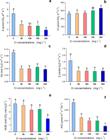
Mean values recorded for net CO2 assimilation rate (A) (a), intercellular CO2 concentration (Ci) (b), stomatal conductance (Gs) (c), transpiration rate (d), water use efficiency (WUE) (e) and instantaneous carboxylation efficiency (by Rubisco) (A/Ci) (f) in Handroanthus chrysotrichus seedlings grown under different Cr concentrations. Different letters between treatments represent statistically significant difference in the Tukey test. Bars represent the mean ± standard deviation.
Biochemical variables
The significant effect (p ≤ 0.05) of different Cr concentrations was observed for most biochemical variables in the present study. However, chlorophyll a (Chl a), total chlorophylls (total Chl) and carotenoid levels did not show significant differences, regardless of Cr concentrations; they showed the species’ tolerance to Cr (Figures 4a, 4c and 4d). Chlorophyll b (Chl b), production was stimulated at concentrations of 100 and 150 mg L-1, whereas concentration of 200 mg L-1 did not show difference from the control (Figure 4b).

Mean values recorded for Chl a (a), Chl b (b) total Chl (c) e carotenoids (d) in Handroanthus chrysotrichus seedlings grown under different Cr concentrations. Different letters between treatments represent statistically significant difference in the Tukey test. Bars represent the mean ± standard deviation.
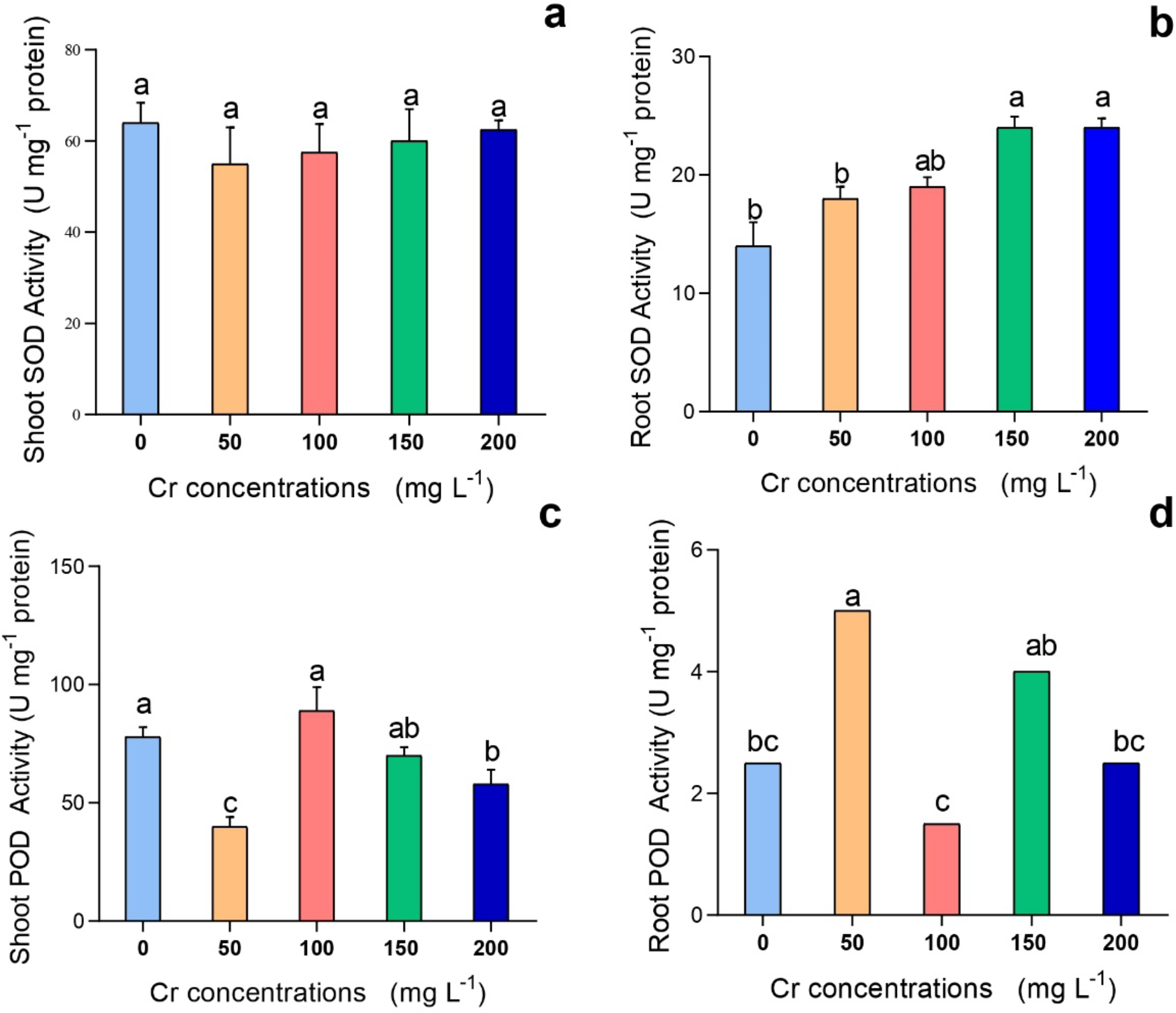
SOD activity in H. chrysotrichus roots increased at Cr concentrations of 150 and 200 mg L-1 (Figure 5b). No difference in SOD activity in the shoot was observed between the tested Cr concentrations (Figure 5a). However, in the leaves POD activity decrease at concentrations of 50 and 200 mg L-1 (Figure 5c), whereas POD activity in roots increased by 50 mg L-1 (Figure 5d).

Mean values recorded for superoxide dismutase (SOD) enzyme activity in shoots (a) and roots (b) and guaiacol peroxidase enzyme (POD) in shoots (c) and roots (d) in Handroanthus chrysotrichus seedlings grown under different Cr concentrations. Different letters between treatments represent statistically significant difference in the Tukey test. Bars represent the mean ± standard deviation.
The highest mean hydrogen peroxide (H2O2) concentration in the shoot was observed at 50 mg L-1 Cr (Figure 6a). On the other hand, roots showed increased H2O2 proportional to Cr concentration increase (Figure 6b). However, there was not significant difference from the control in relation at 50 mg L-1 Cr to H2O2 concentration in the roots (Figure 6b).

Mean values recorded for hydrogen peroxide (H2O2) concentration in shoot (a) and roots (b), and membrane lipid peroxidation in shoot (c) and roots (d) and tolerance index (TI) (e) in Handroanthus chrysotrichus seedlings grown under different Cr concentrations. Different letters between treatments represent statistically significant difference in the Tukey test. Bars represent the mean ± standard deviation.
Peaks in malondialdehyde (MDA) production, which is one of lipid peroxidation products, were only observed at the highest Cr concentrations; this finding showed the species’ tolerance to it at concentrations up to 100 mg L-1 (Figure 6c and 6d). There was not significant difference in lipid peroxidation in shoots and roots at low Cr concentrations in comparison to the control, but there was large MDA production at Cr concentrations of 150 and 200 mg L-1. This finding points towards high degradation of membrane lipids at these concentrations (Figure 6c and 6d). For the tolerance index (TI), it was observed that the lowest values were observed as chromium was added to the nutrient solution (Figure 6e). Thus, it was observed that the lowest TI values were evidenced at 150 and 200 mg L-1 Cr (Figure 6e).
DISCUSSION
For the variables root length and mean root diameter, there was no significant difference regardless of the Cr concentrations tested (Figure 1). This may have happened because the presence of Cr may have affected the density of fine roots and their branching, but without significantly altering the total length and mean root diameter (Wu et al. 2016).
However, the lowest values for root surface area and volume were observed with increasing Cr in the nutrient solution (Figures 1a and 1b). This response may have occurred because Cr can strongly bind to negatively charged carboxylic groups in the cell wall of cortical and epidermal cells of roots, altering the binding and distribution of ions in the apoplast, which directly influences organ development (Shiyab et al. 2019; Singh et al. 2020).
Thus, the dry biomass of the roots showed more pronounced damage than that of the shoot, demonstrating that the development of the root system was more affected (Figures 2c and 2d). Excess Cr, by negatively affecting water and nutrient absorption (Mahdavian, 2021), also ends up negatively affecting biomass production. Thus, there was smaller leaf area per unit of leaf dry weight, since Cr concentrations have inhibited energy metabolism, cell division and expansion; these factors, all together, have reflected on seedlings’ leaf area reduction (Srivastava et al., 2021). However, plants adjust their allocation and relative biomass distribution in their organs when they are subjected to stress conditions, also known as allocation plasticity (Carneiro et al., 2015). There was not reduction in H. chrysotrichus seedlings’ shoot biomass production at 50 mg L-1 Cr (Figure 2c), although plants recorded lower photosynthetic rate at this Cr concentration. Assumingly, based on the aforementioned condition, Cr excess in root tissue may have remained in the apoplast (likely attached to cell wall) or was compartmentalized in root cells’ vacuole (Sinha et al., 2018). This process decreased Cr transport to the shoot and, consequently, it affected this tissue’s physiological processes to a lesser extent (Adhikari et al., 2020).
Chlorophyll a, total chlorophylls and carotenoid levels did not show significant differences due to Cr addition, and this finding has proven this species’ tolerance to Cr application (Figures 4a, 4c and 4d). Chlorophyll b production was stimulated at Cr concentrations of 100 and 150 mg L-1 (Figure 4b). However, this increase in the amount of pigments was not enough to guarantee the beneficial effects on photosynthetic variables. This response may have resulted from the fact that Cr can impair chloroplasts’ structure and interfere with stable protein binding by damaging the photosynthetic apparatus (Gomes et al., 2017). Thus, photosynthetic rate decrease due to Cr stress can also be attributed to chloroplast ultrastructure disorganization and to electron transport process inhibition in photosynthesis’ photochemical phase (Sharma et al., 2020).
However, transpiration rate decrease may be directly related to stomatal conductance reduction, since reduction in the stomatal opening angle makes transpiration difficult (Gomes et al., 2017). In addition, Cr accumulates in plant roots, consequently, its phytotoxic effects will lead to low water absorption; it directly reflects on water transport (Shiyab, 2019) and results in reduced transpiration and, consequently, in lower WUE (Figures 3d and 3e). However, H. chrysotrichus seedlings presented tolerance to metal toxicity if one takes into consideration that water use efficiency was little affected by Cr; except for the maximum used Cr concentration, which led to 52.9 % decrease in this variable.
A/Ci values were negatively affected by Cr, and the most severe effect of it was observed at the highest Cr concentration (200 mg L-1) (Figure 3f). This response may have occurred because the Rbcl gene, which is responsible for Rubisco enzyme synthesis, is a direct target of the action by reactive oxygen species (ROS) generated by heavy metal stress. Therefore, if this gene’s transcription levels decrease due to the toxic effects of Cr, the entire photosynthetic process is harmed (Jaskulak et al., 2018).
Redox metals such as Cr can cause oxidative damage due to Haber-Weiss and Fenton reactions that, in their turn, lead to ROS production in plants (Sinha et al., 2018). ROS, such as superoxide radicals (O2−•), hydrogen peroxide (H2O2), hydroxyl radicals (OH•) and oxygen singlets (1O2), are often little produced in aerobic organisms (Shiyab, 2019). However, ROS production significantly increases under stress conditions. Such ROS overproduction in plants can result in cellular homeostasis disrusption, DNA strand breakage, protein or cell membrane defragmentation, and in damages to photosynthetic pigments – these factors, altogether, can trigger cell death (Gomes et al., 2017).
Superoxide dismutase (SOD) is considered the first line of defense in ROS elimination, and it acts in maintaining homeostasis in plant cells (Sharma et al., 2020). The highest SOD activity values were observed in the roots due to Cr addition (Figure 5b). SOD activity increase at higher Cr concentrations is indicative of its potential use to mitigate oxidative damage, since SOD converts the superoxide anion (O2•-) into H2O2 - which is often correlated to increased plant tolerance (Schmitt et al., 2020). H2O2 is less harmful and reactive than superoxide anion when it accumulates in plant tissues, and it can be eliminated by catalases and peroxidases (Smirnoff & Arnaud, 2019).
Thus, the POD enzyme, along with SOD, catalase and APX, accounts for balancing and controlling cellular ROS concentration, such as H2O2 and O2•-, and for preventing OH•- from being produced (Bernardy et al., 2020). However, POD activity decrease was observed in shoot at Cr concentrations of 50 and 200 mg L-1 (Figure 5c). This lower POD activity in the shoot explains the high H2O2 accumulation at concentration of 50 mg L-1 (Figure 6), and high H2O2 production may have exceeded the capacity to antioxidant enzymes eliminate this ROS; consequently, it may have caused POD activity decrease (Kumar et al., 2019). Thus, it is possible inferring that H2O2 increase in the shoot is likely related to POD activity inhibition, which may account for possible delay in ROS removal (Singh et al., 2021). However, this higher H2O2 concentratrion in the shoot (50 mg L-1 Cr) did not trigger oxidative damage to membrane lipids, since no significant difference was observed at 50 and 100 mg L-1 Cr in relation to the control, in malondialdehyde (MDA) production, which is one of the lipid peroxidation products (Figure 6). Root H2O2 production presented behavior very similar to that of SOD activity in this same plant organ; this finding suggests that SOD was activated by the plant in order to carry out internal ROS balance (Figure 6b and 5b). H2O2 is a stable compound, as well as important signaling molecule for the plants; however, increase in its content results in oxidative stress and, consequently, triggers lipid peroxidation due to MDA increase (Kuinchtner et al., 2021).
MDA is an oxidized product from membrane lipids; it is accumulated inside plants when they are exposed to oxidative stress. Thus, H2O2 increase may have collaborated to increase in MDA levels (membrane lipid peroxidation) (Daud et al., 2021), as seen in Figures 6c and 6d. Increase in lipid peroxidation may have contributed to reduce plant biomass production, mainly at higher Cr concentrations (Figures 2c and 2d).
However, Cr concentrations lower than 100 mg L-1 also result in increased MDA levels, as found by Bilal et al. (2018), who observed marked lipid peroxidation induction and ROS production at Cr concentration of 5.0 mM in Glycine max plants. Lack of high MDA rate in H. chrysotrichus seedlings cultivated Cr concentration of 100 mg L-1 showed that this species’ oxidative stress tolerance mechanisms are efficient, even in case of ROS production.
Chromium concentration increase affected the growth and photosynthetic and biochemical variables of H. chrysotrichus seedlings. However, at lower Cr concentrations (50 mg L-1), plant growth remained without further damage caused by this metal. This finding suggests that these plants are tolerant to milder Cr concentrations, and this outcome confirms our initial hypothesis. Therefore, this species has activated its antioxidant defense mechanisms (enzymatic and non-enzymatic) to protect itself from this toxic metal. In addition, other tolerance mechanisms may also be operating in this species, such as Cr compartmentalization of Cr in cell vacuole (Sinha et al., 2018), Cr complexation/chelation (Din et al., 2019) and Cr accumulation in less sensitive plant tissues, such as roots, a fact that decreases Cr bioavailability (Adhikari et al., 2020).
CONCLUSIONS
High Cr concentrations were harmful to Handroanthus chrysotrichus seedlings’ growth. However, this species tolerated Cr concentrations up to 100 mg L-1. This finding may point towards its tolerance to this metal, as well as its potential to be used as phytoremediation for Cr-polluted soils.
REFERENCES
- 1 Adhikari A, Adhikari S, Ghosh S, Azahar I, Shaw AK, Doyel R, et al. Imbalance of redox homeostasis and antioxidant defense status in maize under chromium (VI) stress. Environ Exp Bot. 2020;169(12):01-12.
- 2 Aguilar MV, Kuinchtner CC, Wertonge GS, Birck TP, Peixoto TW, Kulmann MS, et al. Tolerance and sensitivity of Inga marginata and Allophylus edulis to copper excess. Trees Struct Funct. 2023;10(37):1-17.
- 3 Aguilar MV, Wertonge GS, Birck TP, Lovato LR, Rosa FC, Hindersmann J, et al. Oxidative stress as markers in identification of aluminum-tolerant peach tree rootstock cultivars and clonal selections. Rev Bras Cienc Solo. 2024;48(10):01-20.
- 4 Bernardy K, Farias JG, Pereira AS, Dorneles AO, Bernardy D, Tabaldi LA, et al. Plants’ genetic variation approach applied to zinc contamination: secondary metabolites and enzymes of the antioxidant system in Pfaffia glomerata accessions. Chemosphere. 2020;253(3):01-11.
- 5 Bilal S, Khan AL, Shahzad R, Kim Y, Imran M, Khan MJ, et al. Mechanisms of Cr (VI) resistance by endophytic Sphingomona ssp. LK11 and its Cr (VI) phytotoxic mitigating effects in soybean (Glycine max L.). Ecotoxicol Environ Saf. 2018;164(12):648-658.
- 6 Bispo TM, Vieira EA. Assimilatory deficit and energy regulation in young Handroanthus chrysotrichus plants under flooding stress. J Plant Res. 2022;135(2):01-14.
- 7 Carneiro IC, Pereira EG, Souza JP. Combined effects of low light and water stress on Jatropha curcas L. promotes shoot growth and morphological adjustment. Acta Bot Brasil. 2015;29(4):467-472.
- 8 Daud MK, Ali S, Variath MT, Khan M, Jamil M, Ahmad M, et al. Chromium (VI) induced leaf-based differential physiological, metabolic and microstructural changes in two transgenic cotton cultivars (J208, Z905) and their hybrid line (ZD14). J Plant Growth Regul. 2021;41(10):01-13.
- 9 Din BU, Rafique M, Javed MT, Kamran MA, Mehmood S, Khan M, et al. Assisted phytoremediation of chromium-spiked soils by Sesbania sesban in association with Bacillus xiamenensis PM14: a biochemical analysis. Plant Physiol Biochem. 2019;146(20):01-31.
- 10 El-Moshaty FI, Pike SM, Novacky AJ, Sehgal OP. Lipid peroxidation and superoxide productions in cowpea (Vigna unguiculata) leaves infected with tobacco rings virus or southern bean mosaic virus. J Physiol Mol Plant Pathol. 1993;4(2):109-119.
- 11 Ferreira DF. SISVAR: A computer analysis system to fixed effects Split plot type designs. Rev Bras Biometria. 2019;37(4):529-535.
- 12 Gai AP, Santos DS, Vieira EA. Effects of zinc excess on antioxidant metabolism, mineral content and initial growth of Handroanthus impetiginosus (Mart. ex DC.) Mattos and Tabebuia roseoalba (Ridl.) Sandwith. Environ Exp Bot. 2017;144(11):01-37.
- 13 Giannopolitis CN, Ries SK. Purification and quantitative relationship with water-soluble protein in seedlings. Plant Physiol. 1977;48(2):315-318.
- 14 Gomes MA, Hauser-Davis RA, Suzuki MS, Vitória AP. Plant chromium uptake and transport, physiological effects and recent advances in molecular investigations. Ecotoxicol Environ Saf. 2017;140(18):55-64.
- 15 Hiscox JD, Israelstam GF. A method for the extraction of chlorophyll from leaf tissue without maceration. Can J Bot. 1979;57(12):1132-1334.
- 16 Hoagland DR, Arnon DI. The water culture method for growing plants without soil. Berkeley, CA: Agric Exp Stn, Univ of California; 1950.
- 17 Jaskulak M, Rorat A, Grobelak A, Kacprzak M. Antioxidative enzymes and expression of rbcL gene as tools to monitor heavy metal-related stress in plants. J Environ Manage. 2018;218(10):71-78.
- 18 Kuinchtner CC, Oliveira GS, Aguilar MV, Bernardy D, Berger M, Tabaldi LA. Can species Cedrela fissilis Vell. be used in sites contaminated with toxic aluminum and cadmium metals? iForest. 2021;14(6):508-516.
- 19 Kumar P, Tokas J, Singal RH. Amelioration of Chromium VI Toxicity in Sorghum (Sorghum bicolor L.) using Glycine Betaine. Sci Rep. 2019;9(1):01-15.
- 20 Lichtenthaler HK. Chlorophylls and carotenoids: pigments of photosynthetic biomembranes. In: Packer L, Douce R, editors. Methods in Enzymology. London: Academic Press; 1987. p. 350-381.
- 21 Loreto F, Velikova V. Isoprene produced by leaves protects the photosynthetic apparatus against ozone damage, quenches ozone products, and reduces lipid peroxidation of cellular membranes. Plant Physiol. 2001;12(4):1781-1787.
- 22 Mahdavian K. Effect of citric acid on antioxidant activity of red bean (Phaseolus calcaratus L.) under Cr+6 stress. South Afr J Bot. 2021;139(11):83-91.
- 23 Schmitt OJ, Brunetto G, Chassot T, Tiecher TL, Marchezan C, Tarouco CP, et al. Impact of Cu concentrations in nutrient solution on growth and physiological and biochemical parameters of beet and cabbage and human health risk assessment. Scientia Hortic. 2020;272(109558):01-09.
- 24 Sharma A, Kapoor D, Wang J, Shahzad B, Kumar V, Bali AS, et al. Chromium bioaccumulation and its impacts on plants: an overview. Plants. 2020;9(1):1-17.
- 25 Shiyab S. Morphophysiological effects of chromium in sour orange (Citrus aurantium L.). HortScience. 2019;54(5):829-834.
- 26 Silva IF, Vieira EA. Phytotoxic potential of Senna occidentalis (L.) Link extracts on seed germination and oxidative stress of Ipe seedlings. Plant Biol. 2019;21(4):770-779.
- 27 Singh D, Sharma NL, Singh CK, Sarkar SK, Singh I, Dotaniya ML. Effect of chromium (VI) toxicity on morphophysiological characteristics, yield, and yield components of two chickpea (Cicer arietinum L.) varieties. PLoS One. 2020;3(12):01-70.
- 28 Singh D, Sharma NL, Singh CK, Yerramilli V, Narayan R, Sarkar SK, et al. Chromium (VI) - induced alterations in physio-chemical parameters, yield, and yield characteristics in two cultivars of mung bean (Vigna radiata L.). Front Plant Sci. 2021;12(735129):01-18.
- 29 Sinha V, Pakshirajan K, Chaturvedi R. Chromium tolerance, bioaccumulation and localization in plants: an overview. J Environ Manage. 2018;206(10):715-730.
- 30 Smirnoff N, Arnaud D. Hydrogen peroxide metabolism and functions in plants. New Phytol. 2019;221(3):1197-1214.
- 31 Srivastava D, Tiwari M, Dutta P, Singh P, Chawda K, Kumari M, et al. Chromium stress in plants: toxicity, tolerance and phytoremediation. Sustainability. 2021;13(9):01-20.
- 32 Storck L, Lopes S. Experimentação vegetal. 3. ed. Santa Maria, RS: Editora da UFSM; 2011.
- 33 Tariq M, Iqbal, Khan I, Khan AR, Jho EH, Salam AS, et al. Microplastic contamination in the agricultural soil-mitigation strategies, heavy metals contamination, and impact on human health: a review. Plant Cell Rep. 2024;43(3):01-15.
- 34 Yan A, Wang Y, Tan SN, Yusof ML, Ghosh S, Chen Z. Phytoremediation: A promising approach for revegetation of heavy metal-polluted land. Front Plant Sci. 2020;11(1):01-15.
- 35 Wertonge GS, Aguilar MV, Lovato LR, Birck TP, Bernardy D, Tabaldi LA. Cadmium stress-induced sensitivity responses in Peltophorum dubium Floresta. 2024;54(10):01-09.
- 36 Wu Q, Pagès L, Wu J. Relationships between root diameter, root length and root branching along lateral roots in adult, field-grown maize. Ann Bot. 2016;117(3):379-390.
- 37 Zeraik AE, Souza FS, Fatibello-Filho O. Desenvolvimento de um spot test para o monitoramento da atividade da peroxidase em um procedimento de purificação. Quím Nova. 2008;31(1):731-734.
Edited by
-
Editors:
Wagner Luiz AraújoTeógenes Senna Oliveira