 Morphological, craniodental, and molecular characterization of Platyrrhinus guianensis (Chiroptera, Phyllostomidae) and second record for Brazil
ABSTRACT
The genus Platyrrhinus Saussure, 1860 is one of the most speciose within the Phyllostomidae family in the Neotropical region, with 19 documented species worldwide, nine of which are found in Brazil. Platyrrhinus guianensis Velazco and Lim, 2014 was first recorded in the Guiana Shield, followed by a record in the Brazilian Amazon. This study represents the second record of P. guianensis in Brazil, specifically in the Maranhão (MA) Amazon biome (Turiaçu/MA - 01°39’36”S and 45°22’12”W). Morphological, craniodental, and molecular characters were employed for species identification. The specimen exhibited a dark brown dorsal fur, a conspicuous wide and white dorsal stripe, dark gray ventral fur, a forearm length of 38.5 mm, a short skull without a fossa in the scaly root of the zygomatic arch, with two stylar cusps on the posterior crest of the upper second premolar, one stylar cusp on the anterior crest of the lower second premolar, and upper internal incisors bilobed and convergent. Molecular results supported the morphological identification, confirming the occurrence of P. guianensis in the Maranhão Amazon. Molecular results provide the first public sequence of P. guianensis for the 16S rRNA gene and a new sequence for the COI gene, which will be useful in future studies for the species. These results supported the morphological identification, confirming the occurrence of P. guianensis in the Maranhão Amazon. This record extends the known distribution of this species approximately 1428.32 km to the east within the Amazon biome in Brazil.
KEYWORDS:
Biodiversity; Amazon biome; bats; mitochondrial genes; geographical extension
RESUMO
O gênero Platyrrhinus Saussure, 1860 é um dos mais especiosos da família Phyllostomidae na Região Neotropical, com 19 espécies documentadas no mundo e nove para o Brasil. Platyrrhinus guianensis Velazco and Lim, 2014 foi registrada pela primeira vez para o Escudo das Guianas, depois um registro para a Amazônia brasileira e este estudo corresponde ao segundo registro de P. guianensis para o Brasil no bioma amazônico maranhense (Turiaçu/MA - 01°39’36”S e 45°22’12”W). Caracteres morfológicos, craniodentais e moleculares foram usados para a diagnose da espécie. O espécime apresentou pelagem dorsal marrom-escura, faixa dorsal larga e branca conspícua, pelos ventrais cinza-escuros, antebraço com 38,5 mm, crânio curto sem fossa na raiz escamosa do arco zigomático, duas cúspides estilares na crista posterior do segundo pré-molar superior, uma cúspide estilar na crista anterior do segundo pré-molar inferior, e os incisivos internos superiores bilobados e convergentes. Os resultados moleculares fornecem a primeira sequência pública de P. guianensis para o gene 16S rRNA e uma nova sequência para o gene COI, que serão úteis em estudos futuros para a espécie. Esses resultados apoiaram a identificação morfológica, confirmando a ocorrência de P. guianensis na Amazônia maranhense. Este registro estende a distribuição conhecida desta espécie aproximadamente 1428,32 km a leste dentro do bioma Amazônia no Brasil.
PALAVRAS-CHAVE:
Biodiversidade; bioma Amazônia; morcegos; genes mitocondriais; extensão geográfica
Within order Chiroptera, the family Phyllostomidae stands out for harboring the highest bat richness in the Neotropical region, making it the most diverse bat family in Brazil (Garbino et al., 2024). These bats exhibit a variety of feeding habits, including hematophagy, carnivory, nectarivory, pollenivory, insectivory, omnivory, and frugivory (Baker et al., 2012). Studies focusing on poorly known areas and conservation priorities, coupled with molecular investigations, have enhanced our understanding of diversity within Phyllostomidae, leading to the discovery of new species, new records, and expanded distribution ranges (Miretzki et al., 2002; Lima et al., 2021). The genus Platyrrhinus Saussure, 1860, subjected to numerous taxonomic studies in the last two decades, serves as an example. The recognized diversity within this genus has increased from ten to 19 species since 2005 (Simmons, 2005; Velazco, 2005; Velazco & Gardner, 2009; Velazco & Lim, 2014; Velazco et al., 2018; Palacios-Mosquera et al., 2020; Simmons & Cirranello, 2023; Velazco et al., 2023).
Platyrrhinus is the second most speciose genus within the Phyllostomidae (Simmons & Cirranello, 2023). Belonging to the subfamily Stenodermatinae, these frugivorous bats are endemic to the Neotropics, exhibiting a wide geographic distribution from southern Mexico to Paraguay and northern Argentina, with the majority of species found in the Andes region (Velazco & Lim, 2014; Velazco et al., 2018; Palacios-Mosquera et al., 2020; Velazco et al., 2023).
In Brazil, there are records of nine species within the genus: Platyrrhinus angustirostrisVelazco, Gardner & Patterson 2010, P. aurarius (Handley & Ferris, 1972), P. brachycephalus (Rouk & Carter, 1972), P. fusciventris Velazco, Gardner & Patterson, 2010, P. guianensisVelazco & Lim, 2014, P. incarum (Thomas, 1912), P. infuscus (Peters, 1881), P. lineatus (E. Geoffroy Saint-Hilaire, 1810), and P. recifinus (Thomas, 1901), the latter being endemic to Brazil (Garbino et al., 2024).
Plathyrrhinus is presented from other genera of Stenodermatinae by a combination of three characters: two accessory cusps on the posterior surface of the second upper premolar, three upper molars and the presence of a fringe of hairs on the margins of the uropatagium. Although other genera also have these characters, no other has all three at the same time (Lim, 1993; Velazco, 2005).
Five species were first identified as part of the Plathyrrhinus helleri complex: P. angustirostris, P. fusciventris, P. helleri, P. incarum, and P. matapalensis (Velazco, 2005; Velazco & Patterson, 2008; Velazco et al., 2010). During systematic, taxonomic, and population structure reviews of Platyrrhinus, Velazco (2009) observed that a population of small Platyrrhinus, part of the P. helleri complex occurring in Guyana and Suriname, was grouped as a sister clade to P. recifinus and based on these results Tavares & Velazco (2010) extended the distribution of P. recifinus to the Guiana Shield. The relationship of this population of small Platyrrhinus with P. recifinus was recovered in Clare et al. (2007, 2011) who named it P. helleri PS2. However, Velazco & Lim (2014) formally described this population as a new species, P. guianensis.
Platyrrhinus guianensis is distinguished from its congeners by a combination of external and craniodental characteristics, such as the lack of a fossa on the squamosal root of the zygomatic arch, presence of two stylar cusps on the posterior crest of the upper second premolar and one stylar cusp on the anterior crest of the lower second premolar. Additionally, it is characterized by unicolored dark gray ventral hairs, a wide and bright white dorsal stripe, long and visibly dense pale yellow fur along the uropatagium margin, and a smaller size with a shorter skull compared to P. recifinus (Velazco & Lim, 2014).
The name P. guianensis reflects its endemic distribution in the Guiana region of South America, given that this species is known in Guyana and Suriname (Velazco & Lim, 2014) and has been more recently documented in the Amazon biome in Brazil (Lopes et al., 2023). Thus, this study aims to characterize, through morphological, craniodental, and molecular data, the species P. guianensis and also to expand its geographic distribution by reporting its second record in Brazil, which represents a new record for the state of Maranhão.
MATERIALS AND METHODS
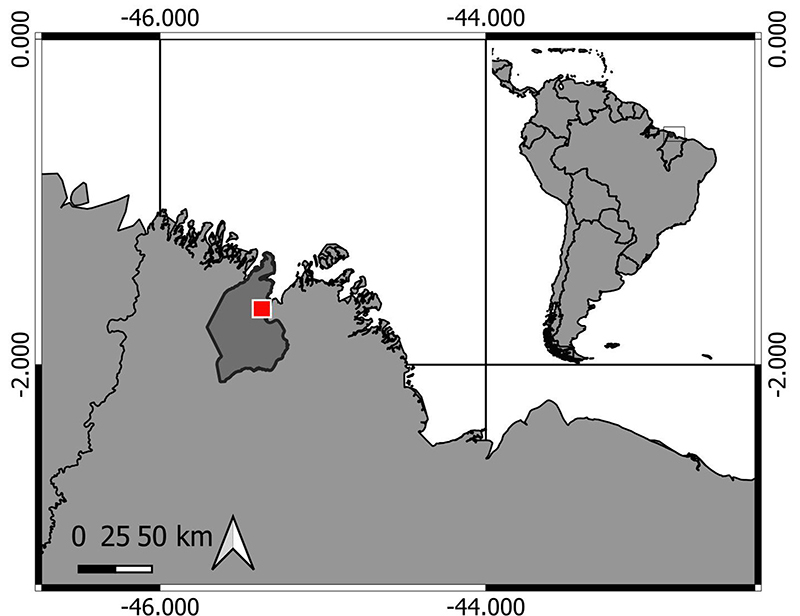
In June 2016, a specimen of Platyrrhinus guianensis was collected in the municipality of Turiaçu/Maranhão (MA) in the Amazon biome (01°39’36”S and 45°22’12”W; Fig. 1) under IBAMA/SISBIO license number 42670-3. Turiaçu is located at the mouth of the Turiaçu River, characterized by a predominantly hot and humid tropical climate, with an average temperature ranging from 26°C to 32°C. The vegetation in the region to which the municipality belongs includes four main types: the Amazon Hyleia, mainly in the areas of indigenous reserves, with large trees; cocais forest, typical of Maranhão lands; natural fields of undergrowth, which occur mainly in the Turiaçu and Pinheiro regions; and the vegetation cover of mangroves and beaches along the Atlantic coast (Pastana, 2001). The collection took place in the peri-urban zone that has humid forest, typical of the Amazon Hyleia.
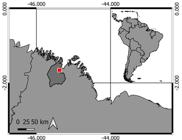
Area where the specimen of the present study was collected, Amazon biome, state of Maranhão, Brazil.
For collection, nocturnal expeditions were carried out for six hours a day of capture (from 18:00 to 00:00 h), where 10 mist nets were used, 3 m high by 9 and 12 m long, 25 mm mesh, armed in strategic points such as near streams, trails, caves and fruit trees. The specimen was photographed, euthanized, labeled, weighed, placed on ice, and transported to the GENBIMOL complex, which houses the Genetics Laboratory at the Universidade Estadual do Maranhão, Campus Caxias, where the muscle tissue was extracted and stored in 70% ethanol for subsequent molecular analyses. The specimen preparation was approved by the Ethics and Animal Experimentation Committee (CEFA) of the Universidade Estadual do Maranhão (UEMA), under protocol number 044/2019.
At the laboratory, the skull was processed according to Lima et al. (2021), and identification was based on external and craniodental characters following Velazco & Lim (2014). Based on these authors, the following measurements were taken: total body length, forearm length, ear length, tragus length, foot length, greatest length of skull, condyloincisive length, condylocanine length, braincase breadth, zygomatic breadth, postorbital breadth, mastoid breadth, maxillary tooth row length, width at M2, dentary length and mandibular tooth row length (all recorded in mm). The four external and 11 craniodental measurements were taken using a manual caliper (0-150 mm, accuracy of 0.02 mm), and body mass was measured with a portable dynamometer (accuracy of 1g, in grams). For its long term conservation, the specimen was fixed in 10% formalin and stored in 70% alcohol. The specimen was deposited in the Natural History Collection of the Universidade Federal do Piauí (CHNUFPI), Campus Amílcar Ferreira Sobral (CAFS), Floriano, Piauí, Brazil.
Total DNA was extracted from muscle tissue using the Wizard Genomic DNA Purification Kit from Promega (Promega Corporation, USA) following the manufacturer’s instructions (www.promega.com.br). The mitochondrial genes Cytochrome Oxidase Subunit 1 (COI) and 16S rRNA were amplified via Polymerase Chain Reaction (PCR) using the primers LCO-1490 and HCO-2198 (Folmer et al., 1994) and L1987 and H2609 (Palumbi et al., 2002), respectively. Positive PCR products were purified with the “ExoSap-IT” kit (Applied Biosystems, USA) following the manufacturer's recommendations (https://www.thermofisher.com) and subjected to DNA sequencing using the “Big dye” Kit, the dideoxy-termination method (Sanger et al., 1977) on the ABI Prism™ 3500 DNA sequencer (Applied Biosystems, USA).
The sequence for the COI gene (GenBank accession number OR900742) was edited and aligned in the BIOEDIT 7.0 program (Hall, 1999), in a database with 17 other sequences of 600 base pairs (bp) each, representing the following species: Platyrrhinus brachycephalus (ROM 113713, ROM 113802), P. fusciventris (ROM115643, ROM115473), P. guianensis (ROM113584), P. incarium (ROM 113487), and Vampyrodes caraccioli (ROM 108696-external group), obtained from studies by Clare et al. (2007); P. angustirostris (ROM 105127, ROM104436), P. guianensis (ROM 113991, ROM 114070); P. helleri (ROM 99614, ROM 108325); P. recifinus (ROM 111106, ROM 111134), from Clare et al. (2011); P. guianensis (INPASISJAT_B06) from Lopes et al. (2023); and P. matapalensis (QCAZ:18238) from Camacho et al. (2022). For the 16S rRNA gene, there are no sequences of P. guianensis in the BLAST platform (https://www.ncbi.nlm.nih.gov/nuccore).
In the MEGA 11 program (Tamura et al., 2021), a genetic divergence matrix and a Neighbor-Joining (NJ) phylogenetic tree were generated through the Kimura-2-parameters algorithm (K2P= I+G), using the COI gene. The significance of the clusters was estimated by bootstrap analysis, based on 1000 replications (Felsenstein, 1985). For confirmation of identification and assessment of similarity, the sequence from this study was plotted on the BOLD Systems v4 platform (www.boldsystems.org) and BLAST (https://blast.ncbi.nlm.nih.gov/Blast.cgi).
RESULTS
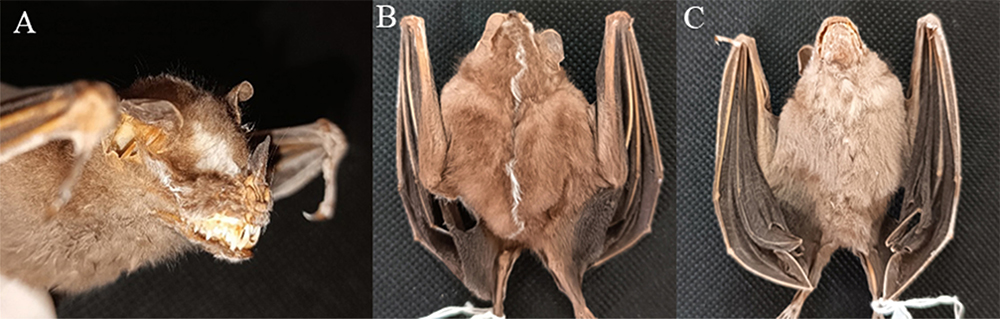
The collected specimen corresponds to a non-lactating female of P. guianensis (Field code: RRM163; voucher specimen museum code: CHNUFPI655), and the following external measurements were measured: total body length 50.2 mm, right forearm 38.5 mm, ears 14 mm, tragus 6 mm, and foot 9.52 mm, with a body weigth of 13 g (Tab. I). The characteristics of the specimen that supported its morphological identification were: broad and white facial stripes, with dark brown dorsal fur, a wide and conspicuous white dorsal stripe, dark gray ventral fur, and the posterior margin of the uropatagium forming an inverted ‘U’ shape, with a fringe of dense and pale yellow fur along the posterior margin of the uropatagium. Furthermore, the tragus and ears had well-evident anterior and posterior yellow borders, as well as yellowed lateral edges of the nose leaf, with the lower edge of the nose leaf completely free from the upper lip (Fig. 2).
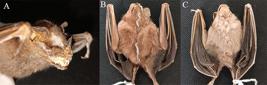
Specimen of Platyrrhinus guianensisVelazco & Lim, 2014 (female, CHNUFPI655), collected in the municipality of Turiaçu/Maranhão, Amazon biome: A, lateral view of the rostrum showing broad and white facial stripes; B, dorsal view showing dark brown fur and wide white dorsal stripe; C, ventral view showing dark gray fur and ‘U’-shaped uropatagium.
External measurements of Platyrrhinus guianensisVelazco & Lim, 2014, obtained from a specimen collected in Turiaçu, Maranhão, Brazil (present study - CHNUFPI655), the Guiana Shield (Velazco & Lim, 2014), and Urucará/Amazonas (Lopes et al., 2023). All the measurements are expressed in mm with the exception of the weight, which is expressed in g.
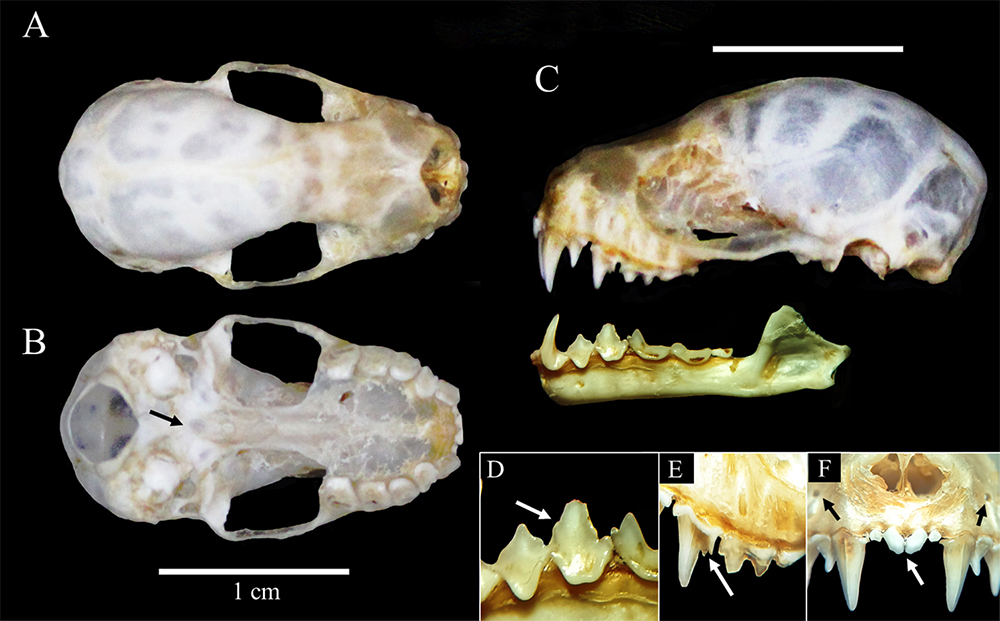
The species was also identified by a set of craniodental characters: short skull, two infraorbital foramina, and posterior edge of the hard palate in a ‘V’ shape, absence of fossa in the scaly root of the zygomatic arch, and poorly developed paraoccipital and paracondylar processes. There were two stylar cusps on the posterior crest of the upper second premolar and one stylar cusp on the anterior crest of the lower second premolar, and the upper internal incisors were bilobed and convergent (Fig. 3, Tab. II).
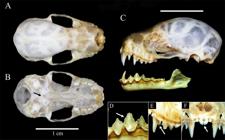
Skull of the studied specimen of Platyrrhinus guianensisVelazco & Lim, 2014 (CHNUFPI655): A, dorsal showing a short skull; B, ventral view showing a posterior edge of the hard palate in a ‘V’ shape; C, lateral view of the skull and mandible; D, zoom in a stylar cusp on the anterior crest of the lower second premolar; E, zoom in two stylar cusps on the posterior crest of the upper second premolar; F, frontal view with emphasis on the bilobed and convergent upper internal incisors and two infraorbital foramina.
Cranial measurements (in mm) of the specimen of Platyrrhinus guianensisVelazco & Lim, 2014 (CHNUFPI655) obtained in Turiaçu, MA, Brazil (present study), including the values of the type series of P. guianensis from Urucará, Amazonas.
As there are no sequences of Platyrrhinus guianensis for the 16S rRNA gene in online platforms, this study provides the first public sequence of the species for this gene (GenBank accession number OR900601). The closest similarity was found with P. matapalensis, also part of the P. helleri complex, with 98.17%.
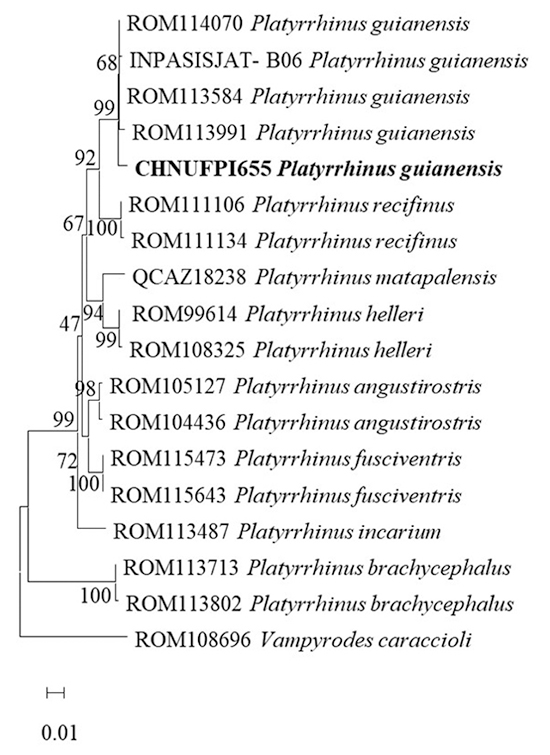
For the COI marker, the intraspecific genetic divergence of Platyrrhinus guianensis in this study ranged from 0 to 1% with the species found in Guyana, Suriname, and the state of Amazonas in Brazil. The NJ phylogenetic tree grouped all analyzed P. guianensis with 99% bootstrap support, forming a sister clade with P. recifinus (Fig. 4). When the sequence was submitted to the BOLD Systems platform, a similarity of 99.33% was observed with P. guianensis from Guyana (ROM113584) and Suriname (ROM114070, ROM113991). On the BLAST platform, the similarity was 99.33% with P. guianensis from Guyana, 99.17% with P. guianensis from Suriname and Amazonas in Brazil (INPASISJAT- B06).
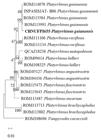
Neighbor-Joining (NJ) phylogenetic tree for Platyrrhinus species using the K2P (I+G) algorithm based on COI gene data. The specimen from this study is highlighted in bold, and bootstrap values are indicated.
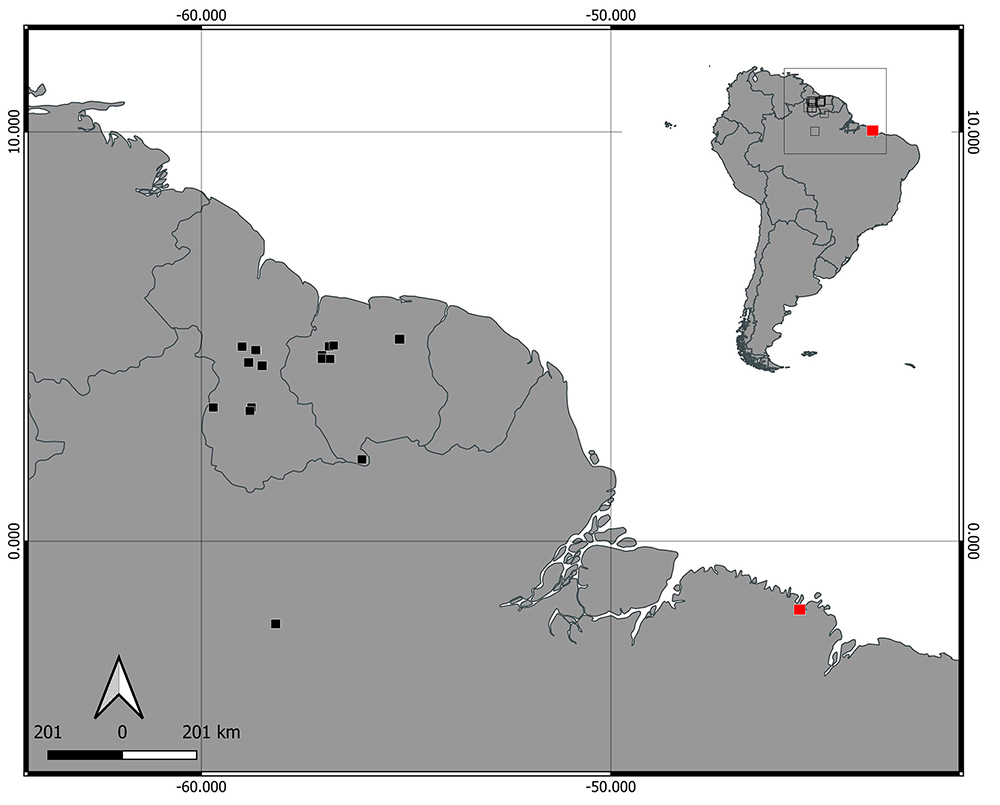
This study corresponds to the second record of Platyrrhinus guianensis in Brazil, and the first for the state of Maranhão. This study extends the distribution of P. guianensis by 1,262.7 km from the nearest record of the species in Iconja Landing, Sipaliwini River, Suriname, and expands by 1,428.32 km from the other record in the country, specifically in the biome Amazon (Fig. 5).
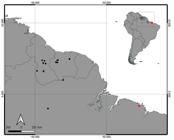
Geographical distribution of the known specimens of Platyrrhinus guianensisVelazco & Lim, 2014, in the Neotropical region. The area where the specimen of this study was collected is indicated by a red square in the state of Maranhão.
DISCUSSION
All morphological and craniodental characteristics analyzed in this study are consistent with Velazco & Lim (2014). However, the measurements of P. guianensis can be confused with P. angustirostris, P. brachycephalus, P. fusciventris, P. helleri, P. incarum, and P. matapalensis, because their external and cranial measurements overlap. Platyrrhinus guianensis occurs sympatrically with P. angustirostris, P. brachycephalus, P. fusciventris, and P. incarum in the Brazilian Amazon, and can be easily confused with these species without careful identification (Lopes et al., 2023).
However, P. guianensis can be distinguished from P. brachycephalus and P. matapalensis by the presence of an accessory cusp on the anterior crest of the lower second premolar, as P. brachycephalus has two accessory cusps and P. matapalensis lacks an accessory cuspon the lower second premolar. In relation to P. angustirostris, P. fusciventris and P. incarum differ in fur, as P. guianensis and P. angustirostris have dark gray, P. incarum has gray-brown, and P. fusciventris has brown ventral pelage; P. guianensis, P. angustirostris, and P. fusciventris have unicolor while P. incarum has bicolor ventral pelage. Regarding the dorsal stripe, in P. guianensis it is wide, bright white, and conspicuous, but in P. angustirostris, P. fusciventris, and P. incarum, it is narrow. Regarding the tragus and anterior and posterior edges of the ears, in P. guianensis and P. fusciventris they are bright yellow and in P. angustirostris and P. incarum they are whitish. Concerning the lateral edges of the proximal half of the nose leaf and edges of the horseshoe, in P. guianensis and P. fusciventris they are yellow, while in P. angustirostris and P. incarum they are whitish. Regarding the posterior margin of the uropatagium, in P. guianensis, P. angustirostris, and P. incarum, it has a ‘U’ shape, and in P. fusciventris it has a ‘V’ shape. The fringe of hair along the posterior margin of the uropatagium in P. guianensis is long, visibly dense, and pale yellow (Velazco & Lim, 2014).
The analyses for the COI gene revealed a high degree of similarity (99.33%) with P. guianensis from Guyana and genetic divergence less than 2% compared to P. guianensis from Guyana, Suriname and Amazonas in Brazil. This consistency with the threshold observed by Clare et al. (2011) using the COI marker, where an intraspecific threshold of 2% for bat species was observed, supports the species identification. Furthermore, although P. guianensis, P. fusciventris, and P. incarum are sympatric and show significant morphological similarities, our phylogenetic analysis demonstrated that they are not sister species. According to Velazco et al. (2010) and Velazco & Lim (2014), this suggests that these species are examples of cryptic species, contributing to the underestimation of bat diversity, especially in tropical areas.
Some studies have used the 16S rRNA gene for bat studies, notably Baker et al. (2003), who found its efficacy in resolving phylogenetic relationships in bats of the Phyllostomidae family. In the mitochondrial genome, the 16S rRNA gene is one of the most conserved genes with low mutation rates but has variable regions that allow phylogenetic studies at the species level (Naegele et al., 2006). Thus, this study provides a 16S rRNA sequence for P. guianensis, which can contribute to elucidating phylogenetic relationships within the genus Platyrrhinus.
Until now, P. guianensis was known in Guyana and Suriname (Velazco & Lim, 2014) and more recently in state Amazonas, Brazil (Lopes et al., 2023). Therefore, this study suggests that the species may be undersampled in Brazil, and a careful evaluation in different collections can help expand the species’ records in the country. Moreover, it has been observed that the species has a preference for more humid forest habitats, consistent with records of most Platyrrhinus species. However, the species was also collected in savanna habitats (Velazco & Lim, 2014), expanding the possibilities of P. guianensis occurrence in different Brazilian biomes.
Furthermore, careful attention is required in the identification of Platyrrhinus species, as some species show significant morphological similarities, especially those occurring sympatrically, such as P. guianensis, P. fusciventris and P. incarum. The genetic data, in line with morphological and craniometric identification, provided conclusive evidence of P. guianensis occurrence in the Amazon biome in Maranhão, Brazil.
Acknowledgments
ACSL, SBM, APMO, and FHSC were supported by doctoral fellowships by Coordenação de Aperfeiçoamento de Pessoal de Nível Superior (CAPES). This study was financed in part by CAPES- Financial Code 001 and the Fundação de Amparo à Pesquisa e ao Desenvolvimento Científico e Tecnológico do Maranhão (FAPEMA).
REFERENCES
- Baker, R. J.; Bininda-Emonds, O. R. P.; Mantilla-Meluk, H.; Porter, C. A. & van den Bussche, R. A. 2012. Molecular timescale of diversification of feeding strategy and morphology in New World leaf-nosed bats (Phyllostomidae): a phylogenetic perspective. In: Gunnell, G. F. & Simmons, N. B. eds. Evolutionary history of bats: fossils, molecules and morphology. Cambridge, Cambridge University Press, p. 385-409.
- Baker, R. J.; Hoofer, S. R.; Porter, C. A. & van den Bussche, R. A. 2003. Diversification among New World Leaf- Nosed Bats: an evolutionary hypothesis and classification inferred from digenomic congruence of DNA sequence. Occasional Papers of the Museum of Texas Tech University, 230:1-32.
-
Camacho, M. A.; Cadar, D.; Horváth, B.; Merino-Viteri, A. & Murienne, J. 2022. Revised phylogeny from complete mitochondrial genomes of phyllostomid bats resolves subfamilial classification. Zoological Journal of the Linnean Society 196(4):1591-1607. https://doi.org/10.1093/zoolinnean/zlac055
» https://doi.org/10.1093/zoolinnean/zlac055 -
Clare, E. L.; Lim, B. K.; Engstrom, M. D.; Eger, J. L. & Hebert, P. D. N. 2007. DNA barcoding of Neotropical bats: species identification and discovery within Guyana. Molecular Ecology Notes 7:184-190. https://dx.doi.org/10.1111/j.1471-8286.2006.01657.x
» https://dx.doi.org/10.1111/j.1471-8286.2006.01657.x -
Clare, E. L.; Lim, B. K.; Fenton, M. B. & Hebert, P. D. N. 2011. Neotropical bats: estimating species diversity with DNA barcodes. PLoS ONE 6(7):22648. http://dx.doi.org/10.1371/journal.pone.0022648
» http://dx.doi.org/10.1371/journal.pone.0022648 - Felsenstein, J. 1985. Confidence limits on phylogenies: An approach using the bootstrap. Evolution 39(4):783-791.
- Folmer, O.; Black, M.; Hoeh, W.; Lutz, R. & Vrijenhoek, R. 1994. DNA primers for amplification of mitochondrial cytochrome c oxidase subunit I from diverse metazoan invertebrates. Molecular Marine Biology and Biotechnology 3(5):294-299.
- Garbino, G. S. T.; Gregorin, R.; Lima, I. P.; Loureiro, L.; Moras, L. M.; Moratelli, R.; Nascimento C.; Nogueira, M. R.; Novaes R. L.; Pavan, A. C.; Tavares, V. C. & Peracchi, A. L. 2024. Updated checklist of bats (Mammalia: Chiroptera) from Brazil. Zoologia (Curitiba) 41:e23073.
- Hall, T. A. 1999. BioEdit: a user-friendly biological sequence alignment editor and analysis program for Windows 95/98/NT. Nucleic acids symposium 41:95-98.
- Lim, B. K. 1993. Cladistic reappraisal of stenodermatine bat phylogeny. Cladistics 9:147-165.
-
Lima, A. C. S.; Costa, C. L. S.; Mendes, S. B.; Cardoso, F. H. S.; Campos, B. A. T. P.; Fraga, E. F. & Barros, M. C. 2021. Occurrence of Sturnira tildae De La Torre, 1959 (Chiroptera: Phyllostomidae) in the state of Maranhão, Brazil. Papéis Avulsos de Zoologia 61:20216172. http://doi.org/10.11606/1807-0205/2021.61.72
» http://doi.org/10.11606/1807-0205/2021.61.72 -
Lopes, G. P.; Oliveira, R. C.; Santos, T. C. M.; Velazco, P. M.; Bobrowiec, P. E. D.; Silva, M. N. F. & Farias, T. H. I. P. 2023. First record of Platyrrhinus guianensis Velazco and Lim, 2014 (Chiroptera, Phyllostomidae) for Brazil. Mammalia 87(6):591-595. https://doi.org/10.1515/mammalia-2023-0057
» https://doi.org/10.1515/mammalia-2023-0057 - Miretski, M.; Peracchi, A. L. & Bianconi, G. V. 2002. Southernmost records of Sturnira tildae de la Torre, 1959 (Chiroptera: Phyllostomidae) in Brazil. Mammalia 66(2):306-309.
- Naegele, M. P.; da Costa, P. I. & Rosa, J. A. 2006. Polymorphism of the ITS-2 region of the Ribosomal DNA of the Triatominae Rhodnius domesticus, R. pictipes, R. prolix us and R. stali Medical and Veterinary Entomology 20(4):353-357.
-
Palacios-Mosquera, L.; Cuadrado-Rios, S.; Leon, M. M.; Villegas-Rosas, S.; Zamora-Velez, O. A.; Perez-Amaya, N. J.; Jimenez‑Ortega, A. M.; Mantilla‑Meluk, H. & Velasco, P. M. 2020. Systematics and taxonomy of Platyrrhinus chocoensis (Chiroptera: Phyllostomidae) based on morphometric and genetic analyses: implications for bioge ography and conservation. Mammalian Biology 100:113-124. https://doi.org/10.1007/s42991-020-00007-z
» https://doi.org/10.1007/s42991-020-00007-z - Palumbi, S.; Martin, A.; Romano, S.; McMillan, W. O.; Stice, L. & Grabowski, G. 2002. The simple fool’s guide to PCR, verson 2.0. University of Hawaii, Honolulu.
-
Pastana, J. M. N. org. 2001. Programa Levantamentos Geológicos Básicos do Brasil - PLGB: Turiaçu, Folha SA. 23-V-D [e] Pinheiro, Folha SA. 23-Y-B Estados do Pará e Maranhão. Brasília: CPRM/DIEDIG/DEPAT, 5-12. <Available at https://rigeo.cprm.gov.br/bitstream/doc/3062/1/rel_turiacu_pinheiro.pdf/ >. Accessed on 22 September 2023.
» https://rigeo.cprm.gov.br/bitstream/doc/3062/1/rel_turiacu_pinheiro.pdf/ -
Sanger, F.; Nichlen, S. & Coulson, A. R. 1977. DNA sequencing with chain termination inhibitors. Proceedings of the National Academy of Sciences of the USA, Cambridge 74(12):5463-5467. https://doi.org/10.1073/pnas.74.12.5463
» https://doi.org/10.1073/pnas.74.12.5463 - Simmons, N. B. 2005. Order Chiroptera. In: Wilson, D. E. & Reeder, D. M. eds. Mammals species of the world: a taxonomic a geographic reference 3:312-529. Baltimore, Johns Hopkins University Press.
-
Simmons, N. B. & Cirranello, A. L. 2023. Bat Species of the World: A Taxonomic and Geographic Database. Available at <Available at https://batnames.org/about.html >. Accessed on 22 September 2023.
» https://batnames.org/about.html -
Tamura, K.; Stecher, G. & Kumar, S. 2021. MEGA11: Molecular evolutionary genetics analysis version 11. Molecular biology and evolution 38(7):3022-3027. https://doi.org/10.1093/molbev/msab120
» https://doi.org/10.1093/molbev/msab120 -
Tavares, V. D. C. & Velazco, P. M. 2010. Platyrrhinus recifinus (Chiroptera: Phyllostomidae). Mammalian Species 42:119-123. https://doi.org/10.1644/859.1
» https://doi.org/10.1644/859.1 -
Velazco, P. M. 2005. Morphological phylogeny of the bat genus Platyrrhinus Saussure, 1860 (Chiroptera: Phyllostomidae) with the description of four new species. Fieldiana Zoology (new series) 150:1-53. https://doi.org/10.3158/0015-0754(2005)105[1:MPOTBG]2.0.CO;2
» https://doi.org/10.3158/0015-0754(2005)105[1:MPOTBG]2.0.CO;2 - Velazco, P. M. 2009. Historical diversification in the Neotropics: evolution and variation of the bat genus Platyrrhinus Ph.D dissertation, University of Illinois at Chicago, Chicago.
-
Velazco, P. M. & Gardner, A. L. 2009. A new species of Platyrrhinus (Chiroptera: Phyllostomidae) from western Colombia and Ecuador, with emended diagnoses of P. aquilus, P. dorsalis, and P. umbratus Proceedings of the Biological Society of Washington 122(3):249-281. https://doi.org/10.2988/08-40.1
» https://doi.org/10.2988/08-40.1 -
Velazco, P. M.; Gardner, A. L. & Patterson, B. D. 2010. Systematics of the Platyrrhinus helleri species complex (Chiroptera: Phyllostomidae), with descriptions of two new species. Zoological Journal of the Linnean Society 159:785-812. http://dx.doi.org/10.1111/j.1096-3642.2009.00610.x
» http://dx.doi.org/10.1111/j.1096-3642.2009.00610.x -
Velazco, P. M.; Guevara, L. & Molinari, J. 2018. Systematics of the broad-nosed bats, Platyrrhinus umbratus (Lyon, 1902) and P. nigellus (Gardner and Carter, 1972) (Chiroptera: Phyl lostomidae), based on genetic, morphometric, and ecologi cal niche analyses. Neotropical Biodiversity 4:118-132. https://doi.org/10.1080/23766808.2018.1494481
» https://doi.org/10.1080/23766808.2018.1494481 -
Velazco, P. M. & Lim, B. K. 2014. A new species of broad-nosed bat Platyrrhinus Saussure, 1860 (Chiroptera: Phyllostomidae) from the Guianan Shield. Zootaxa 3796:175-193. https://doi.org/10.11646/zootaxa.3796.1.9
» https://doi.org/10.11646/zootaxa.3796.1.9 -
Velazco, P. M.; Ly, G.; McAllister, J. & Esquivel, D. A. 2023. Geographic variation in select species of the bat genus Platyrrhinus THERYA 14(1):121-130. https://doi.org/10.1515/mammalia-2023-0057
» https://doi.org/10.1515/mammalia-2023-0057 -
Velazco, P. M. & Patterson, B. D. 2008. Phylogenetics and biogeography of the broad-nosed bats, genus Platyrrhinus (Chiroptera: Phyllostomidae). Molecular Phylogenetics and Evolution 49:749-759. https://doi.org/10.1016/j.ympev.2008.09.015
» https://doi.org/10.1016/j.ympev.2008.09.015