 In-depth analysis of ornamental pepper and pot volume interaction utilizing conventional and digital tools
ABSTRACT
Investigating the suitable pot size for cultivating ornamental plants is crucial for this market, impacting on aesthetic value, consumer preference and producers' costs. The objective was to evaluate how the volumetric capacity of the pot affects the development and ornamental potential of four pepper genotypes from a UENF breeding program. Together with a commercial control, the genotypes were grown in 0.75, 2 and 5 dm3 pots in a greenhouse. The experiment was conducted in a split-plot design with three replications. A total of 29 plant, root, leaf and fruit descriptors were analyzed by counting, weighing and digital image analysis using ImageJ, Tomato analyzer and GiA Roots. The volumetric capacity of the pot influenced root and fruit development and plant structure. The physical restriction of space delayed flowering, reduced vegetative vigor and production of ornamental peppers. For the genotypes evaluated, the use of 2 and 5 dm3 pots is recommended, as they provide better plant growth and development. Digital image analysis helped to distinguish the phenotypes and to understand the effect of pot volume on plant development.
Keywords:
Capsicum annuum L.; potted plants; phenotyping; image analysis
RESUMO
Investigar o tamanho adequado do vaso para o cultivo de plantas ornamentais é crucial para este mercado, impactando o valor estético, a preferência dos consumidores e os custos dos produtores. O objetivo foi avaliar como a capacidade volumétrica do vaso afeta o desenvolvimento e o potencial ornamental de quatro genótipos de pimenta provenientes de um programa de melhoramento genético da UENF. Juntamente com uma testemunha comercial, os genótipos foram cultivados em vasos de 0,75, 2 e 5 dm3, em casa de vegetação. O experimento foi conduzido em DBC com parcelas subdivididas, em três repetições. Foram analisados 29 descritores de plantas, raízes, folhas e frutos por meio de contagem, pesagem e análise de imagens digitais usando ImageJ, Tomato Analyzer e GiA Roots. A capacidade volumétrica do vaso influenciou o desenvolvimento de raiz, fruto e a estrutura da planta. A restrição física do espaço atrasou o florescimento, reduziu o vigor vegetativo e a produção de pimentas ornamentais. Para os genótipos avaliados, recomenda-se o uso de vasos de 2 e 5 dm3, pois proporcionam melhor crescimento e desenvolvimento das plantas. A análise de imagens digitais aprofundou a distinção dos fenótipos e colaborou com a compreensão sobreo efeito do volume do vaso no desenvolvimento das plantas.
Palavras-chave:
Capsicum annuum L.; plantas envasadas; fenotipagem; análise de imagens.
The Brazilian ornamental plant market grew by 10% in 2020, driven by the growing demand for potted plants for interior decoration, a global trend (Ibraflor, 2024). Ornamental peppers have contributed to the expansion of this sector. Their fruits are appreciated for their vibrant colors and shapes and fresh consumption or in sauces, a key ingredient in Brazilian culinary traditions (Rêgo et al., 2013). Capsicum ornamental plants also stand out for being perennial, easy to grow, and durable, even when grown in pots (Neitzke et al., 2010, 2016).
Various pot sizes are used and are being studied in association with different factors. In the cultivation of bell peppers, pots of 9, 10, 18, and 33 dm3 have been evaluated (Xu et al., 2001; Górecki & Górecki, 2010). In pepper, Silva et al. (2021) evaluated nutritional stress on plants grown in 9.5 dm3 pots. Avery et al. (2014) evaluated four cultivars of ornamental peppers for their preference for mites grown in pots of approximately 1 and 4 dm3. Guerra et al. (2021) evaluated the ‘Lupita’ pepper cultivar (Capsicum chinense Jacq.) in three pot volumes (3.5, 5.0, and 10 dm3) and recommended pot of 10 dm3 to increase productivity. Pots of 0.3, 0.6, 0.9, and 1.6 dm3 were tested for C. annuum and C. chinense for ornamental purposes (Pinto et al., 2010).
The effect of pot size on the phenology, architecture, and production of Capsicum is mainly due to variations in the availability of water and nutrients (Pinto et al., 2010; Poorter et al., 2012; Virga et al., 2020; Pessoa et al., 2021; Rheinheimer et al., 2024). Establishing adequate pot volume capacity for each genotype is crucial for many ornamental and commercial aspects, as this factor influences plant attractiveness, production costs, and consumer preferences (Poorter et al., 2012; Cavalcanti et al., 2024). In addition, when releasing a new ornamental pepper cultivar to the Ministério da Agricultura e Pecuária (MAPA, 2024), the most suitable pot volume capacity should be recommended, along with a description of the characteristics of the new genotype.
The Ornamental Capsicum Breeding Program at the Universidade Estadual do Norte Fluminense Darcy Ribeiro (UENF), which began in 2013, focuses on developing hybrids and pure lines to meet the ornamental sector's demand for new cultivars. The selection criteria included compact size and erect, brightly colored fruit (Silva et al., 2015). In the Cultivation and Use Value (VCU) trial, three hybrids and three pure lines were recommended for registration (Cunha et al., 2020).
Despite meeting the standards for ornamental plants, these genotypes have not been evaluated for growth and development in different pot volumes. Studying the effect of pot size on the development and ornamental quality of chili peppers not only expands cultivation options but also increases the acceptance of cultivars, contributing to market growth. This study evaluates the development and ornamental potential of candidate pepper cultivars in terms of volumetric pot capacity using conventional methods and digital image analysis.
MATERIAL AND METHODS
Vegetal material and experimental design
Four Capsicum annuum L. genotypes (PIMOR 02, PIMOR 05, PIMOR 06, and HPO 03) from the UENF breeding program were chosen for their desirable ornamental traits, including compact growth, erect fruits, and vibrant coloration. These traits were selected in preliminary studies (Silva et al., 2015; Cunha et al., 2020).
To obtain the seedlings, three seeds were sown per cell in 128 cells polystyrene trays, containing commercial substrate (Plantmax®), at 0.5 cm depth. The seedlings of the four genotypes and the commercial control ('Pirâmide Ornamental') were maintained in a growth chamber.
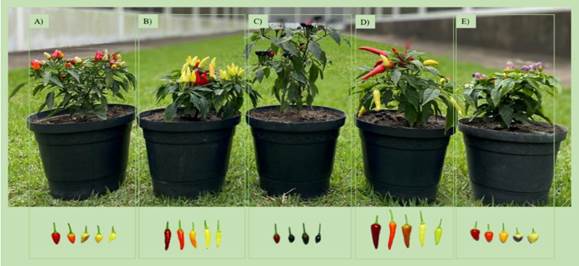
Once seedlings developed four to six true leaves, the same were transferred to pots with a volumetric capacity of varying capacities: 0.75 dm3 (10 cm height, 12.2 cm top diameter, 9 cm basal diameter), 2 dm3 (15.3 cm height, 17.3 cm top diameter, 12 cm basal diameter), and 5 dm3 (20.5 cm height, 24.3 cm top diameter, 15 cm basal diameter) (Figure 1).

Genotypes (A: PIMOR 02; B: PIMOR 06; C: PIMOR 05; D: HPO 03) and (E) commercial control of ornamental peppers (Capsicum annuum L.). Campos dos Goytacazes, UENF, 2024.
The pots were filled with a mixture of soil, sand, and cattle manure in equal parts and placed on counters in a greenhouse in Campos dos Goytacazes, Rio de Janeiro State, Brazil (21º45’42”S, 41º17’25”W, elevation 14 m). The experiment, conducted from March to August 2020. The average temperature and relative humidity recorded in the period were 23.4°C and 77.4%, respectively. We employed randomized block design with subdivided plots (split-plot design) and three repetitions. Pots constituted the whole-plot factor, while genotypes constituted the split-pot factor. Each experimental unit consisted of two pots, totaling 90 evaluated plants.
Four applications of fertilizer with 10 g/plant of NPK (4-14-8 formula) and foliar fertilization with a nutrient solution containing macro and micronutrients (Hoagland & Arnon, 1950) were carried out during the growth cycle. Mite infestation, observed at the flowering stage, was controlled by three sprays with abamectin (Vertimec 1.8 EC, 0.5 mL/L of water), seven days apart. Spraying took place in the early hours of the day, making sure the plant was completely covered. The manual removal of leaves with symptoms of Cercospora (Cercospora capsici) was sufficient to control this disease.
Morpho-agronomic and ornamental parameters
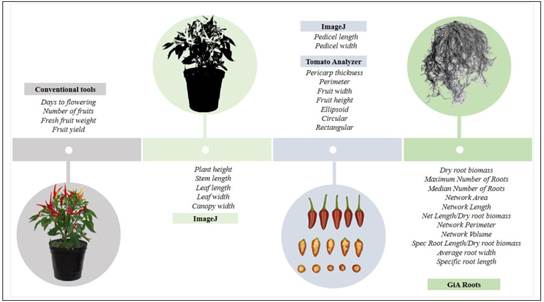
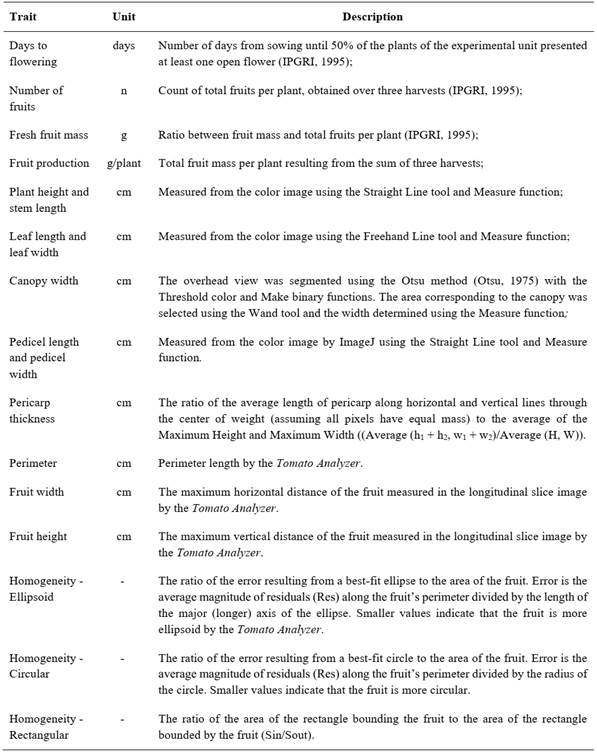
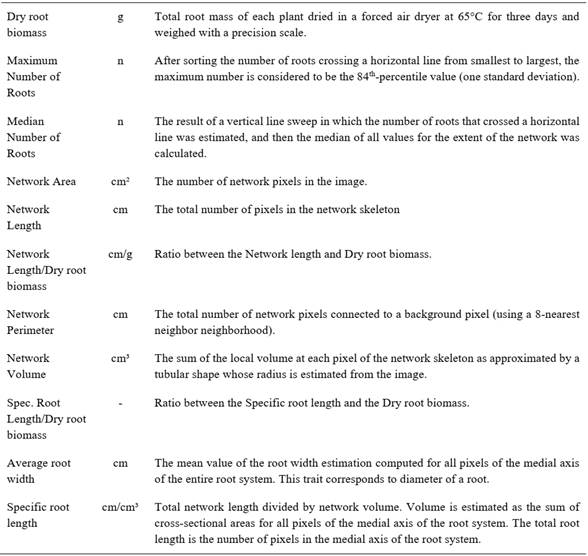
A total of 29 quantitative descriptors associated with production (across three harvests) and plant morphology, including roots, leaves, and fruits, were measured in each experimental unit using various methods. These methods involved counting, weighing, and analyzing digital images with programs such as ImageJ/FIJI (Abràmoff et al., 2004; Schindelin et al., 2012), Tomato Analyzer (Brewer et al., 2006; Gonzalo et al., 2009), and GiA Roots (Galkovskyi et al., 2012) (Figure 2 and Chart> 1).
Acquisition and analysis of images of the aerial parts of plants
A manual image acquisition system was set up outside the greenhouse, utilizing a Sony digital camera (model SELP1650, 24.3 megapixels), camera tripod, and photographic table under natural light. Images of each genotype were obtained on the same day, when 50% of the plants were in the flowering phase. Each plant was photographed from two angles: frontal view (camera positioned in front of the plant at distances of 0.75, 0.80, and 0.82 m from the edges of the 0.75, 2, and 5 dm3 pots, respectively) and overhead view (camera positioned above the plant at a distance of 0.56 m from the table surface). A ruler was placed parallel to the plant/canopy for calibration purposes. Images were processed and analyzed using the ImageJ/FIJI program.

Quantitative traits assessed in the ornamental peppers (Capsicum annuum L.) obtained by conventional morphological description methods (IPGRI, 1995) and by image analysis using the ImageJ, Tomato Analyzer, and GiA Roots software. Campos dos Goytacazes, UENF, 2024.
Acquisition and analysis of images of the fruits
A tabletop scanner (Plustek Optic Pro A320, CCD) and a computer (Dell, Intel Core i5-7200U, Windows 10) captured fruit images. Ten ripe fruits per plant were scanned, then their peduncles removed. Five were sliced longitudinally, five latitudinal, and scanned in color facing downward (.TIFF; 297 x 420 mm; 300 dpi). Images were pre-processed using ImageJ, removing large empty spaces and background noise (seeds, luminosity), then analyzed with Tomato Analyzer 3.0.

Description of the quantitative characteristics assessed among four genotypes and a commercial control of ornamental peppers (Capsicum annuum L.) grown in pots with different volume capacities. Campos dos Goytacazes, UENF, 2024.

Acquisition and analysis of images of the root systems
After the third harvest, the aerial parts were discarded. Roots and substrate were washed under running water using a sieve until the substrate was removed. A manual image acquisition setup was created with a Sony Alpha 6000 camera (24.3 megapixels), tripod, black photographic table, and a transparent acrylic container (40 x 40 cm). Roots were placed in water to reduce overlapping, then images were taken at 350 dpi in .TIFF format. GiA Roots (Galkovskyi et al., 2012) handled all image processing and root system feature extraction.
Statistical analyses
Morpho-agronomical characteristics data were submitted to variance analysis consistent with the statistical model for split-plot design experiments (Steel et al., 1997): yijk = µ + τi + γk + eik + βj + (τβ)ij + ϵijk, where: yijk is the value observed in the i treatment, k block, and j subparcel; µ is a constant; τi is the effect of the i factor A (pots); γk is the effect of the k block; eik is the residue (a) of the parcel; βj is the effect of the j factor B (genotypes); (τβ)ij is the interaction between the i factor A and the j factor B; ϵijk is the residue (b) of the subparcel.
Once statistical differences were detected by the F test (p≤0.05) for the sources of variation of the interaction and/or factors, the means were compared by the Tukey test (p≤0.05). Statistical analyses were performed by the program Genes integrated to the R (Cruz, 2016) and the graphic visualization of the means was done by the package ggplot2 in the R Studio (Wickham et al., 2016).
RESULTS AND DISCUSSION
According to the analysis of variance, there was no effect of the interaction between the volumetric capacity of the pot and the genotype, for most of the variables analyzed. On the other hand, the pot factor significantly influenced almost all variables, except leaf length, leaf width, pedicel length, fruit height, pericarp thickness and rectangular parameter (Table 1 and Figure 3).
Plants in 2 and 5 dm3 pots flowered earlier compared to those in the 0.75 dm3 pot (Figure 3A). According to Guerra et al. (2021), plants with greater vegetative vigor, with a greater number of growth points on the branches, tend to flower early. These authors found that Capsicum chinense plants in 10 dm3 pots, with higher averages for plant height, stem diameter and leaf area, were precocious compared to plants in 3.5 and 5 dm3 pots.
In the present work, the volumetric capacity of the pot also significantly influenced the vegetative vigor of the genotypes. The direct and positive relationship between the canopy width and plant height and the volumetric capacity of the pot (Figures 3B, 3C) allowed the maintenance of harmony pot-plant in all treatments. However, in no pot evaluated did the plants exceed 30 cm in height. This value is considered the maximum limit for the ornamental pepper (Coon et al., 2017).
The value of the ratio between pot width and canopy width higher than 1.0 ensures satisfactory coverage of the substrate, making it desirable in the ornamental plant market. In this study, the ratio value of all treatments was higher than 1.0. Plants in 2 dm3 pots had the highest ratio, ranging from 1.33 (PIMOR 06) to 1.48 (‘Pirâmide Ornamental’).

Morphoagronomic variables of four genotypes (PIMOR 02, PIMOR 06, PIMOR 05 e HPO 03) and a commercial control ('Pirâmide Ornamental') of ornamental peppers (Capsicum annuum L.). Means followed by the same letter do not differ in the Tukey test (p≤0.05). Campos dos Goytacazes, UENF, 2024.
Some studies considered the plant-pot proportion of 1.5 to 2 for height and diameter in the selection of pepper plants for ornamental purposes (Pinto et al., 2010; Barbosa et al., 2019). However, this proportion was established for Dendranthema grandiflora (Barbosa et al., 2019), a species with architecture and compactness quite different from pepper plants (Anamika et al., 2023).
In ornamental peppers, the pedicel is an important attribute as it is associated with erect flowers and fruits (Melo et al., 2014; Nascimento et al., 2019; Cunha et al., 2020) and also facilitates fruit harvesting. The selection of genotypes evaluated in the present work included plants whose fruits stood out in the foliage, with long pedicels (Cunha et al., 2020). The pot factor did not significantly influence pedicel length. This result is interesting, since even plants with lower vegetative vigor, such as those in 0.75 dm3 pot, kept their fruits visible. For pedicel width, plants grown in the 5 dm3 pot had higher average pedicel width values (Figure 3G), potentially providing increased support and highlight for fruits.
About the fruits, the main attribute of ornamental peppers, the perimeter was higher in the 5 dm3 pot plants (6.68 cm) compared to the 0.75 dm3 pot (5.92 cm) (Figure 3H). Furthermore, it was found that the larger the pot, the higher the width and fresh fruit weight. Plants in pots 5 and 2 dm3produced fruits with a more rounded shape and, consequently, with lower means for the ellipsoid and circular parameters (Figures 3L, 3M). Even though it is a subtle change, it is interesting to consider the influence of the pot on the shape of the fruits, since this attribute, together with the color, has great relevancy in the preference about ornamental peppers. A study carried out with 1045 respondents, from all regions of Brazil, found that the ornamental pepper genotypes with the greatest acceptance were those whose fruits were preferred, due to their colors and shapes (Cavalcanti et al., 2024).
Significant interaction occurred between pot and genotype factors for the number of fruits (Figure 4B). The production of HPO 03 was directly proportional to the volumetric capacity of the pot. In the other genotypes evaluated, plants in pots of 2 and 5 dm3 did not differ significantly in terms of the number of fruits per plant. However, this result should be interpreted cautiously due to a reduction in the number of fruits obtained from 8.3 to 2.7 times between 5 and 2 dm3 pots. Despite being a common production parameter (Virga et al., 2020), the high coefficient of variation obtained for the number of fruits per plant (32.1%) suggests increased unpredictability for this variable.

Morphoagronomic variables with significant interaction between the factors volumetric capacity of the pot (0.75, 2 and 5 dm3) and genotype (PIMOR 02, PIMOR 06, PIMOR 05, HPO 03 and 'Pirâmide Ornamental') of ornamental pepper (Capsicum annuum L.). Means followed by the same capital letter, between genotypes, and lowercase, between pots, did not differ from each other, according to the Tukey test (p≤0.05). Campos dos Goytacazes, UENF, 2024.
The influence of volumetric capacity about the aerial part of the evaluated genotypes was compatible with that observed for the root variables. All the variables related to root were significantly influenced by pot volume (Figure 5). Dry root biomass, network length, and network perimeter had a direct and positive relationship with the pot volume (Figures 3Q, 3U, 3W). Ratios of network length to dry biomass and specific length to dry biomass showed a direct and negative relationship (Figures 3V, 3Y). Plants grown in the largest pot had higher averages for the maximum number of roots (81.13), medium number of roots (56.63), network area (120 cm2), and network volume (7.13 cm3) compared to plants from 0.75 and 2 dm3 pots, with no significant difference in averages (Figures 3R, 3S, 3T, 3X).
Then, the reduced vegetative growth observed across all evaluated genotypes when grown in 2 dm3 pots, and particularly in 0.75 dm3 pots, is attributed to the greater confinement of root systems imposed by these pots. Restricted root development results from physical constraints and/or tangling (Gallegos et al., 2020). Coupled with the limited substrate volume in small pots, this can affect the retention and availability of water and nutrients for plants, leaf expansion, and consequently photosynthesis and production (Nesmith & Duval, 1998; Poorter et al., 2012; Zakaria et al., 2020; Guerra et al., 2021). Vale & Fritsche-Neto (2015) observed modifications in root to shoot transport of signaling molecules including hormones, proteins, RNAs and mineral nutrients.
The genotype factor also had a significant effect on most variables related to the plant and fruits, except canopy width, leaf length, leaf width, pedicel length and fruit production. Furthermore, genotype means did not differ according to Tukey test for any root variables (Figure 5). PIMOR 02 (59 days) and PIMOR 06 (59 days) flowered earlier than the commercial genotype (79 days) (Figure 5A). Early-flowering genotypes offers advantages for seedling producers (Pessoa et al., 2021) by reducing the time required to start commercializing plants, thereby cutting production costs and potentially allowing an additional growing cycle per year.

Morphoagronomic variables of ornamental pepper (Capsicum annuum L.) genotypes (PIMOR 02, PIMOR 06, PIMOR 05, HPO 03 and 'Pirâmide Ornamental') grown in pots of 0.75, 2, and 5 dm3. Means followed by the same letter do not differ in the Tukey test (p ≤ 0.05). Campos dos Goytacazes, UENF, 2024.
Genotypes showed no significant differences in canopy width (Figure 5B). However, for plant height, the commercial genotype had the lowest average (14.43 cm), significantly different from PIMOR 05 (18.67 cm) (Figure 5C). There was a significant effect of the interaction between pot and genotype factors for stem length. The volumetric capacity of the pot only influenced the stem length of ‘Pirâmide Ornamental’ and the HPO 03. The pot of 5 dm3 resulted in a superior average of the commercial cultivar (8.4 cm) compared to the 0.75 dm3 pot (4.5 cm) (Figure 4A). In HPO 03, the lowest average stem height was obtained in pot of 2 dm3.
Plant height is a critical characteristic for ornamental pepper use, as only small genotypes can adapt to the limited substrate in potted cultivation (Neitzke et al., 2010). According to Coon et al. (2017), the maximum ornamental pepper height is 30 cm. However, some authors have reported ornamental Capsicum heights higher than those mentioned above. Neitzke et al. (2010) evaluated the ornamental potential of peppers from the Embrapa Clima Temperado germplasm bank and selected six C. annuum accessions with heights ranging from 15.03 to 52.20 cm. Melo et al. (2014) also found promising genotypes of Capsicum spp. with plant heights ranging from 19.75 to 61.28 cm.
PIMOR 06 and hybrid HPO 03 had higher pedicel width values (0.27 and 0.19 cm), while PIMOR 05 had a lower value (0.12 cm) (Figure 5G). Shape parameters showed wide variability among genotypes, especially for circular shapes, where significant differences were observed for all treatments (Figure 5M). Hybrid HPO 03 had the highest average (0.40), followed by PIMOR 06 (0.36), PIMOR 02 (0.22), PIMOR 05 (0.14), and the commercial genotype (0.11). For ellipsoid and rectangular variables, Tukey test revealed three groups (Figures 5L, 5N). Hybrid HPO 03 (0.10) and PIMOR 06 (0.9) had the highest ellipsoid averages, differing significantly from PIMOR 02 (0.69) and ‘Pirâmide’ (0.65), which had higher averages than PIMOR 05 (0.53). Conversely, ‘Pirâmide’ and PIMOR 05 had the highest rectangular averages (0.435 and 0.431, respectively), followed by PIMOR 02 (0.38). The lowest averages were for hybrid HPO 03 (0.34) and PIMOR 06 (0.33).
While phenotypic variability assessed by the Tomato Analyzer identified up to five fruit shape classes, conventional characterization using morphological descriptors (IPGRI, 1995) grouped the same genotypes into three shape categories: triangular, elongated, and nearly round (Silva et al., 2015; Cunha et al., 2020). Utilizing new phenomic approaches, such as RGB image information extraction, enhances efficiency in discriminating different phenotypes. These innovative phenotyping tools improve the quality of morphological descriptions, allowing for better discernment of the genetic diversity within the genotype sets under investigation (Rosero et al., 2019).
Phenotypic differences in fruit shape and coloration, meet the demands of the supply chain and consumer preferences. Fruit variability is crucial for determining the commercial value of ornamental peppers due to the significant genetic diversity within the Capsicum genus, which warrants further investigation (Neitzke et al., 2010; Virga et al., 2020).
Regarding the fresh fruit weight, the commercial standard (1.46 g) and hybrid HPO 03 (1.15 g) had the highest values, while PIMOR 02 (0.68 g) and PIMOR 05 (0.34 g) had the lowest averages (Figure 5O). HPO 03 and 'Pirâmide Ornamental' are characterized by elongated and triangular fruits, respectively, they were preferred by respondents in an acceptance survey (Cavalcanti et al., 2024), due to the size and shape of the fruits, which stand out on the plant, among other attributes.
In conclusion, the results of this research contribute to a better understanding of the influence of pot volume capacity on the phenological, productive and ornamental characteristics of C. annuum. Although the plants in the 0.75 pots maintained various ornamental qualities, the 2 and 5 dm3 pots provided greater vegetative growth and production. Both pots will be recommended for candidate genotypes intended for home cultivation, according to consumer preference.
REFERENCES
- ABRÀMOFF, MD; MAGALHÃES, PJ; RAM, SJ. 2004. Image processing with ImageJ. Biophotonics international 11: 36-42.
- ANAMIKA, G; KUMAR, R; ASWATH, C; TEJASWINI, P; BENNURMATH, P. 2023. Genetic divergence in Chrysanthemum (Dendranthema x grandiflora Tzvelev) based on morphological traits. Journal of Horticultural Sciences 18: 315-322.
- AVERY, PB; KUMAR, V; XIAO, Y; POWELL, CA; MCKENZIE, CL; OSBOME, LS. 2014. Selecting an ornamental pepper banker plant for Amblyseius swirskii in floriculture crops. Arthropod-plant interactions 8: 49-56.
- BARBOSA, JG; GROSSI, JAS; BOREM, A. 2019. Crisântemo: do plantio à colheita Viçosa, BR: UFV 135p.
- BREWER, MT; LANG, L; FUJIMURA, K; DUJMOVIC, N; GRAY, S; VAN DER KNAAP, E. 2006. Development of a controlled vocabulary and software application to analyze fruit shape variation in tomato and other plant species. Plant physiology 141: 15-25.
- CAVALCANTI, TFM; SUDRÉ, CP; VIEIRA, CV; SOARES FILHO, ES; ARAÚJO, MSB; BISPO, RB; RODRIGUES, R. 2024. Ornamental peppers: there is some accounting for taste. Ornamental Horticulture 30: 1-6.
- COON, D; BARCHENGER, DW; BOSLAND, PW. 2017. Evaluation of dwarf ornamental chili pepper cultivars for commercial greenhouse production. HortTechnology 27: 128-131.
- CRUZ, CD. 2016. Genes Software-extended and integrated with the R, Matlab and Selegen. Acta Scientiarum. Agronomy 38: 547-552.
- CUNHA, JM; CAVALCANTI, TFM; SUDRÉ, CP; PIMENTA, S; SANTOS BC; SILVA, LRA; RODRIGUES, R. 2020. Testing ornamental chili pepper pre-cultivars. Functional Plant Breeding Journal 2: 65-77.
- GALKOVSKYI, T; MILEYKO, Y; BUCKSCH, A; MOORE, B; SYMONOVA, O; PRICE, CA; TOPP, CN; IYER-PASCUZZI, AS; ZUREK, PR; FANGA, S; HARER, J; BENFEY, PN; WEITZ, JS. 2012. GiA Roots: software for the high throughput analysis of plant root system architecture. BMC plant biology 12: 1-12.
- GALLEGOS, J; ÁLVARO, JE; URRESTARAZU, M. 2020. Container design affects shoot and root growth of vegetable plant. HortScience 55: 787-794.
- GONZALO, MJ; BREWER, MT; ANDERSON, C; SULLIVAN, D; GRAY, S; VAN DER KNAAP, E. 2009. Tomato fruit shape analysis using morphometric and morphology attributes implemented in Tomato Analyzer software program. Journal of the American Society for Horticultural Science 134: 77-87.
- GÓRECKI, RS; GÓRECKI, MT. 2010. Utilization of waste wool as substrate amendment in pot cultivation of tomato, sweet pepper, and eggplant. Polish Journal of Environmental Studies 19: 1083-1087.
- GUERRA, AMNM; EVANGELISTA, RS; SILVA, MGM; SANTOS, DS; SANTOS, LB; SANTOS, PA. 2021. Produção de pimenta de cheiro em diferentes volumes de vaso. Brazilian Journal of Development 710: 100867-100883.
- HOAGLAND, DR; ARNON, DI. 1950. The water-culture method for growing plants without soil Berkeley, CA: California Agricultural Experiment Station.
-
IBRAFLOR. 2024. Instituto Brasileiro de Floricultura. Números do setor Available at Available at https://www.ibraflor.com.br/numeros-setor Accessed January 23, 2024.
» https://www.ibraflor.com.br/numeros-setor - INTERNATIONAL PLANT GENETIC RESOURCES INSTITUTE (IPGRI). 1995. Descriptors for Capsicum (Capsicum spp.). International Plant Genetic Resources Institute (IPGRI), Rome, IT. 110p.
-
MAPA. 2024. Serviço de Registro Nacional de Cultivares - RNC Available at Available at https://www.gov.br/pt-br/servicos/habilitar-cultivar-para-producao-e-comercializacao#etapas-para-a-realizacao-deste-servico Accessed July 02, 2024.
» https://www.gov.br/pt-br/servicos/habilitar-cultivar-para-producao-e-comercializacao#etapas-para-a-realizacao-deste-servico - MELO, LFD; GOMES, RLF; SILVA, VBD; MONTEIRO, ER; LOPES, ÂCA; PERON, AP. 2014. Potencial ornamental de acessos de pimenta. Ciência Rural 44: 2010-2015.
- NASCIMENTO, NFF; RÊGO, ER; NASCIMENTO, MF; BRUCKNER, CH; FINGER, FL; RÊGO, MM. 2019. Evaluation of production and quality traits in interspecific hybrids of ornamental pepper. Horticultura Brasileira 37: 315-323.
- NEITZKE, RS; BARBIERI, RL; RODRIGUES, WF; CORRÊA, I; CARVALHO, FI. 2010. Dissimilaridade genética entre acessos de pimenta com potencial ornamental. Horticultura Brasileira 28: 47-53.
- NEITZKE, RS; FISCHER, SZ; VASCONCELOS, CS; BARBIERI, RL; TREPTOW, RO. 2016. Pimentas ornamentais: aceitação e preferências do público consumidor. Horticultura Brasileira 34: 102-109.
- NESMITH, DS; DUVAL, JR. 1998. The effect of container size. In HortTechnology 8: 495-498.
- OTSU, N. 1975. A threshold selection method from gray-level histograms. Automatica 11: 23-27.
- PESSOA, AMDS; RÊGO, ER; RÊGO, MM. 2021. Additive and non-additive genetic effects for fruit traits of ornamental pepper. Horticultura Brasileira 39: 39-45.
- PINTO, CMF; BARBOSA, JM; MESQUITA, DZ; OLIVEIRA, F; MAPELI, AM; SEGATTO, FB; BARBOSA, JG. 2010. Produção e qualidade de pimentas ornamentais comestíveis cultivadas em recipientes de diferentes volumes. Ornamental Horticulture 16.
- POORTER, H; BÜHLER, J; DUSSCHOTEN, D; CLIMENT, J; POSTMA, JA. 2012. Pot size matters: a meta-analysis of the effects of rooting volume on plant growth. Functional Plant Biology 39: 839-850.
- RÊGO, ER; RÊGO, MM; FINGER, FL; NASCIMENTO, NFF; NASCIMENTO, MF; SANTOS, RMC. 2013. Phenotypic variability and importance of characters in a F2 segregating generation of ornamental chili (Capsicum annuum). Acta Horticulturae 1000: 493-498.
- RHEINHEIMER, KB; SILVA, VN; MARCO, A; DEZANOSKI, A. 2024. Produção de pimenta ornamental em diferentes substratos e tamanhos de vasos. Research, Society and Development 13: 1-16.
- ROSERO, A; GRANDA, L; PÉREZ, JL; ROSERO, D; BURGOS-PAZ, W; MARTÍNEZ, R; MORELO, J; PASTRANA, I; BURBANO, E; MORALES, A. 2019. Morphometric and colorimetric tools to dissect morphological diversity: an application in sweet potato [Ipomoea batatas (L.) Lam.]. Genetic Resources and Crop Evolution 66: 1257-1278.
- SCHINDELIN, J; ARGANDA-CARRERAS, I; FRISE, E; KAYNIG, V; LONGAIR, M; PIETZSCH, T; PREIBISCH, S; RUEDEN, C; SAALFELD, S; SCHMID, B; TINEVEZ, J; WHITE, DJ; HARTENSTEIN, V; ELICEIRI, K; TOMANCAK, P; CARDONA, A. 2012. Fiji: an open-source platform for biological-image analysis. Nature Methods 9: 676-682.
- SILVA, CQ; JASMIM, JM; SANTOS, JO; BENTO, CS; SUDRÉ, CP; RODRIGUES, R. 2015. Phenotyping and selecting parents for ornamental purposes in chili pepper accessions. Horticultura Brasileira 33: 66-73.
- SILVA, MPS; FREITAS, MSM; PEREIRA, JAP; SANTOS, PC; CARVALHO, AJC; VIEIRA, IJC; RODRIGUES, R. 2021. Capsaicinoids and mineral composition of peppers produced under nutrient deficiencies. Journal of Plant Nutrition 44: 845-853.
- STEEL, RGD; TORRIE, JH; DICKEY, DA. 1997. Principles and Procedures of Statistics: A Biometrical Approach Mcgraw-Hill, New York.
- VALE, JC; FRITSCHE-NETO, R. 2015. Root phenomics. Phenomics: how next-generation phenotyping is revolutionizing plant breeding Springer. p.49-66.
- VIRGA, G; LICATA, M; CONSENTINO, BB; TUTTOLOMONDO, T; SABATINO, L; LETO, C; BELLA, S. 2020. Agro-morphological characterization of sicilian chili pepper accessions for ornamental purposes. Plants 9: 1400.
- WICKHAM, H; CHANG, W; WICKHAM, MH. 2016. Package ‘ggplot2’. Create elegant data visualizations using the grammar of graphics, Versions 2: 1-189.
- XU, G; WOLF, S; KAFKAFI, U. 2001. Interactive effect of nutrient concentration and container volume on flowering, fruiting, and nutrient uptake of sweet pepper. Journal of Plant Nutrition 24: 479-501.
- ZAKARIA, NI; ISMAIL, MR; AWANG, Y; WAHAB, PEM; BERAHIM, Z. 2020. Effect of root restriction on the growth, photosynthesis rate, and source and sink relationship of chilli (Capsicum annuum L.) grown in soilless culture. BioMed Research International 2020: 1-14.