 The effect of plant crude extract on fecal microbiota in dogs with diarrhea induced by senna leaves
ABSTRACT
Buzhong Yiqi Decoction, traditionally used in China for the treatment of diarrhea, is extracted from Astragalus, Atractylodes macrocephala, Tangerine peel, Bupleurum, Ginseng, Cimicifuga, Licorice, and Chinese Angelica. However, the precise mechanisms underlying its therapeutic effects remain inadequately understood. Considering that dysbiosis of the gut microbiota may contribute to diarrhea, and that oral administration of the decoction exhibits limited intestinal absorption, we propose that the modulation of gut microbiota plays a crucial role in its anti-diarrheal efficacy. To validate this hypothesis, we established a canine diarrhea model by administering Senna decoction, followed by treatment with Buzhong Yiqi Decoction. Diarrhea rates, complete blood counts, serum biochemistry, serum antioxidant levels, and D-xylose absorption were measured. The alteration of gut microbiota was examined through 16S rDNA high-throughput sequencing. Compared with the model group, after treatment with the decoction, the levels of white blood cells and superoxide dismutase in the dogs significantly decreased (P<0.05), while the levels of D-xylose and malondialdehyde significantly increased (P<0.05). The intestinal flora results showed that, compared with the control group, the relative abundance of Firmicutes and Actinobacteria decreased in the model group, while the relative abundance of Proteobacteria and Bacteroidetes significantly increased. At the genus level, compared with the control group, the relative abundance of unclassified Ruminococcaceae, Collinsella, and Fusobacterium in the model group significantly decreased, while the relative abundance of Shigella and Anaeroplasma significantly increased. In conclusion, Buzhong Yiqi Decoction has a therapeutic effect on dogs with diarrhea, primarily through reducing diarrhea rate, exerting anti-inflammatory and antioxidant effects, and regulating the intestinal flora.
Keywords:
Buzhong Yiqi decoction; dogs; diarrhea; gut microbiota
RESUMO
A decocção Buzhong Yiqi, tradicionalmente usada na China para o tratamento de diarreia, é extraída de Astragalus, Atractylodes macrocephala, casca de tangerina, Bupleurum, Ginseng, Cimicifuga, Alcaçuz e Angélica chinesa. Entretanto, os mecanismos precisos subjacentes a seus efeitos terapêuticos permanecem inadequadamente compreendidos. Considerando que a disbiose da microbiota intestinal pode contribuir para a diarreia e que a administração oral da decocção apresenta absorção intestinal limitada, propomos que a modulação da microbiota intestinal desempenha um papel crucial em sua eficácia antidiarreica. Para validar essa hipótese, estabelecemos um modelo de diarreia canina administrando a decocção de Senna, seguida de tratamento com a decocção de Buzhong Yiqi. Foram medidas as taxas de diarreia, o hemograma completo, a bioquímica sérica, os níveis séricos de antioxidantes e a absorção de D-xilose. A alteração da microbiota intestinal foi examinada por meio do sequenciamento de alto rendimento do rDNA 16S. Em comparação com o grupo modelo, após o tratamento com a decocção, os níveis de glóbulos brancos e superóxido dismutase nos cães diminuíram significativamente (P<0,05), enquanto os níveis de D-xilose e malondialdeído aumentaram significativamente (P<0,05). Os resultados da flora intestinal mostraram que, em comparação com o grupo controle, a abundância relativa de Firmicutes e Actinobacteria diminuiu no grupo modelo, enquanto a abundância relativa de Proteobacteria e Bacteroidetes aumentou significativamente. No nível do gênero, em comparação com o grupo de controle, a abundância relativa de Ruminococcaceae, Collinsella e Fusobacterium não classificadas no grupo modelo diminuiu significativamente, enquanto a abundância relativa de Shigella e Anaeroplasma aumentou significativamente. Em conclusão, a decocção de Buzhong Yiqi tem um efeito terapêutico em cães com diarreia, principalmente por meio da redução da taxa de diarreia, exercendo efeitos anti-inflamatórios e antioxidantes e regulando a flora intestinal.
Palavras-chave:
decocção de Buzhong Yiqi; cães; diarreia; microbiota intestinal
INTRODUCTION
Diarrhea, recognized as one of the most prevalent diseases of the digestive system, is characterized by a significant increase in the frequency of bowel movements beyond the normal range. In livestock and poultry farming, the incidence of diarrhea has been on a rising trend year after year, particularly during the juvenile stages of the animals. This condition not only adversely affects the quality of life of the animals but may also lead to severe complications and even mortality (Tang et al., 2022; Du et al., 2023). Research has indicated that alterations in the gut microbiota are one of the contributing factors to the onset of diarrhea (Li et al., 2021). The gut microbiota, which consists of the normal microorganisms residing within the intestines of animals, can influence the health and disease status of the host through immune and metabolic pathways (Collado et al., 2016). Furthermore, it plays a crucial role in the development of the host's intestines and assists in the regulation of energy metabolism (Nakkarach et al., 2021). Additionally, the metabolites produced by the gut microbiota serve as significant signaling molecules within the complex system composed of intestinal epithelial cells, gut microbiota, and intestinal immune cells, and they participate in the regulation of the intestinal epithelial barrier function (Stefan et al., 2020). Under normal circumstances, the gut microbiota of animals maintains a state of ecological balance; however, when various factors disrupt this balance, it predisposes the host to diarrhea.
Diarrhea is a frequent symptom of intestinal disease in dogs, which can lead to the inability to absorb nutrients, affecting the normal growth and development of dogs and their lives, and in severe cases can cause death (Xin et al., 2020; Zhu et al., 2018). Due to the relatively short length of a dog's intestines, which is approximately three to five times the length of its body, any issues within the intestinal tract can lead to the immediate onset of diarrhea. Statistics indicate that the incidence of diarrhea in dogs reaches as high as 40% (Burrows, 1983). Antibiotics have been employed for decades in the treatment of diarrhea. Nevertheless, the excessive and often inappropriate use of antibiotics has raised significant public concern (Cook and Wright, 2022). In the treatment of diarrhoea, traditional Chinese medicines (TCM) are often considered promising alternatives to antibiotics because they are less toxic, have fewer side effects and are less likely to be resistant (Dubreuil, 2013). Buzhong Yiqi Decoction (BYD), first recorded by the renowned Jin Dynasty physician Li Dongyuan in "Treatise on the Spleen and Stomach", is a traditional formula used to treat spleen deficiency, replenish qi, and raise yang to treat prolapse. The formula consists of Radix Astragali, Atractylodes macrocephala Koidz, Tangerine Peel, Bupleurum chinense, Cimicifuga foetida L., Panax ginseng, Glycyrrhiza uralensis Fisch, and Angelicasinensis Diels. This formula is commonly used to treat conditions such as visceral prolapse, chronic diarrhea, dysentery, rectal prolapse, myasthenia gravis, chyluria, chronic hepatitis, and gynecological disorders (Zheng et al., 2014).
Research by Kim et al. has demonstrated that BYD has a good therapeutic effect on patients with indigestion due to spleen deficiency (Kim et al., 2017). However, there have been no reports on the therapeutic effect of BYD on diarrhea in dogs. Therefore, this study used a senna leaf-induced dog diarrhea model to evaluate the therapeutic effect of BYD on dogs with diarrhea by assessing changes in diarrhea rate, blood routine, serum biochemistry, antioxidant levels, and intestinal flora.
MATERIALS AND METHODS
Hematological analyzer (Abbott Laboratories, USA); animal pentaclass blood cell analyzer (Shenzhen Dimai Biotechnology Co., Ltd.); fully automatic serum biochemical analyzer (Chengdu Smart Co., Ltd.); spectrophotometer (Shanghai Meipuda Instruments Co., Ltd.); D-xylose (Shanghai McLean Biochemical Technology Co., Ltd.); malondialdehyde (MDA), Total superoxide dismutase (T-SOD), glutathione peroxidase (GSH-Px) assay kits (Nanjing Jiancheng Bioengineering Institute Co., Ltd.); senna leaves (Beijing Tong Ren Tang, Lu'an Branch); herbs from the BYD formula (Beijing Tong Ren Tang, Lu'an Branch).
Senna leaves (1,000 g) were soaked in 10 times their volume of distilled water for 0.5 hours. The mixture was then heated to boil over high heat and maintained at a gentle boil for 1 hour. After cooling, the solution was filtered through gauze. The residue was further boiled with additional water, and the two filtrates were combined. The combined filtrate was concentrated by rotary evaporation at 65℃ to a final volume of 1,000mL (1 g/mL). The concentrated extract was stored at 4℃ for further use.
According to the formula of BYD, take Astragalus, Atractylodes macrocephala, Tangerine peel, Bupleurum, Ginseng, Cimicifuga, Licorice, and Chinese Angelica. Soak them with 10 times the amount of distilled water for 0.5 hours. Heat with high fire until boiling, then simmer with low heat for 1 hour. After cooling, filter with gauze. Continue boiling the residue with water, then combine the filtrates from both times. Concentrate under reduced pressure at 65℃. Adjust to the concentration of 1g/mL with the original herbal materials and store at 4℃ for future use.
Fifteen healthy adult Chinese indigenous dogs, with an average weight of 14±2 kg, were individually housed for 7 days and then randomly assigned to three groups: the control group (5 dogs), the disease model group (5 dogs), and the treatment group (5 dogs). The control group was fed standard dog food, while the model and treatment groups were administered a senna leaf water extract at 1 mL/kg body weight, 1 hour after feeding dog food, once daily for 1 week. On the last day, 2 hours after being given a D-xylose solution at 0.5 g/kg, venous blood and freshly collected feces were obtained from the control and model groups. Following this, the treatment group received BYD (1 mL/kg body weight) once daily by oral gavage for 3 consecutive days, while the model group continued to receive standard dog food as the natural recovery group. After 3 days, both the treatment and natural recovery groups were administered D-xylose solution at 0.5 g/kg, and 2 hours later, venous blood and freshly collected feces were collected.
The feces were categorized using the Bristol Stool Scale (Mengs, 1988) to assess the fecal condition of each group of dogs, followed by statistical analysis. The diarrhea rate was calculated as the number of dogs with diarrhea divided by the total number of dogs, multiplied by 100%.
Venous blood samples were immediately analyzed for blood gas parameters using a blood gas analyzer. Anticoagulated blood samples were tested with a five-part differential hematology analyzer to measure relevant indicators such as red blood cells, white blood cells, and platelets. The collected blood was then centrifuged to extract serum, which was subsequently analyzed for biochemical indicators using a fully automated biochemical analyzer.
The collected blood samples were centrifuged at 4000 r/min to separate the serum. The serum MDA content was determined using the Thiobarbituric Acid Reactive Substances (TBARS) assay. The T-SOD activity in the serum was measured using the Water-Soluble Tetrazolium Salt-1 (WST-1) assay, and the GSH-Px activity was assessed using a colorimetric assay.
The collected blood was centrifuged at 4000 rpm to carefully collect the supernatant serum, and the D-xylose content in the serum was determined using the resorcinol assay (Mansoori et al., 2015).
Fresh fecal samples were collected, and total DNA was extracted from these samples. Primers were designed based on conserved regions, and sequencing adapters were ligated to the primer ends. PCR amplification was then performed, followed by purification, quantification, and normalization to construct the sequencing library. The constructed libraries were subjected to quality control, and those that passed were sequenced using the Illumina NovaSeq 6000 platform. The sequencing data were subsequently analyzed for species annotation, abundance, functional predictions, and further examined to identify differences between samples.
The data are presented as mean ± standard deviation and were analyzed using one-way ANOVA in SPSS 21.0. P-value of less than 0.05 was considered indicative of statistical significance.
RESULTS
As shown in Figure 1, the diarrhea incidence in the model group of dogs was 100%, whereas it was reduced to 20% in the treatment group and 40% in the natural recovery group. These results suggest that BYD may have a significant therapeutic effect on canine diarrhea.
As shown in Table 1, compared with the control group, the leukocyte count in the model group of dogs was significantly increased (P<0.05). Following treatment with BYD, the leukocyte count was significantly reduced (P<0.05), while no significant changes were observed in the natural recovery group (P>0.05). Similar patterns were observed for lymphocytes and basophils, whereas no significant differences were found in other cell types and related indicators.

As shown in Table 3, there were no statistically significant differences in the biochemical parameters between the control group and the model group, treatment group, or natural recovery group (P>0.05).
As shown in Table 4, compared with the model group, the pH value in the treatment group increased significantly (P<0.05), while the differences in other blood gas indicators were not significant (P>0.05).
As shown in Figure 2, compared with the control group, the serum D-xylose levels in the model group, treatment group, and natural recovery group were significantly reduced (P<0.05). Although the levels in the treatment group and natural recovery group were higher than those in the model group, the differences were not significant (P>0.05).
As shown in Figure 3, compared with the control group, the serum SOD levels in the experimental model group of dogs were significantly decreased (P<0.05), while the MDA levels were significantly increased (P<0.05). No significant differences were observed in these indicators between the treatment group and the natural recovery group of dogs (P>0.05).


Reads were clustered using Usearch software at a similarity threshold of 97.0%. The results are shown in Figure 4, with 112 shared features across all groups. The blank group contained 33 features, the spontaneous recovery group had 32 features, the treatment group had 39 features, and the model group had 57 features.

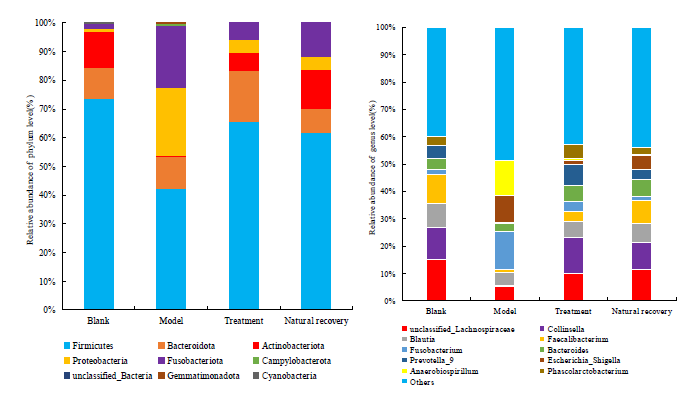
As illustrated in Fig. 5, when comparing the phylum-level microbial community structure, the Firmicutes phylum displays the highest relative abundance. In comparison to the blank group, the model group exhibits a reduced relative abundance of Firmicutes and Actinobacteriota, along with an increased relative abundance of Proteobacteria and Fusobacteriota. Relative to the model group, both the treatment and natural recovery groups show an increase in the abundance of Firmicutes and Actinobacteriota and a decrease in Proteobacteria and Fusobacteriota, with the treatment group exhibiting more pronounced changes than the natural recovery group.

The bacterial community structure at the genus level was compared across different groups. Compared with the blank group, the model group showed a significant decrease in the relative abundance of unclassified Lachnospiraceae, Collinsella, and Faecalibacterium, and a significant increase in the relative abundance of Escherichia_Shigella and Anaerobiospirillum. Compared with the model group, the treatment group exhibited a significant decrease in the relative abundance of Faecalibacterium, Anaerobiospirillum, and Escherichia, Shigella, while the relative abundance of Collinsella, Prevotella, and Bacteroides significantly increased.
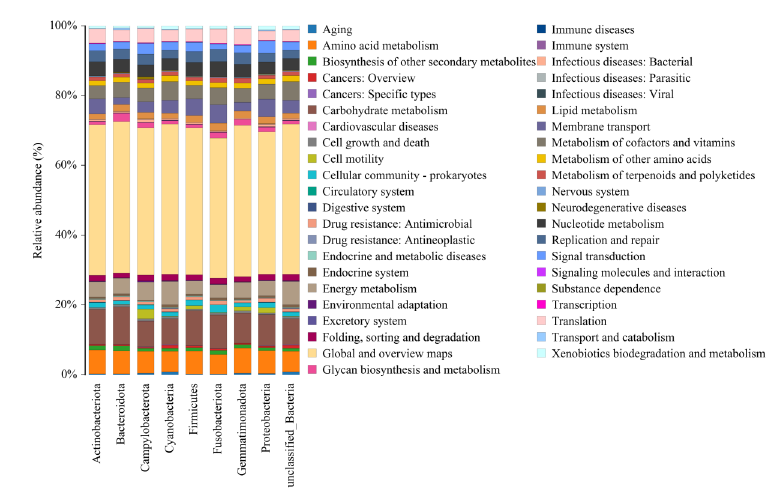
As shown in Figure 6, 43 functions were predicted based on the analysis of the eight most abundant gut microbiota. The key metabolic pathways identified include those related to global and overview processes, amino acid metabolism, carbohydrate metabolism, energy metabolism, and the metabolism of cofactors and vitamins.
DISCUSS
Diarrhea is one of the most common diseases in clinical practice and can occur in a variety of animals. Folium Sennae has been shown in numerous studies to cause significant diarrhea symptoms in animals. For example, Zhu et al., 2022 successfully created an acute diarrhea model in mice using a specific dose of Folium Sennae decoction, while Mengs, 1988 and Saitoet al., 2000 used Folium Sennae decoction to develop a dog model exhibiting typical symptoms of diarrhea. In the present study, according to the Britos stool classification method, the stools of the blank group fed with Folium Sennae transitioned from normal to the diarrhea condition observed in the model group. Conversely, the stools of the model group treated with BYD improved from a diarrheal state to the normal condition seen in the treatment group. These results indicate that BYD is effective in treating diarrhea, consistent with findings by Kim (Kim et al., 2017) and colleagues. Furthermore, the complete blood count of the dogs showed that WBC, Neu, and Eos levels in the model group were significantly elevated compared to the blank group (P<0.05). However, after treatment with BYD, the levels of WBC, Neu, and Eos were significantly reduced compared to the model group (P<0.05). This suggests that BYD effectively mitigates the increase in inflammatory cells in the blood caused by diarrhea in dogs.
Blood gas analysis provides a comprehensive evaluation of blood gases, acid-base balance, and electrolyte metabolism. Hemoglobin, the primary component of red blood cells (Ebert et al., 2024), binds oxygen, which serves as the main source of oxygen for the body. The absence of significant differences in hemoglobin levels, hematocrit, oxygen supply, and acid-base balance between the treatment and control groups suggests that BYD does not significantly affect the body's oxygen transport capacity. Clinically, the concentrations of ions such as sodium, chloride, and potassium are critical in diagnosing metabolic acidosis and acid-base balance disorders (Wagner et al., 2015). In this experiment, there were no significant differences in the partial pressure of carbon dioxide, total carbon dioxide, bicarbonate ions, or the concentrations of sodium, chloride, and potassium in the whole blood, indicating that BYD does not alter these parameters.
SOD plays a crucial role in eliminating harmful substances generated during metabolic processes, making it a key scavenger of oxygen free radicals (Mascone et al., 2023). The GSH-Px is a vital enzyme that catalyzes the reduction of hydrogen peroxide, providing cellular protection through its antioxidant activity (Tang et al., 2019). The MDA is an important molecule that interacts with proteins and nucleic acids, influencing cellular structure and function. Additionally, MDA is involved in lipid metabolism within cells, promoting lipid esterification. The experiment revealed that, compared to the model group, dogs treated with BYD exhibited increased serum SOD activity and reduced MDA. This suggests that BYD enhances the activity of antioxidant enzymes and reduces MDA levels, thereby offering protective effects to the body.
The gut microbiota is essential for maintaining intestinal health and is often considered an integral "organ" of the body, influencing key systems such as metabolism, immunity, and the nervous system (Chen et al., 2021). The most prevalent bacterial phyla in the gut include Bacteroidetes, Firmicutes, Proteobacteria, and Actinobacteria (Willem et al., 2022). Firmicutes are predominantly Gram-positive bacteria, either spherical or rod-shaped, and include many beneficial species such as lactic acid bacteria and Bacillus. Actinobacteria are also Gram-positive, filamentous bacteria that form branched filaments during their development and play a significant role in decomposing organic matter, with Bifidobacteria being a notable member (Stojanov et al., 2020). In contrast, Proteobacteria and Fusobacteria are Gram-negative bacteria, characterized by an outer membrane rich in lipopolysaccharides, with Escherichia coli, Salmonella, Vibrio, Helicobacter, and Shigella being common gut pathogens from these phyla (Jandhyala et al., 2015). An increase in these pathogenic bacteria can compromise intestinal health.
The experiment demonstrated that treatment with BYD led to an increase in the relative abundance of Firmicutes and Actinobacteria, and a decrease in Proteobacteria and Fusobacteria in the intestines of the treated dogs. At the genus level, the treatment significantly reduced the relative abundance of Faecalibacterium, Anaerobiospirillum, and Escherichia,_Shigella, with Escherichia, Shigella being a frequent cause of intestinal disease (Baltazar-Díaz et al., 2022), and Faecalibacterium and Anaerobiospirillum being recognized as opportunistic pathogens under certain conditions (Brennan and Garreth, 2019). These results indicate that BYD promotes gut health by enhancing the proportion of beneficial bacteria. Supporting this, studies by Li et al., 2022 and Yu et al., 2024 reported that BYD positively influenced gut microbiota diversity by increasing beneficial bacteria and reducing pathogenic bacteria. Additionally, this study found that BYD modulates the gut microbiota, which in turn improves amino acid, carbohydrate, and energy metabolism, thereby alleviating diarrhea in dogs. Consequently, BYD appears to effectively regulate gut microbiota, mitigating diarrhea induced by Folium Sennae.
CONCLUSION
In conclusion, BYD provides a therapeutic benefit for dogs with diarrhea. This effect is achieved through multiple mechanisms, including reducing the frequency of diarrhea, exerting anti-inflammatory and antioxidant actions, and regulating the gut microbiota, thereby improving overall diarrhea.
REFERENCES
- BALTAZAR-DÍAZ, T.A.; GONZÁLEZ-HERNÁNDEZ, L.A.; ALDANA-LEDESMA, J.M. et al. Escherichia/Shigella, SCFAs, and metabolic pathways-the triad that orchestrates intestinal dysbiosis in patients with decompensated alcoholic cirrhosis from Western Mexico. Microorganisms, v.10, p.1231, 2022.
- BRENNAN, C.A.; GARRETT, W.S. Fusobacterium nucleatum - symbiont, opportunist and oncobacterium. Nat. Rev. Microbiol., v.17, p.156-166, 2019.
- BURROWS, C.F. Chronic diarrhea in the dog. Vet. Clin. North Am. Small Anim. Pract., v.13, p.521-540, 1983.
- CHEN, Y.; ZHOU, J.; WANG, L. Role and mechanism of gut microbiota in human disease. Front. Cell. Infect. Microbiol., v.11, p.625913, 2021.
- COLLADO, M.C.; RAUTAVA, S.; AAKKO, J. et al. Human gut colonisation may be initiated in utero by distinct microbial communities in the placenta and amniotic fluid. Sci. Rep., v.6, p.23129, 2016.
- COOK, M.A.; WRIGHT, G.D. The past, present, and future of antibiotics. Sci. Transl. Med., v.14, p.7793, 2022.
- DU, W.; WANG, X.; HU, M. et al. Modulating gastrointestinal microbiota to alleviate diarrhea in calves. Front. Microbiol., v.14, p.1181545, 2023.
- DUBREUIL, J.D. Antibacterial and antidiarrheal activities of plant products against enterotoxinogenic Escherichia coli. Toxins, v.5, p.2009-2041, 2013.
- EBERT, A.G.; VALENTE, S.; SORINI, D.C. et al. La rapida lettura dell’emogasanalisi in unità di terapia intensiva cardiologica [Blood gas analysis in the intensive cardiac care unit]. G Ital. Cardiol., v.25, p.499-508, 2024.
- JANDHYALA, S.M.; TALUKDAR, R.; SUBRAMANYAM, C. et al. Role of the normal gut microbiota. World J. Gastroenterol., v.21, p.8787-803, 2015.
- KIM, J.; KIM, H.; KIM, H.K. Effects of Bu-Zhong-Yi-Qi-Tang for the treatment of functional dyspepsia: a feasibility study protocol. Integr. Med. Res., v.6, p.317-324. 2017.
- LI, Q.; CAO, M.; WEI, Z. et al. The protective effect of Buzhong Yiqi decoction on ischemic stroke mice and the mechanism of gut microbiota. Front. Neurosci., v.16, p.956620. 2022.
- LI, Y.; XIA, S.; JIANG, X. et al. Gut microbiota and diarrhea: an updated review. Front. Cell. Infect. Microbiol., v.11, p.625210, 2021.
- MANSOORI, B.; ROGIEWICZ, A.; SLOMINSKI, B.A. The effect of canola meal tannins on the intestinal absorption capacity of broilers using a D-xylose test. J. Anim. Physiol. Anim. Nutr., v.99, p.1084-1093, 2015.
- MASCONE, S.E.; KIM, K.I.; EVANS, W.S. et al. Race and sex differences in ROS production and SOD activity in HUVECs. PLoS One, v.18, p.e0292112, 2023.
- MENGS, U. Toxic effects of sennosides in laboratory animals and in vitro. Pharmacology, v.36, p.180-187, 1988.
- NAKKARACH, A.; FOO, H.L.; SONG, A.L. et al. Anti-cancer and anti-inflammatory effects elicited by short chain fatty acids produced by Escherichia coli isolated from healthy human gut microbiota. Microbial. Cell. Factories, v.20, p.36, 2021.
- SAITO, T.; YAMADA, T.; IWANAGA, Y. et al. Calcium polycarbophil, a water absorbing polymer, increases bowel movement and prevents sennoside-induced diarrhea in dogs. Jpn. J. Pharmacol., v.83, p.206-214, 2000.
- STEFAN, K.L.; KIM, M.V.; IWASAKI, A. et al. Commensal microbiota modulation of natural resistance to virus infection. Cell, v.183, p.1312-1324, 2020.
- STOJANOV, S.; BERLEC, A.; ŠTRUKELJ, B. The Influence of probiotics on the firmicutes/bacteroidetes ratio in the treatment of obesity and inflammatory bowel disease. Microorganisms, v.8, p.1715, 2020.
- TANG, D.; WU, J.; JIAO, H. et al. The development of antioxidant system in the intestinal tract of broiler chickens. Poult. Sci., v.98, p.664-678, 2019.
- TANG, X.; XIONG, K.; FANG, R. et al. Weaning stress and intestinal health of piglets: a review. Front. Immunol., v.13, p.1042778, 2022.
- WAGNER, J.; RIEKER, T.; SIEGLING-VLITAKIS, C. Blutgasanalyse beim hund in der tierärztlichen Praxis-eine Übersicht. Tierarztl. Prax. Ausg. K Kleintiere Heimtiere, v.43, p.260-273, 2015.
- WILLEM, M.V.; TILG, H.; VAN, H.M. et al. Gut microbiome and health: mechanistic insights. Gut, v.71, p.1020-1032, 2022.
- XIN, W.; MIN, W.; LAI, X.X. et al. Network pharmacology to uncover the biological basis of spleen qi deficiency syndrome and herbal treatment. Oxid. Med. Cell. Longev., p.2974268-2974268, 2020.
- YU, C.H.; MENG, Y.Y.; WANG, K.E. et al. Buzhong Yiqi Decoction ameliorates spleen-deficiency syndrome by regulating gut microbiota. China J. Chinese Mater. Med., v.49, p.1028-1043, 2024.
- ZHENG, X.F.; TIAN, J.S.; LIU, P. et al. Analysis of the restorative effect of Bu-zhong-yi-qi-tang in the spleen-qi deficiency rat model using (1)H-NMR-based metabonomics. J. Ethnopharmacol., v.151, p.912-920, 2014.
- ZHU, J.; LI, X.; DENG, N. et al. Diarrhea with deficiency kidney-yang syndrome caused by adenine combined with Folium senna was associated with gut mucosal microbiota. Front. Microbiol., v.13, p.1007609, 2022.
- ZHU, J.; LIU, S.; GUO, Y. et al. A new model of diarrhea with spleen-kidney yang deficiency syndrome. Evid. Based Complement Alternat Med., v.2018, p.4280343, 2018.


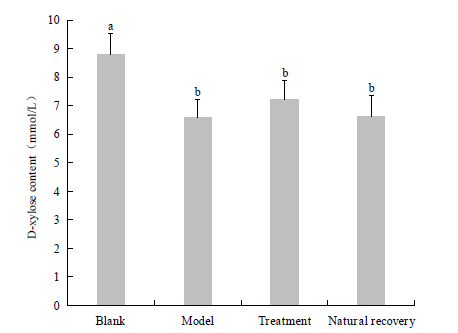 Note: The absence of a letter or identical letters indicates no significant difference (P>0.05); different letters indicate a significant difference (P<0.05).
 Note: The absence of a letter or identical letters indicates no significant difference (P > 0.05); different letters indicate a significant difference (P<0.05).
 Note: The overlapping regions represent the number of features common to the groups, while the non-overlapping regions represent the number of features unique to each group.