 Food management rate and frequency in production performance in fingerlings of Trachelyopterus galeatus (LINNAEUS, 1766)
ABSTRACT
The research was developed in a factorial system, consisting of three feeding rates based on biomass (6, 8, and 10% of the tanks), and two feeding frequencies per day, over a 20-day experiment. At the end of the feeding period, 15 individuals from each treatment were subjected to a stress test, which monitored the cumulative mortality rate of the specimens over 48 hours. The results obtained from the research show that feeding management in terms of rate and frequency interferes (P<0.05) with the total ammonia concentration in the water, specific growth rate, and uniformity in the production of T. galeatus fingerlings. The best responses were recorded at 2.16±0.09% for the specific growth rate in weight, 79.49±6.39% in batch uniformity, and lower total ammonia concentrations at 0.023±0.005mg.L-1, with the use of two feeding frequencies during the day. In terms of stress resistance responses, the feeding frequency of twice a day significantly (P<0.05) impacted the higher survival rate (100%) of the animals. Thus, a feeding rate of 6% of biomass, distributed in two meals per day, is sufficient to meet the zootechnical requirements, provide resistance, and optimize feed usage during the production of T. galeatus fingerlings.
Keywords:
zootechnical performance; water quality; resistance; uniformity; survival
RESUMO
A presente pesquisa foi desenvolvida em sistema fatorial, constituído de três taxas alimentares na biomassa de 6, 8 e 10% dos tanques, e duas frequências de alimentação ao dia, durante 20 dias de experimento. Ao término do período alimentar, 15 indivíduos de cada tratamento foram desafiados ao teste de estresse, que acompanhou a taxa de mortalidade acumulada dos espécimes durante 48 horas. Os resultados alcançados com a pesquisa mostram que o manejo alimentar em taxa e frequência de alimentação interfere (P<0,05) na concentração de amônia total da água, na taxa de crescimento específico e na uniformidade na produção de alevinos de T. galeatus, com as melhores respostas registradas em 2,16±0,09% para a taxa de crescimento específico do peso; 79,49±6,39% na uniformidade do lote; e menores concentrações de amônia total, 0,023±0,005 mg.L-1, com o uso de duas frequências de alimentação durante o dia. Nas respostas de resistência ao estresse, a frequência alimentar de duas vezes ao dia interferiu (P<0,05) na maior sobrevivência (100%) dos animais. Assim, a taxa alimentar de 6% da biomassa, distribuída em duas refeições ao dia, é suficiente para suprir as exigências zootécnicas, proporcionar resistência e otimizar o uso da ração durante a produção de alevinos de T. galeatus.
Palavras-chave:
desempenho zootécnico; qualidade da água; resistência; uniformidade; sobrevivência
INTRODUCTION
According to the FAO report (2022), global fisheries and aquaculture production reached a historic milestone of 214 million tons in 2020. Of this amount, around 178 million tons correspond to aquatic animals, while algae contributed 36 million tons. This notable increase was driven, in large part, by the significant growth of aquaculture on the Asian continent (Ximenes and Vidal, 2023).
In Brazil, in 2021, aquaculture production reached 841,005 tons, with gross revenue of R$8 billion. In 2022, despite the effects of COVID-19, aquaculture grew by 2.24% per year-1, reaching 860,335 tons, based mainly on freshwater fish farming, marine shrimp farming, and bivalves farming (Peixe - BR, 2022).
In this context, aquaculture in the state of Maranhão plays a significant role in the local economy and food production, with consecutive increases of 182% and an average annual growth of 26% (Peixe BR, 2023; Souza et al., 2022). This growth surpassed the national and international averages, which were 14.9 and 4.7%, respectively.
As a promising species for native fish farming in the state, the continental fish Trachelyopterus galeatus (Linnaeus, 1766), commonly known as bagrinho or anujá, stands out. This species belongs to the order Siluriformes, family Auchenipteridae, and has a dietary habit strongly tending towards carnivory. It is geographically distributed throughout South America (Santos et al., 2004; Ferraris, 2007). In the Northeast region of Brazil, T. galeatus has significant economic relevance, appreciated for the flavor and texture of its meat, as well as the high quality of its amino acids and essential fatty acids (Viana et al., 2013).
However, the production of T. galeatus still relies on the collection of young individuals from the wild. Additionally, capture for fattening purposes by fish farmers, along with environmental and anthropogenic impacts such as rivers siltation and overfishing, can create a biological imbalance in these ecosystems (Sousa et al., 2016).
Therefore, research related to fry and knowledge of appropriate animal feeding management is essential for sustainable aquaculture practices. This can be achieved by developing a technological package for the species from the initial stages to ensure high-quality protein supply for the activity (Conceição et al., 2010; Eiras et al., 2023). The frequency and feeding rates vary according to species, food size, life stage, and farming systems. For T. galeatus, both overfeeding and underfeeding have harmful consequences for fish production, impacting water quality parameters, feed conversion, size heterogeneity, cannibalism, production time, and stress resistance (Amriawati et al., 2021; Nowosad et al., 2021).
Proper food management in terms of rate and frequency of feeding is fundamental for metabolic needs, immunological resistance, optimizing productive gains, batch uniformity, and maintaining water quality variables, which reduces operational input and labor costs for animal production (Silva et al., 2020).
This research provides the first academic record of the impact of feeding rate and frequency on the zootechnical, productive, and physiological resistance parameters of Trachelyopterus galeatus fingerlings.
MATERIAL AND METHODS
The productive management of the animals was approved by the ethics committee for the use of vertebrate animals at the Federal University of Maranhão under protocol number 23115.006781/2023-59.
The entire experimental period was conducted at the Amazônia Maranhense Aquaculture Development Laboratory (L’AQUAM), from the Federal University of Maranhão (UFMA, Pinheiro campus; Figure 1), registered with CIUCA for animal experimentation.
For the research, 180 healthy T. galeatus fingerlings (20 days post-hatching and 15 days post-exogenous feeding with Artemia sp.) were used, obtained from semi-natural reproduction in the laboratory. The fingerlings were randomly distributed into 18 containers, with individual aeration carried out through 2mm diameter hoses connected to a radial compressor at a stocking density of 10 fish.L-1, with initial weight and total length 134.00±0.03mg and 22.07±1.91mm, respectively.
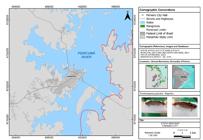
Location map of the city of Pinheiro, Maranhão-Brazil and capture hydrography of the Trachelyopterus galeatus species.
The research was conducted using a completely randomized design in a factorial scheme with two feeding frequencies (2 or 4 times a day) and three feeding rates offered in relation to the percentage of the individual’s live weight per experimental unit (6%, 8% or 10%), with three replications for each experimental unit over 20 days. Commercial powdered feed was used, with guaranteed levels of 55% crude protein, 90 g.kg-1 ether extract, 40g.kg-1 crude fiber, 130g.kg-1 moisture, and 200g.kg-1 mineral matter (Dias et al., 2019).
After the last feeding, all units were siphoned to remove food waste and organic matter during the day, with approximately 50% of the useful volume of each container being exchanged to guarantee water quality and animal welfare without interfering with treatment responses (Campelo et al., 2019).
Water quality variables were monitored on alternate days for pH, temperature (ºC), dissolved oxygen (mg.L-1) and electrical conductivity (µS.cm-1), and total ammonia levels (mg.L-1) were measured every five days during the experimental period. At the beginning and of the research, the animals were weighed and measured individually to collect data on Final Total Length (FTL), Final Standard Length (FSL) and Final Weight (FW), along with calculations for zootechnical and productive responses:
Specific growth rate for weight:
Specific growth rate for length:
Uniformity (U): U=(N ± 20%)/Nt), Nt = total number of fish in each experimental unit; and N±20% = number of animals within ± 20% of the overage weight (UW), total length (UTL) or standard length (USL) for the experimental unit;
After evaluating productive performance, the animals in their respective treatments were subjected to a resistance test, exposed to air for 10 minutes, according to the methodology of Luz (2007), and monitored for survival over 48 hours to determine the stress survival rate.
For this analysis, 5 animals were used per experimental unit, totaling 15 individuals per treatment, in across 18 containers with a capacity of 500mL of usable volume in a static system (without aeration) at a stocking density of 10ind.L-1. This setup was adapted from the Luz (2007) and constituted a completely randomized design with six food management treatments, each with three replications.
The data were evaluated using the Shapiro-Wilk test for normality and Levene’s test for homoscedasticity. Two-factor ANOVA was then applied, and Tukey’s test was used to separate the means with a significance level of 5% using the SISVAR statistical program.
RESULTS
There was no interaction (P>0.05) nor difference between the average water quality values for temperature (29.30±0.005°C), dissolved oxygen (4.59±0.11mg.L-1), and pH (6.76±0.01). However, total ammonia showed an interaction between feeding rate and frequency (Table 2), with four feeds per day at a rate of 10% biomass resulting in higher nitrogenous compound concentrations (P<0.05), Higher ammonia concentrations were observed with a feeding frequency of four times a day, which could be up to 38% higher compared to two meals a day.
The specific growth rate for weight and weight uniformity showed statistical interaction (P<0.05; Table 3), with units fed twice a day at a 6% biomass rate achieving higher zootechnical index. No significant differences (P > 0.05) were observed between treatments for other morphometric analyses, including total length, standard length, length-specific growth rate, Fulton condition factor, total length uniformity, standard length uniformity, and survival (Table 4).
Although survival rates did not differ significantly (P>0.05) between treatments, higher survival was observed with a 6% biomass feeding rate and twice-daily feeding. After exposure to air, treatments with higher feeding frequencies (four times a day) and feeding rates (six and eight percent of biomass) showed the lowest survival rates (P<0.05; Figure 2), while treatments with twice-daily feeding achieved 100% survival.

Rate of resistance to stress after 48 hours of exposure to air in Trachelyopterus galeatus fingerling, after management of feeding rate and frequency during 20 experimental days. FR- Food rate (%); FF- Feeding frequency. Different letters differ according to the Tukey’s test (P<0.05).
DISCUSSION
In the present research, water quality for the total ammonia variable remained within tolerable values for the productive performance of T. galeatus. However, it was observed that treatments with the highest feeding frequency, four times a day, presented the highest residual feed rates and, consequently, higher leaching rates of nitrogenous components contained in the feed. This effect was progressive in a synergistic manner when comparing the total ammonia values in the treatments that received feeding rates of 8 and 10% of the tank biomass per day.
For the variables of temperature (29.30±0.005°C), dissolved oxygen (4.59±0.11mg.L-1), and pH (6.76±0.01), they remained constant with no significant difference (P>0.05) among treatments and within the ideal physical-chemical standards for the welfare and productive performance of Traquelyopterus galeatus in captivity (Marinho et al., 2024). These essential responses indicate that the productive performance of the species was not compromised by water quality variables but rather by the feed management of the treatments, as observed by Eiras et al. (2023), who worked during the larviculture phase of two Amazonian species, Pterophyllum scalare and Heros severus, under different feeding strategies using live food, and Campelo et al. (2019) in the larviculture of Heros severus.
Thus, water quality variables controlled at values that contribute to the development and welfare of the target species produced contribute to an effective productive environment, which will require appropriate feed management for each development phase of the species. The strategy is to obtain the highest efficiency in the absorption and utilization of nutrients, amino acids, lipids, and energy from the supplied feed, consequently achieving zootechnical and productive gains (Zhou et al., 2018).
In this study, it was observed that Trachelyopterus galeatus fingerlings fed with formulated feed at different rates and feeding frequencies achieved better growth, weight, and size uniformity with two feeding frequencies at a rate of 6% of biomass per day. Responses showed over 78% uniformity within the batch, which is highly relevant for fish farming, as a more uniform size distribution reduces the chances of establishing size hierarchies and social dominance, thus reducing aggressive behaviors and intraspecific cannibalism (Carneiro and Mikos, 2005).
Responses that, according to Pereira et al., (2016), are excellent indicators for animals with inert feeding habits and a tendency towards carnivory. This is due to the species' digestive physiology, which, in synergy with the correct feeding rate provided at lower frequencies, presents greater food voracity at more spaced intervals, contributing to the optimized utilization of one of the most expensive productive inputs, feed, and, on a larger scale, to lower operational and labor costs (Silva and Silva et al., 2014).
The results achieved with the research align with those found by Carneiro and Mikos (2005), who used fingerlings of Jundiá (Rhamdia quelen), a species with feeding habits similar to the T. galeatus, where lower feeding frequency was sufficient to meet the nutritional requirements of the species and thus contribute to the optimization of inputs necessary for the commercial production of the animal in captivity (Boscolo et al., 2012).
Responses that oppose the results obtained by Sanches and Hayashi (2001) with juvenile Nile tilapia Oreochromis niloticus during the sexual reversion stage, and Campelo et al., (2019) with post-larval severum angelfish Heros severus during the food transition phase. This is related both to the feeding habits and the development stage of the species studied, where for each productive phase, the management and nutritional requirements of the species in production are distinct.
The food rate, feeding frequency, and the interaction of these variables in growth and survival for T. galeatus did not differ among treatments (P>0.05), corroborating Luz and Portella (2005), who addressed that the influence of this feed management on the zootechnical and productive performance of animals depends on several factors, such as development phase, metabolic rate, health, and genetic quality of the batch, which can respond to higher rates of productive gain in the medium and long term of animal development.
Although there was no significant difference (P>0.05) in the survival of juvenile T. galeatus at different feeding rates and frequencies, it is worth noting that the lower feeding rate tended to higher survival rates, which, over a longer confinement period, could significantly influence the productive performance of the species. However, with the results obtained, it can be inferred that the lower feeding rate and frequency did not compromise the zootechnical and productive performance of T. galeatus during fingerling stage.
This is a positive indicator for the viability of T. galeatus fish farming, as survival is a crucial factor for productive success, responses similar to those found by Souza et al., (2014) and Ndome et al., (2011) during the productive performance of Colossoma macropomum and hybrids of Clarias gariepinus, respectively, using the same feeding management.
However, it is necessary to consider that these results are specific to the study conditions for T. galeatus, a species that still lacks a specific feed that meets its nutritional requirements for different development phases. Thus, the results obtained in this research provide relevant information for feed management during the fingerling phase of T. galeatus.
Given that the fingerling phase is considered one of the most critical periods for nutritional and resistance processes in fish production systems, it is when the animal undergoes food transition and domestication, develops its immune system and the physiological intestinal apparatus to digest and absorb inert diets (Portella et al., 2014; Sushila et al., 2020).
Regarding the stress resistance rate, the results indicate that the feeding rate and frequency significantly impact Trachelyopterus galeatus fingerlings after air exposure. These results can be attributed to a possible increase in the metabolic demand of fish subjected to more frequent feeding and higher rates, and to responses related to total ammonia concentrations, which may have interfered with greater cellular oxygen consumption and metabolite accumulation, making the animals more vulnerable to stressful conditions and consequently proposing lower resistance to the confinement environment (Luz et al., 2012; Souza and Silva, et al., 2021).
In summary, the results achieved in this research provide insights into the rational feed management of juvenile T. galeatus, with feeding rate and frequency as productive and batch uniformity promoters in the fish farming of the species. However, further research is needed to deepen knowledge in this area and adapt feed management practices to the specificities of the species in different containment systems.
CONCLUSION
Based on the responses obtained in this research, it was concluded that providing a feeding rate using inert feed at 6% of the tank biomass, distributed in two feeding frequencies, yields higher growth rates, uniformity, and stress resistance for Trachelyopterus galeatus. However, to meet the productive and nutritional requirements of the species, it is necessary to develop a species-specific feed for each development stage of the animal, as well as future studies to strengthen the technological package of the species for various fish farming confinement systems.
ACKNOWLEDGEMENTS
The Foundation to Support Research and Scientific and Technological Development of Maranhão (FAPEMA; Universal - 01033/19; 003058/2020), State Agency for Agricultural Research and Rural Extension of Maranhão (AGERP).
REFERENCES
- AMRIAWATI, E.; BUDIARDI, T.; SETIAWATI, M. et al. Digestive system and growth performance of giant gourami (Osphronemus goramy Lacepede) juveniles in biofoc systems fed with diferent feed types. Aquacult. Res., v.52, p.4661-4669, 2021.
- BOSCOLO, W.R.; FEIDEN, A.; NEU, D.H.; DIETERICH, F. Sistema orgânico de produção de pescado de água doce. Rev. Bras. Saúde Prod. Anim., v.13, p.578-590, 2012.
- CAMPELO, D.A.V.; SILVA, I.C.E.; MARQUES, M.H.C. et al. Estratégias alimentares na larvicultura do peixe ornamental amazônico acará severo (Heros severus) (Heckel, 1840). Arq. Bras. Med. Vet. Zootec., v.71, p.1601-1608, 2019.
- CARNEIRO, P.C.F.; MIKOS, J.D. Frequência alimentar e crescimento de alevinos de Jundiá, Rhamdia quelen. Ciênc. Rural, v.35, p.187-191, 2005.
- CONCEIÇÃO, L.E.C.; Y´UFERA, M.; MAKRIDIS, P.; MORAIS, S.; DINIS, M.T. Live feeds for early stages of fsh rearing. Aquacult. Res., v.41, p.613-640, 2010.
- DIAS, J.A.R.; ABE, H.A.; SOUSA, N.C. et al. Enterococcus faecium as potential probiotic for ornamental neotropical cichlid fish, Pterophyllum scalare (Schultze, 1823). Aquacult. Int., v.27, p.463-474, 2019.
- EIRAS, B.J.C.F.; CAMPELO, D.A.V.; MOURA, L.B. et al. Replacement of Artemia franciscana Nauplii by Moina minuta Neonates as Live Food on the Larviculture of Angelfish (Pterophyllum scalare -Schultze, 1823) and Severum (Heros severus -Heckel, 1840). Aquacult. Res., v.8, p.6118659, 2023.
-
FAO - Food And Agriculture Organization Of The United Nations. 2022. Faostat. Data. Food Balances. [online] URL: https://www.fao.org/faostat/en/#data/FBS Acesso em: 10 de Out de 2023.
» https://www.fao.org/faostat/en/#data/FBS - FERRARIS, C.J. Checklist of catfshes, recent and fossil (Osteicththyes: Siluriformes), and catalogue of siluriform primary types. New Zealand: Press Auckland, 2007. 628p.
- LUZ, RK. Resistência ao estresse e crescimento de larvas de peixes neotropicais alimentadas com diferentes dietas. Pesqui. Agropecu. Bras., v.42, p.65-72, 2007.
- LUZ, RK.; PORTELLA, M.C. Frequência alimentar na larvicultura de trairão (Hoplias lacerdae). Rev. Bras. Zootec., v.34, p.1442-1448, 2005.
- LUZ, R.K.; RIBEIRO, P.A.P.; IKEDA, A.L. et al. Performance and stress resistance of Nile tilapias fed different crude protein levels. Rev. Bras. Zootec., v.41, p.457-461, 2012.
- MARINHO, Y.F.; OLIVEIRA, C.Y.B.; MENDES, L.E.M. et al. Co-feeding using live food and feed as first feeding for the small catfish Trachelyopterus galeatus (Linnaeus 1766). Arq. Bras. Med. Vet. Zootec., v.76, p.323-332, 2024.
- NDOME, C.B.; EKWU, A.O.; ATEB, A.A. Effect of Feeding Frequency on Feed Consumption, Growth and Feed Conversion of Clarias gariepinus X Heterobranchus longifilis Hybrids American-Eurasian. Am. Eurasian J. Sci. Res., v.6, p.6-12, 2011.
- NOWOSAD, J.; KUPREN, K.; BIEGAJ, M.; KUCHARCZYK, D. Allometric and ontogenetic larval development of common barbel during rearing under optimal conditions. Anim. Int. J. Anim. Biosci., v.15, p.100107, 2021.
- PEIXES BR. Anuário brasileiro da piscicultura peixes. São Paulo: Associação Brasileira de Piscicultura, 2023.
- PEREIRA, S.L.; GONÇALVES-JUNIOR, L.P.; AZEVEDO, R.V. et al. Diferentes estratégias alimentares na larvicultura do acará-bandeira (Peterolophyllum scalare, Cichlidae). Acta Amaz., v.46, v.91-98, 2016.
- PORTELLA, M.C.; JOMORI, R.K.; LEITÃO, N.J. et al. Larval development of indigenous South American freshwater fsh species, with particular reference to pacu (Piaractus mesopotamicus): a review,” Aquaculture, v.432, p.402-417, 2014.
- SANCHES, L.E.; HAYASHI, C. Effect of Effect of feeding frequency on Nile tilapia, Oreochromis niloticus (L.) fries performance during sex reversal in hapas. Acta Sci., v.23, p.871-876, 2001.
- SANTOS, G.M.; MERONA, B.; JURAS, A.A.; JÉRU, M. Peixes do baixo rio Tocantins. 20 anos depois da Usina Hidrelétrica Tucuruí. Brasília: Eletronorte, 2004. 216p.
- SILVA E SILVA, W.; CORDEIRO, N.I.S.; COSTA, D.C. et al. Frequência alimentar e taxa de arraçoamento durante o condicionamento alimentar de juvenis de pacamã. Pesqui. Agropecu. Bras., v.49, p.648-651, 2014.
- SILVA, M.A.; ALVARENGA, E.R.; COSTA, F.F.B.; TURRA, E.M. et al. Feeding management strategies to optimize the use of suspended feed for Nile tilapia (Oreochromis niloticus) cultivated in bioflocs. Aquacult. Res., v.51, p.605-615, 2020.
- SOUSA, D.G.; MENDES, N.C.B.; PEREIRA, L.D.J.G. et al. Estrutura populacional e reprodução do anujá Trachelyopterus galeatus (Linnaeus, 1766), em uma área de uso sustentável da zona costeira amazônica. Biota Amaz., v.6, p.41-49, 2016.
- SOUZA E SILVA, W.; FERREIRA, A.L.; NEVES, L.C. et al. Effects of stocking density on survival, growth and stress resistance of juvenile tambaqui (Colossoma macropomum) reared in a recirculating aquaculture system (RAS). Aquacult. Int., v.29, p.609-621, 2021.
- SOUZA, A.C.F.; GUIMARÃES, E.C.; SANTOS, J.P. et al. Piscicultura no estado do Maranhão: perspectivas para aceleração da produção de peixes nativos. Sci. Plena, v.18, p.1-8, 2022.
- SOUZA, R.C.; CAMPECHE, D.F.B.; CAMPOS, R.M.L. et al., 2014. Frequência de alimentação para juvenis de tambaqui. Arq. Bras. Med. Vet. Zootec., v.66, p.927-932, 2014.
- SUSHILA, N.; DAS, B.K.; MIR, I.N. et al., G. Cloning, characterization and ontogenetic expression profle of RAG-2 and IgM in angelfsh (Pterophyllum scalare). Gene, v.739, p.14449, 2020.
- VIANA, D.C.; SANTOS, A.C.; OLIO, R.L. et al. Descrição do pescado na Baixada Maranhense - São Bento/MA. Rev. Cient. Semana Acad., v.42, p.1-10, 2013.
- XIMENES, L.F.; VIDAL, M.F. Agricultura, pecuária, produção florestal, pesca e aquicultura. Fortaleza: Banco do Nordeste do Brasil, 2023. 19p. (Caderno Setorial ETENE, ano 8, n.272).
- ZHOU, C.; XU, D.; LIN, K. et al. Intelligent feeding control methods in aquaculture with an emphasis on fish: a review. Rev. Aquac, v.10, p.975-993. 2018.


