 When periphery matters: a computational analysis through network science and topic modeling of the scientific production on Pirarucu
Abstract
Abstract The pirarucu (Arapaima gigas) is a native fish of the Amazonian basin. It plays an essential role in food security and the maintenance of biodiversity. In the 1970s, researchers designated the species as endangered due to the deleterious effects of overfishing. The advancement of fish farming projects for large-scale production and management in protected areas have been a significant driving force behind scientific research. This pioneering study analyzes the global literature, scientific articles via the Scopus platform, and national interest through research projects registered on the Lattes platform. The authors employ data collection and organization techniques, including network science and topic modeling analysis. Brazilian research is prominent, with scientists leading national projects and ranking among the most productive in Scopus. Additionally, Brazilian institutions fund the majority of research on Scopus. The main areas of study focused on understanding the biological and technological aspects, especially those related to reproduction. Domestic research circuits mainly refer to applied research. The findings presented here illustrate the significance of conducting research in peripheral countries to address national concerns. Despite limited awareness of these findings beyond the local context, they offer substantial insights for developing local strategies.
Keywords:
Pirarucu; Arapaima gigas; structural topic modeling; network science; bibliometric analysis
Resumo
Resumo O pirarucu (Arapaima gigas) é um peixe nativo da bacia amazônica. Ele desempenha um papel essencial na segurança alimentar e na manutenção da biodiversidade. Na década de 1970, pesquisadores classificaram a espécie como ameaçada de extinção devido aos efeitos deletérios da pesca excessiva. O avanço dos projetos de criação de peixes para produção e manejo em larga escala em áreas protegidas tem sido uma força motriz significativa por trás da pesquisa científica. Este estudo pioneiro analisa a literatura global, artigos científicos por meio da plataforma Scopus, e o interesse nacional por meio de projetos de pesquisa registrados na plataforma Lattes. Os autores empregam técnicas de coleta e organização de dados, incluindo ciência de redes e análise de modelagem de tópicos. A pesquisa brasileira é proeminente, com cientistas liderando projetos nacionais e se classificando entre os mais produtivos na Scopus. Além disso, as instituições brasileiras financiam a maioria das pesquisas na Scopus. As principais áreas de estudo se concentraram na compreensão dos aspectos biológicos e tecnológicos, especialmente aqueles relacionados à reprodução. Os circuitos de pesquisa nacionais referem-se principalmente à pesquisa aplicada. Os resultados apresentados aqui ilustram a importância da realização de pesquisas em países periféricos para atender às preocupações nacionais. Apesar do conhecimento limitado dessas descobertas além do contexto local, elas oferecem percepções substanciais para o desenvolvimento de estratégias locais.
Palavras-chave:
Pirarucu; Arapaima gigas; modelagem estrutural de tópicos; ciência de redes; análise bibliométrica
1. Introduction
The objective of this article is to examine the significance of scientific output that contributes to regional development, which frequently evades the attention of international publications. Due to their regionalized nature, research in these areas is often published in local languages, which results in a lack of interest in these themes and consequently, a limited dissemination of research results on international platforms. Additionally, applied research in these fields commonly follows a shorter circuit, whereby validation by international peers may not be necessary for the research to be considered relevant (see Beigel, 2014).
This study will examine the evolution of scientific production, collaboration networks, and research content in the fields of applied social and biological sciences, with a particular focus on the pirarucu fish (Arapaima gigas). The pirarucu fish is native to the Amazon and Tocantins-Araguaia biomes, where it plays a significant role in the ecosystem and the livelihoods of communities dependent on its fishing (Amazonas, 2021). Furthermore, research and initiatives aimed at the sustainable management of pirarucu contribute not only to the sustainability of its production chain but also to the economic and social development of these local communities.
During the 1970s, the pirarucu was considered an endangered species due to overfishing, which led to the implementation of restrictive regulations governing its commercial exploitation (Arantes et al., 2010). In the early 2000s, fish farming projects focusing on large-scale production were initiated, accompanied by the implementation of lake management strategies aimed at exploiting pirarucu fishing in protected areas. This environment underscored the necessity for and proliferation of scientific research for the structuring and development of this chain, encompassing a multitude of technological, biological, economic, environmental, and social aspects within the national territory (Gonzaga da Silva et al., 2020).
Utilizing advanced computational methods for technological and scientific mapping, this article presents a comprehensive exploration of the following research questions:
-
RQ1: Can distinct research groups be identified in this knowledge domain?
-
RQ2: If so, what are the defining characteristics of these groups?
-
RQ3: What contributions have these groups made to the existing literature?
-
RQ4: What obstacles and policies should be considered for further analysis?
In order to address these questions, we employ Network Science (Barabási, 2013) and Structural Topic Modelling (STM) (Roberts et al., 2019). The data was collected from the Scopus and Lattes platforms. The Scopus platform enables us to ascertain global interest in the topic, evaluate the academic prestige of each publication, and construct bibliographic networks. The Lattes platform permits the capture of grey literature (Auger, 1975; Mahood et al., 2014), comprising scientific documents that fall outside the scope of articles and books, including research projects, theses, and technical reports. The dissemination of scientific knowledge occurs at the regional level, particularly through the use of grey literature.
The article is structured in five sections. After this introduction, the Theoretical Framework section highlights the relevance of pirarucu for regional development (Medina & Barbosa, 2023; Castello et al., 2011). Following that, the Materials and Methods section presents the procedure for extracting information from the Lattes Platform and Scopus. Subsequently, the results of the Network Science (Barabási, 2013) and Structural Topic Modeling (STM) (Roberts et al., 2019) methods are presented. Finally, we provide analyses of the results, discussions, and conclusions.
2. Theoretical Framework
The issue of food security is a significant global concern, particularly in light of population growth and the need to ensure the continued availability of healthy food. This critical challenge is integrated into the Sustainable Development Goals (SDGs) established by the United Nations, in particular SDG 2: “Zero Hunger and Sustainable Agriculture.” As indicated by the Food and Agriculture Organization of the United Nations (2020), the global population is projected to exceed 9 billion by 2050, with the majority of this growth concentrated in developing countries and urban areas. It is estimated that in order to feed this predominantly urban and potentially wealthier population, food production will need to increase by 60% compared to the 2005-07 baseline by 2050.
The consumption of fish can play a pivotal role in ensuring food security, as it represents a highly nutritious source of protein, vitamins, and minerals. Nevertheless, the significant challenge is to meet the growing demand for fishery resources in a way that does not cause negative impacts on natural ecosystems. Aquaculture has emerged as a viable alternative means of fulfilling the requisite protein supply. Its growth has exceeded that of other animal protein industries and it currently represents 46% of the world's fish production, with an accompanying decline in the share of capture fisheries (Food and Agriculture Organization of the United Nations, 2020).
Brazil is notable among countries with potential for aquaculture, given its plentiful water resources, temperate climate, and the natural prevalence of aquatic species that align with both zootechnical and market interests. Nevertheless, national production remains inferior to that of major global producers, including China, Indonesia, Peru, India, Russia, the United States, and Vietnam (Food and Agriculture Organization of the United Nations, 2020).
A notable case with the potential to provide a substantial amount of animal protein is the Amazonian pirarucu fish (Arapaima gigas). This fish, native to the Amazon and the Tocantins-Araguaia basin, plays a fundamental role in the diet of riparian populations, ecosystem conservation, and income generation for local communities. However, due to overfishing in the 2000s, regulations were established for its exploitation, including implementing management in reserve areas and captive production. Large-scale fish farming projects were initiated to exploit pirarucu fishing in protected areas (Castro & McGrath, 2001; Gonçalves et al., 2018).
Despite the commercial potential of pirarucu due to its boneless, high-nutritional-value meat and the possibility of exploiting its high-quality leather, the development of the fish farming industry faces technological challenges such as low reproduction control, high costs of fingerlings and feed, and susceptibility to diseases.
There has been an increase in national scientific research aimed at structuring and developing the pirarucu chain. The literature demonstrates growing interest in this native species of the Amazon, particularly in studies focusing on biology and technology. Scientific production related to pirarucu is concentrated in Brazil, particularly in the Northern region.
Despite the interest in pirarucu, a significant portion of these research results remain outside the international circuit. To fully unlock the potential of this native species, it is crucial to foster international collaboration. Advanced computational methods have been developed due to the increasing number of scientific studies and the need to compile information efficiently to guide public policies and funding agencies. These methods enable data analysis from fundamental studies to guide private strategies and public policies.
3. Methodology
The methodology used in this article employs Data Collection and two complementary techniques, Network Science and Structural Topic Modeling (STM). Network Science allows us to identify collaboration patterns between countries and Brazilian regions, shedding light on their respective roles. Meanwhile, STM helps us understand the emerging research topics and the content investigated.
Data Collection
The analysis is based on two primary sources of data. First, the Lattes Platform database, consisting of 1,117 curricula that provide a detailed account of activities related to pirarucu, such as articles (497), projects (568), book chapters (87), dissertations (115), theses (62), and monographs (165). Second, a review of 378 documents, including articles (358), book chapters, and conference publications, obtained from the Scopus platform was conducted to supplement the original analysis.
The Scopus search was conducted on November 12, 2022, using the keywords1 “arapaima gigas,” “pirarucu,” or “paiche” to capture research conducted using the scientific name as well as those developed in Brazil and Spanish-speaking Amazon countries. For the Lattes Platform, only curricula mentioning these terms (“arapaima gigas”, “pirarucu,” or “paiche”) from the period between December 2020 and January 2021 were selected. Out of the seven million curricula in the base, 1,529 documents from 1,117 curricula were found with the exact key words. The data was cleaned and standardized, resulting in 482 articles, 568 projects, 87 book chapters, 35 books, 115 dissertations, 62 theses, and 165 monographs. Captcha Negated by Python reQuest - CNPQ (Souza, 2018) software written in the Python language was used to extract the information. The data was downloaded in Extensible Markup Language (XML) format through the getLattes package (Souza & Sabino, 2020) of R software (R Core Team, 2020) and later organized in tables to facilitate readability.
To enhance the robustness of our research, we also explored the SciELO Platform database. With the keywords “arapaima gigas” or “pirarucu”or“paiche” on November 12, 2022, 90 scientific articles were found: 72 from Brazil, twelve from Peru, and six from Chile. By default, Brazilian authors’ articles are already in the Lattes platform; out of the remaining eighteen, only two were not in the Scopus Platform2.
Collaboration Networks
Scientific collaboration networks across regions or countries are formed through the co-authors’ professional addresses (Newman, 2018; Batagelj & Cerinšek, 2013). If two scholars from different regions share the authorship of a given document, each region becomes a node (or vertex) of the network. The relationship between regions/countries is expressed by a line (or edge) connecting the nodes, making up a network. Countries or regions with higher number of outward collaborations obtain higher weights.
Each actor’s relevance within the network – in this case, network being the country or region – can be expressed by centrality measurements: a) Degree centrality (Nieminen, 1974), b) Closeness centrality (Bavelas, 1950), and c) Betweenness centrality (Freeman, 1977). Degree centrality gives the number of direct connections of each of the network’s nodes, indicating which one is the most connected. Closeness centrality allows understanding the distance between a given node and any other node in the network, indicating which one is the closest to any network node. Lastly, a node’s Betweenness centrality assigns importance to an edge according to the flow to interconnect the other network nodes.
The international collaboration network – which countries frequently collaborating constitute a community – was clustered through Louvain algorithm (Blondel et al., 2008). Finally, we applied a quality measurement to scientific publications in each country. SCImago Journal Rank (SJR) index developed by Scopus to evaluate journals was used as a proxy of the published scientific article’s quality (Oliveira et al., 2013). To differentiate scientific production among authors, we used the SJR average metric, which consists of the sum of the SJRs of the journals where each author published scientific articles, divided by the total number of articles.
Structural Topic Modeling
Research projects related to pirarucu recorded in the Lattes Platform were used to understand local research dynamics. Their content was sifted through STM technique (Roberts et al., 2016, 2019). STM has been developed on an interdisciplinary domain encompassing Statistics, Computer Science, Machine Learning, and Computational Linguistics (Kim et al., 2020). Results of a topic model analysis with STM typically reveal topics, high-probability words associated to each topic, and topic proportions in each document (in this case, documents are research projects recorded in Lattes Platform, and STM identifies topics). Topics are selected using each topic’s high-probability words, as much as factors are named by the contents of indicator items (similarly to high-probability words) in factor analysis.
The decision on the number of topics lies mainly in two measurements: semantic coherence and exclusivity (Bischof & Airoldi, 2012; Roberts et al., 2016). Semantic coherence reflects that a topic’s high-probability terms (one or more words) tend to occur across documents under analysis. Exclusivity, on the other hand, dictates that high-probability terms in one topic should not overlap with other topics’, that is, that high-probability terms should be unique and exclusive to one topic.
4. Results and Discussion
Scopus Platform
This section brings research results in order to respond to RQ1 and RQ2, starting by listing the bibliometric analysis findings, which include collaboration networks among countries and among major local research centers, the most relevant authors, and their productivity in the field over time, as well as publications' evolution and impact factor. Later, we present the results of the research project's content analysis done through Structural Topic Modeling in the Lattes Platform database.
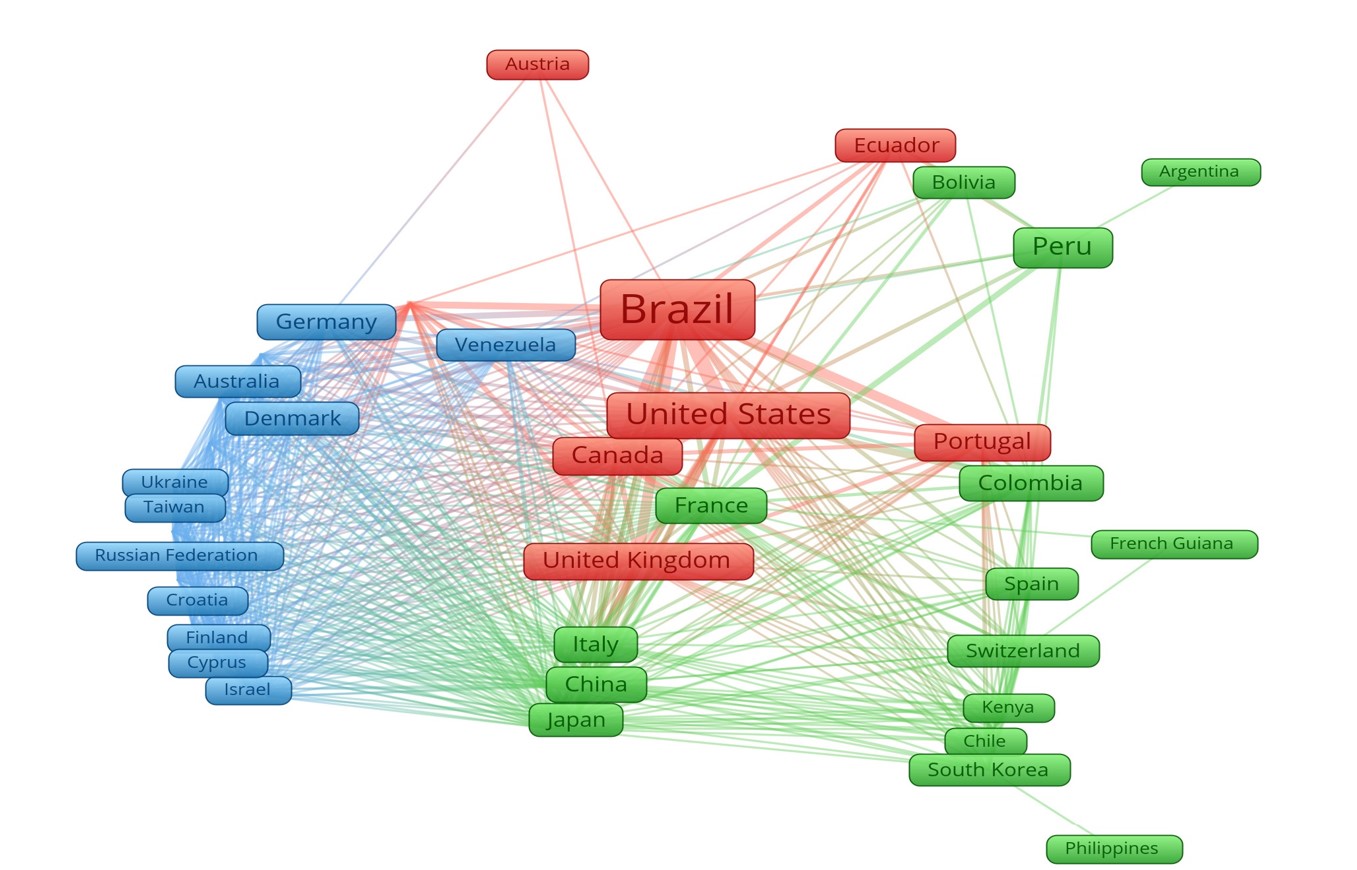
The collaboration network (from Scopus) among countries/states reflects the frequency with which authors from those places jointly develop research (see Figure 1). For this analysis, 46 countries were considered, and every one of them had at least one publication on pirarucu recorded on the Scopus platform. The Louvain grouping algorithm was applied (Blondel et al., 2008) to detect communities or country groups in frequent collaboration. Figure 1 brings the clusters identified by colors.
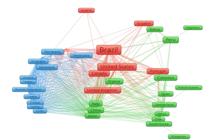
Collaboration network between countries/states – Scopus. Source: Elaborated by the authors.
Documents collected through Scopus indicate three clusters of countries involved in research on pirarucu: (i) red includes Brazil, USA, Canada, United Kingdom, Norway, Portugal, Ecuador, and Austria; (ii) green includes Peru, Colombia, Bolivia, Argentina, China, Japan, France, Italy, Spain, Switzerland, etc.; and (iii) blue includes Germany, Venezuela, Denmark, Czech Republic, Australia, etc.
Table 1 adds information on international collaboration patterns. A total of 358 articles were found in the Scopus base, using the keywords “arapaima gigas” or “pirarucu” or “paiche”. Brazil has the highest number of publications (137) and the highest network degree centrality (85). USA and Peru are highlights, with 50 and 23 publications, respectively. France stands out for connecting distant countries within the collaboration network, a fact represented by its high betweenness centrality (108.88), while Japan is distinct for its proximity to all other countries in the network, with closeness centrality at 0.0161.
The quality of publications was assessed based on SJR journal ranking index. It is noteworthy that Brazil's total score of 78,098 points reflects the highest number of articles across all countries. However, articles published in journals with the highest average impact (SJR average) were authored by individuals from China, Japan, the USA, and Colombia.
Lattes Platform
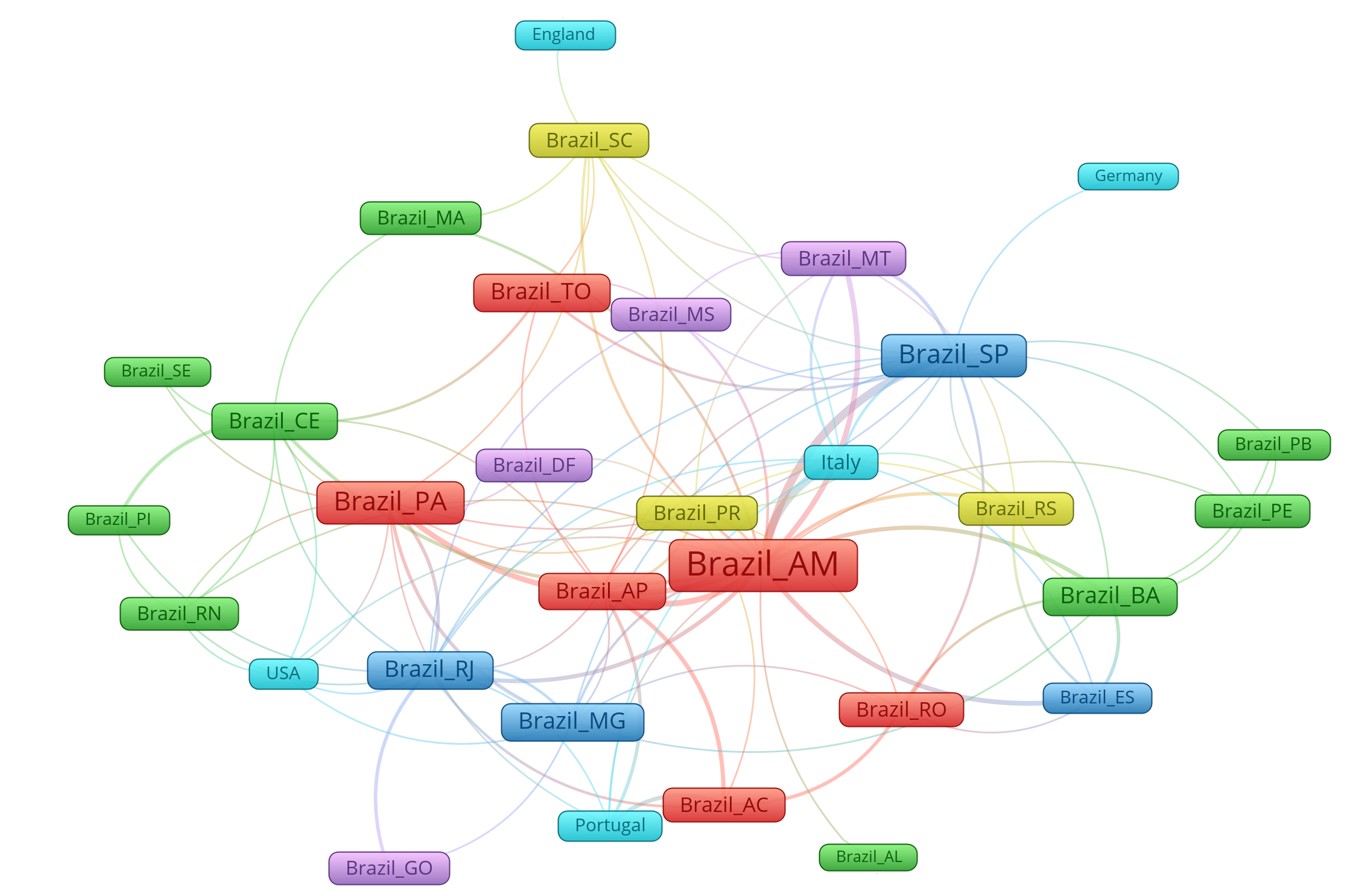
As mentioned, Lattes represents a more realistic portrait of Brazilian scientific production, as it encompasses all research activity conducted in Brazil, counting on over seven million registered curricula. Figure 2 shows that Amazonas State (AM) has the most extensive participation in the network (see Table 2). The nodes’ colors represent different Brazilian regions: North (red), Northeast (green), South (yellow), Southeast (blue), and Midwest (purple). Besides Brazil, a few other countries are represented, usually as the professional addresses of Brazilian authors: they are shown in light blue.
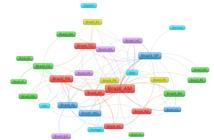
The data in Table 2 complement the data in Figure 2. Here we can see that the Brazilian state of Amazonas is central, with 137 articles in which at least one author reported having their professional address. In terms of network metrics, it is also central because it is connected to a more significant number of states/countries (degree centrality), because it is closer to the other nodes in the network (closeness centrality), and because it is a necessary route for the flow of knowledge between the different states/countries.
The North region stands out, with the following states responsible for the highest number of published articles: Amazonas (AM), Pará (PA), and Tocantins (TO). Nonetheless, when analyzing scientific publications’ quality through the SJR indicator, the North loses its prominence, with São Paulo having the highest average impact in its research.
Lead Researcher
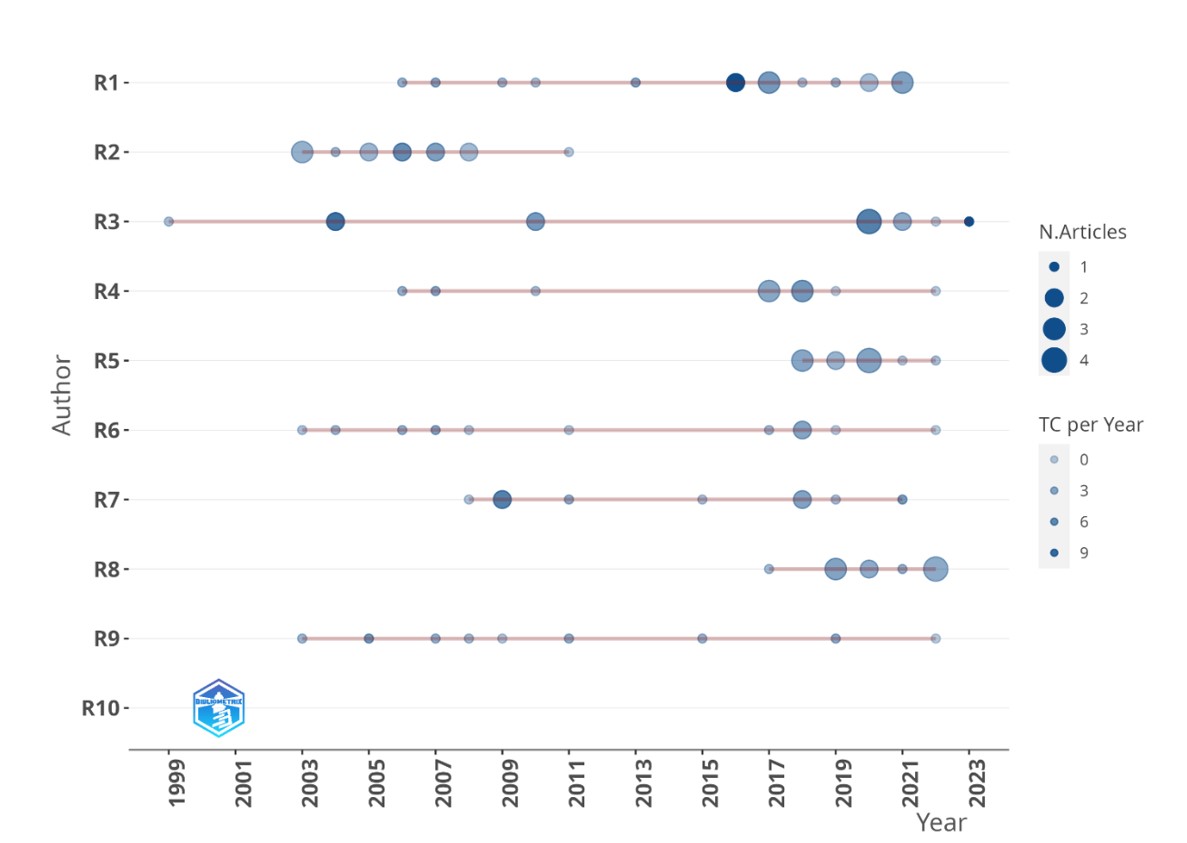
Authors' productivity over time was assessed to identify whether leading researchers in the Scopus database are somehow related to research on pirarucu developed in Brazil. Figure 3 shows the authors' ranking and activity over the years.
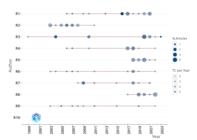
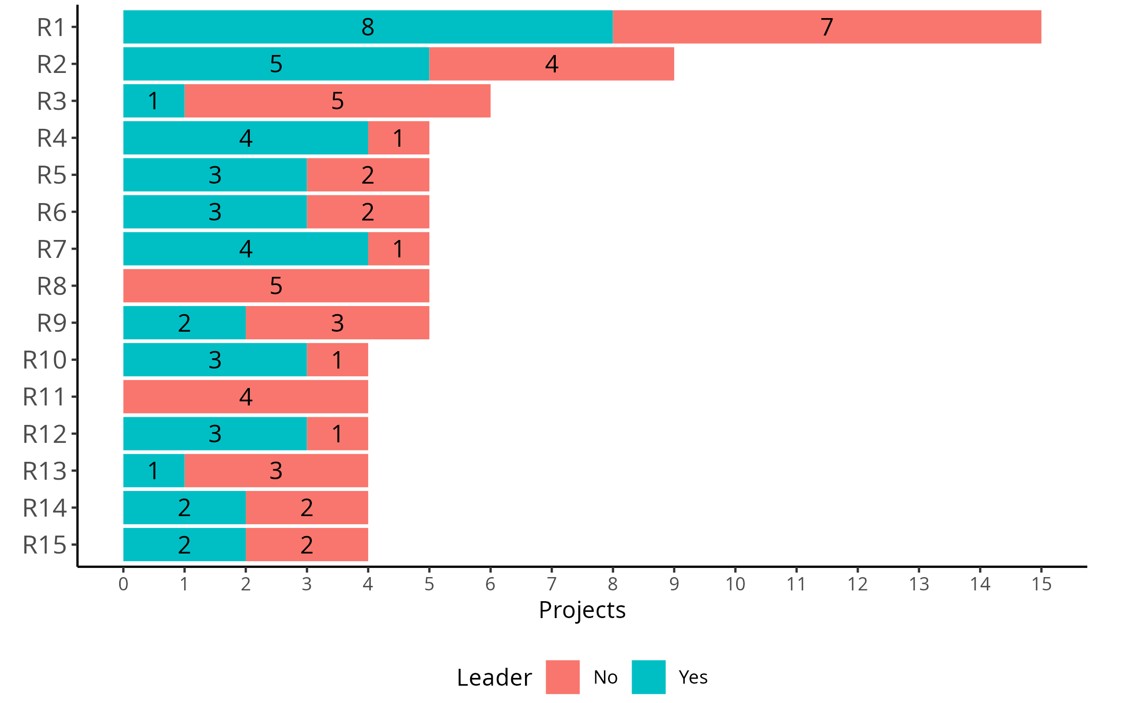
The ranking of leading authors involved in Brazilian research projects identified in Lattes has matched the author names identified in Scopus bases (see Figure 4); this reinforces the hypothesis that research on pirarucu published by high-impact journals is conducted in Brazilian research centers. Three out of the top ten authors in the Scopus platform are the leading researchers identified in the Lattes Platform: R2, R3, and R4 (Scopus), and R2, R5, R12 (Lattes).
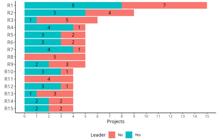
Leading authors involved in Brazilian research projects. Source: Elaborated by the authors.
Publications Evolution
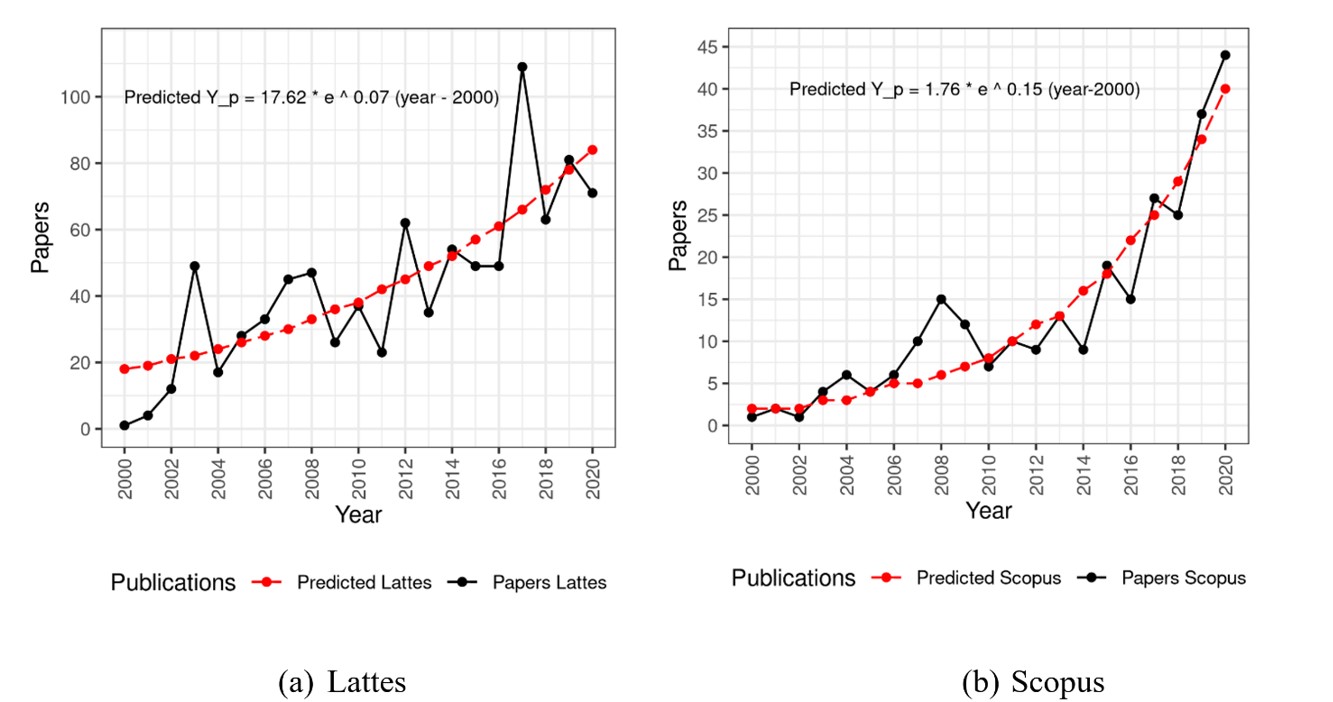
Data show an increasing interest in Pirarucu, with 61.37% of documents published in or after 2015, as presented in Figure 5.
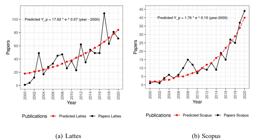
The number of publications evolution in the 2000-2020 period, including all documents in Scopus basis and Lattes Platform that are connected to pirarucu theme. Source: Elaborated by the authors.
In addition to indicating the absolute number of documents per year, we estimated the growth rate (Egghe & Ravichandra Rao, 1992; Bornmann & Mutz, 2015), so we can see that the number of Pirarucu documents doubles every 4.4 years, with a growth rate of 16.9% per year, while the general Scopus database grows at a rate of 5.5% per year, taking at least thirteen years to double its number. On the other hand, Lattes grows 8.1% per year, taking 8.9 years to double the number of publications.
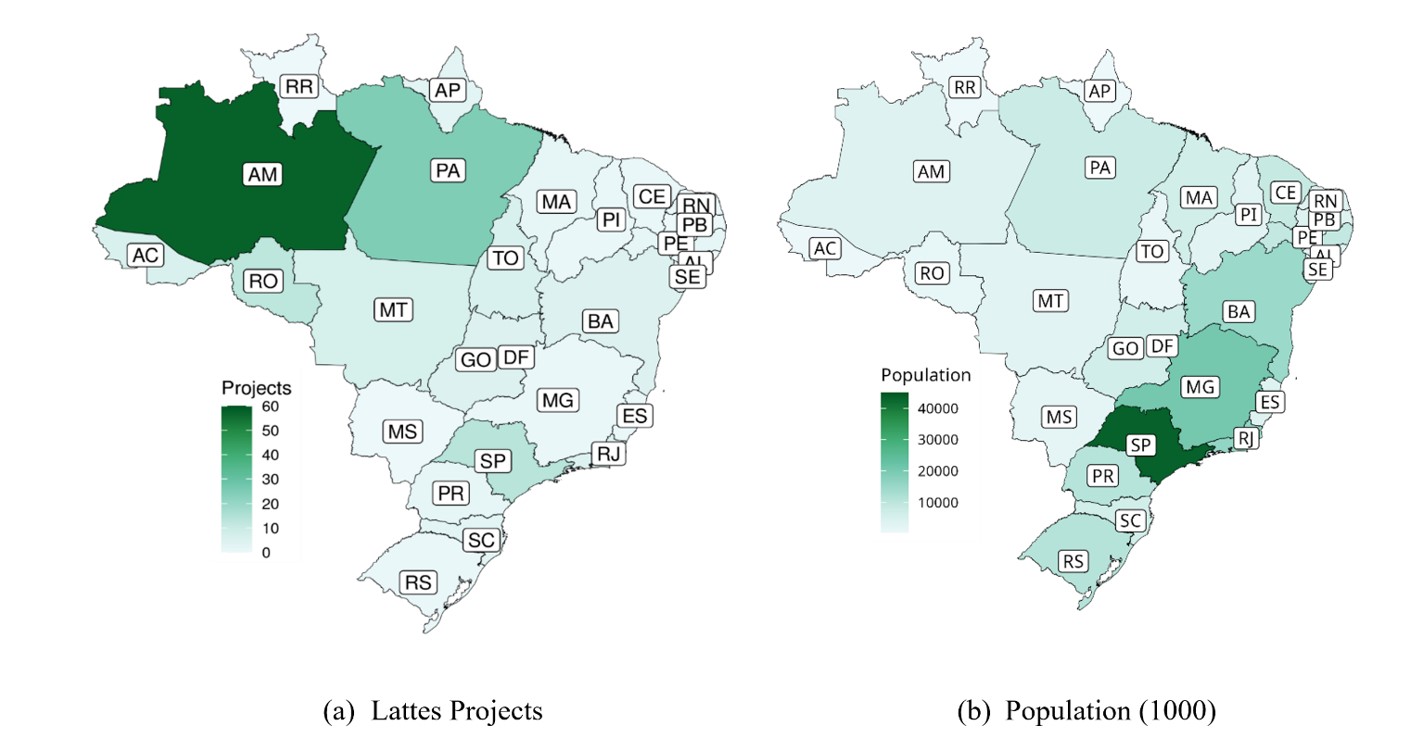
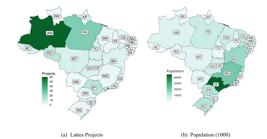
Regarding the number of projects identified in the Lattes Platform, as previously mentioned, Amazonas (AM) State leads pirarucu-related research, followed by Pará (PA) (see Figure 6a). Notably, São Paulo also stands out, thanks to the presence of three large public universities – USP, Unicamp, and Unesp. However, São Paulo is the most populous state in Brazil, Figure 6b, unlike the states in Brazil's northern region.
As for the sources of research funding, around 50% of the articles listed in Scopus have Brazilian funding agencies as support bodies, with CNPq (National Council for Scientific and Technological Development) being the main one, followed by Fapesp (São Paulo State Research Support Foundation) and FINEP (Financier of Studies and Projects). As already noted, most of the research does not go through the international circuit: only 16% of the 835 funded articles presented in Lattes became publications in the Scopus database. Table 3 summarizes this data.
Topic Modeling
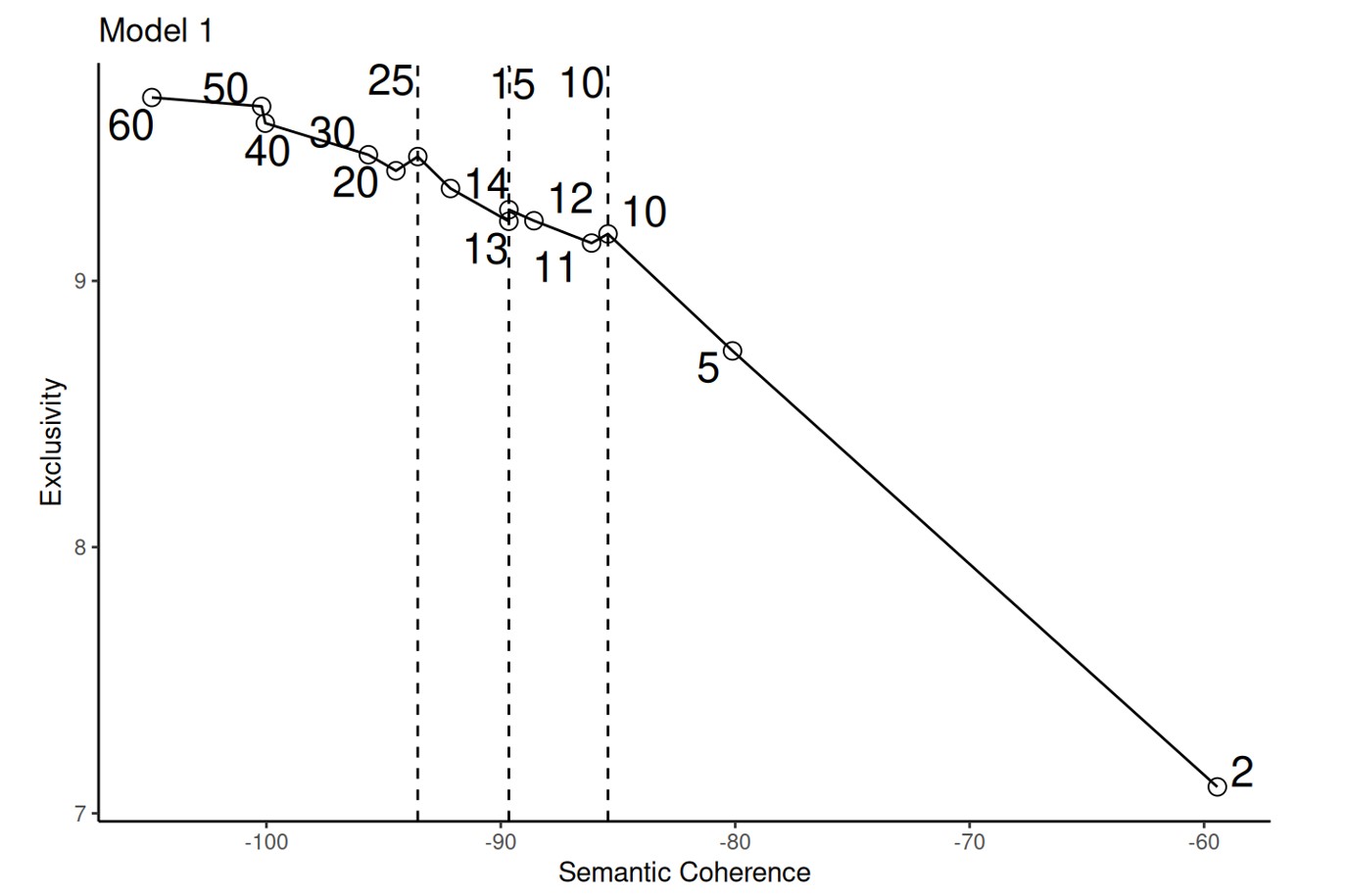
To analyze Latte's research project contents and respond to RQ3, we adopted STM. The STM method is a soft clustering technique that allows data points (such as Lattes research projects) to be linked to multiple topics (groups) with varying degrees of association. This feature is especially beneficial for handling overlapping clusters and noisy data (Futschik & Carlisle, 2005). The topic analysis was performed on the title and description of the Lattes research projects. The description of the research projects assumes the same role as an abstract for a scientific article. A graphic (Figure 7) was created to analyze Lattes platform research projects through Structural Topic Modeling. The graphic enables the analysis of the trade-off between semantic coherence and exclusivity (see Tontodimamma et al., 2021).
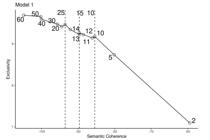
Structural Topic Modeling for the Lattes basis research projects. Source: Based on Kuhn (2018), elaborated by the authors. Notes: The dashed lines show the optimal limits for choosing the number of topics for analysis.
From this analysis, we observe that the models with topics between 10 and 25 have the best combination of exclusivity and semantic coherence. Kuhn (2018) also chose the number of topics based on this type of chart. For a better decision, the choice was based on the analysis of the words that best represent the topic, starting from the project title and description. To carry out this investigation, we counted on the support of a tropical fish expert.
After eliminating duplicates, we examined 470 projects. Of these, 125 lacked a description, so only the title was used for filtering. We generated models with ten, fifteen, and twenty topics. The 15-topic model, identified by an aquaculture specialist, was deemed the ideal choice due to its superior semantic coherence and exclusivity.
The 15-topic model provides adequate title exclusivity, as it does not present a set of titles as restrictive or exclusionary as the 10-topic model, much less a set as generic as the 25-topic model, in which terms and titles represented equivalency and were repetitive by presenting a similar batch of descriptive characteristics (Table 4).
As Table 4 shows, topics do not present exclusive titles even with relatively different terms; therefore, overlapping among topics might happen. The spotted research titles underwent several quantitative and qualitative reviews.
When analyzing topics and their component titles, we suggest a categorization into eight broad knowledge fields according to CNPq3. In this research, most titles would fit in one of three major fields: Biological Sciences, Agricultural Sciences, Applied Social Sciences.
Based on Table 4 results, we have categorized Lattes research works' themes into the three CNPq research groups, notwithstanding the themes overlapping.
The Biological Sciences group encompasses documents that contain content on Physiology, Anatomy, Embryology, Genetics, Histology, reproduction, Morphology, animal behavior, and animal nutrition. All titles classified and placed into this group had studies that would serve as the basis for research in other knowledge fields in the past two decades. The quantitative majority had titles classified in the broad field of Bio-Sciences, but their applicability would foster knowledge in other areas.
According to the identification of groups presented in Table 4, six topics (4, 1, 7, 2, 11, and 15) were recognized as having higher adherence to the Biological Sciences field. Notably, those topics also overlap with Agricultural Sciences as the focus on understanding Genetics, Physiology, Morphology, Zoology, and Ecology, among others, has as its ultimate goal species development for economic profit, particularly looking at exploitation in captivity. Usually, research results are used to support intervention programs connected to alternatives that enable the efficient use of aquatic resources.
The Agricultural Sciences group deals with papers involving research on using fish parts as inputs for commercial products, waste usage, and qualitative and quantitative analysis of by-products, as well as up-to-date techniques for feed management and production. One example is the use of scales as inputs for bio-ceramic production. There are also documents involving research titles connected to technology, although focused on the quality of fish for commercialization. Most of them overlapped with other titles: these are research projects that deal with organoleptic traits of fish meat, hygiene, and micro-organisms proliferation, as well as studies that show product quality from the animal capture stage all the way to available-at-shelf stage, the utilization and processing of all animal parts as food, spices and or inputs in Materials Engineering.
Topics 14, 5, 12, 8, 9, and 3 (Table 4) refer to works on developing new growth technology, reproduction, ingredients with significant nutritional value for the species, and good management practices. Research on these topics is dedicated to studying issues related to artificial induction to reproduction, fingerlings mortality, and parasite control, and feed formulation specific to the species in captivity, among other issues addressing the fish farming economic viability. The incentive for fish farming development is driven by government initiatives and major fish processing companies (see Rebelatto Junior et al., 2015). Nonetheless, pirarucu chain development still faces numerous technological hurdles, among which the critical ones are the lack of mastery over captivity reproduction and the high feed cost — explaining the large number of documents aiming at overcoming these deficiencies. Research through this avenue also talks about animal well-being, post-slaughter processing, by-product use, production efficiency, and value creation.
The Applied Social Sciences group includes titles on management, sustainable production, economic analysis, cultivation techniques, and fishermen's and local producers' popular knowledge. There are also Lattes research projects on nutrition and ecology from the production cost perspective and studies on ecology focused on species keeping in natural environments.
Work within the Applied Social Sciences framework lies mainly around topics 10, 6, and 13, and it significantly overlaps with the Agrarian Sciences field but is dedicated to analyzing aspects of the pirarucu chain, value creation, and consumption management. These topics investigate the organizational logic of the pirarucu value chain based on the actors forming its ecosystem, like social organizations and support networks. Another approach related to the Social Sciences involves investigating means of production and income generation for fishing communities and consumption, focusing on environmental impact and economic sustainability.
These findings bring important considerations to the literature on Amazonian biome products, particularly pirarucu, and the dissemination of research conducted in Brazil. Regarding pirarucu, our results obtained through content analysis are in line with a systematic literature review conducted by Ferreira et al. (2020) based on the WoS database, which observed that the majority of published articles (55%) are concentrated in the field of biological sciences. The main topics addressed in these articles are categorized into three areas: natural history, respiratory physiology, livestock performance and rearing. As we observed in the results of the content analysis carried out by STM, the topics related to the fields of biological and agricultural sciences stand out extraordinarily compared to those belonging to the field of applied social sciences. This finding is relevant when considering the limited development of value chains in the Amazonian biomes. Although researchers show high dedication to the challenges of fish production, particularly in aquaculture, attention should also be given to the challenges of market and producer integration.
Furthermore, our research has shown that the results from extracting and analyzing information on pirarucu-themed research reveal a significant amount of scientific production from Brazil that is not infused into the international academic environment. While Scopus lists 324 publications on the theme, Lattes indicates 482, out of which 28% come from Amazonas State — although São Paulo leads when using the SJR indicator as a critical criterion. Among the publications listed on Scopus, authors residing in China, Japan, the USA, and Colombia have the highest average impact (SJR average).
Arguably, these results can be credited to – on top of the language barriers – the fact that the developed research belongs to local scientific publishing circuits or domestic circuits, as Beigel (2014) suggested. Domestic research circuits mainly refer to applied research (such as the research conducted by Embrapa) and are less relevant to mainstream countries. Nonetheless, they are crucial to developing countries, as research themes of projects/studies are usually of local interest and address problems innate to a given region and, in many cases, have practical implications on regional development. In this sense, the relevance of this work is not perceived when only international resources are consulted, as metrics are defined by countries in the Global Northn and mainly because these themes are of less interest to them. It is necessary, then, to consider an analysis that goes beyond existing metrics, with results that are relevant to the national context. Evidence of this assertion is the INPI-registered [National Institute of Industrial Property, in the Portuguese acronym] fishery-focused patent indicator, led by Brazil with around 20% of total patents, followed by the USA with less than 10% (Cardoso et al., 2022). We also verified that most of the production registered on a Scopus basis are Brazilian publications (37%), followed by the USA (14%), the country with the highest interaction level with Brazilian scholars, according to the analysis of the country's collaboration networks.
In the Lattes platform, the state-country collaboration network highlights the relevance of Amazonas State, followed by Pará. As for countries, Portugal and Peru stand out as the most infused into the network.
Another interesting finding is that, although most papers are not registered in international platforms, the leading authors in Scopus are the leading Brazilian researchers identified through the Lattes Platform, who are also leaders or participants in research projects conducted in Brazil. Information on research funding for articles published in Scopus shows CNPq as the dominant agency, the most important body of scientific research promotion at the national level.
The number of publications has shown significant growth, as the number of documents on pirarucu doubles every 4.4 years, at a 16.9% yearly rate. This indicator may be connected to regulatory changes that have permitted the economic exploitation of pirarucu through pisciculture or controlled fishing in Amazon reserves. Pisciculture, in particular, demands technological research for captivity farming, with emphasis on reproduction and input such as feed and fingerlings (e.g., Cavero et al., 2003; Imbiriba, 2001; Monteiro et al., 2010; Pereira-Filho et al., 2003).
The content analysis of the research collected from Lattes Platform corroborates the offered inferences, as the focus of research lines refers to production management, Biology, and technology. These themes are central to Brazilian pirarucu supply chain structuring and development in a sustainable manner.
Policies and Paths
The results suggest some possible perspectives for developing scientific production on pirarucu. The main areas of study focused on understanding biological and technological aspects, especially those related to reproduction. These aspects are important, but more is needed to exploit the species' potential. Pirarucu has an importance that transcends these areas, especially regarding income generation, food security, and the provision of ecosystem services. Thus, we identified some relevant deductions that can be made from this data in order to respond to RQ4:
-
Given the scarcity of studies focused on economic and social aspects, public policies and research incentives can contribute to strengthening aquaculture and management chains and generating employment, income, and well-being for local communities. Given the logistical complexity of the Amazon region, such research should focus on aspects related to chain infrastructure, including processing, cooling technologies, sanitation, and transportation, important factors for accessing markets beyond regional ones.
-
Another crucial aspect is the dissemination and accessibility of research content. While pirarucu is a research object of local interest, which often leads to a concentration of research in its countries of origin, it is essential to share this knowledge with local communities and producers — ensuring that the impact of our research is not just theoretical, but also practical and beneficial in real-world situations. The trend in changing consumer behavior is also a relevant factor that must be considered in this process, given preferences for more sustainable consumption. Both captive production and lake management are viable alternatives for food production, conservation of ecosystems, and addressing climate change. In addition, the social benefits resulting from valuing the communities involved in this process need to be widely known and recognized by consumers.
-
Finally, we propose a collective action strategy involving policymakers, funding agencies, research institutions, and local social organizations. By focusing on specific regional themes and forming well-defined clusters, we can create networks of collaboration and applied research. This approach allows us to concentrate efforts and resources to effectively address complex socioecological problems, especially when dealing with a product essential to the food security and economy of riverine communities.
5. Conclusions
This article underscores the unique and significant contribution of Brazilian scientific production, particularly from regional research centers, to the global research landscape. This finding aligns with the conclusions of Beigel et al. (2018) and Mugnaini et al. (2019), who argue that regional research, dealing with products of limited worldwide interest, can still make a substantial impact. In doing so, we also challenge the prevailing guidelines for literature review when exploring local or regional themes.
There is a wealth of information on pirarucu in Brazil that is not adequately represented in international databases, as these databases primarily focus on domestic circuit research and applied interests. This lack of representation could potentially impede scientific advancements in the field, particularly those aimed at improving the entire research chain, and could also limit access to knowledge generated in the country. Notably, there is a high volume of research in the Biological and Agrarian Science Fields, particularly in the context of technology for fish farming development and overcoming barriers in captivity farming.
On the other hand, we also highlight the relevance of studies on strengthening the controlled pirarucu fishing chain, especially those connected to Social Sciences – as identified in our findings. Such studies are advancements in research that materialize in actions contributing to income and welfare generation for local communities, yet not disregarding traditional knowledge and sustainable exploitation of natural resources. Nonetheless, sharing the results of domestic circuit research conducted in peripheral countries is essential for this contribution to become actionable. There lies the relevance of this analysis and a meticulous examination of a national/regional database with impacts that extend beyond borders.
On the other hand, we also observed that most research group leaders listed on Lattes have the highest number of points in Scopus bases. Over half of the funding sources for articles on the theme are Brazilian research promotion agencies led by CNPq. This corroborates our proposition that local funding agencies mainly finance research indexed in international databases. Therefore, based on these analyses, international databases should be considered in research focusing on themes applied to regional issues, much of which pertains to the so-called grey literature. Considering this literature enables a more accurate capture of peripheral countries' relevance and contribution to scientific knowledge development within such specificities. Additionally, this article not only maps the scientific production on pirarucu but also highlights how such research can contribute to regional development, particularly through funding programs that have driven technological innovations and sustainable practices in the management of pirarucu.
Acknowledgements
We extend our gratitude to Isabela Miranda Litaiff for her valuable assistance in classifying the research themes from Lattes into the three CNPq research groups, and to Cristina Alcoforado for her insightful and thorough review of the article.
1
3
Financial support:
Ethics approval:
Data availability:
References
-
Amazonas. (2021). Nota técnica: um panorama sobre a bioeconomia no Estado do Amazonas Retrieved in 2024, March 12, from https://www.sedecti.am.gov.br/wp-content/uploads/2021/07/NT_Bioconomia_01_SECTI-SEDECTI-AM_Bioeconomia_no_Amazonas.pdf
» https://www.sedecti.am.gov.br/wp-content/uploads/2021/07/NT_Bioconomia_01_SECTI-SEDECTI-AM_Bioeconomia_no_Amazonas.pdf -
Arantes, C. C., Castello, L., Stewart, D. J., Cetra, M., & Queiroz, H. D. (2010). Population density, growth and reproduction of arapaima in an Amazonian river‐floodplain. Ecology Freshwater Fish, 19(3), 455-465. http://doi.org/10.1111/j.1600-0633.2010.00431.x
» http://doi.org/10.1111/j.1600-0633.2010.00431.x - Auger, C. P. (1975). Use of reports literature. London: Butterworth.
-
Barabási, A. L. (2013). Network science. Philosophical Transactions - Royal Society. Mathematical, Physical, and Engineering Sciences, 371(1987), 20120375. http://doi.org/10.1098/rsta.2012.0375
» http://doi.org/10.1098/rsta.2012.0375 -
Batagelj, V., & Cerinšek, M. (2013). On bibliographic networks. Scientometrics, 96(3), 845-864. http://doi.org/10.1007/s11192-012-0940-1
» http://doi.org/10.1007/s11192-012-0940-1 -
Bavelas, A. (1950). Communication patterns in task‐oriented groups. The Journal of the Acoustical Society of America, 22(6), 725-730. http://doi.org/10.1121/1.1906679
» http://doi.org/10.1121/1.1906679 -
Beigel, F. (2014). Publishing from the periphery: structural heterogeneity and segmented circuits. The evaluation of scientific publications for tenure in Argentina’s CONICET. Current Sociology, 62(5), 743-765. http://doi.org/10.1177/0011392114533977
» http://doi.org/10.1177/0011392114533977 -
Beigel, F., Gallardo, O., & Bekerman, F. (2018). Institutional expansion and scientific development in the periphery: the structural heterogeneity of Argentina’s academic field. Minerva, 56(3), 305-331. http://doi.org/10.1007/s11024-017-9340-2
» http://doi.org/10.1007/s11024-017-9340-2 - Bischof, J., & Airoldi, E. M. (2012). Summarizing topical content with word frequency and exclusivity. In Proceedings of the 29th International Conference on Machine Learning (ICML-12) (pp. 201-208). ICML.
-
Blondel, V. D., Guillaume, J.-L., Lambiotte, R., & Lefebvre, E. (2008). Fast unfolding of communities in large networks. Journal of Statistical Mechanics, 2008(10), P10008. http://doi.org/10.1088/1742-5468/2008/10/P10008
» http://doi.org/10.1088/1742-5468/2008/10/P10008 -
Bornmann, L., & Mutz, R. (2015). Growth rates of modern science: a bibliometric analysis based on the number of publications and cited references. Journal of the Association for Information Science and Technology, 66(11), 2215-2222. http://doi.org/10.1002/asi.23329
» http://doi.org/10.1002/asi.23329 -
Cardoso, R. D. L., Castro, J. D. S., Silva, M. H., Andrade, T. D. S., & Carvalho-Neta, R. N. (2022). The use of fisheries resources in the Brazilian patent system. Anais da Academia Brasileira de Ciências, 94(2), e20191363. http://doi.org/10.1590/0001-3765202220191363
» http://doi.org/10.1590/0001-3765202220191363 -
Castello, L., Viana, J. P., & Pinedo-Vasquez, M. (2011). Participatory conservation and local knowledge in the Amazon várzea: the pirarucu management scheme in Mamirauá. In M. Pinedo-Vasquez, M. L. Ruffino, C. Padoch & E. S. Brondízio (Eds.), The Amazon várzea: the decade past and the decade ahead (pp. 259-273). Dordrecht: Springer. http://doi.org/10.1007/978-94-007-0146-5_18
» http://doi.org/10.1007/978-94-007-0146-5_18 - Castro, F., & McGrath, D. (2001). O manejo comunitário de lagos na Amazônia. Parcerias Estratégicas, 12, 112-126.
-
Cavero, B. A. S., Pereira-Filho, M., Roubach, R., Ituassú, D. R., Gandra, A. L., & Crescêncio, R. (2003). Efeito da densidade de estocagem sobre a eficiência alimentar de juvenis de pirarucu (Arapaima gigas) em ambiente confinado. Acta Amazonica, 33(4), 631-636. http://doi.org/10.1590/S0044-59672003000400009
» http://doi.org/10.1590/S0044-59672003000400009 -
Egghe, L., & Ravichandra Rao, I. (1992). Classification of growth models based on growth rates and its applications. Scientometrics, 25(1), 5-46. http://doi.org/10.1007/BF02016845
» http://doi.org/10.1007/BF02016845 -
Ferreira, G., Marcovitch, J., & Val, A. L. (2020). A systematic review of the production chain of the Arapaima gigas, the giant fish of the Amazon. Management of Environmental Quality, 31(2), 349-363. http://doi.org/10.1108/MEQ-11-2019-0238
» http://doi.org/10.1108/MEQ-11-2019-0238 -
Food and Agriculture Organization of the United Nations – FAO. (2020). Food and agriculture organization of the United Nations the State of World Fisheries and Aquaculture 2020: sustainability in action Rome: FAO. http://doi.org/10.4060/ca9229en
» http://doi.org/10.4060/ca9229en -
Freeman, L. C. (1977). A set of measures of centrality based on betweenness. Sociometry, 40(1), 35. http://doi.org/10.2307/3033543
» http://doi.org/10.2307/3033543 -
Futschik, M. E., & Carlisle, B. (2005). Noise-robust soft clustering of gene expression time-course data. Journal of Bioinformatics and Computational Biology, 3(4), 965-988. http://doi.org/10.1142/S0219720005001375
» http://doi.org/10.1142/S0219720005001375 - Gonçalves, A. C. T., da Cunha, J. B. C., & Batista, J. S. (2018). O gigante amazônico: manejo sustentável de pirarucu Tefé: Instituto de Desenvolvimento Sustentável Mamirauá.
-
Gonzaga da Silva, N. M., Addor, F., Lianza, S., & Pereira, H. S. (2020). O debate sobre a tecnologia social na amazônia: a experiência do manejo participativo do pirarucu. Revista Terceira Margem Amazônia, 6(14), 79-91. http://doi.org/10.36882/2525-4812.2020v6i14p79-91
» http://doi.org/10.36882/2525-4812.2020v6i14p79-91 -
Imbiriba, E. P. (2001). Potencial de criação de pirarucu, Arapaima gigas, em cativeiro. Acta Amazonica, 31(2), 299-299. http://doi.org/10.1590/1809-43922001312316
» http://doi.org/10.1590/1809-43922001312316 -
Kim, S. H., Lee, N., & King, P. E. (2020). Dimensions of religion and spirituality: a longitudinal topic modeling approach. Journal for the Scientific Study of Religion, 59(1), 62-83. http://doi.org/10.1111/jssr.12639
» http://doi.org/10.1111/jssr.12639 -
Kuhn, K. D. (2018). Using structural topic modeling to identify latent topics and trends in aviation incident reports. Transportation Research Part C, Emerging Technologies, 87, 105-122. http://doi.org/10.1016/j.trc.2017.12.018
» http://doi.org/10.1016/j.trc.2017.12.018 -
Mahood, Q., Van Eerd, D., & Irvin, E. (2014). Searching for grey literature for systematic reviews: challenges and benefits. Research Synthesis Methods, 5(3), 221-234. http://doi.org/10.1002/jrsm.1106
» http://doi.org/10.1002/jrsm.1106 -
Medina, G. D. S., & Barbosa, C. W. S. (2023). The neglected solutions: local farming systems for sustainable development in the Amazon. WORLD (Oakland, Calif.), 4(1), 153-170. http://doi.org/10.3390/world4010011
» http://doi.org/10.3390/world4010011 -
Monteiro, L. B. B., Soares, M. D. C., Catanho, M. T. J., & Honczaryk, A. (2010). Aspectos reprodutivos e perfil hormonal dos esteróides sexuais do pirarucu, Arapaima gigas (Schinz, 1822), em condições de cativeiro. Acta Amazonica, 40(3), 435-449. http://doi.org/10.1590/S0044-59672010000300004
» http://doi.org/10.1590/S0044-59672010000300004 -
Mugnaini, R., Damaceno, R. J. P., Digiampietri, L. A., & Mena-Chalco, J. P. (2019). Panorama da produção científica do Brasil além da indexação: uma análise exploratória da comunicação em periódicos. Transinformação, 31, e190033. http://doi.org/10.1590/2318-0889201931e190033
» http://doi.org/10.1590/2318-0889201931e190033 -
Newman, M. (2018). Networks New York: Oxford University Press. http://doi.org/10.1093/oso/9780198805090.001.0001
» http://doi.org/10.1093/oso/9780198805090.001.0001 -
Nieminen, J. (1974). On the centrality in a graph. Scandinavian Journal of Psychology, 15(1), 332-336. http://doi.org/10.1111/j.1467-9450.1974.tb00598.x
» http://doi.org/10.1111/j.1467-9450.1974.tb00598.x -
Oliveira, E. A., Peicots-Filho, R., Martelli, D. R., Quirino, I. G., Oliveira, M. C. L., Duarte, M. G., Pinheiro, S. V., Colosimo, E. A., Simões e Silva, A. C., & Martelli-Júnior, H. (2013). Is there a correlation between journal impact factor and researchers’ performance? A study comprising the fields of clinical nephrology and neurosciences. Scientometrics, 97(2), 149-160. http://doi.org/10.1007/s11192-013-0992-x
» http://doi.org/10.1007/s11192-013-0992-x -
Pereira-Filho, M., Cavero, B. A. S., Roubach, R., Ituassú, D. R., Gandra, A. L., & Crescêncio, R. (2003). Cultivo do pirarucu (Arapaima gigas) em viveiro escavado. Acta Amazonica, 33(4), 715-718. http://doi.org/10.1590/S0044-59672003000400017
» http://doi.org/10.1590/S0044-59672003000400017 -
Pereira-Rezende, F., & Ferreira-Lima, A. (2022). Effect of pond fertilization on growth performance of pirarucu (Arapaima gigas) during grow-out phase. Latin American Journal of Aquatic Research, 50(1), 22-30. http://doi.org/10.3856/vol50-issue1-fulltext-2617
» http://doi.org/10.3856/vol50-issue1-fulltext-2617 - R Core Team. (2020). R: a language and environment for statistical computing Vienna: R Foundation for Statistical Computing.
-
Rebelatto Junior, I. A., Lima, A. F., Rodrigues, A. P. O., Macie, L. P. O., Kato, H. C. A., Mataveli, M., Rezende, F. P., Varela, E. S., Sousa, A. R. B., Santos, C., Boijink, C. L., Yoshioka, E. T. O., & O’Sullivan, F. L. A. (2015). Reprodução e engorda do pirarucu: levantamento de processos produtivos e tecnologias Brasília: Embrapa. Retrieved in 2024, March 12, from https://www.infoteca.cnptia.embrapa.br/infoteca/handle/doc/1036701
» https://www.infoteca.cnptia.embrapa.br/infoteca/handle/doc/1036701 -
Roberts, M. E., Stewart, B. M., & Airoldi, E. M. (2016). A model of text for experimentation in the social sciences. Journal of the American Statistical Association, 111(515), 988-1003. http://doi.org/10.1080/01621459.2016.1141684
» http://doi.org/10.1080/01621459.2016.1141684 -
Roberts, M. E., Stewart, B. M., & Tingley, D. (2019). Stm: an R package for structural topic models. Journal of Statistical Software, 91(2), 1-40. http://doi.org/10.18637/jss.v091.i02
» http://doi.org/10.18637/jss.v091.i02 -
Souza, J. F. (2018). Captchas negated by Python reQuests – CNPQ. GitHub. Retrieved in 2020, January 24, from https://github.com/josefson/CNPQ
» https://github.com/josefson/CNPQ - Souza, R. F., & Sabino, W. (2020). GetLattes: read and process data from Lattes currriculum platform. Zenodo.
-
Tafur, L., & Cotrina, M. (2017). Identificación de parásitos en paiches Arapaima gigas juveniles. Scientia Agropecuaria, 8(4), 305-314. http://doi.org/10.17268/sci.agropecu.2017.04.02
» http://doi.org/10.17268/sci.agropecu.2017.04.02 -
Tontodimamma, A., Nissi, E., Sarra, A., & Fontanella, L. (2021). Thirty years of research into hate speech: topics of interest and their evolution. Scientometrics, 126(1), 157-179. http://doi.org/10.1007/s11192-020-03737-6
» http://doi.org/10.1007/s11192-020-03737-6