 Enzymatic biosensor based on DropSens screen-printed electrodes for the determination of carbofuran and methyl parathion in drinking water
ABSTRACT:
In this study, a new biosensor system was developed and optimized for the detection of the insecticides carbofuran and methyl parathion in drinking water using commercial DropSens electrodes. The electrode systems used were printed in ceramic, with platinum auxiliary electrode and silver reference electrode. The working electrode was modified with cobalt phthalocyanine as a redox mediator. The parameters of the working electrode, enzyme immobilization and ATChI substrate concentration were optimized. The biosensor created was used to identify carbamates and organophosphates in drinking water samples. Carbon was chosen as the main electrode, glutaraldehyde as the enzyme immobilization agent and the ideal concentration of ATChI was 100 mmol/L. The optimized biosensor showed a linearity range of 5-25 µg/L for carbofuran and 10-45 µg/L for methyl parathion. The detection values for carbofuran and methyl parathion were 0.210 µg/L and 0.292 µg/L, respectively, with quantification limits of 0.637 µg/L and 0.884 µg/L, respectively. In the tests carried out with water, the biosensor was able to recover between 9903% of the two insecticides. The results showed the effectiveness of this biosensor for detecting the insecticides carbofuran and methyl parathion.
Key words:
biosensor; pesticide residue; acetylcholineesterase
RESUMO:
Neste estudo, foi desenvolvido e otimizado um novo sistema de biossensor para a detecção de inseticidas carbofurano e metil paration em água potável utilizando eletrodos comerciais DropSens. Os sistemas de eletrodos utilizados foram impressos em cerâmica, com eletrodo auxiliar de platina e eletrodo de referência de prata. O eletrodo de trabalho foi modificado com ftalocianina de cobalto como mediador redox. Foram otimizados os parâmetros do eletrodo de trabalho, da imobilização enzimática e da concentração do substrato ATChI. O biossensor criado foi empregado para identificar carbamatos (carbofurano) e organofosforados (paration metílico) em amostras de água potável. O carbono foi escolhido como eletrodo principal, o glutaraldeído como agente de imobilização enzimática e a concentração ideal de ATChI foi de 100 mmol/L.O biossensor otimizado apresentou uma faixa de linearidade de 5-25 µg/L para carbofurano e 10-45 µg/L para metil paration. Os valores de detecção de carbofurano e metil paration foram de 0,210 µg/L e 0,292 µg/L, respectivamente, com limites de quantificação de 0,637 µg/L e 0,884 µg/L, respectivamente. Nos testes feitos com a água, o biossensor conseguiu recuperar entre 9903% dos dois inseticidas. Os resultados evidenciam a eficácia deste biossensor para detectar os inseticidas carbofurano e paration metílico.
Palavras-chave:
biossensor; resíduo de pesticida; acetilcolinesterase
INTRODUCTION
Pesticides are a growing threat to the environment, which is worrying due to their toxicity and widespread use in modern agriculture (SYAFRUDIN et al., 2021). Observation records from Brazil showed high amounts of organophosphate and carbamate pesticides, mainly in water resources, due to the extensive area dedicated to agriculture in the country (ALBUQUERQUE et al., 2016). Brief exposure to such chemicals can result in complications for human health, such as damage to the reproductive system and the brain. Prolonged exposure also contributes to the emergence of chronic conditions such as diabetes, Alzheimer’s and Parkinson’s (MOSTAFALOU & ABDOLLAHI, 2013). In addition to the importance of pesticides for public health, there is currently a lack of a systemically developed, cost-effective tool for accurately assessing the concentration of these chemicals in environmental samples (ALBUQUERQUE et al., 2016).
Mostly already developed methods to evaluate organophosphate and carbamates pesticides concentration with accuracy are related to chromatography, a money and time cost alternative, especially when linked to South America environmental monitoring reality (BROSÉUS et al., 2010; FATUNSIN et al., 2020). In this context, new analytical technology options are emerging, such as biosensors, which stand out for their rapid response and affordable price. Several studies have developed biosensors using the enzyme acetylcholinesterase (AChE) as a basis (MONTALI et al., 2020; QI et al., 2021; WANG et al., 2021). This method has as its principle the inhibition of AChE enzyme activity by carbamate and organophosphate compounds (CAO et al., 2020).
The methodologies for developing printed electrodes to detect carbamate and organophosphate involve the use of screen-printed carbon electrodes and composite electrodes. These electrodes are often modified with materials such as graphene oxide and gold nanoparticles to improve their performance (JIRASIRICHOTE et al., 2017; WEI et al., 2008). Among the modifiers, cobalt phthalocyanine is promising as it provides an increase in sensitivity, allowing the quantification of pesticide residues at very low concentrations (CINTI et al., 2016; SKLÁDAL, 1991). It also improves the performance of the biosensor by facilitating the oxidation of pesticides at lower potentials, which reduces fouling and increases operational stability (PCHELINSTEV & MILLNER, 2008).
Some previous studies have evaluated the use of screen-printed carbon electrodes for the determination of carbamates and organophosphates (ALONSO et al., 2013; KUNPATEE et al., 2022; PÉREZ-FERNÁNDEZ et al., 2020), However, none have evaluated the use of commercial DropSens electrodes, which have suitable advantages for the development of new electrochemical sensors. DropSens electrodes show higher reversible behavior and better electrochemical performance compared to other commercial electrodes, especially in redox systems. They show improved sensitivity and electron transfer rates (DU et al., 2016; FANJUL-BOLADO et al., 2008). In addition, DropSens electrodes are known for their reproducibility and stability, which are crucial for consistent and reliable electrochemical measurements (KADARA et al., 2009).
This study evaluated the use of commercial DropSens electrodes for the determination of carbamates (carbofuran) and organophosphates (methyl parathion). In addition, this research aimed to optimize parameters to improve the sensitivity and reproducibility of the electrodes.
MATERIALS AND METHODS
Preparation of reagent stock solutions
Acetylthiocholine chloride (ATChCl), 2-nitrobenzoic acid, Meldola blue, Cobalt phthalocyanine, Nafion® 5 %, Potassium ferricyanide, Glutaraldehyde (GA), and AChE were obtained from Sigma-Aldrich (St. Louis, MO, USA). Monobasic sodium phosphate reagents were obtained from Isofar (Brazil) and NaCl was obtained from Merck (Germany). AChE stock solutions were prepared in phosphate buffer solution (pH 7.2) and stored at ~4 ºC in the dark. Standard solutions of 5,5-dithiobis (2-nitrobenzoic acid) (DTNB) 2.5 mmol/L and the substrate acetylthiocholine iodide (ATChI) 1 mol/L were prepared in phosphate buffer (pH 7.2) and stored at ambient temperature (~25 ºC).
Screen printed electrodes fabrication
Two DropSens® printed ceramic electrode systems were used: (a) carbon working electrode and (b) carbon working electrode modified with carbon nanotubes. Both systems employed a platinum auxiliary electrode and a silver reference electrode. The two sensors were tested taking into account the electrolytic reaction of the potassium ferricyanide complex in 1 ºmmol/L (MONTES et al., 2018), by first measuring the base signal in electrolyte medium in phosphate buffer (pH 7.2) and then analyzing the standard oxidation/reduction of the potassium ferricyanide compound. The reproducibility of the electrodes was tested using 10 repetitions of each electrode. The response signal and reproducibility parameters were evaluated to select the electrode to be subsequently modified using the cobalt phthalocyanine electroanalytical mediator. For the modification, 0.0005 g of cobalt phthalocyanine was homogenized in 10 mL of dimethyl sulfoxide. In addition, 8 µL of the mixture was applied to the working electrode and then left to dry at room temperature for 24 hours, followed by washing with phosphate buffer (pH 7.2).
Modification with cobalt phthalocyanine
The working electrode was modified using cobalt phthalocyanine as an electroanalytical mediator. The method was based on ZHU et al. (2024), with modifications. To this aim, 0.0005ºg of cobalt phthalocyanine was solubilized in 10 mL of dimethyl sulfoxide (DMSO). Then, 8 µL of this solution was placed on the working electrode. The electrode was allowed to dry naturally for about 24 hours at room temperature. Once dry, the electrode was cleaned with phosphate buffer (pH 7.2) and analyzed by cyclic voltammetry.
Enzyme immobilization technique
After selecting the electrodes, enzyme immobilization was carried out using two fixative materials: (a) 5 % Nafion® and (b) GA. Both processes were carried out by diluting them to 5º% (v/v) in phosphate buffer and AChE enzyme in a vortex mixer. A volume of 8 µL of each mixture was applied to the respective electrodes and refrigerated (~15 ºC) for 16 hours in the dark.
Inhibition assays
For the inhibition tests, the signal obtained from the amperometric measurement of the sensor containing 8 µL of substrate solution was first recorded and then washed and dried. Next, the biosensor was incubated for 10 min in the solution containing the inhibitor, which was then washed, dried and the current intensity was measured with the substrate. The inhibition percentage (IR %) was determined using the following equation (MONTES et al., 2018):
(1)
Where S 0 is the current strength before enzyme inhibition and S 1 is the current strength after enzyme inhibition. The limit of detection (LOD) and limit of quantification (LOQ) were determined on the basis of the analytical curve using the following equations (SHARMA et al., 2021):
(2) (3)
Recovery assays
The water supply samples were collected directly from the tap in amber glass bottles and stored under refrigeration (4 ± 2 ºC) until later use, as recommended by specific sampling standards (SANTA CATARINA, 2009). Initially, we added 1,500 µL of the water sample to an Eppendorf tube and then fortified it with solutions of the pesticides carbofuran and methyl parathion.
RESULTS
Electrodes characterization
The voltammetric profiles of both electrodes (a) carbon and (b) carbon modified with carbon nanotubes showed no significant differences between them, showing that modifying the carbon electrode with nanotubes did not affect the current signal (Figure 1). Based on this result, the decision was made to use the carbon electrode to incorporate the cobalt phthalocyanine mediator.

Cyclic voltammograms in potassium ferricyanide 1mmol/Lon carbon and carbon/nanotube electrodes. Scan rate = 50 mV/s, working potential = -400 to 500 mV, pHº7.2.
Electrochemical behavior of the biosensors
The most effective electrical potential was analyzed to examine the AChE enzyme fixation technique. Cyclic voltammograms of the electrode were plotted with the enzyme in the presence or absence of the ATChl substrate (Figure 2). It was observed that the electrode exhibits the highest current between 350 - 400 mV in the presence of substrate, so the potential of +380 mV was chosen to test the enzyme immobilization methods.

Cyclic voltammogram of the carbon electrode modified with cobalt phthalocyanine in buffer (pH = 7.2) and ATChI 100 mmol/L, scan speed = 50 mV/s.
Table 1 showed the current values of the ATChl immobilization procedures with Nafion and GA. When compared, the method using GA showed a higher current signal, indicating a higher rate of catalysis. When compared, the use of GA showed higher levels of current, which suggested a higher rate of catalysis. Therefore, the immobilization method using GA was chosen for further analysis. In addition, the enzyme load of 2U per electrode was chosen for subsequent tests due to the increase in current.
Enzyme current signal with ATChl immobilized on Nafion and GA at a fixed potential of + 380 mV.
Optimization of the preparation of the biosensor
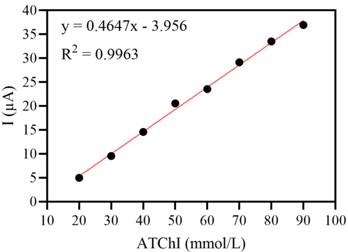
In order to find the ideal amount of substrate, the catalytic current was analyzed according to the concentration of ATChl (Figure 3). As the concentration of ATChl increased, there was a proportional increase in the current values, especially at concentrations above 100 ºmmol/L (data not shown), the current levels remain stable, suggesting that the enzyme load has reached saturation. Therefore, to guarantee a more effective analytical signal, a substrate concentration of 100 mmol/L was chosen for the next tests.

Repeatability
After prior optimization for carbon tube electrodes, GA-based immobilization, an enzyme load of 2U/electrode and a substrate concentration of 100 mmol/L, new tests were conducted to evaluate the accuracy of the biosensor. The result was a current of 46.98 µA with high repeatability (CV = 5.48 % in n = 10).
Pesticides detection
After optimizing the biosensor, the current signal was analyzed according to the concentration of the pesticides carbofuran and methyl parathion (Figure 4). It was observed that the relationship between pesticide concentration and enzyme inhibition follows a linear pattern (R2 = 0.99) between 5 - 25 µg/L of carbofuran and 10 - 45 µg/L of methyl parathion. Carbofuran and methyl parathion showed LODs of 0.210 µg/L and 0.292 µg/L, respectively. In addition, LOQs were 0.637 µg/L for carbofuran and 0.884 µg/L for methyl parathion.

Analytical curve of the inhibitors carbofuran and methyl parathion in 100 mmol/L ATChI. Operating conditions: enzyme load = 2U/electrode; phosphate buffer pH 7.2; biosensor incubation time in pesticide solutions = 10 min; working potential = +0.38 V versus Ag.
Tup water samples experiments
The effectiveness of the biosensor was evaluated in drinking water samples, testing the accuracy of the method with the addition of known quantities of carbofuran and methyl parathion (Table 2). An almost total recovery was achieved for both pesticides. The recovery rate for carbofuran ranged from 3.2 % to 19.6 %, while for methyl parathion it varied from 11.1º% to 2.8 %, in both analyses with n = 3.
DISCUSSION
The extensive use of carbamate (carbofuran) and organophosphate (methyl parathion) pesticides in agriculture has led to high levels of environmental contamination, especially in water bodies. These chemical compounds are highly toxic and can cause damage to human health. Accurate detection of these pesticides in samples intended for human consumption, such as water used for drinking, is essential for protecting public health (ALBUQUERQUE et al., 2016). Although, there are chromatographic methods for this analysis, they are expensive and time-consuming. For this reason, the development of alternative analytical technologies, such as biosensors, has been the subject of study. This study developed and optimized commercial DropSens electrodes for the determination of carbofuran and methyl parathion. These electrodes demonstrated the ability to detect small quantities of these pesticides in water supplies.
The ideal biosensor parameters were established in the initial phase of the study. Firstly, the impact on the signal current after altering the carbon electrode with carbon nanotubes was analyzed, and it was found that the inclusion of these nanotubes did not result in a substantial improvement in the carbon electrode current, unlike previous studies which indicated an improvement in the electrochemical signal with the presence of carbon nanotubes (GUISEPPI-ELIE et al., 2002; PÉREZ LÓPEZ & MERKOÇI, 2009). The similar current signal observed between carbon and carbon nanotube electrodes on DropSens printed electrodes can be attributed to the surface area. Carbon nanotube electrodes have excellent electrocatalytic properties due to their tubular structure, but carbon electrodes can also exhibit good electron transfer characteristics, especially when the carbon material is highly porous or well-structured (KARAMAN et al., 2021). Porous carbon electrodes exhibit higher electron transfer rates due to their increased surface area, making them exhibit superior charge storage and ion transfer capacities (FRIEDL & STIMMING, 2017; KARAMAN et al., 2021; SALINAS-TORRES et al., 2011). Given the similarities between carbon electrodes and carbon nanotubes, it was decided to use the carbon electrode to insert the cobalt phthalocyanine mediator due to its lower price.
In addition, the use of GA and Nafion for immobilizing enzymes in various enzyme units was examined. Enzyme immobilization plays a crucial role in impacting enzymatic activity, which in turn affects the analytical response (ARDUINI & AMINE, 2014). The catalysis rate of the enzyme immobilized by GA was 1.26 times higher than that of Nafion, possibly due to the better thermal and operational stability provided by glutaraldehyde, as observed by ANDRADES et al. (2019) when investigating the immobilization of the β-glucosidase enzyme. We; therefore, opted to use glutaraldehyde for enzyme immobilization in subsequent analyses.
The optimal concentration of the substrate ATChI was 100 mmol/L, the last concentration before saturation of the enzyme load, a value lower than that reported in a previous study for immobilized AChE enzyme which reported a value of 5 mmol/L (DOU et al., 2012). The optimal substrate concentration is influenced by factors such as the type of nanocomposite used, environmental conditions, and the specific characteristics of the enzyme-substrate interaction (ASSIS et al., 2010; DONG et al., 2013; DU et al., 2007). Therefore, under the conditions used in the present study, the optimal concentration of ATChI was 100 ºmmol/L.
Using the optimized analysis parameters, the next phase of the study involved testing the biosensor’s sensitivity to the pesticides carbofuran and methyl parathion. The biosensor developed showed LOD values similar to the conventional chromatographic method for both chemical compositions of the pesticides analyzed (PANO-FARIAS et al., 2017). Biosensors offer significant advantages in terms of speed, cost-effectiveness, simplicity and portability, making them suitable for routine and on-site testing (RODRIGUEZ-MOZAZ et al., 2007; YANG, 2023). However, chromatographic methods still have an advantage in terms of precision, reproducibility, the determination of multiple analytes and the handling of complex analytes (RODRIGUEZ-MOZAZ, 2007). The choice between these technologies depends on the specific requirements of the application, balancing the need for fast and cost-effective analysis with the demand for high precision and comprehensive results.
Regarding biosensors, other studies have also developed biosensors based on the immobilization of AChE for the detection of carbofuran and methyl parathion, but with more refined modifications. ZHOU et al. (2013) developed an amperometric AChE biosensor using SnO2 nanoparticles and carboxylic graphene to detect methyl parathion and carbofuran. The biosensor demonstrated LODs of 1.316×10⁻⁵ µg/L or methyl parathion and 1.1065×10⁻⁴ µg/L for carbofuran. A similar biosensor was developed by YANG et al. (2013), except that NiO nanoparticles were used instead of SnO2. The LODs presented were 1.316×10⁻⁵ µg/L for methyl parathion and 1.1065×10⁻⁴ µg/L for carbofuran and the LOQs were 2.632×10⁻⁵ µg/L or methyl parathion and 2.213×10⁻⁴ µg/L for carbofuran. Although, the LODs obtained are higher than those reported in the literature, the biosensor proposed here proves to be a promising alternative for detecting these pesticides in water, especially considering the typical concentrations found in environmental samples. In a study conducted by OTIENO et al. (2010), it was observed that carbofuran levels ranged from 5 to 495 µg/L in water samples from rivers near agricultural regions. In another study, MATTHIESSEN et al. (1995), reportedthat concentrations in headwater streams can reach 26 µg/L after heavy rains, while field drains have even higher concentrations, reaching 264 µg/L. For methyl parathion, PORTAL et al. (2019) reported concentrations ranging from 0.40 and 1.17 µg/L in drinking water. In terms of legislation, ordinance No. 2.914/2011 (SABESP, 2011) establishes a maximum contaminant level for carbofuran in drinking water of 7 µg/L and for methyl parathion of 9 µg/L. This biosensor has LOD and LOQ values below the established limits in both cases, thus, it is suitable for both detection and quantification.
Enzyme inhibition values of 0.53% and 0.65% were also recorded for carbofuran and methyl parathion, respectively. This means that the biosensor meets the requirements for use according to Brazilian legislation, which requires a maximum inhibition of 15 to 20% of AChE to detect carbamates and organophosphates in water (BRASIL, 2005). Thus, the biosensor was suitable for detecting the presence of these compounds.
In the final phase, the biosensor was tested with real water supply samples. Recovery rates were between 99% and 100% for carbofuran and between 100% and 103% for methyl parathion. Similar results were achieved in previous studies (AKKAD & SCHWACK, 2010; ARDUINI et al., 2006) falling within the acceptable range for the recovery of insecticides in water, between 79% and 123% (ALVES et al., 2018; ANDREOU & CLONIS, 2002; ARDUINI et al., 2006). The levels of variation in the detection results for carbofuran (CV = 19.6%) and methyl parathion (CV = 11.1%) are within acceptable limits for biosensors (CVs of up to 20%) (BONEVA et al., 2021). Thus, the biosensor created in this study showed satisfactory repeatability.
This study has some limitations. Although, the biosensor has shown efficacy in determining carbofuran and methyl parathion under controlled conditions, under real conditions some additional parameters should be considered, as the presence of potential chemical interferents in the water supply has not been investigated. Heavy metals can inhibit enzymatic activities and cause structural changes in biosensor proteins (CHOUTEAU et al., 2005), while other pesticides can lead to competitive inhibition (CHOUTEAU et al., 2005; TANIMOTO DE ALBUQUERQUE & FERREIRA, 2007); although, no synergistic or antagonistic effects were observed in a previous study (TEKAYA et al., 2014).
The pH and temperature of the water are also important parameters to consider. These variables are common in water samples from different sources and can significantly influence detection performance. AChE biosensors generally perform best at a pH of around 7.0, close to the physiological pH, as shown by some previous studies (RAGHU et al., 2012; YIN et al., 2009), increasing or decreasing the ideal pH can result in reduced enzymatic activity, leading to lower sensitivity and accuracy of the biosensor (RAGHU et al., 2012; ZHOU et al., 2013). Higher temperatures can lead to denaturation of the enzyme, reducing the performance of the biosensor. Conversely, lower temperatures can slow down enzymatic reactions, leading to slower response times and reduced sensitivity (HUSSEIN et al., 1983; MUKHOPADHYAY & PODDAR, 1990). Another limitation is the lack of variations in the concentration of the enzyme immobilization agents, GA and Nafion, which makes it impossible to determine the ideal concentration for immobilizing AChE.
CONCLUSION
This biosensor provided a potential alternative for detecting carbofuran and methyl parathion in drinking water. The biosensor presented LOD and LOQ values below the maximum contaminant levels tolerated by legislation, qualifying it not only for detection, but also for quantification of these pesticides. The biosensor also showed good recoveries and reproducibility. However, further studies are needed to demonstrate how the biosensor behaves in real environmental conditions, where there are chemical interferences and water samples at different pH and temperatures, as well as testing reproducibility, durability, sensitivity and cost viability.
ACKNOWLEDGEMENTS
The T.R.T. was partial funded by the Brazilian Federal Agencies: Coordenação de Aperfeiçoamento de Pessoal de Nível Superior (CAPES), Brazil - Finance Code 001, and by the Conselho Nacional de Desenvolvimento Científico e Tecnológico (CNPq), Brazil.
REFERENCES
-
AKKAD, R.; SCHWACK, W. Multi-enzyme inhibition assay for the detection of insecticidal organophosphates and carbamates by high-performance thin-layer chromatography applied to determine enzyme inhibition factors and residues in juice and water samples. Journal of Chromatography B: Analytical Technologies in the Biomedical and Life Sciences, v.878, n.17-18, p.1337-1345, 2010. Available from: <Available from: https://doi.org/10.1016/j.jchromb.2009.12.021 >. Accessed: May, 22, 2024. doi: 10.1016/j.jchromb.2009.12.021.
» https://doi.org/10.1016/j.jchromb.2009.12.021.» https://doi.org/10.1016/j.jchromb.2009.12.021 -
ALBUQUERQUE, A. F. et al. Pesticides in brazilian freshwaters: a critical review. Environmental Science: Processes & Impacts, v.18, n.7, p.779-787, 2016. Available from: <Available from: https://doi.org/10.1039/c6em00268d >. Accessed: Sept. 20, 2024. doi: 10.1039/c6em00268d.
» https://doi.org/10.1039/c6em00268d.» https://doi.org/10.1039/c6em00268d -
ALONSO, G. A. et al. Automatic electronic tongue for on-line detection and quantification of organophosphorus and carbamate pesticides using enzymatic screen printed biosensors. Analytical Letters, v.46, n.11, p.1743-1757, 2013. Available from: <Available from: https://doi.org/10.1080/00032719.2012.745087 >. Accessed: Apr. 25, 2024. doi: 10.1080/00032719.2012.745087.
» https://doi.org/10.1080/00032719.2012.745087.» https://doi.org/10.1080/00032719.2012.745087 -
ALVES, M. de F. et al. Electrochemical enzymatic fenitrothion sensor based on a tyrosinase/poly(2-hydroxybenzamide)-modified graphite electrode. Analytical Biochemistry, v.553, p.15-23, 2018. Available from: <Available from: https://doi.org/10.1016/j.ab.2018.05.014 >. Accessed: Jul. 05, 2024. doi: 10.1016/j.ab.2018.05.014.
» https://doi.org/10.1016/j.ab.2018.05.014.» https://doi.org/10.1016/j.ab.2018.05.014 -
ANDREOU, V. G.; CLONIS, Y. D. A portable fiber-optic pesticide biosensor based on immobilized cholinesterase and sol-gel entrapped bromcresol purple for in-field use. Biosensors and Bioelectronics, v.17, n.1-2, p.61-69, 2002. Available from: <Available from: https://doi.org/10.1016/S0956-5663(01)00261-5 >. Accessed: Jun. 10, 2024. doi: 10.1016/S0956-5663(01)00261-5.
» https://doi.org/10.1016/S0956-5663(01)00261-5.» https://doi.org/10.1016/S0956-5663(01)00261-5 -
ARDUINI, F. et al. Detection of carbamic and organophosphorous pesticides in water samples using a cholinesterase biosensor based on Prussian blue-modified screen-printed electrode. Analytica Chimica Acta, v.580, n.2, p.155-162, 2006. Available from: <Available from: https://doi.org/10.1016/j.aca.2006.07.052 >. Accessed: Apr. 15, 2024. doi: 10.1016/j.aca.2006.07.052.
» https://doi.org/10.1016/j.aca.2006.07.052.» https://doi.org/10.1016/j.aca.2006.07.052 -
ARDUINI, F.; AMINE, A. Biosensors based on enzyme inhibition. Advances in Biochemical Engineering/Biotechnology, v.140, p.299-326, 2014. Available from: <Available from: https://doi.org/10.1007/10_2013_224 >. Accessed: Sept. 25, 2024. doi: 10.1007/10_2013_224.
» https://doi.org/10.1007/10_2013_224.» https://doi.org/10.1007/10_2013_224 -
ASSIS, C. R. D. et al. Characterization of acetylcholinesterase from the brain of the Amazonian tambaqui (Colossoma macropomum) and in vitro effect of organophosphorus and carbamate pesticides. Environmental Toxicology and Chemistry, v.29, n.10, p.2243-2248, 2010. Available from: <Available from: https://doi.org/10.1002/etc.272 >. Accessed: Sept. 10, 2024. doi: 10.1002/etc.272.
» https://doi.org/10.1002/etc.272.» https://doi.org/10.1002/etc.272 -
BONEVA, I. et al. Development and validation of method for determination of organophosphorus pesticides traces in liver sample by GC-MS/MS-ion trap. Acta Chromatography, v.33, n.2, p.188-194, 2021. Available from: <Available from: https://doi.org/10.1556/1326.2020.00778 >. Accessed: Sept. 18, 2024. doi: 10.1556/1326.2020.00778.
» https://doi.org/10.1556/1326.2020.00778.» https://doi.org/10.1556/1326.2020.00778 -
BRASIL. Portaria MS n.o 518/2004. Brasil, 2005. Online. Available from: <Available from: https://bvsms.saude.gov.br/bvs/publicacoes/portaria_518_2004.pdf >. Accessed: Sept. 20, 2024.
» https://bvsms.saude.gov.br/bvs/publicacoes/portaria_518_2004.pdf -
BROSÉUS, J. et al. The differentiation of fibre- and drug-type cannabis seedlings by gas chromatography/mass spectrometry and chemometric tools. Forensic Science International, v.200, n.1-3, p.87-92, 2010. Available from: <Available from: https://doi.org/10.1016/j.forsciint.2010.03.034 >. Accessed: Mar. 12, 2024. doi: 10.1016/j.forsciint.2010.03.034.
» https://doi.org/10.1016/j.forsciint.2010.03.034.» https://doi.org/10.1016/j.forsciint.2010.03.034 -
CAO, J. et al. An overview on the mechanisms and applications of enzyme inhibition-based methods for determination of organophosphate and carbamate pesticides. Journal of Agricultural and Food Chemistry, v.68, n.28, p.7298-7315, 2020. Available from: <Available from: https://doi.org/10.1021/acs.jafc.0c01962 >. Accessed: Jul. 20, 2024. doi: 10.1021/acs.jafc.0c01962.
» https://doi.org/10.1021/acs.jafc.0c01962.» https://doi.org/10.1021/acs.jafc.0c01962 -
CHOUTEAU, C. et al. A bi-enzymatic whole cell conductometric biosensor for heavy metal ions and pesticides detection in water samples. Biosensors and Bioelectronics, v.21, n.2, p.273-281, 2005. Available from: <Available from: https://doi.org/10.1016/j.bios.2004.09.032 >. Accessed: Sept. 01, 2024. doi: 10.1016/j.bios.2004.09.032.
» https://doi.org/10.1016/j.bios.2004.09.032» https://doi.org/10.1016/j.bios.2004.09.032 -
CINTI, S. et al. Novel carbon black-cobalt phthalocyanine nanocomposite as sensing platform to detect organophosphorus pollutants at screen-printed electrode. Electrochimica Acta, v.188, p.574-581, 2016. Available from: <Available from: https://doi.org/10.1016/j.electacta.2015.11.069 >. Accessed: Sept. 07, 2024. doi: 10.1016/j.electacta.2015.11.069.
» https://doi.org/10.1016/j.electacta.2015.11.069.» https://doi.org/10.1016/j.electacta.2015.11.069 -
DE ANDRADES, D. et al. Immobilization and stabilization of different β-glucosidases using the glutaraldehyde chemistry: optimal protocol depends on the enzyme. International Journal of Biological Macromolecules, v.129, p.672-678, 2019. Available from: <Available from: https://doi.org/10.1016/j.ijbiomac.2019.02.057 >. Accessed: Sept. 01, 2024. doi: 10.1016/j.ijbiomac.2019.02.057.
» https://doi.org/10.1016/j.ijbiomac.2019.02.057.» https://doi.org/10.1016/j.ijbiomac.2019.02.057 -
DONG, J. et al. Quantum dot immobilized acetylcholinesterase for the determination of organophosphate pesticides using graphene-chitosan nanocomposite modified electrode. Analytical Methods, v.5, n.11, p.2866, 2013. Available from: <Available from: https://doi.org/10.1039/c3ay26599d >. Accessed: Sept. 08, 2024. doi: 10.1039/c3ay26599d.
» https://doi.org/10.1039/c3ay26599d.» https://doi.org/10.1039/c3ay26599d -
DOU, J. et al. A screen-printed, amperometric biosensor for the determination of organophosphorus pesticides in water samples. Journal of Environmental Sciences, v.24, n.5, p.956-962, 2012. Available from: <Available from: https://doi.org/10.1016/S1001-0742(11)60864-4 >. Accessed: Sept. 05, 2024. doi: 10.1016/S1001-0742(11)60864-4.
» https://doi.org/10.1016/S1001-0742(11)60864-4.» https://doi.org/10.1016/S1001-0742(11)60864-4 -
DU, C. X. et al. A novel procedure for fabricating flexible screen-printed electrodes with improved electrochemical performance. IOP Conference Series: Materials Science and Engineering, v.137, p.012060, 2016. Available from: <Available from: https://doi.org/10.1088/1757-899X/137/1/012060 >. Accessed: Jun. 30, 2024. doi: 10.1088/1757-899X/137/1/012060.
» https://doi.org/10.1088/1757-899X/137/1/012060.» https://doi.org/10.1088/1757-899X/137/1/012060 -
DU, D. et al. Immobilization of acetylcholinesterase on gold nanoparticles embedded in sol-gel film for amperometric detection of organophosphorous insecticide. Biosensors and Bioelectronics, v.23, n.1, p.130-134, 2007. Available from: <Available from: https://doi.org/10.1016/j.bios.2007.03.008 >. Accessed: Sept. 07, 2024. doi: 10.1016/j.bios.2007.03.008.
» https://doi.org/10.1016/j.bios.2007.03.008.» https://doi.org/10.1016/j.bios.2007.03.008 -
FANJUL-BOLADO, P. et al. Electrochemical characterization of screen-printed and conventional carbon paste electrodes. Electrochimica Acta, v.53, n.10, p.3635-3642, 2008. Available from: <Available from: https://doi.org/10.1016/j.electacta.2007.12.044 >. Accessed: Jul. 15, 2024. doi: 10.1016/j.electacta.2007.12.044.
» https://doi.org/10.1016/j.electacta.2007.12.044.» https://doi.org/10.1016/j.electacta.2007.12.044 -
FATUNSIN, O. T. et al. Dietary risk assessment of organophosphate and carbamate pesticide residues in commonly eaten food crops. Scientific African, v.8, e00442, 2020. Available from: <Available from: https://doi.org/10.1016/j.sciaf.2020.e00442 >. Accessed: Feb. 15, 2024. doi: 10.1016/j.sciaf.2020.e00442.
» https://doi.org/10.1016/j.sciaf.2020.e00442.» https://doi.org/10.1016/j.sciaf.2020.e00442 -
FRIEDL, J.; STIMMING, U. Determining electron transfer kinetics at porous electrodes. Electrochim. Electrochimica Acta, v.227, p.235-245, 2017. Available from: <Available from: https://doi.org/10.1016/j.electacta.2017.01.010 >. Accessed: Jul. 15, 2024. doi: 10.1016/j.electacta.2017.01.010.
» https://doi.org/10.1016/j.electacta.2017.01.010.» https://doi.org/10.1016/j.electacta.2017.01.010 -
GUISEPPI-ELIE, A. et al. Direct electron transfer of glucose oxidase on carbon nanotubes. Nanotechnology, v.13, n.5, p.559-564, 2002. Available from: <Available from: https://doi.org/10.1088/0957-4484/13/5/303 >. Accessed: May, 12, 2024. doi: 10.1088/0957-4484/13/5/303.
» https://doi.org/10.1088/0957-4484/13/5/303.» https://doi.org/10.1088/0957-4484/13/5/303 -
JIRASIRICHOTE, A. et al. Voltammetric detection of carbofuran determination using screen-printed carbon electrodes modified with gold nanoparticles and graphene oxide. Talanta, v.175, p.331-337, 2017. Available from: <Available from: https://doi.org/10.1016/j.talanta.2017.07.050 >. Accessed: Sept. 01, 2024. doi: 10.1016/j.talanta.2017.07.050.
» https://doi.org/10.1016/j.talanta.2017.07.050.» https://doi.org/10.1016/j.talanta.2017.07.050 -
KADARA, R. O. et al. Characterisation of commercially available electrochemical sensing platforms. Sensors and Actuators B: Chemical, v.138, n.2, p.556-562, 2009. Available from: <Available from: https://doi.org/10.1016/j.snb.2009.01.044 >. Accessed: Sept. 10, 2024. doi: 10.1016/j.snb.2009.01.044.
» https://doi.org/10.1016/j.snb.2009.01.044» https://doi.org/10.1016/j.snb.2009.01.044 -
KARAMAN, C. et al. Sustainable electrode material for high-energy supercapacitor: biomass-derived graphene-like porous carbon with three-dimensional hierarchically ordered ion highways. Physical Chemistry Chemical Physics, v.23, n.22, p.12807-12821, 2021. Available from: <Available from: https://doi.org/10.1039/D1CP01726H >. Accessed: Jun. 05, 2024. doi: 10.1039/D1CP01726H.
» https://doi.org/10.1039/D1CP01726H.» https://doi.org/10.1039/D1CP01726H -
KUNPATEE, K. et al. A new disposable electrochemical sensor for the individual and simultaneous determination of carbamate pesticides using a nanocomposite modified screen-printed electrode. Microchemical Journal, v.177, p.107318, 2022. Available from: <Available from: https://doi.org/10.1016/j.microc.2022.107318 >. Accessed: May, 10, 2024. doi: 10.1016/j.microc.2022.107318.
» https://doi.org/10.1016/j.microc.2022.107318.» https://doi.org/10.1016/j.microc.2022.107318 -
MATTHIESSEN, P. et al. Use of a Gammarus pulex bioassay to measure the effects of transient carbofuran runoff from farmland. Ecotoxicology and Environmental Safety, v.30, n.2, p.111-119, 1995. Available from: <Available from: https://doi.org/10.1006/eesa.1995.1013 >. Accessed: Sept. 01, 2024. doi: 10.1006/eesa.1995.1013.
» https://doi.org/10.1006/eesa.1995.1013.» https://doi.org/10.1006/eesa.1995.1013 -
MONTALI, L. et al. Multienzyme chemiluminescent foldable biosensor for on-site detection of acetylcholinesterase inhibitors. Biosensors and Bioelectronics, v.162, p.112232, 2020. Available from: <Available from: https://doi.org/10.1016/j.bios.2020.112232 >. Accessed: Jun. 15, 2024. doi: 10.1016/j.bios.2020.112232.
» https://doi.org/10.1016/j.bios.2020.112232.» https://doi.org/10.1016/j.bios.2020.112232 -
MONTES, R. et al. Electrochemical biosensor based on optimized biocomposite for organophosphorus and carbamates pesticides detection. Journal of Nanomaterials, v.2018, 2018. Available from: <Available from: https://doi.org/10.1155/2018/7093606 >. Accessed: Sept. 05, 2024. doi: 10.1155/2018/7093606.
» https://doi.org/10.1155/2018/7093606.» https://doi.org/10.1155/2018/7093606 -
MOSTAFALOU, S.; ABDOLLAHI, M. Pesticides and human chronic diseases: evidences, mechanisms, and perspectives. Toxicology and Applied Pharmacology, v.268, n.2, p.157-177, 2013. Available from: <Available from: https://doi.org/10.1016/j.taap.2013.01.025 >. Accessed: Jan. 10, 2024. doi: 10.1016/j.taap.2013.01.025.
» https://doi.org/10.1016/j.taap.2013.01.025.» https://doi.org/10.1016/j.taap.2013.01.025 -
OTIENO, P. O. et al. Soil and water contamination with carbofuran residues in agricultural farmlands in Kenya following the application of the technical formulation. Journal of Environmental Science and Health, Part B, v.45, n.2, p.137-144, 2010. Available from: <Available from: https://doi.org/10.1080/03601230903472058 >. Accessed: Sept. 15, 2024. doi: 10.1080/03601230903472058.
» https://doi.org/10.1080/03601230903472058.» https://doi.org/10.1080/03601230903472058 -
PANO-FARIAS, N. S. et al. Validation and assessment of matrix effect and uncertainty of a gas chromatography coupled to mass spectrometry method for pesticides in papaya and avocado samples. Journal of Food and Drug Analysis, v.25, n.3, p.501-509, 2017. Available from: <Available from: https://doi.org/10.1016/j.jfda.2016.09.005 >. Accessed: Apr. 20, 2024. doi: 10.1016/j.jfda.2016.09.005.
» https://doi.org/10.1016/j.jfda.2016.09.005.» https://doi.org/10.1016/j.jfda.2016.09.005 -
PCHELINSTEV, N. A.; MILLNER, P. A. A novel procedure for rapid surface functionalisation and mediator loading of screen-printed carbon electrodes. Analytica Chimica Acta, v.612, n.2, p.190-197, 2008. Available from: <Available from: https://doi.org/10.1016/j.aca.2008.02.022 >. Accessed: Feb. 28, 2024. doi: 10.1016/j.aca.2008.02.022.
» https://doi.org/10.1016/j.aca.2008.02.022.» https://doi.org/10.1016/j.aca.2008.02.022 -
PÉREZ LÓPEZ, B.; MERKOÇI, A. Improvement of the electrochemical detection of catechol by the use of a carbon nanotube based biosensor. Analyst, v.134, n.1, p.60-64, 2009. Available from: <Available from: https://doi.org/10.1039/b808387h >. Accessed: Apr. 18, 2024. doi: 10.1039/b808387h.
» https://doi.org/10.1039/b808387h.» https://doi.org/10.1039/b808387h -
PÉREZ-FERNÁNDEZ, B. et al. Electrochemical (bio)sensors for pesticides detection using screen-printed electrodes. Biosensors, v.10, n.4, p.32, 2020. Available from: <Available from: https://doi.org/10.3390/bios10040032 >. Accessed: Mar. 30, 2024. doi: 10.3390/bios10040032.
» https://doi.org/10.3390/bios10040032.» https://doi.org/10.3390/bios10040032 -
PORTAL, T. P. et al. An integrated assessment of water quality in a land reform settlement in northern Rio de Janeiro State, Brazil. Heliyon, v.5, n.3, e01295, 2019. Available from: <Available from: https://doi.org/10.1016/j.heliyon.2019.e01295 >. Accessed: Sept. 05, 2024. doi: 10.1016/j.heliyon.2019.e01295.
» https://doi.org/10.1016/j.heliyon.2019.e01295.» https://doi.org/10.1016/j.heliyon.2019.e01295 -
QI, J. et al. A novel acetylcholinesterase biosensor with dual-recognized strategy based on molecularly imprinted polymer. Sensors and Actuators B: Chemical, v.337, 2021. Available from: <Available from: https://doi.org/10.1016/j.snb.2021.129760 >. Accessed: May, 05, 2024. doi: 10.1016/j.snb.2021.129760.
» https://doi.org/10.1016/j.snb.2021.129760.» https://doi.org/10.1016/j.snb.2021.129760 -
RODRIGUEZ-MOZAZ, S. et al. Advantages and limitations of on-line solid phase extraction coupled to liquid chromatography-mass spectrometry technologies versus biosensors for monitoring of emerging contaminants in water. Journal of Chromatography A, v.1152, n.1-2, p.97-115, 2007. Available from: <Available from: https://doi.org/10.1016/j.chroma.2007.01.046 >. Accessed: May, 15, 2024. doi: 10.1016/j.chroma.2007.01.046.
» https://doi.org/10.1016/j.chroma.2007.01.046.» https://doi.org/10.1016/j.chroma.2007.01.046 -
SABESP. Portaria nº 2.914, de 12 de dezembro de 2011. 2011. Available from: <Available from: https://www.sabesp.com.br/site/uploads/file/asabesp_doctos/portariams291412122011.pdf >. Accessed: Sept. 29, 2024.
» https://www.sabesp.com.br/site/uploads/file/asabesp_doctos/portariams291412122011.pdf -
SALINAS-TORRES, D. et al. Study on electroactive and electrocatalytic surfaces of single walled carbon nanotube-modified electrodes. Electrochimica Acta, v.56, n.5, p.2464-2470, 2011. Available from: <Available from: https://doi.org/10.1016/j.electacta.2010.11.023 >. Accessed: Sept. 03, 2024. doi: 10.1016/j.electacta.2010.11.023.
» https://doi.org/10.1016/j.electacta.2010.11.023.» https://doi.org/10.1016/j.electacta.2010.11.023 -
SANTA CATARINA. Manual de orientação para coleta de água e amostras ambientais. Florianópolis, Aug 20, 2018. Online. Available from: <Available from: https://lacen.saude.sc.gov.br/arquivos/MOCAAA.pdf >. Accessed: Sept. 18, 2024.
» https://lacen.saude.sc.gov.br/arquivos/MOCAAA.pdf -
SHARMA, A. et al. Validation of analytical methods used for pesticide residue detection in fruits and vegetables. Food Analytical Methods, v.14, n.9, p.1919-1926, 2021. Available from: <Available from: https://doi.org/10.1007/s12161-021-02027-y >. Accessed: Sept. 20, 2024. doi: 10.1007/s12161-021-02027-y.
» https://doi.org/10.1007/s12161-021-02027-y.» https://doi.org/10.1007/s12161-021-02027-y -
SKLÁDAL, P. Determination of organophosphate and carbamate pesticides using a cobalt phthalocyanine-modified carbon paste electrode and a cholinesterase enzyme membrane. Analytica Chimica Acta, v.252, n.1-2, p.11-15, 1991. Available from: <Available from: https://doi.org/10.1016/0003-2670(91)87190-I >. Accessed: Jan. 25, 2024. doi: 10.1016/0003-2670(91)87190-I.
» https://doi.org/10.1016/0003-2670(91)87190-I.» https://doi.org/10.1016/0003-2670(91)87190-I -
SYAFRUDIN, M. et al. Pesticides in drinking water - a review. International Journal of Environmental Research and Public Health, v.18, p.1-15, 2021. Available from: <Available from: https://doi.org/10.3390/ijerph18020468 >. Accessed: Sept. 05, 2024. doi: 10.3390/ijerph18020468.
» https://doi.org/10.3390/ijerph18020468.» https://doi.org/10.3390/ijerph18020468 -
TANIMOTO DE ALBUQUERQUE, Y. D.; FERREIRA, L. F. Amperometric biosensing of carbamate and organophosphate pesticides utilizing screen-printed tyrosinase-modified electrodes. Analytica Chimica Acta, v.596, n.2, p.210-221, 2007. Available from: <Available from: https://doi.org/10.1016/j.aca.2007.06.013 >. Accessed: Sept. 10, 2024. doi: 10.1016/j.aca.2007.06.013.
» https://doi.org/10.1016/j.aca.2007.06.013.» https://doi.org/10.1016/j.aca.2007.06.013 -
WANG, L. et al. Preparation and properties of a dual-function cellulose nanofiber-based bionic biosensor for detecting silver ions and acetylcholinesterase. Journal of Hazardous Materials, v.403, p.123921, 2021. Available from: <Available from: https://doi.org/10.1016/j.jhazmat.2020.123921 >. Accessed: Apr. 10, 2024. doi: 10.1016/j.jhazmat.2020.123921.
» https://doi.org/10.1016/j.jhazmat.2020.123921.» https://doi.org/10.1016/j.jhazmat.2020.123921 -
WEI, H. et al. Rapid hydrolysis and electrochemical detection of trace carbofuran at a disposable heated screen-printed carbon electrode. Analyst, v.133, n.11, p.1619, 2008. Available from: <Available from: https://doi.org/10.1039/b806750c >. Accessed: Sept. 05, 2024. doi: 10.1039/b806750c.
» https://doi.org/10.1039/b806750c.» https://doi.org/10.1039/b806750c -
YANG, H. Analysis on the application of biosensor in forensic detection. Highlights in Science, Engineering and Technology, v.73, p.243-248, 2023. Available from: <Available from: https://doi.org/10.54097/hset.v73i.12980 >. Accessed: Jun. 10, 2024. doi: 10.54097/hset.v73i.12980.
» https://doi.org/10.54097/hset.v73i.12980.» https://doi.org/10.54097/hset.v73i.12980 -
YANG, L. et al. Development of a biosensor based on immobilization of acetylcholinesterase on NiO nanoparticles-carboxylic graphene-Nafion modified electrode for detection of pesticides. Talanta, v.113, p.135-141, 2013. Available from: <Available from: https://doi.org/10.1016/j.talanta.2013.03.025 >. Accessed: Sept. 01, 2024. doi: 10.1016/j.talanta.2013.03.025.
» https://doi.org/10.1016/j.talanta.2013.03.025.» https://doi.org/10.1016/j.talanta.2013.03.025 -
ZHOU, Q. et al. Acetylcholinesterase biosensor based on SnO2 nanoparticles-carboxylic graphene-Nafion modified electrode for detection of pesticides. Biosensors and Bioelectronics, v.49, p.25-31, 2013. Available from: <Available from: https://doi.org/10.1016/j.bios.2013.04.037 >. Accessed: Jul. 05, 2024. doi: 10.1016/j.bios.2013.04.037.
» https://doi.org/10.1016/j.bios.2013.04.037.» https://doi.org/10.1016/j.bios.2013.04.037 -
ZHU, Q. et al. The solvation environment of molecularly dispersed cobalt phthalocyanine determines methanol selectivity during electrocatalytic CO2 reduction. Nature Catalysis, p.1-13, 2024. Available from: <Available from: https://doi.org/10.1038/s41929-024-01190-9 >. Accessed: Sept. 10, 2024. doi: 10.1038/s41929-024-01190-9.
» https://doi.org/10.1038/s41929-024-01190-9.» https://doi.org/10.1038/s41929-024-01190-9