 Psychosocial Interventions for Elderly People with Bipolar Disorder: Systematic Review with Meta-Analysis
Abstract:
Bipolar Affective Disorder is a chronic mental disorder that can have profound consequences for elderly people. The objective of this study was to analyse the evidence of the effectiveness of psychosocial and Cognitive-Behavioral Therapy-based interventions for bipolar disorder. To this end, a systematic review with meta-analysis was conducted based on randomized controlled trial, published between 2012 and 2022, that included elderly people in their samples. The search, carried out in the PubMed, SciELO, CENTRAL, and PePSIC databases, resulted in 1069 articles, 15 of which were included in this research. The recommendations of PRISMA and JBI were used. It was found that psychoeducation and, especially, interventions in Cognitive-Behavioral Therapy can improve symptoms of this disorder. Through meta-analysis, an effect in favour of Cognitive-Behavioral Therapy was observed for reducing mania, but not for depression. However, more studies are needed, as none conducted exclusively with elderly people were found.
Keywords:
bipolar disorder; psychosocial intervention; aging; cognitive behavioral therapy; randomized controlled trial
Resumo:
O Transtorno Afetivo Bipolar é um transtorno mental crônico que pode acarretar sérias consequências à pessoa idosa. O objetivo deste estudo foi analisar as evidências de eficácia de intervenções psicossociais e baseadas em Terapia Cognitivo-Comportamental para a bipolaridade. Para tanto foi realizada uma revisão sistemática com metanálise a partir de ensaios clínicos randomizados, publicados entre 2012 e 2022, que contivessem pessoas idosas em suas amostras. A busca, realizada nas bases de dados Pubmed, SciELO, CENTRAL e PePSIC, resultou em 1069 artigos, sendo incluídos 15 para esta pesquisa. Foram utilizadas as recomendações do PRISMA e da JBI. Constatou-se que psicoeducação e, especialmente, intervenções em Terapia Cognitivo-Comportamental podem melhorar sintomas neste transtorno. Por meio da metanálise observou-se efeito a favor da Terapia Cognitivo-Comportamental para redução de mania, mas não para depressão. São necessários, contudo, mais estudos, visto que não foi encontrado nenhum conduzido exclusivamente com pessoas idosas.
Palavras-chave:
transtorno bipolar; intervenção psicossocial; envelhecimento; terapia cognitivo-comportamental; ensaio clínico controlado randomizado
Resumen:
El trastorno afectivo bipolar es un trastorno mental crónico que puede tener graves consecuencias en personas mayores. Este estudio tuvo como objetivo analizar evidencia de efectividad de intervenciones psicosociales basadas en terapia cognitivo-conductual para el trastorno bipolar. Se realizó una revisión sistemática con metanálisis basada en ensayos clínicos aleatorizados, publicados entre 2012-2022, que incluyeron personas mayores en sus muestras. La búsqueda, realizada en las bases de datos Pubmed, SciELO, CENTRAL y PePSIC, resultó en 1069 artículos, de los cuales 15 fueron incluidos para esta investigación. Se utilizaron recomendaciones de PRISMA y JBI. Se comprobó que la psicoeducación y, especialmente, las intervenciones en Terapia Cognitivo-Conductual pueden mejorar síntomas en este trastorno. Mediante el metaanálisis, se observó un efecto a favor de la Terapia Cognitivo-Conductual para reducir la manía, pero no para la depresión. Sin embargo, se necesitan más estudios, ya que ninguno fue realizado exclusivamente con personas mayores.
Palabras clave:
trastorno bipolar; intervención psicosocial; envejecimiento; terapia cognitivo-conductual; ensayo clínico controlado aleatório
The elderly population has increased significantly worldwide in developed and low- and middle-income countries (Souza et al., 2021 ). The number of mental disorders in old age increases as the population ages (Oliveira & Savoia, 2016 ), and health professionals must be prepared to deal with them at this stage (Arenas et al., 2019 ).
Bipolar affective disorder (BAD) is among the mental illnesses present in old age. BAD is chronic and characterized by pathological mood swings, such as manic, hypomanic, or depressive episodes, which influence the individual’s life (American Psychiatric Association [APA], 2014 ). BAD affects mainly functionality (Shobassy, 2021 ) and quality of life at this stage when considering the physical and psychiatric comorbidities specific to old age (Arenas et al., 2019 ).
According to Arnold et al. ( 2021 ), psychosocial interventions adopted concomitantly with pharmacotherapy may have a positive impact on people with bipolar disorder. Regarding psychotherapy, Cognitive-Behavioral Therapy (CBT) is an approach that has effective results for BAD and good applicability for elderly people (Oliveira & Savoia, 2016 ).
However, little is known about BAD in old age (Arnold et al., 2021 ; Shobassy, 2021 ), and more studies in geriatrics and gerontology on the disorder are essential. In addition to developing isolated research, conducting systematic reviews, including meta-analysis, is also important, as they present scientific evidence that favours clinical decisions (Galvão & Ricarte, 2019 ). One example is the review by Chiang et al. ( 2017 ), which included 19 studies comparing CBT associated with pharmacotherapy with treatment as usual (TAU) in BAD. They observed positive effects of moderate size in favour of CBT through meta-analysis. Importantly, the average age of the sample ranged from 34 to 44 years, and elderly people were not included.
In this context, the objective of this study was to analyse the evidence of the effectiveness of psychosocial and Cognitive-Behavioral Therapy-based interventions for bipolar disorder. Specifically, the aim was to: (1) describe the psychosocial and CBT-based interventions that have been conducted for BAD in old age; and (2) compare the effects of CBT-based interventions with other interventions or TAU in older people with BAD.
Method
Design and registration of the protocol
Registered in the International Prospective Register of Systematic Reviews (PROSPERO) platform under code (CRD42023432869), this study was conducted following the Preferred Reporting Items for Systematic Reviews and Meta-Analyses Protocols (PRISMA-P) guidelines (Moher et al., 2015 ) and methodological guidelines from the Joanna Briggs Institute (JBI) (Aromataris & Munn, 2020 ). The research question was formulated using the acronym PICOT, where “P” (target population) represents older people with BAD; “I” (focus of intervention), Psychosocial interventions/CBT; “C” (comparison), TAU, waiting list, or other psychosocial interventions; “O” (outcomes), better course, improvement in any symptom, or behavioural changes; and “T” (influence of intervention over time), any point in time.
Search methods for study identification
Studies published from 2012 to 2022 in the PubMed, Scielo (Scientific Electronic Library Online), CENTRAL (Cochrane Central Register for Controlled Trials), and PePSIC (Periódicos Eletrônicos de Psicologia) databases were searched between September 2022 and February 2023. These databases were chosen due to their relevance to the topic. The used descriptors were related to the study design, disease, intervention, and population, consisting of randomization OR randomised OR randomized OR randomly OR clinical trial OR trial OR randomised trial OR randomized clinical trial AND bipolar OR bipolarity OR bipolar disorder OR bipolar mood disorder OR bipolar affective disorder OR manic depressive psychosis AND therapy OR intervention OR psychosocial intervention OR therapy psychosocial OR therapy cognitive behavioral OR cognitive behavioral OR cognitive behavior AND elderly OR old age OR geriatric OR late life OR older adult OR elderly adult.
Inclusion criteria
Eligible studies were randomized controlled trial that met the PICOT acronym. As no articles were found that exclusively included elderly people (60 years or older – age criterion used in Brazil; World Health Organization [WHO], 2005), those whose samples included the participation of these individuals and when the participation of individuals aged 18 or older (18+) was indicated were included.
Exclusion criteria
The following articles were excluded: duplicates; theoretical; literature reviews (narrative, systematic, etc.); qualitative only; whose samples were composed solely of adults (18–59 years old); those that did not present results; that focused on a disease other than BAD; that did not present data or results specific to BAD; that did not focus on analysing the effectiveness of interventions; and that addressed only drug interventions.
Procedures
The RAYYAN software ( https://rayyan.qcri.org/users/sign_in ) was used to screen the retrieved publications. Two judges performed an initial reading of the titles and abstracts individually and at the same time to analyse the inclusion and exclusion criteria. Those that met these criteria were read in full, also individually, and again considering these criteria. In cases of disagreement, a third judge analyzed the studies in disagreement to reach a consensus.
The JBI tool was used to assess the risk of bias. Two reviewers, also independently, performed the assessment, and the disagreements were analyzed by a third one. To classify the risk of bias, scores with up to 49% of statements marked as “yes” were classified as elevated risk, from 50% to 70% as moderate, and above 70% as low risk of bias. The quality of evidence for the relevant outcomes of the meta-analysis was analyzed as recommended by the GRADEpro GDT software ( https://www.gradepro.org ).
Data analysis. Estimates were obtained from each study according to the post-intervention (Higgins et al., 2019 ). They were expressed as the standardized mean difference between groups ( SMD ). Calculations were performed using fixed and random effects models. Comparisons between CBT-based interventions and other methods considered traditional, such as medication and psychoeducation, were also analyzed. Pilot studies were not included in this analysis. Heterogeneity between studies was examined using Cochran’s Q test and the I² statistic, with values higher than 50% being considered an indication of high heterogeneity (Higgins et al., 2003 ). The random effects model was chosen for the analysis and, therefore, heterogeneity was included. All analyses were performed using the R programming language version 4.2.2 and the meta package (Balduzzi et al., 2019 ). A p -value lower than 0.05 was adopted as significant.
Results
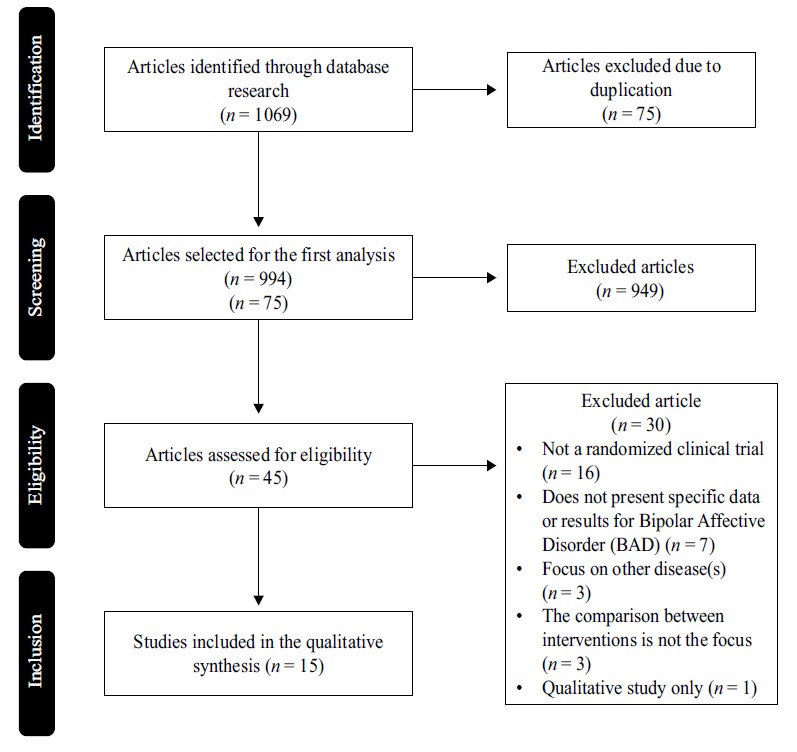
A total of 1,069 articles were retrieved from the selected databases. Of these, 75 were excluded because they were duplicates and another 949 were excluded after screening of titles and abstracts (first analysis) due to the inclusion and exclusion criteria. After this stage, 45 studies were read in full and 30 were excluded because they did not meet the established criteria (second analysis). Therefore, 15 articles were eligible to be analyzed in this systematic review ( Figure 1 ).
Table 1 shows the characteristics of the studies selected for this systematic review, specifically the analyzed intervention and comparison groups, as well as a summary of the obtained results. Thirteen of them were not included in the meta-analysis despite being part of the systematic review because they did not contain similar interventions that would allow for a statistical analysis to be conducted ( N = 6); they did not have the proposed comparison groups ( N = 1); they were pilot studies ( N = 4); they did not have a common outcome ( N = 1); and did not provide the information necessary to conduct a meta-analysis ( N = 1).
Two articles were selected for the meta-analysis ( Table 2 ). They contributed to comparing the effects of CBT-based interventions with other interventions or TAU in samples containing elderly people with BAD.
Isasi et al. ( 2014 ) compared CBT, psychoeducation, and medication treatment to TAU (pharmacological treatment). The experimental group received an initial psychoeducation session about BAD and was subsequently trained in anxiety management techniques (relaxation, breathing, self-instruction, and cognitive distraction), sleep habits, detection of dysfunctional thoughts, use of cognitive restructuring, conflict resolution, and interpersonal relationships, among others. In the research by Lauder et al. ( 2015 ), the intervention group combined basic psychoeducational material with discussion forums that contained CBT techniques, while the comparison group received psychoeducational material and participated in asynchronous discussion forums.
Table 2 shows different instruments used to assess depressive and manic symptoms in the two studies, which represents heterogeneity between them. Lauder et al. ( 2015 ) used the Montgomery-Asberg Depression Rating Scale (MADRS) to screen for depression and the Altman Self-Rating Mania Scale (ASRM) for mania, both self-assessment instruments. Isasi et al. ( 2014 ) used the Beck’s Depression Inventory (BDI), a self-assessment instrument, to assess depressive symptoms, and the Young Mania Rating Scale (YMRS) to assess manic episodes, which was assessed by the clinician.
Table 2 also shows the measures extracted from each study and the estimation of the statistical analysis. Importantly, time refers to 12 months post-intervention.
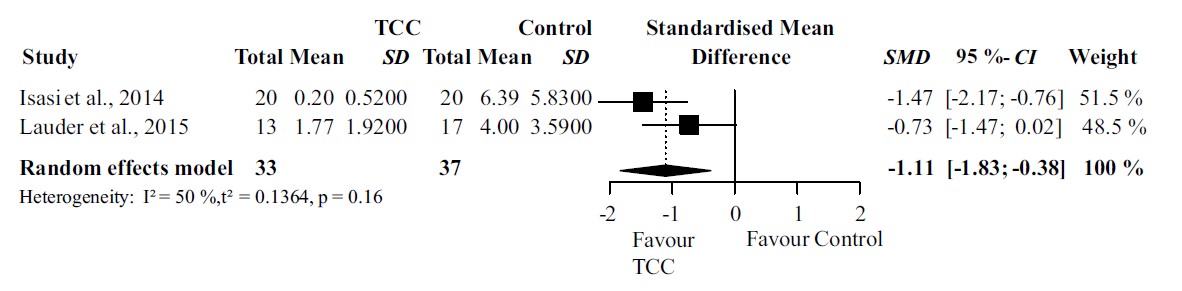
Figure 2 shows that the meta-analysis found an effect in favour of CBT-based interventions for reducing mania scores ( SMD = −1.11, 95% CI = −1.83: −0.38), with 50% non-significant heterogeneity ( I²: 50%, p = 0.16). The meta-analysis found no significant effect for depression ( Figure 3 ), presenting an elevated level of heterogeneity (I²: 86%, p < 0.001).

Based on the two studies, there is moderate certainty evidence that CBT-based interventions reduce symptoms of mania in older people compared to psychoeducation or TAU, with a moderate effect size, in the 12-month period ( MD: −1.11, 95% CI −1.83 to −0.38). Moreover, there is very low-quality evidence, with a small effect size, at 12-month follow-up that CBT-based interventions reduce depressive symptoms of BAD in later life compared with psychoeducation or TAU ( MD: −0.52, 95% CI −1.84 to 0.80).
Discussion
No studies selected for this systematic review reported investigations only with elderly people with BAD or presented results exclusive to this segment of the population. Furthermore, no articles described adjustments in intervention protocols for individuals who were in old age. Therefore, the results of this research need to be analyzed with caution when attempting to answer its question and objectives.
Adulthood seems to be the target among the retrieved studies, including individuals of different age groups, such as between 18 and 65 years old (Isasi et al., 2014 ; Jones et al., 2015 ; Lauder et al., 2015 ; Murray et al., 2021 ; Sylvia et al., 2019 ). Importantly, an elderly person in developed countries is considered to be someone aged 65 or over; in developing countries, such as Brazil, the criterion is 60 years old (WHO, 2005 ), as established in this article. Therefore, some of the analyzed studies may have outlined interventions focused on adults.
Although the diagnostic criteria for BAD in adulthood are similar to those for old age (Arenas et al., 2019 ), studying age-specific characteristics is essential (APA, 2014 ). In the elderly, BAD presents more cognitive impairments, with a greater risk of functional decline and development of dementia (Beunders et al., 2023 ; Shobassy, 2021 ), strongly impacting the quality of life and functionality of these individuals (Arenas et al., 2019 ), as well as a greater risk of premature death (Beunders et al., 2023 ). Typically, the presence of depressive symptoms in BAD at this stage of life is more frequent than manic/hypomanic symptoms (Bowden, 2011 ). Therefore, psychosocial interventions for BAD need to be developed or adapted for older people and evaluated only with participants in old age.
Furthermore, BAD is characterized by sleep disturbances in both the depressive and manic phases (APA, 2014 ). However, the sleep cycle is already altered in old age. Thus, there is a tendency for elderly people to complain of insomnia, poorly restorative sleep, and daytime sleepiness (Pereira, 2017 ). Zdanys and Steffens ( 2015 ) described that elderly people have a reduction in melatonin (a hormone that regulates the circadian cycle), reducing the need for sleep, which constitutes another significant aspect to be considered when planning interventions with this group and may moderate their results. Thus, Lee and Harvey ( 2015 ) addressed BAD in comorbidity with insomnia. According to the authors, individualized therapy, with specific guidelines relative to BAD and sleep, may benefit the treatment and improve the quality of sleep.
In addition to sleep disorders, BAD may be accompanied by anxiety disorders. Ellard et al. ( 2017 ) observed that transdiagnostic CBT associated with medication improved anxiety symptoms in patients with BAD, characterizing a possible and viable intervention for comorbidities in this disorder, such as anxiety.
Another comorbidity related to BAD is substance use (APA, 2014 ). Wenze et al. ( 2016 ) evaluated a CBT-based intervention for individuals with BAD and drug and/or alcohol use. The authors found higher improvements in BAD symptoms in the intervention group than in the comparison group, demonstrating the viability and effectiveness of CBT in these cases.
Sylvia et al. ( 2019 ) analyzed an intervention based on CBT associated with a better lifestyle for people with BAD, involving physical exercise, nutrition, and well-being therapies, called Nutrition Exercise Wellness Treatment (NEW Tx). It allowed improvements in symptoms of depression and the overall severity of BAD.
Online interventions for BAD have gained significance with changes in society. They are considered viable, with good acceptance (Murray et al., 2021 ) and low impact, appropriate to improve medication adherence (Moore et al., 2015 ), and as one more resource to reduce depressive symptoms (Depp et al., 2015 ; Lauder et al., 2015 ). Depp et al. ( 2015 ), for instance, observed advantages in the mood symptoms of participants in the mobile category relative to the comparison.
Some online strategies used in the retrieved articles are early warning systems, personalized questionnaires for mood symptoms (Depp et al., 2015 ), messages about the importance of medication adherence, reminders regarding medication times, mood assessment, and psychoeducation (Moore et al., 2015 ). Lauder et al. ( 2015 ) observed that a set of diverse techniques applied online was superior to interventions that had fewer online resources. Murray et al. ( 2021 ) found that the remote intervention based on Mindfulness was not superior to the psychoeducation group in promoting the quality of life of people with advanced-stage BAD.
Psychoeducation, whether remote or in-person, is a strategy that was present in different retrieved studies. It helps with treatment adherence (Pakpour et al., 2017 ), improving functionality (Sajatovic et al., 2018 ) and interpersonal relationships (Morriss et al., 2016 ). Furthermore, this technique is well accepted (Morriss et al., 2016 ), requiring less training of psychotherapists (Parikh et al., 2012 ) and showing a low cost (Morriss et al., 2016 ; Parikh et al., 2012 ).
This result corroborates other literature findings that have highlighted psychoeducation as one of the resources that has good evidence in BAD treatment. Its pedagogical focus allows to teach individuals with BAD about medication adherence (Arenas et al., 2019 ; Gurgel & Souza, 2016 ) and symptoms (Gurgel & Souza, 2016 ), consisting of an important approach in BAD treatment (Oliveira & Savoia, 2016 ). However, it has limitations like any tool. Morriss et al. ( 2016 ), for instance, observed that structured group psychoeducation was limited in terms of benefits, being effective only for people who had fewer bipolar episodes before the intervention.
In addition to psychoeducation, CBT is an intervention that has shown effective results for individuals with BAD (Oliveira & Savoia, 2016 ). Gurgel and Souza ( 2016 ) stated that CBT provided improvements in social functioning, medication adherence, and reduction of the manic phase. Among the CBT-based interventions analyzed in this review, those adopted by Lauder et al. ( 2015 ), Sylvia et al. ( 2019 ), and Wenze et al. ( 2016 ) showed a significant effect in promoting functionality. They also found improvements in depression and mania (Sylvia et al., 2019 ; Wenze et al., 2016 ), medication adherence (Lauder et al., 2015 ; Wenze et al., 2016 ), and quality of life (Lauder et al., 2015 ; Sylvia et al., 2019 ) and in reducing anxiety and illness severity (Sylvia et al., 2019 ). Furthermore, they show good acceptance (Ellard et al., 2017 ), effectiveness, and clinical viability (Jones et al., 2015 ).
The retrieved studies that considered this approach as an intervention, that is, Isasi et al. ( 2014 ) and Lauder et al. ( 2015 ), both with low risk of bias, allowed a meta-analysis to be conducted. The meta-analysis showed no effectiveness of CBT compared to TAU or psychoeducation in reducing depression in the 12-month follow-up, presenting inconsistency in the studies and very low quality of evidence. Therefore, more studies are essential to provide more reliable estimates of effects.
Moderators, such as differences in the used instruments, gender, geographic area, and type of disorder, may explain, even partially, the heterogeneity found in the meta-analysis. Isasi et al. ( 2014 ), for instance, included individuals with BAD 1, of which approximately 50% were women. All responded to the YMRS and BDI instruments. In contrast, Lauder et al. ( 2015 ) studied people with BAD 1 or 2 from rural and urban areas, approximately 75% of whom were women. Furthermore, ASRM and MADRS were the instruments used in this study.
According to Chiang et al. ( 2017 ), the type of BAD seems to have an impact on the effectiveness of the treatment, as the relapse rate tends to be higher in BAD 2. Thus, more studies must be carried out considering the type of bipolarity and the phase in which the participants are, as well as other moderators that may impact the results.
Despite the inconsistency in the studies and extremely low quality of evidence for depression, CBT-based interventions are believed to be important in reducing symptoms of mania in the post-treatment, the one-year follow-up compared to TAU, or psychoeducation alone. We have found moderate certainty evidence for this outcome. This is a relevant result for clinical practice, as mania is a happy, euphoric, and extraordinary phase for the individual with BAD (APA, 2014 ), with a false sense of efficiency (Moreno et al., 2015 ). However, it causes impairment in the person’s functioning, who may get involved in reckless and risky situations due to grandiose and optimistic mood (APA, 2014 ) and present a higher probability of stress in everyday situations (Moreno et al., 2015 ).
The moderate effect size found in this study for mania was similar to that obtained by Chiang et al. ( 2017 ) although different effect size measures were used in these investigations. Therefore, CBT appears to have a positive impact on improving the severity of mania, dealing with cognitive distortions present in this phase, the so-called “hyper-positive thoughts” (Chiang et al., 2017 ). In contrast, Chiang et al. ( 2017 ) observed that CBT also demonstrated effectiveness in reducing levels of depression. This may be due to the relative homogeneity of the treatment population of the studies retrieved in their investigation.
As noted, although there are important contributions, the limitations of this study need to be highlighted and its results analyzed with caution when referring precisely to its focus, that is, BAD in old age. However, we could not perform a systematic review of randomized controlled trial conducted exclusively with elderly people with BAD due to the lack of studies in the national and international literature on this group. Another limitation is the low statistical power of meta-analyses due to the small number of studies in each analysis. More research must be conducted with elderly people to analyse the effectiveness of interventions for BAD. Furthermore, other systematic reviews on this topic should use databases that were not included in this study, such as SCOPUS and Web of Science.
In conclusion, BAD is a complex chronic disease, with many mood swings, which has a major impact on people’s lives, therefore requiring effective interventions in terms of increasing functionality and reducing symptoms of depression and mania/hypomania. Its complexity is increased when it comes to elderly people due to clinical and psychiatric comorbidities typical of age.
This systematic review allowed the observation that psychosocial interventions can reduce symptoms of depression and mania and improve pharmacological adherence and social functioning. The meta-analysis showed that the use of CBT is recommended as an adjuvant intervention to other therapies, such as the use of psychopharmaceuticals, in patients with BAD in old age to reduce mania.
References
- American Psychiatric Association. (2014). Manual diagnóstico e estatístico de transtornos mentais: DSM-5 - TR [Diagnostic and statistical manual of mental disorders: DSM-5 - TR] (5a ed.). Artmed.
-
Arenas, D. L., Bittencourt, A. M. L., Tavares, L. N., Calixto, L. H. M., Smaniotto, L. A. M., Motta, L. S., & Shansis, F. M. (2019). Transtorno bipolar no idoso [Bipolar disorder in the elderly]. In A. Cataldo, Neto, A. M. L. Bittencourt, & R. A. Marquetto (Orgs.), Manual de psiquiatria geriátrica. [Manual of geriatric psychiatry]. (pp. 131-158). Edipucrs. https://editora.pucrs.br/livro/1369/
» https://editora.pucrs.br/livro/1369/ -
Arnold, I., Dehning, J., Grunze, A., & Hausmann, A. (2021). Old age bipolar disorder-epidemiology, aetiology and treatment. Medicina, 57(6), 587. https://doi.org/10.3390/medicina57060587
» https://doi.org/10.3390/medicina57060587 -
Aromataris, E., & Munn, Z. (2020). JBI manual for evidence synthesis. JBI. https://doi.org/10.46658/JBIMES-24-01
» https://doi.org/10.46658/JBIMES-24-01 - Balduzzi, S., Rücker, G., & Schwarzer, G. (2019). How to perform a meta-analysis with R: A practical tutorial. Evidence-Based Mental Health, 22(4), 153–160. https://doi.org/10.1136/ebmental-2019-300117
-
Beunders, A. J. M., Orhan, M., & Dols, A. (2023). Older age bipolar disorder. Current Opinion in Psychiatry, 36(5), 397–404. https://doi.org/10.1097/YCO.0000000000000883
» https://doi.org/10.1097/YCO.0000000000000883 - Bowden C. L. (2011). Pharmacological treatments for bipolar disorder: Present recommendations and future prospects. In H. Manji, & C. Zarate, Jr. (eds.), Behavioral neurobiology of bipolar disorder and its treatment (pp. 263–283). Springer.
-
Chiang, K. J., Tsai, J. C., Liu, D., Lin, C. H., Chiu, H. L., & Chou, K. R. (2017). Efficacy of cognitive-behavioral therapy in patients with bipolar disorder: A meta-analysis of randomized controlled trials. Public Library of Science One, 12(5), 1-19. https://doi.org/10.1371/journal.pone.0176849
» https://doi.org/10.1371/journal.pone.0176849 -
Depp, C. A., Ceglowski, J., Wang, V. C., Yaghouti, F., Mausbach, B. T., Thompson, W. K., & Granholm, E. L. (2015). Augmenting psychoeducation with a mobile intervention for bipolar disorder: A randomized controlled trial. Journal of Affective Disorders, 174, 23-30. https://doi.org/10.1016/j.jad.2014.10.053
» https://doi.org/10.1016/j.jad.2014.10.053 -
Ellard, K. K., Bernstein, E. E., Hearing, C., Baek, J. H., Sylvia, L. G., Nierenberg, A. A., Barlow, D. H., & Deckersbach, T. (2017). Transdiagnostic treatment of bipolar disorder and comorbid anxiety using the Unified Protocol for Emotional Disorders: A pilot feasibility and acceptability trial. Journal of Affective Disorders, 219, 209-221. https://doi.org/10.1016/j.jad.2017.05.011
» https://doi.org/10.1016/j.jad.2017.05.011 -
Galvão, M. C. B., & Ricarte, I. L. M. (2019). Revisão sistemática da literatura: Conceituação, produção e publicação [Systematic literature review: Concept, production and publication]. Logeion: Filosofia Da Informação, 6(1), 57–73. https://doi.org/10.21728/logeion.2019v6n1.p57-73
» https://doi.org/10.21728/logeion.2019v6n1.p57-73 - Gurgel, W. S., & Souza, F. G. M. (2016). Profilaxia/manutenção no transtorno bipolar [Prophylaxis/maintenance in bipolar disorder]. In F. Kapczinski, & J. Quevedo (Orgs.), Transtorno bipolar: Teoria e clínica [Bipolar disorder: Theory and clinic] (2a ed., pp. 236-259). Artmed.
-
Higgins, J. P. T., Thomas, J., Chandler, J., Cumpston, M., Li, T., Page, M. J., & Welch, V. A. (Eds.). (2019). Cochrane handbook for systematic reviews of interventions. The Cochrane Collaboration. https://training.cochrane.org/handbook
» https://training.cochrane.org/handbook -
Higgins, J. P. T., Thompson, S. G., Deeks, J. J., & Altman, D. G. (2003). Measuring inconsistency in meta-analyses. British Medical Journal, 327(7414), 557–560. https://doi.org/10.1136/bmj.327.7414.557
» https://doi.org/10.1136/bmj.327.7414.557 -
Isasi, A. G., Echeburúa, E., Limiñana, J. M., & González-Pinto, A. (2014). Psychoeducation and cognitive-behavioral therapy for patients with refractory bipolar disorder: A 5-year controlled clinical trial. European Psychiatry: The Journal of the Association of European Psychiatrists, 29(3), 134–141. https://doi.org/10.1016/j.eurpsy.2012.11.002
» https://doi.org/10.1016/j.eurpsy.2012.11.002 -
Jensen, S. B., Dalum, H. S., Korsbek, L., Hjorthøj, C., Mikkelsen, J. H., Thomsen, K., Kistrup, K., Olander, M., Lindschou, J., Mueser, K. T., Nordentoft, M., & Eplov, L. F. (2019). Illness management and recovery: One-year follow-up of a randomized controlled trial in Danish community mental health centers: Long-term effects on clinical and personal recovery. BioMed Central Psychiatry, 19(1), 65. https://doi.org/10.1186/s12888-019-2048-0
» https://doi.org/10.1186/s12888-019-2048-0 -
Jones, S. H., Smith, G., Mulligan, L. D., Lobban, F., Law, H., Dunn, G., Welford, M., Kelly, J., Mulligan, J., & Morrison, A. P. (2015). Recovery-focused cognitive-behavioural therapy for recent-onset bipolar disorder: Randomised controlled pilot trial. The British Journal of Psychiatry, 206(1), 58–66. https://doi.org/10.1192/bjp.bp.113.141259
» https://doi.org/10.1192/bjp.bp.113.141259 -
Lauder, S., Chester, A., Castle, D., Dodd, S., Gliddon, E., Berk, L., Chamberlain, J., Klein, B., Gilbert, M., Austin, D. W., & Berk, M. (2015). A randomized head to head trial of MoodSwings.net.au: An internet based self-help program for bipolar disorder. Journal of Affective Disorders, 171, 13-21. https://doi.org/10.1016/j.jad.2014.08.008
» https://doi.org/10.1016/j.jad.2014.08.008 -
Lee, J. Y., & Harvey, A. G. (2015). Memory for therapy in bipolar disorder and comorbid insomnia. Journal of Consulting and Clinical Psychology, 83(1), 92–102. https://doi.org/10.1037/a0037911
» https://doi.org/10.1037/a0037911 -
Moher, D., Shamseer, L., Clarke, M., Ghersi, D., Liberati, A., Petticrew, M., Shekelle, P., Stewart, L. A., & PRISMA-P Group (2015). Preferred reporting items for systematic review and meta-analysis protocols (PRISMA-P) 2015 statement. Systematic Reviews Journal, 4(1), 1. https://doi.org/10.1186/2046-4053-4-1
» https://doi.org/10.1186/2046-4053-4-1 -
Moore, D. J., Poquette, A., Casaletto, K. B., Gouaux, B., Montoya, J. L., Posada, C., Rooney, A. S., Badiee, J., Deutsch, R., Letendre, S. L., Depp, C. A., Grant, I., Atkinson, J. H., & The HIV Neurobehavioral Research Program (HNRP) Group (2015). Individualized texting for adherence building (iTAB): Improving antiretroviral dose timing among HIV-infected persons with co-occurring bipolar disorder. AIDS and Behavior, 19(3), 459–471. https://doi.org/10.1007/s10461-014-0971-0
» https://doi.org/10.1007/s10461-014-0971-0 - Moreno, D. H., David, D. P., Bio, D. S., & Moreno, R. A. (2015). Transtorno bipolar: O que é necessário saber? [Bipolar disorder: What do you need to know?] In R. A. Moreno, D. H. Moreno, D. S. Bio, & D. P. David (Orgs.), Aprendendo a viver com o transtorno bipolar: Manual educativo. (pp. 517-925). Artmed.
-
Morriss, R., Lobban, F., Riste, L., Davies, L., Holland, F., Long, R., Lykomitrou, G., Peters, S., Roberts, C., Robinson, H., Jones, S., & NIHR PARADES Psychoeducation Study Group (2016). Clinical effectiveness and acceptability of structured group psychoeducation versus optimised unstructured peer support for patients with remitted bipolar disorder (PARADES): A pragmatic, multicentre, observer-blind, randomised controlled superiority trial. The Lancet. Psychiatry, 3(11), 1029–1038. https://doi.org/10.1016/S2215-0366(16)30302-9
» https://doi.org/10.1016/S2215-0366(16)30302-9 -
Murray, G., Thomas, N., Michalak, E. E., Jones, S. H., Lapsley, S., Bowe, S. J., Foley, F., Fletcher, K., Perich, T., Johnson, S. L., Cotton, S., Berk, L., Mihalopoulos, C., Kyrios, M., & Berk, M. (2021). Mindfulness-based online intervention to improve quality of life in late-stage bipolar disorder: A randomized clinical trial. Journal of Consulting and Clinical Psychology, 89(10), 830–844. https://doi.org/10.1037/ccp0000684
» https://doi.org/10.1037/ccp0000684 - Oliveira, R. L., & Savoia, M. G. (2016). Terapia Cognitivo-Comportamental para bipolares idosos [Cognitive-Behavioral Therapy for bipolar seniors]. In E. R. Freitas, A. J. G. Barbosa, & C. B. Neufeld (Orgs.). Terapias Cognitivos-Comportamentais com idosos [Cognitive-Behavioral Therapies with the older people] (pp. 231-255). Sinopsys.
- Organização Mundial da Saúde. (2005). Envelhecimento ativo: Um projeto de política de saúde [Active ageing: A health policy project]. Organização Pan-Americana de Saúde.
-
Pakpour, A. H., Modabbernia, A., Lin, C. Y., Saffari, M., Ahmadzad Asl, M., & Webb, T. L. (2017). Promoting medication adherence among patients with bipolar disorder: A multicenter randomized controlled trial of a multifaceted intervention. Psychological Medicine, 47(14), 2528–2539. https://doi.org/10.1017/S003329171700109X
» https://doi.org/10.1017/S003329171700109X -
Parikh, S. V., Zaretsky, A., Beaulieu, S., Yatham, L. N., Young, L. T., Patelis-Siotis, I., Macqueen, G. M., Levitt, A., Arenovich, T., Cervantes, P., Velyvis, V., Kennedy, S. H., & Streiner, D. L. (2012). A randomized controlled trial of psychoeducation or cognitive-behavioral therapy in bipolar disorder: A Canadian Network for Mood and Anxiety treatments (CANMAT) study. The Journal of Clinical Psychiatry, 73(6), 803–810. https://doi.org/10.4088/JCP.11m07343
» https://doi.org/10.4088/JCP.11m07343 - Pereira, S. R. M. (2017). Fisiologia do envelhecimento [Physiology of aging]. In E. V. Freitas (Ed.), Tratado de geriatria e gerontologia (4a ed., pp. 267-289). Guanabara Koogan. (Trabalho original publicado em 2016).
-
Sajatovic, M., Tatsuoka, C., Cassidy, K. A., Klein, P. J., Fuentes-Casiano, E., Cage, J., Aebi, M. E., Ramirez, L. F., Blixen, C., Perzynski, A. T., Bauer, M. S., Safren, S. A., & Levin, J. B. (2018). A 6-month, prospective, randomized controlled trial of customized adherence enhancement versus bipolar-specific educational control in poorly adherent individuals with bipolar disorder. The Journal of Clinical Psychiatry, 79(6), 1-10. https://doi.org/10.4088/JCP.17m12036
» https://doi.org/10.4088/JCP.17m12036 -
Shobassy, A. (2021). Elderly bipolar disorder. Current Psychiatry Reports, 23(2), 5. https://doi.org/10.1007/s11920-020-01216-6
» https://doi.org/10.1007/s11920-020-01216-6 -
Souza, E. M., Silva, D. P. P., & Barros, A. S. (2021). Popular education, health promotion and active aging: An integrative literature review. Ciência & Saúde Coletiva, 26(4), 1355-1368. https://doi.org/10.1590/1413-81232021264.09642019
» https://doi.org/10.1590/1413-81232021264.09642019 -
Sylvia, L. G., Pegg, S. L., Dufour, S. C., Janos, J. A., Bernstein, E. E., Chang, W. C., Hall, N. E., Ellard, K. K., Nierenberg, A. A., & Deckersbach, T. (2019). Pilot study of a lifestyle intervention for bipolar disorder: Nutrition exercise wellness treatment (NEW Tx). Journal of Affective Disorders, 250, 278-283. https://doi.org/10.1016/j.jad.2019.03.033
» https://doi.org/10.1016/j.jad.2019.03.033 -
Wenze, S. J., Gaudiano, B. A., Weinstock, L. M., Tezanos, K. M., & Miller, I. W. (2016). Adjunctive psychosocial intervention following hospital discharge for patients with bipolar disorder and comorbid substance use: A pilot randomized controlled trial. Psychiatry Research, 228(3), 516-525. https://doi.org/10.1016/j.psychres.2015.06.005
» https://doi.org/10.1016/j.psychres.2015.06.005 -
Zdanys, K. F., & Steffens, D. C. (2015). Sleep disturbances in the elderly. The Psychiatric Clinics of North America, 38(4), 723–741. https://doi.org/10.1016/j.psc.2015.07.010
» https://doi.org/10.1016/j.psc.2015.07.010
-
How to cite this article:
Vieira, C. R. S., & Freitas, E. R. (2024). Psychosocial interventions for elderly people with bipolar disorder: Systematic review with meta-analysis. Paidéia (Ribeirão Preto), 34, e3426. doi: https://doi.org/10.1590/1982-4327e3426
-
Article derived from the master’s dissertation of the first author under the supervision of the second one, defended in 2023, in the Postgraduate Program in Psychology at Universidade Católica de Brasília.
-
Support:
This study was funded by a master’s scholarship from União Brasileira de Educação Católica - UBEC (# 020/2021).
Edited by
-
Associate editor:
Samuel Lincoln Bezerra Lins