 Obstacles and possibilities in guaranteeing tuberculosis treatment for homeless people: systematic review and meta-synthesis
Abstract
We aimed to synthesize the evidence from qualitative studies on the experiences of tuberculosis treatment among people living on the streets. We conducted a systematic review with meta-synthesis, searching for studies in ten databases from January to June 2023. We identified 3,801 publications, five of which were included in the study. This meta-synthesis reflects the barriers faced by the people living on the streets during tuberculosis treatment. These barriers originate from drug use, prejudice, lack of a support network, difficulties in accessing health establishments, and the low prioritization of treatment. Furthermore, there are issues with service resolution and accessibility, which often neglect the unique needs of these individuals. In contrast, comprehensive and humanized care, decentralized to primary health care, characterized by coordinated practices and family support, promotes access to treatment and strengthens connections with healthcare teams.
Keywords
Tuberculosis; Health vulnerability; Systematic review
Resumo
Objetivou-se sintetizar as evidências de estudos qualitativos sobre as experiências de tratamento para tuberculose das pessoas em situação de rua. Conduziu-se uma revisão sistemática com metassíntese cuja busca de estudos ocorreu em dez bases de dados, de janeiro a junho de 2023. Identificaram-se 3.801 publicações, das quais cinco foram incluídas. Esta metassíntese refletiu as barreiras enfrentadas pela população em situação de rua durante o tratamento da tuberculose, originadas por uso de drogas, preconceito, ausência de rede de apoio, dificuldades para deslocamento aos estabelecimentos de saúde, não priorização do tratamento e baixa resolutividade dos serviços, que, muitas vezes, negligenciam as singularidades das pessoas atendidas. Em contrapartida, o cuidado integral e humanizado; descentralizado à atenção primária à saúde; e balizado por práticas articuladas e vinculadoras apoiadas pela família promoveu adesão ao tratamento e vinculação às equipes.
Palavras-chave
Tuberculose; Vulnerabilidade em saúde; Revisão sistemática
Resumen
El objetivo fue sintetizar las evidencias de estudios cualitativos sobre las experiencias de tratamiento para la tuberculosis de las personas sin hogar. Se realizó una revisión sistemática con metasíntesis, cuya búsqueda de estudios tuvo lugar en diez bases de datos, de enero a junio de 2023. Se identificaron 3.801 publicaciones, de las cuales se incluyeron cinco. Esta metasíntesis reflejó las barreras enfrentadas por la población sin hogar durante el tratamiento de la tuberculosis, originadas por el uso de drogas, los prejuicios, la ausencia de una red de apoyo, las dificultades para el desplazamiento a los establecimientos de salud y la no priorización del tratamiento, además de la baja capacidad de resolución de los servicios que, muchas veces, son negligentes con sus singularidades. En contrapartida, el cuidado integral y humanizado descentralizado de la atención primaria de la salud, delimitado por prácticas articuladas y vinculadoras apoyadas por la familia, promovió adhesión al tratamiento y vínculo con los equipos.
Palabras clave
Tuberculosis; Vulnerabilidad en salud; Revisión sistemática
Introduction
Tuberculosis (TB) is a persistent global health priority, having for years been the leading cause of death from a single infectious agent in the world, surpassed only by COVID-191 during the pandemic period. The occurrence of TB is linked to socio-economic issues and local specificities, being more recurrent in poor countries with high levels of social inequality2. In 2022 alone, it is estimated that there were 10.6 million cases of TB in the world1.
It is well known that aspects such as homelessness, malnutrition, low schooling, and barriers to access and connection to health services have a negative influence on the occurrence of the disease, as well as worse treatment outcomes. With this in mind, it is clear that the homeless population (HP) is more susceptible to becoming ill with TB and needs proximal and specific care by health professionals, considering the vulnerable contexts in which they live3,4.
The national literature already points to the existence of practices permeated by prejudice in health services and the weaknesses linked to government strategies for TB control among HP3,4. Due to the overlapping vulnerabilities imbricated in the experience of these individuals, specifically in the context of TB care, people living on the street were more frequently experiencing re-entry after treatment interruption, loss to follow-up, and death due to TB5-7.
Studies carried out in Korea8, Ethiopia9 and United States of America10 confirm the high burden of TB among people living on the streets when compared to the rest of the population. In Brazil, a study that analyzed the follow-up of HP during TB treatment showed that the chance of cure for this population is 50% lower, while the loss to follow-up and death due to TB were, respectively, 2.9 and 2.5 times higher when compared to the general population11.
Therefore, it is essential to know the reality and experiences of this population in order to deconstruct the barriers to access and linkage of this group to health services and actions7. Thus, it is necessary to promote spaces for dialogues that contribute to creating a fairer reality based on guaranteeing rights and better health conditions for all people12.
Following this rationale, understanding the perception of the people living on the streets regarding TB treatment can contribute to the planning of more equitable and effective health actions, as well as to community control of the disease. This can be crucial for promoting individualized care, based on the singularities of each person who is ill. Therefore, the aim of this study was to synthesize evidence from qualitative studies on the TB treatment experiences of HP.
Materials and methods
Design
This is a systematic review anchored in the meta-aggregating (or meta-synthesis) approach proposed by the Joanna Briggs Institute (JBI) through the JBI Manual for Evidence Synthesis, which offers guidance on preparing and conducting systematic reviews of qualitative evidence13. This approach allows for the creation of generalizable statements in the form of recommendations to guide professionals and policymakers in their decision-making14.
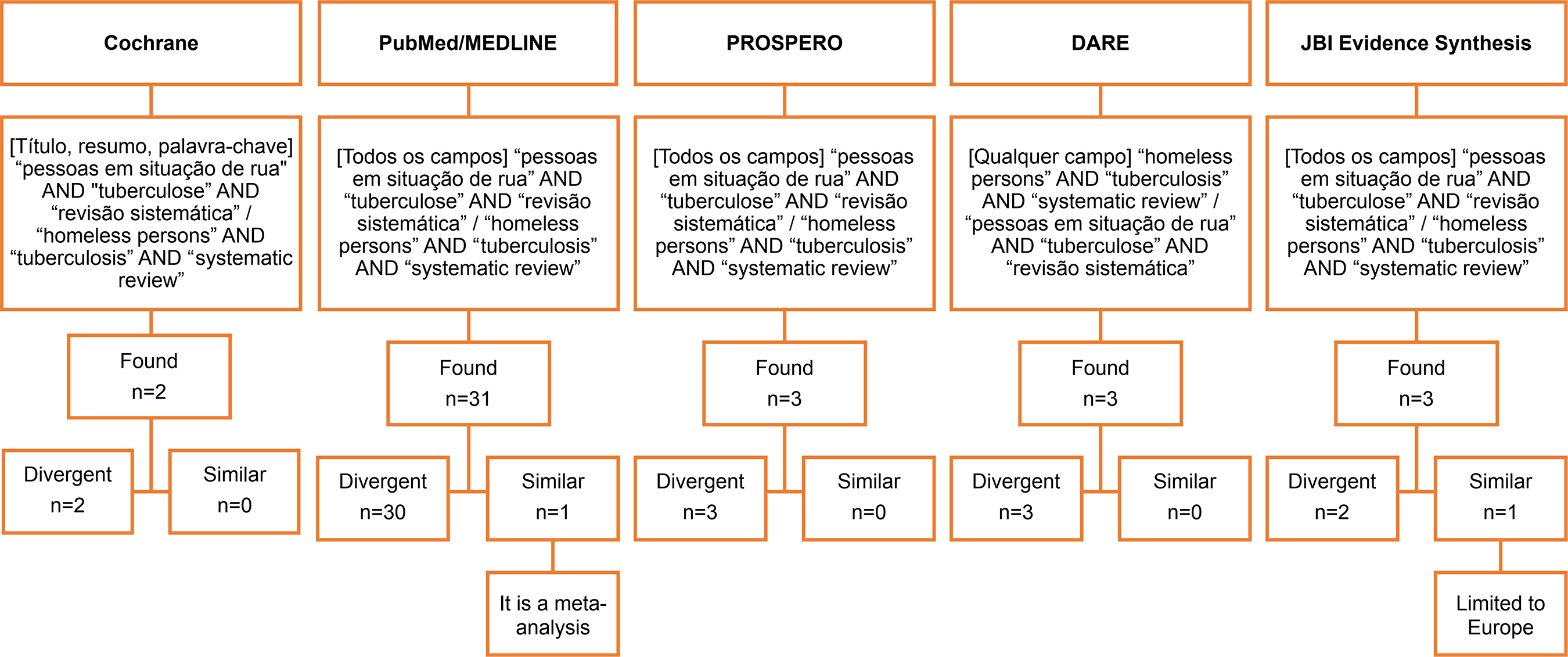
Preliminarily, in order to identify previous systematic reviews on the topic and avoid duplication, as well as wasting human resources, an initial search was carried out in the databases: Cochrane, PubMed Central/Medical Literature Analysis and Retrieval System Online (MEDLINE), International Prospective Register of Systematic Reviews (PROSPERO), Database of Abstracts of Reviews of Effects (DARE) and in the JBI Evidence Synthesis, according to the guidelines13.
This search was carried out in January 2023 and, in total, 42 literature reviews were identified, of which only two addressed the topic in question in this study. Based on this selection, the full text of the studies found was read and it was found that none of the two studies investigated the topic proposed here in a comprehensive manner, specifically at a global level (supplementary figure); therefore, it was decided to continue with this systematic review.
Thus, this study was guided by the eight stages recommended by the JBI for the design of the methodological path, namely: (i) formulation of the research question; (ii) definition of inclusion and exclusion criteria; (iii) search and location of studies; (iv) selection of studies; (v) assessment of the quality of studies; (vi) data extraction; (vii) analysis and synthesis of data; and (viii) presentation and interpretation of results13.
In accordance with the guidelines recommended by the JBI13, this review was registered with PROSPERO under protocol number CRD42022384749. The purpose of this registration was to avoid duplicate research with the same scope. It should also be noted that the presentation of this study was guided by the Preferred Reporting Items for Systematic Reviews and Meta-Analysis (PRISMA) checklist, which supported the report of this systematic review15.
Formulating the research question
To structure the research question, we used the mnemonic: population (P), phenomenon of interest (I) and context (Co) – PICo, in order to obtain a clear and meaningful question. Initially, we established: P – adult people with TB (≥18 years); I – experience of TB treatment; and Co – people living on the streets. Thus, the following question was established: “what are the experiences of adult people living on the streets in relation to TB treatment?”.
Inclusion and exclusion criteria
The inclusion criteria were original studies with qualitative data in which the participants were considered and/or self-declared people living on the street and had a current and/or a previous diagnosis of TB, as long as they had experienced TB treatment at some point in their life. Duplicate studies, those not available in full, those that did not answer the research question, and/or those that did not meet the inclusion criteria were excluded.
There was no time frame, as no previous research on the subject was identified. Therefore, all articles published up to December 2022 were considered, due to the period of the database search (January to June 2023). Unlike informed in PROSPERO, we opted not to make language restrictions in the selection, noting that in the case of materials in a language not mastered by the authors, translation tools were used.
Locating and selecting studies
In the first phase of searching for and locating the studies to make up this review, we identified keywords and initial terms that were registered on the platforms: Descritores em Ciências da Saúde/Medical Subject Headings (DeCS/MeSH). This initial search aimed to ensure the use of controlled descriptors, most used in indexing scientific communications, to develop a comprehensive strategy.
In addition, previous research was carried out in the Biblioteca Virtual em Saúde (BVS) and MEDLINE, with a view to analyzing the main non-controlled terms included in the most recent papers published on the subject. In the end, the terms/descriptors selected were “homeless persons”, “homeless youth”, “homelessness, tuberculosis”, and “latent tuberculosis”.
Then, to be used in the respective libraries and electronic databases, the terms were associated with each other, in both Portuguese and English, using the Boolean operators “AND” and “OR”, according to the specifics of each database that we considered. With the help of a librarian, the databases were listed to allow for a greater variety of sources and to guarantee quality in the selection of studies; a total of ten databases were used (frame 1).
In order to ensure the greatest scope in the search and selection process, all the databases were accessed through the Federated Academic Community (CAFE), via the journal portal of the Coordenação de Aperfeiçoamento de Pessoal de Nível Superior (CAPES), which is a program that brings together Brazilian teaching and research institutions and allows unrestricted access to a greater number of contents available in each database.
In the second phase of this study, the articles were searched for in the databases by implementing the strategies developed (frame 1). Initially, the search and selection process was conducted by reading the title and abstract and then reading the full text of the articles selected in the previous stage. Finally, in the third stage, the reference lists (reverse search) of all the studies retrieved and included in the final review sample were selected.
Evaluation of the quality of the studies
With the aim of assessing the quality of the studies, the JBI Critical Appraisal Checklist for Qualitative Research was used, consisting of ten items16. This checklist has criteria for analyzing theoretical and methodological coherence, such as the adoption of references and principles in data collection and analysis. Only articles that scored 70% or more—i.e., met at least seven items—were included, as established in previous studies17,18.
Data extraction, analysis and synthesis
For organizing the data from the included studies, we employed the qualitative data extraction tools developed by JBI. Initially, a table was constructed containing the following information: authors, year of publication, country, participants, context, collection procedure, data analysis method and/or software, theoretical framework, and score received in the JBI Critical Appraisal Checklist for Interpretive & Critical Research.
For each finding (literal extract from the authors), an illustration (quote from the participant) was presented16. Each extracted finding was assessed by the reviewers as to the degree of congruence between the finding and the illustration presented16, which could be: unequivocal – findings accompanied by an indisputable illustration; equivocal – findings accompanied by an illustration that could be contested; and unsupported – findings not supported by the data16.
Meta-aggregation followed three steps, according to the JBI: (i) extraction of findings included with an accompanying illustration and allocated level of reliability; (ii) creation of categories for unequivocal and equivocal findings with at least two per category; and (iii) development of one or more synthesized findings from at least two categories16. The process was presented in a summary table and visually represented by an explanatory figure.
In order to guarantee the rigor of the review, it is certified that the entire process of searching, selecting, extracting, evaluating, and synthesizing the studies and results was carried out independently by two researchers and that any disagreements that arose were resolved through discussions with a third evaluator, until a consensus was reached between them. The data relating to the articles identified and analyzed was saved in an open repository, Mendeley Data®19.
Results
A total of 3,801 publications were identified in the literature for reading titles and abstracts, of which only five were included in the final sample of this systematic review20-24. In the reverse search, 139 publications were identified, but none met the postulated inclusion criteria. As recommended by the PRISMA checklist, the selection process was described in the flowchart shown in figure 1.

As for the characteristics of the articles, in terms of origin, the studies were carried out in Brazil (n=2)20,21, Japan (n=2)23,24 and United States of America (n=1)22, and were published in Portuguese (n=2)20,21, English (n=2)23,24 and Japanese (n=1)22. The JBI Critical Appraisal Checklist for Interpretive & Critical Research scores ranged from 90% (n=2)20,21, 80% (n=2)22,23, and 70% (n=1)24. In all, the study population totaled 97 homeless people (frame 2).
The four categories of analysis elicited, based on descending aggregation, two synthesis themes: “Homeless people face individual, social and programmatic challenges that hinder adherence to tuberculosis treatment” and “Humanized and comprehensive care, decentralized to primary health care (PHC), based on articulated and binding practices supported by the family, promotes greater adherence to tuberculosis treatment” (frame 3).
The list of synthesis themes generated from the meta-aggregation showed two possible treatment outcomes: “loss to follow-up” or “adherence to treatment”, depending on the phenomena and elements that are present in people’s reality. Thus, the experience of treatment in this population varies according to the contexts that touch homelessness, reflecting on adherence to TB treatment or loss to follow-up (figure 2).

Representation of the relationship between the thematic categories identified in this systematic review.
Discussion
This review was able to shed light on the experiences of HP with TB, in order to uncover situations linked to adherence or loss of follow-up to the treatment to which they had access. It emerged that people living on the streets face individual, social and programmatic challenges that make it difficult for them to adhere to TB treatment. However, humanized and comprehensive care in PHC, based on articulated and binding practices, promoted greater adherence to treatment.
A number of situations in the daily life of HP corroborate the loss of follow-up to TB treatment, such as: drug use20-22, prejudice20,22, lack of a support network20, difficulties in accessing services20 and treatment not being prioritized21, as well as the low resolutiveness of services21, the failure to create bonds21 and neglect of homeless’ needs20,21. The sum of these vulnerabilities, especially the programmatic ones, reduces the possibility of a cure22-24.
In this sense, ensuring visibility and giving a voice to the experiences of homeless people regarding access, use, permanence and linkage to health services are fundamental actions to provide a broader understanding of the health-disease process. It is essential to (re)understand the aspects that make these people weak and vulnerable, with a view to guaranteeing the human right to health and enabling the transformation of the unjust reality they experience on a daily basis25.
The present findings concur with a literature review that included studies from various Brazilian states and found that the entry of people experiencing homelessness into health services is hampered by structural barriers in the health care network (HCN). This scenario is mainly supported by the existence of prejudice and stigma during reception and the lack of documentation and proof of address, which is sometimes a condition required for PHC26.
A study carried out in a Colombian city found that homeless persons with TB suffer greater stigma when compared to other people with TB, reinforcing the obstacles they face on a daily basis27. In addition, a study of 543 people living on the streets in Texas, United States of America, showed a higher chance of death, which may be related to the stressors of poverty, associated comorbidities and difficulty or lack of access to health services28.
These findings point to the urgent need to prioritize the timely diagnosis and treatment of TB in this population, which is known to be vulnerable29. In this sense, the implementation of measures that protect them individually and collectively and that promote diagnosis and adequate treatment must be established29,30. It is therefore necessary to consider the dimensions that go beyond the biological being29, considering the social and structural elements that determine HP illnesses.
However, health services are often unaware of the particularities of this population. This fact supports the production of hygienist and medicalizing actions, of a punctual nature, based on a one-cause model29. This scenario is amplified in the context of social assistance policies, which reveal the lack of coordination between sectors, the discontinuity of current programs aimed at homeless people and the prevalence of policies with a punitive and isolating content29,31.
It is natural that just trying to understand these contexts of vulnerability and the experience of people living on the streets in relation to their health does not in itself solve the problem of inequality and social marginalization. However, we must believe that research represents a tool for knowledge and social denunciation that can bring visibility and prompt action to create more universal and equitable public policies29,31.
In addition, this review identified that care anchored in humanized and comprehensive care20,23,24, articulated between the services of the HCN21 and decentralized to PHC services20,23, with the support of families20 to promote the linking of homeless people to health facilities20,21 enabled greater adherence to TB treatment among homeless people and, consequently, the successful outcome of a cure.
This meta-theme is validated by a study which showed the potential of joint action between basic health units, street clinic teams, psychosocial care centers and social assistance professionals32. This articulation has facilitated access to services, mainly due to the welcoming, humanization, bonding and proximal care based on the integrality and uniqueness of people32.
The street clinic is the Brazilian strategy of care for homeless persons in PHC and is anchored in dialog with the other services of the HCN within the scope of the Brazilian National Health System (SUS)32. In the context of TB, considering the importance of adherence to drug treatment lasting six months, strategies supported by the doctrinal principles of the SUS—universality, equity and comprehensiveness—which enable longitudinal care, are fundamental for adherence and cure33.
The Brazilian Ministry of Health recommends the following strategies to promote adherence to TB treatment in homeless people: (i) material incentives; (ii) access to housing; (iii) person-centered health care; and (iv) socio-educational practices involving the community34. In addition, there is a need to articulate the strategies and the various social actors33, covering all the needs of the HP, especially given the vulnerability of this public.
A study conducted in the United States of America reported a successful experience with a community-based program run by community health workers and nurses35, in which people living on the streets were offered proximal care with regular follow-up throughout their TB treatment. The care was adapted to the health needs of the public, so that, in the end, the treatment completion rate was 91.8%35.
Another successful strategy, carried out in the United Kingdom, jointly between the National Health Service and charitable organizations, consisted of creating a residential respite service with housing, health care and social support for HP with TB36. The use of this service was associated with a reduction in the risk of treatment failure compared to standard treatment (offered by outpatient services), as well as helping to reintegrate the individual into society36.
These reported experiences provide theoretical and practical insights that can be used to support new and better practices that promote greater access and permanence for these people in health services. Regarding the comprehensive approach, it is necessary to establish specific public health programs for HP, with a multidisciplinary team, including doctors, nurses, social workers and psychologists, to offer personalized care37,38.
It is also necessary to carry out regular screenings in shelters, mobile services and other places frequented by this population to identify suspected cases and provide rapid access to diagnostic tests and facilitate access to treatment facilities close to the areas where these people live or frequent37,38. As far as health education is concerned, educational campaigns aimed at this audience should be promoted, using tools and accessible language37,38.
It is essential to strengthen partnerships with non-governmental organizations, civil society and community services, fostering the creation of support networks that can collaborate with treatment and offer social support34. TB in persons living on the streets cannot be approached in isolation and strategies must take into account individual, social and programmatic aspects7, aiming to mitigate the challenges faced by this population identified in this review.
About the limitations of this research, it is worth mentioning the possibility of missing studies due to the fact that the search strategy was used only in English and Portuguese. Other limitations of this systematic review include: the search strategies and/or databases may have been insufficient to capture additional studies, which could hinder a broad and in-depth analysis of the topic in question.
Nevertheless, it should be considered that this meta-synthesis has the potential to provide an important understanding of the subject, represented in this case by TB treatment among the people living on the streets. However, it should be emphasized that qualitative research, which was an integral part of this review, provides theoretical and contextual support on experiences restricted to a specific number of people, places and periods16. Thus, sociocultural particularities need to be considered.
Furthermore, this work is a starting point for (re)thinking the situations that produce and sustain the unjust reality that influences the health and living conditions of these people, given the situation of sub-humanity and deprivation of fundamental rights that they endure on a daily basis. In this sense, there is a battle to be faced in society, in which the SUS, through the reordering of actions and practices directed by this study, can be the protagonist.
Finally, it is important to emphasize that this research represents a relevant source of evidence, especially for public health, since it brings visibility to the health situation of an extremely vulnerable population from a perspective that has not yet been widely approached. By synthesizing the qualitative evidence, the aim was to identify foundations that help explain the obstacles faced by HP in accessing and being linked to health services.
Final considerations
This synthesis reflects the barriers faced by people living on the streets during TB treatment, caused by drug use, prejudice, lack of a support network, difficulties in getting to health services and not prioritizing treatment. On the other hand, comprehensive and humanized care, decentralized to PHC, based on articulated and binding practices supported by the family, promoted adherence to treatment and bonding with the teams.
This evidence, although small in number as a possible consequence of the invisibility of this population in the academic-scientific field, reinforces the essential need to guarantee a care logic that understands the contexts in which HP are inserted, in order to focus on situations that go beyond the biological dimension and guarantee overcoming the fragility experienced on a daily basis, with a view to achieving comprehensive actions and longitudinal care.

-
Pavinati G, Lima LV, Hino P, Marcon SS, Magnabosco GT. Obstacles and possibilities in guaranteeing tuberculosis treatment for homeless people: systematic review and meta-synthesis. Interface (Botucatu). 2025; 29: e240625 https://doi.org/10.1590/interface.240625
-
Funding
This work was carried out with the support of the Coordenação de Aperfeiçoamento de Pessoal de Nível Superior – Brazil (CAPES) – Financing Code 001.
References
- 1 World Health Organization. Global Tuberculosis Report 2023. Geneva: WHO; 2023.
- 2 Moreira ASR, Kritski AL, Carvalho ACC. Social determinants of health and catastrophic costs associated with the diagnosis and treatment of tuberculosis. J Bras Pneumol. 2020; 46(5):e20200015.
- 3 Hungaro AA, Gavioli A, Christóphoro R, Marangoni SR, Altrão RF, Rodrigues AL, et al. Homeless population: characterization and contextualization by census research. Rev Bras Enferm. 2020; 73(5):e20190236.
- 4 Gioseffi JR, Batista R, Brignol SM. Tuberculosis, vulnerabilities, and HIV in homeless persons: a systematic review. Rev Saude Publica. 2022; 56:43.
- 5 Silva TO, Vianna PJ, Almeida MVG, Santos SD, Nery JS. População em situação de rua no Brasil: estudo descritivo sobre o perfil sociodemográfico e da morbidade por tuberculose, 2014-2019. Epidemiol Serv Saude. 2021; 30(1):e2020566.
- 6 Santos ACE, Brunfentrinker C, Pena LS, Saraiva SS, Boing AF. Análise e comparação dos resultados do tratamento da tuberculose na população de rua e na população geral do Brasil. J Bras Pneumol. 2021; 47(2):e20200178.
- 7 Pavinati G, Lima LV, Teixeira CSS, Hino P, Bertolozzi MR, Nery JS, et al. Vulnerability to loss of follow-up and death due to tuberculosis among homeless individuals in Brazil: a retrospective cohort study. Cienc Saude Colet. 2024; 29(7):e02742024.
- 8 Han H, Lee JH, Chung SJ, Kim BK, Kang Y, Choi H, et al. Prevalence and Characteristics of tuberculosis in the Korean homeless population based on nationwide tuberculosis screening. Tuberc Respir Dis (Seoul). 2024; 87(4):514-23.
- 9 Shamebo T, Mekesha S, Getahun M, Gumi B, Petros B, Ameni G. Prevalence of pulmonary tuberculosis in homeless individuals in the Addis Ababa city, Ethiopia. Front Public Health. 2023; 11:1128525.
- 10 Marks SM, Self JL, Venkatappa T, Wolff MB, Hopkins PB, Augustine RJ, et al. Diagnosis, treatment, and prevention of tuberculosis among people experiencing homelessness in the United States: current recommendations. Public Health Rep. 2023; 138(6):896-907.
- 11 Santos ACE, Brunfentrinker C, Pena LS, Saraiva SS, Boing AF. Análise e comparação dos desfechos do tratamento da tuberculose na população de rua e na população geral do Brasil. J Bras Pneumol. 2021; 47(2):e20200178.
- 12 Brito C, Silva LN. População em situação de rua: estigmas, preconceitos e estratégias de cuidado em saúde. Cienc Saude Colet. 2022; 27(1):151-60.
-
13 Aromataris E, Munn Z. JBI Manual for Evidence Synthesis. JBI; 2020. doi: 10.46658/JBIMES-24-01.
» https://doi.org/10.46658/JBIMES-24-01 - 14 Hannes K, Lockwood C. Pragmatism as the philosophical foundation for the Joanna Briggs meta-aggregative approach to qualitative evidence synthesis. J Adv Nurs. 2011; 67(7):1632-42.
- 15 Moher D, Shamseer L, Clarke M, Ghersi D, Liberati A, Petticrew M, et al. Preferred reporting items for systematic review and meta-analysis protocols (Prisma-P) 2015 statement. Syst Rev. 2015; 4(1):1.
- 16 Lockwood C, Munn Z, Porritt K. Qualitative research synthesis: methodological guidance for systematic reviewers utilizing meta-aggregation. Int J Evid Based Healthc. 2015; 13(3):179-87.
- 17 Barreto MS, Peruzzo HE, Garcia-Vivar C, Marcon SS. Family presence during cardiopulmonary resuscitation and invasive procedures: a meta-synthesis. Rev Esc Enferm USP. 2019; 53:e03435.
- 18 Giordani JMA, Unfer B, Merhy EE, Hilgert JB. Acolhimento na atenção primária à saúde: revisão sistemática e metassíntese. Rev APS. 2020; 23(1):7-25.
-
19 Pavinati G. Experiências das pessoas em situação de rua no tratamento para tuberculose: uma revisão sistemática e metassíntese. Mendeley Data; 2023. V2. doi: 10.17632/3fns6437z2.2.
» https://doi.org/10.17632/3fns6437z2.2 - 20 Hino P, Almeida IB, Monroe AA, Bertolozzi MR, Taminato M, Fornari LF, et al. Percepção de pessoas em situação de rua sobre o tratamento da tuberculose. Medicina (Ribeirao Preto). 2022; 55(4):e-191161.
- 21 Zuim RCB, Trajman A. Itinerário terapêutico de doentes com tuberculose vivendo em situação de rua no Rio de Janeiro. Physis. 2018; 28(2):e280205.
- 22 Connors WJ, Hussen SA, Holland DP, Mohamed O, Andes KL, Goswami ND. Homeless shelter context and tuberculosis illness experiences during a large outbreak in Atlanta, Georgia. Public Health Action. 2017; 7(3):224-30.
- 23 Kawatsu L, Sato N, Ngamvithayapong-Yanai J, Ishikawa N. Leaving the street and reconstructing lives: impact of DOTS in empowering homeless people in Tokyo, Japan. Int J Tuberc Lung Dis. 2013; 17(7):940-6.
- 24 Nagashiro Y, Kobayashi S, Murashima Y. [Significance of directly observed treatment, short-course (DOTS) for homeless males with tuberculosis Interviews with patients in Kotobuki district, Japan]. Nihon Koshu Eisei Zasshi. 2007; 54(12):857-66. Japanese.
- 25 Ayres JRCM, França I Jr, Calazans G, Salletti H. Vulnerabilidade e prevenção em tempos de aids. In: Barbosa R, Parker R, organizadores. Sexualidade pelo avesso: direitos, identidades e poder. Rio de Janeiro: Relume Dumará; 1999. p. 50-71.
- 26 Andrade R, Costa AAS, Sousa ET, Rocon PC. O acesso aos serviços de saúde pela população em situação de rua: uma revisão integrativa. Saude Debate. 2022; 46(132):227-39.
- 27 Rodríguez-Márquez I, Montes F, Upegui-Arango LD, Montoya N, Vargas NE, Rojas A, et al. Measurement of stigma and associated characteristics in people with tuberculosis in Medellín, Colombia: a cross-sectional study. Trans R Soc Trop Med Hyg. 2022; 116(8):710-6.
- 28 Agarwal S, Nguyen DT, Graviss EA. Homelessness and mortality among persons with tuberculosis in Texas, 2010-2017. Public Health Rep. 2019; 134(6):643-50.
- 29 Paiva IKS, Lira CDG, Justino JMR, Miranda MGO, Saraiva AKM. Direito à saúde da população em situação de rua: reflexões sobre a problemática. Cienc Saude Colet. 2016; 21(8):2592-606.
- 30 Magnabosco GT. Vulnerabilidades no contexto da saúde coletiva: contribuições, desafios e perspectivas da enfermagem. Cienc Cuid Saude. 2023; 22:e68409.
- 31 Valle FAAL, Farah BF. A saúde de quem está em situação de rua: (in)visibilidades no acesso ao Sistema Único de Saúde. Physis. 2020; 30(2):e300226.
- 32 Costa EF. Consultório na rua: construindo uma clínica ampliada com a população em situação de rua e usuários de álcool, crack e outras drogas. REASE. 2023; 9(2):1308-29.
- 33 Lima LV, Pavinati G, Palmieri IGS, Vieira JP, Blasque JC, Higarashi IH, et al. Factors associated with loss to follow-up in tuberculosis treatment in Brazil: a retrospective cohort study. Rev Gaucha Enferm. 2023; 44:e20230077.
- 34 Brasil. Ministério da Saúde, Secretaria de Ciência, Tecnologia e Insumos Estratégicos. Departamento de Ciência e Tecnologia. Síntese de evidências para políticas de saúde: adesão ao tratamento de tuberculose pela população em situação de rua. Brasília: Ministério da Saúde; 2016.
- 35 Nyamathi A, Salem BE, Shin SS, Jones AA, Garfin DR, Yadav K, et al. Effect of a nurse-led community health worker intervention on latent tuberculosis medication completion among homeless adults. Nurs Res. 2021; 70(6):433-42.
- 36 Crosby L, Lewer D, Appleby Y, Anderson C, Hayward A, Story A. Outcomes of a residential respite service for homeless people with tuberculosis in London, UK: a cross-sectional study. Perspect Public Health. 2023; 143(2):89-96.
- 37 Barros JJC, Oliveira AH, Cavalcante JL, Januário TGFM, Pereira MLD, Cavalcante EGR. Vulnerabilidade e estratégias de adesão ao tratamento da tuberculose: discurso dos enfermeiros da atenção primária. Rev Enferm UFSM. 2021; 11:e61.
- 38 Zago PTN, Maffacciolli R, Mattioni FC, Dalla-Nora CR, Rocha CMF. Nursing actions promoting adherence to tuberculosis treatment: scoping review. Rev Esc Enferm USP. 2021; 55:e20200300.
Edited by
-
Editor
Denise Martin Coviello
-
Associated editor
Charles Dalcanale Tesser