
 Drying kinetics and thermodynamic properties of trapiá pulp
ABSTRACT
The objective of the research was to study the drying of trapiá pulp with the addition of drying aids, determining the drying kinetics and thermodynamic properties of the samples. Formulations of the pulp was treated with the additives monoglycerides, carboxymethylcellulose - CMC and guar gum in different combinations and concentrations (F1 - 0.5% CMC and 0.5% Monoglycerides; F2 - 0.5% Guar Gum and 0.5% Monoglycerides; and F3 - 0.25% Guar Gum, 0.5% CMC and 0.5% Monoglycerides) trapiá. Drying was carried out at 50, 60 and 70 ºC with 0.5 cm thick layers. The drying kinetics were determined, and different mathematical models fitted to the data. The Midilli model best represented the drying kinetics, with determination coefficients ≥ 0.9985. The effective diffusivities increased with increase in temperature with magnitudes to the order of 10-10 m2 s-1. The enthalpy variations (ΔH) reduced with increase in temperature and were positive. The entropy variations (ΔS) were negative and inversely proportional to the temperature. The variation in Gibbs free energy (ΔG) was positive and increased with increase in temperature.
Key words:
Crataeva tapia L.; mathematical modelling; effective diffusivity; enthalpy; entropy; activation energy
HIGHLIGHTS:
The use of guar gum results in greater efficiency of the drying process.
Additives influence pulp drying, resulting in differences in activation energies, enthalpies and Gibbs free energies.
Variations in thermodynamic properties show the complexity of the interactions between the components during the pulp drying.
RESUMO
O objetivo da pesquisa foi avaliar a secagem da polpa de trapiá com a adição de aditivos de secagem, determinando a cinética de secagem e as propriedades termodinâmicas das amostras. Foram elaboradas formulações a partir da polpa e os aditivos monoglicerídeos, carboximetilcelulose - CMC e goma guar em diferentes combinações e concentrações (F1 - 0,5% de CMC e 0,5% de Monoglicerídeos; F2 - 0,5% de Goma Guar e 0,5% de Monoglicerídeos; e F3 - 0,25% de Goma Guar, 0,5% de CMC e 0,5% de Monoglicerídeos). A secagem foi realizada a 50, 60 e 70 ºC com camadas de 0,5 cm de espessura. A cinética de secagem foi determinada e diferentes modelos matemáticos foram ajustados aos dados. O modelo Midilli foi o que melhor representou a cinética de secagem, com coeficientes de determinação ≥ 0,9985. As difusividades efetivas aumentaram com o aumento da temperatura, com magnitudes da ordem de 10-10 m2 s-1. As variações de entalpia (ΔH) diminuíram com o aumento da temperatura e foram positivas. As variações de entropia (ΔS) foram negativas e inversamente proporcionais à temperatura. A variação da energia livre de Gibbs (ΔG) foi positiva e aumentou com o aumento da temperatura.
Palavras-chave:
Crataeva tapia L.; modelagem matemática; difusividade efetiva; entalpia; entropia; energia de ativação
Introduction
Trapiá (Crataeva tapia L.) is one of the native Caatinga biome species, whose fruits are edible berries with succulent, sweetish pulp (Lorenzi, 2006). Its food and nutrition potential has been little explored, largely due to the lack of awareness among the population, producers, and industry regarding its properties.
Due to its seasonality and highly perishable, there are limitations to the use of this fruit, but these can be overcome by using processing technologies. The use of drying for trapiá could prolong the SHELF LIFE of the product and consequently improve its exploitation, diversifying the use of the fruit in the powdered form. In the scientific literature, studies on the drying kinetics and thermodynamic properties of trapiá peels and seeds are available, aiming to optimize the utilization of fruit residues in powdered form (Moura et al., 2021).
Convective drying is used to stabilize fruits and increase their SHELF LIFE, but, as biological materials, one must study the specifications of each material due to variations in their structures and compositions (Defraeye & Verboven, 2017). Thus, mathematical modelling of the drying kinetics is the standard tool used to deal with this complexity, providing information that can be used to optimize the process (Castro et al., 2018). Consequently, this study will provide a database that will serve as a foundation for future endeavors involving trapiá pulp in powdered form, whether for incorporation into food formulations or even for the development of novel products.
The study of the drying kinetics allows one to understand the process of water loss from a product as related to the variables involved. With an analysis of the effective diffusivity is possible to determine the thermodynamic properties, which are fundamental in the analysis of the energy variations and transformations during drying. Associated with this, knowledge of the effective diffusivity is fundamental in the analysis, design and optimization of heat and mass transfer during the drying process (Khan et al., 2017).
No data were found in the literature concerning the drying kinetics of trapiá pulp using different formulations. Hence, the objective of the research was to study the drying of trapiá pulp with the addition of drying aids, determining the drying kinetics and thermodynamic properties of the samples.
Material and Methods
The trapiá (Crataeva tapia L.) fruits (Figure 1A) were harvested during the 2017 harvest in the Agreste region of the state of Paraiba, Brazil (latitude: 7º 11’ 41” South, longitude: 35° 57’ 48” West, altitude of 500 m), in a mature ripening stage as determined by the yellow skin color (Figure 1B). The fruits were selected based on the absence of mechanical damage or apparent contamination. They were then washed, sanitized in a chlorine solution (100 ppm) for 15 min, rinsed in running water to remove excess chlorine, cut manually (Figure 1C), a 30% solution of the pulp plus seeds prepared, and ascorbic acid added at 2% to avoid enzymatic browning. The pulp was then extracted in a mechanical pulper (Laboremus®, Brazil), homogenized, and manually filled into low density polyethylene bags with a capacity for 500 g, sealed, and immersed in liquid nitrogen (-150 ºC) for quick freezing, before storing in a freezer at approximately -18 ºC for subsequent use in the experimental trials.

The trapiá pulp was allowed to thaw until reaching room temperature and used to prepare the formulations, based on preliminary tests. These tests aimed to select the best drying formulations by exploring various combinations of additives, with the combinations identified in this study being ultimately chosen.
Formulations were elaborated using the trapiá pulp and the additives monoglycerides (distilled from fatty acids - Creamline MHS 90, SGS Grupo Agricultura e Indústria Ltda., Ponta Grossa, Brazil), carboxymethylcellulose (NEON®) and guar gum (Goma guar 5500 CPS, Daxia, Guarulhos city, SP, Brazil) in distinct combinations and concentrations, F1 (0.5% CMC and 0.5% Monoglycerides), F2 (0.5% Guar Gum and 0.5% Monoglycerides) and F3 (0.25% Guar Gum, 0.5% of CMC and 0.5% of Monoglycerides).
Each formulation was homogenized in a planetarium mixer (Arno®, Deluxe, 300 W, Itatiaia, RJ, Brazil), at maximum speed for 15 min. The time was estimated from the moment when complete incorporation of the additives was observed.
About 140 g of each formulation were spread over the base of stainless-steel rectangular trays (23 × 12 × 2 cm) to a thickness of 0.5 cm, measured using a digital caliper (Caliper 150 mm 6”) with a resolution of 0.01 mm, and subsequently submitted to convective drying in an oven with forced air circulation at temperatures of 50, 60 and 70 ºC and a constant air velocity of 1.0 m s-1.
The drying trials were carried out in triplicate. The kinetics were determined by weighing the trays on a semi-analytical balance at regular time intervals (5, 10, 15, 20, 30, 60 and 120 min) until the equilibrium water content was reached (variation of 0.01 g) in three consecutive weighing (Santos et al., 2017). The initial and final water contents during the drying process were determined gravimetrically after drying in an oven at 105 ºC for 24 hours. The water content ratios were calculated from the water content data at each drying time according to Eq. 1.
where:
MR - water content ratio, dimensionless;
X - water content, d.b. (weight basis);
Xi - initial water content, d.b.; and,
Xe - equilibrium water content, d.b.
The experimental drying kinetic data were fitted to ten mathematical models (Diffusion Approximation, Two Terms, Henderson and Pabis, Modified Henderson and Pabis, Logarithmic, Logistic, Midilli, Newton, Page, Verna) by nonlinear regression using the Quasi-Newton method with Statistica® software (StatSoft Inc., Tulsa, USA) presented in Table 1. To evaluate the quality of fit of the mathematical models to the drying kinetic data, the largest values for the determination coefficients (R2), and the smallest values for the mean squared (MSD) and chi-squared (χ2) deviations, were considered, according to Eqs. 12 and 13, respectively.
where:
MSD - mean square deviation;
RXexp - experimental water content ratio;
RXpred - water content ratio predicted by the model;
N - number of observations;
χ2 - chi-squared; and,
n - number of model constants.
The effective diffusivity for the different formulations and drying conditions was determined based on the liquid diffusion theory according to Fick’s law, considering the geometric shape of the formulations to be similar to a infinite flat plate, using an analytical solution with the approximation of five terms Eq. 14.
where:
MR - product water content ratio (dimensionless);
Def - effective diffusivity, m2 s-1;
n - number of terms in the equation;
L - characteristic dimension (m); and,
t - time (s).
The relationship between the effective diffusivity and the drying temperatures of the formulations was determined using the Arrhenius equation Eq. 15.
where:
Def - effective diffusivity (m2 s-1);
D0 - pre-exponential factor (m2 s-1);
Ea - activation energy (kJ mol-1);
R - universal gas constant, 0.008314 kJ mol-1 K-1; and,
T - absolute temperature, K.
The thermodynamic properties of the drying process, which include the variation in enthalpy Eq. 16, variation in entropy Eq. 17 and Gibb’s free energy Eq. 18 at the temperatures of 50, 60 and 70 ºC, were quantified according to Silva et al. (2016) using the universal gas constant.
where:
∆H - variation in enthalpy (kJ mol-1);
Ea - activation energy (kJ mol-1);
R - universal gas constant, 0.008314 kJ mol-1 K-1; and,
T - absolute temperature (K).
where:
∆S - variation in entropy (J mol-1);
R - universal gas constant, 0.008314 kJ mol-1 K-1;
D0 - pre-exponential factor (m2 s-1);
kB - Boltzmann’s constant, 1.38 x 10⁻²³ J K-1;
hP - Planck’s constant, 6.626 x 10⁻³⁴ J s-1; and,
T - absolute temperature (K).
where:
∆G - Gibb’s free activation energy (J mol-1);
∆H - variation in enthalpy (kJ mol-1);
T - absolute temperature (K); and,
∆S - variation in entropy (J mol-1).
Results and Discussion
Figure 2 shows the experimental points for the water content (% w.b.) as a function of drying time, obtained for the drying kinetics of samples F1 (A), F2 (B) and F3 (C).

Water content as a function of drying time at the temperatures of 50, 60 and 70 ºC: A) Formulation F1; B) Formulation F2 and C) Formulation F3
An influence of temperature could be identified for all the formulations, with a gradual decrease in drying time with increase in drying temperature. An increase in temperature of 20 ºC reduced the drying time of formulations F1 (Figure 2A), F2 (Figure 2B) and F3 (Figure 2C) by 34.41, 35.96 and 31.46%, respectively. Antunes et al. (2017) found similar results for the foam mat drying of murici pulp (Byrsonima crassifolia) with the addition of 5% Emustab at temperatures of 60, 70 and 80 ºC, where the highest temperature reduced the drying time by 32%.
A reduction in drying time is an important factor for a process on an industrial scale, since a shorter drying time results in a reduction in energy expenditure, reflecting positively on the production costs and, consequently, on the final value of the product (Tavares et al., 2019).
Considering the drying kinetics of formulation F1, it took 2,790, 2,190 and 1,830 min to reach hygroscopic equilibrium with the drying air (Figure 2A) at the temperatures of 50, 60 and 70 ºC, respectively. The mean initial water content of formulation F1 was 85.02% (% w.b.) with reductions to final values of 10.93, 9.76 and 8.52% (% w.b.) for the drying temperatures of 50, 60 and 70 ºC. Macedo et al. (2021) found approximate values for the foam mat drying of red pitaya (Hylocereus polyrhizus) pulp at temperatures of 50 and 70 ºC with the addition of Emustab® as foaming agent, of 86.53% for the initial water content and 12.73 and 9.18% for the final water contents, respectively.
Figure 2B shows the drying kinetics data for formulation F2, showing a more accentuated difference for drying at 50 ºC in relation to the other temperatures. Considering the drying times, this was the sample showing the shortest drying times at the three temperatures, even though it had the highest initial water content, which can be explained by the use and concentration of guar gum as drying aid, associated with the combination of materials, resulting in greater efficiency of the drying process, with a possible effect on the structure of the material. The drying times for formulation F2 were 2,670, 2,070 and 1,710 min. with a mean initial water content of 85.60% (% w.b.) and final water contents of 10.73, 9.81 and 8.86% (% w.b.) for the temperatures of 50, 60 and 70 °C, respectively. Similarly, Chaux-Gutiérrez et al. (2017) found an initial water content of 85.67 ± 0.22% on determining the drying kinetics of mango (Mangifera indica L. cv. “Tommy Atkins”) pulp with the addition of 2% Emustab® and foam dried in 3 mm thick layers with an air velocity of 1 m s-1 at 60 and 80 ºC, but found lower final water content values than those found in the present research, of 3.33 ± 0.34% for the temperature of 60 ºC and 2.87 ± 0.25% at 80 ºC, probably due to the influence of foam formation which improves the removal of water from the product, and due to the use of a thinner layer of the formulation.
For formulation F3 (Figure 2C) the drying times were 2,670, 2,190 and 1,830 min for drying temperatures of 50, 60 and 70 ºC, respectively, with an initial mean water content of 84.65% (% w.b.) and final water contents of 10.99, 10.58 and 8.91% (%w.b.) for the respective temperatures. Branco et al. (2016) found a lower final water content of 5.43 ± 0.41% for ubajay (Hexachlamys edulis (O. Berg)) pulp obtained by foam mat drying in 3 mm thick layers at a temperature of 70 ºC with an air velocity of 0.5 m s-1 and the addition of 5.5% albumin, 0.25% CMC and 0.25% xanthan gum as drying additives.
The water contents obtained for the samples analyzed can confer stability on the products elaborated with the dehydrated trapiá pulp. The most effective water loss during drying can be attributed to formulation F1 dried at 70 ºC; the increase in dehydration temperature causes a reduction in the viscosity of the water and increases the mobility of the liquid molecules, which can be attributed to the fact that at a higher temperature, the water molecules are weakly bound to the food matrix, so there is greater removal and consequently a reduction in water content (Touil et al., 2014).
The parameters obtained when the experimental data for the drying kinetics of the formulations containing trapiá pulps, treated at the three temperatures, were fitted to 10 mathematical models, plus the determination coefficients (R2), and the mean squared (MSD) and chi-squared (χ2) deviations. Table 2 shows the adjustments to the F1 formulation.
Parameters, determination coefficients (R2), and the mean squared (MSD) and chi-squared (χ2) deviations of the mathematical models fitted to the drying kinetics obtained during the drying of formulation F1 (0.5% CMC and 0.5% Monoglycerides)
The determination coefficients were above 0.980 for all the models tested for all the temperatures and formulations, indicating an adequate representation by all the models of the experimental data. The Midilli model gave the best fit to the drying kinetics of formulation F1 under the conditions studied, with the highest values for the determination coefficients (R2 > 0.9980), and the smallest mean squared (MSD ≤ 0.0140) and chi-squared (χ2 < 0.0009) deviations at the temperatures from 50 to 70 ºC. These results agree with Jorge et al. (2021) drying gueroba (Syagrus oleracea) pulp in a forced-air incubator in 2.5 cm thick layers at temperatures of 40, 50, 60 and 70 ºC, who reported that the Midilli model fitted the experimental data best.
Considering the parameters described for the Midilli model, the constant k increased with increase in temperature from 0.006 to 0.0018 min-1, similar to that observed by Matos et al. (2022). The parameter n decreased with increase in the drying temperature.
Coefficients a and b showed no clear tendency to change as a function of temperature, which was to be expected since the variations in these coefficients are more related to the mathematical fit than to the drying phenomenon, differently from constant k (Souza et al., 2019).
The values obtained for the coefficients of determination, the mean squared and chi-squared deviations and the fits of the models to the drying kinetics of the F2 formulation are shown in Table 3. The Midilli model that the was the most adequate one to represent the drying conditions at 50 and 70 ºC. However, the Diffusion Approximation model was the one that best fitted the experimental data at 60 ºC (R2 = 0.9990. MSD = 0.0114 and χ2 = 0.0001), although the Midilli model also gave an excellent fit. Maciel et al. (2017) also reported that the Midilli model fitted the experimental data better when working with the foam mat drying of guava (Psidium guajava L.) pulp with the addition of 4 and 8% albumin and drying temperatures of 75, 80 and 85 ºC.
Parameters, determination coefficients (R2), mean squared (MSD) and chi-squared (χ2) deviations of the mathematical models fitted to the drying kinetics curves obtained during the drying of formulation F2 (0.5% Guar Gum and 0.5% Monoglycerides)
Considering the parameters a and b of the Midilli model, there was no defined behavior as the temperature increased. Like that observed by Maciel et al. (2017). It was also shown that for formulation F2 the constant k increased with rise in temperature from 50 to 70 ºC.
Table 4 shows the fitting coefficients for the models to the drying data obtained during the drying of formulation F3, where, as for formulations F1 and F2, the best values were obtained for the Midilli model at the different temperatures, with greater determination coefficients (R2) and smaller mean squared (MSD) and chi-squared (χ2) deviations.
Parameters, determination coefficients (R2), mean squared (MSD) and chi-squared (χ2) deviations of the mathematical models fitted to the drying kinetics curves obtained during the drying of formulation F3 (0.25% Guar Gum, 0.5% of CMC and 0.5% of Monoglycerides)
On studying the drying kinetics of pequi (Caryocar coriaceum Wittm) pulp at temperatures of 50, 60, 70 and 80 ºC in 0.5, 1.0 and 1.5 cm thick layers. without the addition of any drying aid, Sousa et al. (2017) also verified that the Midilli model was the one which best fitted the experimental convective drying data at all temperatures and with all thicknesses. The value for the constant k also increased with increase in temperature from 50 to 70 ºC.
Although the Midilli model presented the best coefficients, the Page model presented equally good fits to the drying data of the three formulations studied.
Figure 3 shows the drying curves for the formulations F1 (A), F2 (B) and F3 (C) at temperatures of 50. 60 and 70 ºC, fitted to the Midelli model. Figure 3A shows that the slope of the curves increased with increase in drying air temperature. In addition, the curves fitted to the model approximated the experimental data for all the temperatures analyzed. According to Muliterno et al. (2017), higher drying temperatures lead to greater mass transfer due to a greater evaporation capacity of the water in the air, thus reducing the time required for the samples to reach the equilibrium water content. As the temperature of the drying air increases, the slope of the curves becomes steeper due to the increase in heat transfer to the sample.
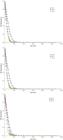
Curves for the drying kinetics of the formulations containing trapiá pulp with different drying air temperatures and fitted to the Midilli model: formulation F1 (A); formulation F2 (B); and formulation F3 (C)
Figure 3B shows that the drying temperature had an influence on the kinetics, establishing a tendency that the higher the temperature, the shorter the drying time. The closeness between the observed and estimated values reinforces the applicability of this model in representing the drying data of the sample under analysis. For the temperatures of 60 and 70 ºC, the curves showed similar slopes and drying times, the curve for 50 ºC being more separate.
Figure 3C shows the drying curves for formulation F3 when fitted to the Midilli model. The drying time depended on the temperature employed, reducing at higher temperatures. The water content declined rapidly at the start of the process and subsequently became slower with the increase in drying time, at all temperatures employed.
Table 5 shows the values for effective diffusivity (Def) for formulations F1, F2 and F3 obtained at drying temperatures from 50 to 70 ºC, with the respective determination coefficients. The diffusivity values were dependent on the drying temperature, showing an increase with increase in temperature, with the greatest increases for formulations F1 and F3. Similar behaviors were observed by Jorge et al. (2021) for gueroba (Syagrus oleracea) pulp and by Dehghannya et al. (2019) in the foam mat drying of lemon (Citrus latifolia). This tendency can be explained by the greater magnitude of the water transfer from the inside to the surface of the product as reported by Guimarães et al. (2018) such that higher temperatures cause a quicker removal of the water. An increase in temperature leads to an increase in the enthalpy of the air entering the product, and an increase in enthalpy increases the mass and heat transfer, increasing Def (Taghinezhad et al., 2021). Another factor that may contribute to this is the use of additives, since migration of water to the surface of a product can be influenced by emulsifying agents, which have the role of retaining water (Chaux-Gutiérrez et al., 2017).
Mean effective diffusivities (Def) and determination coefficients (R2) obtained during drying of the formulations with trapiá pulp: F1 (0.5% CMC and 0.5% Monoglycerides); F2 (0.5% Guar Gum and 0.5% Monoglycerides); F3 (0.25% Guar Gum, 0.5% of CMC and 0.5% of Monoglycerides) at temperatures of 50, 60 and 70 ºC
Kaur et al. (2017), on studying the influence of temperatures of 50, 60 and 70 ºC on the drying of green mango pulp of cv. Rampuri Gola with a thickness of 2-3 mm, found values for Def of 1.329 × 10⁻¹⁰, 1.62 × 10⁻¹⁰ and 1.91 × 10⁻¹⁰ m2 s-1, respectively.
Table 6 shows the activation energy (Ea) values for the effective diffusivity in the drying process of the formulations with trapiá pulp varying from 24.27 to 32.55 kJ mol-1. These values are close to those reported by Khodifad & Kumar (2020) on drying 0.2 cm thick layers of pinecone (Annona squamosa L.) pulp with the addition of albumin (0-20%) and methylcellulose (0.0-0.50%) at temperatures of 60, 65, 70 and 75 ºC, obtaining an activation energy of 29.99 kJ mol-1. Higher activation energy values reflect smaller diffusivity values of the water in the product, due to the low mobility of the water inside the product (Jorge et al., 2021).
Activation energy (Ea) and determination coefficients (R2) of the formulations: F1 (0.5% CMC and 0.5% Monoglycerides); F2 (0.5% Guar Gum and 0.5% Monoglycerides); F3 (0.25% Guar Gum, 0.5% of CMC and 0.5% of Monoglycerides)
According to Amin et al. (2019), the differences in activation energy could result from differences in product characteristics, in process parameters or the temperatures employed. Since the temperatures employed in the drying process and the trapiá pulp concentration in the formulations were the same, the differences in Ea were probably due to the influence of the different additives and their combinations, which could result in different product characteristics. Considering the results obtained, in terms of energy efficiency to remove moisture from trapiá pulp, F1 with a combination of the additives of CMC and monoglycerides, provided the smallest energy expenditure for the drying process, a result consistent with the greater water diffusivity in the same product.
Table 7 shows the values obtained for the thermodynamic properties (variation in enthalpy, variation in entropy, and Gibb’s free energy) for the three formulations and drying temperatures. With the increase in temperature, the variation in enthalpy decreased, a behavior also observed by Resende et al. (2018) when studying the thermodynamic properties of baru (Dipteryx alata Vogel). In this case the value was positive, inferring that the reaction was endothermic (Garvín et al., 2017), that is, the samples absorbed energy in the form of heat.
Thermodynamic properties of the formulations with trapiá pulp: F1 (0.5% CMC and 0.5% Monoglycerides); F2 (0.5% Guar Gum and 0.5% Monoglycerides); F3 (0.25% Guar Gum, 0.5% of CMC and 0.5% of Monoglycerides) dried at 50, 60 and 70 ºC
The values obtained for enthalpy showed the same tendency seen for Ea, with formulation F1 demanding less energy for the drying process, followed by F2 and F3, indicating the influence of the combination of additives on the drying process.
The values obtained for entropy variation were negative and inversely proportional to the increase in temperature for all the formulations. A similar tendency was reported by Santos et al. (2019) on evaluating the thermodynamic properties of pataua (Oenocarpus bataua Mart.) pulp at 40, 50 and 60 ºC. and by Paiva et al. (2023) on tropical red fruit blends at 50, 60, 70 and 80 ºC who observed a reduction in entropy variation with increase in temperature. Cavalcanti-Mata et al. (2020) reported that an increase in temperature results in vibration, rotation and movement of the water molecules, increasing the diffusivity, and consequently reducing the process entropy, since less molecular heterogeneity is encountered. Cagnin et al. (2017) stated that a temperature increase causes a decrease in sample entropy variation due to the decrease in water content during drying, also making movement of the water molecules inside the product difficult. Negative entropy variation values indicate exothermic transformation, that is, a process with heat release.
Gibb’s free energy was positive showing that the drying process involved an endergonic reaction, requiring heat in the medium to occur (Santos et al., 2020) and increased with increase in drying temperature, a tendency characteristic of a non-spontaneous process. where an increase in temperature is required for the water content of the samples to reduce. Souza et al. (2019) found similar results on determining the thermodynamic properties of peki (Caryocar brasiliense Cambess) mesocarp at 40, 50, 60 and 70 ºC, implying that additional energy was required to dry the product.
Santos et al. (2019) explained that the thermodynamic properties are affected by the drying temperature, with reductions in enthalpy and entropy and increases in Gibb’s energy, indicating a non-spontaneous endergonic process.
Conclusions
-
The data for the drying kinetics of the formulations containing trapiá pulp fitted ten mathematical models well, the best results being obtained with the Midilli model, followed by the Page and Diffusion approximation models.
-
The combination of additives in the formulations influenced the drying process of the trapiá pulp, with the smallest and greatest activation energies, enthalpies and Gibb’s free energies being obtained for samples F1 and F3, respectively, indicating that F1 demanded the least energy in the drying process.
Acknowledgments
The authors would like to thanks CNPq (National Council for Scientific and Technological Development) for supporting this study.
Literature Cited
-
Amin, K.; Islam, A.; Akter, F.; Islam, N. Kinetics of air drying of jackfruit and mango pulp and development of mixed leather. Fundamental and Applied Agriculture, v.4, p.1089-1096, 2019. https://doi.org/10.5455/faa.72409
» https://doi.org/10.5455/faa.72409 -
Antunes, A. M.; Evangelista, Z. R.; Santos, M. M.; Devilla, I. A.; Lisboa, C. F.; Oliveira, D. G. Mathematical modeling of the pulp drying curves murici (Byrsonima crassifolia): The foam layer drying. African Journal of Agricultural Research, v.12, p.1547-1551, 2017. https://doi.org/10.5897/AJAR2016.11996
» https://doi.org/10.5897/AJAR2016.11996 -
Branco, I. G.; Kikuchi, T. T.; Argandoña, E. J. S.; Moraes, I. C. F; Haminiuk, C. W. I. Drying kinetics and quality of uvaia (Hexachlamys edulis (O. Berg)) powder obtained by foam‐mat drying. International Journal of Food Science & Technology, v.51, p.1703-1710, 2016. https://doi.org/10.1111/ijfs.13145
» https://doi.org/10.1111/ijfs.13145 -
Cagnin, C.; Lima, M. S. de; Silva, R. M. da; Silva, M. A. P. da; Plácido, G. R.; Freitas, B. S. M. de; Oliveira, D. E. C. de. Garlic: Kinetic drying and thermodynamic properties. Bioscience Journal, v.33, p.905-913, 2017. https://doi.org/10.14393/BJ-v33n4a2017-36886
» https://doi.org/10.14393/BJ-v33n4a2017-36886 -
Cavalcanti-Mata, M. E. R. M.; Duarte, M. E. M.; Lira, V. V.; Oliveira, R. F. de; Costa, N. L.; Oliveira, H. M. L. A new approach to the traditional drying models for the thin-layer drying kinetics of chickpeas. Journal of Food Process Engineering, v.43, e13569. 2020. https://doi.org/10.1111/jfpe.13569
» https://doi.org/10.1111/jfpe.13569 -
Castro, A. M.; Mayorga, E. Y.; Moreno, F. L. Mathematical modelling of convective drying of fruits: a review. Journal of Food Engineering. v.223, p.152-167. 2018. https://doi.org/10.1016/j.jfoodeng.2017.12.012
» https://doi.org/10.1016/j.jfoodeng.2017.12.012 -
Chaux-Gutiérrez, A. M.; Santos, A. B.; Granda-Restrepo, D. M.; Mauro, M. A. Foam mat drying of mango: effect of processing parameters on the drying kinetic and product quality. Drying Technology, v.35, p.631-641, 2017. https://doi.org/10.1080/07373937.2016.1201486
» https://doi.org/10.1080/07373937.2016.1201486 -
Defraeye, T.; Verboven, P. Convective drying of fruit: Role and impact of moisture transport properties in modelling. Journal of Food Engineering , v.193, p.95-107, 2017. https://doi.org/10.1016/j.jfoodeng.2016.08.013
» https://doi.org/10.1016/j.jfoodeng.2016.08.013 -
Dehghannya, J.; Pourahmad, M.; Ghanbarzadeh, B.; Ghaffari, H. A multivariable approach for intensification of foam-mat drying process: Empirical and three-dimensional numerical analyses. Chemical Engineering and Processing, v.135, p.22-41, 2019. https://doi.org/10.1016/j.cep.2018.11.010
» https://doi.org/10.1016/j.cep.2018.11.010 -
Garvín, A.; Ibarz, R.; Ibarz, A. Kinetic and thermodynamic compensation: a current and practical review for foods. Food Research International, v.96, p.132-153, 2017. https://doi.org/10.1016/j.foodres.2017.03.004
» https://doi.org/10.1016/j.foodres.2017.03.004 -
Guimarães, R. M.; Oliveira, D. E. C. de; Resende, O.; Silva, J. de S.; Rezende, T. A. M. de; Egea, M. B. Thermodynamic properties and drying kinetics of ‘okara’. Revista Brasileira de Engenharia Agrícola e Ambiental, v.22, p.418-423, 2018. https://doi.org/10.1590/1807-1929/agriambi.v22n6p418-423
» https://doi.org/10.1590/1807-1929/agriambi.v22n6p418-423 -
Jorge, A. P. P.; Ferreira, W. N. F.; Silva, L. C. de M.; Oliveira, D. E. C. de; Resende, O. Drying kinetics of ‘gueroba’ (Syagrus oleracea) fruit pulp. Revista Brasileira de Engenharia Agrícola e Ambiental , v.25, p.23-27, 2021. https://doi.org/10.1590/1807-1929/agriambi.v25n1p23-29
» https://doi.org/10.1590/1807-1929/agriambi.v25n1p23-29 -
Kaur, R.; Kumar, M.; Gupta, O. P.; Kumar, S. Drying characteristics of mango and development of computer simulated model. Agricultural Research Journal, v.54, p.76-84. 2017. http://dx.doi.org/10.5958/2395-146X.2017.00013.8
» http://dx.doi.org/10.5958/2395-146X.2017.00013.8 -
Khan, M. I. H.; Kumar, C.; Joardder, M. U. H.; Karim, M. A. Determination of appropriate effective diffusivity for different food materials. Drying Technology , v.35, p.335-346, 2017. https://doi.org/10.1080/07373937.2016.1170700
» https://doi.org/10.1080/07373937.2016.1170700 -
Khodifad, B. C.; Kumar, N. Foaming properties of custard apple pulp and mathematical modelling of foam mat drying. Journal of Food Science and Technology, v.57, p.526-536, 2020. https://doi.org/10.1007/s13197-019-04082-0
» https://doi.org/10.1007/s13197-019-04082-0 - Lorenzi, H.; Bacher, L.; Lacerda, M. E.; Sartori, S. Frutas brasileiras e exóticas cultivadas (de consumo in natura) 1.ed. São Paulo: Instituto Plantarum. 2006. 640p.
-
Macedo, L. L.; Corrêa, J. L. G.; Araújo, C. da S.; Vimercati, W. C.; Pio, L. A. S. Process optimization and ethanol use for obtaining white and red dragon fruit powder by foam mat drying. Journal of Food Science, v.86, p.426-433. 2021. https://doi.org/10.1111/1750-3841.15585
» https://doi.org/10.1111/1750-3841.15585 -
Maciel, R. M. G.; Afonso, M. R. A.; Costa, J. M. C. da; Severo, L. S.; Lima, N. D. de. Mathematical modeling of the foam-mat drying curves of guava pulp. Revista Brasileira de Engenharia Agrícola e Ambiental , v,21. p.721-725, 2017. https://doi.org/10.1590/1807-1929/agriambi.v21n10p721-725
» https://doi.org/10.1590/1807-1929/agriambi.v21n10p721-725 -
Matos, J. D. P. de; Figueirêdo, R. M. F. de; Queiroz, A. J. de M.; Moraes, M. S. de; Silva, S. N.; Silva, L. P. R. da. Foam mat drying kinetics of jambolan and acerola mixed pulp. Revista Brasileira de Engenharia Agrícola e Ambiental , v.26, p.502-512, 2022. https://doi.org/10.1590/1807-1929/agriambi.v26n7p502-512
» https://doi.org/10.1590/1807-1929/agriambi.v26n7p502-512 -
Moura, H. V.; de Figueirêdo, R. M. F.; de Melo Queiroz, A. J.; de Vilela Silva, E. T.; Esmero, J. A. D.; Lisbôa, J. F. Mathematical modeling and thermodynamic properties of the drying kinetics of trapiá residues. Journal of Food Process Engineering , v.44, e13768, 2021. https://doi.org/10.1111/jfpe.13768
» https://doi.org/10.1111/jfpe.13768 -
Muliterno, M. M.; Rodrigues, D.; Lima, F. S. de; Ida, E. I.; Kurozawa, L. E. Conversion/degradation of isoflavones and color alterations during the drying of okara. LWT - Food Science and Technology, v.75, p.512-519, 2017. https://doi.org/10.1016/j.lwt.2016.09.031
» https://doi.org/10.1016/j.lwt.2016.09.031 -
Paiva, Y. F.; Figueirêdo, R. M. F. de; Queiroz, A. J. de M.; Ferreira, J. P. D. L.; Santos, F. S. D.; Reis, C. G. D.; Costa, C. C. Tropical red fruit blends: The effect of combination of additives on foaming, drying and thermodynamic properties. Processes, v.11, e888, 2023. https://doi.org/10.3390/pr11030888
» https://doi.org/10.3390/pr11030888 -
Resende, O.; Oliveira, D. E. C. de; Costa, L. M.; Ferreira Júnior, W. N. Drying kinetics of baru fruit (Dipteryx alata Vogel). Engenharia Agrícola, v.38. p.103-109, 2018. https://doi.org/10.1590/1809-4430-Eng.Agric.v38n1p103-109/2018
» https://doi.org/10.1590/1809-4430-Eng.Agric.v38n1p103-109/2018 -
Santos, F. S.; Figueirêdo, R. M. F.; Queiroz, A. J. M.; Santos, D. C. Drying kinetics and physical and chemical characterization of white-fleshed ‘pitaya’ peels. Revista Brasileira de Engenharia Agrícola e Ambiental , v.21, p.872-877, 2017. http://dx.doi.org/10.1590/1807-1929/agriambi.v21n12p872-877
» http://dx.doi.org/10.1590/1807-1929/agriambi.v21n12p872-877 -
Santos, D. da C.; Costa, T. N. da; Franco, F. B.; Castro, R. da C.; Ferreira, J. P. de L.; Souza, M. A. da S.; Santos, J. C. P. Drying kinetics and thermodynamic properties of patawa pulp (Oenocarpus bataua Mart.). Brazilian Journal of Food Technology, v.22, e2018305, 2019. https://doi.org/10.1590/1981-6723.30518
» https://doi.org/10.1590/1981-6723.30518 -
Santos, N. C.; Almeida, R. L. J.; Silva, G. M. da; Monteiro, S. S.; André, A. M. M. C. N. Effect of ultrasound pre-treatment on the kinetics and thermodynamic properties of guava slices drying process. Innovative Food Science & Emerging Technologies, v.66, e102507, 2020. https://doi.org/10.1016/j.ifset.2020.102507
» https://doi.org/10.1016/j.ifset.2020.102507 -
Silva, H. W. da; Rodovalho, R. S.; Velasco, M. F.; Silva, C. F.; Vale, L. S. R. Kinetics and thermodynamic properties related to the drying of ‘Cabacinha’ pepper fruits. Revista Brasileira de Engenharia Agrícola e Ambiental , v.20, p.174-180, 2016. https://doi.org/10.1590/1807-1929/agriambi.v20n2p174-180
» https://doi.org/10.1590/1807-1929/agriambi.v20n2p174-180 -
Sousa, E. P. de; Figueirêdo, R. M. F. de; Gomes, J. P.; Queiroz, A. J. de M.; Castro, D. de S.; Lemos, D. M. Mathematical modeling of pequi pulp drying and effective diffusivity determination. Revista Brasileira de Engenharia Agrícola e Ambiental , v.21, p.493-498, 2017. https://doi.org/10.1590/1807-1929/agriambi.v21n7p493-498
» https://doi.org/10.1590/1807-1929/agriambi.v21n7p493-498 -
Souza, J. L. F.; Oliveira, D. E. C.; Placido, G. R.; Egea, M. B.; Caliari, M.; Silva, M. A. P. da. Thermodynamic and nutritional properties and drying kinetics of pequi (Caryocar brasiliense Cambess) mesocarp. Revista Brasileira de Engenharia Agrícola e Ambiental , v.23, p.655-661, 2019. https://doi.org/10.1590/1807-1929/agriambi.v23n9p655-661
» https://doi.org/10.1590/1807-1929/agriambi.v23n9p655-661 -
Taghinezhad, E.; Kaveh, M.; Szumny, A. Thermodynamic and quality performance studies for drying kiwi in hybrid hot air-infrared drying with ultrasound pretreatment. Applied Sciences, v.11, e1297, 2021. https://doi.org/10.3390/app11031297
» https://doi.org/10.3390/app11031297 -
Tavares, I. M. de C.; Castilhos, M. B. M. de; Mauro, M. A.; Ramos, A. M.; Souza, R. T. de; Gómez-Alonso, S.; Gomes, E.; Da-Silva, R.; Hermosín-Gutiérrez, I.; Lago Vanzela, E. S. BRS Violeta (BRS Rúbea × IAC 1398-21) grape juice powder produced by foam mat drying. Part I: Effect of drying temperature on phenolic compounds and antioxidant activity. Food Chemistry, v.298, e124971, 2019. https://doi.org/10.1016/j.foodchem.2019.124971
» https://doi.org/10.1016/j.foodchem.2019.124971 -
Touil, A.; Chemkhi, S.; Zagrouba, F. Moisture diffusivity and shrinkage of fruit and cladode of opuntia ficus-indica during infrared drying. Journal of Food Processing, v.2014, p.1-9, 2014. https://doi.org/10.1155/2014/175402
» https://doi.org/10.1155/2014/175402
There are no supplementary sources.


 Formulation F1 - 0.5% CMC and 0.5% Monoglycerides; Formulation F2 - 0.5% Guar Gum and 0.5% Monoglycerides; formulation F3 - 0.25% Guar Gum, 0.5% of CMC and 0.5% of Monoglycerides)
 Formulation F1 - 0.5% CMC and 0.5% Monoglycerides; Formulation F2 - 0.5% Guar Gum and 0.5% Monoglycerides; Formulation F3 - 0.25% Guar Gum, 0.5% of CMC and 0.5% of Monoglycerides); RX - Water content ratio