 Emergence Rate and N Metabolism Assessment of Herbaceous Cotton (Gossypium hirsutum l.r. latifolium Hutch) in Soil with High Boron Concentrations
Abstract
Plants need boron (B) in low concentrations to carry out structural and metabolic functions. However, excess B in the soil can cause problems in plant emergence and development. This study aimed to evaluate the emergence responses and production of nitrogen compounds of herbaceous cotton (Gossypium hirsutum L.R. latifolium Hutch) germinated in soil with high concentrations of B. The experiment was carried out in a greenhouse, under a completely randomized design, using different concentrations of B, at concentrations 0.5 (control), 30, 60, and 120 mg B dm-3 soil. Plants were cultivated for 15 days, for evaluation of emergence parameters, and reserves partition and allocation. There was a significant effect of the B application on the emergence velocity index (EVI), emergence percentage, and shoot length. We observed a decrease in the shoot dry mass production and a significant increase in photosynthetic pigments; the concentrations of total soluble amino acids in stems, leaves, and cotyledons, as well as the concentrations of total soluble protein in cotyledons and the concentrations of starch present in all organs, were affected. G. hirsutum showed signs of phytotoxicity in the treatment of 120 mg B dm-3, for all evaluated parameters.
Keywords:
Malvaceae; trace-elements; potentially toxic elements; soil contamination.
HIGHLIGHTS
Demonstration of ideal B concentrations in herbaceous cotton emergence variables.
G.hirsutum presents high photosynthetic pigment integrity in all treatments.
Higher B concentrations increased photosynthetic pigments.
Responses of partition and allocation of reserves in cotton are a novelty.
INTRODUCTION
Boron (B) is classified as an oligoelement and is necessary in small quantities in plant metabolism, participating in the growth, development, and reproduction of plants, in addition to having a role in structuring the cell wall, stimulating reproductive tissues, and acting in the synthesis of antioxidant compounds [1,2]. The toxicity caused by B arises when the element is bioavailable in high concentrations to vegetables, which can cause late emergence, decreased stem height, and a poorly developed root system [3]. In many cases, the only alternative is the cultivation of species tolerant to that contaminated environment, losing the agricultural potential of the area [3].
The herbaceous cotton plant (Gossypium hirsutum L.r. latifolium Hutch) is a dicotyledonous plant from the Malvaceae family, with different cycles and sizes, and is the most cultivated cotton species in the world, corresponding to 90% of global cotton production in more than one hundred countries that exploit this crop [4]. Its seed is essentially composed of oil and proteins, making the vegetable the fifth largest oilseed and second largest potential source of vegetable protein in the world [5].
Cotton germination begins with the seed imbibition process, and the latter is not only influenced by the amount of water but also by the temperature, which can accelerate the speed of this event, since the seed moisture is greater in warmer climates [6]. Furthermore, the vegetable requires a mean soil temperature of 25ºC to 30ºC, so that such environmental conditions (such as solar radiation and temperature) influence the boll maturation process, and the presence of abundant light, in general, accelerates the cotton development [5,7].
The seed physiological state, responsible for indicating dormancy, is regulated by its genotype (such as the hormonal balance established between ABA/GA), as well as environmental factors (light, temperature, soil moisture, and available nutrients) [8]. Plant survival is closely linked to the dispersion and germination process, in which the latter is very relevant both from an ecological and economic point of view, since growth efficiency, as well as the time required for germination, generate consequences for cultivation and yield in different cultures [8]. Therefore, knowledge and use of germination tests become necessary, especially in the context of agricultural and biological sciences, thus establishing better conditions in the cultivation and management of different crops, bearing in mind that one of the agricultural objectives is uniform germination and rapid emergence of seedlings after sowing [9].
B has been studied for almost 100 years by the scientific community, with several studies focused on its functions as an essential micronutrient in vascular plants, obtaining an understanding of metabolic interactions, as well as an understanding of physiological, biochemical, and molecular changes induced by its excess in the soil [3,10,11,12]. Although research on the absorption capacity of heavy metals by cotton is reported [13,14], there is a gap in studies involving the change in emergence and N allocation of herbaceous cotton caused by B.
Considering this context, the hypothesis developed for this research is that with an increase in B concentration, the cotton emergence rate decreases and affects nitrogen mobilization, reducing the growth and development of seedlings.
Thus, the study aimed to evaluate the initial responses of emergence and partition of nitrogenous compounds from herbaceous cotton (Gossypium hirsutum L.r. latifolium Hutch) in soils with high concentrations of B, as well as the effect of the semimetal on the concentrations of photosynthetic pigments and on its initial growth and development.
MATERIAL AND METHODS
The experiment was conducted in the city of Ilha Solteira - SP, Brazil (20°25'58"S, 51°20'33"W) in a greenhouse covered with 1,000-micron plastic film, without photoperiod control and automatic irrigation controlled three times a day for 10 minutes, maintaining the temperature below 30°C. For the emergence test, commercial herbaceous cotton seeds from a cultivar with a medium cycle (160 days) were used. The cultivar's name will not be disclosed in this study, as the donation of the seed lot is directly related to the anonymity of its supplier, which implies non-interference with the research results.
The experiment was conducted in a completely randomized design, using four concentrations of B in the form of boric acid (H3BO3 - 61.83 g mol-1) to provide 0.5 (control containing the minimum amount of B to avoid deficiency [15]), 30, 60, and 120 mg B dm3. There were four replicates per treatment, with each replicate consisting of 50 seeds, forming an experimental unit, totaling 16 experimental units.
Soil was used as a substrate for better evaluation of phytotoxicity [16] and it was classified as Oxisol [17], in addition, it was collected from the experimental area of the Teaching, Research, and Extension Farm (FEPE), vegetable production sector, Selvíria-MS. It was later sieved and homogenized and then contaminated with the different concentrations of B.
The granulometric analysis of the soil [18] verified the following proportions: 121, 876 and 3 g kg -1 of clay, sand, and silt, respectively. The chemical attributes of the soil showed the following values [19]: pH = 5.5 (determined with CaCl2 0.01M); organic matter = 15.0 g dm -3 ; P = 6.0 mg dm -3 (resin); K = 1.0, Ca = 8 e Mg = 9, mmol c kg -1 (resin); B = 0.04 mg dm -3 (warm water); Cu = 0.4, Fe = 9, Mn = 3.4 e Zn = 1.2 mg dm-3 (DTPA); potential acidity 13.0 mmol c dm -3 (SMP buffer); Al = 0.0 mmol c dm -3 ; the sum of bases 13.1 mmol c dm -3 ; cation exchange capacity 26.1 mmol c dm -3, and base saturation 50 %.
To stabilize the contaminant in the soil, it remained incubated in plastic bags for a period of 15 days [20], being transferred to germination trays. The available B levels in the soil after stabilization were: 0.24, 11.97, 12.08, and 12.1 mg dm-3 for treatments 0.5, 30, 60, and 120 mg B dm-3, respectively. These concentrations represent 0.48, 23.94, 24.16, and 24.2 kg B ha-1. The seeds were deposited directly in the soil, in individual cells.
Emergence Evaluations
The seeds were placed in Propylene Seedling Boxes with a capacity of 200 cells (Each cell is 2.3 centimeters in diameter, 4 centimeters in depth, and 13 ml of volume), however, for each treatment, 200 cells were used, which were separated into 4 replications, containing 50 cells each.
At the end of the 15-day experiment, the emergence speed index (EVI), emergence percentage (%), above-ground dry mass (g), root dry mass (g), and the length of the above-ground (cm) and root (cm) were evaluated with the aid of a millimeter ruler [16], as this study aimed to assess compartmentalization between different parts of the seedlings.
Emergence is established when the plumular hook penetrate the soil surface, resulting in the emergence of cotyledon leaves. To consider seedlings as normal and emerged, cotyledons that were exposed above 1 cm from the soil were quantified [21,16]. The EVI was calculated using the formula:
EVI = Emergence Velocity Index
E = Number of emerged plants
N = Day of counting after sowing
Biomass evaluation
The seedlings were collected and structurally partitioned into: leaves, cotyledons, stem, and roots. All structures were washed in running water, dried on paper, and subsequently taken to forced circulation ovens at 60º for 72 hours to obtain the partitioned dry mass and final dry mass. Sequential experiments were conducted aiming to: (1) evaluate the emergence potential; (2) partition and allocation of compounds.
Partitioning and allocation of compounds during emergence and early development
After collecting the material for the leaves, the photosynthetic pigments were analyzed, such as chlorophyll a, chlorophyll b, total chlorophyll, carotenoids following the extraction proposed by Hiscox and Israelstam [23] and formulas proposed by Arnon [24]. The pheophytinization index was estimated according to Ronen and Galun [25]. Part of the fresh material (1 g) was used for extraction and quantification of soluble compounds, being carried out according to Bieleski and Turner [26] for subsequent quantification of the following concentrations: amino acids [27], proteins [28] and starch [29].
Compound extraction for physiological analyzes
Using the method described by Bieleski and Turner [26], nitrogen compounds were extracted from different parts of the seedlings to carry out other physiological analyses. For 1g of fresh material, 10 mL of MCW solution was added (60% of Methanol, 25% of Chloroform, and 15 of H2O). The material was macerated and then centrifuged for 15 minutes at 10,000 rpm. After centrifugation, 1 mL of Chloroform + 1.5 mL of H2O were added for each 4 mL of supernatant. After phase separation (48 hours), the water-soluble phase was used for amino acid analysis (Phase 1). 10 mL of 0.1 N NaOH were added to the precipitate, homogenization was performed, after centrifugation (15 minutes at 10,000 rpm), the supernatant was used for total protein analysis (Phase 2) following the Bradford protocol [28]. 30% PCA was added to the precipitate, and subsequently, the material was centrifuged once again for 15 minutes at 10,000 rpm (Phase 3). For starch quantification, the supernatant from Phase 3 was used [29].
Quantification of total soluble amino acids
The supernatant from phase 1 was used for the quantification of total free amino acids following the method of Yemm and Cocking [27]. To the sample, 500 µL of 0.2 M citrate buffer at pH 5.0, 200 µL of 5% ninhydrin in methylglycol, and 1 mL of 0.0002 M KCN were added. After incubation in a water bath at 100 °C for 20 minutes and resting for 10 minutes at room temperature, 1 mL of 60% ethanol was added. Readings were taken on a spectrophotometer (λ = 570), and the results were determined from the curve using Methionine and expressed as µmol g-1 FW (fresh weight).
Quantification of total soluble proteins
The analysis of protein concentration was performed as described by Bradford [28] using the supernatant from Phase 2. 1 mL of Bradford reagent was added to the Phase 1 sample. After 3 minutes at room temperature, readings were taken on a spectrophotometer (λ = 595), and the results were expressed in mg g-1 FW after adjustment to the Albumin curve.
Starch quantification
The starch analysis utilized the final supernatant from phase 3 and was conducted following the procedure described by Umbreit and coauthors [29]. 2 mL of an anthrone reagent (100 mg of anthrone + 2.5 mL of H2O + 50 mL of sulfuric acid) were added, and the mixture was then subjected to a water bath at 100 °C for 3 minutes. Readings were taken on a spectrophotometer at λ = 660nm, and the results were adjusted to the Glucose curve, expressed in mg g-1 FW.
Statistical analysis
For the emergence data (emergence percentage (%), emergence velocity index (%), above-ground length (cm), root length (cm), above-ground dry mass (g), and root dry mass (g)), a one-way analysis of variance was employed, with the sole experimental factor being B concentration. When the effect was significant, a regression analysis was conducted to assess the data's fit to the curve.
For the physiological data (nitrogen compounds and starch), a factorial model (Concentrations x Different organs) was utilized. Hence, when the analysis of variance was significant, the data underwent regression to evaluate the effects of concentrations and a mean comparison (Tukey's test (p<0.05)) for comparisons between different organs [30].
RESULTS
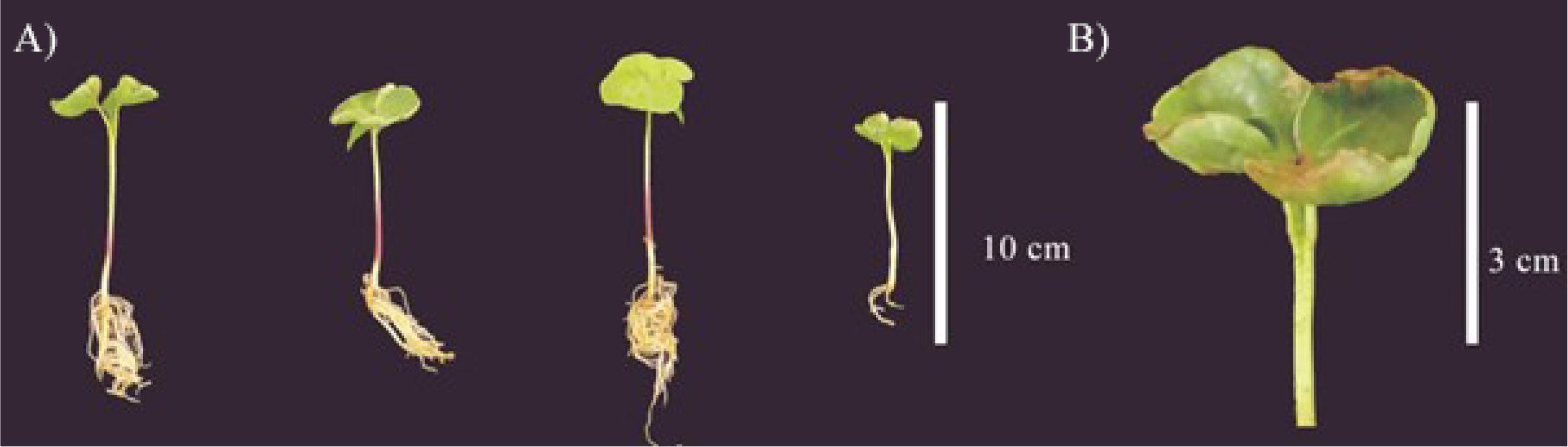
The analysis of variance (Supplementary material 1) showed that the application of B caused changes in the initial development of Gossypium hirsutum seedlings (Figure 1A), as well as signs of phytotoxicity, mainly in the cotyledons (Figure 1B).
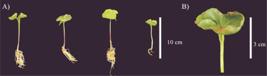
(A) Responses of Gossypium hirsutum seedlings to different concentrations of B; (B) Cotyledonary leaves present in the treatment of 120 mg B dm-3.
Emergence assessment
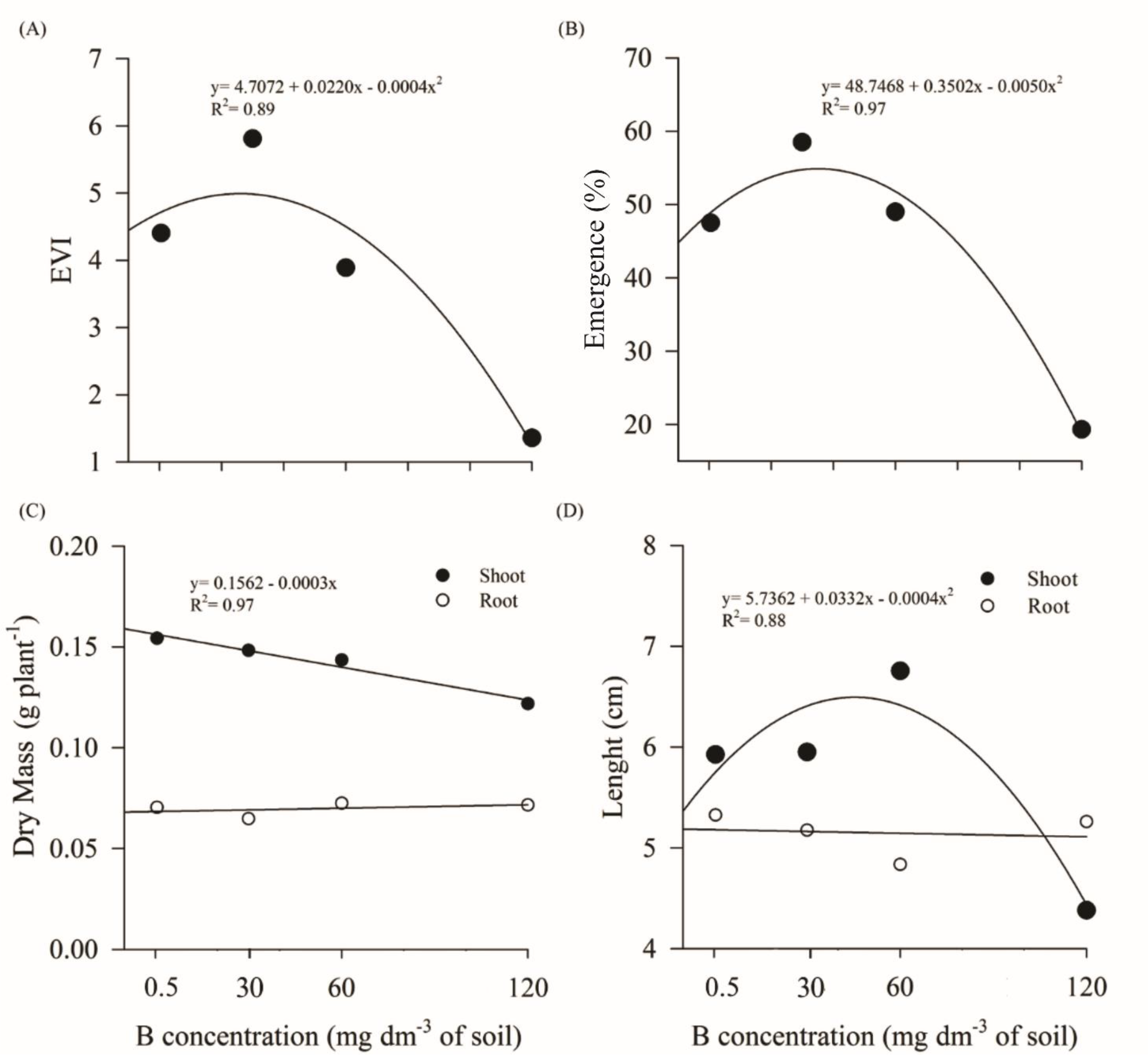
The application of B changed the emergence velocity index (EVI) (Figure 2A), presenting a maximum point at 27.5 mg B dm-3, with the same pattern observed for the emergence percentage (Figure 2B), with a maximum point at 35.02 mg B dm-3. The maximum point values were found from the derivation of the second-degree equations presented in the graphs, from which we were able to estimate more precisely the concentration that presented the peak response for that variable and consequently the sharp drop point in relation to the application of B.
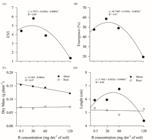
(A) Effect of B application on the Emergence Speed Index - EVI; (B) Percentage of Emergence; (C) Dry mass of the aerial part and root part; (D) Length of the aerial part (stem, leaves, and cotyledons) and root of G. hirsutum seedlings subjected to different concentrations of B. For dry mass (C) and length (D) the regression equation was not presented as the effect of the treatments was not significant.
The different B treatments resulted in a decrease in the shoot dry biomass production (Figure 2C), in addition to presenting significant variation in relation to the shoot length (Figure 2D), reaching a maximum point of 41.5 mg B dm-3. There was no difference in either the root length or the dry biomass production.
Photosynthetic pigments, partition and allocation of compounds
Pigments
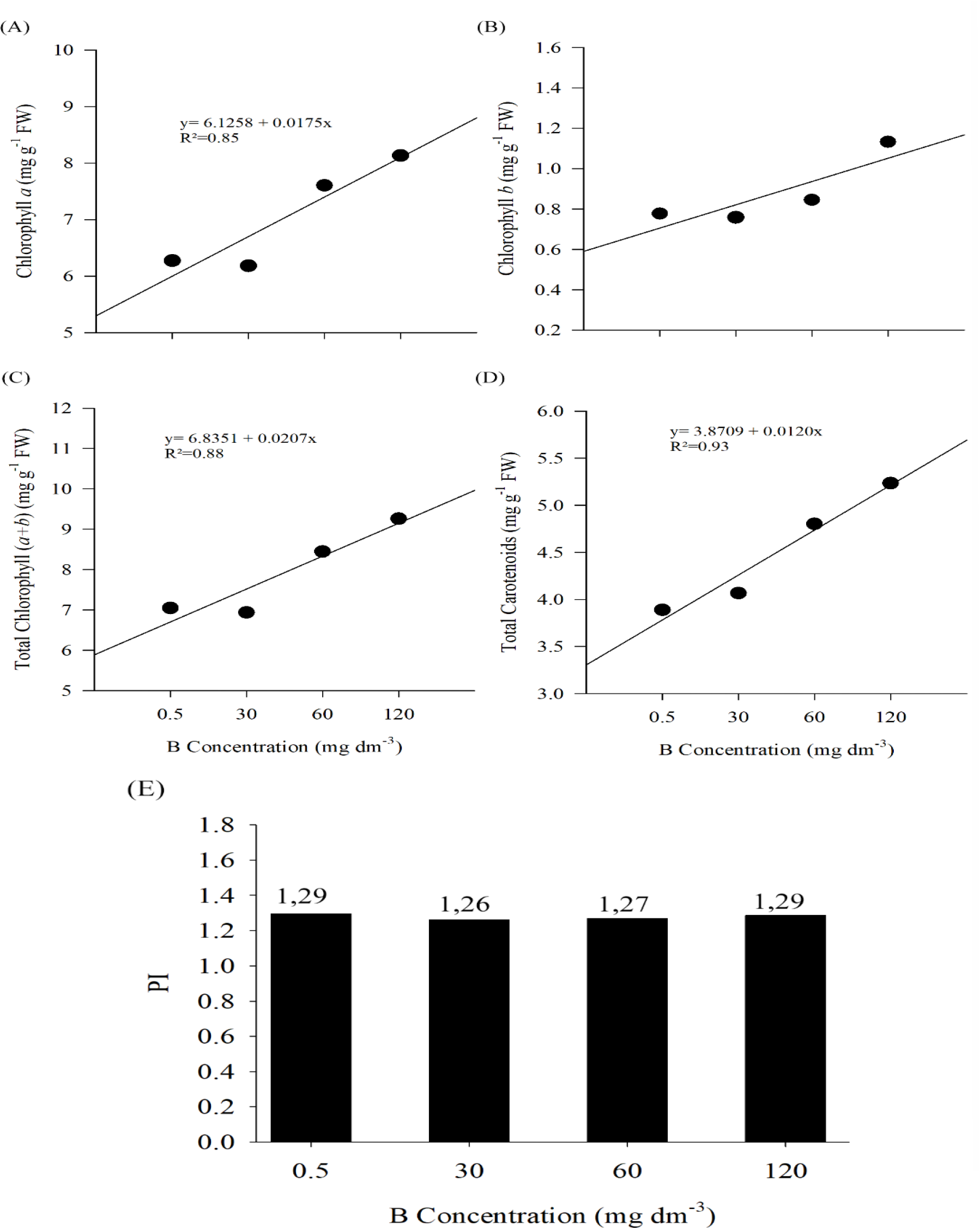
The different B treatments caused an increase in the concentrations of Chlorophyll a, Total Chlorophylls, and Total Carotenoids present in the leaves of G. hirsutum (Figure 3A, C, D).
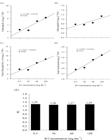
(A) Effect of B application on the concentration of Chlorophyll a; (B) chlorophyll b; (C) Total Chlorophylls (a + b); (D) Total Carotenoids; (E) Pheophytinization Index of G. hirsutum seedlings subjected to different concentrations of B.
The results obtained for the Phaeophytinization Index (Figure 3E) obtained values of 1.29, 1.26, 1.27, and 1.29 for treatments of 0.5, 30, 60, and 120 mg B dm-3, respectively.
Total soluble amino acid concentration
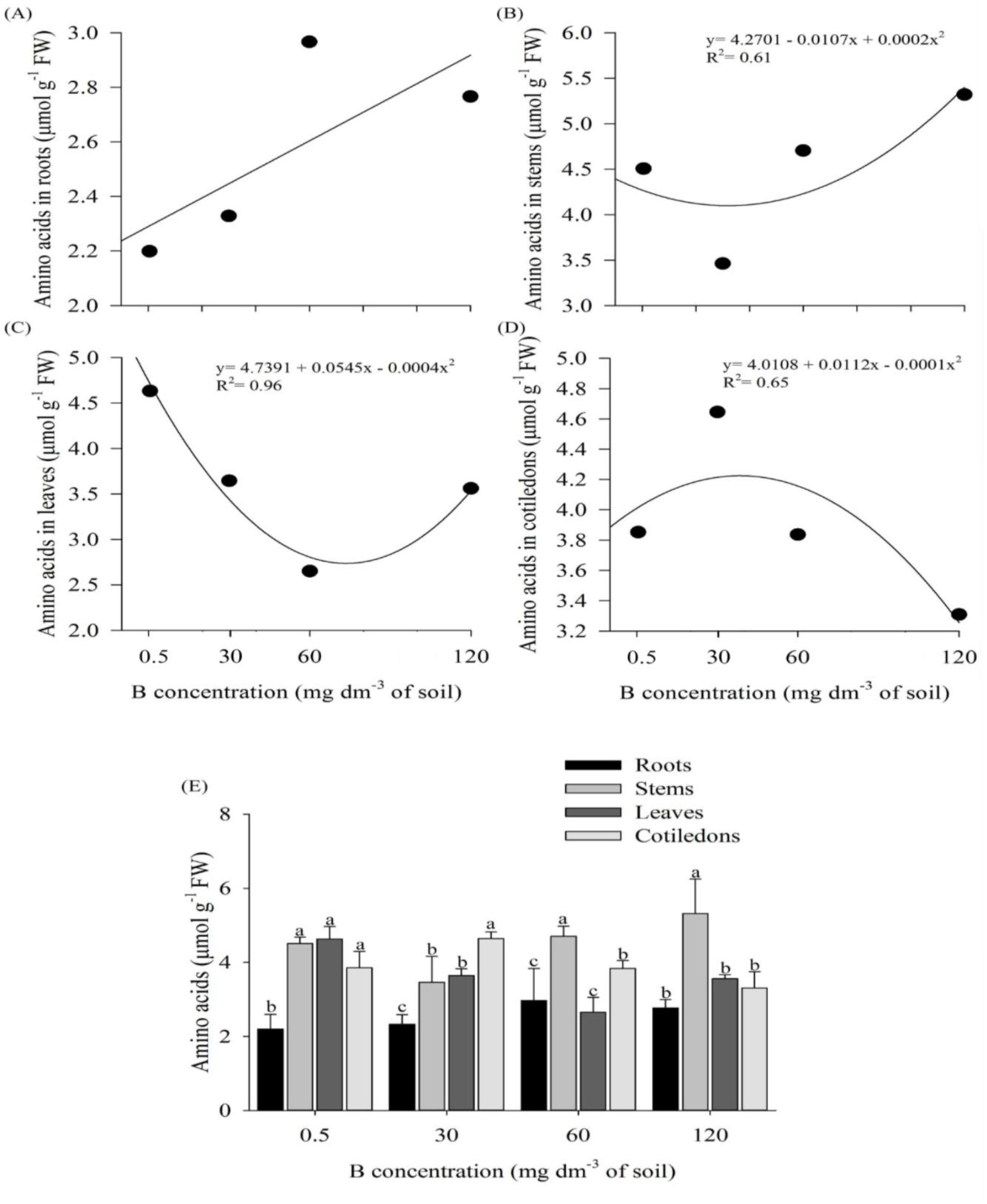
There was a significant effect of B application on the total soluble amino acids present in stems, leaves, and cotyledons (Figure 4B, C, D). For the stem, the minimum point is 26.75 mg B dm-3, with an increase in amino acids from this concentration. For leaves, the minimum point is 68.125 mg B dm-3. The cotyledons showed a maximum point of 56 mg B dm-3.
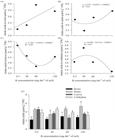
(A) Effect of B application on amino acid concentration in roots; (B) stems; (C) leaves; (D) cotyledons; (E) Average amino acid concentration in G. hirsutum seedlings subjected to different concentrations of B. Different letters indicate significant differences between organs within the same treatment.
When individually comparing the different organs in each treatment (Figure 4E), the root presented a lower concentration of amino acids in the control treatment. For the treatment with application of 30 mg B dm-3, the concentration of amino acids was higher in the cotyledons, while the root presented the lowest concentrations. In the 60 mg B dm-3 treatment, the stem was the organ with the greatest accumulation of amino acids, followed by the cotyledons, while roots and leaves showed no statistical difference. For the 120 mg B dm-3 treatment, the compounds were mostly found in the stem, while the others were not significantly different.
Total soluble protein concentration
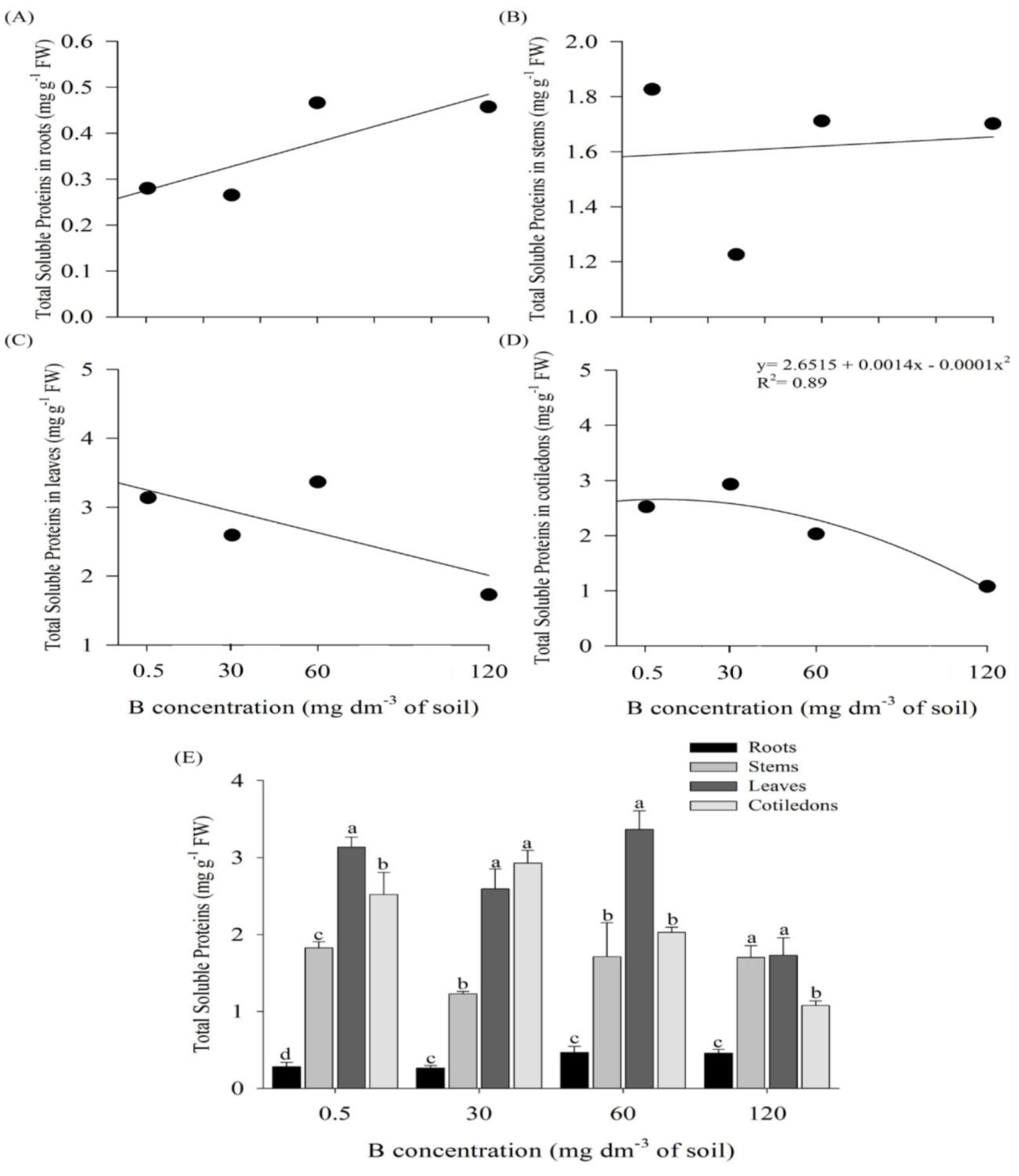
There was a significant effect of B application on the concentration of total soluble proteins in cotyledons (Figure 5D), with a maximum point at 7 mg B dm-3. For roots, stems, and leaves, the data was not adapted to the regression curve.
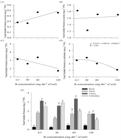
(A) Effect of B application on the concentration of total soluble proteins in roots; (B) stems; (C) leaves; (D) cotyledons; (E) Average concentration of total soluble proteins in G. hirsutum seedlings subjected to different concentrations of B. Different letters indicate significant difference between organs within the same treatment.
When compared by different organs (Figure 5E), we observe that in the control treatment, all organs showed a significant difference in relation to the concentrations of total soluble proteins, with the highest concentration found in the leaves, followed by the cotyledons, stem, and root, respectively. At 30 mg B dm-3, the leaves and cotyledons have a higher concentration of proteins. For 60 mg B dm-3, there was no significant difference between stem and cotyledons, with greater quantification of proteins in the leaf organ. For the highest concentration of B in the soil, there was no difference between leaves and stem, so that both organs had a higher concentration of proteins, with a decline in cotyledons and roots, respectively. Overall, the root remained the organ with the lowest concentration of proteins.
Starch concentration
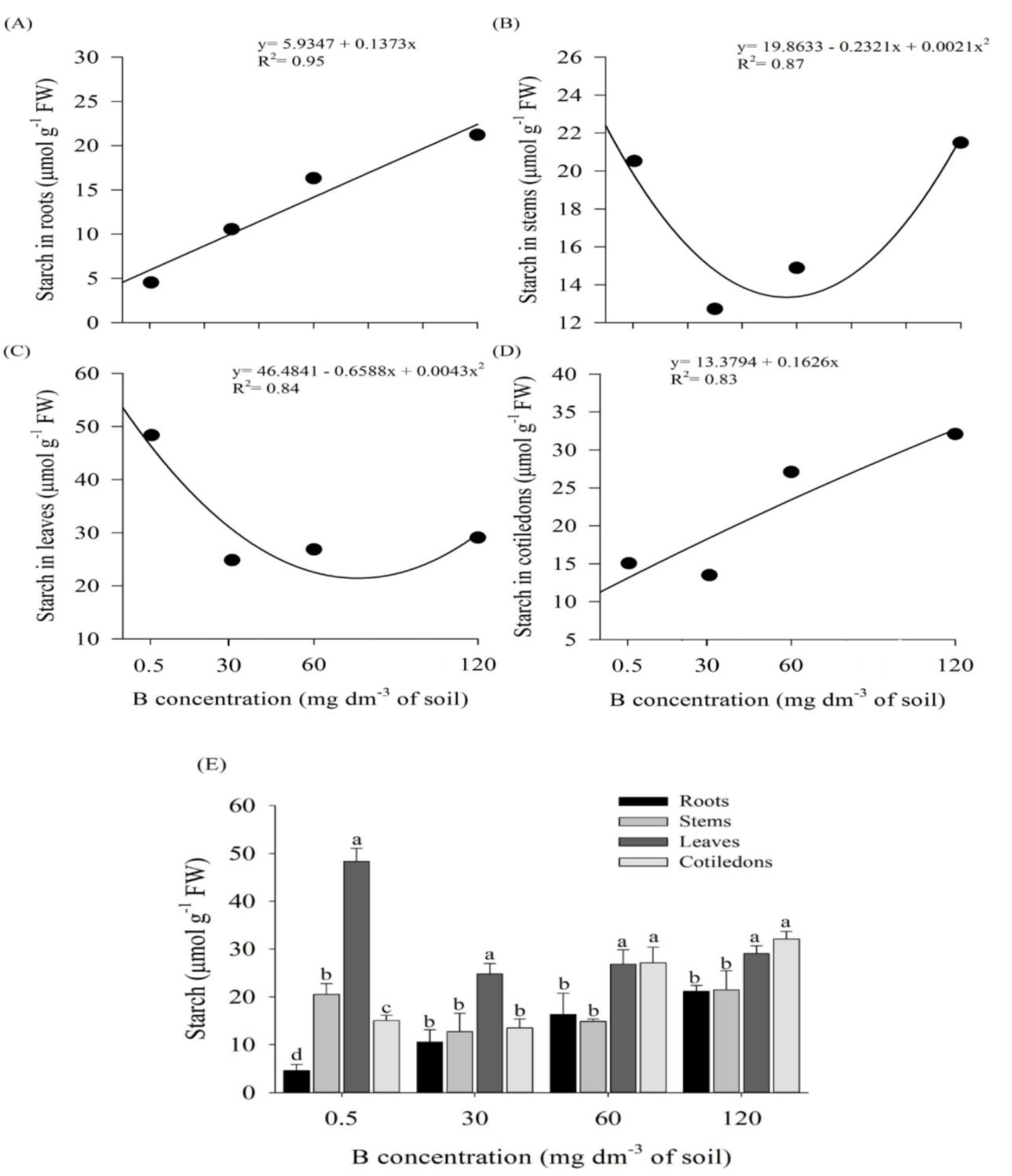
There was a significant effect of B availability on starch concentrations in roots, stem, leaves, and cotyledons (Figure 6A, B, C, D). For roots and cotyledons throughout the treatments, there was an increase in starch concentrations. For the leaves, the minimum point is 76.60 mg B dm-3, while the stem has a minimum point of 55.26 mg B dm-3.
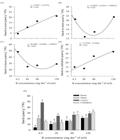
(A) Effect of B application on starch concentration in roots; (B) stems; (C) leaves; (D) cotyledons; (E) Average starch concentration in G. hirsutum seedlings subjected to different concentrations of B. Different letters indicate significant difference between organs within the same treatment.
When compared between the different organs (Figure 6E), we observe that there was a significant difference for the control treatment, with leaves, stem, cotyledons, and roots being the organs with the highest and lowest accumulation of compounds, respectively. G. hirsutum showed a higher concentration of starch present in the leaves of the 30 mg B dm-3 treatment, while the other organs showed no significant difference. The last two treatments followed the same pattern, so that the leaves and cotyledons presented a higher concentration of starch, while the stem and root organs presented lower concentrations, with no statistical difference between the two.
DISCUSSION
The present study addresses the effects of B and its implications on the initial development of herbaceous cotton, so that the concentration of micronutrients in the soil can cause either positive or toxic effects on the development of plants, with an ideal concentration range for plant growth, so that B, among all micronutrients, presents the narrowest range between deficiency and toxicity [31], and both situations are able to lead to widespread agricultural problems in higher plants in arid and semi-arid climates, demonstrating the importance of knowledge on the behavior of different crops under different treatments, ensuring better yield and emergence from an agricultural point of view [11].
With the concentrations used in this study, we were able to find the ideal treatment for the highest percentage of G. hirsutum emergence, from setting its maximum point (35.02 mg B dm-3), and this behavior was verified in other species, e.g., for barley, low B levels has improved all parameters related to cereal germination, compared to controls [32]. High concentrations of this element compromise cotton development, while a sufficient amount can considerably improve growth, productivity, and quality of crops [33,34].
The treatments used in this study represent much higher values than those obtained by soil analysis (0.48, 23.94, 24.16, and 24.2 kg B ha-1 for treatments 0.5, 30, 60, and 120 mg B dm-3, respectively), however, such factors do not affect the hypothesis and objective of the work, since the soil analysis concentrations still represent very high values capable of generating toxicity, since concentrations above 2mg kg-1 of water-soluble B are considered excessive [35].
High concentrations of this micronutrient proved to be toxic, compromising seedling emergence, as observed in rice Oryza sativa L., in which one of the effects of B in high concentrations was the delay in seed emergence [36]. Such results are similar to those found in this study, since the emergence velocity index and final percentage of seedling emergence were impaired as concentrations were raised.
The shoot dry mass of G. hirsutum decreased with increasing B concentrations in the soil, so that different treatments can affect the mass of leaves and stems of different vegetables, as observed in pea (Pisum sativum) [37] and wheat (Triticum aestivum) cultivars [38]. Regarding the shoot and root length, studies indicate that the addition of B directly affects the length of G. hirsutum, demonstrating that the plant increases in size under conditions with the addition of B [39].
In addition to harming the emergence of cotton, determining which are the main processes responsible for the decline in growth and general development of the plant is a challenge [40]; however, it is known that under toxicity conditions, meristematic regions reduce their expansion and consequently compromise the shoot development. When we combine this with tissue necrosis, a disturbance in metabolic activities can be noticed, which can harm the photosynthetic capacity and negatively impact the plant growth [40]. B is a highly required element in meristematic cells, having extreme importance for growth regions, such as root tips, new leaves and shoots, in addition to having a structural role that guarantees the plasma membrane functionality [41], so that Lower treatments can lead to a positive effect, promoting such physiological, biochemical, and metabolic activities in the cotton plant, stimulating the plant emergence.
In stressful situations, we can deduce the photosynthetic performance of plants from the amount of photosynthetic functional pigments, chlorophylls, and carotenoids [42], so that in many plant species, excess B can lead to a decrease in photosynthetic pigments, followed by structural damage to chloroplasts, especially thylakoids [43]. However, the present study demonstrated an increase in pigments in response to different concentrations of B, and similar results were observed for 150-days-old Astronium fraxinifolium, which presented higher chlorophyll levels in treatments higher than the control [44] and for 120-days-old Calopogonium mucunoides, with an increase in the concentrations of chlorophyll a, b, and total chlorophyll observed in 60-120 mg B dm-3 treatments, observing a decreasing trend in higher treatments [45]. In general, the threshold between deficiency and toxicity caused by B corresponds to a narrow range, and its application can lead to better physiological performance in agricultural plants, improving water management and chlorophyll levels [3].
Furthermore, carotenoids play a crucial role in stressful conditions by reducing damage caused by an imbalance in energy storage [46], in addition to having antioxidant potential and stabilizing the membrane [47], being essential in all stages of plant development. Also, the toxic concentrations used in this study can lead to oxidative stress, generating reactive oxygen species (ROS). Thus, the increase in photosynthetic pigments results in an increase in the production of NADPH, the final product of the light reactions of photosynthesis, being an important substrate for reactions that remove ROS and also represents an reductive roll associated with biosynthetic reactions and stress defense [46]. Therefore, the results obtained represent a possible strategy adopted by cotton seedlings to overcome the stress caused by B, since, even at an early stage, the toxicity symptoms can be observed very quickly in development, occurring in the early phases of the plant's life cycle [3].
Plants tolerant to B toxicity have a lower accumulation of the nutrient in root tissues and shoots [48] and this mechanism can be explained by ion transporters that allow greater efflux of B present in root cells, thus, genes present in tolerant plants can reduce the expression of multifunctional channel proteins, limiting the entry of B into the roots and its elimination to the leaves [48]. Therefore, research aimed at understanding this mechanism can make a great contribution to cotton cultivation.
Ronen and Galun [25] state that values close to 1.4 indicate greater integrity of the photosynthetic pigment, therefore, the present study shows very favorable indications between treatments, since, although it presents symptoms of phytotoxicity, all obtained values were greater than 1.26. The Pheophytinization Index is an important biomarker to observe the proportions of chlorophyll a /pheophytin a present in plants, to estimate the chlorophyll degradation [25] and this relationship is established, as chlorophyll a is the pigment present in greater abundance in plant species and can be decomposed in stress situations, causing the formation of pheophytin [49].
Under conditions of toxicity, B is an element capable of altering N metabolism through its interference with the activity of nitrate reductase and glutamate dehydrogenase in leaf and root tissues, in addition to the stress caused by this micronutrient interfering with the general amino acid control (GAAC) pathway, which can affect the synthesis of this compound and lead to inhibition of protein synthesis [50,51,52] this could explain the fluctuations in the concentrations of these compounds in response to increasing B concentrations, indicating the effects of B toxicity on plant metabolism. Excess B also caused a decrease in soluble proteins in the leaves of Vigna unguiculata seedlings and in the roots of 120-days-old Calopogonium mucunoides, when subjected to high concentrations, pointing to its influence on the assimilation and partition of N in plants of all different stages of growth [45,53].
Nitrogenous compounds are of great importance in the initial phase of seed development; they are stored in some species as storage proteins in the endosperm or in the embryo/cotyledons, which are responsible for seedling nutrition while physiological demands are not yet fully provided by the root system; amino acid transporters are expressed shortly after the synthesis of these proteins and are imported into the cotyledons [54,55]. The present study demonstrates that amino acids are stored in the cotyledons of G. hirsutum at 30 mg B dm-3; however, high treatments lead to a greater concentration in the stems, and this relocation may be a response to stress; this finding is corroborated by studies that demonstrated that B tends to accumulate in the plant shoot, so that, for 65-days-old Crotalaria juncea, under the treatment of 30 mg B dm-3, the concentration of amino acids increased in its shoot, while the roots, like the cotton plant, remain the organ with the lowest concentration of these compounds [56].
In cotton, 40% to 50% of the carbon assimilated after fixation is in the form of starch [57]. The decrease in starch present in the leaves of G. hirsutum reaches its minimum point at 76.60 mg B dm-3. This may occur due to the reduction in the conversion of glucose-1-phosphate into starch, since, in stressful situations, B can increase the circulating concentration of this intermediate compound, increasing the translocation of sugars in plants [58]. Similar results are found in the leaves of V. unguiculata seedlings, with a decrease in this compound in plants with excess B [53]. It is known that in soils with high concentrations, B has limited translocation to young tissues, tending to accumulate in mature leaves [11].
Starch remained mainly allocated in the leaves and cotyledons of the cotton plant, with the latter being a reserve organ required in the initial stages of seedling development, thus tending to accumulate soluble sugars and starch for later, as the shoot develops, to be relocated to epicotyls [59], in addition, the accumulation of sugars represents reserves of carbon and nitrogen for the possible resumption of plant growth, as soon as conditions become less stressful [60]. Furthermore, the increase in starch in roots and cotyledons may be associated with a reduction in shoot dry mass as treatments increase, since plants use carbohydrates, such as starch, to aid fast growth, as a source of energy and carbon skeletons necessary for the synthesis of carbon compounds [46]. Thus, high concentrations of B reduce the size and mass of seedlings, which consequently reduces overall carbon demand, resulting in the observed increase in their reserves.
The present study presented very interesting data for cotton cultivation, observing its initial characteristics in a stress situation caused by excess B in the soil, demonstrating the importance of this element for plants and its influence on all variables studied. The superior treatment (120 mg B dm-3) was able to delay plant emergence, presenting significant differences (Figure 2, 3, 4, 5, and 6) and visible toxicity results (Figure 1). A pattern was also identified for variables related to emergence, obtaining an initial increase that causes a peak in the ideal B concentration, then a decline in the overall plant development occurs. Thus, the maximum points obtained in this work reveal that the 30 mg B dm-3 treatment was closer to the peak of EVI and emergence percentage, demonstrating that such concentration can provide positive effects on the improvement of this crop. The data found for photosynthetic pigments demonstrated the plant's investment in the production of chlorophyll a, total chlorophylls, and total carotenoids. Furthermore, the present study characterized the partition and allocation of different reserve compounds in the plant's body at different B treatments, demonstrating that this micronutrient directly influenced cotton cultivation and affects physiological processes, being able to alter the N metabolism of this vegetable, with noticeable signs of stress and clear variations in the quantification of compounds throughout the treatments.
CONCLUSION
We conclude that G. hirsutum presents phytotoxicity symptoms when subjected to 120 mg B dm-3 soil, a concentration capable of directly compromising the emergence and production of nitrogenous compounds in the plant, resulting in a general decline in the concentrations of such compounds when we compare the highest treatment in relation to controls. As future directions, studies that contemplate the accumulation of B in cotton tissues and explore the tolerance of plants to toxic concentrations are interesting, especially considering the increase in photosynthetic pigments as an adaptive response, reinforcing the potential of cotton for use in different purposes, such as soil decontamination. Furthermore, assessments of oxidative stress can help in understanding the behavior of the species under high concentrations of B, as well as the evaluation of tolerant genes, such as the involvement of metal transport proteins in cotton cultivation and possible anatomical changes in the vegetative organs of the species are good possibilities to be studied, evaluating its complete cycle and monitoring its responses throughout its total development.
-
Funding:
This study was financed by the Fundação de Amparo à Pesquisa do Estado de São Paulo - FAPESP, Finance Code 2020/12421-4 to LSC and 2022/15192-1 to RPS; the Coordenação de Aperfeiçoamento de Pessoal de Nível Superior - Brasil (CAPES) - Finance Code 001 to RPS. and the Conselho Nacional de Desenvolvimento Científico e Tecnológico (CNPq-Brazil) - Finance Code 302499/2021-0 to LSC.
Supplementary Material:
The supporting information can be downloaded at: https://doi.org/10.5281/zenodo.14766827
REFERENCES
- 1 Pereira GL, Siqueira JA, Batista-Silva W, Cardoso FB, Nunes-Nesi A, Araújo WL. Boron: More than an essential element for land plants? Front. Plant Sci. 2021 Jan 14;11.
- 2 Sadeghzadeh B. A review of zinc nutrition and plant breeding. J. Soil Sci. Plant Nutr. 2013;13(4):905-27.
- 3 Brdar-Jokanović M. Boron toxicity and deficiency in agricultural plants. Int. J. Mol. Sci. 2020 Feb 21(4):1424.
- 4 Beltrão NEM, Araújo AE, editors. [Cotton: the producer asks, Embrapa responds]. 1. ed. Brasília: Embrapa Informação Tecnológica; 2004. 265 p.
- 5 Hu W, Chen M, Zhao W, Chen B, Wang Y, Wang S, et al. The effects of sowing date on cottonseed properties at different fruiting-branch positions. J. Integr. Agric. 2017;16(6):1322-30.
- 6 Rosolem CA. [Ecophysiology and management of cotton crops]. Informações Agronômicas. 2001;95:1-9.
- 7 More PMR. [Peruvian Pima cotton: Cultivation and agronomic management]. Piura: Universidad Nacional de Piura; 2014. 78 p.
- 8 Carrera-Castaño G, Calleja-Cabrera J, Pernas M, Gómez L, Oñate-Sánchez L. An updated overview on the regulation of seed germination. Plants. 2020 Jun 9(6):703.
- 9 Rajjou L, Duval M, Gallardo K, Catusse J, Bally J, Job C, et al. Seed germination and vigor. Annu. Rev. Plant Biol. 2012;63:507-33.
- 10 Landi M, Margaritopoulou T, Papadakis IE, Araniti F. Boron toxicity in higher plants: an update. Planta. 2019 Oct 250(4):1011-32.
- 11 Shireen F, Nawaz M, Chen C, Zhang Q, Zheng Z, Sohail H, et al. Boron: functions and approaches to enhance its availability in plants for sustainable agriculture. Int. J. Mol. Sci. 2018 Jul 19(7):1856.
- 12 Wimmer MA, Abreu I, Bell RW, Bienert MD, Brown PH, Dell B, et al. Boron: an essential element for vascular plants. New Phytol. 2020 Nov 226(5):1232-7.
- 13 Aguilar JV, Ferreira TC, Bomfim NCP, Mendes TFS, Lapaz MA, Brambilla MR, et al. Different responses to phenological stages: a role for nickel in growth and physiology of herbaceous cotton. Plant Growth Regul. 2023 Jul 101(3):663-78.
- 14 Kaur R, Bhatti SS, Singh S, Singh J, Singh S. Phytoremediation of heavy metals using cotton plant: a field analysis. Bull. Environ. Contam. Toxicol. 2018 Nov 101(5):637-43.
- 15 Rosolem CA, Quaggio JA, Cantarella H, Silva NM, Carvalho LH. Algodão. In: Cantarella H, Quaggio JA, Mattos Jr D, Boaretto RM, Raij B van, editors. [Fertilization and Liming Recommendations for the State of São Paulo - B100]. Campinas: Instituto Agronômico de Campinas; 2022. p. 160-4.
- 16 Brazil. [Rules for seed analysis]. Brasília: Ministério da Agricultura, Pecuária e Abastecimento; 2009. 399 p.
- 17 Santos HG, Jacomine PKT, Anjos LHC, Oliveira VA, Lumbrearas JF, Coelho MR, et al. [Brazilian system of soil classification]. 5. ed. Brasília: Embrapa Solos; 2018. 356 p.
- 18 Teixeira PC, Donagemma GK, Fontana A, Teixeira WG, editors. [Manual of soil analysis methods]. 3. ed. Brasília: Embrapa Solos; 2017. 574 p.
- 19 Raij BV, Andrade JC, Cantarella H, Quaggio JÁ, editors. [Chemical analysis to evaluate the fertility of tropical soils]. Campinas: Instituto Agronômico; 2001. 285 p.
- 20 Lima LR, Silva HF, Brignoni AS, Silva FG, Camargos LS, Souza LA. Characterization of biomass sorghum for copper phytoremediation: photosynthetic response and possibility as a bioenergy feedstock from contaminated land. Physiol. Mol. Biol. Plants. 2019 Mar 25(2):433-41.
- 21 Balbinot Jr AA, Fleck NG, Agostinetto D, Rizzardi MA, Merotto Jr A, Vidal RA. [Emergence and early growth of flooded rice cultivars influencing the competitive ability with weeds]. Planta Daninha. 2001 Dec 19(3):305-16.
- 22 Maguire JD. Speed of germination-aid in selection and evaluation for seedling emergence and vigor. Crop Sci. 1962;2:176-7.
- 23 Hiscox JD, Israelstam GF. A method for the extraction of chlorophyll from leaf tissue without maceration. Canad. J. Bot. 1979 Jun 57(12):1332-4.
- 24 Arnon DI. Copper enzymes in isolated chloroplasts. polyphenoloxidase in Beta vulgaris. Plant Physiol. 1949 Jan 24(1):1-15.
- 25 Ronen R, Galun M. Pigment extraction from lichens with dimethyl sulfoxide (DMSO) and estimation of chlorophyll degradation. Environ. Exp. Bot. 1984 Aug 24(3):239-45.
- 26 Bieleski RL, Turner NA. Separation and estimation of amino acids in crude plant extracts by thin-layer electrophoresis and chromatography. Anal. Biochem. 1966 Nov 17(2):278-93.
- 27 Yemm EW, Cocking EC. The determination of amino-acids with ninhydrin. Analyst. 1995;80(948):209-13.
- 28 Bradford MM. A rapid and sensitive method for the quantitation of microgram quantities of protein utilizing the principle of protein-dye binding. Anal. Biochem. 1976 May 72:248-54.
- 29 Umbreit WW, Kingsley GR, Scharffert RR, Siplet H. A colorimetric method for transaminase in serum or plasma. J. Lab. Clin. Med. 1957 Mar 49(3), 454-9.
-
30 R Core Team. A Language and Environment for Statistical Computing_. R Foundation for Statistical Computing, Vienna, Austria, 2023. <https://www.R-project.org/>
» https://www.R-project.org/ - 31 Langridge P. Micronutrient toxicity and deficiency. In: Reynolds MP, Braun HJ, editors. Wheat Improvement. Cham: Springer; 2022. p. 433-49.
- 32 Alamri SA, Siddiqui MH, Al-Khaishani MY, Ali HM. Boron induces seed germination and seedling growth of Hordeum vulgare L. under Nacl stress. J. Adv. Agric. 2018;8(1):1224-34.
- 33 Kohli SK, Kaur H, Khanna K, Handa N, Bhardwaj R, Rinklebe J, et al. Boron in plants: uptake, deficiency and biological potential. Plant Growth Regul. 2023 Jun 100(2):267-82.
- 34 Yaşar M, Baran N, Demiray YG, Ekinci R, Karadag Y. Effects of coating with different doses of boron compound on germination parameters of cotton seeds. Turkish JAF Sci Tech. 2023 Aug 11(8):1351-9.
- 35 Alila P. Boron nutrition in horticultural crops: Constraint diagnosis and their management. In: Aydin M, editor. Boron, Boron Compounds and Boron-Based Materials and Structures. IntechOpen; 2023.
- 36 Farooq M, Atique-ur-Rehman, Aziz T, Habib M. Boron nutripriming improves the germination and early seedling growth of rice (Oryza sativa L.). J. Plant Nutr. 2011 Jul 34(9-11):1507-15.
- 37 Bagheri A, Paull JG, Rathjen AJ, Ali SM, Moody DB. Genetic variation in the response of pea (Pisum sativum L.) to high soil concentrations of boron. Plant Soil. 1992 Oct 146, 261-9.
- 38 Holloway R. Alston A. The effects of salt and boron on growth of wheat. Aust. J. Agric. Res. 1992, 43, 987-1001.
- 39 Dordas C. Foliar boron application affects lint and seed yield and improves seed quality of cotton grown on calcareous soils. Nutr. Cycling Agroecosyst. 2006, 76(1-2):19-28.
- 40 Reid RJ, Hayes JE, Post A, Stangoulis JCR, Graham RD. A critical analysis of the causes of boron toxicity in plants. Plant Cell Environ. 2004 Nov 25:1405-14.
- 41 Ahmad W, Niaz A, Kanwal S, Rasheed MK. Role of boron in plant growth: a review. J. Agric. Res. 2009 Jan 47(3):329-38.
- 42 Costa PBG, Justino GC, Aguiar LF, Souza LA, Camargos LS. Boron phytoremediation: Stizolobium aterrimum is tolerant and can be used for phytomanagement of boron excess in soils. Int. J. Environ. Stud. 2019 Apr 76(2):329-37.
- 43 Landi M, Degl'Innocenti E, Pardossi A, Guidi L. Antioxidant and photosynthetic responses in plants under boron toxicity: a review. Am. J. Agric. Biol. Sci. 2012 Mar;7(3):255-70.
- 44 Leite MCM, Araujo MA, Paiva WS, Camargos LS, Martins AR. Morphological responses and tolerance of a tree native to the brazilian cerrado Astronium fraxinifolium Schott to boron toxicity. Environ. Sci. Pollut. Res. 2022 Jan 29(5):6900-10.
- 45 Silva VN, Frachia CL, Barbosa ICF, Silva MB, Paiva WS, Souza LA, et al. Tolerance and phytoremediation potential of Calopogonium mucunoides to boron. Environ Qual. Manag. 2021 Feb 30(3):27-36.
- 46 Taiz L, Zeiger E, Møller IM, Murphy A, editors. [Plant physiology and development]. Porto Alegre: Artmed; 2017. 858 p.
- 47 Uarrota VG, Stefen DLV, Leolato LS, Gindri DM, Nerling D. Revisiting Carotenoids and Their Role in Plant Stress Responses: From Biosynthesis to Plant Signaling Mechanisms During Stress. In: Gupta D, Palma J, Corpas F, editors. Antioxidants and Antioxidant Enzymes in Higher Plants. Cham: Springer; 2018. p. 207-32.
- 48 Princi MP, Lupini A, Araniti F, Longo C, Mauceri A, Sunseri F, et al. Boron toxicity and tolerance in plants. In: Srivastava S.; Srivastava A.K.; Suprasanna P, editors. Plant Metal Interactions. Cham: Springer, 2016; p.115-47.
- 49 Petterson A, Lima V, Anaissi F. [Chlorophyll extracted from industrial waste from mate-herb (Ilex paraguaiensis) a possibility of circular economy]. Quim. Nova. 2022 Mar 45(7):767-76.
- 50 Broadley M, Brown P, Cakmak I, Rengel Z, Zhao F. Function of nutrients: micronutrients. In: Marschner P, editor. Marschner’s Mineral Nutrition of Higher Plants. London: Academic Press, 2012; p.191-248.
- 51 Mahboobi H, Yücel M, Öktem HA. Nitrate reductase and glutamate dehydrogenase activities of resistant and sensitive cultivars of wheat and barley under boron toxicity. J. Plant Nutr. 2002 Aug 25(8):1829-37.
- 52 Uluisik I, Kaya A, Fomenko DE, Karakaya HC, Carlson BA, Gladyshev VN, et al. Boron stress activates the general amino acid control mechanism and inhibits protein synthesis. PLoS One. 2011;6(11):e27772.
- 53 Inbaraj P, Muthuchelian K. Effect of boron and high irradiance stresses on chlorophyll, protein and starch content in leaves of cowpea (Vigna unguiculata L. Walp. P152). J. Biosci. Res. 2011;2(2):55-61.
- 54 Camargos LS, Soares CRS, Justino GC, Aguiar LF. [Allocation of reserve nitrogen compounds during germination of Canavalia brasiliensis seeds]. Biotemas. 2013 Sep 26(4):1-10.
- 55 Rentsch D, Schmidt S, Tegeder M. Transporters for uptake and allocation of organic nitrogen compounds in plants. FEBS Letters. 2007 May 581(12):2281-9.
- 56 Mendonça GW, Aguilar JV, Lapaz AM, Paiva WS, Ferreira TC, Souza LA, et al. How does boron modify the growth of Crotalaria juncea? A legume with phytostabilizing potential. Int. J. Environ. Stud. 2023 May;1-15.
- 57 Souza JG, Silva JV. [Enzyme activities, carbohydrate partitioning and growth in cotton progenies selected for high and low root starch contente]. Pesqui. Agropecu. Bras. 1992;27(11):1507-11.
- 58 Dugger WM, Humphreys TE, Calhoun B. The influence of boron on starch phosphorylase and its significance in translocation of sugars in plants. Plant Physiol. 1957 Jul 32(4):364-70.
- 59 Weidlich EWA, Pescador R, Uhlmann A. [Resource allocation (carbohydrates) in the inicial development of seedlings of Schizolobium parahyba (Vell.) S.F. Blacke (Fabaceae - Caesalpinioideae)] Rev. Árvore. 2010 Aug 34:627-35.
- 60 Carvalho C.J.R. [Responses of Schizolobium amazonicum [S. parahyba var. Amazonicum] and Schizolobium parahyba [Schizolobium parahybum] plants to water stress]. Rev. Árvore. 2005 Dec 29(6):907-14.
-
Editor-in-Chief: Bill Jorge Costa
-
Associate Editor: Adriel Ferreira da Fonseca