 Phytochemical constitution and pharmacological effects of Genipa americana L. (Rubiaceae): a review
Abstract
Genipa americana L., popularly known as “jenipapo”, is a species easily found, especially in northeastern Brazil. It is remarkable for having iridoids in its composition. Popular for its blue pigment which has been used to manufacture paints and dyes. Furthermore, this plant is utilized for medicinal purposes in addressing a variety of illnesses. This review provide a comprehensive picture of the phytochemical and biological activities characteristics of Genipa americana L. deal with its ethnomedicinal use and botany based on literature reports. These researches pointed out a range of secondary metabolites with iridoids being the most prevalent and abundant. Until now, the biological tests have shown important pharmacological activities, especially the antioxidant, insecticide and antibacterial activities. Besides presenting itself in a very promising way in other areas such as food and cosmetics industry, it is also used in popular medicine to treat several diseases having this potential use disseminated in its various parts. Finally, for a better analysis and validation of its health benefits and properties, extensive research is needed, including clinical trials. The information gathered and approached in this paper might support the planning and discussion of future studies on the topic.
Keywords:
jenipap; pharmacological activity; phytochemical; geniposides; iridoids
Resumo
Genipa americana L., popularmente conhecida como “jenipapo”, é uma espécie facilmente encontrada, principalmente no Nordeste do Brasil. É notável por possuir iridóides em sua composição. Popular por seu pigmento azul que tem sido usado na fabricação de tintas e corantes. Além disso, esta planta é utilizada para fins medicinais no tratamento de uma variedade de doenças. Essa revisão fornece um panorama abrangente das características fitoquímicas e atividades biológicas da Genipa americana L., abordando seu uso etnomedicinal e botânico a partir dos relatos da literatura. Essas pesquisas apontaram uma série de metabólitos secundários, sendo os iridóides os mais prevalentes e abundantes. Até agora, os testes biológicos demonstraram importantes atividades farmacológicas, especialmente as atividades antioxidante, inseticida e antibacteriana. Além de se apresentar de forma bastante promissora em outras áreas como a indústria alimentícia e cosmética, também é utilizado na medicina popular para tratar diversas doenças tendo esse potencial uso disseminado em seus diversos setores. Finalmente, para uma melhor análise e validação dos seus benefícios e propriedades para a saúde, é necessária uma extensa investigação, incluindo ensaios clínicos. As informações levantadas e abordadas neste artigo poderão subsidiar o planejamento e discussão de estudos futuros sobre o tema.
Palavras-chave:
jenipapo; atividades farmacológicas; fitoquímica; geniposídeos; irioides
1. Introduction
The genus Genipa belongs to the Rubiaceae family which, among the angiosperm families, is the fourth largest, besides being one of the main ones in the Brazilian flora. It presents around 617 genera and 13,000 species that are divided into shrubs, herbs, and trees, and are easily found because they are present all over the world, mainly in tropical and warm regions. In the literature, it is a family known for presenting a great diversity of chemical compounds such as iridoids, alkaloids, flavonoids, anthraquinones and terpenoids (Rosa et al., 2010; Cardoso et al., 2008; Soares et al., 2017; Rosales et al., 2020; Santos et al, 2022). In popular medicine it is indicated due to the various pharmacological activities described, such as anti-inflammatory, antibacterial, antioxidant, analgesic, antiviral and mutagenic. It has also shown actions on the central nervous system (Martins and Nunez, 2015; Mongrand et al., 2005; Moreira et al., 2015; Sweelam et al., 2017).
The genus Genipa is found in the subfamily Ixoroideae and the tribe Gardenieae which has recognition as a taxon that features only two species: Genipa americana L. and Genipa infundibuliformis Zappi & Semir (Erbano and Duarte, 2010). Genipa americana L. is a fruit species and dioecious type (Bortolotto et al., 2021) popularly known as jenipap (Conceição et al., 2011), found mainly in northeastern Brazil (Neri-Numa et al., 2020a). Moreover, its fruits in natura are used in various ways in cooking, such as the manufacture of sweets, juice, compote, wine, soft drink, brandy and liquor (Silva et al., 2020).
Phytochemical studies have reported the marked presence of iridoids, such as genipin, geniposide, genipid (Alves et al., 2017; Náthia-Neves et al., 2017) although flavonoids have also been found (Silva et al., 2018), tannins (Nogueira et al., 2014), phenolic compounds such as chlorogenic acid, vanillic acid, ferulic acid (Gualberto et al., 2021), triterpenes (Barbosa et al., 2014) and carotenoids (Assis et al., 2020).
Moreover, previous studies report few biological activities, such as antiparasitic and antichagasic (Silva Souza et al., 2020), anthelmintic (Nogueira et al., 2014), acaricidal (Jesus et al., 2020), insecticidal (Lima et al., 2020), antithrombolytic, antiplatelet and anticoagulant (Madeira et al., 2020) anticonvulsant (Nonato et al., 2018), antimicrobial and antifungal (Ávila et al., 2018a), antiviral (Neri-Numa et al., 2020b), as well as cytotoxic action (Neri-Numa et al., 2020a) and enzyme inhibition (Barbosa et al., 2014).
Given the potential of phytochemicals and the versatility of the biological activities of Genipa americana L., this review presents a comprehensive and current picture of its phytoconstituents and pharmacological effects reported in the literature. This work covers the literature database of the last 10 years correlating the terms genipa, antimicrobial, anifungal, antiviral, antiparasitic, insecticidal activities. The information gathered and discussed in this paper might encourage researchers to explore the subject and drive the planning of future studies.
2. Phytochemical Constituents
There is a variety of metabolites produced by plants that, for the most part, do not present a relevant function for physiological or biochemical processes of plants. However, there are increasing reports of the importance of these metabolites as mediators in several interactions with other plants and even other organisms. Inclusively, it is already known that a large part of the pharmacological activities attributed to plants are linked to these metabolites that may be acting either alone or together through synergy (Borges et al., 2019; Céspedes et al., 2004; Jadon and Dixit, 2014).
In this regard, phytochemical studies on various parts of the G. americana species have been conducted and have shown a variety of bioactive compounds. Thus, many of these compounds have been isolated, identified and quantified. Most of the phytochemical and pharmacological studies have been performed with the fruit of G. americana and its chemical constituents were, for example, phytosteroids (Conceição et al., 2011), carotenoids (Chaves et al., 2019) flavonoid quercetin and tannins (Nogueira et al., 2014) and mainly iridoids (Bentes and Mercadante, 2014; Costa et al., 2019; Kumar et al., 2016; Náthia-Neves et al., 2017; Neri-Numa et al., 2020a; Neri-Numa et al., 2020b). Specifically for G. americana leaf extracts, the presence of geniposidic acid (Guarnaccia et al., 1972) and genipatriol (Hossain et al., 2003) has been described.
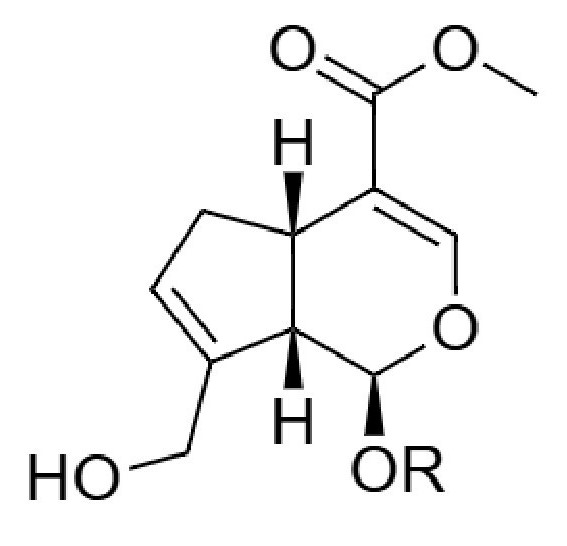
Iridoids are monoterpenoids consisting of eight to ten carbon atoms, with a chemical structure based on the cyclopentane-[C]-pyran skeleton (Figure 1), formed by the alternative cyclization of geranyl pyrophosphate (GPP) and biosynthesized from the iridodial cation. They are diverse in 27 different pathways, so that the quantity and nature of iridoids found in a plant are indicative of the complexity of the pathways involved in their biosynthesis. Because of this, they have great structural variety, resulting from the processes of glycosylation, epoxidation, hydroxylation, and esterification with the introduction of methyl groups or shikimic acid derivatives. They are found naturally in the plant kingdom mainly as glycosides (Chaves et al., 2019).

Therefore, genipin (Figure 1) represents the primary iridoid discovered in the fruits of G. americana Its significant economic value stems from its pigmenting capabilities, and it can be extracted through various techniques, including solvent extraction, ultrasonic processes, and enzymatic hydrolysis (Carvalho et al., 2020).
Phytochemical investigations on G. americana performed so far allow the identification of major classes of bioactive compounds such as phenolic compounds, flavonoids and iridoids. Table 1 presents a summary of the phytochemical studies performed on different parts of G. americana In this way it is believed to be quite likely that its crude extracts, fractions and isolated compounds may exert several biological activities reported by ethnobotanical studies. Among the bioactive compounds found in G. americana by phytochemical studies, we highlight those related to antioxidant, cytotoxic, antimicrobial and antifungal activity, namely: the iridoids and phenols.
The data collected show the abundance of phytoconstituents of the iridoids class and substances with antioxidant potential, such as phenolic compounds and flavonoids, being found mainly in the fruit (ripe and unripe, in all parts) and in the leaves of G. americana.
Were detected in the fruit, geniposide acid in the leaves, and genameside-A, genameside-B, genameside-C, and genameside-D in the leaves, fruits, and stems (Alves et al., 2017). Two other novel iridoids were also identified and isolated in the hydroalcoholic extract of G. americana, as a derivative of genipin, 1-hydroxy-7-(hydroxymethyl)-1H,4aH,5H, 7aH-cyclopenta[c]pyran-4-carbaldehyde (1) and 7-(hydroxymethyl)-1-methoxy-1H,4aH,5H,7aH-cyclopenta[c]pyran-4-carbaldehyde (2) (Figure 2) (Alves et al., 2017).

Chemical structures of principal compounds isolated from G. americana. 1) 1-hydroxy-7-(hydroxymethyl)-1H,4aH,5H, 7aH-cyclopenta[c]pyran-4-carbaldehyde; 2) 7-(hydroxymethyl)-1-methoxy-1H,4aH,5H,7aH-cyclopenta[c]pyran-4-carbaldehyde; 3) kaempferol-3-O-hexoside-deoxyhexoside-7-O-deoxyhexoside; 4) isorhamnetin-3-O-hexoside-deoxyhexoside-7-O-deoxyhexoside; 5) quercetin-3-O-hexoside-deoxyhexoside; 6) kaempferol-3-O-hexoside-deoxyhexoside, 7) isorhamnetin-3-O-hexoside-deoxyhexoside.
Another important description was the identification of 42 compounds from the essential oil of G. americana. The main compounds identified from the essential oil of the leaves were (2E,4E)-decadienal (6.01%), (E,E)-α-farnesene (5.10%), hexyl benzoate (5.61%), pentadecanal (11.55%) and linoleic acid (15.48%) and showed toxic and repellent effects against the coconut palm mite (Jesus et al., 2020).
In addition to these results, recently identified 5 new flavonoids for the first time in this genus, kaempferol-3-O-hexoside-deoxyhexoside-7-O-deoxyhexoside (3), isorhamnetin-3-O-hexoside-deoxyhexoside-7-O-deoxyhexoside (4), quercetin-3-O-hexoside-deoxyhexoside (5), kaempferol-3-O-hexoside-deoxyhexoside (6) and isorhamnetin-3-O-hexoside-deoxyhexoside (7) (Figure 2) (Silva et al., 2018).
The iridoids are traditionally employed in Chinese herbal medicine (Wang et al., 2016). These compounds exhibit various pharmacological benefits and contribute to health enhancement (Xiao et al., 2017).
Moreover, recent studies have advanced with respect to the identification of candidate genes involved in the biosynthetic pathway of iridoids from G. Jasminoides Ellis. As such, the results of the study can serve as a reference for the functional characterization of genes encoding enzymes and are beneficial for engineering iridoid biosynthetic pathways and iridoid glycosides for G. americana (Ye et al., 2019).
The remarkable iridoid content that characterizes G. americana is particularly interesting given the increasing pharmacological importance of these compounds. These include neuroprotective, anti-inflammatory, hepatoprotective, antitumor, antioxidant, and hypoglycemic activities, among others. As pure substances, some literature reviews have associated as main activities of iridoids the neuroprotective, anticancer and anti-inflammatory (Ghisalberti, 1998), although the chemical bases that give them these characteristics are not yet well established and explained (Rios Gomez, 2015).
Geniposide in fruits of G. jasminoides is the main phytoconstituent and standard quality control registered in the Chinese Pharmacopoeia (2000-2015 edition) (Xu et al., 2022; Ye et al., 2019). As such, in this study the profile of iridoids identified for in G. americana may become candidate markers for the plant.
3. Pharmacological Activities
Although this species is endowed with biological properties (anticonvulsant, antiparasitic, anthelmintic, antiviral, acaricidal, antioxidant, cytotoxic, antichagasic, insecticide, antithrombolytic, antimicrobial, antifungal, antiplatelet anticoagulant) promoted by extracts of the pulp and different parts of the plant, it was observed that most studies are directed to prove its antioxidant activity through different methods as well as its cytotoxic activity (Figure 3).

Regarding the analysis of the quality of the studies that used animal models (Figure 4) shows (5 studies in total) that in 100% of the studies the sample size calculation was not mentioned and in only one study the experimental protocols are not presented with the approval of the ethics committee. As shown in Figure 4, 100% of the studies were positive for questions 1, 2, 3, 5, 7 and 9 and 100% negative for questions 4, 6 and 8. The pharmacological properties exhibited in the studies for G. americana are described below and the antioxidant activity was briefly listed in Table 2.

Methodological quality of included studies. The bars indicate the proportion of articles found for each criterion adopted.
3.1. Antioxidant activity
Antioxidant activity was observed in Genipa americana when evaluating the different parts of the plant, from the whole fruit, such as the peel, mesocarp, endocarp and seeds (Ávila et al., 2018b; Náthia-Neves et al., 2017), pulp (Ávila et al., 2018b; Chaves et al., 2019; Oliveira et al., 2020; Otero et al., 2020), pulp of the pre-processed fruit (Amariz et al., 2018), agro-industrial waste (Gualberto et al., 2021), oil seed (Ávila et al., 2018a) and whole ripe and green fruit (Neri-Numa et al., 2020b). It was possible to identify that the species showed antioxidant activity even when extracted from different methods such as pressurized liquid extraction with variable temperatures and pressure (Náthia-Neves et al., 2017), extraction by agitation and ultrasound (Amariz et al., 2018; Gualberto et al., 2021) or even without extraction (Oliveira et al., 2020; Otero et al. 2020), and even using different solvents such as methanol (Amariz et al., 2018; Neri-Numa et al., 2020b), deionized water (Kumar et al., 2016), ethanol, methanol and acetone (Gualberto et al., 2021; Chaves et al., 2019; Oliveira et al., 2020; Náthia-Neves et al., 2017; Otero et al. 2020)
In these studies, the authors associated antioxidant activity with the presence of phenolic and iridoid compounds such as genipin, geniposide, the genipin derivative, genipin-1-β-gentiobioside, genipin in its aglycone form of geniposide and 6′-O-p-coumaroyl-geniposidic acid (Gualberto et al., 2021; Náthia-Neves et al., 2017; Neri-Numa et al., 2020b). They also showed that temperature had a positive influence on antioxidant activity and that there is activity in the different parts of the plant, with 100% utilization of the species (Náthia-Neves et al., 2017).
3.2. Cytotoxicity
In cytotoxicity tests, various parts of G. americana were tested on tumor and non-tumor cell lines (Neri-Numa et al., 2020a) as well as on Trypanosoma cruzi host cells (Silva Souza et al., 2020; Souza et al., 2018) and human cancer cell lines (Kumar et al., 2016) where it was observed that even different parts and extract of G. americana as the selected cell lines, there was significant cell proliferation inhibition and in toxicity tests this species did not prove to be toxic. Some authors have also linked these antiproliferative effects to the phytochemical profile (Neri-Numa et al., 2020b). And other authors have suggested that the death of T. cruzi occurs through necrosis (Souza et al., 2018).
3.3. Other biological properties
Other pharmacological activities have also been found in various types of extract from different parts of G. americana, such as antiparasitic activity, insecticide, enzyme inhibition, acaricide, anthelmintic, antimicrobial, antifungal, antiviral, antithrombolytic, antiplatelet, anticoagulant,
The antiparasitic activity for all forms of T. cruzi was inhibiting the growth of the epimastigote and trypomastigote form (Souza et al., 2018), antichagasic activity in epimastigote and trypomastigote forms of T. cruzi. In this essay the authors suggest a necrotic pathway with ROS involvement for such activity (Silva Souza et al., 2020).
Insecticidal activity conducted by the addition of G. americana in the diet of Triboluim castaneum having a significant reduction in the survival of the insect after feeding with the species being taken into account the 70% mortality rate and reduction of hatched larvae in reproduction up to 96% (Lima et al., 2020).
Another insecticide test was carried out on Aedes aegypti where G. americana proved to be repellent as well as having adulticidal activity (Barbosa et al., 2014) and larvicidal activity with 30% mortality at a very low concentration (Porto et al., 2014). The enzyme inhibition test used digestive enzymes (trypsin and chymotrypsin from the bovine pancreas, amylase from the porcine pancreas and digestive enzymes from A. aegypti) where G. americana showed 93.94% enzyme inhibition activity (Barbosa et al., 2014) while acetylcholinesterase inhibition was 14.95% (Ávila et al., 2018a). The bioassays for acaricidal activity were carried out by spraying G. americana on Aceria guerreronis Keifer (Acari: Eriophyidae), where the percentage of mortality reached 60%, but a reduction in this percentage was observed. The authors concluded that the phenolics may have oxidized the formulation. In contrast, iridoids were related to repellency, which did not show a reduction in the percentage (Jesus et al., 2020).
In another study, the authors observed an increase in acaricidal action (Jesus et al., 2019). The antihelminthic activity was tested on embryonated and non-embryonated nematode eggs where the species inhibited the complete hatching of the eggs, most of which were embryonated eggs, leading the authors to suggest that it was more effective on hatching than on the development of embryonic eggs. G. americana showed 94% anthelmintic efficacy (Nogueira et al., 2014). G. americana was tested for antimicrobial activity against Escherichia coli, Pseudomonas aeruginosa and Staphylococcus aureus and showed modulating activity against the antibiotics amikacin, gentamicin and clindamycin (Sousa-Júnior et al., 2019). It also showed action against Salmonella typhimurium, Bacillus cereus and S. aureus (Ávila et al., 2018a).
As well as showing activity against the aforementioned strains, it was also shown to have a similar action to the antibiotic azithromycin and gentamicin. The authors also stated that a small amount of extract is enough to achieve satisfactory results for bactericidal and bacteriostatic activities (Santos et al., 2017). It also had a bacteriostatic effect on E. coli and a bactericidal effect on S. aureus (Codignoto et al., 2017). Other authors did not respond with positive results for antimicrobial activity against S. aureus, P. aeruginosa (Abreu et al., 2023).
In an antiviral test against the herpes virus, G. americana showed 90% activity (Codignoto et al., 2017). The antithrombolytic activity was carried out through thrombus induction in rats where G. americana showed 53% antithrombolytic activity with an effective increase in bleeding time 20 times greater than the standard presented (Madeira et al., 2018, 2020).
In the antiplatelet assay, platelet aggregation was induced by adenosine diphosphate where G. americana obtained 48% activity (Madeira et al., 2018, 2020). In the evaluation of anticoagulant activity, hemorrhage was induced in rats and in this test, G. americana prolonged the clotting time by up to 3.8 times compared to the control (Madeira et al., 2018). In a trial using active partial thromboplastin, it was observed that the clotting time was prolonged by up to 5.5 times when compared to the control (Madeira et al., 2020).
The anticonvulsant evaluation was carried out on rats where the behavioral model, motor coordination evaluation, anticonvulsant response evaluation, histology and cerebral oxidative stress were observed. The results showed that G. americana reduced exploratory activity, the time spent in the open arms and the number of entries into the open arms, the latter even being compared to diazepam, which is an anxiolytic. Mobility time was increased and there was no increase in the time the animal spent in the device. Conculsion latency was increased by up to 63% and latency to death was increased by up to 73%. In the histological evaluation of the hippocampus, there was a 58% reduction in the number of black neurons, as well as a reduction in oxidative stress markers and an increase in GSH (Nonato et al., 2018).
The results presented in this review showed that the species G. americana is a plant with promising potential for antioxidant, cytotoxic, and insecticidal activities, mainly.
During the in vivo assessing the cytotoxicity of the hydroethanolic extract of G. americana fruits in normal (3T3) and tumor (786-0, HepG2 and B16) cell lines, it was observed up to 70% cell inhibition against the B16 cell line and up to 29% against the 786-0 cell line, not promoting, however, death in 3T3 and HepG2 cells. The author points out that, through the criteria described by the OECD Guides, the extract analyzed can be classified as having low toxicity and potential against melanoma (B16) and renal carcinoma (786-0) lineages, thus being a promising result that may enable new drugs used for chemotherapy, thus motivating scientists to search for a probable action mechanism. Such results obtained, quite possibly, are associated with the significant presence of iridoids detected by the author(Assis, 2015).
Studies have revealed the significant presence of secondary metabolites in G. americana where phenolic compounds are found, of which the most important and diverse are flavonoids, which are present in various plant parts (Alves et al., 2014) . This group of substances is recognized for its high antioxidant potential, i.e., they are substances with great ability to reduce (or inactivate) free radicals, a very important capacity, since the unbalanced action of free radicals in living organisms has been associated with several diseases and cellular injuries such as changes in DNA, cell structure, and is also associated with cases of cancer, immune system decline, premature aging, cardiovascular diseases, type I diabetes mellitus, among others (Silva et al., 2021).
As already seen, the biochemical activity of flavonoids is associated with their chemical structure, which can vary with substitutions including hydrogenation, hydroxylations, methylations, malonylations, sulfations, and glycosylations (Lima et al. 2024; Machado et al., 2008). Currently, more than 6,000 different substances of the flavonoids group are described, being the major classes flavonols, flavones, flavanones, catechins, anthocyanins, isoflavones, dihydroflavonols and chalcones (Cook and Samman, 1996). In plants, flavonoids have been attributed several functions, including protection against ultraviolet rays, protection against pathogenic microorganisms, antioxidant action, allelopathic action, and enzyme inhibition (Machado et al., 2008).
The relationship of both the flavonoid class and phenolic compounds in general with antioxidant activity is linked to the chemical structure of these compounds, which are of plant origin, endowed with reducing capacity, either through the mechanism of action by free radical scavenging, by neutralization of these radicals or even by chelation of transition metals and this occurs without damage to their structures since the antioxidant action occurs when the hydrogen atom of the hydroxyl group is easily donated to the bond with the free radical and the electron that was unpaired does not destabilize the molecule because it can move throughout the aromatic ring being retained in the structure (Ayres et al., 2009; Bittencourt, 2018; Roesler et al., 2007).
In this sense, bioactive compounds present in G. americana in natura were analyzed, where it obtained an antioxidant activity of 70.2%. A very promising result, since the sample presented only 0.17% of phenolic compounds. That is, a small amount of the main phytochemical constituents with antioxidant capacity is able to reduce more than 50% of the DPPH free radical (Pacheco et al., 2014)
Among the metabolites present in G. americana that were detected in this review are tannins, saponins, and terpenes. These compounds are associated with the promising insecticidal activity that this species presents as reported in the results. Studies show that a possible mechanism of action of these metabolites with this bioactive action would be through the interference of both the structure and function of proteins, or even altering the integrity of the membrane (Paiva et al., 2012). Another study also points out that the presence of saponins and tannins may be associated with antinutritional factors and, thus, it is linked to the low survival rate of T. castaneum since this reduced nutrient absorption was associated with negative changes in cholesterol, protein and glucose levels when administered the extract of G. americana bark at the most lethal dose. When the authors noticed that at the moderate dose the levels of triacylglycerol as well as glucose were elevated, they suggested that, it may have had a concentration of the insects' body fat possibly leading to the concentration of triacylglycerol and glycogen (Majerowicz et al., 2017; Costa et al., 2018). In another study, the authors suggested that the metabolites act by interfering in both the biological part and the reproductive cycle of the insects since the extract of G. americana reduced the hatching of T. castaneum larvae by 96.3% (Soetan, 2008). Thus, in one of the results presented in this article, the authors concluded that the extract of the house of G. americana can be considered a source of compounds with insecticidal activity either by the mechanism of action of mortality, or by interference in fertility or even as antinutrients (Lima et al., 2020). It is possible to infer that the studied species proved to be a promising potential for commercial insecticides since it presents at least 3 mechanisms of action.
From the chemical overview, iridoids, phenolic compounds, carotenoids, steroids, and tannins were the main classes of metabolites mentioned. Thus, more research is estimated about the biological activities that these compounds can present and correlate to each compound, either isolated or together, being, however, identified.
4. Conclusion
This review presents an original and relevant contribution by compiling and analyzing data on the chemical composition and medicinal properties of Genipa americana, a plant with promising therapeutic potential. Given the above, the studies cited here show the presence of a large number of bioactive compounds, the so-called secondary metabolites, with a wide diversity in aqueous, ethanolic, methanolic and oil extracts from various parts of Genipa americana, as already mentioned, the iridoids, phenolic compounds, steroids, carotenoids and tannins. The research addresses an important gap by gathering evidence on the for numerous pharmacological activities of this speciesdiscussed herein, particularly highlighting the antioxidant, insecticidal, and cytotoxic effects as the most promising. Thus, this study aims to broaden the field of scholars about the chemistry of natural products, since the diversity of these compounds has shown to have great pharmacological potential. However, there are few studies that correlate these bioactive compounds with the biological activity of the plant species as well as the explanation of the mechanism of action. As seen, the species already presents great potential in the food and agriculture areas, and possibly in the pharmaceutical area, thus emphasizing the importance of studies that explore the correlation of secondary metabolites with pharmacological activity and, along with this, the elucidation of the mechanism of action. Thus, this review presents itself as an incentive and encouragement for researchers to seek more studies perfected in in vivo, in vitro and clinical experiments showing the pharmacological potential that this species presents and further contributing to the pharmaceutical industries with new alternatives for therapeutic applications and for the agricultural sector with new insecticides that are harmful to human and animal health.
Acknowledgements
We would like to thank all the authors for his motivation and support for contributing to this work.
References
-
ABREU, P.O.S., SOUZA, E.P., SILVA, L.E.C., OLIVEIRA, M.E.A., OLIVEIRA, F.F., OLIVEIRA, R.A., GADELHA, S.R., MATA, C.P.S.M., HORA, R.N., CARVALHO, L.D. and CONCEIÇÃO, A.O., 2023. Genipa americana fruit ethanolic extract in the control of environmental infecting agents. Journal of Medicinal Plants Research, vol. 17, no. 11, pp. 324-330. http://doi.org/10.5897/JMPR2022.7271
» http://doi.org/10.5897/JMPR2022.7271 - ALVES, M.J., MOURA, A.K.S., COSTA, L.M., ARAÚJO, E.J.F., SOUSA, G.M., COSTA, N.D.J., FERREIRA, P.M.P., SILVA, J.N., PESSOA, C., LIMA, S.G. and CITÓ, A.M.G.L., 2014. Teor de fenóis e flavonoides, atividades antioxidante e citotóxica das folhas, frutos, cascas dos frutos e sementes de Piptadenia moniliformis Benth (Leguminosae – Mimosoideae). Boletín Latinoamericano y del Caribe de Plantas Medicinales y Aromáticas, vol. 13, no. 5, pp. 466-476.
-
ALVES, J.S.F., MEDEIROS, L.A., FERNANDES-PEDROSA, M.F., ARAÚJO, R.M. and ZUCOLOTTO, S.M., 2017. Iridoids from leaf extract of Genipa americana Revista Brasileira de Farmacognosia, vol. 27, no. 5, pp. 641-644. http://doi.org/10.1016/j.bjp.2017.03.006
» http://doi.org/10.1016/j.bjp.2017.03.006 -
AMARIZ, A., LIMA, M.A.C. and ALVES, R.E., 2018. Quality and antioxidant potential of byproducts from refining of fruit pulp. Food Science and Technology, vol. 38, no. 2, pp. 203-209. http://doi.org/10.1590/fst.25816
» http://doi.org/10.1590/fst.25816 - ASSIS, C.S., 2015. Avaliação dos efeitos tóxicos in vitro e in vivo do extrato hidroetanólico dos frutos de Genipa americana L. (Rubiaceae) em camundongos Swiss. Natal: Universidade Federal do Rio Grande do Norte, 73 p. Dissertação de Mestrado em Ciências Farmacêuticas.
-
ASSIS, R.C., GOMES SOARES, R.L., SIQUEIRA, A.C.P., ROSSO, V.V., SOUSA, P.H.M., MENDES, A.E.P., ALENCAR COSTA, E., GÓES CARNEIRO, A.P. and MAIA, C.S.C., 2020. Determination of water-soluble vitamins and carotenoids in Brazilian tropical fruits by High Performance Liquid Chromatography. Heliyon, vol. 6, no. 10, e05307. http://doi.org/10.1016/j.heliyon.2020.e05307 PMid:33150210.
» http://doi.org/10.1016/j.heliyon.2020.e05307 -
ÁVILA, O.V., FERNÁNDEZ, I.M., COSTA, H.N.R., MELHO-FILHO, A.A., SANTOS, R.C. and RIBEIRO, P.R.E., 2018a. Bromatological analysis, chemical composition and bioassays from the Genipa americana L. (Rubiaceae). Journal of Agricultural Science, vol. 10, no. 3, pp. 244. http://doi.org/10.5539/jas.v10n3p244
» http://doi.org/10.5539/jas.v10n3p244 -
ÁVILA, O.V., FERNÁNDEZ, I.M., COSTA, H.N.R., SANTOS, R.C., RIBEIRO, P.R.E., MELO, V.F., MELO, A.C.G.R., DUARTE, E.D.R.S. and MELHO-FILHO, A.A., 2018b. Phytometal availability, evaluation of antioxidant activity and total phenolic compounds of Genipa americana L. (Rubiaceae) fruits. Journal of Agricultural Science, vol. 10, no. 5, pp. 150. http://doi.org/10.5539/jas.v10n5p150
» http://doi.org/10.5539/jas.v10n5p150 -
AYRES, M.C.C., CHAVES, M.H., RINALDO, D., VILEGAS, W. and VIEIRA-JÚNIOR, G.M.V., 2009. Constituintes químicos e atividade antioxidante de extratos das folhas de Terminalia fagifolia mart. Et zucc. Química Nova, vol. 32, no. 6, pp. 1509-1512. http://doi.org/10.1590/S0100-40422009000600028
» http://doi.org/10.1590/S0100-40422009000600028 -
BARBOSA, P.B.B.M., OLIVEIRA, J.M., CHAGAS, J.M., RABELO, L.M.A., MEDEIROS, G.F., GIODANI, R.B., SILVA, E.A., UCHÔA, A.F. and XIMENES, M.F.M., 2014. Evaluation of seed extracts from plants found in the Caatinga biome for the control of Aedes aegypti Parasitology Research, vol. 113, no. 10, pp. 3565-3580. http://doi.org/10.1007/s00436-014-4022-6 PMid:25056942.
» http://doi.org/10.1007/s00436-014-4022-6 -
BENTES, A.S. and MERCADANTE, A.Z., 2014. Influence of the stage of ripeness on the composition of iridoids and phenolic compounds in genipap (Genipa americana L.). Journal of Agricultural and Food Chemistry, vol. 62, no. 44, pp. 10800-10808. http://doi.org/10.1021/jf503378k PMid:25323434.
» http://doi.org/10.1021/jf503378k - BITTENCOURT, J.A., 2018. Nutrição e saúde como fazer escolhas sensatas em dieta e nutrição 6. ed. São José dos Campos: J. A. Bittencourt.
-
BORGES, J.C.M., HADDI, K., OLIVEIRA, E.E., ANDRADE, B.S., NASCIMENTO, V.L., MELO, T.S., DIDONET, J., CARVALHO, J.C.T., CANGUSSU, A.S., SOARES, I.M., ASCENCIO, S.D., RAPOSO, N.R.B. and AGUIAR, R.W.S., 2019. Mosquiticidal and repellent potential of formulations containing wood residue extracts of a Neotropical plant, Tabebuia heptaphylla Industrial Crops and Products, vol. 129, pp. 424-433. http://doi.org/10.1016/j.indcrop.2018.12.022
» http://doi.org/10.1016/j.indcrop.2018.12.022 -
BORTOLOTTO, I.M., GUIMARÃES, R.C.A., CAMPOS, R.P., LOPES, M.R.S., SILVA, L.P.R., SILVA, R.H., DAMASCENO-JUNIOR, G.A., POTT, A. and HIANE, P.A., 2021. Food composition data: edible plants in Pantanal. In: M.C.M. JACOB and U.P. ALBUQUERQUE, eds. Local food plants of Brazil Cham: Springer, pp. 297-324. http://doi.org/10.1007/978-3-030-69139-4_14
» http://doi.org/10.1007/978-3-030-69139-4_14 -
CARDOSO, C.L., SILVA, D.H.S., YOUNG, M.C.M., CASTRO-GAMBOA, I. and BOLZANI, V.S., 2008. Indole monoterpene alkaloids from Chimarrhis turbinata DC Prodr.: a contribution to the chemotaxonomic studies of the Rubiaceae family. Revista Brasileira de Farmacognosia, vol. 18, no. 1, pp. 26-29. http://doi.org/10.1590/S0102-695X2008000100007
» http://doi.org/10.1590/S0102-695X2008000100007 -
CARVALHO, A.T., PAES, M.M., CUNHA, M.S., BRANDÃO, G.C., MAPELI, A.M., RESCIA, V.C., OESTERREICH, S.A. and VILLAS-BOAS, G.R., 2020. Ethnopharmacology of fruit plants: a literature review on the toxicological, phytochemical, cultural aspects, and a mechanistic approach to the pharmacological effects of four widely used species. Molecules, vol. 25, no. 17, pp. 3879. http://doi.org/10.3390/molecules25173879 PMid:32858815.
» http://doi.org/10.3390/molecules25173879 -
CÉSPEDES, C.L., TORRES, P., MARÍN, J.C., ARCINIEGAS, A., ROMO DE VIVAR, A., PÉREZ-CASTORENA, A.L. and ARANDA, E., 2004. Insect growth inhibition by tocotrienols and hydroquinones from Roldana barba-johannis. Phytochemistry, vol. 65, no. 13, pp. 1963-1975. http://doi.org/10.1016/j.phytochem.2004.03.037 PMid:15280003.
» http://doi.org/10.1016/j.phytochem.2004.03.037 -
CHAVES, R.M., KWIATKOWSKI, A., PEREIRA, Q.D., POPOLIN, A. and NOVAES, T.A.C., 2019. Avaliações físico-químicas e capacidade antioxidante em frutos de jenipapo em estádio de desenvolvimento verde e maduro. Revista Agraria Academica, vol. 2, no. 2, pp. 6-14. http://doi.org/10.32406/v2n22019/6-14/agrariacad
» http://doi.org/10.32406/v2n22019/6-14/agrariacad -
CODIGNOTO, P.S.C., ARAÚJO, S.B., BASTOS, N.M., FERNANDES, T.O., BARBOSA, T.A.S., IGIDIO, C.E.D., FAUSTINO, F., FERNANDES, M.J.B. and CONCEIÇÃO, A.O., 2017. In vitro cytotoxicity and biological activities of Genipa americana (Rubiaceae) ethanolic extracts. African Journal of Microbiological Research, vol. 11, no. 9, pp. 385-390. http://doi.org/10.5897/AJMR2016.8418
» http://doi.org/10.5897/AJMR2016.8418 -
CONCEIÇÃO, A.O., ROSSI, M.H., OLIVEIRA, F.F., TAKSER, L. and LAFOND, J., 2011. Genipa americana (Rubiaceae) fruit extract affects mitogen-activated protein kinase cell pathways in human trophoblast-derived bewo cells: implications for placental development. Journal of Medicinal Food, vol. 14, no. 5, pp. 483-494. http://doi.org/10.1089/jmf.2009.0279 PMid:21480798.
» http://doi.org/10.1089/jmf.2009.0279 -
COOK, N.C. and SAMMAN, S., 1996. Flavonoids: chemistry, metabolism, cardioprotective effects, and dietary sources. The Journal of Nutritional Biochemistry, vol. 7, no. 2, pp. 66-76. http://doi.org/10.1016/0955-2863(95)00168-9
» http://doi.org/10.1016/0955-2863(95)00168-9 -
COSTA, R.B., CAMPANA, P.T., CHAMBERGO, F.S., NAPOLEÃO, T.H., PAIVA, P.M.G., PEREIRA, H.J.V., OLIVA, M.L.V. and GOMES, F.S., 2018. Purification and characterization of a lectin with refolding ability from Genipa americana bark. International Journal of Biological Macromolecules, vol. 119, pp. 517-523. http://doi.org/10.1016/j.ijbiomac.2018.07.178 PMid:30067955.
» http://doi.org/10.1016/j.ijbiomac.2018.07.178 -
COSTA, R.G., SILVA, D.A. and ALVES, S.F., 2019. Obtenção e caracterização do extrato fluido de Genipa americana Linnaeus. Revista Eletrônica de Farmácia, vol. 16, no. E. http://doi.org/10.5216/ref.v16.47461
» http://doi.org/10.5216/ref.v16.47461 -
ERBANO, M. and DUARTE, M.R., 2010. Leaf and stem morpho-anatomy of Genipa americana L., Rubiaceae. Revista Brasileira de Farmacognosia, vol. 20, no. 6, pp. 825-832. http://doi.org/10.1590/S0102-695X2010005000032
» http://doi.org/10.1590/S0102-695X2010005000032 -
GHISALBERTI, E.L., 1998. Biological and pharmacological activity of naturally occurring iridoids and secoiridoids. Phytomedicine, vol. 5, no. 2, pp. 147. http://doi.org/10.1016/S0944-7113(98)80012-3 PMid:23195768.
» http://doi.org/10.1016/S0944-7113(98)80012-3 -
GUALBERTO, N.C., OLIVEIRA, C.S., NOGUEIRA, J.P., JESUS, M.S., ARAUJO, H.C.S., RAJAN, M., LEITE-NETA, M.T.S. and NARAIN, N., 2021. Bioactive compounds and antioxidant activities in the agro-industrial residues of acerola (Malpighia emarginata L.), guava (Psidium guajava L.), genipap (Genipa americana L.) and umbu (Spondias tuberosa L.) fruits assisted by ultrasonic or shaker extraction. Food Research International, vol. 147, pp. 110538. http://doi.org/10.1016/j.foodres.2021.110538 PMid:34399515.
» http://doi.org/10.1016/j.foodres.2021.110538 -
GUARNACCIA, R., MADYASTHA, K.M., TEGTMEYER, E. and COSCIA, C.J., 1972. Geniposidic acid, an iridoid glugoside from Genipa americana. Tetrahedron Letters, vol. 13, no. 50, pp. 5125-5127. http://doi.org/10.1016/S0040-4039(01)85186-8
» http://doi.org/10.1016/S0040-4039(01)85186-8 -
HOSSAIN, C.F., JACOB, M.R., CLARK, A.M., WALKER, L.A. and NAGLE, D.G., 2003. Genipatriol: a new cycloartane triterpene from Genipa spruceana. Journal of Natural Products, vol. 66, no. 3, pp. 398-400. http://doi.org/10.1021/np020431q PMid:12662099.
» http://doi.org/10.1021/np020431q - JADON, R. and DIXIT, S., 2014. Phytochemical extraction and antimicrobial activity of some medicinal plants on different microbial strains. Journal of Medicinal Plants Studies, vol. 2, no. 3, pp. 58-63.
-
JESUS, A.S., COELHO, C.R., BARRETO, I.C., SENA-FILHO, J.G., NOGUEIRA, P.C.L., TEODORO, A.V. and SILVA, A.V.C., 2019. Composition and bioactivity of essential oil from the leaves of Genipa americana against the coconut mite Aceria guerreronis. Journal of Agricultural Science, vol. 11, no. 18, pp. 197. http://doi.org/10.5539/jas.v11n18p197
» http://doi.org/10.5539/jas.v11n18p197 -
JESUS, A.S., SENA-FILHO, J.G., COELHO, C.R., TEODOR, A.V., SILVA, A.V.C. and JUMBO, L.V., 2020 [viewed 27 April 2024]. Bioactivity of iridoids of Genipa americana against the coconut mite Aceria guerreronis Keifer (Acari: Eriophyidae). Revista de Protección Vegetal [online], vol. 35, no. 1, pp. 1-8. Available from: https://eqrcode.co/a/RuUdIh
» https://eqrcode.co/a/RuUdIh -
KUMAR, B., SMITA, K., CUMBAL, L., CAMACHO, J., HERNÁNDEZ-GALLEGOS, E., GUADALUPE CHÁVEZ-LÓPEZ, M., GRIJALVA, M. and ANDRADE, K., 2016. One pot phytosynthesis of gold nanoparticles using Genipa americana fruit extract and its biological applications. Materials Science and Engineering C, vol. 62, pp. 725-731. http://doi.org/10.1016/j.msec.2016.02.029 PMid:26952478.
» http://doi.org/10.1016/j.msec.2016.02.029 -
LIMA, J.K.A., CHICUTA, C.P.D.L., COSTA, M.M., COSTA, M.L.A., GRILLO, L.A.M., SANTOS, A.F. and GOMES, F.S., 2020. Biotoxicity of aqueous extract of Genipa americana L. bark on red flour beetle Tribolium castaneum (Herbst). Industrial Crops and Products, vol. 156, pp. 112874. http://doi.org/10.1016/j.indcrop.2020.112874
» http://doi.org/10.1016/j.indcrop.2020.112874 -
LIMA, A.C.O., DIAS, E.R., REIS, I.M.A., CARNEIRO, K.O., PINHEIRO, A.M., NASCIMENTO, A.S., SILVA, S.M.P.C., CARVALHO, C.A.L., MENDONÇA, A.V.R., VIEIRA, I.J.C., BRAZ FILHO, R. and BRANCO, A., 2024. Ferulic acid as major antioxidant phenolic compound of the Tetragonisca angustula honey collected in Vera Cruz - Itaparica Island, Bahia, Brazil. Brazilian Journal of Biology = Revista Brasileira de Biologia, vol. 84, e253599. http://doi.org/10.1590/1519-6984.253599
» http://doi.org/10.1590/1519-6984.253599 - MACHADO, H., NAGEM, T.J., PETERS, V.M., FONSECA, C.S., OLIVEIRA, T.T. and ORIGEM, F., 2008. Flavonóides e seu potencial terapêutico. Boletim do Centro de Biologia da Reprodução, vol. 27, pp. 33-39.
-
MADEIRA, J.C., SILVA, G.V.L., BATISTA, J.J., SARAIVA, G.D., SANTOS, G.R.C., ASSREUY, A.M.S., MOURÃO, P.A.S. and PEREIRA, M.G., 2018. An arabinogalactan-glycoconjugate from Genipa americana leaves present anticoagulant, antiplatelet and antithrombotic effects. Carbohydrate Polymers, vol. 202, pp. 554-562. http://doi.org/10.1016/j.carbpol.2018.09.003 PMid:30287035.
» http://doi.org/10.1016/j.carbpol.2018.09.003 -
MADEIRA, J.C., FARIAS, L.A.S., LUZ, C.P., ASSREUY, A.M.S. and PEREIRA, M.G., 2020. Per oral rat treatment with glyconjugate fractions of Genipa americana leaves protects thrombus formation. Blood Coagulation & Fibrinolysis, vol. 31, no. 1, pp. 107-110. http://doi.org/10.1097/MBC.0000000000000880 PMid:31904609.
» http://doi.org/10.1097/MBC.0000000000000880 -
MADRONA, G.S., TERRA, N.M., COUTINHO-FILHO, U., MAGALHÃES, F.S., CARDOSO, V.L. and REIS, M.H.M., 2019. Purification of phenolic compounds from genipap (Genipa americana L.) extract by the ultrasound assisted ultrafiltration process. Acta Scientiarum. Technology, vol. 41, no. 1, e35571. http://doi.org/10.4025/actascitechnol.v41i1.35571
» http://doi.org/10.4025/actascitechnol.v41i1.35571 -
MAJEROWICZ, D., CALDERÓN-FERNÁNDEZ, G.M., ALVES-BEZERRA, M., DE PAULA, I.F., CARDOSO, L.S., JUÁREZ, M.P., ATELLA, G.C. and GONDIM, K.C., 2017. Lipid metabolism in Rhodnius prolixus: lessons from the genome. Gene, vol. 596, pp. 27-44. http://doi.org/10.1016/j.gene.2016.09.045 PMid:27697616.
» http://doi.org/10.1016/j.gene.2016.09.045 -
MARTINS, D. and NUNEZ, C.V., 2015. Secondary metabolites from Rubiaceae species. Molecules, vol. 20, no. 7, pp. 13422-13495. http://doi.org/10.3390/molecules200713422 PMid:26205062.
» http://doi.org/10.3390/molecules200713422 -
MONGRAND, S., BADOC, A., PATOUILLE, B., LACOMBLEZ, C., CHAVENT, M. and BESSOULE, J.J., 2005. Chemotaxonomy of the Rubiaceae family based on leaf fatty acid composition. Phytochemistry, vol. 66, no. 5, pp. 549-559. http://doi.org/10.1016/j.phytochem.2004.12.021 PMid:15721947.
» http://doi.org/10.1016/j.phytochem.2004.12.021 -
MOREIRA, V.F., VIEIRA, I.J.C. and BRAZ-FILHO, R., 2015. Chemistry and biological activity of Condamineeae Tribe: a chemotaxonomic contribution of Rubiaceae Family. American Journal of Plant Sciences, vol. 6, no. 16, pp. 2612-2631. http://doi.org/10.4236/ajps.2015.616264
» http://doi.org/10.4236/ajps.2015.616264 -
NÁTHIA-NEVES, G., TARONE, A.G., TOSI, M.M., MARÓSTICA-JÚNIOR, M.R. and MEIRELES, M.A.A., 2017. Extraction of bioactive compounds from genipap (Genipa americana L.) by pressurized ethanol: iridoids, phenolic content and antioxidant activity. Food Research International, vol. 102, pp. 595-604. http://doi.org/10.1016/j.foodres.2017.09.041 PMid:29195990.
» http://doi.org/10.1016/j.foodres.2017.09.041 -
NERI-NUMA, I.A., DELLATORRE, A., ORIANI, V.B., FRANCH JUNIOR, G.C., ANGOLINI, C.F.F., DUPAS-HUBINGER, M., RUIZ, A.L.T.G. and PASTORE, G.M., 2020a. In vitro bioactivity approach of unripe genipap (Genipa americana L., Rubiaceae) fruit extract and its solid lipid microparticle. Food Research International, vol. 127, pp. 108720. http://doi.org/10.1016/j.foodres.2019.108720 PMid:31882083.
» http://doi.org/10.1016/j.foodres.2019.108720 -
NERI-NUMA, I.A., PESSÔA, M.G., ARRUDA, H.S., PEREIRA, G.A., PAULINO, B.N., ANGOLINI, C.F.F., RUIZ, A.L.T.G. and PASTORE, G.M., 2020b. Genipap (Genipa americana L.) fruit extract as a source of antioxidant and antiproliferative iridoids. Food Research International, vol. 134, pp. 109252. http://doi.org/10.1016/j.foodres.2020.109252 PMid:32517903.
» http://doi.org/10.1016/j.foodres.2020.109252 -
NOGUEIRA, F.A., NERY, P.S., MORAIS-COSTA, F., OLIVEIRA, N.J.D.F., MARTINS, E.R. and DUARTE, E.R., 2014. Efficacy of aqueous extracts of Genipa americana L. (Rubiaceae) in inhibiting larval development and eclosion of gastrointestinal nematodes of sheep. Journal of Applied Animal Research, vol. 42, no. 3, pp. 356-360. http://doi.org/10.1080/09712119.2013.845103
» http://doi.org/10.1080/09712119.2013.845103 -
NONATO, D.T.T., VASCONCELOS, S.M.M., MOTA, M.R.L., BARROS-SILVA, P.G., CUNHA, A.P., RICARDO, N.M.P.S., PEREIRA, M.G., ASSREUY, A.M.S. and CHAVES, E.M.C., 2018. The anticonvulsant effect of a polysaccharide-rich extract from Genipa americana leaves is mediated by GABA receptor. Biomedicine and Pharmacotherapy, vol. 101, pp. 181-187. http://doi.org/10.1016/j.biopha.2018.02.074 PMid:29486336.
» http://doi.org/10.1016/j.biopha.2018.02.074 -
OLIVEIRA, M.C., CURI, P.N., PIO, R., FARIAS, D.H., RIGOTE, M.R., SCHIASSI, M.C.E.V., PASQUAL, M. and SOUZA, V.R., 2020. Physicochemical characterization, bioactive compounds and correlations in native fruits of western Mato Grosso do Sul. British Food Journal, vol. 122, no. 3, pp. 841-851. http://doi.org/10.1108/BFJ-06-2019-0423
» http://doi.org/10.1108/BFJ-06-2019-0423 -
OTERO, D., ANTUNES, B., BOHMER, B., JANSEN, C., CRIZEL, M., LORINI, A., KRUMREICH, F. and ZAMBIAZI, R.C., 2020. Bioactive compounds in fruits from different regions of Brazil. Revista Chilena de Nutrición, vol. 47, no. 1, pp. 31-40. http://doi.org/10.4067/S0717-75182020000100031
» http://doi.org/10.4067/S0717-75182020000100031 -
PACHECO, P., PAZ, J.G., SILVA, C.O. and PASCOAL, G.B., 2014. Composição centesimal, compostos bioativos e parâmetros físico-químicos do jenipapo (Genipa americana L.) in natura. DEMETRA: Alimentação, Nutrição & Saúde, vol. 9, no. 4, pp. 1041-1054. http://doi.org/10.12957/demetra.2014.11310
» http://doi.org/10.12957/demetra.2014.11310 -
PAIVA, C.N., FEIJÓ, D.F., DUTRA, F.F., CARNEIRO, V.C., FREITAS, G.B., ALVES, L.S., MESQUITA, J., FORTES, G.B., FIGUEIREDO, R.T., SOUZA, H.S.P., FANTAPPIÉ, M.R., LANNES-VIEIRA, J. and BOZZA, M.T., 2012. Oxidative stress fuels Trypanosoma cruzi infection in mice. The Journal of Clinical Investigation, vol. 122, no. 7, pp. 2531-2542. http://doi.org/10.1172/JCI58525 PMid:22728935.
» http://doi.org/10.1172/JCI58525 -
PORTO, R.G.C.L., CARDOSO, B.V.S., BARROS, N.V., CUNHA, E.M.F., ARAÚJO, M.A.M. and MOREIRA-ARAÚJO, R.S.R., 2014. Chemical composition and antioxidant activity of Genipa americana L. (Jenipapo) of the Brazilian Cerrado. Journal of Agriculture and Environmental Sciences, vol. 3, no. 4. http://doi.org/10.15640/jaes.v3n4a4
» http://doi.org/10.15640/jaes.v3n4a4 -
RIOS GOMEZ, M.Y., 2015 [viewed 27 April 2024]. Química y farmacología de iridoides. In: G. DELGADO and A. ROMO DE VIVAR, eds. Temas selectos de química de productos naturales [online]. Coyoacán, México: UNAM, pp. 95-133. Available from: https://www.researchgate.net/publication/305464439
» https://www.researchgate.net/publication/305464439 -
ROESLER, R., MALTA, L.G., CARRASCO, L.C., HOLANDA, R.B., SOUSA, C.A.S. and PASTORE, G.M., 2007. Antioxidant activity of cerrado fruits. Food Science and Technology, vol. 27, no. 1, pp. 53-60. http://doi.org/10.1590/S0101-20612007000100010
» http://doi.org/10.1590/S0101-20612007000100010 -
ROSA, E.A., SILVA, B.C.E., SILVA, F.M., TANAKA, C.M.A., PERALTA, R.M., OLIVEIRA, C.M.A., KATO, L., FERREIRA, H.D. and SILVA, C.C., 2010. Flavonoides e atividade antioxidante em Palicourea rigida Kunth, Rubiaceae. Revista Brasileira de Farmacognosia, vol. 20, no. 4, pp. 484-488. http://doi.org/10.1590/S0102-695X2010000400004
» http://doi.org/10.1590/S0102-695X2010000400004 -
ROSALES, P.F., BORDIN, G.S., GOWER, A.E. and MOURA, S., 2020. Indole alkaloids: 2012 until now, highlighting the new chemical structures and biological activities. Fitoterapia, vol. 143, pp. 104558. http://doi.org/10.1016/j.fitote.2020.104558 PMid:32198108.
» http://doi.org/10.1016/j.fitote.2020.104558 -
SANTOS, F.B., RAMOS, M.I.L. and MIYAGUSKU, L., 2017. Antimicrobial activity of hydroalcoholic extracts from genipap, baru and taruma. Ciência Rural, vol. 47, no. 8. http://doi.org/10.1590/0103-8478cr20160252
» http://doi.org/10.1590/0103-8478cr20160252 -
SANTOS, C.S., DALMOLIN, A.C., SCHILLING, A.C., SANTOS, M.S., SCHAFFER, B. and MIELKE, M.S., 2022. Root deformation affects mineral nutrition but not leaf gas exchange and growth of Genipa americana seedlings during the recovery phase after soil flooding. Brazilian Journal of Biology = Revista Brasileira de Biologia, vol. 82, e234018. http://doi.org/10.1590/1519-6984.234018
» http://doi.org/10.1590/1519-6984.234018 -
SILVA, L.M.P., ALVES, J.S.F., SILVA-SIQUEIRA, E.M., SOUZA-NETO, M.A., ABREU, L.S., TAVARES, J.F., PORTO, D.L., SANTIS-FERREIRA, L., DEMARQUE, D.P., LOPES, N.P., ARAGÃO, C.F.S. and ZUCOLOTTO, S.M., 2018. Isolation and identification of the five novel flavonoids from Genipa americana leaves. Molecules, vol. 23, no. 10, pp. 2521. http://doi.org/10.3390/molecules23102521 PMid:30279336.
» http://doi.org/10.3390/molecules23102521 - SILVA, A.V.C., LÉDO, A.S. and SILVA-JÚNIOR, J.F., 2020. Descritores para jenipapeiro. Brasília: Embrapa.
-
SILVA, J.A., MARTINS, J.S., PAULINO, M.L.V.B., ALMEIDA, A.S., PAVÃO, J.M.S.J. and SANTOS, A.F., 2021. Prospecção fitoquímica e determinação do potencial antioxidante in vitro da Licania tomentosa (Benth.). Diversitas Journal, vol. 6, no. 2, pp. 2099-2108. http://doi.org/10.17648/diversitas-journal-v6i2-908
» http://doi.org/10.17648/diversitas-journal-v6i2-908 -
SOARES, D.B.S., DUARTE, L.P., CAVALCANTI, A.D., SILVA, F.C., BRAGA, A.D., LOPES, M.T.P., TAKAHASHI, J.A. and VIEIRA-FILHO, S.A., 2017. Psychotria viridis: chemical constituents from leaves and biological properties. Anais da Academia Brasileira de Ciências, vol. 89, no. 2, pp. 927-938. http://doi.org/10.1590/0001-3765201720160411 PMid:28640347.
» http://doi.org/10.1590/0001-3765201720160411 - SOETAN, K.O., 2008. Pharmacological and other beneficial effects of anti-nutritional factors in plants: a review. African Journal of Biotechnology, vol. 7, no. 25, pp. 4713-4721.
-
SOUSA-JÚNIOR, D.L., BENJAMIM, Í.M.S., TEOTÔNIO, L.E.O., GONÇALVES, F.J., SALVIANO, C.M.T., LEANDRO, R.C., LOPES, M.J.P., AQUINO, P.E.A. and LEITE, N.F., 2019. Efeito antimicrobiano e modulador do extrato hidroalcoólico de Genipa americana (Jenipapo). Revista Saúde, vol. 45, no. 1, pp. 1-7. http://doi.org/10.5902/2236583433472
» http://doi.org/10.5902/2236583433472 -
SOUZA, R.O.S., SOUSA, P.L., MENEZES, R.R.P.P.B., SAMPAIO, T.L., TESSAROLO, L.D., SILVA, F.C.O., PEREIRA, M.G. and MARTINS, A.M.C., 2018. Trypanocidal activity of polysaccharide extract from Genipa americana leaves. Journal of Ethnopharmacology, vol. 210, pp. 311-317. http://doi.org/10.1016/j.jep.2017.08.042 PMid:28887214.
» http://doi.org/10.1016/j.jep.2017.08.042 -
SOUZA, R.O.S., SOUSA, P.L., MENEZES, R.R.P.P.B., SAMPAIO, T.L., LIMA, D.B., PEREIRA, M.G. and MARTINS, A.M.C., 2020. Arabinogalactan-glycoconjugate fractions from Genipa americana leaves as a source of antichagasic natural products. Revista Brasileira de Farmacognosia, vol. 30, no. 6, pp. 797-803. http://doi.org/10.1007/s43450-020-00110-9
» http://doi.org/10.1007/s43450-020-00110-9 -
SWEELAM, H., ABD-ALLA, H.I., ABDELWAHAB, A.B., GABR, M.M. and KIRSCH, G., 2017. Secondary metabolites and biological activity of Pentas species: a minireview. Journal of Advanced Research, vol. 10, pp. 21-30. http://doi.org/10.1016/j.jare.2017.12.003 PMid:30046473.
» http://doi.org/10.1016/j.jare.2017.12.003 -
WANG, L., LIU, S., ZHANG, X., XING, J., LIU, Z. and SONG, F., 2016. A strategy for identification and structural characterization of compounds from Gardenia jasminoides by integrating macroporous resin column chromatography and liquid chromatography-tandem mass spectrometry combined with ion-mobility spectrometry. Journal of Chromatography. A, vol. 1452, pp. 47-57. http://doi.org/10.1016/j.chroma.2016.05.026 PMid:27208986.
» http://doi.org/10.1016/j.chroma.2016.05.026 -
XIAO, W., LI, S., WANG, S. and HO, C.T., 2017. Chemistry and bioactivity of Gardenia jasminoides. Journal of Food and Drug Analysis, vol. 25, no. 1, pp. 43-61. http://doi.org/10.1016/j.jfda.2016.11.005 PMid:28911543.
» http://doi.org/10.1016/j.jfda.2016.11.005 -
XU, C., YE, P., WU, Q., LIANG, S., WEI, W., YANG, J., CHEN, W., ZHAN, R. and MA, D., 2022. Identification and functional characterization of three iridoid synthases in Gardenia jasminoides. Planta, vol. 255, no. 3, pp. 58. http://doi.org/10.1007/s00425-022-03824-3 PMid:35118554.
» http://doi.org/10.1007/s00425-022-03824-3 -
YE, P., LIANG, S., WANG, X., DUAN, L., JIANG-YAN, F., YANG, J., ZHAN, R. and MA, D., 2019. Transcriptome analysis and targeted metabolic profiling for pathway elucidation and identification of a geraniol synthase involved in iridoid biosynthesis from Gardenia jasminoides. Industrial Crops and Products, vol. 132, pp. 48-58. http://doi.org/10.1016/j.indcrop.2019.02.002
» http://doi.org/10.1016/j.indcrop.2019.02.002