
 Synergistic impact of integrated mechanical, physical, and chemical disinfection on microbial ecology and morphophysiological development in dairy calves
Abstract
The article presents the results of studies of the influence of the complex process of cleaning and disinfection of the dispensary using mechanical, physical and chemical methods on the growth and development of calves of the dairy period. The dispensary for calves is divided into two rooms, where there were animals of the control and experimental groups selected by the method of pairs of analogues in the same feeding and maintenance conditions. Studies before the treatment of rooms for calves showed a massive growth of bacilli and bacteria – 100%, mold fungi – 80%, yeast - 20%, actinomycetes – 80%. After processing the room for calves of the experimental group, the number of microorganisms during mechanical treatment, microbial contamination decreased by 31%, during physical treatment by 62%, and during chemical treatment by 95%. Monitoring of live weight, exterior features of calves showed that the live weight of calves of the experimental group of monthly calves averaged 58.9 kg, and the control group 58.6 kg, respectively. In the second month, the live weight of the experimental was 7.5 kg or 9.1% more than the control. And also for all body measurements, the experimental group exceeded the control group by an average of 10%. The results of the study of hematological parameters showed that in the experimental group they are all within the normal range, whereas in the control group the content of leukocytes is 13.2 * 109 liters, lymphocytes are 7.7 * 109 liters higher than normal, which indicates inflammatory processes in the body of calves.
Keywords:
disinfection; dispensary; calves; microbial contamination; microorganisms
Resumo
O artigo apresenta os resultados de estudos sobre a influência do complexo processo de limpeza e desinfecção do dispensário, utilizando métodos mecânicos, físicos e químicos, no crescimento e desenvolvimento de bezerros do período leiteiro. O dispensário para bezerros é dividido em duas salas, onde havia animais dos grupos controle e experimental, selecionados pelo método de pares de análogos, nas mesmas condições de alimentação e manutenção. Estudos antes do tratamento das salas para bezerros mostraram um crescimento maciço de bacilos e bactérias – 100%, fungos mofados – 80%, leveduras – 20%, actinomicetos – 80%. Após o tratamento da sala para bezerros do grupo experimental, o número de microrganismos durante o tratamento mecânico e a contaminação microbiana diminuiu 31%, durante o tratamento físico em 62% e durante o tratamento químico em 95%. O monitoramento do peso vivo e das características externas dos bezerros mostrou que o peso vivo dos bezerros do grupo experimental, com bezerros mensais, foi em média de 58,9 kg, e do grupo controle, de 58,6 kg, respectivamente. No segundo mês, o peso vivo do grupo experimental foi de 7,5 kg, ou 9,1% a mais que o controle. Além disso, para todas as medidas corporais, o grupo experimental superou o grupo controle em uma média de 10%. Os resultados do estudo dos parâmetros hematológicos mostraram que, no grupo experimental, todos estão dentro da faixa normal, enquanto no grupo controle o conteúdo de leucócitos é de 13,2 x 10⁹ litros e os de linfócitos estão 7,7 x 10⁹ litros acima do normal, o que indica processos inflamatórios no corpo dos bezerros.
Palavras-chave:
desinfecção; dispensário; bezerros; contaminação microbiana; microrganismos
1. Introduction
High rates of global population growth sharply exacerbate the food problem. Kazakhstan has great potential for the introduction of new scientific, technological, and managerial achievements in the world-class livestock industry (Tokysheva and Makangali, 2023; Tokysheva et al., 2023).
The management of modern animal husbandry requires special attention in the prevention of infectious diseases of animals, namely repair young animals. The requirements for the quality of disinfection measures aimed at the destruction of infectious agents at all veterinary surveillance facilities, including with the use of new disinfectants, are also growing (Bajgai et al., 2020; Makangali et al., 2024).
The history of the use of chemicals for the purpose of disinfection and disinfection is very rich, and today a large number of disinfectants have been developed and used. The composition of the preparations includes such active substances as halogens, alcohols, peroxides, phenols, quaternary ammonium compounds, aldehydes, tertiary amines, acids (Tarabukina et al., 2019).
Preventive disinfection of premises for animals is carried out according to a plan drawn up taking into account the peculiarities of production technology and epizootic condition, the location of the farm. It reduces the overall microbial contamination of premises and prevents the accumulation and spread of infectious agents in the external environment surrounding animals, at enterprises for processing and storing products and raw materials of animal origin (Nam et al., 2021).
In animal husbandry, preventive disinfection during operation is divided into pre-start and technological. Pre-commissioning is carried out after the completion of the construction of facilities, on the eve of the animals entering the premises. Technological is divided into preventive disinfection of small farms and large specialized complexes using digital technologies that produce products on an industrial basis (Chung et al., 2019).
In farms free from infectious diseases and located in a safe zone, preventive disinfection of premises for adult animals is carried out once a year before transferring livestock to winter stable maintenance. Maternity wards, calf houses, dispensaries, rooms for fattening large and small cattle, greenhouses, medical and sanitary points or separate machines in these rooms are disinfected every time after release and before placing other animals in them. Preventive disinfection is also necessary after mass antiepizootic measures and in places of temporary mass accumulation of animals and poultry (Grigoriev, 2020; Atovullozoda et al., 2021).
The effect of disinfection of premises is possible provided that disinfection is a component of a single technological production process and is carried out strictly according to plan in compliance with the principle “everything is empty - everything is occupied” as well as the timing of a preventive break (biological rest) of sections or buildings (at least 5 days). Disinfection of rooms for animals consists of two successive stages: cleaning the room and applying solutions of disinfectants or the use of ultrasound (Storozhuk et al., 2020).
An immature immune system, a high risk of infection in the absence of cleaning and complex disinfection, and the transition from milk to solid food - all this acts as a stressor, usually aggravated by the environmental impact on the body of animals and dairy products obtained from them (Weary et al., 2008; Hulbert and Moisá, 2016; Akanova et al., 2017).
2. Material and Methods
This paper presents a fragment of research on the indicators of cleaning and disinfection of a dispensary for calves of a dairy farm in Akmola region. During the organization and management of technological processes, the object of the study was the premises for keeping animals, as well as calves of the dairy period of the black-foam breed, divided by the method of pairs of analogues of 10 heads in the control and experimental groups. The calves were in the same conditions of feeding and maintenance.
The materials for the research were the documents of the primary zootechnical accounting (from the IAS system), as well as the results of experimental studies. During the study, mechanical, physical and chemical methods of cleaning and disinfection of the premises of the dispensary for calves were used. The MTF facility was cleaned by several mechanical methods (shovels, scrapers, brooms), as well as by hydrotreating.
After mechanical cleaning, underground channels were washed, the rooms were dried, with ventilation and heating turned on. Natural (solar rays) and artificial light sources - ultraviolet rays of bactericidal lamps - were used as physical means.
Chemical disinfection of the dispensary was carried out by using a 1.5-2% solution of soda ash, whitewashing the walls, ceiling with quicklime calcium hydroxide using -”pushonka” (Matsuzaki et al., 2021).
As a chemical aerosol preparation, the drug GAN. GAN (GAN) was used - a complex preparation containing glutaraldehyde, glyoxal, kata surfactant (septa surfactant), an indicator dye (methyl orange), distilled water, as well as an activator added to the drug during the preparation of the working solution to enhance the disinfecting effect (Limarenko et al., 2019).
The analysis of the growth of microorganisms of livestock premises was carried out according to the generally accepted methodology for analyzing samples of environmental objects in an accredited laboratory of the research platform of agricultural biotechnology
NAO “Kazakh Agrotechnical University named after S. Seifullin”. The following indicators were determined: the total microbial number, cultural and morphological identification of the microflora of the livestock premises (cells for calves). Prepared nutrient media for detecting contamination of environmental objects, numbered as 1, 2, 3, 4, 5, they were installed in a thermostat at 37 ° C, for cultivation and formation of grown colonies.
At the same time, according to the scheme of experience in calves of the control and experimental groups:
-
monitoring of live weight with calculation of average daily, absolute and relative increments from birth to 6 months of age, by calculation method according to formulas;
-
the exterior features of calves have been studied – visually and by taking measurements of the animals' bodies, as well as by calculating physique indices according to generally accepted methods;
-
analysis of hematological parameters in the accredited veterinary laboratory “Diagnostic Group”.
3. Results and Discussion
Monitoring of microbial contamination of the premises for calves.
After the colonies were formed, cultural and morphological characteristics of representatives of the microflora of livestock premises were carried out. The analysis of colony growth on Petri dishes showed the following (Figure 1).

As can be seen from Figure 1, the mass growth of bacilli and bacteria was revealed – 100%, mold fungi – 80%, yeast – 20%, actinomycetes – 80%.
For microscopic identification of microorganisms, smears were made and their Gram coloring was carried out. The microscopy results are shown in Figure 2.

Microscopic identification of the microflora of the room. Sample No. 1 – Actinomyces Actinomyces spp., Bacillus Bacillus subtilis, Bacilus cereus, Enterobacteria, Escherichia coli bacteria, diplococci, streptococci, yeast, mold fungi of the genus Penicillum spp. Sample No. 2 – lactobacilli, Staphylococcus, diplococci, Bacillus subtilis bacilli, rarely in sight – single clostridia, mold fungi of the genus Aspergillus spp (Aspergillus terreus, Aspergillus niger). Sample No. 3 – Bacillus Bacillus subtilis, Enterobacteria, Escherichia coli bacteria, diplococci, streptococci, lactobacilli, Clostridia. mold fungi Aspergillus flavus, Aspergillus terreus, Chaetomium globosum. Sample No. 4 – clostridia, streptococci, lactobacilli, yeast, actinomycetes, mold fungi Aspergillus terreus. Sample No. 5 – bacilli, E. coli, clostridia, actinomycetes, mold fungi Chaetomium globosum.
When using the mechanical method of treatment of the dispensary for calves, microbial contamination is shown in Table 1.
The number of colonies of microorganisms before and after the application of the mechanical method of treatment of the dispensary for calves in Kamyshenka LLP.
The data in Table 1 showed that after applying the mechanical treatment method, the decrease in microbial contamination according to the results of the study varied from 20% to 40%. And averaged 31%.
Studies of the total microbial number and analysis of colony growth before and after the physical method of treatment of the dispensary are shown in Table 2.
The number of colonies of microorganisms before and after the application of the physical method of treatment of the dispensary for calves in Kamyshenka LLP.
As can be seen from the data given in Table 2, the amount of microbial flora decreased and showed data at the level of 57.8% - 66.3%, and on average it amounted to 62%.
The total microbial number and the analysis of colony growth before and after the application of the method of disinfection of the dispensary by chemical methods are given in Table 3.
The number of colonies of microorganisms before and after the application of the chemical method of disinfection of the dispensary for calves in Kamyshenka LLP.
As the data in Table 3 show, disinfection of the dispensary for calves by chemical method showed the following: the number of microorganisms after treatment was at the level of 4.7% to 5.9%. Thus, the number of microorganisms decreased significantly, and the average reduction in the number of microorganisms was 95% (Montfoort et al., 1996).
The influence of the processes of disinfection of premises on the vital activity of calves.
The concept of an organism's development process is related to its growth. This is primarily an increase in body weight, which depends on the intake of nutrients in a certain period of time (Ibragimov et al., 2022).
Figure 3 and 4 shows the dynamics of the live weight of calves, the average daily increments of the control and experimental groups of MTF calves.


As can be seen in Figure 3, calves at birth weighed an average of 32 kg, however, in the calves of the experimental group, the indicators of live weight, absolute, relative gains with age are slightly higher than in the control group. The live weight of the experimental group has been 1.2 kg higher since the first month of cultivation in the room where the disinfection scheme was applied, and by 6 months the difference is 16.5 kg or 8.7%.
According to Figure 4, the average daily weight gain decreases moderately with age, however, in the control group they are in the range of 610-963 g, in the experimental group 140-40 g higher, respectively.
A certain idea of the development of the animal, the direction and level of productivity is given by the study of exterior features by taking body measurements and calculating body indices (Razanova, 2021).
Table 4 shows measurements of the physique of calves of the control and experimental groups.
Table 4 shows that the calves of the control group are somewhat inferior to the calves of the experimental group in all measurements, so the height at the withers of the calves of the control group in the first month was 79 cm, in 3 months – 98 cm, and in 6 months – 109 cm, in the experimental 83.4; 99.3; 113.6 cm, respectively. Indicators of oblique trunk length of calves of the experimental group are on average 6-7% higher.
Table 5 shows the data on the indices of physique
The results shown in Table 5 show that the indices of the physique of animals also indicate the best development of the calves of the experimental group.
Thus, the breast index shows the best development in calves of the experimental group on average from 3% to 23%, respectively. At the same time, the downness index is higher in the control group by an average of 6-9%.
Blood as one of the most important physiological systems of the body plays a significant role in its vital activity, causing the great importance of hematological studies (Kegles et al., 2019; Soualio et al., 2020).
Hematological parameters of calves' blood are shown in Figure 5.
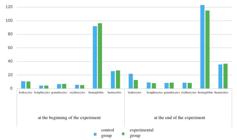
The data in Figure 5 show that the hematological parameters correspond to the norms. At the same time, the number of leukocytes in the control group before the experiment was 10.98 *109 liters, after the experiment there was a slight increase to 21.98 * 109 liters or by 24%, which most likely indicates the presence of inflammatory processes in the body of calves. The number of lymphocytes in both groups was within the normal range, but in the control group this indicator was at the upper limit of the norm.
The content of red blood cells in the blood of both groups corresponded to the norm. At the same time, there is a slight increase in granulocytes in the experimental group of calves by 1.04% of the norm.
Raising calves in comfortable conditions for them is the main task of obtaining healthy repair young. As noted by Heinemann et al. (2021); Spinul (2018); Kazhgaliyev et al. (2016), the rearing of calves in the first weeks of life is critical and is associated with the highest mortality from intestinal and respiratory diseases. Proper hygiene management can help preventatively protect the health of calves by reducing the number of pathogenic bacteria.
Among all the animals present on a dairy farm, the highest morbidity and mortality rates are usually found in calves of the dairy period (McGuirk and Ruegg, 2019). According to the Bureau of National Statistics ASPiR of the Republic of Kazakhstan, the number of cattle, including calves, increased significantly in 2021 and amounted to almost 18 thousand heads – 1.5% more than in 2020.
In this regard, the health and maintenance of repair animals are important components of the overall profitability of the herd. The productivity of the herd can be negatively affected by a violation of the growth of calves, a decrease in milk yield in animals that have suffered chronic diseases at an early age (Van Os, 2021; Paige, 2020).
When decontaminating premises using the principles of disinfection, a set of actions aimed at the destruction of pathogenic and conditionally pathogenic microorganisms that contribute to the prevention of infectious diseases of animals and the intensive growth and development of repair young animals is understood (Shavkunov et al., 2022).
The application of hygienic practices, such as regular cleaning, physical and chemical methods using broad-spectrum disinfectants as part of the biosafety program on intensive livestock farms, is crucial for the elimination of pathogens in livestock premises (Davies and Wales, 2019). For disinfection, there are several types of products approved by environmental protection agencies (EPA) worldwide as safe, effective, less expensive and easy to use on livestock farms such as sodium hypochlorite, soda ash, calcium hydroxide, vircon (potassium monopersulfate), hydrogen peroxide and a glutaraldehyde-based disinfectant (Gharieb et al., 2022), including GAN, which was successfully used in this study.
4. Conclusions
During the study, mechanical, physical and chemical methods of cleaning and disinfection of the dispensary for calves were used. Studies before the treatment of the room for calves showed a massive growth of bacilli and bacteria – 100%, mold fungi – 80%, yeast – 20%, actinomycetes – 80%. After processing, the number of microorganisms during mechanical processing is microbial contamination by 31%, during physical processing 62%, and during chemical processing up to 95%.
Monitoring of indicators of live weight, absolute, relative increments of calves from birth in the experimental group with age is slightly higher than in the control group. The live weight of the experimental group has been 1.2 kg higher since the first month of cultivation in the room where the disinfection scheme was applied, and by 6 months the difference is 16.5 kg or 8.7%. The analysis of exterior indicators showed that the calves of the control group are somewhat inferior to the calves of the experimental group in all measurements. The indices of the physique of animals also indicate the best development of the calves of the experimental group.
The hematological parameters of both correspond to the norms. At the same time, the number of leukocytes in the control group before the experiment was 10.98 *109 liters, after the experiment there was a slight increase to 21.98 * 109 liters or by 24%, which most likely indicates the presence of inflammatory processes in the body of calves. The number of lymphocytes in both groups was within the normal range, but in the control group this indicator was at the upper limit of the norm.
In conclusion, it should be noted that there is still a great potential for improving compliance with hygiene measures and conducting a comprehensive cleaning process with the use of mechanical, physical and chemical disinfection methods with individual keeping of calves. In particular, more attention should be paid to cleaning feeders, artificial nipples, cages, stalls, as this is a simple means of preventing the possible spread of pathogens among calves.
Acknowledgements
The authors would like to thank the management, specialists and employees of all farms who participated in collecting the necessary data for the study. The research results presented in this paper were carried out within the framework of the program-targeted financing of the program of the Ministry of Agriculture of the Republic of Kazakhstan: BR10764965 “Development of technologies for keeping, feeding, growing and reproduction in dairy cattle breeding based on the use of adapted resource-energy-saving and digital technologies for various natural and climatic zones of Kazakhstan”, according to the budget program: 267 “Increasing the availability of knowledge and scientific research”, subprogram 101 “Program-targeted financing of scientific research and activities” for 2021-2023 years, by priority: “Sustainable development of the agro-industrial complex and safety of agricultural products” by sub-priority: “Development of intensive animal husbandry”.
-
Data Availability Statement
The entire data set that supports the results of this study was published in the article itself.
References
-
AKANOVA, A., KIKEBAYEV, N., SHAIKENOVA, K., SEIITKAZHY, Z. and OKUSKHANOV, E., 2017. Nutritive and biological value of mare’s milk ice cream. Pakistan Journal of Nutrition, vol. 16, no. 6, pp. 457-462. http://doi.org/10.3923/pjn.2017.457.462
» http://doi.org/10.3923/pjn.2017.457.462 -
ATOVULLOZODA, R.A., ZHBANOVA, S.Y., NAZRULLOZODA, S.K., RAJABALIYA, M., ODINAEV, K.A., BOGOMOLOVA, O.A. and PUKHOVA, N.M., 2021. The effect of disinfectants on the sheep and goat pox virus in the environment and in livestock buildings. Veterinaria I Kormlenie, no. 1, pp. 11-13. http://doi.org/10.30917/ATT-VK-1814-9588-2021-1-3
» http://doi.org/10.30917/ATT-VK-1814-9588-2021-1-3 - BAJGAI, J., KIM, C.S., RAHMAN, M.H., FADRIQUELA, A., THUY, T.T., SONG, S.B. and LEE, K.J., 2020. Application of new concept disinfectant, Huureka®, on livestock farming. Korean Journal of Waters, vol. 8, no. 1
-
CHUNG, H., KIM, S., CHOI, K., PARK, J.H., HTET, S.L. and CHOE, N., 2019. Development of a smartphone application for providing disinfectant information on livestock industry. Korean Journal of Veterinary Research, vol. 59, no. 2, pp. 97-100. http://doi.org/10.14405/kjvr.2019.59.2.97
» http://doi.org/10.14405/kjvr.2019.59.2.97 -
DAVIES, R. and WALES, A., 2019. Antimicrobial resistance on farms: a review including biosecurity and the potential role of disinfectants in resistance selection. Comprehensive Reviews in Food Science and Food Safety, vol. 18, no. 3, pp. 753-774. http://doi.org/10.1111/1541-4337.12438 PMid:33336931.
» http://doi.org/10.1111/1541-4337.12438 -
GHARIEB, R., SAAD, M., KHEDR, M., EL GOHARY, A. and IBRAHIM, H., 2022. Occurrence, virulence, carbapenem resistance, susceptibility to disinfectants and public health hazard of Pseudomonas aeruginosa isolated from animals, humans and environment in intensive farms. Journal of Applied Microbiology, vol. 132, no. 1, pp. 256-267. http://doi.org/10.1111/jam.15191 PMid:34171153.
» http://doi.org/10.1111/jam.15191 -
GRIGORIEV, V.S., 2020. Development of self-disinfecting coatings for the disinfection of surfaces of livestock facilities. Machinery and Equipment for Rural Area, no. 8, pp. 28-33. http://doi.org/10.33267/2072-9642-2020-8-28-33
» http://doi.org/10.33267/2072-9642-2020-8-28-33 -
HEINEMANN, C., LEUBNER, C.D., HAYER, J.J. and STEINHOFF-WAGNER, J., 2021. Hygiene management in newborn individually housed dairy calves focusing on housing and feeding practices. Journal of Animal Science, vol. 99, no. 1, pp. skaa391. http://doi.org/10.1093/jas/skaa391 PMid:33279999.
» http://doi.org/10.1093/jas/skaa391 -
HULBERT, L.E. and MOISÁ, S.J., 2016. Stress, immunity, and the management of calves. Journal of Dairy Science, vol. 99, no. 4, pp. 3199-3216. http://doi.org/10.3168/jds.2015-10198 PMid:26805993.
» http://doi.org/10.3168/jds.2015-10198 -
IBRAGIMOV, A.G., BORULKO, V.G. and LUKYANOVA, I.A., 2022. Livestock and environment. Agrarian Science, no. 10, pp. 46-49. http://doi.org/10.32634/0869-8155-2021-353-10-46-49
» http://doi.org/10.32634/0869-8155-2021-353-10-46-49 -
KAZHGALIYEV, N.Z., SHAUYENOV, S.K., OMARKOZHAULY, N., SHAIKENOVA, K.H. and SHURKIN, A.I., 2016. Adaptability and productive qualities of imported beef cattle under the conditions of the Northern region of Kazakhstan. Biosciences Biotechnology Research Asia, vol. 13, no. 1, pp. 531-538. http://doi.org/10.13005/bbra/2065
» http://doi.org/10.13005/bbra/2065 -
KEGLES, F., MADRUGA, O.C., SCHMOELLER, E., BRAGANÇA, L.F., LONDERO, U.S., MARINS, L., FEIJÓ, J.O., CORRÊA, M.N., SCHMITT, E. and DEL PINO, F.A.B., 2019. Hematological and biochemical parameters of dairy calves submitted to pegbovigrastim administration. Journal of Dairy Science, vol. 102, no. 1, pp. 547-556. http://doi.org/10.3168/jds.2018-14445 PMid:30527989.
» http://doi.org/10.3168/jds.2018-14445 -
LIMARENKO, N.V., KRASNOVA, E.V., PUDEYAN, L.A. and BARYSHNIKOVA, O.E., 2019. Prospects of using of chemicals in environmentally safe disinfection of liquid waste from livestock enterprises. IOP Conference Series. Materials Science and Engineering, vol. 582, no. 1, pp. 012015. http://doi.org/10.1088/1757-899X/582/1/012015
» http://doi.org/10.1088/1757-899X/582/1/012015 -
MAKANGALI, K., TULTABAYEVA, T., ZAMARATSKAIA, G., OSPANKULOVA, G., TOKYSHEVA, G., ABZHANOVA, S., ZHAKUPOVA, G. and ERGALIKYZY, A., 2024. Enhancing the antioxidant capacity and oxidative stability of cooked sausages through Portulaca oleracea (Purslane) supplementation: a natural alternative to synthetic additives. Applied Sciences, vol. 14, no. 21, pp. 9986. http://doi.org/10.3390/app14219986
» http://doi.org/10.3390/app14219986 -
MATSUZAKI, S., AZUMA, K., LIN, X., KURAGANO, M., UWAI, K., YAMANAKA, S. and TOKURAKU, K., 2021. Farm use of calcium hydroxide as an effective barrier against pathogens. Scientific Reports, vol. 11, no. 1, pp. 7941. http://doi.org/10.1038/s41598-021-86796-w PMid:33846406.
» http://doi.org/10.1038/s41598-021-86796-w -
MCGUIRK, S.M. and RUEGG, P., 2019 [viewed 9 April 2025]. Calf diseases and prevention [online]. Madison: University of Wisconsin-Madison. Available from: https://dairy-cattle.extension.org/calf-diseases-and-prevention/
» https://dairy-cattle.extension.org/calf-diseases-and-prevention/ - MONTFOORT, J.A., VAN DER POEL, P. and LUTTIK, R., 1996. The use of disinfectants in livestock farming Bilthoven: Rijksinstituut voor Volksgezondheid en Milieu RIVM. RIVM Rapport, no. 679102033.
-
NAM, G.-H., KIM, H.-S., KANG, T.-Y., KIM, T.-U. and PARK, E.-S., 2021. Risk of tracking fire due to disinfectants in livestock facilities. National Fire Research Institute of Korea, vol. 2, pp. 185-202. http://doi.org/10.54713/JFRI.2021.2.185
» http://doi.org/10.54713/JFRI.2021.2.185 -
PAIGE, N., 2020 [viewed 9 April 2025]. Can feed additives play a role in addressing calf health and performance challenges? [online]. Progressive Dairy. Available from: https://www.progressivedairy.com/topics/calves-heifers/can-feed-additives-play-a-role-in-addressing-calf-health-and-performance-challenges
» https://www.progressivedairy.com/topics/calves-heifers/can-feed-additives-play-a-role-in-addressing-calf-health-and-performance-challenges -
RAZANOVA, O., 2021. Age dynamics of growth and development of calves of the dairy period depending on a way of their maintenance. Tehnologìâ Virobnictva Ì Pererobki Produktìv Tvarinnictva, vol. 1, no. 164, pp. 48-56. http://doi.org/10.33245/2310-9289-2021-164-1-48-56
» http://doi.org/10.33245/2310-9289-2021-164-1-48-56 -
SHAVKUNOV, M.L., LEKOMTSEV, P.L., KOREPANOV, A.S. and GAVRILOV, R.I., 2022. Methods of air disinfection in livestock premises with a combination device. IOP Conference Series. Earth and Environmental Science, vol. 949, no. 1, pp. 012118. http://doi.org/10.1088/1755-1315/949/1/012118
» http://doi.org/10.1088/1755-1315/949/1/012118 -
SOUALIO, K., BAUDOUIN, K.A., RENÉ, S.Y. and PAUL, Y.A., 2020. Hematological and biochemical parameters of cattle declared healthy for slaughter at the Municipal Slaughterhouse of Korhogo (Côte d’Ivoire). International Journal of Current Microbiology and Applied Sciences, vol. 9, no. 10, pp. 1065-1072. http://doi.org/10.20546/ijcmas.2020.910.127
» http://doi.org/10.20546/ijcmas.2020.910.127 - SPINUL, A.I., 2018. Physiological aspects of prevention and metaphylaxis of metabolic disorders and reduction of resistance of the body of calves during the dairy growing period Moscow: Federal Scientific Agroengineering Center VIM, 163 p.
-
STOROZHUK, T.A., KLASNER, G.G. and TYUNIN, M.Y., 2020. Research on the disinfection of livestock wastes by ultrasound. IOP Conference Series. Materials Science and Engineering, vol. 862, no. 3, pp. 032107. http://doi.org/10.1088/1757-899X/862/3/032107
» http://doi.org/10.1088/1757-899X/862/3/032107 -
TARABUKINA, N.P., NEUSTROEV, M.P., OBOEVA, N.A. and MAKSIMOVA, A.N., 2019. Disinfection of premises in the presence of calves. Siberian Herald of Agricultural Science, vol. 49, no. 5, pp. 88-93. http://doi.org/10.26898/0370-8799-2019-5-12
» http://doi.org/10.26898/0370-8799-2019-5-12 -
TOKYSHEVA, G. and MAKANGALI, K., 2023. Study of physical and chemical parameters of goat meat for use in the production of children’s food. BIO Web of Conferences, vol. 58, pp. 01008. http://doi.org/10.1051/bioconf/20235801008
» http://doi.org/10.1051/bioconf/20235801008 -
TOKYSHEVA, G., TULTABAYEVA, T., MUKHTARKHANOVA, R., ZHAKUPOVA, G., GORBULYA, V., KAKIMOV, M. and MAKANGALI, K., 2023. The study of physicochemical and technological properties of boiled sausage recommended for the older adults. Potravinárstvo, vol. 17, pp. 16-29. http://doi.org/10.5219/1806
» http://doi.org/10.5219/1806 -
VAN OS, J., 2021 [viewed 9 April 2025]. Hygiene practices [online]. Madison: University of Wisconsin-Madison. Available from: https://animalwelfare.cals.wisc.edu/wp-content/uploads/sites/243/2021/02/03-Hygiene-practices.pdf
» https://animalwelfare.cals.wisc.edu/wp-content/uploads/sites/243/2021/02/03-Hygiene-practices.pdf -
WEARY, D.M., JASPER, J. and HÖTZEL, M.J., 2008. Understanding weaning distress. Applied Animal Behaviour Science, vol. 110, no. 1-2, pp. 24-41. http://doi.org/10.1016/j.applanim.2007.03.025
» http://doi.org/10.1016/j.applanim.2007.03.025
Edited by
-
Editor:
Takako Matsumura Tundisi
The entire data set that supports the results of this study was published in the article itself.


